Category Archives: Famous Personalities of Kodagu / Coorg

Gear up for soul sante this sunday

Bangalore:

This Sunday escape into a world of arts, crafts, music, fashion and a whole lot more as Kingfisher Premium presents the Sunday Soul Sante, which is currently in its fourth edition. The Kingfisher Premium Sunday Soul Sante is a mid-day to mid-night festival bringing to the city an exciting, day long carnival with flea markets selling paintings, pottery and all kinds of quirky and creative merchandise. The Sante bazaar will take place at Tripura Vasini, Palace Grounds. The festival is organised to bring together and showcase diverse cultures under one roof.

Kingfisher Premium Sunday Soul Sante promises oodles of fun with friends and family. Adding to the excitement, Bangalore’s fashion guru Prasad Bidappa will be putting together a high on style fashion capsule, witness electrifying performances by bands like Bicycle Days and Psychophonic. The evening promises to end on a high note with the closing performance by DJ Ivan. Entry fee is Rs. 49/- for adults and free for senior citizens and children below twelve.

source: http://www.ibnlive.in.com / Express News Service, The New Indian Express / September 11th, 2011

Unsung heroes: Fate of lost PAF aviators uncovered

Karachi:

When Squadron Leaders Shabbir Alam Siddiqui (pilot)  and Aslam Qureshi (navigator) did not return from their third bombing mission on the night of September 6, 1965, details regarding their fateful mission remained obscure for decades.

Consequently, they were declared missing in action by the Pakistan Air Force (PAF) and never decorated for their valiant service. Their wives, Shahnaz Alam and Parveen Qureshi, both new mothers in their early twenties at the time, lived with an anguishing lack of disclosure.

It took Shahnaz more than 40 years of undying love and relentless determination to uncover facts about her loving husband’s fate. She was finally able to draw attention of the Indian Air Force (IAF) in 2006 through help from Air Commodore (retired) Najeeb Khan, himself a decorated war veteran and a colleague of the lost officers.

In a historic gesture, then IAF Chief Shashi Tyagi responded compassionately and ordered exclusive research into the fate of this dauntless crew. He officially invited Shahnaz to India and informed her that the PAF B-57 bomber from Mauripur (Masroor) Base in Karachi had reached over its target Jamnagar Airfield shortly before dawn on September 7, 1965. After dropping two bombs it was in circuit to drop the remaining load when it was hit by anti-aircraft (AA) fire and crashed. The pilot and navigator were killed on impact and buried in nearby fields.

IAF revelations therefore cleared the various misconceptions regarding this fateful mission, which had accumulated over the decades. PVS Jagan Mohan, renowned Indian military historian and author of the highly-acclaimed book The India-Pakistan Air War of 1965, points out that, “The impression about this B-57 crashing into the sea en route was incorrect as the IAF had claimed shooting down the bomber in 1965. It seems due to the atmosphere of hostilities and distrust, the PAF may not have believed the IAF claim.”

Further research into Indian accounts of the war revealed that this crew had bombed the enemy airfield at a very critical time, when aircraft of the Indian Navy Air Squadron were preparing for a massive raid against PAF bases at dawn on September 7. Their daring mission annihilated the planned Indian assault.

Rear Admiral Satyindra Singh of the Indian Navy states in his book Blue Water – Indian Navy 1961-1965 that, “Had the eight aircraft at Jamnagar bombed the ‘seeing-eye’ of the PAF air defence establishment at Badin, the war would have been over much quicker…”

Five years after these crucial revelations from India, their families are hopeful that the President and PAF chief will at last honour these unsung national heroes.

“My family and I have never sought any financial reward that accompanies a decoration. All I have longed for nearly 50 years is the gallantry award acknowledging my husband’s valour and sacrifice alongside celebrated war heroes of 1965,” says Shahnaz.

There are numerous examples of delayed gallantry awards the world over. Squadron Leader AB Devayya of IAF, who was lost in aerial combat over Sargodha in 1965, was decorated with a posthumous Maha Vir Chakra during the 1980s when details of his last mission were revealed over two decades later. In May this year, US President Barack Obama awarded the Medal of Honour to families of two soldiers killed in 1951 during the Korean War.

Another example is of Sipahi Maqbool Hussain of Pakistan army who was taken as a prisoner of war by the Indian army in 1965 and tortured for decades. When released few years ago, he managed to reach his regiment where his amazing saga was revealed and he was awarded the Sitara-e-Jurat.

Parveen requests authorities to also try and bring the remains of these officers home, so they can be buried in their own soil. A cited example is that of Mati-ur-Rahman, the Bengali pilot who was killed while attempting to hijack Pilot Officer Rashid Minhas’ aircraft in 1971. His remains were excavated from a graveyard at Masroor Base and handed over in 2006. Rahman is a recipient of Bir Sreshtho, Bangladesh’s highest military award.

Published in The Express Tribune, September 10th, 2011.

source: http://www.tribune.com.pk / by Haris Masood Zuberi / September 10th, 2011

India win team medal at Nomura Cup after 38 years

The President of the Indian Golf Union, Rohit Amit, hailed Indian team’s performance. “This performance of the Indian team shows how Indian golf has progressed in recent times. They won a silver medal at the Asian Games in Guangzhou and then the Asian Junior gold and now the bronze at the prestigious Nomura Cup.

“The Indian team has been going great guns and we have a fine bunch of young players, who will bring more laurels to the country. Individual performances of players like Khalin Joshi, third at Nomura Cup, besides Abhijit Chadha, winner of Faldo Series Asia Grand Final and Chikkarangappa shows Indian golf is in a very good health

” The High Performance coach of the Indian Golf Union, Alan Singh, said, “The Indian boys were superb and they did well on each of the four days and sometimes under very tough conditions. Their combination was excellent and this should be great for Indian golf.”

Final Team standings (after four rounds): 1. Australia 207 + 212 + 220 + 201 = 840 2. New Zealand 211 + 224 + 217 + 209 = 861 3. India 208 + 226 + 220 + 211 = 865 4. Korea 218 + 213 + 232 +207 = 870 5. Japan 215 + 233 + 233 + 206 = 887 Indian golfers’ final Individual scores: Khalin Joshi 285 (-3) T-3 Chikkarangappa 291 (+3) T-7 Abhijit Chadha 294 (+6) T-12 Angad Cheema 300 (+12) T-25.

source: http://www.ibnlive.in.com/ PTI / August 19th, 2011


BAI website gives Jwala-Ponnappa WC bronze a miss

Badminton fans in the country cannot stop raving about the exploits of doubles stars Jwala Gutta and Ashwini Ponnappa, who created history last Sunday by winning a medal in the World Badminton championship after a gap of 28 years. While the two girls made news across the country, it seems the Badminton Association of India (BAI), or more precisely their official website, is completely unaware of their heroics.

Even after a week, the official website is completely oblivious to the performance of the Indian contingent in London and is more bothered about publishing the internal circulars and other mundane stuff like appointment of technical officials and other committees.

The attitude of those maintaining the website is no different from the overall approach of the sports administrators, who are happy holding on to their chairs rather than looking to be proactive to popularise the game.

Shuttlers Jwala Gutta (foreground) and Ashwini Ponnappa created history last Sunday by winning a medal in the World Championship after a gap of 28 years. Reuters


The last few years have been the best period for Indian badminton since the Prakash Padukone era. In fact, I would say the situation is even better than the 70s and 80s when Padukone was the lone flag-bearer of the country on the international stage. Today, there are many players who have been performing consistently at the highest level and there are at least three disciplines in which India can aim to win medals in major international tournaments.

Such a situation should be an open invitation for any sports administrator to try and popularise the sport and what can be a better way than to build the marketing strategy around the players, whom the fans and even the corporate world can relate to.

And the officials need not look beyond their very own Saina Nehwal, who has become a household name once she signed up with a sports management firm and the company began building her image around the “I will do anything to succeed” attitude.

Thankfully, almost all the top players in the country are very articulate and can connect to the masses very easily. But somehow, the ‘shuttler’ seems to be the least important entity in the badminton set-up in India and the badminton activities that are organised during a season are more out of compulsion than with a long-term plan for the benefit of the players.

The last concrete step for the development of sport was taken back in 2000, under the leadership of Padukone, when the prize money structure was introduced in the domestic circuit and a national ranking system put in place.

The BAI honchos made us believe that their endeavour to host major international events in the country since 2009 was an attempt to provide the players an opportunity to grow. But instead, in the first two years, they put restrictions on Indians participating in these tournaments under the pretext that “the image of the country” will be tarnished if players lost in the initial rounds.

Even after the Commonwealth Games, where India won two gold medals and a team silver, the association members indulged in the capital instead of arranging an event or a sponsorship deal as a token of appreciation for the players.

But what can one expect from an association which has still not bothered to put in place a basic mechanism of providing the media with the results of domestic and international tournaments, which is very important to keep the sport and sportsperson in public memory.

In these circumstances, expecting the association to promote the cause of players by building an interface between fans and sportspersons seems to be a distant dream. But the very least a player can expect is a mention of his/her achievement on the website and a word of appreciation from those running the sport.

source: http://www.FirstPost.com / blog > shuttle talk> / Aug 22nd, 2011

Zen and the Art of Indian Hockey’s Maintenance

New Delhi:

India’s latest foreign coach Michael Nobbs is a believer in karma. Sprinkling his analyses generously with Buddhist spiritualism, the 57-year old Australian realises the tediousness of the task ahead of him at the national camp underway at Bangalore. While winning the players’ trust is his aim, developing a workable roadmap for the sport’s resurrection in the country is his single-minded ambition, writes Uthra G. chaturvedi

‘When you lose, do not lose the lesson.’

The Dalai Lama has nothing to do withIndian hockey. With its lack of stars and success alike, the sport these days doesn’t even merit a recognisable name among its most devoted followers. Yet, the spiritual figure may well have been speaking of the team when he spoke those words. At least, Michael Jack Nobbs believes so.

As the newest coach of Indian hockey, Nobbs knows what he is up against when he walks out to the training ground at the Sports Authority of India’s Bangalore centre every morning — a long string of losses, a longer list of lessons. Armed with a five-year contract to pull Indian hockey out of the seemingly bottomless pit it has dug itself into, Nobbs is aware that how the next 60 months pan out will depend largely on what happens in the next six.

“The immediate target is the Olympic qualifiers, no doubts about that,” he says of the February 2012 test, even as the 48 probables – divided into two groups – who he will be relying on to achieve that, warm up and cool down in the background. “But I am a firm believer in karma. What goes around ultimately comes around. It’s a cycle that cannot be broken. If enough hard work is put in, the results are bound to come. When they do, is another matter. But success cannot be denied to those who seek it with full dedication,” he adds, striking a spiritual tone that’s more Indian than his native Australian.

In their first training schedule under Nobbs, the Indian hockey players are least bothered about the new coach’s beliefs. Sweating it out on the turf for an average of five hours every day, it is more important for them to get the basic facilities that will increase their performance and output in competition. And for that, they are wary, but willing to give Nobbs a chance.

Progressively cautious

The wariness is understandable. Nobbs is the fourth foreign coach to join the team in eight years and the tenures of each of the previous three have made players progressively cautious. If Gerhard Rach was the target of collective contempt, Ric Charlesworth was shooed away by the establishment even before the players could know what he thought. Jose Brasa walked into a welcome full of doubts, but he managed to make players comfortable. And by the time he left, most of them treated him as an elderly figure they could trust, both personally and professionally; and were eventually sad to let go.

Nobbs is as yet an unknown entity. His methods are yet to be clear to most players, and his plans are yet to be fathomed, or accepted. “We are happy that he has a long-term contract. But it’s been less than a month of training under him. It’s a two-way street. He needs time to know us and we need time to understand him,” says Arjun Halappa, among the senior-most players in the current squad.

There is also an uncomfortable feeling among several players that Nobbs’ appointment with Indian hockey had a lot to do with the backing he had from the Punjab lobby, and so he is perhaps closer to them. “There are many factors at work here at the moment. We will only know about how serious he is and how much of an independent authority he wields after the Asian Champions Trophy, the first tournament he will be in charge of. Till then, let’s face it, there will be doubts. The history of groupism in Indian hockey forces us to be wary,” a player says.

‘Show me the money’

Nobbs, though, knows where he wants the players – on posters, hoardings and magazine covers. “They are the public face of the sport. They sell the game, they bring in support, they bring in the fans and the next generation of players. They are the heroes. Most importantly, they are the ones who will bring in the money. And, let’s accept it, money is very important. Why would anyone play a sport if there is no money,” he asks. “I want the players to own the team. When you feel ownership of something, you work hard to preserve it,” he adds.

Unfortunately, this is precisely what Indian administrators have always tried to stifle. Making players into heroes is abhorrent to the hockey establishment in India. “I don’t think that will happen. If a player wants to go for a couple of days between training for a personal assignment, something that is legal, will raise the profile of hockey and help the sport in the long run and bring in public attention – I won’t stop him,” Nobbs says. Is that an allusion to IHF’s World Series Hockey? He refuses to say, but smiles lightly before adding, “Players like Sandeep, Sardar, Adrian are an asset to any team. I won’t want to lose them,” he says, hinting at a pro-player approach.

At the same time, he knows he will have to draw a line. It’s an easy trap to fall into — when players become stars, they sell the sport much better. But then, they try to hold on far too long because of the perks. “You cannot ignore them either because they are seniors. That kills a large part of the next rung. When they go, the third rung is thrown straight into the deep end. The team then starts losing and the sport’s profile goes down. It takes a few years to get back on top,” he explains.

That’s what happened to Australian hockey at one point. That’s what also happened to cricket in Australia. “When do we push the middle rung to the top and ease out seniors, striking that balance will decide who stays on top for how long,” he adds.

Emphasis on fitness

Irrespective of how they wield their sticks, strategically placed cones are what define every session during training — running around them, sprinting between them, touching base with them at various speeds. Nobbs’ emphasis on making fitness a priority has got a definite thumbs-up from the players.

Already, most admit to feeling better when they step on to the field. Exercise physiologist David John, specifically asked for by Nobbs, has profiled all the players and worked out training schedules for them. “Fitness needs to be upped. A lot of players have been complaining of being tired, and that’s a good thing. It means things are on the right track,” Nobbs says.

Likely to rejoin the camp over the weekend, John’s training methodology is spoken of highly by them. Sometimes, players are asked to try and hold back their training partners from running away – to build resistance. “The exercises he has designed do not get boring. At the same time, our agility has increased. The sooner he comes back, the better,” is the common refrain from all the players.

The skills aspect, though, is not being ignored. Players often play 3 or 4 to a side in a small area – less than a quarter of the turf – and are supposed to pass to their team mates without losing the ball. At last count, they had managed to hold on to it for 17 passes.

An Olympic dream

“Indian players are skillful, up to international standards. They don’t need to be told about the skills part. I am trying only to assess their individual levels,” he says as players wrap up the day’s session and head for a swim.

Before leaving, Nobbs wants to reveal his one wish. “One day, I want to see the Indian hockey team on the top of the podium in the Olympics, even if I’m not the coach,” he says.

“I want to experience Indian hockey’s triumph as a spectator from the stands and feel the satisfaction that I had a little part to play. And it will happen. Remember karma? If anyone deserves success for their hard work, it is these boys.”

In The waiting line

The National Championships in Bhopal may not have been the treasure trove of hidden talent that was expected, but the tournament did give a number of players a chance to be part of the national camp and try to impress the team management.

Banmali Xess: The youngster from Jharkhand was named the best forward at the nationals, and with good reason. His passing and ball control was unlike anyone else in the competition — including some of the biggest names — and there was hardly an occasion when he had the ball and failed to penetrate into the D. But inexperience meant he ended up muffing a lot of chances. His presence would push the seniors to look nervously over their shoulders, which is a good thing.

Prabhdeep Singh, Ramandeep Singh and Akashdeep Singh: Part of the Punjab team that finished with a bronze in Bhopal. The triumvirate were instrumental in Punjab’s advancement to the semifinals in the Senior National Hockey Championships. And even in a team that had several big names in its ranks, the youngsters managed to hold their own, impressing with their skills. Raw and still to develop, the big-match strength and temperament.

Chinglinsana and

Kothajit Singh: The Manipuris are the few remaining players from the state on the national stage that once gave Indian hockey some of its toughest players. But while Kothajit manages to hold up the mid-field play for his employers Indian Oil, Chinglinsana, with his immense speed and a gymnast’s agility, is a potential striker. At 21, Chinglinsana also has age on his side and so far during training, has managed to hold his own with the seniors.

Nithin Thimmaiah and Pradhan Somanna: Two exciting prospects from the traditional nursery of Coorg. Good on the wings and keen students of the game and quick learners. Need to add strength and stamina to their skills. Regulars for Karnataka at the age group level, both caught the selectors’ eye during the recently concluded National Championships. A fantastic attacking combination for the future, both are keen to hone their skills as flankers.

Dharamvir Singh: Once considered an exciting India prospect only to gradually fade away, the Punjab forward has managed to raise himself back into contention with decent domestic performances. He was the key to Punjab winning the bronze medal at the Nationals and despite the couple of years that he has lost, his intensity during training proves he means business this time around.


Kamaldeep Singh: No one in Indian hockey has made a comeback after being out in the wilderness for five years. That’s more than their entire international career for many players. But for someone who was always considered a talent, even if a little raw, Kamaldeep was banned for a year after a violent incident during the PHL. He perhaps owes this one chance to himself

source:http://www.expressindia.com / by Uthra G. Chaturvedi / Aug 14th, 2011

Nidhi Subbaiah is Ambassador for MM

Nidhi Subbaiah Ambassador for MM

The sprightly actress of Kannada cinema Nidhi Subbaiah is the ambassador to Mysore Marathon race that is kick starting on Sunday, October 2nd at Mysore as part of the Dasara Festivities.

It is at the world famous Dasara festival in Mysore this Mysore Marathon is taking place in which tourists to Mysore are allowed to take part says Shelesh Krishnan, Director. Life’s Calling Sports.

LCS is a sports management company is the promoter of ‘Celebration Run Series’. The avid sports enthusiasts are part of this event who hails from strong educational background.

The race management team has professional people who have conducted Marathon and Cycling Events in India and in the United States and look forward to bring in their expertise to the Celebration Run Series so as to give the Indian Sporting Community a truly world class running experience.

source: http://www.supergoodmovies.com / Aug 05th, 2011

Indian Cricket: Heaps of Money

Cricket coin tossIndia’s cricketers have been deafened by howls of derision after their latest defeat by England in a four match Test series.

Sunil Gavaskar, a former Indian batsman, said his countrymen were playing like “schoolboys”. Geoffrey Boycott, a former English cricketer, called their performance more befitting Bangladesh than a team currently ranked No.1 in the Test tables.

Before we feel too sorry for India’s struggling cricket stars, we should remember that they are paid for success and vicissitude alike.

Research by the Times of India, a daily newspaper, shows that some of India’s top cricketers are paid as much as the world’s most richly rewarded footballers  while the annual, seven week Indian Premier League is in full flow.

By the newspaper’s calculations, during the IPL, Gautam Gambhir, an opening batsman who plays for the Kolkata Knight Riders earned more than Lionel Messi, the Argentinian striker who plays for Barcelona. Gambhir’s earnings during the tournament put him in pro-rata touching distance of Cristiano Ronaldo, the Portuguese and Real Madrid player.

Cricketers Yusuf Pathan and Robin Uthappa match the incomes of Fernando Torres and Yaya Toure.

India’s cricketers have been roundly criticised for prioritising the IPL over Test cricket, and losing Test match form by doing so.

Yet the financial incentive of high paying cricket is hard to resist. Their choice is to miss out on payday in front of adoring home crowds in preference for honour at Lords and Trent Bridge, famed cricket grounds in England.

The dazzling money made in Indian cricket is attracting attention, both on and off the field.

The Indian parliament’s Standing Committee on Finance has asked the Indian tax department and the Reserve Bank of India to investigate the finances of the Board for Cricket Control in India, the game’s governing body, and the IPL.

A report by the committee submitted to parliament this month complains that the game is “embroiled in transgressions off the field”.

It warns that the tax department has been too lenient to the Board of Control for Cricket in India, which benefitted from tax exemptions in spite of the growing commercial success of the game.

India’s cricket establishment faces a tough contest in England this summer at the hands of a formidable bowling attack; when it returns home it may find as greater encounter with the tax man.

source: http://www.blogs.ft.com / by James Lamont / Aug 05th, 2011

http://blogs.ft.com/beyond-brics/2011/08/05/indian-cricket-heaps-of-money-spins-heads/#ixzz1UH4s9Qnl

Joshna Chinappa in an Audio Launch

Joshna_Chinappa

It was a big surprise for both sports and film fields. Reason – the presence of ace Squash player Joshna Chinappa at an audio launch of a Tamil film.

The famous Squash champion was the chief guest of the audio launch function of ‘Puli Vesham’ that was held recently in the city. Industry was raising their eyebrows how they brought in Joshna, who always stayed away from films and film functions, to this audio launch. When quizzed, the champion said, “It is only for the director P. Vasu I agreed to be the chief guest and attended the function. I knew him as a famous director. His ‘Chandramukhi’ was one film that I enjoyed a lot. I hardly watch films, and this film is one of my favourites among those few that I have seen in my life”.

‘Puli Vesham’ features RK and Sadaa in the lead roles and directed by P. Vasu.

source: http://www.filmics.com / Monday Aug 01st, 2011

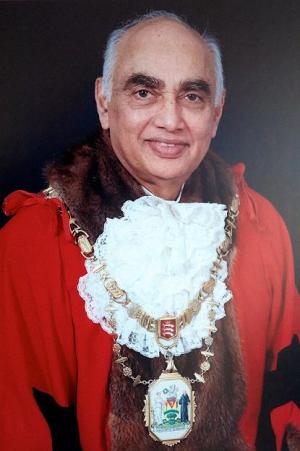
Funeral Held for Keeki Thammaiah, Harrow Council’s first Asian Mayor

A PACKED funeral service was held for a former Labour councillor described as a “true ambassador of Harrow” yesterday.

Packed funeral service for Harrow's first Asian mayor

Packed funeral service for Harrow’s first Asian mayor

Former Queensbury ward councillor Keeki Thammaiah, 76, passed away following a heart attack on his sofa while his wife Naila made dinner in their kitchen last Monday evening.

The former Wembley High School teacher was elected as a councillor in 1992 and served the borough up until the elections last year, when he stepped down.

He was appointed mayor in 2000 and during his time on the council also sat on licensing and planning committees.

He was born in Coorg, in South India, and came to Britain in 1964, teaching maths at Wembley High in the Seventies before moving on to City of Westminster College in 1985.

London Assembly member Navin Shah spoke at the service referring to Mr Thammaiah as an “elder brother.”

He said: “He was a laid-back, quiet person with a smile and a glint in his eyes. For Keeki there were no long speeches, no aggression, no controversy, wherever Keeki went as the mayor he gave measured and short speeches in his own inimitable style.

“He was respected and loved and naturally carried himself as a true ambassador of Harrow.

“Keeki’s achievements and his contribution to the community are a matter of pride and celebration.”

Former Harrow mayor Alderman Keith Toms knew Mr Thammaiah for 20 years.

He said: “He was so honest and related so well to the public. Harrow became a better place because of him but he did things quietly.

“Keeki stood out simply for all the things he did to improve the area but he never did it loudly.

“He was very laid-back, unruffled and so dependable.

“He achieved everything through quietly working within the community and laying the foundations for a better area.”

Mr Thammaiah is survived by wife Naila, son Ponnu, granddaughter Sonali and grandsons Adit and Alok.

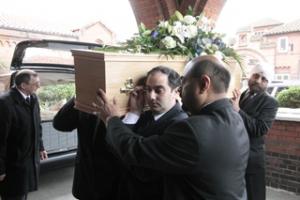
Son Ponnu, 38, was one of the pallbearers carrying his father’s coffin yesterday.

He said: “I was so touched by everybody. The visitors and messages have been non-stop.

“I was living at home when he was mayor and we are so proud of him and the work that he did.

“There was a great turnout for the funeral so thank you to everyone who came and who has supported us at this time.

source: http://www.harrowtimes.co.uk / by Suruchi Sharma / Tuesday Apr 05th, 2011

Keeki Thammaiah, Harrow Council’s first Asian Mayor, Dies

Photograph of the AuthorBy Jack Royston »


  • Keeki Thammaiah, Harrow's first Asian mayor, passed away this morning.
  • Keeki Thammaiah, Harrow’s first Asian mayor, passed away this morning
  • A “KIND hearted” former Labour councillor and Harrow’s first Asian mayor died at home yesterday evening.

Former Queensbury ward councillor Keeki Thammaiah passed away aged 76 on his sofa while wife Naila made dinner in their kitchen at around 6.30pm.

Councillor Bill Stephenson, leader of Harrow Council, described him as a “beacon”, while Navin Shah, London Assembly member for Brent and Harrow, said: “He was really very kind hearted, softly spoken and really laid back.

“He was loved right across the party divide, that’s why he also became a very effective and good first Asian mayor in Harrow.

“That feat in itself is remarkable, it was the first ever acknowledgment in Harrow of the diversity that we have had.

“I proposed he be the mayor. We were very close, I saw him as being like my older brother.”

The former Wembley High School teacher was elected as a councillor in 1992 and served the borough up until the elections last year, when he stepped down.

He was appointed mayor in 2000 and during his time on the council also sat on licensing and planning committees.

He was born in Coorg, in South India, and came to Britain in 1964, teaching maths at Wembley High in the 1970s before moving on to City of Westminster College in 1985.

Councillor Mrinal Choudhury, the current deputy mayor, spoke to Mr Thammaiah’s wife just hours before his death yesterday and was supposed to visit his former colleague today.

He said: “He left a message on my phone yesterday just to say ‘can you come and see me’. This morning his son called me. We were very close.

“I just went to see his wife this morning. He died while he was sitting on the settee. He was talking to his wife. She went to the kitchen to prepare some food.

“She came back to find that his eyes were up and she called the ambulance.”

Cllr Stephenson, current leader of the Labour Group, said: “He was a tremendously popular person.

“When he was mayor he always got on well with everybody. It’s a really sad loss. Keeki was a beacon, he was a very popular mayor, very well liked across both parties who have great regard for him.”

Councillor Husain Akhtar (Cons/Cannons) said: “I always found that Keeki and his soft smile were inseparable.

“I looked for that smile this morning when I visited his home but it was not there. I’m very sad that he is not with us any more.”

He is survived by wife Naila, son Poonu, granddaughter Sonali and grandsons Adit and Alok.

source: http://www.harrowtimes.co.uk / by Jack Royston / Tuesday Mar 29th, 2011