A hot cup of coffee skin

Chill: Cafe Le Bon Georges in Paris

Cascara, served in open-air Kolkata cafés, encapsulates in a glass the strange new world we inhabit.

Why is Paris not called the café capital of the world, wonders a friend.

Maybe it is.

It’s spring in Paris. In town for the Paris Book Fair, I am rediscovering the joy of travel, albeit nervously, with one eye on the rising COVID numbers.

On a little side street in Montparnasse, there’s crêperie after crêperie with little tables out front. No matter what street I walk on there’s a café or a brasserie with tables on the sidewalk, the specials of the day written in chalk on a blackboard. At all hours of the day there are people sitting outside in the sun drinking little cups of coffee, or glasses of wine, smoking cigarettes, ordering pastries. They were always there but in my new post-COVID consciousness, I am struck by the plethora of open air options.

Eco-cool life

But I also have an odd feeling of familiarity even though I have not been to Paris in a decade. And then I realise it reminds me of South Kolkata. Not the architecture. Not the river flowing through the city. Nor the people, though someone jokes that like Kolkatans, Parisians are cultured, possessed of a superiority complex, and deeply opinionated. But it’s not that. I realise it’s the cafés.

Kolkata, ever since the pandemic, has seen an explosion of chic little open-air cafés too. The modest South Kolkata street I grew up on had one famous hole-in-the-wall tea shop. The devoted clients would sit on the stoops of houses around it, smoking, arguing and drinking cups of extra strong tea. Now just one crossing on the same street has three chic coffee shops.
Cascara on offer at Roastery Coffee House, Kolkata 

The swankiness can be stress-inducing. At the tea shop milk or no milk were the only options. There was no green, Moroccan mint, chamomile, Darjeeling, first or second flush and there was no coffee. Now in this new Café City in coffee shops lined with books, potted plants and bleached wood, we have to learn a whole new vocabulary and be confronted with a dizzying variety of choices. Chronicling the café makeover of Kolkata, Bachi Karkaria once wrote that in this “single estate, bespoke” world ordering can be traumatic. “You must agonise over To Kill A Machiato, Murder on the Orient Espresso, Lawrence of Arabica or the French Press Connection.” It can be all too clever for its own cool.

__________

” Cascara is “greener” because it upcycles waste that was headed for the compost heap. So we can virtue signal while drinking it”

____________

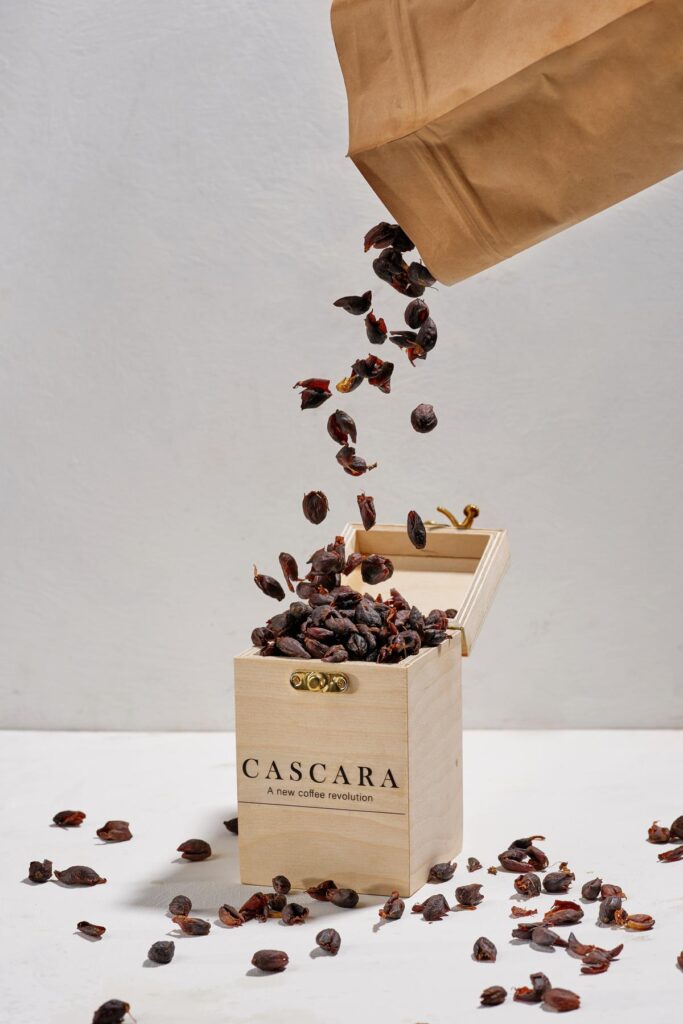
And then there’s cascara. Every hip coffee bar seems to have discovered it. Cascara, I learned, is Spanish for skin, peel or husk. One obtains it after extracting the coffee beans from the coffee cherries. The pulped skins are sun dried and then brewed and the cascara can be drunk hot or cold. Some describe it as a “coffee-tea” and detect notes of cherry and hibiscus. Others think it’s more of a fruit tisane with much lower caffeine content than coffee. Once a by-product of coffee manufacture, the husks have now acquired an eco-cool life of their own in a wine glass. Of course, a name like cascara helps. It wouldn’t sell as well in Kolkata if it was called “brewed coffee husks”.

Ahead of New York

The cascar-ification of Kolkata can carry alongside the notes of cherry, vanilla and rose-hip, a slightly bitter taste of pretentiousness. We are basically spending good money to drink coffee waste, chuckled a friend visiting from New York. Then a few weeks later he sent me a picture of cascara on the menu in a Brooklyn café. Our cafés in Kolkata, it seemed, were ahead of his New York café.

I have not discovered cascara on the menu in the French cafés yet or perhaps I’ve not scrolled down far enough in the endless choices of coffees, teas, wines, beers and cocktails. Or I’ve been too distracted by the colourful explosion of flans and tarts and macaroons in the boulangerie windows. But I am keeping an eye out for it because cascara in an open-air café seems to be the drink that encapsulates in a glass the strange new world we inhabit. It’s “greener” because it upcycles waste that was headed for the compost heap. So we can virtue signal while drinking it. It has less caffeine so we can drink more. It has wineglass chic. And ordering it from a QR-code menu and then sipping it in an open-air café allows us to pretend we are dodging the virus. What more can we aspire to these days?

And while Paris might be the uncontested café capital, maybe Kolkata can become the cascara capital.

Sandip Roy, the author of Don’t Let Him Know, likes to let everyone know about his opinions whether asked or not

source: http://www.thehindu.com / The Hindu / Home> Society> Pop-A-Razzi Society / by Sandip Roy / April 30th, 2022


Kodagu farmer wins award for conservation of native pepper crop

While ‘Adi Pepper’ was locally known as forest pepper and was used only for domestic purposes by the locals, it has now attained a brand value of Rs 3500 per kilo.

Left, N Poonacha receiving the award at the ceremony in New Delhi. Right, Snapshot of the  indigenous 'Adi Pepper' spikes.
Left, N Poonacha receiving the award at the ceremony in New Delhi. Right, Snapshot of the indigenous ‘Adi Pepper’ spikes.

Madikeri :

A progressive farmer, Napanda Poonacha of Kodagu district looks forward to being known as a pro-nature farmer. He is extensively working towards identifying commercial crops that have little or no ill impact on biodiversity and he was recently awarded the Plant Genome Saviour Farmer Reward (2019-20) for his contribution towards the conservation of indigenous crops of ‘Adi Pepper’.

The award has been conferred by the Union Agriculture Ministry’s Protection of Plant Varieties and Farmers’ Rights Authority and Poonacha received the award from union agriculture minister Narendra Singh Tomar at a ceremony in New Delhi on November 11.

“This award has been granted to farmers who recognize, conserve and promote crops that are useful to biodiversity. Similarly, I won the award for my research, conservation and promotion of ‘Adi Pepper’ – an indigenous variety of pepper that is extensively found growing across natural habitat of Garvale village limits in Kodagu,” explained Poonacha.

He is the proprietor of Adi Pepper Demo Farm and Research Center in Garvale and is extensively involved in identifying native crops in the district that have great potential of becoming a commercial crop without causing damage to the ecosystem.

“Adi Pepper crops are extensively found in the natural habitat across the Garvale area. At the research center, we took the initiative of getting this species of pepper registered under PPFRI and this quality pepper was recognized as farmer’s variety pepper in 2015. This is the only species of pepper that has undergone biochemical analysis and is considered the best among the seven species of pepper that are grown across Kodagu,” he detailed.

While this variety of pepper was locally known as forest pepper and was used only for domestic purposes by the locals, it has now attained a brand value of Rs 3500 per kilo – earning over six times more returns than the other species of black pepper marketed in the district.

“Adi pepper is a native crop and has no harmful impact on biodiversity. This is high-quality pepper and its processing is different from the other species. The ripening of the pepper seeds takes place in November and it is harvested during the same month. However, the pepper seeds are handpicked, treated with hot water and then dried and processed. This ensures top quality of the pepper, earning high returns,” he explained.

source: http://www.newindianexpress.com / The New Indian Express / Home> States> Karnataka / by Pragna GR, Express News Service / November 18th, 2021

Cloud Tailor appoints M C Cariappa as advisor

Cariappa is the former CMO of brand Jockey (Page Industries Ltd)

Over the past three decades, Cariappa has worked at Jockey, Arvind Lifestyle Brands Ltd, Coca Cola India (international trade department), ITC Ltd (international business division), and Brooke Bond India Ltd.

Cloud Tailor, a D2C platform that delivers personalised women’s fashion globally, has announced the appointment of M C Cariappa, as their independent advisor.

At Cloud Tailor, he will bring his knowledge and experience to support implementing a focussed business and operational strategy, guide in business expansion, oversee the platform’s regulatory and compliance metrics, and help develop the global communication strategy.

Cariappa is the former chief marketing officer (CMO) of brand Jockey (Page Industries  Ltd), where he has, for over a decade, led the sales and marketing arm of the organisation. He has a proven track record in driving business growth, franchisee and distribution expansion, and building operational efficiency, the company said.

Over the past three decades, Cariappa has worked at Jockey, Arvind Lifestyle Brands Ltd, Coca Cola India (international trade department), ITC Ltd (international business division), and Brooke Bond India Ltd.

His deep involvement with the sales and marketing vertical across national and international markets has contributed to the exponential growth of brands through expansion and distribution of product lines across geographies, Cloud Tailor said in a statement.

Cloud Tailor is poised for strong and sustainable growth in the coming months and I am keen to work with the team to deliver value to the company,” said Cariappa. “The brand is young, aspirational, and exciting. We have the potential to be the forerunner in the personalised fashion solutions industry globally. The women’s wear industry has been steadily growing across the globe, which gives impetus to explore a more tailored approach. Scalability is an issue that most companies in this space face. This is where Cloud Tailor comes in with solutions,” he added.

“Cariappa’s proven executive leadership experience, operational excellence, industry expertise, and other critical skills, will add immense value as we scale Cloud Tailor in this niche market,” Susmitha Lakkakula, founder, Cloud Tailor, stated.

source: http://www.financialexpress.com / Financial Express / Home> Brandwagon / by BrandWagon Online / January 27th, 202

Mysuru’s Guinness Record Holder For Tallest Cactus Kashi Kuttappa Passes Away

Mysore/Mysuru:

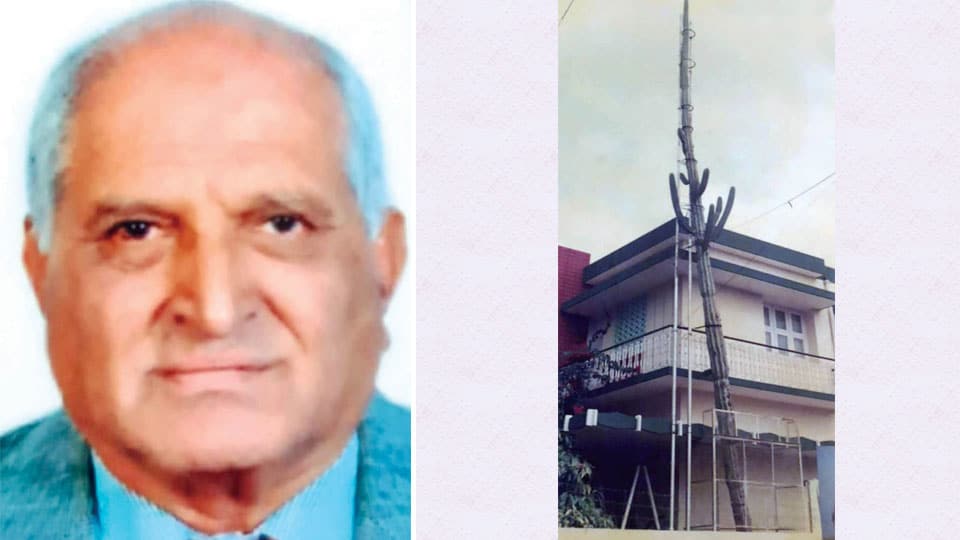
Accapanda Kashi Kuttappa (76), former Assistant Director in the Agriculture Department and a Guinness Record holder for tallest home-grown cactus, passed away at his residence in Siddarthanagar this morning.

He leaves behind his wife Jyothi, daughters Smitha and Neetha, sons-in-law and a host of relatives and friends. Last rites were performed at the foot of Chamundi Hill this noon, according to family sources.

The cactus Kashi Kuttappa

and his family members had grown reached a record height of 45.8 feet and had fetched him the Guinness Record. Kashi himself had said that it took him and his family 22 years to grow the cactus that towered above his home. It is of Cactus-Cereus Grandflora that belongs to the family of ‘cactaceae’. This cactus is widely grown in the tropics of dry tracts and suits the desert climate.

Several tourists and nature lovers used to frequent Kashi’s house at Siddarthanagar to see the wonder plant. In fact, the road to Kashi’s house was arbitrarily named ‘Cactus Road’ and he was famous as ‘Cactus Kashi’.

The plant was grown and nourished since 1978 when it was 2.5 ft. tall. The Guinness Book of Records authorities accepted the cactus as the tallest and issued a certificate for the first time on Jan. 20, 1993 when the cactus was 35 feet 1 inch. The Guinness Records authorities awarded the longest cactus certificate for the second time in 1998, when the cactus had grown to the height of 44 feet and 9 inches.

source: http://www.starofmysore.com / Star of Mysore / Home> News / June 27th, 2021

Special Lecture On Civil Services Exam

Coorg Institute of Technology, Ponnampet, Kodagu, will be organising a special lecture on “An insight into Civil Services Exam” at its premises in Ponnampet at 11 am on Apr. 28.

Mysuru SP R. Chetan, an alumnus of the college will deliver the special lecture, which is organised by the Alumni Association of the College.

For details, contact Mob: 95355-42005 or visit www.citcoorg.edu.in, according to a press release.

source: http://www.starofmysore.com / Star of Mysore / Home> In Briefs / April 26th, 2022

Don’t wait to dye another day

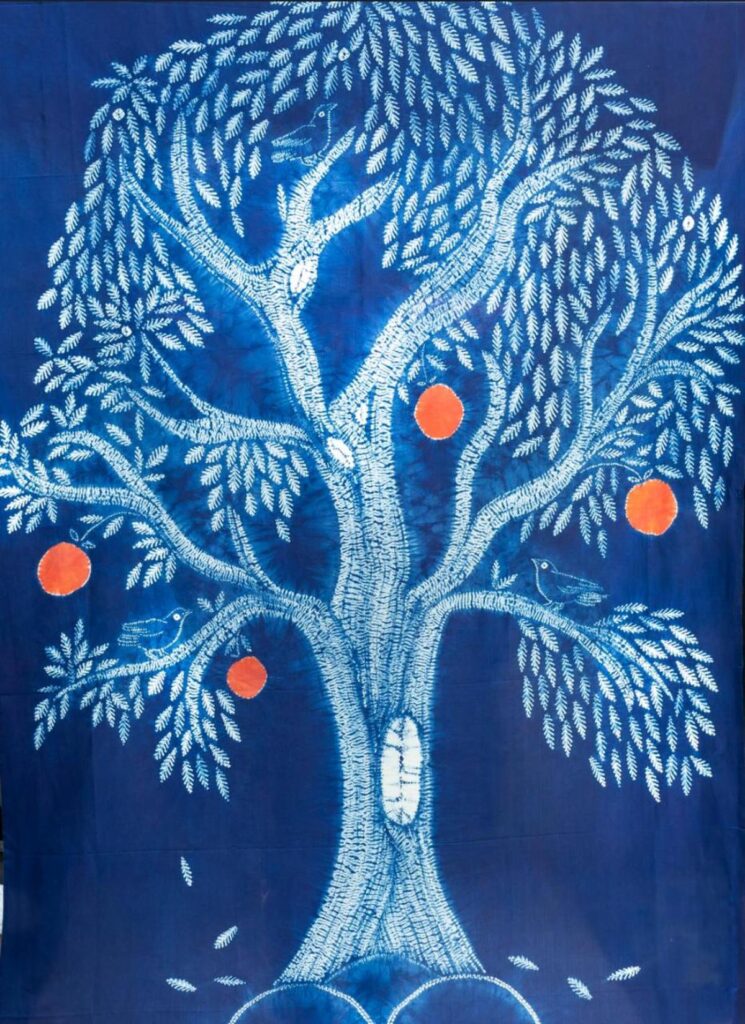
One of the pieces from Label Arati | Photo Credit: Special Arrangement

An exhibition showcasing the intricacies of dyeing will be held at Bangalore International Centre this weekend

Vibrant colours, striking patterns and flowy fabrics — much goes into the final product that one wears without much thought. However, for those who would like to get into the nuances of dyes and textiles, Bangalore International Centre (BIC) will be hosting an exhibition, ‘Natural dye stories by Label Arati,’ and related workshops from April 30 to May 3.

Conceptualised and curated by Arati Monappa who established the label, the exhibition will showcase various dyeing and embroidery techniques in use by Indian artisans.

“The purpose of this exhibition is to showcase the beauty of natural dyes. It is an assemblage of pieces coloured with natural dye, which I started gathering; today we have over 100 Indian practitioners who use natural dye and over 300 pieces are going to be on display,” says Arati, who adds that the event was initially meant to mark the label’s 25th anniversary which got delayed due to the pandemic.

“I had a lot of leftover fabric from over the years, which were used for cushions and other furnishings. We also rewove some of those remnants into fabric — all these pieces will be installed at the exhibition,” she says.

Apart from the release of a book documenting the journey of Label Arati, five natural dye workshops will also be held. Workshops on Eco Printing, Natural Dyes and Natural Mordant Dyeing, Dyeing with Kitchen Waste and two on the traditional techniques of Mata ni Pachedi from Gujarat and Kalamkari, will be held. The fee for the courses range from ₹1,500 to ₹2,000.

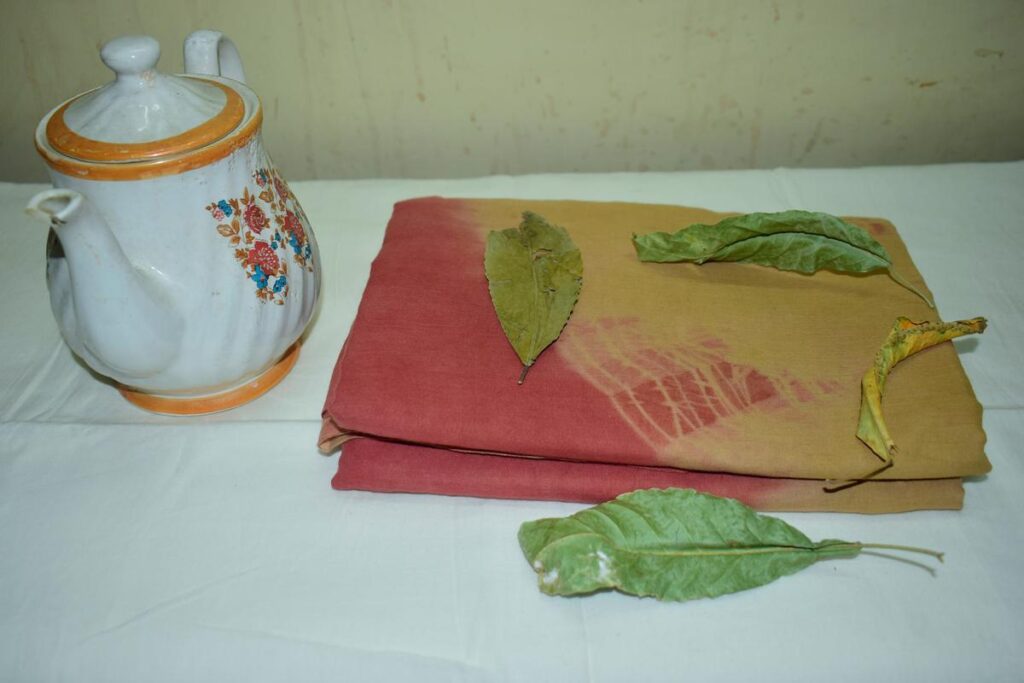
A pomegranate peel dyed cotton sari by EcoFab Bharat | Photo Credit: Special Arrangement

A mordant is a substance used to affix dye to fabrics and are not usually plant-based. The use of natural dyes dates back to India’s Vedic period when the Indian Madder (Rubia cordifolia, commonly known as manjistha) was used to obtain red pigment, says Pushyamitra Joshi of EcoFab Bharat, Indore, who will be hosting one of the workshops at the exhibition. “The leaves and bark of the Lodh tree (Symplocos racemosa) can be used as a mordant in place of alum. This makes its use and subsequent disposal totally safe for the craftsman and the environment,” he says.

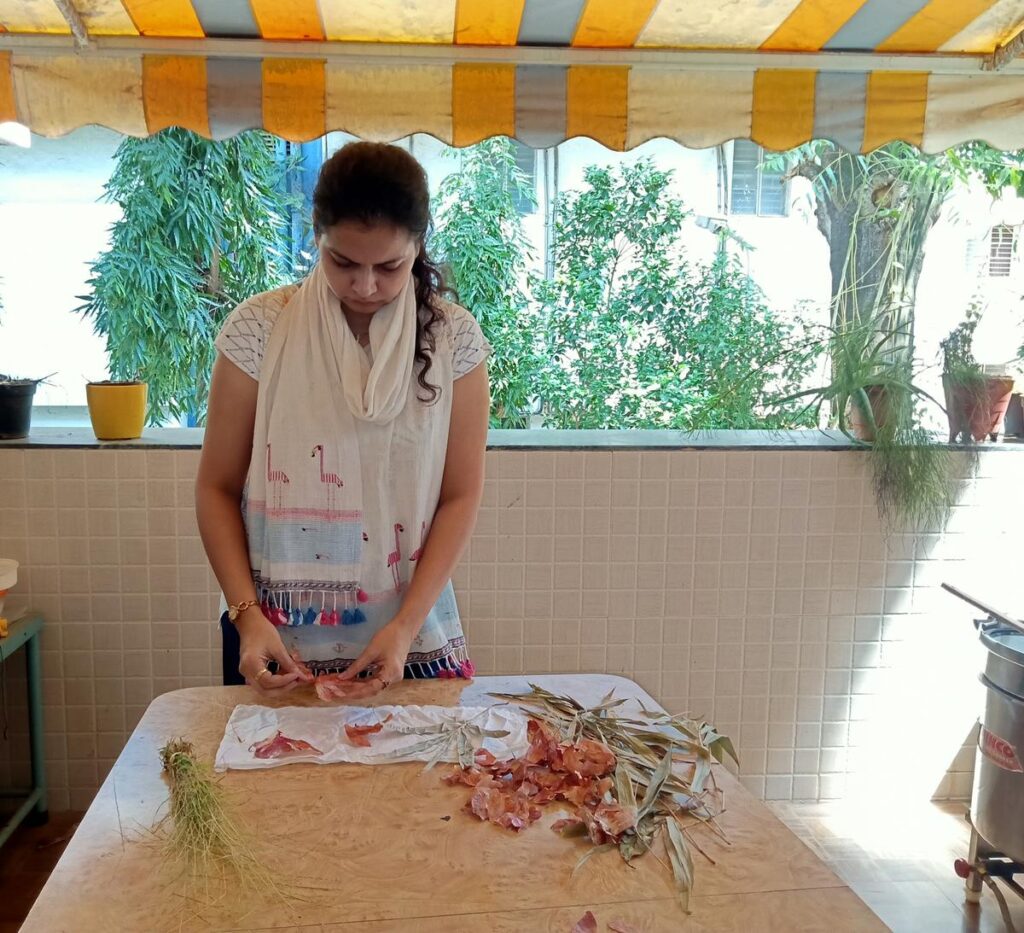
A demonstration of eco printing by Leafage | Photo Credit: Special Arrangement

Pushyamitra will demonstrate how to dye fabric using Lodh as a mordant and participants will be provided with kits containing Lodh and manjistha to replicate the process at leisure. “Apart from reviving an ancient practice, the use of plant-based mordants ensures brighter shades as it is more potent. That it is completely eco-friendly is a huge plus,” he adds.

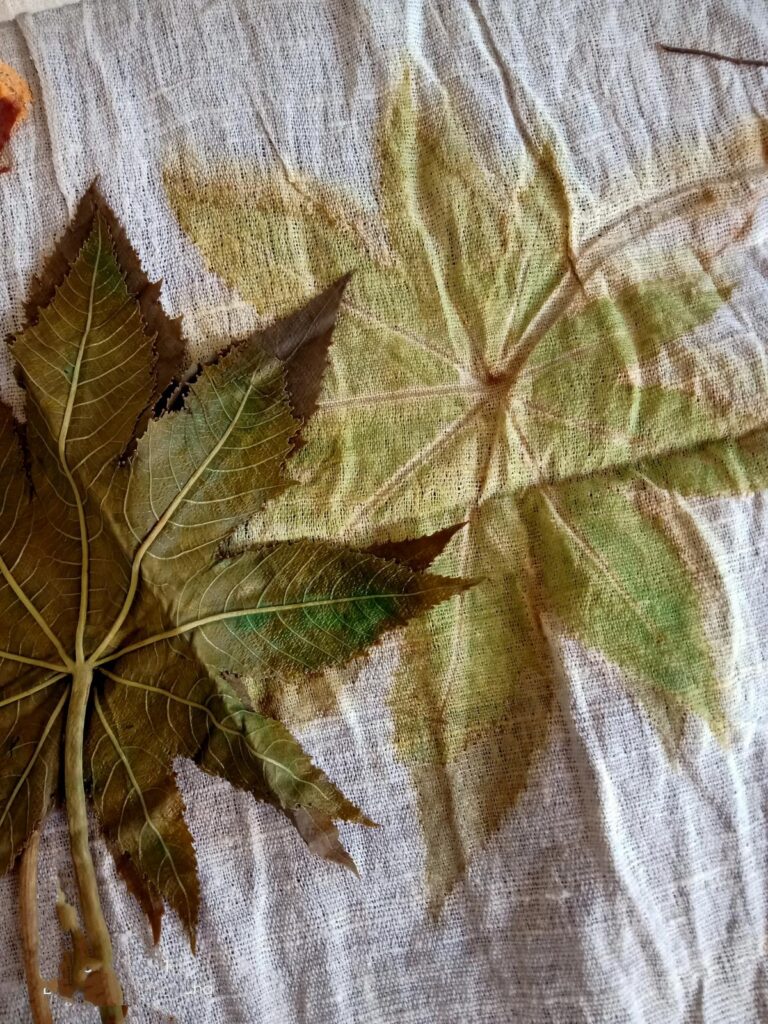
Pune-based Shraddha Barde of Leafage will conduct a workshop on eco-printing, which she believes is both an art and science. “Every leaf, even if it is from the same tree is of a different shape and composition, so every piece is one of a kind. It is perhaps the purest method of printing as one transfers the colour present in leaves directly onto the fabric — it is a natural process, using natural methods,” says Shraddha. She will cover the basics of the technique following which participants will try their hand at eco-printing.

An eco printed piece from Leafage | Photo Credit: Special Arrangement

The exhibition will feature an embroidery collection by designer Asif Shaikh as well as rugs, masks in natural dyes, block print samples and recycled pieces. “Though there is no sale of the pieces on display, there will be a catalogue of the collection and one can write down if they are interested in a particular piece. If it doesn’t go into our permanent collection, it will be available at a price, later. There will also be a sale of the pieces that are not used at the exhibition,” says Arati.

‘Natural dye stories by Label Arati,’ will be on at Bangalore International Centre from April 30 to May 3. To register for the workshops, contact 080 41279127 or whatsapp 9448648576.

source: http://www.thehindu.com / The Hindu / Home> Life & Style / by Ruth Dhanraj / April 28th, 2022