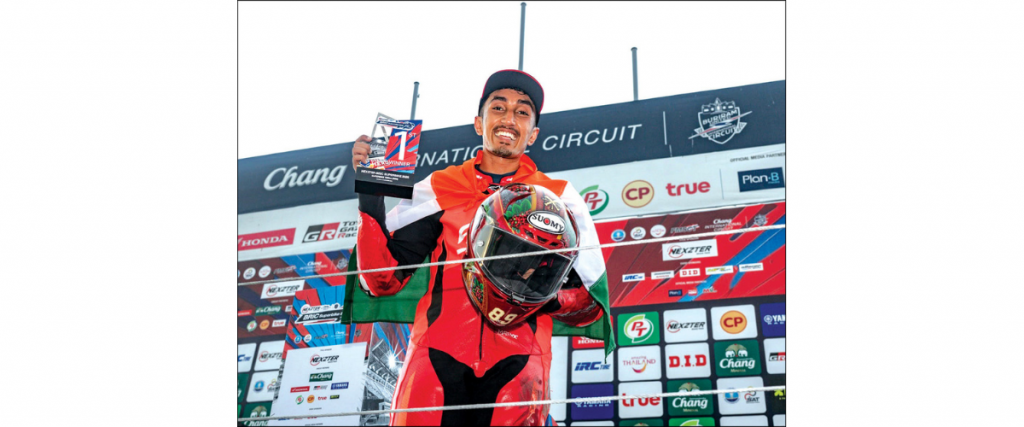
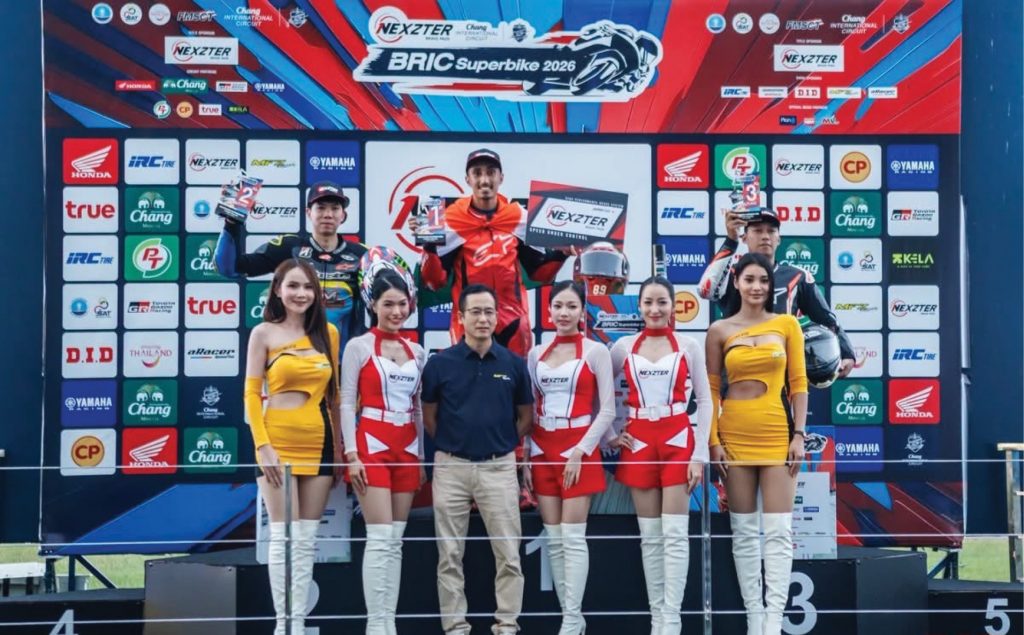
Mysuru’s motorcycle racer Tasmai Cariappa secured his second victory of the 2026 season in the Superbike 1000cc SB2 category at NEXZTER BRIC Superbike Championship – Round 3 held at Chang International Circuit in Buriram, Thailand, from Oct 16 to 18.
The victory was particularly special for Tasmai as it marked his first-ever wet race since beginning his motorcycle racing career in 2021. Competing on the powerful Yamaha YZF-R1 1000cc superbike, he demonstrated exceptional determination, adaptability and control in challenging wet weather conditions to secure the top step of the podium.
Racing in the rain presented an entirely new challenge, demanding precision, confidence and a careful balance between speed and control. Winning under these circumstances made the achievement even more rewarding, marking another significant milestone in his international racing journey.
Tasmai credited his data engineer and the entire AVRP team for their crucial contribution to the victory. “I am extremely happy to secure this victory, especially because it was my first-ever wet race in my entire racing career. Winning it on a 1000cc Yamaha R1 makes it even more special. A huge thanks to my entire team for understanding my riding style and working tirelessly to set up the motorcycle exactly the way I needed it. Their support and efforts made a tremendous difference and this victory belongs to the entire team,” said Tasmai.
Representing India with the Nexzter Liqui Moly Yamaha Moritech Bridgestone AVRP team, Tasmai continues to establish himself on the international racing stage. Following his successful transition to the highly competitive 1000cc Superbike category in 2026, this latest win further strengthens his campaign as he prepares for the season finale.
With two victories secured this season, Tasmai now turns his attention to Round 4, scheduled for Nov. `19 to 22, 2026, where he aims to continue his momentum and fight for the championship title in his debut yearin 1000cc category.
source: http://www.starofmysore.com / Star of Mysore / Home> Sports / October 24th, 2026
Bharathi Hiremath, from the Department of Political Science at Maharaja’s College, Mysuru, has been appointed Registrar (Evaluation) at Kodagu University.
According to a government notification dated October 19, Prof. Hiremath, who is the co-ordinator for postgraduate studies in International Relations in the Political Science Department, has been appointed as Registrar (Evaluation) of Kodagu University in place of Suresh M., who has been repatriated to his parent institution — Department of Economics, University of Mysore.
source: http://www.thehindu.com / The Hindu / Home> News> India>Karnataka / by The Hindu Bureau / October 24th, 2026
Some Australian roasters are turning to India as an origin as coffee supply from other regions tightens. Image: Ahaana Coffee
As Australian roasters explore alternative origins, Ahaana Coffee is helping showcase India’s diverse coffee offering – from premium Robustas to distinctive Monsooned Malabar Arabic.
Indian coffee is starting to carve out a bigger niche in Australia’s roasting scene.
Smaller-than-expected harvest results out of established origins such as Brazil and Vietnam have left roasters with the need to fill their bags with quality coffees grown elsewhere, and the South Asian nation known for high-quality Robusta is meeting the call.
Melbourne-based green bean importer Ahaana Coffee has seen this boost firsthand, with Founder Rajesh Nair reporting strong interest in Robusta sourced from family-owned plantations in Karnataka.
“Over the past few years, I’ve definitely seen more interest in Indian coffee, especially Robusta,” says Rajesh.
“People are increasingly inclined towards Indian Robusta because the quality is comparatively better than many other origins.”
Driving demand
According to the United States Department of Agriculture (USDA), India was responsible for producing 6.43 million 60-kilogram bags of coffee in 2025-26, which is about four per cent of the world’s total coffee supply.
About 70 per cent of the coffee grown in India is Robusta. Only six nations produce more coffee than the South Asian nation, which also has a strong history in growing Arabica.
Predominantly grown in the southern states of Karnataka, Kerala, and Tamil Nadu, coffee cultivation in India traditionally involved cherries grown in the shade alongside other spice crops.
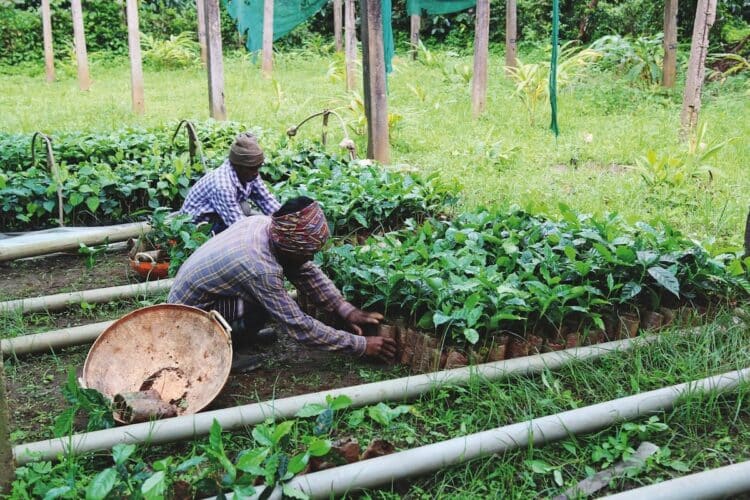
Rajesh and Ahaana work with family-owned estates around Coorg in Karnataka. These plantations have produced coffee for more than 40 years, and he says ongoing replanting programs are helping rejuvenate the estates while ensuring they remain productive long into the future.
“We need to replant some saplings every year. We regularly replace plants that have declined or died over time across all our estates,” he says.
“This year alone we’re replanting about 3000 trees, but that changes from year to year. It depends on the condition of the plants and how many need to be replaced.”
The estates maintain a clear separation between Arabica and Robusta production, with replanting programs tailored to each variety.
”This year it has mostly been Cauvery (Catimor-type) plantations that have been refreshed, but across the estates we have replanted a number of different varietals,” says Rajesh.
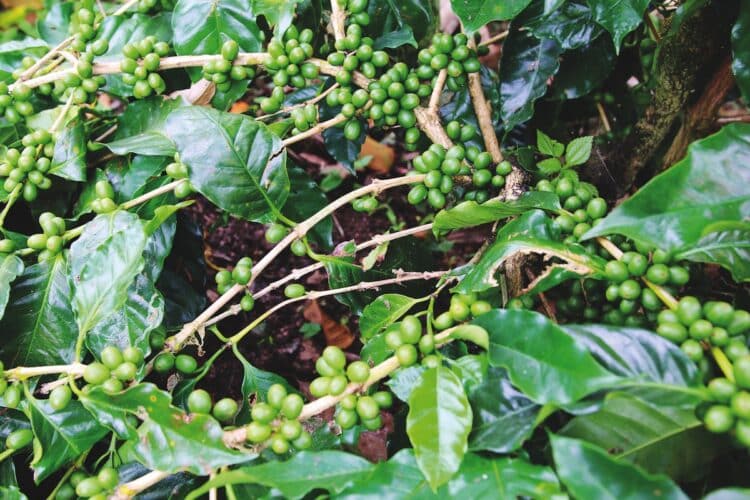
The dwarf Cauvery variety is planted at high density, enabling estates to maximise production from available land.
According to Rajesh, the varietal is valued for its clean and bright cup profile, typically featuring citrus, red berry, and herbal characteristics.
Alongside Cauvery, the estates cultivate traditional Indian Arabica varieties including Selection 6 and Selection 795. Selection 6 is prized for its strong tolerance to coffee leaf rust and balanced cup profile, while Selection 795 remains one of India’s most established varieties, recognised for its high yields and flavour notes of dark chocolate, toasted nuts, maple syrup, and spice.
While those Catimor saplings will take time to mature, Rajesh says Ahaana is working on importing India’s most distinctively processed – Monsooned Malabar – coffee into Australia to round out a productive 2026.
This style of coffee is closely linked to India’s maritime history, with the unique profile developed after coffee was exposed to salty sea air during shipping to Europe in the 18th and 19th century.
This exposure resulted in a coffee with a transformed appearance, density, and cup profile. The beans swell and lose acidity, resulting in a coffee known for heavy body and an earthy flavour profile.
Nowadays, rather than exposing the coffee to humid monsoon air on the open ocean, the effect is achieved by exposing the coffee to the monsoon winds in coastal warehouses.
“It’s a very specific style that is unique to India,” says Rajesh. “It’s a seasonal process that results in a very low-acidity coffee.
“Processing usually starts around August or September, with the coffee normally available from October to March. I’m expecting to secure between 26 and 30 tonnes in total this year.”
Rajesh says there is rising demand for both Indian Arabica and Robusta among Australian roasters, with Robusta demand continuing to level up.
While traditional preferences once positioned Robusta as an inferior coffee to Arabica, limited mostly to commercial blends, the species has seen an improvement in its perception in recent years.
India has long been heralded as a world leader in quality Robusta, and Rajesh says roasters continue to recognise its potential as a high-quality blending coffee and a standalone single origin.
The estates Ahaana works with grow both traditional Old Robusta and Selection 274, a high-yielding cultivar widely associated with India’s Kaapi Royale coffees.
Rajesh says these varieties are sought after for their heavy body and syrupy texture, with cup profiles ranging from earthy and bold through to caramel, toasted nut, and spice notes.
Demand for Arabica is more nuanced, according to Rajesh. Premium-grade lots continue to attract interest, but these coffees are often positioned as a distinctive point of difference coffee, rather than being used in blends.
Like many importers, Ahaana has spent the past year or so navigating challenging macroeconomic conditions. Rising coffee prices, freight disruptions, and ongoing shipping delays continue to strain the supply chain.
“Shipping lines can’t operate at their usual efficiencies because of oil price surges and disruptions to key shipping points. Containers are getting stuck, and that’s affecting everyone who relies on shipping,” he says.
The coffee is ready at origin, but there are no containers. It’s a domino effect from what’s happening in the Middle East.”
Dwarf Cauvery cherries growing at one of Ahaana’s Indian plantations. Image: Ahaana Coffee
Pushing boundaries
Despite those ongoing logistics hurdles that are influencing the entire industry, Rajesh says the business remains focused on growth.
Launching in 2025, Ahaana Coffee has been steadily growing its capabilities out of Melbourne and is building its business in Sydney and New Zealand.
Now with Sydney-based representative Srini supporting customers in New South Wales, and New Zealand representative Dan helping develop opportunities across the Tasman, the business is beginning to establish the foundations of a bigger presence.
Rajesh says building relationships takes time, but early conversations and sample feedback has been encouraging in both markets.
“Until now, we’ve been more focused on Melbourne, but we’re starting to build into these new areas,” he says.
“Diversifying into multiple regions is very important for us. As a growing business, we want to expand into new territories.”
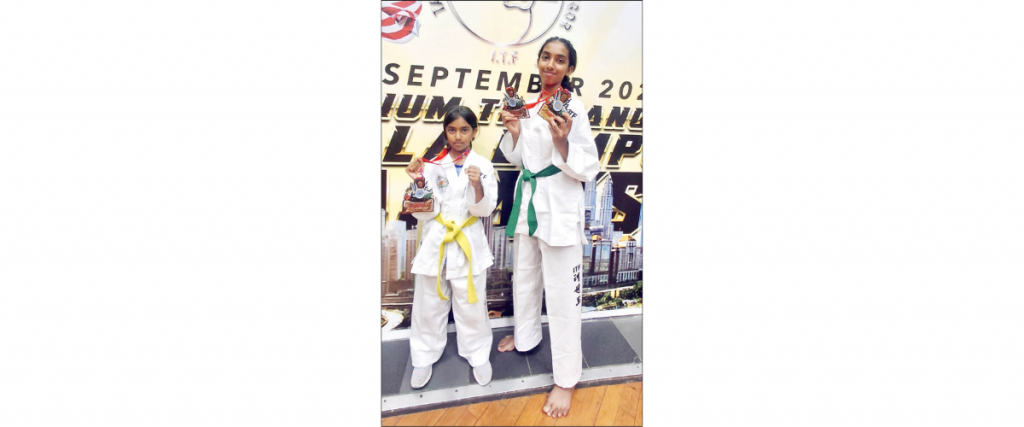
Two young Taekwondo athletes from Kodagu representing India shined at the Hwa Rang Warrior Asia Cup 2026 held in Selangor, Malaysia recently.
Devangi Janmoh won the gold medal in her individual sparring category and played a leading role in India’s bronze medal finish in the team event.
Meanwhile, Tharanga Janmoh also played a crucial role in the same Indian team that secured the bronze medal.
The championship drew a large field of clubs and academies from across Malaysia along with international contingents.
Daughters of Kuyyamudi Charan Kumar and Deeksha, Devangi and Tharanga are granddaughters of Kuyyamudi Janardhana and Mohini and Paladka Mukkati Lokanath and Meenakshi.
source: http://www.starofmysore.com / Star of Mysore / Home> Sports / October 01st, 2026
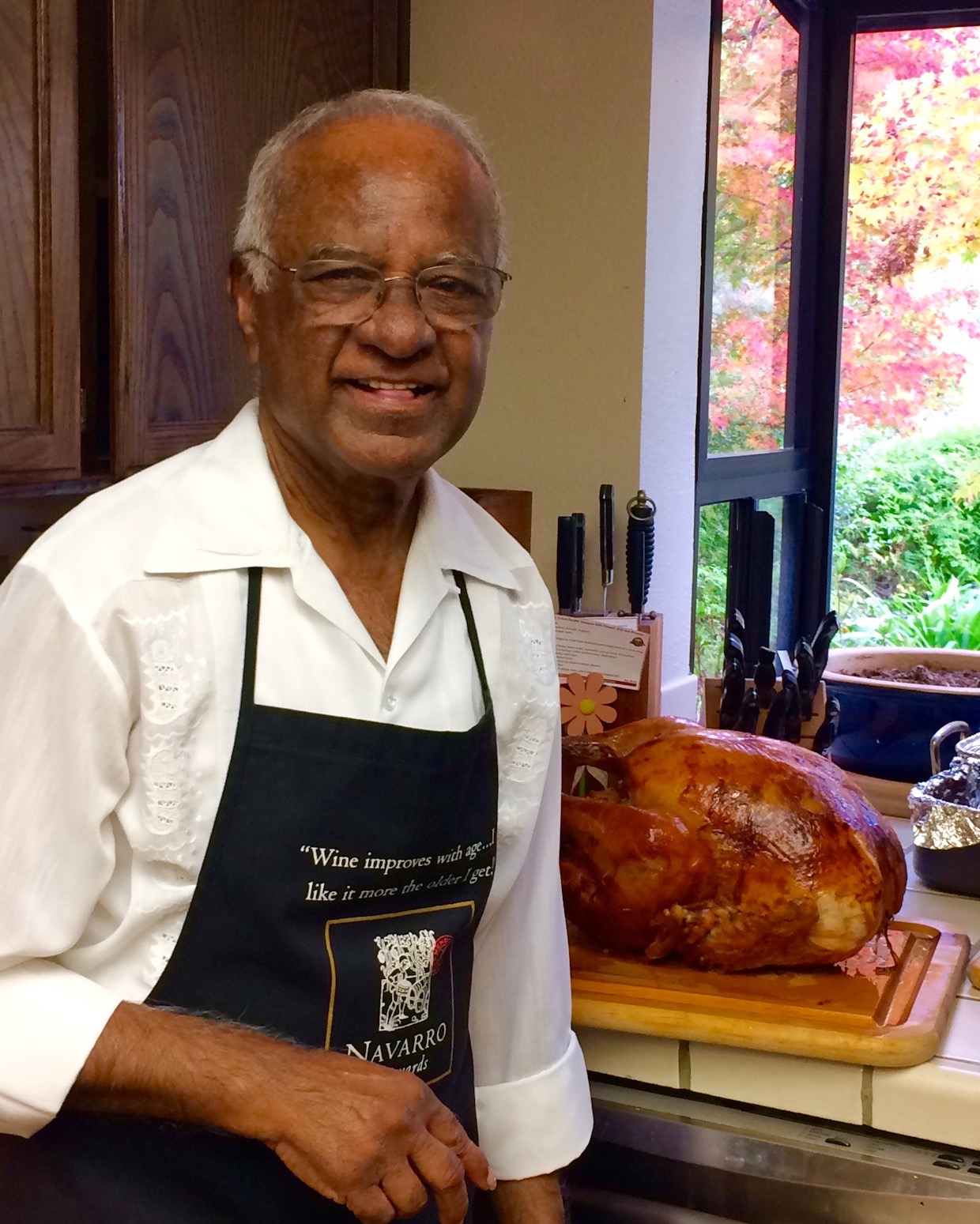
Dr. Joseph John, a former nuclear physicist who helped introduce and redefine Indian-grown coffee in the United States, died Sept. 15. He was 88.
Known throughout the industry simply as “Dr. John,” John and his wife, Urmila, established the San Francisco Bay Area-based Josuma Coffee Company in 1992, working to introduce high-quality Indian coffees to a U.S. specialty coffee market that largely overlooked the origin.
John later developed the company’s signature Malabar Gold Espresso blend, made exclusively with Indian coffees, while becoming a fixture at industry trade shows through his lectures on the science of espresso.
Born in 1938 in Madurai, in India’s southern state of Tamil Nadu, John earned bachelor’s and master’s degrees in physics before joining India’s atomic energy program in 1958, at age 20.
He moved to the United States in 1964 and earned a doctorate in nuclear physics from Florida State University in 1968. He met Urmila at Florida State, and the couple married in 1967 and became parents in 1972.
John subsequently worked for Gulf General Atomic, a predecessor of today’s General Atomics, in San Diego before moving into business and consulting work in the San Francisco Bay Area.
Entering Coffee
John’s entry into specialty coffee came unexpectedly after an acquaintance connected to an Indian coffee estate sought help finding American buyers. In a 2012 interview with Fresh Cup magazine, John recalled that he and Urmila initially had no plans to enter the coffee business.
“It was not by design. It was really just sheer accident,” he said.
The couple officially established Josuma Coffee Company in 1992, focusing on direct relationships with Indian estates, specializing in coffees that could meet the quality requirements of specialty roasters. John also worked with growers and the Coffee Board of India to improve quality and expand the country’s presence in the U.S. market.
In a 2018 account of Indian coffee’s development, Barrington Coffee Roasting Company co-founder Barth Anderson credited John with introducing him to Indian specialty coffee in 1996, describing his influence on both American roasters and coffee producers in India.
In 1996, John developed Malabar Gold Espresso, initially as a demonstration of the potential of Indian beans in premium espresso blends. The product grew into Josuma’s flagship roasted coffee offering.
John also became an outspoken advocate for the use of high-quality robusta in espresso blends, challenging prevailing attitudes in the American specialty coffee industry.
An Educational Leader
Beginning in the early 2000s, he wrote extensively about espresso extraction and blending while delivering lectures at Coffee Fest and other industry events. His classes included “Espresso and Coffee: More Different Than You Think.”
His published work included a two-part 2008 article on espresso blending in Roast magazine and the 2023 book Creating a Perfect Espresso, which brought together much of his teaching and writing.
John retired in 2017, although his involvement in coffee education continued. In 2018, Josuma became an early supporter of the UC Davis Coffee Center, where a conference room now bears the company’s name.
Josuma remains family-owned and operated under the management of John’s son, Melind, and daughter-in-law, Steph.
John is survived by his wife, Urmila, Melind and Steph.
source: http://www.dailycoffeenews.com / Daily Coffee News by Roast Magazine / by Daily Coffee News Staff / October 20th, 2026
Kalanithi Maran built one of India’s biggest media empires. Yet the woman standing beside him has shaped much of its success from the start. Kavery Kalanithi (also known as Kaveri Maran) is far more than the wife of the Sun Group chairman. She is Executive Director of Sun TV Network, the force behind its content strategy, and one of the highest-paid executives in Indian corporate history.
Here’s a clear, up-to-date look at her life, work, and family.
Kavery hails from Kodagu (Coorg) in Karnataka. She married Kalanithi Maran in 1991. At the time, Kalanithi was still shaping his vision after returning from an MBA at the University of Scranton in the United States. He had seen the explosion of television channels there and wanted to bring something similar to South India.
Kavery joined the journey almost immediately. When Sun TV launched in 1993, she stepped into a hands-on role. What began as a single Tamil channel grew under the couple’s combined leadership into a network of more than 30 channels across Tamil, Telugu, Kannada, Malayalam, Bengali, and Marathi. In 2024 the group even entered the Hindi market with Sun Neo.
Their partnership has always been professional as well as personal. Both ranked among India’s highest-paid executives, each drawing packages in the tens of crores in earlier years. Kavery’s remuneration has consistently been reported around ₹87 crore in recent financial years.
Her Role in Building the Sun Empire
Kavery oversees content across the network. She watches competing channels closely and believes feedback is essential—something her husband instilled early. Under her watch the group expanded beyond South India and strengthened its overseas presence among the Tamil diaspora.
Key contributions include:
Driving content that keeps Sun TV dominant in Tamil Nadu (often around 40% viewership share).
Expanding into Marathi and Bengali markets.
Supporting the group’s move into digital streaming through Sun NXT.
Helping maintain the network’s strong film production arm, Sun Pictures.
She rarely seeks the spotlight. Colleagues and industry watchers describe her as focused, detail-oriented, and quietly decisive. While Kalanithi handles the broader business vision, Kavery has long owned the creative and content side.
Family Life and the Next Generation
The couple has one daughter, Kavya (also spelled Kaviya) Kalanithi Maran, born in the early 1990s. Kavya is Executive Director at Sun TV Network and heads the group’s cricket interests—Sunrisers Hyderabad in the IPL, Sunrisers Eastern Cape in South Africa’s SA20, and Sunrisers Leeds in England’s The Hundred.
As of October 2026, Kavya is preparing to marry music composer Anirudh Ravichander. The wedding reception is scheduled for 21 November 2026 in Chennai. Kalanithi and Kavery have already begun inviting political leaders, including meetings with Telangana Chief Minister A. Revanth Reddy and Tamil Nadu Chief Minister.
The family maintains a relatively private profile despite their public business roles and political connections (Kalanithi is the grand-nephew of the late M. Karunanidhi and son of former Union Minister Murasoli Maran).
Quick Facts Table
Detail
Information
Full Name
Kavery Kalanithi Maran (Kaveri Maran)
Hometown
Kodagu (Coorg), Karnataka
Marriage
1991 to Kalanithi Maran
Profession
Executive Director, Sun TV Network
Key Responsibility
Content strategy across 30+ channels
Daughter
Kavya Kalanithi Maran (SRH CEO)
Notable Salary (reports)
Around ₹87 crore in recent years
Current Focus (2026)
Content, digital growth, family milestones
Why Kavery Matters in Indian Media
Kavery represents a quieter style of leadership. She entered the business at its foundation and stayed through every expansion, from a single channel to a multi-language powerhouse that reaches over 140 million households. Her consistent presence has given Sun TV stability and a strong content identity.
In an industry often dominated by louder personalities, her approach—watch the product closely, expand carefully, and let results speak—has proven effective for more than three decades.
Conclusion
Kavery Kalanithi is not just Kalanithi Maran’s wife. She is a co-architect of one of India’s most successful regional media groups. From the early days of Sun TV in 1993 to the network’s current scale and the family’s next chapter with their daughter’s wedding in November 2026, she has remained a steady, influential presence. Her story shows how behind-the-scenes leadership can shape an entire industry.
source: http://www.gmdcalibration.in / GMD Calibration / Home / by gopalkumarjha111991@gmail.com / October 18th, 2026
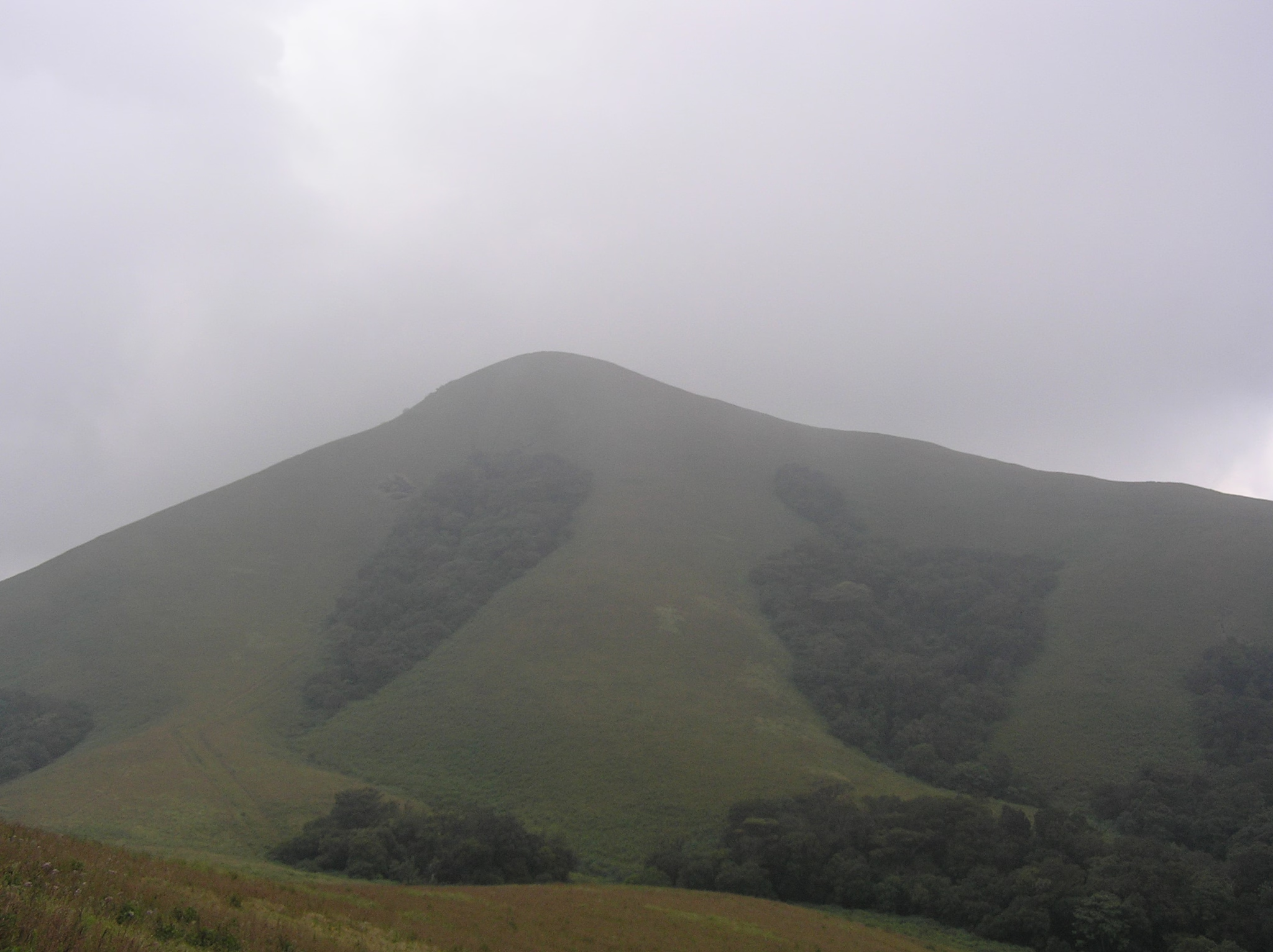
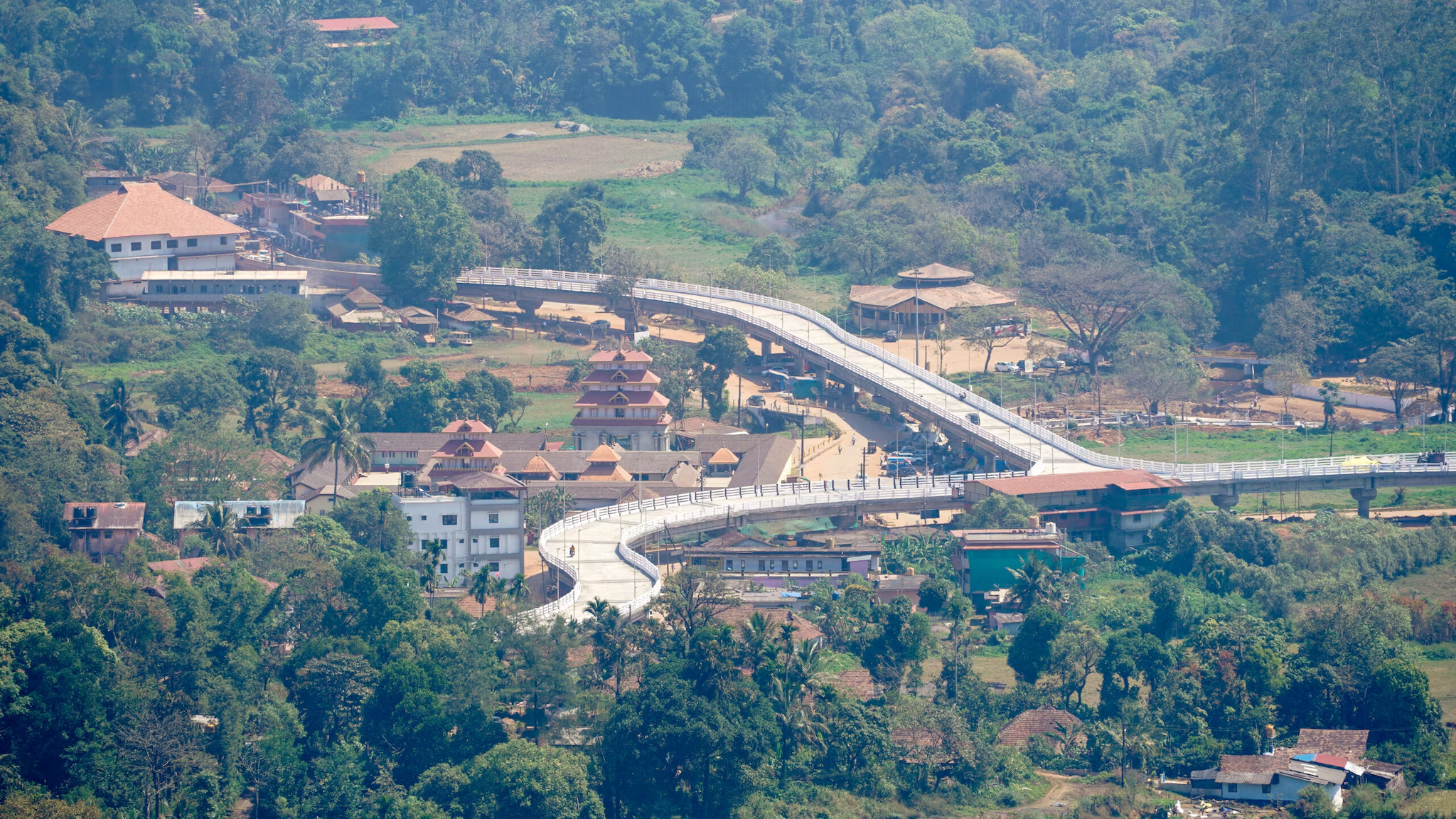
Observed in Karnataka’s Kodagu district, Kaveri Sankramana celebrates Goddess Kaveri and the sacred origins of the Kaveri River.
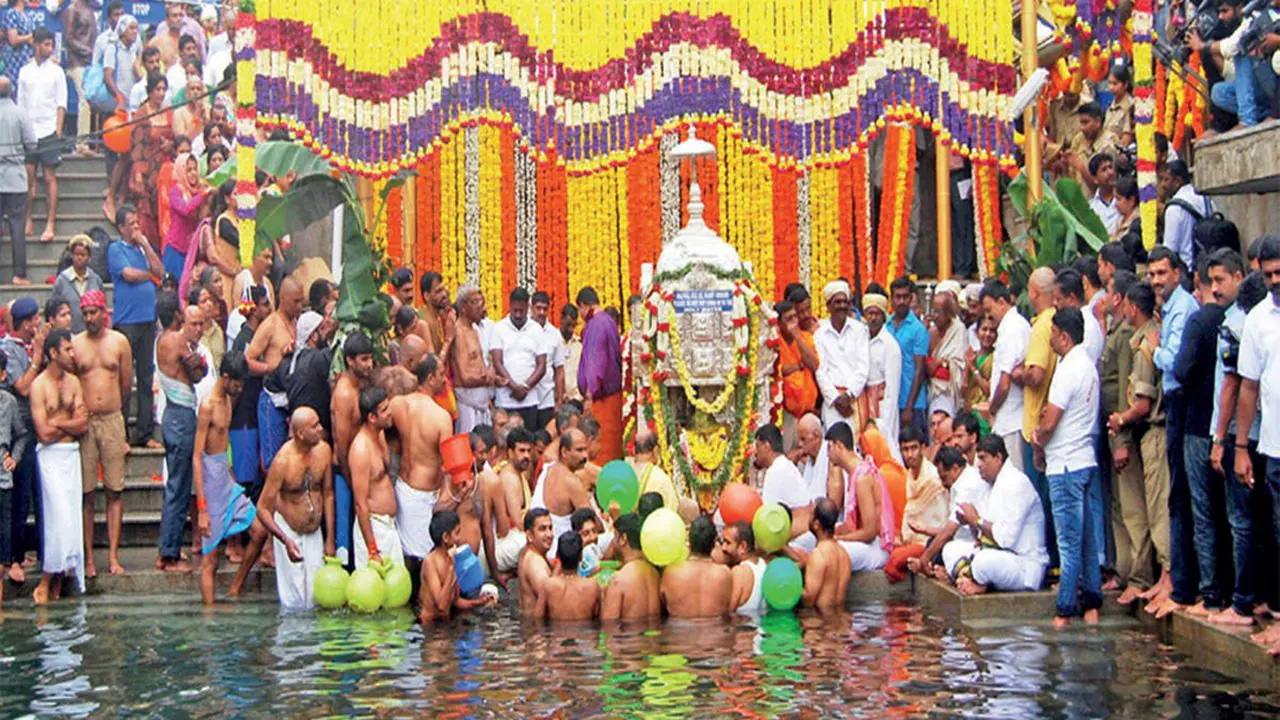
Every year, thousands of devotees gather in Karnataka’s mist-covered hills to witness a sacred ritual associated with the origins of the Kaveri River. Kaveri Sankramana, also known as Tula Sankramana, celebrates Goddess Kaveri, who is revered as the divine embodiment of the river. Observed in Kodagu district, the festival brings together ancient rituals, local customs and religious traditions. Its main attraction is Theerthodbhava, when sacred water is believed to emerge from a spring at Talakaveri. Here are six things to know about this unique river festival. (Image: Incredible India).
Kaveri Sankramana falls on the first day of the Hindu solar month of Tula, usually in mid-October. In 2026, the festival is observed today, October 17. It marks the Sun’s transition into Libra and holds special significance for devotees in Kodagu, Karnataka. (Image: Wikimedia Commons).
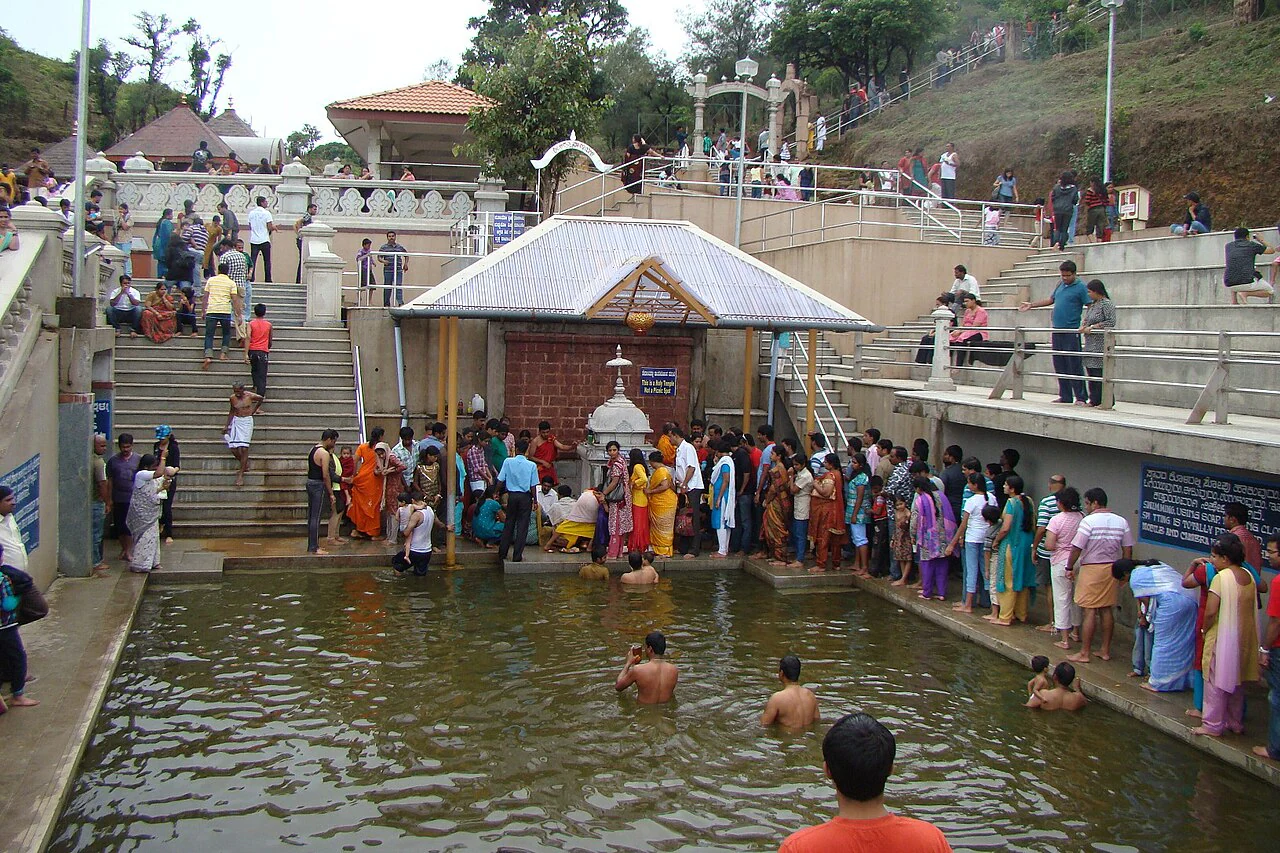
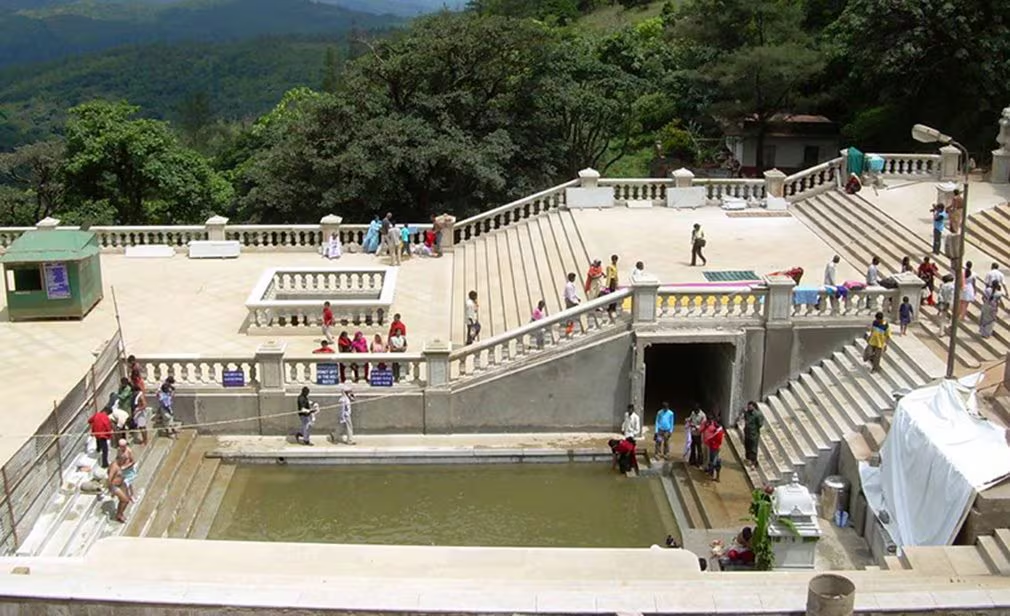
The main celebrations take place at Talakaveri, a revered pilgrimage site in the Brahmagiri Hills of Kodagu, also known as Coorg. A temple and sacred tank mark the traditional source of the Kaveri River. Surrounded by the Western Ghats, the site attracts pilgrims throughout the year. During the festival, particularly large crowds gather to offer prayers and witness the central ritual. (Image: Wikimedia Commons).
The highlight of Kaveri Sankramana is Theerthodbhava, which refers to the emergence of sacred water from the Brahma Kundike at Talakaveri. According to local belief, the water appears at an auspicious moment, symbolising the manifestation of Goddess Kaveri. Devotees gather to witness the event and collect the sacred water, known as theertha. Many families preserve it at home, believing it brings divine blessings. (Image: Incredible India).
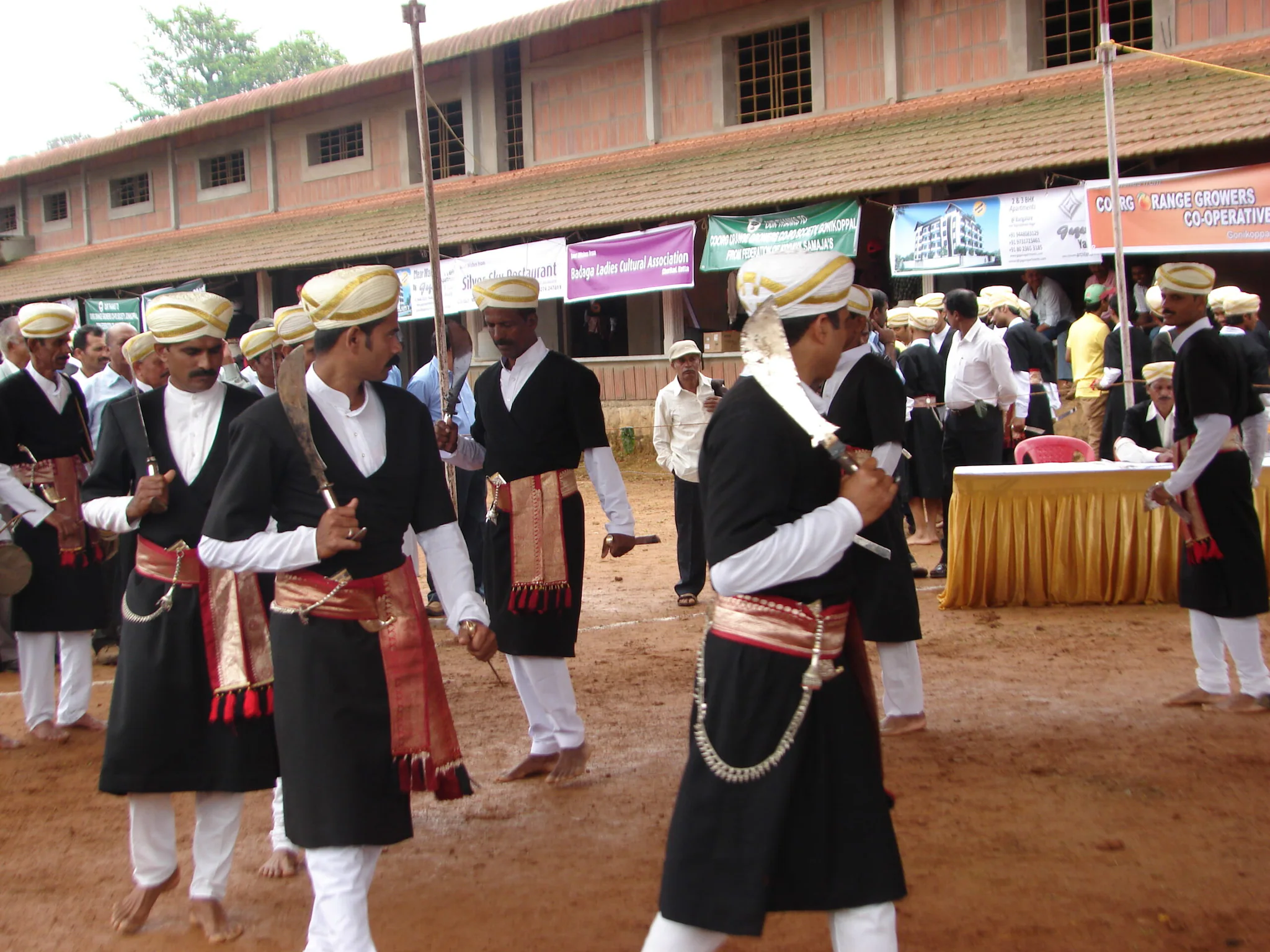
For the Kodava community, Goddess Kaveri, also known as Kaveramma, holds a special place in religious and cultural traditions. The river is associated with life, prosperity and the well-being of the region. The festival celebrates this deep connection between the community, its land and the river that sustains generations. (Image: Wikimedia Commons).
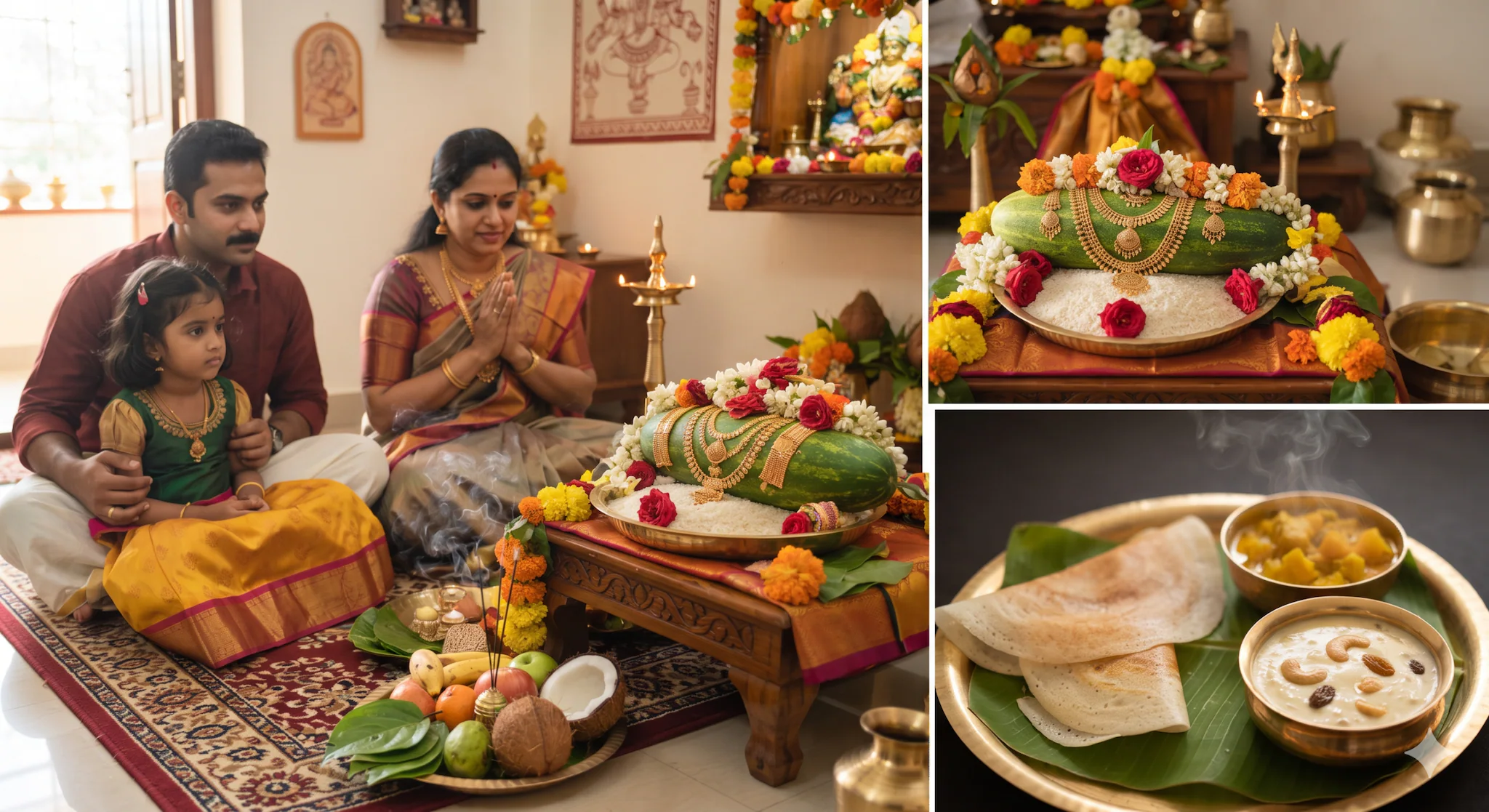
Kaveri Sankramana is also observed through household rituals, including Kanni Puje. Traditionally, a cucumber or coconut is decorated with flowers, jewellery and other offerings to symbolise the goddess. Families offer prayers and seek blessings. Traditional festive foods may include dosa, pumpkin curry and payasa, a sweet preparation. (Image: AI-Generated).
Bhagamandala, located in Kodagu, is associated with the confluence of the Kaveri, Kannike and the traditionally recognised underground river Sujyoti. Devotees visit the area for prayers and religious observances during the festival. Local fairs and community gatherings add to the celebrations, making Kaveri Sankramana an important expression of Karnataka’s living cultural heritage. (Image: Wikimedia Commons)
source: http://www.news18.com / News18/ Home> News> Photogallery> Lifestyle> Events / by Sujata Singh / edited by Priyanka Das / October 17th, 2026
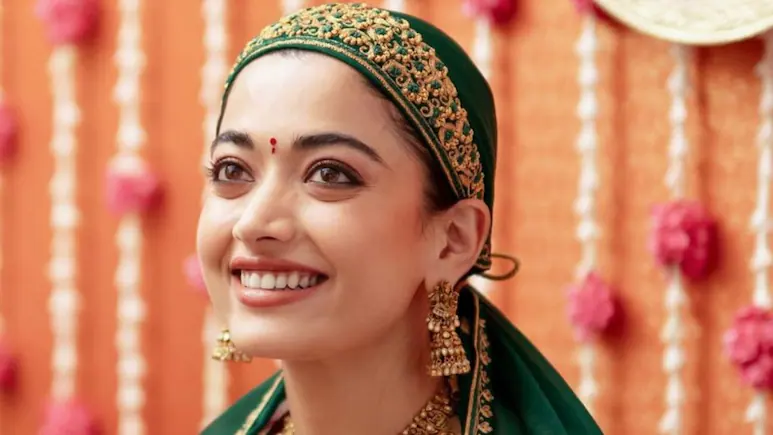
For one of her wedding rituals, Rashmika Mandanna draped a green-red saree in Coorgi-style and completed the look with gold temple jewellery
Rashmika Mandanna wore gold jewellery by SHREE Jewellers for her wedding. / SHREE Jewellers/ Instagram
Rashmika Mandanna and Vijay Deverakonda’s wedding in Udaipur was this year’s biggest social event, grabbing all the eyeballs and headlines. Their kilos of gold jewellery for the main wedding and regal looks set new standards for brides and grooms.
Designed by SHREE Jewellers, each jewellery piece was a masterclass in honouring roots and intricate designs. The brand recently took to Instagram to share an unseen wedding picture of Rashmika.
The caption read, “A magnificent celebration of Coorg’s ancestral jewels, distinguished by their intricate forms and enduring cultural richness. Rashmika Mandanna brings an effortless grace to this extraordinary legacy of adornment.”
Rashmika Mandanna’s unseen wedding look is a beautiful tribute to Kodava tradition and craftsmanship. Photo: SHREE Jewellers/ Instagram
Rashmika Mandanna In Gold Temple Jewellery And ‘Coorgi’ Saree
In the picture, Rashmika Mandanna can be seen glowing and smiling ear to ear in a green-and-red saree draped in the signature Coorgi style. The silk drape featured a red-and-gold border. She completed the look with a green veil featuring intricate embroidery and zari work. The vastra, or musuk, is tied as part of traditional Kodava culture.
Complementing the look was a gold necklace, a traditional South Indian kasumala design. It features coin-shaped elements with carvings of Goddess Lakshmi, a symbol of auspiciousness and prosperity. It is also adorned with uncut diamonds, creating a striking contrast. The lower edge of the piece is finished with clusters of tiny pearls, adding movement to the signature silhouette.
The matching earrings featured sculpted motifs of Lord Krishna on the upper portion. The jhumka-style earrings were also studded with precious stones and showcased a multi-tiered silhouette with clusters of pearls dangling at the end.
For makeup, the Ranabaali star tightly lined her eyes with brown-black kohl and applied brick-red lipstick. Her small red bindi tied the whole look together.
Rashmika Mandanna’s Wedding Jewellery
In an exclusive interview with NDTV, Abhishek Agarwal and Kaushik Kumar, Managing Directors of SHREE Jewellers, shared, “We have always admired Rashmika and Vijay for their craft, but getting to know them personally and being a part of their magical day was truly special. They are wonderful human beings, and being entrusted with such an intimate celebration is something we will always cherish. Like the rest of the country, we are still taking it all in.”
Her jewellery for the big day was inspired by the sculptural language of South Indian architecture. “The collection featured high-relief Nakshi work and intricate Rava granulation, with each detail hand-fused by master artisans,” shared the Hyderabad-based jewellery brand.
As a bride, Rashmika Mandanna wore 11 jewellery pieces, including a choker layered with traditional harams, statement jhumkas, a jada billa, champasaralu, a hathphool, a mathapatti, a nose ring, bangles, a bajuband, a waist belt, and anklets.
“Finished in an antique matte polish, the creations carried a rich, heritage-inspired glow and were crafted to move seamlessly with her silhouette. The intention was not just adornment but permanence, with jewellery conceived as legacy pieces meant to transcend generations,” shared SHREE Jewellers.
source: http://www.ndtv.com / NDTV / Home> Lifestyle / by Krati Purwar / October 17th, 2026
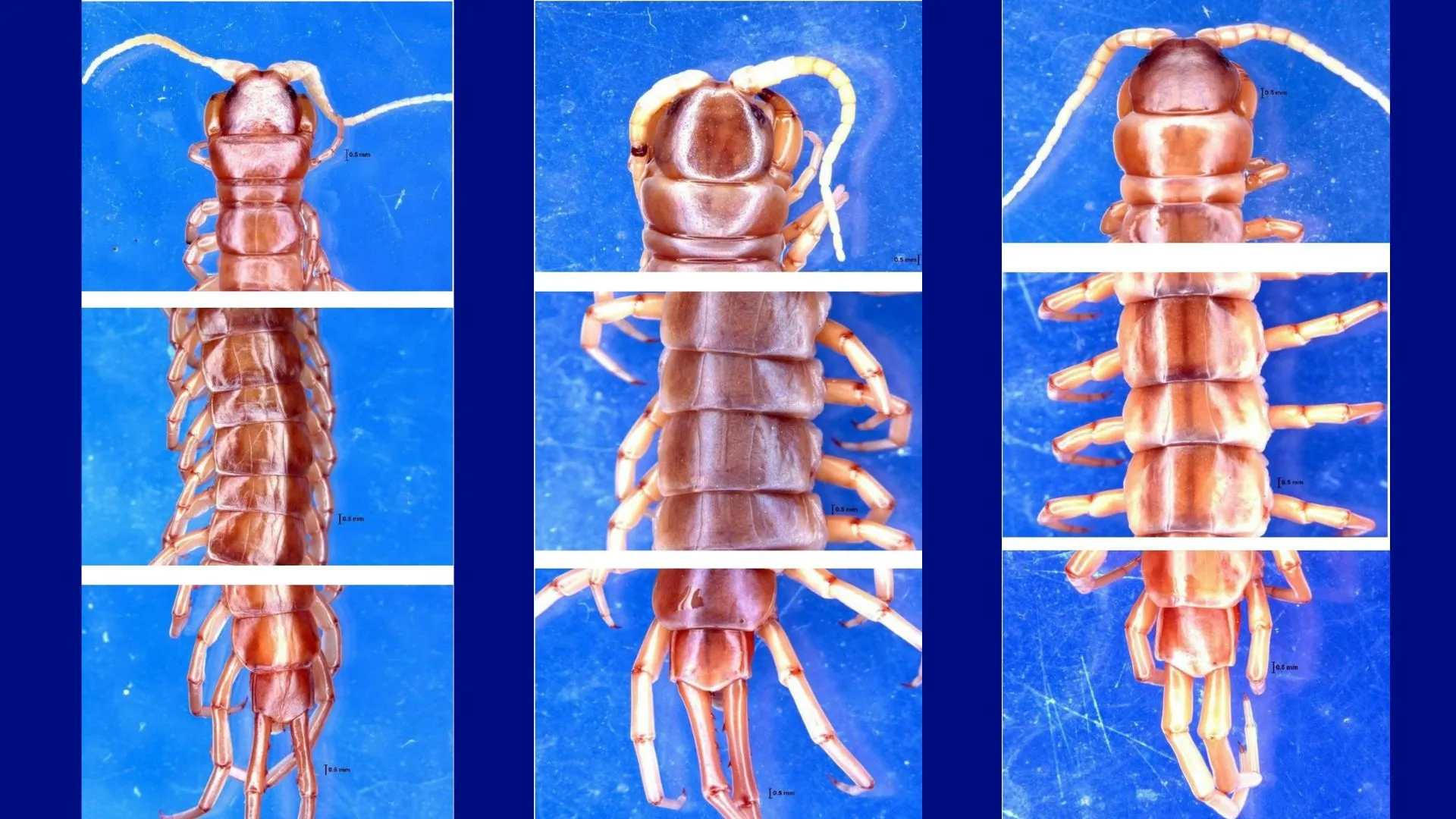
Scientists have discovered and described three new centipede species in the genus Rhysida from Southern India, bringing the country’s total to 23. Led by researchers from the Western Ghat Regional Centre of the Zoological Survey of India in Kozhikode and Malabar Christian College, the find highlights the extraordinary, yet undiscovered biodiversity of the region.
Researchers uncovered the specimens through morphological examination of unidentified centipede specimens housed in the National Zoological Collection at the Zoological Survey of India. They used microscopes and digital cameras to analyse fine anatomical structures, such as tarsal spurs, coxopleural spines, body segments, and antennal counts, and compared them with established taxonomic records in global databases like ChiloBase 2.0.
The newly discovered species are named after their unique physical traits or geographical origins. The first species, Rhysida quadrispinosa, gets its name from the Latin-derived term quadrispinosa, highlighting its unique biological feature: the presence of four ventrolateral spines on its ultimate leg prefemur. The second species, Rhysida coorgensis, is named after Coorg in Karnataka, where researchers first collected the specimen. Similarly, researchers named the third species, Rhysida neyyarensis, after the Neyyar Wildlife Sanctuary in Kerala, where they discovered it.
Each species possesses distinctive physical characteristics that separate it from other known centipedes. Rhysida quadrispinosa features 18 antennal articles, unique body segment margination starting from tergites 7–11, and a distinct arrangement of spines on its ultimate legs. Rhysida coorgensis stands out due to specific paramedian suture starting points on its back plates and unique coxopleural spine configurations, closely resembling R. ikhalama but differing in internal structural details. Meanwhile, Rhysida neyyarensis is distinguished by its specific pattern of tarsal and tibial spurs, possessing two tarsal spurs on legs 1 through 19, alongside its own distinct spinal formula on the ultimate legs.
The discovery underscores the vital ecological importance of the Western Ghats, a globally recognised biodiversity hotspot teeming with unique and vulnerable ecosystems. By uncovering these three distinct macroarthropod predators, the research deepens our understanding of invertebrate evolution, soil ecology, and regional endemism, emphasising the urgent need for continued conservation efforts in South India’s vanishing natural habitats.
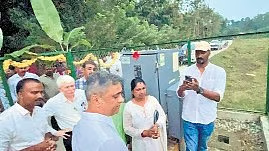
Virajpet MLA AS Ponnanna inaugurates the `4.84 crore power project at Cheeni Hudlu Haadi in Kodagu district. (Photo | EPS)
Located on the forest fringes of Thithimathi, these four tribal settlements are home to over 185 families across three tribal communities: Jenu Kurubas, Paniyera Yeravas, and Panjari Yeravas.
Madikeri :
For as long as anyone can remember, sunset marked the end of the day for the tribal settlements near Thithimathi in Ponnampet taluk of Kodagu district. For generations, darkness was not just the absence of light in the village; it was a way of life. This narrative, however, changed forever this week after a 4.84 crore power project was inaugurated, finally lighting up the tribal settlements of Jungle Haadi, Ayur Suruli Haadi, Cheeni Hudlu Haadi and Chombu Kaadu Haadi.
“We never thought we would live to see our homes shine like this. All of us were jubilant when our houses lit up with the flick of a switch,” said Paniyeravara C Ramu, a resident of Cheeni Hudlu Haadi. He said that although the project was completed four months ago, the inauguration was delayed. “While we were always in the dark, we could not keep calm after the completion of the project. We persuaded our MLA to inaugurate the unit, and you should have seen the happiness on all our faces when our houses received electricity,” he added.
Located on the forest fringes of Thithimathi, these four tribal settlements are home to over 185 families across three tribal communities: Jenu Kurubas, Paniyera Yeravas, and Panjari Yeravas.
Having lived here for generations, residents say they are only now witnessing real development. “Earlier, we used to light diyas with kerosene received through our ration cards. But kerosene supplies stopped after the forest department started providing LPG, leaving us struggling to light lamps in our houses,” explained Ramu.
He noted that while the settlements later received solar lights, they failed because they were not durable. The children in the settlements struggled to study, but the arrival of electricity has now resolved these major hardships.
Yeravas, however, in the settlement still wait for permanent shelters, as many continue to live in tarpaulin huts now equipped with electricity meter boards. According to Ramu, Jenu Kurubas, classified as an indigenous Adivasi community, receive government facilities on a priority basis from the ITDP department. In contrast, Paniyera Yeravas and Panjari Yeravas, who were previously under the ITDP department, were shifted to the Valmiki Corporation and are now under the Alemari Corporation.
“While Jenu Kurubas receive facilities on priority, the Yerava community in the settlement is still waiting for permanent houses. Over 25 houses sanctioned to Yeravas in 2012 remain incomplete. Running from one department to another, we feel like true ‘Alemaris’ (nomads) even to this day,” he concluded.
Nevertheless, Ramu said the settlement has seen considerable progress, including good roads thanks to the current MLA’s efforts, and he hopes permanent shelter, like electricity, is no longer out of reach.
source: http://www.newindianexpress.com / The New Indian Express / Home> Karnataka / by Prajna G R / October 13th, 2026
WELCOME. If you like what you see "SUBSCRIBE via EMAIL" to receive FREE regular UPDATES.
Read More »