Category Archives: Amazing Feats

Return of the… Mahseer

A conservation story from River Cauvery.

On 2018, the International Union for Conservation of Nature (IUCN) classified the Orange-Finned or Humpback Mahseer as ‘Critically Endangered.’

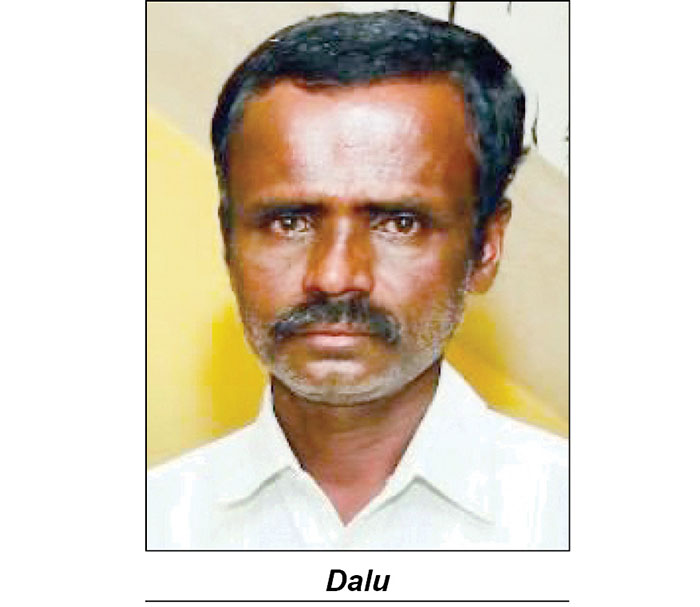
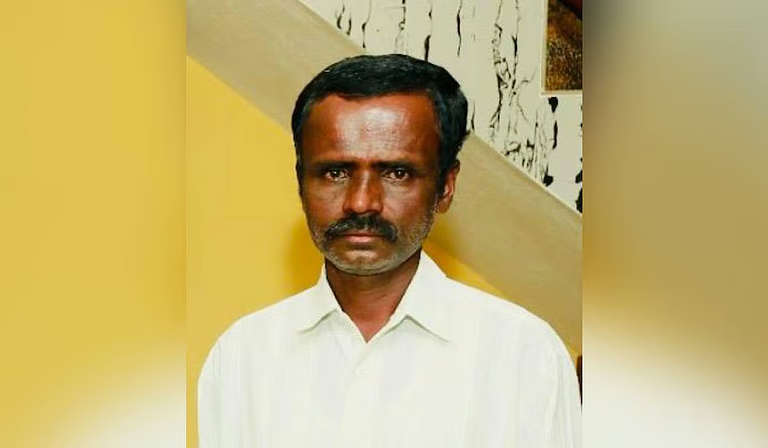
Yet, in the protected stretches of the River Cauvery in Kodagu, the species is found in abundance, thanks to the efforts of Coorg Wildlife Society (CWS) and the family of Chendanda S. Ponnappa and his son Chendanda P. Aiyappa. Mahseer conservation in Cauvery has a history that goes back nearly four decades. It began in 1985, when Ponnappa, a member of CWS, asserted at a meeting that Mahseer still thrived in the Cauvery at Dubare and Valnoor.

At the time, doubts were raised about the fish’s presence in the river. To settle the debate, Ponnappa landed a 44-kg Mahseer in July 1985 at Valnoor, conclusively proving that the iconic fish — known locally as ‘Bommeen’ or ‘Boltha Meen’ in Kodava Thakk and ‘Bilimeenu’ in Kannada — was very much alive in the river. The Cauvery is home to Golden, Silver and Black Mahseer.

The river watchers who keep an eye on illegal fishing and other activities that are detrimental to Mahseer conservation.

That single act marked the beginning of organised Mahseer conservation in Kodagu. Soon after, the Coorg Wildlife Society approached the Fisheries Department, which leased a 25-kilometre stretch of the Cauvery, from Siddapur Bridge to Kushalnagar Bridge, to the Society in 1985 and declared it a protected zone for Mahseer.

The move was accompanied by wide publicity against destructive fishing practices such as dynamiting, the use of nets, copper sulphate poisoning and even poisoning with wild fruits, methods that were rampant at the time and posed a serious threat to aquatic life. Once the lease was handed over, such practices were completely banned and strict enforcement followed.

Equally significant was the crackdown on riverbank encroachments. After the declaration of the Mahseer protected zone, previously unreported encroachments were identified and cleared. “The CWS deserves full credit for making the riverbanks along the protected stretch encroachment-free,” Aiyappa told Star of Mysore.

Science-backed conservation model

C.S. Ponnappa oversaw the conservation operations in the initial years, laying the foundation for what would later evolve into a science-backed conservation model. Subsequent studies established that the Humpback Mahseer, endemic to the Cauvery, is among the largest freshwater fish in India, growing up to 63-kg.

“For nearly 20 years, the CWS successfully protected the original 25-km stretch. Encouraged by the results, the Fisheries Department later extended our responsibility to a nearly 100-km stretch of the Cauvery from Bethri Bridge to Kushalnagar and the Barapole River. While we managed and protected about 95-km for a decade, logistical challenges forced us to withdraw from Barapole,” Aiyappa revealed.

“Conservation along the Bethri-Kushalnagar stretch also proved difficult due to dense coffee estates on either side and the influx of a floating population. Eventually, efforts were refocused on the original stretch between Siddapur and Kushalnagar,” he said.

“Over the past decade, this protected stretch was further extended to 35-km, up to Shirangala. Today, Mahseer is conserved from Siddapur Bridge to Shirangala till the River Cauvery leaves Kodagu,” Aiyappa noted.

Radio-collaring efforts

One of the most significant contributions of the CWS has been scientific research. The Mahseer telemetry study conducted was the first-of-its-kind in India.

Over 40 Mahseers were caught, fitted with radio transmitters and released back into the river to study. However, known for their intelligence, the fish often rubbed the transmitters against rocks and managed to dislodge them.

Despite these challenges, researchers were able to gather valuable data on migration patterns and habitat preferences during high-water conditions.

National institutions such as the Central Inland Fisheries Research Institute and the Central Institute of Freshwater Aquaculture undertook five years of research in the region.

“Until then, there was little data on the upper reaches of the Cauvery, covering water quality across seasons, sediment composition, riparian vegetation and fish diversity. We supported these studies by providing staff and access to field locations. The findings, expected to be released soon, will offer deeper insights into the river’s ecology, including its insect and plant life,” Aiyappa revealed.

Ban on mining, fishing

“We also collaborated with Carleton University, Canada, on a study examining post-release mortality of Mahseer. The results were encouraging, showing a survival rate of 99.5 percent among fish that were caught and released,” Conservationist Aiyappa said.
Legal intervention has also played a conservation role. An order was obtained from the Karnataka High Court banning sand mining in Mahseer-protected areas. Four full-time river watchers now patrol the stretch, monitoring illegal activities and gathering information on netting.

“With dynamiting and chemical poisoning classified as serious offences, such activities have virtually disappeared from the protected zones. Public awareness has grown to the extent that locals now alert authorities to any violations,” he noted.

Mahseer, Aiyappa points out, is among the most intelligent freshwater fish. Their survival over millions of years is testimony to their adaptability. The Mahseer derives its name from Sanskrit — ‘mahat’ (big) and ‘śiras’ (head).

Conservation efforts here go beyond a single species. The Cauvery is home to over 100 endemic fish species, all of which are protected under the current ecosystem-based conservation model. By minimising human intervention, aquatic life has begun to thrive across the protected stretches.

Mahseer is not edible. Wherever they thrive, invasive species such as Catfish and Tilapia fail to survive. Eating Mahseer causes persistent vomiting, possibly due to its high protein content or toxic fat composition. Today, the fish is globally renowned as a sport species rather than a food fish.

Since 2018, following directions from the Fisheries Department, Aiyappa has been attempting to breed the Humpback Mahseer and Orange-Finned Mahseer in captivity. Several attempts failed due to unforeseen challenges.

“Currently, juvenile fish have been collected and are being reared in controlled conditions at the Mahseer hatchery in Harangi,” he said.

This effort is ongoing to develop brood stock. Aiyappa remains hopeful. If successful, even 100 fishlings released into the wild would mark the first instance of captive breeding of a critically endangered freshwater fish in India.

The presence of Mahseer of various sizes in the protected areas already points to a positive trend, proof that the species is breeding, returning and repopulating the Cauvery under sustained conservation efforts.

source: http://www.starofmysore.com / Star of Mysore / Home> Feature Articles / by B.C. Thimmaiah / February 16th, 2026

Coffee Board eyes crossing $1.8 billion export target

Coffee Board of India CEO and Secretary M Kurma Rao on Monday said coffee exports for the year 2024-25 stood at $1.8billion.

Till February 1, 2026, coffee exports for 2025-26 were at $1.72billion.(File Photo)

Bengaluru :

The Coffee Board is leaving no stone unturned in tapping the domestic and international sector to make profits, and is looking to cross last fiscal’s export target and change market trends.

Coffee Board of India CEO and Secretary M Kurma Rao on Monday said coffee exports for the year 2024-25 stood at $1.8billion. Till February 1, 2026, exports for 2025-26 were at $1.72billion. “We are expecting to cross last year’s export figure. This will be achieved in the last few days, before end of March 2026,” he said.

Board data showed exports from January-December 2025 at $2billion. Coffee production for the year 2024-25 was 3.63 lakh tonnes. Of the total coffee produced, 70 per cent is exported and 30 per cent is for domestic consumption. A slow rise in domestic consumption is being noted. Data also showed Bengaluru gradually becoming the coffee capital of India and Asia.

Rao said all efforts are being made to increase export, production, productivity and coffee quality. Different strategies are being adopted, including water augmentation, special irrigation schemes and replacement and consolidation plantation. He was speaking to the media after announcing the second edition of the three-day India International Coffee Festival (IICF) from February 12 in Bengaluru.

Rao said Indian coffee is gaining recognition for its quality and diversity. The event will provide a platform to showcase the importance of Indian coffee and help build connections with producers, markets and encourage best practices.

“Our USP is two-tier shade grown coffee and crop diversification. We have ecologically sustainable models. Last December, two new Arabica coffee varieties were launched — Suraksha and Shatabdi. They are pest-resilient and high-yielding varieties. This brings the total to 18 Indian coffee varieties. We are also working on creating a unique coffee gene pool by getting species and varieties from across the globe. We are also working with Indian embassies and diaspora to increase our reach,” Rao said.

source: http://www.newindianexpress.com / The New Indian Express / Home> Karnataka / by Express News Service / February 10th, 2026


From Darkness to Opportunity- Aahwahan Foundation’s Solar Initiative Brings Light to Remote Kodagu Villages

Karnataka : 

In the remote villages of Karnataka’s Kodagu district, nightfall once meant darkness, uncertainty, and limitation. For hundreds of families, kerosene lamps were the only source of light, children struggled to study after sunset, and women faced safety concerns while completing daily chores. That reality is now changing with the launch of Project Chirag – Solar Village Initiative by Aahwahan Foundation.

The initiative is being implemented across 17 villages, including Nittur, Ponnappasanthe, Balele, Balyamandur, Nalkeri, and Kirgur, reaching 630 households and benefiting a population of 2,243 people. Designed to address energy poverty in underserved rural communities, Project Chirag provides clean, reliable solar-powered electricity to homes that previously had little or no access to dependable lighting.

Each household has been equipped with a comprehensive solar lighting system consisting of a 150Wp solar panel, a 120Ah solar tubular battery, and a 10A charge controller. The system powers four energy-efficient LED lights—two 10W and two 5W—along with an 18W pedestal fan and a mobile charging facility. With up to 48 hours of backup, families now have access to 3–4 hours of lighting and up to 8 hours of fan usage per cycle, depending on sunlight and consumption patterns.

The impact of the initiative goes beyond illumination. With safer, brighter homes, children are able to study in the evenings, women can carry out household activities without fear, and families feel more secure after dark—an important change in villages located near forest areas with frequent wild animal movement. The availability of electricity has also enabled small business owners and home-based entrepreneurs to extend their working hours, contributing to improved household incomes.

Reflecting on the transformation, Mr. Braja Kishore Pradhan, CEO & Founder of Aahwahan Foundation, said, “When I first visited these villages, darkness wasn’t just about the absence of light—it reflected a lack of opportunity, safety, and dignity. Through Project Chirag, we are seeing children study without fear, women move freely after sunset, and families reclaim their nights. Solar energy has restored not just visibility, but hope and independence.”

Residents across the villages echo this sentiment. “Before Project Chirag, studying and working after sunset was extremely difficult. Now our homes are bright, and life feels safer and easier,” said a resident of Nittur. A villager from Ponnappasanthe added, “Solar lights have changed everything for us. Children can study, women feel safer at night, and small businesses are growing.”

By replacing kerosene lamps with renewable solar power, Project Chirag is also delivering environmental benefits, reducing indoor air pollution and dependence on fossil fuels. Built with durable components and secure wiring, the systems are designed for long-term reliability and sustainability.

Project Chirag demonstrates how clean energy can become a catalyst for social development, combining safety, education, livelihood enhancement, and environmental responsibility. In the villages of Kodagu, electricity is no longer a luxury—it is becoming the foundation for opportunity, dignity, and a brighter future.

source: http://www.thecsruniverse.com / The CSR Universe / Home> Article / by The CSR Universe Team / February 05th, 2026

Aditya–Virender win Highlands Rally; Dean–Gagan clinch maiden INRC title

Karnataka’s Dean Mascarenhas and experienced co-driver Gagan Karumbaiah sealed their maiden Indian National Rally Championship (INRC) title with a round to spare. – IANS

Indore (MP) (IANS) :

Karnataka’s Dean Mascarenhas and experienced co-driver Gagan Karumbaiah sealed their maiden Indian National Rally Championship (INRC) title with a round to spare, even as their TSI Racing teammates from Himachal Pradesh, Aditya Thakur and Virender Kashyap, clinched overall honours at the Rally of the Highlands, the fifth and penultimate round of the 2025 season, held at the National Automotive Testing Tracks (NATRAX), Pithampur, on Sunday.

Dean and Gagan finished fifth overall on the final day, earning a crucial championship point that gave them an unassailable provisional lead and confirmed their first National title. Dean, who made his rally debut at K1000 in 2010, had narrowly missed out on the championship in 2019 by just one point.

“Incredible. It is an amazing feeling to finally win the Overall National Championship,” said Mascarenhas. “I have waited over 15 years for this moment. A huge thanks to TSI Racing and PH Sport, without whom this would not have been possible. I am especially grateful to my co-driver, Gagan, who has been phenomenal. This is a truly memorable milestone in my career.

The duo has partnered with each other since the Coimbatore Rally in 2019. Despite minor mechanical issues, Aditya Thakur and Virender Kashyap produced a composed drive to secure the rally win.

“We broke the gear mounting in the first stage today, but managed to finish the stage. There was no point pushing after that, so we focused on protecting our position and bringing the car home safely,” said Thakur. “It is a joy to drive this car, and we are delighted to get our first win for the team. Congratulations to Dean on winning the championship.”

Defending champion Karna Kadur, partnered by Musa Sherif, delivered a blistering performance on the final day to finish second overall. However, it was not enough to take the title battle into the final round, as Mascarenhas’ fifth-place finish proved decisive.

In INRC2, Jason Saldanha of Mangaluru, guided by veteran co-driver PV Srinivasa Murthy, claimed victory. Kerala’s Fabid Ahmer and Milen George produced a strong final-day charge to finish second, while Harkishan Wadia and Kunal Kashyap completed the podium.

Chettinad Sporting’s Vishakh Balachandran, with Chiranth Jain, won the INRC3 category ahead of teammates Sheshank Jamwal and Raghuram Saminathan. Anushriya Gulati, partnered by Karan Aukta, finished third, secured the Ladies Class title, and also placed an impressive ninth overall. Phoebe Dale of Meghalaya and Athira Murali completed the podium in that order

In other categories, Bhopal’s Mohammed Kaif Khan, with Jibran Ahmed, won the Gypsy Challenge, while Bengaluru’s Asool Albert John and Kodagu’s Aiyappa Bopanna clinched the Classic Challenge Cup.

Provisional results final:

Overall: 1. Aditya Thakur/ Virender Kashyap (both Himachal) TSI Racing, (01 hour, 39 minutes, 49.2seconds); 2. Karna Kadur (Bengaluru)/ Musa Sherif (Kasargod), Arka Motorsports (01:40:40.0); 3. Dean Mascarenhas (Mangaluru)/ Gagan Karumbaiah (Kodagu) (TSI Racing) (01:41:02.9).

INRC2: 1. Jason Saldanha (Mangaluru)/ PV Srinivasa Murthy (Bengaluru) Arka Motorsports (01:41:21.0); 2. Fabid Ahmer (Palakkad)/ Milen George (Kottayam), Pvt. (01:41:28.8); 3. Harkrishan Wadia (Delhi)/ Kunal Kashyap (Shimla) Arka Motorsports (01: 42:39.0).

INRC3: 1. Vishakh Balachandran (Thiruvananthapuram)/ Chiranth Jain (Karkala) Chettinad Sporting (01:43:00.4); 2. Sheshank Jamwal (Hamirpur, HP)/ Raghuram Saminathan (Coimbatore) Chettinad Sporting (01:43:04.3); 3. Anushriya Gulati (Dehradun)/ Karan Aukta (Jubbal, HP) Arka Motorsports (01:45:15.2);

INRC 3T: 1. Baljinder Singh Dhillon (Delhi)/ Goutham CP (Chikkamagalur) R-Tech Motorsports (01:50:47.5); 2. Thejas Reddy/ Ravindra Kumar (Both Bengaluru) Snap Racing (01:54:17.3).

Junior INRC: 1. Abhimanyu Sajeevan (Kozhikode) Snap Racing (01:41:36.6); 2. Arjun Y Mavaji (Bengaluru) pvt (01:48:04.8); 3. R-Tech Motorsports (01:50:44.7);

Ladies Class: 1. Anushriya Gulati (Dehradun), Arka Motorsports; 2. Phoebe Dale Nongrum (Shillong) (01:11:58.3); 3. Athira Murali (Kottayam) Chettinad Sporting.

Fmsci Gypsy Challenge: 1. Mohammed Kaif Khan (Bhopal)/ Jibran Ahmed (Bengaluru) Pvt. (01: 54:00.2); 2. Aneesh Sangma (Tura)/ Dinky Varghese (Coimbatore) Pvt. (01: 54:15.2); 3. Vinod Singh/ Adithya Garg (Both Indore) (02:00:24.8).

Classic Challenge: 1. Asool Albert John (Bengaluru)/ Aiyappa Bopanna (Kodagu) pvt (02:09:07.3); 2. Siddartha Santosh (Bengaluru)/Sawan Sathyanarayan (Chennapatanam) Snap Racing (02:16:47.0).

source: http://www.indiatribune.com / India Tribune / Home> Sports / by India Tribune / February 01st, 2026

Field Marshal K.M. Cariappa’s 127th birth anniversary celebrated

Mysore/Mysuru:

Kodava Samaja, Mysuru, along with the Field Marshal Kodandera M. Cariappa Fans’ Association, Mysuru, celebrated the 127th birth anniversary of Field Marshal K.M. Cariappa.

The programme was organised in front of the statue of Field Marshal Cariappa at the Field Marshal K.M. Cariappa Circle (Metropole Circle) on Vinoba Road this morning.

Former MP Prathap Simha offered floral tributes to the statue and said that celebrating the 127th birth anniversary of Field Marshal Cariappa is a matter of great pride for society. His contributions and valour have earned him immense respect across the nation. Kodagu’s contribution to the country is unparalleled.

He added that no other land could produce patriots and warriors like those from Kodagu. “Patriotism has grown there as a tradition. Though the Kodava community is small, its service to the Armed Forces is immense. It is a privilege for our land to cherish the memory of a leader like Field Marshal Cariappa, born in such a tradition,” he said.

World War II, freedom struggle

Field Marshal Cariappa’s service during World War II and the freedom struggle was exemplary to the world. The rank of Field Marshal is the highest in the Indian Army and it is a matter of pride not only for the Kodava community but also for Karnataka.

“He may not have received the Bharat Ratna, but he was honoured with the rank of Field Marshal,” Simha remarked. He further noted that Cariappa, along with General Kodandera S. Thimayya, gave democratic India a strong shape and direction.

“Even today, the Kodava community has contributed more than 30 Lieutenant Colonels to the Indian Army, five captains to Indian hockey and over 60 players to the sport. “For this, the community must feel proud and continue to grow. As the community grows, so will the nation and  patriotism,” he said.

Former MLA L. Nagendra noted that it was Field Marshal Cariappa who made the entire world turn its attention towards India.

“He must be remembered every single day. When his statue was to be installed at Metropole Circle, many obstacles arose, but all were overcome and today the statue stands tall, and this is a matter of immense pride. In the coming years, thousands from the community should gather together to celebrate Cariappa’s birth anniversary on a grand scale,” Nagendra said.

The event was attended by former Mayors M.J. Ravikumar & H.N. Srikantaiah, former Corporators Pramila Bharath & Maletira U. Subbaiah, Mysuru Kodava Samaja President Ponjanda A. Ganapathy, Kodava Samaja Cultural and Sports Club President Mukkatira C. Ashok and Field Marshal K.M. Cariappa Fans’ Association President Nayakanda Thimmaiah among others.

source: http://www.starofmysore.com / Star of Mysore / Home> News / January 28th, 2026

US honour for Kodagu researcher

Mysore/Mysuru:

Theetharamada Dr. Devaki (Kollimada) has completed a prestigious Post-Doctoral Research Degree in Commerce from an institution in YUVA University Florida, USA.

She is the only lady from Kodagu to receive this honour in the field of Commerce.

Her post-doctoral study, titled ‘Impact of Yoga Practice on Stress Management Among Higher Secondary School Students in Mysore District,’ explored the effectiveness of structured yoga interventions in reducing stress levels among adolescents.

The research offers valuable insights for educators, policymakers and wellness practitioners, highlighting yoga as a powerful tool for enhancing student well-being.

source: http://www.starofmysore.com / Star of Mysore / Home> News / January 13th, 2025

New Species of ‘Shadow’ damselfly discovered in Kodagu’s Western Ghats

Image: Protosticta sooryaprakashi, male. Credit: Authors: https://doi.org/10.11646/zootaxa.5723.3.3

A  new species of damselfly, sporting vibrant sky-blue markings, has been discovered in the biodiversity hotspots of India’s Western Ghats. Named the Kodagu Shadowdamsel (Protosticta sooryaprakashi), this shade-loving insect was identified by a collaborative team of researchers who combined traditional field observations with modern DNA analysis to distinguish it from its closest relatives. The discovery highlights the hidden diversity remaining in the tropical forests of Karnataka.

The new species was identified during surveys along the banks of the Sampaje River in the Kodagu District and in the high-altitude forests of Agumbe. Researchers from institutions including Government Brennen College, Kannur; the Society for Odonate Studies, Kottayam; the National Centre for Biological Sciences, Bengaluru; and others initially noticed that these damselflies resembled a known species, Protosticta sanguinostigma. However, the team noticed that the new specimens were smaller, more delicate, and possessed distinct physical traits that did not match those in existing records. To confirm their suspicions, they utilised molecular analysis, sequencing the insects’ DNA to prove that the Kodagu Shadowdamsel was indeed a separate evolutionary lineage.

What sets Protosticta sooryaprakashi apart from its cousins is specific, unique physical characteristics. The males are distinguished by a prominent sky-blue marking on the prothorax—the neck-like segment behind the head—and a dark brown to black body, which differs from the crimson-colored thorax of its close relative. Under microscopic examination, the researchers found a peculiar feature: the tips of the male’s reproductive organ (the genital ligula) are shaped distinctly like a duck’s head, a trait not seen in other species of this group. In the wild, these damselflies were observed perching on shaded plants near streams, exhibiting a weaker, more fluttering flight than other damselflies in the region.

The species has been named in honour of the late Dr Sooryaprakash Shenoy, a renowned botanist who served as Head Scientist of the Botany Division at the Dr Shivaram Karanth Nisargadhama (biological park) in Pilikula, Karnataka. He was a researcher who dedicated his life to biodiversity conservation in the Western Ghats. 

The researchers noted that finding such a distinct species in a relatively accessible area suggests that the Western Ghats, a global biodiversity hotspot, likely harbours many more cryptic or unknown species waiting to be discovered. They emphasised that protecting the shaded, riparian (river-based) habitats where the Kodagu Shadowdamsel thrives is essential for maintaining the ecological health of the region’s freshwater systems.


This article was written with the help of generative AI and edited by an editor at Research Matters.

Source

Description of Protosticta sooryaprakashi sp. nov. (Odonata: Zygoptera: Platyst…

source: http://www.reasearchmatters.in / Research Matters / Home / by Research Matters Staff Writer(s) / Kodagu / November 27th, 2025

Dr. U.T. Uthappa of Kodagu among ‘Top 2% Scientists in World’

Mysore/Mysuru:

Dr. Uluvangada T. Uthappa (Sanju), a native of Kodagu, has been recognised among the ‘Top 2% Scientists in the World (2025 Survey)’ compiled by Stanford University, USA.

The annual list, prepared by Prof. John P.A. Ioannidis of Stanford in collaboration with Elsevier and Scopus, identifies the world’s most influential scientific researchers representing about 2% of all scientists globally. The rankings are based on standardised citation metrics and composite indicators of scientific impact.

Dr. Uthappa is currently serving as a Post-Doctoral Researcher/Scientist at the College of Chemistry and Environmental Engineering, Shenzhen University, China. Earlier, he worked as a Post-Doctoral Fellow at Chonnam National University (2021-2022) and as a Research Professor at Yeungnam Univer-sity (2022-2023) in South Korea. He obtained his Ph.D in Chemistry from Jain University, Bengaluru, in 2021. His research focuses on addressing global challenges in environment, health, food and agriculture sectors.

He has published over 50 articles in reputed international peer-reviewed journals, with more than 2,300 citations and an H-index of 25. He has also filed two patents in South Korea and one in China.

An extraordinary achiever, Dr. Uthappa is the son of Uluvangada Sabu Thammaiah and Meena, residents of T. Shettigeri, Ponnampet Taluk, Kodagu.

source: http://www.starofmysore.com / Star of Mysore / Home> News / October 17th, 2025

Field Hockey : 100 years of Indian Hockey: BP Govinda, hero of 1973 World Cup semi-final win over Pakistan, reflects on two historic victories over arch-rivals

(Courtesy : Hockey India)

India also outclassed Pakistan in the 1975 WC final.

In the last half a decade, the Indian men’s hockey team have bagged two bronze medals at the Olympic Games, and that brought a lot of joy to the fraternity.

India had to wait a bit before experiencing Olympic glory, but that was not the case for a major part of the last 100 years. With 13 medals at the Olympic Games, and three at the World Cup, India is among the most decorated teams in the sport.

Reflecting on India’s glorious history, a two-time World Cup medallist (1973 and 1975) and an Olympic medallist (1972), BP Govinda said, “It is a nice thing and a big achievement that we can celebrate such a glorious 100 years of Indian hockey.

“The journey started all the way back in 1928 with our first Olympic medal, and we are all very happy that Hockey India is making a celebration of this landmark of 100 years.”

Considered to be one of the fastest players during his era, BP Govinda was a crucial part of the Indian team. In 1973, it was his goal that helped India overcome Pakistan in a thrilling semi-final, before they went onto finish with silver.

In the next World Cup in 1975, BP Govinda again played a big role in the team’s success, scoring important goals in the tournament, as India outclassed arch-rivals Pakistan in the final to win the coveted gold medal.

Reflecting on the memories of those World Cup campaigns, BP Govinda said, “1975 World Cup we really outclassed Pakistan in the finals, but before that Malaysia gave us a very tough time in the semi-finals.”

He further added, “When we won the gold medal in 1975 in the World Cup in Kuala Lumpur, there is no words to express the feeling. All the members of the Indian team were overjoyed, and there was a lot of emotions, as it was a first World Cup gold medal, and of course we were all very thrilled to stand on the podium.”

Now as a former player, and a fan of the sport, BP Govinda believes the current generation of players should always aim high.

He said, “As a team, the Indian men’s hockey team should always expect a lot from themselves. It is important to be aiming for the top prize, the team should always aim for a gold medal. We have won two bronze medals in the last two Olympics, I hope we can make it better in the next Olympics and World Cups.”

source: http://www.khelnow.com / Khel Now / Home> Field Hockey / by Alex / November 05th, 2025

Indian coffee brews global success story

Indian‍‌‍‍‌‍‌‍‍‌ coffee of different varieties grown in diverse regions was the theme of a “Mann Ki Baat” address by Prime Minister Narendra Modi. Besides the traditional areas like Karnataka (Chikmagalur, Coorg, Hassan), Tamil Nadu, and Kerala, he talked about the North-East as the new frontier of coffee cultivation.

Prime Minister also talked about the revolutionary effect of coffee plantation on the living of the people, especially tribal farmers and women, by giving the example of Koraput coffee which not only revived the degraded forest but also ensured the income of the people. The Ministry of Commerce and Industry added that Indian coffee is a highly export-oriented product, as 70% of the production is going to more than 120 countries, resulting in a $1.80 billion revenue in 2024-25.

Indian coffee exports have been on a dramatic rise over the last three years, in fact, the value of exports has gone up from $1.29 billion in 2023-24 to $1.81 billion in 2024-25. The increase is more than 40%, and it is solely due to the increased global demand for both raw and value-added coffee products like roasted and instant coffee. India is the seventh-largest coffee producer, and the coffee plantations cover 4.9 lakh hectares while the production is 3.63 lakh metric tonnes.

Demand for the Indian coffee in the international markets is primarily due to the introduction of specialty tribal coffees like Koraput and Araku, which have started to command premium prices. These coffees attract highly selective international markets that put quality, sustainability, and traceability at the forefront.

The Coffee Board’s intervention in the form of support to farmers and new market linkages has not only raised the farmer’s income but also their living standards, especially in the tribal communities. In India, the culture of coffee consumption has grown significantly in the last 4-5 years. Average coffee consumption increased step by step from 1,180 thousand 60-kg bags in 2020 to roughly 1,235 thousand bags in 2022.

The change in consumer behaviour, caused mainly by millennials and GenZ, has made the coffee consumption gradually comparable with the traditionally dominant tea consumption. The demographic change combined with the advent of specialty coffee chains like Blue Tokai, Third Wave Coffee, and the extension of internationally recognised brands such as Costa Coffee and Starbucks is driving a dynamic coffee market growth that is expected to continue for the next 10 years at a CAGR of around 7.5%.Merchants and startups in the Indian coffee industry have created a culture around specialty coffee focusing on domestic bean sourcing and the generation of higher consumer awareness.

Specialty coffee brands in India have attracted a substantial amount of funding from global investors such as Verlinvest, who sees India becoming not only a major coffee-consuming country but also a hub for coffee exports. In addition to ready-to-drink coffee beverages and urban café culture, the Indian coffee market has deepened in terms of variety and has more potential consumers to target.

Beyond economic metrics, the coffee sector has delivered significant environmental benefits. Koraput coffee has helped restore degraded forest land, reduced soil erosion, and provided tribal farmers with steady cash income in place of subsistence farming. This sustainable approach aligns with global trends favoring environmentally responsible sourcing, further enhancing Indian coffee’s international appeal.

In conclusion, the points of Prime Minister Modi about Indian coffee going global are supported by solid facts: the rapidly growing and diversifying coffee farming landscape, robust export performance, changing domestic consumption pattern, and the rise of new premium coffee brands. With the backing of government schemes, eco-friendly farming methods, and rising foreign demand, Indian coffee is set to realise further market penetration, higher farmer incomes, and improved global standing over the next ten ‍‌‍‍‌‍‌‍‍‌years.

source: http://www.thepamphlet.in / The Pamphlet / Home> Economy> Opinion / by Surabhi Singh / October 28th, 2025