CCTV footage from a neighbour’s house reportedly showed two unidentified men breaking open the door and entering the residence.
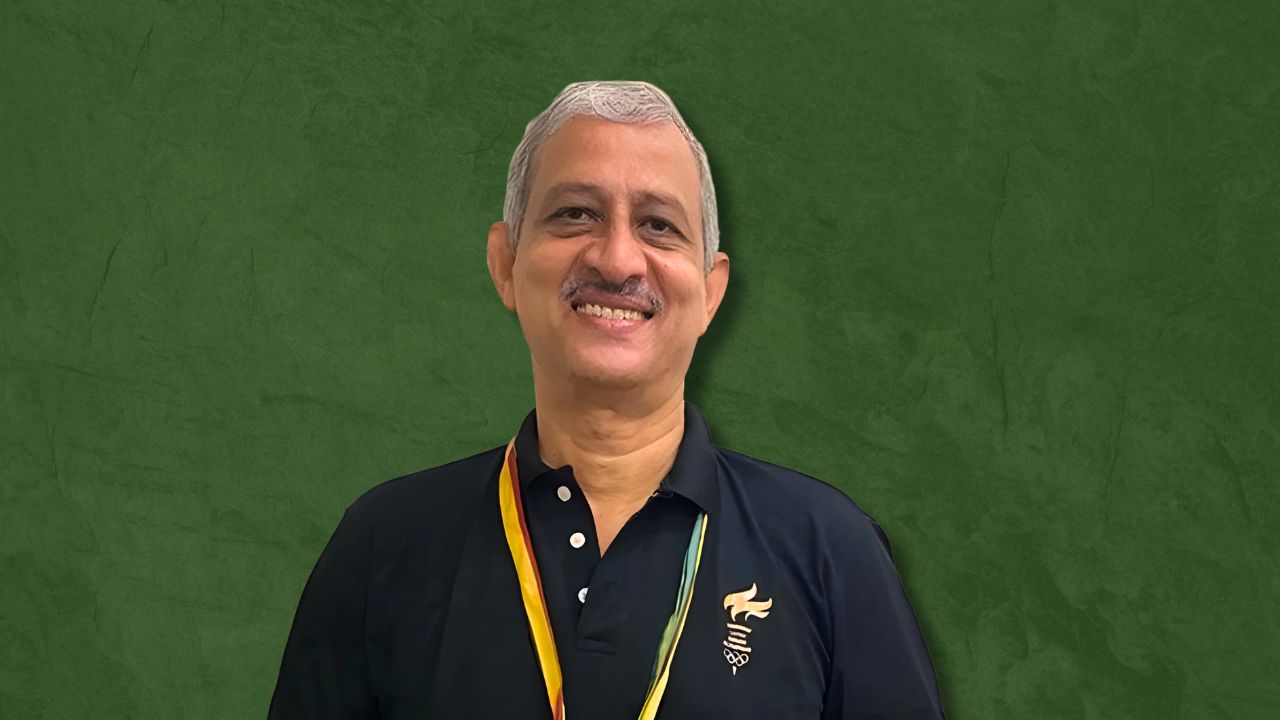
Somaya was a member of India squad that won the gold medal at the 1980 Moscow Olympics. (Courtesy: Hockey India)
Synopsis: Four international medals won by former India hockey captain MM Somaya, including his gold medal at the 1980 Moscow Olympics, were stolen when burglars broke into his Bengaluru house on October 28 while he and his family were away in Kodagu. CCTV footage from a neighbour’s house reportedly showed two unidentified men breaking open the front door and entering the house at 2.34 am. The burglars also stole gold and silver valuables and ₹30,000 in cash.
Four international medals, including the gold medal won by former India field hockey captain MM Somaya at the 1980 Moscow Olympics, were stolen when burglars broke into his house in Bengaluru, Karnataka on 28 October.
The burglary took place at Somaya’s house in HAL 3rd Stage, New Thippasandra, under the Indiranagar police station limits, while the 67-year-old and his family were away in Kodagu.
The stolen medals include the gold medal from the 1980 Moscow Olympics, a silver medal from the 1982 Asian Games in New Delhi, a bronze medal from the 1986 Asian Games in Seoul and another bronze medal from the 1982 Champions Trophy in Amsterdam.
Besides the medals, the burglars stole valuables worth ₹3.5 lakh. These include a 10-gram gold bangle, an eight-gram gold coin, two silver cups weighing 144 grams, six silver spoons, an 80-gram silver pot and ₹30,000 in cash.
CCTV footage from a neighbour’s house reportedly showed two unidentified men breaking open the door and entering the residence at 2.34 am.
The burglary came to light hours later at around 7.15 am when the neighbour, Narayanan, noticed that the front door of the house was open and alerted Somaya.
The Indiranagar police have registered a case under Sections 331(4) (house trespass or house-breaking) and 305 (theft in a dwelling house, means of transportation or place of worship) of the Bharatiya Nyaya Sanhita (BNS).
(Edited by Dese Gowda with inputs from Varsha Gowda)
source: http://www.thesouthfirst.com / The South First /Home> The South First> Karnataka / by The South First Desk / November 04th, 2026
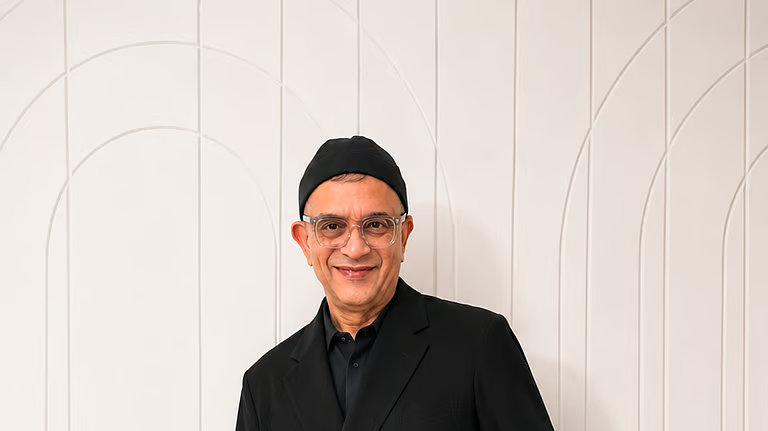
Having received the Kannada Rajyotsava Award this year, fashion and textile curator Prasad Bidapa reflects on his journey in reviving traditional textiles.
“A decorative mirror work covering made for a camel’s hump, sarees for my mother, block printing, mirror work, a lot of lehariya dyeing and bandhini – I picked up small, not very consequential pieces but I still treasure them,” says fashion and textile curator Prasad Bidapa, remembering how his love for traditional textiles began as a 17-year-old studying at the National Institute of Design. For someone who had grown up as an Army kid, the richness of the art he was encountering was instantly captivating. What followed was a career as a fashion stylist and choreographer that repeatedly pulled him into working with handloom textiles and reviving them, which the Karnataka government recently recognised by conferring Bidapa the Rajyotsava Award. “My first reaction was disbelief. It only truly sank in when I saw the government gazette notification,” says Bidapa, adding, “For me, this award is not personal, it represents recognition for Karnataka’s artisans and textile heritage.”
While most may know him for discovering and training top model-actors like Deepika Padukone, Anushka Sharma, Lara Dutta and more, one of Bidapa’s first major projects was for Mysore Silks in the 1980s, starting his long and continuing relationship with Karnataka’s coveted fabric. “The government sent me to Delhi to put up a fashion show showcasing all the diverse beauty of Mysore silks, and that’s when I realised how much promotion was needed. Later on, I worked on the same project with the former Maharaja and Maharani who were very interested in reviving silk and especially the Gandaberunda motif. Weavers of Mysuru were specially commissioned to make these very beautiful ombre-dyed sarees with the gold motif,” he recalls.
Since then, Bidapa has worked with several states, putting together the Rajasthan Heritage Week for five years, connecting top designers with artisans to breathe new life into traditional designs. Recently, he recreated a similar concept with Ashtalakshmi, an initiative by the Ministry of Development of the North Eastern Region (DoNER), showcasing the region’s diverse textiles
“Top designers like Tarun Tahiliani, Abraham & Thakore and Rohit Bal chose a particular textile in Rajasthan and worked directly with artisans to create something new. It started a movement which continues till today, a lot of contemporary designs in Kota Doria were invented because artisans started creating new designs themselves. Sarees which used to be sold at ₹8,000 are going for ₹80,000 today – their real worth,” he says.
Right here in Bengaluru, Bidapa curated the Festival of Handmade. Being in the fashion space since the ’80s, Bidapa notes that the awareness and use of handloom has grown drastically but more could be done, and the answer, for him, lies in tourism. “Individuals and organisations like The Crafts Council of Karnataka, people like Pavithra Muddaya and Prasanna Heggodu have done stellar work. But you cannot expect the private sector to shoulder this responsibility entirely. The government must charge the textile and tourism departments to revive and create a tourism attraction with these awesome products. Textiles represent Indian luxury, rarity and centuries-old skills. We need to monetise and promote this heritage,” he says.
With this award, he hopes to push for a project weaving travel and Karnataka’s silk production process together to further draw attention to the craft. He shares, “Something I would very much like to create is a travel experience down Karnataka’s silk route (Ramanagara, Channapatna, Srirangapatna and Mandya), bringing tourists to see how silk is farmed, spun, woven, dyed and embellished. So many people would come from all over the world!”
Weaves of wonder
When it comes to Karnataka’s diverse textiles, Bidapa has three recommendations for pieces that every woman should own: the Ilkal saree, Molakalmuru saree and Dharwad cotton saree. He says, “An Ilkal saree is woven using a three-shutter loom. The body is made of cotton and the pallu of silk; it looks so beautiful. One of the unsung textiles of Karnataka is the Molakalmuru, similar to Kanjivaram but different, having an extremely heavy weave. Finally, the cotton sarees of North Karnataka are soft and lovely for summer.”
source: http://www.newindianexpress.com / The New Indian Express / Home> Bengaluru / by Mahima Nagarajan / November 02nd, 2026
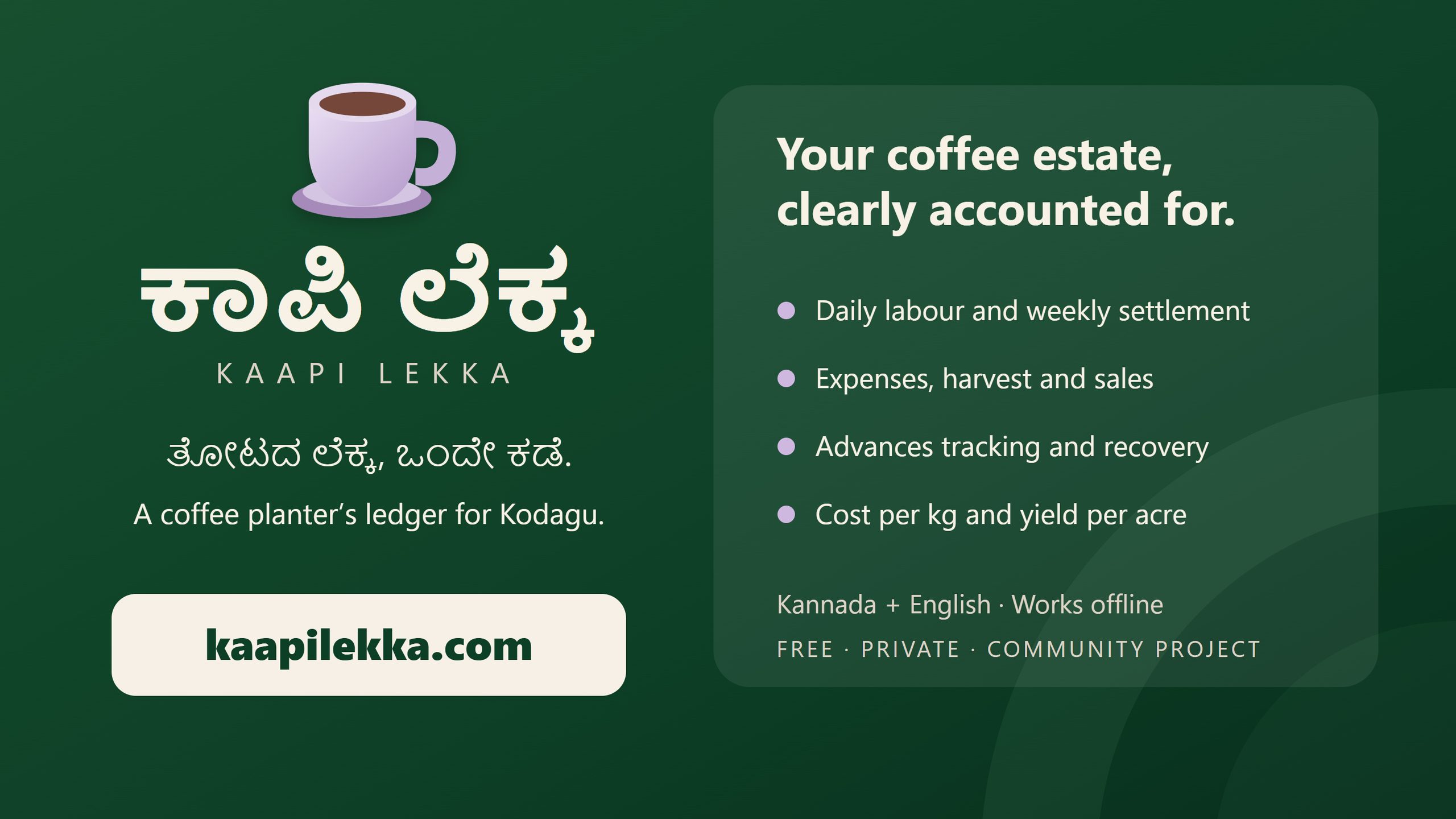
This Free and easily accessible new product is being introduced for the First time in Kodagu (Coorg) District, Karnataka .
Karnataka produces over 70% of India’s coffee and Kodagu accounts for roughly 50% of the state’s production.
For ease of the reader/user, the following information is divided into 3 (three) parts.
First a simple profile and easy to understand communication on the new App www.kaapilekka.com. Second a brief interview with the App creator, to better understand the App www.kaapilekka.com. Thirdly thumbnail notes on the Ammathi (Virajpet District) Kodagu native ,whose idea it was to benefit the planters of Kodagu with FREE access.
Part 01 (One)
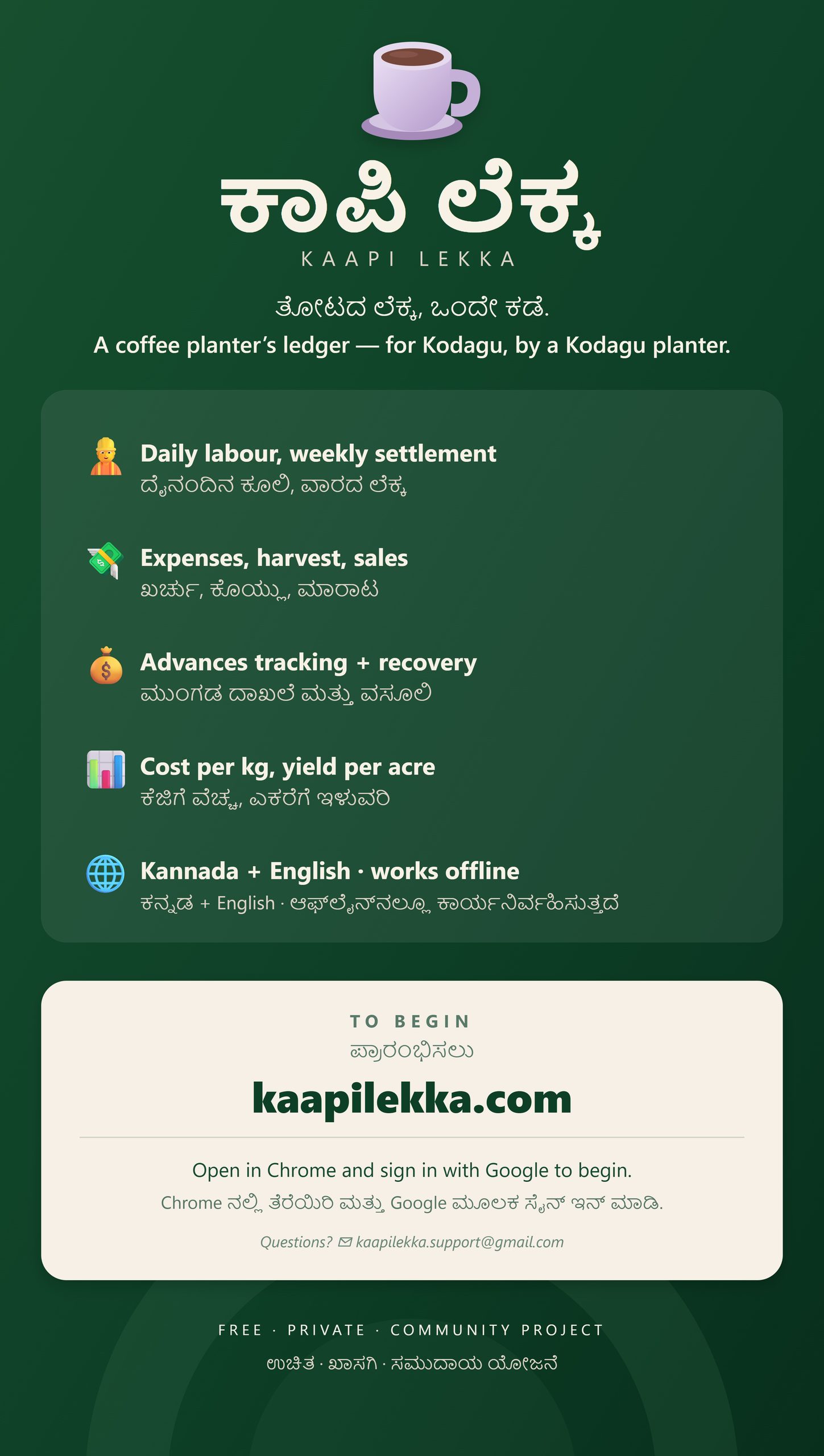
About Kaapi Lekka (www.kaapilekka.com)
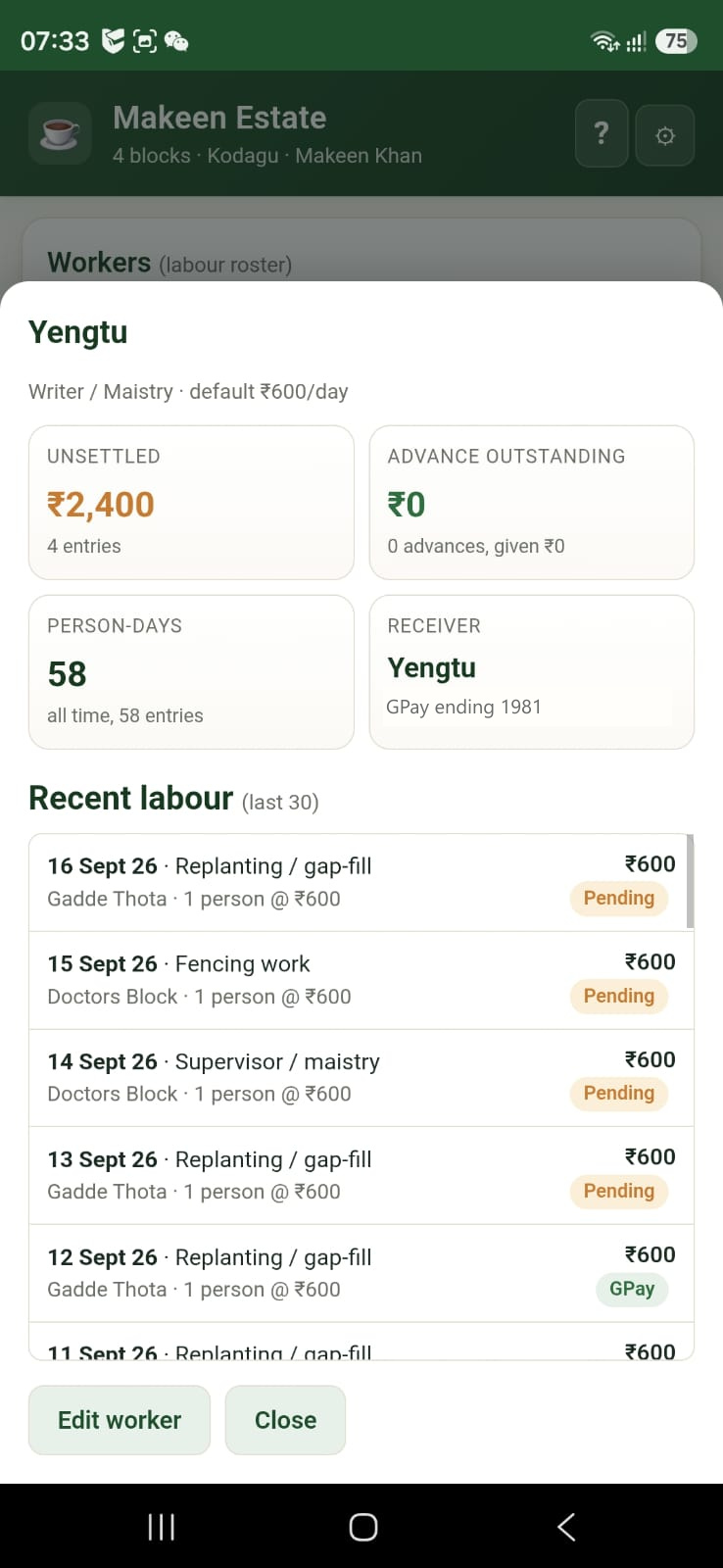
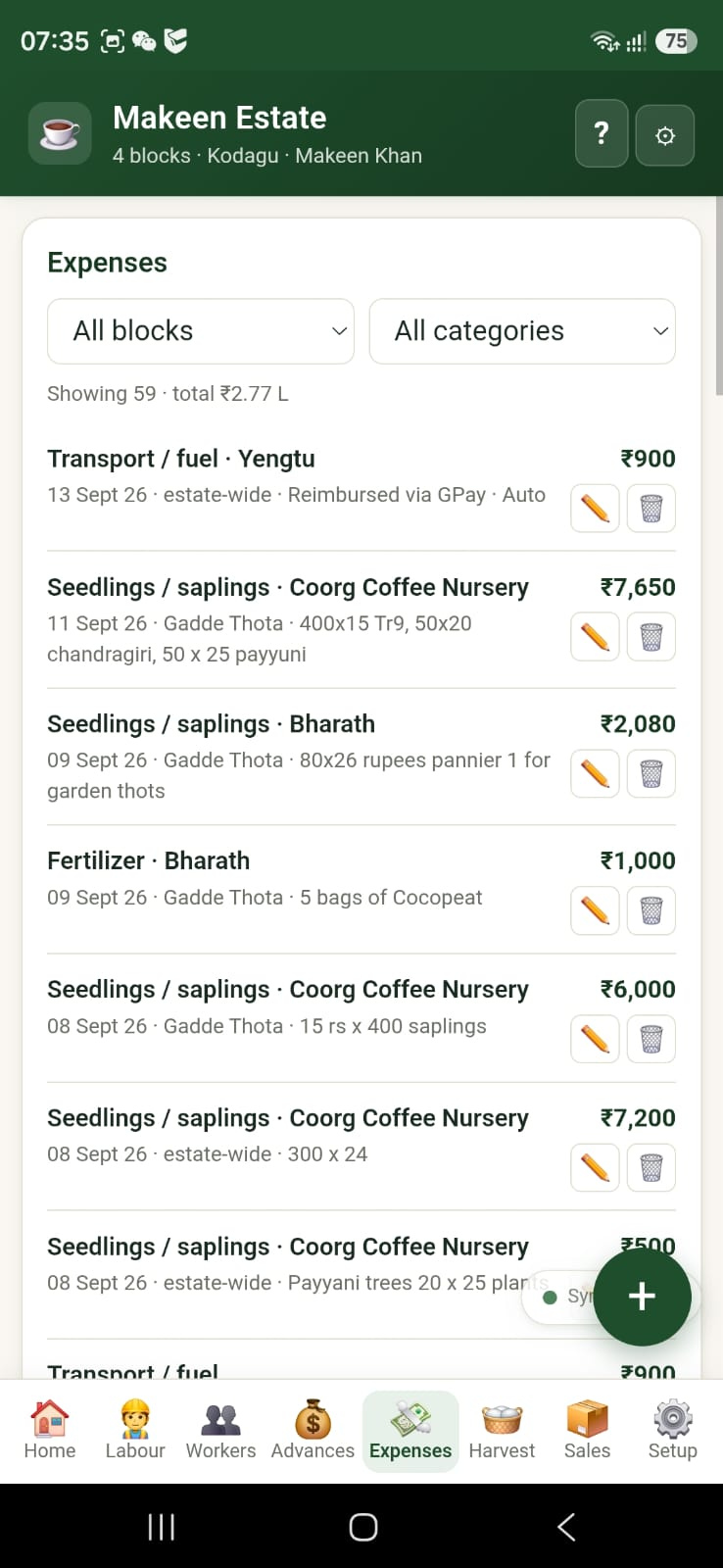
A free digital ledger built for Kodagu coffee planters
In one sentence Kaapi Lekka helps a coffee planter keep labour, advances, expenses, harvest and sales in one private ledger, so the year’s real cost and cost per kilogram become easier to understand.
From one estate ledger to a community tool
Seventeen workers turn up today. Four have advances. One worked a half-day. The brush cutter needs maintenance. Fertilizer must be paid for. Pepper is harvested and coffee goes for curing.
A coffee year advances through hundreds of such entries – each ordinary on its own, but difficult to reconstruct later.
Most planters keep records, but those records are often split between a labour book, diary, spreadsheet, messages and memory.
By the end of the year, one practical question can be surprisingly hard to answer: what did the year really cost, and what did each kilogram of clean coffee return?
Kaapi Lekka began as a personal estate ledger built to answer that question. It was not conceived as a startup or a commercial accounting package.
The aim was simpler: keep the everyday plantation record in one place and make the running picture of the estate easier to see.
Once the tool proved useful in day-to-day estate work, it was opened to fellow planters as a free community project.
Built around the way an estate actually works
Kaapi Lekka is designed around routine estate decisions rather than formal accounting terminology. It keeps people and payments, estate activity and the running financial picture connected without asking a planter to learn a conventional accounting system.
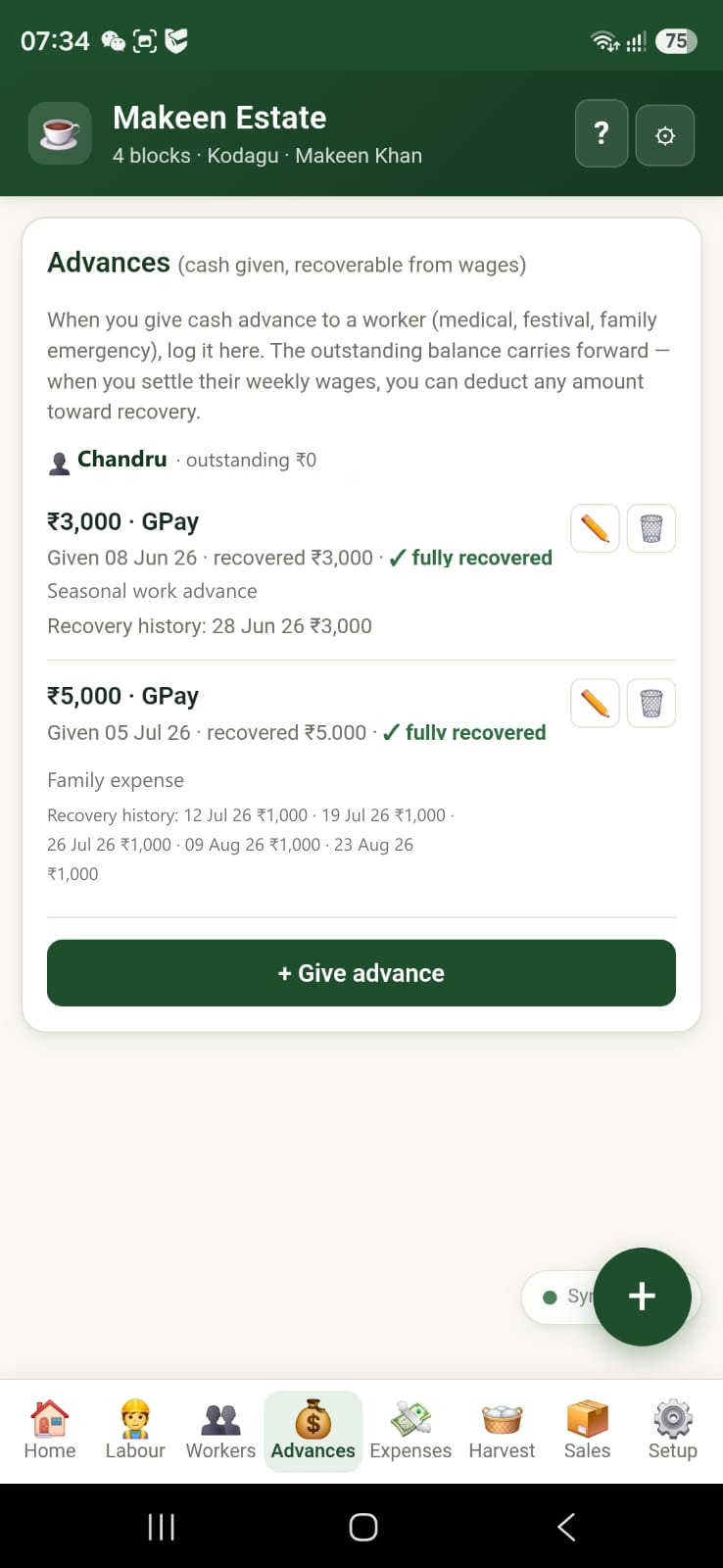
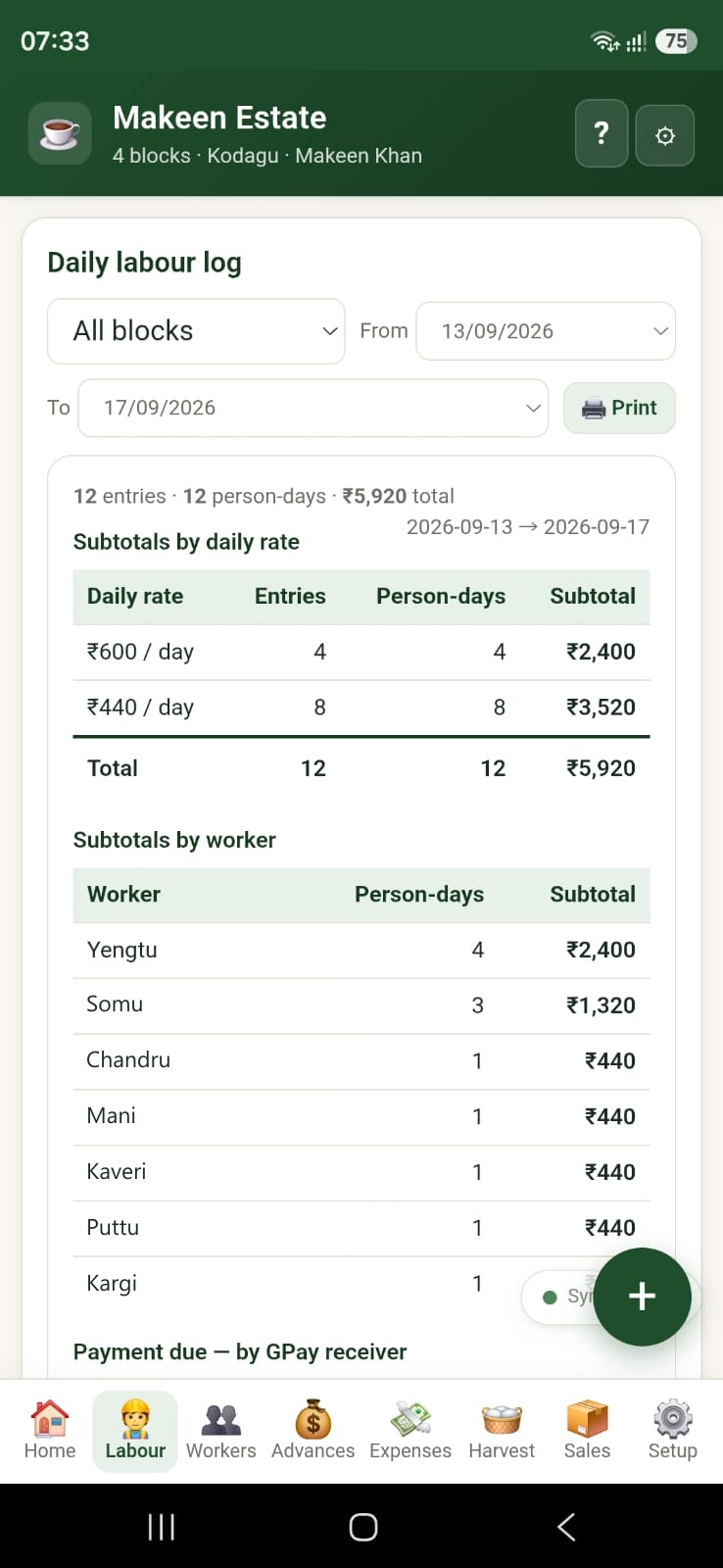
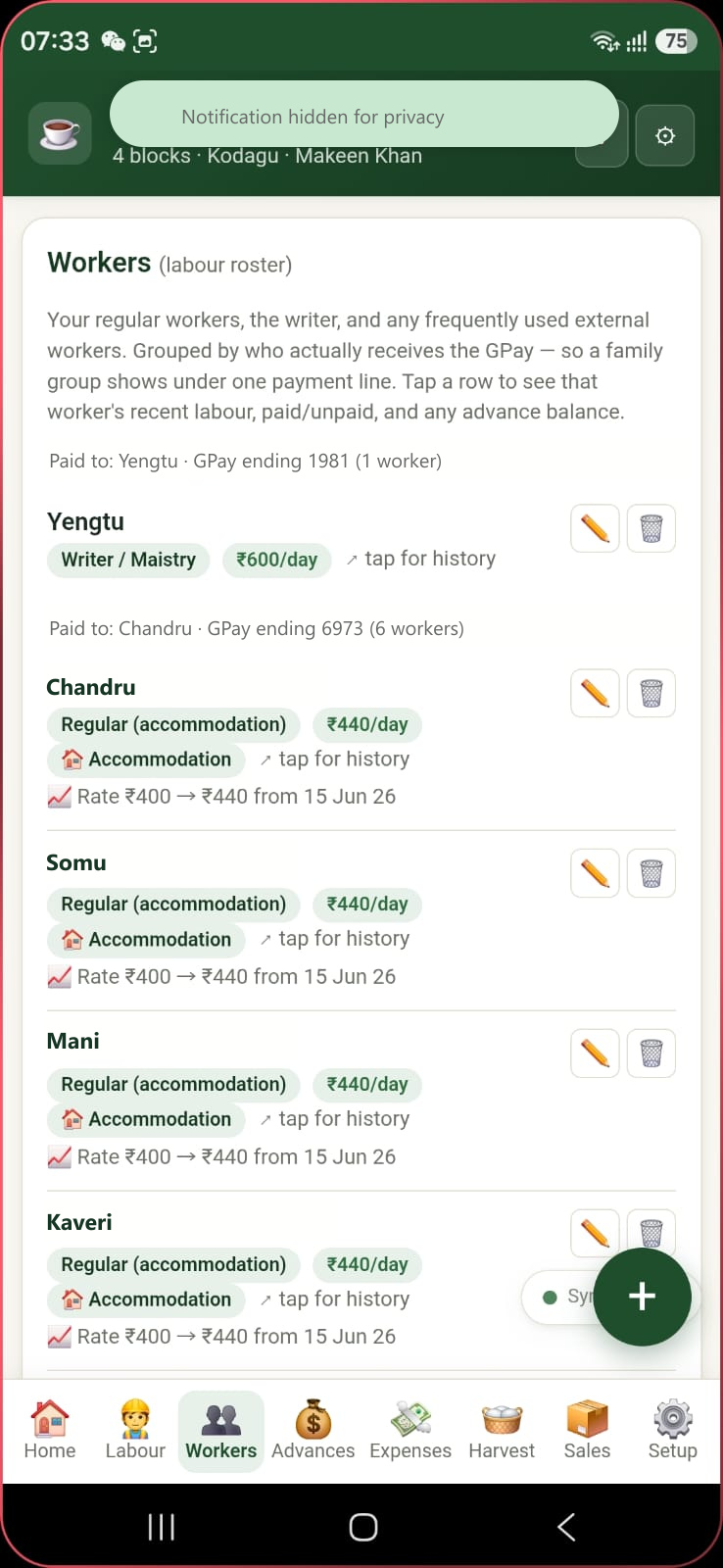
a. People and payments — daily labour by worker, block and work type; reusable wage rates; receiver grouping; and visible advances and settlements. b. Estate activity and costs — expenses such as fertilizer, spray and transport, together with harvest and sales recorded as the season progresses. c. The running picture — a dashboard that brings cost, output, settlements and cost per kilogram together for review.
Especially useful for small and medium planters
Large estates often have established systems, dedicated staff or people assigned to accounts. On a smaller or family-run holding, the planter may be the owner, supervisor, record keeper, buyer and seller at once.
Important information can remain scattered simply because there is no separate person available to organise it.
Kaapi Lekka is intended especially for that situation: discipline without complicated paperwork, and a clearer view of labour, advances, expenses, harvest, sales and profitability while the season is still in progress. It supports the planter’s judgement rather than trying to replace it.
A simpler first-time experience
The current sign-in experience is direct. A new user visits kaapilekka.com, chooses English or Kannada, signs in with a Google account and can start immediately. There is no access request form and no waiting period for manual approval.
A short guided setup then helps the user name the estate, add the first block, optionally add a worker, and optionally record a first activity such as a workday, expense, harvest or sale. The Home screen keeps a simple getting-started checklist so the user can return to unfinished steps later.
Designed for phones, field conditions and local use
Kaapi Lekka works in a web browser on Android phones, iPhones and laptops, and it can be added to a phone’s home screen like an app. The interface is available in English and Kannada. It uses large, direct actions and a guided setup intended to reduce the learning burden for users who do not work with conventional accounting software.
Connectivity on estates is not always reliable. After a successful online sign-in and load, the app can cache work on the device while offline and resume synchronization when connectivity returns. The screen shows whether entries are saved, queued or synchronized so that a planter is not left guessing.
FREE-to-Use & privacy-conscious
Kaapi Lekka is currently offered free of charge as a community project. The Kaapi Lekka Team bears the hosting and maintenance costs and intends to continue doing so in support of the community.
The service has no advertisements, paid tier or sale of planter data. The application uses Google sign-in, Firebase Authentication and Firestore. Security rules separate each signed-in member’s ledger from other members, while the member can use the same Google account across devices.
The current public experience is August 28th, 2026
For more information : contact the Kaapi Lekka Team : email:kaapilekka.support@gmail.com
__________________________________________
Part 02
An INTERVIEW with the idea and product creator of www.kaapilekka.com – Makeen Khan
” Kaapi Lekka applies the discipline and clarity I learned in large organisations to a very practical problem at home. The aim is not to replace a planter’s judgement, but to make the year’s real costs easier to understand. “says Makeen
Interview in Q & A format to address specific issues, one-by-one :
1. What specific problem prompted you to build Kaapi Lekka?
The immediate problem was fragmented estate record-keeping. Labour might be in one notebook, advances in another, expenses in messages or bills, and harvest and sales in separate sheets. That makes it difficult to know the estate’s true running cost or cost per kilogram of clean coffee. Kaapi Lekka began as a practical ledger for one estate and was later opened to other Kodagu planters.
2. How did you validate that a digital app was the right solution?
The first validation came from actual use on the creator’s own estate. The test was not whether it looked modern, but whether it reduced reconstruction at the end of the season and made everyday figures easier to retrieve. A phone-based ledger was useful because the phone is already present when labour, payments and field activity are being recorded. The project is still learning from real use; it does not claim a formal market study.
3. Were local growers or cooperatives involved in design and testing?
The product grew from a planter’s own workflow and early informal feedback from a small number of Kodagu planters, rather than from a formal cooperative-led design programme. That feedback reinforced the need for simplicity, local terminology, clear payment handling and a low-friction first-time experience. Wider planter feedback is now important, but we prefer to describe that process honestly rather than overstate the scale of testing.
4. How does the app handle weak connectivity and synchronization?
After a successful online sign-in and load, the app uses local browser storage and Firestore offline persistence to keep entries available when signal drops. Pending changes synchronize when connectivity returns, and the interface shows whether data is saving, queued offline or synchronized. An internet connection is still needed for the initial Google sign-in and first load.
5. How did you address language and accessibility for non-technical users?
The interface currently supports English and Kannada. A new user chooses a language before sign-in and can change it later. The app uses a guided first-time setup, direct action labels, large tap targets, helpful empty screens and an always-available quick-add action. Kodava Takk is not currently supported, so we would not claim that it is.
6. What technology stack keeps the app affordable enough to remain free?
Kaapi Lekka is a lightweight progressive web app built with web technologies and hosted through Firebase. Google sign-in handles authentication, Firestore stores and synchronizes data, and the app can be installed from the browser without an app-store distribution layer. This serverless approach keeps infrastructure and operational complexity low for a small community project.
7. What metrics are you tracking to measure real-world impact on yield or income?
We do not currently claim a measured improvement in yield or income. The first useful indicators are simpler: whether a member completes setup, returns to the ledger, records activity consistently and can use the resulting cost and settlement information. Administrative monitoring is deliberately limited to activation signals rather than private ledger values. Any future impact study should rely on voluntary, consented feedback rather than inspection of members’ financial records.
8. Since the app is free, how will it remain sustainable?
Kaapi Lekka is maintained as a small community project, and its serverless architecture keeps operating costs modest. The Kaapi Lekka Team currently bears the hosting and maintenance costs and intends to continue doing so in support of the community. No paid tier is planned; the intention is for Kaapi Lekka to remain free and ad-free, without selling planter data.
9. How do you protect privacy and prevent commercial exploitation of planter data?
Members sign in with Google, and Firestore security rules separate each member’s ledger from other members. Data synchronizes only for the signed-in account, and users can export a JSON backup of their own records. Kaapi Lekka does not sell planter data or use it for advertising. Support and activation monitoring are designed around account and onboarding information, not the member’s detailed labour, expense, harvest or sales values.
10. Does Kaapi Lekka address white stem borer, monsoon variation or other local crop challenges?
Kaapi Lekka is not an agronomy or pest-diagnosis app. It does not predict weather or prescribe treatment. What it can do is help a planter record the labour, inputs, dates, blocks and costs associated with estate work. For example, spray-related labour can be recorded against a block and the related expense recorded by date and category, creating a clearer history to discuss with a qualified agronomist. Specialist crop advice should continue to come from qualified agronomists and local institutions.
11. Will the app expand to Chikmagalur, Wayanad or crops such as pepper?
The present focus is Kodagu coffee estates. The ledger can already accommodate mixed-estate activity and planter-defined work or expense categories, but the product has not announced a broader regional rollout. Expansion should happen only if the current Kodagu experience remains simple and dependable and if growers elsewhere confirm that the workflow fits their needs.
Important and Beneficial Facts of kaapilekka.com for the Users:
Kaapi Lekka is a free, ad-free community ledger for Kodagu coffee planters.
It covers labour, workers, advances, expenses, harvest, sales and cost-per-kilogram reporting.
The current interface supports English and Kannada.
New users can sign in with Google and start immediately; there is no request form or approval wait.
The app can be added to a phone’s home screen and can queue entries during poor connectivity after an initial online sign-in/load.
EASY ILLUSTRATION FOR FIRST-TIME USERS :
Important and easy technical ‘Qualifications & Information’ for the Users :
Proven yield or income gains — no formal impact study has yet established this.
The app can be added to a phone’s home screen and can queue entries during poor connectivity after an initial online sign-in/load.
Agronomy advice — the app records estate activity but does not diagnose pests or recommend treatment.
Always works offline — the initial Google sign-in and first load need connectivity; offline work follows a successful online load.
Gmail-level security — say that the app uses Firebase Authentication, Firestore and per-user security rules instead.
Formal cooperative validation — describe the present evidence as own-estate use and early informal feedback from a small number of Kodagu planters.
THUMBNAIL BRIEF on Makeen Khan – the Creator, Founder and Project Steward of App – Kaapi Lekka
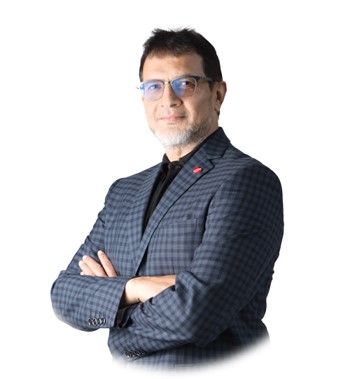
Makeen’s roots are in Ammathi (Virajpet Taluk), Kodagu, where his family has been landholders for generations. After a long international career in technology and digital transformation, he returned to Coorg following his retirement from Coca-Cola and brought that experience back to a practical challenge at home: helping planters understand the true running picture of their estates.
Professional journey
Across more than four decades in technology, Makeen worked on enterprise systems, data and analytics, cloud technology, cybersecurity, automation and large-scale digital transformation. He spent nearly three decades with Coca-Cola and served as Chief Information Officer. His leadership responsibilities extended across the Middle East and South West Asia, bringing together technology, people and business priorities across different countries and cultures.
He is currently Senior Vice President at eBest Mobile, where he contributes to the company’s growth. His professional background is relevant to Kaapi Lekka not because the project is intended to become a large commercial platform, but because it brings disciplined systems thinking to a familiar local problem.
From Ammathi roots to Kaapi Lekka
After returning to Coorg, Makeen saw how estate information could remain divided between labour books, diaries, messages, bills, spreadsheets and memory. Kaapi Lekka began as a personal estate ledger to connect labour, advances, expenses, harvest and sales in one place and make the cost per kilogram easier to understand. Once the approach proved useful in everyday estate work, it was opened to fellow Kodagu planters as a free community project.
Makeen currently bears the hosting and maintenance costs and intends to continue supporting the service for the community. Kaapi Lekka has no advertisements, paid tier or sale of planter data. The public support channel remains Kaapi Lekka Support, allowing the project to be accountable without exposing personal contact information.
At a glance
Roots: Ammathi, Kodagu; from a family of landholders across generations.
Career: More than four decades in technology and digital transformation; former Coca-Cola Chief Information Officer.
Current role: Senior Vice President at eBest Mobile, supporting the company’s growth.
Community work: Founder and project steward of Kaapi Lekka, built by a Kodagu planter for fellow planters.
Editorial use: Name and the biographical facts in this approved profile may be used with agreed coverage. Personal phone, personal email, home or exact estate location, relatives’ identities, and any photograph require separate approval. Coca-Cola and eBest Mobile are biographical references only and do not imply organisational endorsement of Kaapi Lekka.
(Abdul-Aleem the interviewer, is the founder/creator of the News Aggregators www.karnatakafirst.com (also available on Whats Ap) and www.kodagufirst.in amongst others. He maybe contacted at : aleem.ilmcity@gmail.com).
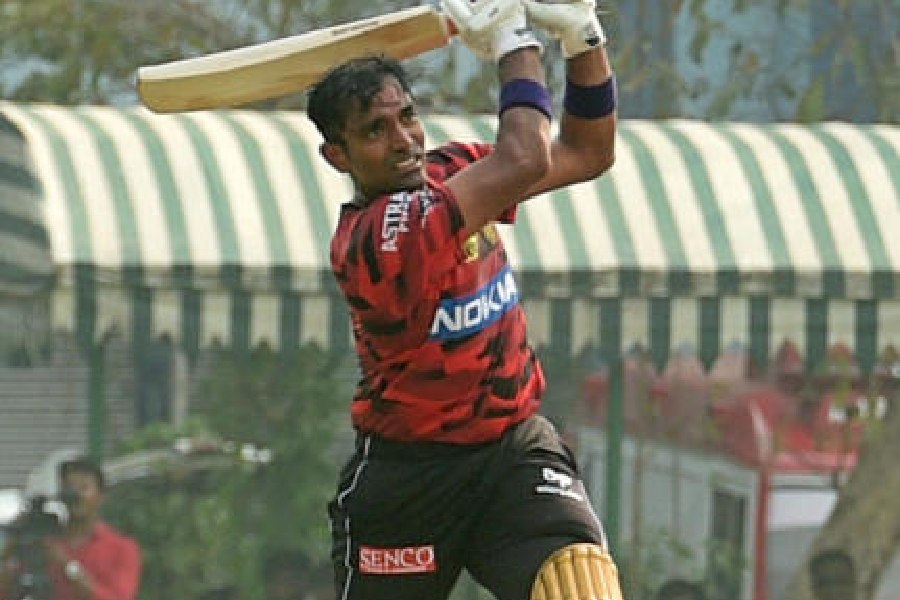
Robin Uthappa appointed as Mumbai Indians batting coach for IPL 2027.
Robin Uthappa / Sourced by the Telegraph
Days after announcing Kieron Pollard as head coach, Mumbai Indians sprang a surprise by naming former India batter and two-time IPL winner Robin Uthappa as batting coach for IPL 2027.
MI have also roped in Mitchell McClenaghan as bowling coach, T. Dilip as fielding coach, and Dhawal Kulkarni as development bowling coach in the new-look support staff set-up.
The focus now turns to the captaincy and the expected trade of Hardik Pandya. There is talk that Mumbai Indians could hand back the captaincy to Rohit Sharma after going without a trophy for six seasons though Tilak Varma is also tipped to take over the hot seat.
“I am just genuinely happy to be back. I started my IPL career with Mumbai Indians and I start my IPL coaching career with Mumbai Indians, which seems like destiny to me,” Uthappa was quoted as saying in a media release.
“I’ve seen Mumbai go through earning the trust and the faith of the fans, to becoming champions, and then winning consistently and becoming one of the best franchises in the world, from a winning perspective. And today, we find ourselves back in that similar situation right now where the trust of the fans need to be earned again.”
source: http://www.telegraphonline.com / The Telegraph Online / Home> Sports> Cricket / by The Telegraph Bureau / October 31st, 2026
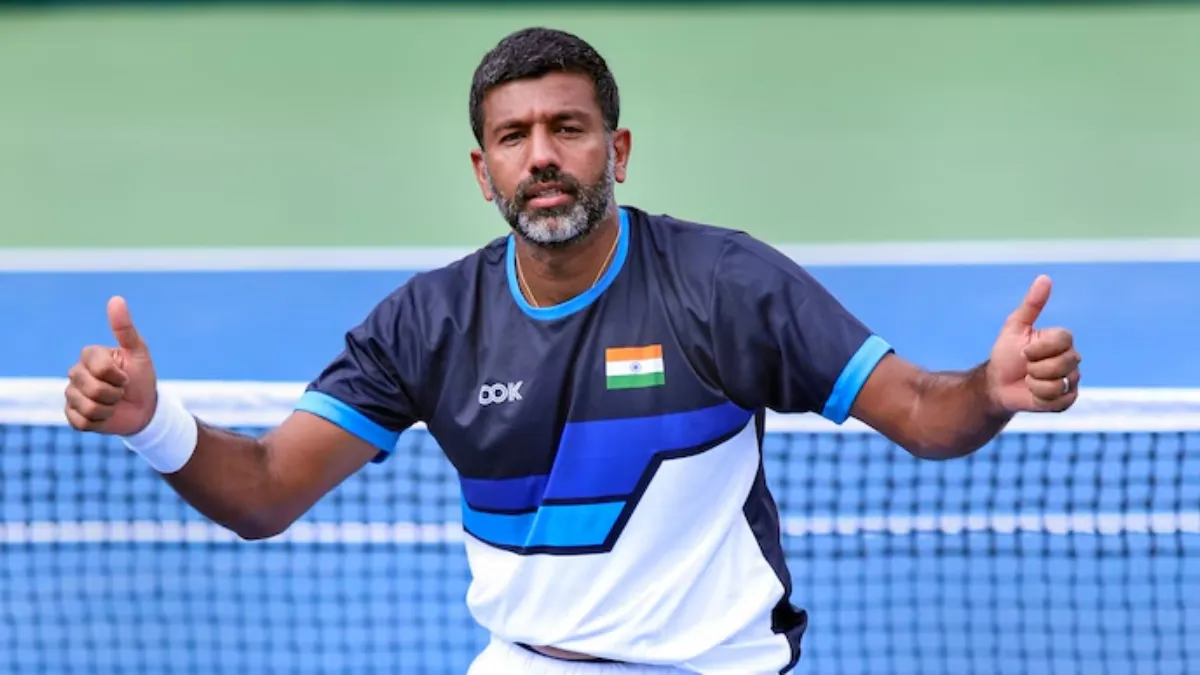
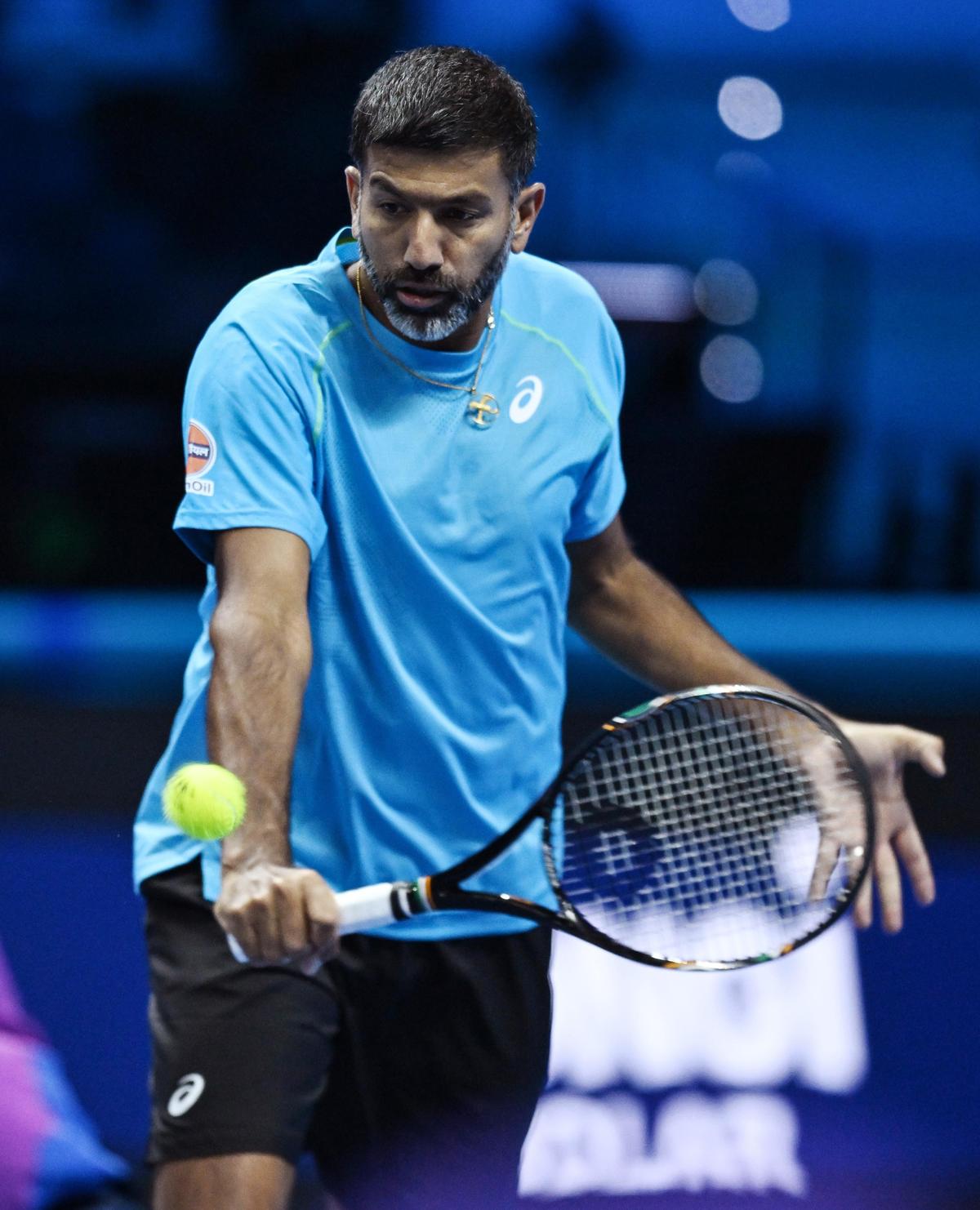
India Tennis legend Rohan Bopanna advised the aspiring players to believe in themselves before their coach and parents
Indian Tennis Legend Rohan Bopanna (PTI)
Indian tennis legend Rohan Bopanna has a simple message for youngsters hoping to make a career in sport: believe in yourself, keep learning and never give up. The former world No. 1, who won multiple Grand Slams, says believing in yourself is the first step to success, especially for young players trying to find their way in a competitive sporting environment.
In an exclusive interaction with The Daily Jagran, Bopanna spoke about the challenges of building a sporting career, the importance of mental strength and the lessons he has learnt during more than two decades in professional tennis. He also shared advice for youngsters who dream of representing India but are unsure about what lies ahead.
“For me the biggest thing is for the kids to firstly believe in themselves, before your coach, before your parents, you have to really believe that you want to do this and this is the journey for you,” Bopanna said.
The veteran also acknowledged the importance of having the right people around young athletes. Coaches, parents and experienced professionals can guide them through difficult phases, but the determination to follow their dreams has to come from within.
Rohan Bopanna On Why One Should Never Give Up
There are seldom straight lines to a career in professional sport. Young players go through defeats, injuries and spells when progress can be difficult to see. Bopanna believes they must learn to treat every day as a fresh opportunity rather than allowing one bad performance to affect their confidence.
The Indian tennis star, who played at the top level well into his 40s, has had his share of challenges. His career has been shaped by his ability to adapt to changing conditions, overcome injuries and remain competitive over the years.
Sharing his advice for youngsters, Bopanna encouraged them to look beyond the results of a single day and focus on the bigger picture.
“And that’s what I always say, never give up, it’s an opportunity and there is no limitations in your career,” he added.
His message is particularly relevant for young Indian tennis players who are working towards professional careers in a sport that demands patience, discipline and long-term commitment.
How Rohan Bopanna Maintained His Longevity In Tennis
Bopanna also spoke about the factors that helped him remain relevant in professional tennis for more than two decades. Injuries and the physical demands of the sport can make it difficult for players to maintain their level over a long period, but he believes adaptability and mental strength played a major role in his journey.
“I think I made sure firstly I was relevant, you know, I adapted to the conditions and my mind was my biggest strength, you know, that is what kind of helped this longevity,” he said.
The former world No. 1 acknowledged that injuries were part of his career but explained that his focus remained on finding ways to overcome them and continue competing.
“Yes injuries were part of the journey but I said how do I overcome them, how do I make a difference and keep being relevant at every juncture of the couple of decades where I competed and that’s what helped my longevity,” Bopanna added.
His career reached another major milestone in 2024 when he won the Australian Open men’s doubles title alongside Australia’s Matthew Ebden. At 43, Bopanna became the oldest man to win an ATP Grand Slam men’s doubles title in the Open Era.
From Ball Kid To Grand Slam Champion
Bopanna’s message to youngsters comes from a career that has taken him from the early stages of tennis to the biggest stages in the sport. He also reflected on his journey while attending the Australian Open ball kids programme in partnership with Kia.
The programme holds a special place for the Indian star because he began his own journey as a ball kid. Today, he gets to present trophies to youngsters who are getting an opportunity to experience tennis at a high level.
“When I started my journey, I was a ball kid; today I’m here, you know, giving these trophies to these ball kids,” he said.
source: http://www.thedailyjagran.com/ The Daily Jagran / Home> Sports> News / by Sunny Daud / October 25th, 2026
Kalanithi Maran built one of India’s biggest media empires. Yet the woman standing beside him has shaped much of its success from the start. Kavery Kalanithi (also known as Kaveri Maran) is far more than the wife of the Sun Group chairman. She is Executive Director of Sun TV Network, the force behind its content strategy, and one of the highest-paid executives in Indian corporate history.
Here’s a clear, up-to-date look at her life, work, and family.
Kavery hails from Kodagu (Coorg) in Karnataka. She married Kalanithi Maran in 1991. At the time, Kalanithi was still shaping his vision after returning from an MBA at the University of Scranton in the United States. He had seen the explosion of television channels there and wanted to bring something similar to South India.
Kavery joined the journey almost immediately. When Sun TV launched in 1993, she stepped into a hands-on role. What began as a single Tamil channel grew under the couple’s combined leadership into a network of more than 30 channels across Tamil, Telugu, Kannada, Malayalam, Bengali, and Marathi. In 2024 the group even entered the Hindi market with Sun Neo.
Their partnership has always been professional as well as personal. Both ranked among India’s highest-paid executives, each drawing packages in the tens of crores in earlier years. Kavery’s remuneration has consistently been reported around ₹87 crore in recent financial years.
Her Role in Building the Sun Empire
Kavery oversees content across the network. She watches competing channels closely and believes feedback is essential—something her husband instilled early. Under her watch the group expanded beyond South India and strengthened its overseas presence among the Tamil diaspora.
Key contributions include:
Driving content that keeps Sun TV dominant in Tamil Nadu (often around 40% viewership share).
Expanding into Marathi and Bengali markets.
Supporting the group’s move into digital streaming through Sun NXT.
Helping maintain the network’s strong film production arm, Sun Pictures.
She rarely seeks the spotlight. Colleagues and industry watchers describe her as focused, detail-oriented, and quietly decisive. While Kalanithi handles the broader business vision, Kavery has long owned the creative and content side.
Family Life and the Next Generation
The couple has one daughter, Kavya (also spelled Kaviya) Kalanithi Maran, born in the early 1990s. Kavya is Executive Director at Sun TV Network and heads the group’s cricket interests—Sunrisers Hyderabad in the IPL, Sunrisers Eastern Cape in South Africa’s SA20, and Sunrisers Leeds in England’s The Hundred.
As of October 2026, Kavya is preparing to marry music composer Anirudh Ravichander. The wedding reception is scheduled for 21 November 2026 in Chennai. Kalanithi and Kavery have already begun inviting political leaders, including meetings with Telangana Chief Minister A. Revanth Reddy and Tamil Nadu Chief Minister.
The family maintains a relatively private profile despite their public business roles and political connections (Kalanithi is the grand-nephew of the late M. Karunanidhi and son of former Union Minister Murasoli Maran).
Quick Facts Table
Detail
Information
Full Name
Kavery Kalanithi Maran (Kaveri Maran)
Hometown
Kodagu (Coorg), Karnataka
Marriage
1991 to Kalanithi Maran
Profession
Executive Director, Sun TV Network
Key Responsibility
Content strategy across 30+ channels
Daughter
Kavya Kalanithi Maran (SRH CEO)
Notable Salary (reports)
Around ₹87 crore in recent years
Current Focus (2026)
Content, digital growth, family milestones
Why Kavery Matters in Indian Media
Kavery represents a quieter style of leadership. She entered the business at its foundation and stayed through every expansion, from a single channel to a multi-language powerhouse that reaches over 140 million households. Her consistent presence has given Sun TV stability and a strong content identity.
In an industry often dominated by louder personalities, her approach—watch the product closely, expand carefully, and let results speak—has proven effective for more than three decades.
Conclusion
Kavery Kalanithi is not just Kalanithi Maran’s wife. She is a co-architect of one of India’s most successful regional media groups. From the early days of Sun TV in 1993 to the network’s current scale and the family’s next chapter with their daughter’s wedding in November 2026, she has remained a steady, influential presence. Her story shows how behind-the-scenes leadership can shape an entire industry.
source: http://www.gmdcalibration.in / GMD Calibration / Home / by gopalkumarjha111991@gmail.com / October 18th, 2026
Argentina’s world No. 60 Roman Burruchaga, representing the Kolkata Thunder Blades, will be the highest-ranked singles player in the league.
Rohan Bopanna of India. File. | Photo Credit: Getty Images
Former world No. 1 Rohan Bopanna and 2023 Australian Open men’s doubles winner Rinky Hijikata were on Tuesday (October 6, 2026) revealed as marquee players of their respective teams at the Tennis Premier League (TPL) ahead of the player auction on October 12 in Mumbai.
Bopanna will represent Gurgaon Grand Slammers.
“Every year, the league gets stronger, and I love the team environment and energy the format brings. This year, the competition will be very high, with a great mix of experienced players and young Indian talent,” said Bopanna.
Argentina’s world No. 60 Roman Burruchaga, representing the Kolkata Thunder Blades, will be the highest-ranked singles player in the league.
Hijikata, who will represent the Rajasthan Rangers, has already tasted Grand Slam success. He also reached the 2025 Wimbledon men’s doubles final and achieved a career-high doubles ranking of world No. 23.
“I’m really excited to be part of the Rajasthan Rangers and make my Kia TPL debut this season. The 25-point format makes the league very exciting, and I’m looking forward to experience the energy in Hyderabad.”
Frenchman Terence Atmane, nicknamed “The Magician”, will headline the Mumbai Royals.
The Lucknow Blazers will be represented by Czechia’s Dalibor Svrcina, who returns for a second consecutive season with the same team.
Croatia’s Dino Prizmic will be the marquee player for the Hyderabad Strikers. A former junior world No. 1 and the 2023 Roland Garros boys’ singles champion, the 21-year-old reached a career-high ranking of world No. 70 this year.
Representing the defending champions, GS Delhi Aces, will be Australian Adam Walton, who has achieved a career-high ranking of world No. 74 and brings extensive ATP Tour and Grand Slam experience to the Delhi team.
Completing the eight-player marquee line-up will be Frenchman Alexandre Muller, who will represent the Gujarat Panthers once again this season.
One of the most experienced players in the line-up, the 29-year-old has achieved a career-high ranking of world No. 38.
The matches during the TPL Season 8 will be held from December 8-13.
The season will continue the league’s team-based format, combining men’s singles, women’s singles, men’s doubles and mixed doubles in a fast-paced, 25-point-per-match format.
source: http://www.thehindu.com / The Hindu / Home> Sports> Tennis / by PTI / October 18th, 2026
Dr. K.P. Lalitha (Rashmi Nanjappa Kallichanda) has been selected for the 24th Kodagina Gowramma Endowment Award of the Kodagu District Kannada Sahitya Parishat for her book ‘Kodagina Janapada Kathegalu’ (Kodagu Folk Tales).
The award has been instituted by B.G. Vasanth, son of writer Kodagina Gowramma, to honour outstanding works by women writers of Kodagu. So far, 23 women writers have received the award.
Dr.Lalitha has worked extensively in translation research and folklore studies. She has served as Head of the Kannada Department at BMS Women’s College, Bengaluru and as Deputy Director of Mysore University’s Prasaranga. She is currently the Executive Editor of Prasaranga.
A native of Kodagu, Dr.Lalitha graduated from Mangalore University and secured a gold medal in her postgraduate studies at the University of Mysore.
Her doctoral thesis on Kodagu place names was subsequently published by the Sahitya Akademi.
Her research works include ‘Vivaksha’, ‘Vivechane’, ‘Jeevantha Paleyulikegalu’ (On Living Relics), ‘Kodagina Bhashe Mathu Samskruthi’ (Kodagu’s Language and Culture), ‘Kodagina Janapada Kathegalu’ and ‘Shodhaneya Haadiyalli’ (On the Path of Research). She has also authored ‘Oororme,’ a collection of research essays in English.
Her play, ‘Pommodeera Ponnappa,’ based on the history and folklore of Kodagu, was staged 11 times to full houses at Rangashankara in Bengaluru. It was later translated into English and performed in New York, Sydney and New South Wales.
Dr.Lalitha has published 29 research papers in reputed international journals and has presented papers at State, National and International Seminars. Her research work has also earned her the Abdul Kalam National Award from NITI Aayog.
source: http://www.starofmysore.com / Star of Mysore / Home> News / October 04th, 2026
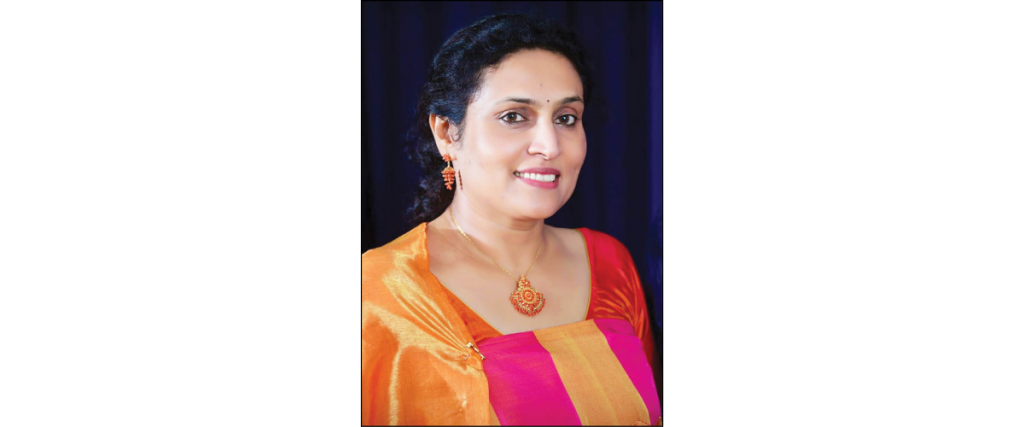
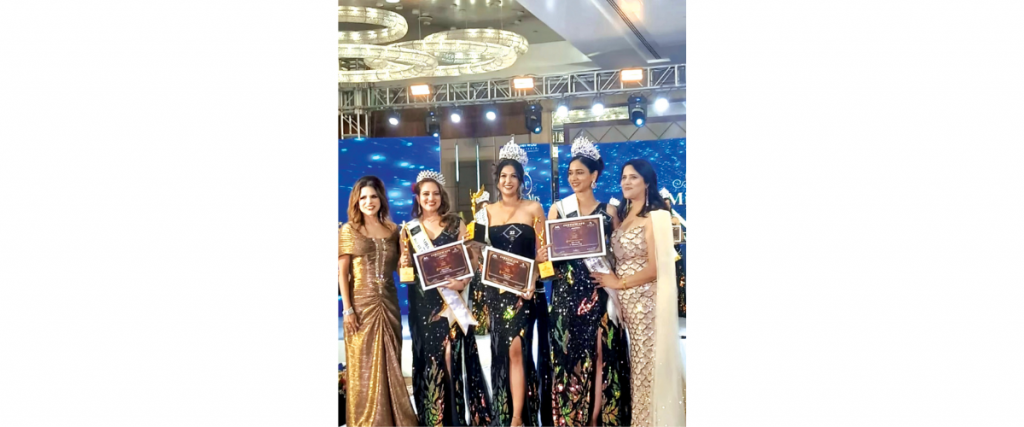
Karthamada Shama Appanna, wife of Karthamada Dicky Appanna and a resident of Trendz Apartment in Bogadi, Mysuru, has won ‘Amritha Cinecrafts – Mrs. India Women of Substance-Season 9’ held at Sheraton Grand Hotel at Brigade Gateway, Bengaluru, on Sept. 27.
Originally from Ponnampet, Kodagu, she is the daughter of Chowrira Bopaiah and Sharada.
source: http://www.starofmysore.com / Star of Mysore / Home> Photo News / September 30th,2026
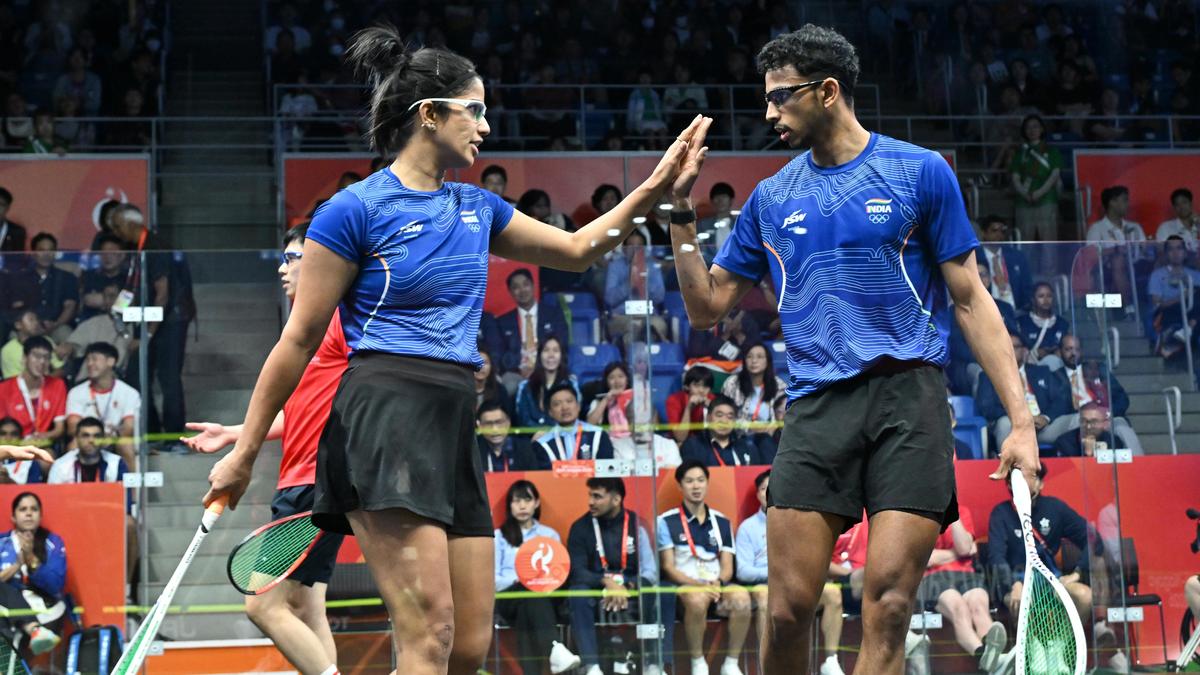
The Indian duo won a bronze medal in the squash mixed doubles at the ongoing Asian Games 2026 in Aichi-Nagoya.
Joshna Chinappa and Velavan Senthilkumar secured a bronze medal in the squash mixed doubles event at the Asian Games. | Photo Credit: RV MOORTHY
Indian squash mixed doubles players Joshna Chinappaand Velavan Senthilkumarsecured a bronze medal at the ongoing Asian Games2026 at Aichi-Nagoya on Saturday.
The duo lost went down to Hong Kong China’s Lee Ka Yi and Tang Ming Hong 1-2 (10-11, 11-2, 10-11) in the semifinals.
Tamil Nadu chief minister C. Joseph Vijay announced a cash prize of INR 30 lakh for the two athletes.
“My heartfelt congratulations and appreciation to squash players Joshna Chinnappa and Velavan Senthilkumar, who have brought pride to India and Tamil Nadu by winning the bronze medal in the Mixed Doubles category of Squash at the ongoing Asian Games in Japan,” he said via a statement on X.
“In appreciation of the great achievement of these heroes, the Tamil Nadu Government will provide a high incentive of Rs. 30 lakhs each. Their victory will give new inspiration and hope to the young generation of athletes of Tamil Nadu,” he added.
Vijay had earlier announced cash rewards for athlete Baranica Elangovan, badminton player A. Hariharan, cricketer G. Kamalini, and relay runners Vishal T.K. and Vithya Ramraj.
source: http://www.sportstar.thehindu.com / Sportstar / Home> Asian Games 2026 / by Sportstar News Desk / September 26th, 2026
WELCOME. If you like what you see "SUBSCRIBE via EMAIL" to receive FREE regular UPDATES.
Read More »