The 43rd AGM of Kodava Samaja, Mysuru, for the year 2020-21 will be held at 10.30 am on Dec. 25 (Saturday) at the Samaja premises in Vijayanagar 1st Stage.
All the members are requested to attend the meeting in time, according to a press release from the Samaja Hon. Secretary.
Sri Kaveri Kodagu Mahila Sangha, Mysuru, will conduct its 15th AGM for the year 2020-21 on Dec. 26 at 10.30 am at Kodava Samaja premises in Vijayanagar I Stage.
Sangha President Moovera Bollamma Kuttappa will preside over the meeting
source: http://www.starofmysore.com / Star of Mysore / Home> In Briefs / December 18th, 2021
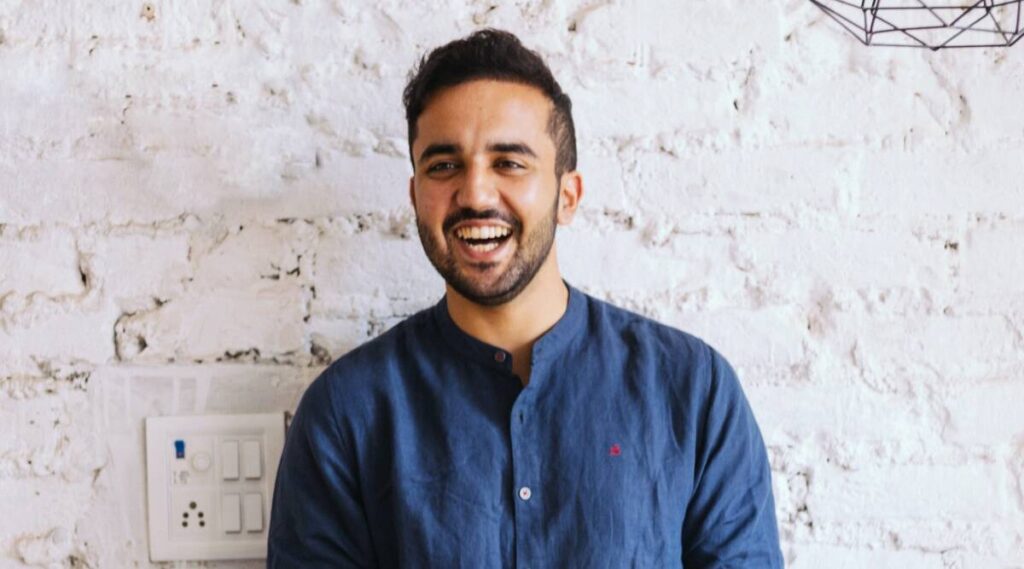
Why Ajai Thandi quit a Wall Street job to start a homegrown coffee brand in India with his best buddies – more on the journey of Sleepy Owl Coffee, its Forbes 30 Under 30 founders and ‘brew-ginnings’ from a small kitchen to raising a whopping $6.5million in funding.
After schooling at YPS Mohali, Sanawar and Woodstock Mussoorie, Ajay Thandi went on to pursue Economics at the University of California.
The cool climes, mountain breeze carrying a refreshing hint of fresh pinecones, sun bathed slopes and a frothy glass of cold coffee. Sundays at The Lawrence School, Sanawar were special.
“The taste of that cold coffee still lingers on as a cherished memory,” says Ajai Thandi. Today, this co-founder of the very quirkily named homegrown coffee brand, Sleepy Owl, is in the business, er, correction please – mission of creating memories, conversations and more over a freshly brewed, ready to drink gourmet cup of coffee.
Best pals, Armaan Sood, Ashwajeet Singh and Thandi love a good coffee – “but could never find a great cup when needed.” So they decided to brew their own and box it in a to-go. Founded in 2016, Sleepy Owl is active across the country, and boasts of a 75 product portfolio including cold brew packs, hot brew bags, ready-to-drink cold brew bottles, ground coffee, brew boxes and merchandise.
“We don’t consider ourselves in the business of making and selling coffee, but on a mission to make consumers blissfully happy, and transform India into a country of coffee drinkers,” says Thandi. Now, that’s a serious dare to the champions of chai, but going by this start up’s increasing popularity, national traction and the latest $ 6.5 million raised in funding, the Sleepy Owl boys are perched on the top of their game.
Something’s Brewin’
Days jam-packed with meetings, interviews, innovation and strategies round the clock – it was really not an easy task to catch 28-year-old Thandi. But when one’s a tea drinker (steaming cups of kadakadrak chai), it became all the more imperative to check out the first movers of a very niche segment – the coffee drinkers, and the space it occupies in the Indian teacup, growing beyond good ol’ Nescafe.
After schooling at YPS Mohali, Sanawar and Woodstock Mussoorie, Thandi went on to pursue Economics at the University of California. An investment banker at JP Morgan, New York, he was living the dream, except that deep inside, he always had this urge to do something on his own. Talent and brilliant ideas, he feels, were never the problem, it was the lack of opportunities and monopolistic hold of giants corporations in India with their muscle and money that limited the possibility of a middle class person to start a business on their own.
“There was hardly anything beyond IIT or IIM for a non-business family person,” says Thandi. It was in the USA that he experienced a disruption of new age companies, online platforms like Shopify (first started out of Canada), that cut down barriers, and provided an all-in-one democratised commerce platform to start, run, and grow a business independently.
Post 2010, Amazon and Flipkart proved to be the game-changers in India. Inspired and motivated, Thandi moved back home in 2014, touched base with his best pals, lawyers Sood and Singh, and brainstormed. Always in search of good coffee, Singh was into brewing his own, while Thandi came home with stories of a stimulating New York coffee culture. Their shared passion for coffee and the experiences it offers literally became the conversation starter of their business idea.
They also saw a potential in the country’s untapped market for freshly brewed coffee. “Indian kitchens, for years, have only known one or two coffee brands. We wanted to change that, give people a product that is easy to use, of great quality and value, and educate them on what a freshly brewed cup of coffee can offer.”
With Rs 15 lakh pooled in from their savings, the brewing began from a small kitchen in Dwarka, New Delhi with Singh as the in-house brewmaster, experimenting relentlessly in search of the perfect brew. Research and recce were undertaken. The best Arabica coffee beans were sourced from Chikmagalur, Karnataka. A category creating product, consumer awareness and feedback was paramount, so to suit the Indian palette, their coffee was fine-tuned to be less bitter, less acidic, and taste better. Their cold brew (freshly pressed coffee that can be brewed at home) had been perfected, and in 2016, Sleepy Owl took the first flight.
“The name is a fun play of words really. One doesn’t mind a caffeinated boost to shake off the sluggishness, and owls, well, they are nocturnals, aren’t they?”
The Coffee Tales
People don’t just drink coffee. Although Sleepy Owl are the first movers in this now rapidly-growing category, their ground rule has always been to create a great product, package it well, accentuate ease of use and educate the consumer, aggressively using social and digital media to reach their target audience.
“We curated events, tastings, visited offices, delivered door-to-door, entertained anyone who invited us with a captive audience, all three of us would be there with Sleepy Owl,” says Thandi, who manages the financial aspect of the start up.
Expansion, sustainability, awareness, innovation are the key areas of focus. “We three are innovators by nature, driven by our curiosity.” Their risk paid off when the trio, after two years of testing and trying, introduced coffee bags in the market. “There are tea bags, so why not some good coffee bags too?” he says.
When they arrived, it was just “Nescafe, Bru and us.” Today, the market is brewing with new players, and Thandi is bracing for a competitive 2023. “Challenges are part of life. As entrepreneurs we navigate it on a daily basis.”
It’s this attitude, planned and disciplined use of their funds that helped Sleepy Owl raise USD 6.5 million (about Rs 48.3 crore) in funding, led by existing investor Rukam Capital, recently. The company has raised $8.5 million in total.
The Highs & the Lows
By all means, the biggest high is ‘when employees are happy, when customers love our product, and when you walk into someone’s home and find Sleepy Owl on their shelf, or on in some shop in a random market place’. Being featured in the coveted ‘Forbes 30 under 30 India’ for the year 2020 was a bravo moment.
The biggest low was the pandemic and the early days of national lockdown. A dip in sales, transportation stalled, markets shut – the co-founders were facing crisis, and an inventory with limited shelf life. It was time to think fast and act faster – “we got special passes made, loaded our inventory and went door to door to sell our cold brew direct to consumer”.
Post ready-to-drink bottles and cold brew, Sleepy Owl needed another shot of caffeine and it came in the form of hot brew bags—coffee in a tea bag—which the startup rolled out during the winter of 2019.
In this uncertainty, the team went into survival mode by opting for zero budgeting – growth, slow and steady, but not at all cost. This rigorous fiscal discipline and their coffee bags bagged them their funding. “It was great validation for our mission. Our vision is being backed,” says Thandi.
The Secret Brew
Thandi gets his entrepreneurial spirit from his father. Retired from the Army, his father’s only regret in life is risk not taken. “The craziest thing I’ve ever done is to quit my job on Wall Street to start a company in India. Once an entrepreneur, always an entrepreneur,” he says, conditioned to take risks, be independent and walk the path less taken thanks to the Army life and boarding school. Curiosity, innovative spirit and resilience – “true grit in the face of massive uncertainty and defeat,” is what keeps Thandi driven.
The Tricity traction
Thandi is passionate about helping people, especially youngsters, make their life easier by mentoring and guiding them. “I love the city, but would definitely like a better start up ecosystem, more opportunity and infrastructure for new businesses and ideas to germinate here – see Chandigarh turn into a model base city for start ups and innovation.”
source: http://www.indianexpress.com / The Indian Express / Home> Cities> Chandigarh / by Jaskiran Kapoor, Chandigarh / December 17th, 2021
Kavery Nambisan speaks to us on her new book ” A Luxury Called Health: A Doctor’s Journey Through the Art, the Science and the Trickery of Medicine”
Kavery Nambisan belongs to a rare breed of writers – the doctor who writes fiction.
She is a general surgeon – a domain where women are uncommon. Another uncommon thing about her career is that she is a rural doctor, having practised for the most part of her career in rural India.
She has published seven critically acclaimed novels. “A Luxury Called Health: A Doctor’s Journey Through the Art, the Science and the Trickery of Medicine”. A Luxury Called Health is her first book-length foray into non-fiction.
This book is not easy to classify. At one level, it has strong elements of the memoir but it also contains social commentary, history, and feminist critique. She writes in moving detail about her late husband, the poet Vijay Nambisan’s battle with cancer and her unnerving experience with the hubris endemic in the medical profession.
She also talks about her experience in treating hundreds of patients with Ivermectin, the drug’s remarkable efficacy against COVID-19, and why it hasn’t been more front and centre in the battle against the pandemic.
A common thread running through the book is a desire to engage with fundamental questions about health, sickness and medical treatment. She speaks to The Hindu about her book, what prompted her to write it, and her concerns about the medical profession today.
Guest: Kavery Nambisan
Host: G. Sampath, Social Affairs Editor, The Hindu
Edited by: Reenu Cyriac
source: http://www.thehindu.com / The Hindu / Home> Multimedia> Podcast / by G. Sampath / December 15th, 2021
Panel suggested use of ‘Kodava’, ‘Kodavaru’ instead of ‘Kodagaru’
The High Court of Karnataka on Tuesday directed the State Government to accept the recommendations made by the Karnataka State Backward Classes Commission to use words “Kodava”, “Kodavaru” instead of “Kodagaru” in the list of backward classes and issue a notification in this regard within three months.
Justice Krishna S. Dixit passed the order while allowing a petition filed by Codava National Council, Madikeri.
The court refused to give one more chance to the Government to re-examine the issue while pointing out that the Government had “mechanically reiterated” its earlier decision of 2015 to reject the recommendations despite an opportunity given by the court in August this year for reconsidering the 2015 decision.
The commission, after thorough investigation, had in 2005 and 2010 recommended the Government to use “Kodava”, “Kodavaru”, in Kannada and “Codava”, “Codavaru” in English instead of “Kodagaru” in the list, the court noted.
Though the Government had claimed that it had rejected recommendations as the “competent authority” did not approve the changes, the court observed that the Government had failed to point out which that competent authority was.
“How could a high constitutional functionary like the State Government be swayed away by the view of some so called ‘competent authority’ remains to be a riddle wrapped in enigma,” the court said. “Even in the order of September, 2021, the so called competent authority remains equally unseen and unseeable…,” the court observed.
The court cautioned the Government of imposing heavy cost in the next level of legal battle if it does not comply with the order within an outer limit of three months.
source: http://www.thehindu.com / The Hindu / Home> News> States> Karnataka / by Special Correspondent / Bengaluru – December 15th, 2021
Suja Kushalappa | Photo Credit: Special Arrangement
He got 705 votes; says he had expected to win by a larger margin-
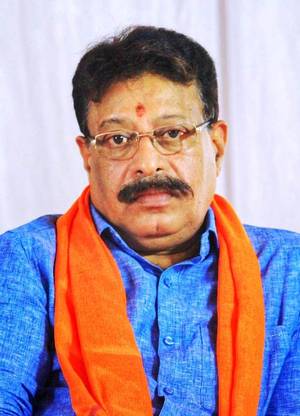
The BJP has retained its seat in the Legislative Council from Kodagu local bodies constituency as its candidate Suja Kushalappa defeated Manthar Gowda of the Congress in what was a direct contest between the two parties.
The Janata Dal (Secular) had withdrawn its candidate Ishaaq Khan, leaving only two candidates in fray.
The margin of victory was 102 votes. Suja Kushalappa polled 705 votes while his rival candidate polled 603 votes after the counting of the votes held on Tuesday. Suja Kushalappa is the brother of MLA Appachu Ranjan and former MLC M.A.Subramani.
In all, 1,325 voters from the elected bodies had exercised their franchise in the elections held last week of which 17 votes were invalid. Suja Kushalappa, who was the district unit president of the party in the past, is credited with working at the grassroots to improve the BJP’s performance in the local bodies elections.
After the victory Suja Kushalappa said he had worked for nearly three decades in the party and had expected to win by a larger margin. He attributed the decline in margin to “use of money power’’ by the Congress. He said Kodagu district was witnessing development due to the efforts of the local BJP MLAs and MPs all of which helped the party gain the confidence of voters who elected him. The district received sufficient grant and projects and this was responsible for the party retaining the seat, he added.
The defeated candidate from Congress is the son of BJP leader from Hassan and former Minister A Manju. The latter was relieved of all party responsibility in Hassan once his son was given the Congress ticket to contest from Kodagu. In defiance of the party’s directive Mr. Manju had campaigned for his son but had vowed to campaign for the BJP candidate in Hassan.
source: http://www.thehindu.com / The Hindu / Home> News> States> Karnataka / by Special Correspondent / Mysuru – December 14th, 2021
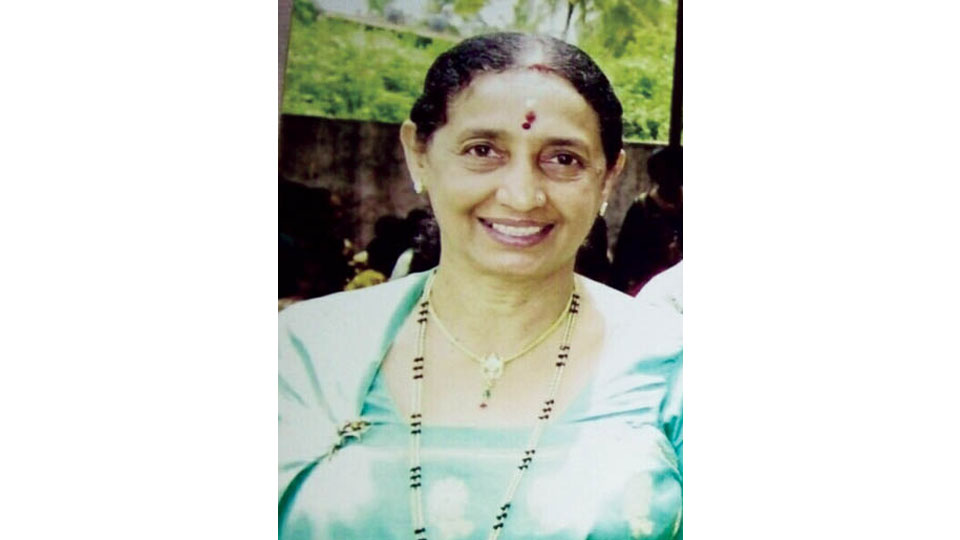
Noted Kodava writer and former Karnataka Kodava Sahitya Academy Member Mullengada Baby Chondamma (78) passed away at her house in Kandangala near Virajpet last night.
She leaves behind her husband Mullengada Shankari Ponnappa, the editor of Kodava weekly Thook Bolak, son Mullengada Madhosh Poovaiah, who is the former President of Virajpet Taluk Kannada Sahitya Parishat and a large number of relatives and well-wishers.
Chondamma, a retired Hindi teacher, was ailing for some time. Her body has been donated to JSS Medical College in Mysuru, said family sources. Chondamma used to write in four languages — Kodava, Kannada, Hindi and English —and was the sub-editor of Thook Bolak weekly for many years. She was actively involved in many literary and sports activities held in Kodagu and served in the Textbook Creation Committee of the State Government.
source: http://www.starofmysore.com / Star of Mysore / Home> News / December 13th, 2021
CNC pays floral tributes to Kodava warriors killed by Tipu
HIGHLIGHTS
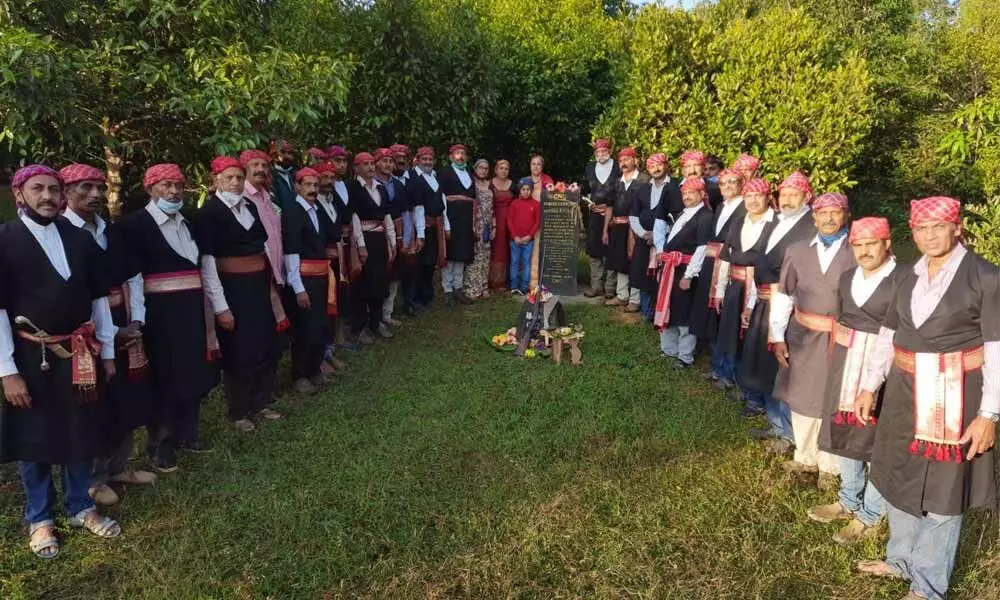
The Codava National Council (CNC) on Sunday paid floral tributes to the Kodava martyrs who were massacred by Tipu Sultan army in Devatparamb, near Vhagamandala.
Madikeri:
The Codava National Council (CNC) on Sunday paid floral tributes to the Kodava martyrs who were massacred by Tipu Sultan army in Devatparamb, near Vhagamandala.
Addressing the gathering, CNC president N U Nachappa said that on 12 December 1785 Codava Tribal warriors laid down their lives while trying to defend Kodagu from the aggression of the Tipu Sultan. Tipu and his father Hyder Ali made 32 failed attempts to wrest the Kodagu kingdom because of the valiant efforts of the tribal warriors though the Mysore army at that time was one of the strongest military forces in the world and was even more powerful than those in Europe. Such a mighty army could not defeat Codava warrior race. Nachappa said Tipu after failing to win Kodagu invited Kodavas for compromise at Devatparamb.
When all Kodavas, including women and children came unarmed Tipu and French army surrounded them and massacred them. He said these Devaattparamb tragedy and political assassinations of Codava tribal race at Naalnaad Aramane and Madikeri Fort in a palace conspiracy are unforgettable traumatic chapter in the history of Kodavas.
Following resolutions were passed by CNC on this occasion.
1. Demand for International Codava Genocide Memorial at Devaattparamb.
2. UNO and Govt of India should jointly condemn the Devaattparamb tragedy and political assassinations of Codava tribal race at Madikeri Fort and Naalnaad Aramane in the palace conspiracy for nearly 201 years.
3. Demand for inclusion of both tragedies in the International Holocaust remembrance list of UNO.
4. Present French Govt and custodians of Keladhi Royals and Hyder & Tippu should ask for forgiveness from Codava tribal race.
source: http://www.thehansindia.com / The Hans India / Home> News> State> Karnataka / by Hans News Service / December 13th, 2021
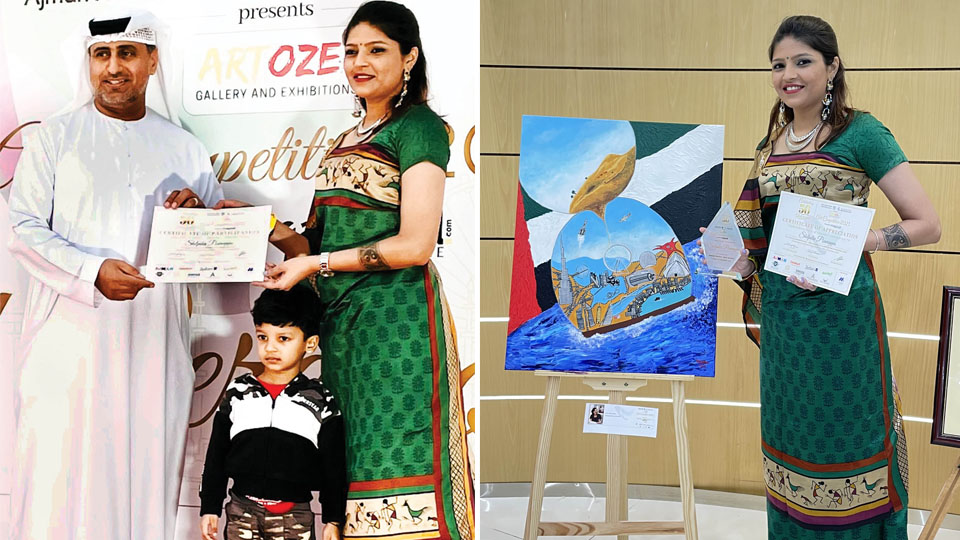
Chinnamada Shilpika Ponnappa, who has her roots in Kodagu, has bagged the ‘Special Mention — Best Ideation Award’ and a trophy for her painting with a theme ‘50 years of progressing UAE’ organised at Artoze Art Competition in Abu Dhabi as part of Celebrating 50 Glorious Years of UAE.
The competition was organised by Artoze Gallery, Magzoid Magazine in Ajman Free Zone, UAE. The competition was announced a couple of weeks ago at Ajman and all the artists had to first send in the image of the completed artwork by mid November. On Dec. 1, the original artwork had to be physically submitted.
All the paintings were kept in an exhibition in Marsa, Ajman, UAE from Dec. 2 to 6 and more than 60 artists had participated in the competition.
The exhibition received overwhelming response for over five days with viewers visiting the place to look at the hard work put in by artists from varied nationalities and culture and from different parts of the UAE.
The award ceremony was conducted on Dec. 7 and only nine Special Mention Awards were given, among which Shilpika won the Best Ideation Award.
The jury of three eminent artists awarded this particular award and applauded her for thinking out of the box, as well as being appreciated for being traditionally dressed and representing Kodava culture proudly.
Speaking to Star of Mysore from Abu Dhabi, Shilpika said that her painting hourglass represents time and sand which she depicted in the form of desert. “This sand, over the years, has turned into a kingdom with impressive, beautiful and artistic architectural concrete structures. Water being an important aspect of UAE, I have shown the hourglass sailing on it. The UAE flag in the background emphasises how vast and wide it has spread its wings,” she said.
Shilpika is an artist by passion and has been exploring the field since childhood and has created many artworks with acrylic on canvas. She graduated with a Bachelor of Fine Arts and specialised in Applied Arts (advertising – copywriting and content writing) from Chitrakala Parishath, Bengaluru. She is the daughter of Chemira C. Ponnappa and Beena and is married to Chinnamada Santhosh Subbaiah, GIS Lead Analyst in Abu Dhabi Govt. and son of Chinnamada Poovaiah and Poovamma, residents of Ponnampet in Kodagu. Shilpika is the mother of 3-year-old Niviksh Nanayya and the family lives in Abu Dhabi.
source: http://www.starofmysore.com / Star of Mysore / Home> News / December 11th, 2021
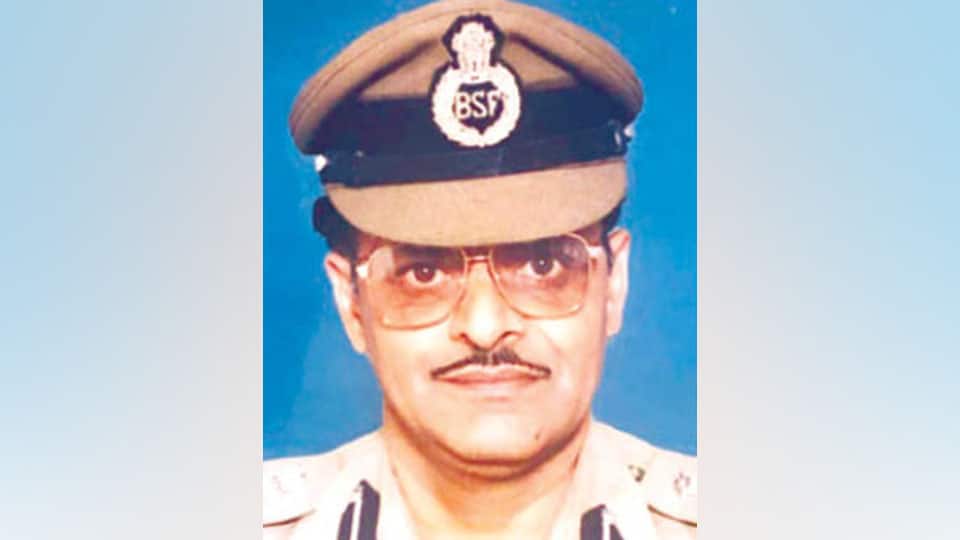
BSF DIG (Retd.) Iychettira M. Ponnappa (84), a resident of Mahalakshmi Layout in Bengaluru, passed away yesterday in Bengaluru.
A native of Mayamudi in Kodagu, he leaves behind his wife Rekha Ponnappa, sons Shelley Thimmaiah and Rawley Muddappa and a host of relatives and friends.
Last rites were performed at Sumanahalli Crematorium on the Ring Road near Magadi Road Flyover this morning, according to family sources.
source: http://www.starofmysore.com / Star of Mysore / Home> Obituary / October 07th, 2020
Sanjay Ponnapa at the opening of the first Fuel Espresso takeaway cart, on The Terrace, Wellington, in 1996.
Sanjay Ponnapa: businessman; b January 10, 1964; d November 26, 2021
Sanjay Ponnapa, who has died aged 56 in Hong Kong, was one of the founders of Wellington’s coffee industry, going on to build a highly successful coffee empire in Wellington and Asia.
He was born in Tamil Nadu, near to his family’s homeland of Kodagu. The Kodagu (formerly known as Coorg) is a small, sparsely populated region nestled in the rich coffee-growing hills of the Western Ghats, about halfway down India’s western side.
His family were coffee farmers and soldiers; his uncles included Field Marshal Kodendera Madappa Cariappa, the first Indian commander-in-chief of the Indian Army, and General Kodendera Subayya Thimayya.
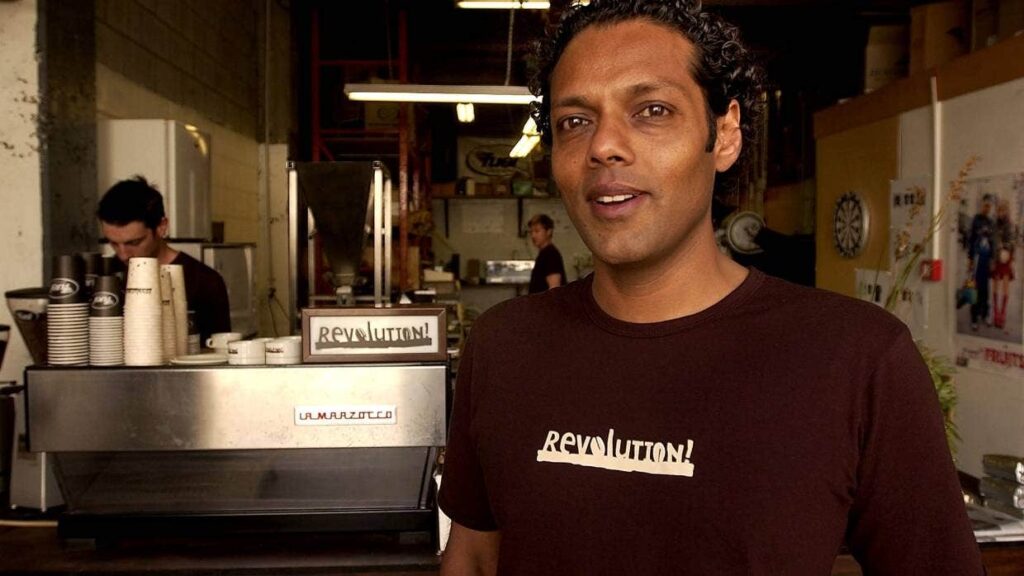
Sanjay Ponnapa in 2004, at the launch of Fuel Espresso’s Revolution brand. He roasted and created his own coffee blends, including specialty arabica beans from his family’s plantations in Coorg, western India.
Coming from India to the gastronomically bleak New Zealand of the 1960s must have been a shock, but Ponu’s brother sent over bags of Coorg coffee, which Leela would roast in the family kitchen.
Sanjay went to school at Viard College in Porirua and then St Patrick’s College (Silverstream). He grew up into a tall, strongly built, strikingly good-looking man, with a love of fine clothes, whiskey and late 50s jazz. He attended Victoria University and the University of Canterbury, but left without a degree.
He worked in the fashion industry, then travelled to New York, supporting himself by cocktail bartending. Those playboy years were not wasted, as seeds were being planted that were to bear fruit later; attention to detail, a love of quality and customer service. One seed in particular was to grow into a plant that would build an empire.
Around 1995 he returned to Wellington and took a job with a young business called Coffee Supreme. It was the first years of what was to become the city’s cafe boom. Supreme founder Chris Dillon remembers Ponnapa as “very entrepreneurial”.
“He was always picking your brains. We had a lot of conversations about what he wanted to do next, and the potential he could see for takeaway carts, like he had seen in the US.”
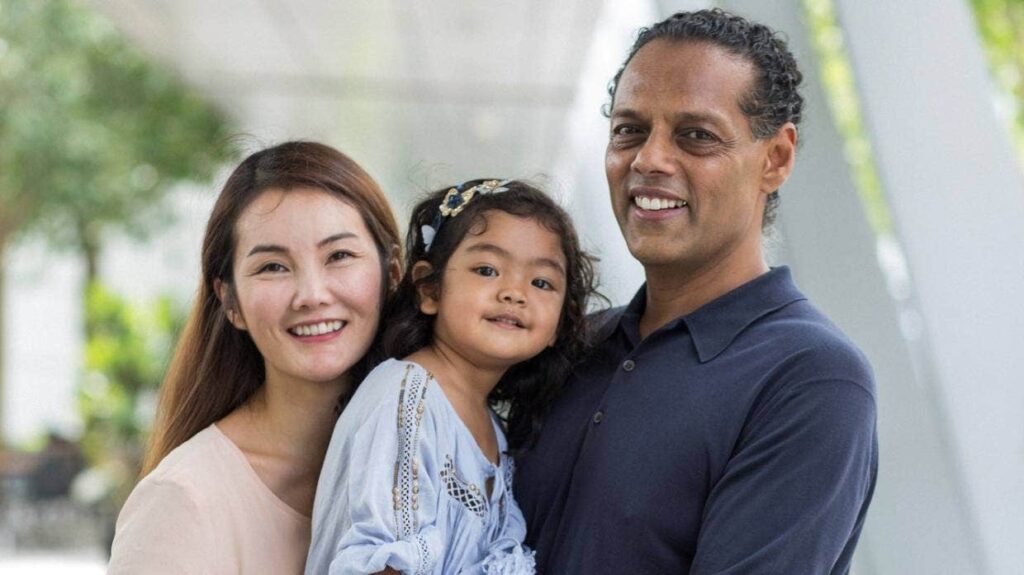
Yeonhee and Sanjay Ponnapa with daughter Leela in 2015. Fuel now has seven sites in Hong Kong and two in Shanghai, in addition to three in Wellington.
Ponnapa wanted to do something different. He still wasn’t sure how. Then, in 1996, things came together. He designed and built his first coffee cart.
Anyone who was in Wellington then will remember it: based on the 1950s design icon, the Airstream Caravan, in silver, black and red, with the sounds of Miles Davis and Sonny Rollins wafting through aromas of the finest arabica coffee served in branded cups. It was an instant hit with Wellingtonians. Fuel Espresso Ltd was born.
“He wanted to elevate takeaway,” says Dillon. “Many thought it was second-best. He wanted to show it could be beautiful. He paid a lot of attention to branding, to how staff deported themselves, to make sure it would be a very coherent presentation. I’m pretty sure staff didn’t get to play fast and loose with the music playlist.”
That year Ponnapa also met his first wife, Alexandra Tylee. They were married the same year. For the first five years, they worked side by side developing Fuel.
The first cart, on The Terrace, showed them that the concept worked; the next challenge was getting more sites. Ponnapa persuaded sceptical bureaucrats to allow coffee carts at the hospital and airport.
“It hadn’t been done. We had to convince them it was a good thing to do,” Tylee says. “Back then lots of people hadn’t had proper espresso coffee. He was really charming, determined and tenacious, and didn’t give up.”
Fuel soon expanded to seven carts and sites around Wellington. Unhappy with the wholesale imported beans most cafes used, they travelled to Trieste, Italy, and created their own blend with coffee maestro Vincenzo Sandalji. They then set up their own roastery in Holland St.
“We practised the roasting for about a year before he was happy with it. He wanted to get it right. He was a perfectionist,” says Tylee.
Ponnapa was very proud of his blend, a closely guarded mix of Italian and specialty arabica beans from his family plantations in Coorg. He believed passionately that good coffee, like good wine, needed close attention to blending and even ageing. He decided to age his coffee, contrary to what he called the “global industry’s obsession with the ‘fresh is best’ dogma”.
Tylee says his talent as a leader helped the business grow. “Everyone at Fuel was really like a family. He loved being able to integrate his passion for his music, and his family. He had a vision and saw it through.”
Unfortunately, family life was not so smooth. The couple’s son Zeus was born in late 1999. He died only a few months later, from Sudden Infant Death Syndrome, and his parents eventually parted ways.
By 2005, Fuel Espresso was well-established in the Wellington coffee scene, and Ponnapa was looking for the next step. He saw it in Hong Kong. He had a vision for a chain of high-end cafes nestled amongst the Guccis, the Versaces and other luxury shops of Hong Kong’s plazas.
Over the next decade he built it. Fuel now has seven sites in Hong Kong and two in Shanghai, in addition to three in Wellington. It has been stunningly successful; a tribute to the boy from Porirua who exported the taste and aroma of his secret blend to Asia.
Hong Kong became his home; he met his second wife, Yeonhee Kim, who worked in the financial sector. They married in 2012. Their daughter, Leela, was born the next year.
On Friday, November 26, Ponnapa mentioned to his wife that he was feeling unwell. He attended a staff dinner that evening, but left early. While entering an escalator, he is believed to have suffered a medical event that caused him to fall. He died at the scene.
Dillon says Ponnapa made a significant contribution to the development of Wellington’s cafe culture. “Fuel was the first high-end New Zealand takeaway coffee chain. He would say the only one. No-one had made good-quality takeaway coffee with that level of attention to detail and quality and presentation.”
Tylee says it’s hard to believe he’s gone. “He was so full of life, he had so many interests and so much he wanted to do.
“He was really warm, and a caring person.”
Chris Brown, of Sputnik PR, worked closely with Ponnapa to build his brand, but says his business achievements were ultimately not what gave him most satisfaction.
“He was very excited about celebrating their [his and Yeonhee’s] 10th anniversary. After all he’d been through, he thought his little family was his greatest success.”
Sources: Mythi Ponnapa, Chris Brown, Chris Dillon, Alexandra Tylee
source: http://www.stuff.co.nz / Stuff / Home> Life & Style> Food & Drink / by Patrick Piercy / December 11th, 2021
WELCOME. If you like what you see "SUBSCRIBE via EMAIL" to receive FREE regular UPDATES.
Read More »