Kodagu palace brings alive fading memories

KodaguPalace01KF04jul2016

Madikeri :

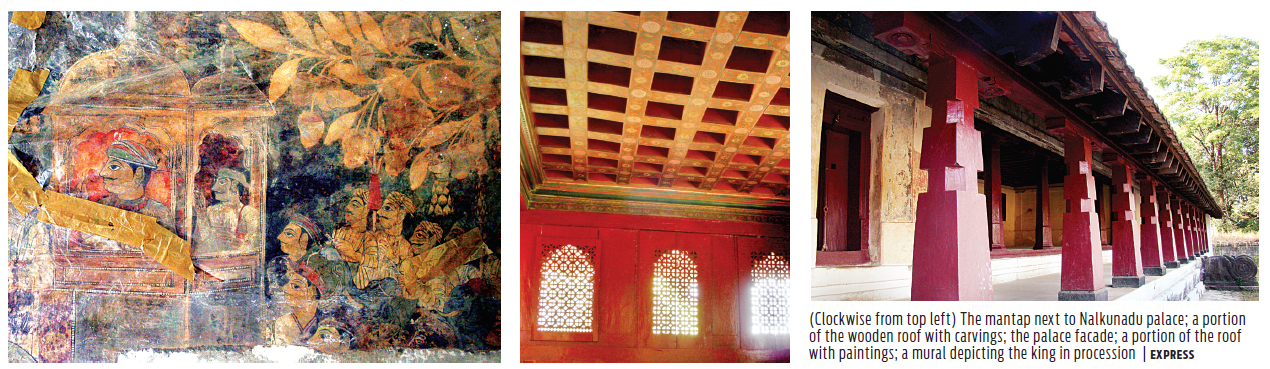
The Nalkunadu palace in Yuvakapadi, 30 km from Madikeri, was built in the late 18th century by Doddaveera Rajendra, a king of the Haleri dynasty. The last king who lived there, Chikaveera Rajendra, was immortalised in fiction by the celebrated Kannada writer Masti Venkatesa Iyengar. The palace is also called Nalnad aremane in Kodava parlance.

KodaguPalace02KF04jul2016

The palace is now attracting a huge number of tourists. Its unique features include a mantap where marriages were solemnised. The palace stands atop a hillock next to Tandiyandamol, the highest peak of district. (This breathtaking expanse is drawing bigger numbers after it was featured as Mugilupete in the hit Kannada film Gaalipata).

KodaguPalace03KF04jul2016

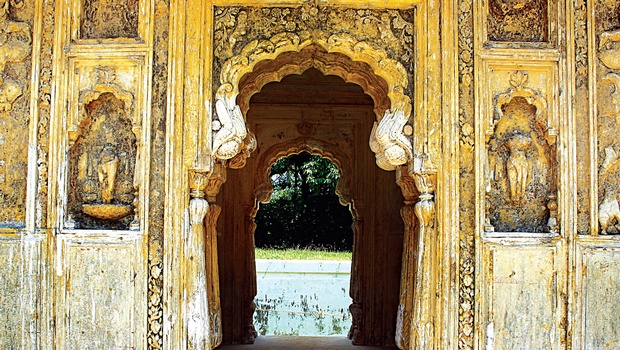
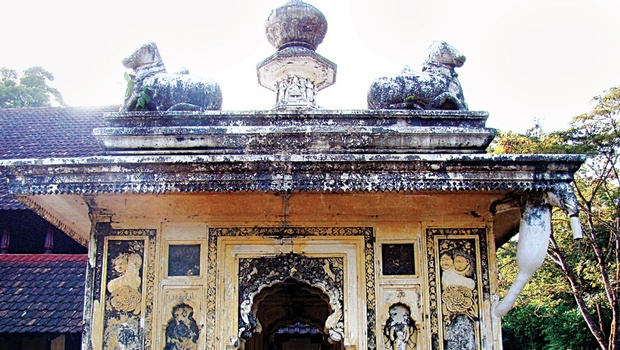
Built in brick and mortar, the palace is about 65 feet wide, and has a spacious verandah. The ground floor has a wooden roof with carvings, depicting flowers, vines, dancing girls, musicians, and a king and queen. The style is Indo-Saracenic. A 6×10 ft mural depicts the king in a procession, but it is damaged. Four dark rooms at the back, historians say, were used as a prison.

A spacious darbar hall, several baths and chambers for the king and queen are still in evidence. In 1796, king Doddaveera Rajendra married Mahadevammaji, his second wife, at the mantap here.

Some walls have lime carvings of the two-head mythical bird Gandabherunda, elephants, and lions. Artists from Rajasthan and Mysore were brought in for the special carvings, some of which have been ravaged by time. Similar architecture is seen at the Madikeri Omkareshwara temple.

Surrounded by lush greenery, the palace had a copper kalasha (cupola) on its roof which, elderly people say, is now obscured.

source: http://www.newindianexpress.com / The New Indian Express / Home> States> Karnataka / by Coovercolly Indresh / July 03rd, 2016

Brewing coffee from jackfruit seeds

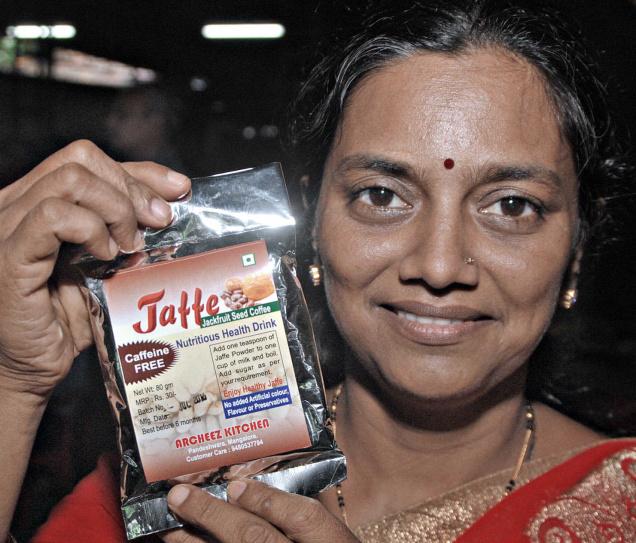
Healthy:Maithraye Shenoy displaying the ‘Jaffe powder’ made of jackfruit seeds.— Photo: H.S. Manjunath

Can powdered jackfruit seed taste like light coffee without adding any other ingredient to it?

If you cannot believe it, you ought to taste the “health drink” made by Shivanna from Sakharayapatna, of Parivarthana, a non-government organisation, in Chikkamagaluru district.

“My product is very near to coffee; it can become a substitute for coffee,” said Shivanna, who was at the jackfruit mela here on Sunday. He told The Hindu that the processed seed powder was the result of his one-year research and it was free from any stimulant like caffeine.

He said that three cups of the “health drink” could be prepared from one spoon of his new product. Shivanna has sent the sample to the Central Food Technological Research Institute, Mysuru, for analysis of carbohydrate, fibre, fat and calorie contents. “You can drink this product like you drink coffee by making its decoction,” he said.

‘Jaffe powder’

Maithraye Shenoy, a homemaker from Pandeshwara in Mangaluru, has also made a “health drink” from jackfruit seed. She has named it “jaffe powder”, which can be mixed with milk. “It was the result of a two-month research. I roast the jackfruit seed before making the product,” she said.

Meanwhile, Artocarpus Foods Pvt. Ltd., at Taliparamb, near Kannur, is already marketing jack seed powder. It can be used to make chapattis, dosas, cakes, and bread. It also makes a product from the seed as masala for chicken curry, said Shree Padre, executive editor, Adike Pathrike, a farm monthly and a crusader for jackfruit and its value-added products.

source: http://www.thehindu.com / The Hindu / Home> News> Cities> Mangaluru / Raviprasad Kamila / Mangaluru – July 04th, 2016

Joshna Chinappa Breaks Into World’s Top-10

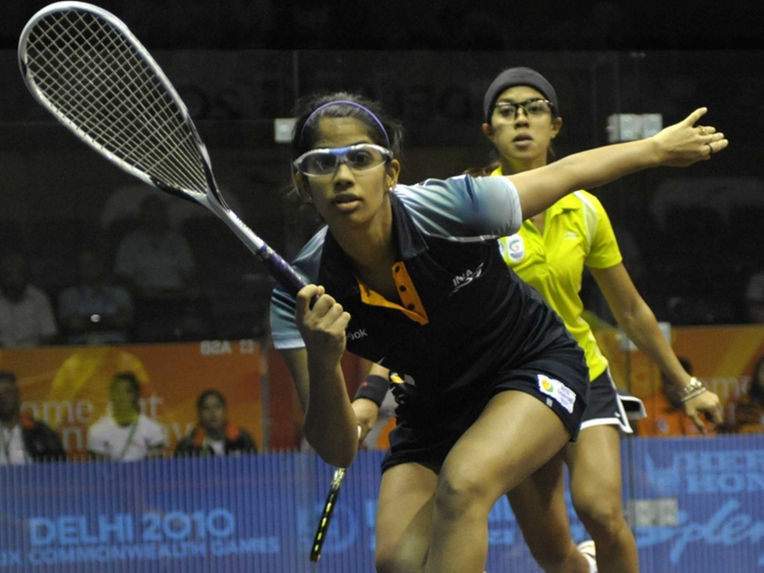
Joshna Chinappa is now the second Indian squash player after Dipika Pallikal to enter the top-10 ranking. Dipika is currently ranked 19th.

Joshna Chinappa entered final at the HKFC International in Hong Kong in May. /  @ AFP
Joshna Chinappa entered final at the HKFC International in Hong Kong in May.
/ @ AFP

New Delhi:

Joshna Chinappa, top squash player, on Friday rose to a career high 10th position in the latest PSA world rankings, becoming the second Indian to break the top-10 barrier after Dipika Pallikal.

Chinappa, who has been in fine form in the last six months, moved a place to be 10th in the standings. Pallikal, who broke the top-10 barrier in December 2012, is ranked 19th in the latest rankings.

Chinappa had reached her biggest ever final at the HKFC International in Hong Kong in May.

She is now getting ready to defend her title in the National Championship, to be held in Mumbai from July 12.

Pallikal, who was 18th last month, dropped a place in the rankings. She was a quarterfinalist at the HKFC International.

The only other Indian in the top 20, Saurav Ghosal, remained on 17. Ghosal had been off action for a while nursing an ankle injury and is due to return to active squash at the Nationals in Mumbai.

source: http://www.sports.ndtv.com / NDTV Sports / Home> News / by Press Trust of India / July 01st, 2016

Harshika’s wild night with Vikram, Shruti Haasan!

HarshikaKF02jul2016

Harshika Poonacha is sure having fun. The pretty actress is currently in Singapore for an award function that honours the best of the South Indian film industry, and while there, Harshika seems to be having a ball of a time.

The actress has been interacting with her peers from all the four southern film industries, and was also partying with Tamil stars Vikram and Shruti Haasan. She posted a selfie that she took with the two stars, amd even called Vikram the “most handsome photobomber”.

source: http://www.timesofindia.indiatimes.com / The Times of India / News Home> Entertainment> Kannada Movies / TNN / July 01st, 2016

Indian Writer Gets Gourmand Award for World’s Best Book on Coffee

City-based freelance journalist and author P T Bopanna’s book ‘The Romance of Indian Coffee’ has been chosen as the world’s best book on coffee at The Gourmand World Awards function at Yantai in China.

The book, earlier shortlisted for the finals of the ‘Best in the World’ books under the ‘coffee books’ category, was picked from the entries of 64 countries, according to Bopanna.

‘The Romance of Indian Coffee’ was published in 2011, and takes a 360-degree view of Indian coffee.

The final results were announced recently in which the book was ranked first, followed by entries from the United States and Brazil in the second and third places respectively, Bopanna said in a release here.

Spain headquartered The Gourmand International every year honours the best food and wine books, printed or digital, as well as food television with the awards open to publishers in all languages and countries.

The Gourmand Awards celebrate global cookbook and wine book publishing, and feature many world-renowned chefs each year.

Bopanna has authored five books and runs a few Kodagu-centric websites and recently produced a documentary film titled ‘Discover Coorg’.

source: http://www.outlookindia.com / Outlook / Home> The Newswire> Books & Culture / PTI / June 28th, 2016

Govt exploring coffee cultivation possibility, says Addl Chief Secy

Shimla :

Additional Chief Secretary Dr Shrikant Baldi said today that the state government was exploring the possibility of coffee cultivation as the Coffee Board of India had already surveyed prospective areas in Kangra, Mandi, Una and Bilaspur.

Eight market yards would be set up at Mendli, Fatehpur, Annu, Bhadshali, Jukhala, Totu, Tapri and Shilai to ensure remunerative prices to growers, he added.

Speaking on National Statistics Day after releasing a document, Agriculture and Farmer’s Welfare, brought out by the Department of Economics and Statistics today, Dr Baldi said: “Besides this, the state government is bringing 4,000 hectare area under off season vegetables cultivation. Under Rs 100-crore Dr YS Parmar Kisan Swarozgar Yojana, a target had been set for constructing 4,700 poly-houses covering 8.3 lakh square meter area for which farmers get 85 per cent subsidy”.

He said the government exempted levy of market fee on all vegetables and fruits and improved varieties and rootstocks of apple, pear, cherry, walnut and strawberry were being imported and distributed to farmers, who were given 80 per cent subsidies on anti-hail nets.

For the betterment of sheep breeders, procurement price of different varieties of wool had been increased and procedure for grant of grazing permits had been streamlined, he said.

He said the Shahnehar and Sidhata irrigation projects had been completed. Under the Vidhayak Nidhi, at least Rs 20 lakh would be spent on minor irrigation works and command area development.

Under the Rajiv Gandhi Micro Irrigation Scheme, about 8,500 hectare area would be brought under drip/ sprinkler irrigation system benefiting 14,000 farmers, he added.

He said under the Dr YS Parmar Kisan Swarozgar Yojana, 85 per cent subsidy was being provided to farmers to set up poly-houses, 50 per cent assistance for setting up vermi compost units and 60 per cent subsidy on setting up of milk processing and chilling facilities to the dairy co-operative societies.

He said the Rs 1,115 crore Himachal Pradesh Horticulture Development Project would provide new technologies to the horticulturists.

source: http://www.tribuneindia.com / The Tribune / Home> Himachal> Governance / by Tribune News Service / Shimla – June 29th, 2016

Starbucks Plans to Debut Small-Lot Coffee From This Tea-Growing Country

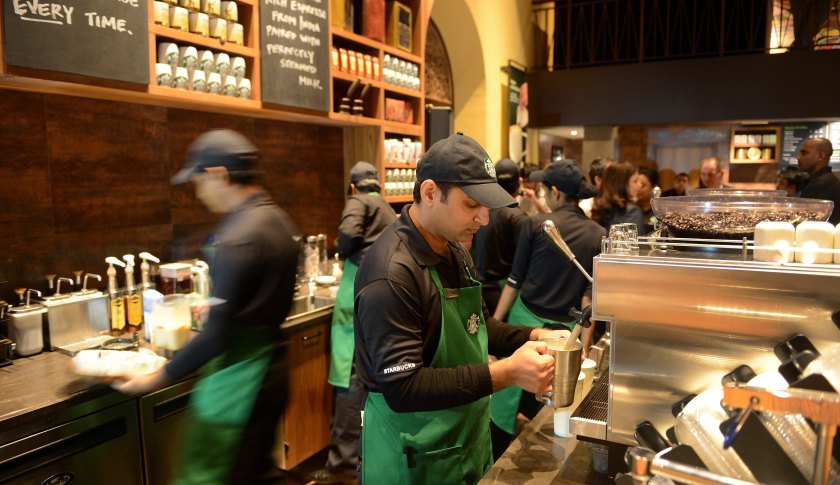
Staff work behind the counter of India's first newly-inaugurated Starbucks outlet in Mumbai on October 19, 2012.  / Photo-  PUNIT PARANJPE/AFP/Getty Images)
Staff work behind the counter of India’s first newly-inaugurated Starbucks outlet in Mumbai on October 19, 2012. / Photo-
PUNIT PARANJPE/AFP/Getty Images)

It’s also one of the coffee chain’s fastest-growing markets.

Starbucks for the first time will sell single-origin, premium coffee from India in the United States as part of its effort to support coffee production in the country better known for its tea.

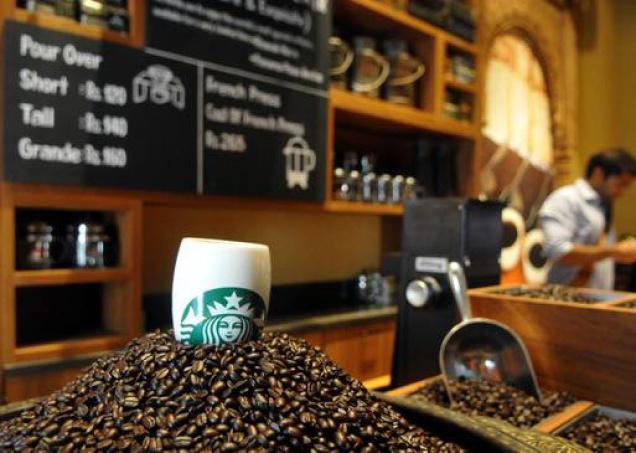
Starbucks SBUX -0.23% for a limited time later this year will sell a small-lot arabica coffee from the Tata Nullore Estates in India’s Coorg coffee growing area. The coffee will be roasted and sold at Starbucks’ Reserve Roastery and Tasting Room in Seattle. The price was not disclosed.

John Culver, group president for Starbucks Coffee China/Asia Pacific, told Reuters that the aim is for this to be the “first step in what we hope will be many reserve coffees coming out of India.”

It’s also one of the coffee chain’s fastest-growing markets.

India, which produces both robusta and arabica, is the world’s sixth-largest coffee producer. Its coffee output has increased 16% over the past 5 years, according to International Coffee Organization (ICO) data.

India’s estimated 2015/16 harvest is expected to be 5.83 million 60-kg bags of coffee, according to ICO.

The country is one of the coffee chain’s fastest-growing markets. Starbucks’ India, an equal joint venture between Starbucks and Tata Global Beverages Limited, has grown to 84 stores across six cities in India since its start in 2012.

Starbucks India, which so far has served only 100% arabica coffee grown and roasted in India, will also begin offering Kenyan and Sumatran coffee soon, Culver said.

source: http://www.fortune.com / Fortune / Home> Retail> Coffee / by Reuters / June 27th, 2016

Ashwini Nachappa to mentor seven underprivileged athletes

Seven underprivileged children will be mentored by former athlete and Arjuna award winner Ashwini Nachappa to help realise their dreams of becoming good sportspersons.

The initiative, launched by Dabur, received nearly 8,000 entries from all over India. Trials were conducted across Bihar, Uttar Pradesh, Andhra Pradesh, Odisha and West Bengal to identify talented athletes. An independent sports panel then screened potential athletes and shortlisted 350 of them. These candidates then participated in a national camp held in Delhi. A team of experts headed by Ms. Nachappa picked the top seven athletes from the group.

Besides Sayali Mhaishune, who ran barefoot and won the under 17 district sports office inter-school athletic championships, the other winners are Avnee Rawat, Ujala, Shabnam, Vikas, Mohammed Meraj and Jainabaj.

( The writer is an intern with The Hindu )

source: http://www.thehindu.com / The Hindu / Home> News> Cities> Delhi / Girbani Dutta / New Delhi – June 27th, 2016

A tale with a sharp edge

Watershed moments

MeriyandaAinmaneKF28jun2016

Near the 10th mile from Virajpet is the traditional Ainmane homestead of the Meriyanda extended family. It is reported that several generations ago an unmarried lady, addressed as Balliavva, raised her brothers’ children. The descendants of the boys among them are part of the Meriyanda clan today. According to Gappu Ganapathy, a member of the Meriyanda clan, one historical family member who was called Maanichcha Moli (master), had 2 wives and 6 sons. The eldest among the boys was Meriyanda Medappa, affectionately called Medu, whose mother was from the Marichanda family. Four of his 5 younger brothers were known as Chettichcha, Kunjappa, Aiyappa and Ponnappa.

Medappa, who was a government official, was made a Dewan under Linga Rajendra, the Raja of Kodagu between the years 1811-1820. However, it is said that Medu was a Dewan only for 18 days. During a particular battle when Medu was stationed at the Nalnad palace, he sent his brother Chettichcha to the western border of the Kodagu kingdom. In the meantime, Medu’s rival had spread rumours to the Raja that Medu had sent his brother to the enemies in order to sell them official secrets.

Following this, Medu was charged with treason and made to run around the palace. The intention was to make him run into the king’s oidekatthi, a traditional sword also known as the ayudha katthi, which was positioned in the courtyard in a manner that it would slit open the runner’s neck. However, Medu ducked while he ran into the sword; so it was only his scalp that was cut off. Although he was only unconscious, the palace servants assumed he was dead and told the Raja so.

Twist of events
Meanwhile, Chettichcha won the battle and the news made the Raja regret his decision. Medu, who was revived by a toddy drawer returned to the palace a few days later and was honoured with the Raja’s oidekatthi bearing the small, embossed, golden ‘lin’ seal of the Raja stamped upon it. This sword, made peculiar by the rare stamp, originally had an ivory hilt; but was replaced by a wooden handle when it broke. The most commonly found seals of the Kodagu Rajas bear either of the Kannada syllables ‘vi’ or ‘lin’. While ‘lin’ belonged to Linga Rajendra, the ‘vi’ belonged to his elder brother and predecessor Dodda Vira Rajendra.

In the early 19th century, 3 paintings of Dewan Medu and the Kodagu Raja were commissioned. While the recipient (Dewan Medu) looks the same, the Raja appears to be different in each of the paintings. We can speculate that Linga Rajendra himself adopted different styles as he aged or they were actually different Rajas, probably Dodda Vira Rajendra (1789-1809) and Chikka Vira Rajendra (1820-1834), under whom Medu would have served as an official and advisor.

On canvas
In these paintings, Medu wears a red cloth head-dress, which has projections in front, and a thin kombu mishe (handlebar moustache), kept by the accomplished brave men of those times. He wears ear rings and is dressed in a white coloured kuppya (a traditional, long-sleeved tunic) with an ornate knife, called the piche katthi, secured in his chele (waistband).

Even the Rajas don’t seem to be spared by rules of propriety; in this case, they had to have something held in their right hands when seen in public. They are either holding hunting falcons or holding what appears to be some sort of a flower or a jewel in their right hands. While the original paintings have been kept elsewhere for safekeeping and preservation, black and white copies have been put up for display in the ancestral house. A spear of the olden days, known as barchi, has also been kept there.

Family heirlooms, such as these paintings and swords, which are part of a heritage, are to be preserved for posterity. A number of similar beautiful paintings had been commissioned by the Kodagu Rajas, especially between 1792 and 1834, and given to different families across Kodagu. It is however unfortunate that we are not aware of the identity of the artists who drew them.

Likewise, the ayudha katthis issued by the Rajas bear their respective syllabic regal insignia. One good specimen of a sword with the ‘vi’ syllable has found its way to the London Museum in the United Kingdom, where it is on display today.

source: http://www.deccanherald.com / Deccan Herald / Home> Supplements> Spectrum / by Mookonda Kushalappa / June 28th, 2016
Coffee from Coorg to find its way into Starbucks in Seattle

CoorgCoffeeKF27jun2016

Mumbai :

Coffee grown at the Tata Nullore Estates located in Coorg will now be available at Starbucks in Seattle. This is the first time Starbucks will offer a single-origin coffee from India in the US.

This is part of the multiple new initiatives decided in a meeting between the Chairman and Chief Executive Officer of Starbucks Coffee Company, Howard Schultz, and Chairman, Tata Sons Ltd, Cyrus Mistry, at the iconic Starbucks Reserve Roastery and Tasting Room in Seattle.

“For the first time, Starbucks will offer a single-origin coffee from India in the US, giving customers from outside the country a unique opportunity to experience a rare, small-lot coffee from the Tata Nullore Estates located in the beautiful Coorg coffee growing area of India. Starbucks Reserve Tata Nullore Estates will be the first coffee from India to be roasted at the Starbucks Reserve Roastery and Tasting Room and will only be available at this Seattle location later this year,” said a press statement.

Starbucks also announced plans to increase its coffee roasting capacity for supplying its stores in India and, over time, select markets around the globe. Since Tata Coffee Ltd opened its doors to a roasting and packaging plant in Kushalnagar in Coorg, Karnataka, in 2013, this facility has steadily increased its roasting capabilities. Today, it roasts the Starbucks India Estates Blend and Espresso Roast coffees and will soon expand to include both Kenyan and Sumatran coffees for Starbucks stores throughout India.

“We are proud to work with Starbucks, a company which shares our commitment to both the coffee growing regions and the coffee farmers to ensure we meet the global demand for high-quality coffee over the long-term,” said Mistry.

Starbucks also announced it will soon take flight on Vistara, India’s fastest growing full-service airline, later this year. Starbucks’ fresh brewed coffee service will be exclusively available on all Vistara flights. A joint venture between Tata Sons and Singapore Airlines, Vistara operates more than 457 flights weekly to 17 destinations across India and, in June celebrated the milestone of flying two million travellers.

Starbucks will also extend its Teavana specialty tea brand to India this December. Starbucks also plans to expand the availability of Himalayan Mineral Water, bottled by Tata Global Beverages, beyond Starbucks stores in India to Singapore later this year, as the companies explore opportunities to introduce the bottled water brand to stores across Starbucks China and the Asia-Pacific region.

Schultz and Mistry committed to come together to provide young people in India valuable skills training over the next five years through Tata STRIVE, an initiative aimed at arming youth with skills for employment, entrepreneurship and community enterprise.

source: http://www.thehindubusinessline.com / Business Line / Home> Companies / The Hindu Bureau / Mumbai – June 27th, 2016