Karnataka nixes Kerala plan for road via Kodagu forests

Madikeri :

The Karnataka forest department has turned down a Kerala government proposal to build a road through Kodagu forests for a smoother access to Bangalore.

The decision was taken based on a report submitted by the Kodagu wildlife division’s deputy conservator of forests.

It’s learnt that the Kerala chief minister had sent in a letter to his Karnataka counterpart, suggesting carving out a road through Mundrotu forests near Talacauvery in the district. In the letter, Oommen Chandy said the distance from Kerala’s Ezhimala in Kannur district to Bangalore through Talacauvery is 376 km, and wanted a 16km stretch from the state boundary to Talacauvery for a comfortable journey.

Some 43km stretch of the road is in Kerala and the rest in Karnataka.

The Kodagu wildlife division sent in a report to its headquarters, saying construction of a road through the forests was not desirable as Mundrot forests were home to many wildlife species. Of the planned 16km road, at least 8km stretch was to scythe through the reserve forest, presenting hunters and smugglers a chance to poach trees like rosewood, nandi and jackfruit, among many others.

The Karnataka forest department nixed the proposal and communicated it to the Kerala chief minister, it’s learnt.

source: http://www.timesofindia.indiatimes.com / The Times of India / Home> City> Bangalore> Namma Metro / TNN / October 31st, 2014

A purposeless power-line via Kodagu to Kerala

‘A case of spending money to benefit contractor, bureaucracy and politicians’

The following is the text of a talk delivered by Maj. Gen. S.G. Vombatkere (Retd.) at a meeting held at Kodava Samaja, Ponnampet, South Kodagu, on Tuesday, 21st Oct. 2014.
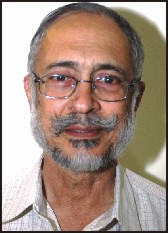
MajGenVombatkereKF02nov2014

by Maj. Gen. S.G. Vombatkere (Retd.)

Sri S. Gopal, dignitaries on the dais, Members of Kaveri Sene and Coorg Wildlife Society, and members of the august audience, I thank you for giving me this opportunity to say a few words about the 400 KV Double Circuit (D/C) HT line connecting Mysore with Kozhikode.

The 210-km 400 KV Double Circuit HT line connecting Mysore with Kozhikode is under construction by Power Grid Corporation of India Limited (PGCIL). It is said to be required to evacuate electric power generated by Kaiga Nuclear Power Station to supply North Kerala.

PGCIL claims that of 210-km, about 92-km in Kerala’s Wayanad District and about 63-km in Mysore District is completed, and 55-km through Kodagu District remains to be constructed. This “remaining” portion in Kodagu District is being opposed by the people of Kodagu, spearheaded by Kaveri Sene and Coorg Wildlife Society on grounds of environmental destruction that will adversely affect the Kaveri watershed which is the source of life-giving water to Karnataka and Tamil Nadu.

Also it will ruin coffee plantations due to tree-felling and intensify the human-animal conflict especially related to elephants, which is already claiming human lives in Kodagu. The objections of the Kodava people to this project are not new, but are several years old. I will speak on this issue and ask some questions concerning technical, environmental and governance matters.

Technical questions

Let us first examine whether this 400KV HT line is at all required. As on date, there are seven HT lines supplying power to Kerala, five from Tamil Nadu and two from Karnataka. These seven lines have a total capacity of 3,000 MW while the share of Kerala from the national grid is only 1,000 MW. Further, although the energy share of Kerala from the national grid is 9,350 Million Units (MU), Kerala is drawing about 11,350 MU from the existing seven HT lines. This shows that the existing seven HT lines are more than adequate for Kerala’s power needs from the national grid, and the proposed 400KV D/C HT line is not at all required.

Thus the question arises as to why PGCIL has constructed 155-km when the project is not necessary and also when the 55-km segment within Kodagu District is facing objections from the people of Kodagu. The environmental and social costs of the project have obviously not been taken into account.

Karnataka State officials have deposed before the National Green Tribunal (NGT), stating that the objections of Gram Sabhas are “belated,” “motivated” and are an “after-thought.” These statements are uncalled for, and show the dismissive attitude of officials towards simple people. The objections may be “belated” because village people did not get to know about the PGCIL project earlier. And if the village people are “motivated” in objecting to the project, their motivation is in preserving the environment which is a vital watershed for South India, saving their own coffee plantations which are their livelihood, and trying to mitigate the growing human-elephant conflicts. Thus, the question arises as to why our own officials have this attitude towards projects.

The 90-paise “disease”

The fact is that even though all officials are not corrupt, many officials are interested in getting large projects sanctioned and executed because a good portion of every rupee of public money spent does not go towards the project work but gets diverted into private pockets. When Rajiv Gandhi was the PM, he had estimated that 80-paise in the rupee went astray. Now, decades later 90-paise, possibly more, would be seen vanishing if an honest, transparent audit were to be made. When a project is estimated at Rs. X crores, X-crore 90-paise portions vanish. Some people indelicately refer to such standard practice as corruption. But if at least the project was a genuine requirement and was executed with quality and in time, one could still wink at the corrup… oops, sorry, the vanishing 90-paise. And this 400KV HT line is an unnecessary project as has been shown earlier.

Environment and Governance

The felling of trees in forest areas and in coffee plantations is harmful to the environment. PGCIL argues that felling a “mere” few thousand trees may not harm the environment. But this argument fails to address the cumulative effect of felling trees for different projects of roads, HT power lines, etc., in the Western Ghats which is an “eco-sensitive hot-spot” in India and even in the international context.

The Ministry of Environment, Forests and Wildlife (MoEFW) is busy giving clearances to any and every project and weakening the Environment Protection Act. When Article 48A of the Constitution reads, “The State shall endeavour to protect and improve the environment and to safeguard the forests and wildlife,” this attitude of MoEFW is condemnable.

The cumulative effect of this deforestation, especially in special regions like the Western Ghats and in particular Kodagu, is not at all a consideration for MoEFW, in the country’s mindless rush towards industrialisation at the cost of environmental destruction.

Kodagu District is special in two ways. One, its famed soldiers protect our country as a fundamental duty, in accordance with Article 51A(d), to defend the country. And two, its people are saving the source and vital watershed of Kaveri, and performing their fundamental constitutional duty “to protect and improve the natural environment including forests, lakes, rivers and wildlife” in accordance with Article 51A(g), doing what MoEFW should be doing but is actually doing the opposite. For all this, we all need to salute the people of Kodagu.

When the State, consisting of the Executive, the Legislative and the Judiciary, fails the People, the people have to resist and uphold the Constitution of India. In opposing this 400 KV Double Circuit HT line, we are performing our fundamental constitutional duty. Let us join together to do our duty!

Jai Hind!

source: http://www.starofmysore.com / Star of Mysore / Home> Feature Articles / Tuesday, October 28th, 2014
Karnataka nixes Kerala plan for road via Kodagu forests

Madikeri :

The Karnataka forest department has turned down a Kerala government proposal to build a road through Kodagu forests for a smoother access to Bangalore.

The decision was taken based on a report submitted by the Kodagu wildlife division’s deputy conservator of forests.

It’s learnt that the Kerala chief minister had sent in a letter to his Karnataka counterpart, suggesting carving out a road through Mundrotu forests near Talacauvery in the district. In the letter, Oommen Chandy said the distance from Kerala’s Ezhimala in Kannur district to Bangalore through Talacauvery is 376 km, and wanted a 16km stretch from the state boundary to Talacauvery for a comfortable journey.

Some 43km stretch of the road is in Kerala and the rest in Karnataka.

The Kodagu wildlife division sent in a report to its headquarters, saying construction of a road through the forests was not desirable as Mundrot forests were home to many wildlife species. Of the planned 16km road, at least 8km stretch was to scythe through the reserve forest, presenting hunters and smugglers a chance to poach trees like rosewood, nandi and jackfruit, among many others.

The Karnataka forest department nixed the proposal and communicated it to the Kerala chief minister, it’s learnt

source: http://www.timesofindia.indiatimes.com / The Times of India / Home> City> Bangalore> Namma Metro / TNN / October 31st, 2014

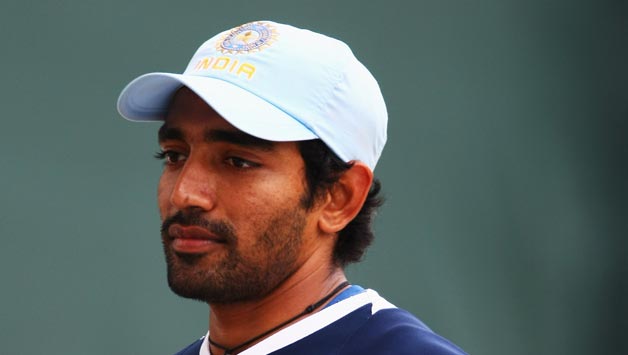
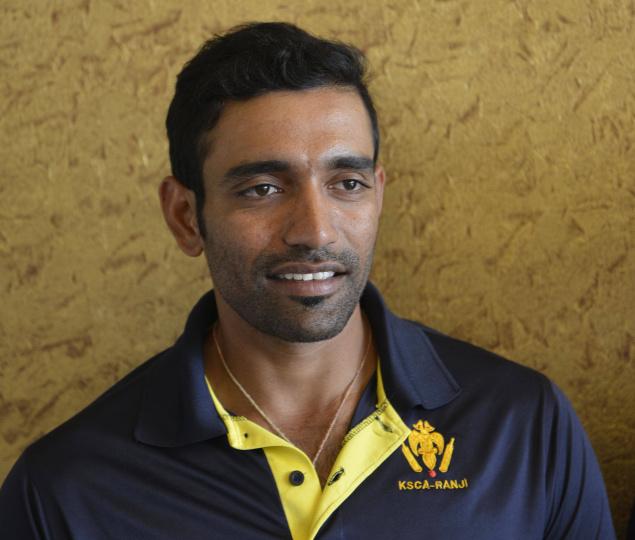
Robin Uthappa completes 100 First-Class matches

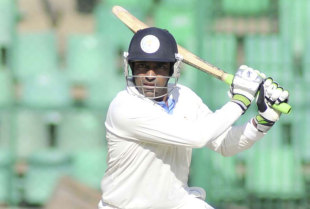
Robin Uthappa had made his First-Class debut for Karnataka in the 2002-03 season © Getty Images

Robin Uthappa, on Wednesday completed his 100th First-Class match. The final of the Duleep Trophy against Central Zone is Uthappa’s 100th match. In his previous 99 matches, Uthappa has scored 6,484 runs at an average of 40.52. Uthappa had made his First-Class debut in the 2002-03 season.

Uthappa has been a prolific run-scorer in domestic cricket. He was the pillar of Karnataka’s successful campaign in Ranji Trophy 2013-14. He was also instrumental in the Irani Trophy and Vijay Hazare Trophy wins.

Uthappa played for Kolkata Knight Riders in the Indian Premier League this season and was once again played sparkling knocks to help the team bag KKR’s title. He is an aggressive batsman and has often opened the batting.

source: http://www.cricketcountry.com / Cricket Country / Home> News / by Cricket Country Staff / October 29th, 2014

I have evolved, says Robin Uthappa

“At the end of the day, it’s your own game and you know what works for you,” Robin Uthappa said. File photo: K. Bhagya Prakash / The Hindu

Putting value on his wicket has been the compelling factor in Robin Uthappa evolving as a batsman.

The South Zone stroke player presented a confident countenance ahead of the Duleep Trophy final against Central Zone to be held here from October 29.

“I have evolved as a batsman. I have realised there is no point in tweaking the process too much.

“One has to stay true to one’s skills. I have learnt from my seniors,” said Uthappa.

He elaborated, “I don’t throw my wicket away now and don’t like getting out even in the nets. I understand my technique better after making some adjustments. My head is still and that is important.”

Keen to regain his spot in the India team, Uthappa said he was keen to keep wickets too.

“I am serious about my wicketkeeping.

“I like to do the job whenever the team needs me to.”

He gives credit to personal coach Pravin Amre for the change in his cricket.

“He made me realise my responsibility and I understand the importance of staying at the wicket and contributing,” said Uthappa.

source: http://www.thehindu.com / The Hindu / Home> Sport> Cricket / by Special Correspondent / New Delhi – October 27th, 2014

A Chef Charts the City’s Changing Foodscape

ChefNarenKF310ct2014

Bangalore :

Chef Naren Thimmaiah, executive chef at the Gateway Hotel Residency Road, has been associated with the iconic Karavalli Restaurant in Bangalore since its inception 24 years ago. This multiple award-winning restaurant with its very unique ethos and focus on authentic regional cuisine has won the chef many accolades.

Hailing from a traditional Coorgi family, this chef believes in the lasting power of recipes handed down through mothers and grandmothers and replicating them perfectly even in a restaurant set up. It has been his aim to offer the guests a taste of home and comfort food even while they are travelling. It is in keeping with this idea which combines fresh ingredients, seasonal produce and traditional recipes that he creates dishes which are both healthy as well as delicious like the Maddur Vade (deep-fried patties of rice flour, semolina, maida, sliced onion, curry leaves, grated coconut and asafoetida)

Chef Thimmaiah has been well aware of Bangalore’s changing foodscape over the last two and half decades and in a special menu celebrating 25 years of the hotel (which will be available till Nov 10), he has crafted a menu which will pay tribute to iconic dishes from the city, recreated in his own kitchens.

This spread will include everything from a simple yet special Lassi from a popular roadside eatery to the succulent Midnight Chicken Kebabs from a well-loved joint, from the familiar Commercial street-style Gulab Jamuns and sinful Death by Chocolate to the unforgettable lamb burgers with sweet mayo.

Bangaloreans will immediately be able to identify these age-old city favourites from well-known eating joints around the city. This apart, the chef will also reintroduce hit dishes from his own menu over the ages and recall dishes that are representative of different cuisines and true to their indigenous roots in different parts of the country depending on availability of produce. These include the typically Amritsari Pindi Chole, the Awadhi Kakori kababs and the Coorgi Akki Roti Soppina Saaru (rice flour roti with a broth made of lentils and edible greens).

source: http://www.newindianexpress.com / The New Indian Express / Home> Cities> Bangalore / by Diya Kohli / October 27th, 2014

Coffee consumption rising in Tamil Nadu

Coffee consumption has been increasing by 2.8 per cent since the last five years, as against 2.4 per cent in the previous five-year period

Chennai:

For purists, kaapi frothy boiled milk mixed with decoction – is the quintessential hallmark of tradition and this steaming aromatic beverage is the first energy drink that sets the day in motion. For coffee lovers, there’s nothing like coffee that satiates the palate when sipped after tiffin or taken to destress.The saga of coffee consumption continues to increase in the southern states, particularly Tamil Nadu. Coffee consumption in the country has grown to about 90 grams per capita per year from 60-70 grams about 12 years ago.

Annually, coffee consumption has been increasing by 2.8 per cent since the last five years, as against 2.4 per cent in the previous five-year period. However, the average consumption is 4-5 kg per capita, per annum in most developed countries. Finland, for instance, has the highest per capita consumption of 12 kg per annum.Compared to some of the developed countries, coffee consumption in India has been low as the predominant consumers are from the south.

Tea is drunk in the northern parts of the country. On an average, 3.04 lakh MT of coffee is produced in south India, with Karnataka contributing to the bulk of coffee production (2.11 lakh MT). About 70 per cent of the domestic production is exported. Aiming to bring more acreage and consumers under coffee, the Coffee Board of India has identified new areas in West Bengal and Himachal Pradesh for coffee plantations in the coming years. In the traditional areas of Karnataka, Kerala, Tamil Nadu and Andhra Pradesh, the board is focusing on increasing productivity through replanting of old trees.

The increasing popularity of coffee chains like Cafe Coffee Day, Barista Lavazza and Costa Coffee, in particular, among the younger generation, has made coffee drinking more fashionable, although value-added products and instant coffee is on the rise with other categories of consumers.

India is the seventh largest coffee producer in India and the third largest in Asia and during 2013-14 fiscal, the country’s coffee exports stood at 3,13,025 metric tonnes, generating a revenue of US $ 793.22 million. Indian coffee is exported to over 45 countries and about 50 per cent of the exports in 2013-14 was to Europe. Italy is the largest market importing over 25 per cent from India, followed by Germany, Belgium, Turkey and the Russian Federations. So, the next time you try cappuccino or latte, think of Indian coffee beans.

source: http://www.deccanchronicle.com / Deccan Chronicle / Home> Nation> Current Affairs / DC Correspondent / October 26th, 2014

Trekking alongside clouds

TadiyandomolKF30oct2014

If you are looking for a getaway that takes you through green hills, misty clouds and silent paths, Tadiyandamol is for you, says Maya B.

Imagine walking through the clouds, running your fingers across cold ice crystals, and watching the rains from above the clouds. These are a few soothing moments one can experience from standing at the summit of Tadiyandamol, the second highest peak in Karnataka. Situated in the hilly district of Kodagu, Tadiyandamol is the tallest mountain in the district, with its highest point being 1,748 metres above sea level.

It is a lesser-known trekkers’ paradise that has fortunately not been commercialised yet.
The mountain is wide and gigantic, with two peaks, and lies on the Kerala border. Tadiyandamol in Malayalam or Kodava loosely translates to tall hills with a broad base. The best time to start the trek would be early in the morning, around 6 am. It is approximately an eight-km trek, which could be mildly strenuous.

Adventure enthusiasts can begin the trek at a small waterfall, about half a km from the foothills. A tarmac road leads to the waterfall, and further up, there are no motorable roads. A safer option to park vehicles would be at the Nalaknad Palace.

“A stream is a nice place to begin and end the trek as the cold water is invigorating,” says Aalok Gokhale, a regular trekker who has scaled Tadiyandamol twice. Trekkers first traverse through a dirt-road, which leads to a fork. Take the road sloping upwards as it passes through a forest area and a couple of streams. On the downside, the stretch is infested with leeches during monsoons.

Dreamy routes
And then there is a winding route that leads you into the open. That’s when you get the first glimpse of the mountain you will be climbing, and a complete view of the hills you are surrounded by. The trick is to simply walk in the direction of the peaks. You will come across a huge boulder on the way which is an ideal spot for a break and has the perfect viewpoint.

Here, the trekkers can choose one peak out of the two. The one on the left is higher than the one on the right. “When hiking to the peak on the right, you can take the route less travelled on, through the grass, or the man-made path. Once you reach the peak, you can see that the path continues to two more viewpoints, and the best view awaits at the end of the range, and it is tranquil,” shares Aalok.

“When it starts raining, a dreamy mist sets in. You can see clouds moving up the mountain side, towards you, and then finally, you walk through the clouds,” he adds.
The route to the peak on the left, that is the highest point of the mountain, leads you to a false summit at first and then,unexpectedly, opens up into a dense forest area.

The path leading to the forested area could be barren or grassy, depending upon the season. There is a natural stair-like formation throughout the mini-jungle which could be very steep at times. Once this tedious journey ends, you are out in the open yet again and the majestic mountain rises in front of you. The ground up the mountain is full of gravel and slippery, so be careful while trekking.

The summit of the mountain is a wide area which slopes down slightly to culminate in a cliff, and it is breathtaking view from the top. The boulders around could be great for picnics.

All in all, Tadiyandamol is a wonderful weekend getaway and takes you away from the hectic urban life.

Single peaks can be covered on the same day, and both the peaks can be trekked in a single day or over a course of two days by camping on the mountain overnight. But trekkers must be wary of elephants, as their dung can be spotted at certain places.

Ankith Joshi, founder of the travel agency ‘Time to Trawel’, who regularly sends troupes to Tadiyandamol for camping says, “There are several points across the hills where you can pitch tents. But the best would be at the peak as it has a wide base and the experience is thrilling. You can’t enjoy the beauty of the place if you camp elsewhere.”

Those who prefer warmer accommodation can choose homestays in Kakkabe and Virajpet. The best seasons to visit Tadiyandamol would be mid-monsoon and winter (August-January). During these seasons, the atmosphere is cool and misty, which feels heavenly.

source: http://www.deccanherald.com / Deccan Herald / Home> Supplements> Spectrum / Maya B / DHNS, October 28th, 2014

Coffee 101 – The history and impact of coffee on our world

The South Dakota Agricultural Heritage Museum presents Coffee 101–The History and Impact of Coffee on Our World with Kurt Osborne of Koolbeans Coffee at 7 p.m. Oct.

Image: KELO AM/Mark Brown

Brookings ,S.D. (KELO AM)

The South Dakota Agricultural Heritage Museum presents Coffee 101–The History and Impact of Coffee on Our World with Kurt Osborne of Koolbeans Coffee at 7 p.m. Oct. 9.

Osborne, who is from Brookings, will discuss and offer samples of coffee varieties from around the world, along with specialty foods that will excite any coffee lover. The free program is open to the public.Koolbeans specializes in custom roasting small batches of coffee. This homegrown South Dakota business was started in 2012 by Osborne and Joy Nelson of Watertown, his business partner.Osborne, who works full time for Lutheran Planned Giving, was interested in coffee as a hobby for a number of years.

“I started goofing around with coffee by using a hot air popcorn popper,” he said. Osborne developed a curiosity about the characteristics of certain beans and their roasting levels. He began to collect and use a variety of brewing apparatuses and incorporated coffee into some cooking.Osborne appreciates “the pure enjoyment of making a cup of coffee for yourself, family and friends.

“Koolbeans purchases green coffee beans from 12 countries of origin and custom roasts these to customer preferences in small batches. They also offer chocolate-covered espresso beans, which are popular in gift baskets, as wedding favors and special occasion treats.Koolbeans has enjoyed steady growth due to strong customer loyalty and word-of-mouth recommendation. They offer the option of a unique roast customized with a customer’s logo. Their products are also popular as fundraisers for organizations such as high school choirs and church youth groups. Koolbeans contributes a minimum of 10 percent of their profits to charitable causes.Koolbeans items will be available for sale at the museum’s gift shop.

For more information, contact the museum at 605-688-6226.About the South Dakota Agricultural Heritage MuseumFounded in 1884, the South Dakota Agricultural Heritage Museum is dedicated to the preserving the history of agriculture and the heritage of rural life in South Dakota. It is located on South Dakota State University campus at 925 11st Street, Brookings, S.D. The museum is open Monday through Saturday from 10 a.m. to 5 p.m. and Sunday from 1 to 5 p.m. For more information, call 605-688-6226 or visit www.agmuseum.com.

source: http://www.kelo.com / Kelo / Home / by Mark Brown / October 01st, 2014

Duleep trophy 2014: Robin Uthappa Shines For South Zone

Image source: ESPNCRICINFO

The track at Lahli is known for assisting fast bowlers and East Zone, after winning the toss decided to bowl first. But, East Zone, packed with five fast bowlers, failed to make an early impact, as they bowled too short and missed a couple of early chances. South Zone dominated the first couple of sessions as Robin Uthappa batted patiently and scored a brilliant hundred. Uthappa batted for almost two and a half sessions and scored 120 runs.

Uthappa got a life in the 7th over when Sudip Chatterjee dropped a regulation catch at third slip. But after that, Uthappa made full use of the chance given him to by Chatterjee and marshaled the South Zone’s innings. Robin Uthappa was not able to play last year’s Duleep Trophy owing to an injury. He also missed over half of the Ranji Trophy season. But, in the last few months, Uthappa has been in a sublime form and he has been striking the ball really well. In the seventh edition of the Indian Premier League (IPL7) and also in the Champions League Twenty20 2014 (CLT20 2014), Uthappa was Kokata Knight Riders’ (KKR) best batsman.

Many were expecting that Uthappa will be picked for the upcoming ODI series against Sri Lanka, but the mature knock here will keep him in contention for the Australia tour.

***

Talking about the Duleep Trophy semi-final between East Zone and South Zone, Uthappa was the only run-scorer for South Zone, as all other batsmen struggled to on the green Lahli track. East Zone’s veteran all-rounder Laxmi Shukla was the best bowler on show. Shukla bowled a probing line all day long, and as soon as the second new ball was taken he took the lead and finished with impressive figures of 4 for 30 in his 17 overs.

At the end of Day 1: South Zone 238/9 in 86.5 overs (Uthappa 120, Karun Nair 32; Lakshmi Ratan Shukla 4/30) vs East Zone at Lahli.

source: http://www.thecricketlounge.com / The Cricket Lounge /