Category Archives: Women/Girls (wef. Sept 03rd, 2022)

Interview with Professor Sowmya Dechamma

Category : FACE TO FACE / Author : Sowmya Dechamma

Professor and Head Centre for Comparative Literature, University of Hyderabad

Q. Could you tell us a little bit about your area of research, and why it is of particular interest to you? What has your journey been like?

Currently, I am interested in and working on the languages of the minority. While this term ‘languages of minority’ itself demands some explanation, my interest in this springs from the fact that I speak one such language, Kodava, a language that is spoken by many ethno-linguistic minorities in Kodagu, Karnataka. Although I have been interested in the politics of languages ever since I can remember, I began working in this area for the last 5 years or so, especially because the language discourse is so dominated by English Vs. Indian Languages, Hindi Vs. Other Languages, debates around ‘national’ language’ — in which these languages of minorities have become almost invisible, although the number of such languages are many. I also work on Translation Studies and related areas. Language and translation for me are inseparable from other factors that are so decisive in our lives. So, my attempt is to understand how caste, gender, religion, class and other factors frame our histories alongside language and translation.

Q. Coming particularly to the question of language, there has been a concerted attempt to impose certain languages – for instance, the assumption that Hindi is the ‘mother tongue’ and ‘national language’ of the country, neither of which is true. But even on regional levels, there may be further levels of stratification and domination of some languages over others. How does this work, and what has been the result of such policies?

You are right. I had written elsewhere as to how this one nation — one-language, one nation – one religion kind of idea is actually new even to European nations. The nationalization of particular languages in Europe is an exercise in what is known as European modernity. Despite our critique of colonialism, it is ironic that nationalists here in India subscribe to this one nation – one language / religion policy. This as you mention is replicated at the regional levels as well. I am vary of using the term regional, I think Kannada nationalism, Malayalam nationalism, Tamil nationalism are nationalisms that pretty much follow the same pattern, in different contexts. I find that in Karnataka, because Tulu, Konkani and Kodava speakers wield some kind of political pressure, these 3 languages are recognised at some level. But there are innumerable other ‘small’ languages that do not get any recognition in the public at all. The worst scenarios are in Tamil Nadu and Kerala where language and intellectual chauvinism has had huge implications for speakers of smaller languages, (more often than not from the Adivasi communities). This obviously points to the situation of the people and the conditions they live in, not just of the language.

Q. The relationship between the ‘written’ and the ‘spoken’ is often discussed in terms of languages – where only languages with a script are seen as legitimate while others are dubbed dialects or even ‘broken’ languages. How do you see this in terms of your own language, Kodava?

This distinction between a ‘written’ and ‘spoken’ one is so popularized that we forget that almost all languages are spoken and have survived in the spoken form since speech has evolved. Except perhaps in the case of Sanskrit and Latin which are ‘dead’ in their spoken versions and survive only in their written form. So, one has to remember that written is a privileged form that has been associated with powers that began with record keeping, religion, surveillance, in their monarchical and now nation-based contexts. Throughout history, only a miniscule of the population (not more than 1%) have had access to writing. Many productive communities never required the act of writing but have used memory-based performative acts for transmission of knowledge and survivals.

Yes, as long as I can remember, when I say I speak Kodava, people ask “Does Kodava have a script?” This again is a notion that wrongly connects a language with a written script. If we pay attention we realize that most European languages, be it English, Spanish, French, German use the Roman script and this is true for India as well. Hindi, Gujarati, Marathi, Bengali and almost all Indo-Aryan languages use the Devanagari script.

Q. You have been associated with a vibrant and politically diverse campus, HCU. It has also been a space of institutional discrimination and a fightback against this, as in the case of Rohith, Senthil and others. How has this shaped your experience and approach as a teacher and also a member of the academic community?

It has been a learning experience throughout my journey in Higher Education. All the movements you mention have made many of us more aware of the backgrounds students come from and how we need to fine-tune our pedagogy into one that places students at the centre. It also points to the problems with the manner we understand and functionalize the idea of ‘merit’; who is a ‘good’ student and who is not. I think as teachers what we need to focus on is how we shape our curriculum and how we engage with that curriculum and students. Teaching cannot separate itself from the vagaries of our lives and we need to address our experiences in the classroom and outside. It is a lesson we are still learning.

Q. The recent NEP-2020 also had sparked controversy due to its focus on Sanskrit and active ignorance of other languages of cultural and literary value such as Arabic. Do you see this merely as a failure of policy or as reflective of something deeper?

Absolutely. Although the NEP mentions institutionalising ‘mother tongues’, what it means by mother tongue is itself not clear. And how do we plan for the training and required infrastructure for teaching in multiple mother tongues in a classroom? How do we accommodate without appropriating languages like Gondi, Chenchu, Ho, Irula, and such?

Needless to mention, languages like Arabic, Persian, and Urdu which have had a rich history on lines with Sanskrit but different from the ones mentioned above find no place. This only strengthens our argument that it is not language per se, but the people and the history of the language that the NEP and by extension, the government is uneasy about. Languages therefore cannot be thought of in a vacuum, but will have to see how they mutually shape histories, politics, and communities.

Q. Finally – the pandemic is something we cannot escape when we talk about education or pedagogy. What has your experience been, whether as a scholar or a teacher? How have your students coped with the immense challenges and difficulties of it?

As a scholar, teacher, and as a parent, this pandemic has taught us many things. I am acutely aware of how I am able to work with my own children, teaching them a wide range of things — from cooking, gardening, playing sports and academics — all this despite the constant anxiety of our friends and family being ill and sometimes dying. This in itself is distressing because most of my students are undergoing stress, some have lost their dear ones and many do not have the means to access digital education. We have been trying to reach out to students through various means, to enable them both academically and personally. But the anxieties are real and it is not easy to cope. From women students being pressurized to get married, from having no access to digital means, living in a one-room house and sharing one smartphone among siblings for online classes, having to take care of many household responsibilities including financial, having to deal with almost an impersonal mode of pedagogy, what we call academics is undergoing a turbulent phase. I only hope this will make many of us reflect on the state of education in India and push towards an equitable public education that is holistic.

source: http://www.auramag.in / Aura / Home / July 2021
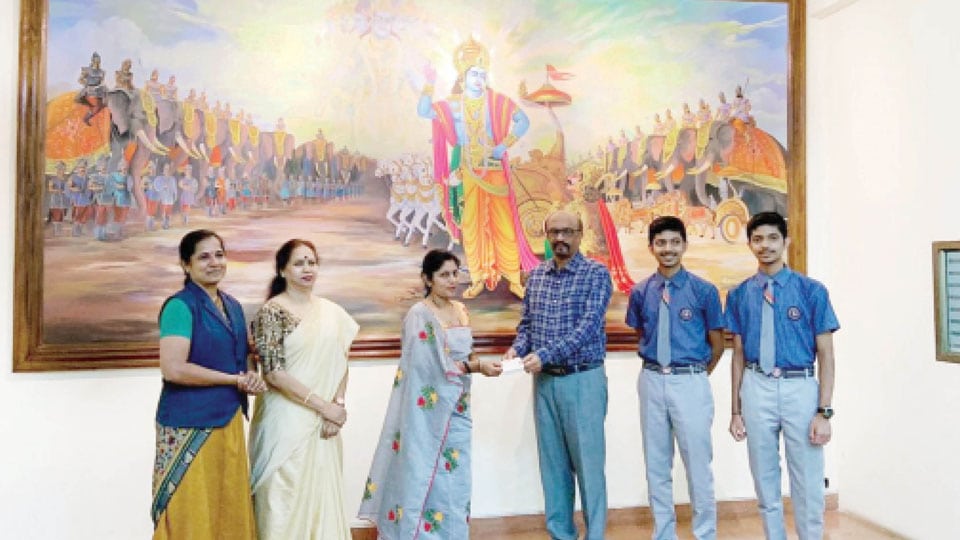
BVB’s Gesture To SSLC Toppers

. Picture shows the students’ mother Jayanthi Poovaiah (daughter of Bottolanda Ponnanna of Hinkal, Mysuru) receiving the cheque from BVB Hon. Secretary P.S. Ganapathy as BVB School Principal Vijaya Narasimham and Class teacher Shashikala look on

Twin brothers K.P. Subbaiah and K.P. Somaiah of Bharatiya Vidya Bhavan (BVB) School in Vijayanagar, Mysuru, who have secured 624/625 and 615/625 marks respectively in the recently held SSLC examinations, were given Rs. 50,000 by the BVB Mysore Kendra to help them pursue further education.

Picture shows the students’ mother Jayanthi Poovaiah (daughter of Bottolanda Ponnanna of Hinkal, Mysuru) receiving the cheque from BVB Hon. Secretary P.S. Ganapathy as BVB School Principal Vijaya Narasimham and Class teacher Shashikala look on.

BVB School has been achieving 100% results in SSLC every year and this year also, out of 148 students, 120 cleared the exam in distinction and 28 in first class.

source: http://www.starofmysore.com / Star of Mysore / Home> Photo News / June 01st, 2022

Women’s badminton in India still has a long way to go: Ashwini Ponnappa

The ace shuttler opens up on her career, India’s position in badminton and Red Bull Shuttle Up

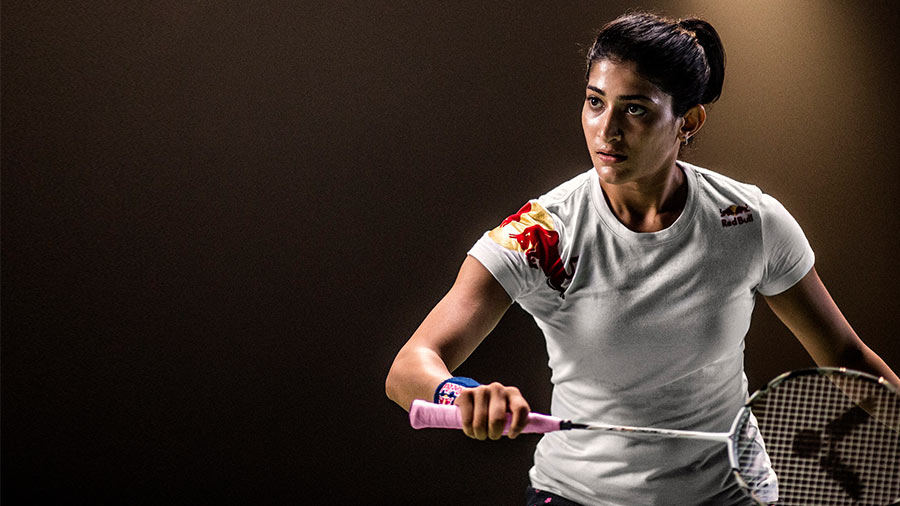
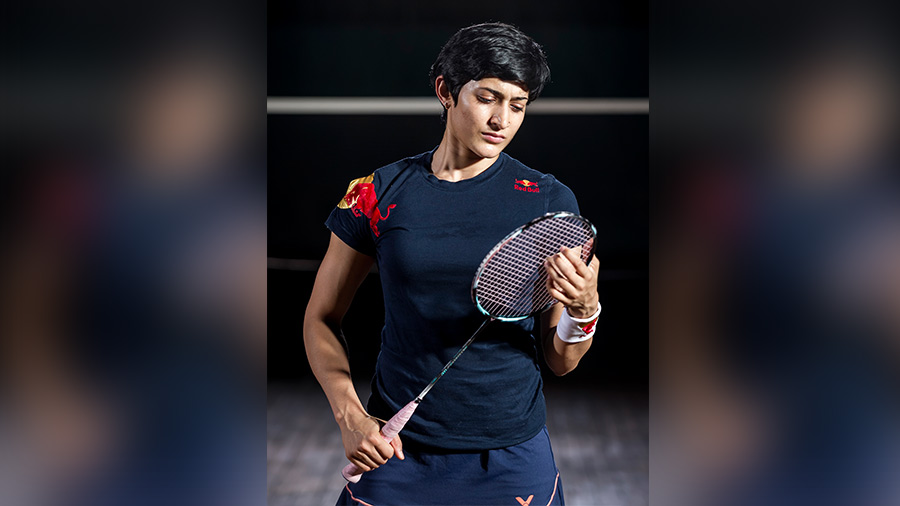
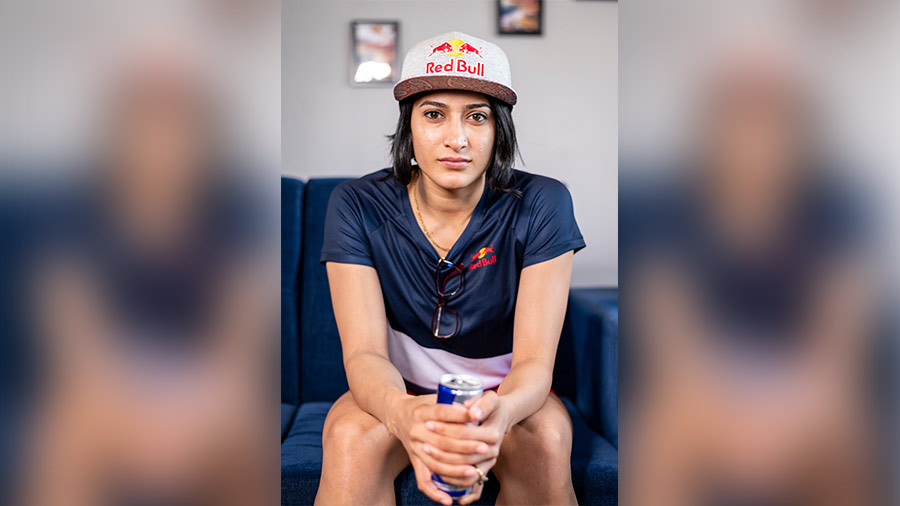
Ashwini Ponnappa has regularly been one of India’s highest-ranked women’s doubles players over the last decade Red Bull Shuttle Up

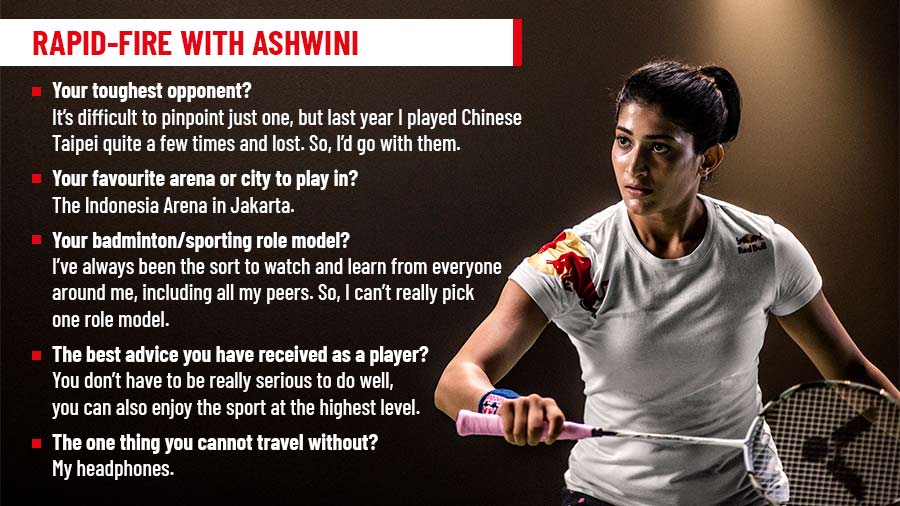
For more than a decade, Ashwini Ponnappa has been the gold standard when it comes to women’s doubles in Indian badminton. Whether as one half of a record-breaking pair with Jwala Gutta or later on with N. Sikki Reddy, Ashwini has endured as a beacon of consistency in a format that often gets overshadowed by the superstar culture around singles players.

In the midst of the fourth edition of Red Bull Shuttle Up, India’s first-ever exclusive women’s doubles badminton competition, Ashwini, who is also the face of the tournament, spoke to My Kolkata about her career, the disparity between men’s and women’s badminton in India, how Red Bull’s initiative is making a difference in women’s doubles and more. Edited excerpts from the conversation follow.

My Kolkata: When did you realise that you wanted to take up badminton professionally and what made you opt for doubles?

Ashwini Ponnappa: I got into badminton because of my parents. I was too young to make a decision myself, so my parents were the ones who helped me get into the sport. Ever since I started playing badminton as a kid, I haven’t played any other sport seriously. Growing up, I had a coach who was very strict and firm about the basics of the game. When I won my first national title in the sub-junior girls’ doubles category, I realised that I really want to take up badminton professionally. Once again, my parents’ support was crucial in making that decision. As for why doubles over singles, I’ve always done better in doubles and won more titles there. So, it was quite a simple choice for me.

Doubles is much faster and requires more smashing and forearm strength as well as better reflexes

Ashwini initially trained as a singles player for several years before switching to doubles
Red Bull Shuttle Up

What are the most challenging aspects of playing doubles and how should one prepare separately for those challenges?

When I started playing doubles, most of us, especially the women, were singles players. We hardly had a specialised focus on doubles in India. Even when I trained at the Prakash Padukone Badminton Academy in Bengaluru, all the kids wanted to be singles players. Apart from Jwala (Gutta) and Shruti (Kurien), there were no other established female doubles players to look up to either. It was only in the junior category competitions that I was first part of doubles camps. Switching from singles training to doubles was quite difficult, as doubles is much faster and requires a lot more smashing and forearm strength as well as better reflexes. When you have two people on court on the same side, it’s not just about yourself. There’s a lot of coordination that goes into it, which is the most challenging aspect. You could be a great player by yourself, but if you can’t coordinate, you won’t succeed in doubles.

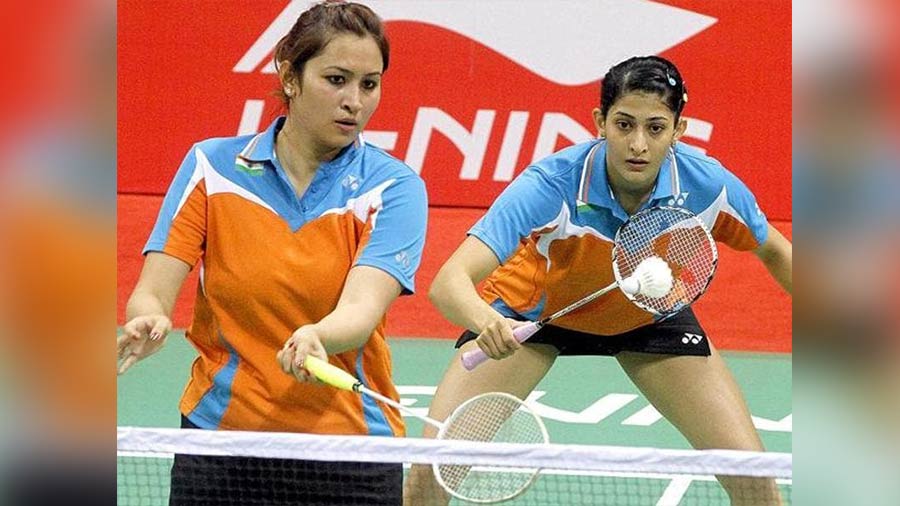
Jwala and I had a natural understanding of what the other person would do on court

Ashwini and Jwala Gutta are widely regarded as the best women’s doubles pair in Indian badminton history / BAI

What did you enjoy most about teaming up with Jwala Gutta for so many tournaments? What do you think set the two of you apart?

When I started playing with Jwala, I was a junior with little to no experience and she was already an established senior. She took a chance by deciding to play with me and I managed to rise to the occasion. Being able to match up to her standards was important and I’m glad I could do that. What made our partnership special and successful was the fact that our styles matched a lot, so we had a natural understanding of what the other person would do on court. We didn’t communicate a lot when we were playing, but managed to sync quite easily. At that point, we were also quite close off the court and she was extremely supportive, which made our team even more formidable.

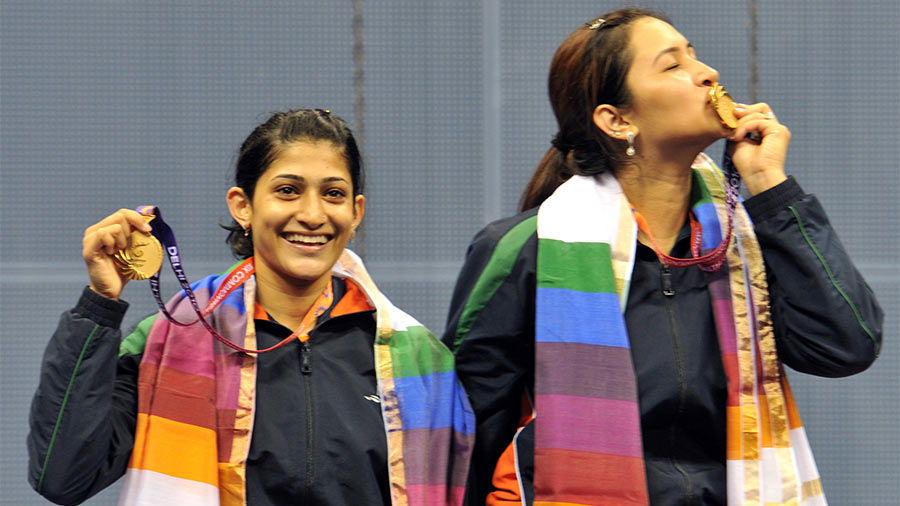
Ashwini and Jwala with their gold medals at the 2010 Commonwealth Games
BAI

Was winning the gold medal at home in the 2010 Commonwealth Games (with Jwala) the proudest moment of your career or would you prefer your bronze medal at the BWF World Championships (also with Jwala) in 2011? Or something else altogether?

I’ll have to go with both, the Commonwealth medal as well as the World Championships one. Nobody had achieved either feat before. But more than anything else, what makes these two achievements among my favourites is that I had a great time while I played those tournaments. Often people go through a lot and sacrifice a lot to win, but don’t enjoy the process. I was lucky in that I had a blast while having my proudest moments on court.

The system at the 2012 Olympics was flawed

Do you have any regrets from your career so far, especially in relation to the Olympic Games?

The 2012 Olympics would definitely remain a regret. Given what happened (Japan had shockingly lost to Chinese Taipei in what was seen by many to be a deliberate defeat or an instance of “throwing a match” to secure an easier opponent in the next round, which, incidentally, also led to India’s elimination), it was disheartening, because we had played very well. Looking back, I think the system was flawed, they shouldn’t have let players know who was going to play whom in the next rounds. A month before the next Olympics in 2016, I had had a horrible bout of dengue. As a result, I wasn’t able to smash as hard and that had an impact on the result, which was also quite disappointing.

Red Bull Shuttle Up is trying to make badminton more inclusive

Ashwini has been pushing for greater focus on women’s doubles as the face of Red Bull Shuttle Up /Reb Bull Shuttle Up

Coming to Red Bull Shuttle Up, Simran Sanghi (a previous winner of the tournament) said that it’s “the perfect example of empowered brands empowering women… proving that women are the real matadors of society”. What do you make of Red Bull Shuttle Up and how it has been making a difference to women’s doubles?

The most important thing about Red Bull Shuttle Up is that it gives women’s doubles players an opportunity and a platform that belongs solely to them. This is really important because in India we have leagues that don’t even have the women’s doubles format, which seems unbelievable to me. That’s where Red Bull Shuttle Up is trying to make badminton more inclusive. The second aspect is about having fun. I’ve always believed that you play sport because you want to have fun and that’s something that Red Bull Shuttle Up manages to provide in ample doses.

We don’t see the sheer number of quality players in women’s badminton as we do in the men’s game

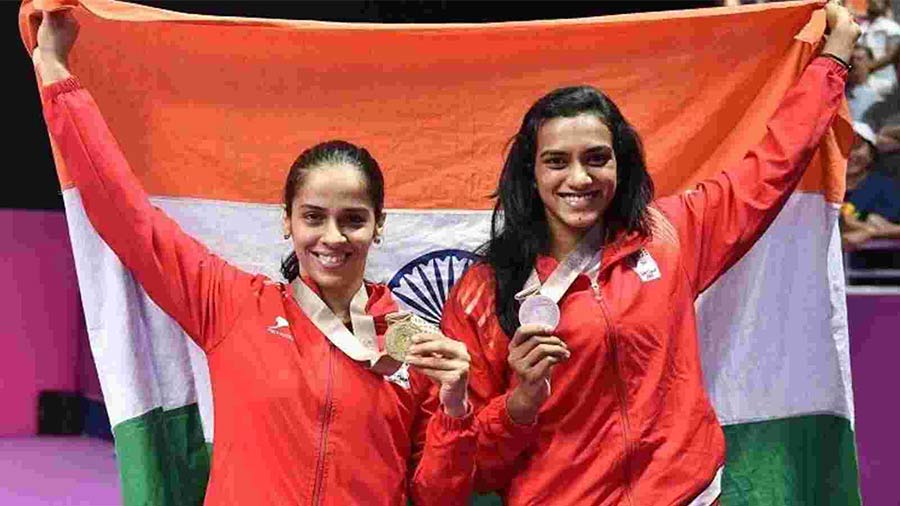
Ashwini believes that there is a big gap between Saina Nehwal and P.V. Sindhu and the rest of the field in women’s badminton /BAI

Looking at the larger picture, where does India stand as a force in badminton today? Are we a global power or are we still in the process of getting there?

The fact that we won the Thomas Cup in May speaks volumes about the strength in depth when it comes to men’s badminton. Beating powerhouses in international badminton like we did in the Thomas Cup is no joke. In that sense, we’re definitely a global power among the men. On the other hand, the women’s game still has a long way to go. We don’t see the sheer number of quality players in women’s badminton as we do in the men’s game, especially when it comes to doubles. Even if you take singles, there’s quite a bit of a gap between P.V. Sindhu and Saina Nehwal at the top and the rest of the field. There are a fair few young singles players who are doing well, but it’ll take them years to get to the levels of Sindhu or Saina. Coming back to the doubles, it’s the same problem I stated earlier. How can you expect doubles players to give you points in big tournaments when you don’t include women’s doubles as part of your domestic leagues? When it comes to women’s badminton, it’s not that we don’t have talent, but the talent that’s there isn’t being nurtured the right way.

Switching tracks, how do you relax and zone out? What are your hobbies and interests outside badminton?

Of late, I’ve enjoyed just chilling and watching dramas. I watch any and every kind, including Anime. I also watch a lot of YouTube content, especially motivational talks and conversations that pique my interest in general.

My most important goal is working on myself

Ashwini feels that she still has a lot of goals and dreams left to realise
Red Bull Shuttle Up

What are the dreams and goals you are still chasing as an athlete? 

I’ve still got a lot of dreams and goals, which is why I’m still playing! I feel like I’ve spoken a lot about them in the past and at the moment, I’d rather talk about my most important goal, which is working on myself. I’m trying to take a different approach with my holistic development on and off the court, and if that goes fine, the rest of the goals should fall into place.

source: http://www.telegraphindia.com / TelegraphIndia Online / Home> My Kolkata> People> Badminton / by Priyam Marik / October 17th, 2022

Thousands Witness Cauvery Theerthodbhava

Madikeri:

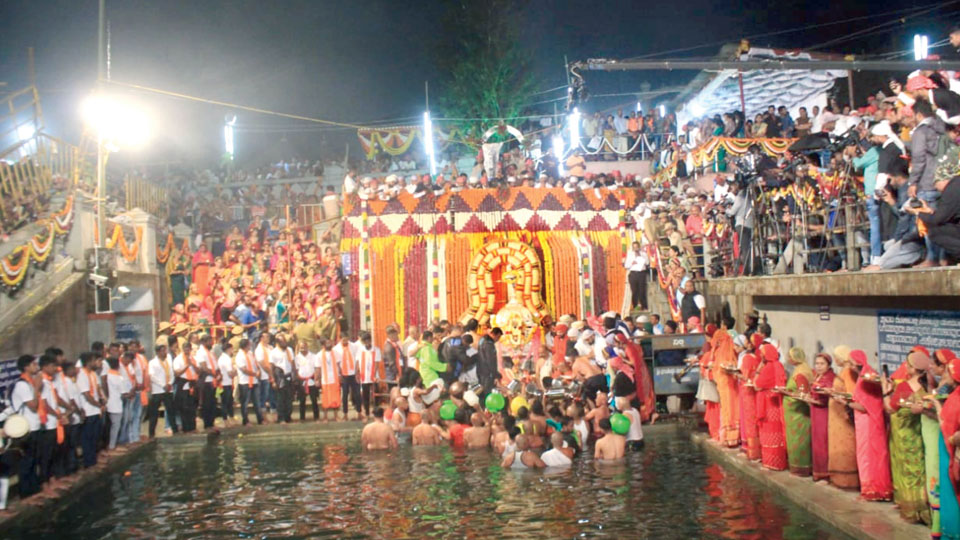
Thousands of devotees from Kodagu, across the State and Tamil Nadu congregated at Talacauvery in Kodagu last night to witness Cauvery Theerthodbhava amid chanting of mantras and other religious rituals. 

The holy event took place exactly at the predetermined Muhurtha of 7.22 pm in Mesha Lagna at the foothills of Brahmagiri inside the Holy Brahmakundike, considered to be the source of River Cauvery.

It is believed that Goddess Cauvery comes in the form of a fountain-head where water gushes from the Brahmakundike. A team of priests, led by Prashanth Achar, Raviraj Achar and Gururaja Achar chanted Vedic hymns before sprinkling holy water on the devotees. Later, devotees collected the Theertha (holy water) to be distributed among community members and to be kept at homes as holy signs.

The rituals associated with the holy occurrence began at 5 pm and as the predetermined time neared, devotees chanted mantras and welcomed the Goddess. The Theerthodbhava took place after the Sankalpa Puja and Mahamangalarathi. As the water bubbles appeared in the Brahmakundike that was filled with flowers, Kumkum and vermillion, the cries of devotees reached a crescendo. 

Devotees took a holy dip in the main pond (Kalyani) in front of the Brahmakundike and offered their prayers. They jostled to collect holy water in pots from the Kundike and the priests sprinkled the holy water on them.

The area around the pond was barricaded to enable crowd management and only small groups of devotees were let inside by the Police to prevent crowding and stampede. Despite barricades, devotees swarmed around the Brahmakundike and the Kalyani.

Devotees also thronged Triveni Sangama at Bhagamandala and many took a dip in the river and many offered the ritualistic Pinda Pradhana as a mark of respect to their elders.

The Kodagu Ekikarana Ranga distributed free breakfast and lunch to the devotees as part of its 27th year food distribution. Free food will be supplied till the end of Tula month on Nov. 17. Kodagu District Minister B.C. Nagesh, MLAs Appachu Ranjan and K.G. Bopaiah and others were present.

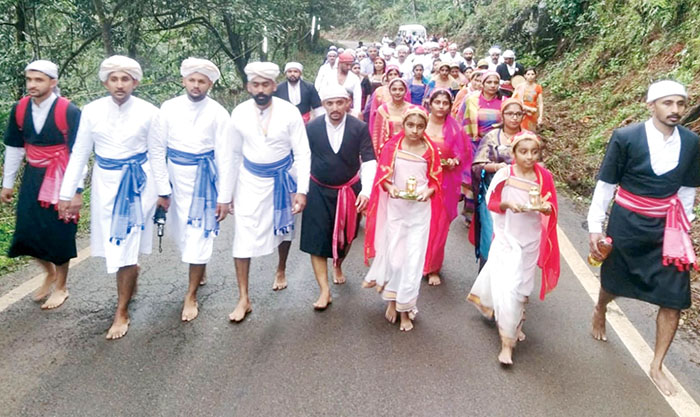
Devotees in traditional attire walk from Bhagamandala to Talacauvery

Unlike the last two years, thousands of devotees turned up to watch the spectacle and notably, many Kodava community members walked from Bhagamandala to Talacauvery along with musical bands and sang songs in praise of Goddess Cauvery. The holy place was teeming with devotees since early in the morning and the place was overcrowded by evening. 

Various Kodava organisations like Akhila Kodava Samaja Youth Wing, Connecting Kodavas, Kodava Riders Club, Jabbhoomi Trust, Thingakoru Mottu Sanghatane, Ammathi Kodava Samaja, Ponnampet Kodava Samaja, Madikeri Kodava Samaja, Balele Kodava Samaja, Kodava Kootaaliyada Koota, Kodava Samajas of Napoklu, Virajpet, Hudikeri, Mysuru, Amma Kodava Samaja, Youth Council, Kodavaamera Kondata, United Kodava Organisation and Codava National Council walked along the route, singing paeans to the Goddess.

source: http://www.starofmysore.com / Star of Mysore / Home> News> Top Stories / October 18th, 2022

Annual Get-Together Of Sri Kavery Kodava Okkoota

Mysuru:

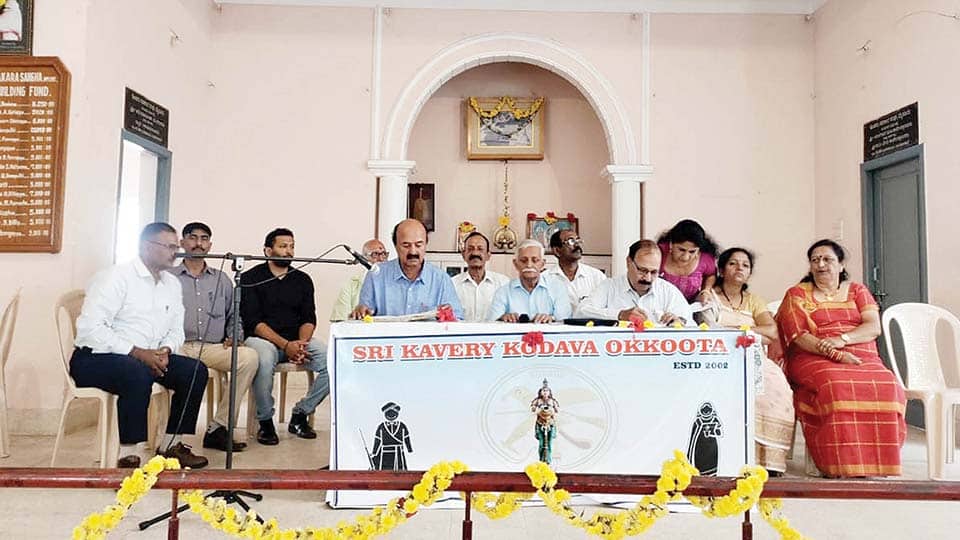
The 21st annual get-together of Sri Kavery Kodava Okkoota, N.R. Mohalla, was held on Oct. 9 at Kodagu Sahakara Sangha in Jayalakshmipuram.

Okkoota President Mallengada Pemmaiah, who inaugurated the function along with Secretary Kodira Nanaiah  and Committee Members, also addressed the gathering.

Sports events for members was inaugurated by Ex-serviceman Chatranda Aiyappa. Cultural programme comprised singing, dancing and a skit which enthralled the audience.

Meritorious students were awarded and senior citizen Poyyettira Poovaiah was felicitated on the occasion.

source: http://www.starofmysore.com / Star of Mysore / Home> News / October 16th, 2022

Teacher Gives New Lease Of Life To Eight Persons After Death

Madikeri:

A teacher, who was running a Kindergarten in the town and declared ‘brain dead,’ has given new lease of life to eight persons through organ donation after her death.

Asha (53), wife of Pandyanda Gappu Ganapathy and a resident of Sudarshan Layout in the town is the teacher, whose organs were donated at Narayana Hrudayalaya in Bengaluru by her family members.

On Oct. 8, Asha had gone to her daughter’s house in Bengaluru. She fell sick on Oct. 9 and was admitted to Narayana Hrudayalaya. The doctors who examined her found bleeding in her brain and despite treatment, she was declared brain dead. After counselling, the family members of Asha donated her eyes, kidneys, heart, liver and other organs, thus giving a new lease of life to eight persons.

She leaves behind her husband, one son, two daughters and a host of relatives and friends.

Last rites were held at Kodava Samaja Burial Grounds at Madikeri on Tuesday. 

source: http://www.starofmysore.com / Star of Mysore / Home> News / October 13th, 2022

Wins Gold Medals In Skating

Rea Achaiah participated in the All India Inter-University Roller Skating Championship 2021-22 held at Visakhapatnam between June 30 and July 3 and has won three Gold Medals.

She has also been awarded the ‘Best Sports Women of the Year 2019-20’ by Vishvesvaraya Technological University for her achievements in Roller Skating at a function held at SJCIT, Chikkaballapur, on June 27.

A student of 6th semester at Vidyavardhaka College of Engineering, Mysuru.

She is the daughter of K.N. Achaiah and Priya Achaiah, residents of Vijayanagar 1st Stage in city.

source: http://www.starofmysore.com / Star of Mysore / Home> Sports / June 20th, 2022

Rashmika Mandanna Loves To Eat Biryani With Rasam, Watch

Our Crush Rashmika Mandanna loves to eat biryani with rasam. Check this out.

Rashmika Mandanna, who most recently appeared with Allu Arjun in Pushpa: The Rise, frequently uses her social media accounts to share glimpses into her daily life with her fans and followers. The star recently uploaded a brief on YouTube to give viewers a glimpse into the food and drinks she has during the day. She also said that she was “happiest” around food.

Rashmika Mandanna to learn more about her formative years, favorite foods, and other topics. Rashmika recalls her enjoyment of homemade food and unusual food pairings by saying, “I used to adore eating Biryani and I blended Rasam with it.” You don’t know, she says again, “It’s great!” She continues by mentioning various culinary pairings, saying, “Lays with Maggi, Lays with curd rice, strange pairings I used to do. My father used to adore and say, “Umm… my daughter is now skilled in food mixing.”

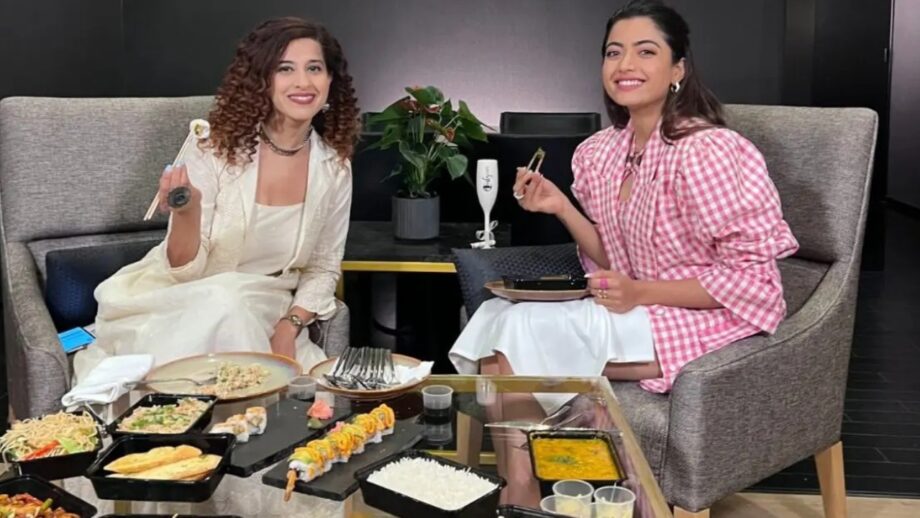
Rashmika Mandanna ate from the traditional bhindi fries, dal, and rice to Chinese noodles, Italian pasta, and even Japanese sushi as she savored the delectable range of food. During the Sunday Brunch with Kamiya Jani, she popped sushi and bhindi fries, and we could perfectly understand her exploring unusual culinary pairings. She also discussed Coorg and the food she ate as a child. She explains that Coorg’s cuisine also includes wine and pork. Additionally, when questioned about her Sunday breakfast at home, she admitted that she missed savoring Coorgi cuisine.

There is more to say about Rashmika Mandanna’s favorite foods, her love of living out of a suitcase at the moment, and other things.

source: http://www.iwmbuzz.com / IWM Buzz.com / Home> Movies> Celebrities / by Team IMWBuzz / October 10th, 2022

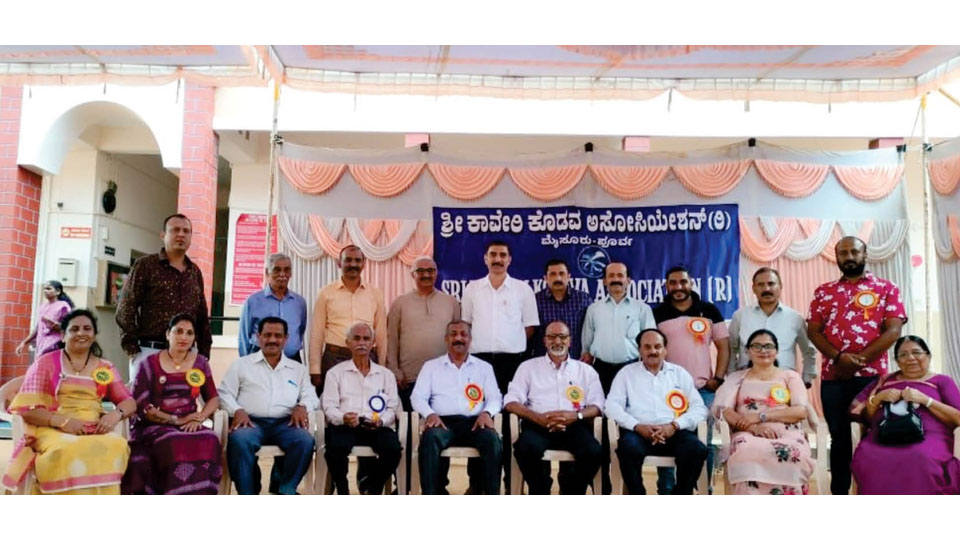
New Office-Bearers Of Sri Kavery Kodava Association, Mysore East

A group photo of newly elected office-bearers and Managing Committee Members of Sri Kavery Kodava Association, Mysore East, for the year 2022-2024:

President: Puliyanda S. Devaiah, Vice-President: Pandyanda K. Bopaiah, Hon. Secretary: Kademada M. Belliappa, Joint Secretary:  Pemmanda D. Poonacha, Treasurer: Coluvanda M. Chengappa; Committee Members: Neravanda N.  Sunil Muthappa,  Pattada A. Sachin Devaiah, Pokachanda P. Narendra, Pattamada T. Charmana, Chokira Suthan Madappa,  Pudiyokkada M. Chengappa,  Kundranda C. Thammaiah, Chimmanda P. Subbaiah,  Mookalamada B. Somanna, Mollera A. Kavitha, Medura P. Seethamma, Ajjamakkada Beena Cariappa, Chowrira K. Seethamma (Education Council Chairperson), Puttichanda Jayakumar (Building Committee Chairman) and Koppira D. Ponnappa (Internal Auditor).

source: http://www.starofmysore.com / Star of Mysore / Home> PhotoNews / October 09th, 2022

I am an over-ambitious actor: Actor Varsha Bollamma

Actor Varsha Bollamma is looking forward to the release of her Wednesday’s release “Swathi Muthyam”.

Actor Varsha Bollamma

Actor Varsha Bollamma is back in the reckoning with her upcoming film Swathi Muthyam. Also starring Ganesh Bellamkonda, the film showcases Varsha as Bhagyalakshmi, a teacher, who is a stickler to perfection. Varsha says it is the most relatable character in her career.

“I come from Coorg, a village in Karnataka. Usually, people from villages look naive, but their actions seem dominating. What if such people come across a small news, they gossip over it and blow it out of proportion. Likewise, my character of Bhagyalakshmi will be in control of things and act in a similar fashion. Besides my character, all other characters have got depth and freshness throughout,” says Varsha.

The concept of Swathi Muthyam is set against the background of sperm donation and infertility. But Varsha asserts that the film has no similarities with Vicky Donor. “Although the story revolves around sperm donation, the treatment is completely different. While Vicky Donor is all about convincing a woman, our film deals with a big family and their taboo. The presence of actors Goparaju Ramana and Naresh makes the film stand out among the recent hits,” she adds.

Ever since her debut in Chusi Chudangane, Varsha seems to have little inclination towards middle-class stories. “I am an over ambitious actor, who wants to strike a chord as a performer.

I feel Middle Class Melodies has brought me immense recognition as an actor and it’s only because of that film I have landed this project. I don’t have inhibitions to portray different roles, but I think people like to see me in traditional or girl-next-door roles. Given an opportunity, I want to play a negative role on the lines of Ritesh Deshmukh in Ek Villain,” reveals the actor.

Up next, Varsha is paired opposite Sandeep Kishan in Ooru Peru Bhairavakona. “It’s a supernatural thriller, which shows me in a new avatar. I am also in talks for a couple of projects, which will be finalised soon,” signs off Varsha.

source: http://www.newindianexpress.com / The New Indian Express / Home> Nation> Entertainment> Telugu / by Murali Krishna CH / Express News Service / October 04th, 2022