Indian batter Robin Uthappa revealed about his sporting journey from hockey to cricket. Uthappa has played 46 One-Day International matches and 13 T20Is for India since making his ODI debut against England in 2006.
The Karnataka-born player was part of India’s victorious title in the 2007 T20 World Cup in South Africa led by MS Dhoni.
Indian cricketer Robin Uthappa. Photo- Getty Images
Uthappa last played in Indian colours in the year 2015 in both the white-ball formats during India’s tour of Zimbabwe. Seven years later he is still playing the game for Kerala on the domestic circuit and Channel Super Kings in the IPL.
Not many might be aware of Uthappa’s early days as a hockey player and why did he switch to cricket?
“My father was an internationally renowned hockey umpire who also represented Karnataka. Once, when I went for the U16 sub-junior selection, I realized the path is going to be very smooth because everyone loved my father.
“In fact, during the selection day, there were very talented people who had come there, however they did not get selected,” Uthappa said on Sharechat’s online show CricChat.
Robin Uthappa (Image Credit: Twitter)
“I felt really bad that day that these players were not selected even though they were better than me. I used to play as a full-back and I was selected as a stand-by, but I felt that these players were so talented, however, they did not get selected. That’s when I realised my journey will be easy,” he added.
Uthappa is someone who wanted to establish his image by his own deeds rather than climbing on his father’s shoulders and doing injustice to the deserved ones.
“I wanted to do something on my own. I loved and enjoyed hockey as it was a game of courage and perseverance but I thought the route would be an easy one and even if I succeed people would believe that has happened because of my father,” the 36-year-old said.
“So I went back to cricket, expecting to become successful through my hard work since my father had no connection with cricket,” he added.
Uthappa claimed the orange cap for the most runs in the 2014 IPL season, which was his debut for Kolkata Knight Riders, scoring 660 runs in 16 innings at 44 and a strike rate of 137.78.
source: http://www.cricketaddictor.com / Cricket Addictor / Home / by CA staff / July 26th, 2022
KAAPI Solutions shakes hands with the Coffee Board of India, United Coffee Association of India and Speciality Coffee Association of India to organise National Barista Championship 2022
Mumbai :
KAAPI Solutions, spearheaded by the former NBC winner and jury member, Vikram Khurana, has announced its platinum sponsorship for the celebrated National Barista Championship 2022. The event is organised annually by the Coffee Board of India in association with the Specialty Coffee Association India and the United Coffee Association of India to honour the best baristas within the country. Renowned as a coffee fanatic’s paradise, the competition will take place in Bangalore and see India’s most beloved baristas competing for the title of the best Barista of 2022.
Considered to be one of the most paramount members of the coffee fraternity in India, Vikram Khurana was the first and only Indian to receive a silver medal in the famed World Barista Championship 2002. Since then, Khurana has gained recognition to be a coffee extraordinaire and has immensely contributed to the growth of speciality coffee in India. In his 21 years of extensive learning experience, Khurana has consulted several Indian and international brands in coffee that have successfully launched. Currently serving as the Chief Executive Officer at his company – KAAPI Solutions, Khurana is also the President of the United Coffee Association of India. Having won the global rendition of NBC, Khurana has had a long-standing association with the decade-old championship. He has been an esteemed jury member at the championship for over 10 long years.
Commenting on this association, Vikram Khurana, Founder and CEO of KAAPI Solutions, added, “Coffee is a language itself. We at KAAPI Solutions are so excited to give voice to this language at the latest National Barista Championship 2022. It will be exhilarating to see the best of the best unite to celebrate our common love for the beverage. We are also thankful to the Coffee Board of India and the Specialty Coffee Association of India for organising an event that honours and celebrates the best coffee talent within our country. I wish good luck and success to all the participating candidates. May you brew the perfect blend and awaken the inner maestro with yourself.”
Celebrating the association with KAAPI Solutions, DM Purnesh, the President of Specialty Coffee Association of India, said, “We have been successfully conducting NBC due to constant support we receive from Kaapi Solutions team run by Vikram Khurana. They have been providing financial support as well as providing coffee machines and helping in installing and giving technical support for the last many years. We wholeheartedly welcome Kaapi Solutions once again for the 20th edition of the National Barista Championship.
We wish all the best for all the participants of NBC 2022″.
KAAPI Solutions is one of India’s leading suppliers of imported coffee machines. The company has grown to become a market leader within the industry. Beyond having the best network of coffee machines across the globe, KAAPI Solutions is also the exclusive partner for Astoria, a brand for premium coffee machines in India. Tempesta by Storm Barista Attitude, part of Astoria, is also known to sponsor the World Barista Championship between 2022-2025.
Dedicated to the pure science of making the perfect blend of speciality coffee, these coffee machines have revolutionised the coffee culture in India. The term ‘Specialty coffee’ or ‘Speciality coffee’ is used to refer to coffee that is graded 80 points or above on a 100-point scale by a certified coffee taster (SCAA). Speciality coffees are coffees at their peak and are different to other coffee because speciality coffee has been grown at the perfect altitude, at the correct time of the year, in the best soil, and then picked at just the right time. All this translates into some of the most exciting and tasty coffee in the world.
A pioneer in coffee technologies, KAAPI Solutions serves as one of the world’s leading suppliers of imported coffee machines. The firm recognises and effectively bridges the gap between efficient and aesthetic coffee equipment within India and enhances the skills needed to relish an authentic cup of coffee.
Their services go beyond supplying the finest coffee machines across the globe. Apart from this, they also provide state-of-the-art espresso equipment and conduct award-winning barista training.
KAAPI Solutions has a 360-degree approach to Consultation, Service, Training and Education. They believe in providing comprehensive assistance to help one’s business thrive.
This story is provided by PNN. ANI will not be responsible in any way for the content of this article. (ANI/PNN)
source: http://www.theprint.in / The Print / Home> ANI Press Releases / ANI PR / July 26th, 2022
Coffee (Promotion and Development) Bill is expected to be tabled in the ongoing session of Parliament
Planters’ unions in Karnataka are hopeful that the new legislation on coffee, expected to be tabled in the ongoing session of the Parliament, will usher in much-needed changes in the 80-year-old Coffee Act guiding the industry now. Karnataka is the biggest producer of coffee in India.
The Coffee (Promotion and Development) Bill, 2022, is aimed at promoting holistic development of the country’s coffee industry. It is expected to do away with the existing 80-year-old set of regulations on the commodity, focus on coffee research, domestic marketing of the commodity, creation of drought-tolerant, disease-resistant and better yielding varieties of coffee, among other things.
Special varieties
Planters’ unions told The Hindu that the new law should help focus on development of special and specialty coffee brands and blends and pay attention to a premium variety of coffee, Arabica.
Bose Mandanna, former Vice-Chairman, Coffee Board, and also the owner of Subramanya Estate at Sunticoppa, said that the old set of regulations have been around for too long while the industry has transformed.
All leading coffee associations, including Karnataka Planters’ Association, Coorg Coffee Association, Karnataka Growers’ Federation, United Planters’ Association of Southern India (Upasi), the apex body for plantations and other industry stakeholders, have already submitted their recommendations to the Coffee Board and Ministry of Commerce.
Value chain
“A revised regulation with its holistic provisions aimed at promotion and development of the entire value chain of coffee and enabling ease of doing business is beneficial to all stakeholders and to the general public,’‘ said Shirish Vijayendra, former chairman, Karnataka Planters’ Association.
According to H.T. Pramod, former chairman KPA and Managing Director of Malnad Planters’ Coffee Curing Works, and also a planter from Chikkamagaluru, said, “We want to see more new varieties coming into plantations and expect better interaction and working together with planters and researchers.”
On the backburner
Another planter who does not want to be identified said, “Coffee Board, way back in the 1990s, under the leadership of the then chairman Lakshmi Venkatachalam, had prepared the draft of a replacement of the existing Coffee Act. It was a comprehensive draft done in three years. We submitted it to the Ministry of Commerce, but sadly, several governments sat over it in the last several decades.’‘
source: http://www.thehindu.com / The Hindu / Home> News> India> Karnataka / by Mini Tejaswi / Bengaluru – July 26th, 2022
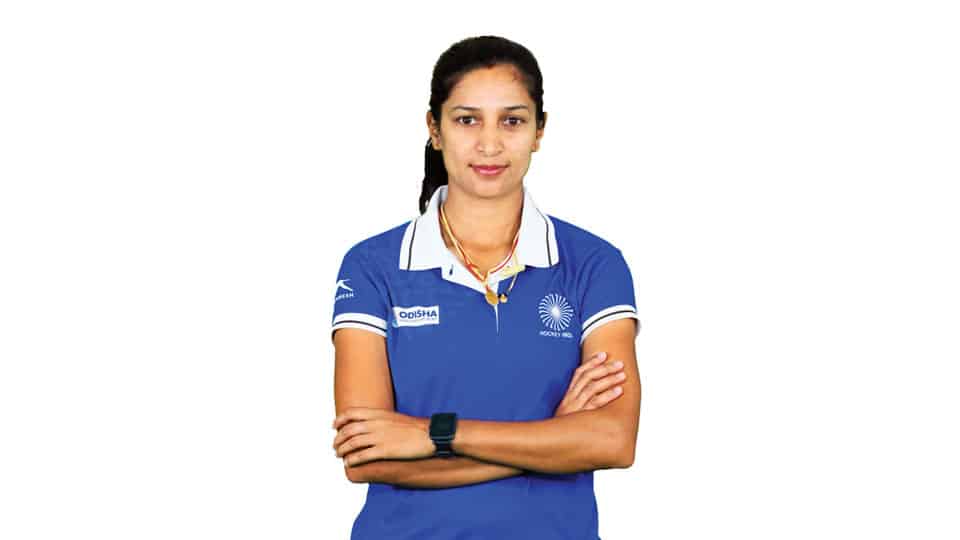
Kodagu Champ Ankitha Suresh has been selected as Assistant Coach for the Indian Women’s Hockey Team which will take part in the 22nd Common Wealth Games (CWG) to be held at Birmingham in England between July 28 and Aug. 8.
Ankitha, apart from being Assistant Coach, will also be the Manager of the team. Team India, which has already reached England and is practicing, will take on Ghana in the first match.
It may be recalled that the Indian Women’s Team which had trained under Aniktha Suresh had given a good show at Olympic 2021 held in Tokyo.
Daughter of B.A. Suresh and B.S. Dharmavathi, residents of Madikeri, Ankitha is married to Honnampadi Suresh Kushalappa of Suntikoppa.
source: http://www.starofmysore.com / Star of Mysore / Home> Sports / July 26th, 2022
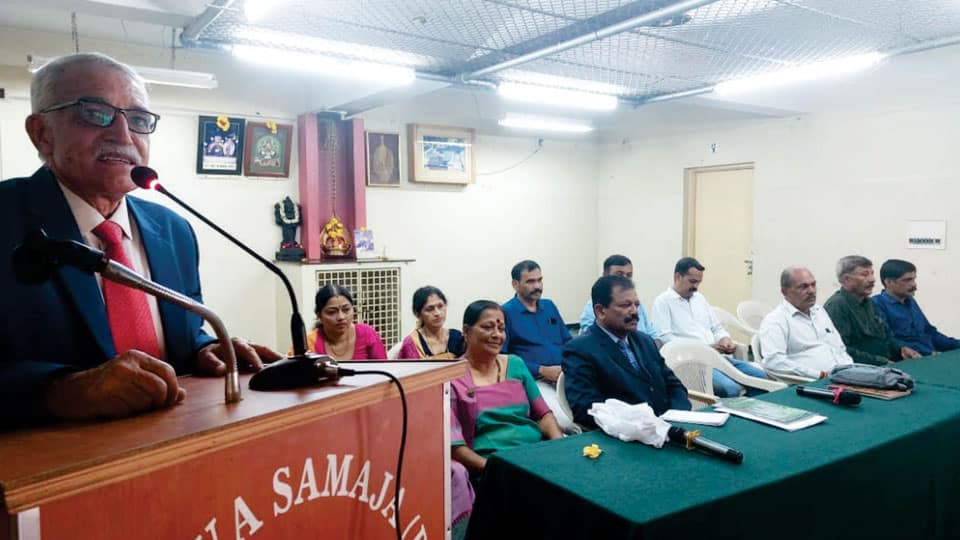
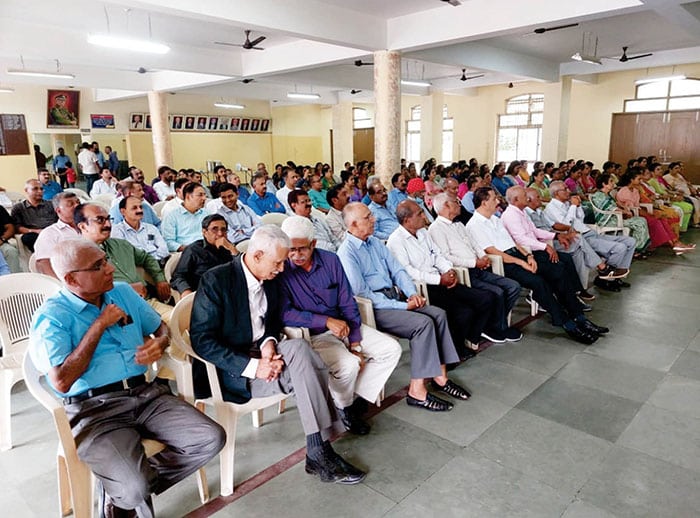
Members of Brahmagiri Kodava Association (BKA), Mysuru, conducted its AGM and get-together function at Kodava Samaja premises in city on Sunday.
Association President Nayakanda Prakash, while addressing the gathering, appealed to them to put across their suggestions to the Association office-bearers to bring bonhomie belongingness among members and serve the society.
He also called upon the members to take part in various activities of the Association.
After discussions during AGM on utilisation of available corpus of the Association, it was decided that the final decision would be taken in due course by the office-bearers and Committee Members, keeping in view the best interest of members and their School and College going children.
Children of members of BKA were felicitated with cash awards for securing distinction/ highest marks in SSLC and PUC during the academic year 2021-2022.
Games were organised separately for ladies and children and prizes were distributed by elderly members.
Mallamada Devaiah, Secretary, read out the activities of the previous year. Mandetira Shakunthala read out the Accounts.
Pandiyanda Pradeep welcomed. Thirodira Dev proposed a vote of thanks. Chananda Jyothi compered the programme.
source: http://www.starofmysore.com / Star of Mysore / Home> News / July 26th, 2022
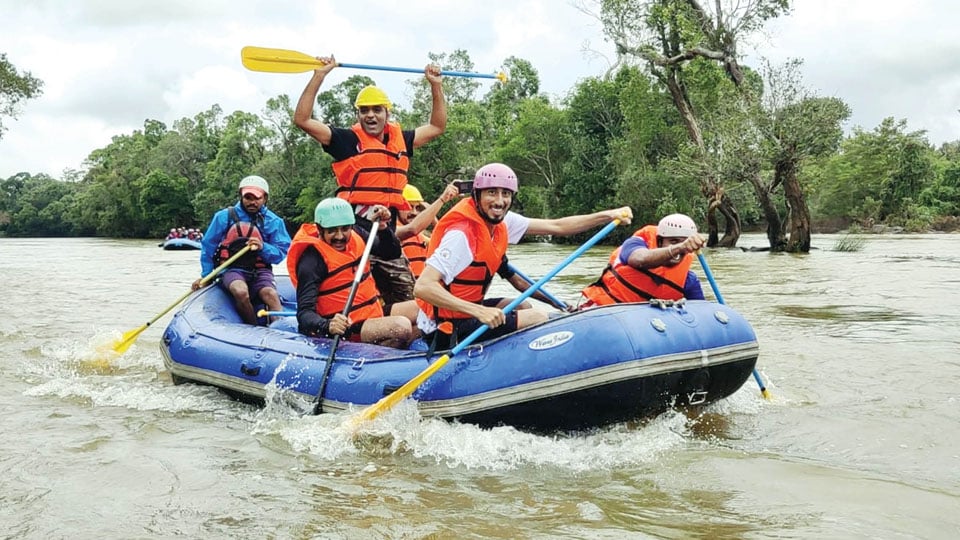
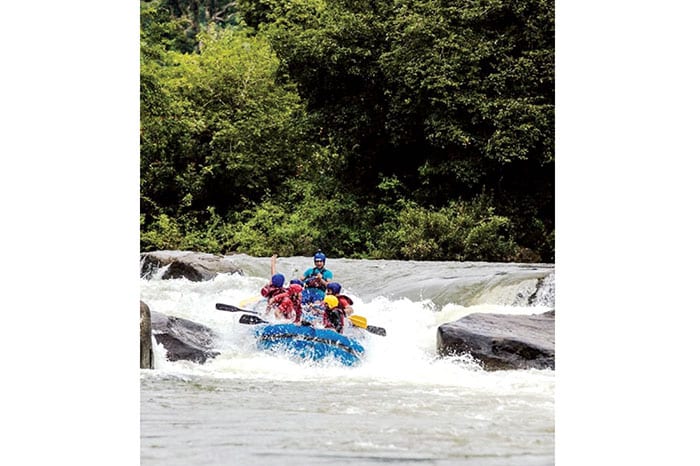
Adventure lovers who have been pining to get some adrenaline rush are heading towards Dubare and Barapole in Kodagu district for whitewater river rafting and rappelling in the rapids. Rafting in the Cauvery and at Barapole is an exhilarating experience. Rafting usually starts once the inflow into the Cauvery and Barapole increases and the level rises. A raft is a rubberised, inflatable boat with different carrying capacities.
A 7-kilometre journey at Dubare will take about one-and-a-half hours while it is shorter but adventurous at Barapole’s 4.5-km rafting. The tranquil water may be a deceitful thing along the course of the Cauvery and Barapole as one hits the rapids (a section of the river where the water moves very fast particularly over or bisecting the rocks).
If one is tired of their mundane schedule and wants to try something adventurous with friends then river rafting is one of the perfect and thrilling options that one can opt for. The thrill, however, is not without a certain amount of risk. However, the risks are what enhance the river rafting experience for many adrenaline junkies.
Rapid adventure
At Dubare, rafters will get to experience two rapids and swimming is allowed at two places. Barapole has more than nine Class 2 Class 4 rapids and is set on the banks of the Kithu Kakathu River (KKR). The river is a turbulent one all along its route as it flows through the Brahmagiri hills to the Arabian Sea via Kerala.
While June to the end of September is the ‘whitewater’ season, October to December or January is a ‘stillwater’ season. After which, the water level depletes. Whitewater is formed in a rapid when a river’s gradient changes enough to generate so much turbulence that air is trapped within the water. This forms an unstable current that froths, making the water appear opaque and white. Stillwater is part of a stream where no water current is visible.
The response for rafting is pretty good with over 2,000 rafters during weekends and over 250 rafters daily. At Dubare, there are 70 rafts and 70 guides while Barapole has 9 rafts and 9 guides. Soon, 10 more rafts will be added to the existing fleet at Dubare as there is a huge demand.
Safety is of paramount importance here and all the guides are well trained. Life jackets are worn by all the rafters and the guide and at Dubare, each life jacket can withstand a weight of 180 kgs and there is little chance of drowning. Rafting at Dubare costs Rs. 600 per person and Rs. 1,200 at Barapole. Each raft can carry six rafters and one guide.
Speaking to Star of Mysore, Pavan of Coorg Water Rafting Sports and Adventures, Barapole, said that the response is good. “Only those who are passionate about rafting and adventure come here and we have many regulars. It is quite challenging and tests the adventure spirit,” he said.
Barapole
Need changing room for ladies
C.L. Vishwa, raft owner and former President of Dubare Rafters Association, said that they desperately need a changing room at Dubare for ladies and girls and also there is a need to establish a drinking water facility.
“If the District Administration wants to attract more tourists to Dubare, then a hanging bridge is a must for tourists to reach the Elephant Camp from one side of the Cauvery river. Unfortunately, the tourist-friendly project has been shelved by officers without a vision,” he added.
Rules and regulations
The Kodagu District Administration has came out with a 23-point formula to ensure safety. The operators must secure permission from the Departments of Police, Forests, Fire Force and Tourism, and employ trained guards to accompany the rafters. Every one of them should have ID cards issued by Tourism Department and should be trained in first-aid methods. Smoking and drinking is prohibited during rafting. Rafters should also obtain permission from the Karnataka Inland Water Transport Department.
source: http://www.starofmysore.com / Star of Mysore / Home> News> Top Stories / July 24th, 2022
Many take part in programme despite intermittent drizzle
Providing a reprieve from the stress and strain of a vigorous monsoon which tends to wreak havoc in Kodagu, was the slush field sports conducted by the district administration, on Saturday.
The monsoon in Kodagu tends to conjure up images of flood and landslips. But with the rains abating, the people put their worries behind to take time off and participate in the 30 th State-level slush field sports organised at Kaggodlu village in Madikeri taluk.
It was conducted by the Kodagu district administration, Zilla Panchayat and Department of Youth Empowerment and Sports and inaugurated by Appachu Ranjan, MLA. He recalled that in earlier days, every farmer or landlord in Kodagu used to take part in slush sports after sowing and it helped bring the community together and strengthened bond.
The competition drew people from different parts of the district who braved the intermittent drizzle and encouraged the participants who were drenched in muddy water and slush and gave a display of their prowess in different games. The festival was open to boys and girls as also men and women and included 50 metrerace, 200 metre race, 400 metre race , throwball, volleyball, tug-of-war etc.
source: http://www.thehindu.com / The Hindu / Home> News> India> Karnataka / by Special Correspondent / July 23rd, 2022
Chikkamagalur received 132% more rainfall from June 1 to 17, while Hassan received 124% more and Kodagu, the largest coffee-producing district, received 109% more. This is causing crop losses, putting an end to growers’ hopes for a bumper crop.
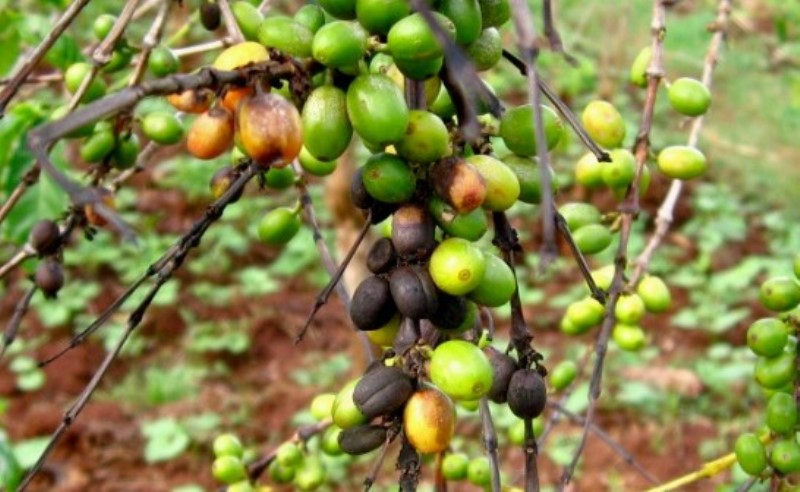
Excessive and continuous rains in the first two weeks of July triggered diseases such as root rot, leaf rot, and wet feet conditions, causing the leaves and berries on coffee plants to turn black and drop, according to growers. This is causing crop losses, putting an end to growers’ hopes for a bumper crop.
To date, the ongoing monsoon season has brought heavy rains to key coffee-growing regions in Karnataka, which account for 70% of the country’s coffee output. Chikkamagalur received 132% more rainfall from June 1 to 17, while Hassan received 124% more and Kodagu, the largest coffee-producing district, received 109% more.
The average rainfall in the South Kodagu region during the July 9-15 week was 272 percent higher this year than the previous 10-year average. Some areas, such as Balele, received 349 percent more rainfall than the 10-year average, while Gonikoppal and Virajpet received 310 and 288 percent more, respectively.
“Not only have the heavy and continuous rains harmed the standing crop due to black rot, stalk rot, and wet feed conditions, but planters have also suffered collateral damage from shade tree falls caused by the strong winds.” Flooding has occurred in some areas, and planters have suffered losses as a result of water logging. While it is too early to estimate crop losses, they could be around 25% in Chikamagalur and 20% in Kodagu,” according to N Ramanathan, Chairman of the KPA.
The percentage of dropping is higher in several villages that have historically received more precipitation. Coffee Board officials stated that they are assessing the impact of the excessive rains and have been advising growers on how to manage premature berry drop and black rot/stalk rot diseases in the root zones of the plants.
According to Jeffry Rebello, vice-president of UPASI, the situation is fluid because it is still the first half of the monsoon season and too early to assess crop losses. “If there are more bouts of heavy rains, there could be more impact,” Rebello said, estimating current losses at around 15%.
Other plantation crops, such as cardamom and pepper, have suffered losses, according to B S Jayaram, a coffee grower in Mudigere. “We have requested that the district authorities survey crop losses in order to quantify the impact,” said Jayaram, former president of the Karnataka Growers Federation.
In its recent post-blossom or early estimates, the State-run Coffee Board put the crop size for the year 2022-23, which begins in October, at a record 3.93 lakh tonnes, 15% more than the previous year’s 3.42 lakh tonnes.
source: http://www.krishijagran.com / Krishi Jagran / Home> Agriculture World / by Shivam Dwivedi / July 23rd, 2022
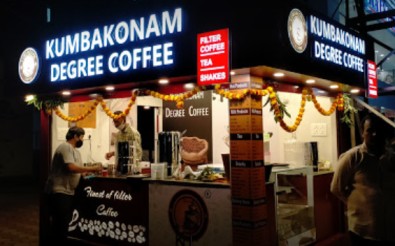
Seen those signboards proclaiming ‘Kumbakonam Degree Coffee’? Learn about this delicious brew as we unravel the history of South India’s favourite, filter coffee.
Like in many South Indian households, one will always find two things in my home — dosa batter and filter kaapi.
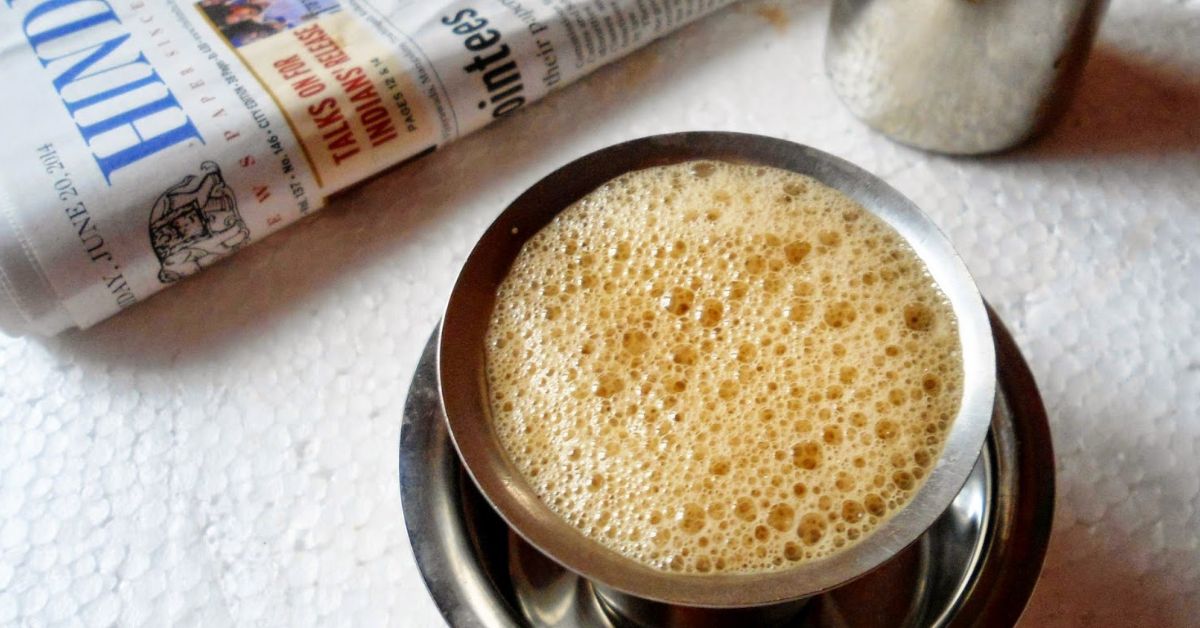
The latter is no less than an ‘on’ switch for the day, and watching the coffee brew — as the black-brown of the fresh concoction mingles with the white of the boiling hot milk to form just the right shade of brown — is a kickstart to most of my days.
Today, filter kaapi has become an integral part of many Indian households, to the extent that true connoisseurs cannot imagine starting their day without it. But the origin story of this drink takes us far away from India.
India’s tryst with coffee
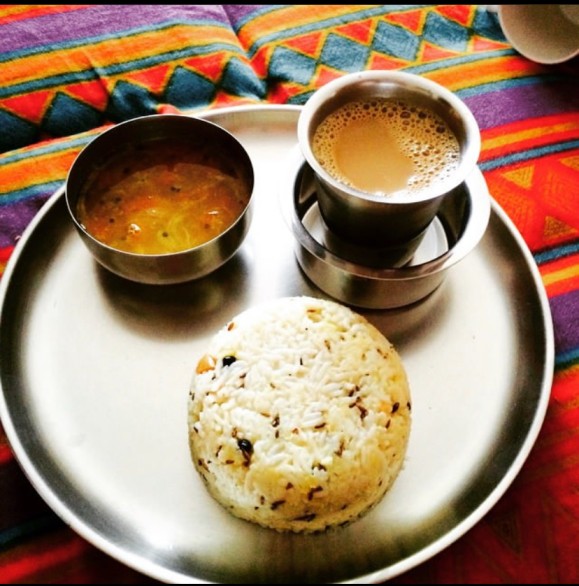
Have you tried pongal, sambar and filter kaapi? Photo credits: Vidya Raja
According to common folklore, India’s tryst with coffee began in the early 17th century, when Baba Budan, a Muslim saint from Chikmagalur, smuggled in seven coffee beans from present-day Yemen while returning from Hajj. The use of the word ‘smuggled’ is intentional as in those days, it was considered illegal to transport green coffee beans out of the Arabian Peninsula. This was to ensure that the region continued to have a monopoly on its trade.
Baba Budan managed to bring it to Chikmagalur in India and began growing the crop. Firstpost writes, “Qahwakhanas (coffee houses) were soon established, and many upper-class Indians took to the drink. In fact, across the Islamic empires of the world at that time, coffee was the beverage of popular choice.”
The rest, as they say, is history. Chikmagalur, known as the birthplace of coffee in India, produces almost 34 thousand metric tonnes of Arabica coffee beans per annum.
In Southern India, coffee was popularised by the British sometime in the 1800s, writes NDTV Food. A British manager named J H Holly first realised how conducive the climatic conditions of the region were to growing coffee, and convinced the king of Mysore to give away some land in return for a share of profits. From here, it slowly began to be exported to Europe, while some was left behind to be consumed by the so-called elites in India.
Tamil historian A R Venkatachalapathy said, “The incursion of coffee into Tamil society was marked by a cultural anxiety which was matched only by the enthusiasm with which it was consumed.” He also noted that many believed that the drink would lead to “westernised behaviour” and “addiction”, but ultimately, its popularity emerged victorious.
Meanwhile, NDTV Food notes that to emulate those higher on the social hierarchy, more and more people began consuming coffee, replacing the kanji, a nutritious mix made of leftover rice or millets.
Coffee gained nationwide popularity some time in the mid 1940s, with the Coffee Board of India establishing the Indian Coffee House.
According to an article in The New Indian Express, Indians were not permitted in many coffee houses. It was in response to this that an “Indian coffee house” was first opened by the Coffee Cess Committee in Churchgate, Bombay [Mumbai], in 1936, and then, across the country.
However, after Independence in the ‘50s, the Coffee Board decided to close these coffee houses down. At this point, Communist leader A K Gopalan led the formation of workers’ cooperative societies to take over and run these coffee houses. This was how The Indian Coffee House (ICH) was born. As branches of ICH began spreading across India, coffee’s popularity only grew stronger.
Degree Coffee, Filter Coffee: What’s in a name?
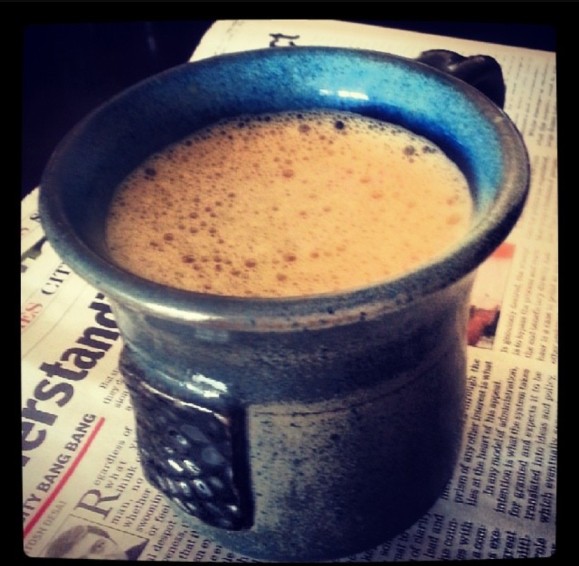
Have you tried the degree coffee yet? Photo credits: Ashish Choudhary/ Twitter
The Indian filter coffee is commonly known as filter coffee, degree coffee, Mysore filter coffee or Kumbakonam coffee. Most variations of the name depend on the method used to make the coffee.
Rakesh Raghunathan, a food historian and raconteur based in Chennai, recalls his grandmother’s technique of making filter kaapi. “Way before all these electronic coffee machines made their way into our homes, my paati (grandmother) would painstakingly make her own coffee powder and then the decoction. First, she would roast the coffee beans. Next, she’d grind them in her hand grinder till she achieved the desired level of coarseness. Then, she’d collect this power and heap it into a thin muslin cloth,” he tells The Better India.
He continues, “She’d pour hot water and the decoction would percolate. This would then be used to make the perfect cup of filter kaapi.”
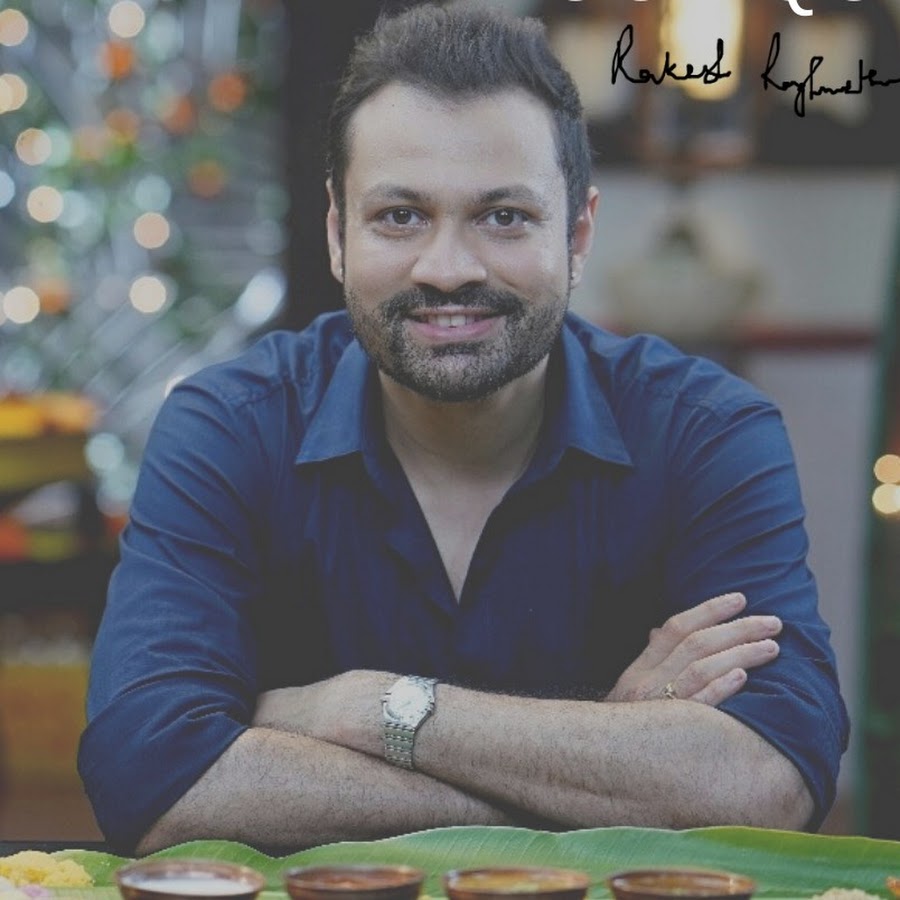
Rakesh Raghunathan
The term degree coffee comes from the usage of the decoction. According to Deccan Herald, the coffee decocted for the first time before mixing with the milk is known as “first degree coffee” because it is very strong and flavourful, unlike “second and third degree coffee”, which undergo decoction more than once. It is said that the first degree coffee was the ‘affluent’s cup of tea’ (or should we say coffee?), while the second and third was that of the common man’s.
Rakesh says, “There are several stories as to why it is referred to as degree coffee. While some say it has to do with the temperature to which the milk is boiled, others say it comes from the degree to which the water is boiled. However, it is none of this.”
“Degree is nothing but a measure of the milk quality being used. Just as one would use measurement units like kilometre and centimetre, one would use the term ‘degree’ to ascertain the quality of milk being used to make the coffee. It is nothing but a measurement to certify the purity and quality of milk,” he says.
Now that you know how filter coffee became so popular in Indian households, how about brewing your own cup?
Do you like filter coffee?
You will need good quality coffee powder, milk (fat percentage can be your choice), and sugar. · Once you have made the decoction, take a steel davara (glass). Add 1/4th portion of decoction to this. The boiling milk will fill the remaining 3/4th of the davara. · If you wish to add sugar, do so at this stage. · Swish the coffee around and allow the sugar to dissolve into the milk and decoction well. · Consume hot.
Yesterday morning as I sat at my working desk, there sat a brown cover addressed to me on the table.
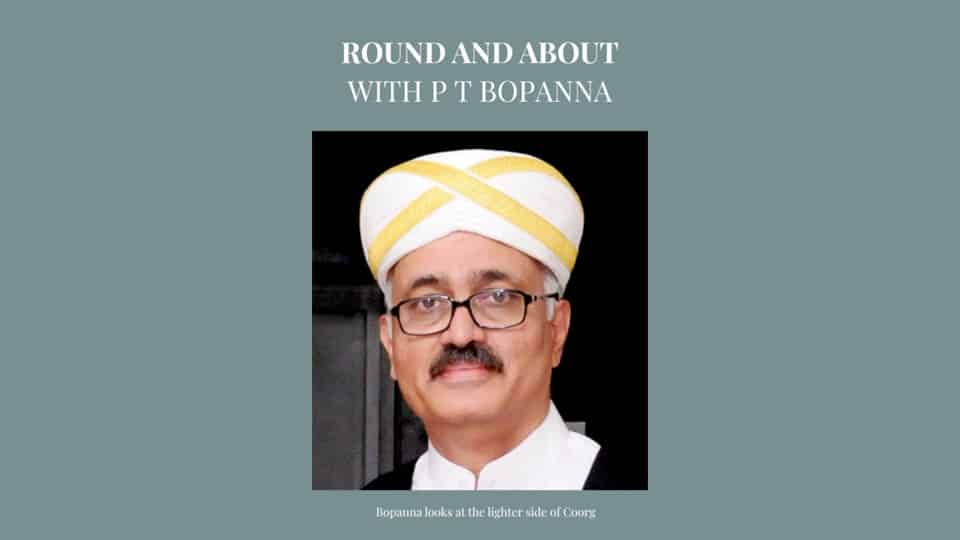
It came from Palanganda T. Bopanna, a journalist author from Bengaluru. Inside was a thin book with a thick hard cover embellished with the photograph of the author in his ethnic Kodava headgear of a peta adorned with a pattern of golden strap crossing each other as if hugging the peta.
The title of the book is quite revealing and says what it contains:
Round And About With P.T. Bopanna’ with a bottom line: Bopanna looks at the lighter side of Coorg. Himself being a Kodava (Coorg), his writings here are of Kodagu related subjects or about himself with VIPs. I finished reading it in one hour and here I am writing about it. This was possible because each of the 25 pieces inside, including the Foreword by the Kodava iconic Fashion Guru of India Prasad Bidapa and the Epilogue, are no longer than two or three pages in fairly larger font and pictures. Good reading for those familiar with Kodagu (Coorg) and the people written about in the book.
There is a Preface also by the author and I was delighted to find the names of Mr. Boverianda Chinnappa and Mrs. Nanjamma Chinnappa, now residents of Mysuru, being mentioned for their “valuable suggestions” in bringing out this thin book of 68 pages. “The couple has been a source of strength to me in my book and web ventures,” he writes in gratitude.
As a Kodava myself, I know there are any number of Kodavas all over the world engaged in different activities and pursing professions who have become great achievers. Kodava people belong to a microscopic minority as a population who lived in a land of their own known as Kodagu ruled by Nayaks and then Kings and then the British, now a district in Karnataka.
The land area cannot increase but population increases. As a result when the family grew, its land-holding was not sufficient for running the family. Perforce they got themselves educated and some members had to leave Kodagu and then Kodava (Coorg) diaspora became a reality. Fortunately those who went out of Kodagu, a great majority of them, are doing well and very well. Some of them became celebrities and some are recognised by the governments. But there are other achievers who remain without public recognition but doing very well in their given profession, business or industry.
One example for anonymous achievers and distinguished persons among Kodavas is given in the book itself in the person for whom the book is dedicated (page 3). He is Pemanda Monappa Belliappa, a retired IAS Officer of Tamil Nadu.
Acknowledged as an outstanding administrator, Belliappa was decorated with MBE (Member of the British Empire) by the Queen of England. More than this, he established ‘Pemanda Monappa Scholarship’ in Cambridge University in perpetuity, in the name of his father, Pemanda Monappa, former Karnataka Inspector General of Police. Nearer home, he has also made handsome donation to the Coorg Education Fund, Madikeri. People like Belliappa are indeed the pride of Kodagu. There are many such Stars of Kodagu!
Bopanna, who claims to be a chronicler of Kodagu or Kodavas, may also venture to trace all those achievers among them, after independence of our country (1947) and publish a book with their biodata. This would be a great contribution from him to the Kodava people.
source: http://www.starofmysore.com / Star of Mysore / Home> Columns > Abracadabra / by K.B. Ganapathy / July 20th, 2022
WELCOME. If you like what you see "SUBSCRIBE via EMAIL" to receive FREE regular UPDATES.
Read More »