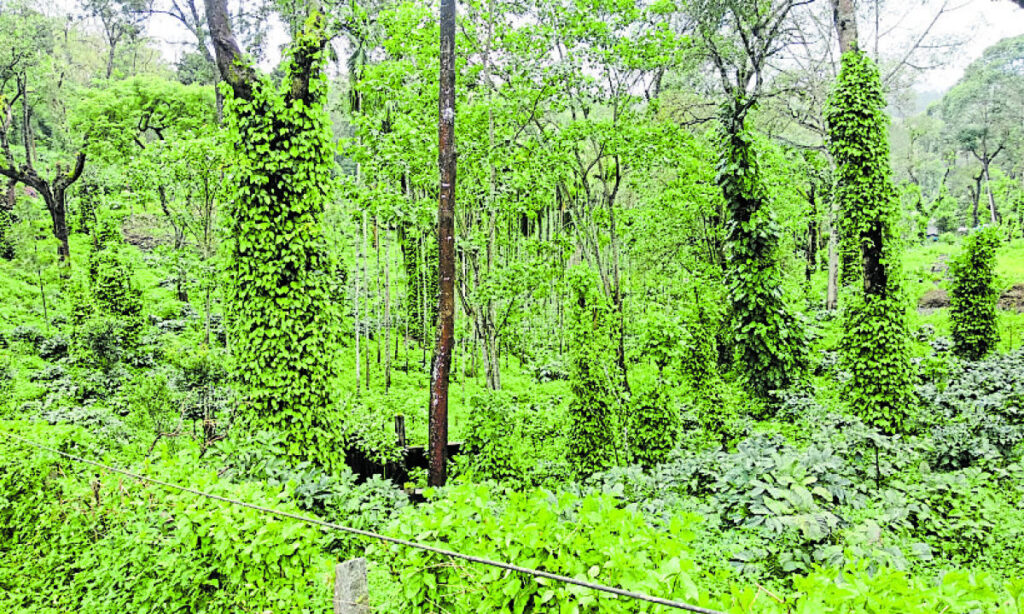
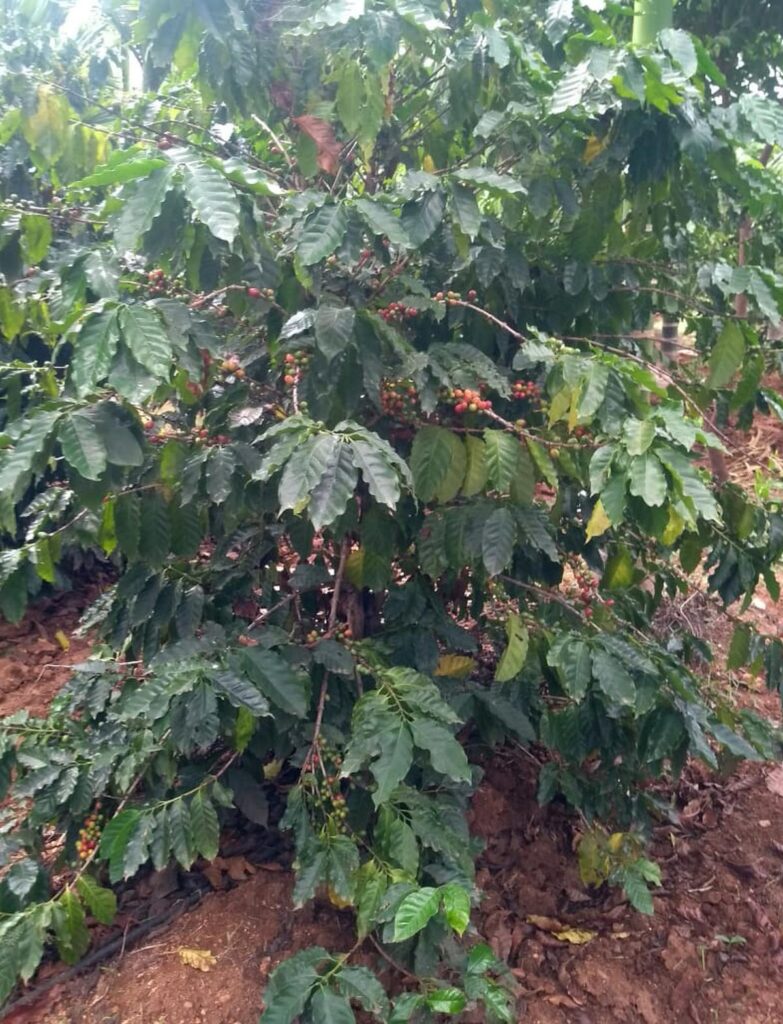
Nestled in the many hills of Kodagu, Hassan and Chikkamagaluru are countless coffee estates. The vast green estates betray the problems that coffee growers now face due to an acute labour shortage and climate change. These estates, once profitable, have been affected by unpredictable rains.
The 2018 landslide, a climate calamity in the region, washed away Savita’s 10-acre estate in Thanthipala, Madikeri. Four years later, many disasters followed suit. “I did not want to come back to this village, I was scared,” she says.
Kodagu is the largest coffee-producing district in the country with a total of 22,320 growers and 2,20,430 hectares of plantation land. The growers of the globally sought-after Monsoon Malabar beans are faced with new challenges, including a hard blow by landslides four years ago.
Landslides affected 2,095 hectares of land in Madikeri and Somwarpet. Of this, 959 hectares were plantation land.
Reminders of these landslides are plain to see in the areas of Thanthipala, Mukkodlu, Hattihole, Madapura, Hebbettageri and Monnageri.
For the plantation owners who lost land, there has been little relief, explains Nanda Belliappa, Vice-Chairman, Codagu Planters Association (CPA). “Apart from National Disaster Relief Fund relief, which is meagre, growers have not received any aid. Many areas have yet to be brought to condition. Land preparation has to be done,” he says.
Although Savita received compensation for her damaged house, it did not extend to estate loss. “I make a livelihood from the five acres of land that survived the disaster in 2018,” she says.
The once pristine greenery and ecosystems in these areas have been altered forever. In this place stands fissured land, devoid of trees, as a testament to government apathy.
Coupled with the rising cost of production, the plantation growers are constantly challenged by changing climate, lack of skilled labour, elephant-human conflicts and gaps in policy and reforms.
Plantation growers also point out the lower productivity of coffee varieties in India when compared to other coffee-producing countries. This is attributed to the gradual conversion of Arabica plantations to Robusta over the years, and the white stem borer menace.
What is the way ahead?
There is a significant technology gap in the plantation sector. Most technology is imported from Italy and Germany and therefore has high import duties, making it impossible for local plantation growers to purchase.
“I think where we need more help is to get good machinery for our plantation sector and get good plant material,” said Shamveel Nizam, co-founder of Big Cup, a coffee franchise.
Another solution is to form farmer producer organisations, explains Salman Baseer, proprietor of an estate in Hassan. “Small plantation growers can leverage these technologies which are otherwise extremely expensive, and fetch more in terms of profit” he explains.
Social media
Newer plantation growers are now leveraging the power of social media to create a brand for their coffee.
Pranathi Shetty, one of very few women plantation owners in Madikeri, uses her Instagram page “Kolliberri The Coffee Farm” to create awareness about her farm. It is through social media that she connected with various buyers and made inroads into the world of speciality coffee.
“Online presence also helped me enhance my knowledge by networking with some of the pioneers in the speciality coffee world,” she says.
With more growers experimenting with speciality coffee, there is huge potential for the growth of startups.
Indian coffee is rated highly in the global market and coffee culture continues to evolve because coffee growers are persistently fighting these adversities.
source: htttp://www.deccanherald.com / Deccan Herald / Home> Spectrum / by Lavpreet Kaur / November 24th, 2022
As the son of an Indian naval officer, Bidanda Bopaya was born in Pune, has lived all over the Indian coastline, and was sent to a boarding school in Ooty at a young age. His wife, Louella, daughter of an Indian air force officer, is a psychologist in private practice.
The Bidandas moved to Pittsburgh in 1987 after graduate work at Penn State and have raised two children in the Burgh. Their daughter, Maya is pursuing a PhD in finance & economics after an early career on Wall Street, and their son Rahul is an engineering graduate from Pitt. The Bidandas live in Fox Chapel.
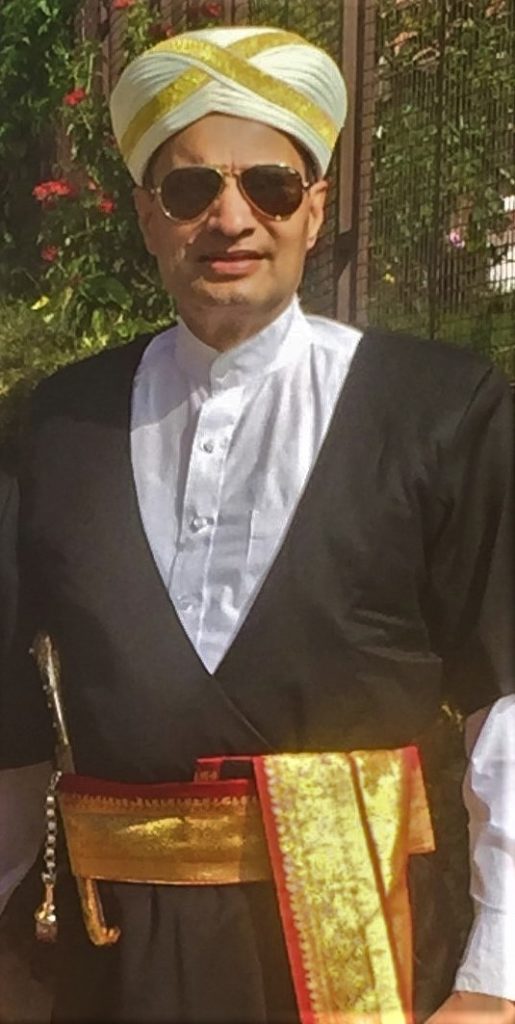
Bopaya, a professor of engineering at the University of Pittsburgh and President of the Institute of Industrial & Systems Engineers, has authored/edited 13 books in the subjects of his specialization. Here is Bopaya in his contemporary dress and also in the traditional Kodava attire.
Editor’s note:
My early childhood was in Madikeri (earlier name Mercara) in Kodagu District, earlier known as Coorg (population: over 500,000 people) in Karnataka State. Madikeri is the headquarters for Kodagu and the home of the Kodavas, a small, accomplished, and colorful community in the Indian social tapestry. Kodavas are ~20% of the population of Kodagu District, and have contributed disproportionately to India’s armed forces, sports teams, and other professions including as India’s first female ambassador, India’s first PhD in sports medicine, the founder of the National Institute of Sports in Patiala, and of course, India’s first Commander-In-Chief (Gen. Kodendera Subbayya Thimmayya), and India‘s first Field Marshal Kodendera Madappa Cariappa.
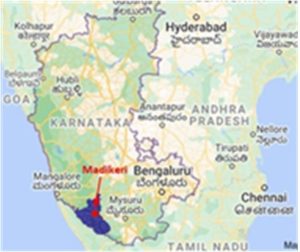
Location of Coorg District and Madikeri town in Karnataka.
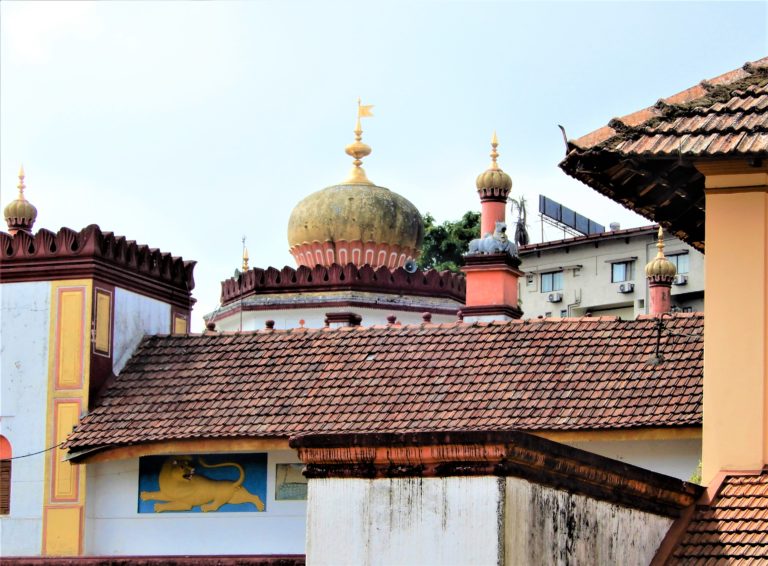
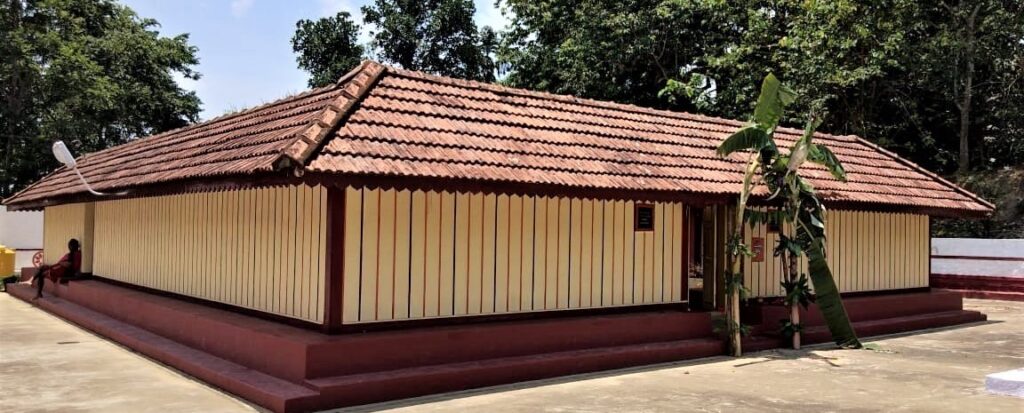
After sixty years, I chanced to drive through Madikeri. I had a vague memory of Omkareshwara Devasthana, a Shiva Temple there. Since it was the only temple I knew in my childhood, it made no impact then. When the driver showed me the temple from a mile away from the hills, I told him it looks like a mosque. His reply: was saar, iduve devasthana. (No sir, this IS the temple.) Stunned at the unique architecture for a Hindu temple with a typical Islamic dome including the four minarets, I stood in silence in front of the temple absorbing the ambience.
Then during the Patrika fundraising, I saw one Bidanda Bopaya as one of the on-line contributors. From the name, I recognized he is a Kodava (known earlier as Coorgis). I contacted him with my Madikeri roots, and one thing led to another in our exchanges, which finally culminated with Mr. Bopaya writing this article for the Patrika. – Kollengode S Venkataraman
The Omkareshwara Temple is a picturesque and unique place of worship in Madikeri, the heart of a salubrious and verdant hill station in Karnataka. Our family spent summers in Kodagu, and the place remained a well-kept secret because of the absence of a railhead. Now, it is a weekend getaway to Bangalore IT techies arriving in hordes.
Steep hills studded with vibrant homes surround the temple. Legend has it that the Raja of Kodagu, Lingarajendra II, built the temple repenting for some terrible act he committed. He was advised to build a Shiva temple that would awe people, as long as the sun and the moon are around! He commissioned the temple, consecrating it in 1820, with a Shivalinga brought from Kashi enshrined at the temple’s sanctum.
Omkareshwara Devasthana with its dome and four minarets
Omkareshwara Devasthana is the only known example of a Shiva temple for that matter, any Hindu temple built like a mosque with four turrets (or minarets) at each corner and a dome at the center. The rationale for this one-of-a-kind architectural style (Islamic with a Gothic touch) for a Hindu temple is not precisely known even though the temple is only 200 years old, given the frosty relations between the Kodavas and Muslims, thanks to Tipu Sultan (1750-1799), who repeatedly invaded and unsuccessfully tried to take control of the region. Search the web under Tipu Sultan and Kodavas to get multiple perspectives of this complicated relationship.
Given today’s strife-ridden global situation among all religions, it is inspiring that one Hindu temple integrated multiple styles of architecture into its place of worship two centuries ago. As children, we played hide-and-seek with our extended family around the temple.
The Rajaâ’s tomb located nearby, built in 1809, also has an Islamic architecture. My great-great-grandfather Bidanda Bopu was the Commander-in-Chief of the Kodagu Rajaâ’s army and is buried next to the Raja. Growing up, our family often celebrated festivals and visited the tomb to pay respects to our ancestors.
The Kodavas are proud people and maintain unusual traditions. Kodagu is often called the land of generals, beautiful belles, coffee, cardamom, pepper and honey, all because of its hilly terrain and suitable weather, honey, large number of military leaders, and charming and gracious women! Some interesting features of Kodavas
1)Are Kodavas Hindus? While Kodavas are governed by the Hindu laws, they are technically not Hindus, with the absence of a caste system; Kodavas are ancestor- and nature-worshippers. Most festivals are centered around agrarian and martial themes and traditions. However, many Kodavas have now adopted a Hindu lifestyle and traditions.
KODAVA FESTIVALS: Kodavas are rooted to their land as farmers and agriculturists. No wonder, all Kodava festivals are around farming.
2) Kailpodhu: After the paddy fields are transplanted in early September, Kodavas worship their weapons and tools, after cleaning and decorating them. This is followed by festivities (shooting competitions, athletic prowess, while feasting on spicy food and copious alcoholic beverages). Kodavas have the right to bear firearms and weapons without license.
3) Kaveri Sankramana: The river Kaveri originates in Kodagu District in a small natural spring in Bhagamandala, close to Madikeri. In mid-October, at a specified time, the sacred River Kaveri ” yes, for Kodavas in particular, and for all Kannadigas, Kaveri is sacred ” renews with new divine springs gushing towards a larger body of water. This is the birthplace of the river. People take dips in this holy water. Goddess Kaveri is then worshipped in Kodava homes with youngsters touching the feet of elders for blessings. Kaveri is perhaps the most common name for girls among Kodavas. This is the only meatless festival among Kodavas!
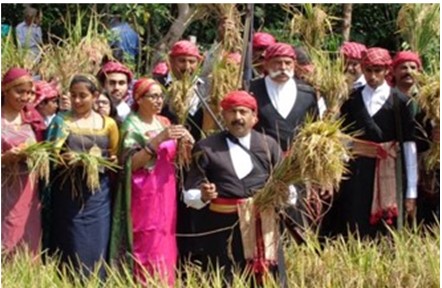
Kodavas in the field during the the Puttari Harvest festival
4)Puttari (meaning New Rice), is the traditional harvest festival, celebrated in early December when people gather in their traditional family home (ainamane) nicely decorated with farm motifs. Like Onam, Pongal, Lohri, Baishakhi, Bihu, and of course, Thanksgiving here, special culinary items are prepared. An important part of this festival is the matriarch of the family leading others into the fields for a symbolic first harvesting of rice paddies.
In addition to these, individual villages have temples that celebrate colorful festivals, including walks thru hot beds of coals. The best way to experience these is to be with Kodavas in their home during the season.
Pattaya, a traditional granary decorated for the Puttari harvest festival.
5)Is there a Kodava cuisine? Yes, of course. Kodava cuisine is replete with unique and fiery dishes including Pandhi Kari (pork curry cooked in a special vinegar), Baimble-Kari (bamboo shoot curry), mango paji (mango chutney), kuru kari (kidney beans, green beans, in a coconut gravy), akki rotti (rice chapattis) and the list goes on!!
7)Interesting fact: No priests at Kodava weddings. Family elders lead all the religious rites, with a frenzy of Kodava dancing, pandhi curry, libations, and ceremonies steeped in family traditions.
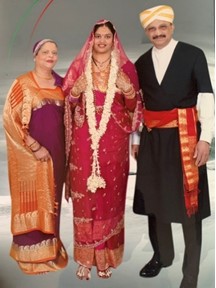
Drs. Palecanda and Nirmal Chengappa, longtime Pittsburgh residents, in traditional Kodava dress and jewelry at the wedding of their daughter Kaveri.
Websites offer a ton of information on tourism-related questions on Kodagu — places of interest, cuisines, lodging, what to do, how to reach, the best time to visit. One website is: www.coorgtourisminfo.com
source: http://www.pittsburghpatrika.com / The Pittsburgh Patrika / Home / by Bidanda Bopaya, Fox Chapel, PA / October 2022 issue
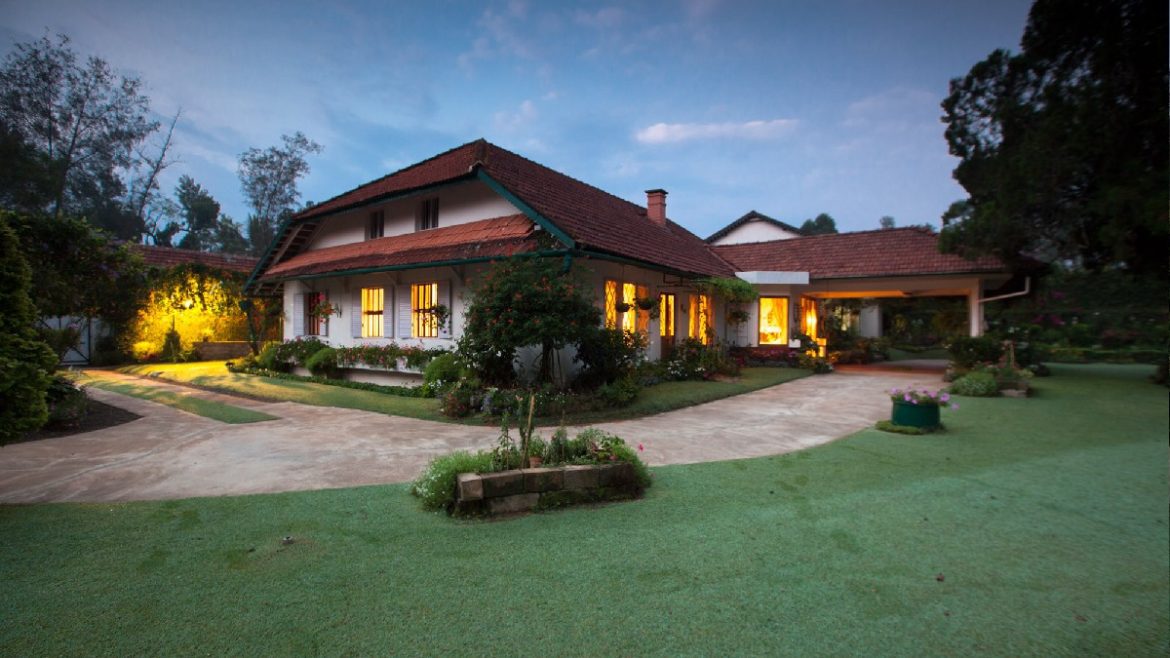
A 150-year-old bungalow in Coorg, which was once the residence of the German missionary Georg Richter, has now been converted to a boutique homestay. The School Estate lies amid the lush coffee and cardamom plantations of Coorg where you can have a tranquil stay, far from the clamours of the city. At the estate, you can wake up to the chirrups of birds and start your day with a cup of freshly brewed coffee.
Bungalow In Coorg Dating Back To 1878
The School Estate dates back to 1878 and is now run by the Aiyapas. Every element inside the plantation bungalow exudes an ancient charm. The century-old pool table inside the homestay has been converted into a quaint dining table. The traditional cottages at the estate are embellished with artefacts curated from different places visited by Mr. and Mrs. Aiyappa. In proximity to the estate, lies the Coorg Golf Links with an 18-hole golf course, surrounded by the verdant Western Ghats.
The estate has two charming cottages and a large family room. While staying at the homestay, you can take a stroll through the 200-acre farm dotted with coffee, cardamom and pepper plantations. You can also unwind on the hammock while taking in the aroma of coffee.
Dig Your Forks Into Traditional Kodava Dishes
At the School Estate, you can have an unforgettable dining experience in the lap of nature. The menu comprises traditional Kodava dishes prepared with ingredients sourced straight out of the farm. The estate also offers delectable English breakfasts and comforting cakes.
Handpick Coffee Beans And Play With Baby Elephants
During your stay at the estate, you can indulge in a plethora of experiences like handpicking coffee beans, fishing and golfing. You can also go on cycling tours to the nature trails nearby. The Thithimathi and Dubare elephant camps, home to the majestic Asian elephants, are also near the estate. You can play with the baby elephants here under the observation of the mahouts.
Transported to the estate already? To book your stay, click here.
source: http://www.curlytales.com / Curly Tales / Home> Discover> Travel> Travel Discovery / by Suchismita Pal / September 16th, 2022
Beanly, an early stage consumer brand in the coffee space and an early stage D2C startup known for innovations in the coffee category closed their seed investment from a clutch of angel investors who are marquee names in their fields.
Founded by Rahul Jain and Samayesh Khanna, Beanly has the vision of making quality coffee convenient while making sure it tastes fresh months after its been ground and packed.
Beanly is on a mission to simplify coffee for an everyday consumer and at the same time make it fun for them !
Beanly as a brand is known for its manufacturing prowess and is the first start up in coffee space to introduce nitrogen infused coffee to keep it fresh and also pour over coffee etc
Made with the finest arabica beans sustainably grown in Karnataka, India, Beanly offers a range of category-first products backed by science and is freshly roasted in New Delhi. The products are available on the brand’s website and in numerous other online marketplaces. The company plans to use the funds to grow its presence across online and offline channels.
“We’re excited to further our mission to make quality coffee a household staple. We have white labeled our products for several coffee players over the last 3 years and watched the freshly brewed category develop immensely” the founders said. “We now think the time is right to focus on our brand and build Beanly’s presence online and offline”.
Driven to become a major player in the segment Rahul & Samayesh added, “As part of that mission, we’re committed to elevating the undervalued but significant coffee industry in India ”.
Investors in the seed round include many seasoned entrepreneurs and serial entrepreneurs like media entrepreneur Dr. Annurag Batra, Chairman at BW Businessworld and exchange4Media Group, Deep Bajaj & Mohit Bajaj, Founders at Sirona Hygiene, Insurance Veteran and Startup Investor Rohit Jain, Vikash Chowdhury, and Abhishek Ravi.
Dr. Annurag Batra added, “coffee consumption is growing in India at a rapid pace. Beanly is well positioned to accelerate and trailblaze that coffee culture”. He further added,” I have known Samayesh and Rahul for a long time and I have seen the speed at which they innovate”.
“Both Samayesh and Rahul are incredible founders who love coffee like no one else we have ever met! Their passion and drive are infectious. The kind of innovations they have brought in the category and wish to bring in the future has the potential to disrupt this segment and hence we decided to support them” added Deep Bajaj.
Beanly aims to be amongst the top three coffee brands in the country in the next 24 to 36 months and is ramping up its manufacturing, operations and retail presence in digital and all retail formats with this investment and is likely to raise more capital in the first quarter of 2023 for its Uber scale up.
If you have any objection to this press release content, kindly contact pr.error.rectification@gmail.com to notify us. We will respond and rectify the situation in the next 24 hours.
-up18news/pnn
source: http://www.up18news.com / UP18News / Home> City-State / by Up18News / November 26th, 2022
“Utharkand, Telangana, Haryana, Himachal Pradesh have become separate states after a long fight. Why should Kodagu not get an autonomous council?,” he questioned.
Madikeri :
“I will fight for your (Kodagu) separate existence within Karnataka state but with an autonomous council,” declared former minister and economist Subramanian Swamy in Kodagu. He was addressing the gathering at the 32nd Codava National Day celebration in Madikeri on Saturday. The event was hosted by Codava National Council (CNC).
Subramanian Swamy in his speech assured CNC about the organization’s goal of achieving geo-political autonomy through a legal battle. “Great injustice has been done to you (Kodagu/Kodavas). But keep fighting,” he added. He assured to file a petition in the Supreme Court shortly to get Geo political autonomy status to Kodagu. He stated that he will seek support from his legal advisor Satya Sabarwal. “Utharkand, Telangana, Haryana, Himachal Pradesh have become separate states after a long fight. Why should Kodagu not get an autonomous council?,” he questioned. He assured that Kodagu will be an independent council by November next year.
Meanwhile, speaking with the media Swamy said, “The former minister Chidambaram has faced serious charges in many cases followed by Rahul Gandhi in the young India case. Prisons wait for them.”
He commented on the Modi regime and spoke, “I am not opposing Modi. But his policy of appeasing China is opposed by me. He should not allow the Chinese to occupy our territory. India should fight back. I also oppose some of the wrong economic policies of the present government. No one in BJP has the guts to question the wrong policies except me. Even the PM has failed to declare Ram Setu as a heritage spot despite several appeals by me.”
Virat Hindusthan Sangam national secretary Jagadish Shetty, Supreme Court advocate Satya Agarwal and CNC president NU Nachappa also spoke. Several resolutions including the demand for ST tag for the Kodavas were passed during the session.
source: http://www.newindianexpress.com / The New Indian Express / Home> States> Karnataka / by Express News Service / November 26th, 2022
Farmers in North Karnataka are now trying to grow coffee and if proven to be of good quality, it will be a game changer for the region.
Gaddi Guddappa, a farmer from Huvina Hadagali in Vijayanagara district, has cultivated coffee on his eight acres of land successfully.
Bengaluru :
When someone says coffee from Karnataka, three names immediately come to mind: Kodagu, Chikkamagaluru, and Sakleshpur in Hassan district. But something new is brewing in an unexpected corner of the State: farmers in North Karnataka are now trying to grow coffee and if proven to be of good quality, it will be a game changer for the region.
Gaddi Guddappa, a farmer from Huvina Hadagali in the Vijayanagar district, has cultivated coffee on eight acres of land successfully. Mr. Guddappa told The Hindu, “I bought the plants from Chikkamagaluru and Shivamogga four years back and this year, I have got the yield of 1,600 kg of coffee from my eight acres of plantation.”
According to him, the coffee which he had grown is the first in the district and also in the North Karnataka region. Many farmers in his district are visiting his plantation every day to learn about and see the coffee beans grown. “For me, it was a very new crop and I didn’t know the outcome of it. I learnt how to grow coffee by visiting Chikkamagaluru. Many people from my area who were working in the coffee estates there had told me about it. I bought Arabica-Chandragiri variety coffee from Shivamogga nursery and started to grow it,” Mr. Guddappa added.
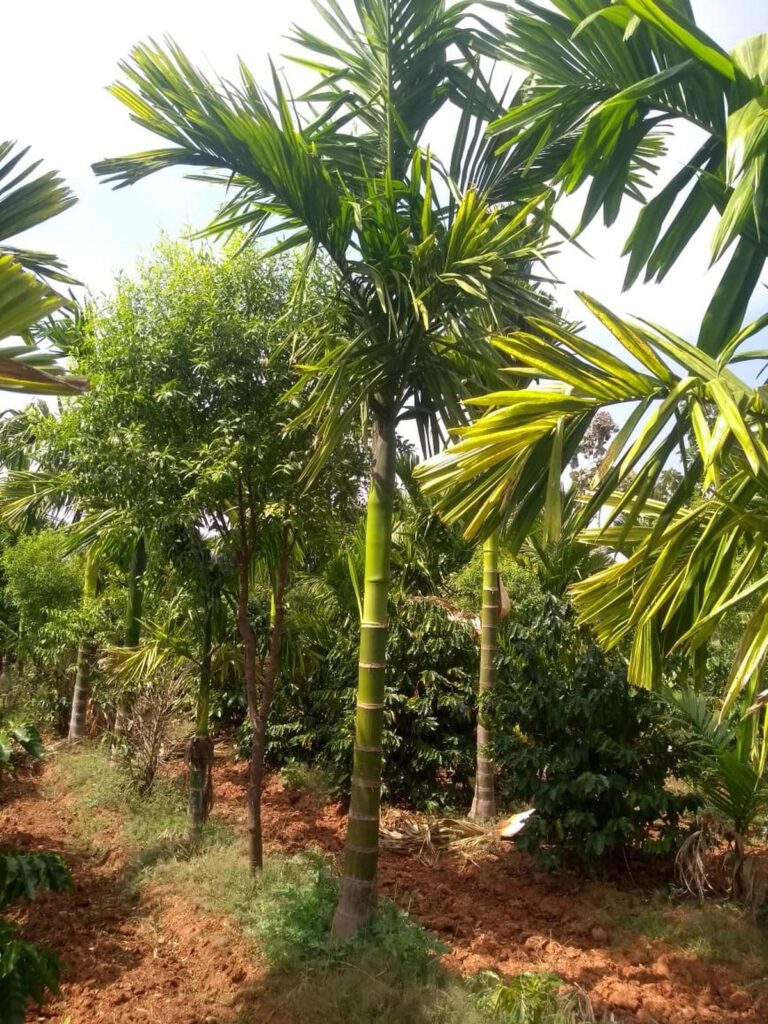
The farmer is using arecanut palms and a few other kinds of trees as shade for coffee plants
Initially, Mr. Guddappa was growing arecanut on his land. He then started to grow coffee in the middle of the arecanut farm, as traditionally, all coffee is shade grown. He is using arecanut palms and a few other kinds of trees as shade for coffee plants while growing pepper as intercrop. “I am the first person to cultivate coffee in this region. This year, a few farmers in Lingsugur in Raichur district and Bagalkot district have also started growing coffee,” he said.
Coffee Board testing it
Coffee Board officials recently visited Huvina Hadagali and collected samples of the coffee for quality testing. K.G. Jagadeesha, Chief Executive Officer and Secretary of the Coffee Board, told The Hindu, “Since we got the information that coffee is grown there, our officials have visited the village and taken samples. Only after proper analysis of the coffee yield and quality will we be able to comment. Testing is going on and it will take time to give our scientific analysis of the crop.”
According to Mr. Jagadeesha, coffee plants can be grown anywhere. However, the quality has to be met to the proper standard for the coffee to be marketable and drinkable. “We don’t want to recommend anything based on physical observation. We want to go by extensive testing of the coffee beans. As a responsible agency, we have to see everything, including long-term sustainability, but we are exploring,” he added.
source: http://www.thehindu.com / The Hindu / Home> News> India> Karnataka / by Darshan Devaiah B.P. / November 25th, 2022
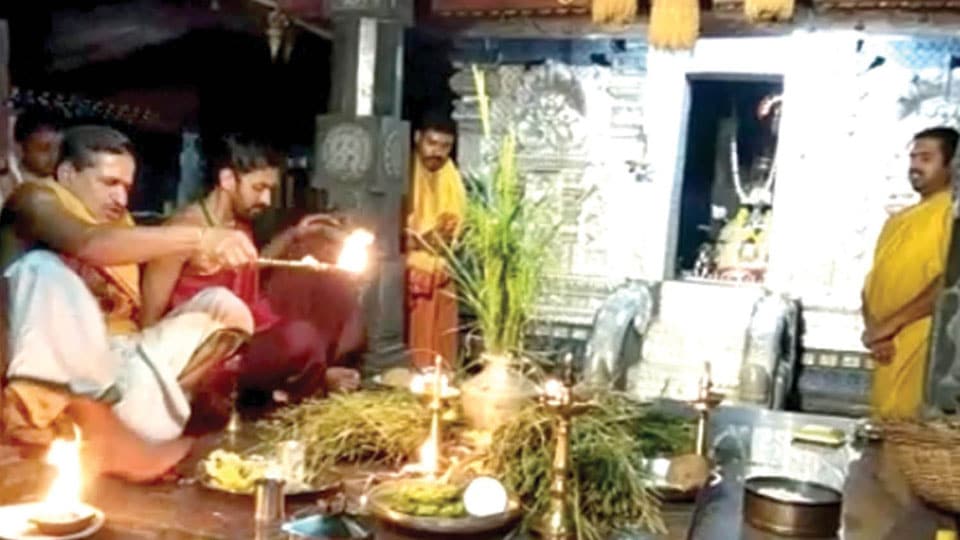
‘Puthari,’ the harvest festival of Kodagu, will be celebrated on Dec. 7 as per the date decided at the Paadi Iguthappa Temple in Kakkabe.
Timings and date were decided based on calendars and astrology by the representatives of 13 families and the office-bearers of the Temple.
‘Nere kattuva’ ritual will be held at Paadi Iguthappa Temple at 7.20 pm on that day; reaping of new paddy crop (Kadiru) at 8.20 pm; distribution of prasadam at 9.20 pm.
source: http://www.starofmysore.com / Star of Mysore / Home> News / November 24th, 2022
The museum is buzzing with activities ranging from art exhibitions to music events.
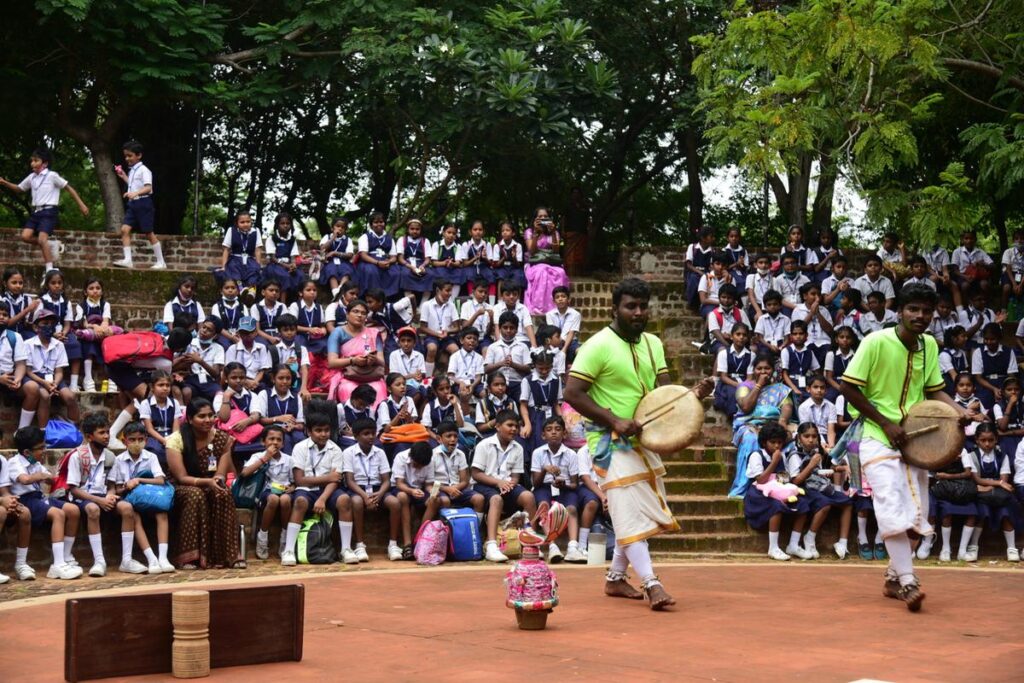
Grounds teeming with young school children, tourists stopping by to admire artisan demonstrations, galleries filled with a cornucopia of artefacts from across the country — these are all familiar sights at DakshinaChitra, the living museum, that has been a constant on the Chennai cultural map since its inception in December 1996. But the pandemic decidedly forced the museum to pause its trajectory and plans for the third decade of the millennium.
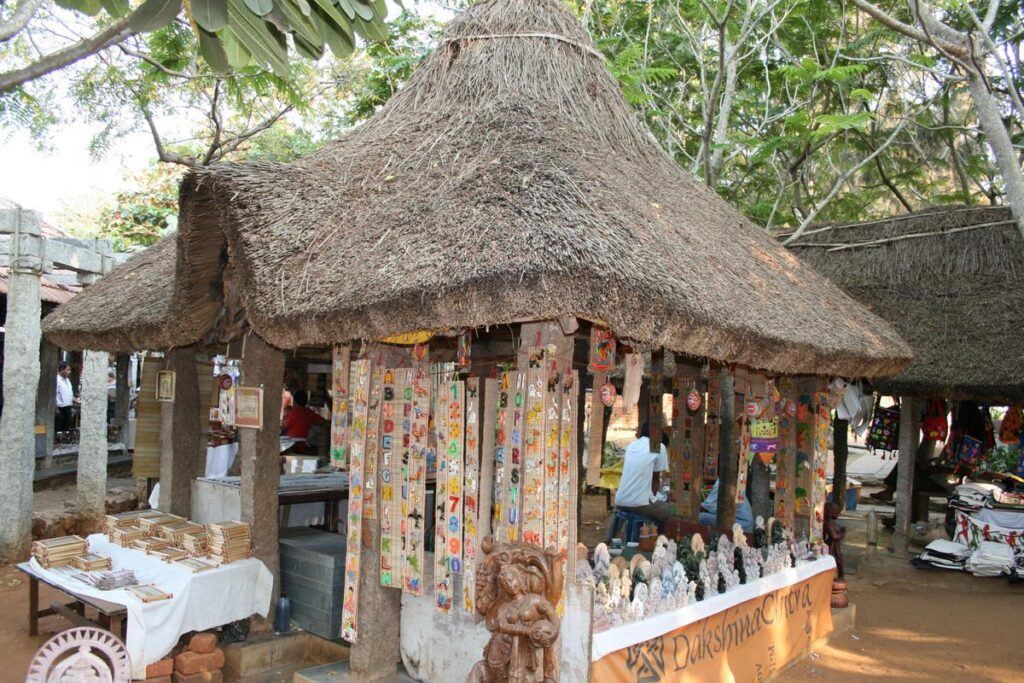
Sharath Nambiar, director, DakshinaChitra is happy that the grounds are now slowly coming back to life. “For the first time since 2020, we have crossed pre-pandemic numbers in terms of visitors and footfall. Schools and colleges have resumed field trips and our expanse of over 10 acres is now brimming with energy and activity. We even have 22 artist stalls with live demonstrations and are looking to add more to the roster,” he says.
The museum had envisioned a Garden Show in 2020, but that did not pan out. “We have planned a grand showcase in January 2023, with a flower show, workshops, and prizes for the city’s best home gardens, bonsai, terrace and vegetable gardens, as well as ikebana and other techniques. Chennai should have a garden show like Ooty and Bengaluru,” says Nambiar.
A lot is happening here. Over the past few weekends, musical ensembles have performed at the museum’s multiple venues, including juniors from the Sunshine Orchestra, supported by the AR Rahman Foundation and the KM Music Conservatory, and Madras Commune’s Follow the Sound that had audiences literally moving towards the music at different venues. The art galleries have focussed on Tamil heritage through November.
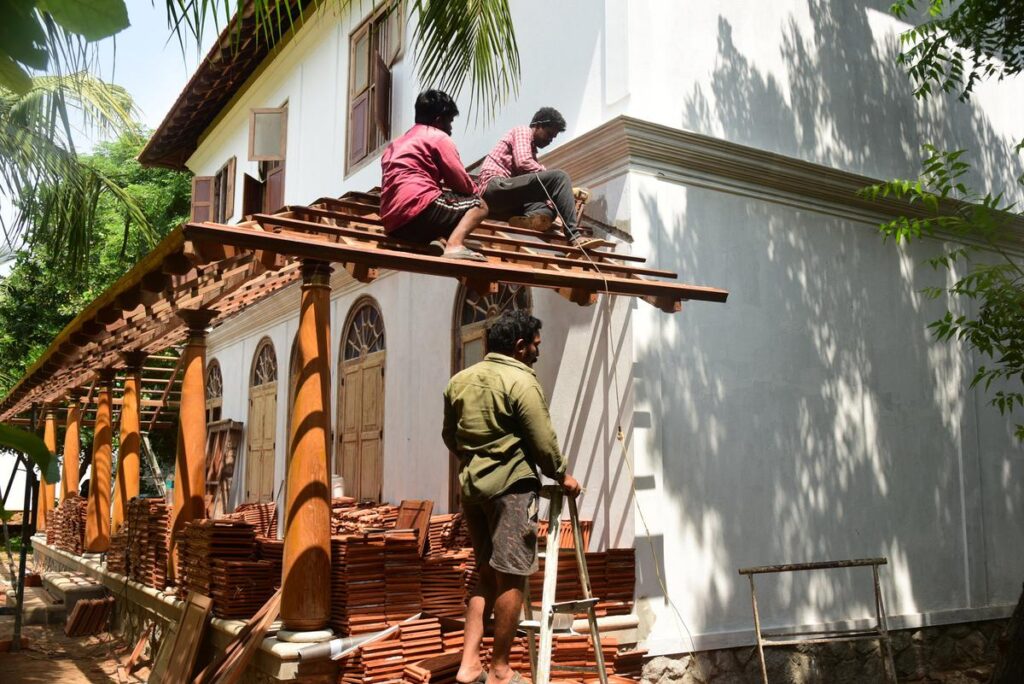
But the one project that has the museum buzzing with activity and anticipation is the construction of its Calicut House. “We started this project in March 2020, but then were forced to stop, since the movement of man and material was difficult during the pandemic. We resumed construction only this April, hoping to open its doors during summer 2023. The home belonged to a Muslim family in Calicut, and we had a team of 12 carpenters from Kerala, who carefully worked to reconstruct the home exactly as it was. We envision an exhibition around sustainability, using this Calicut house,” says Nambiar. The plan is to use the rear facade to install solar panels, use rain water harvesting apparatus, water conservation and composting techniques, in the adjacent compound area, to sensitise, “our millennial audience to environmentally conscious processes that were a part of our heritage in different forms over decades. We worked with Benny Kuriakose and his team of architects as well as a team from Auroville to set this up,” adds Nambiar.
Calicut house under construction | Photo Credit: Special Arrangement
While the Calicut House is all but ready for the public, the Kodava House or Coorg House will be the latest addition to the living heritage space, “to focus on the Kodava community which came into focus with the book, The Vanishing Kodavas by Kaveri Ponappa, and this project will be bolstered by the presence of the Sandooka—The Living Museum of Kodava Culture , an interactive virtual museum expected to be formally launched in 2023 as well,” adds Nambiar.
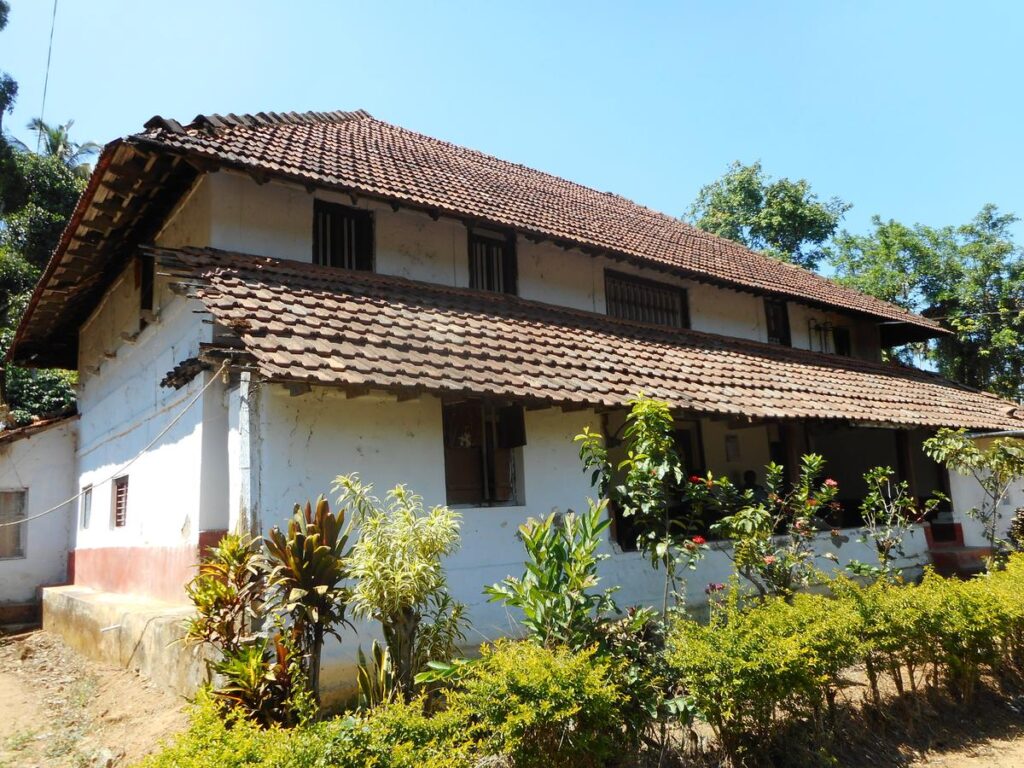
The Coorg style house in its original location | Photo Credit: Special Arrangement
The Kodava House will showcase the way of life of the community living in the Western Ghats of Karnataka. They have a deep connect with the land. The house to be reconstructed has been identified. “We have to carefully document the structure, then the parts are numbered, photographed, we have drawings to scale, then the home is painstakingly taken apart, using teams from the area who understand the materials and techniques. Then we slowly start the process of moving the parts to be assembled in the museum, in the exact same way.
A tapattam performance | Photo Credit: Special ArrangementCrafts Bazaar | Photo Credit: Special Arrangement
The process starts early 2023 and would take close to 16 months to complete,” concludes Nambiar, as the museum readies itself for a hectic Margazhi season packed with performances, as well as a December anniversary celebration replete with spirited folk performances and a unique exhibition showcasing the state of Arunachal Pradesh.
source: http://www.thehindu.com / The Hindu / Home> E Paper> Life & Style / by Anisha Menezes / November 24th, 2022
The senior actor talks about his role in Thimayya and Thimayya which not only challenged him as an actor, but also gave him a lot of enjoyment acing it
Legendary actor Anant Nag is set to star in Sanjay Sharma’s debut directorial, Thimayya & Thimayya, and shared that the role was very challenging. “When director Sanjay Sharma told me about this film, I asked him to send the script, and I enjoyed reading it. I was even surprised that such a story was coming from an ad filmmaker, and liked the way he understood the creative process of cinema,” says the actor.
Thimayya & Thimayya is about the bonding between a grandfather and grandson, and the actor plays an arrogant Coorgi person, who has a very unique and complex character arc. “There is a negative trait to the character (Thimayya), who is egoistic and selfish. In fact, I was debating whether to take up this role, but the shades that Sanjay had sketched to this part attracted me. I’m curious to know how the audience will react to this particular character,” says Anant Nag, who also appreciated the art director Vineeta for creating authentic structures that go well with Sanjay’s story.
Anant Nag’s Thimayya is not just wealthy in the film, but is also a good trumpet player. “He is good at playing the trumpet, but uses the same instrument to inflict violence too. He is a control freak, and wants his grandson to obey every order of his. The undercurrent theme of this film adds entertainment value to the script,” says Anant Nag, who was also happy to have learned a new instrument for the role.
Anant Nag is one of those very few actors, who craves to do better with each film and still enjoys everything about acting. Throughout his prolific acting career, he has always had filmmakers of that era develop scripts with him in mind. This constant updating has made filmmakers always approach him with unique roles and interesting stories. Sharing his love for collaborating with fresh talents, Anant Nag says, “I’m glad to know that there are directors who still have me in their minds while writing characters. Having said that, I don’t feel like accepting everything. I love to be part of projects where I can enjoy the character, and also be part of a team that sets a good atmosphere,” he signs off.
Thimayya and Thimayya, bankrolled by Rajesh Sharma, also stars Diganth, Aindrita Ray, and Shubra Aiyappa in the lead cast.
source: http://www.cinemaexpress.com / Cinema Express / Home> Kannada / by A Sharadhaa / November 23rd, 2022
WELCOME. If you like what you see "SUBSCRIBE via EMAIL" to receive FREE regular UPDATES.
Read More »