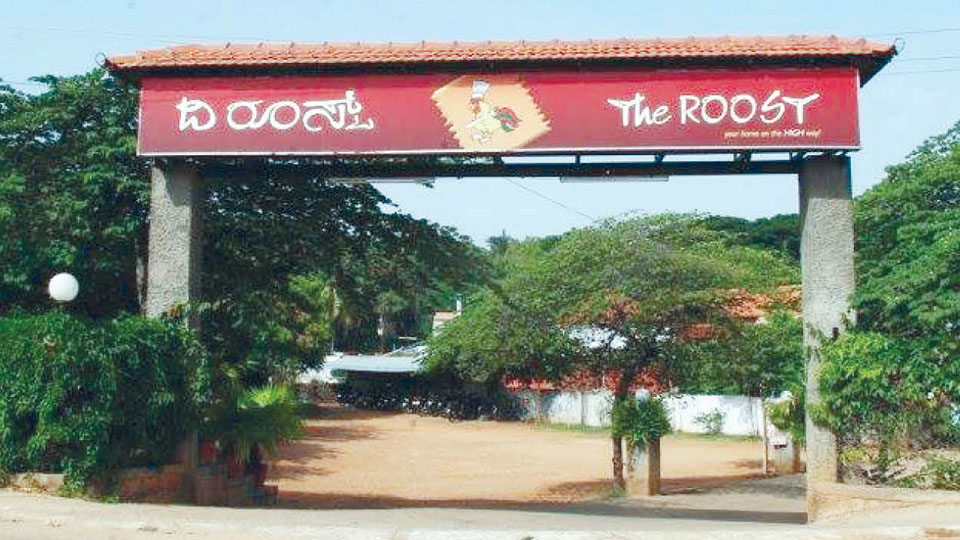
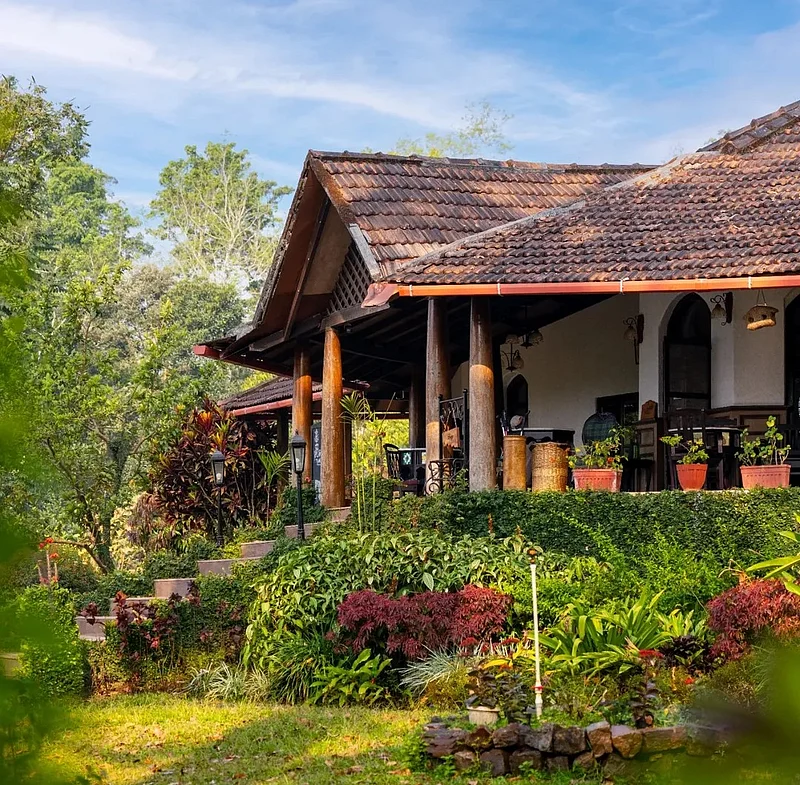
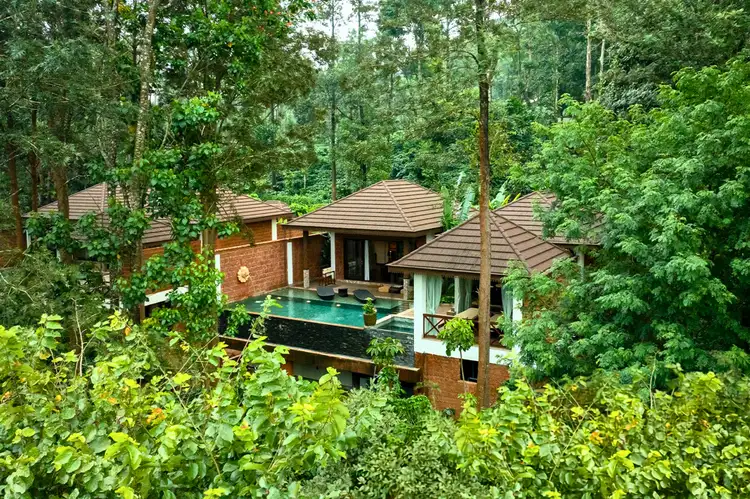
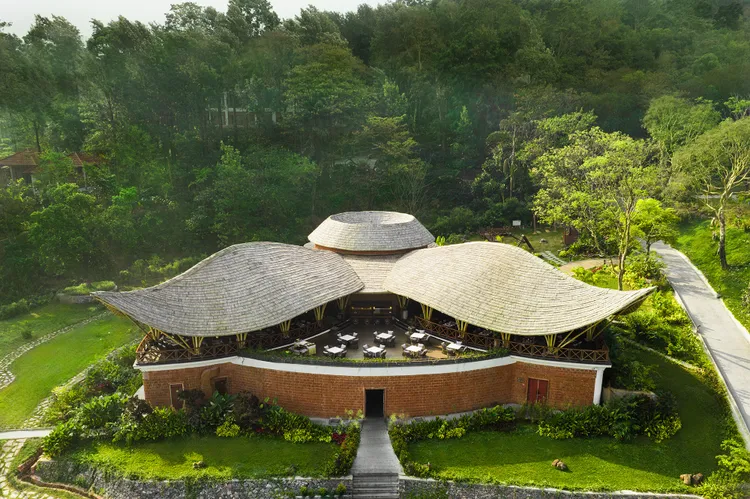
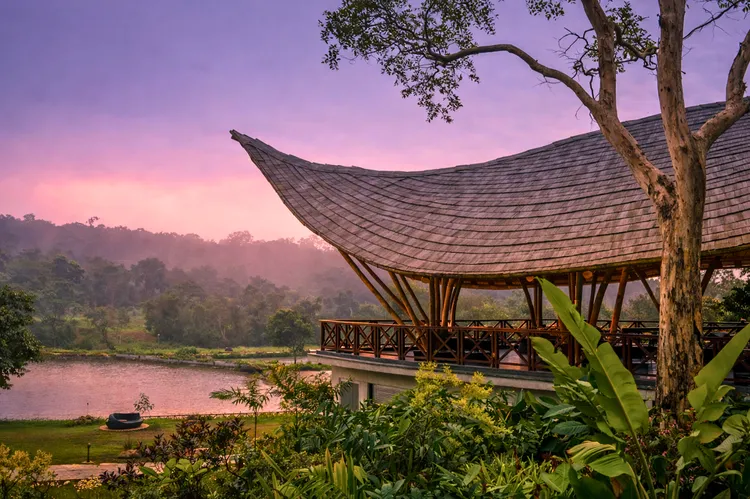
The curtains will come down tonight on ‘The Roost’, the popular garden restaurant and hotel on Hunsur Road at Hinkal that has been part of Mysuru’s social landscape for nearly three decades.
The establishment will serve its last customers on May 31, marking the end of a 30-year journey that has left behind countless memories for patrons.
Speaking to Star of Mysore, Founder Konganda Dilip Biddappa said, the closure follows the expiry of the property’s long-term lease. The restaurant was established on Jan. 19, 1996, on a 30-year lease, which was later extended by three years. “With no further extension possible, I have to vacate the premises,” Dilip said.
He described the parting as an amicable arrangement, a “golden handshake” with the property owners, but admitted that leaving was emotional.
“We are leaving with a heavy heart. When I took over this place, it was just a jowar field. Every plant on this one-acre property was planted by us,” he recalled.
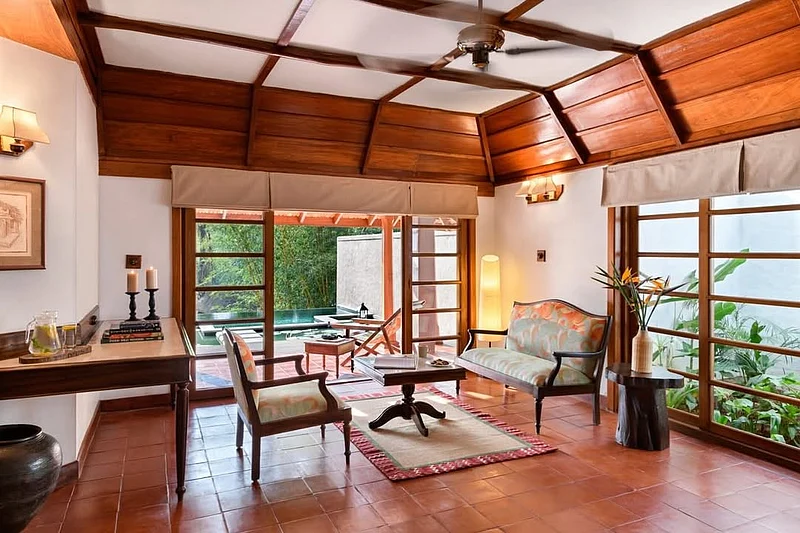
Over the years, ‘The Roost’ grew from a modest eatery into a well-known landmark, particularly popular for hosting Kodava community gatherings, family functions and social events. Besides its sprawling garden restaurant, the property also featured 12 guest rooms.
Dilip attributed much of the restaurant’s longevity to the support of his staff and patrons. “I have been fortunate to have a wonderful team and loyal customers who have stood by me for decades,” he said.
Though ‘The Roost’ will cease operations, Dilip said, the brand itself will live on. The property is set to be taken over by the landowners and reopened under new management. “I am retaining the brand name if I start a new venture in the future,” he said.
source: http://www.starofmysore.com / Star of Mysore / Home> News / May 31st, 2026
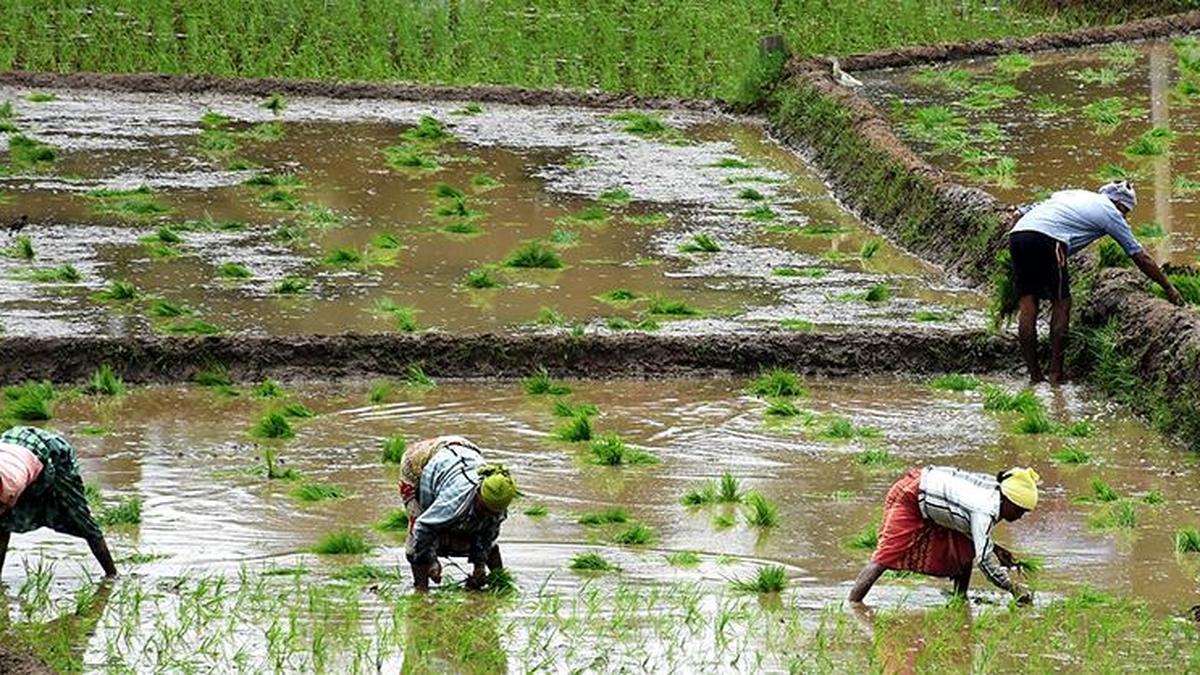
Sowing in Mysuru district | Photo Credit: File photo
A sharp deficit in pre-monsoon rainfall across southern Karnataka has raised concerns ahead of the onset of the southwest monsoon, with key districts in the Mysuru region, particularly Kodagu and Mysuru, recording significant shortfalls that could affect preparation for kharif sowing.
Data released by the Karnataka State Natural Disaster Monitoring Centre (KSNDMC) as of May 27 shows that South Interior Karnataka received 106 mm of rainfall against the normal 125 mm during the pre-monsoon period from March 1 to May 27, registering a deficit of 16 per cent.
Among the districts in the Mysuru region, the data said, Kodagu recorded the steepest decline, receiving only 106 mm rainfall against the normal 220 mm – a deficit of 52 per cent. Mysuru followed with 89 mm against the normal 184 mm, recording a 51 per cent shortage. Mandya received 96 mm against the normal 146 mm, registering a shortfall of 34 per cent, while Chamarajanagar received 140 mm against the expected 181 mm, reflecting a 22 per cent deficit.
The shortfall was more noticeable in April. Mysuru district received only 10 mm rainfall against the normal 66 mm, recording an 85 per cent deficit. Kodagu registered a 76 per cent shortfall, followed by Chamarajanagar at 75 per cent and Mandya at 59 per cent.
Although rainfall activity improved marginally in May, it remained insufficient to offset the earlier deficit. Between May 1 and 27, Mysuru received 65 mm rainfall against the normal 103 mm, registering a 37 per cent shortfall, while Kodagu received 64 mm against 114 mm, a deficit of 44 per cent. Mandya and Chamarajanagar fared relatively better, receiving 62 mm and 105 mm respectively.
The data also showed significant rainfall deficits in Hassan and Dakshina Kannada districts.
source: http://www.thehindu.com / The Hindu / Home > News> India> Karnataka / by The Hindu Bureau / May 27th, 2026
The tragedy raises urgent questions about the continued use of captive elephants for tourism, festivals, and processions in the name of tradition, even as shrinking habitats, broken elephant corridors, and rising human interference intensify conflict between humans and wildlife.
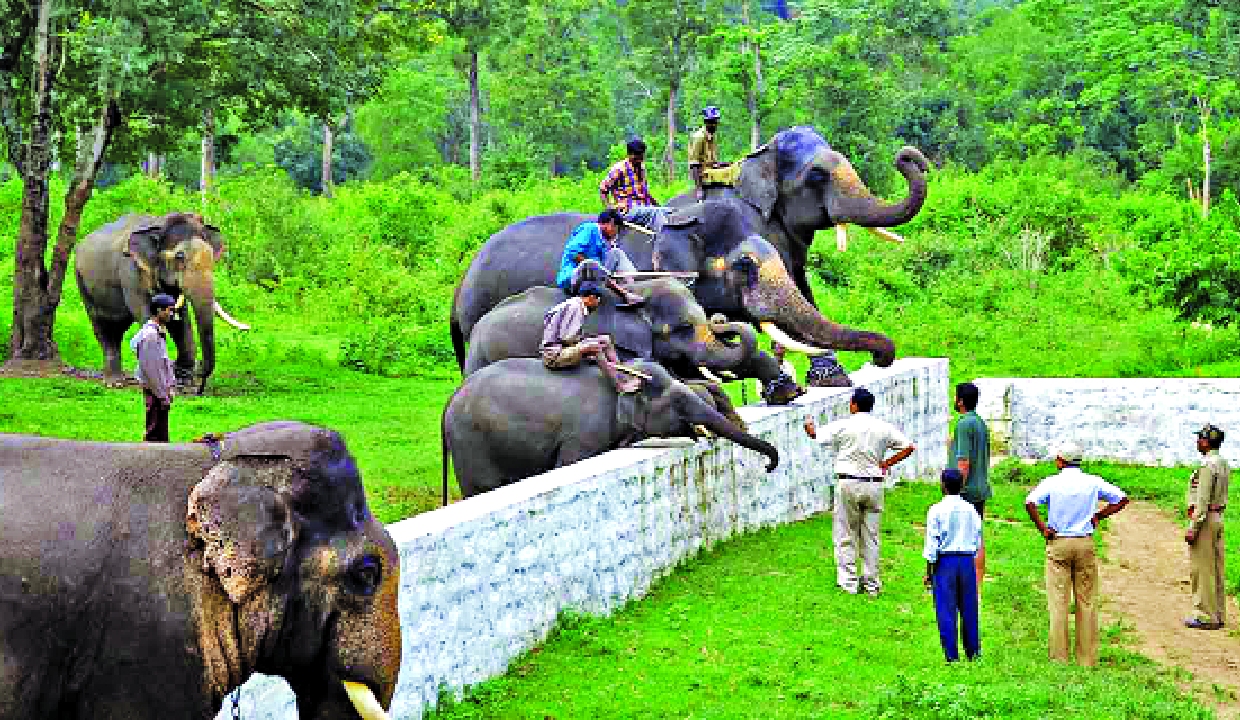
This week’s tragedy at Dubare elephant camp in Kodagu district, deep inside Karnataka’s Western Ghats, questions the decision of the authorities to permit tourists to bathe captive elephants in the flowing waters of the Cauvery River. This camp is located deep within forests dominated by the movement of wild elephants. All captive elephants in this camp were not born in captivity; many were captured from the wild and later tamed in such camps. It is not fair to conclude that tamed elephants have shed all their wild characteristics and fully obey the command and control of their masters – mahouts and kavadis. There have been instances in the past where elephants have killed their masters – mahouts and kavadis. There have also been instances where elephants did not obey the commands of the mahout and ran amok, inflicting casualties and death among crowds.
Captive elephants are often subjected to torture by mahouts using iron ankushes, which can cause bleeding and septicaemia. The footpads of elephants are frequently injured from walking on paved roads. Though camps have treatment facilities under the supervision of veterinary doctors, bleeding from earlobes and footpads is often neglected, and the elephants continue to suffer.
Let me examine in this piece how far we are justified in taking elephants for processions during special occasions and marriages where large crowds gather, and how far we are justified in continuing age-old traditions where tourists are permitted to pour water and rub the elephants’ bodies while standing beside them. On several occasions, I have personally failed to convince the Karnataka government not to use captive elephants during Mysuru Dussehra. The argument advanced was: why discontinue traditions?
Captive elephants were extensively used in dragging timber logs across hilly terrain in forestry operations in the past. The Forest Department maintained elephant camps for such operations. However, maintaining these camps was always costly, which restricted their expansion. As forestry operations have now been scaled down and tree felling in hilly terrains prohibited in the interest of conservation, these camps have largely lost their relevance.
Now, bureaucrats and politicians see these camps as permanent centres for training wild elephants that stray out of forests, damage crops and property, and threaten human lives. Earlier, the Karnataka Forest Department carried out khedda operations to capture only a few elephants needed for logging operations. However, with the advent of safer tranquillising techniques, more and more wild elephants are being captured. The department often comes under public pressure to capture elephants straying into villages. The argument advanced is that the elephant population in the wild is increasing due to conservation, and the excess population must therefore be brought into captivity. Wild elephants involved in conflicts, when translocated several hundred kilometres away into another elephant habitat, have often returned to their original homes within weeks, strengthening the argument for bringing such elephants into captivity.
In an era when elephant habitats are continuously fragmenting and shrinking owing to the expansion and widening of linear infrastructure, diversion of forests for mining, industries and development projects, and unauthorised encroachment on forest land, wild animals — especially elephants — are left with little option but to migrate in search of food, shelter, and water, thereby straying into human settlements.
The spread of invasive species and forest fires has also degraded elephant habitats. Palatable plant species and bamboo forests have suffered extensive damage, forcing elephants to move out of forests regularly. Elephant corridors that once provided migratory routes have been occupied by humans. Human settlements and cultivation inside forest pockets have expanded, to the detriment of conservation.
Captive elephant camps like Dubare are themselves islands of human activity within forests. As part of their daily routine, camp elephants are released into forests during the daytime, where they interact with wild elephants. Fights between captive and wild elephants are reported regularly. There have even been instances where captive elephants were killed by wild tuskers. Aggression is a natural part of elephant behaviour and cannot always be controlled by a mahout’s ankush. Sometimes, the animals can surprise us.
About a decade ago in Karnataka’s Kalaburagi district, an elephant in a procession kicked its mahout in full public view. The kick was mild and the mahout survived the scare. Feeling insulted, the mahout attempted to attack the elephant with an ankush. The elephant became even angrier and kicked him with such force that he fell nearly 20 feet away and died. Elephants killing their mahouts is not uncommon, and such incidents have been reported from across the country.
Within a herd, stronger elephants are also known to target weaker members. This is what happened at Dubare earlier this week. A tusker attacked a makhna (another male elephant without tusks) while tourists were permitted to bathe the herd. The hostility had likely built up over time, and on that fateful day, the tusker chose to attack the makhna in full view of tourists. The makhna collapsed onto a female tourist bathing it, crushing her to death. The tusker continued attacking the makhna until the mahout managed to calm it down. Despite the best treatment provided at the camp, the makhna died the following day.
Dubare camp also has tourist lodges run by the state-owned Jungle Lodges and Resorts (JLR). One of the activities offered to tourists is bathing the camp elephants, while another is jeep safaris through nearby forests to view wild animals. It has also been found that the entire camp and JLR premises lie within a corridor historically used by wild elephants. Blocking this corridor has disrupted elephant movement and intensified human-elephant conflict.
There are other forest pockets in Kodagu that have been granted for coffee estates. These estates too obstruct elephant corridors. More than 10,000 acres of coffee estate owned by Tata lie within this corridor. The entire estate is fenced, diverting elephants into human settlements and aggravating conflict. Sometimes elephants break through the fencing and enter the estates, threatening workers’ lives. Even the narrow roads inside coffee estates are covered by drooping coffee branches on both sides, limiting visibility. Estate management must ensure better visibility and safer movement.
This is a vicious cycle. As wild elephant movement is obstructed, incidents of conflict increase, and every human death places additional pressure on the Forest Department to capture the elephants involved and bring them into captivity. The continued operation of such elephant camps and JLR facilities is not in the interest of conservation.
Such elephant camps should be downsized in a phased manner, and corridors must be restored by removing fencing in Tata Coffee estates and around JLR properties. Tourists should not be allowed near camp elephants, and under no circumstances should close interactions be permitted. Tourist viewing areas should instead be cordoned off, allowing visitors only to observe elephants bathing in the river from a safe distance.
Dubare camp also has tourist lodges run by the state-owned Jungle Lodges and Resorts (JLR). One of the activities offered to tourists is bathing the camp elephants, while another is jeep safaris through nearby forests to view wild animals. It has also been found that the entire camp and JLR premises lie within a corridor historically used by wild elephants.
The writer is a retired Head of Forest Force, Karnataka, and teaches Economics at the Karnataka Forest Academy; Views presented are personal.
source: http://www.dailypioneer.com / The Pioneer / Home / by B K Singh / May 28th,2026
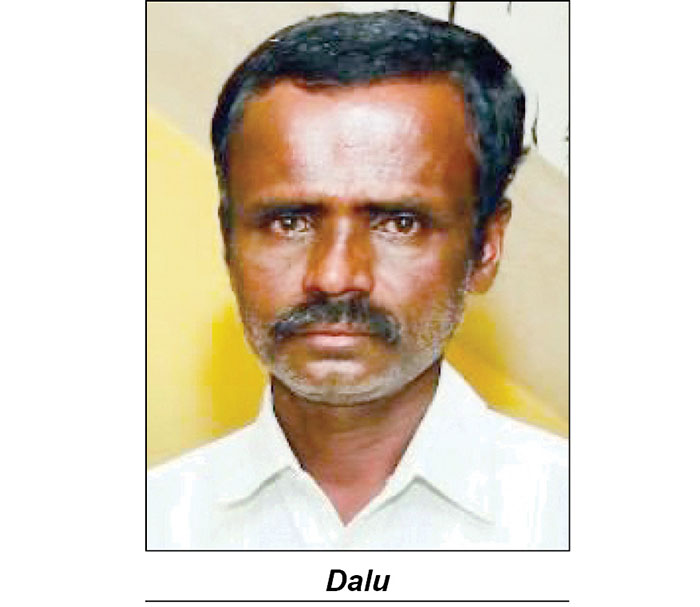
In a touching act of humanity, a grieving wife chose to give life to others by consenting to donate her husband’s organs after he was declared brain dead at Kodagu District Hospital, Madikeri, managed by Kodagu Institute of Medical Sciences (KIMS).
Dalu, 46, a resident of Aravathokkalu village in Ponnampet taluk, had suffered severe head injuries after falling at his house on May 17. Despite treatment, he succumbed to his injuries, following which his wife Rajeshwari agreed to donate his organs.
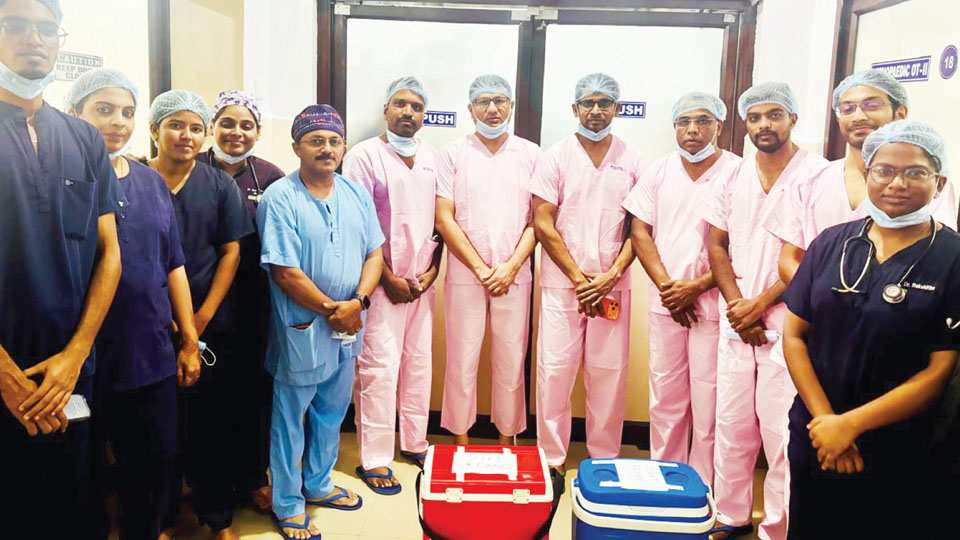
The donation marked the first organ retrieval procedure in the history of Kodagu District Hospital. Doctors retrieved his heart, kidneys and corneas, which were later transported under ‘zero traffic’ arrangements to hospitals in Mysuru and Bengaluru for transplantation.
Dalu was initially treated at Gonikoppal Government Hospital before being shifted to Madikeri District Hospital on May 19 after his condition deteriorated. A CT scan revealed critical internal head injuries.
Family consent, procedure
On May 22, doctors confirmed brainstem death after two rounds of examinations by a medical board and mandatory observation procedures under Indian law. The family was subsequently counselled on organ donation and Dalu’s wife, Rajeshwari, gave her consent.
The organ retrieval surgery was carried out in the early hours of May 23 under the guidance of Kodagu Medical College Dean Dr. A.J. Lokesh and Senior Surgeons Dr. Somashekar and Dr. Nanjundaiah.
ICU Specialist Dr. Nishid Joseph and Nursing Officer Pavan continuously monitored and stabilised the donor’s condition ahead of the procedure.
Nursing staff Jayashree, Anil and Manjunath, along with Senior Nursing Officers Vasanth and Mahesh, assisted through the night.
To Mysuru and Bengaluru hospitals
By 2 am, Surgeons had successfully retrieved the two kidneys, heart and corneas. Medical teams from Mysuru and Bengaluru, including specialists from JSS Hospital and Narayana Hrudayalaya, participated in the procedure. The organs were dispatched to recipient hospitals by 6 am. The hospital later held a solemn ‘walk of honour’ for Dalu. Rajeshwari was also presented with an official organ donation certificate in recognition of the family’s decision.
Speaking emotionally, Rajeshwari said, “We wanted his death to give life to others, so we agreed to donate his kidneys, eyes and heart,” she said.
source: http://www.starofmysore.com / Star of Mysore / Home> News / May24th, 2026
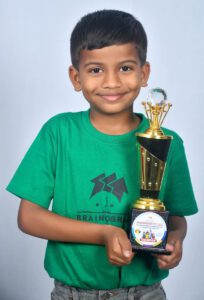
Anvith S. of Madikeri has won the Champion Trophy in the junior category at the 15th International Brainobrain Abacus Competition held at Dubai.
8 year old Anvith S. is being trained by Mapangada Kavitha Karumbaiah at the Brainobrain Madikeri Centre. Anvith was one of the 6 contestants from Karnataka State.
The Abacus competition was held at Sheikh Rashid Hall, Dubai. Over 1,800 children, from 16 countries participated, and it was a very proud moment for Kodagu, when 8 year old Anvith S. representing India won the Champion Trophy.
Anvith S. is the son of Srinivas V., who is a Lecturer in Made Maheshwara P.U. College and Pavithra M.N., who is working in National Highway Department. Anvith S. is studying in 3rd std in BGS. Public School, Made.
Anvith received the Champion Trophy from from Mr. Arul Subramanian, Director Technical of Brainobrain and Mr. Anand Subramanian, MD Brainobrain.
Faculty Kavitha Karumbaiah attributed the entire credit to Anvith S. for his determination to participate and to his parents and family, for their unwavering support, that made this huge accomplishment possible.
Anvith has won the Gold Topper Medal in the State Level Competition and also the Champion Trophy, in the National Level Competition in Chennai.
source: http://www.clnews.in / CoffeeLand News / Home> General / by CLN Newsdesk / December 13th, 2025
Get the inside story as MacBeans Aberdeen launches its Indian coffee trilogy.
All Indian coffee from MacBeans is farmed organically.
MacBeans in Aberdeen explores the world of Indian coffee, offering fresh blends, single origins and new flavour experiences.
MacBeans Coffee Roasters in the corner of Little Belmont Street in Aberdeen has been open for 37 years. It’s now one of the oldest surviving High Street coffee roasters in Scotland. And unlike most other retailers, it roasts its coffee right on its premises.
For the past several weeks, MacBeans has been roasting coffee freshly delivered from India, which the proprietor, Brian Milne visited early this year.
About 20% of the coffee sold at MacBeans is sourced from India. The shop carries single origin coffees from the South Asian country. But it also uses Indian coffee in many of its own MacBeans blends.
As a former oilfield chemist with a passion for coffee, Brian Milne does not source his coffee blindly. With direct connections to producers all around the world, Brian is able to work closely with them to deliver the highest quality beans to use in every customer’s cup of coffee.
A Passage to India
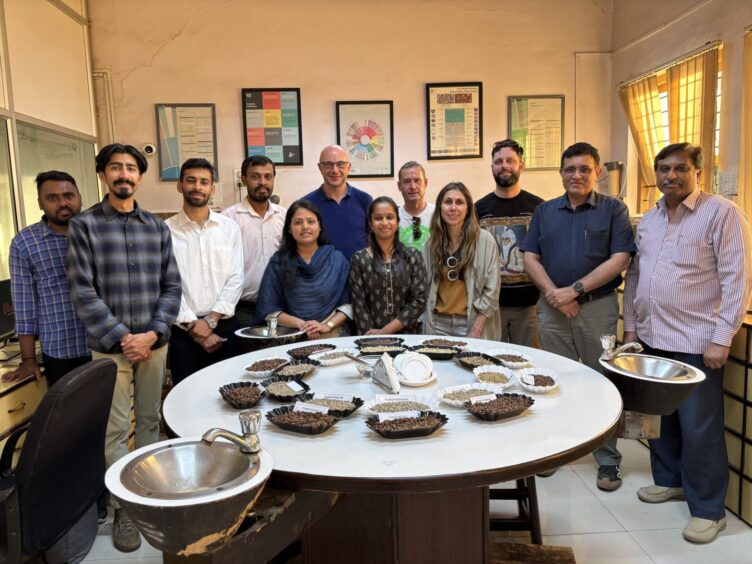
MacBeans’ proprietor, Brian Milne (center) meets with coffee producers in India
Last January, Brian went on a ten-day trip to South India, facilitated by MacBeans’ coffee importer, to visit different coffee plantations and meet with local producers.
Brian says: “A big part of my drive with our coffee is to make sure I understand where the coffee comes from. Going on these trips is a good opportunity to learn more about what’s happening in each country and finding things that we can support.”
In Bangalore, he met with agricultural communities and local cooperatives, even India’s coffee minister.
Brian shares: “We got to tour The Coffee Board of India’s facility and that really appealed to my background in analytical chemistry. I got very excited over some of the lab equipment because they were doing a lot of work to develop and standardise the quality of the coffee that comes out of India.
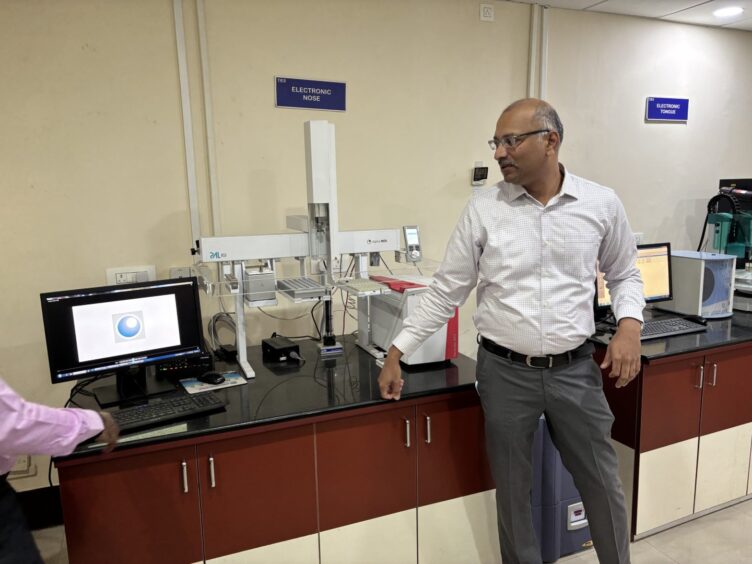
“They had an artificial nose and an artificial tongue – analytical instruments designed to analyse the coffee for the compounds that contribute to its aromas and its flavour profile.
An electronic nose analyses coffee for compounds that contribute to its aroma.
“They are building a library of their coffees to keep track of the quality, which was very interesting.
“They also do a lot of agricultural training. A lot of the agronomists who support the farmers have all been trained by or worked with the Coffee Board of India. So there’s a lot of governmental support at that level to help the local coffee producers.”
Caring for the environment
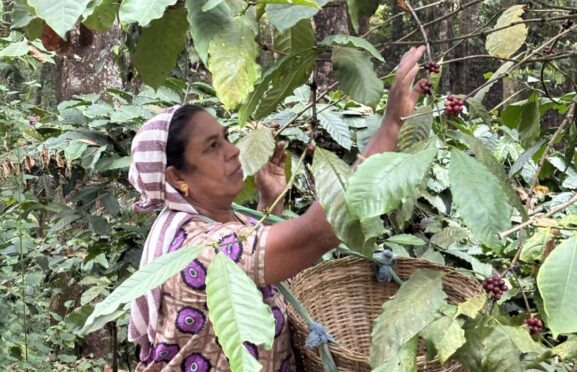
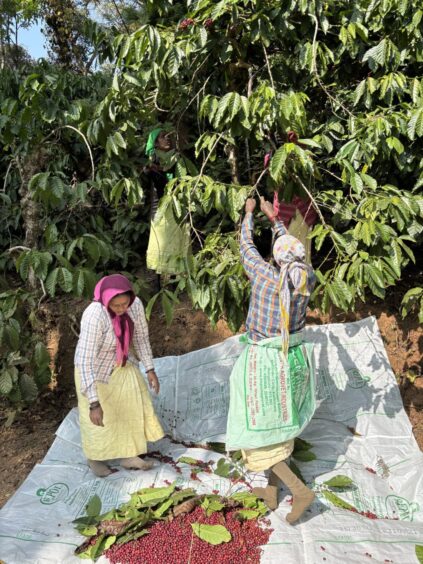
Coffee beans are handpicked by workers in India.
Brian observed that Indian producers followed strict environmental practices. This aligns with the principles of MacBeans, where all the coffee is free of pesticides and farmed organically.
Brian notes: “They reuse a lot of the biomaterials like leaves that have dropped. When they pulp the coffee cherries, all the fruit flesh is composted. That’s what they put back onto the land to help fertilise the crop.
“Because water can be scarce, the processors also collect and recycle the water used from washing the coffee. That’s purified through reed bed processes and reused. So they’re very considerate of the environment.”
People at the heart of the business
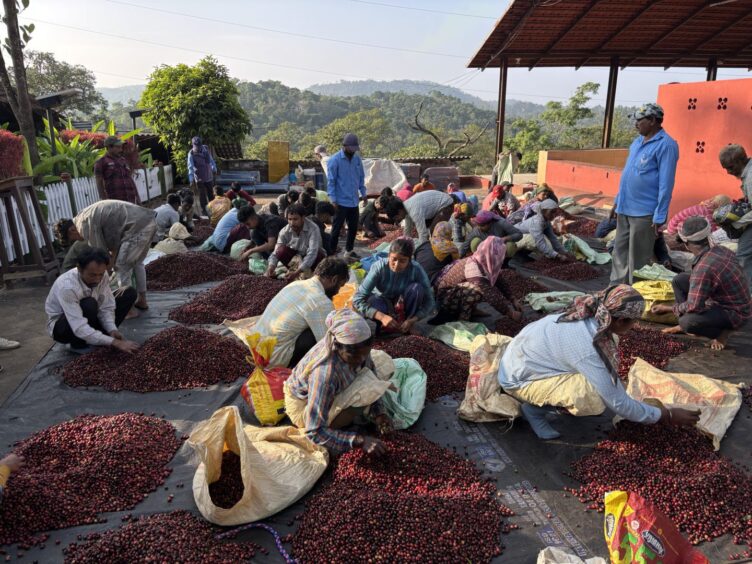
Hundreds of people are employed in Indian estates to produce coffee.
Before his visit, Brian knew that India was among the top 10 coffee producers in the world. But he didn’t understand the scale of the production until he saw it for himself.
“During harvest time, the estates we visited would employ about 1,000 people – pickers, processors. But even outside the harvest, there would be 600 or 700 people employed to tend to the land and maintain the plants.
“People are at the heart of the whole process. There are estates owned by families or cooperatives working with small landowners. They all work together to produce their coffee to manage it and support it. It’s a people business.”
The story behind the Monsoon Malabar
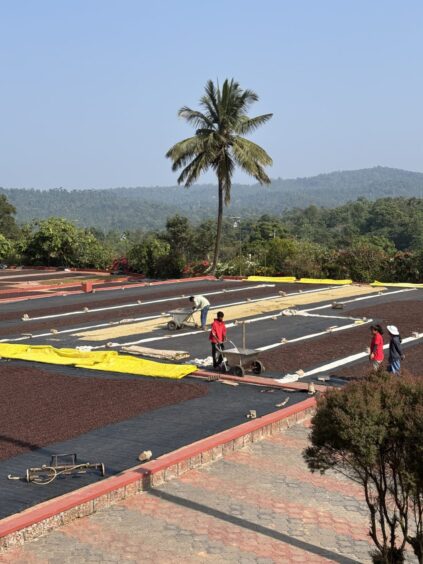
Indian workers dry coffee beans in the sun.
On his trip, Brian discovered more about one of MacBeans’ more popular coffees – the Monsoon Malabar.
“What I knew about it was that it was just an aged coffee. Apparently, that came about a hundred years ago when they were shipping coffee from India on long journeys on sailing ships.
“Researchers found that when the coffee got to Europe, it tasted a lot more mellow than it did when it was at origin. They worked out that it was attributed to the damp environment in ships and the extended time the coffee spent in that environment.
“Today, coffee makers in India are replicating that aging process now called monsooning. They harvest the coffee then wash and dry it as normal. But afterwards, it is aged in the monsoon rains then dried in warehouses on the Malabar coast, resulting in a very smooth and mellow coffee.”
This ageing method as well as the production zones are strictly defined by regulations to protect the production and authenticity of the Monsoon Malabar. It’s a system that’s similar to the DOC system for Italian wines.
Busting the Robusta myth
Brian also travelled to Chikmagalur, the heartland of coffee production in South India, right at the tail end of the Robusta crop harvest and the beginning of the Arabica harvest.
MacBeans does not sell Robusta as a single origin coffee. It’s so intensely flavoured that it can be bitter and even unpalatable.
“In India, producers are investing a lot of time and effort into how they treat Robusta coffee when it’s harvested to improve its flavour and develop it into a specialty coffee.
“There’s a method sometimes called the honey process where you pulp the cherries. But you don’t wash off the little bits that stick. So then you still get all kind of fruitiness to the coffee, but it’s a much milder effect.
“They’re also co-fermenting coffees with other fruits in barrels from a few days to a few weeks. The amount of time makes a huge difference to the flavour.
“The trip was an eye-opener for me. I always thought of Robusta as a low-grade coffee that we added to some of our blends to make them stronger in caffeine and in flavour. But we had to be careful about how much we put in because it can affect the taste detrimentally.
“Now I have a much bigger appreciation for the quality of Indian Robusta and its potential to broaden people’s profiles and expectations of coffee. So I’ve committed to use only Indian Robusta. The coffee that I saw being harvested is now in the shop, ready to sell.”
A reminder, though, to those who favour the milder Arabica coffee but would like to explore speciality Robusta. Brian says: “It’s like tasting wine and comparing it to beer; they’re very different – different in the mouth, different flavour profiles.”
The taste of coffee depends on the beans and roasting methods used.
Try MacBeans’ new India coffee trilogy
Of course, Brian was also able to sample Arabica coffee produced at many of the estates.
“There was a huge variety in the flavours that we tried. Some were very fruity, sharp, distinctive flavours that would be great to try.
“We’ve now got Indian Mysore, an Arabica coffee that forms part of our blends. We also roast it as a single origin Indian coffee. The coffee we have now is from the harvest period that started from the end of 2025 and finished up in February this year.”
The Mysore will be combined with Monsoon Malabar and India Tiger Stripes to form MacBeans’ newest coffee trilogy. Inspired by Brian’s recent trip to India, each bag is bursting with flavours just waiting to be explored by eager coffee aficionados.
Plantation stays in Coorg offer immersive escapes set within working coffee estates. Blending heritage bungalows, villas and homely retreats, they invite travellers to slow down and experience life shaped by nature, mist, and coffee culture.
Shutterstock : Book a stay in the coffee and pepper plantations of Coorg
Coorg’s plantation stays sit within working coffee and spice estates, offering quiet retreats shaped by the landscape. From heritage bungalows to hillside cottages, each stay reflects a slower rhythm of life rooted in nature, local culture, and the everyday workings of the plantation.
Old Kent Estates & Spa, Madikeri
Old Kent Estates & Spa was established in 1864. Photo: oldkentestates/Instagram
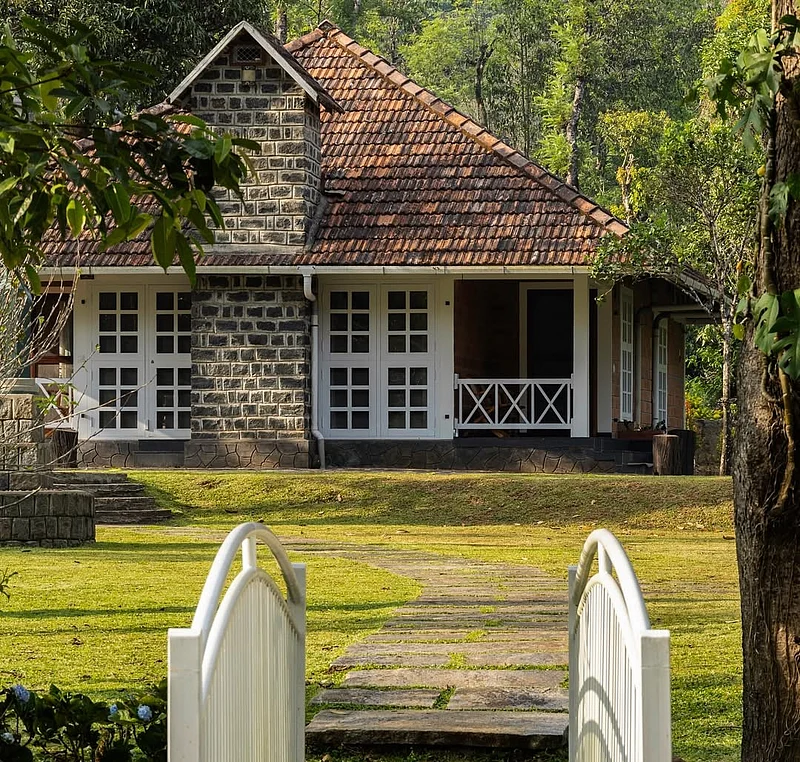
Set within a 200-acre coffee and spice estate in Suntikoppa, Old Kent Estates & Spa offers a refined plantation retreat shaped by Coorg’s colonial past. Established in 1864 by British Lieutenant Colonel WR Wright, the property preserves the character of a historic planter’s residence while introducing contemporary comforts. Surrounded by coffee bushes, cardamom groves and towering teak trees, the estate remains deeply connected to the landscape that defines Kodagu.
Design & Spaces
The estate blends British colonial architecture with Tudor Revival influences, featuring deep verandahs, period detailing and heritage-inspired interiors.
The restored nineteenth-century bungalow, known as The Lodge, houses a library, games room, home theatre, and a formal dining space.
Walking trails designed by Italian mountaineer Lorenzo Gariano wind through coffee, cardamom and pepper plantations shaded by teak, rosewood, and mahogany trees.
Accommodation includes a mix of heritage lodge rooms and expansive English-style cottages set across the plantation. The cottages feature private gardens, spacious living areas, and large bathrooms equipped with jacuzzis, rain showers, and traditional bucket baths.
Amenities
Guests can explore guided plantation trails, birdwatching routes and nature walks across the estate’s 200 acres.
The property also offers a spa, movie room, library, outdoor games and telescope-assisted stargazing experiences.
Dining at The Perch and Gordon’s Saloon focuses on multi-cuisine fare alongside freshly ground estate coffee and locally sourced ingredients.
The Information
Address: Thaikappa Estate, Horoor Post, Old Kent Estate Rd, Suntikoppa, Kodagu, Karnataka 571237
Room Rates: Approximately INR 7,000–12,000 per night, depending on season, taxes and inclusions
Website: www.oldkentresorts.com
Evolve Back Coorg
Evolve Back Coorg offers a deeply immersive plantation stay – Photo: evolvebackcoorg/Instagram
Set within a 300-acre working coffee and spice estate near Virajpet, Evolve Back Coorg offers a deeply immersive plantation stay shaped by the landscape of Kodagu. Formerly known as Orange County, the resort combines eco-conscious luxury with traditional Kodava design design and a strong connection to plantation life. Surrounded by dense greenery, the property focuses on quiet, nature-led experiences rather than overt indulgence.
Design & Spaces
The resort draws inspiration from traditional Kodava architecture, with tiled roofs, carved wooden doors, rustic interiors and earthy textures that blend seamlessly into the surrounding plantations.
Accommodation includes Lily Pool Villas and Heritage Pool Villas, featuring private pools, spacious living areas, four-poster beds, red oxide flooring and plantation-facing sit-outs designed for privacy and quiet.
Guided plantation walks, coffeeology sessions and birdwatching trails allow guests to engage closely with the estate’s coffee and spice-growing landscape.
Amenities
Dining options include The Granary for multi-cuisine fare and Peppercorn, a speciality grill restaurant overlooking the plantation lake.
The property also features the Ayura Ayurvedic centre, infinity and family pools, a reading lounge and a Coffee and Culture Museum dedicated to Coorg’s plantation heritage.
The Information
Address: Chikkana Halli Estate, Karadigodu Post, Siddapur, Virajpet, Kodagu, Karnataka 571253 Room Rates: Rates generally start from approximately INR 29,750–35,000 per night per couple, including accommodation, breakfast, dinner and taxes. Seasonal offers for longer stays may include resort credits and discounted pricing. Website: www.evolveback.com/coorg/
The Tamara Coorg
The resort combines eco-conscious luxury with a strong sense of place / Photo: thetamaracoorg/Instagram
Perched more than 3,500 feet above sea level in the Western Ghats, The Tamara Coorgoffers an immersive plantation retreat within a 180-acre coffee, cardamom and pepper estate. The resort combines eco-conscious luxury with a strong sense of place, allowing guests to experience the rhythms of estate life while surrounded by dense forest and rolling hills. With sustainability at its core, the property focuses on quiet, nature-led hospitality shaped by the landscape of Coorg.
Design & Spaces
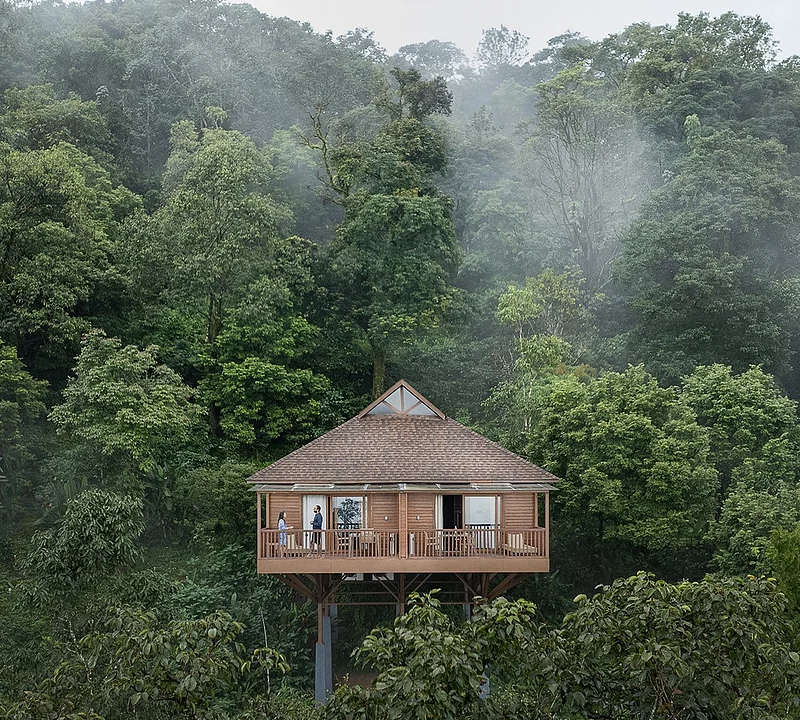
The resort features 56 cottages built on timber stilts to preserve the natural terrain, with architecture inspired by traditional Kerala design and crafted largely from Canadian spruce wood.
Accommodation ranges from Luxury Cottages to spacious suites with private Jacuzzis, all featuring large sundecks overlooking forest canopies, hillsides and seasonal waterfalls.
Plantation walks, coffee-tasting sessions and the signature Blossom to Brew experience introduce guests to the estate’s coffee-growing heritage, while The Verandah — a restored nineteenth-century workers’ residence — now serves as a library and tasting space.
Amenities
Guided treks, birdwatching trails, forest therapy walks and seasonal waterfall explorations form a key part of the experience at the resort.
Dining focuses on fresh, estate-grown ingredients and regional Kodava cuisine, alongside a range of Indian and international dishes.
Sustainability initiatives include organic farming, waste management systems and a no-plastic philosophy integrated across the property.
The Information
Address: The Tamara Coorg, Kabbinakad Estate, Yevakapadi, Napoklu, Madikeri, Karnataka 571212 Room Rates: Rates generally start from approximately INR 25,245 per night for two adults, with pricing varying by cottage category and season. Website: www.thetamara.com/coorg-resort/
Amni Estate
Amni Estates offers a deeply secluded stay centred on simplicity, nature and slow living / Photo: amni.coorg/Instagram
Hidden within a coffee plantation in the hills of Coorg, Amni Estate offers a deeply secluded stay centred on simplicity, nature and slow living. Family-run and entirely off-grid, the property trades conventional luxury for silence, rugged beauty and an intimate connection with the surrounding landscape. With its antique-filled interiors and misty plantation setting, the estate feels closer to a private countryside retreat than a typical homestay.
Design & Spaces
The property features stone cottages built across grassy slopes in the Balyaatra range, designed to blend naturally into the plantation landscape.
Interiors are layered with antiques collected over decades, including Victorian lamp posts, cast iron fountains and reclaimed railway sleepers that give the estate its old-world character.
Accommodation is centred around a two-bedroom cottage suited to small groups, with quiet corners, hammocks and open spaces that encourage guests to slow down and settle into estate life.
Amenities
Guided walks through the coffee and spice plantations offer a closer look at the estate’s flora, seasonal produce and surrounding forests.
Guests can spend their time fishing in the pond, gathering around bonfires or simply exploring the grounds alongside Zeiss, the estate’s well-known resident dog.
Meals are home-cooked and rooted in traditional Kodava cuisine, with family recipes and locally sourced ingredients forming the heart of the dining experience.
The Information
Address: Guyya (near Galibeedu), Madikeri, Kodagu, Karnataka Room Rates: Rates are generally around INR 12,000+ per night for two, inclusive of meals and curated activities, depending on season and group size. Website / Instagram: @amni.coorg
Silver Brook Estate
Silver Brook Estate is a quiet homestay shaped by forested greens, silver oaks and a stream / Photo: silverbrook.homestay/Instagram
Tucked into a 6-acre coffee plantation in Kadagadal, near Madikeri, Silver Brook Estate is a quiet homestay shaped by forested greens, silver oaks and a stream that runs through the property. The setting feels intimate and unhurried, with bird calls, plantation paths and open sit-outs defining the rhythm of the stay. It is designed for travellers looking for a simple, nature-led break close to town.
Design & Spaces
The estate is spread across coffee plantations shaded by silver oak, pepper vines and fruit trees, with a natural brook running through the grounds.
Accommodation is set within a main bungalow and select rooms, designed for small groups, couples and families seeking a homely plantation setting.
Common areas include a library, hammocks and open garden spaces that encourage slow, outdoor living within the estate.
Amenities
Home-style Kodava meals are a highlight, with traditional dishes such as pandi curry and pepper chicken served by the hosts.
The property supports relaxed activities like estate walks, birdwatching and bonfire evenings in the open courtyard.
Its location makes it convenient for day trips to nearby attractions such as Abbey Falls, Dubare Elephant Camp and Nagarhole National Park.
The Information
Address: Kadagadal, near Madikeri, Kodagu, Karnataka
Room Rates: Typically range between INR 5,800–7,400 per night for double occupancy, often including breakfast (season and room type dependent).
Website: www.silverbrookestate.in/home
FAQs
What is a plantation stay in Coorg? A stay set within working coffee or spice estates, offering quiet surroundings, nature views and a slower pace compared to typical resorts.
Best time to visit? October to March is ideal for pleasant weather. Monsoon (June to September) is lush but rain-heavy.
How do you reach these stays? Most require private taxis or self-drive vehicles, as they are located outside town areas and deep within estates.
What activities are offered? Plantation walks, birdwatching, coffee tours, spa treatments, and nature experiences are most common.
Do I need to book in advance? Yes, especially during peak season and weekends due to limited rooms.
What should I pack? Comfortable walking shoes, light layers, insect repellent, and rain protection during monsoon.
source: http://www.outlooktraveller.com / Outlook Traveller / Home> Story / by OT Staff / curated by Anuradha Sengupta / May 18th, 2026
Rida Tharana makes Coorg proud, picks Nikhil Gajare gown spotlighting Indian craftsmanship for her Cannes red carpet debut. See all the photos.
Coorg-born fashion and lifestyle content creator Rida Tharana officially made her red carpet debut at the 79th Cannes Film Festival on May 13. A day later, Rida took to Instagram to unveil a series of photos that showcase her look that seamlessly bridges the gap between avant-garde global fashion and the meticulous handiwork of Indian artisans.
Rida’s sculptural ivory gown at Cannes 2026
For her walk across the iconic Cannes Film Fetival red carpet, Rida Tharana chose a custom creation by Indian designer Nikhil Gajare. The gown is a striking example of contemporary couture, featuring a structured, strapless corset bodice and intricate curved paneling that flows across the torso, creating a 3D effect that mimics the organic lines of a seashell.
The rigid structure of the bodice gives way to a voluminous, multi-layered chiffon skirt, allowing for a dramatic twirl that captured attention. A unique, copper-toned pleated sash wraps around the hips, providing a metallic pop against the pristine ivory fabric and highlighting the fusion of different textile techniques. To complete the regal ensemble, Rida wore diamond jewellery by Sennes, with her hair styled in a high, textured, voluminous updo.
Rida’s candid post
Beyond the glamour of the red carpet, Rida shared a deeply personal message regarding her journey to Cannes. In her Instagram post, she admitted that her initial reaction to the invitation was to decline. “When I first found out I had the opportunity to walk the Cannes red carpet, I said no. I didn’t think I deserved it. I questioned myself every second,” she revealed
She credited her management team for pushing her beyond her self-doubt. Rida’s post touched on the rollercoaster of emotions — from the fear of public criticism to the eventual realisation that this was her moment to own. She also revealed that the choice of designer was deliberate. Having worked with Nikhil previously, Rida noted that the piece ‘felt like her’. She likened the experience to a childhood dream, stating that while she never had Barbie dolls growing up, the gown made her feel like a princess.
The debut marks a significant milestone for the creator, and by choosing to wear an emerging Indian couturier on one of the world’s most scrutinised stages, Rida reinforced her reputation as a cultural curator, proving that the journey from Coorg to Cannes is paved with hard work, authenticity, and a bit of self-belief.
“When I say this year is mine, I mean it. This year, and everything that comes after, is mine,” she concluded.
source: http://www.hindustantimes.com / HindustanTimes / Home / by Sanya Panwar / May 14th, 2026
Set amid coffee and spice farms in South India’s Coorg Region, the new resort will be part of The Leela Palaces, Hotels and Resorts’ portfolio.
The Leela Coorg Forest Sanctuary. / Credit: The Leela Palaces, Hotels and Resorts
Key Points:
The Leela Coorg Forest Sanctuary will feature 71 private villas surrounded by lush greenery and coffee estates near Madikeri, in Karnataka’s Coorg region.
Guests will enjoy wellness experiences such as yoga, Ayurvedic therapies, and a Turkish hammam at a 27,000-square-foot spa, along with access to a lake and family-friendly amenities.
The resort reflects the brand’s shift toward nature-focused retreats, offering privacy and restoration in a serene setting.
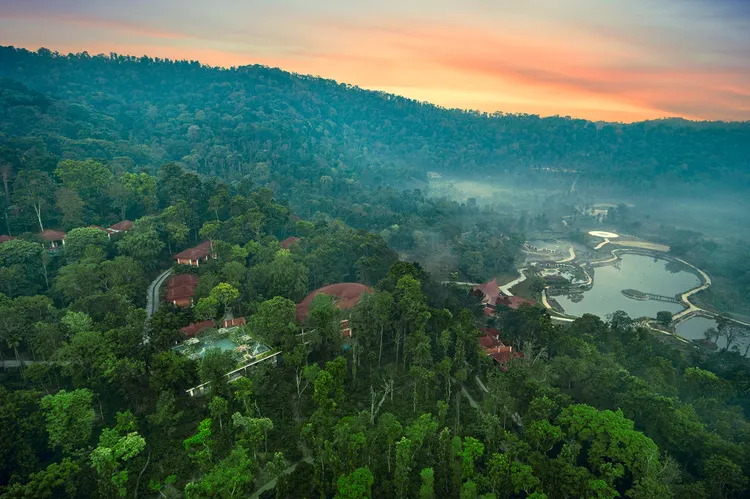
A new luxury retreat is coming to one of South India’s atmospheric hill regions. Later this year, The Leela Palaces, Hotels and Resorts, a 2025 Global Vision Awards winner , will launch The Leela Coorg Forest Sanctuary, a 76-acre, all-villa hideaway set amid coffee estates and misty, forested hills near Madikeri, in Karnataka’s Coorg region.
“The Leela Coorg Forest Sanctuary offers a rare synthesis of wilderness, wellness, and warmth of true Indian luxury for travelers who seek space, stillness, and a genuine connection to nature,” Anuraag Bhatnagar, the brand’s chief executive officer, shares in a statement shared with Travel + Leisure.
Exterior view of a villa with a private plunge pool. / Credit: Sounak Ghosh / The Leela Palaces, Hotels and Resorts
The resort’s accommodations will include split-level family villas and intimate retreats for couples, all tucked into the surrounding greenery. At the top end, a four-bedroom presidential villa will come with a private pool and wellness facilities.
The setting is a big part of the draw. Coorg, in the Western Ghats, is known for its cooler climate, waterfalls, and rolling spice farms. It’s also one of India’s most important coffee-growing districts. That heritage will show up in the resort’s bean-to-cup coffee programming, including a plantation walk and tasting at Modur, one of Coorg’s oldest coffee estates.
Exterior of the restaurant. / Credit : The Leela Palaces, Hotels and Resorts
On the dining front, the resort is planned with four venues spanning regional and global cooking, including a striking bee-shaped all-day dining restaurant, an overwater dining space, and a lounge.
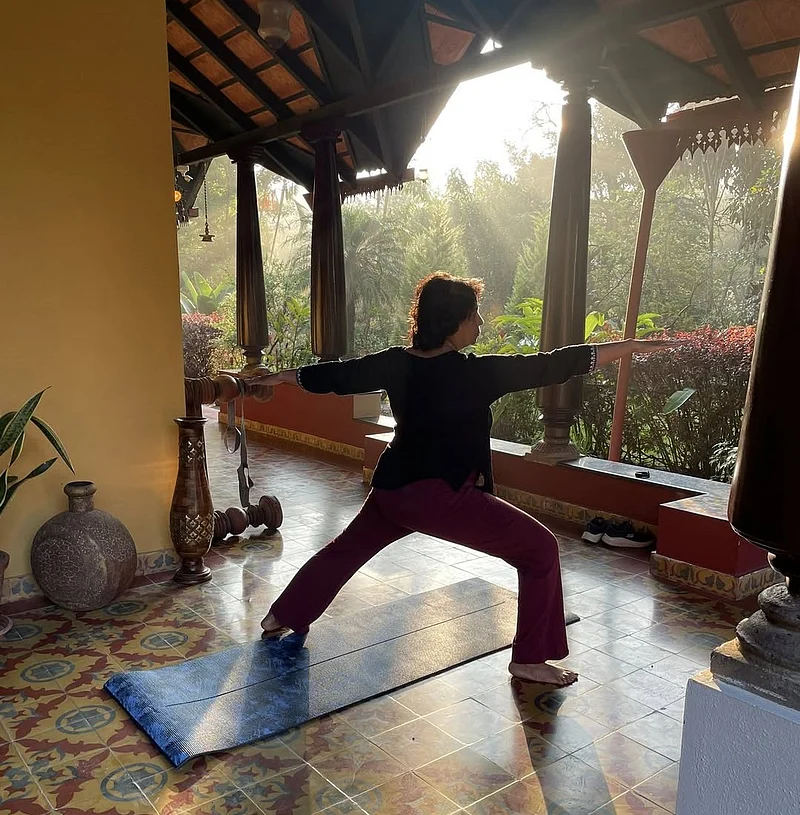
Wellness will be just as central to the experience, too. Aujasya by The Leela Spa, the resort’s 27,000-square-foot sanctuary drawing inspiration from the brand’s signature wellness program, will offer yoga by the lake, pranayama breath control, Ayurvedic and global therapies, Swedish and Balinese massage, aromatherapy, a Turkish hammam, panoramic sauna, steam, Jacuzzi, and relaxation areas.
The Leela Coorg Forest Sanctuary. / Credit: Sounak Ghosh/The Leela Palaces, Hotels and Resorts
The seven-acre lake will allow rowing, fishing, and kayaking. Other planned activities include guided nature walks, birding, cycling, stargazing, and forest trails leading to two natural waterfalls. There will also be a family-friendly outdoor play area.
The project marks a new direction for The Leela. Best known for grand city hotels and palace-style stays, the Indian luxury brand is using the Coorg property to introduce its first Sanctuary, a concept focused on nature, privacy, and restoration rather than polished city glamour. The move comes as the company marks its 40th anniversary and expands further into destination-driven leisure travel.
source: http://www.travelandleisure.com / Travel + Leisure / Home / by Regan Stephen / May 14th, 2026
To represent India in the Asian Junior Championships
Mysuru:
Diya Bheemaiah, a native of Kodagu and India’s top-seed junior player, secured the Girls’ Doubles title at the Yonex-Sunrise All India Junior (U-19) Ranking Badminton Tournament 2026 held at the Karnataka Badminton Academy in Vasanthnagar, Bengaluru recently.
Partnering with Baruni Paruswal of Haryana, Diya clinched the title by defeating the Tamil Nadu duo of A.S. Anushka Jennifer and Deeshitha Singha Gopinath Singh in straight-sets 21-10, 22-20.
This victory also earned Diya a direct spot to represent the Indian Junior Team at the upcoming Badminton Asian Junior Championships – 2026 to be held in Yatsushiro, Japan, from June 26 to July 5.
Furthermore, her performance has secured her a place in the selection process to represent the Indian Junior squad in the Mixed Doubles category as well. Diya is the daughter of Boppanda B. Bheemaiah, a badminton coach and K.K. Kusuma, a fitness coach, residing in Mysuru.
source: http://www.starofmysore.com / Star of Mysore / Home> Sports /May 13th, 2026
WELCOME. If you like what you see "SUBSCRIBE via EMAIL" to receive FREE regular UPDATES.
Read More »