Primm lecture to feature coffee historian Steven Topik

“Why Americans drink coffee: the story of an unlikely romance” is the title of this year’s James Neal Primm Lecture in History, set for 7 p.m. Sept. 14 at the Missouri History Museum. (Coffee image from the Missouri History Museum. Design by Wendy Allison.)

Like many people, Steven Topik’s coffee habit was formed in college. But it’s become a lot more than a caffeine fix to the historian in the years since.

“I experienced coffee as a site of sociability, a drug, an academic subject and a commodity,” says Topik, a professor of history at the University of California, Irvine, who is writing a world history of the popular beverage.
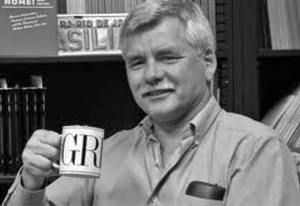
Steven Topik, a professor of history at the University of California, Irvine, is currently working on a world history of coffee.

He will discuss it in St. Louis Sept. 14 as a guest of the University of Missouri–St. Louis. Titled “Why Americans drink coffee: the story of an unlikely romance,” his address is this year’s James Neal Primm Lecture in History. Free and open to the public, the event begins at 7 p.m. at the Missouri History Museum (5700 Lindell Blvd).

Leading up to his visit, which is sponsored by UMSL’s Department of History and the Missouri History Museum, UMSL Daily caught up with Topik on all things coffee, history and St. Louis.

Your interest in coffee is obvious given the topic of your upcoming lecture, and the picture of you on the event flier suggests you enjoy drinking coffee as well as writing about it. Is that the case? And if so, how many cups a day do you drink on average?

I drink about two cups of coffee a day. Sometimes a little more.

How did you arrive at this intellectual exploration of coffee and its history?

My interaction with coffee started at home since my father, from Germany, and my mother, from Austria, drank coffee. Then when I was 12 years old my younger brother and I went with my mother to visit her mother in Vienna and lived for six months in her coffeehouse, so I experienced coffee as a site of sociability. But I only started drinking coffee in college when the stuff coming out of our percolator was more a drug to help us study than a tasty beverage.

In graduate school I decided to study the history of Brazil to understand its development. Since my area was political economy and Brazil has been the world’s leading exporter of coffee for over 150 years, it was a natural subject to study.

I also experienced coffee in its three most historically important geographic areas: the United States, Europe and Brazil. Since I became interested in issues of economic development and underdevelopment which led me to world history, coffee emerged as a wonderful vehicle to examine issues of exchange, development, colonialism, imperialism, the Cold War, national identity, public spaces, ecological issues and many more.

Without giving away too much of what you’ll discuss Monday evening, why is it that the story of America’s enthusiasm for coffee is “an unlikely romance” in your view?

I called it an “unlikely romance” because many coffee aficionados discuss coffee’s “romance” and tell stories of dancing goats, spies and military heroes to explain coffee’s global spread. Coffee’s global reach is often treated as something obvious that needs no explanation: people on every continent drink coffee because it tastes good. In fact, there were many barriers to coffee’s diffusion.

In the U.S. we have various stories about coffee’s ties to our national identity linking it to John Smith, colonial coffee houses, the Boston Tea Party, the westward movement and values like liberty, sovereignty, industriousness, battlefields and innovation. Some of that is historically true. Much of it, however, is more sales pitch than historically accurate portrayals.

The “romance” is unlikely also because coffee was not native to the U.S., it does not grow in the U.S., we had no important coffee colonies and most ex-British colonies favor tea over coffee. But I will explain that the U.S. becoming the world’s leading coffee importer does make sense in light of many other historical currents like trade in the Atlantic, immigration from Europe, anti-tax sentiment and coffee’s pharmacological effects.

What role has St. Louis played in the history of coffee?

While St. Louis is not as closely linked to the history of coffee in the U.S. as it is to the history of beer, or tea (British tea publicists claimed the first time iced tea was introduced was at the 1904 World’s Fair [though this is dubious]), it does have a significant role. Missouri was important in disseminating coffee in the U.S. because Independence, Mo., was the starting point of the Santa Fe Trail, and coffee for the Oregon Trail or the wagon trains to California set out from Missouri.

The coffee was imported from South America in New Orleans and then brought up the Mississippi River. By the 1860s-70s, St. Louis had seven coffee roasting companies, which made it a center of coffee roasting in the Midwest. The first commercial coffee roasting machine in the Midwest was worked by James H. Forbes in 1854. In 1911 the National Coffee Roasters’ Traffic and Pure Food Association was founded in St. Louis – a forerunner of first the National Coffee Roasters Association and then the Associated Coffee Industries of America. Coffee traders from St. Louis played significant roles in it. I’m afraid that’s as much as I know about the role of St. Louis in the coffee trade, though I’m hoping to learn more on my visit.

Looking at the history of commodities and the world economy, what lessons do you find for today?

The study of commodities and commodity chains are excellent means of understanding the Janus-headed relationship of coffee growing areas (and other agricultural ones) and coffee importing areas. It allows one to examine not just the economic dimensions of the spread of a global commodity and the international linkages it creates, but also the evolving and sometimes contradictory importance of natural endowment, religion, culture, technology, gender and racial relations to shaping history. It is a means of understanding why the export of commodities has historically created both development in importing countries and sometimes underdevelopment in exporting countries.

Short URL: http://blogs.umsl.edu/news/?p=58726

source: http://www.blogs.umsl.edu / UMSL Daily / by Evie Hemphill / September 09th, 2015
Newly elected corporators learn lessons in Madikeri

The corporators-elect of Congress,who are camping at two resorts in Madikeri, were on Wednesday given a special lecture on the rights and responsibilities of the corporators.

Yeshwantpur legislator S T Somashekhar, Tarikere MLA Srinivas and senior corporator Gunashekhar delivered lectures for two hours at Vivanta By Taj hotel.

Senior corporator Padmavathi said that the elected members should understand the stand of their party on a particular issue. She said that they should support their party colleagues in meetings and should launch an attack to counter the Opposition parties. She said that the mayor should allot the funds available at his/her disposal equitably. The members elected for the first time heard the lectures attentively.

Some members expressed the opinion that the poor and the downtrodden had overwhelmingly voted for them. Hence, special programmes should be launched for their welfare. The corporators-elect cancelled their plan to visit the Dubare elephant camp in order. According to sources, the plan was dropped as otherwise it would convey a wrong message to people.

source: http://www.deccanherald.com / Deccan Herald / Home> City / Madikeri (Kodagu Dist) / DHNS – September 10th, 2015

Tracking those cup o’ Joes

We Indians love our coffee, but do we really care where it is coming from? Is it organic, does it harm the biodiversity or conserve it? What kinds of practices are adopted? Come to think of it, considering the amount of coffee we consume, there could not be a better time than now, to start dwelling on these questions.

A coffee addict and a conservationist, Arshiya Bose, aware of the ecological footprint of each cup of coffee she consumes, started by not only being a conscious consumer but also initiated a similar change among others through her establishment, Black Baza Coffee — where wildlife conservation and incentivised shade-grown coffee production go hand in hand.

Having completed a PhD in Sustainable coffee certifications and Biodiversity conservation from the University of Cambridge, in the year 2014, Arshiya has come a long way in applying theories on ground.

“India is one of the few countries in the world where shade-grown coffee has been the norm for over 180 years. It’s now, in the recent past, that these practices have been compromised for quicker yields and better profits,” says Arshiya, who spent several years investigating the practices and challenges of coffee growers in Coorg. The coffee estates in the Western Ghats host several wildlife species — right from myriad species of migratory birds to small mammals.

While she understands the need to protect these species, Arshiya believes it can be best achieved by positively engaging coffee growers by incentivising best practices. She started her project with a few coffee growers in Kodagu, on three estates. “The process of engaging has been slow and yet fruitful. I approached farmers and explained the sustainable and long-term benefits of shade-grown coffee. The farmers agree to adopt certain practices and we buy their coffee in return and ensure improved economic returns. The practices don’t just help sustain wildlife, but improves the water and air quality, besides the health of the soil.”

Real picture
The farmers grow coffee under the shade of forest trees, keeping at least 60 per cent tree canopy cover — a minimum of 100 trees and 20 species of indigenous trees per acre. “We reforest farms by planting rare and endemic forest trees that provide critical habitat for a wide variety of wildlife. Streams, rivulets and ponds on farms and surrounds are protected from harmful effluents and of course, no chemical pesticides are used,” explains Arshiya.

Though a majority of coffee growers still ensure their estates harbour several species of native trees — the demand for quicker yields is pushing more farmers to plant exotic species like the silver oak (Grevillea robusta) that affect the condition of the land. Explains Arshiya, “The big exotic tree is silver oak, increasingly the most common shade tree especially for new conversions to coffee. An average plantation usually has 20-30 per cent shade cover, 60-80 trees per acre, where over 20 per cent of all trees are silver oak with less than 10 species of trees per acre. In our plantations, we have over 60 per cent shade cover, 100 trees per acre, and less than 20 per cent of all trees are silver oak. We plant over 22 species of different native trees per acre.”

Know your source
Talking about fair-trade market practices, Arshiya says, “Just certifying healthy practices won’t benefit farmers. The kind of market they are exposed to matters most. We want people to be more conscious of the kind of coffee they drink everyday and know more about the farmer who grows it for them,” she asserts.

Arshiya, through her enterprise, ensures that farmers are economically benefited for their practices and a coffee drinker feels proud to be involved in conservation by making right choices.

Arshiya has been monitoring the impact for the last few years, including camera trapping to document wildlife in the estates. “We measure the impact of our changed farming practices through monitoring the diversity of trees, birds, insects, mammals and all sorts of biodiversity. Our estates support a range of wildlife species.”

Many of these species may frequent several neighbouring coffee farms too, but Arshiya believes these protected patches of coffee estates can be potential roosting spots for several birds and a safe habitat for diverse small mammal and macro-life in the future.

source: http://www.deccanherald.com / Deccan Herald / Home> Supplements> Environment / by Gana Kedlaya / DHNS – September 08th, 2015

It flattered to deceive

Cauvery — which is the lifeline of the people in south Karnataka and people living along the downstream in Tamil Nadu — has its origins in Kodagu which is the key catchment area of the river.

Kodagu received 33 per cent excess rains when the monsoon set in during June this year. It recorded a rainfall of 826.2 as against the normal of 622.4 mm. But the monsoon slackened during July and August.

In July, Kodagu received 360.2 mm of rains as against the normal of 904.7 mm, which is 60 per cent below normal whereas in August the district as a whole received only 289.4 mm of rains as against the normal of 597.7 mm which is 48 per cent below normal.

The cumulative rainfall deficiency for the period June 1 to September 6 is minus 31 per cent and against the normal of 2181.2 mm of rains, Kodagu received only 1,504 mm rainfall. The deficient rain was uniform across the district, resulting in depleting inflow into the KRS.

Likewise, the adjoining districts of Mysuru and Mandya through which the Cauvery flows, also received deficient rains during July and August, adding to the reduction in the inflow into the reservoirs.

source: http://www.thehindu.com / The Hindu / Home> National> Karnataka / by R. Krishna Kumar / Mysuru – September 07th, 2015

The car sticker fad to protect Coorg wildlife

Bengaluru :

Two Sundays back, over 100 vehicles were parked in and round the Kodava Samaja club in Vasanthanagar in Bengaluru. There were shiny Sedans and rusty Jeeps, perky hatchbacks and burly SUVs.

For all their differences in name, colour and models, they had one thing in common: The light green triangular shape Coorg Wildlife Society (CWS) stickers plastered on windshields or bumpers.

“For decades, people of Kodagu have used the CWS as a moving identity card. It symbolizes the driver is proud of his place (Coorg) and also it offers a glimpse of their love and fascination with nature, It’s a great way to find common ground to begin a conversation, when Kodavas meet outside Coorg” said Jeeth Devaiah, strength and conditioning coach at Galen Gym, Airport road.

The CWS sticker was the brainchild of Pratap Chittiappa, chairman of Skanda Coffee, one of the founding members of CWS. In 1983, he influenced M/s Hindustan Thompson to design a crest that eventually turned into the bumper sticker in the 1990s. The members of the society began promoting the CWS by sticking it on their windshields and it gradually became a fad.

“Initially the fad was limited to Kodagu alone but now it shifted across the world. I even happened to see such stickers in cars driven by non-Coorgs in San Francisco some time ago,” Ajith Nanjappa, who pursued his MBA degree there recently said.

Sales of CWS stickers have eroded during the past decade. Buoyed by the popularity of CWS stickers, unauthorized vendors started marketing it in their own with giving it various colour combinations. “We sell roughly around 1,000 stickers per month for a prices ranging between Rs 25 and Rs 100. But the fad is dying now compared to what it was a few years ago. Now people have been switching to other stickers like Coorg warrior 1839, Coffeeland, among others,” said Ayub Zameer, a vendor at Madikeri.

“We had got it patented a few years ago to prevent misuse of our logo but it was tough to stop the illegal trade. Now we have decided to lodge a formal complaint to ensure only registeredd CWS stickers are sold,” said colonel CP Muthanna (Retd), president of the CWS, now with a membership of 920,

Tarun Cariappa, secretary of the NGO said the stickers which have registered trademark symbol ® are only the genuine ones. “We sell these stickers to general public for a nominal sum of Rs 30 at our office. The money will be used in promoting conservation activities. “People can buy online through our website at a cost of Rs 75,” he added

CWS activities however are not just limited to business of selling stickers. Formed in 1980, CWS is actively engaged in organizing programmes to increase awareness of nature, wildlife and environment in schools and colleges of Kodagu district. “CWS has a long history of campaigning to ensure that government policies and laws help safeguard Coorg’s wildlife. Our aim is to make Coorg a leader in the field of wildlife protection and restoration, a dream of the late brigadier CM Cariappa who was the moving spirit behind its establishment” said colonel Muthanna.

CWS has been in the forefront of an activism against the decision of the Power Grid Corporation of India Limited (PGCIL) to draw a 400kv power line from Yelawal in Mysore to Kasaragod in Kerala via Kodagu. “The project will see as many as 50,000 trees felled, affecting the ecology and increasing man-animal conflict. We will do everything to protect the nature,” said Cariappa.

source: http://www.timesofindia.indiatimes.com / The Times of India / News Home> City> Bengaluru / by Manu Aiyappa, TNN / September 11th, 2015

Joshna battles past Habiba for title

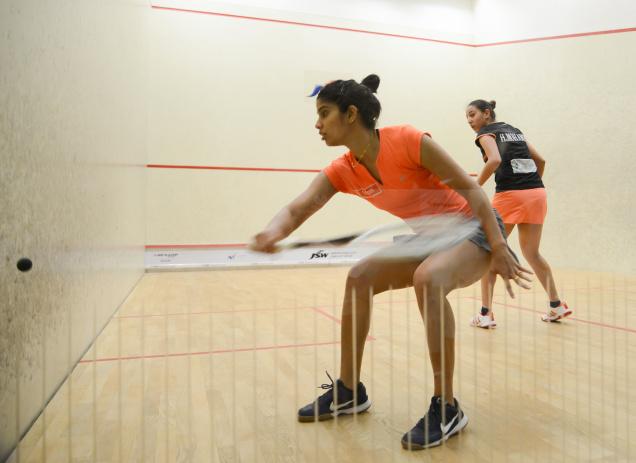
FIGHTING TITLE: Joshna Chinappa faced down a physically aggressive Habiba Mohammed to clinch the women's crown.
FIGHTING TITLE: Joshna Chinappa faced down a physically aggressive Habiba Mohammed to clinch the women’s crown.

England’s Adrian Waller makes it a no-contest against Mahesh Mangaonkar

Joshna Chinappa smashed her way past Habiba Mohammed 11-8, 11-9, 11-6 to lift the women’s title while England’s Adrian Waller backed his reputation as the men’s top seed at the NSCI Open, a $15,000 PSA event here on Sunday. Waller’s controlled play carved out a 3-1 victory over Mumbai lad Mahesh Mangaonkar.

Joshna, seeded third and facing the top-seeded Egyptian, kept her composure even after she got hurt in bizarre circumstances. With the first game in her pocket and up 3-1 in the second, Joshna’s face come in contact with Habiba’s racquet hand on the latter’s follow-through. The Indian crumpled on court holding the side of her face, went out for medical assistance and returned to the court more alert and determined to slog for victory.

The contest between the aggressive Egyptian, ranked 19th, against the experienced Indian, ranked 28th and working the angles, kept the chair umpire busy due to frequent body checks. Habiba was warned twice, first after the follow-through into the face, then for coaching assistance in game three.

Joshna, relieved to have pulled through in the face of ferocity, said: “On the circuit, she is known to be aggressive. The trick is to play your game without thinking too much about it. I went for my shots and left it to the umpire to take charge of the match.”

Wincing from memory of that blow, she added: “Habiba has a powerful follow-through and I almost walked into it. I almost felt like getting punched in the face, luckily I could return to the court after treatment. My victory had to do with experience. I have been on the tour more than her.”

Talking about squash rivalry getting physical on court, the champion said: “I have been involved in physical finals before, but girls play clean and fair. I enjoy those contests, matches are hard but you know rivals play fair. Unlike her they do not try to block so much. I tried not to get in her way.”

In the men’s final Mahesh clawed back in the third game, 14-12, after being kept at bay in the first two by his left-handed opponent. Waller then cut out the errors in the fourth to pick up the title.

“I could not convert openings into points, he did not allow me to fight back. Adrian showed what a huge talent he is,” said the third-seeded Indian later.

The results: Final: Women: Joshana Chinappa bt Habiba Mohammed (Egy) 11-8, 11-9, 11-6.

Men: Adrian Waller (Eng) bt Mahesh Mangaonkar (Ind) 11-9, 11-2, 12-14, 11-6.

source: http://www.thehindu.com / The Hindu / Home> Sport> Other Sports / by Special Correspondent / Mumbai – September 07th, 2015

Annual Kail-Poldh get-together held at Kodava Samaja

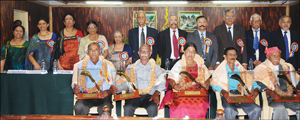
The senior members of Kodava Samaja, Mysuru (sitting from left): Machura N. Kaveriappa, Napanda U. Aiyappa, Kakamada Ganga Chengappa, Bottolanda M. Ponnanna and Ponjanda S. Arjuna, who were felicitated with a shawl, garland and memento at the annual get-together held at Field Marshal K.M. Cariappa Community Hall in city yesterday, are seen with (standing from left) Ponjanda Lovely Appaiah (Hon. Secretary, Sree Kaveri Kodagu Mahila Sangha); Thambanda Neena Devaiah (Jt. Secretary, Kodava Samaja); Balyamanda Sarasu Nanaiah (President, Sree Kaveri Kodagu Mahila Sangha); Chembanda Nanjamma (President, Kodagu Sahakara Sangha); Mechanda Mithra Karumbaiah; Mechanda M. Karumbaiah (President, Kodava Samaja); chief guest Kambeyanda C. Biddappa (retired Senior Vice-President, ITC); Moovera K. Kuttappa (Vice-President, Kodava Samaja); Kekada M. Belliappa (Hon. Secretary, Kodava Samaja); Kuppanda P. Subbaiah (Treasurer, Kodava Samaja) and Prof. Kambeyanda C. Belliappa (Chairman, Sree Cauvery Educational Institution)

Mysuru :

The annual Kail-Poldh get-together was celebrated at Field Marshal K.M. Cariappa Community Hall in Vijayanagar 1st stage here yesterday under the auspices of Kodava Samaja, Mysuru.

The day-long programme began with Ayyalapanda Pattu Pemmaiah performing Ayudha Puja to the traditional weapons of Kodavas. Kail-Poldh festival is celebrated in Kodagu during the end of the paddy sowing. Kail means weapon or armoury and Poldh means worship. The festival also signifies the day that men should prepare to guard their crop. Hence, on the Kail-Poldh day, the weapons are taken out of the puja room, cleaned and puja is offered.

Kambeyanda C. Biddappa, retired Senior Vice-President, ITC Ltd., who was the chief guest, felicitated eminent Kodavas and senior members of the Samaja in recognition of their service to the Samaja and the society.

Speaking on the occasion, K.C. Biddappa said that higher education was the most important enabler for all-round development of a community. He then said it was unfortunate that while Kodava students in urban areas are doing well academically their rural counterparts are lagging behind and needed help.

“These rural poor Kodava students need support from the community, and organisations like Kodava Samaja, Coorg Education Fund and Deena Bandhu Charitable Trust should help poor Kodava students without making merit the only criteria,” he added.

Stating that in most of the district head quarters every community has hostels to help their poor students to study with free boarding, lodging and financial support, he rued that there was not a single Kodava hostel any where. “If only we were to have Kodava hostels in Madikeri , Mysuru and Bengaluru, a lot of poor Kodava students would have benefited and progressed,” he opined.

Referring to the dwindling population of the community in Kodagu, he said Kodavas are losing relevance in their own homeland and that the Government does not bother because Kodavas are not a vote-bank.

Stating that Kodava population in Kodagu is just between 80,000 and 90,000, he said to become relevant Kodavas needed to take the support of all the moolanivasis of Kodagu like Peggade, Iri, Amma Kodava and other original inhabitants.

“We should all unite and take up our cause under one umbrella to create a sustainable and significant vote-bank, then only the Government will respond to our demands,” he said.

Biddappa reiterated that Kodavas must be united and said if Kodavas have to survive then they should focus on higher education and support poor Kodava students.

The senior members, who were felicitated by the Samaja are: Napanda U. Aiyappa, an exserviceman; Machura N. Kaveriappa, also an exserviceman; Bottolanda M. Ponnanna, who runs a private business; Ponjanda S. Arjuna, retired Circle Inspector and recipient of Chief Minister’s and President’s Medal and Kakamada Ganga Chengappa, who runs Swastha, a school for specially-abled children in Sunticoppa, Kodagu and recipient of Rajiv Gandhi Manav Seva Award for service to special kids. The above achievers were introduced by Mandira P. Kalaiah, Ammatanda Madhu Medappa, Machanda S. Muthappa, Thambanda Neena Devaiah and Kekada M. Belliappa respectively.

Replying to felicitations, the senior members, who are actively involved in the Samaja activities, called upon the Samaja, area-wise Kodava Associations and the community members to preserve and promote the unique Kodava art, culture and tradition by encouraging the Kodava youth to come forward and pursue the same.

On the occasion, various scholarships instituted by the Samaja members were presented to meritorious Kodava students (from 7th std. to Post-Graduation) and achievers in sports.

Kattera A. Kariappa, former President of Kodava Samaja and President of Deena Bandhu Charitable Trust, Mysuru, who also spoke, sought the support of the Samaja members to the Trust, which has been helping poor and needy Kodava students in their studies.

Earlier, Keethiyanda Kavya Kuttappa, Ketolira Bhavani and Appanderanda Thara rendered the invocation. Samaja President Mechanda M. Karumbaiah welcomed and presided. Treasurer Kuppanda P. Subbaiah read the names of the deceased members after which a minute’s silence was observed as a mark of respect to the departed souls.

Ponnachanda S. Bheemaiah read the names of the scholarship awardees.

Vice-President Moovera K. Kuttappa introduced the chief guest.

Ponjanda Lovely Appaiah compered and proposed a vote of thanks.

Hundreds of Kodavas attended the day-long get-together which concluded with sports and games for the members and their children in the afternoon session.

source: http://www.starofmysore.com / Star of Mysore / Home> General News / Monday – September 07th, 2015

Want to be part of a Guinness World Records attempt for the largest street dance?

Pavan Thimmaiah & PMT Dance Company have been asked to choreograph the world’s largest street dance to be performed live on national TV. They need dancers to help them to make Guinness World Records history. Here is all the information you need to participate:

Performance Date: Wednesday, September 9th, 2015

Time: 5:00-9:00 a.m.

Location: 30 Rockefeller Plaza

Requirements: Be able to learn and perform a 5 minute Hip Hop/Street Dance choreography.

Commit to one 4-hour rehearsal day; it is required. The various options available are between September 3-September 6.

Participants can NOT be minors.

Participants can NOT be in a guild or union.

To sign up or for more info, email: pmthouseofdance@aol.com by September 2nd.

source: http://www.today.com / Today / Home> Today Pop Culture / September 03rd, 2015

Nilekani donates 50L to school fund

Bengaluru :

Infosys co-founder and former Aadhaar chairman Nandan Nilekani donated Rs 50 lakh to the alumni association of Bishop Cotton Boys’ School in the city. The funds donated by Nandan, an Old Cottonian, will go to the school’s Benevolent Fund, created for retired teachers, administrative staff and sub-staff.

The fund goes to the General KS Thimayya Memorial Trust, an Old-Boys-of-Cottons endeavour established to commemorate General Kodandera Subayya Thimayya, also an Old Cottonian, who was in school from 1918 to 1922.

CN Kumar, senior trustee, General KS Thimayya Trust, confirmed Nilekani’s contribution. “The Trust is grateful to Nandan Nilekani, Old Cottonian, for becoming the anchor donor to the Fund. Nilekani has made a generous contribution of Rs 50 lakh. We are confident that other Old Cottonians will also contribute to the corpus,” said Kumar.

He also said this is perhaps the only such fund established by old students of a school.

The official communication sent to Nilekani read: “Thanks to OC Nandan Nilekani, from whom we have received a donation of Rs 50 lakh for an endowment to be used exclusively for the said purposes. Our first set of beneficiaries have been honoured on the occasion of Teachers’ Day. Thank you, Nandan, for this very generous gesture.”

The Benevolent Fund was established under the umbrella of the Trust to show our gratitude and appreciation to the teachers, administrative staff and subordinate staff whose contribution in our personal growth in the formative years is immeasurable.

The Trust will use the proceeds generated by investing the corpus to recognize and provide support to past teachers, administrative staff and subordinates every year.

source: http://www.timesofindia.indiatimes.com / The Times of India / News Home> City> Bengaluru / by Sunitha Rao, R – TNN / September 06th, 2015

Robin Uthappa rides Bijapur Bulls to victory

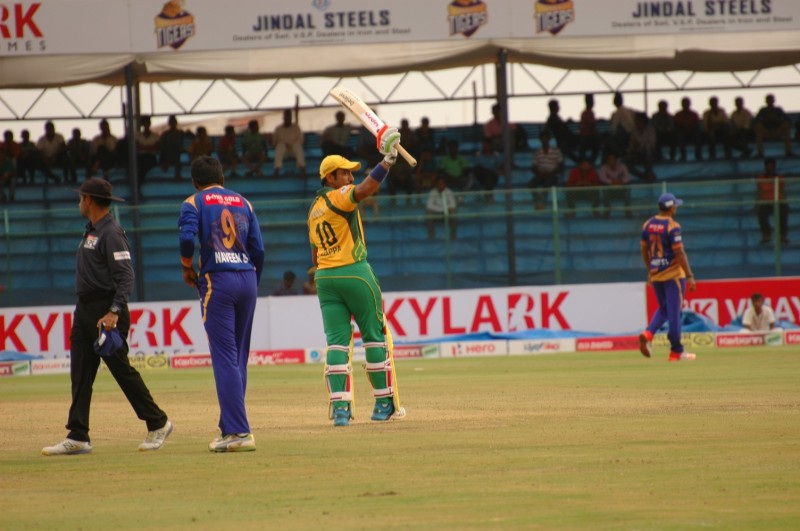
Robin Uthappa raises his bat towards his team dug-out after completing his half century

Hubballi :

Robin Uthappa came to the party in style hammering an unbeaten 45-ball 73 to steer Bijapur Bulls to a convincing seven wickets victory over Hubli Tigers in the Karbonn Smart KPL 2015 here on Sunday.

The India opener who came in at the fall of the first wicket was circumspect to start with before opening his shoulders to send the Hubli players on a leather retrieving spree. He slammed six fours and four sixes during his tenure at the wicket and in the company of skipper B Akhil (24 n.o.) knit together 64 runs for the unbroken fourth wicket.

Uthappa found his rhythm early and his confidence grew and he began middling the ball. Once he changed gears, the home team bowlers were not their own self and wilted under his slaughter.

Earlier a 58-ball identical 73 by Hubli opener KB Pawan enabled Hubli post a decent 152 after being invited to bat.

Hubli began well with Taha and Pawan negotiating the Bulls’ attack with confidence. But the departure of Taha saw the Hubli batsmen who followed struggle and none seemed to be able to give Pawan the support at the other end.

Even as Pawan went about accumulating runs, wickets fell at regular intervals at the other end and finally the total of 152 proved to be insufficient to defend for the bowlers.

Uthappa collected a cheque for rupees ten thousand for his efforts which fetched him the as the Man of the Match award.

Speaking about his performance, Uthappa said, “It was a good game. It was an important toss to win and I think we bowled pretty well and contained them to a manageable total. The wicket actually got better as the game progressed and I knew that if I just played my role it would be an easy target to chase.”

SCOREBOARD
Hubli Tigers:
Mohammad Taha c A Somanna b R Bhatkal 22; KB Pawan st Uthappa b Appanna 73 (58b, 3 x 4, 4 x 6); Abhinav Manohar st Uthappa b Appanna 15; Kunal Kapoor c Mithun b Vyshak Vijay Kumar 15; Sreenath Aravind c M Nidesh b Appanna 9; Kranti Kumar (not out) 10; Nithin Bhile c A Somanna b Cariappa 0; Chetan Wilias (not out) 4. Extras: (w-2, lb-2) 4.
Total: (For six wickets, 20 overs) 152

Fall of wickets:
1-28 (Taha); 2-68 (Manohar); 3-102 (Kapoor); 4-125 (Aravind); 6-145 (Pawan); 7-145 (Bhille).

Bowling: Abhimanyu Mithun 4-0-32-0; Vyshak Vijay Kumar 3-0-23-1; Rajoo Bhatkal 3-0-24-1; KP Appanna 4-0-29-2; B Akhil 2-0-12-0; KC Cariappa 4-0-30-2.

Biapur Bulls:
R Samarth (run out) 20 (14b, 3 x4); Rajoo Bhatkal c SL Akshay b B Naveen 13; Robin Uthappa (not out) 73 (45b, 6 x 4, 4 x 6); Deepak Chougle c N Bhille b D Negi 17; B Akhil (not out) 24 (19b, 1 x 4, 1 x 6). Extras: (w-4, bn-2) 6.

Total: (For three wickets, 17.-01 overs) 153.

Fall of wickets: 1-16 (Bhatkal); 2-56 (Samarth); 3-89 (Chougle).
Bowling: Kranti Kumar 2-0-14-0; B Naveen 4-0-36-1; SL Akshay 3-0-45-0; Sreenath Aravind 3-0-14-0; Chetan Williams 2-0-15-0; D Negi 3-0-29-1.
Toss: Won by Hubli Tigers; opted to field
Result: Bijapur Bulls won by seven wickets.

source: http://www.sportskeeda.com/