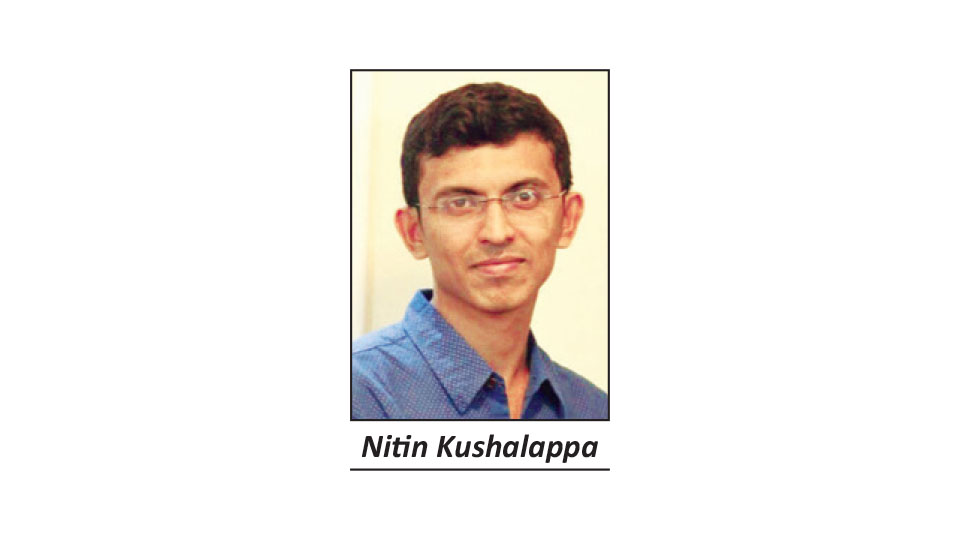
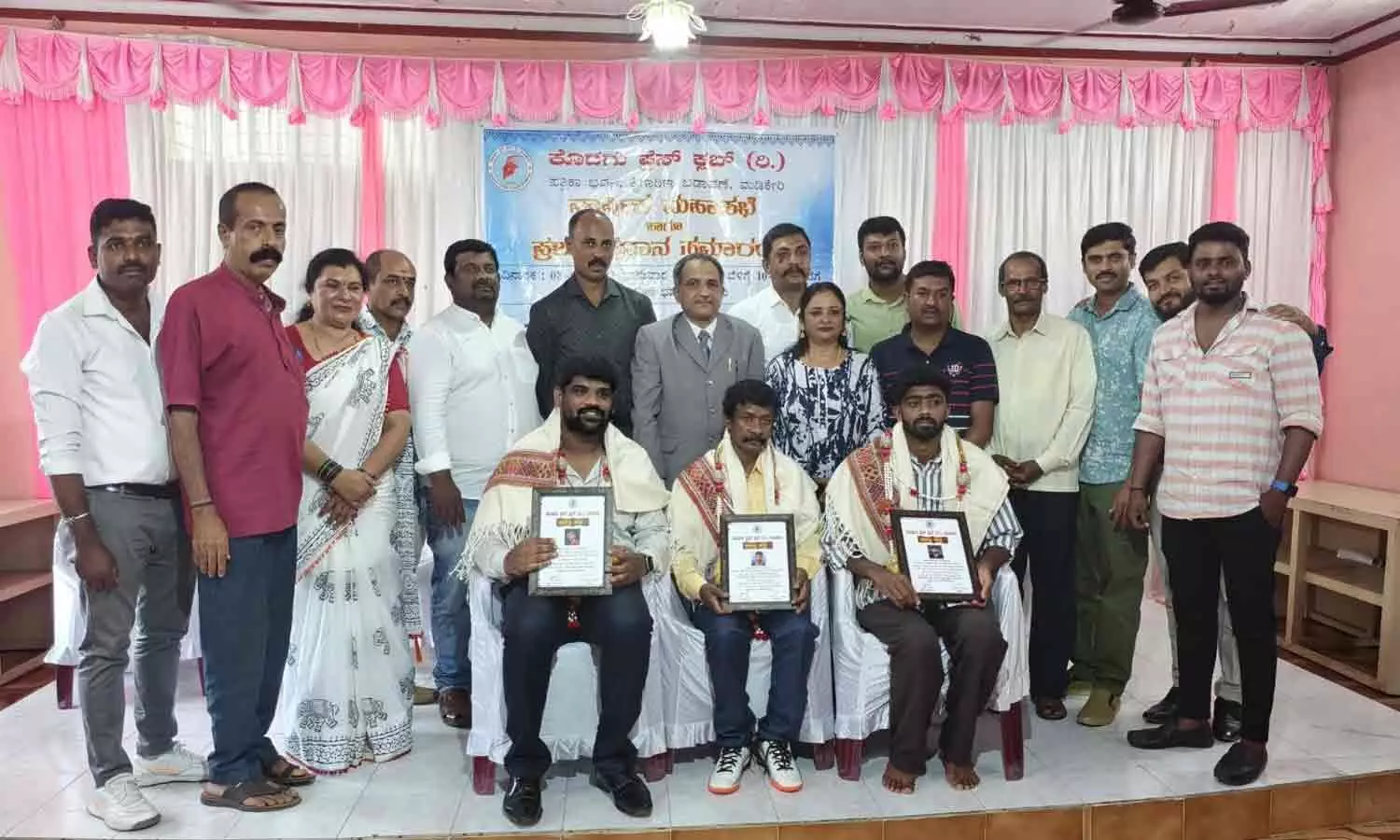
Kodagu-based author and engineer Mookonda P. Nitin Kushalappa has been awarded the prestigious Kendra Sahitya Akademi Bal Sahitya Puraskar for his latest work, Dakshin: South Indian Myths and Fables Retold, published by Puffin Books in 2023.
The awards were announced in New Delhi on Wednesday (June 18), and Nitin is among 24 writers to receive the Bal Puraskar this year.
The Sahitya Akademi, India’s National Academy of Letters, is the country’s central institution for literary dialogue, publication and promotion, and is the only organisation to conduct literary activities in 24 Indian languages, including English.
These distinguished literary honours recognise exceptional contributions to Indian literature across multiple languages, celebrating diversity, creativity, and the country’s rich linguistic heritage.
Presented annually, the awards honour authors whose works exemplify outstanding literary merit and cultural relevance. This year’s selection showcases a rich tapestry of genres — from poetry and novels to short stories and criticism — highlighting both emerging and established voices.
“Although I have authored seven other books so far, this is my first book for children. Winning this award was unexpected, and I am grateful that my current work has found such recognition. I thank the Sahitya Akademi for conferring the Bal Sahitya Puraskar on me. I am also thankful to my publishers, book agents, relatives, friends, and everyone who supported me on this journey,” Nitin Kushalappa told Star of Mysore.
An engineer by profession, Nitin is widely known for his deep interest in Kodagu’s local history, folklore and fiction. His notable publications include ‘The Early Coorgs’, ‘Long Ago in Coorg’, ‘1785 Coorg’, ‘Kodagu Principality vs British Empire’, ‘The Major Who Kept His Cool’, ‘The House of Awadh’ and ‘The Gandhi of Kodagu’.
His latest work, ‘Dakshin: South Indian Myths and Fables Retold’, reflects his signature storytelling style, which blends regional history with creative retelling. Award winners will each receive a casket containing an engraved copper plaque and a cash prize of Rs. 50,000 at a special ceremony on a later date.
A native of Kodagu, Nitin is the son of Mookonda K. Poonacha (Sunny) and M.P. Damayanthi (Pushpa), residents of Ammathi. He is married to Deepthi Belliappa from the Ketolira family.
He completed his education at Clarence High School, St. Joseph’s Pre-University College, CMR Institute of Technology (B.E.), Kuvempu University (M.A.) and Alliance University (Executive Post Graduate Diploma in Management).
2019 award
In 2019, Codanda Devika Cariapa received the Kendra Sahitya Akademi Bal Sahitya Puraskar for her book ‘A Children’s History of India in 100 Objects’, published by Penguin Random House India.
The book is a compilation featuring 100 objects that hold significant relevance in Indian history, from prehistoric times to modern-day India. The emphasis has been to capture India’s diversity through concise and descriptive texts and beautiful illustrations.
Devika is the daughter of Lt. Gen. Biddanda Chengappa Nanda (late) and Leela Nanda, and wife of Indian Air Force Group Captain (Retd.) Codanda Chitrajit Cariapa.
source: http://www.starofmysore.com / Star of Mysore / Home> News / June 21st, 2025
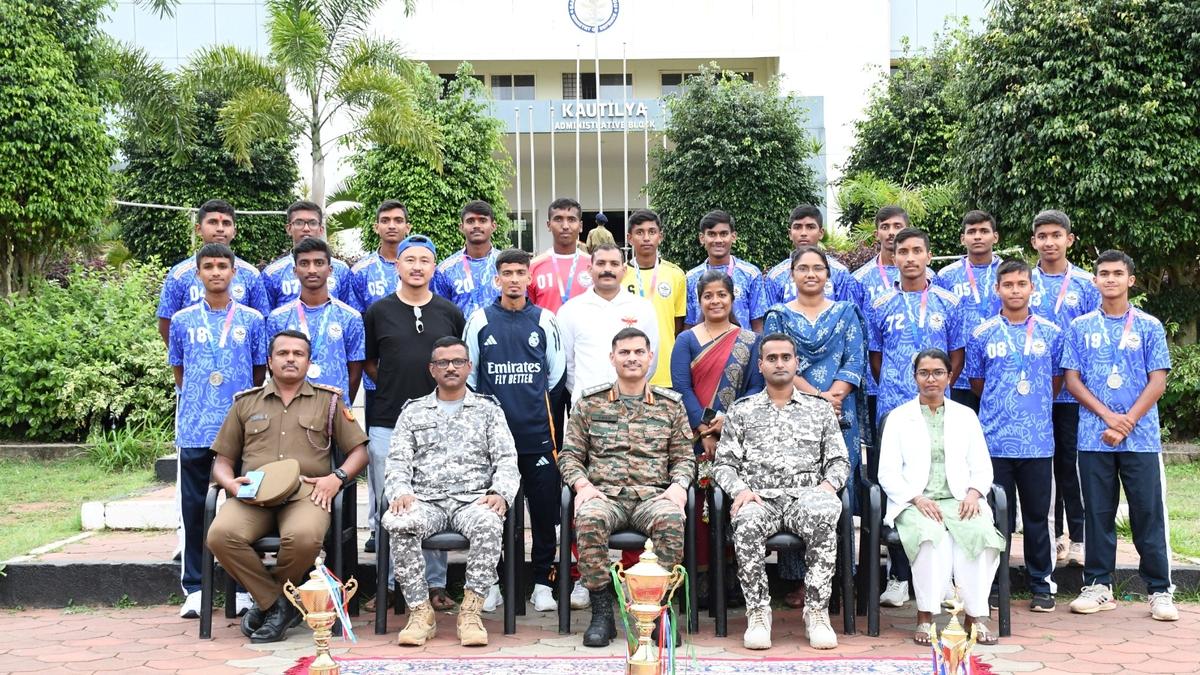
The Under-17 Junior Football Team of Sainik School Kodagu, which emerged as runners-up in the All India Sainik Schools Inter-Zone Football Tournament 2025, with the dignitaries after a victory parade on the school campus at Kudige recently. | Photo Credit: SPECIAL ARRANGEMENT
Sainik School Kodagu held a victory parade to celebrate the achievement of its Under-17 Junior Football Team, which emerged as runners-up in the All India Sainik Schools Inter-Zone Football Tournament 2025, also known as the Pre-Subroto Cup, held at Sainik School Bhubaneswar from June 9 to 15.
The cadets marched with their trophy, marking the school’s first-ever podium finish at the national level. Cadet Aryan, who was adjudged the Best Goalkeeper of the tournament, received an individual achiever’s trophy for his performance.
The victory parade commenced from Old Kudige and concluded on the school campus, drawing participation from cadets, teaching and non-teaching staff, NCC units, and local residents.
The Sub-Junior and Girls’ football teams took part in the procession, celebrating the collective spirit of sportsmanship, a press release said.
Principal Col. Amar Jeet Singh, administrative officer Wing Commnander Prakash Rao, vice-principal Squadron Leader Mohammad Shaji, and others attended the event. Girl cadets clad in traditional Kodava attire welcomed the players with flowers, while cultural performances such as ‘Dollu Kunita’ and the school’s ‘Tamate’ ensemble added vibrancy to the event, the release added.
The team was felicitated with citations and certificates. Col. Singh praised the team’s determination, skill, and resilience, and commended the dedicated efforts of coach Shek Ajjed and the entire coaching staff.
source: http://www.thehindu.com / The Hindu /Home> News> India> Karnataka / by The Hindu Bureau / June 20th, 2025
Chief Minister Siddaramaiah has assured that one of the metro stations in Bengaluru will soon be named after Field Marshal K. M. Cariappa, India’s first Commander-in-Chief.
He made this announcement on Sunday during a felicitation ceremony organised by the Kodava Samaja Bengaluru at the Kodava Samudaya Bhavana in Vasanthnagar. The event honoured Siddaramaiah and Deputy CM D.K. Shivakumar for allocating seven acres of land to the community in the State capital.
He said that the proposal to name a metro station after Field Marshal Cariappa will be placed before the Cabinet, and a final decision will be taken shortly.
For years, the Kodava community has been urging the State Government and the Bangalore Metro Rail Corporation Limited (BMRCL) to honour Cariappa’s legacy in this manner.
In July 2024, members of Kodava Samaja formally submitted a request to BMRCL Managing Director Maheshwar Rao, reiterating the demand to name a metro station after the iconic military figure. Praising the Kodava community’s contributions, Siddaramaiah lauded its inclusive spirit, highlighting that Kodavas respect all Indians regardless of caste or religion.
He also expressed confidence in the political future of Kodagu MLAs A.S. Ponnanna (Virajpet) and Dr. Manthar Gowda (Madikeri), describing Ponnanna as an emerging firebrand leader comparable to the late A.K. Subbaiah and M.C. Nanaiah, known for their socially conscious speeches in the legislature.
Deputy CM Shivakumar appealed to the Kodava community to continue supporting Congress government. “Our government has initiated many programmes for you. We have allotted land to families of Armed Forces personnel, appointed Kodavas to Rajya Sabha and ensured representation in the legislature. Recognising this legacy, we request your continued support,” he said.
He pointed out that the Government’s decision to allot seven acres of land in Bengaluru to Kodava Samaja comes with only nominal financial concessions, underscoring that no price tag can match the community’s discipline, sacrifice and patriotism.
“We must safeguard our traditions and culture. Your dedication is beyond monetary value,” he added.
The event was attended by Ministers K. J. George, Krishna Byregowda, Byrathi Suresh, MLA Rizwan Arshad, MLAs A.S. Ponnanna and Dr. Manthar Gowda and Bengaluru Kodava Samaja President Karavattira Pemmaiah, among others.
source: http://www.starofmysore.com / Star of Mysore / Home> News / June 19th, 2025
Madikeri: In a significant push for regional autonomy and constitutional recognition, the Codava National Council (CNC) is set to organise a seminar…
Madikeri:
In a significant push for regional autonomy and constitutional recognition, the Codava National Council (CNC) is set to organise a seminar on June 18 highlighting its 35-year-long peaceful movement for the political, cultural, and territorial rights of the Codava people.
Speaking to Hans India President of the CNC NU Nachappa, the seminar will address CNC’s core demands, including the creation of a Codava Autonomous Region (CAR) under the Sixth Schedule of the Indian Constitution — akin to the autonomous councils in the Northeast and the Darjeeling Gorkha Hill Council. The organisation is also seeking Scheduled Tribe (ST) status for the Codavas, whom it identifies as a distinct animistic, mono-ethnic indigenous community.
The keynote speaker for the event is Vikram Hegde, a constitutional lawyer practising in the Supreme Court, who has previously represented the CNC in the landmark Codava Gun Rights case. His lecture will delve into constitutional provisions for regional autonomy, linguistic rights, and the protection of customary practices — subjects he also teaches as a visiting faculty at the National Law School of India University (NLSIU), Bengaluru.
The CNC is currently pursuing a Public Interest Litigation (PIL) that seeks legal recognition of Codavaland’s claim for geo-political autonomy, arguing that their demands are both constitutionally viable and historically justified.
Joining Hegde at the seminar will be his wife, Hima Lawrance, also a Supreme Court lawyer, qualified to practice in both India and New York. The event is expected to draw academics, legal experts, regional leaders, and community stakeholders from across Karnataka, as discussions around regional autonomy and tribal classification continue to gain traction in India’s federal structure.
source: http://www.thehansindia.com / The Hans India / Home> News> State> Karnataka> Bengaluru / by Hans News Service / June 17th, 2025
“The matter to name a Metro Station in Bengaluru city will be placed before the cabinet meeting to arrive at a decision,” said the Chief Minister and exuded confidence that “None will have objection to name a Metro Station after Field Marshal Cariappa.”
Field Marshal K.M. Cariappa —DC Image
Bengaluru :
Responding to a plea to name a Station of Bangalore Metro Train Corporation Limited (BMRCL) in Bengaluru city, Chief Minister Siddaramaiah on Sunday assured to fulfill the wish of the Kodavas to name a Metro Station after Field Marshal K.M. Cariappa, the first Field Marshal of independent India. Field Marshal K.M. Cariappa was from Kodagu district.
“The matter to name a Metro Station in Bengaluru city will be placed before the cabinet meeting to arrive at a decision,” said the Chief Minister and exuded confidence that “None will have objection to name a Metro Station after Field Marshal Cariappa.” Though a request has been made to name a Metro Station but have not stated a particular Station.
“I will make an honest effort to name the Metro Station after Field Marshal Cariappa,” Siddaramaiah said at a felicitation programme organized by members of Kodava Samaj in Bengaluru. The felicitation to Chief Minister Siddaramaiah and Deputy Chief Minister D.K. Shivakumar was organized in honour of the State Government allocation of 7 acres for Kodava Samaj in Bengaluru city.
At the function, D.K. Shivakumar assured the Kodava Samaj members that the demand of Kodava Samaj to name a Metro Station after Field Marshal K.M. Cariappa has been received with an open mind and stated “The State Government will make all efforts for the coming generations to remember Field Marshal K.M. Cariappa.”
source: http://www.deccanchronicle.com / Deccan Chronicle / Home> Southern States> Karnataka / by M B Girish / June 16th, 2025
Auction creates buzz; franchise owners draft 175 players from a talent pool of 270 registered players
Mysuru:
The Kodava Hockey Premier League (KHPL) — Player Auction 2025 was held with much fanfare on June 1. KHPL 2025 is scheduled for June 27, 28 and 29 at Chamundi Vihar Stadium, Mysuru, promising three days of fierce competition and Kodava pride.
Organised by the Kodava Samaja Youth Wing Mysuru, in association with Kodava Samaja Mysuru and under the aegis of Hockey Mysore, the event witnessed a remarkable blend of tradition, sport and strategy.
Ten franchises — Coorg United, Connecting Kodavas, Anjigeri Naad, Pale Taluk, South Side Rangers, Coorg Titans, MTB Royals, Kodava Tribe, Kodavu Warriors and Kakot Strikers — each began by selecting three icon players, and then went on to build 18-member squads with calculated precision from a talent pool of 270 registered players. A total of 175 players were drafted into the KHPL 2025 league.
The auction’s digital footprint was equally impressive, with over 10,000 views on the Kodava Swara YouTube channel, the event’s official broadcast partner. Powered by M9 Sports, the live stream delivered a seamless, front-row experience for online viewers who followed the action from across the globe.
The event was held at Hotel Ibis Styles, Mysuru. The auction was attended by a host of dignitaries, including Ponjanda Ganapathy (President, Kodava Samaja Mysuru), Pandanda Bopanna (President, Kodava Hockey Academy), Konganda Dilip Biddappa (President, Hockey Mysore), Kotera Muddaiah (Vice-President, Hockey Mysore), Muckattira Somaiah (Director, Kodava Hockey Academy), Appanervanda Dr. Sonia Mandappa (Obstetrician & Gynaecologist), Bollepanda Kariappa (Coach, Indian Junior Hockey), Ganesh Iyer (GM, Ibis Styles Mysuru) and Machanda Prakash (Vice-President, Kodava Samaja Cultural & Sports Club, Mysuru).
Ajjetira Vikram Uthappa anchored the high-octane evening as Master of Ceremonies, while the Kottangada Ayudh Appanna fired up the crowd as the official auctioneer, adding energy and excitement to every bid.
source: http://www.starofmysore.com / Star of Mysore / Home> Sports /June 04th, 2025
Nidhi Subbaiah, who was last seen in UI, is reuniting with Pancharangi co-star Diganth in the dark comedy suspense thriller Edagaiye Apaghatakke Karana, which releases on June 13, 2025
Nidhi Subbaiah reunites with Diganth Manchale 14 years after Pancharangi
Like everyone else in the Kannada film industry, Nidhi Subbaiah too has been keenly observing the trend in the Kannada film industry, with audiences dwindling day-by-day.
“But honestly, I think this phase would be scarier for newcomers because they are just making baby steps and trying to make a name for themselves.
I debuted 14-15 years ago with Pancharangi and back then, it was easier and most of us were working 2-3 films at a time. I’ve found a place in people’s heart and think it is easier to hold on to the name I’ve made. In that sense, I am in a better place,” says the actress, who will next be seen in Edagaiye Apaghatakke Karana, which releases on June 13.
Pancharangi fame Nidhi Subbaiah
Nidhi adds that the fact that she is detached from the outcome of her movies is perhaps why she isn’t unduly worried about what’s going on in Sandalwood. “From the start of my career, I have been very detached from the outcome of my films. The day before the premiere of Pancharangi, there was so much nervous energy in the team and I was chilled out, because the result is not in my hands – good or bad. I am not affected by what becomes of a movie even if I have poured my heart and soul into it,” she reasons.
Nidhi Subbaiah: Acting is a job I do; it’s not who I am
The actress adds that it is necessary for people in the industry to not put all their eggs in one basket – Sandalwood – and to diversify, either into other neighbouring film industries or totally unrelated stuff based on one’s skillsets. “See, web series’ are an option, but am sure most of us have more skills than just being actors. For instance, I am writing something currently, which may turn into a book or a script and am in talks with a publishing house. I also pursue sailing actively. There are things I can do; acting is a job I do, it’s not who I am. I won’t die if the industry dies,” says Nidhi.
The Krishnan Marriage Story actress adds that she’s been able to stay alive and kicking in the industry despite being choosy and not mechanically picking up everything that comes her way. “I am still trying to keep myself exclusive. Even though I have been around for 15 years, I have not done as many films as my contemporaries have,” she says.
Over the years, has her outlook towards the kind of roles she wants to do changed? “Do I want to play the bubbly girl-next-door? Hell no! That’s the girl I was when I started off, but I am not that anymore. I am hungry and greedy as an actor and want to do all kinds of roles and am not worried that I will be objectified; people in Karnataka know that I can act,” she says.
source: http://www.ottplay.com / OTT Play / Home> News / by Pratibha Joy / June 10th, 2025
Journalist K.M. Ismail Kandakere has been conferred the Coovercolly Pushpalatha Chandrashekar Media Award by the Kodagu Press Club for his compelling human-interest report titled “The roof of Meena’s house is leaking.”
Madikeri:
Journalist K.M. Ismail Kandakere has been conferred the Coovercolly Pushpalatha Chandrashekar Media Award by the Kodagu Press Club for his compelling human-interest report titled “The roof of Meena’s house is leaking.”
The report narrates the harrowing story of Meena (16), an SSLC student from Mutlu village in Somwarpet taluk, who was brutally murdered by her fiancé Monnanda Prakash on May 10, 2024. Although the couple was engaged in April, Meena had opposed an early marriage to continue her education. Enraged by her resistance, Prakash allegedly attacked and killed her with a sickle at her home.
Ismail’s story went beyond the crime to highlight Meena’s dire living conditions. Her house, dilapidated and leaking during the rains, symbolized the poverty the family endured. The report resonated across Karnataka, prompting public outrage and swift political response.
Moved by the family’s plight, Madikeri MLA Dr. Mantar Gowda visited the bereaved parents in May 2024 and pledged to build a new home for them at an estimated cost of ₹8.5 lakh. True to his word, the house was completed and handed over to Meena’s parents on May 9, a day before her first death anniversary.
The award was instituted by senior journalist Coovercolly Indresh, along with his siblings Savitha, Sundresh, and Chandresh, in memory of their parents B.V. Chandrashekar and Pushpalatha. A corpus fund of ₹1 lakh was deposited with the Kodagu Press Club to support the annual award. The recognition includes a cash prize of ₹5,000 and a memento.
Ravishankar Nanaiah, Special Officer of Kodagu University, presented the award during a ceremony held at Patrika Bhavan in Madikeri on Sunday.
source: http://www.thehansindia.com / Hans India / Home> News> State> Karnataka / by Hans News Service / June 09th, 2025
Delhi resident in search of pure air makes Madikeri his home, beautifies neighbourhoods
Armed with his ‘litter picker’, Piyush Agarwal picks up trash in his neighbourhood in Madikeri. He aims to beautify every lamppost in the city with a flower pot and a dustbin.(Photo | Express)
Madikeri :
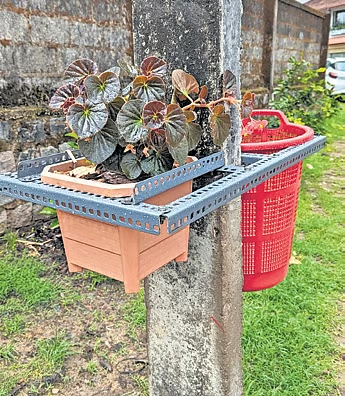
A stroll on a quaint street near Government Junior College in Madikeri introduces one to a beautification project where flower pots hang on retaining walls of public spaces. In between the flower pots, dustbins are also placed for public use. This beautification project was not taken up by the City Municipal Council or any other government body; it is the effort of an individual from Delhi who moved into the city two years ago in search of clean air.
Piyush Agarwal has grand plans to make Madikeri one of the quaintest cities to live in. Piyush, who started on a road trip across India in search of a place with clean and pure air to lead a retired life, says, “Madikeri fit the bill the best for my retired life.” So, what made him undertake the journey from Delhi to Madikeri? “I was in search of a place with a low Air Quality Index (AQI), which I wanted to make my home,” he says.
The businessman and entrepreneur developed bouts of cough due to high air pollution in Delhi. “I had difficulty breathing and developed cough bouts. COVID happened, and my business suffered a bit. That is when I decided that Delhi was not the place I wanted to live in, and it was time for me to get out,” he shares.
Road trip across 27 states
He set off on a road trip across India, travelling from East coast to West coast, the AQI meter as his travel buddy. He checked the air quality in every place he visited. Ooty, Chikkamagaluru, Goa, Kerala, Kanyakumari – Piyush travelled the length and breadth of India and covered 27 of 29 states; this was in 2022.
“I had a few parameters in mind. While air quality was the priority, the other parameters included the kind of people, a not-so-large city, greenery. And Madikeri fit the bill the best,” he explains.
His travel experience also revealed that the majority of the country is polluted, as air quality level across several regions is above 50. “Madikeri had an AQI level of 16, and became my ideal place to settle down for a retired life. Kodagu is among the best districts and nowhere in the country can you find such forests with abundant greenery. Even coffee cultivation is done using shade trees,” he opines.
(Photo | Express)
Piyush rented out a house and has been a resident for two years. He wants Madikeri to become one of the most beautiful cities in the country and his efforts can be seen in the beautification and cleanliness projects he has undertaken silently. During his first year, Piyush caught the attention of the City Municipality Council after he was spotted picking up litter and clearing garbage in his neighbourhood, equipped with a ‘litter picker’ stick and gunny bag.
Impressed, then CMC president Anita Poovaiah invited Piyush to her office and appreciated his efforts. “I am 65 years old and cannot bend down to pick up litter. I bought the ‘litter picker’ stick online and have a few collections of these sticks. Every Indian wants to keep their house clean, but when it comes to their surroundings, they are not bothered, this is a very Indian sentiment. The road and neighbourhood are an extension of my house and I often clean my surroundings. This introduced me to CMC councillors and now, I have started an initiative to install public dustbins across the city,” he says.
During his chats with CMC officials, Piyush got permission to instal dustbins (pinned to retaining walls of public spaces) across several wards in the city. Similarly, he put up dustbins in busy public spaces, including tourist spots and outside schools.
“I approached the youth empowerment department for permission to instal dustbins across the District Ground premises,” he says.
He got the nod, and installed over 15 dustbins in the grounds, but they were all stolen within 48 hours. “I don’t want to fix the dustbins permanently as it would be difficult for civic workers to clear them. Cleaning dustbins must be a simple process. However, of the hundreds of dustbins installed across wards, over 50 per cent were stolen. This is when I realised that people of Madikeri don’t want dustbins,” he points out. Piyush faced several hurdles in the cleanliness project, but this did not stop him from beautifying the city.
After the dustbin project, he undertook beautification work by installing flower pots across the city limits. Flower pots with self-watering technology (originally designed by him) are lined up across city limits.
(Photo | Express)
‘Proud to live in Madikeri’
Piyush has more such initiatives in mind. He aims to install a flower pot and a dustbin on all lampposts. However, getting permission, especially from the CESC department, remains a Herculean task.
“Imagine if every lamppost was lined with a flower pot and a dustbin. Madikeri will become one among the cleanest cities in the country, and I would be proud to live here. I don’t want any government support and I am ready to invest completely on my own. However, CESC denied permission for it and there is nothing I can do to change this,” he says, disappointed.
Nevertheless, Piyush continues to involve himself in environment-friendly beautification projects. He has planted over 350 varieties of trees across his neighbour’s private estate and invented eco-friendly measures to water these saplings.
“I sought permission from one of my neighbours to plant saplings in his estate. I told him I don’t want any support or returns, but only oxygen from these saplings. I collected 10,000 plastic water bottles from restaurants and hotels. During monsoons, I collected water in these bottles and these bottles continue to water the self-watering flower pots and saplings I have planted so far,” he explains. His routine includes cleaning the neighbourhood of trash, taking a stroll across the estate to take care of his saplings, cycling and golf. While he visits the estate during the morning hours, he ensures to put his food in a solar cooker and keep it under the sun. “By the time I am back, I know my food is cooked and this is my routine during summer days,” he shares.
While the initiative undertaken by Piyush is not known to the majority in the city, people who know him are inspired by his efforts. “When I was growing up, pollution was not among the biggest concerns. The environment then was pristine, and we could swim in any stream as the water was clean. I have seen nature deteriorate in my lifetime and river Jamuna in Delhi is proof of that deterioration. Now, I do my bit to keep nature clean,” he concludes.
He also hopes to garner support from people’s representatives as he is ready to fund the beautification project, provided he has all the permissions in hand.
source: http://www.newindianexpress.com / The New Indian Express / Home> Bengaluru / by Prajna GR / May 25th, 2025
The Parliamentary Standing Committee on Agriculture, Animal Husbandry, and Food Processing, headed by Charanjit Singh Channi, a member of the Lok Sabha, visited the ICAR-Indian Institute of Spices Research (IISR), Regional Station, at Appangala in Kodagu on Friday.
The delegation comprised 12 members of the Lok Sabha, four members of the Rajya Sabha, and officials from the Lok Sabha Secretariat. During the visit, the institute organised an exhibition highlighting the latest varieties and technologies in spice cultivation developed by the ICAR-IISR. Mr. Channi, the chairman of the committee, inaugurated the exhibition.
A meeting was convened, where R. Dinesh, Director of ICAR-IISR, Kozhikode, presented a comprehensive overview of the activities and achievements of the institute.
The committee had discussions with the scientists and officials from the ICAR-IISR. Officials present at the event included Sudhakar Pandey, ADG (FVS&MP), ICAR, New Delhi, S.J. Ankegowda, principal scientist and head, ICAR-IISR, Regional Station, Appangala, and senior officials and staff from the ICAR-IISR and its regional station.
The event also featured an insightful interaction with Prema Ganesh, a progressive farmer from Maragodu, who shared her experiences regarding spice farming in Kodagu.
source: http://www.thehindu.com / The Hindu / Home> News> India> Karnataka / by The Hindu Bureau / May 24th, 2025
WELCOME. If you like what you see "SUBSCRIBE via EMAIL" to receive FREE regular UPDATES.
Read More »