Tag Archives: Kodagu District

International cricket stadium under construction in Kodagu

HIGHLIGHTS

The design and layout of the ground will follow the model of the famous Dharamshala cricket stadium in Himachal Pradesh, though it will be slightly larger than Bengaluru’s Chinnaswamy Stadium
Madikeri:

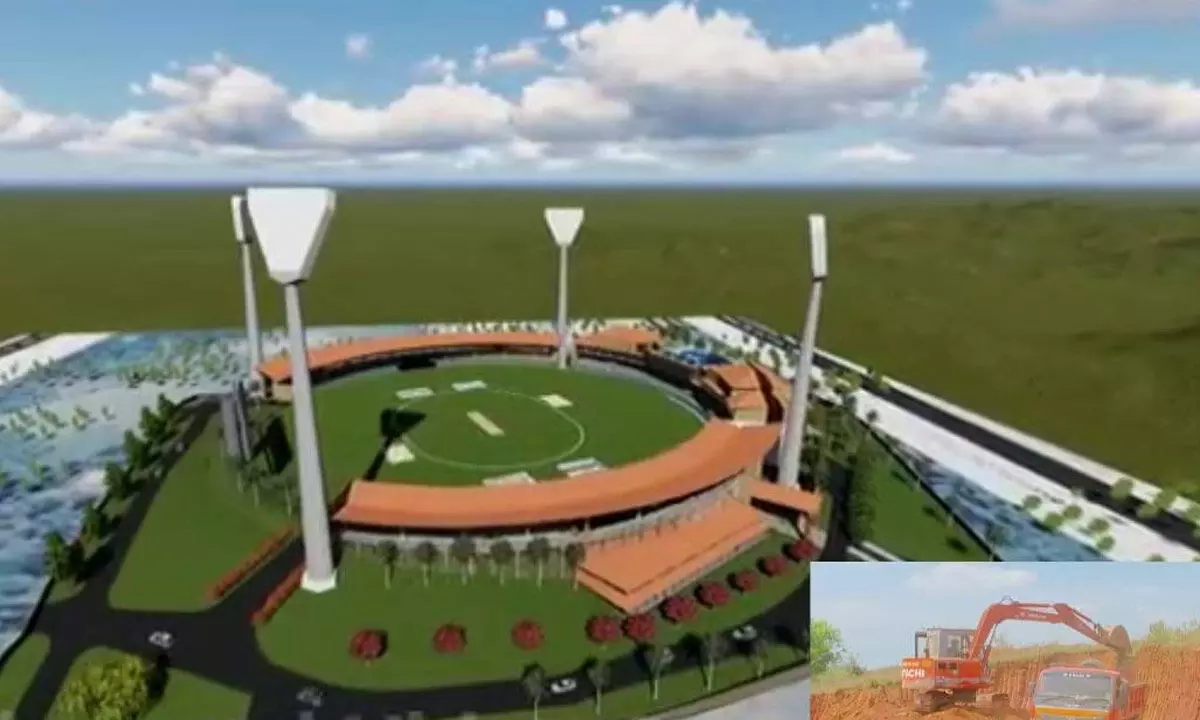
After decades of persistent demand, the long-awaited dream of having a dedicated cricket ground in Kodagu district is finally being realized. Construction work has begun on an international cricket stadium near Palemadu village, situated in the scenic Madikeri taluk. This marks a significant milestone for the region, which has long yearned for a sporting facility capable of hosting major cricket events.

The Kodagu district administration has earmarked 12 acres of land for the construction of the stadium, with the project estimated to cost around Rs 50 crore. The design and layout of the ground will follow the model of the famous Dharamsala Cricket Stadium in Himachal Pradesh, though it will be slightly larger than Bengaluru’s Chinnaswamy Stadium. This ambitious project will involve leveling half of a nearby hill, a complex and costly process to create a world-class sporting venue.

The construction of this stadium has been met with both excitement and opposition. For years, there were protests against the proposed location, primarily due to the presence of a graveyard on the land. Local residents from Paisari village, in particular, were firm in their stance, demanding that no cricket ground should be built over the graveyard. Despite the protests, the project had to be put on hold for some time. However, the issue was eventually resolved when former District Collector Dr. BC Satish intervened and convened a meeting to find a solution. It was decided that one acre of land would be set aside for the cemetery, while the rest would be used for the cricket ground.

Though some residents still insisted on reserving two acres for the cemetery, the Karnataka State Cricket Association (KSCA) was determined to move forward with the project. Their resolve to build the ground regardless of the protests has finally borne fruit. With all hurdles cleared, construction work has now commenced, with heavy machinery such as JCB and Hitachi excavators already working to level the land.

The project is expected to be completed within the next four years, bringing a major sporting facility to the district.

A boon for local sports enthusiasts.

This stadium will be a game-changer for the region, providing a much-needed infrastructure for local sports enthusiasts and opening doors to higher levels of competition. Currently, Kodagu boasts an astro turf hockey stadium, but there has been a glaring absence of facilities capable of hosting even state-level sports events. The new cricket stadium will not only enhance the region’s sports infrastructure but also serve as a hub for aspiring athletes.

While the construction of the cricket stadium is a significant step forward, sports enthusiasts in the district are also calling for the development of other key sports facilities. In particular, there are increasing demands for the creation of an athletics stadium, similar in scope and scale to the upcoming cricket ground, to accommodate track-and-field events and other athletic competitions.

The lack of such facilities has been a hindrance to the growth of athletics in the region, and many believe that the creation of a dedicated athletics venue would be the next logical step in the district’s sporting evolution.

Once completed, the international cricket stadium is expected to attract attention from national and international teams, potentially putting Kodagu on the map as a major sporting destination. It could host not only first-class cricket matches but also training camps, junior cricket tournaments, and a variety of other sports events, providing ample opportunities for local players to showcase their talent. Moreover, the stadium will have a significant economic impact on the area, boosting tourism, creating employment opportunities, and contributing to the development of infrastructure such as hotels, transportation, and sports-related businesses. The local community is expected to benefit greatly from the influx of visitors and sports professionals.

As the work on the cricket ground progresses, the residents of Kodagu have a reason to celebrate, as they will soon have a venue that will foster local talent and bring national-level events to the region. However, the demand for more sports facilities remains strong, and local authorities will likely have to address the call for an athletics stadium and other sporting infrastructure to meet the growing needs of the district’s sports enthusiasts.

In the coming years, Kodagu’s landscape will be transformed into a thriving hub for sports, creating opportunities for youth, bringing pride to the community, and fostering the next generation of athletes. The international cricket stadium is just the beginning.

source: http://www.thehansindia.com / The Hans India / Home> News> State> Karnataka> Bengaluru / by The Hans India, Hans News Service / November 30th, 2024
Renaissance Hotels Celebrates A Decade Of Discovery And Championing Community Connection With The Return Of Global Day Of Discovery 2024

pix

Bangalore:

Renaissance Hotels, part of Marriott Bonvoy’s global portfolio of over 30 extraordinary hotel brands, celebrated its 10th annual Global Day of Discovery on November 19, 2024. In celebration of this special occasion, over 170+ Renaissance Hotels properties around the world came together to reimagine their Evenings at Renaissance program with a unique Evenings Market, spotlighting local retailers and businesses.

Over the past ten years, Global Day of Discovery has been the one day in the year when all 170+ Renaissance Hotels around the world activate an elevated, on-property experience – underscoring Renaissance Hotels as one that connects locals and travelers to the DNA of the neighborhood through its unexpected design, experiential entertainment, and spontaneous discovery. Global Day of Discovery 2024 continues to demonstrate Renaissance Hotels’ promise to making measurable impact through supporting local – not just on Global Day of Discovery, but every day – with the launch of R Finds, a global digital marketplace designed for local discovery.

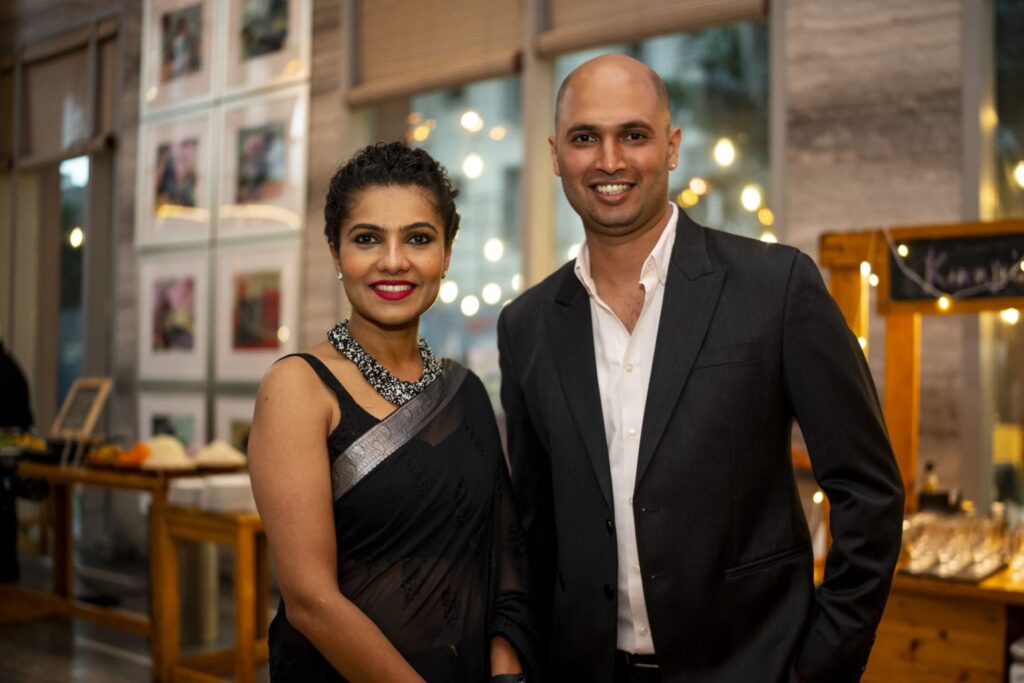
General Manager Sita Lekshmi and Rishwin Devaya

The event at Renaissance Bengaluru Race Course Hotel featured a journey to the sprawling coffee estates of Coorg , curated by the Riverside Coffee Co. and its founder Rishwin Devaya. An immersive Evening Market experience, guests indulged in the finest manual brew coffees, a meet-and-greet with Rishwin, and a special coffee cupping session.

Guests were also treated to expertly crafted coffee-based cocktails by Shyam Kumar, Bar Manager at R Bar and his team of mixologists.

The Culinary team led by Executive Chef Somasundaram G. and Pastry Chef Manivannan G. delighted everyone with a selection of decadent coffee-inspired desserts, creating a perfect fusion of local craft and culinary artistry.

The event concluded with guests connecting over their shared love for coffee, cocktails and discovery, leaving with a deeper appreciation for Coorg’s coffee culture and the hotel’s commitment to championing the local community.

The Global Day of Discover and the launch of R Finds, our very own global digital marketplace is a joyous moment and one to take immense pride in. Through interactive brewing sessions, exquisite coffee-inspired cocktails, and engaging conversations, we created an evening that blended the warmth of local flavors with the spirit of discovery—a true reflection of what Renaissance Bengaluru Race Course Hotel stands for,” said Sita Lekshmi, General Manager, Renaissance Bengaluru Race Course Hotel.

source: http://www.apnnews.com / APN News / Home> Tourism> Hospitality / by NS / November 21st, 2024

Jeevanadi Cauvery Awards presented to teachers

Mysore/Mysuru:

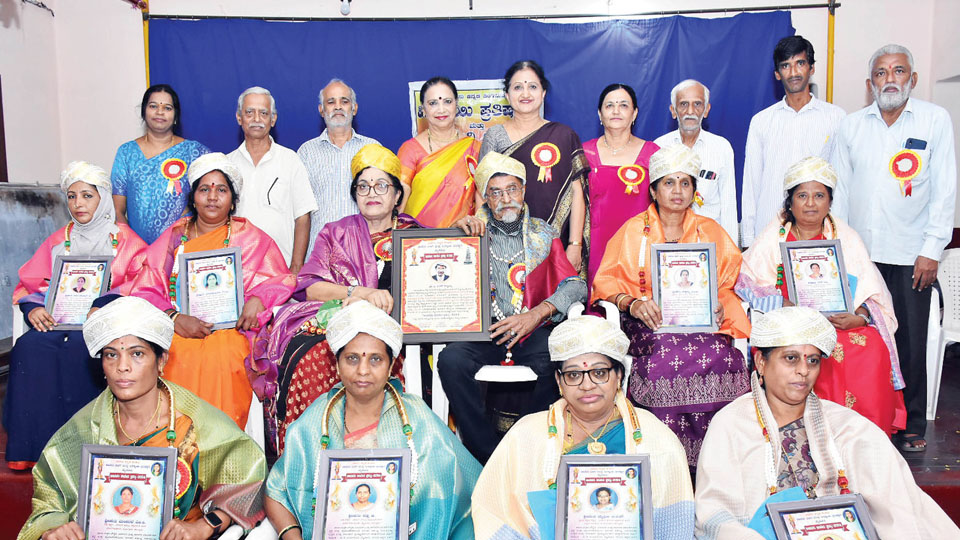
Ten teachers were  felicitated and presented ‘Jeevanadi Cauvery’ awards in memory of Nambiyapanda Gowru Ponnavva  at a function held in the premises of Akkana Balaga  School in Agrahara in the city on Tuesday. The award presentation function was jointly organised by Cauvery Balaga and Hiranmayi Pratishtana.

Speaking at the function, writer Bannur K. Raju said it is essential that education and health must be provided to everyone without any bias like in many developed countries.

“Unfortunately in our country, both these vital sectors are in firm grip of private organisations which has deprived both education and health to poor and middle class people,” he regretted saying it has become essential that these two sectors be nationalised in the interest of majority of people in the country.

Teachers S.N. Janaki of Alanahalli Government Lower Primary School, H.D. Kote taluk; M.P. Manjula, Hunsur Govt. Lower Primary School; K. Parveen Taj, Arenahalli Govt. Urdu Lower Primary School, Periyapatna taluk; G. Ratna, Beeregowdanahundi Government Lower Primary School, Mysuru taluk; M.T. Akkamma, Ammathi Govt. Higher Primary School, Virajpet taluk; M. Rani, Head Mistress, Bharati Sthree Samaja Higher Primary School, Yadavagiri in Mysuru; T.S. Maithili, Physical Education teacher, Government Higher Primary School, Vysarajapura, T. Narasipur taluk and M.T. Saralakumari, Head Mistress, Kajoor, Somwarpet taluk were felicitated at the function with ‘Jeevanadi Cauvery’ awards.

City’s renowned Sculptor Appaneravanda Kiran Subbaiah was given a special award. ana

Noted Danseuse Dr. Tulasi Ramachandra, retired teacher A. Sangappa and artist Dr. Jamuna Rani Mirle spoke at the function.

President of Cauvery Balaga and retired teacher N.K. Kaveriamma, President of Hiranmayi Pratishtana A. Sangappa, Jnana Vignana Samiti District President H.V. Muralidhar, Art teacher Manohar, Social activist Malini R. Palaksha and teacher Anupama were present.

source: http://www.starofmysore.com / Star of Mysore /Home> News / May 23rd, 2024

NCC fetes two next of kins of 1971 war martyrs

‘Vijay Shrankla Aur Sankritiyon Ka Maha Sangram’ celebrated

Mysuru/Mysore: 

Marking 75 years of Independence as also 50 years of India’s victory over Pakistan in the 1971 war leading to the creation of Bangladesh, the National Cadet Corps (NCC) is celebrating the occasion as ‘Vijay Shrankla Aur Sankritiyon Ka Maha Sangram’ across the country from Nov. 28 to Dec. 19 this year.

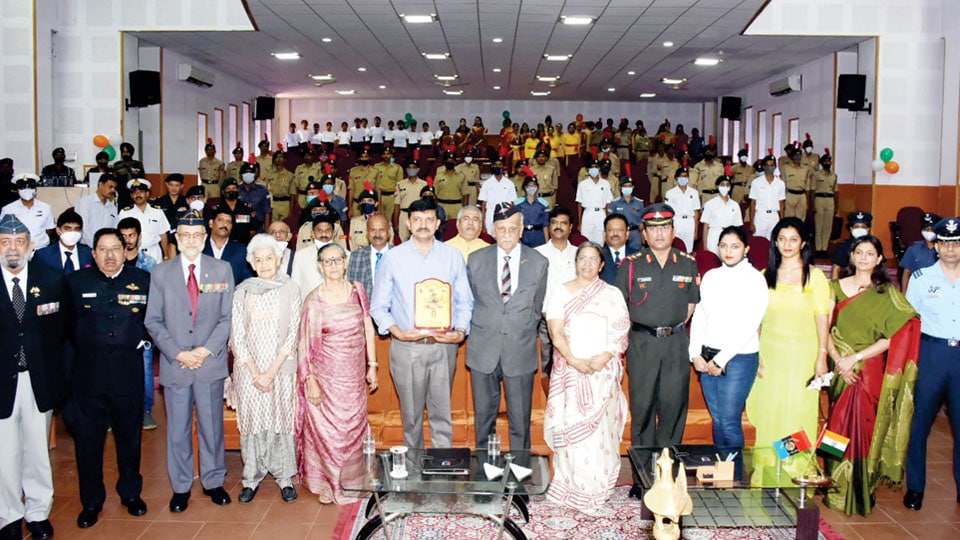
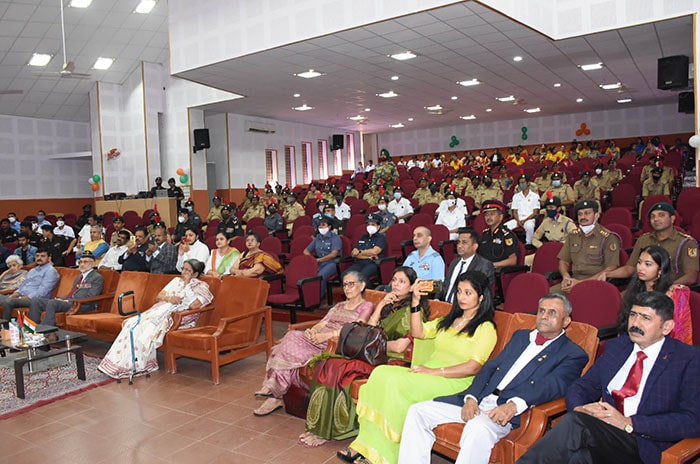
As part of the celebrations, the Mysuru NCC Group felicitated the Next of Kins (NoKs) of the two martyrs — Flying Officer K.P. Muralidharan of 20 Air Squadron and Risaldar B.M. Kaveriappa of the 66 Armoured Regiment — at a programme held at Cauvery auditorium in Karnataka State Open University (KSOU) premises on Hunsur Road here this morning.

The NoKs who were felicitated are Lalita Krishna Kumar, sister of Flying Officer K.P. Muralidharan and B.M. Machaiah, son of Risaldar B.M. Kaveriappa.

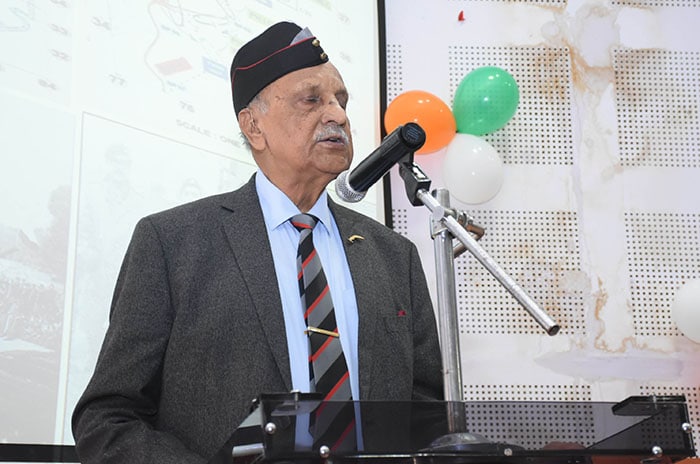
Maj. Gen. (Retd.) C.K. Karumbaya, SM, was the chief guest. Maj. Gen. (Retd.) S.G. Vombatkere, VSM was the guest of honour.

As part of the celebrations, 75 NoKs of martyrs of 1971 war will be felicitated at 75 locations across the country.

Defence Officers, Junior Commissioned Officers and Other Ranks posted locally at Mysuru including NCC Group Commander Col. R.R. Menon, NCC cadets and Associate NCC Officers, Air Veteran Mandetira N. Subramani, President, VeKare Ex-servicemen Trust, Mysuru were present on the occasion.

About Flying Officer K.P. Muralidharan: Flying Officer Kotteiezath Puthiyavettil Muralidharan hailed from Nilambur Kovilakom in Mallapuram district of Kerala. Born on Oct. 6, 1945, he was commissioned into the India Air Force on Oct. 29, 1966 at the age of 21. During the 1971 Indo-Pak War, Muralidharan was serving with 20 Sqn. known as ‘Lightnings’ and was based at Air Force Station in Pathankot. He took off in his Hunter (A-462) for a mission from Pathankot and was involved in a dog fight with enemy aircraft. He was last seen flying north of Peshawar in combat with a PAF Sabre and was shot down by the enemy Sabre. His aircraft crashed inside the enemy territory.

Risaldar B.M. Kaveriappa: Born on Feb. 4, 1931 at Kadangamarur in Virajpet of Kodagu district, Kaveriappa joined the 66 Armoured Regiment in September 1969 and was appointed as a Troop Leader which he served till the last day of his life.

Kaveriappa was in command of 1 Troop Bravo Squadron. While moving to reinforce 3 Troop, his tank was hit by an enemy RCL Gun and he along with his crew were killed.  

source: http://www.starofmysore.com / Star of Mysore / Home> News / November 30th, 2021

Special Cover felicitating water colour painting selected for Fabriano in Acquerello 2015 at Italy – 14th February 2015.

Fabriano in Acquarello is the international artistic convention dedicated to water color painting. International Exhibition FabrianoIn Acquarello will be organized with the participation of InArte – International Watercolour Sociaty, Italy and in cooperation Municipality Fabriano, Fondazione Carifac, Fondazione Fedrigoni Istocarta, Rotary and Lions club from 23rd to 26th April 2015 with the participation of the most important watercolor communities from around the world that will allow Italian and foreign watercolorist demonstrate, share and discuss their work in a unique context.

Water Color Society of India, founded by Amit Kapoor in 2013 at New Delhi, a part of International Water Color Society functioning with the aim to promote and popularize water color/water media in every country and to bring the hidden Indian talent at International platform. The society has identified the water color painting of Shri Aimanda Rupesh Nanaiah, resident of Maragodu Village of Kodagu district. Aimada Rupesh Nanaiah is one among the 20 artists representing India for the Fabriano in Acquarello 2015 exhibition at Italy scheduled for April-May 2015. Shri Aimanda Rupesh Nanaiah was born on November 19, 1976. He did his Primary Education at St. Anne’s Convent, Siddapur and Secondary at Siddapur High School, Pre-University at Murnad Pre-university and Bachelor of Fine Arts in Applied arts 1995-2000 at CAVA Mysore.

A Special Cover was released to felicitate water colour painting of Shri Aimanda Rupesh Nanaiah selected for Fabriano in Acquerello 2015 on 14th February 2015 at Madikeri (Special Cover approval no. KTK/28/2015). The cover illustration depicts the water color painting selected for the exhibition with the title “Pathukutti-The Fish Seller”, and scenes of paddy transplantation, Madikeri Town, and other village scenes of Kodagu. The reverse of the cover also features paintings of tractor alongside paddy field and a Kodagu township. The cover was released by Senior Post Master, Madikeri. The cover was received b the Artist Shri Rupesh Nanaiah who and whose family were felicitated on the occasion. The event was held at the Madikeri Head Post Office Premises. The artist also gave a demonstration of sketching by sketching the post masters caricature. My stamp depicting the painting was also launched on the occasion.

Courtesy: Viswas Menon, Madikeri

Special Cover on Kodagina Gowramma – 14th February 2015.

Mrs. B. T. Gopal Krishna (b. 1912 – d. 1939), better known as Kodagina Gowramma, was an Indian writer who wrote in Kannada and lived in Kodagu. She was also a feminist and a supporter of the Indian Freedom Movement. Gowramma was born in 1912 and married to Mr. B. T. Gopal Krishna of Gundugutti village of Somwarpet taluk in Kodagu, then known as Coorg, a province in British India. She invited Mahatma Gandhi to her family house, during his campaign in Coorg, and donated all her gold ornaments towards the Harijan (Dalit) Welfare Fund. She died young, drowning in a whirlpool, at the age of 27, on April 13, 1939.

Gowramma wrote in Kannada and on the feminist ideology using the pen name ‘Kodagina Gowramma’. The stories that she wrote, such as “Aparaadhi Yaaru” (Who is the criminal), “Vaaniya Samasye”, “Aahuthi” and “Manuvina Raani”, were modern and progressive.

On the occasion of 10th District Kannada Sahithya Sammelana, a Special cover was released on Kodagina Gowramma on 14th February 2015 at Madikeri. (Special Cover approval no. KTK/27/2015). The Special Cover depicts the portrait of Gowramma, and photos of her two important books in Kannada “Kambani” and “Chiguru” and the special cancellation depicts the map of Karnataka and the Karnataka mate with 10th District Kannada Sahithya Sammelana in a circle.

Courtesy: Viswas Menon, Madikeri

source: http://www.indianphilately.net / Indian Philately Digest / Home> News> News Archive 2015> February 2015

Five dancers explore different facets of Indian culture and mythology

 The solo performances at the 10th edition of Manthana in Mangaluru brought the Kodava culture and strong women characters from the epics under spotlight

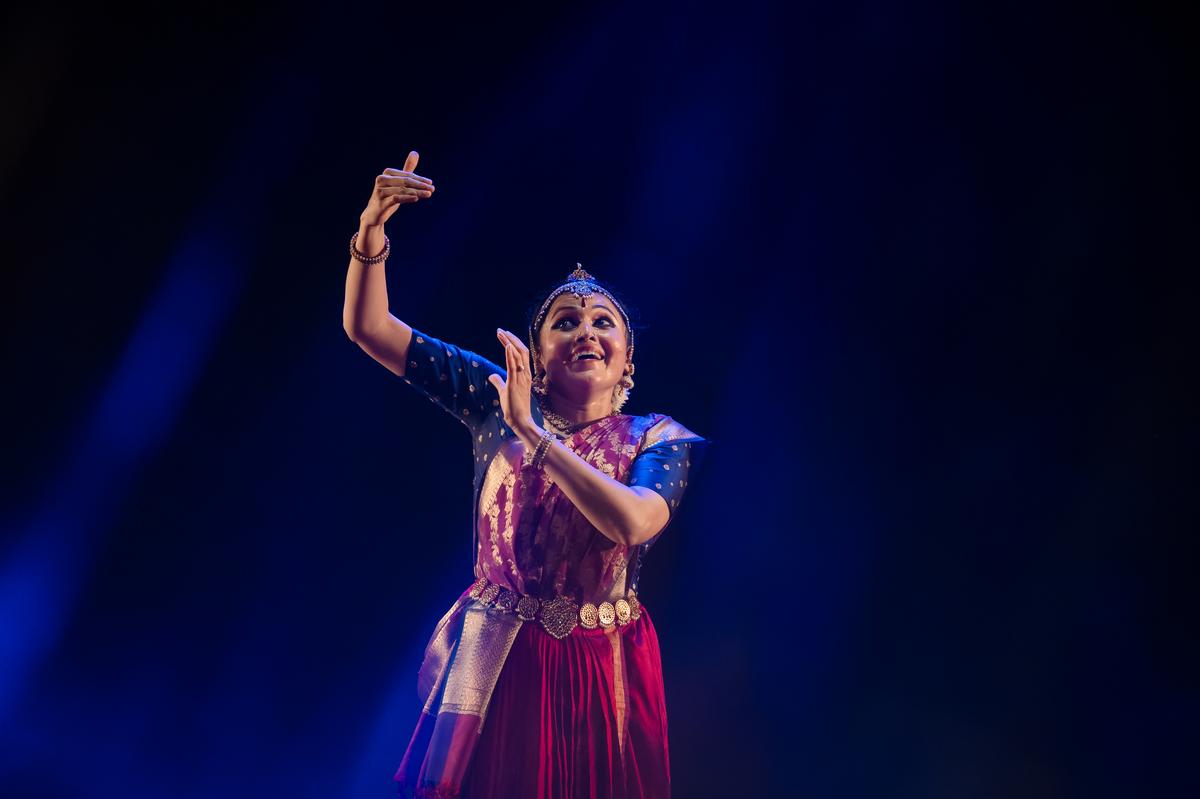
Shilpa Nanjappa’s presented the ‘Tales of Kodava’ | Photo Credit: Special Arrangement

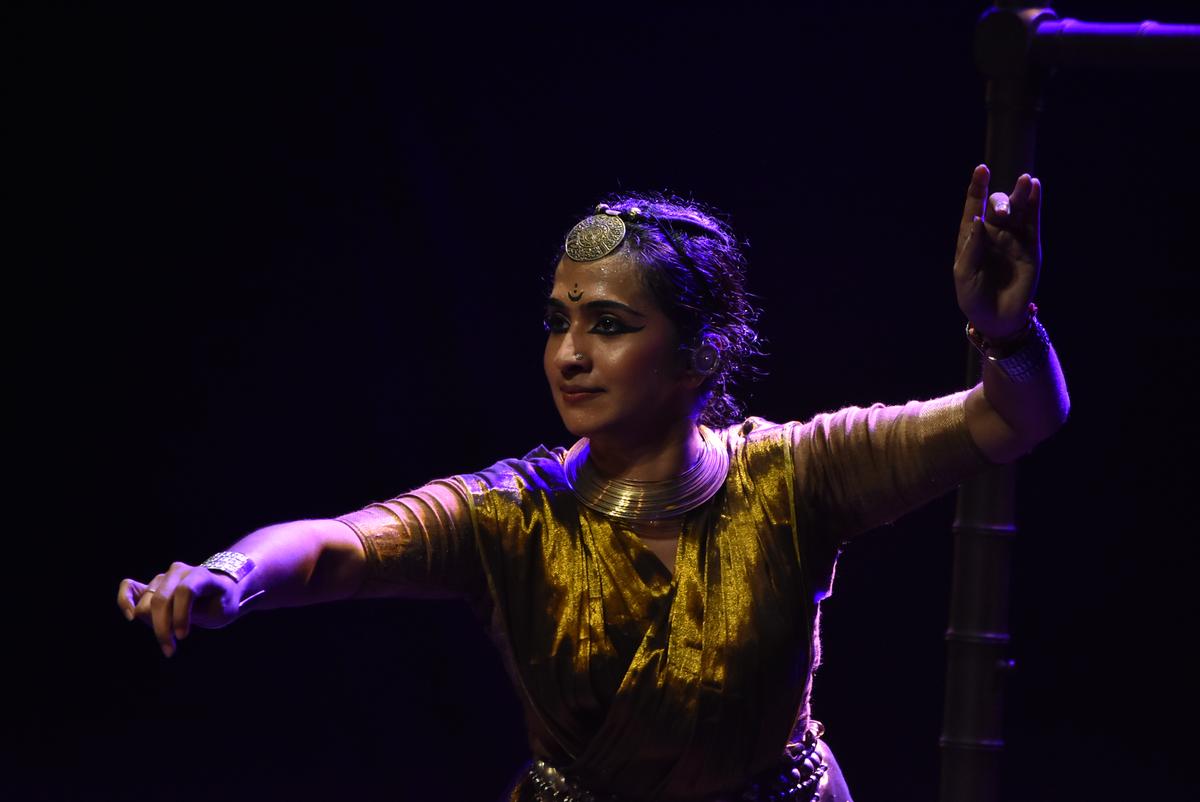
Shilpa Nanjappa, a Kodava, brought out the rich culture and ways of worship of her people and the greatness of River Cauvery (whose origin is in Coorg) through her ‘Tales in Kodava’. She gave a clear, comprehensive introduction, as the songs were in Kodava.

This was presented as part of the 10th edition of Manthana, organised by Mangaluru’s Nrityaangan, which featured many solo performances. 

Shilpa’s entry was full of zest and she lit up the stage with her expressive face and powerful movements. She began with a Kauthuvam in ragamalika that narrated the tale of Ayyappa, with keen focus on Mohini. It was an adaptation from ‘The song of Saastaavu’, a part of the Pattole Palame, a compilation of folklore passed down orally through ancestral songs. She beautifully presented the contrast between the clumsy movements of Bhasmasura and the graceful dance of Mohini. 

‘Sri mula kanniye, pommale kodu male’, a patriotic song accepted as the anthem of independent Kodagu, blended the legends about the river goddess Kaveri and her present condition. The way Shilpa portrayed the callousness with which people pollute her pure waters would have melted anyone’s heart. When she stated that this is also the story of every single woman, manipulated and silenced through history, one nodded in agreement.

 Before concluding her performance with a self-composed thillana, Shilpa presented a sringara pada ‘Aye, thumbi’, portraying an enraged Kanditha Nayika who is scorned by the man she loves. Her thillana was on the Puthari festival, a ‘harvest festival’ of the Kodavas when they dedicate their rice harvest to Igguthappa, who, centuries ago,  taught them the method of cultivating paddy. The choreography of this piece had movements inspired by the indigenous dance forms of the Kodavas.

Shilpa’s performance was followed by four vibrant solo presentations on important female characters from the Ramayana and the Mahabharata.

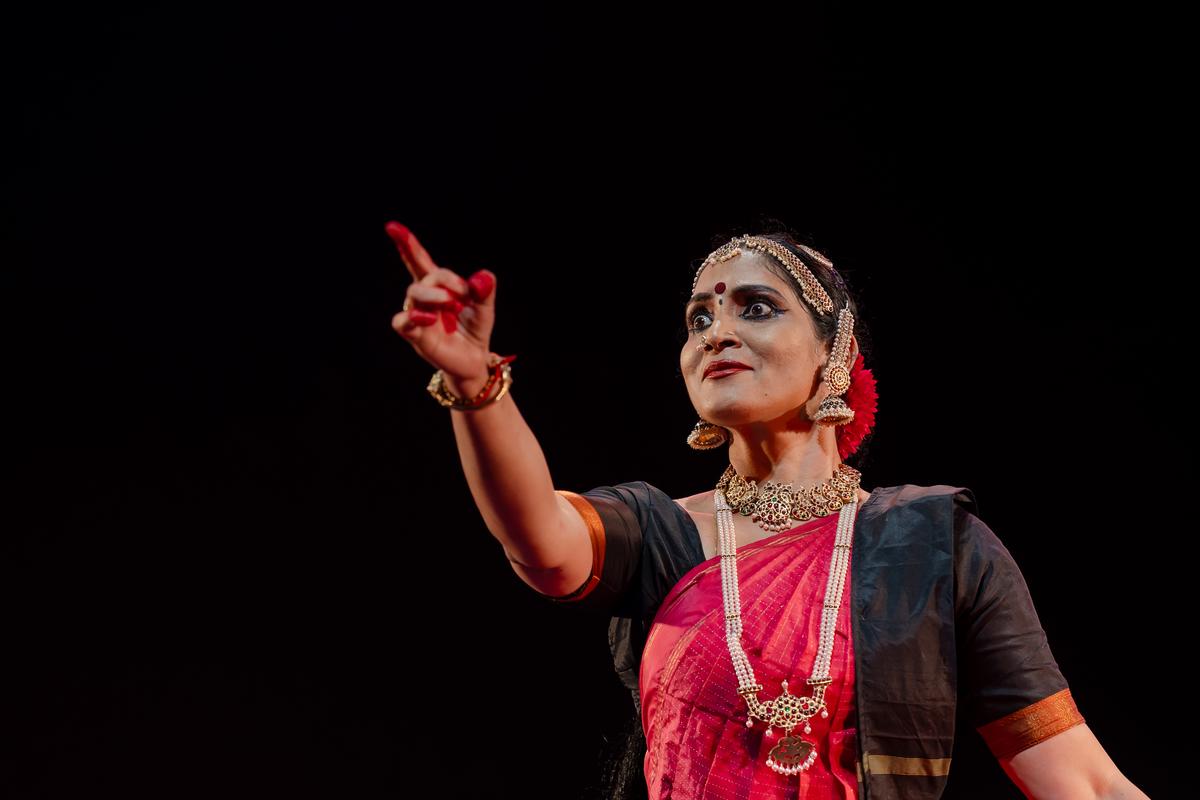
Divya Nair as Chitrangada | Photo Credit: Special Arrangement

Divya Nair was convincing in her portrayal as Chitrangada, the princess of Manipur and the only heiress to the throne, who was brought up by her father as a strong warrior and an able ruler. Though her thoughts and behaviour are unlike those of a woman, tender feelings of love blossom in her heart when she meets Arjuna, the Pandava prince. When her son Babruvahana is born, she transforms herself into a fond mother, too. Divya brought out the nuances of Chitrangada’s character with her lively movements and striking abhinayas. She left the spectators wondering, ‘Who are you, Chitrangada –– a warrior, a lover, a mother, or all of these?’ The lyrics had been composed by Dr. Suneel and were set to music by Sankaran Menon.

Indu Venu beautifully transformed into Kaikeyi | Photo Credit: Special Arrangement

Indu Venu transformed into Kaikeyi, who is torn between her intense love for Rama and her unbearable jealousy when she hears that he will be made king. Kaikeyi fears that once Rama becomes king, she and her son Bharata will have no identity. With Tulsidas’s ‘Tumak Chalat Ramachandra’, Indu Venu brought out the essence of motherly love. Along with Tulsi Ramayan, verses penned by Dr. Himanshu Srivastava were used for Indu Venu’s portrayal of Kaikeyi. Music and rhythmic composition for this was by Sujesh Menon and Vinay Nagarajan.

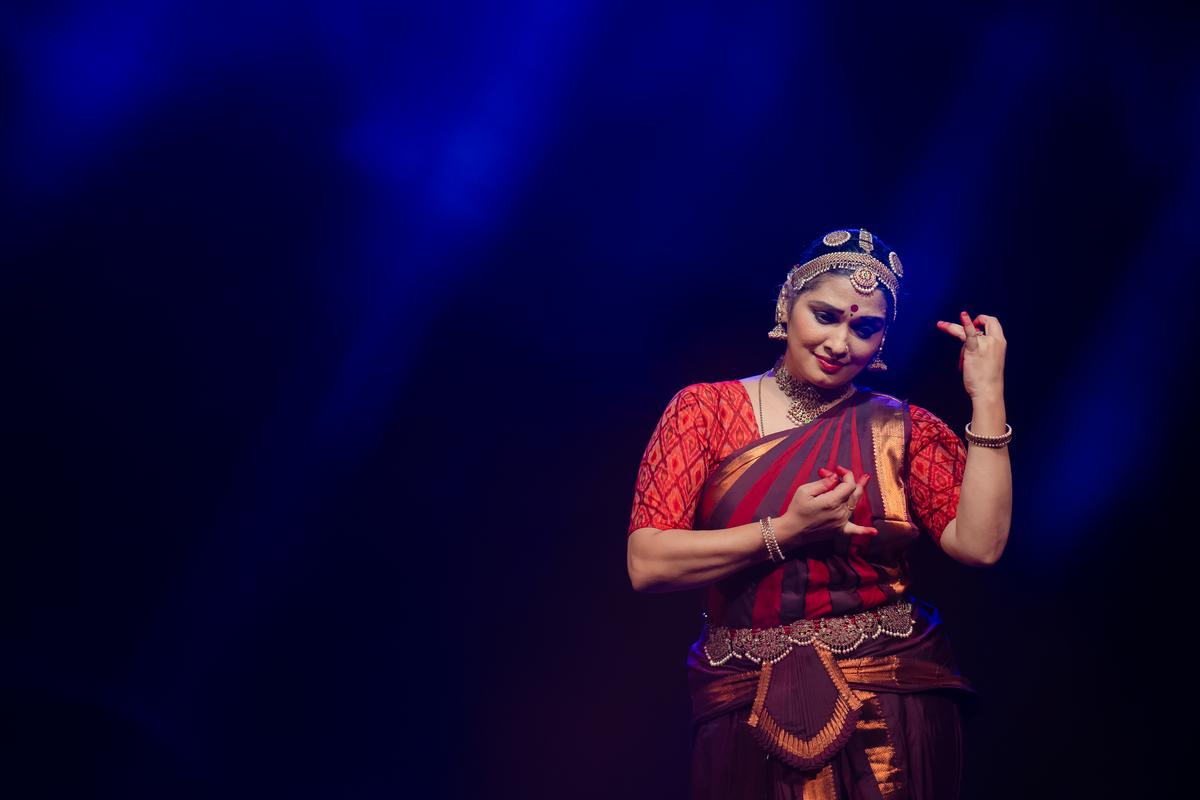
Manjula Subrahmanyabrought alive Hidimba as a demoness.  | Photo Credit: Special Arrangement

Manjula Subrahmanya portrayed Hidimba, the beautiful demoness, who is besotted with love for the tall and well-built Bhima and becomes the eldest daughter in law of the Kuru clan. Her life with Bhima is brief, and when he goes back to his family, she is alone again. When Gatotkacha is born, her motherly instincts are awakened and she is a happy mother. When Bhima returns after many years, she is delighted but soon finds out that Bhima wants their son to participate in the war. Hidimba makes her supreme sacrifice as she willingly gives her son to Bhima and goes back to her life of lonely wandering.

With an intensely expressive face and strong masculine movements, Manjula brought alive Hidimba as a demoness. At the same time, by throwing light on her soft motherly feelings and her sacrifice, she made Hidimba’s personality soar high. Manjula painted a clear picture of the complex character of Hidimba, who is only briefly mentioned in the Mahabharata.

The lyrics for this presentation were by Kavitha Adooru, music by Vineeth Purvankara and jathis by Manjunath Putturu.

Radhika Shetty chose to present a different picture of Manthara | Photo Credit: Special Arrangement

Radhika Shetty, founder of Nrityaangan,  presented ‘Manthareya Antharala’, a glimpse into the inner world of Manthara. Not conventionally beautiful, and abandoned by her parents, she finds refuge under Kaikeyi’s father and turns into a mother figure for Kaikeyi. Her actions are based on her boundless love for Kaikeyi and Bharata, who is like her grandson. Did she want anything for herself? Radhika’s expressive gestures and sensitive portrayal presented  a different picture of Manthara. By the time Radhika concluded, the spectators were ready to understand Manthara and even sympathise with her.  

Radhika’s presentation was based on Kuvempu’s Sri Ramayana Darshanam from which she had taken the lyrics that were set to music by Karthik Hebbar, Bengaluru.

The music ensemble was absolutely stunning. Vidyashree Radhakrishna’s impressive nattuvangam had dignity, strength, clarity and deftness. Nandakumar Unnikrishnan sang with emotion and gave life to the characters portrayed by the dansers. Mridangam by Karthik Vydhatri maintained the liveliness and flute by Nithish Ammannaya added melody and sweetness.

source: http://www.thehindu.com / The Hindu / Home> Entertainment> Dance / by B Ramadevi / November 26th, 2024

Coffee Board sets 10-year road map with a target to double country’s coffee production, exports

Coffee Board of India has embarked on a 10-year road map with a target to double the country’s coffee production and coffee exports by 2034, said board chairman M.J. Dinesh on Tuesday (November 19).

“It’s a 10-year mandate starting from 2024 to double our production and also double our exports by 2034. We will also increase the area under production during this period. However, the focus will be on creating best yielding varieties and increasing the production from existing plants through best practices and technology upgradation,” he said.

Addressing coffee growers at the Karnataka Planters’ Association annual conference held here on Tuesday, Mr Dinesh said these activities would include forming 100 FPOs (farmer producer organisations) across the country, of which 60 will be in Karnataka. These FPOs, expected to come up within a year, would create additional momentum for the commodity within the country and in global markets, he anticipated.

What is the offing

He further said that under the 10-year growth plan, the board would also identify 10,000 small coffee farmers who would grow speciality coffee varieties mostly targeted at export markets. “We expect these small farmers to come up with a wide range of speciality varieties that can fetch a premium in the global markets,” he added.

Under the 10-year market expansion plan, the board would also facilitate 10,000 coffee kiosks, mostly managed by women entrepreneurs, to increase the country’s per capita coffee consumption from 107 grams currently to 250 grams in 10 years, he further said.

He also said the board has an ambitious target of nearly trebling the coffee production from 3.7 lakh tonnes in 2024-25 to 9 lakh tonnes by 2047.

Commenting on the possibilities of mechanisation, Mr Dinesh said currently, the growers’ community has been pending a whopping ₹ 1200 crore to ₹ 1300 crore to get the coffee harvested annually through manual labour. This expenditure could be significantly reduced through the use of harvesting machines, and IIT Kharagpur, in collaboration with the Coffee Board, has been working on the prototypes of some such machines.

“Overall, the 10-year plan will certainly give Indian coffees a sizable standing in the global markets. In addition, it will also redefine the coffee landscape of the country,“ he hoped.

KPA chairman K G Rajeev said the grower’s body has made a presentation to the Ministry of Commerce and Industries seeking the inclusion of coffee under PM Fasal Bima Yojana. Presently, coffee farmers are not covered under insurance, while all other plantation crops are covered under insurance. The KPA has also sought assistance from the Govt to promote brand identity for coffee and tea emphasising their quality and unique characteristics. It has also sought exemption or reduction of customs duty on import of agriculture equipment.

source: http://www.thehindu.com / The Hindu / Home> News> India> Karnataka / by Mini Tejaswi / November 20th, 2024

A vital alliance

The Ganges flowing through Uttarakhand, India

Colonel Cheppudira Muthanna discusses efforts to create a pan-Asian network of organisations to protect the nature and climate of the Himalayas.

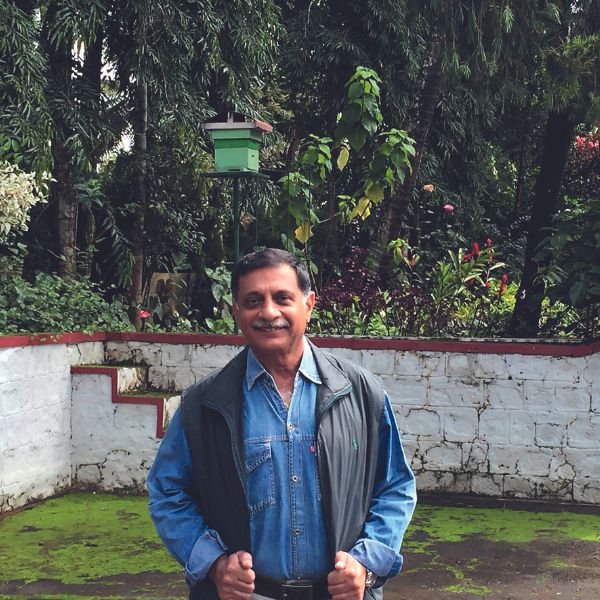
Colonel Muthanna is a former President of IUCN Member, Coorg Wildlife Society (cws.in) and founder of the Environment and Health Foundation India

I was in the Indian Army for 24 years and served in the Himalayas for 10 years. I became very concerned about how climate change was affecting the Himalayas, especially the rivers that so many people depend upon. I realised we must act before the change in the region reaches a tipping point.

The rivers that start in the Himalayas – the Ganges and the Mekong – support hundreds of millions of people across South Asia, Southeast Asia and China, representing one-fifth of the entire human population. In many places, where the slopes have been deforested, there are more avalanches because the trees helped hold the snow. Reduced snowfall due to climate change also means the rivers have less water in them. And the tree species are changing too. The outcome is that the water security of a fifth of the world’s population is at risk.

” THE RIVERS THAT START IN THE HIMALAYAS SUPPORT HUNDREDS OF MILLIONS OF PEOPLE “

Cutting down drastically on the production of black carbon locally, combined with extensive forest restoration, could help stabilise the ecosystems here. Black carbon is the name given to the sooty particulate emissions released when millions of cooking stoves light up across these countries. It raises the temperature regionally, in addition to the global effect of CO2 emissions. If we can replace many stoves with more efficient ones, it will quickly reduce the amount of black carbon drifting above the Himalayas. We also need better technology for the brick kilns and road building, which are also major sources of black carbon in the region. Reforestation around urban areas could also help absorb more black carbon.

The Himalayas and the Mekong basin are contiguous and interdependent eco-regions. Therefore it is crucial to form a regional cooperation of our countries to mitigate climate change. This is the essence of the proposed HIMEK (Himalayas-Mekong) ​Alliance. There are a number of agencies in the region working on reduction of black carbon and forest restoration – but our effort must be to coordinate with them and upscale their initiatives to a regional level.

We have been supported by IUCN, which is very important because all of the relevant countries are Members of the Union. If we can initiate pilot projects in some of the countries, it can then be scaled up across the region. Everyone we have talked to approves of the idea – now we need monetary support.

by – Colonel Muthanna is a former President of IUCN Member, Coorg Wildlife Society (cws.in) and founder of the Environment and Health Foundation India

source: http://www.iucn.org / IUCN / Home> News & Events> Story / by Colonel Cheppudira Muthanna / December 13th, 2023

Kodagu: Foresters ferry students to schools in elephant conflict zone

The department has taken this step following the sighting of over 40 wild elephants in the affected village of Badaga-Banangala.

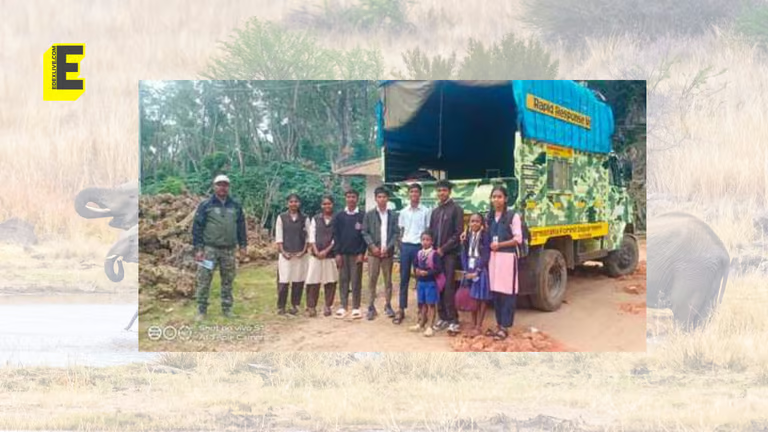
The forest department has taken the responsibility of ferrying students in the department vehicles to their respective schools following increased wild elephant movement in a few villages in Kodagu, Karnataka.

As confirmed by the department sources, herds of over 40 wild elephants have been sighted camping close the village, stated a report by The New Indian Express.

Meanwhile, the villagers complained that the elephants are camping in estates instead of the forest region and demanded respite from the threat to lives due to increased elephant movement. While the department takes to the mission of chasing the elephants back to forest, the elephants return to the village and destroy plantations. The destruction of agricultural crops has become common to farmers who are suffering from several months.

Further, even the Panchayat workers are threathened by increased elephant movement and are said to be afraid to go to the office located in the conflict region. The estate labourers too are backing off from carrying out estate works due to the fear of elephants.

While the foresters have assured of a permanent solution, the children fear going to schools and colleges. And as a temporary measure, the department staff have made arrangements to ferry students in the forest vehicle to and from their respective schools and colleges.

The forest crew is also patrolling to ensure the safety of the residents, especially estate labourers.

Thithimathi RFO (Range Forest Officer) Gangadhar and others were involved in alerting labourers in elephant-sensitive zones. They are boosting the labourers to go to plantations by regularly combing these areas.

The foresters and Rapid Response Team (RRT) are jointly operating to curb the elephant movement acorss the plantations. They are ferrying students to bus stands and houses in the forest vehicle, stated The New Indian Express report.

Meanwhile, the mission of chasing the elephants back to forest will continue.

source: http://www.edexlive.com / Edex Live, TNIE / Home / by Edex Live Desk / November 18th, 2024

Respite for Indian planters as EU grants time for EUDR compliance

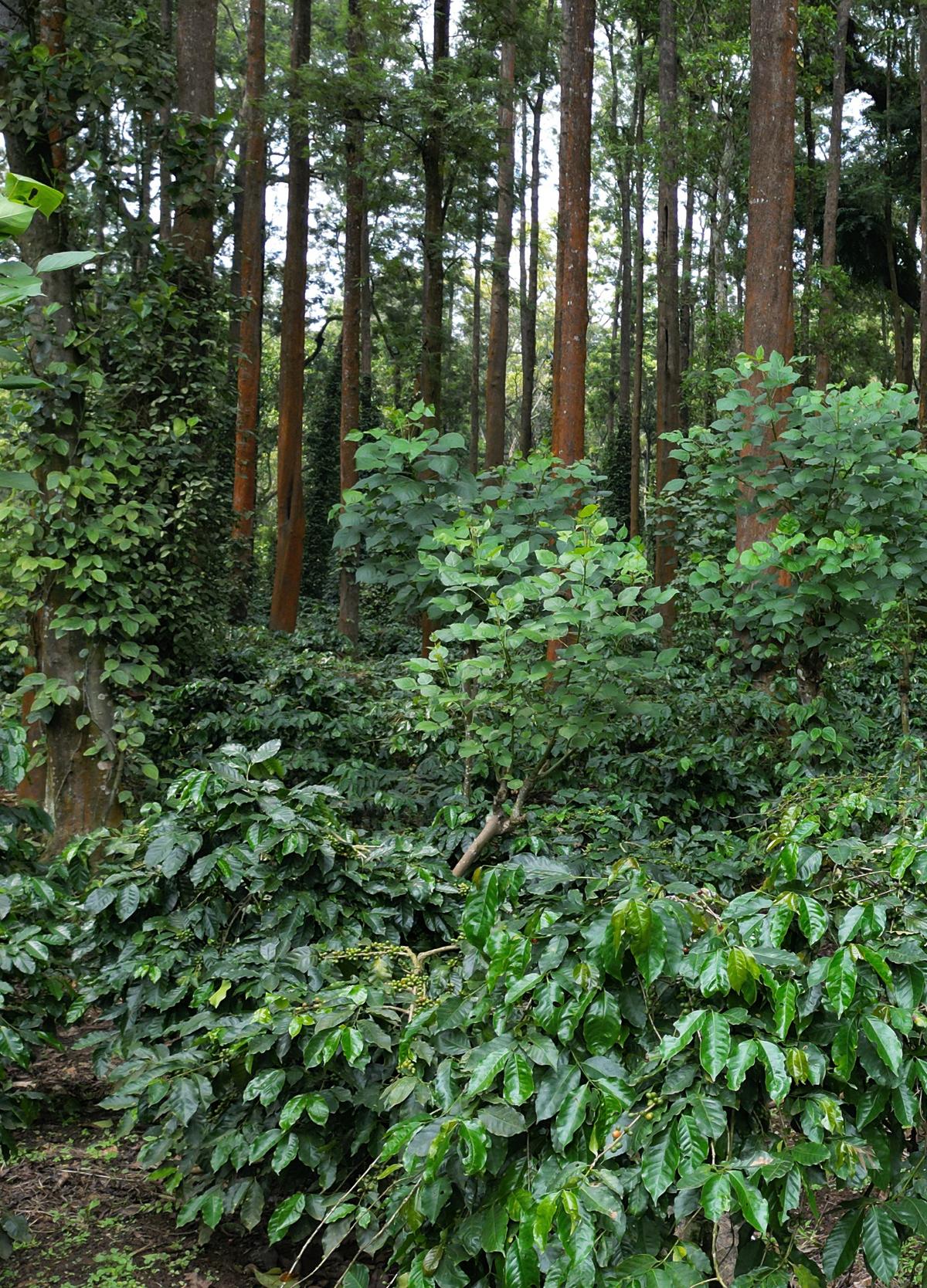
Shade-grown coffee at a Coffee estate in Kodagu district (Coorg), Karnataka. File | Photo Credit: Murali Kumar K.

India’s major plantation sectors such as rubber and coffee have heaved a sigh of relief as the EU Parliament has voted in favour of a proposal by the European Commission to delay the implementation of EU Deforestation Regulation (EUDR) allowing growers, exporters and traders additional time for compliance.

Accordingly, large coffee operators and exporters must meet EUDR regulations by December 30, 2025, while micro and small growers and traders have time until June 30, 2026 to comply, as against the earlier EU set mandatory due diligence procedures and compliance deadline of December 2024.

Being EUDR-compliant indicates a grower’s forest-based coffee produce is legal, and not sourced from any deforested land or unethically cultivated.

Notably, over 70% of Indian coffees are sold in EU countries, and therefore the compliance extension has direct implications on coffee players in India, although India was one among the few countries which grew coffee under two tier thick shade of native trees, say industry players. “Our coffee estates, in addition to coffee and shade trees has diverse flora and fauna. So Indian coffees are most sustainably grown.

In spite of that India opposed EUDR since the compliance does not incentivise sustainably grown coffees,” Coffee Board of India CEO and secretary K.G. Jagadeesha told The Hindu. “Now given that EUDR is a regulation already passed by EU, we have no option but to comply as 70% of Indian coffee exported is going to EU. Coffee Board is developing a platform for assisting coffee producers in India to comply with EUDR. We also welcome the EU decision to extend the deadline,” he added. However, the Coffee Board CEO said EUDR compliance burden on planters and growers would be huge as it required technological and financial resources which won’t be compensated.

Expressing similar concerns K.G. Rajeev, chairman, Karnataka Planters’ Association which represent over 70% of coffee growers in the country, said, ‘‘There are challenges in mobilisation of resources to invest by small and medium sized holdings to be EUDR compliant. Also there are elements of ambiguity. Strict enforcement without clarity on methodology to be implemented may not have desired results. All these may have adverse impact on productivity and profitability of the industry.”

According to Mr. Rajeev, EUDR is a regulation with requirements for due diligence and traceability, which needs lot of data to demonstrate compliance both on ground and documentation. He insisted that Indian coffee couldn’t be compared with coffees in any other geographies as it was predominantly grown under shade.

Coffee activities also encouraged preservation of existing forests which in turn provided habitat for variety of wildlife, avian populations and thus promoted natural biodiversity, he argued. Instead of putting the onus of compliance only on growers, industry institutions and government bodies should help in establishing compliance of regulations, he opined, adding, eco-friendly practices with improved soil health and carbon sequestration aligns with EUDR focus of protection of biodiversity and ecosystem.

Postponement of the implementation of the EU Deforestation Regulation is expected to buoy up the international market for rubber and related products in the short term, said Santosh Kumar, chairman of the Rubber Committee of the United Planters’ Association of Southern India.

“There were ambiguities and concerns in the market. Now that the EUDR will be implemented from 2026, the international market will have a positive impact in the short term,” he said. According to Rubber Board Executive Director M. Vasanthagesan, with the postponement of the regulation by an year, there is more time to prepare the rubber sector. The measures will continue, he added.

The board has entered into an agreement with Hyderabad-based TRST01 as its technology partner to issue due diligence certificates to rubber exporters. “We recently held a stakeholders meeting and will start registering the exporters. We plan to do it in phases, starting with select districts in Kerala. The small-scale exporters will pay an user-fee and register,” he said.

Industry sources said that of the annual production of about 8.5 lakh tonnes of natural rubber, only 4,000 tonnes are exported directly. However, exporters of rubber products will have to source from the growers who are compliant with the EUDR and so the impact will be on the growers.

source: http://www.thehindu.com / The Hindu / Home> Business> Industry / by Mini Tejaswi & M Soundariya Preetha / November 17th, 2024