Tag Archives: Coorg

The wedding looked like a dream wonderland: Bhuvann Ponnannaa

A look into actors Bhuvann Ponnannaa and Harshika Poonacha’s Kodava-style wedding in Coorg

Actors Bhuvann Ponnnannaa and Harshika Poonacha at their wedding in Coorg on August 24(Instagram)

Long-time sweethearts, actors Bhuvann Ponnannaa and Harshika Poonacha , tied the knot on August 24 in a traditional Kodava ceremony in Coorg. Since the big day, the couple has been on the move, shares Ponnannaa. “We are in the USA right now, before which we were in Mexico. We had to rush to the States immediately after our wedding because our friend was getting married. Since the night of our wedding, we have been country-hopping and are yet to complete all the rituals, so our parents are mad at us!” he quips.

Talking about the wedding, Ponnannaa recalls the stress that came with planning out the big day. “We got really held up in the last-moment invites as well, so there was literally no time to plan. Our parents and a couple of our friends took up various responsibilities leading to the big day,” he shares, adding that the completion of the construction of his farmhouse in Coorg also had him stressed. “The interiors of our new apartment in Bengaluru were also being done and I was trying to get our new car delivered before the wedding. Along with that, we were trying to manage our work,” the actor exclaims.

Ask him how it was on the big day itself, and the Randhawa (2019) actor tells us, “I reached Coorg from Bengaluru at 7am. I checked all the venue arrangements and by the time I wanted to get some sleep, the festivities had started. So, I meditated for a bit and left. When I reached the venue and saw the whole place all decked up, like a dream wonderland, it made all the hard work just so worth it.”

Telling us about the traditional Kodava-style wedding, the 33-year-old says, “Kodava weddings are very unique, so we could not plan too many extra functions because there already were a lot of rituals to complete from morning until midnight. But we were very particular about the food — it had to be traditional along with a couple of our favourites, like fresh mango curry in jaggery sauce, mutton keema, ghee ragi dosa, noolputtu and koli curry, Coorg-style liver fry, chicken ghee roast and mutton biryani!”

Looking forward to married life, Ponnannaa says nothing much is expected to change in the couple’s equation. “But of course we will work harder together for ourselves. Harshika is also going to be the producer for my next film,” the actor says, adding they are yet to decide on their honeymoon.

source: http://www.hindustantimes.com / Hindustan Times / Home> News> Htcity> Cinema / by Aayushi Parekh / September 12th, 2023

The Lost Heroes of Kodagu

A land known for its coffee and renowned for its generals and warriors, the history of Kodagu has never been traced to its origins, the thread of descent becoming a tangled knot of colonial theories and hearsays. But history is important for one to realise the essence of culture and one’s own identity. Without this realisation, much is lost, and more is at risk.

Kodagu has always been placed in the category of the areas that complied silently with the British, when in reality, its contributions were simply underplayed and whitewashed. Many braves from all backgrounds had been leaders and warriors in their own right, following Gandhian ideals and fighting passionately for freedom. 

The PM’s YUVA Mentorship scheme was an opportunity to shrug off this stereotype and uncover the truth. The Lost Heroes of Kodagu talks of those men and women who looked danger in the eye, unflinching even as blows landed on them left and right. It talks of those who rose and made sure their voices were heard despite attempts to muffle them. Those that history let slip through cracks and crevices, silent and dormant.

Recover them as you read. Watch as they come alive through the pages. Be inspired by their grit and determination, be empowered by their stories. But most of all – remember them, keep them in glorious memory.

Please do order the book on Amazon and leave a review: https://www.amazon.in/dp/9354918859/ref=smop_skuctr_view

I’d love to hear from you as well! Reach out at aaliamevada@gmail.com 🙂

source: http://www.bookofachievers.com / BookOfAchievers.com / Home> Snippets> Essay / by Aalia Chondamma / April 13th, 2023

Kodava over the years: Letters and sounds

Bacharaniyanda Appanna teaching I M Muthanna’s script at the Kodava Sahitya Academy in Madikeri.

Featuring unique words and vowels not found elsewhere, the Kodava language, spoken in Kodagu, is an independent Dravidian language. According to the most recent data from the Karnataka Kodava Sahitya Academy, there were 21 castes living in Kodagu who spoke the Kodava language: the Kodavas, Amma Kodavas, Kodagu Heggades, Kembattis, Airis, Koyuvas, Boonepattas and the Gollas (Eimbokalas), to name a few.

Kodagu was an independent principality in South India between 1633 and 1834. After the British annexed Kodagu in 1834, it was called Coorg and became a province of British India. After Independence, Coorg was retained as a state and placed under a chief commissioner. In 1956, when the states of the Indian Union were reorganised, Coorg became a district of Karnataka state. 

Kannada was the official language in Kodagu for much of its existence. The Kodava language generally uses the Kannada script. 

The earliest inscriptions found in Kodagu date back to the 9th and 10th centuries and are in Kannada. But there were two peculiar 14th-century inscriptions of Kodagu, dated around 1370-1371 AD found in the Bhagandeshwara temple of Bhagamandala and the Mahalingeshwara temple of Palur. Many have dismissed the inscriptions as a mixture of scripts and languages. In 2021, my work involved isolating letters used in both. I labelled the script used ‘thirke’ (meaning ‘temple’).

Several scripts

There have been a number of scripts invented for the Kodava language in the last 150 years or so. Koravanda Appayya, a doctor in the erstwhile Mysore State, had invented one with around 50 letters in 1887. 

Kodagu scholar Iychettira M Muthanna invented another alphabet for the language in 1970. Appaneravanda Kiran Subbaiah, a sculptor in Mysuru, invented one in 1980. In 1983, he introduced a variant of the Kannada script to accommodate the Kodava language. Often, Kannada or Roman characters (the script used for English) were adapted, sometimes with additional changes.

Ponjanda S Appaiah, a professor, used the Roman script with his own transliteration system in 2003 to write in the Kodava language. In his Kodava-English dictionary, Appaiah used combinations of English letters for the Kodava language. He authored the entire book in the Roman script.

On the other hand, the ‘Kodava Arivole’ (Kodava dictionary) by Boverianda Uthaiah is in the Kannada script and makes use of 35 of the 49 Kannada letters.

In 2005, German linguist Gregg Cox introduced the Coorg-Cox script. Three years later, Charles Henry Kumar, a teacher from Mandya brought out another script to write the Kodava language. 

Extra sounds

Boverianda Nanjamma and Chinnappa say that in addition to the five rounded Kannada vowels (with both long and short forms), the Kodava language has four unrounded vowels in their short and long forms and a nasal sound which accompanies some of the consonants. They have used five diacritical marks (symbols added above letters to indicate accent, tone and stress) in their works to accommodate these extra sounds. 

In February 2022, under the presidentship of Ammatanda Parvathi Appaiah, the Karnataka Kodava Sahitya Academy discussed the various scripts used for the Kodava language. Bacharaniyanda Appanna, a former president of the academy, taught those assembled the script invented by I M Muthanna. 

Upon comparison, it was declared that Muthanna’s script was the easiest to learn. The Kodava Sahitya Academy then recommended the Muthanna script to the Central Institute of Indian Languages to be made official.

Muthanna was of the opinion that his script was to be taught to children below the age of 15-16 years, says Appanna. “They will learn with passion and help promote the script when they write in it and inspire others,” he adds.

On why a script is important, Appanna says: “A script adds strength to a language, like how pillars strengthen a house. Yet, there are many prominent languages which do not have their own script. English uses Roman, Hindi uses Devanagari.” Having a native script is also important as it accommodates native sounds otherwise not found in other scripts.

Nerpanda Prathik Ponnanna, a language activist, has been popularising the Muthanna Kodava script by creating awareness about it through social media videos. He has also been getting signboards in the script for various shops, ancestral houses, and hockey tournament family teams.

source: http://www.deccanherald.com / Deccan Herald / Home> Spectrum / by Mookonda Kushalappa / May 10th, 2023

Empowering Women’s Health: Lopamudra Hospitals mark International Women’s Day

Empowering Women's Health: Lopamudra Hospitals mark International Women's Day

Gonikoppal (Karnataka) :

On the occasion of International Women’s Day, Lopamudra Hospitals, Gonikoppal organized a special event to celebrate women.

The event was graced by three renowned women from the region, Dr Gowramma Paruvangada, Consultant OBG at PNM hospitals, with five decades of practice in mother and child care, Dr. Fathima Kariappa, President of IMA Virajpet and Consultant OBG at Virajpet Nursing Home, and Uzma Jabeen, Panchayat Development Officer, the youngest in the district of Kodagu.

The event was presided over by the Managing Directors, Capt. Madappa M. A. and Dr Amrit Nanaiah M.M., a Consultant Physician at the Hospital. Dr Soumya Ganesh Nanaiah the Director of the Lopamudra Drishti Eye Hospital, a Cataract and Refractive Surgeon was present. She also emceed the event. Dr Sonia Mandappa, Consultant OBG, and Dr Trupthi Uthappa, Consultant ENT, were also present.

Speaking of their varied experiences, the Chief Guests enlightened the gathering on a multitude of topics.

Dr. Gowramma Paruvangada spoke about her long-standing commitment to serve women from rural parts of the country and her willingness to contribute more to the society at large. Dr Fathima Kariappa reminisced about how the babies she helped deliver were today doctors at the very Lopamudra Hospitals. She also emphasized the importance of women empowerment in today’s society and the role of family as an institution. Uzma Jabeen highlighted various government schemes available for women and how they could avail the benefits by contacting her.

The event was a sequel to a ‘Women’s Health Camp’ that saw more than 100 women availing the benefits of a health package curated to check overall well-being of women.

On the event of International Women’s Day, the hospital unveiled its new logo and a toll-free number for quick response. The hospital can now be reached at 1800 8333653. They also inaugurated the B Scan recently installed at the eye hospital. The B Scan is the first to be installed in Kodagu district. It can be used to assess the posterior segment of the eye in cases of media opacities and can be useful in cases of advanced cataracts

Dr Ruth Adhlaka, a Consultant Physician at the hospital, gave the vote of thanks, acknowledging the importance of such events and the hospital’s commitment to serving and empowering women.

www.lopamudrahospitals.com

This story has been provided by NewsReach. ANI will not be responsible in any way for the content of this article. (ANI/NewsReach)

This story is auto-generated from a syndicated feed. ThePrint holds no responsibility for its content.

source: http://www.theprint.in / The Print / Home> ANI Press Release / by ANI PR-News Reach / March 09th, 2023

The food we eat: Indian power foods from sattu to millets

Every part of our country has traditional ‘power foods’ that are simple, healthy and practical. Maize, bajra, jowar, dozens of varieties of millets and many more of rice.

Varagu Millet Tomato Pulao. Many of India's ‘power foods’ like bajra, jowar, maize and several varieties of millets are easier to cultivate than rice or wheat. (Photo courtesy Shradha Saraf)
Varagu Millet Tomato Pulao. Many of India’s ‘power foods’ like bajra, jowar, maize and several varieties of millets are easier to cultivate than rice or wheat. (Photo courtesy Shradha Saraf)

Having visited Bihar after many years, I was on my way to Patna airport to catch the return flight to Bangalore. Like most Biharis the driver was a talker, and a good one. After depleting our views on the political scene in the country and Bihar in particular, we were still two hours from Patna. Murari asked if I had eaten.

“No.”

“Aap Litti kayenge?”

“Hahn, kayenge.”

Litti roasted over hot coals on a chill morning in January is a treat not to be missed. It is like a wheat bun filled with a sattu, onion and jeera stuffing and traditionally eaten with a favourful tomato-rich baigan bartha cooked in mustard oil. We finished off with adrak ki chai and re-joined the commotion on the road. The hearty breakfast for two cost Rs 60.

The car sped forward and my thoughts lingered in reverse gear, dwelling on the years I spent as a surgeon in a busy mission hospital in Mokama, a hundred kilometers from Patna. In the post-operative phase after any abdominal surgery when a patient asked, “Can I eat sattu?” you knew he was on his way to recovery.

In Bihar sattu (roasted and powdered channa) is considered essential to wellbeing. It is vital for all Biharis; for those who have lived and worked there too it is a thumbs-up favorite. I used to drink sattu instead of the mid-morning tea during my years there. It is high in protein, easily digested and has a cooling effect in summer months. Patient-attenders always bring dry sattu for their use. Mixed with water and some salt, and eaten with green chillis and raw onion, it is also a convenience-food that can be carried on long journeys.

Every part of our country has traditional ‘power foods’ that are simple, healthy and practical. Maizebajrajowar, dozens of varieties of millets and many more of rice. However, our palates have got used to the monotonous taste of white rice and chappatis made from polished wheat. Their blandness demands highly spiced gravies thick with grease. Much worse are the maida-based snacks, breads, buns and sugary or deep-fried foods. Maida is refined wheat flour with all its nutrients removed, providing only the calories. It should not have a place in any kitchen cupboard or should be purchased only if necessary, for occasional use. In my childhood days it was popularly known as ‘Merkin Podi’ meaning ‘American Powder.’

Healthy eating is now increasingly common among upper class but upper class is only a small fraction in a country of 140 crore people. Most Indians cannot afford the luxury of eating the right foods. They are the daily-wage-earning labour in factories, construction, agriculture, domestic and hotel work; vendors, autorickshaw and bus drivers; the safai karmacharis, well- diggers, potters, plumbers, cowherds; their old and their young. Their main concerns regarding food are the cost of food, appeasement of hunger, cooking time and expense, and taste.

Until the early 1990s, an average family was satisfied with grains, pulses and locally grown vegetables, with meat, eggs, milk and fruit used sparingly. In my career I have seen how those who ate the most basic but natural food rarely suffered from heart disease, diabetes, obesity or high blood pressure. These diseases affected those who could eat processed foods with their high content of sugar, salt, fat and chemical preservatives –  namely the privileged classes.

With globalization, the floodgates of consumerism were opened and cheap, heavily processed food became affordable. It satisfied on all counts – Good to taste, economical, satiating and without the hassles or the expense of cooking. Result: A staggering number of our citizens belonging to all social strata began to suffer from the above ailments, plus others like recurring stomach disorders, reduced fertility, dental caries, anaemia and in children the attention deficit hyperactivity disorder or ADHD.

It is disturbing to acknowledge that our country is in the grip of a huge nutritional dilemma. India’s future will be shaped as much by the health of our people as by education, job availability and a more just distribution of wealth.

Every problem comes with a remedy. Here are some which will go a long way in ensuring good health for all our citizens.

As it is with most problems, one must go to the basics.

Many of the ‘power foods’ like bajra, jowar, maize and several varieties of millets (the pearl, the finger and the foxtail millet, to name a few) are easier to cultivate than rice or wheat. They need little water. It is possible to harvest two crops a year and in the intervening months, vegetables can be grown in the fields, thus promoting crop rotation. We should be replacing rice and wheat cultivation with these grains in a nationwide project. Rice and wheat can be grown in judiciously chosen water catchment areas. Thus, we can conserve millions of tonnes of water every year and bring remarkable improvement in the nutritional status countrywide. Children will have stronger bones, teeth and muscle and will no longer suffer from anaemia.

_____________________________

KAVERY NAMBISAN is an Indian surgeon and author of books like The Scent of Pepper, A Luxury Called Health: A Doctor’s Journey Through The Art, and Cherry Red, Cherry Black. Views expressed are personal.

___________________________

source: http://www.moneycontrol.com / Money Control / Home> News> Health & Fitness / by Kaveri Nambisan / March 05th, 2023

DJ Nikhil Chinapa Opens Up About VH1 Supersonic Music Fest: “A Well-Curated Artist Lineup Doesn’t Require International Names…”

Vh1 Supersonic curator Nikhil Chinapa said that it is not important to emphasise on international names to have a well-curated artist line-up,

Nikhil Chinapa on Supersonic: Curated artiste lineup matters more than global celebs(Photo Credit –Instagram)

Host, DJ and Vh1 Supersonic curator Nikhil Chinapa said that it is not important to emphasise on international names; but having said that, curating a lineup with artistes one doesn’t normally get to witness, is a part of the plan for his music festival.

The event will see the who’s who of the music world such as American rapper Tyga, English singer Anne-Marie and Nigerian singer-songwriter CKay among many others.

About how important is it to add international names, Chinapa told IANS: “It’s not. Having a well-curated artist lineup doesn’t require an emphasis on international names. That said, curating a lineup with artists you don’t normally get to witness, is a part of our plan. This includes Indian artists who haven’t been to Pune as well as international talent visiting India.”

Nikhil Chinapa is one of the most prominent faces in the music world. He is credited with popularising Electronic Dance Music (EDM) among the Indian youth. He is also known as the Father of Indian Dance Music for his various contributions towards revolutionising the outlook of Dance Music in the country.

Talking about his favourite hotspots where he’s performed and the best venues for performance in the country, Nikhil Chinapa said: “It depends on what we call ‘the room’ – which is more than the venue, it’s also the people, the vibe, the sound system etc. The best rooms are the ones where people come for music, as opposed to selfies. I’m not hating on selfies in a club though… or wait, maybe I am – but just a little bit!”

What is that one thing that is missing in the music scene in India? The 49-year-old, who has been instrumental in popularising DJing as a profession, answered: “Quality music journalism and significantly fewer selectors (music curators, playlist geeks, culture visionaries) than what I would expect a music population as large as ours to have.”

source: http://www.koimoi.com / koimoi.com / Home> Television & Web / by IANS / February 24th, 2023

Daredevil Act By Kodagu-Born Vet Saves Leopard In Mangaluru

She sits inside a cage, goes down 25-feet deep well to bring back the feline after darting

Mysore/Mysuru:

One of the most challenging and dramatic animal rescue missions has been accomplished by a Kodagu-born veterinarian Dr. Pandikanda Meghana Pemmaiah, now settled in Mangaluru. 

She recently saved a leopard that had fallen inside a 25-feet deep well and performed the act by sitting inside a cage that was lowered into the well to sedate the leopard that was stuck there and starving for 36 hours. She was able to pull the one-year-old feline into the same cage in a tense and dare-devil two-hour rescue operation. Her husband Dr. Yashaswi Naravi too was a part of the rescue mission. 

In fact, it was 31-year-old Dr. Meghana, who volunteered to go down the well. She told Star of Mysore that though she was scared as it was deep inside the well and the leopard was not visible from the top, the adrenaline rush to save the starving and stuck animal overcame the fear.

The incident took place near a house in Niddodi near Kateel in Dakshina Kannada, about 35 km from Mangaluru. “We got a call at 9 am on Feb. 12 from the Forest Department. We are a team from Chitte Pilli, a Wildlife Rescue and Research Centre in Mangaluru and the team comprises me, my husband and experts Dr. Prithvi Salian and Dr. Nafisa Kousar. We reached the place at 11 am with some necessary equipment for the rescue,” she said. 

After successfully tranquillising the big wild cat, Dr. Meghana being pulled up along with the tranquillised leopard inside the cage.

Failed attempts 

The Forest Department had tried to rescue the feline with a ladder and a cage, as in other instances the trapped leopard had walked into the cage when it was lowered inside a well. However, this leopard was unwilling to move, she added. 

The leopard was not visible from the top and it had taken shelter at a cosy spot that was shaped like a cave-like cavity — to avoid falling into the water — inside the sturdy well that was built with stones. The leopard was aggressive when attempts were made by the Department to drain the well water.

“Later, a different strategy was adopted and it was decided to lower a cage carrying a person to tranquillise the leopard and bring it back. We had no other choice and someone had to do it. I volunteered despite the dangers involved,” Dr. Meghana revealed. 

The leopard being treated after capturing in Mangaluru.

A risky mission

The cage was lowered by villagers, volunteers and the Forest Department staff in a coordinated action and with Dr. Meghana holding the tranquilliser gun. “We did not have a visual of the leopard and as such, it was a risky mission as no one had a clue as to how the leopard would react,” she said. 

“I waited patiently for a sight of the leopard as the cage was lowered gradually and finally I could spot the animal around 10 to 15 feet inside the well and it was growling at me though it looked exhausted without food and water. I had very little time and hence aimed the dart at the animal and shot at it. Luckily, it was a precision shot and the dart hit the feline’s thigh in the first attempt itself,” Dr. Meghana said. 

Meghana had carried about three to four syringes containing the sedating medicine as she did not know about its weight, size, health and other parameters for darting it. If she missed the aim the first time, she could well refill the tranquilliser gun with the second shot but the leopard could have moved away from the initial close proximity and there was more probability of her missing the shot. 

Growling leopard

“In fact, I had to sit inside the cage for over 15 minutes for the dart to take effect and the leopard was right in front of me. It was growling and looking at me. Slowly, the sedation process began and I tried to pull it to the cage but could not. Another youth got inside the well and helped me and we both put the 25-kg leopard inside the cage. It was a leopardess. Now when I look back, sometimes I fear what could have happened if something had gone wrong,” she said. 

So tense was the situation after the dart was fired that Dr. Meghana sat motionless inside the cage as any movement or noise would disturb the leopard and it would take a long time for the animal to get sedated. Finally, the feline fell unconscious after over 15 minutes. After the leopard was lifted back to the ground, it was checked and the vets found no external injury marks.

“It was a healthy leopard but was exhausted. After administering the required medicines for the feline to rejuvenate and get back its strength so that it has the capacity to hunt on its own, it was handed over to the Forest Department that released it back to the wild,” Dr. Meghana said.

Passion for wildlife keeps her going

Wildlife rescue operations are nothing new for Meghana and she has been a part of many rescue operations in the last six years in Karnataka. She has been a part of many missions where she has rescued and treated tigers, owls, star tortoises, pariah kites, crows, pigeons, birds and even pythons. 

“Passion about wildlife, increasing human-animal conflicts and the resulting rescue mission keeps me going. I dread to see an animal suffering due to injuries,” she said.

Every year, she does almost 10 darting procedures after following the scientific process and protocols. But this was the first time she had to get down into a well, sitting inside a cage to rescue a leopard. She hails from Halugunda village near Virajpet in Kodagu district and studied in Bengaluru.

Dr. Meghana treating a python.

After completing her PUC from Christ College, Dr. Meghana did her BVSc followed by MVSc in Wildlife and Surgery from Veterinary College, Bengaluru. The next four years, she worked in People For Animals (PFA) as a senior veterinarian and this gave her on-hand exposure to animal rescue and medication.

Her father late Pandikanda M. Pemmaiah was a retired Superintendent of Police and her mother P.P. Sarasu and rest of the family live in Bengaluru. She married veterinarian Dr. Yashaswi Naravi of Mangaluru and both have been working at Chitte Pilli — a Wildlife Rescue and Research Centre.

source: http://www.starofmysore.com / Star of Mysore / Home> News> Top Stories / February 21st, 2023

23rd Kodava Hockey Festival From March 20

Hosts Appachettolanda family expecting participation of more than 350 teams

Madikeri:

The Kodava Family Hockey or ‘Hockey Namme’ is back with a bang after a gap of four years. This time, the tournament will be hosted by the Appachettolanda family from March 20 to April 10, 2023 at Napoklu village in Kodagu.

“After 2018, the hockey festival did not see the light of the day due to natural disasters and the COVID-19 pandemic. We will be organising the 23rd annual ‘Hockey Namme’ in 2023 in a grand manner. The fest will be held at Napoklu General Thimayya Ground and more than 350 Kodava families are likely to take part in the tournament,” said Appachettolanda Manu Muthappa, the President of the Hockey Festival Committee.

Addressing a press conference in Madikeri recently, he said that in the last hockey tournament held in 2018, a total of 333 Kodava families participated in the Kulletria Cup Hockey and this time, they were expecting the participation of more than 350 families.

The festival is being conducted under the aegis of Kodava Hockey Academy.

It may be mentioned here that to prepare the family teams for the upcoming hockey festival, the Kodava Hockey Academy had organised the first Pandanda M. Kuttappa Memorial Cup rink hockey festival, in memory of the founder of the Academy and the hockey festival. It was organised from Oct. 27 to Nov. 6 at Ponnampet Turf Ground and a total of 114 teams had participated.

The logo of the Appachettolanda Cup family tournament was unveiled in Bengaluru recently by Chief Minister Basavaraj Bommai where a delegation of the family had called on the CM. Virajpet MLA K.G. Bopaiah, MLC Suja Kushalappa and the tournament-organising family members were present.

“The CM has assured us that a Rs. 1 crore grant will be released for the hockey festival for the first time and the CM has consented to inaugurate the tournament on March 20. In all, Rs. 1.50 crore will be spent for the festival and the remaining Rs. 50 lakh will be pooled-in by the family members and collected from donors. We are planning to invite and felicitate a host of national and international hockey players who have made the Kodagu district proud and hockey champions from all communities will be honoured,” Manu Muthappa said.

In all, three grounds will be utilised for the hockey festival and they will be also used as a back-up in case it rains. Kodava Hockey Academy President Pandanda Bopanna, who is the son of late Pandanda Kuttappa, will be one of the guests in the inaugural event. “It was his father who launched the first Kodava Family Hockey Tournament in 1997 and was organised by the Pandanda family, Manu Muthappa noted.

Secretary of the Hockey Festival Committee Appachettolanda Vasanth Muthappa, members Appachettolanda Harish Somaiah, Appachettolanda Ravi Monnappa, Appachettolanda Janath Kumar and others were present.

source: http://www.starofmysore.com / Star of Mysore / Home> News / December 13th, 2022

Armed forces flag day

The Armed Forces Flag Day was observed in Madikeri in Kodagu on Wednesday. | Photo Credit: Special Arrangement

The Kodagu district administration and Department of Sainik Welfare and Resettlement observed the Armed Forces Flag Day at General Thimmaiah Memorial Bhavan in Madikeri on Wednesday.

Lieutenant Colonel (Retd) Mahaveer Chakra P.S. Ganapathy, Deputy Commissioner B.C. Satish, Superintendent of Police Capt M.A. Aiyappa, Air Marshal (Retd) Cariappa, Lieutenant Colonel Chacko, Kodagu Zilla Panchayat CEO S. Akash and other dignitaries were present on the occasion.

Every year, December 7 is observed as Armed Forces Flag Day throughout the country to honour martyrs and men in uniform, who valiantly fought and continue to fight on the country’s borders.

source: http://www.thehindu.com / The Hindu / Home> News> India> Karnataka / by The Hindu Bureau / December 07th, 2022

Coorg farmers are now growing coffee that is helping the environment

A unique eco-certification initiative in Kodagu’s famous coffee estates offers fresh hope for preserving native rainforests of the Western Ghats.

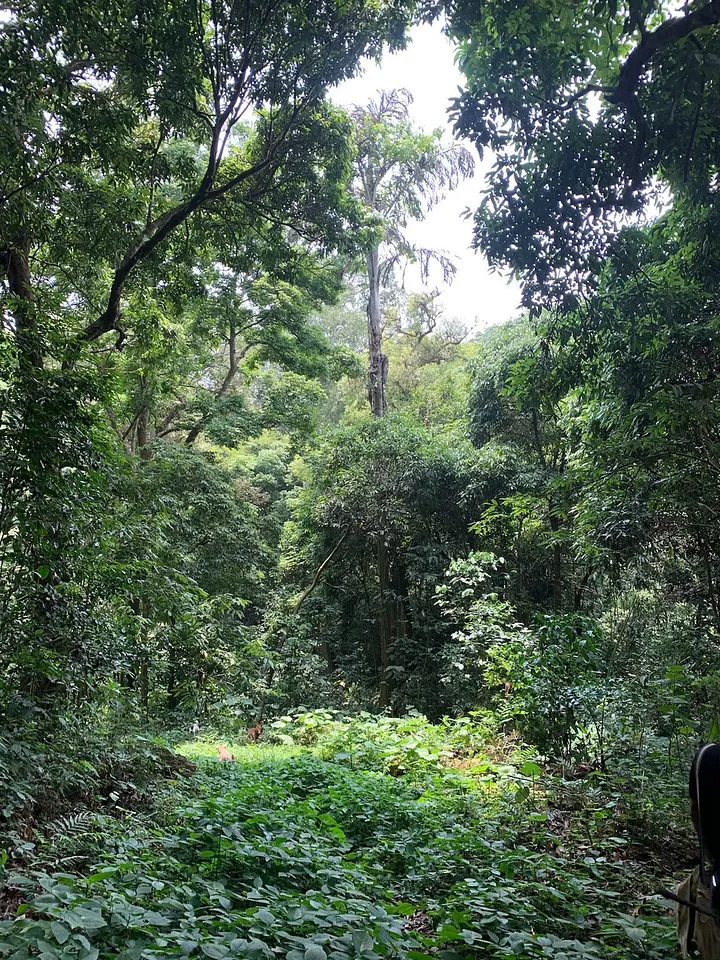
Growing coffee in the shade of evergreen trees in Kodagu. | Gopikrishna Warrier

There was a time in the not-too-distant past when coffee farmers in Kodagu district of Karnataka grew their plants only under the canopy of evergreen forests they had inherited. Now they prefer to grow it under the sun, which has serious implications for the Western Ghats and on the waters of the Kaveri River.

More and more farmers are now letting trees such as Dadup (Erythrina subumbrans), Arecanut (Areca catechu), Balanji (Acrocarpus fraxnifolius) and Jackfruit (Acrocarpus heterophyllus) die so that the canopy can be opened up and they can grow sun-loving coffee varieties that produce more berries and beans, resulting in higher returns.

Instead of the big trees, they are now planting exotic Silver Oaks (Grevillea robusta), whose pole-like trunk can be used as a support for the climbing pepper vines, which help boosting incomes. The proliferation of Silver Oaks has made it one of the more common trees in some parts of the area.

This transition has a larger ecosystem cost. Kodagu, earlier known as Coorg, is located on the western edge of the Mysore Plateau, at an average altitude of 800 metres, as it lifts up to the crest of the Western Ghats ridge (altitude above 1,500 m) and then falls sharply westwards into Kerala. The plateau mainly slopes eastwards, with the streams and rivers joining to form the Kaveri River, which is the lifeline for millions of people in Karnataka, Tamil Nadu and Puducherry.

With insufficient rains over the Western Ghats during this year’s southwest monsoon, there is a shortage of water in the reservoirs across the Kaveri in Karnataka. This has led to the flaring of the water-sharing dispute with the lower riparian state of Tamil Nadu in recent days.

While this acrimony continues, payment for ecosystem services measures are being worked out in Kodagu district so that coffee farmers protect the forests under which they grow their crop, thereby preserving the water flow into the Cauvery. These measures also help to maintain the climate resilience in the river’s catchment and command areas.

With the forest-like mixed-tree canopy in coffee plantations disappearing, the torrential rains of the southwest monsoon flows quickly down the streams, carrying valuable topsoil away and causing floods followed by long dry periods downstream.

Paying for ecosystem services

The Kodagu farmers are being encouraged through payment for ecosystem services, in the form of eco-certification, to continue with their traditional coffee cultivation under the shade of mixed species of trees. This will help strengthen the ecosystem services they receive from the unique landscape of Kodagu, and also strengthen similar services and climate resilience of all those relying on the waters of the Kaveri downstream.

The concept of eco-certified coffee, whose certification process ensures that coffee is grown under mixed-species trees, has gained popularity in the district in the past five years. Close to 900 coffee farmers have converted to eco-certified coffee. Even with a conservative estimate of 10 acre per farmer, this means nearly 10,000 acres of eco-certified coffee. In addition, with Tata Coffee getting all of its 13 estates eco-certified, Kodagu district has at least 20,000 acres under coffee cultivation that aims to minimise damage to the environment.

As an incentive for protecting the environment, the coffee farmers get a premium above the market price for their coffee beans. Coffee is the major agricultural produce from Kodagu, with 33% of the district landscape under its cultivation. About 38% of India’s coffee production comes from the district.

Ecologically, Kodagu district has been identified as a micro hotspot of biodiversity under the larger Western Ghats region. Rightly so, since the western crest of the mountainous district is in the direct path of the southwest monsoon. The dark clouds heavy with rain dump much water over the district. While the western edge of the district receives above 5,000 mm of rainfall on an average, it reduces to around 1,200 mm in the east. Most of the water feeds into the Kaveri.

According to a report by the College of Forestry at Ponnampet in Kodagu, natural forested ecosystems cover an area of 46% of the total area of the district. These include evergreen, semi evergreen, moist deciduous, dry deciduous and scrub forest types, and even the high-altitude shola-grassland ecosystem.

Traditionally, coffee is grown in the shade of these forests. Coffee estates in Kogadu have on an average 350 trees per hectare, compared with 270 in degraded groves and 640 trees per hectare in the nearby Brahagiri Wildlife Sanctuary, making these estates amongst the densest agro-forestry systems in the world.

“Very few landscapes across the world grow coffee in the way in which Kodagu does,” said C.G. Kushalappa, university head for forestry and environment sciences at the College of Forestry, Ponnampet in Kodagu. “We grow both Arabica and Robusta coffee under the shade of the trees. Our shade-grown Robusta fetch a premium price. When grown under the shade, the berries mature slowly and fill out better. They have good cupping (taste) quality.”

Coffee plants are increasing being cultivated under exotic Silver Oak trees. (Photo by S. Gopikrishna Warrier)

However, he needed scientific data to convince the coffee farmers and the district administration that there was strong ecosystem benefit in maintaining the traditional shade-growing methods. The opportunity for doing this research emerged when the College of Forestry was chosen as the lead institute in India to carry out the Coffee Agro-Forestry Network, or CAFNET study to understand the environmental services from this unique landscape.

Financed by the European Commission, the study was jointly conducted by the College of Forestry, the Coffee Board, the French Institute at Puducherry, CIRAD (the French national agricultural research system) and Bangor University from the United Kingdom between 2007 and 2011.

Rich local knowledge

The study noted that the multi-storeyed coffee agro-forestry system developed and sustained by the farmers based on their local knowledge is one of the most diverse production systems in the world. The traditional coffee agro-forestry system sustains diverse animal, bird, plant and microorganisms, and provide biodiversity, carbon sequestration and water-related ecosystem services. Since multiple crops such as pepper, mandarin oranges, vanilla and timber is also grown in these systems, they help provide resilience to farmers when they are hit by coffee price volatility.

The CAFNET report recommended that coffee farmers growing Arabica and Robusta under shade trees should be paid for the ecosystem services that their farms provide, so that they can protect biodiversity and therefore water in the Cauvery. Two methodologies for payment for ecosystem services suggested was eco-certification and geographical indications protection for Kodagu coffee.

Eco-certification of coffee farms in Kodagu started as a follow-up to this recommendation. Coffee farmer BB Thammaiah says his interest was piqued when students from the College of Forestry came to his farm to carry out biodiversity studies. “After the studies I was told about the uniqueness of the method in which I grow coffee, and I went in for eco-certification,” he said.

The two eco-certifications that have been popularly accepted are from the Rainforest Alliance and Utz. Coffee grower KK Naren in Kunda village near Ponnampet said the main benefit of the eco-certification process is that farmers are trained in good practices that have good environmental benefits and improve the working and living conditions for the workers.

“The economic benefit is not much,” he said. “It is more of training for us, which will be beneficial in the long run. The eco-certification process educates the coffee farmers about the environment.”

Importance of native trees

The most important lesson from the training relating to the eco-certification, according to Narenm was the understanding on the importance of native trees. “It is not that we didn’t know about native trees but we were not that keen on maintaining them,” he said. “The native trees do not give good financial returns, so we gave importance to silver oak.”

According to Naren, the Rainforest Alliance eco-certification process looks at whether native shade trees are present. The certifiers and auditors also look at labour management, whether the minimum labour wage is paid and the cleanliness around the labour quarters. They are very strict about not using child labour. “They also look at the way chemicals are used,” he said. “They are not saying no to chemicals but there are restrictions to some chemicals and the way the rest are used. They are keen that we should not use pesticides of chemicals near the rivers or tanks. They give importance to maintain local environment.”

Individual planters like Thammaiah and Naren got an opportunity, through the eco-certificaion process, to access the international market through a Swiss procurement agency that buys higher quality coffee. Both of them sell their eco-certified coffee to Ecom Gill, who procures the eco-certified produce for supply to Nespresso.

BB Thammaiah in his coffee farm where the plants are grown under the shade of native evergreen trees. (Photo by S. Gopikrishna Warrier)

For Tata Global Beverages Ltd and its production subsidiary Tata Coffee Ltd, the move to eco-certification of all of its 13 estates in Kodagu was an important step in the process to make its supply chain sustainable. According to Anurag Priyadarshi, global sustainability manager for Tata Global Beverages, one of the guiding principles that the group has adopted is to source sustainability. For this, all their estates in Kodagu have been eco-certified by Rainforest Alliance and Utz.

“Through the eco-certification process we are trying to ensure good management practices for the ecosystem, energy, water, waste, soil and agro-chemicals. We ensure the safety of the produce and also occupational health of the workers. Ultimately we want to prevent the impacts of climate change,” he said.

MB Ganapathy, head of plantations for Tata Coffee, said the company is aware about the fact that they are growing coffee in Kodagu, which is a biodiversity hotspot in the Western Ghats. “We have recognised this fact and that is the reason that our vision is to enhance the ecological wealth we have inherited. The eco-certification helps us safeguard the environment.”

Challenges remain

However, the rapid spread of the eco-certification process has also raised some hiccups which need to be overcome, states TR Shankar Raman, scientist at the Nature Conservation Foundation, whose organisation was involved with helping Rainforest Alliance with the certification in the initial years. The three points of concern, according to him, is the very rapid pace at which certification is being done; the relative absence of biologists and social scientists in the auditing process; and the dilution of conservation standards (like the requisite number of native species and canopy cover) in subsequent versions of the certification guidelines.

“While the rapid certification has more and more farmers being eco-certified, we hope the rigour of the process continues to be maintained, so that the end result of conserving the native vegetation is not compromised,” Raman observed.

With more farmers opting for eco-certification, there is a movement towards the protection of the traditional methods of coffee cultivation under the shade of mixed-tree species. For the process to strengthen the farmers should continue to get good economic benefit for their eco-certified produce.

According to Naren, if there is at least 10% more returns from the eco-certified coffee remains constant then there will be an incentive for the opting for opting for the process. At present the price at which procurement agencies such as Ecom Gill buy is linked to the international market price, plus a premium of Rs 60 to Rs 80 for a 50 kg bag of sun-dried cherries. The international prices fluctuate in relation to the local market prices, and as with the current situation can go below the domestic price.

However, Kushalappa says that in addition to the premium, there are other incentives and bonuses for producing good quality coffee beans. The average increase in price above the local market price was around 15% last year, which is well worth the effort.

If additional income for coffee farmers from eco-certification can help conserve unique agro-forestry ecosystem of Kodagu, then it will be the water flow into the Cauvery that would be conserved. Millions of people downstream, including the residents of Bengaluru and other parts of peninsular India, will thank the coffee farmers upstream for their drinking water and climate resilience.

This article first appeared on India Climate Dialogue.

source: http://www.scroll.in / Scroll.in / Home> Environmental Balance / by S Gopikrishna Warrier / September 17th, 2016