She believes the tournament will encourage young players to participate in doubles competition. Shuttler Ashwini Ponnappa interacts with media at an event in Hyderabad on Wednesday to launch a women’s doubles badminton tournament.
Hyderabad:
Ace shuttler Ashwini Ponnappa is gung-ho about an exclusive women’s doubles tournament, the first ever, that will commence from October 5 and will be played across various cities in India.
Red Bull Shuttle Up will be played in Delhi (October 5), Bengaluru (October 7), Guwahati (October 13), Mumbai (October 20) and Hyderabad (October 14). “I have been dreaming of something like this. I have spoken about women’s doubles needing motivation and encouragement. I do hope that with this tournament we do get a lot of doubles players coming out there and enjoying themselves,” she said after announcing the tournament on Wednesday.
She believes the tournament will encourage young players to participate in doubles competition. “We are encouraging young girls to take up the event. It is quite often that the young girls want to take up singles but I would like to make them believe that they can take up women’s doubles and do well,” Ashwini said.
The doubles specialist also spoke of her experiences on the badminton circuit this year, about her coach Tan Kim Her and how it feels to be the senior most player in the team.
“I am happy at the way we have performed at the Commonwealth Games. Asian Games could have been better. We reached the quarters which was the first. Personally, I am happy that we won a medal at the CWG,” she said
“I am happy that the team won a gold that was a proud moment not just for me but for the entire team. I loved how the team got together… from the support staff, coaches to the players. It’s probably one of the best feelings I have being a part of this team. I respect everyone in the team and we work together,” she added.
She also spoke of her transition in the team after Jwala Gutta’s departure from the circuit. “From being one of the youngest in 2010 to the eldest in the team now, it is funny. I think that the entire team is quite experienced. In doubles, I have much more experience than my partners but they have their mind in place, so it becomes easier for me with them. When Jwala was there in 2010, I was the rookie and I did not know anything. These guys have experience and they do not need to start from scratch,” she said.
Ashwini also feels that having a specialist doubles coach in Tan Kim Her has helped the team a lot. “He is looking at doubles in particular. He wants to make doubles players do well. His attention makes a huge difference. There are a lot of new partnerships that were formed after he came in. He broke broke the older partnerships and formed new ones. None of us were happy back then but it is nice to see that those partnerships have done well,” she expressed.
However, Ashwini feels the teams need more coaches in order to get better training. “Tan is the only one in seniors so it is really tough for him to focus on everyone who is in the national camp. It is important to get more coaches so that the entire pool can be looked after,” she said.
source: http://www.deccanchronicle.com / Deccan Chronicle / Home> Sports> Badminton / by Conrad Dias, Deccan Chronicle September 27th, 2018
The annual get-together of Sri Igguthappa Kodava Association, Vivekanandanagar, will be held on Sept. 30 (Sunday) at Kodagu Sahakara Sangha in Jayalakshmipuram from 9.30 am onwards.
Kalapanda B. Vishwanath, President, Sri Sri Shivabalayogi Maharaja, Mysuru Division, will be chief guest.
Sangha President Moodera B. Belliappa will preside.
The day-long event includes presentation of Scholarships to meritorious students, sports and games, lucky-draw.
For details contact Mob: 99013-92444.
source: http://www.starofmysore.com / Star of Mysore / Home> In Briefs / September 28th, 2018
Tata Starbucks in India is taking its coffee heritage and inspiration to celebrate International Coffee Week this year with coffee-forward experiences and special promotions across its stores.
Recognised in delivering consistent, authentic in-store experiences, rooted in high-quality Arabica coffee, Tata Starbucks is celebrating the art of coffee from heritage to brewed innovation over a seven-day celebration titled ‘Starbucks Brewtober’, beginning October 1.
To celebrate coffee, Starbucks stores, which bring to life the Third Place experience, will feature seven international whole bean coffees handpicked from seven different parts of the coffee belt, allowing customers to ‘Travel the World in Seven Sips’ this International Coffee Day- October 1.
Other experiential activities during the week include ‘Farm to Cup’ story – an immersive coffee tasting experience that brings to the fore Starbucks’ commitment to ethically sourced coffee and its 47-year old legacy of coffee processing and roasting; ‘Starbucks Coffee Experience Bar’- a masterclass into the art, craft and science behind different cups of coffee and ‘Latte Art’ – a showcase of the craft of Starbucks partners.
On October 6, Starbucks Brewtober brings ‘Starbucks 100’ – a day Starbucks shares coffee love with all its customers by offering them any short/ tall Starbucks beverage at only Rs 100 across all its stores in India.
Continuing with the celebrations, Starbucks is also offering My Starbucks Rewards Gold Members an exclusive offer on October 7.
“At Starbucks ,we take great pride and joy in partnering with customers on their journey of coffee exploration and are committed to delivering an unparalleled coffee experience. With ‘Starbucks Brewtober’, Tata Starbucks commemorates coffee with a week-long celebration. ‘Starbucks Brewtober’ offers coffee lovers a unique way of celebrating coffee, starting with various immersive coffee experiences to the big day of ‘Starbucks 100’ – a day when Starbucks shares coffee love with its customers by offering all its short/ tall handcrafted beverages for only Rs 100,” said Veetika Deoras, Head – Marketing, Category, Digital and Loyalty at Tata Starbucks Limited.
“We hope to celebrate coffee and the spirit of Starbucks through the week and look forward to welcoming our customers in our stores,” she added.
International Coffee Week will be celebrated across all Starbucks stores in India from October 1 to 7, 2018.
SOURCE: ANI
source: http://www.siasat.com / The Siasat Daily / Home / by Syed Qayam Ali / September 26th, 2018
It won’t be wrong to say that for most of us, starting the day with a freshly brewed cup of coffee is what we look forward to! This beverage has the power to kick-start our day and instantly switch our work-mode on. It’s a beverage over which we socialise, something that is a go-to for an instant mood uplifting.
Coffee production in India is big in the South Indian states; with Karnataka accounting for 71%, followed by Kerala with 21% and Tamil Nadu producing 5%. Indian coffee is said to be the finest coffee grown in the world, with a large part of our production (80%) exported through the Suez Canal to Russia, Spain, Netherlands and France.
Let’s look at where the magic beans are cultivated down South:
Araku Valley, Andhra Pradesh
Araku Valley is a hill station in the Visakhapatnam district of Andhra Pradesh. Spread along the Eastern Ghats, the place is inhabited by different types of tribes that contribute in growing coffee in the region. In fact, the tribals have their own brand of brilliant organic coffee called Araku Emerald. Apparently, the first by a tribe in India. Other regions in Andhra Pradesh where some great coffee is produced are Chintapalli, Paderu and Maredumilli.
Coorg, Karnataka
Coorg is home to many coffee plantations that produce a good amount of the country’s Arabica and Robusta varieties. If you’d like to stay in close proximity of the plantations, then staying in one of the properties or home-stays within these plantations would be a great idea. Some options are Rainforest Retreat at Mojo Plantation, Tata Coffee’s Plantation Trails, Silver Brook Estate, and Comfort Homestay. November is a great time to visit because that’s when berry picking is in full swing.
Chikmagalur, Karnataka
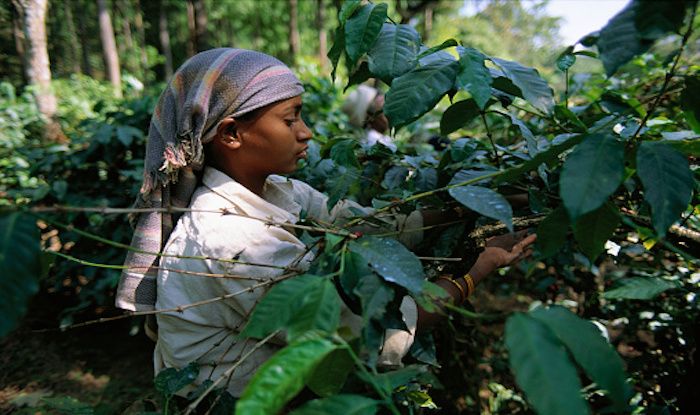
Image Courtesy: Getty
Apparently, Chikmagalur is first place where coffee was introduced in India. Located in the foothills of Mullayanagiri range, it is touted as the coffee land of Karnataka. Its geography and climate makes it one of the largest coffee estates in Karnataka followed by Kodagu, Coorg and Hassan. Kerehaklu Eco Retreat is a great place to stay at because it houses 275 acres of lush green coffee plantation.
Wayanad, Kerala
One of the green, beautiful hills of Malabar region, Wayanad is located in the mountains of the majestic Western Ghats. The pleasant climate here is responsible for the ever-green forests, flowing lakes, some amazing flora and fauna and of course a variety of coffee plantations. The main varieties in the region include Rubusta and Arabica.
Yercaud, Tamil Nadu
The small, young hill station is located in the Shevaroys range of hills in Tamil Nadu. Yercaud is known for its orange groves, and fruit, spice and major coffee plantations. A perfect place to stay is the Glenrock Tea Estates because it’s a property with a fully-functioning coffee estate, which means you can witness the entire coffee-making process with a tour of their plantation. The Nilgiris District, Coonoor and Kodaikanal are other places in Tamil Nadu known for their coffee plantations.
source: http://www.india.com / India / Home> News Travel / by Charu Chowdhary / September 26th, 2018
Gulshan Devaiah is getting all the praises at the prestigious Toronto International Film Festival (TIFF) 2018 for his performance in the upcoming Vasan Bala directorial ‘Mard Ko Dard Nahi Hota’ (‘The Man Who Feels No Pain’). The actor’s film which premiered at the TIFF 2018 has gone on to win the Grolsch People’s Choice Midnight Madness section award after beating big-budget Hollywood franchises like ‘Halloween’ and ‘Predator’.
Gulshan is playing a double role in the film — a mysterious Karate Master named Mani and his psychotic twin named Jimmy. His dual performance is being lauded by the critics and audiences with Gulshan being called “an irreplaceable component to the film who brings great energy to every scene he is in”.
“Vasan and I worked again after his first film ‘Peddlers’. Vasan is a fabulous talent. I am so happy for him that ‘MKDNH’ was so widely appreciated by the audiences and critics in Toronto where they were demanding a sequel. I am so overwhelmed by what people are saying and writing about our film and my performances,” says Gulshan.
‘Mard Ko Dard Nahi Hota’ is Gulshan and director Vasan Bala’s second collaboration after the 2012 crime thriller film ‘Peddlers’.
source: http://www.freepressjournal.in / The Free Press Journal / Home> Entertainment / by FPJ Bureau / September 25th, 2018
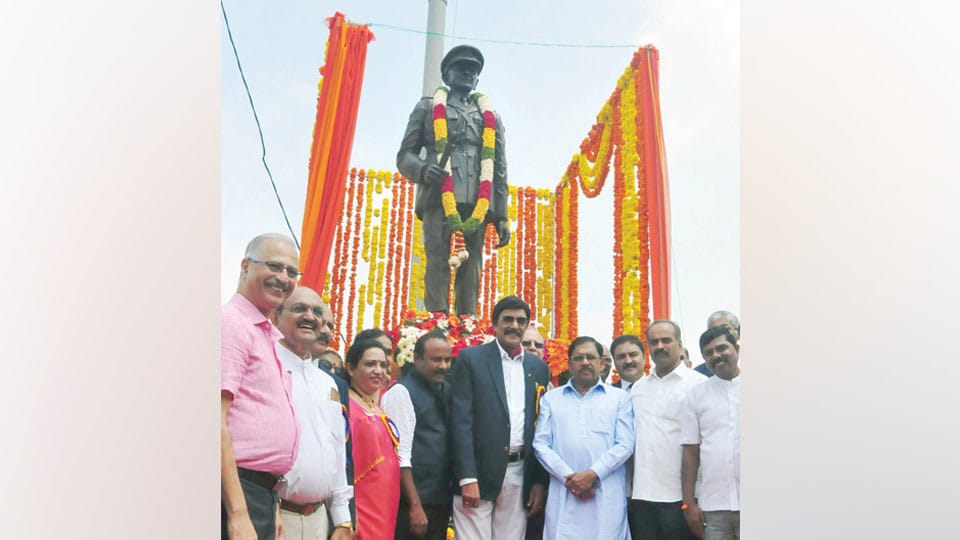
Deputy Chief Minister Dr. G. Parameshwara, who unveiled the statue of Field Marshal K.M.Cariappa at Miller’s Road Junction near Kodava Samaja in Vasanthnagar, Bengaluru, this morning, is seen with Bengaluru Mayor Sampath Raj, Samaja President Ravi Uthappa, Advocate M.T. Nanaiah, former Karnataka Media Academy Chairman M.A. Ponnappa and others.
It may be recalled, a life-size bronze statue of Field Marshal K.M. Cariappa, the first Commander-in-Chief of the Indian Army, was unveiled at the Officers Training Academy (OTA) in Chennai during June 2018 by his son, retired Air Marshal K. C. Cariappa.
Also, Chief of the Army Staff, General Bipin Rawat had unveiled the bronze statues of Field Marshal K.M. Cariappa and General K.S. Thimayya at Cauvery College in Gonikoppal, Kodagu district, in November 2017.
source: http://www.starofmysore.com / Star of Mysore / Home> Gallery> Photo News / September 26th, 2018
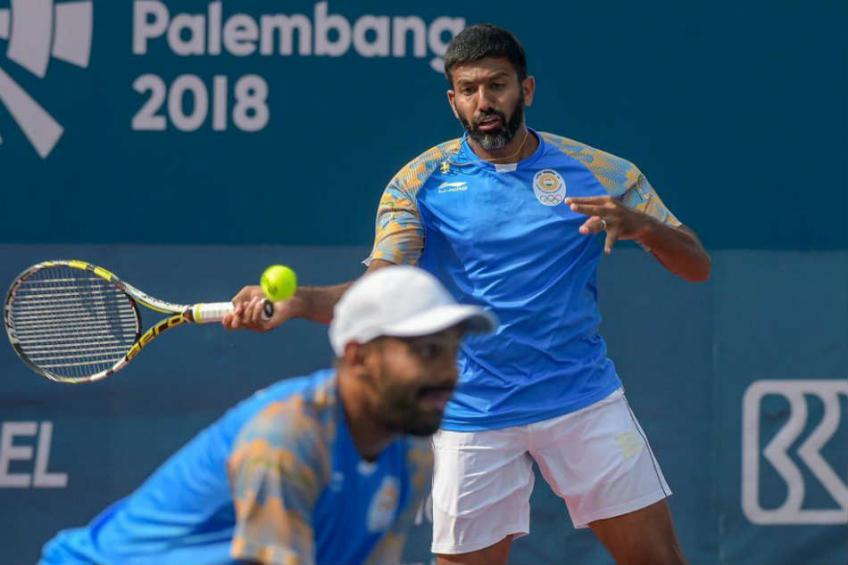
Indian doubles star Rohan Bopanna was recently awarded the Arjuna Award and the Asian Games Gold Medalist could not have been happier. The 38-year old won the French Open Mixed Doubles title last year and the Asian Games this year would have loved to be present for the Award distribution ceremony but had to travel for the China Tournament.
“The Asian Games gold was more special, especially because of the fact that I had a tear on my Latissimus Dorsi (shoulder muscle) and was out for six weeks. To come straight back to competitions like the Asian Games and the US Open, I was extremely happy with my performance,” said Bopanna, who also reached the US Open Doubles Quarter-Finals.
Bopanna was hoping that he was in contention for India’s highest sporting honour – the Rajiv Gandhi Khel Ratna Award. “It has been a long wait for me to get the Arjuna award. It truly means a lot. I was heart-broken last year when I did not get it.
I can surely keep trying in the future for the Khel Ratna,” Bopanna added. With four big events lined up in the season, Bopanna stays focussed to play his best. “Edourad (Roger-Vasselin) and [I] have an outside shot for the London Masters.
With two ATP 500 and two ATP 1000 Masters left, I still believe that we have a great chance to qualify for the year-end championship,” said Bopanna.
source: http://www.tennisworldusa.org / Tennis World / Home / by Philip Anderson / September 23rd, 2018
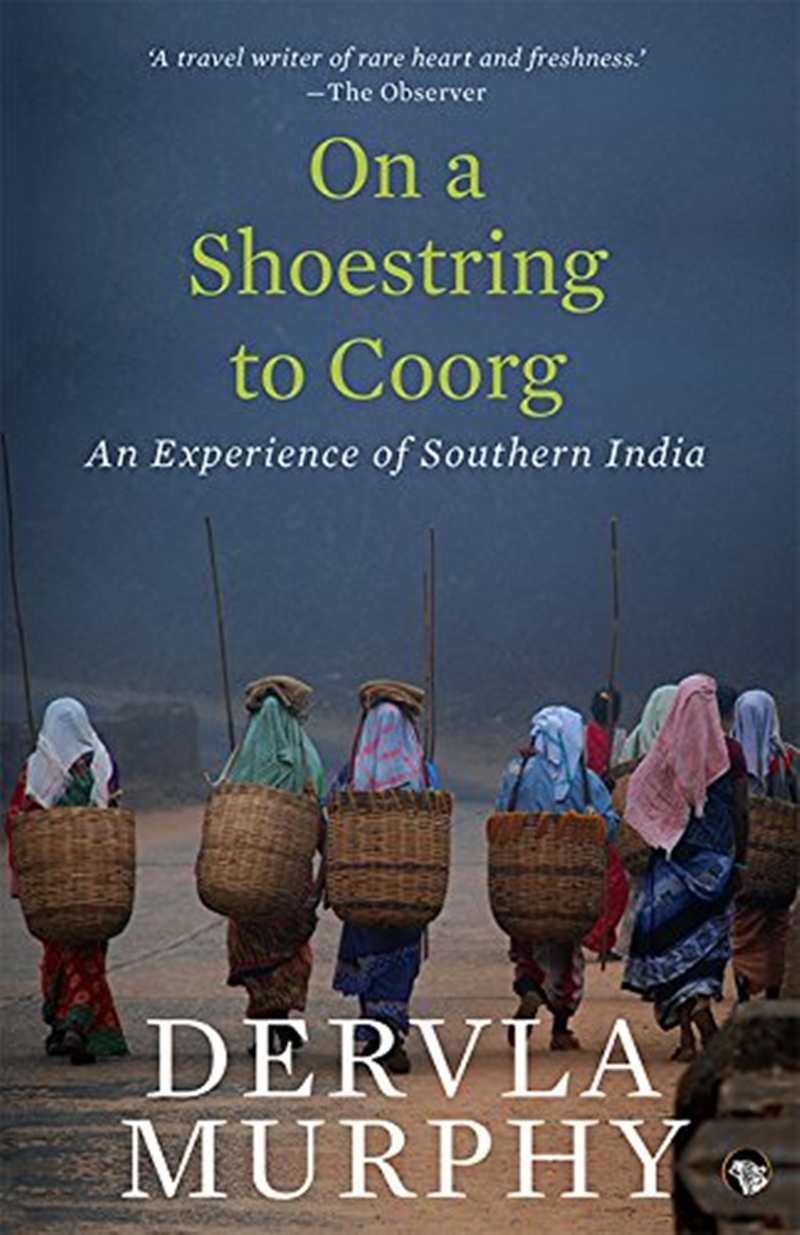
Best known for her 1965 book Full Tilt: Ireland to India with a Bicycle, adventure writer and eternal tourist Dervla Murphy is a legend of travel documentation and Irish cycling. On a Shoestring to Coorg is a thrilling account of her second visit to India, with her 5-year-old daughter Rachael.
The travel is thrilling because Murphy travels to India with little money, no concrete plans on where exactly to go and by which way, and no one to call her own in the alien land. She makes friends on the way — each one unique in his character and habits, made more so by her descriptions born out of keen observation of their idiosyncrasies and incongruities; travels to the most adverse and remote locales in south India, explores uncharted paths walking, moving on carts and buses and boats and notes down everything with piercing clarity and objectivity.
She loves India, which draws her repeatedly to her, but the love is not imbued with dramatic sentimentalism leading to heaps of unstudied praise. She loves India as she would love her own country — being critical where it needs to be, and also praiseful in places where it deserves. This lends the book a balance not always found in writers who are inundated by an overflowing sympathy for a foreign people or an alien culture. Often writers cross the threshold of restraint in their show of generosity for a different culture and exaggerate even the mundane chores of daily life to something quaint and exhilarating when actually they are not so.
Objectivity is the hallmark of a great writing and Murphy is a master of that, even to the extent of being disparaging at times of certain Indian ways which are obnoxious and irksome to one inured to a different standard of civility in the western world. She is wary of the intrusiveness of Indians in the personal space and their definition of cleanliness at times surprises her. But beyond individual stupidities or cultural drawbacks, Murphy sees the larger picture that is India — her glorious history and heritage, the simplicity and naturalness of life against western showbiz, the varied topography and climatic diversity, the capacity of the people to endure the hardships of life with resilience and equanimity, and the spirit with which they accommodate and accept an outsider as their own. These unique attributes of India are what stand out in this book and make it an informative and valuable document for both Indians and outsiders who want to have a view of India from a different perch and perspective.
Behind all her critical takes on India, lies Dervla Murphy’s deep love for the country and a deeper connect she feels with her that gives her the strength to embrace the difficulties of life here voluntarily, with a kind of persistence and gumption not naturally expected of a foreigner in the 1970s India, when travel and staying facilities, especially in the hinterlands, were largely rudimentary and unsavoury.
But if objectivity is her strength, brevity is not. The book is lengthy when gauged against the limited spatial dimension it covers and the detailing too minute and intricate to sustain patience. Many of the insignificant incidents which could have been dropped for the sake of pith make the book unnecessarily weighty and delay the more important turns and twists in the journey which are of greater interest to the reader.
Dervla Murphy has the eye of a cinematographer which forgets that its medium is not the camera but the printed letter, which needs a different idiom of expression.
source: http://www.freepressjournal.in / The Free Press Journal / Home> Book Review / by Diptiman Chakraborty / September 23rd, 2018
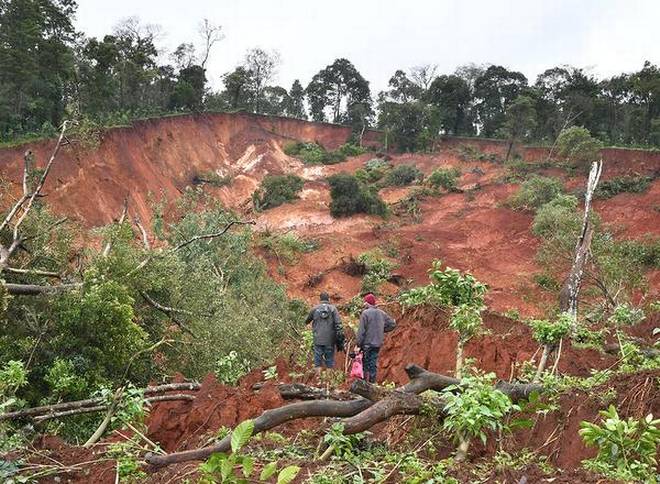
“A forestdepleted Kodagu basin will have reduced capacity to capture and store rainwater.” It is a picture of destruction in Hattihole near Somwarpet, Kodagu, after the floods. | Photo Credit: Sampath Kumar G.P.
Protecting the Kodagu watershed is essential to ensure the water security of three States
We require water for everything: drinking, growing crops, producing electricity and industrial production. With the world population projected to grow to about 10 billion by 2050, according to the United Nations, and with climate change discernible, both the quantity and quality of freshwater will become critical, affecting health, food security, and economic well-being. A 2015 UN report, Water for a Sustainable World, pointed out that the gap between the availability of water and our need for water is only going to increase.
Projects in the river basin
The growing demand on freshwater resources demonstrates the need for sustainable management of water. In this context, projects that are being contemplated, such as the laying of multiple railway tracks in the critical Cauvery river basin in Kodagu district, Karnataka, are not only economically unviable but also ecologically damaging. Mega projects pose a clear threat to the long-term water security of the three States that depend on the Cauvery (Karnataka, Kerala and Tamil Nadu), and exacerbate the threat posed by seasonal droughts and floods.
The Cauvery basin drains an area of about 81,000 sq. km. Originating in Talakaveri, Kodagu, the river irrigates agricultural fields, generates electricity, and provides drinking water to downstream communities across south India. The Cauvery and its tributaries contribute the bulk of water to the Krishna Raja Sagara dam near Mysuru, the primary water source for Bengaluru. However, increasing development pressure from the transportation and construction sectors poses a severe threat to the forests, riverbeds, wildlife and agricultural lands. This March, for the first time in decades, towns such as Virajpet in Kodagu faced a severe shortage of drinking water. The continuing loss of forest cover and illegal sand mining from river beds endanger water and food security for all the downstream communities in the Cauvery basin.
The three proposed railway plans have major implications. One, all the tracks will cut through large swaths of agricultural farms and fields as well as Protected and Reserve Forests that are spread across Kodagu and Mangaluru districts of Karnataka, and Wayanad and Kannur districts of Kerala. Along this sparsely populated area, transportation needs can be met by simply improving existing roads at a fraction of the monetary and ecological cost of the proposed railways. In fact, in its feasibility report of the Mysuru-Thalassery line, the Delhi Metro Rail Corporation stated that the project would not be beneficial to the State. In response to protests by the people of Kodagu in February, the plan to build the Mysuru-Thalassery line was scrapped in March. However, if history is any guide, plans to build the tracks will reemerge in time.
Two, they will affect the Western Ghats, one of the most biodiverse regions on earth. Kodagu has about 45% forest cover and about 30% agroforestry systems (coffee plantations and paddy fields). Between 2013 and 2015, a high-tension power line linking Mysuru and Kozhikode resulted in the loss of about 50,000 trees in Kodagu alone. If the proposed railway lines are constructed, they would conservatively result in tree loss that is 10 times more than this. Forests help capture rainfall, reduce run-off and soil erosion, recharge groundwater aquifers, mitigate flooding, support local communities, and provide refuge for native flora and fauna. Raised railway tracks will also impede wildlife and could result in the deaths of endangered animals such as elephants. Most importantly, a forest-depleted Kodagu basin will have reduced capacity to capture and store rainwater. Even without the railway tracks, a satellite-based report titled India State of Forests 2017 noted that Kodagu lost 102 sq. km. of tree cover in just two years.
Variable monsoon
The Kodagu basin receives heavy rainfall, mainly during the southwest monsoon (June-September), that feeds the Cauvery. However, studies by the Indian Institute of Tropical Meteorology and others, published in the journal Nature, have found evidence for increasingly variable monsoon rainfall. Thus, we can expect to experience more extreme floods as well as droughts in the future. These are scenarios that make preserving forest cover more vital in order to mitigate the collateral effects of these extreme events.
During this year’s southwest monsoon season, Kodagu received twice as much annual rainfall as usual and with greater intensity. This resulted in landslides and floods. A recent study of nearly 5,000 landslides around the world, published in Earth and Space Science News (Eos), has revealed that activities like construction, illegal mining and hill cutting are increasingly responsible for the uptick in fatal landslides, particularly in Asia. It will be hard to claim that the uncontrolled development and forest clearance in the steep slopes of the Western Ghats in recent years has not been a factor in the tragedy that just unfolded in Kodagu, and in the coastal districts of Kerala. With 100-year storms likely to become more frequent as the climate becomes warmer, business as usual is sure to increasingly endanger lives and property.
Erratic monsoon rains can cause flooding, droughts, water and food security. Preserving existing forests in the watershed provides an effective ‘insurance policy’ for reducing the effect of floods and droughts while recharging groundwater across the Cauvery river basin. Nature has reported that diminished access to water resources increases the risk of social unrest, political instability, intensified refugee flows and armed conflicts, even within borders. The variable nature of monsoons makes India one of the most vulnerable regions to water-related disasters associated with climate change and extreme weather events. According to a BBC report, Bengaluru is likely to run out of drinking water in the next decade. Economists should estimate the monetary and human cost of cities like Bengaluru becoming dry, and implement policies focused on achieving and maintaining sustainable water resources.
We are at the start of the UN Decade for Water, which emphasises water security for all. Everyone lives in a watershed, yet water remains a remote concept for those who consume it the most — people, industries and farmers. There are no substitutes for water as the very basis for life. Protecting the Cauvery’s source is essential for the sustained well-being of the entire basin and of the three States that the river nourishes. In fact, good water governance of the nation’s watersheds will be key to its sustainable future. We can begin by saving Cauvery’s cradle.
Bopaiah Biddanda is Professor of Water Resources at the Robert B. Annis Water Resources Institute, U.S.
source: http://www.thehindu.com / The Hindu / Home> Opinion> Comment / by Bopaiah Biddanda / September 24th, 2018
The birth anniversary of ancient poet of Kodagu Haradasa Appaneravanda Appacha (Sept.21) will henceforth be celebrated as ‘Kodava Sahitya Dina’ in recognition of the poet’s immense contribution to Kodava literature.
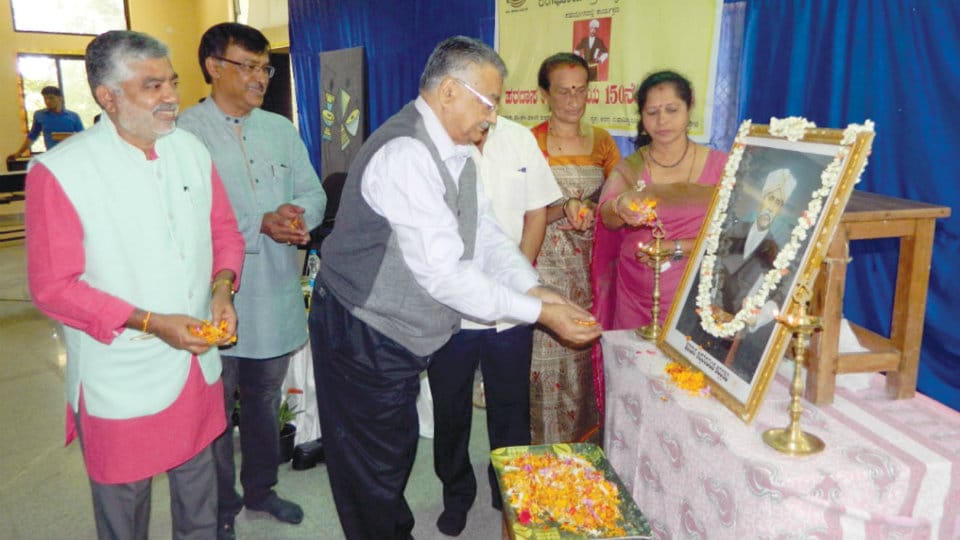
A decision to that effect was taken at a function organised jointly by Shivamogga Agriculture and Horticulture University, Ponnampet College and Kodagu Rangabhoomi Pratisthana to mark the 150th birth anniversary of Haradasa Appacha Kavi at Forest College auditorium in Ponnampet on Friday.
A declaration to that effect was released by M. Asha Mandanna, Chairperson, Appacha Kavi College Management Council, Ponnampet.
Inaugurating the programme after offering floral tributes to a portrait of poet Appacha, Star of Mysore Editor-in-Chief K.B. Ganapathy recalled that Appacha had come out with many poems on spirituality and wished that the poet could have written a few poems on reformation of the social system for which the poet had enough knowledge and strength. He contended that theatre and poetry were powerful tools to correct society.
Releasing a book of Appacha, Akhila Kodava Samaja Working President I.K. Biddappa expressed happiness that Kodava literature had gained importance and popularity despite a thin population of Kodavas.
Speaking on the occasion, Kendra Sahitya Academy Member A. Cariappa recalled that the then Chief Minister of Kodagu ‘C’ State C.M. Poonacha had conferred the title of ‘Varakavi’ on poet Appacha who popularised Kodava literature using Kannada script.
Kodagu Rangabhoomi Prathistana Chief Convenor Anitha Cariappa welcomed the gathering. Former College Dean Dr. C. Kushalappa and others were present. Cariappa and other artistes presented a programme ‘Amarakavya’ featuring poems of Appacha Kavi.
source: http://www.starofmysore.com / Star of Mysore / Home> News / September 23rd, 2018
WELCOME. If you like what you see "SUBSCRIBE via EMAIL" to receive FREE regular UPDATES.
Read More »