Indian rally champions Dean Mascarenhas and co-driver Gagan Karumbaiah of TSI Racing return to the World Rally Championship this weekend for their second WRC3 outing of the season, taking on Rally del Paraguay in a Ford Fiesta Rally3 prepared and serviced by PH Sport.
Mangaluru’s Dean partnered with Kodagu co-driver Gagan to make their WRC debut at Rally Islas Canarias this April, where they finished seventh in class.
The 2025 Indian National Rally champions gained further experience in the FIA European Rally Championship, finishing 12th in the Rally3 class at the demanding Rally di Roma Capitale in July. This WRC round in Paraguay will be their first on Gravel in the Ford Fiesta Rally3.
The rally covers 357.64km of timed competition across 22 special stages on soft red-clay gravel.
Mohan Nagarajan, MD of Sidvin Energy Engineering, which backs TSI Racing, said the European experience had strengthened the programme. “The ERC round and the training in Europe were extremely useful. The experience has helped Dean, Gagan and the entire team to better prepare for the WRC3 challenge.”
“Our journey so far has been very positive, with a lot of learning and valuable experience. We’re excited for our first gravel rally of the season. There is still a lot for us to learn from every rally,” said Dean after Thursday’s shakedown.
Founded in 2007 and backed by Sidvin Energy Engineering, TSI Racing was the first Indian team to enter the WRC in 2008 and has since provided an international platform for Indian drivers, including Gaurav Gill and Naren Kumar. Nearly two decades later, the team’s commitment to taking Indian rallying to the global stage continues with Mascarenhas and Karumbaiah.
–IANS
source: http://www.fmbharat.com / FM Bharat / Home> English / by IANS / August 08th, 2026
Several key issues in the district concerning the forest department have been highlighted by the various organisations.
Madikeri:
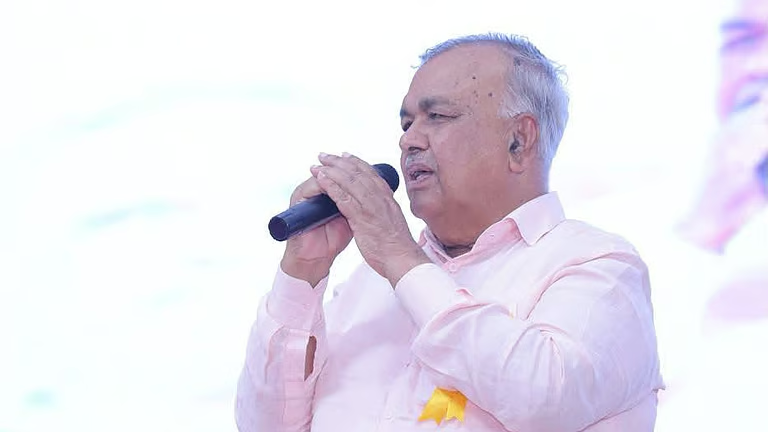
Ramalinga Reddy, Minister of Forest, Ecology and Environment, said the state government will hold a special meeting on Monday to find a resolution to the proposed Kasturirangan Report.
The minister, who heard the grievances related to wildlife conflict in Kodagu from the various communities and organisations in the district, assured to hold meetings with the revenue minister and the Chief Minister to find a permanent solution.
Speaking to the media after heading the grievance meeting, he said that several key issues in the district concerning the forest department have been highlighted by the various organisations.
“The wild elephant and tiger conflict, Kasturirangan Report, the need to establish an elephant corridor, request for increase in wildlife compensation, section 4 issue and the revenue land issue near Harangi have been highlighted by the various groups in the district,” the minister said adding that a meeting with the revenue minister and the Chief Minister will be held to find solution to the problems.
He assured that a special meeting will be called to discuss the issues, including the Kasturirangan Report.
Meanwhile, hundreds of residents arrived at the Deputy Commissioner’s Office in Madikeri to highlight their grievances with the minister.
Representatives from the Kudiyara community, Communist Party of India (CPI), Bharatiya Janata Party (BJP), Coorg Planters’ Association (CPA), Estate Workers’ Union, Labour Union and several other residents and growers living in wildlife conflict zones met the minister and submitted memorandums of their demands.
Initially, former BJP MLA KG Bopaiah spoke and gave suggestions to the state to fight the wildlife conflict. He requested the department to cancel the elephant chasing missions in the district to prevent further damages to estates of growers. He requested the state to hold a meeting and find a scientific solution to the Kasturirangan Report.
Various other issues, including the Section 4, C and D land and the need to revive Elephant Trenches, were highlighted by Bopaiah.
The minister later met the farmers and received memorandums from them. MLAs AS Ponnanna, Dr Mantar Gowda, PCCF (Wildlife) Kumar Pushkar, PCCF Meenakshi Negi, Kodagu CCF Sonal Vrishni, Deputy Commissioner Somashekar S.J and other officials were present during the meeting.
source: http://www.newindianexpress.com / The New Indian Express / Home> Karnataka / by Express News Service / August 28th, 2026
Locals fear that the sudden influx of tourists in ecologically fragile areas could cause irreversible damage to forests, water sources, and wildlife habitats.
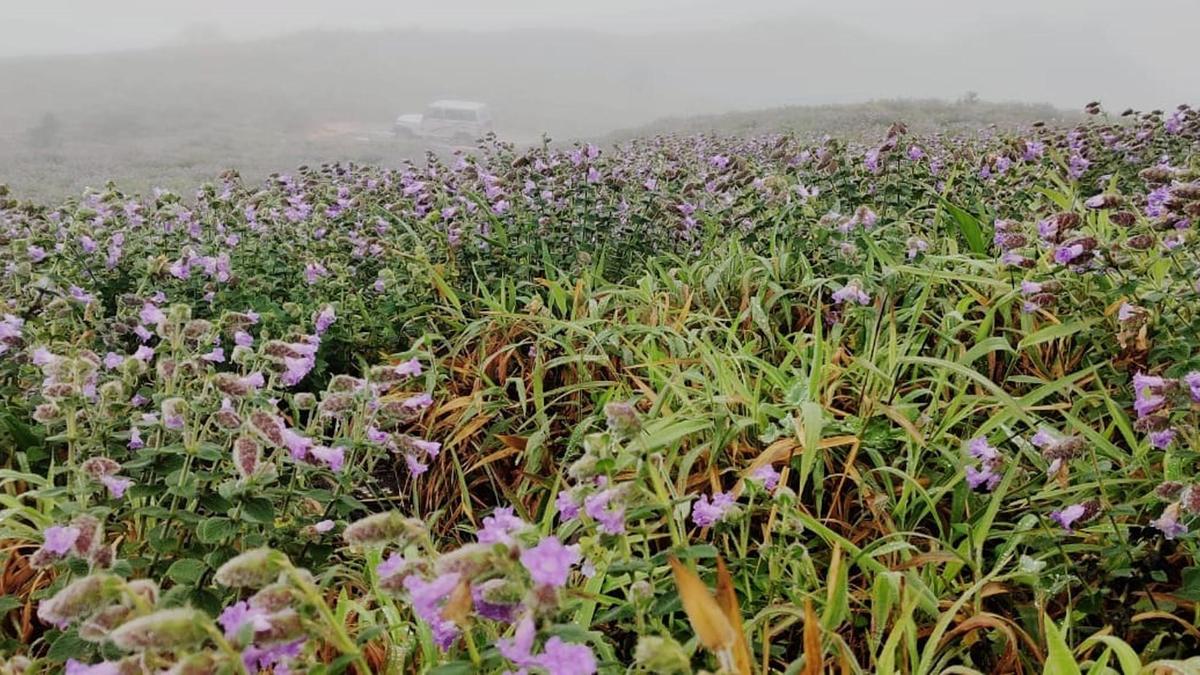
Social media posts are promoting commercial mass trekking in sensitive areas around Nelji, Perur, and the neighbouring regions. | Photo Credit: File photo
Residents and environmentalists across the Western Ghats, particularly in Kodagu and Chikkamagaluru districts, have raised concerns over the growing trend of private groups and tour operators promoting hidden and remote natural spots for commercial trekking and adventure activities.
Locals fear that the sudden influx of tourists in ecologically fragile areas could cause irreversible damage to forests, water sources, and wildlife habitats.
Residents allege that several travel agents and private groups, particularly from Bengaluru and Mysuru, are identifying lesser-known hills, waterfalls, and other natural locations and promoting them on social media. Treks are subsequently being organised to these spots without permission from the Forest Department.
The increased footfall has resulted in tourists leaving behind plastic waste and other garbage, they alleged.
In Kodagu, the Forest Department recently intensified action against unauthorised commercial trekking in sensitive forest areas and warned travel agents and tour operators against promoting illegal trekking routes.
The warning followed the circulation of social media videos showing trekking activities to mountains, waterfalls, and areas where Strobilanthes kunthiana, popularly known as Neelakurinji, an endemic shrub seen in the Western Ghats, is in bloom at Perur village near Napoklu. The department said that social media posts are being used to promote commercial mass trekking in sensitive areas around Nelji, Perur, and the neighbouring regions.
“Over the past few days, we have been seeing several illegal tour operators arranging treks and taking tourists to hidden spots in the hills without permission. The main concern is that several lesser-known places inside and around forest areas are now being exposed to tourists for commercial purposes,” Thimmaiah K.B., resident of Nelji, told The Hindu.
He said that the area has several small waterfalls and other natural spots that are increasingly being accessed by tourists. Many of these locations are located in or close to sensitive forest areas and are not equipped to handle large numbers of visitors.
“With the Neelakurunji in bloom, more people are coming here. If the visitors are allowed to enter these places without restrictions, they could damage the plants and other vegetation. Such activities can also disturb wildlife and increase the possibility of human-wildlife conflict. We are worried that continued unregulated tourism will severely affect the fragile ecosystem,” he said.
Another resident, Biddappa of Marandoda in Madikeri taluk, said his village was facing a similar problem at a place locally known as Baliyatre, where a small waterfall is located on a hill.
He said that Baliyatre was never intended to be a tourist destination and, more importantly, the water source is vital for the villagers. “The water from this area is an important drinking water source for the people of Marandoda. It is a place that needs to be protected and not converted into a tourist spot,” Mr. Biddappa told The Hindu.
“People are promoting the location on social media, making reels, bringing tourists and organising treks for commercial purposes. Visitors have already started leaving garbage and polluting the area, putting our drinking-water source and the surrounding forest at risk,” he added.
Chikkamagaluru sees similar trend
A similar trend has emerged in Chikkamagaluru, where environmentalists have urged the district administration and the Forest Department to prohibit private groups from conducting adventure and sports activities in forest areas without permission.
Recently, private groups organised off-road activities in parts of Kalasa and Koppa. Following objections from local groups, the Forest Department intervened and stopped the activity in Kalasa. However, environmentalists said similar activities continued in the Koppa region.
Activist Nagaraj Koove said that environmentalists had studied the impact of such activities on the fragile Malnad ecosystem. “The impact was huge and such activities could cause serious damage. In the name of sports activities or exploring the Malnad region, private organisations are conducting such events with profit as the primary objective. They offer participants a sense of adventure and thrill, but the environmental cost is borne by the forests and local communities,” he told The Hindu.
“Forest areas are not playgrounds for private commercial events. Such activities, particularly those involving vehicles and large groups, should be stopped unless they are properly regulated and permitted by the authorities,” he added.
The risks were highlighted recently when a group of tourists allegedly drove a vehicle to the edge of a nearly 3,000-ft.-deep gorge at the Rani Jhari viewpoint in Mudigere taluk. The visitors were reportedly at the spot to shoot videos/reels for social media. Kalasa Range forest officials seized the vehicle and registered a case against the group.
Meanwhile, Forest Minister Ramalinga Reddy, who was in Kodagu on August 28 for a departmental meeting, said that he had received complaints from residents regarding unauthorised trekking and tourist activities in forest areas and had instructed officials to take action against those conducting trekking activities illegally in forest areas.
“Forest areas cannot be opened up for commercial activities merely because some locations become popular on social media. If such activities are allowed unchecked, they can disturb wildlife and affect the ecological balance. Officials have been directed to identify such activities and take action against tour operators and private groups violating the rules,” he added.
(With inputs from Sathish G.T.)
source: http://www.thehindu.com / The Hindu / Home> News> India> Karnataka / by Darshan Devaiah B.P / September 01st, 2026
Two brothers with family roots in Kodagu and Mysuru have made their mark in American Ice Hockey after earning selection to competitive teams of the Frisco Hockey Association, Texas, USA.
While 15-year-old Mayon Machaiah Merianda has been selected to the Frisco Varsity Team, his 13-year-old younger brother Krish Machaiah Merianda has secured a place in the Frisco Varsity Junior Team for the Summer 2026 season.
Mayon, a Grade 10 student at Independence High School, Frisco, earned promotion to the Varsity squad following his performances in previous seasons. Krish, who recently completed Grade 8 at Nelson Middle School, secured his place in the Junior Varsity team after consistent performances at the developmental level.
The brothers belong to the Meriyanda family of Kodagu, with their ancestral roots tracing back to the historic Meriyanda Ainmane. They are the sons of Srikanth Thimmayya, Founder and Chief Executive Officer of SHIRO Technologies and Dr. Gangamma Chenenda, a Physician based in Dallas, Texas.
Their late grandfather Merianda K. Thimmayya, was an advocate, who had settled in Mysuru after moving from Kodagu several decades ago while their grandmother Sharada Thimmayya, continues to reside in Mysuru. Despite growing up in the United States, Mayon and Krish maintain close ties with Karnataka through regular visits to Mysuru and Kodagu.
Their success stands as an inspiring example of how young people with roots in Kodagu and Mysuru are making their presence felt in diverse fields and sporting arenas across the world.
source: http://www.starofmysore.com / Star of Mysore / Home> News / June 03rd, 2026
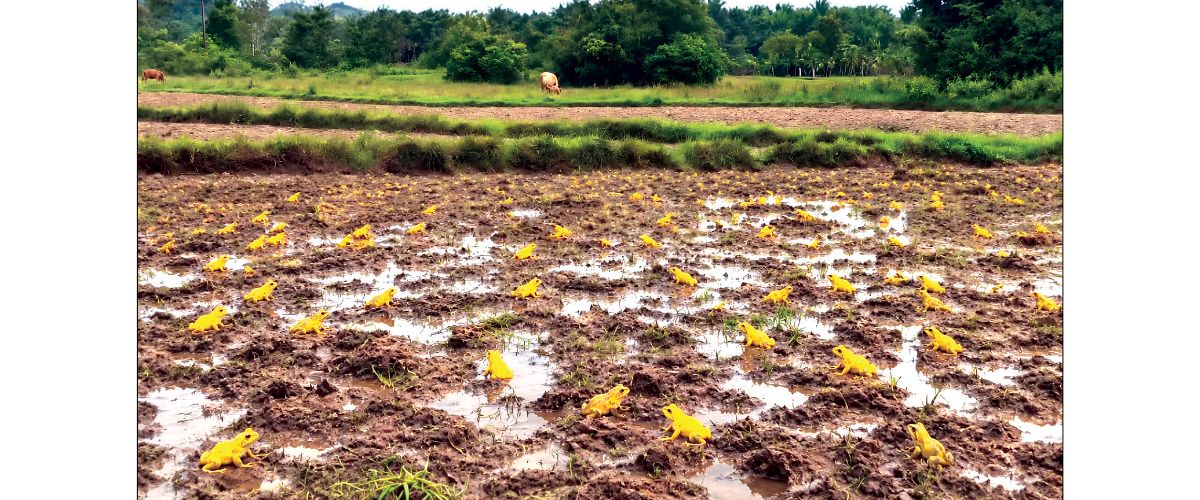
Farmers in B. Shettigeri village of Ponnampet taluk in Kodagu are witnessing an unusual natural spectacle, with hundreds of bright yellow bullfrogs appearing in paddy fields over the past week, leaving residents both fascinated and curious.
The unusual congregation has drawn the attention of residents, many of whom say they have never witnessed such a large number of brightly coloured bullfrogs in the area before.
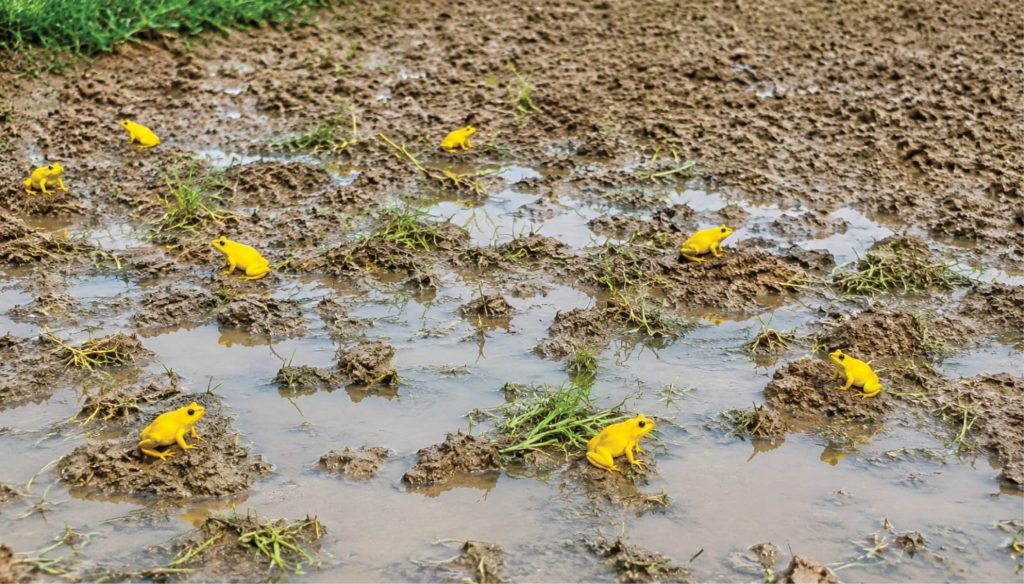
They are believed to be Indian Bullfrog (Hoplobatrachus tigerinus), one of the largest frog species found in India. Native to South and Southeast Asia, the semi-aquatic species is known for its robust build and undergoes a striking colour change during breeding season.
Male Indian bullfrogs turn bright yellow and develop distinctive blue vocal sacs on either side of the throat during the monsoon to attract females. This vibrant breeding colour is visible only for a few weeks each year.
K.P. Girish, a farmer from B. Shettigeri, said that the frogs have been appearing in large numbers in paddy fields where sowing is yet to begin.
“We have been seeing these yellow frogs for the last eight days. More than 200 of them are hopping around the fields. This is the first time we have witnessed so many bullfrogs together. It looks beautiful, but at the same time it is a little frightening because we have never seen anything like this before,” he said.
source: http://www.starofmysore.com / Star of Mysore / Home> News / July 07th, 2026
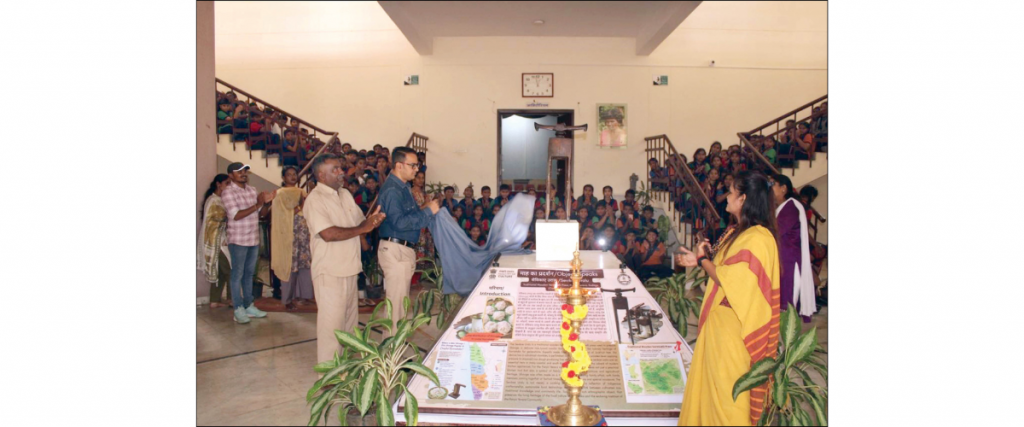
The August edition of the ‘Object Speaks’ series exhibition was inaugurated at the Zonal Anthropological Museum of the Anthropological Survey of India (AnSI), Southern Regional Centre, Mysuru, by the students and teachers of STG Public School, Mandya.
Dr. Mithun Sikdar, Head of Office, Anthropological Survey of India, Southern Regional Centre, Mysuru, encouraged the students to appreciate India’s rich cultural diversity through museum collections and indigenous traditions.
The highlight of this month’s exhibition is the ‘Sevikae Uralu’, a traditional wooden hand-operated vermicelli press used by the Panjiri Yerava community of Kodagu District.
Crafted from durable jackfruit wood, the ethnographic object reflects the ingenuity of indigenous technology and the community’s close association with food, family and tradition.
More than a kitchen implement, the ‘Sevikae Uralu’ symbolises collective labour, sustainable craftsmanship and the preservation of cultural identity across generations.
The exhibition traces the journey of Karnataka’s traditional handmade rice vermicelli (shavige or ottu shavige), prepared using the ‘Sevikae Uralu’.
It explains how steamed rice dough is transformed into delicate strands of vermicelli and highlights the historical significance of this culinary tradition, which has been cherished across coastal and southern Karnataka for centuries.
The display also explores the oral traditions of the Panjiri Yerava community, where the ‘Sevikae Uralu’ occupies a significant place in ancestral stories, agricultural life and community memory.
Through informative panels and engaging narratives, visitors can learn about the cultural heritage of the Panjiri Yeravas, their traditional lifestyle, indigenous knowledge systems and the enduring legacy of Karnataka’s food culture.
The exhibition illustrates how a simple household object can tell stories of history, identity, innovation and living heritage.
Curated by Dr. Banita Behera, the exhibition will remain open at the Zonal Anthropological Museum till Aug.31. Students, researchers and the general public can visit the exhibition and explore the story behind one of Kodagu’s traditional culinary implements.
source: http://www.starofmysore.com / Star of Mysore / Home> News / by Star of Mysore / August 08th, 2026
Molecular biologist Sujata Goel on the importance of “weeds”, modern approaches in science communication & India’s organic farming policies.
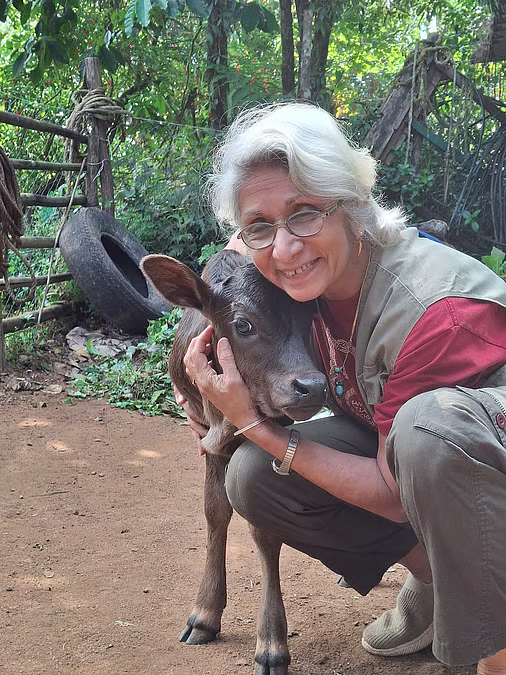
Nearly 30 years ago, molecular biologists Sujata Goel and her partner Anurag left Delhi to build a life closer to nature in Karnataka’s Kodagu district. Over the years, they began working closely with local farmers to understand how agroecological plantations could be developed at scale, combining their expertise in academic biology with generations of local ecological knowledge to co-create natural solutions for coffee and spice plantations. Communication techniques that closed language and knowledge gaps were essential in this confluence of modern scientific understanding with centuries-old local wisdom.
The couple has been actively researching natural alternatives to chemical pesticides, starting with a makeshift laboratory on a wooden table on their 25-acre ecologically sustaining plantation to test how certain plant species that are considered “weeds” have properties to turn away pests and provide other benefits to cultivated plants. Since then, Sujata has taken their research to public platforms and official channels to advocate for bans on use of agri chemicals in Coorg’s coffee and spice plantations. Coorg is home to Talakaveri, the source of River Kaveri — the lifeline of multiple South Indian states. The chemicals sold to and used by planters, seep into the soil and contaminate this vital waterbody.
Today, Sujata works with a small team of farmers, naturalists and conservationists to bring awareness about the lethal impacts of weedicides that has gradually crept into the agricultural practices in and around plantations in this area.
She has also taken these ideas to the international stage through the Organic Farming Association of India, serving as its president and helping organise a global symposium in 2017. In the conversation with Down To Earth, she discusses the methods and importance of such dialogue, the evolving approaches of communicating science with local communities and what she has learnt about organic farming in India as a practitioner.
Preetha Banerjee: How has science communication changed over the years and what channels and techniques do you use to raise awareness among local farmers? What has been the impact of the Internet?
Sujata Goel: Most people across villages including farmers use the internet comprehensively. Several village Panchayats, Planters and Farmers have created Whatsapp groups to exchange and share information regarding everything related to cultivation, from weather forecasts to agricultural practices, government schemes and subsidies available, and other related matters. We are using such platforms in collaborations with scientists to spread awareness about the carcinogenic and lethal effects of many of the agrichemicals which are rampantly being used in the fields now. It is important to remember that these lands constitute a catchment area being the primary recipients of the South-west monsoons, providing water for much of peninsular India. Spraying pesticides and weedicides around paddy fields have contaminated wetlands, which is extremely dangerous since these wetlands are the life source of all flowing water. These wetlands are also precious because they recharge ground water and must be protected from such thoughtless destruction at all costs.
PB: Over three decades of working with farmers, how have you seen science communication evolve?
SG: Whatsapp groups and Instagram seem to be the most accessible to farmers. Since multiple language use is now possible, these are popular, especially in rural areas. Several workshops are also held remotely, and farmers are able to attend them from their own places of residence and work. This helps cut costs of holding such study programs and enables organisations such as Organic Farming Association of India (OFAI) to invite scientists to such platforms without disrupting their work schedules.
PB: Modern agricultural science promotes a negative association with “weeds”. Is there another way to look at weeds? What have you learnt from traditional wisdom and your own research?
SG: Words like “pest” and “weed” have evolved through western agricultural practices. They tend to designate some species desirable and others not. Many native plants which we call weeds were consumed as food not long ago and continue to do so. Many species which we eliminate under the garb of “weeds” play an essential role not only in the overall ecosystem, but also in producing our own food. They not only create habitats for local biodiversity but also offer pollinators necessary grounds for foraging and survival. Rethinking our language biases would enable us to look more holistically at the philosophy behind our practices.
This brings us to the issue of weedicides, which have slowly infiltrated Kodagu’s coffee plantations in the past ten years. We now notice deformities and dead bodies of animals in the once-lively streams that are the arteries of this landscape. The poisoning of freshwater species is just an indicator of the impact these chemicals have on human health.
This year, in February 2026, the multinational company, Bayers, announced that it will pay $7.25 billion to settle thousands of US lawsuits alleging that its Roundup weedkiller has caused a vast number of individual cases of cancer. That these family of carcinogenic agri-chemicals were lethal to all life forms was substantiated by rigorous scientific research decades ago and has been available in the public domain, and yet their marketing continues unabated. Are these the substances which international companies promote and enforce on the planet and escape all forms of control? Who becomes accountable for such acts of deliberate genocide?
PB: Why is it important to think about biodiversity as an entire ecosystem rather than as individual species? What does this mean for agricultural productivity?
SG: Sustenance of the ecology of a farm depends upon the richness of its biological diversity. Plants and insects, fungi and soil microorganisms have all co-evolved for millions of years. Good farming practices aim to understand the importance of biodiversity and try to mimic nature by providing niches for diverse plants, animals, insects, bacteria and fungi. The ‘ecosystem services’ provided by this biodiversity are invaluable, not just for farmers, but for all of life surrounding us. These range from encouraging populations of pollinators, soil recharge and nutrient cycling, disease regulation, water harnessing, and carbon sequestration among others.
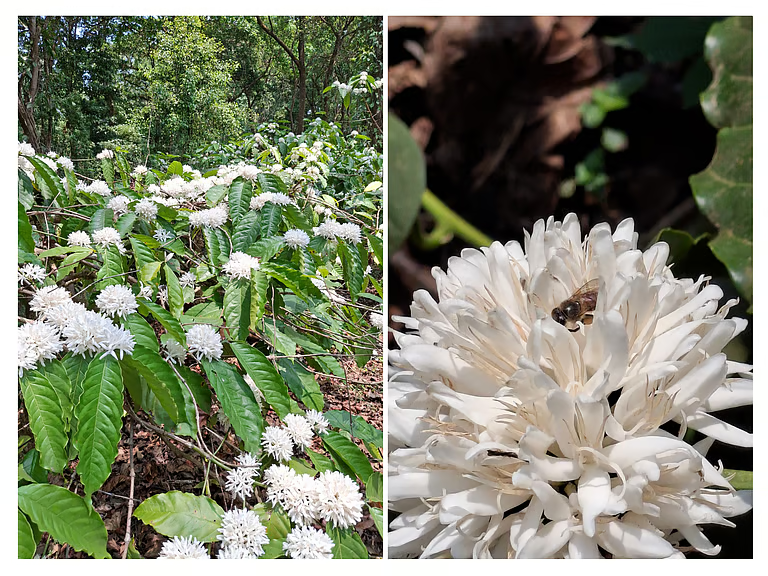
On organic farms such as ours that have no trace of chemicals around, parasitic and predatory insects colonise native plant species and play significant roles in maintaining disease-free crops. Integration of fallow areas, leaving riparian stretches rich with local weeds, and generous mulching has allowed a rich buildup of biodiversity in the fields. As a result, we now have excellent populations of spiders, wasps, dragonflies, frogs, lizards, snakes and a wide range of birds, all of which contribute towards building up of a diverse and healthy agri-ecosystem.
Birds are amazing for their ability feed on insects and caterpillars; spiders are indiscriminate trappers of a whole range of insects. Wasps lay their eggs on larvae, which hatch and being carnivorous, start feeding on the grubs which would otherwise damage the crops. Bats, frogs, skinks, lizards, shrews, mantids, are insect feeders and form an intricate link in the food web of the forest ecosystem.
Beneficial microorganisms contribute to a rise in detritus activity of the soil, increased nitrogen fixation, and increase in nutrient cycles. Areas where grasslands are encouraged become sponges for harnessing rainwater to replenish water tables and aquifers. It is these who are the true regenerators of our soils and agri-ecosystems.
PB: How has India’s approach to organic farming changed over the past three decades?
SG: Across our agricultural landscapes, farmers are beginning to feel the “bite” of 60 years of aftermath of the green revolution. Widespread losses due to climate extremes being experienced in different parts of the world now are adding to the need to desperately regenerate degraded lands. This is possible only through farming practices which totally exclude use of agri-chemicals, and at the same time, enabling viable practices to revive our soils.
There is no half measure. The governing bodies of our country must make up their minds that when they announce policies and projects to support organic farming, whether that is their true intent and how such projects can be implemented in light of subsidies and other supportive mechanisms offered for purchases of the very agri-chemicals which are responsible for the damage. Through field-based education and changes in policies to ensure that farmers are economically protected, it is possible to scale up on organic practices to feed our populations. This has been amply demonstrated by the truly progressive farmers across the world.
source: http://www.downtoearth.org.in / Down To Earth / Home> Environment / by Preetha Banerjee / August 22nd, 2026
WELCOME. If you like what you see "SUBSCRIBE via EMAIL" to receive FREE regular UPDATES.
Read More »