Monthly Archives: July 2026
On Wheels of Dreams
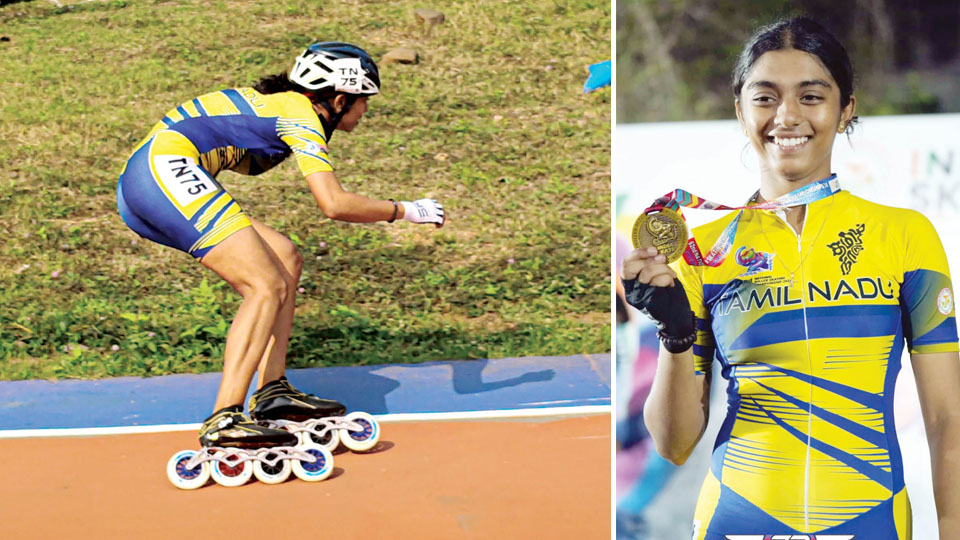
This International Women’s Day, we celebrate the inspiring journey of Kalpana Kuttappa, one of India’s top roller skaters, whose determination and resilience have made her a role model for young women nationwide.
From humble beginnings in Mysuru to representing India on the global stage, Kalpana’s story is a testament to the power of dreams, hard work and unwavering support from family.
Born in Madikeri, Kodagu district, Kalpana moved to Mysuru at a young age for her schooling. Today, she is pursuing her B.A. (Corporate Economics) graduation at Women’s Christian College in Chennai, balancing her academic pursuits with her passion for roller skating.
Her journey into the world of skating began at the age of four when her uncle gifted her a pair of roller skates. What started as a childhood hobby soon turned into a lifelong passion when her mother noticed a group of children practising at a rink and encouraged her to join skating classes.
Since then, Kalpana has never looked back. She has represented Karnataka and India in numerous national and international roller skating competitions, earning hundreds of medals along the way.
Her achievements include participating in the World Championship held in Italy in 2024 and attending an ice skating coaching camp in Bangkok in 2017. She also took part in the 13th National Ice Skating Championship in 2017.
She has probably not returned without a medal from the competitions she has taken part. This talented roller skater also represented India at the World Championship held in Italy from Aug. 25 to Sept. 5, 2024. Currently, she is preparing for the Asian Championship to be held in South Korea from July 19-30.
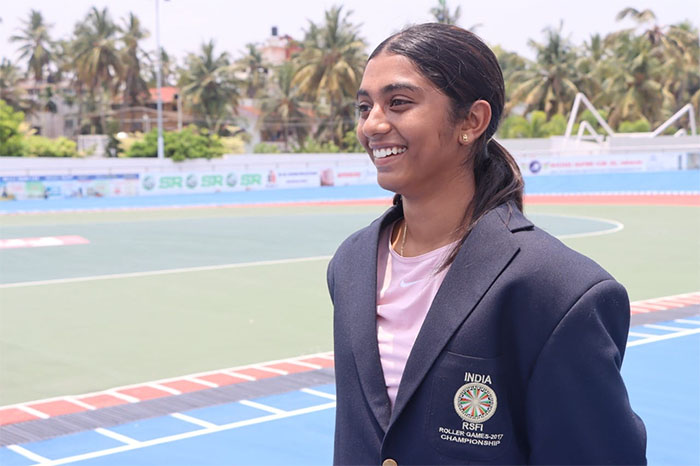
Kalpana’s journey, however, has not been without challenges. Coming from a middle class family, she has had to overcome financial constraints and a lack of institutional support. Her father, Mukkatira Subbaiah Ravi, works as a mechanic in Mysuru, while her mother, T.K. Swathi (Thathanda), is a manager at an auto spa company in Chennai.
Despite these hurdles, Kalpana’s family has been her pillar of strength, supporting her dreams every step of the way.
“The journey has been tough,” Kalpana says. “There is not much encouragement from the Karnataka Government, and roller skating is not yet recognised as an Olympic sport. Finding sponsors is also difficult, even after winning medals and accolades.”
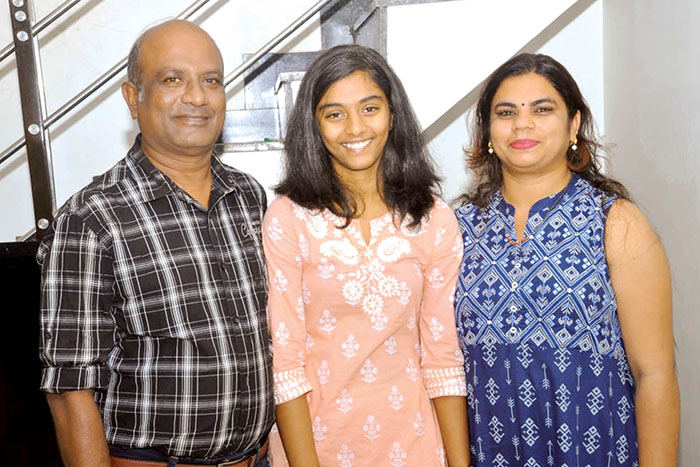
Kalpana Kuttappa with her parents Mukkatira Subbaiah Ravi and T K Swathi.
Infrastructural challenges
Infrastructure remains a significant challenge for roller skaters in India. Mysuru, where Kalpana grew up, has only one skating rink for the entire city.
Seeking better opportunities, she moved to Tamil Nadu, where she found slightly more support from the State Government and a less politicised environment. “Hopefully, roller skating will be recognised as an Olympic sport in the future so that we get access to better infrastructure and facilities,” she says.
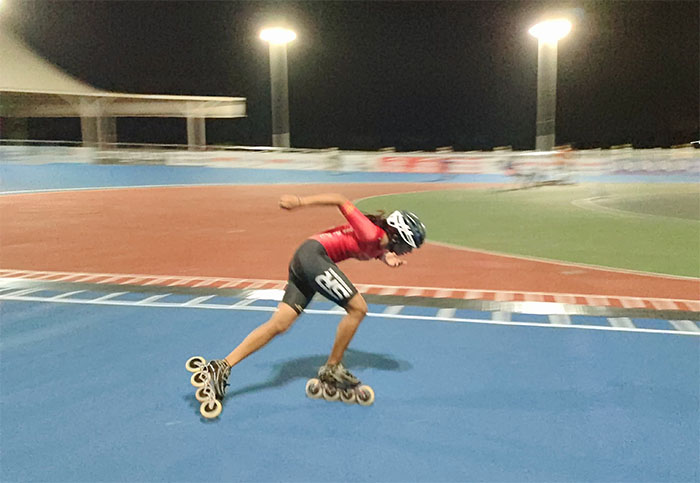
Kalpana’s dedication to her sport is unwavering. She trains for 8-9 skating sessions a week and spends time at the gym to build strength. Balancing her academics and training, she ensures she attends all her college classes before heading to practice in the evenings.
But Kalpana’s ambitions don’t stop at roller skating. She dreams of serving her country in another capacity — as an Officer in the Indian Army.
After her graduation, she plans to appear for the Combined Defence Examination (CDS) and get commissioned into the Indian Army. “It is always a pleasure to serve the country, whether as an athlete or an army officer. It’s a pride that everyone feels while serving the nation in different capacities,” she says.
Kalpana Kuttappa stands as a shining example of what women can achieve when they dare to dream and persevere against all odds. She inspires us to strive for greatness, not just on the rink, but in every arena of life.
Her story is a reminder that with determination, support and the right opportunities, women can break barriers and excel in any field they choose.
source: http://www.starofmysore.com / Star of Mysore / Home> Feature Articles> Top Stories / by S N Venkatnag Sobers / March 22nd, 2025
31 a
Mysuru shooter bags two gold medals at State Championship

Mysuru:
Jammada Preeth Appaiah, a resident of Bannimantap and a member of the Mysuru Sports Shooting Academy (MSSA), won two gold medals at the 14th Karnataka State Shooting Competition and Championship 2026, organised by the Karnataka State Rifle Association (KSRA).
The championship was held at the Sports Authority of India (SAI) and Bangalore University shooting ranges in Bengaluru from June 10 to 30.
Preeth struck gold in the .177 Open Sight 10M Air Rifle Senior Master Women (National Records), .177 Open Sight 10M Air Rifle Women (National Records) and .177 Open Sight 10m Air Rifle Master Women (National Records), further strengthening her credentials in the sport. She has been training under coach H.S. Vivek since taking up shooting in 2024. Her recent success adds to an impressive run this year.
Earlier, she won two gold medals at the Nagraj Rao Jagdale Shooting Contest and Championship held at the KSRA range in Bengaluru.
She is now preparing to compete in Air Pistol events to qualify for the South Zone competitions. Preeth is also the only Kodavathi competing in the Open Sight Air Rifle category.
Apart from shooting, Preeth has distinguished herself as a mountaineer. She scaled Mount Kilimanjaro in 2023 and Mount Elbrus in 2024, adding two of the world’s highest peaks to her list of achievements. She is married to Advocate Jammada M. Aiyanna.
source: http://www.starofmysore.com / Star of Mysore / Home> Sports / June 28th, 2026
A hockey story from coffee-country
Sandhya Kumar’s documentary ‘Hockey In My Blood’ tells the story of the Kodava community’s passion for the game.
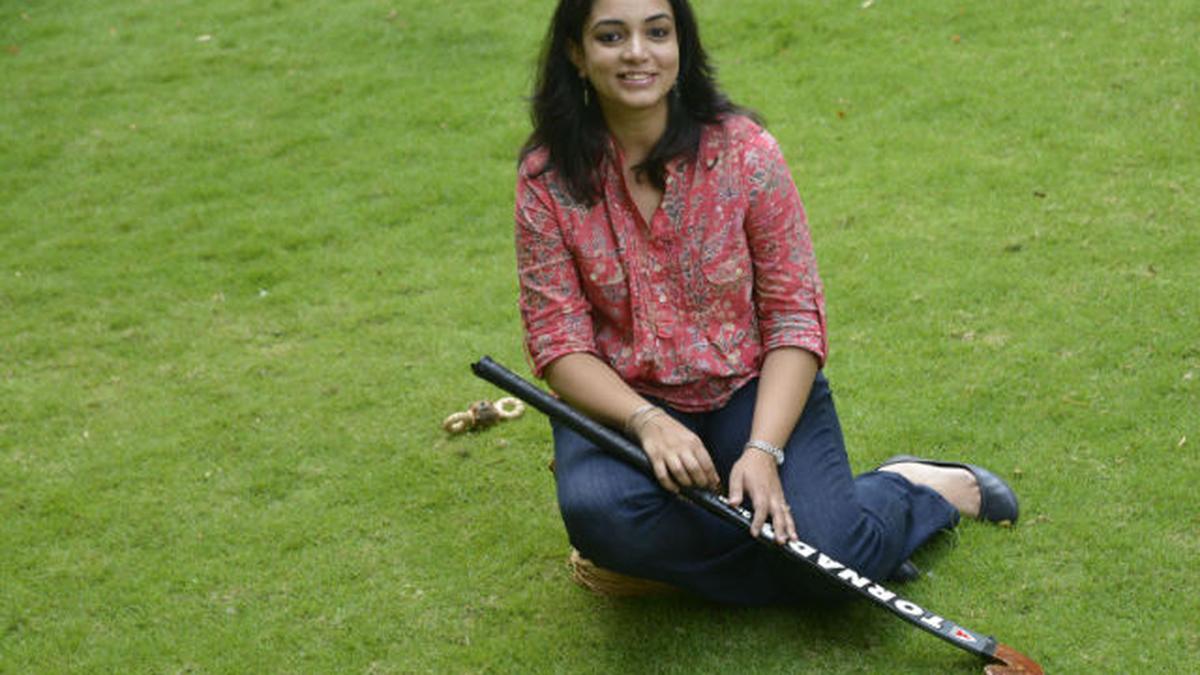
Sandhya Kumar
Over 3,000 players — men, women, and children — of the Kodava community from Coorg gather annually for the family hockey tournament in the midst of coffee plantations, summer vacations and the wedding season.
It’s regarded as the world’s largest field-hockey tournament. Curious about this sociological phenomenon and their passionate love for the game that forms the glue, binding generations, Bengaluru-based documentary filmmaker Sandhya Kumar decided to make a film.
After two years of research, several visits to Coorg, interviewing players and hosting families, crowd-funding, and filming the 2013 tournament, her film Hockey In My Blood is ready to be aired at this year’s tournament.
The 52-minute film is in English and Kodava-takk (with English subtitles). The 19th edition of the Kuppanda Cup Kodava Hockey Namme 2015 is currently underway at Virajpet (Coorg) and Sandhya’s film will be screened at the festival on May 7, two days before the finale.
The tournament is played over a month, with a series of about 250 knockout matches, played by anywhere between 220 to 260 teams — each team being one family. Many of the players have played for the State and National teams; some are even former Olympians. Every year, one family hosts the tournament.
“It’s the coming together of people that fascinated me. It’s a family tournament, with no big money or stakes involved. The Kodavas are a sports-obsessed community. Most of the people don’t live in Coorg — they live and work mostly in Bangalore, Mangalore, and Mysore — but have an estate and family to go back to in Coorg. When you have to put together a team of 11, contacting third and fourth cousins you’re otherwise not really in touch with, it is something. Within the clan there are classes — a carpenter may be playing alongside a banker — but the point is every one comes together for this,” explains Sandhya.
Armed with an MFA in Film from the San Francisco Art Institute, and an MA in Mass Communication from Jamia Millia Islamia University, Sandhya has been making documentaries since 2007. She won the President’s National Film Award of India (2013) for her documentary O Friend, This Waiting! After she moved to Bangalore three years ago when she married, she missed her close-knit film community in Delhi; so, along with fellow filmmakers, Sandhya helped revive Vikalp Bengaluru, a forum that regularly screens the best of documentary films from all over the world.
The story of Hockey In My Blood started when a Kodava friend of Sandhya’s was talking about the tournament, and suggested “Why don’t you make a film on it?” “There were no books on the subject, very few people in Bangalore knew about it. I only had newspaper articles to fall back on and I hadn’t been to Coorg before that. Later, when I was in Coorg for a wedding, I became interested in the community sociologically, and their passion for hockey when the rest of the country was obsessed with cricket.”
Her friend Deepthi Bopaiah offered help and introduced her to the host family for 2013 — the Madanda family, and the tournament’s coordinator Thimmaiah Madanda.
There were initial apprehensions about her making the film. But when they met up, they were pleased that someone was interested in this phenomenon, adds Sandhya.
Through the organiser, she identified players she wanted to interview and film. While she started filming impulsively with her own funds, film grants were few to come by. She soon found a need to crowdfund the film — in about five months, she raised Rs. 7 lakhs from family and friends through the Orange Street platform. “I met this young boy called Prajwal. He and his family lived on a small estate, and along with his brother he practised hockey in the coffee-drying yard in front of their home. We filmed him extensively. The film was shot in Balugodu, Virajpet, Palangala, Murnad, and the Karnataka State Hockey Association. Participants start practising just about a week before the tournament, because most live far off; some players have even come in from Dubai to participate.”
Sandhya also met Pandanda Kuttanni, who is well into his 70s, and the founder of the concept of this tournament. “He said he was in Delhi during the 1982 Asiad cup and felt Coorg needed a tournament like this to bring together a people who were moving away from home,” recalls Sandhya.
At the end of it all, Sandhya says: “It’s the commitment of the players to their families, the extent they will go to, to give up whatever they are doing to go back home to Coorg, and play for family — that was my best takeaway from the film.”
source: http://www.thehindu.com / The Hindu / Home> Features> Metroplus / by Bhumika K / April 24th, 2015
On the foot-hills of Karnataka a new way to save the environment through eco-travel and organic farming
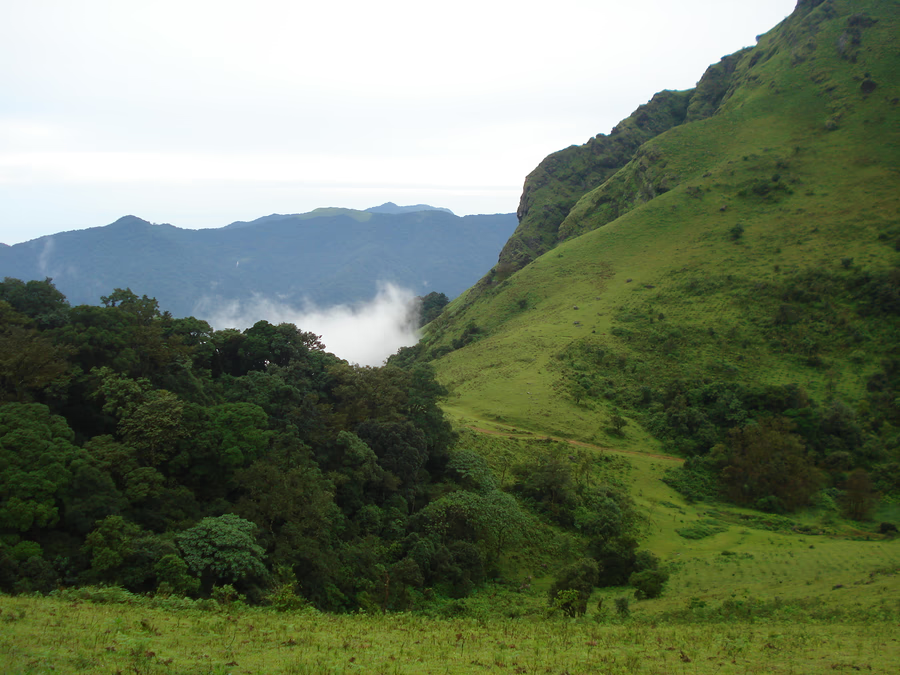
Approximately five hours west of Bangalore in Karnataka is the Kodagu district in the Western Ghats.
This picturesque area is one of the most affluent districts in India, despite much of the district being used for agriculture.It’s here in the Kodagu district that Sujata and Anurag Goel decided to start up Mojo Plantation in 1994. In doing so, they had hoped to leave behind the rat race of urban living to explore an organic way of life and a more harmonious existence with nature.
Modelled on an organic farm, Mojo Plantation works on ecological principles; gleaned from the experience of the founders in the sciences of botany, plant biochemistry, genetics, ecology and molecular biology.
Also on the plantation is a Rainforest Retreat, a unique eco-tourism project that enables tourists to experience the harmony of living with nature. “The Retreat provides a platform for exchange of information, farming practices, research programs, with likeminded people, farmers and students from India as well as from other countries”, adds Anurag.
Both Mojo Plantation and the Rainforest Retreat fund the Goels’ other project– their NGO entitled Worldwide Association for Preservation and Restoration of Ecological Diversity.
The goal of all these organisations however is similar – to ensure that farmers in the Kodagu region and beyond are aware of the perils of conventional agricultural practices and to promote instead the adoption oforganic farming that preserves soils and fosters biodiversity.
The long-term danger of chemical farming
According to the Goel’s, the use of chemical fertilisers and pesticides “kills not only one species which is considered a “pest” of the crop, but also completely destroys the complex network of biotic life that supports that ecosystem.”
This is a major problem in the Western Ghats, especially for coffee and spice crops whose species are threatened by the use of these fertilisers over several years. Since coffee and spices are very important to the entire economy of the region, it is imperative to find and implement sustainable solutions.
It is for this reason that the Goel’s follow ‘natural principles’ such as ecological farming – a practice based on nurturing and nourishing the soils – reduce the damage to crops from pests.
Organic farming practices at Mojo Plantation
Talking about their farming practices, the Goel’s mentioned that they do not stick rigidly to one or two principles. In fact, Sujata notes: “Our aim has been to strike a balance between time-tested traditional practices and modern scientific approaches.”
This mix includes traditional practices such as panchkavya – a concoction, which is prepared by mixing the five by-products of a cow, biodynamic farming, permaculture or natural farming. What results is an organic product, which has the potential to play the role of promoting growth and providing immunity in the plant system.
Despite that the Mojo Plantation is located in an area that receives a lot of rainfall where often limited varieties and quantities of crops that can be grown, the plantation’s farming practices have helped ensure a wide variety of crops that have a unique flavour can be cultivated.
Why choose organic farming?
“Biodiversity levels are greatly affected by decisions that agriculturists make. Organic farming allows for a balance to be struck between land use and the conservation of biological diversity. This is even more important in the Western Ghats as it is a region which has unique and rich species diversity”, says Sujata Goel.
For example, rather than razing natural forests to farm the land, the Mojo Plantation cultivates crops that can be grown in the shade of the rainforest trees to preserve biodiversity whilst also earning an income.
By adopting organic practices, Sujata adds, “The locals can become the caretakers of the forests.”
Organic farming is still in its infancy in India compared to countries such as Australia and Germany. Through Mojo Plantation, WAPRED and the Rainforest Retreat, the Goel’s aim to change the perception of organic farming amongst not only the farmers of the Kodagu district but also the city dwellers that visit their rainforest retreat.
About the author and Ennovent
Sujata Goel of Mojo Plantation is a member of the Ennovent Network and you can connect with her to learn more about their organic farming practices.
The Ennovent Network is a global online community of entrepreneurs, mentors, investors, and experts with whom you can collaborate to accelerate innovations for low-income markets.
source: http://www.yourstory.com / Your Story / Home> Social Enterprise / by Leilakarnik / July 17th,2013
28
Interview with Thimmaiah Madanda, Coach, Bangalore Warhawks (EFLI): “We have some class players going forward to season 2”
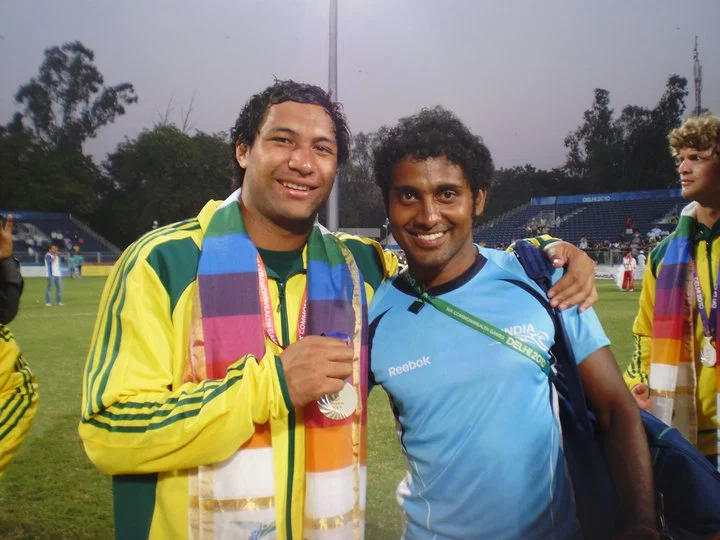
Thimmaiah Madanda is a decorated rugby union player for the Indian national team who has since 2011 taken the plunge into American football as the Head Coach of the Bangalore Warhawks outfit.
His players and his contemporaries hold Thimmaiah in high regard, both as a player and a coach. His Bangalore team was one of the best performers in the inaugural season of the Elite Football League of India (EFLI). Their run came to an end in the semi-finals, but not before impressing a large number of people with their exciting brand of football.
A heap of praise for that can be placed at the feet of Thimmaiah, who happens to be one of the first persons to join the EFLI bandwagon. Sportskeeda caught up with him for a brief chat on his experiences playing rugby and American football.
What were you engaged with before EFLI? And how did you come into contact with American football and EFLI?
I was working for Indian Rugby Union as Rugby Development Officer in Bangalore region. I was contacted by Mr Sandeep and Mr Richard to work with EFLI.
You have a rugby background; how do you think that helped you out? Was it easier for you because of that?
I was anyways following American Football and i knew the sport. I had to just go in depth after I joined EFLI to know more about American Football.
How long have you been a rugby player and how long have you been a coach?
I started playing Rugby Union in the year 2006 and been coaching kids and adults from NGO and schools from then onward. I thought by volunteer coaching i will spread the sport (rugby) and also learn more about Rugby which helped me while playing different levels of rugby i.e. domestic and international.
So keeping that in mind, American football is a new game. How did you attract athletes to come and try out for this game?
In India there is always a craze for a new sport and also when its Western sports we get more followers. It was a great opportunity and also a challenge to explore. I had to travel to lot of places to invite athletes for tryouts. and assure them that it was a great opportunity. Also many people in our state were already following me while playing rugby union for our nation and it was easy to approach them.
American football is a physical game. How are you taking care of the safety of the players?
All the players are insured before they start training. We don’t play with too much contact during training sessions so that we can avoid injuries.
Did you have any issues with convincing the parents of the youngsters in making them join American football?
Yes with some parents. There were kids with real talent, but whose parents didn’t want them to play this sport. So I had to speak to them and convince them.
You were one of the star teams in season 1. You had lots of success. How did your team take lesser time to adapt and start playing well so quickly?
Any team sport has to have right player in the right position in the team and with that instil some confidence in the players and respect the players. When it came to playing, we had some real great training sessions in Bangalore.
How is the American football scene in India in general and in Bangalore & Karnataka in particular?
American Football is a new sport. And it’s a western sport as well. In Bangalore there is a trend to follow western sport.
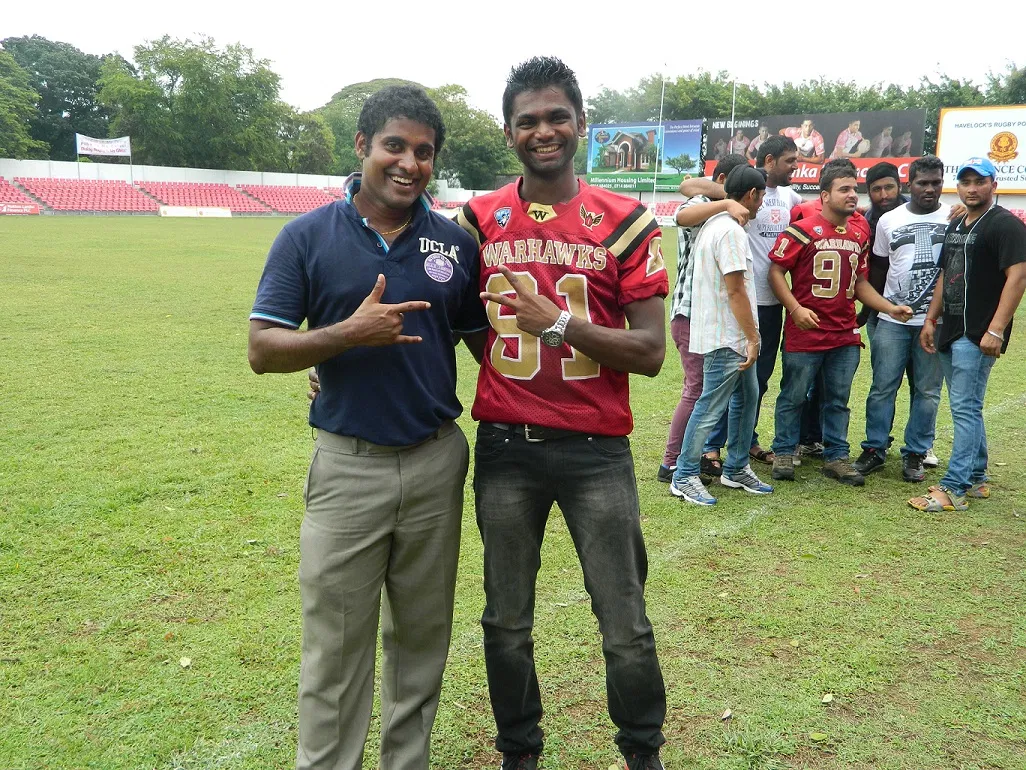
Thimmaiah (left) with Bangalore Warhawks Wide Receiver, Navaneeth ‘Chamber’ Shanta (right)
While growing up, there are lot of sports and games that we play in school, like cricket, football (soccer), tennis, volleyball, athletics, hockey, basketball, etc. but American football is something that is very, very rare, even in colleges. So how do you think the game can be introduced to children and youngsters?
Yes American Football is a rare sport. But if we introduce a great program for each region we can excel in promoting the sport.
In India these athletes must have been very new to the game. So yourself and the American coaches, what were the aspects that you asked the players to work on first?
American Football is a sport which can be played anywhere and by anybody. We only worked on basics which helped us to play a good level of sport.
What are the basic types of drills that you put the players through?
We improved their hand-eye coordination, strength, speed and some ball drills.
Also, there must be specific drills for each position. So can you tell us about what drills are there for each position, like Running Back, Quarter Back, Wide Receiver, Lineman, Tight End, etc.?
This sport is position oriented. So when we have specific training for positions we have different drills which we work on with the players.
What is the current size of the Bangalore roster?
We have 35 players.
What are the locations from which you have scouted and recruited players?
Bangalore Urban, Bangalore Rural, Mangalore, Mysore and Kodagu (Coorg).
Do you have a team of any assistant coaches or junior coaches helping you?
Yes I have 2 assistant coaches helping me.
How often do you conduct camps for the players?
That depends on the schedule of our season.
Your players have heaped a lot of praise on you and have even said that Bangalore has the best coach of all the teams. What do you have to say about that?
It’s their personal thought ! I have done my job with great respect.
What was the main strength of the Bangalore team according to you?
Bangalore players are smart and technically prepared.
Do you see American football growing as a sport in India in the long run?
Yes I do.
Coming to Bangalore team, you had very good first season and some star players emerged from your team. Is there added pressure going into season 2? And what are your expectations from season 2?
I am happy that we have some class players going forward to season 2.
source: http://www.sportskeeda.com / SportsKeeda / Home> Giridiron / by SportsKeeda Desk / April 17th, 2014
26
Napanda Thimmaiah appointed as Vice-President of Meritor Asia Pacific
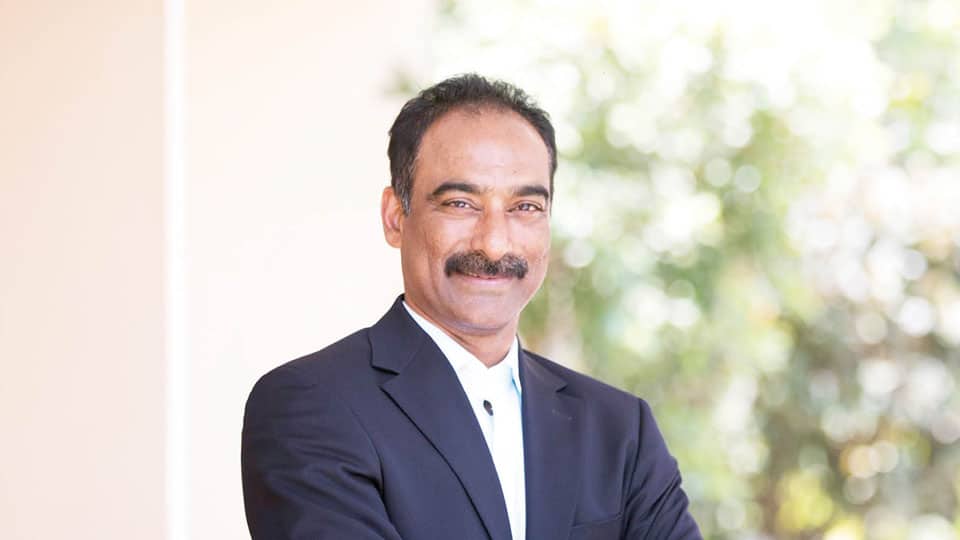
Bengaluru:
Meritor, Inc. has announced that Napanda P. Thimmaiah has been appointed as Vice-President of Asia Pacific effective Oct. 1, 2021. Thimmaiah was most recently Vice-President of India and Australia for the company. In this expanded role, he will be responsible for leading and successfully executing Meritor’s business strategy in Asia Pacific.
Meritor HVS (India) has a unit at Hootagalli in Mysuru and is a leading global supplier of drivetrain, mobility, braking, aftermarket and electric powertrain solutions for commercial vehicle and industrial markets. “Thimmaiah has nearly three decades of industry experience during which time he has made a significant mark on the industry,” said Ken Hogan, Senior Vice-President and President of Meritor Truck, Europe and Asia Pacific.
“During his nine years with Meritor, he has grown the business, strengthened relationships, and exceeded expectations for customer quality, cost and delivery. We look forward to his leadership of the company’s interests in the Asia Pacific region,” Ken Hogan added.
Thimmaiah was named one of the Most Promising Business Leaders of Asia in 2020-2021, an award that recognises eminent, visionary leaders who excelled during extraordinary times. The recognition is given to leaders who are committed to creating economic renaissance for their nations.
Napanda Thimmaiah is the son of Napanda B. Poovaiah, retired Inspector of Police, Mysuru and N.P. Devakki. He is married to Sailaxmi, a home-maker and daughter of Madrira Tiny Parvathy and late Biddappa. Their son Kevin Kariappa is currently working as a Partner and Business Development Leader for a Fitness and Wellness Start-up Medifit/Chisel/Miboso. Kevin did his undergraduate degree in Sports Development and Coaching Science at Bournemouth University, England.
source: http://www.starofmysore.com / Star of Mysore / Home> News / October 06th, 2021

