All posts by admin

Coorg brews a winner

StarbucksReserveKF30mar2017


Coffee grown in the hills of Karnataka is making its way to the Starbucks Reserve store in Seattle

Coffee is undergoing something of a transformation in India. Local beans, grown in the country, are finally making it onto store shelves, where provenance and growing techniques are emphasised. Meanwhile, a certain section of savvy consumers trawls the Internet, searching for new ways to brew their daily cuppa using a range of different home-grown beans, each of which comes packaged with tasting notes that emphasise subtle flavours.

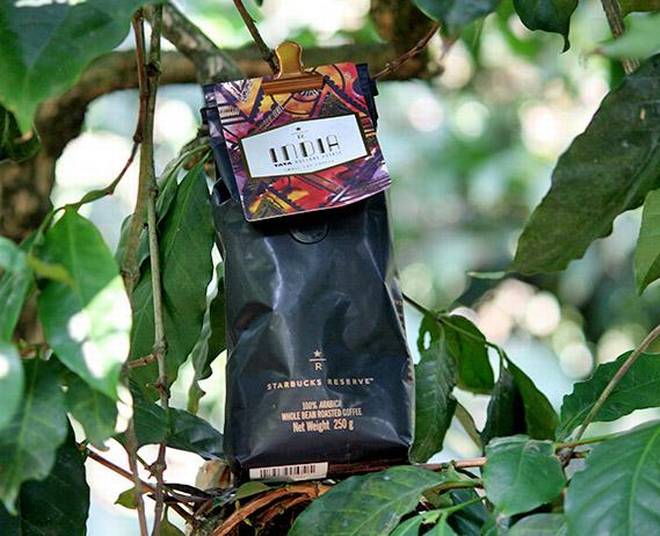
Meanwhile, an ocean away, India’s coffee prowess was given a different stamp of approval, when last October, Starbucks sold Indian coffee for the first time at its flagship Starbucks Reserve store in Seattle, the city in which the brand was founded. The coffee came from Tata’s Nullore estate in Kodagu, Karnataka, and was the company’s first microlot coffee. While Tata has 19 plantations in Kodagu (spread over 7,300 hectares), this was the first time that the company’s arabica beans made it to international shelves.

Microlot coffee refers to beans that are generally the best of the estate, and are those that imbibe flavours of the terroir. Arabica is one of two types of coffee beans, and is prized for its flavour, lower caffeine content and almost twice the concentration of sugar than is found in robusta. As a result, arabica is more expensive, and harder to grow.

Place of origin

Walking around the Nullore plantation’s block 19 (where the beans grew), what strikes you is the sense of calm that comes with standing in the midst of a 505-acre estate.

The microlot that was ultimately produced got its flavours from plants and trees that fruit bats propagate, while they make their homes in the silver oak trees above that provide shade to the arabica plants below. This two-tier system allows the coffee to grow under a canopy of trees, which includes jackfruit, pepper vines and fruits such as orange and lychee. On a tour of the block, Mandana, plantation manager, says, “We collected the coffee berries separately from eight hectares of this [block], where the fruit bat population is high.”

Changing trends

The story of the coffee though, goes beyond its growth, and rather is the story of how Tata Coffee is responding to changing customer demands, especially at the high-end, where international coffee drinkers are willing to spend between $10-30 to buy beans with unique tasting notes. Sunalini Menon, a well-known coffee cupper, who is also an independent member of the Tata Coffee board, has been instrumental in galvanising the plantation managers to experiment with microlot coffee. Chacko Thomas, the deputy CEO and executive director, says, “As a result of Nullore, we have 150 [microlot] experiments in progress.” Processing aside, the recognition has showed employees, that the beans grown in Kodagu can be cupped alongside the best in the world.

source: http://www.thehindu.com / The Hindu / Home> Life & Style> Food / by Aatish Nath / March 30th, 2017

A KPA Founders Tale

MandepandaKF30mar2017

by : Mandepanda B Appaya was a founder and a former chairman of the KPA

I am perhaps one of the lucky planters to have participated at the inauguration of the KPA and still living. The function held at the Sports Club, Mysore was inaugurated by the late Maharaja.

Late Mr. CL Machia who was my boss, as managing director of Coffee Lands Ltd, had invited me to the function. He read a long report emphasizing the need for the association [KPA].

The late Mr. M. Appaya was seated beside the Maharaja.

As I was the then manager of the Hunsur Coffee Curing Works owned by Coffee Lands, Mr. Machia had asked me to attend the function. Here I was introduced to Mr. Lakshmana Gowda and a few other planters. My association with the KPA began when I had to leave the Hunsur Coffee Works after its sale to its present owners. I then started taking an interest in the KPA and was elected from Kodagu as member very soon, I became the vice chairman when the Late Mr. AC Shivegowda was the chairman. We had a lot of problems at the KPA Level. The Land Ceiling Act was published. Although alI agricultural lands, including coffee, tea and rubber were exempt, if anyone had any other Land, both together could not exceed 48 acres. In other words, our paddy, arecanut plantations got a severe blow. Both, Late Shivegowda and I had to toil and we stayed in Bangalore for 27 days at a stretch to solve the issue.

We met almost all members of the Assembly pleading for exemption for one ceiling area of crops excluding coffee. We had an uphill task.

Fortunately, D Devaraj Urs, the then chief minister of Karnataka, who was a good friend from my days at Hunsur, helped us a lot by convincing the Congress party our case. Thus, we were allowed one ceiling area of other crops much against the will of the then revenue minister.

Mr. UK Lakshmana Gowda, being an MP was helpful from the beginning. He helped us not only for getting the ceiling area, but also with wealth tax.

It cannot be emphasized less that he had a big hand in helping us. He was friendly with all MPs, which helped us in securing wealth tax exemptions on plantations. Mr. FM Khan, MP, has also helped us get wealth tax exemption.

I was the chairman of the KPA in 1973.

My association with the Coffee Board began in 1971. I was a member of the Coffee Board for four terms, though not at one stretch. During 1971 there was a shortage of curing works as the business was not attractive. A committee was formed to visit all the curing works and know of their expansion plans. Mr. PG Gurger and myself visited all the curing works in the state and submitted a report to the chairman. We were both traveling from Hassan to Mangalore. Enroute we heard of the surrender of Pakistan after the Bangladesh war. GeneraI Manekshaw was then made Field Marshal for the success.

Mr. UK Lakshmana Gowda who I used to call Bhishma Pitama, was of great help in the Coffee Board. When we used to have heated arguments on certain issues with the intelligent Kerala members, it was Mr. UK Lakshmana Gowda who used his knowledge and experience to solve the issues. Late Narasimha Rao, IAS, once sent me to Delhi to negotiate with Russian representatives regarding discount on coffee sold to them.

During 1988-89′ both Mr. Lakshmana Gowda and l went to Moscow for that year’s sale to the erstwhile USSR. We had to go during December and stayed for eight days. Finally we agreed to allow 38 percent discount on international prices. The then chairman of the board, Late SK Warrier had come with us.

Normally, we sold 50,000 tones to the USSR. But every year the discount went up. At New Delhi we decided to allow 37 percent discount on the International prices.

We had no choice as we had to sell one-third to the quota countries and one-third for internal consumption and one-third for non-quota countries. For sales in the internal market, the government fixed the minimum price. Thus planters suffered.

To add to their woes we had to pay 102 percent purchase tax since we had lost the case in the Supreme Court. lt was kept pending for 10 years before the retiring chief justice gave the decision on the last day of his sitting. Karnataka government, in addition to this, levied a 15 percent sales tax on every bean sold by the growers.

We met even Rajiv Gandhi in Bangalore and made representations to him. He asked us to meet the adviser to the governor as there was no government then. Mr.Rangarajan heard us patiently for 45 minutes but gave no decision. Finally there was an agitation for the abolition of pooled marketing by the growers and they succeeded and now free trade of coffee is allowed.

I became chairman of UPASI in 1983. Mr. Tika Bedi insisted l should take this position since l did not accept it due to certain physical constraints. Anyway, I served the UPASI in the committees from 1972 to 1983.

So my career in the KPA, Coffee Board ended in 1983. I served the Mysore Race Club for over 15 years which celebrated the centenary in 1992 with an eye hospital for the poor and the needy as a centenary project. I was the chairman of the Race Club from 1988-92.

I am now over 87 years old, yet take keen interest in many of the activities I used to participate in.

source: http://www.kpa.org.in / Karnataka Planters’ Association / Home> About Us> History / by Mandepanda B. Appaya

Melbourne International Coffee Expo ready to launch

MICEcoffeeKF30mar2017

The attention of the coffee world will be focused on the Melbourne International Coffee Expo (MICE), which is being held at the Melbourne Showgrounds from 30 March to 1 April.

All of the Australian Coffee Championships will be back at MICE for 2017

With the Australia Barista Championship, PURA Latte Art Championship, Cup Tasters Championship and Coffee in Good Spirits all taking place on the ASCA Main Stage, and Brewers Cup being held in the all-new Brewing Lounge, there truly is something for everyone over all three days at MICE2017.

All winners will be announced in a ceremony on Saturday 1 April.
And for the first time ever, MICE2017 will feature a brand new Brewing Lounge that will showcase the ASCA Australian Brewers Cup, where visitors will get the chance to taste all the competition coffee.

A range of SCAE (SCA) certified courses are also being offered to coffee aficionados and beginners alike throughout MICE2017. In partnership with MICE, reduced course fees are being offered to MICE attendees.

The show is part of a wider schedule of events that make up Melbourne Coffee Week.

On Thursday, 30 March, Ona Coffee and Dr Morse Bar and Eatery are invite coffee and beer lovers alike to join them for a BrewParty – a celebration of filter coffees, beer and good times. Special guests will include WBC 2015 Sasa Sestic and current Australian Barista Champion, Hugh Kelly.

And on Saturday, 1 April, Axil Coffee Roasters will host the MICE2017 and ASCA after party.

source: http://www.gcrmag.com / Global Coffee Report / Tuesday – March 28th, 2017

Award-Winning History Exhibit Opens March 27

Kona Historical Society (KHS) will open the award-winning exhibit “The Kona coffee Story: Along the Hawaiʻi Belt Road,” on Monday, March 27 at H.N. Greenwell Store Museum.

KHS Board Member Alfreida Fujita gets a sneak peak at the KHS exhibit on March 23, 2017. Photo courtesy of Kona Historical Society.

This journey back in time to 20th century coffee farm life features never-before-seen photos and artifacts from the organization’s collection and archives. They have travelled to museums worldwide.

This Kona Coffee Story will be open Mondays, Tuesdays, Thursdays and the first Saturday of every month from 10 a.m. to 2 p.m. Admission is $5 and free to students of all ages, KHS members and active and retired military persons with identification.

The coffee industry emerged in Kona in 1828, and like any other industry, it experienced its highs and lows. Personal written accounts in the exhibit reveal the voices of hard working farmers and community leaders. Black and white photos preserve family portraits and images of the industry farm lands, in addition to a miniature model of a coffee mill.

KHS hosted a special preview of the exhibit to a limited audience on Thursday, March 23, featuring refreshed content. Attendees included descendants of Kona’s coffee industry pioneers who shared their memories of life on the farm, reflected in the exhibit’s photos, artifacts and written accounts.

The exhibit will be on display through the end of 2017.

source: http://www.bigislandnow.com / BigIslandNow.com / Home / by Big Island Now Staff / Hawaii – March 27th, 2017

Emergence Of Indian Coffee Industry

As the divisions of Coffee Day – the B2C service Cafe Coffee Day, in B2B the Coffee Day Beverages, Coffee Day Exports and Coffee Beans is sold to customers

CoffeeBizKF30mar2017

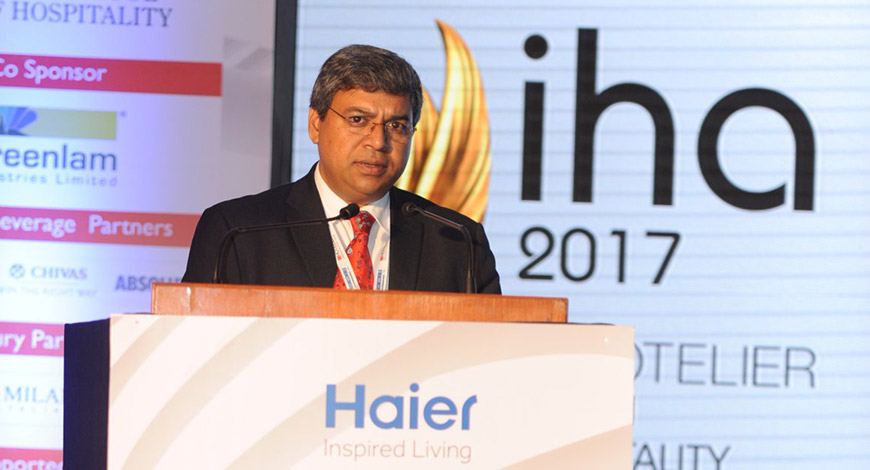
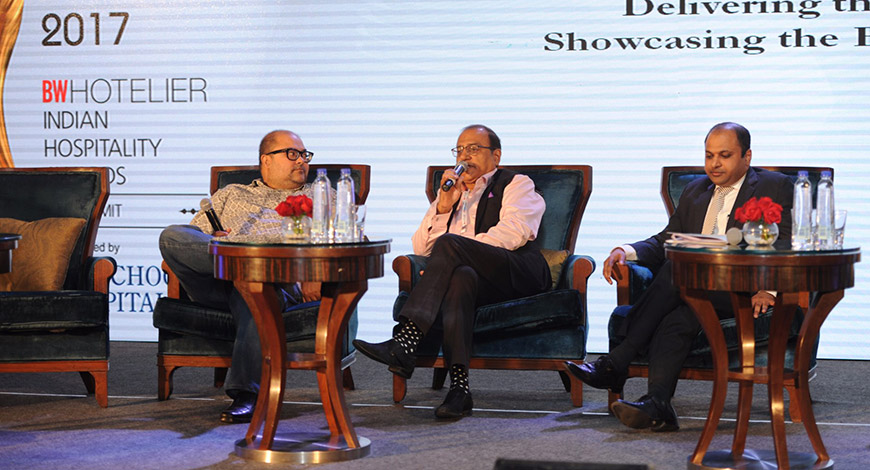
The caffeine buzz has caught up in all cities in India closing the generation gap which once drank tea and coffee. At the BW Hotelier Indian Hospitality Awards & Summit 2017 at The Leela Ambience Hotel, Gurugram, a session on “Showcasing the Best of Indian Coffee” moderated by Bikramjit Ray, Executive Editor of BW Hotelier, the panelists spoke about the growing importance of coffee in the contemporary times.

The session was opened by Abhrajyoti Chatterjee, from Coffee Day who mentioned how their brand intends to serve coffee with passion. Coffee Day is a brand which exports coffee to Europe, Middle East, EU and many other places. They even have 1500+ acres of area for the production of coffee.

CoffeeBiz02KF30mar2017

As the divisions of Coffee Day – the B2C service Cafe Coffee Day, in B2B the Coffee Day Beverages, Coffee Day Exports and Coffee Beans is sold to customers. Their brand has 41000 coffee machines in India with presence in over 1000 cities. Every year Coffee Day expands in nearly 100 cities. The machines like BMF, Indus, Sienna, Orion are the several machines which produce coffee. It also has divisions such as Coffee Day Lounges and Express Outlets in India.

The national coffee brand has a presence in 28 states, 127 cities and 665 technicians. Their huge setup which is only a backup and then we have our various outlets across India. The variations of coffee are like morning java, classic roast, filta fresh, arabica and robusta blend.

During the session it was discussed how the idea of coffee and tea could be interchanged in the earlier days. However, India is the fifth largest producer of coffee in the present times.

The session covered by Vishrut Gupta, Director Food & Beverages, Pullman New Delhi Aerocity Delhi and Sanjiv Mediratta, Group Advisor, F&B Soution and New Business Strategy, Coffee Day discussed how they are bringing a new experience for millennial in coffee. The idea of an expresso was mixing coffee with chocolate powder. More people are educated about coffee at present.

The QSR has had an impact on the purchase of coffee on people. The taste for coffee being lighter or stronger is understood by people. People liking to click more pictures with coffee is also gaining more customers for this beverage. The automatic machines also gives people the right experience of coffee.

Innovation was always present in food; but was lesser for beverages. Whether expresso, americano or latte, the youth being more exposed to the world is aware of the global trends of coffee.

source: http://www.businessworld.com . BW – Business World / Home / by Anisha Aditya / March 24th, 2017