All posts by admin

Rotary Club of Bangalore to celebrate Education through Art – Kala for Vidya

Annual art show at Taj West End from February 24 to 26

Bengaluru, Karnataka :

Rotary Club of Bangalore (RCB) will be showcasing its annual art exhibition Kala for Vidya on Friday, February 24, at The Taj West End – Art Corridor.

The event is to be inaugurated by Ms. Shefali Vaidya, the eminent columnist and Mr. Prasad Bidappa, the fashion guru, guests of honour.

26 prominent Indian artists have joined hands with RCB along with The Taj West End for the cause, the education of economically weaker section children. The Art Show will be on display February 25th and 26th, 2017, from 11.00 a.m. to 8.00 p.m. for art lovers to enjoy and contribute.

‘Rotary club of Bangalore has a long history of service projects. We have constructed 40 government primary schools, run our own high school, build toilet blocks, and similar projects. A successful Kala for Vidya show will mean one more step in the direction of making India free of illiteracy.

This initiative by Rotary Club is part of the larger effort to bring in underprivileged children into the mainstream through education’, said Rtn. President Ranga Rao, RCB. He further added “What is special about this show are the fine artists coming to partner with us for the cause. Well-known artists such as Gurudas Shenoy, Milind Nayak have been our source of inspiration for us to sustain the cause for over 9 years generating smiles on the faces of the children of rural India.”

Mr Somnath Mukherjee, the General Manager of Taj West End,’ The Taj West End has always aimed to showcase the finer things in life and the Art Corridor is a perfect example of it. We have partnered with RCB for Kala for Vidya in the past as well and is an extension for the support we provide for artists’.

Rotary club of Bangalore is 82 years young and has an enviable spectrum of service projects. We have partnered in running the Rotary TTK blood bank, significant dialysis presence, inculcate solar and green values in rural areas, and many other socially relevant projects.

source: http://www.indiaprwire.com / IndiaPRWire.com / Home> Healtcare-Hospital, Childrens related News / February 20th, 2017

A Simple Shubra SEENasation

The lissome Coorg beauty took a breather after Vajrakaya, and is now back as the love interest in this new Kannada film.

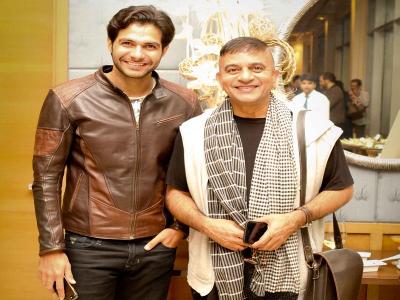
Shubra Aiyappa
Shubra Aiyappa

Two years ago, at almost six feet, a svelte and beautiful Coorg beauty towered into Sandalwood and created waves, and “simply” wowed audiences in a song. She then went off the radar for a bit.

Now, back as the love interest of John Seena, Shubra Aiyappa hopes for some more tall claims. Her ‘John Seena’ however has nothing to do with the WWE popular wrestler John Cena. It’s just the title of the upcoming directorial venture of Simple Suni of the Simple Aag Ondh Love Story and Bahuparak fame.

The model-turned-actress Shubra makes a comeback after two years and speaks to Bengaluru Chronicle about her love for John Seena, and what made her wait for a while despite the huge popularity she attained after her short and sweet special appearance in Vajrakaya’s famous song No Problem alongside Shivanna.

“My second film in Kannada is very different from my earlier one, as an actress. I had never expected that first-ever song in Kannada featuring me along with the great Shivarajkumar Sir would become so popular, and would go onto be the number one song of that year. That is so so wonderful.”

Though, I play the love interest in my John Seena, the character I am portraying is very interesting, though revealing any more about her would spoil the whole fun of the movie,” says Shubra, adding that it will be a complete transformation for her.

On why she chose to wait for some time despite her huge popularity, the actress feels that she is not a person who will do something just because she has to, but only when she wants to. “I love my craft so much that I will be a part of something if I have a connect with it. When the first film came to me, it was very exciting. I knew that there would not be too much of a screen presence but sharing the screen space with Shivarajkumar Sir, playing his love interest, and also the song was a great debut,” Shubra says.

She admits that she did get a lot of offers, but did not accept them out of choice. “After doing a film of that level, it only made sense to either do something on par with it or to wait for something higher,” she says. In a first for her, she will be lending her own voice in John Seena.

“I got many calls and enquiries but nothing got caught my attention. The numbers are irrelevant, and also, if I choose the wrong film, it would be difficult to bounce back as history has seen such actresses typecast.

Hence, I have been a little more careful with the choice of movies, and decided to take a break for something after Vajrakaya. I got an offer that involved Suni Sir for his next directorial. He has such a great reputation since Simple Aag Ondh Love Story, and the kind of films he has been making are different. Once I heard the fantastic script, I had to accept it,” she adds.

With the shoot in progress, the actress is doing her home work for John Seena — there are strict instructions at home to speak only in Kannada, amongst a huge to-do list.

“Featuring in the No Problem song, as a beautiful girl was easier for me, as I was a model. Now working for Suni has been very great. He is quirky at work, and there is never a dull moment,” she says.

The actress thanks her modelling days for helping her to a great extent when she took up films. “I started modelling at 15, and have worked for almost all the designers in India, and walked on the international catwalk as well. I am certainly not over-confident, but modelling helped me face my fears (in front of the camera). When I started doing ads, I was identified, and I was also interested in doing films as it allows me to explore different characters and evolve,” Shubra explains.

Before signing off, the actress who loves dancing says that her parents have been the greatest support for her, and post No Problem, they have changed their caller tunes to the song that saw her catapult to fame. “Even now, they help me with rehearsals at home as they know Kannada very well,” she ends.

source: http://www.deccanchronicle.com / Deccan Chronicle / Home> Entertainment> Sandalwood / by Shashiprasad SM – Deccan Chronicle / March 01st, 2017

Prasad Bidapa does his bit for art for a cause in Bengaluru

BidappaKF28feb2017

The city’s art connoisseurs were in for a treat early this week, when US-based Sri Lankan artist Geramin Sebastian La Brie held a charity exhibition of her work.

The proceeds of the show were in aid of underprivileged children suffering from cleft lip and palate, and art lovers wasted no time in picking up the paintings.

The show was curated by Rubi Chakravarti and supported by Deutsche Cleft’s Regional Director, South Asia, Dushyant Prasad, and Lalit Sanghvi.

source: http://www.timesofindia.indiatimes.com / The Times of India / News> City News> Bangalore News / TNN / January 05th, 2017

Curators of the bitter beans

CoffeeBeansKF28feb2017

Not only do they handle business in acres, but also take utmost care to manage the crop sustainably. Care T Acres, a private initiative begun in 1998, has been helping coffee planters in Kodagu manage their properties. This initiative has become a boon to many planters who are unable to look after their estate.

“Care T Acres has stopped planters from selling their property and moving away from Kodagu,” says Nanjappa Kuttaiah, a coffee grower. With eight partners — Bose Mandanna, N K Chinnappa, N P Machaya, K M Cariappa, K Ajit Appachu, Aruna Biddappa, B Ram Bopaiah and K M Appaiah — the team comprises competitive planters with a combined experience of over 300 years!

The beginnings
Kodagu, the coffee haven that contributes to over 40% of India’s coffee production, has a lot of estate owners staying overseas. While selling the property has sentimental issues, maintaining them from overseas is illogical. This is where Care T Acres steps in, with the role of prime mover being Managing Director, N K Chinnappa. So, how did ‘Care T Acres’ come into existence? Among the founding members, Late Arun Bidappa was a well-known coffee trader. However, he needed expertise in maintaining his estate, which he developed with the help of expert planter Bose Mandanna.

Arun’s estate was the first property that received tendering from ‘Care T Acres’. “He (Arun Bidappa) said, ‘I help you trade your coffee, why don’t you help me look after my estate?’” recalls Bose. This conversation got the best planter friends together and thus began ‘Care T Acres’ with a maxim that “no one should neglect or sell their estate in Kodagu,” as Bose states.

The initiative is currently managing 600 acres, all under the constant supervision of Chinnappa — who grooms them like brides-to-be. The bottle green coffee plants nurtured by him are shaped like woven skirts. “Chinnappa’s way of raising and nurturing estates is a win-win proposition,” notes Nanjappa.

Professional care & support
The service (for estates that are more than 30 acres) begins with the client signing a five-year contract. Once done, the company starts looking after the ailing estates and fosters them like their own. When a grower approaches them, the team members visit the estate and analyse it. Then, the operations required to revive the estate are prioritised and the ‘surgery’ begins. “The person who can take care of his estate very well will not come to us. It is always the owner unable to manage his property who comes to us. In many cases, the grower would be suffering financial loss. So, the foremost ‘operation’ would be to clear the debt,” explains Chinnappa.

The team acts not just like a doctor but also that of an antibiotic as the second step towards betterment would be to develop proper infrastructure. Drying yards, labour line, proper cut roads, pulping yard and irrigation facility are developed to make the estates sustainable and self-reliant. Simultaneously, the grooming session begins — coffee plants are pruned, nourished, irrigated and shades are regulated to produce better yield.

With constant efforts, the estate breathes a new life. While they work for remuneration in the first two years, they sign up for a 30% profit from the third year. “I might be getting 70% of the profit, but that is equal to 150% of what I was earning before. Also, you get the profit without having the headache of managing it,” opines Nanjappa.

Another grower, Dalia Chengapa, has her estate being cared for by the company since 2007. She recalls how the estate owned by her father, Late A T Chengapa, lost its focus after he fell ill. “My father was a wonderful planter and he looked after the estate properly. But after his health deteriorated, the estate needed support. My sister Ramona and I stayed in different cities, and we did not have the practical knowledge for growing coffee. My father was unable to guide us as he was unwell. That is when we approached ‘Care T Acres’,” she recalls. While her estate incurred loss before the team took over, it is now making good profit.

Nanjappa’s story goes on the same lines. His mother passed on and the 45- acre estate in Suntikoppa that she looked after relied on him for tending. He had known that ‘Care T Acres’ turned the estates around and yearned for their support; eventually the deal was sealed. “Eight competitive planters, financially trustworthy and among the best planters in the district took over my estate and it was a blessing at the right time,” he says. Chinnappa started the work here and looked at two primary problems. Firstly, he pruned the coffee plants in a better way — there were more branches and nodes earlier, which reduced the picking cost. “When pruning is done properly, the plant flows down and it becomes easy to pick berries. The yield also increases,” explains Chinnappa. Secondly, the roads were laid for convenient movement.

The estates cared for by the team improve their pepper yield as well. With a systematic auction and tendering system in place, planters get an optimal price for pepper. The team has taken up risks as challenges and revived many estates. However, Mandanna explains, “While we have gone beyond limits and put money from our pockets to revive the estates, there are instances where we have rejected a few. These estates are uncultivable and there would be no absolute hope for coffee.” Chinnappa adds, “It is not just about profits but it is about leaving a legacy behind.”

One can contact the team at rkpagastya@gmail.com.

source: http://www.deccanherald.com / Deccan Herald / Home> Supplements> Spectrum / Prajna GR / November 22nd, 2016

India needs practical national security doctrine: Marshal K C Cariappa

Cariappa said the need for such a doctrine is necessary in the face of having a nuclear-armed neighbour, Pakistan.

Former Air Marshal K C Cariappa on Sunday emphasised on the need to have a “practical” national security doctrine and a “robust” nuclear policy to “reassure citizens that appropriate measures are in place to protect them.” Speaking at the second Flying Officer Nirmal Jit Singh Sekhon memorial lecture at Ahmedabad, he said a strategic defence doctrine should be put in place and endorsed by all political parties.

“We do not have a national security doctrine. The existence of such a document will dissuade adventurism and will reassure our citizens that appropriate measures are in place to protect us,” Cariappa said.
“A credible message must be conveyed to our people. A practical national security strategy and robust nuclear policy must be endorsed by all political parties,” the former Air Marshal said.

Cariappa said the need for such a doctrine is necessary in the face of having a nuclear-armed neighbour, Pakistan.

“They have created forces that destabilise our society by encouraging traditional antagonism… we need to tailor our strategic defence doctrine to create long-term measures towards a deterrent based on severe retribution as there can be no scope for indecisiveness,” he said.

Speaking on the need for a robust nuclear policy, Cariappa suggested that India’s nuclear forces must be placed under a strategic forces commander, who will be answerable to the Prime Minister, and will be the ultimate authority to launch the first strike in foreign territory.

“A command control and communication centre must be built. Our targeting philosophy must be involved and redirected to two notices, but yet the message must be loud and clear that this has been done, and that in fact our targeting policy exists,” he said.

Speaking on ‘Civil Military Relations’, former Commodore C Uday Bhaskar pointed out that there exists very little contact between India’s political establishment and military, and said the Indian Parliament exhibits “almost zero interest” in matters related to defence.

“The political establishment of India does not really have interest in military or the institution. There is a reason. Much of politics is now caught up in electoral cycle and military as an institution till recently did not represent a vote bank,” he said.

The fear of “coup” led to an understanding that the military should be kept outside the structures of formal governance, he said. “The defence ministry has ensured that military is caught in a maze of rules and regulations. And my reading is that bureaucracy does ‘Yes Minister’, keeps the fear of coup alive,” Bhaskar said at the event organised by the Air Force Association’s Gujarat chapter.
“Institutionally, Indian military has been treated as an untouchable, and unfortunately, they have not found an Ambedkar till now,” he said.

Bhaskar, however, said things have changed with OROP, and with retired military personnel becoming a force to reckon with in the Punjab Assembly elections.

“There seems to be a greater degree of politicisation of military’s retired community,” he said.

Bhaskar further said the Centre is cognisant of this and is taking into consideration various recommendations including those pointed out in the Kargil Committee Report.

Meanwhile, an expert on defence procurement, Laxman Behera, who delivered a lecture on ‘Make In India and Defence Production’, said despite government making positive efforts to involve private players to engage in defence production, a lot of concerns remains which need to be addressed.

He said government sector still wins major contracts for defence manufacturing, leaving out private players who have invested in infrastructure for the same.

“From private sector perspective, although government has undertaken a lot of reforms, no major contract has come to private sector so far. The private sector is desperately waiting for major contracts. The government will have to walk the talk and award some contracts to them,” he said.

He also said the component of capital expenditure in budgetary allocation to defence should go up, as a majority of money is spent on manpower.

“Over the last several years our budget is skewed towards our manpower. More than 42 per cent is for salary and manpower, and money for modernisation is sinking day by day,” he said.

“It is either stagnant for the last four years or is declining. So hopefully when the budget is presented in February, we will see some hike in capital expenditure, or it will be very difficult to sustain ‘Make in India’,” Behera said.

source: http://www.indianexpress.com / The Indian Express / Home> India / by PTI / Ahmedabad – January 29th, 2017

Karnataka win again

A strong all-round performance from Karnataka gave them a four-wicket victory over Services in the Vijay Hazare Trophy here on Sunday.

Half-centuries from Robin Uthappa, Pavan Deshpande, Aniruddha Joshi and a solid bowling show from pacer Prasidh Krishna spurred Manish Pandey’s side.

Having won the toss and put Services into bat, Prasidh (3/39) gave his side a good start removing opener Nakul Verma (4) and Amit Pachhara (7) with the scoreboard reading 20 for two.

Thereafter, the Karnataka bowlers continued to apply the pressure on their opponents and despite a few of their batsmen getting starts, Services could only muster 231 for seven in their 50 overs.

Karnataka were rocked in the beginning of their chase by Suraj Yadav who accounted for Mayank Agarwal (0) and R Samarth (1).

Skipper Pandey (23) and Robin Uthappa (51) rebuilt the innings before Deshpande (73) pushed them closer.

Cameos from Joshi (50 off 37) and J Suchith (24 off 18) ensured Karnataka overhauled the target with 35 balls to spare.

Brief scores

Group A: Punjab: 243 all out in 49.4 overs (Shubman Gill 121, Gurkeerat Singh 58; Pritam Das 3-59, Arup Das 3-27) lt to Assam: 247/7 in 48.4 overs (Pallavkumar Das 48, KB Arun Karthik 63, Amit Verma 65; Sandeep Sharma 3-52).

Vidarbha:
251/5 in 45 overs (Faiz Fazal 58, Apoorv Wankhede 62 n.o., Akshay Karnewar 54 n.o) bt Baroda: 229 all out in 42.4 overs (Aditya Waghmode 79, Krunal Pandya 43, Pinal Shah 36; Yash Thakur 3-64).

Railways: 252/7 in 50 overs (Pratham Singh 51, Arindam Ghosh 76; Harshal Patel 2-58, Mohit Sharma 2-60, Rahul Tewatia 2-46) bt Haryana: 181 all out in 38 overs (Rahul Dagar 57, Kadam 4-38, Amit Mishra 2-21).

Group B: Himachal Pradesh: 339/8 in 50 overs (Prashant Chopra 159, Paras Dogra 77, Sumeet Verma 36; Nitin Saini 3-63, Kulwant Khejroliya 3-61) bt Delhi: 154 all out in 37 overs (Sarthak Ranjan 37, Dheeraj Kumar 5-24, Pankaj Jaiswal 3-24).

Maharashtra: 311 all out in 50 overs (Ruturaj Gaikwad 79, Kedar Jadhav 71, Naushad Shaikh 57, Jalaj Saxena 4-51) bt Kerala: 189 all out in 39.5 overs (Mohammed Azharuddeen 50, Iqbal Abdulla 60; Pradeep Dadhe 4-33, S Kazi 3-25).

Uttar Pradesh: 159 all out in 36 overs (Sarfaraz Khan 31, Rinku Singh 37; Aswin Crist 2-38, M Mohammed 2-34, Rahil Shah 2-25) lt to Tamil Nadu: 160/3 in 27.5 overs (Dinesh Karthik 56 n.o., Vijay Shankar 58 n.o.).

Group C: Madhya Pradesh: 127 all out in 40.2 overs (Saransh Jain 56; D Siva Kumar 3-17, Bandaru Ayyappa 3-33) lt to Andhra Pradesh: 131/8 in 37.5 overs (Hanuma Vihari 58 n.o.; Ishwar Pandey 3-31).

Gujarat: 277/9 in 50 overs (Parthiv Patel 80, Priyank Panchal 57; Rituraj Singh 3-61) bt Goa: 199 all out in 45.5 overs (A Desai 61, Snehal Kauthankar 64; Rujul Bhatt 5-38, Ishwar Chaudhary 3-34).

Rajasthan: 181/9 in 38 overs (Mahipal Lormor 49; Shardul Thakur 3-47) lt to Mumbai: 184/5 in 29.1 overs (Akhil Herwadkar 50, Shreyas Iyer 41, Tajinder Singh 3-45).

Group D: Jharkhand: 243/9 in 50 overs (M S Dhoni 129, Shahbaz Nadeem 53, Anand Singh 32; Abhuday Kant Singh 4-33, Pankaj Rao 3-27) bt Chattisgarh 165 all out in 38.4 overs (Varun Aaron 3-26, Shahbaz Nadeem 3-36).

Services: 231/7 in 50 overs (Diwesh Pathania 49, Suraj Yadav 44 n.o., Abhijit Salvi 30, Shamsher Yadav 37; Prasidh Krishna 3-39 Aniruddha Joshi 2-32) lt to Karnataka: 232/6 in 44.1 overs (Pavan Deshpande 73, Robin Uthappa 51, A Joshi 50 n.o.; S Yadav 2-37).

Hyderabad: 312/7 in 50 overs (Akshath Reddy 154, Kolla Sumanth 91; Kushang Patel 3-54) bt Saurashtra: 199 all out in 38.5 overs (Prerak Mankad 104, Jaydev Shah 34; Chama Milind 4-30, Ravi Kiran 2-46, Mehdi Hassan 2-44).

source: http://www.deccanherald.com / Deccan Herald / Home> Sports / Kolkata Agencies / February 27th, 2017

‘Kodagina Gowramma’s contribution to Kannada literature immense’

Kodagina Gowramma has made significant contributions to the Kannada literary world, said Asha Hegde, secretary of Karnataka Lekhakhiyara Sangha.

Speaking after conferring Gauramma Datti Nidhi award for 2016-17 instituted by the district Kannada Sahitya Parishat on Shanthi K Appanna here on Saturday, she said “Though Gowramma lived only for 27 years, she made her mark with her works, which are relevant even to this day. A feminist and a freedom fighter, she had invited Mahatma Gandhi to her house, during his visit to Coorg.”

She said, “Gowramma inspired women writers with her feminist ideology and strove to create an awareness about the atrocities on women through her works.”

Speaking after accepting the award, Shanthi K Appanna said “Though she has been living away from Kodagu for the last 15 years, her love for the land has not diminished. Gowramma is an inspiration for my works. I started writing poems and stories when I was in Class IV. It was my mother who encouraged me to write,” she said.

Kannada Sahitya Parishat district president B S Lokesh Sagar, Fisheries department assistant director Milan Bharath and others were present.

source: http://www.deccanherald.com / Deccan Herald / Home> District / DHNS – Madikeri, February 05th, 2017

African Fine Coffee event kicks off in Ethiopia’s capital

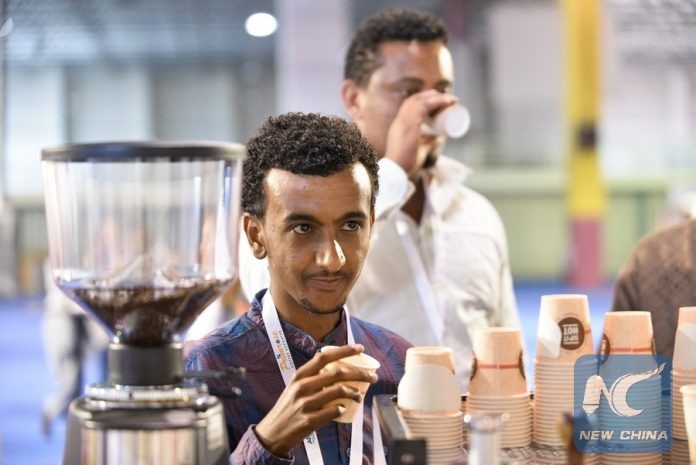
Participants taste coffee during the 15th edition of African Fine Coffee Conference and Exhibition in Addis Ababa, capital of Ethiopia, Feb. 15, 2017 (Xinhua/Michael Tewelde)

Addis Ababa, (Xinhua) :

Attracting regional and international coffee roasters, traders, producers, professionals and connoisseurs, the 15th edition of African Fine Coffee Conference and Exhibition kicked off in Ethiopia’s capital Addis Ababa on Wednesday.

With the objective of reshaping African coffee industry, the three-day event from Feb. 15 to 17 is expected to have intensive discussions on policy and trade development across the African coffee value chain.

The African Fine Coffee Association (AFCA) and the Ethiopian Coffee and Tea Development and Marketing Authority, have co-hosted the event under the theme, “Reshaping African Coffee Industry for Productivity and Investment.”

The participants are also expected to discuss ways of boosting coffee production on the African continent, and the exhibitors from across the world showcase their coffee products, machinery and packaging facilities, among others.

The conference is a buyer-oriented event which brings together buyers from all over the world to build key trading relationships and discuss issues impacting on production, trading environment and policy interventions necessary to grow the coffee industry worldwide, according to the organizers.

The event is also expected to provide an opportunity for business-to-business engagements and for buyers to taste best coffee from Ethiopia and the rest of Africa.

Officially opening the event, Ethiopian President Mulatu Teshome reiterated that his government attaches great importance to the coffee industry as it is backbone of the country’s commodities export.

“Around 20 million people are directly or indirectly deriving their livelihoods from coffee. Hence, as major agricultural export product, it generates about 26 percent of Ethiopia’s total export earnings. Ethiopia is the largest producer of coffee in Africa and the fifth largest coffee producer in the world, next to Brazil, Vietnam, Colombia, and Indonesia, contributing from 7 to 10 percent of total world coffee production,” noted the president.

It has been recognized that new markets have been identified in order to benefit coffee farmers and also to encourage all stakeholders in coffee industry, according to the president.

“In this regard, China, Russia, Middle East, and the Far East economies, Australia, and consuming African countries of Algeria, Tunisia, and Sudan among others offer a lucrative option and price incentives to the Ethiopian coffee,” he said.

Bagersh Abdullah, Board Chairman of African Fine Coffee Association (AFCA), stated that African Fine Coffee Conference and Exhibition has become one of the top events in the world.

“This conference has a lot of value because we are at the beginning of the coffee season and I am hoping that by being here the delegates the buyers, many, many buyers are here will have the chance to see, believe and taste the coffees and we are going to ship first class coffee out of Ethiopia this year,” he said.

Eyasu Abraha, Ethiopian Minister of Agriculture and Natural Resources, said on his part that the government has been taking various measures to tap Ethiopia’s huge potential in the sector and boost coffee productivity in the country.

“Ethiopia has a huge potential to increase coffee due to processing, suitable climate, soil, indigenous planting material, and sufficient rainfalls in coffee growing belts of the country. To this end, government is committed to more than ever before to tap the huge potential that exists to increase coffee productivity through undertaking research and development interventions.”

African Fine Coffees Association (AFCA) is an association with coffee sectors in 11 member countries, namely Burundi, DR Congo, Ethiopia, Kenya, Malawi, Rwanda, South Africa, Tanzania, Uganda, Zambia and Zimbabwe.

Over 100 exhibitors participate in the exhibition showcasing their coffee products, machinery, and packaging among others, according to the organizers.

source: http://www.nazret.com / Nazret.com / Home> Business> News / February 16th, 2017

Seventh bishop of Mysuru diocese will be ordained in Mysuru tomorrow

Mysuru :

Reverend K A William will be ordained as seventh bishop of Mysuru diocese, which comprises four districts of Karnataka — Mysuru, Mandya, Kodagu and Chamarajanagar — at the Episcopal Ordination and Installation ceremony at St Philomena’s Church on Monday.

Bishop Emeritus Reverend Thomas Anthony Vazhapilly will officiate the ordination, while Bengaluru Archbishop Reverend Bernard Moras and Chikkamagaluru Bishop Reverend T Anthony Swamy, will be the co-consecrators. This will be followed by a felicitation ceremony for the new Bishop William, and the former Bishop, Thomas Anthony Vazhapilly.

The bishop is the spiritual head of all Catholic Churches in the four districts. As many as 180 Parishes, 131 Diocesan priests, 23 male Religious and 55 female religious congregations in six deaneries, apart from 136 educational institutes fall under the Mysuru Diocese.
William was appointed bishop for the diocese by Pope Francis, and the announcement was made on January 25, 2017.

His ordination is likely to witness the participation of 25 bishops from Karnataka, and neighbouring dioceses, in addition to 500 priests, sisters and other key members from the parishes. The Pro-nuncio, the Papal Ambassador to India, and district in-charge minister H C Mahadevappa, local MLAs and MPs have also been extended invitations.

“The ordination ceremony will commence at 4.30pm on Monday,” said Reverend Leslie Moras here on Saturday. Thomas Vazhapilly, who resigned on turning 75, the maximum age to hold any posts, served as bishop for 14 years from 2003. Thomas will be Bishop Emeritus of Mysuru and will continue stay here at Prashantha Nilaya, a home for retired clergy of the diocese.

About new bishop
Reverend William, a native of Polibetta, Kodagu, was educated in Mysuru. He did his schooling at Good Shepherd Convent (elementary), St Mary’s (primary) and St Philomena’s (High School) and completed his pre-univerity education from St Philomena’s college. William joined the seminary and completed theological studies from St Mary’s Minor seminary, Mysuru, and St Peter’s Pontifical seminary, Bengaluru. William has done his master’s degree in Canon Law and Christianity.

William was ordained a priest on May 18, 1993 and has served as parish priest of St Thomas Church, Thomayarapalaya and Our Lady of Lourdes Church, Martalli, Kollegala and at Our of Lady of Lourdes church, Gundlupet, Chamarajanagar and the Holy Family Church, Hinkal, Mysuru, St Philomena’s church and St Joseph’s church Jayalakshmipuram. He was the financial administrator and chancellor of the diocese for six years. William was secretary of Mysuru diocese educational society.

William worked hard to get funds to the tune of Rs 5.5 crore from government for the renovation of St Philomena’s Church, a popular tourist spot. The work on the church is under way. The Reverend has also composed a number of hymns that have been brought out in CDs.

source: http://www.timesofindia.indiatimes.com / The Times of India / News> City News> Mysore News / TNN / February 26th, 2017

How Avayya Drank Brandy, Made Imaginary Friends & Lived Till 101

For as long as I can remember, my grandmum has always been old, almost timeless. Time is perhaps the most active change agent. It makes even actors and actresses, with millions to spare for matters, cosmetic, look like second hand imitations of their older selves – but what can it take of those like my Avayya?

In many ways, I always assumed she had conquered time. Even looking at her lying motionless, now, in the midst of a crowd, it only seemed as if she was going to awake from her nap and sip her cup of black coffee, and then some time later, brandy with hot water.

She lived a simple life that belay the many tribulations, women – especially those widowed at an early age – overcame for the prosperity of their family. At 101, she had passed. Quietly.

My Memories of Avayya (and her Imaginary Friends)

As the mournful masses milled around her body to pay their final respects, I couldn’t keep a steady mind. I was sad but also confused.

Here was a woman who in her lifetime had lived through the invention of the modern television set, World Wars I and II, the Indian freedom struggle and independence from the British, the Cold War, the Emergency, the invention of the internet, the Pokhran nuclear tests, the year 2000, her second (or third, I don’t know for sure) favourite grandkid’s playing Bryan Adams’ Summer of 69 on repeat, and much else. You tend to associate a certain degree of immortality to someone of that stature.

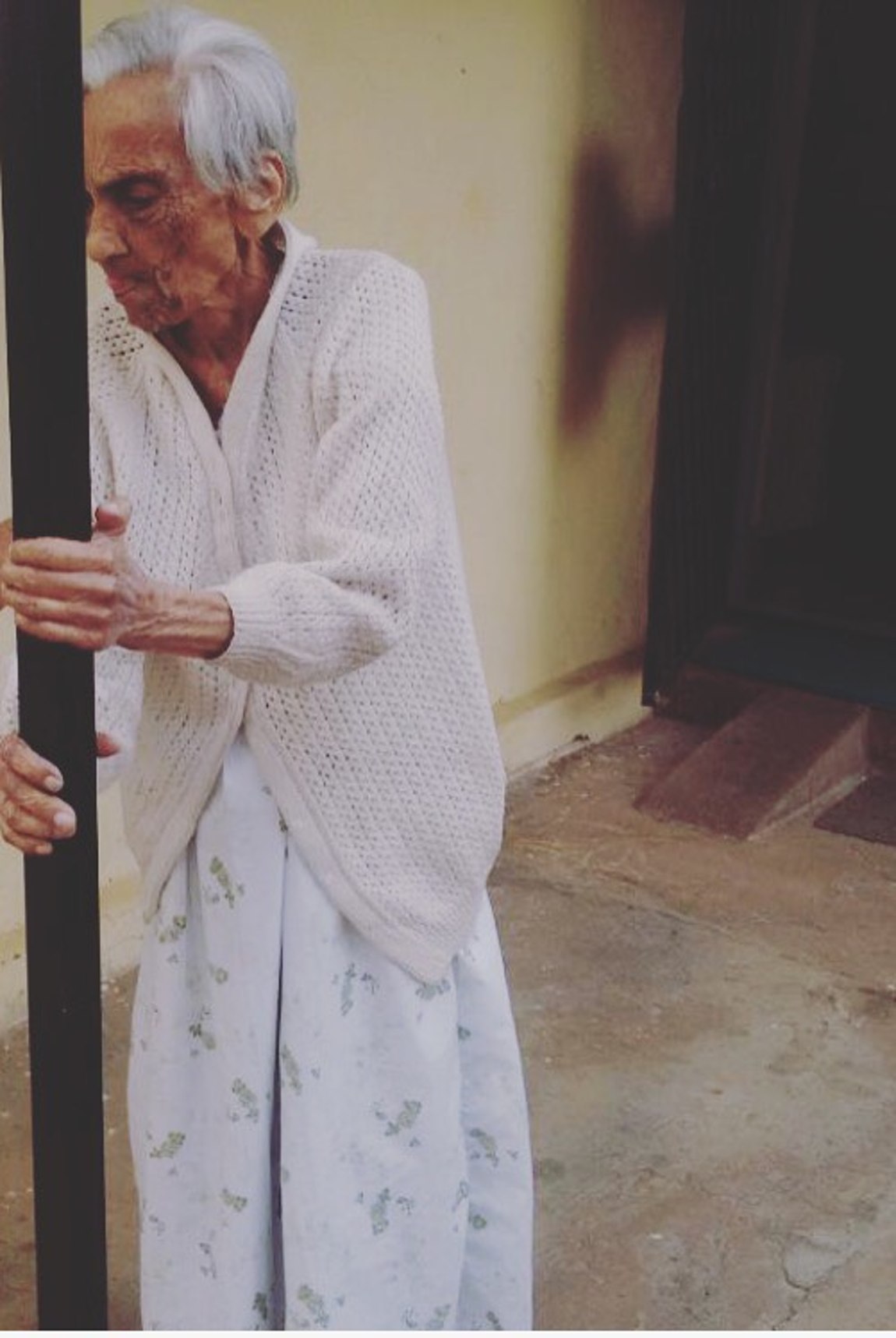
At 101, she had passed. Quietly. (Photo Courtesy: Roshan Cariappa)

She was a reservoir of knowledge, the lone connecting thread between five generations of a family that stretched across many geographies far from her native town.

My own personal memories of her were fond.

When we were children, we visited Coorg in the summers a couple of times. Avayya – probably in her 70s then – still managed a home and an estate by herself. I found old houses eerie – a fact manifoldly exacerbated by Avayya’s telling us of our long deceased Granddad’s proclivities for pinching people’s bottoms in the night. I huddled under the blankets in the night, my tiny bottom firmly planted on the ground, waiting to fall asleep. It worried me greatly that the others seemed unperturbed by Granddad’s post life nocturnal harassment. Some even attested, amusingly, that they had been subject to said antics.

Sometimes, while making supper in the kitchen, she’d venture out in the abject darkness to fetch firewood or water. While we sat beside her and ate rotis and bamboo shoot curry, she’d narrate anecdotes of people and events that, for us city rats, seemed from North of Jupiter. Somehow, she seemed to know it all. Mostly, her stories were about our Uncle Jimmy and his drunken misadventures. She had a wry smile; her eyes closed momentarily in a wink. And if you saw her then, with the many wrinkles even, her face betrayed a childlike impish charm.

She also had a wicked sense of humour. Many years later, while living at my uncle’s house in Mysore, she started animated conversations with imaginary friends from across the hall. Now, if you were studying late for your board exams (like my cousin Bopu was at that time), this was no laughing matter. Try doing any of those innocuous activities you do around the house with someone actively conversing with people you can’t see, let alone host. It warranted a visit from my uncle from abroad to set things straight. Having inherited some of her traits, my uncle armed her with a stick and some ash, and is said to have told her to put it to use if ‘them imaginary friends’ showed up. Just in case. And surely enough, her friends and conversations were gone. Maybe it was a ploy to see her son, but I think she did it just for kicks.

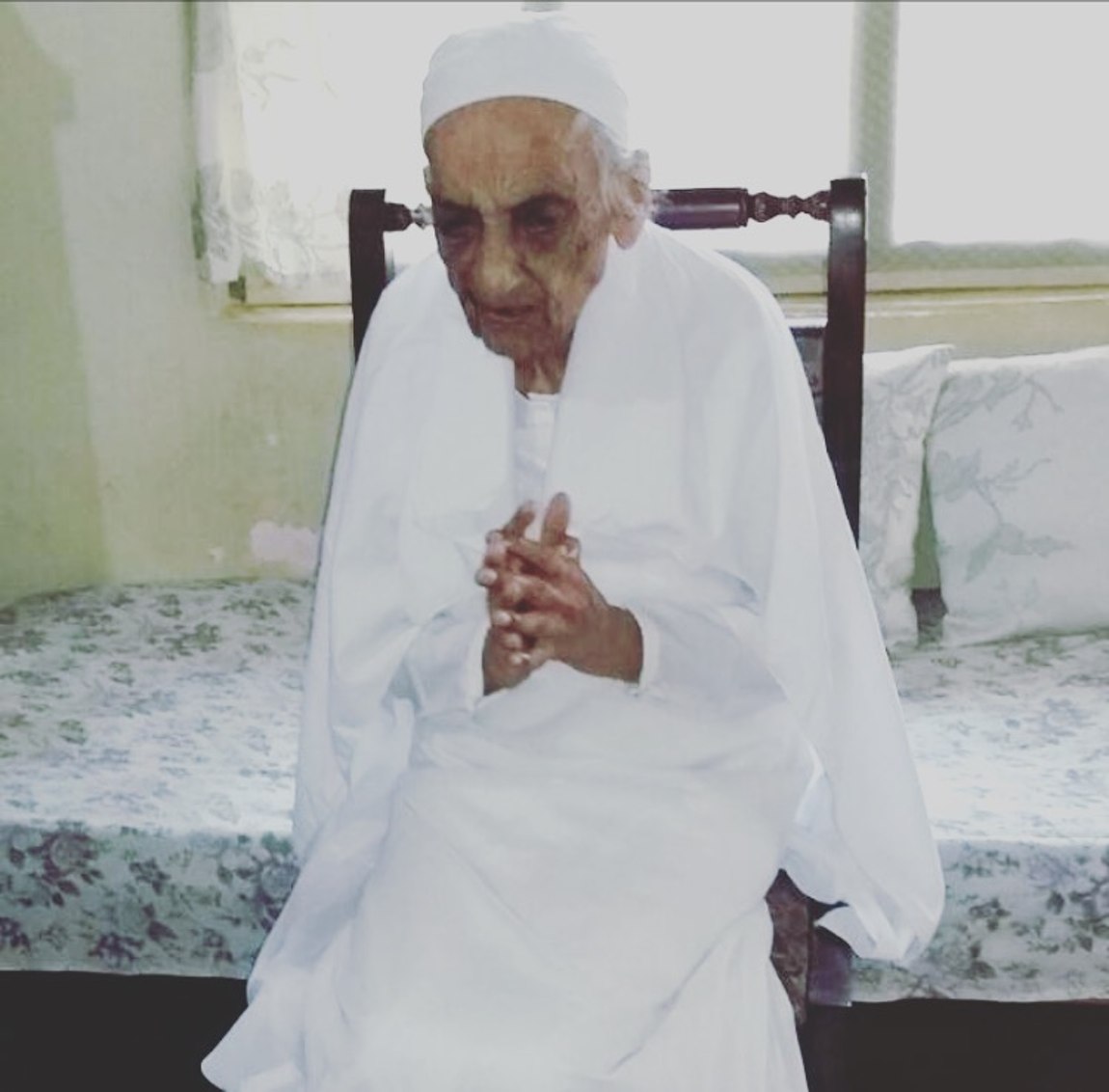
She was a reservoir of knowledge, the lone connecting thread between five generations of a family that stretched across many geographies far from her native town. (Photo Courtesy: Roshan Cariappa)

The week after she passed, we had a traditional ceremony. The family gathered to partake in the rituals – that included sharing her virtues, praying to the gods to look upon her kindly, offering her favourite things: food and drink.

While we took turns keeping aside a morsel of rice and meat, each, for her on a plantain leaf, somebody remarked to refill the brandy. Apparently, the level of brandy in the glass from the night before had depressed. While some of us looked at Bopu, who maintained it had evaporated, I couldn’t help but smile.

It just could have been Avayya and her imaginary friends.

(Roshan Cariappa is a Bangalore-based tech entrepreneur, occasional writer, and musician. He finds inspiration in Bharat, dharma, economics, music, and startups. He tweets at @carygottheblues.)

source: http://www.thequint.com / Home> Blogs / by Roshan Cariappa / February 19th, 2017