All posts by admin

Samskritika Samarasya in Madikeri from today

Department of Kannada and Culture, various linguistic academies, authorities will organise ‘Sangama, Sambhrama, Samskritika Samarasya’ at Field Marshall Cariappa College premises in Madikeri on December 7 and 8. A huge stage has been built at the college premises and seating arrangements have been done for 2,500 people. Flexes and buntings have been put up. 30 stalls have been set up for the exhibition and sale of books. Guest houses across the district have been booked for the guests and artistes.

The programme is being held to mark the versatility of the culture in Kodagu and to promote the cultural exchange. There is also an intention to introduce the culture of Kodagu to other districts, the organisers said. The department of Culture had organised a similar programme ‘Vasanta Sambhrama’ in Bengaluru, two years ago. Also, following the grand success of the programme, ‘Sangama, Sambhrama-Vartamanada Tallana’ was held in Mangaluru. Now, Kodagu has got the opportunity to host the programme, which will be organised by Kodava Sahitya Academy, Arebhashe Samskriti and Sahitya Academy.

A cultural procession, to be taken out at 9.30 am, will mark the beginning of the convention. Deputy Commissioner Richard Wilson D’Souza will flag off the procession. Around 30 art troupes from Kodagu and other districts will take part. As many as 6,000 people are expected to witness the event, said Kodava Sahitya Academy chairman Biddatanda S Tammaiah.

‘Sangama, Sambhrama, Samskritika Samarasya’ will be inaugurated by Kannada and Culture Minister Umashree at 11.30 am. MLA Appacchu Ranjan will preside over the programme. District In-charge minister M R Seetaram will inaugurate the painting and sculpture exhibition.

Forest Minister B Ramanath Rai will inaugurate the book exhibition. Zilla Panchayat president B A Harish, MP Pratap Simpa, MLA K G Bopaiah, MLC M P Sunil Subramani, Veena Acchaiah and others will take part. Various academies will present cultural programmes on both the days.

Visitors will be served meals and preparations towards the same has started from Tuesday afternoon. The cooks have been preparing ‘shavige uppittu’, ‘kesari baath’, coffee, tea for the breakfast, palav, sweet dishes, ‘palya’ rice and sambar for afternoon, coffee, tea for evening, rice, palya and sambar for night—to be served to 700 people on the first day. For Thursday, poori and sagu will be on the breakfast menu and rice sambar for meals, said Arebhashe Samskriti and Sahitya Academy president Kolyada Girish.

source: http://www.deccanherald.com / Deccan Herald / Home> District / by Aditya K A / DHNS – Madikeri, December 07th, 2016

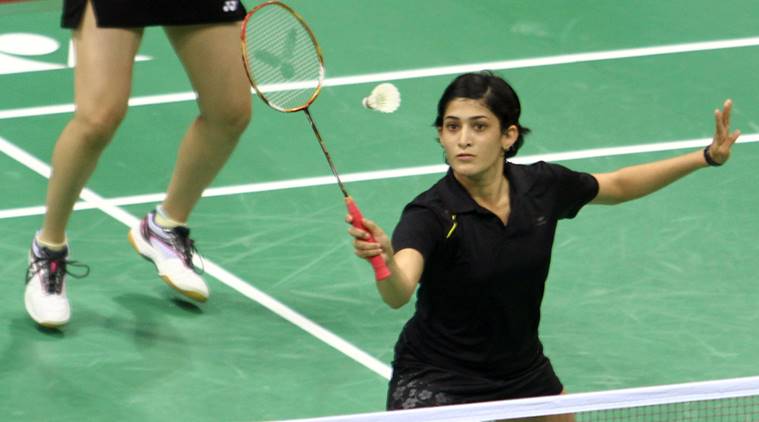
Ashwini Ponnappa-N Sikki Reddy finish runners-up at Welsh International Challenge

Ashwini Ponnappa and N Sikki Reddy went down to top-seeded Russian combination of Olga Morozova and Anastasia Chervyakov 21-16 21-11.

Ashwini Ponnappa and N Sikki Reddy had comfortably beaten England’s Lauren Smith and Sophie Brown 21-16 21-18 in the semis.

India’s women’s doubles pair of Ashwini Ponnappa and N Sikki Reddy finished runners-up at the Welsh International Challenge badminton tournament after losing in straight games in the final.

The unseeded Indian duo went down to top-seeded Russian combination of Olga Morozova and Anastasia Chervyakov 21-16 21-11 in a contest that lasted just 37 minutes.

Earlier, Ashwini and Sikki had comfortably beaten England’s Lauren Smith and Sophie Brown 21-16 21-18 in their semifinal match. The Indians took 39 minutes to get the better of the English team.

Meanwhile, the men’s doubles combo of Jishnu Sanyal and Shivam Sharma lost in the semifinals against Liao Kuan Hao and Lu Chia Pin of Chinese Taipei.

The third-seeded Chinese Taipei pair needed half-an-hour to make it to the finals by beating sixth seeded Indians 21-17 21-15.

Indians bowed out in the semifinals of the mixed doubles event also as second seeded N Sikki Reddy and Pranaav Jerry Chopra lost to Malaysians Goh Soon Huat and Shevon Jemie Lai 16-21 14-21 in 39 minutes.

source: http://www.indianexpress.com / Indian Express / Home> Sports> Badminton / by PTI / Cardiff – December 04th, 2016

Style guru Prasad Bidapa shares his thoughts on BT’s 19th birthday

prasadbidapakf06dec2016

“Nineteen years ago, I was one of the first columnists in Bangalore Times. I cut a wide swathe with that column, and BT was like a fresh breeze blowing through the city.

It chronicled the emergent Page 3 society and made Sandalwood the glamorous entity it is today.

Wherever I am in the country, I get to read The Times of India, but always miss reading Bangalore Times.

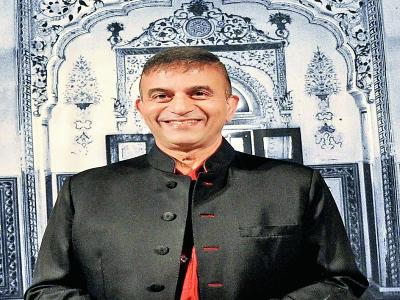
Happy anniversary BT, more power to you!” – Prasad Bidapa, style guru

source: http://www.timesofindia.indiatimes.com / The Times of India / News> Chennai News> Bangalore News / TNN / December 05th, 2016

The decoder of Coorg grammar

Coorg, as the British called Kodagu, was annexed by the East India Company in 1834, after dethroning the last Raja of Coorg, Veerarajendra. Coorg was administered as a separate province under a commissioner who was also in charge of Mysore. A British officer designated as superintendent was stationed in Madikeri and reported to the commissioner posted in Bangalore.

In March 1865, William Hobart Kerr, the superintendent of Coorg, fell ill and had to go on sick leave.

CaptRobertKF04dec2016

In his place, a young army officer, Captain Robert Andrews Cole, was appointed as the superintendent. Captain Robert was instantly attracted to the place, the climate, people and the invigorating environment. His duties involved meeting local people in remote villages, checking and updating land records, known as jamabandhi, which certified ownership and simplified revenue collection.

For fluent conversations…

Captain Cole was born in Madras in 1835, to an army doctor, Major General Robert Cole Sr. Having been educated in Madras, he was conversant with Tamil and Telugu. He had familiarised himself with Kannada on being posted in Bangalore. One of the problems Captain Cole encountered in Coorg was communicating with the Coorgis who spoke a dialect, which had many common words with Kannada, Tamil and other South Indian languages.

Surprisingly, according to Captain Cole, the Kodavas who lived in remote villages could not understand Kannada. This prompted him to learn the Kodava language so that he could effectively communicate with the people. Captain Cole soon started learning Kodava language. His knowledge of other South Indian languages helped. He began documenting the words, grammar and pronunciation. In order to help him communicate, he made extensive tables — known as Travel Talk — translating English sentences to Kannada (Canarese), Telugu, Tamil and Kodava language.

However, by October the same year, William Kerr returned, and assumed charge as the superintendent of Coorg. Captain Robert, who had taken a liking for Coorg, went back rather reluctantly to his posting in Bangalore. However, he continued his work on Kodava language. He learnt Kannada script for better conveyance of ‘peculiarities of pronunciation’, and started using this to transliterate Kodava language.

Captain Robert once again took charge from William Kerr, as superintendent of Coorg, in February 1866. He was happy to be back in this mountainous land and had come to enjoy the bracing weather. He particularly enjoyed his outings during the monsoon. This can be evidently seen in his book, Elementary Grammar of the Coorg Language, where he writes, “The thunderstorms during this season are often magnificent. The war of the elements is carried on here in a grander style than in the low country. Banks and mountains of clouds move against each other with the order of armies. The sound of heavy cannon is heard from a distance, solitary discharges of the electric fluid shoot through the gloom.”

Captain Cole served as the superintendent until December 1869. During this period, he compiled a comprehensive book on Kodava language. In 1867, with ample support from Lewin Bentham Bowring, who was the commissioner of Mysore and Coorg, he published his 136-page-book, Elementary Grammar of the Coorg Language. This was printed at the Wesleyan Mission Press. The book also contains a fragment of English-Coorg dictionary.

Captain Cole endeared himself to the people of Coorg. He also wrote another book titled A Manual of Coorg Civil Law. In appreciation of his contributions, an emerging town at the time was named after him as — Colepet. However, over the years, Colepet got merged with present day Ammathi. On promotion as a Major, he was appointed superintendent, Inam Settlement, Mysore. As a Colonel, he was with the Madras Staff Corps. He rose to the rank of Major General by the time he retired and returned to England.

He died in 1907. Major General Robert Andrews Cole ranks amongst other Europeans, who contributed to South Indian languages, such as Rev Hermann Mogling and Rev Ferdinand Kittel.

source: http://www.deccanherald.com / Deccan Herald / Home> Supplements> Spectrum / by C.P.Belliappa / July 26th, 2016

Rohan Bopanna aims to achieve ‘big things’ in 2017

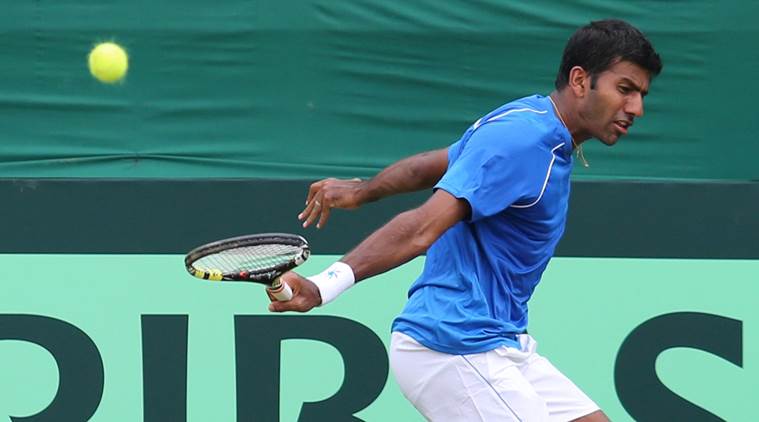
Rohan Bopanna, India’s doubles tennis specialist, is keen to put behind last year’s reverses and focus on achieving big things in 2017.

Rohan Bopanna said the singles rubbers against New Zealand hold key in Davis Cup Asia/Oceania Group 1. (Source: Express File)

India’s doubles tennis specialist Rohan Bopanna said he is keen to put behind last year’s reverses and focus on achieving big things in 2017.

“There is no point in discussing negative matter (on his recent twitter spat with Leander Paes). We should focus on achieving big things in 2017,” Bopanna told reporters after announcement of EduSports and Rohan Bopanna Tennis Academy tieup.

Drawing inspiration from Prime Minister Narendra Modi to perform better in coming season, Bopanna said, “Look at Modi, he has taken a bold step by enforcing demonetisation. He has shown us the way forward,” he added.

Asked about his new partner Pablo Cuevas, Bopanna said he would join the Argentinean as per his singles schedule.

“Cuevas’ priority is definitely singles. I will play as per his schedule. Wherever Cuevas wants to play in the singles section, I will join him and we will compete in doubles,” he said.

Bopanna had recently split with Florin Mergea. The 36-year-old will participate in Australian Open in Melbourne, but not before he would start the season at Chennai Open in January and then Apia International in Sydney.

Replying to a query, Bopanna said the singles rubbers against New Zealand hold key in Davis Cup Asia/Oceania Group 1 first-round tie.

“To qualify to the world group, we need two good singles players because out of the five points, four comes from singles,” he said. “I am hopeful Saketh Myneni, Yuki (Bhambri) and Ram (Ramkumar Ramanathan) can beat the top guys now,” he added.

source: http://www.indianexpress.com / Indian Express / Home> Sports> Tennis / by PTI / Bengaluru – November 22nd, 2016

Assam CM inaugurates Nagaland coffee exhibition

Assam chief minister, Sarbananda Sonowal on Thursday inaugurated the exhibition cum sale of Nagaland Coffee at Kisama. He was accompanied by Nagaland chief minister, T.R. Zeliang and cabinet colleagues from Assam and Nagaland.

According to an official, the department promotes both Arabica and Robusta variety of coffee.

The department took up development of coffee in Nagaland in the year 2014 in collaboration with the Coffee Board of India with the aim of uplifting the economy of the rural people.

Coffee has a number of health benefits, such as lowering the risk of type II diabetics, alezheuner’s disease, dementia parkinson’s disease etc.

The department has teamed up with a coffee expert from South Africa, Dr. Pister to promote the production of coffee in the State. Dr. Pister will also be demonstrating the various process of coffee making like pulping, roasting etc and preparation of world class cappuccino, espresso etc.

source: http://www.nagalandpost.com / Nagaland Post / Home> State> State News / Dimapur – December 02nd, 2016

Bopanna bats for wheelchair tennis

Bengaluru :

Tennis doubles player Rohan Bopanna today said that wheelchair tennis was already a big sport in the world, which is reflected in top players like Roger Federer and Novak Djokovic sharing the same locker-rooms with top wheelchair players.

“Roger Federer, Djokovic and top wheelchair players – all of them share the same locker-rooms. There is no difference between wheelchair tennis players and the straight players,” he said.

“That’s where it shows, how big the sport already is, and million and millions of people are already watching it and supporting it,” he added.

Bopanna said holding the All India Tennis Association ranking wheelchair tennis tournament shows interest in this sport.

“Holding the wheelchair tennis tournament is a fantastic initiative and big step, which shows the interest people have in it,” he said.

Asked what sort of support he would give to promote wheelchair tennis, Bopanna said he would share details of wheelchair tournaments held in different parts of the world.

“I am always with them, no matter what support they need. As I am travelling a lot, it will be easier for me to share the details which will be of great help for improving the sport in India,” he said.

Earlier, Bopanna announced India’s first AITA ranking Wheelchair Tennis Tournament – tabebuia – which will be played from December 2 to 4 at Karnataka State Lawn Tennis Association.

The cash prize is Rs 2.5 lakh and the organisers have raised Rs 14 lakh from various sources including the corporate and individual donors, Sunil Jain, Founder Trustee of Astha, a part of Wheelchair Tennis, said.

As many as 40 wheelchair tennis players will participate in the tournament, he said.

Jain said the organisers would love to hold an International Tennis Federation tournament with the cooperation of AITA and KSLTA.
BDN PDS PDS

source: http://www.timesofindia.indiatimes.com / The Times of India / News> Sports> Tennis> Top Stories / PTI / November 29th, 2016

He is happy he served the motherland

Havaldar Manesh also saw action during the Kargil conflict.

Manesh, a young National Security Guard (NSG) commando, was incapacitated in the 26/11 attack in Mumbai. But he has no regrets. He has lost control over the right portion of his body and uses a crutch to walk. “I have the satisfaction of having served my motherland,” the young and handsome former soldier told The Hindu. He was conferred the Shaurya Chakra for his act of bravery.

During an interview on the sidelines of the unveiling of the statue of Major Mangerira Muthanna here on Thursday, Havaldar Manesh recalled the horror of 26/11. He was part of the 250 NSG commandos airlifted from Delhi to fight the Pakistani attackers and positioned at Nariman Point, one of the spots targeted by the terrorists.

“I killed two of them,” he said proudly. While proceeding further, a terrorist lobbed a hand grenade, which landed on his helmet and exploded, blowing it to smithereens. He does not remember what happened afterwards, but he was shifted to a hospital by a rescue team. Three splinters of the grenade entered his head. “I still have one inside my skull,” he said. Doctors saved his life after a highly complicated surgery. “I was in coma for two months,” Havaldar Manesh said.

His heroics are not just limited to 26/11. He saw action in the Kargil conflict while serving with the 27 Madras Regiment and took a bullet in the hip. He was in hospital for two months, but it took him almost a year to fully recover. Later, he joined the NSG in Delhi and underwent rigorous training for six months before being drafted into service.

He recounts his Kodagu connection where his parents, Mukundan and Saraswati, lived in Jodubeeti near Ponnampet for several years. He is their third son. However, he now lives in Kannur in Kerala.

Havaldar Manesh killed two terrorists during the 26/11 Mumbai attack

source: http://www.thehindu.com / The Hindu / Home> National / by Jeevan Chinnappa / Madikeri – December 11th, 2010

Rainforest Retreat Coorg: Life on an organic farm

MojoKF30nov2016

If man learnt the blues pickin’ cotton, he shall rediscover it learning how to grow coffee. And no any ordinary coffee, mind you, but organic gourmet robusta.

The upper echelons of Coorg’s rain-slopes resonate not with the hum of mountain maidens, but Big Mama Thornton belting away the blues. Welcome to Mojo Rainforest Retreat, a 25-acre organic farm perched at 1100m in the lush Western Ghats of Karnataka. Mojo is as famous for its unimaginable shades of green as for its collection of blues, believed to be the largest in the country. If Robert Johnson’s wandering soul were to reincarnate as a farmhand, this is where it would come to rest.

Take it from Doc. That’s Doctor Anurag Goel, who claims to have seen every big blues act while doing his Ph.D. in Molecular Biology from Toronto. His wife Sujata, a Ph.D. from the Department of Botany (Delhi University), is a walking encyclopedia of natural remedies. Along with their ‘nature child’ Maya, the Goels have accomplished what most people only dream of in their dreams. They quit the rat race of urban drudgery to pursue a more harmonious existence with nature.

After extensive travel through this vast country, they chose to settle in the rainforests of Coorg. The retreat was set up in 1999 to raise awareness about their environmental NGO.

Initially, they intended to name it Worldwide Association for Restoration and Preservation of Ecological Diversity but realized that a name like WARPED would find little credibility.

And so, after a little juggling of alphabets and a National Geographic grant later, they settled for WAPRED Research Foundation in 1996. Today, the idea has blossomed into a heady mix of eco-tourism, offbeat adventure travel and the blues.

Coorg’s rich flora and fauna have earned it international recognition as one of the most important hotspots of biodiversity that need to be preserved. To say that it’s a challenge is an understatement. This here is Wild West Country, where every house boasts of a licensed rifle and most of the region’s wildlife can be found on the walls of living rooms in Coorg.

Some of course, like the wild boar, have met a more honourable end. The transformation from a vile burrowing creature to a bowl of delectable pandi-curry can only be attributed to the genius of a people who have understood the very soul of the animal.

Sadly, the importance of nature’s treasures has been lost on them. The heavy use of toxic pesticides has seriously endangered the region’s fragile eco-system.

The falling prices of coffee have spurred the use of chemical fertilizers and a mysterious disease has wiped out the orange from ‘Orange County’. However, there’s one bastion that seems to be holding out – Mojo.

The farm is a perfect example of how to live in harmony with nature without necessarily exploiting it. The Goels use solar panels for their basic power supply. Crops are grown under the shade of rainforest trees using biological methods of pest control.

A medicinal plant garden nurtures the wealth of traditional knowledge.

Coffee berries are handpicked, hand-processed and specially roasted to obtain a special blend without using chemicals or chicory.

The cuisine – mostly locally grown organic produce – is a delicious blend of continental and Indian dishes, homemade bread, cottage cheese, pastas, roasts, preserves and gourmet organic coffee.

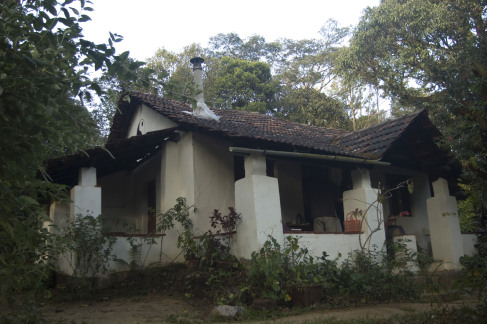
Even the accommodation at the Rainforest Retreat is an unforgettable experience. A beautiful brook-side bungalow, set in a picture-postcard thicket of bamboo, banana, orange and pineapple, conforms to international standards of style and comfort. It has two bedrooms, a spacious living room, sit-out and perhaps the best rainforest loo any side of the equator.

A second, more rustic shelter is the Yin Yang Cottage inside the plantation. A thin wisp of smoke rising from the bathroom chimney indicates that Muttu Pandey (the farmhand) has already heated the water. Before the stimulating bath can lull me to sleep, there’s a Doc on my door. It’s time for a first-hand learning experience at the farm.

Mojo is home to the Habanero, the world’s second hottest chili. The Red Savina Habanero used to be the hottest until it was deposed by our own Nagahari chili from Tezpur, Assam.

Another brilliant flash – this time at the treetop – catches my eye and I wonder if it’s a bird, a plane or Superman. Doc angrily shakes his head and says it’s the Southern Birdwing, India’s largest butterfly.

There’s Dendrobium Nutantiflorum, he motions to an orchid clump and that’s the raucous call of a Green Barbet. Stupefied, I try to keep pace with one new discovery a minute and forget more than I can remember.

Doc plays the razor-sharp schoolmaster to my stupid boy from Botany class. A walk through the dense cardamom under-hang leads to a clearing where Doc comes to a halt in front of a tree.

He has the reverence one would show to an Inca shrine. With all the compassion of a shaman consecrating a totem, he caresses the thick leaves of a creeper. “After saffron, vanilla happens to be the most expensive spice in the world”, he chuckles. “One kilo of cured, processed vanilla extract fetches as much as Rs.11,000 in the international market.”

But before this article can trigger off rampant cultivation of vanilla in any available garden patch, let me add that it takes 5 kg of beans to process 1 kg vanillin extract. A lucky farmer may get about Rs.700 for a kilo of beans.

What’s more, in the absence of its natural pollinator the Melipone bee, the orchid’s flowers have to be hand-pollinated. The flower opens in the morning and closes in the afternoon, never to open again. If left pollinated, the flower will drop the very next day.

Oddly content that I was not a vanilla farmer, I pick up samples of the local produce. Habanero extract, cardamom, pepper (which are indigenous), coffee (which was introduced), Garcinia (aka Kokum, used as a refreshing drink and a souring agent in curries) and a lovely set of picture postcards, all of which fund WAPRED.

Back at the main house, Sujata thrusts into my hand what she calls a ‘hibiscus suspension’. I admire the glass like a potential Nobel Prize winning entry, when a patient feminine voice explains, “It’s a coolant; you are supposed to drink it”.

“And next time, use kerosene on your boots. It’ll keep the leeches away”.

This region gets so much rainfall it would make Mawsynram blush. The rains get so severe that leeches give up their positions on the ground and cling to overhanging branches to throw themselves like kamikaze warriors on to passing targets. If you’re into pain, I highly recommend Mojo in the monsoons.

Among the other denizens of the farm are the dogs – Jupiter, Janis (named after Janis Joplin), UB (Ugly Bastard – a deformed puppy who has grown up into a stocky watchdog) and Pigpen (from a character in Animal Farm), who died recently. It’s advisable to be overtly good to them as it is they who accompany you from the main house to the Yin-Yang Cottage at night.

A solitary jaunt is not exactly spooky, but jungle walks have never been the same after The Blair Witch Project. Everything at Mojo – including Aki the Calf and Maya Hill – has been named by 4-year-old Maya. If she has finished partying with McDuff, John Barleycorn (who has a drinking problem) and her imaginary friends, maybe she’ll show you her ‘panoramic view’ and tell you about her philosophy.

Meanwhile, a Golden Oriole lands on the tree near the verandah. While I gape open-mouthed at it like a 4-year-old kid, an oblivious Maya is content watching UB play with a ball-beetle.

Mojo is the sort of place where you’d hate to blink. It tends to leave you with a strange feeling that can best be described as a mixture of envy, awe, respect, rejuvenation and rage when the honeymoon is over. However, for those few precious moments, it gives people a chance to experience an inner peace that only nature can provide.

Doc has also designed several escorted road tours that take you to interesting places nearby. There are excursions to other plantations like Ludwig Mahal, a nature walk to Galibeedu Ridge, a visit to the Dubare Elephant Training Camp and an insane drive to the Cauvery for swimming and mahseer fishing.

What makes Mojo even more special is that it’s a Mecca for bird-watchers, insect-lovers, soul-trippers and blues-brothers. The misty mountains and dense foliage of this section of the Western Ghats make it one of the best places to get lost.

In fact, Mojo adds up to such a wild weekend you might even be tempted to call it a ‘Doc Holiday’…

Author: Anurag Mallick. This article appeared in the May 2003 issue of Outlook Traveller magazine.

source: http://www.redscarabtravelandmedia.wordpress.com / Blog by anurag mallick & priya ganapathy / May 25th, 2012