Mysore :
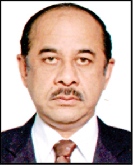
Kokkengada B. Chengappa, Registrar (Judicial) High Court of Karnataka, Bangalore, has been appointed as the Principal Secretary to Government, Department of Law, Justice and Human Rights, Government of Karnataka.
Chengappa is the son of Kokkengada C. Bheemaiah, Retd. Deputy Secretary to Government, residing at Vijayanagar in Mysore. He hails from Sulugodu in Balele village, Kodagu district.
source: http://www.starofmysore.com / Star of Mysore / Home> General News / November 26th, 2013
From hiring a personal coach, to changing his technique and mindset, to losing weight – Robin Uthappa chats about his plans for a comeback
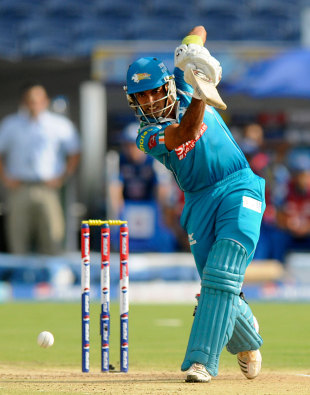
On April 23, Robin Uthappa watched Chris Gayle annihilate Pune Warriors on his way to a record-breaking unbeaten 175 from the best spot at the Chinnaswamy Stadium: behind the stumps.
Dressed in a plain white v-neck t-shirt, Uthappa looks fit – not something that could be said of him through his career. We’re sitting in a coffee shop at the team hotel in Bangalore. He orders a fresh strawberry juice; when told that it’s not available, he opts for sweet lime with ice and no sugar.
Most T20 performances are soon binned from the memory but Gayle’s assault, the highest individual T20 score, carried a personal meaning for Uthappa.
“It was reconfirmation of all the things that I am doing,” he said. “I have been working on coming to terms with making peace with myself about my own game, about the confidence I had about my own game. Watching him broke a lot of barriers for me.
“You could achieve whatever you want to achieve, the way you want to achieve it. If you believe that you can actually do it, just persist with that belief and work hard towards it. It is gonna happen. The world is going to see it.”
Last July, Uthappa found himself in Belgium, in a contemplative mood. He had decided to be on his own to sort out his life. He was 12th on the run charts in IPL 5 – a season when Pune Warriors finished last. Uthappa felt he had had a “decent” domestic season with Karnataka. But he had not played for India in an ODI since July 6, 2008. His last international appearance had been in the rain-affected T20 in South Africa, before the IPL in 2012.
“I went alone for ten days on a holiday,” Uthappa said. “I was at a bus stand in Belgium and I called him up. ‘Sir, I want to work with you. I want to fix my game.'”
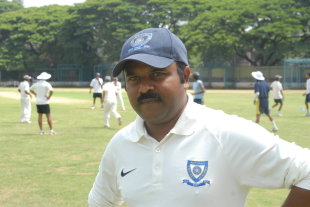
The man he called was Pravin Amre, the former India batsman, who coached Mumbai to three Ranji Trophy titles in five seasons. Amre had helped Uthappa make a small technical change during the IPL in 2012. The suggestion had worked well and in July that year, Uthappa hired Amre as his personal coach.
****
In 2011, Uthappa had been restless. Self-doubt gnawed at him from the inside.
“I saw myself as an aggressive batsman. At the beginning of 2011 I realised I was not channelising all my energies into the game. I needed to bring back my focus and passion and love for the game. To some extent I wasn’t playing the game for what I actually started playing it for. I told myself I wanted to fall in love with this game again rather treat it as earning money, making a living or as a profession.”
He considered the things he could control. “Probably the first thing is my body. I have never shied away from going to the gym, training hard or pushing myself. I can very confidently say I am one of the strongest guys in the country right now, as far as fitness is concerned,” Uthappa said.
One of his best friends, Sheethl Goutham, recommended a nutritionist. “I got more disciplined about food. I have more knowledge and understanding about what I should eat and shouldn’t eat. That discipline started dripping into my game as well.”
With three months to go for the 2012-13 domestic season, Amre pointed out that Uthappa was carrying plenty of extra weight on his upper body. Uthappa did the hard yards and came back 20kg lighter. “It showed me his passion to improve,” Amre said.
Once he was hired as Uthappa’s personal coach, Amre started with a Powerpoint presentation where he focused primarily on the basics of batting. He told Uthappa that he would have to flush out whatever he had learnt over 17 years. “Eighty percent of a player’s success is mental, 15% is dependent on his skill sets, and 5% is fitness,” Amre said.
Amre would make many trips from Mumbai to Bangalore and both men would be seen at the National Cricket Academy. Amre also took Uthappa to the maidans of Mumbai, where he got used to batting without a sightscreen.
Amre noticed a lot of bottom-hand play and wanted Uthappa to correct his grip. “With that grip he played for India and cleared the ground. It was not that it was wrong, but there was so much room for improvement,” Amre said.
In the nets they worked on methods that were more correct technically, more compact. They worked on a series of skills in sequence – proper stance, pick-up, down-swing, the impact point, follow-through.
One of the major technical changes Amre suggested was for Uthappa to modify his stance. Uthappa was not convinced, but Amre persisted and pointed out that it would help him adapt his game better to different pitches.
“I had a very closed and upright stance,” Uthappa said. “I used to play so much on the up that I would not have control over my shots, especially against the fast bowlers when it came to drives square of the wicket or even in front of the wicket. With the wider stance, I am now more flexed. It helps me to be more on top of the ball and also read the trajectory of the ball.
“I feel more technically sound than I have ever been. I am playing the new ball with ease. I am dominating, am able to score runs, get off to good starts, build a solid foundation.”
For the first time in ten years of domestic cricket Uthappa faced about 1200 deliveries a season. He did not count them but Amre told him. “I have never been known as that type of a batsman,” said Uthappa, who scored 683 runs in nine matches.
He said it not matter that he made only one century. “I saw the difference because I enjoyed just being there at the wicket. Occupying the crease was so much fun. Middling the ball became the definition of domination for me.”
Before the Ranji Trophy last year Uthappa toyed with idea of skipping the entire season, because he didn’t think he was quite ready. He ended up playing and finished as the second-highest run scorer in his team.
“It showed me that even though I was 60% ready and not completely sure of everything I was doing, I came out as good as any. That gave me a lot of confidence, which spilled into the Ranji one-dayers.
“I got two hundreds and two fifties. And in a couple of games, I got out on 49 and in one I retired on 48. I was the top-scorer in the country in domestic one-day cricket.”
When he made a 33-ball 24 against the Australians in Chennai he knew he was getting to the point he had desired. “Man, I loved that innings. I just knew… it was just a confirmation for me again that this is the level of cricket I am meant to play. And I know I will play that level of cricket. And I know that everything I am doing will take me to that level of cricket again. It is only a matter of time.
He is 28 now, still confident that age is on his side. He says he can afford to overhaul his technique and mindset and continue to stay confident.
“I am very, very sure about my processes. I am very confident about the work that I am doing. I know I have compromised on being my aggressive self, but I know I have done [it] for a good solid scientific reason.”
In June this year, immediately after the IPL, Uthappa moved to Mumbai to fine-tune the changes to his technique and to break some “physical and mental barriers”. In July, he scored a triple-century in the Safi Darashah Trophy, playing for Karnataka State Cricket Association XI against Jharkhand. He was part of the India A side that played against visiting A teams from New Zealand and West Indies, and scored one century before hamstring tendinitis in his left leg curtailed his progress.
According to Amre, Uthappa is now able to hold the shape of his bat and has improved his balance while playing his strokes. “The whole idea of him hiring me was to make him a complete cricketer who can perform well in all formats. That is my goal,” Amre said.
“I am,” reads a tattoo on the inside of Uthappa’s right arm that he got inscribed in Singapore earlier this year. “It is an affirmation to myself. It is an acceptance of myself in my truest form. I wanted to get something which reminds me of the direction I’m in and the direction I want to be going in.
“I’ve made some hard decisions in the last one-and-a-half years. And I’m bloody proud about the decisions I have made because I know I am heading the right way. I know who I am. This is the person I have always wanted to be.”
Nagraj Gollapudi is an assistant editor at ESPNcricinfo
source: http://www.espncricinfo.com / ESPN Cricinfo / Home> Features / by Nagaraj Gollapudi / November 28th, 2013
Sandalwood actress Harshika Poonacha might have two releases on the same day. The actress starrer two movies B3 with Srikanth and Adwaitha which has Ajai Rao in the lead, is likely to release on December 6.
An excited Harshika on her micro-blogging website page has tweeted, “Dec 4th is dad’s birthday n Dec 6th is gonna be my most expected n special day My two Bigg releases might happen on the same day B3 Adwaitha.” And it is not the first time the actress is having two releases, she has further tweeted, “Y do my movies clash?? I remember Jugaari n Sugreeva released on d same day, now it’s time fr B3 & Adwaitha,guys pls watch both n support me.”
B-3, which is said to be a love story directed by Gana Shyam and Adwaitha is an action-based movie, Ajai Rao is playing the role of a writer. The movie is directed by MB Giriraj.
source: http://www.articles.timesofindia.indiatimes.com / The Times of India / Home> Entertainment> Regional> Kannada> Srikanth / Vinay Lokesh, TNN / November 27th, 2013
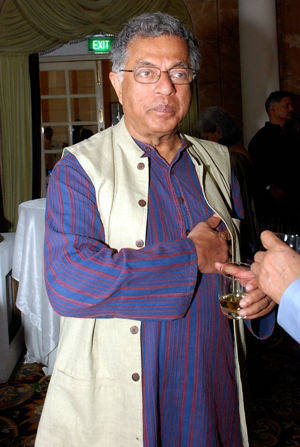
Bangalore sure loves its share of evenings dedicated to literature and the arts. No wonder then, that even a heavy down pour in the city couldn’t stop literary enthusiasts from making it to a city hotel where author Kaveri Ponappa launched her book, The Vanishing Kodavas.
The ITC Windsor played host to guests like Girish Karnad, Jaya Zaveri, Mohandas Pai and Sadiqa Peerbhoy among others. After an engaging reading from the book, guests took the discussions further even as they enjoyed their drinks and canapes.
source: http://www.articles.timesofindia.indiatimes.com / The Times of India / Home> Entertainment> Regional> Kannada> Girish Karnad / TNN / November 27th, 2013
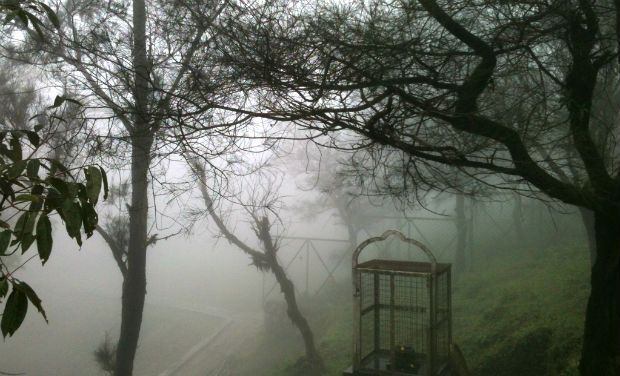
A picture of a misty Talacauvery shrine in Kodagu Mysore :
Until recently, Munnar in Idukki district of Kerala trumped Kodagu as a tourist hotspot, but the hilly district of Karnataka with its coffee plantations and pleasant weather has emerged as the new favourite in 2012-13.
From January to November this year, Kodagu received as many as 10,73,961 tourists and Munnar only 3,53,545, although it has more to offer tourists in terms of infrastructure, going by the data of the tourism departments of the two states.
A recent survey by the Indian Tourism Development Corporation, New Delhi, too placed Kodagu in numero uno position among hill stations of the country, says Mr Phaneesh, assistant director of Department of Tourism, Kodagu.
With its many homestays and natural beauty drawing more people to the ‘Orange County’ of late, the department of tourism is now waking up to its potential and building more facilities here for visitors.
“We are also in the process of regularising the unauthorised homestays that have come up all over the district,” Mr Phaneesh adds, clearly upbeat at the new emerging trend which he is sure will bring good business to the district.
While Kodagu saw a large number of tourists even in the monsoon, Munnar received 40 percent less tourists owing to bad weather, according to Mr Soman, assistant wildlife warden of Eravikulam-Rajamala Wildlife Sanctuary.
“Tourism in the hill station has been badly hit due to the heavy monsoon. The average tourist inflow per day has dropped from 6,000 to 3,000 this year,” he says.
source: http://www.deccanchronicle.com / Deccan Chronicle / Home> Lifestyle> Travel / DC / by S. V. Krishna Chaitanya / November 27th, 2013
Local flavour: Tata Starbucks recently launched the Indian Estates blend./ Photo by Janak Bhat
Innovation has been the watchword for coffee brand Barista Lavazza, and this is highlighted in Amore, an art-themed menu for India. The menu pairs food and coffee, and the selections are presented using pop art. The company regularly does thematic menu launches. Last year it tied up with fashion designer Rina Dhaka to launch Milano Collezioni, a fashion-inspired menu. The art work for Amore was done by Arrested by Art, a Delhi-based art boutique. And, Barista Lavazza is not the only coffee outlet that is introducing new concepts and innovation to woo Indian customers, particularly the youth.
Tata Starbucks recently launched the India Estates blend, an addition to its Indian Espresso Roast blend. Sourced and roasted in India, this blend is part of the company’s strategy to deliver locally relevant experiences to its customers. The company recently introduced Pumpkin Spice Latte, a Starbucks classic. And, to complete the experience, it is offering a wide range of merchandise, including a mug designed specifically for India. Internationally, Starbucks’s country and city mug series is quite popular.
Cafe Coffee Day (CCD) introduced Friends of Frappe, a new menu comprising beverage and bite-sized snacks focused on the Indian market. The special menu offers Bestie Combos, which pairs a snack and beverage like Amore does.
With coffee culture becoming popular in the country, the number of cafes has been growing fast. At least 200 outlets have been opening every year, for the past five years. The market is estimated to be worth Rs.1,000 crore, and growing at around 15-20 per cent annually. It is said that India can take another 2,000 cafes in the near future.
Santhosh Unni, CEO, Costa Coffee India, said coffee shops “have become the favoured hang-out zone for the youth and the preferred meeting place for a wide profile of people”. “It highlights not just a shift in taste, but a cultural shift as well, where young, affluent Indians are more interested in global trends than ever before,” he said. “The increase in disposable income and shifting lifestyle preferences are the key drivers of the growth being witnessed in the Indian coffee market.”
Traditionally, India is tea-drinking, with the coffee to tea ratio being 1:7. India consumes only 80gm of coffee per capita, as against six kilo per capita in Italy. The current boom in India is coming from two distinct trends—middle-class consumption and out-of-home consumption.
“Consumer acceptance is actually driving the growth in consumption, as well as the café culture,” said Nilanjan Bhattacharya, COO (India and SAARC), Barista Lavazza. “Globalisation, expanding base of the middle class, rising disposable incomes, changing lifestyle patterns, coupled with exposure to international trends through films, advertising, youth community sites and personal blogs are all factors which are driving this trend and the shift in consumption patterns.”
Tata Starbucks sees a huge opportunity in sourcing and roasting local premium Arabica coffees for international consumption. Tata Coffee ensures that the coffee supplied to Tata Starbucks is 100 per cent locally sourced and roasted. Tata Starbucks is a joint venture of Starbucks Corporation and Tata Global Beverages.
All the major players in the Indian cafe market are trying to maximise the customer’s experience in the cafe. CCD has around 30 outlets uniquely designed to hook the youth. The company is active on social media, using the platform to gather feedback from customers. It also holds coffee-tasting sessions for customers.
Avani Davda, CEO, Tata Starbucks, said the “Starbucks Experience” is built on three basics: “our products, our places and our people”. “Our offerings, in-store experience, and store design reflect the community gathering place that Starbucks is known for,” she said. “Customers come for coffee, stay for the inviting warmth and return for the very human connection.”
K. Ramakrishnan, president (marketing), CCD, said the company had coffee plantation trails at its resort—The Serai in Chikmagalur, Karnataka. Tata Coffee, too, is popularising coffee plantation trails at some of its exquisite estate bungalows in Karnataka.
Costa Coffee launched Costa Laughaccino, a stand-up comedy series by leading artists from India and the US. They also organised Costa Rhythm and Brew, where the likes of Leslie Lewis, Rabbi Shergill, Indus Creed and Indian Idols performed at Costa cafes.
Barista Lavazza reached out to the customer with its Click-a-Coffee photography contest. The best 100 photographs chosen by ace photographer Pradeep Dasgupta will be brought out as a coffee table book. The company also has Friendship Jam, an event for music lovers and amateur bands. The company has been hosting Penguin book launches. The first book to be released was Shobhaa De’s Sethji. Barista Lavazza also brought out a new coffee, named after the book’s title character, for the launch. During the launch De tweeted: “Sethji coffee—go for it guys. It’s seriously yummmmm. Even the book reads better after a mug or two of the brew….”
Visibility, too, is top on the list for the cafe chains. “We have established our outlets at different locations such as places of tourist interest and hill stations to catch the attention of the customers,” said Ramakrishnan. “CCD has outlets all over, from religious places such as Vaishno Devi, Haridwar and Rishikesh to places near Metro stations in Delhi. We also have outlets in Austria and the Czech Republic.”
And, the coffee boom is good news not just for the well-heeled. Costa Coffee’s special HR initiative provides employment to the physically challenged, including the hearing-impaired. The company invests in special training for these employees. Store managers, shift managers and many in the senior management are schooled in sign language to ensure better coordination with the special employees. Currently, 15 per cent of Costa Coffee employees are special, and the company plans to raise it to 25 per cent by the end of next year.
EXPANSION PLANS
Cafe Coffee Day: First cafe at Brigade Road, Bangalore, in 1996. More than 1,500 cafes today. Target: 2,000 cafes by 2015.
Tata Starbucks: Born in October 2012. Has 25 cafes across Mumbai, Delhi and Pune. Probable next stop: Bangalore. Also looking at Tier-II cities.
Costa Coffee: Came to India in 2005. 100th store opened at Carter Road, Mumbai. Target: 300 cafes by 2015. Recent cafes: Chandigarh, Ludhiana, Agra and Jaipur. Coming soon: Hyderabad. Looking closely at Tier-II & Tier-III cities.
Barista Lavazza: First store at Basant Lok, New Delhi, in February 2000. Aiming at Tier-II and Tier-III cities. Recent cafes: Patiala, Surat, Visakhapatnam, Jaipur and Nagpur.
source: http://www.week.manoramaonline.com / The Week / Home> Business / by Abhinav Singh / Monday – November 25th, 2013
Kodagu MP H Vishwanath has asked cooperation of all people to organise 80th Akhila Bharatha Kannada Sahitya Sammelana in Kodagu which will be held after a gap of 32 years.
Speaking at a meeting of heads of all sub-committees formed to organise the sammelana at D Devaraj Arasu Bhavan on Monday, Vishwanath said that the government has earmarked Rs one crore for the Sammelana and the Chief Minister has promised to release Rs one crore in additional fund for the event. Still, there is a need for around Rs 1.75 crore and the CM has suggested to mobilise it from other sources, he said
Kannada Sahitya Parishat District President T P Ramesh asked information from the subcommittees about the preparation works. Lodging Committee President District Superintendent of Police M N Anuchet said that preparations have been made to provide shelter to around 7,500 people. It would require a grant of Rs 72 lakh, he said. Food Committee Chief Secretary Keshav Kamath said that preparations have been done to provide food for the guests at police parade ground. The committee would approximately need around Rs 80 to 90 lakh for making food arrangements, he said.
Cultural Committee President G Chidhvilaas said that around 20 to 30 cultural programmes will be organised during the event. Transport Committee Chief Secretary Hossoor Ramesh Joyappa said that school vehicles will be provided for sammelana activities.
Souvenir committee Preisdent G Rajendra said that all preparations have been done to release souvenir in time. He assured that the book would contain informative articles. Handbook committee President Anil H T said that a 20 page hand book will be brought out and attempts will made to reach the book to all registered representatives 10 days before the event.
Media Committee President Chinnaswamy said that staying arrangements will be made around 400 journalists. Preparations are going on to provide food for about 500 media persons, he said.
source: http://www.deccanherald.com / Deccan Herald / Home> District / DHNS, Madikeri / November 26th, 2013
Leading bourse National Stock Exchange (NSE) today gave its approval to merger of Alliance Coffee with its listed parent firm Tata Coffee saying the amalgamation does not violate provisions of securities law.
Tata Coffee in September had announced that its board has approved the merger of Alliance Coffee with itself, consequent to which the draft scheme of amalgamation was filed with stock exchanges for necessary approval. (NSE also said that Sebi’s…)
In a communication to Tata Coffee, NSE said it is granting its ‘no-objection approval’ to the proposed scheme and this observation letter will be valid for six months starting today, within which period the company would have to file the scheme with the High Court for further clearance.
Another bourse, BSE granted its no-objection to the scheme on November 21.
NSE also said that Sebi’s observations on the scheme requires Tata Coffee to display ‘fairness opinion’ submitted by it on the website of listed firm.
“We have perused ‘draft scheme of arrangement’ and related documents submitted by Tata Coffee including the confirmation of the company secretary that the scheme so submitted does not in any way violate, over-ride or circumscribe the provisions of securities laws or stock exchange requirements,” NSE said.
“Accordingly, we do hereby convey our ‘no-objection’ with limited reference to those matters having a bearing on listing /delisting/ continuous listing requirements within the provisions of the Listing Agreement, so as to enable the company to file the scheme with the High Court,” it added.
According to norms, companies seeking to execute merger or de-merger strategies need to obtain ‘no-objection certificate’ from stock exchanges.
source: http://www.articles.economictimes.indiatimes.com / The Economic Times / Home> Markets> Commodities> Exchanges / by PTI / November 25th, 2013
Sanjay Leela Bhansali’s Goliyon Ki Raasleela: Ram-leela has surprised everyone, the movie is a resounding hit and the looking at the box office collections of the opening week, the movie has worked its magic on the audiences. The entire star casts were spot on with their performance, even the talented Sanjal Leela Bhansali was impressed by Gulshan Devaiah’s performance.
Gulshan Devaiah who essays the character of Bhavani, is also the chief antagonist of the film. Gulshan is also the surprise element of the film. The actor not only impressed the audiences and fans, but the talented actor also impressed the director. Sources close to Bhansali said, “The director is very pleased to have cast Gulshan for the character Bhavani, and the actor has impressed the director immensely.” The source further added, “Bhansali was also seen telling his friends about how well and subtly Gulshan has essayed the role of Bhavani and how he is one of the surprise packages of the film.”
Ever since the movie has released Gulshan has been receiving praises for his performance. Gulshan will be seen in an all new avatar in Phantom’s next “Hunter”, the actor has also signed a two movie deal with Pooja Bhatt. After such a performance the actor has a great year ahead.
source: http://www.bollyspice.com / Bolly Spice / Home / by Press Release / November 23rd, 2013
He was one of the few guys in Bangalore that could carry off a pair of pink shoes with panache. National Institute of Fashion Technology graduate turned theatre actor, Gulshan Devaiah (Gullu to friends) was always gifted with an innate sense of style that his friends in the theatre circles relied on to help them shop for ‘cool’ clothes that didn’t cost the earth.
But that was four years ago. Today, he’s shooting the daylights out of people as the dangerous bad guy Bhavani, in Sanjay Leela Bhansali’s magnum opus Goliyon Ki Rasleela Ram-Leela wearing what looks like a prize-winning ensemble in fancy dress competition. Ask him if the edgy, hard hitting actor of films like Shaitan has made a smooth transition to the XL big budget film and he responds with, “The opus this time is in the super premium magnum league for sure. And it’s going to take a week for it to sink in, at least for a fringe guy like me.” As for being swathed in silk and satin, he’s not complaining. “Except those damn earrings that made me really miserable. They were too heavy and gave me headaches. I really loved the look that Maxima Basu designed for me. And I looked forward to dressing in those clothes, particularly the embroidered dhotis!”
His short but illustrious career graph has seen him winning accolades for films such as That Girl in Yellow Boots and Peddlers (both of which were screened at Cannes), Dum Maro Dum, Shaitan and Hate Story. Even when some of the films were panned, Devaiah managed to garner praise, award nominations and rave reviews for his performances. Not that he’s personally thrilled with any of his past performances. “I really aspire to be the best in my business, I’m not happy with being just good,” he says critically, with no touch of false modesty.
Devaiah has slowly but surely made his way from the edge of the fringe to land in the middle of mainstream Hollywood, first, with SLB’s film, and then with a two-film deal as main lead to be directed by Pooja Bhat. “I really made the best of what came my way, and one thing led to another and, then another. I firmly believe that the real challenge is making the right choices from what is offered to you,” he says.
Unlike Deepika Padukone (his co-star in Goliyon Ki Rasleela Ram-Leela) who made her debut in a Kannada film, before moving to planet Bollywood, Gullu is yet to do a film down South. “It’s really never about the language, it’s only about good cinema for me. If the script and the project are right for me, I’ll definitely do it,” he says.
Kannada cinema reminds him of Bangalore, a city he misses. “I miss a lot of things, but mostly my parents, and some nice hot benne masala dosa.” Coming back to Padukone — also a Bangalore girl — he can’t help but admire her work ethic. “She’s a bonafide star and has made it on her own, like Sridevi and Madhuri in the past. She’s very professional and really easy to work with,” he adds of their time together with SLB’s film.
Even as things change around him on a daily basis, life remains largely unchanged for Devaiah who says he’s “really happy with Kallirroi, my beautiful loving companion (his wife, also an actor), a family of three cats, and commuting by rickshaws and taxis.” He adds, “There is a little bit of attention, but it’s totally manageable and yes, I would like my own home someday soon, but real estate is criminally expensive in Mumbai,” he sighs. Does he still have the pink shoes? “‘Well, there is some pink in my running shoes, so I guess…. the answer is yes, and no.”
source: http://www.bangaloremirror.com / Bangalore Mirror / Home> Columns> Sunday Read / Bangalore Mirror Bureau / by Nirmala Ravindran / November 24th, 2013
WELCOME. If you like what you see "SUBSCRIBE via EMAIL" to receive FREE regular UPDATES.
Read More »