All posts by admin

Govt mulls branding Indian arabica coffee

Ministry willing to commit resources, expertise for purpose; discusses proposal with Coffee Board
CoffeeKF09sept2013
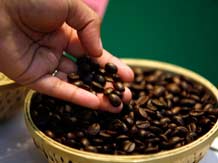
The Ministry of Commerce and Industry is considering creating an Indian mild arabica coffee brand for the promotion of arabica coffee in international markets. It had discussed the idea with the Coffee Board and was coming out with a brand initiative under the public-private partnership (PPP) model, said a senior ministry official.

“We don’t want Arabica coffee to die out because of the impact it has on the environment of the Western Ghats. The Indian mild arabica coffee is very highly priced. The only way to get better prices for our coffee is to brand it, package it and promote it in foreign markets,” said J S Deepak, additional secretary in the commerce ministry. Addressing the 120th annual conference of the United Planters’ Association of Southern India (Upasi) here on Tuesday, he said, “The ministry is willing to commit resources and expertise required for promoting an Indian mild Arabica brand.”

Planters participating at the conference feel the move is significant, owing to the dwindling acreage and production of arabica coffee in India. For 2013-14, production was estimated to decline to about 80,000 tonnes from 98,600 tonnes in 2012-13, said Nishant R Gurjer, chairman of the Karnataka Planters’ Association. Gurjer said the move to create an Indian brand for arabica would go a long way in preserving and promoting arabica coffee.

Deepak said the government was concerned about the white stem borer attack on arabica gardens and a solution to this would be found by the Coffee Research Institute soon. On Upasi’s demand for reconstituting commodity boards (coffee and spices), Deepak said the proposal was in the final stages and the new boards would be announced very soon. “The ministry has taken the suggestion of Upasi for including members of plantation associations on the new boards and it would make necessary changes in the new boards,” he said.

He assured the plantation sector the ministry would provide all help, including the help from Indian Brand Equity Foundation, for branding of Indian spices. On the delay in approving 12th Plan schemes for various commodities, he said the proposals were pending with the finance ministry. He expressed hope these would be approved by the end of September. “It is a matter of great concern for us. Most of the subsidy schemes will be continued in the 12th Plan,” he added.

source: http://www.articles.timesofindia.indiatimes.com / The Times of India / Home> Markets> Commodities> Other Commodities / by Mahesh R Kulkarni / Coonoor – September 03rd, 2013

Anand was a shining example as athlete, coach

Bangalore:

Poignant recollections and heartfelt sorrow swept through the athletics fraternity in Karnataka after seven-time national sprint champion and international athlete AnandShetty succumbed to his injuries on Tuesday morning. The loss of Anand, who was known for his exemplary character and selfless desire to work towards improving athletics in Karnataka, will be a void hard to fill, sportspersons say.

Ashwini Nachappa, who shared a great camaraderie with Anand in the mid-1980s, was struggling to come to terms with his untimely death. “For the first time, Karnataka had both a male and female national champion in 100m when Anand and I emerged victorious at the Mangalore Nationals in 1987. We grew together in athletics and had a great bonding,” an emotional Nachappa said.

“His contribution to the growth of inter-school and inter-club meets those years was immeasurable. He was like a family member to me…,” the Seoul Olympian added.

Anand found his true calling in athletics after a brief foray into kabaddi and was a force to reckon with at state and national-level competitions. His dominance in 100m and 200m races saw him remain the national champion from 1981 to 1989.

The 49-year-old Anand was also known to be a pioneer, having conceived and run the Bangalore Sports Club (BSC) in 1996 along with former sprinter and Dhyan Chand awardee Uday Prabhu and several prominent sportspersons. BSC strived to inculcate track-and-field sports among schoolchildren and Anand was the catalyst behind organizing inter-school tournaments in Karnataka. Top athletes such as Clifford Joshua, Bindu Rani, Poonam Belliappa and Shilpa Sundar have been his prized wards.

Joshua recalled having received the gold medal from him during the 2001 Federation Cup meet at the Sree Kanteerava stadium. It was an emotional moment for Clifford back then, and still stirs up his emotions when he recalls it. “I still remember I was running on the fifth lane. I had broken his (Anand’s) 200m record and he was smiling, cheering me on. Later on the podium, I realized he was going to present me the gold medal. I couldn’t control my emotions,” Clifford recounted.

“I trained under him at BSC. I credit all my achievements to his and Uday’s coaching. I was with him throughout in his last moments at the hospital,” added Clifford.

One of Anand’s primary international achievements, apart from being a gold medallist at the 1987 SAF Games, was making the cut for the 1982 Asian Games in New Delhi. He was part of the 4x100m relay quartet and finished fifth along with Sunil Abraham, Kamal Ali and Adille Sumariwalla.

“He was a quiet chap who was dedicated to perfecting himself in his discipline during the national camp,” recalled Sunil. “We worked together at the Tata Engineering and Locomotive Company (Telco, now Tata Motors) for many years before he moved on to Infosys. I feel his greatest contribution has been the voluntary coaching he did for schoolchildren and youth,” he said.

Fellow sprinter Adille recalled: “He went about his training with great dedication. He showed his grit through his performance. He had great plans for promoting athletics among schools in Karnataka and I’ll miss a great friend,” said the Athletics Federation of India president.

FACTFILE

NAME: Anand Shetty
AGE: 49
FROM: Mani, Dakshina Kannada
CAREER
NATIONAL: Nine national titles in 100m & 200m from 1981 to 1989

INTERNATIONAL: 200m silver in 1981 junior invitational meet in Seoul; 1982 Asian Games in New Delhi (fifth in 4x100m relay); 1986 Asian Games in Seoul (participant); 4x100m medallist at 1983 Asian Track & Field in Kuwait; 200m gold at 1987 SAF Games in Kolkata; 1989 SAF Games in Islamabad (participant); 1991 Rajyothsava awardee.

source: http://www.articles.timesofindia.indiatimes.com / The Times of India / Home> City> Mangalore> Karnataka / by Maxin Mathew, TNN / May 22nd, 2013

Right blend: Bombay Burmah may develop coffee estates as holiday resorts

Nusli Wadia-owned Bombay Burmah Trading Company (BBTC) is considering developing a few coffee estates as holiday destinations.

The move comes after Tata Coffee’s success in operating ‘Plantation Trails’ utilising its estate bungalows in Kodagu, Hassan and Chikamaglur in Karnataka.

Kodagu district in the recent past has become a holiday destination.

Tata Group company Indian Hotels Company Ltd, has set up a Vivanta by Taj property at Madikeri in that district. Mahindra Holidays has set up Club Mahindra Kodagu Valley in the region.

The area has turned into a major wellness and nature tourism destination, with all the major groups eying coffee growing districts.

Shruti Shibulal, daughter of Infosys co-founder and CEO S.D. Shibulal, has also launched a 30-room boutique resort, The Tamara Coorg, in Kodagu.

“Keeping all these developments in the neighbourhood, the company is looking to tap additional revenues by developing a few coffee estates,” a senior BBTC official said.

“Currently, we are examining various options for developing a small part of the coffee estate at Coorg (officially known as Kodagu) as a holiday destination.” BBTC is also examining various options to develop the real estate at its properties at Kanjur Marg in Mumbai and in Coimbatore.

OUTSOURCED COFFEE

Outsourced coffee, wherein the company buys beans from small and marginal growers in the region and sells them along with its own produce, is boosting BBTC’s bottom-line. The company’s sales volume rose 46.28 per cent to 2,399 tonnes in 2012-13.

source: http://www.thehindubusinessline.com / Business Line / Home> Companies / by Anil Urs anil.u@thehindu.co.in / Bangalore – September 06th, 2013

Coffee Chains; A Growing Business In India

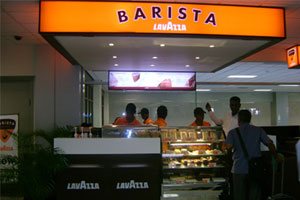
Barista opened its first coffee lounge in 2000 with headquarter in Okhla, New Delhi. Since then, it has been called as one of the best espresso bars in India. In 2007, Barista was acquired by Lavazza and started knowing as ‘Barista Lavazza’. ‘Barista Coffee Company’ is the leading force behind Barista Lavazza.
BaristaKF08sept2013
After one year of establishment, more than thirty-four percent of Barista’s equity stakes were sold to ‘Tata Coffee’ and the rest of the shares were bought by C Sivasankaran from the ‘Amit Judge-controlled Turner Morrison’ in 2004. Later in 2007, Sivasankaran’s ‘Sterling Group’ bought the stakes from Tata Coffee and in the same year, Barista was sold to the ‘Lavazza’ group. Since then, Barista changed its name to ‘Barista Lavazza’.
BaristaLavazzaKF08sept2013
Lavazza’s roasting firm, ‘Fresh and Honest’ supplies the coffee beans in Barista Lavazza. At present, Barista Lavazza has more than 225 outlets in India and has also became the fastest Indian brand to reach the top of the phenomenal companies that changed India. It also received the ‘Brand of the Year’ from ‘Times Group of Business’ in 2002. Barista Lavazza is estimated to have annual revenue of 200 crore.

source: http://www.siliconindia.com / Silicon India News / Home> News> Business / by Silicon India / Monday – May 20th, 2013

Celebs get nostalgic Teachers’ Day

Sandalwood celebrities seem to get all nostalgic today. Everyone, nostalgic about their school days, has been thanking their Teachers on account of Teachers’ Day.
NidhiSubbaiahKF07sept2013
Actress Nidhi Subbaiah tweeted, “I studied in the best school in the world!St Josephs Central School! Thankyou dear teachers,for being part of the best 10 years of my life,” also mentioning the names of some of her teachers. Actress Pranitha Subhash said, “Happy Teachers’ Day to all my teachers!”

Actress Meghana Raj too wished her teachers. “A very happy teachers day 2 al my lovely teacaherz… al of u who ve tot me de lovely lesson of life an helped me grow as an individual,” tweeted the actress.

On the other hand, actress Priya Anand said, “‘Happy Teachers Day’ To All The Wonderful Teachers Ive Troubled Over The Years,” posting a picture of herself in the role of a teacher, to which Kannada actress Vishakha Singh replied saying, “@PriyaAnand haha.. Just realised, you n I have both played teachers in our films.”

Bollywood celebrities too weren’t far behind in acknowledging the relentless efforts of their teachers. “A very special thank u to all my teachers this Teachers Day… I suddenly realize teaching me anything must have been quite a thing,” tweeted director Punit Malhotra. Anupam Kher too said, “I Thank my teachers Somedays knowingly & almost Everyday unknowingly. Happy Teacher’s Day.:).”

Actress Shabana Azmi and actor-director-script writer Farhan Akhtar too thanked their mentors. While Shabana’s tweet read, “A big salute to all the teachers who helped shape me esp my acting guru prof Roshan Taneja and to all involved in this noble preofession,” Farhan said, “A big thank you to those who patiently impart knowledge to the usually impatient. Happy Teachers Day.”

Other celebs like Madhuri Dixit, Khushbu Sundar, Sonu Nigam, Ayushmann Khurrana, Shekhar Ravjiani and Sophie Choudry among others.

source: http://www.articles.timesofindia.indiatimes.com / The Times of India / Home> Entertainment> Regional> Kannada / by Parinatha Sampath, TNN / September 05th, 2013

Growers find novel ways to keep away wild elephants

Wild elephant menace in the coffee plantations in various parts of Kodagu has been increasing every passing day. The reason for the increase in the elephants entry into coffee plantations is the jackfruits and bananas grown in the coffee plantations, which draw attention of the elephants in search of food. In order to save their coffee plantations from elephants, coffee growers have begun to destroy banana and jackfruit yields in their plantations
ElephantKF07sept2013
Wild elephant menace is rampant in Aiguru, Kandanakolli, Kodlipet in Somwarpet taluk and Srimangala, Ammathi, Ponnampet in Virajpet taluk. Forests in these areas mostly comprise of teak wood which is why elephants are falling short of food. In addition, the water pits dug to supply water to coffee plants too are inviting elephants to enter coffee plantations to drink water. Repeated requests of the villagers to the forest department to chase elephants back to the forest have gone futile. It can be recalled that a two wheeler rider was killed by a wild elephant near Aiguru a fortnight ago.

Disappointed over the lukewarm response from the forest department and the failure of solar fencing, now the coffee growers have found their own ways to keep away the elephants by destroying fruit bearing plants like banana and jackfruit in their estates. One can view jackfruits piled up on the roadside near Aiguru on the way from Madikeri to Somwarpet. Growers hope the elephants to hog these jackfruits instead of entering into their plantations.

In fact, some of the growers have also made attempts to cut jackfruit trees, but could not as they do not posses the trees rights. In many estates, the coffee growers have cut the banana plants.

Speaking to Deccan Herald, coffee plantation labour Murugesh said that with the broken solar fences, the coffee growers have no other option but to cut jackfruit and banana plantations.

source: http://www.deccanherald.com / Deccan Herald / Home> District / by Srikanth Kallammanavar / Madikeri, DHNS / June 20th, 2013

Sethuraman estate gets US certification for robusta coffee

Bangalore :

Indian coffee estates are moving slowly to gain US’ roasters interest.

As a first step, the Sethuraman Estates located at Magundi in Chikmagalur after showcasing its produce at various speciality coffee events in the US has now become the first Indian coffee estate to get ‘R Grade’ certificate.

‘R Grade’ certificate are given for washed robusta coffees by the Coffee Quality Institute (CQI) which is an arm of Speciality Coffee Association of America (SCAA).

GETTING PREMIUM

The SCAA recently tested Sethuraman Estate’s robusta coffee submission at the CQI and found to have all the required quality parameters. This certificate facilitates the estate to sell and charge a high premium in the US .

The certificate and recognition allows Sethuraman Estates to sell its entire submission of 15 tonnes speciality robusta in the US market spread over a year by using the CQI and SCAA logo.

“The ‘single-origin estate-branded’ coffee of Sethuram Estates has so far fetched a premium of over 30 per cent over the domestic market prices. Currently the domestic washed robusta coffees is trading at Rs 145 a kg,” said Nishant R. Gurjer, Managing Partner, Sethuraman Estates.

ENTERING US

“This certificate and recognition will allow us to enter the lucrative US café market as well,” he added.

The Sethuraman estate located at Chikmagalur began in operations in the 1950s. In the US market, the company is marketing estate-branded coffees – the Sitara Parchment Robusta and the Ne Plus Ultra of Robusta coffee brands.

The US, a traditionally arabica-consuming country, is slowly replacing it with robusta coffees and few companies have initiated moves to source from various countries for create blends.

SHIFT TO ROBUSTA

This has led to the Coffee Quality Institute, which used to certify only Arabica coffees, now has introduced separate certification for robusta coffees.

RATINGS

According to the institute’s finding of Sethuraman Estates, the following are the rating with baseline score of 7.14. Aroma 7.58 , flavour 7.42, aftertaste 7.42, acidity 7.83, mouth feel 7.42, balance 7.50, Uniformity 10, clean cup 10 Sweetness 7.42 cupper points 7.58.

Gurjer said, “We entered the US market in 2006 by exporting just two containers (36 tonnes) and so far have reached the level of 8 containers (144 tonnes) of speciality robusta coffees.”

source: http://www.thehindubusinessline.com / Business Line / Home> Industry> Agri-Biz / by Anil Urs anil.u@thehindu.co.in / Bangalore – June 21st, 2013

Coffee planters moot first private research body

R&D outfit to focus on developing high yielding clonal strains, resistant to White Stem borer, Leaf Rust
CoffeeKF06sept2013
In an effort to increase productivity of Indian coffee, major plantation associations in India have mooted a proposal to set up a privately-funded research organisation. The main objective of the research outfit is to develop new clonal strains for both Arabica and Robusta coffee.

Plantation associations such as the United Planters’ Association of South India (Upasi), the Karnataka Planters’ Association (KPA), the Karnataka Growers’ Federation, the Hassan District Planters’ Association and the Waynad Coffee Growers’ Association have decided to form the first-of-its-kind private sector initiative, Coffee Growers for Research, to to develop new high yielding and pest-resistant varieties, a KPA official said. These associations together have formed a joint action committee, which is in the process of finalising the structure of the research outfit.

“Over the last many years, coffee production in India has stagnated around 300,000 tonnes, while many other countries like Brazil, Ethiopia, Honduras and Vietnam have achieved manifold rise in coffee yields. We (India) need to catch up with world leaders in coffee production in the coming years, or else, we will be left at the level we are presently,” D Govindappa Jayaram, vice-chairman, KPA, told Business Standard on the eve of 120th annual conference of Upasi, here on Monday.

For example, the yield of coffee has increased 94 per cent in Brazil to 1,257 kg per hectare (ha) in 2011 from 649 kg per ha in 1971. Similarly, Vietnam has achieved a 540 per cent jump in yield to 2,188 kg per ha in 2011 from 342 kg per ha in 1971. While India’s yield has declined three per cent to 838 kg per ha in 2011 from 861 kg per ha in 1971. The need to form a private sector research body for coffee was felt by the planters as the government-funded research wing, under the aegis of the Coffee Board of India, has not done enough research in developing high yielding coffee varieties, which are resistant to white stem borer, leaf rust, tolerant to berry borer in Arabica variety, Jayaram said.

The last new variety released by the Coffee Board was the Chandragiri variety about five years ago, which was released by Brazil’s IAPAR in 1959. The joint action committee, in its proposed submission to the government, has highlighted several challenges faced by the coffee sector such as over-production in major coffee producing countries, escalating cost of inputs, especially the very high cost of labour, and the inability to introduce large scale mechanisation. The need of the hour is to improve productivity and production of coffee, he added. The new research outfit will be completely self-funded will start with a corpus of Rs 2-3 crore, Jayaram said, adding the new research body would focus on selection of good mother plants from various plantations across the country.

The committee is also focusing on introducing a special scheme with incentives for production of Arabica coffee as Arabica coffee area was drastically declining, he said.

The committee is of the view that the only way is to provide positive research and development that can directly contribute to achieving higher yield. The development of good seed material and clones with high yield, which are resistant to pests and diseases, drought resistant and have positive attributes in the cup is a matter of great urgency and importance, the Upasi said in its latest report on plantation sector.

For the Robusta variety, the committee said there was a need to develop clonal strains which were high yielding, good in the cup, drought tolerant to cope with climate change, resistant to shot hole borer and suitable for drip irrigation and mechanisation.

Development of indigenous machinery which help in efficient management of various cultural operations; R&D at the Coffee Research Station and substations to world standards and restoration of the Coffee Evaluation Committee and Mechanisation Committee are some other initiatives mooted by various plantation associations.

source: http://www.business-standard.com / Business Standard / Home> Markets> Commodities> Food & Edible Oil / by Mahesh Kulkarni / Coonoor (TamilNadu) – September 02nd, 2013

Birds, frogs and civet coffee in Madikeri

What comes to mind when you think of Kodagu or Madikeri? Coffee, homestays, waterfalls, elephant camps, Tibetan settlements, meaty-pork stews? How many of us know that Kodagu, unlike the other districts of Karnataka, is home to a range of wildlife species? And in particular, birds and reptiles?
KodaguKF06sept2013
I found the answers in a plantation located in Galibeedu village, Madikeri. I visited a 25-acre plantation, in which coffee, pepper, cardamom and vanilla are cultivated for a two-day stay. It is run by a North Indian couple who quit their jobs 20 years ago to develop this piece of land into an eco initiative that can be enjoyed by all.

The plantation is dense with coffee and other spices grown under the inter-cropping method. Guests are accommodated in tents and a handful of cottages. Locally grown organic food is served to them. The entire plantation is run on solar power, bringing it as close to the nature as possible.

The plantation also serves Civet Coffee, which is made out of beans that are defecated by the civet, a wild cat, that feasts on ripe coffee berries. The beans are washed, sundried and roasted to yield maximum aroma. Due to the enzymatic activity and the touch of amino acids in the Civet’s gut, these beans acquire unique flavours—making it less bitter, more aromatic and hence one of the most expensive and exclusive kinds of coffee in the world.

The night called for a few pleasant surprises—the deafening sounds of the crickets followed by a soothing array of fireflies. Though their charm might be ephemeral, they have a magical effect on you. I tried so hard not to blink, fearing the loss of a few glints. The minimally-lit tents with below 10-watt bulbs paved a perfect setting for this magical moment.

The plantation is an ornithologist’s delight. I spotted the Malabar Whistling Thrush, Woodpeckers, Racket Tailed Drongos, Fly Catchers and Kingfishers among several tiny birds. The plantation is also home to stick insects, hibernating butterflies, tree frogs and leaf frogs. Some belonged to the Lateralus family and are endemic to the Western Ghats region. The frogs were a sight to behold; they changed colours, had shiny-green skin, big, bulgy eyes and had perched themselves on twigs as if waiting for us to visit them.

My two-day stay passed away in a blur and I decided to walk down to the much talked-about stream surrounded by birds about five kilometres away before departing. As I trekked down, the clouds got thicker and darker. I spotted a flock of birds, all different in colour and kind, perched on a tree. It suddenly began to drizzle and the birds in search of shelter, flew from one tree to the other at once. The swarming birds flew low, making it one of my most colourful memories—tints of hidden orange and blue, reds and greys exposed—a flying rainbow indeed.

Ignoring the rain and time, I soaked and hiked at my own pace. When I got back, I was the only one for breakfast and I had missed out on my last dig at the sumptuous avocados too! Oh well!! What more can one ask for when you had the experience of a flying rainbow?

source: http://www.deccanherald.com / Deccan Herald / Home> Supplements> Spectrum / by Aishwarya Madineni, DHNS / September 03rd, 2013

Team Coorg clinch Cup

CHAMPIONS: Team Coorg celebrates winning the Independence Day Cup after beating UTSC Dubai. Photo – Supplied

Muscat:

Team Coorg edged out United Thalassery Sports Club (UTSC), Dubai 2-1 to claim the honours of the commemorative hockey match to celebrate the 67th Indian Independence Day at the OFA ground in Qurum.

Chief guest J.S. Mukul, the Indian ambassador, conveyed his appreciation to the organisers for promoting the Indian national game and also praised S.A.S Naqvi for his dedicated efforts to ensure the development of the sport in Oman.

Played under the backdrop of the ongoing Asia Cup in Ipoh, Team Coorg opened the scoring in the first half by Shakeel with UTSC levelling the score in the next minute with a field goal.

The second half was all about ball possession, with each team trying to gain the upper hand. With a better passing game, Team Coorg gained the advantage with combined effort from Kavan, who slotted the ball home.

In spite of UTSCs constant foray into Team Coorg’s half, the defenders stood their ground to deny UTSC an equaliser and went on to win the game 2-1.

During the half time an entertaining match between Ambassador XI, skippered by APS Chauhan and Veterans XI, captained by Mohammed Shambeh Al Raisi, was played which had players of all age group participating.

The spectators wished the exciting match went on for few more minutes. The exhibition match was won by Veterans XI 2-1.

Kuttappa of Team Coorg in appreciation of the excellent support received from the Indian Embassy presented a memento to the Ambassador.

A lifetime achievement award was also presented to Dawood Ahmed Ali Al Raisi, former president of Oman Hockey Association.

During the ceremony, Mohammed Shambeh presented a special award for the outstanding contribution to Raqib Qureshi, who has played for Pakistan during 1964-1966 and for Bangladesh between 1978-1982. He keeps in touch with hockey every weekend at the OHA grounds and is a source of inspiration to young and old.

The presence of Nalini Bopaiah and Ponnamma Thammaiah added grace to the occasion and they gave away mementoes to the corporate sponsors Naranjee Hirjee Co, Khimji Ramdas’ Permoglaze, Al Rawahi International, Al Omaniya, Services and Trade Company.

Former Oman goalkeeper Jabbar was specially mentioned as he and Raqib Qureshi donned the role of umpires.

SAS Naqvi too presented mementos to the Ambassador and Dawood Al Raisi, while the organisers did not forget the live wire commentary rendered by Salih Thacher.

source: http://www.timesofoman.com / Times of Oman / Home / by Times News Service / September 02nd, 2013