All posts by admin

Koo-ing to the Coorg trail


Utter the words “Kalle kudipake poka?” (Let’s get a drink?) and the Coorgs in the city will nod whole heartedly. And with Cheers Coorg, a labour of love of a couple from the hilly region, it’s also about the eating while drinking, as is the case with the traditional hunters in the Kodava hinterland!

The new restaurant’s owners Appaiah and Kajal decided to bring ‘out-of-the-box’ thinking to the restaurant business — brandishing the ‘tipple-happy, odikathi-wielding, warrior’s cuisine.’ The couple sent a few eager beaver cooks to Coorg, to learn the intricacies of Kachampulli and pandi.

They roped in Kajal’s mom’s traditional recipes and her National Institute of Design expertise with Appaiah’s foodie-cum-business acumen and came out all guns blaring! Odikathi, peethekathi and all, quite like its logo implies.

In most cases, the restaurant precedes the home delivery, but here it was the other way around and they are only wiser because of it.

Though right now, there is ‘apparently’ nothing to say cheers about (the liquor license is still being processed), we found the ‘pandi’ and experience heartening. So while many spirited Coorgs might abstain from going there till the tipple flows, others can go gorge on the Pandi perperations.

Enter this ‘old estate home-like’ atmosphere resplendent with peeks into history on the walls which is spacious and tastefully rendered. If you’d like to Pandi around the papputtu, with some hearty Coorgs as company, this is where will get a meal straight from Appaiah’s mom-in-law’s estate kitchen.

“She is the key architect and though our cooks are not from Coorg, they were trained in our very own ‘offsite’!” says the owner who is still ‘soul searching’ for more authentic old tradition and family photographs from Kodava history. About the lack of alcohol, Appaiah shrugs stoically, “Well, I’ve been walking on a minefield thanks to that but we will get it soon.”

A lot of heart has gone into the venture — It’s visible in the attention to detail — be it the glass partition made up of Appaiah’s shining wedding kummerband, the snippets of Coorg history and it’s obsession with ‘which family you belong to’ or the small niches on various levels reminiscent of a coffee plantation home with some spectacular Mark Swaroop wedding collection photographs. The manager, Rakesh Gurung is on top of it while the waiters stand expectantly, with tablet in hand!

Let the ‘meating’ begin We started with fresh juice— the passion fruit was sweet and the bitter orange or kaipuli was refreshing.

There’s gooseberry too. Next came the Chilkana pandi, a meaty blend of onion, green chillies with Kachampulli which was tender, tangy with spicy overtones.

The Kachampulli Fish Fry came next which was sour, with flakey pieces of bassa that had imbibed the tang of the vinegar so well. Four pieces marinated and panfried with pepper — Absolutely delectable.

“The popular dishes are of course Pandi curry and koli curry though Chuttada is my favourite, a burnt charcoal pork that is traditionally a hunting recipe. These starters are good with alcohol, as should be the case,” Appaiah says.

We of course did justice to the spicy, gravyful, perfectly cooked pandi curry with akki roti and sannas.

Freshness, with just the right balance of kachampulli and spice with fluffy akki as the perfect accompaniment. The chicken curry came next, in a coconut gravy, it was light, flavourful and great with sannas.

The mango curry, bayembale or bamboo shoot, chekke fry or raw jack fruit and the immensely popular mushroom curry will keep the vegetarians a happy lot too.

The yerchi pulav is another great option, mutton pulav served with mango paji and of course the Wanku Yerchi, a family recipe of smoked slices of dried pork cooked in chillies. You can also gorge on staples like kadamputtu, paaputtu and noolputtu.

“We source local ingredients from the Mahila Samaj which helps local ladies of the region. I am a foodie and love my meat … A lot of thought has gone into everything. Our desserts — Coconut soufflé and caramel custard are made by my mother-in-law and we also do pickles and apricot brandy,” he adds.

The ambience is spot on, in terms of comfort, design sensibility and placing of tables with a sense of ease and openness. The waiters know their menu, thankfully. Prices are on the higher side but the taste will surely make you go back again, and again.

There are plans to open a terrace lounge once the liquor license is in place which Appaiah hopes will be a platform for college bands to perform. Till then though, the pandi is surely enough.

source: http://www.DeccanChronicle.com / Home> Channels> Lifestyle> Dine o Mite / by Suruchi Kapur-Gomes, DC, Bengaluru / October 06th, 2012


Scurrying for some curry


It’s very tough to compare the food of North and South India; but the good news is that they are all delicious across the board. Particularly inspiring are some fiery curries. While very different ingredients are used to get the heat going in these regions — dry masalas and spices in the North vis-a-vis fresh produce in the South — they are all extremely popular. This week, we look at Laal Maas from Rajasthan and Pandhi Curry from Coorg.

Pandhi Curry
While pandhi curry is a traditional pork curry of Coorg or the Kodava region, you can substitute it with mutton or chicken. The curry is different because a traditional black vinegar unique to the region called kachampully provides a distinct tangy taste. kachampully lasts years in the fridge. You can use a dash of balsamic vinegar if you don’t have kacham-pully.

Ingredients
½ kg pork or mutton cubed
½ tsp Kachampuli or balsamic vinegar
1-2 tsp salt
1 tsp red chilli powder.
2 onions, sliced
1 tsp ginger, grated
3 cloves of garlic, grated
6 green chillies
1 small bunch of coriander leaves
For the pandhi curry masala
Dry Roast and grind the following:
1 tsp jeera
¼ tsp fenugreek
2 tbsp black pepper

Method
Grind together the onions, ginger, garlic, green chillies and coriander and keep aside.
In the meat, add the onion, green chilli paste and the ground masala and let it marinate for an hour along with the turmeric salt and chilli powder.
Cook meat in a pressure cooker, adding water if needed till tender. Uncover, add the kachampully and cook uncovered for a couple of minutes.
Serve hot with coriander leaves.
Ideal with appams, bread or Goan paos.

Laal Maas
Like most things in Rajasthan, its food traditionally has to be showy and rich. The palace cooks would go great lengths to ensure that the food looked good enough, else it would be sent back without being tasted.
So while cooking laal maas (literally red meat), Rajasthani cooks ensure that it looks fiery hot, though the actual heat of the dish is much lesser than expected.

Ingredients
1 kg lamb, cubed
1 cup oil
6 tsp Kashmiri red chilli powder
50 gm cup coriander powder
3 onions, sliced
1 cup yogurt, whisked
Salt to taste
1 tsp turmeric powder
2 tbsp garlic paste
2 cups warm water
2 tbsp, coriander leaves, chopped

Method
Mix all ingredients except oil, garlic paste, water and coriander leaves with the meat and marinate for one hour. Heat the oil in a heavy-bottomed pan, add the marinated lamb and cook over a slow fire for 45 minutes or till the meat is tender. Add garlic paste and cook till the oil separates.
Add water and bring to a boil. Sprinkle with coriander leaves and serve hot with tandoori rotis or rice.

source: http://www.DeccanChronicle.com / Home> Channels> Lifestyle> Dine o mite / by Priyak Mitra, DC / October 05th, 2012

Let’s dance

Deejay-VJ Nikhil Chinappa is ready to welcome Swedish House Mafia to Bengaluru and Delhi on November 18 and 19. He chats with Ritika Arora about other line-ups, including a music fest at The Park happening today and the Sunburn Festival on October 26 and 27

We caught him at the launch of MTV Fragrances in Delhi. It seems VJ-deejay Nikhil Chinappa is having a tough time, juggling between events in Delhi and Mumbai. But he appeared in a happy-go-lucky kind of mood. He stated, “I love my job.” I’m also investing in brands and properties. It’s fun.” It’s the first time that MTV has collaborated with global fragrances. “I feel that given the kind of weather we have, one should use right fragrance. It also reflects one’s persona.” Nikhil is part of The Park Hotel’s one-day Electronic Dance Music Fest — Twilight. It’s on today.

Deejay Pearl and Ma Faiza would be there too. The three will play a blend of Bollywood and Western mixes. “A similar fest happened in Bengaluru some time back and was a success,” said Nikhil. He added, “The EDM scene is fantastic. It’s preferred over other genres at nightclubs.”

Nikhil informed that he was in talks with Swedish House Mafia, an electronic dance music trio consisting three house disc jockeys and producers Axwell, Steve Angello and Sebastian Ingrosso.

“They were keen on coming here. First they will play in Bengaluru and hopefully be here the next day. We expect at least 20,000 people, and have been getting emails from abroad. People from Los Angeles, Malaysia, Singapore and South Africa want to come down. It’ll be a big event. They will play music non-stop for six hours. We have tie ups with radio channels and one can listen live.”

The Sunburn Festival also begins in October. It’s happening for the first time in Noida.

“There’s so much happening,” he sighed and added, “We have a good line-up. Over 150 artistes will be here from all parts of the world.” Nikhil feels India is ready to organise such large scale events. “Last year FI happened. Several renowned Deejays and artists keep coming to India because they like it here. We have technically sound infrastructure and good venues. It’s good to know the music culture is growing. And at a rapid pace.”

source: http://www.dailypioneer.com / Home> Vivacity / Saturday, September 29th, 2012

Tribals will not be evicted from sacred groves: Minister

‘Hobli-level janasamparka meeting likely to be extended to State’

Hundreds of people thronged to the Janasamparka meeting held at Kutta Kodava Samaja on Saturday, seeking solution for their various problems.

The people found solution to the problems related to delay in distribution of ration cards, Sandhya suraksha yojana, pension for senior citizens, honorarium for widow and so on.
Speaking after inaugurating, District-in-Charge Minister M P Appachu Ranjan said that the government wants to reach out the programmes to the beneficiaries.

The Minister said that ‘sacred groves will be conserved. There was a need to provide basic facilities. In the name of conserving sacred groves, tribals will not be evicted.”
Deputy Chief Minister K S Eshwarappa is planning to extend the model hobli-level janasamparka meeting to the entire state.

“Janasamparka is nothing but taking the government to the people,” he said.
Assembly Speaker K G Bopaiah flayed the forest department officials for preventing the forest dwellers of Devamacchi forest from offering pooja in the temples.

The Forest Rights Act provides an opportunity for the forest dwellers to lead a comfortable life. Pseudo environmentalists are responsible for fire in Nagarahole reserve forest.

By propagating false rumours, they are engaged in getting funds from foreign countries. “Forest is house for the forest dwellers. They will not engage in setting fire on the forest. The forest has been conserved by the dwellers and not by the pseudo environmentalists.”

Various schemes were distributed among 3,440 beneficiaries on the occasion. This includes Sandhya Suraksha scheme, pension for widow and physically challenged, natural calamity relief fund, Bhagyalakshmi bond, fodder kit, ration cards, nutrition food for the tribals, financial assistance for the students, housing schemes and so on.

Cheques were distributed to 1,796 families under natural calamity relief fund.
Zilla Panchayat Vice-President H M Kaveri, Additional DC Dr N Shivashankar, SP Manjunath Annigeri, ZP CEO K B Anjanappa and others were present.

source: http://www.DeccanHerald.com / Home> District / DH News Service / Madikeri, September 30th, 2012

Hockey India Blamed for Fiasco at London Olympics

Mumbai, India:

Former Pakistan hockey captain Rehan Butt on Friday said India could have avoided finishing last at the London Olympics had they included seniors such as Arjun Halappa and Bharat Chikara, who took part in the rival World Series Hockey and were ignored by Hockey India for the games.

“To the best of my knowledge, and as someone who has played hockey, India would not have finished 12th at the Olympics had Hockey India included players of quality like Arjun Halappa and Bharat Chikara and 2-3 more senior players in the Olympics squad,” Butt, a member of the Pakistan squad in London, told PTI in a conference call.

“India could never have finished 12th in the Olympics if they had not left out players who took part in WSH. If Pakistan players (featuring in WSH) could play in Olympics, why not the Indians?” asked Butt, who played for Chandigarh Comets, one of the eight city-based franchise teams that took part in the first season of WSH held earlier this year.

“Pakistan Hockey Federation thought we were needed and selected us for Olympics. The Indian federation could also have done so if they knew how to treat their players with dignity. The reason why India finished 12th is because of the management (failure) and not the players,” said the player, who was fined one million Pakistan rupees by his country’s federation before being selected for the games where his country finished seventh.

The veteran of three Olympics, two World Cups and five Champions Trophy campaigns said all Pakistani players, who were seen in WSH, will play in the second season of the league, a joint initiative of Nimbus Sport and Indian Hockey Federation.

source: http://www.indiawest.com / Home> News> Sports / by PTI / September 28th, 2012

Vivanta by Taj – Madikeri, Coorg opens October 2012

Vivanta by Taj – Hotels & Resorts is pleased to announce the opening of Vivanta by Taj – Madikeri, Coorg on 15th October 2012. Adding to the rapidly expanding Vivanta portfolio, this hotel will be the 25th property to open since the brand was launched in 2010. Situated at an altitude of 3,800 ft. within 180 acres of subtropical rainforest, the hotel is set to be the ultimate retreat for nature lovers. Located seven kilometres from the charming hillstation of Madikeri in South-Western India, the hotel offers panoramic vistas of the Western Ghats and imposing mountains that Coorg is famous for.

Vivanta by Taj – Madikeri, Coorg’s luxurious 63 rooms and villas have been built within an eco-conscious context to ensure the property is unobtrusive and respectful to the natural beauty of its location. Luxury abounds with spacious villas offering exquisite design, impressive views and memorable touches such as fireplaces in each room.

The hotel will house a 30,000 sq. ft. Jiva Grande Spa. The 30,000 sq ft Spa is located in the main lobby block, which delves down 3 levels of the rainforest. It offers stunning views of the landscape which lends a mystical aura from every treatment room. The expansive spa & wellness space sports private treatment suites with their own steam & showers; a relaxation deck; Dew – a wellness café and the signature Jiva experience – the wood fired Gudda bath that draws from the local ethos of Coorg and is found in traditional households of the region.

Discover Vivanta
Work hard and play hard. Relax and energize. Ideate and confer. Evolve and transform. Revel in a spirit that presents the normal with an unexpected twist. Stylish and sophisticated, Vivanta by Taj delivers premium hotel experiences with imagination, energy and efficiency. Currently comprised of 24 hotels and resorts in India and the Indian Ocean region, Vivanta by Taj is represented across key metropolitan capitals as well as popular holiday destinations like Goa, Kerala, Rajasthan, Sri Lanka and the Maldives. Vivanta by Taj offers an imaginative, vivacious and stylish take on ‘cool luxury’. With innovative cuisine, energetic spaces, unique motifs, the smart use of technology and experiences that seek to constantly engage, invigorate and relax, it appeals to the cosmopolitan world-traveler immersed in a sensory lifestyle.

Source = Taj Hotels Resorts and Palaces

source: http://www.etravelblackboard.com / Home> Hospitality News / Wednesday, October 03rd, 2012

Karnataka explores cloud seeding to increase water in Cauvery

Bangalore, OCT. 2:

The State Government is exploring cloud seeding method to increase water inflow in the Cauvery basin.

“Cloud seeding has been planned in Cauvery catchment areas – Kodagu and Hassan,” Water Resources Minister Basavaraj Bommai told reporters.

“The government has already set aside Rs 5 crore for this and will shortly call for both technical and financial bids,” he added.

The State is taking the assistance of Indian Institute of Tropical Meteorology (IITM), Pune. The institute is to offer technical assistance. Water Resources Development Organisation (WRDO) has been roped in to be the nodal agency to coordinate the cloud seeding project. Earlier in July, the State government had decided in favour of cloud seeding in the Cauvery basin, but abandoned it as the catchment area experienced good rains.

“Since the State is in a precarious position now due to the Supreme Court and the Cauvery River Authority (CRA) orders, we have revived the cloud seeding project,” Bommai said.

Water inflow into Krishnaraja Sagar (KRS) is 10,000 cusecs and outflow is around 9,000 cusecs.

Current storage level at KRS is estimated at 68 TMCft. Bommai said, “For drinking water and irrigation needs in the Cauvery basin we need around 150 TMCft.”

anil.u@thehindu.co.in

source: http://www.TheHinduBusinessLine.com / Home> Industry & Economy> Government & Policy / The Hindu’s Bureau / Bangalore, October 02nd, 2012

A tale of resistance & rewards

Heritage:

Three years after the British took over Kodagu, a rebellion against the rulers erupted in the region. Among the rebels was Guddemane Appayya. C P Belliappa charts the chronology of events immediately after the rebellion was quelled.

In 1837, three years after the British take-over of Kodagu, a rebellion erupted against the colonisers. This uprising is popularly known as ‘Amara Sulya da Katakai’. The primary reason for this revolt by some of the peasants in Sulya was their objection to the British collecting land tax in currency instead of in kind as was the practice during the reign of the rajas. There was also a rather mysterious individual named Kalyanaswamy who proclaimed himself a descendant of the Haleri rajas and claimed the throne of Kodagu.

The rebellious peasants rallied round him. Guddemane Appayya took command of the rebels. The entire uprising was not well organised and there was a great deal of confusion. However, it soon spread to Puttur and then right up to Mangalore, where some of the establishments of the East India Company were ransacked. Emboldened by their success, the rebels made a bid to attack Madikeri, the capital of Kodagu.

Three years of British administration had brought peace and stability in Kodagu and a majority of the people did not want this disturbed. Compared to the misrule of Chikka Veerarajendra, the administration was streamlined and there was equitable law. People-friendly policies were implemented in various fields. The alarmed British enlisted the support of Kodavas to quell the rebellion. The two dewans, Apparanda Bopanna and Chepudira Ponnappa, mustered the Kodavas, and within days the insurgency was put down. The British did not want any repetition of such revolts against their rule. Harsh punishments were meted out to those who took part in the rebellion. Amongst those executed were Kalyanaswamy and Guddemane Appayya.

After this operation was completed, a large amount of booty was collected from the rebels. The British offered the spoils of war to the Kodavas for having helped them. To the surprise of the British, Kodavas rejected sharing the war booty.

Awards for quelling rebellion

At the time, Colonel Mark Cubbon who was posted in Bangalore was also the Commissioner of Kodagu and Captain Le Hardy was the superintendent. It was Colonel Mark Cubbon who recommended to the then governor-general Lord Auckland that the gallant Kodavas should be suitably recognised for their distinguished service in quelling the rebellion. On Mark Cubbon’s recommendation, the following awards were presented: gold medals with gold chains worth Rs 400 to the two dewans, 12 gold medals with chains worth Rs 200 to subedhars and principal chiefs, 20 gold medals without chains for parpatigars and others of equal rank, 10 gold medals worth Rs 50 for peasants who supported the British, 200 silver medals worth Rs 10 for lower ranks and peasants.

Several bronze and copper medals were presented to the foot-soldiers. All these medals were two inches in diameter. They were cast in the same moulding with a Kodava warrior on the obverse and a trophy of Kodava arms on the reverse. Weights of the gold medals were adjusted by varying the thickness.

In addition, there were grants of land, Pegu ponies, fowling pieces (guns), shawls, clothes, turbans, etc.

But there was a 70-year-old subedhar named Monnaiah (spelt Moonien by the British) who rejected all that the British offered. He was crestfallen, because during the operation, he had lost his prized sword which was a gift from Dodda Veerarajendra. He wanted nothing other than replacement of the sword!

Mark Cubbon immediately acted on this request and had an exact replica made and presented to the subedhar. I wonder if this sword exists somewhere in one of the Kodava homes. Likewise, none of the gold and silver medallions are with any of the Kodava families.

However, I have one of the bronze medals, which was very kindly gifted to me by A Franklin, an avid art collector in Bangalore.

Franklin is also the proud owner of the autographed Bible that Queen Victoria presented to her god daughter Princess Victoria Gowramma of Coorg in 1852.

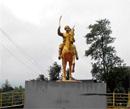
History has nevertheless come full circle. Recently an imposing statue of Guddemane Appayya on horse-back has been installed at the entrance to Madikeri town. He is recognised as one of the earliest freedom fighters.

source: http://www.DeccanHerald.com / Home> Supplements> Spectrum> Heritage / October 01st, 2012

BJP candidate is Kodagu ZP president

B. Shivappa of the BJP, who represents Abburkatte constituency in Somwarpet taluk, and Biddanda Usha Devamma, also of the BJP, representing Cheyyandane constituency in Madikeri taluk, were unanimously elected president and vice-president respectively of the Kodagu Zilla Panchayat at the elections held in Madikeri on Monday.

The post of the president in the second term was reserved for Scheduled Caste candidate and that of the vice-president for Woman (General). Mysore Regional Commissioner M.V. Jayanti, who conducted the elections, received nomination papers only from Mr. Shivappa and Ms. Devamma.

She declared them elected unanimous. Both are first-time entrants to the zilla panchayat.

They will hold the office till June 6, 2014.

Contender

K. Sundara of the BJP, who represents Kantur-Murnad constituency, was a strong contender for the president’s post, but the party leadership favoured Mr. Shivappa.

Mr. Sundara was absent during the elections.

Though other women members in the BJP, including Kanthi Belliappa, Mani Nanjappa Beena Bollamma, had expressed their willingness to be considered for the vice-president’s post, Ms. Devamma got the nod from the party leadership. The 29-member zilla panchayat comprises 21 BJP members, six Congress and two JD(S) members.

The zilla panchayat members congratulated the new incumbents.
———————————————————–
B. Shivappa will hold office till June 6, 2014

Biddanda Usha Devamma of BJP elected vice-president
———————————————————–
source: http://www.TheHindu.com / Home> National> Karnataka / by Special Correspondent / Mysore, October 02nd, 2012

Quinoa Akki Roti

My latest experiment with quinoa – quinoa akki roti. I tried this recipe by making quinoa flour in the blender. Then I added a little rice flour and proceeded the same way as the regular akki roti by add the onions, grated carrots, cilantro, curry leaves in the dough.

Ingredients:
Quinoa flour – 2 cups
Rice flour – 1/2 cups
Carrot – 1 small grated
Onion – 1 medium chopped
Curry leaves – 2 strings
Coriander leaves – 4 tbsp chopped
Cumin seeds – 1 tsp
Green chillies – 2 chopped
Salt to taste
Olive oil – few tsp to cook

Hot boiling water – to mix

Method:
1. Mix quinoa and rice flour with grated carrots, chopped onion, chopped curry leaves, corriander leaves, cumin seeds, chopped green chillies, chopped and salt.
2. Add just enough boiling water to this and knead.
3. Make it to tennis size balls.
4. Flatten the dough on a plastic sheet with your hand
5. Gently transfer the flattened roti to a cast iron griddle or skillet
6. Add a tsp of olive oil around it and cover it
7. Cook on medium flame till done
8. Serve with chutney.

source: http://www.rice-n-spice.blogspot.in / by Nutan Dodbele / September 28th, 2012