All posts by admin

Model Railroad Layout: New addition to tourist attractions

People can buy a platform ticket and view the miniature models
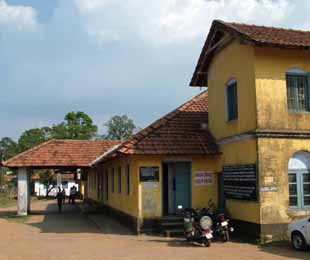
The city railway station here is now home to a ‘Model Railroad Layout’, which is the first of its kind in the country.

MP Adagur H Vishwanath threw the doors of the model railroad layout, which was created by the Mysore Division of the South Western Railway, open to the public here on Friday.

The scale models include six miniature trains – two of which are hauled by vintage steam locomotives – running through tunnels and up the hill with six coaches in each train.

It also has models of Chamundi Hill, K R Circle, KRS Dam, Clock Tower, Philomena’s church and Zoo. The 200 square feet model is housed at the existing Heritage Gallery on Platform One at the Mysore Railway Station.

The layout is lit with 500 LED bulbs and will be in operation with day and night effect.

Beacon of hope

For people of the region, who have been hoping that the Mysore-Bangalore double track and a railway line to Kodagu will come true, the ‘Model Railroad Layout’ could be a beacon of hope. The model has a double track between Mysore and Bangalore and includes the Srirangapatna station. The Madikeri station and railway line passing Kushalanagar has also taken shape on the model.

Speaking on the occasion, senior commercial manager, Mysore division, South Western Railway, Dr Anup Dayanand Sadhu said that the concept was initialised about two years back. Sadhu said that he had come across a similar model at the Science and Technology Museum at Chicago, USA, which had about 160 miniature trains.

Similary, Hamburg in Germany has one of the biggest railroad model layouts, he added. Divisional railway manager, Vinod Kumar, said the Mysore division was aiming to provide better facilities to passengers. He said the division was aiming to bag the most tourist friendly station award this year.

MP Vishwanath urged the railway authorities to convene a meeting with passengers and elected representatives to understand the problems faced by the people.He said, that it would them serve the passengers better.

Promise!

MP Adagur H Vishwanath said that work on the Mysore-Bangalore double track is expected to be completed by the end of 2013. He said a team has already visited to inspect the Tippu’s Armoury at Srirangapatna. Priority is to shift the armoury and complete the work at the earliest, he added.

source: http://www.DeccanHerald.com / Home> District / DHNS, Mysore / February 17th, 2012

Pushpagiri Wildlife Sanctuary – Popular Bird Locations

Pushpagiri Wildlife Sanctuary of India is present in Somwarpet taluk of Kodagu section in southern Karnataka. It is well-known as one of the essential bird areas of the world and home to unusual and vulnerable bird life. It is propagated across 102 km. The sanctuary is adjacent to Bisle reserve forest to the north and Kukke Subramanya forest range to the west. It is present at a range of 287 km from Bangalore.

The topography is designated by extreme areas with waterfalls along its many hill channels. Numerous swamps are also available in this sanctuary. The altitude of the sanctuary differs from 160 to 1712 m, Pushpagiri peak is the topmost in the northern side. The sanctuary is one of the biggest places of tropical evergreen forests in Karnataka with almost 70% of the sanctuary included with forests. Pushpagiri has dense evergreen and semi-evergreen crops, with shola jungles and grasslands in places of higher level.

Indian Wild Dog, Brown Palm Civet, Indian Large Squirrel, Indian Hare, Spotted Deer, Sambar, Indian Muntjac, Gaur, Asian Elephant, Wild Pig, Large Flying Squirrel, Travancore Flying, Otter species, Stripe-necked mongoose and mouse deer are few of the animal species identified here. Three species of primates identified here are typical langur, bonnet macaque and lion-tailed macaque

Accepted as an Important bird Area the sanctuary has a wealthy variety of untamed birds like the Nilgiri wood-pigeon and Near threatened species like gray-breasted laughing thrush, black and orange flycatcher and Nilgiri flycatcher are discovered in this sanctuary. You can also see wild birds such as the blue-winged parakeet, gray-headed bulbul, Malabar grayish hornbill, white-bellied blue flycatcher and small sunbird. Reptiles generally seen in this sanctuary comprises of typical cobra, Indian mountain python, rat snake, olive keelback, king cobra and bamboo pit viper

How to Reach Pushpagiri Wildlife Sanctuary

By Air: Nearest Airport is in Bangalore (260 km) and Mangalore (135 km)
By Rail: Nearest Railway Station is at Mysore (146 km)
By Road: The sanctuary can be reached by road from Mysore via Madikeri (120 km). From Madikeri, the sanctuary is 25 km.

source: http://www.HolidaySeat.com / posted February 15th, 2012

Thimayya home gets due honours

It will be turned into a museum; transport dept, current occupant of the Madikeri mansion, has been told to vacate

The state government has finally realised it needs to give a fitting tribute to its war hero, former General of Indian Army, Kodandera Subbayya Thimayya. It has decided to convert his mansion in Madikeri, now housing the transport department, into a museum.

The Kannada and culture department, which has decided to take possession of the house, called ‘Sunny Side’, has given the transport department three months’ time to vacate the premises.

A decision to the effect was taken at a high level meeting of the Kannada and culture department a week ago.

The transport department has been given three months’ time to vacate the mansion
Grant sanctioned
According to sources in the department, the government had decided to declare the mansion as a memorial in 2005 following a letter written by former chief minister Veerappa Moily. The next year, the then finance minister had sanctioned a grant of Rs 1 crore for the purpose.

B Basavaraju, secretary, Kannada and culture department, told Bangalore Mirror, “It’s time we took over the building. Recently, a team of officials from our department visited the house and submitted a report.”

The regional transport office (RTO) will be shifted to a new premises. “Once the RTO shifts out, we will take up restoration work of the house,” he said. The department plans to have a museum displaying articles used by Gen Thimayya and a library comprising war literature aimed at motivating youngsters.

The mansion in Madikeri, spread across 2.6 acres, is the birthplace of the general, who was affectionately called ‘Timmy’ by his Army colleagues.
Sources said the transport department had bought the mansion way back in 1972 for Rs 2 lakh. Though the government housed the Gen Thimayya Memorial Bhavan in the same building a few years ago, it was in poor shape.

Repeated pleas by the people of Kodagu to convert the house into a memorial had gone in vain. “Except for a statue and a road named after him, there’s nothing in Kodagu to remember the great soldier,” said Sachin Bopanna, a resident of Madikeri.

Meanwhile, after a decade, the Army’s Southern Command has chosen Bangalore as the venue for its investiture ceremony, while the armed forces is all geared up for its 64th Army Day celebrations on Sunday.


Driving force

When K S Thimayya was the commander of the 19th infantry division in Jammu & Kashmir, he drew the Pakistani army out of Kashmir valley by personally leading the attack in the forward-most tank.

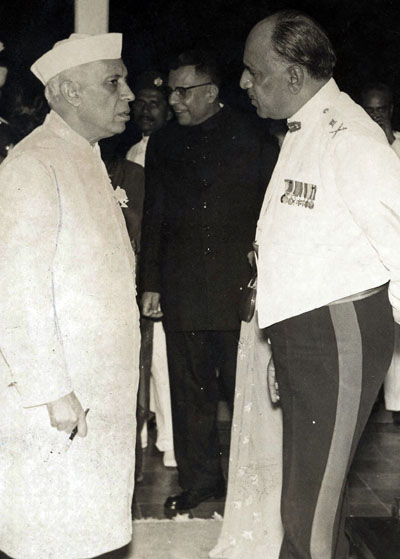
Pandit Jawaharlal Nehru with then Lt Gen. K S Thimayya, G.O.C-in-C, Southern Command, at the officers’ mess in Pune in 1956.
Thimayya, who was the fourth general of independent India, was born on March 30, 1906 in Madikeri. He studied at Coonoor and Bangalore’s Bishop Cotton Boys School before joining the Prince of Wales Royal Indian Military College in Dehradun. He served the Indian Army between 1957 and 1961.

After his retirement, he was appointed the Commander of UN forces in Cyprus, where he breathed his last.

Teasing the taste buds

Bangalore:
Coorg recipes are famous for its variety in flavours. The Kodava way of preparation is different from that of the other South Indian dishes. And if you want to relish some spicy chutneys, then the Coorg ginger chutney is the ultimate dish. It is simple and delicious to taste and can be eaten with rice or chapati. And here is the recipe for you to try out the delicious cuisine.

Ginger chutney:

To prepare ginger chutney, you would require 1 cup coconut , 2-3 green chillies, 1 inch ginger, salt according to your taste, 1 spoon tamarind juice.

Stage 1: Put all the ingredients in the mixer and grind until it becomes a smooth paste.
Stage 2: For seasoning, heat the pan with 1-2 spoon of oil. When the oil heats up, add few mustard seeds and 5-6 curry pattas to it.
Stage 3: Add the seasoning with the paste, and your chutney is ready to be served.

source: http://www.ibnlive.in.com / South> Bangalore / Express News Service / The New Indian Express / Bangalore, February 16th, 2012

CNC seeks Jnanpith for Appacha Kavi posthumously


Madikeri
, Feb. 10:
The Codava National Council (CNC) has urged the Centre to present the Jnanpith award posthumously to renowned litterateur of Kodagu Haradasa Appacha Kavi, hailing from the Appaneravanda family.

CNC President N.U. Nachappa, who put forth this demand at a press conference held here yesterday, said that at a time when Kodava culture was edging towards digression due to cultural invasion, it was Appacha Kavi who through his unique literature, gave a new lease of life to Kodava dialect. The stories, drama, folk songs and poetry penned by him are gaining credence in the modern day and has been the inspiration for many more Kodava writers.

Nachappa said that he had submitted a memorandum in this regard to the Kodagu district administration, to be forwarded to the Central Government and the Kendra Sahitya Academy.

CNC members Jammada Mohan, Kaliyanda Prakash, Mookonda Dileep, Pullera Kalappa, Shwathi Kalappa and Ajjettira Rani were present at the press conference.

source: http://www.StarofMysore.com / General News / February 10th, 2012

Into a world of tiaras and glamour

Ever since she was a six-year-old, Rochelle Rao has been smitten by the modelling industry. And taking one firm step at a time, this young sassy babe is ensuring that she fulfills her dream of becoming a successful model.

Rochelle Rao

Today, Rochelle is amongst the 20 most beautiful women in the country, and is all set to impress the judges in the final rounds of the Miss India pageant.

Rochelle, who has been undergoing rigorous training sessions with Ajith Sigamani, says, “I got a taste of what the pageant will be like when I participated in the Miss India South contest. So I was mentally prepared.”

From giving up all her favourite food to working out several hours in a day, Rochelle has taken it upon herself to sport a fab bod. “I am a foodie by nature,” she says. “But since December, I’ve had to give up all the food I really love. Though when someone looks at me and compliments me, I feel all this training is really worth it!”

Rochelle is no stranger to the profession. Be it TV shows or ramp walks, she’s a familiar face. “I’ve been in this profession for many years, but it was only in the first few rounds that I realised there were so many things I didn’t know. Unlike in Mumbai or Delhi, for models in Chennai the exposure is not up to the mark. I had to unlearn so many things. Prasad Bidappa and Marc Robinson were both extremely helpful in training me!”

She adds, “Be it physically or even in the way I think, I can feel the development in myself. And I am loving this change!”

Considering all the challenges that she has faced in the profession, Rochelle has managed to learn from them and survive, despite all odds. “I am a Christian and being in this profession was looked down upon! But I knew that this was what I was born to do and I love my profession. I also realised that if people pass negative comments, it probably means they’re jealous and the best thing to do is to just ignore them!”

Rochelle explains that it is so easy to be carried away by all the glitz and attention — she’s had to mend several errors that she’d committed because of that.

“I used to be cocky. I had an attitude problem. But I soon realised that once you’re off the stage, you have to respect society. There are people who have seen it all and you owe them the credit.

Even if it’s a tea boy on the sets of a show, you must give him the respect he deserves. I’ve always had to go back to the people I misbehaved with and apologise. Being humble is one of the biggest lessons this profession has taught me!”

The pretty model is readying for the next round, which is likely to be in March. She says, “Rehane is already working on some of my clothes.

And I am lucky that some of the best in this profession including Sidney Sladen, Chaitanya Rao and Sunil Menon are helping me throughout!”

source: http://www.DeccanChronicle.com / Home> TABLOID> Glam Sham / by Srinidhi Rajagopal / DC/ Chennai / February 14th, 2012

Far from the madding crowd

Bangalore:
Love is in the air, fresh air. V-Day celebrants are headed to hill stations, with Coorg and Chikmagalur being the most popular destinations this year.

While some couples were already on their way by Monday, others left late Monday night to reach their destinations latest by Tuesday morning. After a two-day stay, they plan to head back to Bangalore, said travel companies.

“We received a substantial number of bookings from couples looking for a romantic getaway and quite a handful opted for customized services,” said Frederick Divecha of Kuoni India.

If chilled wine with dinner feature on many couples’ menu, a rose petal bath with aromatic oils is on the cards for others. Of course, most want a candlelight dinner laid out for them.

“We’ve seen a 15%-20% increase in bookings for this period compared to last year and a 10% increase for Karnataka packages,” said Neelu Singh, COO,Ezeego1.com, adding that Mysore and Coorg have seen the maximum bookings. Other preferred southern destinations are Ooty, Kodaikanal and Wayanad.

It’s Grans’ Day too

Grandparents are the people with silver in their hair and gold in their heart. It’s their ability to love and willingness to help and comfort their grandchildren that makes their roles indispensable. And thanking their grandparents on the occasion of Valentine’s Day are these tiny tots from Tree House pre-school in Shantinagar, where the children will celebrate Grandparents’ Day. The event is being organized to bring back the values of the joint family. The event will also provide an opportunity to grandparents to unite with their grandchildren. A number of programmes, including antakshari and musical events, will also be organized.

POPULAR PACKAGES

Kodagu Duration: 2 nights / 3 days Price: Rs.12,499 per couple

Mysore Duration: 2 nights / 3 days Price: Rs.12,499 per couple – SOTC

Chikmagalur Duration: 2 nights/3 days Price: About Rs 15,000 per couple.

source: http://www.timesofindia.indiatimes.com / City> Bangalore / by Saswati Mukherjee / TNN / February 14th, 2012

Biggest test coming up for Indian hockey

Indian hockey is in the news these days and a lot of it has to do with the enhanced sponsorship it will be getting from the Sahara group.
For people like me who have still not lost hope in Indian hockey, the Sahara press release was exciting. It talked of a 170 per cent increase in sponsorship, which sounded huge.
Yet, when one sat with a calculator to check what it meant, the increase in sponsorship was from `3 crore per year to `8 crore per year. Compare it with the `3.34 crore per international match which the Indian cricket board has been getting from Sahara, and there cannot be a starker contrast.

India have fared well under coach Michael Nobbs
__________________________________________________________
To be sure, only someone foolish will compare cricket with any other sport in the country. We are often told that hockey is our ‘national game’ though this statement needs to be taken with a pinch of salt.
In the good old days when we won Olympic gold medals with flourish on natural grass, Dhyan Chand was the true hero. He symbolised success and grace and how the Western world was mesmerised by his magic with the hockey stick.
As the statue of the man greets you at the National Stadium in the Capital, you wonder whether Indian hockey can flourish again. Let’s be sure of one thing, nobody played hockey in the old days for money.
Hockey was a passion, a junoon as they say, for many who wield the stick. Today, to complain that Hockey India cannot pay its players handsome money is nonsense. One must never forget that in terms of popularity, mass reach and TV viewership, hockey can never be compared with cricket.

Former player A.B. Subbaiah
_____________________________________
Yet, if Sahara is spending money on hockey, it needs to be welcomed, irrespective of the figures being spent. We all know that had it not been for the Indian government’s funding, we could have never afforded a foreign coach.
Be it Jose Brasa or current guru Michael Nobbs and his support staff, if they are here in India, it’s because of the cash support the government offers. In less than six days, the Indian men’s and women’s hockey teams will be competing in the Olympic qualifiers with hope in the heart.
The tears which Indian hockey fans shed in March 2008 cannot be forgotten as India lost to Great Britain in the Olympic qualifier in Chile. One scribe from India who had gone to cover the event still swears the umpiring then was biased and the Indians were being subjected to a lot of pressure.
In a way, this Indian men’s team is very lucky it is going to play the qualifier at home against a field which is not too tough. If you go by the international rankings, India are rated higher than their opponents – France, Italy, Canada, Poland and Singapore.

The experts say that Canada, once a potent force, is not the same. Pre-tournament predictions of India being in the final sound good, but the pressure is not going to be any lower. There are several advantages of playing at home and, having arrived in the Capital well in advance, the team is being nurtured by Nobbs. It is also a good sign that Nobbs has felt free to call in my favourite former India defender Dilip Tirkey and the soft-spoken former India goalkeeper AB Subbaiah to help out the team.

These two men carry with them loads of experience, so the Indian team will definitely benefit from their valuable tips. A lot has been written about the exclusion of Rajpal Singh and how in Sandeep Singh and Ignace Tirkey, we have two seasoned players who could play a big role in India’s campaign.

If one goes through India’s performance under Nobbs, it has been okay but not brilliant. While the frontline has the punch, the defence still comes under the scanner. Having won the Asian Champions Trophy last year in Ordos, China, the team then finished runner-up in the Champions Challenge I.

More recently, the team played against South Africa in a Test series and won three out of the five matches.
All this would tend to suggest Indian hockey is in fine health but we need to wait till the end of the Olympic qualifier to see how good we are. We have to win the final if we are to seal a berth at the London Olympics.

Old-timers I spoke to are not willing to hazard a guess and say they are keeping their fingers crossed. Nevertheless, if one is looking at the future of hockey in India in a macro sense, we must qualify.
The outrage after failing to qualify for the Olympics in 2008 hasn’t been forgotten. And if you compare hockey with other disciplines where Indians have qualified for London, it is clear this team must deliver.

We all know how hockey’s popularity has dipped and the nurseries in Punjab and Jharkhand see fewer people playing the sport. If hockey has to have a future in the country, India has to make the Olympics grade.
Nobody is going to watch or support a sport where we are not doing well. At the same time as the men’s team, the women will also be trying hard to qualify in a relatively tougher field. The big advantage is playing at home.

Good crowd support and finding rhythm early on will be crucial. Till then, let’s leave aside all talk of why hockey gets less in terms of sponsorship from the corporates.

source: http://www.dailymail.co.uk/ India / by S. Kannan/ February 12th, 2012

They’re old enough

It is not my intention to cause a sudden dip in morale in the Indian armed forces, a dip so vertiginous that when the Chinese are amassed at the Mehrauli crossing, our soldiers will be able to do nothing. But the crisis that reached its climax last week involving the date of birth of India’s army chief strikes me as being incredibly banal. How many angels can dance on a pin head being replaced by how many candles should be there on our army chief’s birthday cake on May 10?

Don’t get me wrong. The fact that the spat between the ministry of defence and the army chief — which in institutional terms means the hand-to-hand combat between the Government of India and the Indian Army — was played out in public must have been disconcerting for patriots on both sides of the civilian-military border. On following the spat in the Indian media, the aforementioned Chinese must have plied themselves with endless mai tais and gleefully quoted from Du Fu’s ‘Ballad of the Ancient Cypress’, lines that only Vikram Seth would be able to faithfully translate as “If a great hall should teeter, wanting rafters and beams,/ Ten thousand oxen would turn their heads towards its mountain’s weight.” That a quarrel had broken out between the army and the civilian government was serious. But what surely can’t be is the reason for this dangerous eyeballing: whether the army chief was bluffing about his age.

Here’s the source of the fracas in a nutshell: General VK Singh insisted that his date of birth is May 10, 1951 — and not May 10, 1950, as according to the service records that Singh had himself provided when he had applied for the National Defence Academy (NDA) when he was 14 (which means that he must have been then 13). I’ve conducted similar age-propping strategies when I was 14 (but was actually 15) to cover up the fact that I had lost a year when getting into school for the first time. I hope to dear god that by constantly repeating my real age for the last decade or so to people, especially to ladies who profess a fondness for older men, I have made amends.

So at best, Singh was guilty of some minor age-shuffling so that he could get into the NDA a year early. Today, that has come to bite him in his rear formation. This, to me, could have been easily sorted out by some clerical whiz in the government, if the civvies in the defence ministry wanted. Instead, it became an infructuous contest which even the Supreme Court labelled as being “a vital matter for the entire nation”. A vital matter for the entire nation. Really?

I’m told it’s about ‘honour’. In August 31, 1959, army chief General KS Thimayya offered to resign after a spat with defence minister VK Krishna Menon over, among other things, the latter’s refusal to consider the chief of army staff’s plans for preparing for a looming India-China conflict — which Menon thought was only gathering force in the brain of a restless military man. Nehru did manage to convince Thimayya to stay on as army chief till the latter retired in 1961 — even as the PM backed the wrong horse Menon into the winter of ’62.

Nehru had told Parliament in September 1959, the House agitated over a army chief-defence minister quarrel, that the issues involved in Thimayya’s attempted resignation were “rather trivial and of no consequence”, and that they arose “from temperamental differences and did not include promotions”. I can bet my 21st battalion that the spat didn’t arise because of promotions etc but because of the matter of Menon shrugging his shoulders each time Thimayya uttered the word ‘China’.

Now that was a spat I can understand where honour must have crept in. What loss of honour was General Singh worried about? That he’s been branded a liar by AK Antony and his para-militaries? But according to his own logic, he must have lied at least once — either when he was 13 or 14, or now when he’s 60 or 61. He told the court that he would resign in 48 hours the moment the government accepted he was 60. The problem for the court was trusting a man’s sense of hours when he’s mixed up 365 days. But, most incredibly, the court said that it was “not concerned with determining his age” and went on to utter something four days before Valentine’s Day about understanding the “pain in your heart of having your date of birth not being corrected”.

I think I just heard a gaggle of tipsy but sure-about-their-ages Chinese generals roll with laughter on the red carpeted floor while quoting one of Sun Tzu’s five dangerous faults that may affect a general — which Vikram Seth would faithfully translate as “A delicacy of honour that is sensitive to shame.”

Bean Here Bean There

As international coffee chains head to India, let’s not forget the humble filter kaapi, which started it all

The announcement about the arrival of Starbucks in India later this year has been greeted with a sense that the country of tea drinkers is finally set to wake up and smell the coffee. Nothing can be further from the truth. Of course, India consumes about 10 times more tea than coffee per capita and even Djibouti, Kiribati, Moldova and Lithuania drink more coffee per person than us.

India does not even figure in the top 100 coffee-drinking countries. But those nuggets of data only convey a part of the India coffee story. There is yet another statistic from the Coffee Board of India which puts this story in perspective: from the mid-1990s until 2010, India’s coffee consumption more than doubled to about 1,08,000 tonnes from 50,000 tonnes.

It would, however, be doing injustice to the wondrous brew to relegate its significance to mere numbers and ignore the romance behind it. Coffee came to India some 400 years ago and for large sections of the population south of the Vindhyas, filter kaapi is as much a religion as their rice, sambar and curd. Generations of moms have painstakingly brewed decoctions in steel filters every morning and evening and produced steel tumblers full of perfectly steaming hot and frothy servings of the bitter-sweet liquid, without which life would seem incomplete.

Restaurants and street-corner coffee shops added style to the cup by adding a slightly larger but shallow steel bowl to hold the tumbler and to mix and cool the brew before sipping it. Most of us loved the arrangement, especially when the coffee was slurped with a sound effect that would complete the sensory orchestra. One step higher in the pecking order was the restaurant that served coffee in white porcelain cups and saucers. This introduction of class did not ruin the experience. In fact, it could heighten it if the coffee was poured into the saucer and savoured slowly.

But this drink itself was mostly unidimensional. It’s called “filter” coffee as the liquid was brewed in a two-piece steel cylinder where the powder is put in the upper half and hot water poured onto it trickles through tiny holes and collects as coffee decoction in the lower half. The measures could increase or decrease depending on how potent the cup needed to be, with “strong coffee” being the popular keyword to a more bitter and acidic concoction, known for its powers to help defy sleep, to memorise tomes ahead of exams or fight the after-effects of a heavy meal.

That, however, was all the variation there could be, apart from the addition of chicory root powder to milder Arabica coffees to make it “stronger” at a lower cost. Brooke Bond was one major coffee powder brand, which had 70 per cent coffee and 30 per cent chicory. Dozens of regional coffee roasters played on the mix to cater to the taste buds of the more discerning consumers. And then came along Nescafe and Bru, soluble coffee powders, which could be mixed directly with water or milk, doing away with the filtering process. But they could never compare to the power of filter coffee and no self-respecting south Indian coffee home dared depend on them.

All that changed with the arrival of the modern coffee shop in the mid-1990s. The first of this avatar started off as a giant “cyber cafe” on two levels on Bangalore’s snazzy Brigade Road. Every half hour of browsing came with a complimentary latte, a big mug of milky coffee which connoisseurs eyed suspiciously. Contrast that with coffee shops offering free Wi-Fi internet and charging a bomb for a cuppa now and you realise the coffee-Internet story has come a full circle. Be that as it may, it is this outlet that spawned the successful Cafe Coffee Day or CCD chain which is today India’s largest, with more than 1,200 coffee shops.

CCD has been followed by Barista, Costa Coffee, Gloria Jean’s, Coffee Bean & Tea Leaf and several local chains, all of which specialise in a common range: the popular cappuccino (one part coffee, one part milk, one part milk foam), the latte (one part coffee and two parts milk), the espresso (one part coffee, consumed neat), the americano (one part coffee, two parts hot water) and the macchiato (espresso topped with just a spoon of milk foam). And then there are the cold coffees and ice coffees, which are just coffee-flavoured coolers. The cafes have also introduced us to toppings such as cinnamon, nutmeg or chocolate powder that can be sprinkled on cappuccinos or lattes to give them a sweet/spicy twist.

Much of the coffee in these outlets — barring the well-bodied espresso/macchiato crafted from the superior Peaberry — is uniformly unimpressive. A survey conducted four months ago by Harish Bijoor, a Bangalore-based independent consultant and former coffee professional, found 67 per cent of coffee sold at cafes in India were cappuccinos and lattes, or “dumbed down coffees” as he rightly calls them. Another 13 per cent were cold coffees and the remaining 20 per cent were espresso/macchiato/americano, or “real coffees”. But the cafes have been successful because they also offer other beverages such as teas, coolers and snacks, and more importantly have become a hip hangout for the young. Although the coffee is a bit incidental, it has gained because new consumers have been introduced to the beverage who have then pursued it at home and elsewhere.

The venerable Starbucks is set to join these worthies. Quite a few books have been written to explain the success of this Seattle-headquartered chain and while there may not be unanimity over the reasons, the rise of Starbucks coincided with the jump in coffee consumption in the US and the company rode that wave by rapidly expanding from coast to coast while maintaining the consistency of its coffees. I have been to less than half-a-dozen Starbucks outlets in different countries and have not found them any different from coffee shops at home. Friends in the US who have more Starbucks experience call their coffees “average”, “overpriced” or “over-roasted”, among others. Bijoor thinks the price point of Starbucks coffee in India will be a key factor in the chain’s success or otherwise. Price has been a critical element behind the success of CCD and the struggles of Barista, and in that sense, India has already woken up and smelt its coffee, even if it is the dumbed-down variety. Starbucks too can ride this wave if it can offer a bang for the buck.

Filter coffee

* Pick a mild, 100 per cent Arabica/Peaberry powder for a medium-body coffee or a 80-20/85-15 coffee-chicory blend for a darker, deeper flavour.

* Use 3-5 teaspoons (depending on strength desired) of the powder per cup and put the powder uniformly in the top half of the steel coffee filter after removing the plunger.

* Place the plunger atop the powder and pour 100 ml of freshly boiled water per cup onto it and close the filter lid.

* Allow the coffee to brew for 4-5 minutes and percolate into the lower half of the filter. If the powder is coarse, percolation may take longer.

* Pour the coffee decoction or liquor collected in the lower half into cups or mugs and add about 150 ml of freshly boiled milk from a reasonable height to produce a foaming cup.

* Add sugar to taste.

* Never reheat the decoction or heat the milk and coffee again after they have been mixed as the decoction tends to get bitter with reheating.

source: http://www.indianexpress.com / IE> Story / by Y.P. Rajesh / Sunday, February 12th, 2012