All posts by admin

Bopanna, Advani named `Global Shapers`

Bangalore:
Davis cupper Rohan Bopanna and ace cueist Pankaj Advani have been inducted into the `Global Shapers`, an exclusive community of exceptional youth in their 20s, established by the World Economic Forum (WEF).

Although Bopanna is 31, an exception has been made in his case, it was clarified. Advani, 27, has seven World titles to his credit.

According to the release, the community comprises of a selected band of exceptional youth from across the world, possessing unique qualities and extraordinary achievements that set them apart from the mainstream.

Representing all walks of life, these individuals are highly committed to developing their leadership potential towards serving society and adhere to the highest standards of moral and intellectual integrity, it added.

“We are becoming increasingly aware that solutions to our global challenges must purposefully engage youth, at all levels — locally, regionally, nationally and globally. This generation has the passion, dynamism and entrepreneurial spirit to shape the future,” Professor Klaus Schwab, WEF Chairman said.

IANS

source: http://www.zeenews.india.com / by IANS / Tuesday, Nov 01st, 2011

Chikka grabs Western India Golf title

MUMBAI:

Seenappa Chikkarangappa, the reigning National champion completed a comprehensive 11-shot win over fellow Bangalore player, Khalin Joshi in the LIC – Western India golf championships at the BPGC on Friday.

Chikka, who was having a less than satisfactory last few weeks, carded a five-under 65, and totaled a whopping 20-under 260. Khalin shot one-under 69 in the final round and finished at 271, 11 shots behind the winner.

Completing a 1-2-3 for Bangalore golfers was Udayan Mane (68), who added another good finish to his recent win on the IGU circuit. Mane totaled 274.

Chikka’s win fetched him 50 points towards the IGU order of Merit, while Joshi took 40. Dominic Foos (65, 279) and Angad Cheema (73, 279) tied for fourth at 279 and the sixth place was taken by Manav Das (71, 280).

source: http://www.articles.timesofindia.indiatimes.com / by TNN / November 05th, 2011

What is the need for post-party party and why you are not invited?

How do you know that a trend has caught on? It’s when the lowest common denominator, namely us, starts following it. Recently, a friend had an after party for her birthday party which incidentally was at Delhi’s swanky nightclub The Love Hotel at Ai, owned by the man who probably single-handedly fanned the after-party culture in the capital, AD Singh. It was Singh’s and actor Arjun Rampal’s co-owned nightclub brand Lap, Rampal’s Chasing Ganesha along with Jaypee Sports International ( JPSI) that powered the F1 after parties, which took five months to plan. “Large sporting events have visitors from all over the world and good after parties offer a chance for everyone to let their hair down,” Singh explains the raison d’etre of after parties.


If F1 put India on the world map, the after parties showed that Indians can throw a mean party. Even Lady Gaga went a little gaga, tweeting her pic with Rampal and pal SRK. And everyone from Bollywood glam to fashion biggies to society majors walked the red carpet to the F1 after party. “It’s a status symbol to be part of the after-party guest list. While the event is open to everyone who can buy the tickets, the after party is an exclusive privilege. And that’s what makes them coveted,” says Harmeet Bajaj, director of Smokehouse Room, a new nightclub in Delhi by Impresario – a group where Bajaj partners with Shiv Karan Singh and Riyaz Amlaani.

Gatecrashers are always a big problem at such events. “One gentleman pretended he was Mark Weber (the F1 driver) to get in,” Singh says. The after-party culture started with fashion weeks. The fash frat has always been known for it’s proclivity to partying and when it became a business event, the need was felt for a forum to let their hair down. Bajaj says: “The week has a very formal format where you sit on benches and watch show after show. Designers felt the need to socialise informally.” And after party was born. Soon, IPL started its ‘infamous’ after-match parties and now every sport and society event has one, even wedding receptions.

The Guest List
Who’s invited is the single-most important factor about an after party. Bangalore-based image consultant and fashion choreographer Prasad Bidapa who managed the after-match parties – all 30 of them – for IPL4 along with DNA Networks, says the after-party culture feeds on the “we are a children few” mentality referring to the feeling of privilege it brings to be part of the A list. “It creates a feeling of endless excitement too,” he comments.

But most after-match parties during IPL drew a lot of flak for not giving time for the cricketers to rest. In fact, even MS Dhoni had commented that too many “after parties are taking a toll on our energy levels”. While South African cheerleader Gabriella Pasqualotto has another story about the energy levels. In her tell-all blog on behind the scenes at the IPL the 22-year-old had said that: “The music pumps, the drinks flow and the cricketers come and go… But the real fun happens in the VIP rooms where the players and night owls can cause scandal!” After parties by very nature are more risque.

“If sport meets glamour sparks will fly unless you grew up in a convent,” says Bidapa. But not only sparks but even liquor -and the best one at that – flies off the shelf. “An after party has to have the best of decor, food and definitely liquor to live up to its guest list,” says Utkarsh Bansal of P3party.com and organiser of a many farmhouse and private after parties in Delhi. Bansal has seen a literal 100% surge in the demand for an after party from the friendly BYOB (Bring Your Own Booze) get togethers to the real heavyweight parties that require a velvet rope at the entrance. The high demands he has
noticed are for liquor, decor and now foreign hostesses.

We Like to Party

The unwritten rule for IPL parties is that the top stars need to show up. Reportedly, sponsors demand that stars turn up at least for a photo op and they do oblige. For smaller players of IPL, it’s a platform to network – after all, they also know that they won’t be getting an in into this world post the season. “After parties are the best networking platform there is. It’s the right mix of people – from fashion to films to bureaucrats and industrialists,” says Bajaj, enough contacts to fill your Rolodex.

The entertainment quotient at an after party is fairly minimal – maybe a ten-minute fashion show or a stand-up comedy routine. “It’s the whole feeling of living vicariously that this culture feeds on, it’s the same way I would read a piece on Maureen Wadia’s house,” Bidapa says and adds that an after party is now planned as a part of the whole event. It’s a media-created event which feeds the Page 3 and growing number of news and lifestyle TV. Bajaj says people have a guest list that’s divided into A lists, B lists and C lists. And everyone wants to be in the first one.

source: http://www.economictimes.indiatimes.com / by Nupur Amarnath / ET Bureau / Nov 06th, 2011

Smashing serves

Despite star players giving it a miss, the Karnataka Badminton league holds promise


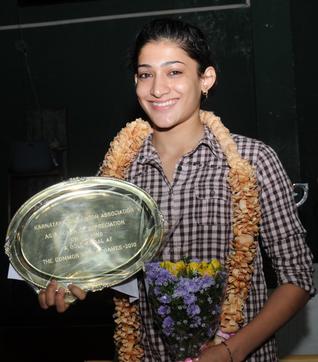
Ashwini Ponnappa

Ashwini Ponnappa commanded a price. The Commonwealth Games gold medallist (in the women’s doubles alongside Jwala Gutta) has star value and provided the glamour quotient to the inaugural edition of the Karnataka Badminton League (KBL). She fetched a whopping Rs 2.5 lakh for her appearance in the first week of the league, which runs from November 5 to 19.

“She has a star value and will keep the rest of the team motivated. That is why we bid for her,” says Vishal Vincent Tony of the Aratt Fighters, the franchisee that successfully bid for Ashwini. “Her presence in the team, even if it is only going to be for the league stages (Ashwini leaves for the Hong Kong Super Series on November 12) should do wonders to the morale of youngsters in the team. She is only participating in the mixed doubles category. We have also bagged Jacqueline Rose Kunnath, who commanded the second highest bid of Rs 1.06 lakh to play the women’s singles, there is no reason why we cannot do well,” says Vincent.

Beside the two women stars, Rohan Castellino was picked to provide the thrust in the men’s singles.

If Aratt Fighters spent huge sums on women players, franchisees such as Fly Power Warriors and Li Ning Lions did not invest on big names and instead opted for a balanced team. “This being the inaugural year, there was a lot of apprehension and uncertainty. We chose a couple of young guns to deliver for us and hopefully they will,” says Choudhary, a member of the Fly Power Warriors, for whom Rajas Jawalkar and Sindhu Bharadwaj will lead the singles challenge in the men’s and women’s categories respectively.

P. Kumar of Kumar Sports, owner of the Li Ning Lions, said: “Li Ning is the leading shuttle-cock manufacturer in China and is making its presence felt in the Indian market. This league could provide the perfect platform. We are happy with the team.”

Agarwal and Bhandari joined hands to form the AB Chargers and picked the top ranked men’s singles player, Mohit Kamath, alongside women’s player Mahima Aggarwal and doubles specialist Vineeth Manuel. “There were some hiccups but overall, I am quite satisfied,” says Bhandari after the players auction that lasted nearly six hours.

With Aditya Prakash and Prakash Jolly going to White Peacock and K2 Smashers respectively, one felt the Hennur Banaswadi Cosmopolitan Club (HB Challengers) were the ones to lose out, with just Rishiket Yeligar and B.S. Phalgun leading the challenge in the men’s singles. But Srinivasan (Secretary) and Krishna Kumar (coach), who once formed a strong doubles combination with George Thomas in the ’90s, felt the players would deliver. “We win some and lose some. It is a learning curve for us. We will be better equipped next time,” says Manjesh, who represented the K2 Smashers.

“There were too many caps,” was the general feeling and the phenomena resulted in active players like Poorvisha Ram and Ruth Misha going unsold. On the flip side were the withdrawal of the eighth team, Team Victor, from the fray and some internationally renowned names like Aravind Bhat and Anup Sridhar giving the league a miss for varied reasons.

source: http://www.thehindu.com / MetroPlus> Life & Style / by Avinash Nair / November 02nd, 2011

Thal and puttu

Community cuisine has entered the food scene in a big way, with restaurants promoting traditional flavours to attract customers.
After international cuisines — Chinese, Thai, Mexican or Italian — have dug their heels into the country’s metros, it is now the turn of community cuisines to capture the imagination of the eating-out population.

And instead of the usual State-centric fare like the Gujarati thali or the Kerala sadya, it is Bohri, Coorgi, Mudaliar, Kayastha cuisines that are in the limelight.

“Community cuisines capture the culture, tradition, geography, history and the quirks that regional influences bestow on the taste,” says Rajkamal Chopra, Executive Chef at WelcomHotel Sheraton. He and his team have been researching traditional cuisine in different communities, and flying in specialised chefs to promote those regional dishes.

Take South India’s Mudaliar community, which was one of the first to be showcased. Traditional kal chattis (mud pots) and vadakam (a mixture of onion, garlic and other spices) were used for that distinctive flavour of the community’s famous fish dish, Meen Kozhambu. For vegetarians, Vazhaipoo Vadai — vadas made using banana flower, Bengal gram and coconut — and yam dish Karnakazhangu Varuval were chosen. The non-vegetarians were treated to traditionally spiced lamb, Attu Kaal Kozhambu, and a host of other dishes.

To recreate the Dawoodi Bohra kitchen, Chef Ismail Khan was flown in from Mumbai. With the community’s roots in Yemen, the cuisine has many Arabic and West Asian influences. Bohra khichda (a delicacy made from mutton, wheat and pulses), kheema khichdi (minced meat pulao), Lagan ni seekh (layered minced meat made with onions, bread and topped with eggs), kheema samosa, mutton kaari-chawal (spiced coconut milk-based stew served with fragrant basmati rice topped with fried onions) were some of the specialities.

For the vegetarians, Dal Chawal-Palida was the main dish. Toor dal sauted with onions and tomatoes accompanies the basmatic rice and Palida is made from the stock of the cooked toor dal, along with either drumstick, bottle-gourd or sweet potato.

SHARING THE THAAL

Before adopting modern dining methods, Bohras would eat together from a large, round plate or thaal which was served with all the dishes placed on the shining platter. The diners – eight to a thaal– sit on the floor, and the circular thaal signifies that all are equal before Allah. This practice is followed even today during marriages and other celebrations. The thaal is placed on a round, elevated metal ring called the tarana, and each meal begins with a grain of salt, which is believed to clear the taste buds and allow better relishing of the flavours. The first, though not the only, item is a sweet and during feasts it is common to have as many as three desserts. No one can leave the thaal till every member has finished; else it is considered disrespectful not only to the rest of the diners but also the food.

The Bohras have many traditional sweets. Malida (sweet made with wheat and jaggery), Lacchka (cracked wheat halwa, usually made on the first day of the Bohra calendar), and Kalamdo (rice mixed with yoghurt, cream and sugar). Sancha ni ice cream (hand-cranked ice-cream) is a coveted dessert for special occasions.

Bohras also make a variety of soups to accompany the rice dishes. Some are cold, such as Kacchi Sarki (made with toor dal and garnished with cucumber, tomatoes, spring onions and beaten yoghurt), while the hot soups include Sarka (made from toor dal, groundnut and coconut).

PUTTU PARADISE

The Coorgi community too is known for its love of food and boasts a vast choice of traditional dishes. Largely rice eaters, they love a fragrant local variety — sannakki.

Rice dishes here come in multitude forms. Breakfast means an assortment of puttus (steam-cooked dishes). While Kerala puttus are of two-three types, the Coorgi ones include Kadambuttu (ball-shaped puttus), Thaliya puttu (flat puttus steamed on plates), Paaputtu (cooked with milk and shredded coconut), Nooputtu (noodle-like thread puttu), Od puttu (baked on a flat mud pan), Nuch puttu (made of broken rice), Madd puttu (made using a medicinal leaf), and Koovale puttu (made with ripe bananas or jackfruit and steamed in folded Koovale leaves or banana leaves). Wow, now isn’t that a massive variety of breakfast options?

Coorgis are essentially non-vegetarian. Pork is a hot favourite, cooked as Pandi curry and served with rice. Meat, chicken and fish are the other musts which are usually fried, roasted, grilled or made into curry. Meat and fish are also pickled by salting, smoking and drying, or turned into spicy chutneys that accompany rice. Just like in Mizoram, here too dried meat and fish are used during the long monsoon season, when people are mostly homebound.
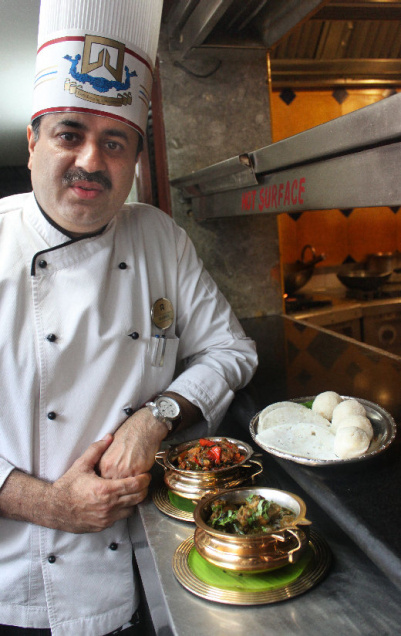

Chef Raj Kamal with Coorgi food

Coorg’s vegetable dishes largely owe to the abundance of forests in this fertile region. Baimbale curry is prepared from tender bamboo shoots, Kumm curry from wild mushrooms, Chekke curry from unripe jackfruit, Chekke Kuru curry from jackfruit seeds, Baale Kaamb curry from the stem of the banana plant, Kemb curry from the leaves of the colocasia plant, and Maange curry from raw mangoes. The basic ingredients in any traditional Coorg curry include coconut, ground with onion, garlic and a selection of spices.

NUTTY DELIGHTS

Food from the Kayastha community, on the other hand, is characterised by the generous use of ingredients such as almonds, cashew, and saffron. Rich as it may be seem, its reputation for being the most secular food in the country has given it high acceptance among foodies. Specialities of the Mathur community, this cuisine consists of dishes such as Badam Pasande (flat pieces of lamb cooked in an almond gravy), Takey Paise (besan rounds, that are fried and then curried), Yakhni Pulao, Kacche Kheeme Ke Kofte and Shammi Kebabs stuffed with mint and onions. The cuisine typically consists of red meats, an assortment of masalas, and lentils.

WelcomHotel Sheraton in the Capital, in fact, has made community cuisines its USP. While its Dakshin restaurant has been showcasing cuisine from South India, Bay Watch, its buffet square, has been experimenting with food from the North, East and West of the country. Delhi’s Rajdhani restaurant too prides itself on its community cuisines from the West.

A recent innovation is the use of SMS alerts for community cuisines. Often enough, messages pour in offering doorstep delivery of Kashmiri Muslim fare or Chettiar specialities. “And this is going to take the popularity of community cuisine to the next step,” says a die-hard foodie.

source: http://www.thehindubusinessline.com / by Preeti Mehra

‘Ekikarana’ movement: A timeline

The regions that make up for today’s Karnataka were under as many as 20 different administrative units with the princely state of Mysore, Nizam’s Hyderabad, the Bombay Presidency, the Madras Presidency and the territory of Kodagu being some of them.


* Under such circumstances, a need was felt among Kannadigas living in these various administrative units to form one state, which would unify all Kannada-speaking people in the various regions. This movement called the Ekikarana movement was led by litterateurs and thinkers.

* The Karnataka Vidyavardhaka Sangha was established in Dharwad in 1890. This was an important phase in the history of the unification movement. The Sangha was started by R H Deshpande who strove for the revival of Kannada in a region which was part of the Bombay Presidency where Marathi was the language of administration.

* It was later that the Kannada Sahitya Parishat (Bangalore) was set up (1915), which was another driving force in the unification movement.

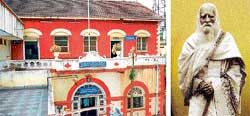
* Alur Venkata Rao was the leading light of the unification movement. The publication of his Karnataka Gatha Vaibhava in 1912 gave a huge push in terms of a mass movement. He was known as the Kannada Kula Purohita or the ‘High priest of the Kannada family.’

* The States Reorganisation Commission was constituted by the Central government under the States Reorganisation Act and consisted of Hon. Fazal Ali, Kavalam Madhava Panikkar, and HN Kunzru.

* The recommendations of the Fazal Ali Committee was ratified by the Parliament, which meant that several disparate Kannada-speaking regions would now come under the Mysore State.
n The State was formed on November 1, 1956.

n It was on November 1, 1973, under Devaraj Urs as chief minister that the Mysore State was renamed as Karnataka.

source: http://www.deccanherald.com /by DHNS / Home> Supplements> Spectrum / Tuesday, November 01st, 2011

India’s first ever camp-out music festival ‘Storm’


BANGALORE:

Liquidspace Entertainment has introduced India’s first ever camp-out music festival ‘Storm’ which will be held on 11-12 November in the hills of ‘Coorg’ in Karnataka.

The two-day music festival will showcase an eclectic mix of 37 artistes from across the globe performing on two different stages. The fest will include electronic band, artistes and DJs like Indian Ocean, Leslie Lewis, The Raghu Dixit Project, Swarathma, Richard Durand, Faridkot, Thomas Gold, Pearl, Nikhil Chinapa, Soulmate and others.

Storm – India’s first eco-conscious music festival is one of the unique initative undertaken to explore unseen territory, landscape through a full scale camp out music festival, in the hills. The fest with the support of artiste managers Submerge and The Syndicate aspires to encourage responsible tourism through its initiative against the usage of plastic and strictly adheres to a ‘No Drug’ policy.

Storm in association with Karnataka Tourism, MTV Roots, Timescity.com and Radio One, promises to stir up the urge to enjoy the music along with adventure and camping experience. The concept is a brainchild of Sachin (Director of Liquid Space Entertainment) and avin Uthappa (MD, Liquid Space Entertainment).

Speaking about the concept of Storm LiquidSpace Entertainment MD Lavin Uthappa said, “With a strong conviction towards preserving the environment, team-Storm takes the concept of responsible Tourism experience to a new level. This initiative is also to strongly address a few of present global concerns and doing our bit to prevent environmental degradation through innovative strategies and technology. Its a complete experience for all age groups, young or the old with multiple stages, food corners, a flea market, an adventure zone and camping area where each individual at the festival enjoy music, nature, food and adventure.”

The event has generated significant hype through social networking sites like Twitter and Facebook.


DJs at Storm Festival, Coorg 2011:

International DJ Line-up:

Richard Durand + Julie Thompson LIVE, Thomas Gold, Sied Van Riel, Anil Chawla & Dale Anderson, DJ SAN

Domestic DJ Line-up:

Breed, Pearl, Arjun Vagale (Jalebee Cartel DJ set), Sanjay Dutta, Clement, Vachan Chinnappa , Tuhin, Wayne Beck, Absolute, Chubby, Vishnu, Kay Mikado, Sekhar, Kalypso, Vilas & the Official Storm DJ – Swing

Bands at Storm Festival, Coorg 2011:

Indian Ocean, The Raghu Dixit Project, Lesle Lewis, Swarathma, Soulmate, Faridkot, Ankur & The Ghalat Family, Yodhakaa, Astitva, Agam, Aurko, Rishi inc, La Pongal, Airport, Projekt Square.

source: http://www.radioandmusic.com / by RnM team / Home> Editorial> News / November 01st, 2011

It’s all about Honey … HONEY!

Caption:

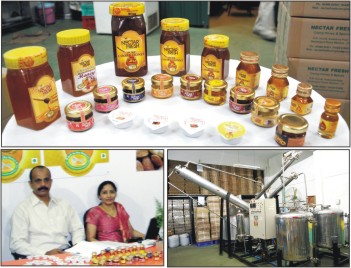
1) Some of the honey, jams and sauces produced by Nectar Fresh. 2) Chayaa Nanjappa with business partner Rajappa at Ahaar expo in Chennai. 3) The entire processing unit consisting of a container to feed honey to the settling unit.

They say ‘fruit of hard work is sweet’ and in this case it is metaphorically and literally sweet. Shall we call this a success story of a lone lady who made it big in the small scale industries sector or the growth of a brand which has today become one of the leading names in the field of honey? It is difficult to describe one without the other as this is the story of a lady who started a honey brand from scratch which has grown to great heights over the years. In this Weekend Star Supplement, SOM introduces its readers to this lady who says ‘If I could make it, then any other lady can

’ A flavour for every season

History:

Nectar Fresh was launched by Chayaa Nanjappa in 2007 at Bangalore and was backed by Khadi and Village Industries Board. Born on June 20, 1971 at Kodagu, Chayaa says, “I had a gut feeling and wanted to do something connected with my hometown. That instant I knew I wanted to start honey manufacturing and wanted to name it as Nectar Fresh.”

“The plant was doing well in Bangalore but due to some circumstances we had to relocate to Mysore in 2010.

Initially people said that Mysore is a small town and is not feasible for such businesses. But for me Mysore has been a lucky mascot. Most of the major deals were struck after we shifted here,” she says.

The plant was relocated to Kadakola near Mandakalli Airport when Chayaa partnered with Rajappa of MyStore.

Speaking about Nectar Fresh, Chayaa says, “We are one among the top 5 honey manufactures in India and are the only ones who are manufacturing different varieties of honey. Usually the Khadi and Village Board products are not considered as product for the high end markets. But today we have replaced international brands in hospitality sector under the Board. We have used their logo in our brand because it is the Board which has supported us. Also, there is a notion that business is only for the elite class who come from the same background or have the educational qualification for it. But we have proved this wrong. Anyone can do it if they have the survival instinct. Today we employ around 50 persons all over the country and around 20 in our Mysore plant.”

Chayaa, a PG Diploma holder in Mass Communication, underwent specialised training at Central Bee Research and Training Institute, Pune. She is also a member of the National Bee Board and is the first lady to have a honey processing plant in the country.

Process

The company has its mobile vans placed near the fields across India. Hence they are the only producers of a variety of honey in the country. They are also the first brand to launch honey blisters.

“Every month we have different varieties of honey according to the flowering season. This month it is acacia, clover and Himalayan honey,” says Chayaa, adding that lychee honey has the greatest demand.

Although Nectar Fresh has a wide network, it’s manufacturing unit is only at Mysore. The unit produces around 1,000 tonnes a day and is planning to increase it to 4,000 tonnes by procuring more equipment.

Processing plant: First, the honey is loaded into the container. This honey undergoes around 30 microns of filtration. It later undergoes moisture reduction and then again 2 microns of filtration. It is then cooled and sent to settling tanks. This will later be filled in containers and packed.

The brand has also started dealing with jams and sauces to help sick women groups. It aims to provide them with the technical knowhow and quality assurance and in turn market their produce thereby giving them a channel to avoid middlemen.

The processed honey is tested for quality at Pristine Laboratories, Bangalore and also at the units’s in-house laboratory.

Varieties

Nectar Fresh is known for its varieties in honey which include Coorg honey, rapeseed/mustard, eucalyptus, lychee, sunflower, Himalayan, acacia, clover, south Indian etc.

Market and export

Nectar Fresh today exports its produce to the Middle East, Malaysia and Australia. They will be looking forward to capture the US and European markets very soon.

The brand has replaced top international brands in India and today has a monopoly with the five star hotels.

“Previously we were not keen on our own private labeling and would supply in bulk and to the hospitality sector. But now we are entering the retail market also. We are the major suppliers to the Honey Society and are vendors for DFRL in city. Apart from this, ITC, Kerala Ayurveda, Taj group of hotels, Apollo etc., bottle their products here,” says Chayaa.

Mission beyond market

With an aim to be a leader in their business in India, Nectar Fresh is also seeing to offer its service beyond market. Apart from helping women with jams and sauces, they have empowered the locals around Kadakola region by providing them training and employment. They are also backing tribals by sourcing honey from the Sirsi belt.

The company is also associated with various charitable organisations helping girl child and Chayaa herself is a member of many women organisations in the country.

Competition

When asked about their major competitors in the market, Chayaa said “We have replaced many international brands including Australia’s Beerenberg Farm. In India, our major competitors are Kashmir Apiaries and Kejriwal Enterprises.”

Future

The company will soon be launching honey pouches with an aim to make honey available to even the lowest section of the society. The pouches are being prepared with the help of CFTRI. They will also be launching premixes of coffee and tea. The mix, which comes with milk, sugar and coffee/tea powder, can be prepared by just adding to a cup of water. With this the company plans to rule the Indian market and introduce Mysore and Kodagu to international customers.

Work hard and believe in yourself

I am not a feminist. But I support those women who work hard to stand on their feet. Most of the time, laws favouring women are abused and the most genuine cases do not have the privilege to use it. Hence, through our brand we intend to empower such women.

“Believe in yourself and have that never-let-go attitude. The success you achieve through this will give you a lot of self-respect rather than finding easy ways of making money.

“I have faced many hardships while coming this far. As a single woman, it was initially difficult for me to survive in this field. But that did not discourage me. With help from Corporation Bank, the government and of course from my business partner, now sky is the limit for Nectar Fresh. If I was able to achieve so much, then any woman can.”

source: http://www.starofmysore.com / Feature Articles / October 29th, 2011

Dubare Camp to host ‘ELEPHANT UTSAV’ on Oct 31st

Kushalnagar:
– Marking the 57th Wildlife Week an ‘Elephant Utsav’ has been organised by the District Forest Department and Wildlife Division on Oct. 31 at Dubare Elephant Camp.

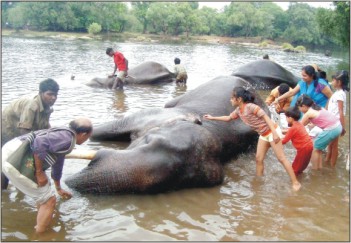
Briefing about the Utsav here yesterday, Kushalnagar Range Forest Officer M.M. Achappa said “the programme to be held from 9 am to 12 noon that day will feature various games for the tamed elephants housed in the camp. The elegantly decorated elephants will also participate in an eating competition. On the lines of Dasara, the elephants will be bathed in river Cauvery and after feeding will be caparisoned and decorated.”

Continuing Achappa said “the mahouts have been strenuously training the elephants in running race, football, eating sugarcane, obedience to masters, rescuing the injured mahouts and Kavadis from forest, group activities and a variety of other items which will surely enthral the tourists. The sprawling ground in front of the old Ins-pection Bungalow in Dubare has been readied for the Utsav which is aimed to subdue the elephant-human conflict and also bring in awareness on preservation of wildlife among the people.”

As part of the Utsav competitions have been arranged in quiz, extempore speech, painting and singing with special relevance to environment, forest and wildlife for students of schools and colleges in Somwarpet.

Madikeri DCF K.S. Anand, Wildlife DFO Motappa and Somwarpet ACF Prasanna Kumar are also expected to participate in the Utsav, according to sources.

source: http://www.starofmysore.com / General News / October 29th, 2011

Ahli-Sidab hog the limelight

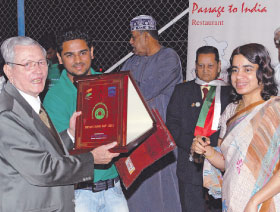
Dhyan chand celebrations: Guest of Honour Leslie Claudius receiving a memento from chief guest Swati Kulkarni, charge de affaires at Indian Embassy. Right, winners Ahli-Sidab Club with the trophy and dignitaries. – O.K.Mohammed Ali/ TIMES OF OMAN


MUSCAT:
Ahli-Sidab Club beat Coorg (Orange) 3-1 via sudden death to lift the trophy during the Dhyan Chand Day celebrations held at the Ahli-Sidab ground yesterday.

The hockey celebrations organised by the Indian Social Club Bhojpuri Club in association with Al Omaniya Financial Services and the Indian Embassy ended with an hockey exhibition by the school girls from Indian School Muscat and Indian school Al Seeb.

Ahli-Sidab and Team Coorg Orange both qualified for the final which was witnessed by chief guest Swati Kulkarni, guest of honour Olympian Leslie Claudius, special guests Hamad Hamad Al Ghafri, Mustafa Al Lawati, Mohammed Shambeh Al Raisi, hockey veteran S.A.S. Naqvi, officials from Oman Hockey Association, representatives of the sponsoring companies and a host of hockey lovers who cheered on their teams.

“It was a very exciting game, both teams played very well and that is how a good game of hockey should be played,” said Leslie, who also thanked the organisers.

The technical committee had ISC sports secretary Imtiaz Usman, Salih Thacher and Azra Aleem, who also had the spectators enthralled with their running commentary.

During the prize distribution Guest of Honour Leslie Claudius along with Charge de Affaires Swati Kulkarni and others handed the trophies to the winners, runners-up, and other individual stars.

Mohammed Ayad from Ahli-Sidab was declared the best goalkeeper where as the best defender was Nadeem from UTSC.
Taking the best forward award was Mobin from Team Coorg Orange.The Man of the final for his outstanding display of hockey was Shankar from Team Coorg Orange and the biggest award of all the Man of the Tournament was handed over to Saleh, who represented Ahli-Sidab.

The tournament was sponsored by Al Omaniya Financial Services, Passage to India Restaurant, Natural Stone LLC, Raha Poly Products, Sadolin Paints, Al Ansari Group of Companies, Air India, Purshottam Kanji Exchange, Al Taqdeer Fashions and Gulf Cricket Academy.

Speaking after the tournament, Mohammed Irshad, the convener of the Bhojpuri Wing, said: “We have been organising this special day every year and I thank all those who have come forward to support the event. I also extend my thanks to Team Coorg, UTSC and Ahli-Sidab for making the day memorable.”

Mohammed Irshad also mentioned that he was honoured to have Olympian Leslie Claudius as the guest of honour this time.
“He (Leslie Claudius) was kind enough to oblige and accept our invitation to be part of the Dhyan Chand Day programme,” he said. “I must also acknowledge the moral support provided by the Indian Embassy.”

source: http://www.timesofoman.com / Times News Service / October 29th, 2011