All posts by admin

Dance workshops to be held in September

New York , USA:

Several New York City dancers are headed upstate to share their knowledge.

Dance workshops will be held on Sept. 9 and 10 at Adirondack Repertory Dance Theatre at 126 Glen St.

On Friday, Lisa Higley and Wilson LeBron from New York City will teach a hip-hop class from 7 to 8:30 p.m.

On Saturday, from 1 to 2:30 p.m., Heather Rigg, an instructor at Broadway Dance center in Manhattan, will teach a jazz class.

Then, from 3 to 4:30 p.m., Pavan Thimmaiah, the founder of PMT House of Dance in New York City and an instructor at Alvin Ailey, will teach a hip-hop/funk class that infuses break dancing.

A request to attend should be sent via email at info@glensfallsardt.com

The cost for the workshop is $50, and checks should be sent to 126 Glen St. (P.O. Box 2405) in Glens Falls. Money must be received by Sept. 1, or you can register at the studio from 10 a.m. to noon Sept. 3.

source: http://www.poststar.com / Glen Falls Post Star / Home> Lifestyles/  by Staff Report / Wednesday Aug 16th, 2011


Zen and the Art of Indian Hockey’s Maintenance

New Delhi:

India’s latest foreign coach Michael Nobbs is a believer in karma. Sprinkling his analyses generously with Buddhist spiritualism, the 57-year old Australian realises the tediousness of the task ahead of him at the national camp underway at Bangalore. While winning the players’ trust is his aim, developing a workable roadmap for the sport’s resurrection in the country is his single-minded ambition, writes Uthra G. chaturvedi

‘When you lose, do not lose the lesson.’

The Dalai Lama has nothing to do withIndian hockey. With its lack of stars and success alike, the sport these days doesn’t even merit a recognisable name among its most devoted followers. Yet, the spiritual figure may well have been speaking of the team when he spoke those words. At least, Michael Jack Nobbs believes so.

As the newest coach of Indian hockey, Nobbs knows what he is up against when he walks out to the training ground at the Sports Authority of India’s Bangalore centre every morning — a long string of losses, a longer list of lessons. Armed with a five-year contract to pull Indian hockey out of the seemingly bottomless pit it has dug itself into, Nobbs is aware that how the next 60 months pan out will depend largely on what happens in the next six.

“The immediate target is the Olympic qualifiers, no doubts about that,” he says of the February 2012 test, even as the 48 probables – divided into two groups – who he will be relying on to achieve that, warm up and cool down in the background. “But I am a firm believer in karma. What goes around ultimately comes around. It’s a cycle that cannot be broken. If enough hard work is put in, the results are bound to come. When they do, is another matter. But success cannot be denied to those who seek it with full dedication,” he adds, striking a spiritual tone that’s more Indian than his native Australian.

In their first training schedule under Nobbs, the Indian hockey players are least bothered about the new coach’s beliefs. Sweating it out on the turf for an average of five hours every day, it is more important for them to get the basic facilities that will increase their performance and output in competition. And for that, they are wary, but willing to give Nobbs a chance.

Progressively cautious

The wariness is understandable. Nobbs is the fourth foreign coach to join the team in eight years and the tenures of each of the previous three have made players progressively cautious. If Gerhard Rach was the target of collective contempt, Ric Charlesworth was shooed away by the establishment even before the players could know what he thought. Jose Brasa walked into a welcome full of doubts, but he managed to make players comfortable. And by the time he left, most of them treated him as an elderly figure they could trust, both personally and professionally; and were eventually sad to let go.

Nobbs is as yet an unknown entity. His methods are yet to be clear to most players, and his plans are yet to be fathomed, or accepted. “We are happy that he has a long-term contract. But it’s been less than a month of training under him. It’s a two-way street. He needs time to know us and we need time to understand him,” says Arjun Halappa, among the senior-most players in the current squad.

There is also an uncomfortable feeling among several players that Nobbs’ appointment with Indian hockey had a lot to do with the backing he had from the Punjab lobby, and so he is perhaps closer to them. “There are many factors at work here at the moment. We will only know about how serious he is and how much of an independent authority he wields after the Asian Champions Trophy, the first tournament he will be in charge of. Till then, let’s face it, there will be doubts. The history of groupism in Indian hockey forces us to be wary,” a player says.

‘Show me the money’

Nobbs, though, knows where he wants the players – on posters, hoardings and magazine covers. “They are the public face of the sport. They sell the game, they bring in support, they bring in the fans and the next generation of players. They are the heroes. Most importantly, they are the ones who will bring in the money. And, let’s accept it, money is very important. Why would anyone play a sport if there is no money,” he asks. “I want the players to own the team. When you feel ownership of something, you work hard to preserve it,” he adds.

Unfortunately, this is precisely what Indian administrators have always tried to stifle. Making players into heroes is abhorrent to the hockey establishment in India. “I don’t think that will happen. If a player wants to go for a couple of days between training for a personal assignment, something that is legal, will raise the profile of hockey and help the sport in the long run and bring in public attention – I won’t stop him,” Nobbs says. Is that an allusion to IHF’s World Series Hockey? He refuses to say, but smiles lightly before adding, “Players like Sandeep, Sardar, Adrian are an asset to any team. I won’t want to lose them,” he says, hinting at a pro-player approach.

At the same time, he knows he will have to draw a line. It’s an easy trap to fall into — when players become stars, they sell the sport much better. But then, they try to hold on far too long because of the perks. “You cannot ignore them either because they are seniors. That kills a large part of the next rung. When they go, the third rung is thrown straight into the deep end. The team then starts losing and the sport’s profile goes down. It takes a few years to get back on top,” he explains.

That’s what happened to Australian hockey at one point. That’s what also happened to cricket in Australia. “When do we push the middle rung to the top and ease out seniors, striking that balance will decide who stays on top for how long,” he adds.

Emphasis on fitness

Irrespective of how they wield their sticks, strategically placed cones are what define every session during training — running around them, sprinting between them, touching base with them at various speeds. Nobbs’ emphasis on making fitness a priority has got a definite thumbs-up from the players.

Already, most admit to feeling better when they step on to the field. Exercise physiologist David John, specifically asked for by Nobbs, has profiled all the players and worked out training schedules for them. “Fitness needs to be upped. A lot of players have been complaining of being tired, and that’s a good thing. It means things are on the right track,” Nobbs says.

Likely to rejoin the camp over the weekend, John’s training methodology is spoken of highly by them. Sometimes, players are asked to try and hold back their training partners from running away – to build resistance. “The exercises he has designed do not get boring. At the same time, our agility has increased. The sooner he comes back, the better,” is the common refrain from all the players.

The skills aspect, though, is not being ignored. Players often play 3 or 4 to a side in a small area – less than a quarter of the turf – and are supposed to pass to their team mates without losing the ball. At last count, they had managed to hold on to it for 17 passes.

An Olympic dream

“Indian players are skillful, up to international standards. They don’t need to be told about the skills part. I am trying only to assess their individual levels,” he says as players wrap up the day’s session and head for a swim.

Before leaving, Nobbs wants to reveal his one wish. “One day, I want to see the Indian hockey team on the top of the podium in the Olympics, even if I’m not the coach,” he says.

“I want to experience Indian hockey’s triumph as a spectator from the stands and feel the satisfaction that I had a little part to play. And it will happen. Remember karma? If anyone deserves success for their hard work, it is these boys.”

In The waiting line

The National Championships in Bhopal may not have been the treasure trove of hidden talent that was expected, but the tournament did give a number of players a chance to be part of the national camp and try to impress the team management.

Banmali Xess: The youngster from Jharkhand was named the best forward at the nationals, and with good reason. His passing and ball control was unlike anyone else in the competition — including some of the biggest names — and there was hardly an occasion when he had the ball and failed to penetrate into the D. But inexperience meant he ended up muffing a lot of chances. His presence would push the seniors to look nervously over their shoulders, which is a good thing.

Prabhdeep Singh, Ramandeep Singh and Akashdeep Singh: Part of the Punjab team that finished with a bronze in Bhopal. The triumvirate were instrumental in Punjab’s advancement to the semifinals in the Senior National Hockey Championships. And even in a team that had several big names in its ranks, the youngsters managed to hold their own, impressing with their skills. Raw and still to develop, the big-match strength and temperament.

Chinglinsana and

Kothajit Singh: The Manipuris are the few remaining players from the state on the national stage that once gave Indian hockey some of its toughest players. But while Kothajit manages to hold up the mid-field play for his employers Indian Oil, Chinglinsana, with his immense speed and a gymnast’s agility, is a potential striker. At 21, Chinglinsana also has age on his side and so far during training, has managed to hold his own with the seniors.

Nithin Thimmaiah and Pradhan Somanna: Two exciting prospects from the traditional nursery of Coorg. Good on the wings and keen students of the game and quick learners. Need to add strength and stamina to their skills. Regulars for Karnataka at the age group level, both caught the selectors’ eye during the recently concluded National Championships. A fantastic attacking combination for the future, both are keen to hone their skills as flankers.

Dharamvir Singh: Once considered an exciting India prospect only to gradually fade away, the Punjab forward has managed to raise himself back into contention with decent domestic performances. He was the key to Punjab winning the bronze medal at the Nationals and despite the couple of years that he has lost, his intensity during training proves he means business this time around.


Kamaldeep Singh: No one in Indian hockey has made a comeback after being out in the wilderness for five years. That’s more than their entire international career for many players. But for someone who was always considered a talent, even if a little raw, Kamaldeep was banned for a year after a violent incident during the PHL. He perhaps owes this one chance to himself

source:http://www.expressindia.com / by Uthra G. Chaturvedi / Aug 14th, 2011

Nidhi Subbaiah is Ambassador for MM

Nidhi Subbaiah Ambassador for MM

The sprightly actress of Kannada cinema Nidhi Subbaiah is the ambassador to Mysore Marathon race that is kick starting on Sunday, October 2nd at Mysore as part of the Dasara Festivities.

It is at the world famous Dasara festival in Mysore this Mysore Marathon is taking place in which tourists to Mysore are allowed to take part says Shelesh Krishnan, Director. Life’s Calling Sports.

LCS is a sports management company is the promoter of ‘Celebration Run Series’. The avid sports enthusiasts are part of this event who hails from strong educational background.

The race management team has professional people who have conducted Marathon and Cycling Events in India and in the United States and look forward to bring in their expertise to the Celebration Run Series so as to give the Indian Sporting Community a truly world class running experience.

source: http://www.supergoodmovies.com / Aug 05th, 2011

Indian Cricket: Heaps of Money

Cricket coin tossIndia’s cricketers have been deafened by howls of derision after their latest defeat by England in a four match Test series.

Sunil Gavaskar, a former Indian batsman, said his countrymen were playing like “schoolboys”. Geoffrey Boycott, a former English cricketer, called their performance more befitting Bangladesh than a team currently ranked No.1 in the Test tables.

Before we feel too sorry for India’s struggling cricket stars, we should remember that they are paid for success and vicissitude alike.

Research by the Times of India, a daily newspaper, shows that some of India’s top cricketers are paid as much as the world’s most richly rewarded footballers  while the annual, seven week Indian Premier League is in full flow.

By the newspaper’s calculations, during the IPL, Gautam Gambhir, an opening batsman who plays for the Kolkata Knight Riders earned more than Lionel Messi, the Argentinian striker who plays for Barcelona. Gambhir’s earnings during the tournament put him in pro-rata touching distance of Cristiano Ronaldo, the Portuguese and Real Madrid player.

Cricketers Yusuf Pathan and Robin Uthappa match the incomes of Fernando Torres and Yaya Toure.

India’s cricketers have been roundly criticised for prioritising the IPL over Test cricket, and losing Test match form by doing so.

Yet the financial incentive of high paying cricket is hard to resist. Their choice is to miss out on payday in front of adoring home crowds in preference for honour at Lords and Trent Bridge, famed cricket grounds in England.

The dazzling money made in Indian cricket is attracting attention, both on and off the field.

The Indian parliament’s Standing Committee on Finance has asked the Indian tax department and the Reserve Bank of India to investigate the finances of the Board for Cricket Control in India, the game’s governing body, and the IPL.

A report by the committee submitted to parliament this month complains that the game is “embroiled in transgressions off the field”.

It warns that the tax department has been too lenient to the Board of Control for Cricket in India, which benefitted from tax exemptions in spite of the growing commercial success of the game.

India’s cricket establishment faces a tough contest in England this summer at the hands of a formidable bowling attack; when it returns home it may find as greater encounter with the tax man.

source: http://www.blogs.ft.com / by James Lamont / Aug 05th, 2011

http://blogs.ft.com/beyond-brics/2011/08/05/indian-cricket-heaps-of-money-spins-heads/#ixzz1UH4s9Qnl

‘Kakkada Padinett’ in Kodagu Yesterday

‘Kakkada koli’ and ‘madd payasa’ are the delicacies prepared on this day

BRISK BUSINESS: People purchasing ‘madd toppu' in Madikeri on the eve of the ‘Kakkada Padinett' festival in Kodagu. 

BRISK BUSINESS: People purchasing ‘madd toppu’ in Madikeri on the eve of the ‘Kakkada Padinett’ festival in Kodagu.

“Kakkada Padinett” , the 18th day of “ Kakkada”month in Kodava calendar in Kodagu, which falls on Wednesday (August 3), is eagerly looked forward to by the people.

They consume porridge made of the essence of “madd toppu” or “ aati soppu” , a wild aromatic herb, to perpetuate one of the traditions of the district. People will throng the places where the herbal plants are sold in markets. It is also called as “ Kurunji toppu” in some places in the district. The leaves come along with the slender stems of the plants.

Sellers of “ aati soppu” dot the main streets of Madikeri on the eve of the celebrations. On the 18th day of the “ Kakkada” month, these leaves are said to be replete with 18 types of herbal medicines. They are plucked and soaked (some boil it) in water to extract the aromatic juice, which is thick and dark violet in colour. Women make cakes or sweet porridge out of the mix. Surprisingly, on the 18th day of “Kakkada” , the plants start emitting a sweet and unique aroma that is not found on the plants prior to or after the 18th day. The traditional beliefs and social mores are very strong in Kodagu. “ Kakkada” is a month in the Kodava calendar beginning in mid-July and ending in mid-August. It is said to be inauspicious. Marriages and other celebrations are a taboo in Kodagu, especially for Kodavas, during this month. Many do not even get haircuts.

Monsoon is associated with several rare occurrences in Kodagu. It is the time when fresh natural mushrooms emerge on the termite hills, banks of paddy fields and in forests. “ Baimbale” (bamboo shoot) or “ Kanile” is the other delicacy enjoyed by the people of Kodagu in rains. Though the Forest Department has imposed a ban on its collection from forests, it is available aplenty in the market and sold in the open. The drying up of the bamboo clumps in forests has made “baimbale” a scarce commodity in Kodagu this year. Consumption of both mushroom and bamboo shoots are said to balance the body temperatures during heavy rainy and windy days, elders say.

“Kakkada koli” (country fowl curry) is also a special delicacy in the district on this day.

This occasion used to be observed as a feast in Kodagu in the past.

Currently, people in almost the entire district involve themselves to eat “ madd payasa

source:  http://www.thehindu.com / National > Karnataka / by Staff  Correspondent /  Mysore, Aug 03rd, 2011


Joshna Chinappa in an Audio Launch

Joshna_Chinappa

It was a big surprise for both sports and film fields. Reason – the presence of ace Squash player Joshna Chinappa at an audio launch of a Tamil film.

The famous Squash champion was the chief guest of the audio launch function of ‘Puli Vesham’ that was held recently in the city. Industry was raising their eyebrows how they brought in Joshna, who always stayed away from films and film functions, to this audio launch. When quizzed, the champion said, “It is only for the director P. Vasu I agreed to be the chief guest and attended the function. I knew him as a famous director. His ‘Chandramukhi’ was one film that I enjoyed a lot. I hardly watch films, and this film is one of my favourites among those few that I have seen in my life”.

‘Puli Vesham’ features RK and Sadaa in the lead roles and directed by P. Vasu.

source: http://www.filmics.com / Monday Aug 01st, 2011

Elizabeth Israel Announced as ADAM Architecture Travel Scholarship 2011 Winner


Elizabeth Israel, a recent graduate of the University of Notre Dame School of Architecture, has been awarded the 2011 ADAM Architecture Travel Scholarship. Now in its sixth year, the scholarship enables ADAM Architecture, the UK-based firm specialising in classical and traditional architecture and urbanism, to support and reward outstanding research. 

Her research proposal on European-settled hill stations in South India was a clear favourite with the judging panel, which included Robert Adam and George Saumarez Smith, directors at ADAM Architecture, Prof Georgia Butina Watson, Head of the Dept. of Planning at Oxford Brookes University and WAN’s own Editor in Chief, Michael Hammond.

Elizabeth plans to investigate a regional network of hill stations for patterns in the urban morphology, particularly with regards to environmental and cross-cultural conditions. The Indian hill stations were high-altitude towns formerly developed by Europeans as summer retreats. She plans to explore what urban types evolved from the exchange between the European settlers and the local Indian peoples, as well as analyze how the urban space and architectural language engaged the topography, climate, local materials, and traditional building methods.

Her study will focus on seven hill stations in the South Indian states of Kerala, Tamil Nadu, and Karnataka, including Srinagar, Coorg, Ooty, Coonoor, Kotagiri, Kodaikanal and Munnar. Other possible sites may include Wayanad, Nelliyampatti, Devikulam, Peermada and Ponmudi. These sites were chosen because of their historical significance, regional proximity and similarity in environmental conditions. She plans to travel to India during December 2011 and January 2012.

Elizabeth, a native of Indianapolis, Indiana, earned a Bachelor of Architecture in 2011 from the University of Notre Dame. She will be pursuing a Masters of Architectural History at the University of Virginia, beginning in fall 2011.

source: http://www.worldarchitecturenews.com

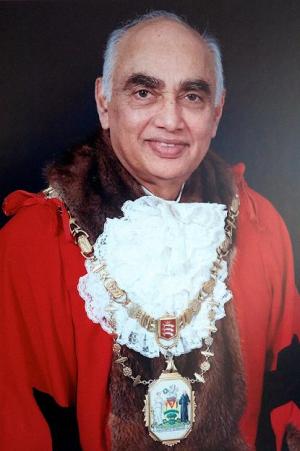
Funeral Held for Keeki Thammaiah, Harrow Council’s first Asian Mayor

A PACKED funeral service was held for a former Labour councillor described as a “true ambassador of Harrow” yesterday.

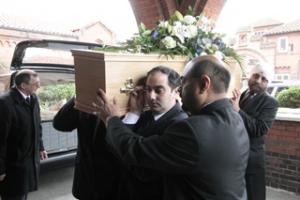
Packed funeral service for Harrow's first Asian mayor

Packed funeral service for Harrow’s first Asian mayor

Former Queensbury ward councillor Keeki Thammaiah, 76, passed away following a heart attack on his sofa while his wife Naila made dinner in their kitchen last Monday evening.

The former Wembley High School teacher was elected as a councillor in 1992 and served the borough up until the elections last year, when he stepped down.

He was appointed mayor in 2000 and during his time on the council also sat on licensing and planning committees.

He was born in Coorg, in South India, and came to Britain in 1964, teaching maths at Wembley High in the Seventies before moving on to City of Westminster College in 1985.

London Assembly member Navin Shah spoke at the service referring to Mr Thammaiah as an “elder brother.”

He said: “He was a laid-back, quiet person with a smile and a glint in his eyes. For Keeki there were no long speeches, no aggression, no controversy, wherever Keeki went as the mayor he gave measured and short speeches in his own inimitable style.

“He was respected and loved and naturally carried himself as a true ambassador of Harrow.

“Keeki’s achievements and his contribution to the community are a matter of pride and celebration.”

Former Harrow mayor Alderman Keith Toms knew Mr Thammaiah for 20 years.

He said: “He was so honest and related so well to the public. Harrow became a better place because of him but he did things quietly.

“Keeki stood out simply for all the things he did to improve the area but he never did it loudly.

“He was very laid-back, unruffled and so dependable.

“He achieved everything through quietly working within the community and laying the foundations for a better area.”

Mr Thammaiah is survived by wife Naila, son Ponnu, granddaughter Sonali and grandsons Adit and Alok.

Son Ponnu, 38, was one of the pallbearers carrying his father’s coffin yesterday.

He said: “I was so touched by everybody. The visitors and messages have been non-stop.

“I was living at home when he was mayor and we are so proud of him and the work that he did.

“There was a great turnout for the funeral so thank you to everyone who came and who has supported us at this time.

source: http://www.harrowtimes.co.uk / by Suruchi Sharma / Tuesday Apr 05th, 2011

Keeki Thammaiah, Harrow Council’s first Asian Mayor, Dies

Photograph of the AuthorBy Jack Royston »


  • Keeki Thammaiah, Harrow's first Asian mayor, passed away this morning.
  • Keeki Thammaiah, Harrow’s first Asian mayor, passed away this morning
  • A “KIND hearted” former Labour councillor and Harrow’s first Asian mayor died at home yesterday evening.

Former Queensbury ward councillor Keeki Thammaiah passed away aged 76 on his sofa while wife Naila made dinner in their kitchen at around 6.30pm.

Councillor Bill Stephenson, leader of Harrow Council, described him as a “beacon”, while Navin Shah, London Assembly member for Brent and Harrow, said: “He was really very kind hearted, softly spoken and really laid back.

“He was loved right across the party divide, that’s why he also became a very effective and good first Asian mayor in Harrow.

“That feat in itself is remarkable, it was the first ever acknowledgment in Harrow of the diversity that we have had.

“I proposed he be the mayor. We were very close, I saw him as being like my older brother.”

The former Wembley High School teacher was elected as a councillor in 1992 and served the borough up until the elections last year, when he stepped down.

He was appointed mayor in 2000 and during his time on the council also sat on licensing and planning committees.

He was born in Coorg, in South India, and came to Britain in 1964, teaching maths at Wembley High in the 1970s before moving on to City of Westminster College in 1985.

Councillor Mrinal Choudhury, the current deputy mayor, spoke to Mr Thammaiah’s wife just hours before his death yesterday and was supposed to visit his former colleague today.

He said: “He left a message on my phone yesterday just to say ‘can you come and see me’. This morning his son called me. We were very close.

“I just went to see his wife this morning. He died while he was sitting on the settee. He was talking to his wife. She went to the kitchen to prepare some food.

“She came back to find that his eyes were up and she called the ambulance.”

Cllr Stephenson, current leader of the Labour Group, said: “He was a tremendously popular person.

“When he was mayor he always got on well with everybody. It’s a really sad loss. Keeki was a beacon, he was a very popular mayor, very well liked across both parties who have great regard for him.”

Councillor Husain Akhtar (Cons/Cannons) said: “I always found that Keeki and his soft smile were inseparable.

“I looked for that smile this morning when I visited his home but it was not there. I’m very sad that he is not with us any more.”

He is survived by wife Naila, son Poonu, granddaughter Sonali and grandsons Adit and Alok.

source: http://www.harrowtimes.co.uk / by Jack Royston / Tuesday Mar 29th, 2011

A Tribute …: Remembering an Indian Mayor in England


Keekira A. Thammaiah, who was the first Asian Mayor of the Harrow City, London, passed away on Mar. 29, 2011 in London. He was my contemporary in Bangalore from 1960 to 64 while practising Law, though senior to me. While in Bangalore, we were very close friends and when he left for London, we were in touch with each other through letters, Christmas, New Year greeting cards and whenever he came to India. 

While I was in London in 1992, he hosted a dinner at his house where he had invited two MPs and some Labour Party friends of his, he himself being a La-bour Party North Harrow Council Member. Later, once again while I was in London, I had an opportunity to spend some time with him and he was the Mayor of Harrow at that time.

I remember the evening I was having dinner in his house with other friends over drinks when I had a call from Mahaguru Yogi Arka of Mysore, who was camping in London at that time, as anticipated asking me to meet him. Since we were partying, we were already into our third peg of whisky and I was in a dilemma if I should go and meet Yogi Arka, who at that time was on the ascendance on his path to the stature of a Godman. I sought Thammaiah’s advice and with his trademark smile on his visage said, “Well, don’t worry, the place is just five minutes drive from here.”

He volunteered to drive me to the place, assuring me that visiting the Yogi after consuming alcohol should not be a problem as Rishis of ancient India were known to enjoy Somarasa and Bhang, which are intoxicants.

Naturally, in his passing away, I have lost a very good friend. Immediately, I wrote a letter of condolence to his wife Naila and son Ponnu.

Acknowledging my letter, they sent me an e-mail giving me some more information about the last journey of my friend.

As in life, so also in death, he was well-honoured by the community people, friends and politicians as well. His civic funeral was attended by a large number of people, dignitaries, Mayors, MPs and the media.

He was elected President for the forthcoming World (Europe) Kannada Conference to be held in London in August 2011. He had hosted a meeting at his place in this connection just the day before he passed away.

His wife Naila sent me a copy of the tributes paid to Tham-maiah (known among Coorgs as Thammy) by Kodagu Association of UK and also by Kannada Balaga of UK, which is being produced below:

The tribute

Born: 10.02.1935 Died: 29.03.2011

Late Mr. Keekira Thammaiah was born in Birunani, Coorg, India. He did his schooling in Coorg and Pre-University (A levels) at Government College, Bangalore.

He went on to do his Bachelors in Arts at St. Joseph’s college, Bangalore.

Whilst at University, he displayed his leadership qualities and political ambition by becoming the ‘President of Students Union.’

He pursued his education in Bombay at University College, Bombay and obtained M.A & LLB between 1957-60. At the University, he was the Chairman of the Students Union.

He returned to Bangalore in 1960 and was an Advocate at the Bangalore High Court until 1964 when he moved to United Kingdom to do Bar exam. He married Naila in 1971, who would be for the next 29 years, his pillar of support.

He went on to be a Lecturer in Business Law at West-minster and other colleges.

He was elected as the Labour Councilor in 1994, Deputy Mayor of Harrow in 1999 and became the first Asian Mayor in May 2000.

He was very active in his community and took his civic duties very seriously. He raised considerable amount of money for the Northwick Park Hospital Children’s wing (£20,000) and was the Governor of 3 schools in Harrow.

He rubbed shoulders with royalty in that he met the Queen three times, had tea with Princess Margaret and spoke at the Parsi community gathering in the presence of Prince Edward & Sophie.

He retired in May 2010 after 20 years service to the local community. His friends fondly called him ‘Keeki.’

He is survived by his loving wife Naila of 30 years; Son: Ponnu; Daughter-in-law Sunali and two young grandsons Adit and Alok.

Funeral service was held on 4th April, 2011 at 12.00 pm at Golders Green Crematorium, Hoop Lane, London, NW 11 7 NL.

Mourners joined the family for refreshments afterwards at Members Lounge, 1st Floor, Civic Centre, Harrow, Middle-sex HA1 2XY.

Memorial donations in memory of K. A. Thammaiah may be made to Diabetes UK, 10 Parkway, London NW1 7AA.

source: http://www.starofmysore.com / by K.B. Ganapathy