All posts by admin

More from Dr. SMITH’s DIARIES…..


Dr Smith was worried that the widespread destruction of the forests on the banks of the Cauvery, especially in Coorg, would ultimately kill the river, and turn Mysore into a desert like what had happened in Palestine.
He objected to the fact that every month, five Europeans were moving to Coorg, each with 150 acres and already 20,000 acres of forest had been taken over by coffee!  He felt that this was happening to Bangalore too, and spends 10 pages of his diary regretting the destruction of the forests around Bangalore. As he notes in 1849 “it is the opinion of the Superintendent of Nuggur that clearance of trees diminishes the quantity of rain”, and expresses concern that the groundwater springs that feed the tanks and lakes of Bangalore, and could be found as shallow as 50 feet below the surface, and exist among the rocks at a height, seemed to depend on the thick forests around NandiDroog and would be affected by the depletion of tree cover. 

He toured the countryside extensively, with Mark Cubbon in 1839, 1840 and 1849. They travelled long distances on horseback and elephant, between 300-700 miles each time, over several weeks, but with a large retinue.

On one trip the party is affected by cholera, and several die; while on n another one he is accompanied by his wife and child, and goes all the way to the top of Doddabetta. He describes the various temples and small villages of ‘great beauty’ and on yet another is awed by the carvings at Bailur (Belur). The Malnad comes in for special comment as it is seen to be extremely beautiful, with lots of parrots and birds, and well stocked with game (good shooting!), and they are even ‘surprised by a tiger’.


source: http://www.deccanherald.com/ by Sanjeev Jain and Pratima Murthy /


Its Time for Dahlia in Kodagu Districy


The courtyards of almost all the houses in Kodagu have been brightened with colourful dahlia flowers months after the onset of rainy season. Dahlia flowers of various colours have started blooming in front of houses attracting visitors.
Different varieties of dahlia flowers found in Kodagu district. DH PhotosGarden lovers start planting dahlia saplings during the onset of rainy season. The flower, which gets rebirth every rainy seasons, start blooming within a month. It does not require any extra care to grow dahlia flowers in the garden. The very speciality of dahlia is that its flowers are not only attractive and colourful, but also are dfferent in terms of size. 

There are many types of dahlia species and each one is different from another. It is said that the plant was introduced to India by a Swedish Botanist Doll in 1789. Kodagu district is famous for the dahlia flowers as it can be seen in majority of houses. People of Kodagu are fond of dahlia flowers that they collect different types of dahlia from their neighbourhood during rainy season. It is very easy to grow dahlia that either a piece of root or stump is enough to reproduce it.

A dahlia plant grown from its root gives flowers of bigger size. A combination of sand and soil will be suitable for the dahlia plants to grow. The plant will give more flowers, if organic manures were used. Timely pruning will make the plant more strong and also will produce more flowers.

“More flowers can be obtained from one plant alone, if it was taken care properly. March-April months are suitable for dahlia plantation. The roots can be preserved in soil after the season so that it can be transplanted in the next season,” says Gayathri Raveendra, a resident of Napoklu.

source: http://www.deccanherald.com / DH News Service / Madikeri / Aug 15th, 2010


Kodagu Witnessing Rich Literature

”Kodagu district is known across the country for peace and harmony. There is no discrimination on basis of language here in Kodagu,” said Litterateur and critic K P Balasubramanya.
Delivering the presidential address at the 8th Kannada Sahithya Sammelan at Murnadu on Thursday on the topic ‘Literature over the decade in Kodagu district,’ he said that though people from different castes and communities have been living in Kodagu, it has not had any adverse impact on the communal harmony here. 

“Kodavas are peace lovers and they are soft spoken,” he said opining that communal disturbances have always occurred in various parts of the country due to political instigation. “Since people of Kodagu are untouched by religious differences, Kodagu has been witnessing superior literature,” he said.

He pointed that over the last 10 years good analytical piece of writings and poems have been produced. “Scope of literature is vast and never ending. One can never complete reading and analysing literature,” he said.

Virajpet First Grade College Assistant Principal Dr Korana Saraswathi said that research is nothing but search for knowledge or thirst for knowing more. “Research should be based on truth and should take place within scientific frame work,” she said.

“Research can be done with various objectives but the main aim of any research is to find the truth and expand intellectual horizon,” she said adding that sincerity is the most important aspect in research.

Tribal literature

Dr J Somanna from Vijayalakshmi Pre University College said that tribals are those set of vagabonds who have developed their own culture and literature out of their distinct way of living.

“The tribals have been living a life of exile literally, saving themselves from the invasion of modern culture. Living in isolation from the outside world, these tribals have their own language, culture, rituals, belief system, way of worshipping, attire, literature, cope up mechanisms etc. They with such a way of living look unusual and peculiar to the urban population,” Somanna said adding that 60 years of independence had not changed anything for the tribals of the country.

“Sincere efforts to convince the tribals to adopt the natural, inevitable changes happening in the society has not taken place so far. The result is that majority of tribals still live like animals. There is a need to understand the tribal lifestyle, respect their culture and then bring in necessary measures to bring them into the mainstream,” he said.

source: http://www.deccanherald.com / DHNS / Madikeri / Apr 01st, 2011

Saving Kodagu District’s Forests

Kodagu district, the micro hotspot of biodiversity along the Western Ghats is considered one of the eight hotspots of biodiversity in the world.
Degradation of natural forests, loss of tree cover and diversity, depletion of ground water resources, economic instability due to continuous and persistent negative impact on the mainstream activity of coffee cultivation in the form of low prices, crop loss, labour problems, increasing human elephant conflicts, land use changes, are some of the pressures calling for attention to save this landscape.

A group of likeminded people and organisations who are stakeholders and are aware and involved in conservation activities came forward to form an organisation which culminated in the Kodagu Model Forest Trust (KMFT).

An eight-pronged strategic plan to address the issues was prepared and programmes designed to rejuvenate the social, cultural, ecological and economic stability of this unique landscape. Accordingly, KMFT has been mobilising support from various organisations, funding agencies, government, research institutions, general public and NGOs who are the stakeholders for maintenance of the health of this landscape.

One such programme through partnership building with NGO-government-community is being implemented in mitigation of Human-Elephant-Conflict (HEC) in the fringe areas of the only National Park of Kodagu, Nagarahole. The project aims to understand the cause for degradation of the natural habitat of elephants, destruction of elephant corridors and work to improve the natural habitat through partnerships. The programme thus conceptualised, initiated and implemented by the KMFT is ‘The Green Village Community Forum’ (GVCF).

The partnership is between the Kodagu Model Forest, Karnataka Forest Department and the Communities living in the problem area consisting of coffee planters, plantation labourers, tribal settlement and the local governing body. The objective is achieved through education and demonstration.

The Department builds the infrastructure, while the community jointly maintains the infrastructure by generating the required funds from within the community and with technical support from the KMFT. Months ago, the GVCF (Thithimathi-Devarapura) was launched, wherein the responsibility of the maintenance of the infrastructure was handed over to the GVCF. An aspect of the programme includes the installation of solar fences and distribution of weather kits to guards.


source: http: //www.deccanherald.com / DHNS


Halappa Still can’t believe he is Indian Hockey Captain

Arjun Halappa still cannot believe that he has been anointed captain of the Indian hockey team but as he prepares himself for the pressure cooker job, the veteran mid-fielder feels that a skipper should always lead by example.
Halappa has been a veteran of Indian hockey, having served the national team for nearly a decade. However, it is the first time he will be leading the national team after he was named captain for next month’s Azlan Shah Cup in Ipoh, Malaysia. 

“I never thought in my wildest dream that I would become captain of the national team. My father (BK Halappa) used to play hockey but I started playing the game to get a decent job as the financial condition of my family was not good. It was a dream to play for India and today I am the captain. It’s unbelievable,” the mid-fielder from Coorg told PTI Bhasha.

“A captain should lead by example. He should be a good human being and always keep his cool under pressure. A captain should never get carried away by emotions,” Halappa said. Halappa said as he goes about his job in the Azlan Shah Cup, he would draw inspiration from Mahendra Singh Dhoni and Rahul Dravid besides former hockey skipper Dhanraj Pillay.

“Rahul and Dhoni, definitely, are huge source of inspiration. Dhoni has done wonders as a captain and Rahul is a proven performer. I also take inspiration from Dhanraj Pillay, who is one of the best captain Indian hockey has ever produced,” said the senior playmaker.

Halappa said that Indian cricket team’s World Cup-winning feat is an inspiration for the all sportsperson of the country, irrespective of their disciplines. “We all followed the World Cup as India was doing exceptionally well. The World Cup win is an inspiration for all Indian athletes,” he said.

Known for keeping his cool on the turf, Halappa said taking unnecessary pressure is not his style of playing. “I don’t take pressure unnecessarily. I always believe in what I do,” said the Olympian, who was a member of India’s silver medal-winning Delhi Commonwealth Games team. Despite going into the Azlan Shah Cup with a relatively young and inexperienced side, Halappa is confident of a good showing in the May 5-15 event, which India won jointly along with South Korea last year after the final was washed out.

“Last year also we had some new faces in the team but we won the title. I am confident of good show this time as well,” he insisted. In Azlan Shan Cup, India will be without the services of some key players, like drag-flicker Sandeep Singh, Sardara Singh former captain Rajpal Singh and Tushar Khandekar.

While Sandeep and Sardara are busy playing in the Belgium League, Rajpal and Khandekar are unfit. Halappa, however, said that the senior players will be back in the team before the Olympic qualifiers next year.

“We have 8 month to get prepared for the qualifiers. If we play to out potential, there is no reason why we can’t qualify for the London Olympic,” he said.

source: http://www.deccanherald.com / New Delhi / PTI / Apr 21st, 2011

Kodagu Celebrates Arjun’s Selection as Hockey Captain

Arjun Halappa, lad from Kodagu will lead the Indian Hockey team in the Sulthan Ajhlan Shah Cup hockey tourney to be held in Malaysia, next month.
Indian Hockey team captain Arjun HalappaIt is after several years that a Kodava will be leading the Indian Hockey and with this selection, Kodagu district has a reason to celebrate as hockey has been an inseparable part of Kodagu culture. 

Arjun is the son of B K Halappa and Pramila from Somwarpet. Arjun has been playing in the hockey team for the last 11 years.

With Arjun Halappa leading the team, he becomes the 6th Kodava to lead the India Hockey team, after M P Ganesh, B P Govind, M M Somaiah, B P Subramani and A B Subbaiah.

Basking over his son’s achievement, proud father B K Halappa speaking with the reporters said that he was sure that his son would get the opportunity to lead the Indian team one day or the other.

Mother Pramila, recalling Arjun’s childhood days, said that he used to take part in school-level hockey tournaments and had led the team at various levels. “I am sure he will excel as the captain of Indian Hockey team. It is a big responsibility but I have great confidence that he will do his duty with all dedication,” said Pramila.

Arjun’s wife Bhavana expressing her feeling said that Arjun has gained lot of experience after being in the team for 11 years and captaincy for him can be a platform to revive the glory of the national game.

However, the hockey fans who have always felt that Arjun should have been selected as the captain long back, still have a reason to rejoice because it is better late than never.

source: http://www.deccanherald.com / DHNS / Somwarpet / Apr 07th, 2011

After Ginger, its Turn of Banana in Kodagu

After tasting success in growing ginger in Kodagu, the farmers have started growing Cavendish variety of banana in Kodagu. There is a demand for Cavandish banana in Kerala.
Cavendish variety of banana grown in Virajpet. DH Photo The farmers were growing Cavendish banana on a pilot basis six years ago. However, now they have made it a permanent affair. The Cavendish banana grown in Kodagu is similar to that of the banana grown in Kerala. It has the same taste and size. In Kerala, Cavendish banana is used in medicine for indigestion among kids. One banana weighs 300 to 400 gm.

Every week, 10 to 15 tonnes of Cavendish banana is supplied to Calicut, Thalassery, Kannur, Kootuparambu from South Kodagu. One kg of Cavandish banana is sold between Rs 14 to 16 in wholesale in Kerala while Cavendish banana from Kerala costs between Rs 20 to 25.

Cavendish banana is grown in Balele, Karmadu, Kanoor, Mayamudi, Maldare, Ghattadalla, Siddapura, Heggala, Kedamullur, Thora, Permumbadi and Makutta. As Cavandish banana is grown in Kodagu, there is less demand for Cavendish banana from Kerala. As wholesale merchants in Kodagu are dependent on inter-state market, there is continuous demand for Cavendish banana growin in Kodagu, said merchants.

For temples

There is a great deamand for ‘Elakki’ banana grown in Kodagu in Hunsoor, Mysore, Bangalore and Kerala. ‘Marabale’ or ‘Kaadubale’ which is grown in South Kodagu has demand in temples of Tamil Nadu for making ‘Rasayana prasadam.’ The Palani temple in Tamil Nadu has been preparing ‘Rasayana prasadam’ using Marabale from Kodagu.

About five to 10 tonne ‘Marabale’ grown in South Kodagu is supplied to Palani temple every week. The cost of Marabale is Rs 7 to 8 in wholesale.

The growers supply it according to the demand from the temple.


source: http://www.deccanherald.com / DHNS / Virajpet / May 08th, 2011


In Search of Kodagu’s Lost Princess

HISTORY
In search of Kodagu’s lost princess
C P Belliappa locates the tombstone of Victoria Gowramma, the favourite daughter of Chikka Veerarajendra, the last king of erstwhile Coorg, at the Brompton Cemetery in South West London. The story of the princess is a heady cocktail of colonial power, politics, greed, romance and disappointments.
Queen victoria’s godchild: The marble bust of Victoria Gowramma.  Photos by the authorBrompton Cemetery, located in South West London, covers an area of about 40 acres. 

This burial ground, established in 1836, is presently used more as a park; and is popular with cyclists and joggers. The cemetery is located not far from Stamford Bridge, home to Chelsea Football Club. I visited the cemetery last year to locate the final resting place of my protagonist – Princess Victoria Gowramma of Kodagu.

The office at the sprawling cemetery has painstakingly recorded the names of the people buried there since its inception, and has a databank being updated. I was shown a map of the area where the grave I was looking for, was situated. It took me more than an hour to locate the tomb stone of Victoria Gowramma.

The cross on the head-stone was broken and it was covered with thick undergrowth. This was the spot where story of Kodagu’s princess ends having started with her birth in 1841 at Benares. The epitaph on the tomb-stone drafted by Queen Victoria is still intact.

I stood there trying to picture that day, April 4, 1864, when the horse-drawn hearse carrying the body of the princess would have arrived followed by her husband Colonel John Campbell and their three-year-old daughter Edith. Also present would have been Lady Lena Login, the long-time guardian of the Coorg princess.

It would have been a particularly painful experience for Colonel Campbell, as the grave where his second wife was to be buried already had the mortal remains of his second son Colin from his first wife. The boy died in a freak accident in 1856. Interestingly, Colin was born in 1842 at Bellary in Karnataka while Col Campbell served in the 38th Madras Native Infantry.

The process of unearthing facts about Princess Gowramma and her father, Chikka Veerarajendra, the last rajah of erstwhile Coorg, and then reconstructing their lives was like putting together a jigsaw puzzle after finding all the pieces.

The princess was the favourite daughter of the rajah, who was exiled to Benares after he was dethroned by the British in 1834. Chikka Veerarajendra and Princess Gowramma were the first Indian royals to sail to England in 1852.

Both spent the rest of their lives in England. When the King of Kodagu and the eleven-year-old princess were presented to Queen Victoria, the Queen was instantly taken up by the young girl. To the astonishment of her court, the queen took the princess under her wings as her goddaughter. Queen Victoria, along with her royal consort Prince Albert, was present at the baptism ceremony of the Indian princess.

The Queen lent her own name to her goddaughter and called her Victoria Gowramma.
Two years later, when the sixteen-year-old Maharaja Duleep Singh landed in England, he too became an instant favourite of Queen Victoria and Prince Albert. Duleep Singh had already embraced Christianity, and this prompted the queen and her royal consort to indulge in match-making between Princess Victoria Gowramma and Maharaja Duleep Singh. The story involves colonial power, politics, religion, proselytization, greed, romance and disappointments.

I made it a point to visit Buckingham Palace and Osborne House (in Isle of Wight), where Princess Gowramma used to be a frequent guest of Queen Victoria. I could visualise a nervous Princess Gowramma in the opulent white drawing room where the queen received her close friends and relatives.

At Osborne House, the young princess from Kodagu would have played with the royal children where they were also taught house-keeping, cooking, and gardening. Princess Gowramma was particularly close to Princess Alice, the third child of Queen Victoria. (Princess Alice’s daughter Alix married Tsar Nicholas II of Russia.)
The high point for me was to see the beautiful marble bust of Princess Victoria Gowramma, which was sculpted by the queen’s favourite sculptor: Baron Carlo Marochetti in 1856. The bust is special since it is painted to depict a life-like image of the princess.
Recently I traced the direct descendants of Princess Victoria Gowramma to New South Wales in Australia. I spoke to one of them: Ms Marian Ethel Singleton, a 72 year old great-great grand daughter of the princess. However to my utter dismay, the lady though aware of her bloodline, did not evince any interest in her ancestry!

(Belliappa is the author of the book ‘Victoria Gowramma: The Lost Princess of Coorg’, on the extraordinary life of the Coorg princess.)

source: http://www.deccanherald.com / Supplements / Spectrum


Hockey Alone Cannot Feed – S. Prema ( Karnataka State Women’s Hockey Captain )

BANGALORE:

National championships and awards count for nothing for the hapless S Prema. The Karnataka women’s hockey captain is another among hundreds in the sporting fraternity which pursue sports in all earnestness without just rewards.

Only that in her case, she has nowhere to turn to: neither does she have a job nor are her parents financially strong enough to take care of her needs.

Daughter of daily wage earners who work in a coffee plantation in Siddapura, Kodagu, Prema, 20, has seen hardship from close quarters. She has seen her parents do the odd jobs for a mere Rs 100 per day. She has seen the income increase marginally over the years but hardly substantially enough to turn their fortunes around.

Two less than square meals a day was the norm ever since she was born but was made possible only when Prema’s parents made a concerted effort throughout the day.

There were periods when her father was indisposed, especially during rainy days, forcing her mother to brave heavy rain and work through the day. But then their dream, as Prema says, was to see her shine as a hockey player.

“Ever since I took up the game when I was in eighth standard and joined the Kudige sports school, I was forced to depend on my parents to buy equipment or for travel and tournaments. They never said no to me. They would borrow money to ensure I got the best. It was heart-rending to see them struggle thereafter to pay back the money,” said Prema, who now trains at the State sports hostel in Mysore.

“In the past couple of years I stopped asking them money. We are being well taken care of by Sports Hostel,” said the full back, a final year BA student at Teresian college.

What has dismayed Prema is that the game hasn’t been as productive as she thought it would be. “I have played in the National championship before. We won the South Zone tournament this year in Tirupati and I am leading the side again in Bangalore. I only hope I get a job so that I can take care of my parents.”

Penpix

  • S Prema
  • Age 20
  • Hails from: Siddapura, Kodagu
  • Trains at: Sports Hostel, Mysore
  • Coaches: Devanand, Vijayakrishna
  • Parents: Daily wage earners

source: http://www.coorgnews.wordpress.com / Apr 06th, 2011


Country’s First Woman Diplomat Dies at 85

C B Muthamma

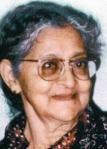
The country’s first woman diplomat (Indian Foreign Service (IFS) officer), Chonira Belliappa Muthamma, died at a private hospital in Bangalore on October 14, 2009,  following a brief illness, family sources said.  Muthamma (85) was born in a modest family at Virajpet in the hilly Kodagu district of Karnataka.

She had served as the ambassador to Hungary, the Netherlands and Ghana. She was also part of Indian diplomatic missions in several countries in Europe, Asia and Africa. Muthamma, the first woman to enter Civil Services in 1949 after clearing UPSC examinations, opted for foreign service and was posted as Third Secretary in the Indian Embassy,Paris.

She had also served in Indian Missions in Yangon and London, besides the Pakistan Division and American Division of the Ministry of External Affairs. The late diplomat was member of the special Non-Governmental Commission on Disarmament and Security Issues set up by Olof Palme, better known as the Palme Commission.


source: http://www.coorgnews.wordpress.com / Oct 22nd, 2009