Category Archives: Uncategorized

Survivors in Kodagu search for a village that no longer exists

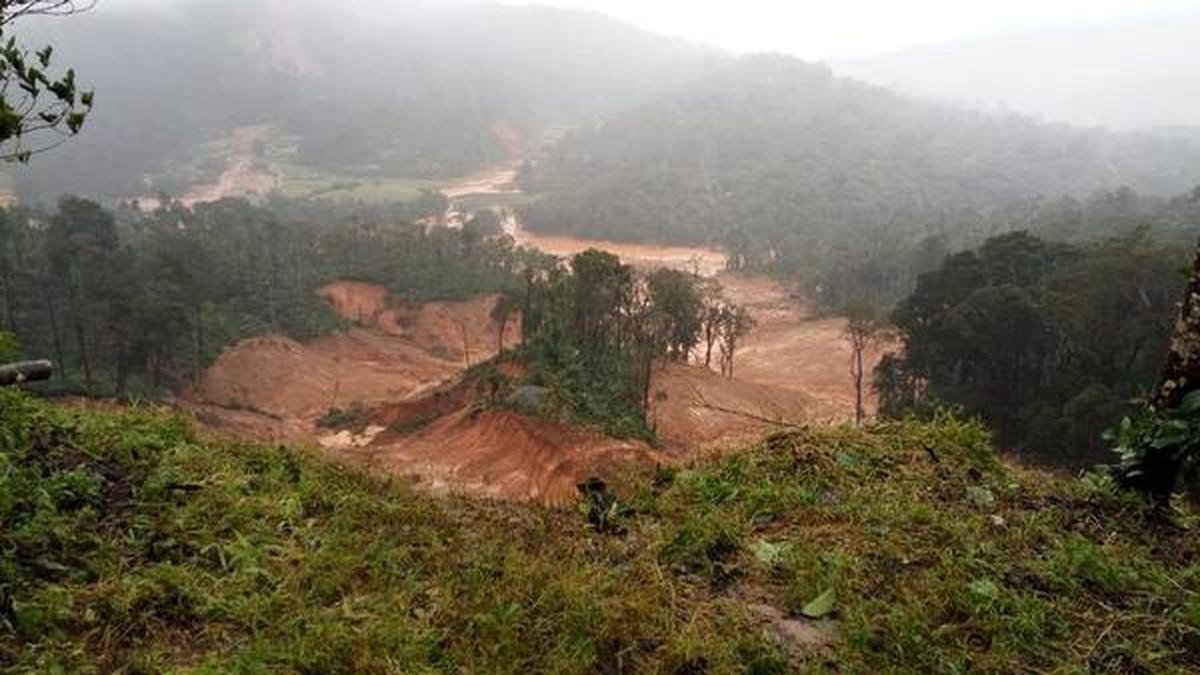
“Paddy fields have disappeared, there is a flat land devoid of trees for nearly 2 km, we cannot identify the spots we were so familiar with, and roads have simply vanished for long stretches. A few houses have survived.”

This is what one batch of 12 survivors from Makkandur in Kodagu district had to say on Tuesday as they retraced the steps to what was once their home. For them, the weary trudge was as excruciating as the ordeal of landslips and floods they had faced on Friday.

The walk to Makkandur from their relief camps near Madikeri took them almost half a day; normally, it would have taken a few minutes by car.

“The road to Makkandur no longer exists. For every few steps that we took forward and climbed what was once a familiar terrain, we were forced to turn round and rework our route,” said Jagdeep, a coffee plantation owner who was among the first batch of residents to be evacuated when disaster hit the village.

Along with a few others, he set out to assess the damage on Tuesday and returned shocked by the trail of destruction.

The group was greeted by yawning gaps in the road that had deep crevices, to circumvent which they had to climb adjoining hills that were still slippery and wet. Meanwhile, there was no let-up in the slush sliding down the hillocks.

Every step the group took was dangerous. They walked, stunned to find out that farms and plantations had given way to vast puddles of slush. “The adjoining government land which had 120 to 150 houses, accommodating plantation workers, have completely disappeared,” said a sombre Mr. Jagdeep.

Though a few houses have survived, they are surrounded by hillocks that no longer appeared stable. The walk back from Makkandur to their relief camp was even more treacherous. “Our mind was numb as we were convinced that the village we knew no longer existed; reconstruction was a long haul ahead.”

With the rains having ebbed a little, more and more people staying in relief camps are embarking on journeys to ascertain first-hand the damage to their villages.

source: http://www.thehindu.com / The Hindu / Home> News> India> Karnataka / by Special Correspondent The Hindu / August 22nd, 2022
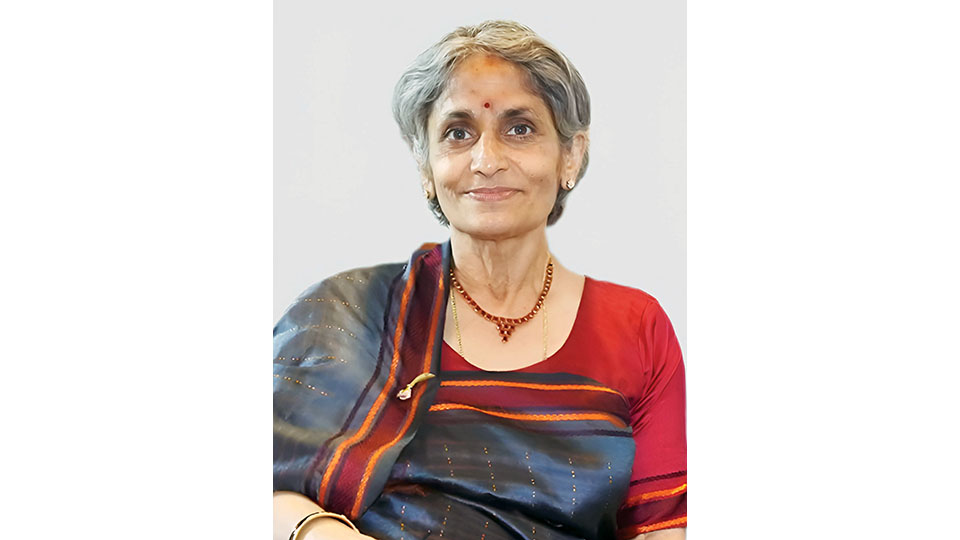
Prof. Buttiyanda K. Thelma is Coorg Person of the Year-2025

The scientist behind first genetic study of Kodavas

Mysore/Mysuru: 

Prof. B.K. Thelma, the scientist behind first genetic study of Kodavas (Coorgs), is Coorg Person of the Year-2025. The origin of Kodavas in the State of Karnataka has been a standing riddle for ethnologists all these years.

The credit for solving the mystery behind the origin of Kodavas should go to Kodagu-born Prof. Buttiyanda Kuttapa Thelma and her team.

Carrying out a systematic sampling of the Kodavas from across Kodagu, using the available genetic analytical tools, Prof. Thelma and her team have been successful in publishing a scientific paper on the genetic makeup of the Kodavas.

The selection of ‘Coorg Person of the Year’ is made on the basis of a poll conducted through Kodagu’s first news and tourism portal www.coorgtourisminfo.com, promoted by journalist and author P.T. Bopanna.

Prof. Thelma stands tall in the landscape of Indian genetics and genomics research. When she decided to take up research on human genetics, it was nearly an uncharted territory in India. But today, she is one of the country’s leading experts in human genetics and related fields and has made notable contributions.

Aged around 70, Prof. Thelma, who belongs to the Kodava community known for their uniqueness in many ways, including their dress code and cuisine, must have motivated her to study the roots of her own community.

Born in Madikeri to late Buttiyanda Ganapathy Kuttapa and Manavattira Muthamma Machia, Prof. Thelma was raised in a very loving, caring and progressive family. They lived in a house in Madikeri town with a large backyard, which provided a warm and nurturing environment.

Prof. Thelma completed her schooling in Madikeri at St. Joseph’s Convent. She recalled, “In Class X, I was the only one in my school to get first class in all four parts. The next big decision was which subject I should take in college. My father wanted me either to do Master’s in Maths or join the IAS, but my heart was elsewhere. It was my dream to become a doctor. To this day, the sight of a doctor treating his patients fascinates me.”

She then moved to Bengaluru to join the Mount Carmel College and later the Central College, Bengaluru, for higher studies. After her post-graduation, she chose to avail a research fellowship at the University of Delhi to do a Ph.D. She received her doctorate in 1982.

Thereafter, Prof. Thelma had a brief stint as a post-doctoral fellow at the children’s hospital in Basel, Switzerland, where she had an opportunity to work with human samples — almost a dream starting to be realised, in her words.

She travelled extensively and learnt as much as possible during those couple of years. With the unwavering decision to return to the country, she headed back to Delhi University where she worked as a CSIR Pool Officer and Research Associate.

In 1987, she got a faculty position in the Department of Genetics at the University of Delhi where she continued till her superannuation. Currently she continues to serve as a Professor and National Science Chair at the same place.

All through these years of Prof. Thelma’s research interest in biomedical genetics, the genetic history of the Kodavas has been her enduring interest. The study, though she says is not complete yet, provides some insights into the intriguing origin of Kodavas.

She is a recipient of several awards — to name a few, CNR Rao Lifetime Achievement Award from Karnataka S&T Academy (2021); Meritorious Service Award from University of Delhi (2021); National Science Chair (2021-2026); JC Bose Fellowship (2011-2021); SP Raychaudhuri Endowment Lecture Award, Indian Society of Cell Biology (2018); Sanghvi Oration Award, Indian Society of Human Genetics (2015); Sunder Lal Hora Medal, Indian National Science Academy (2014).

source: http://www.starofmysore.com / Star of Mysore / Home> News / December 30th, 2025

‘Soul to the World’ poetry anthology released

Mysore/Mysuru: 

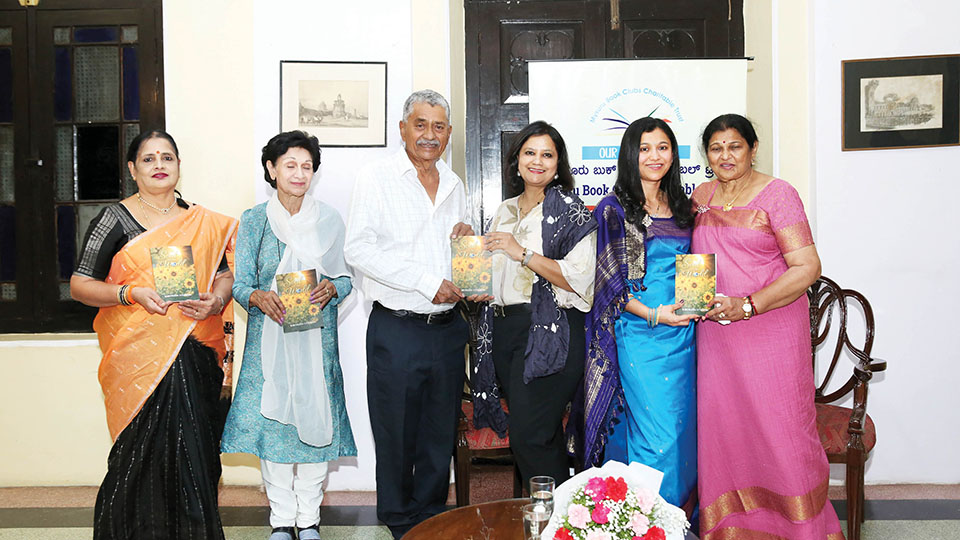
Mysuru Book Clubs Charitable Trust had organised the release of ‘Soul to the World: An Anthology of Poems’ by Dubai-based poet Kirthana Uthappa Jaisimha, at a private hotel yesterday. The book explores themes of inner peace, emotional growth and spiritual evolution. The poems celebrate nature, humanity and wildlife, while emphasising the importance of embracing emotions.

The book was released by Maneyapanda Mothi Uthappa. The first copies were received by Trust Chairperson Shubha Sanjay Urs, Trustee Kitty Mandana and Sumy Uthappa. The book is dedicated to the poet’s mother on her 70th birthday.

Kirthana’s poetry draws from her experiences as a mother, wife and individual. A self-described dreamer and believer, she values time, purpose and meaningful relationships, and hopes her words inspire readers to pause, reflect and remember.

Trust Member Shanthala compered the programme, while Prof. Krishna Manavalli was in conversation with the poet. Granddaughters Tiara Muddappa and Saanvi Jaisimha introduced their grandparents.

Vidya Arun, S. Prithvi, Hita and Pamela Sanath welcomed the gathering and proposed a vote of thanks.

source: http://www.starofmysore.com / Star of Mysore / Home> News / March 29th, 2026

Protest taken out against KPS Magnet scheme in Kodagu

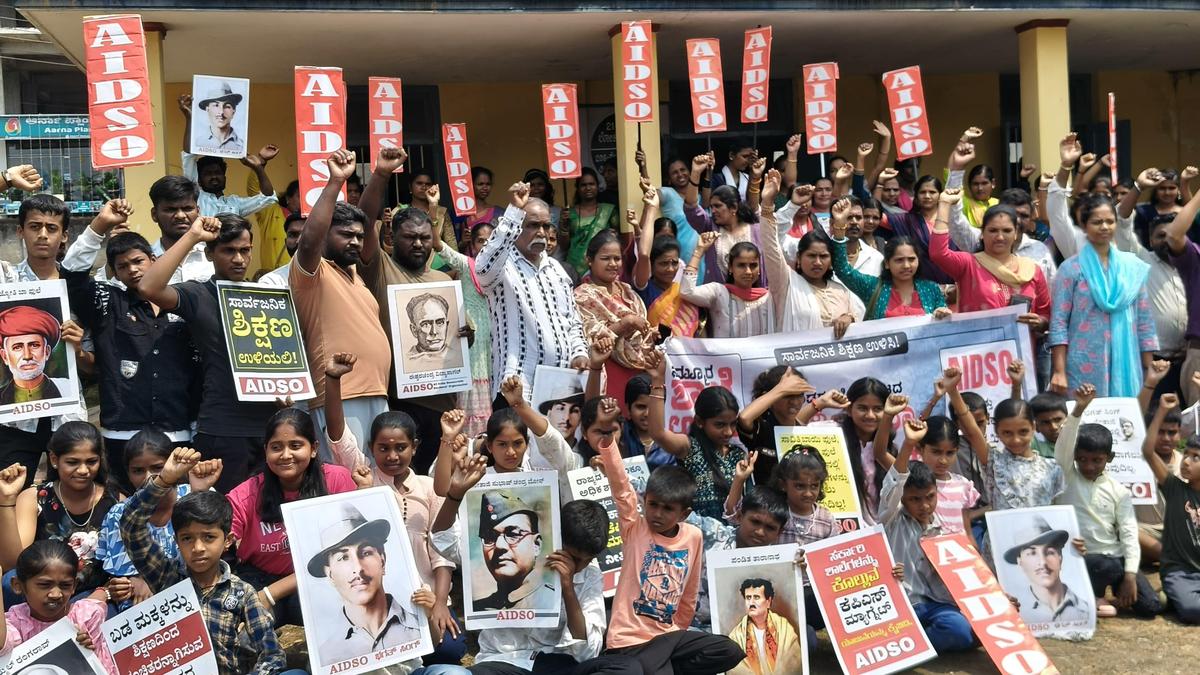
Several parents, students and residents of villages across Kodagu participating in a protest against closure of government schools under the KPS Magnet scheme at Kushalnagar, in Kodagu district on Sunday. | Photo Credit: SPECIAL ARRANGEMENT

Several parents, students and villagers from across Kodagu district participated in a protest against closure of government schools under the KPS Magnet scheme at Mahila Samaja Bhavan in Kushalnagar on Sunday. The protest was organised by All India Democratic Students’ Organisation (AIDSO) and Save Public Education Committee to oppose the reported closure of 235 government schools in Kodagu district under the KPS Magnet scheme.

Addressing the gathering, AIDSO’s state treasurer Subhash Bettadakoppa claimed that the Government was closing 235 schools under the pretext of merging them into just five selected Magnet schools situated in Kushalnagar, Kudige, Shirangala, Gonikoppal and Kutta.

“Kodagu is a hilly region with no bus facilities for many villages. During the four months of heavy monsoon, it is impossible for small children of Class 1 and 2 to walk 5-6 kilometers. If this scheme is implemented, children of coffee estate workers and adivasis living on the forest fringes, and children of poor farmers will be deprived of education,” he said.

AIDSO’s State vice president Abhaya Diwakar, who also addressed the gathering, alleged that the previous BJP Government attempted to close 13,800 government schools in the name of ‘merging’. “However, back then, we saved those schools through state-wide struggles,” he said. 

Now, the current Congress government is proposing to shut 40,000 schools under the KPS Magnet Scheme. “The ultimate goal of all governments seems to be closing public schools and snatching education away from poor students,” he said.

Questioning the government’s financial priorities, Mr. Diwakar alleged that the government is opening KPS Magnet schools by taking a loan of ₹2,500 crore from the Asian Development Bank. “Has the government reached such a dire state that it must borrow from private and international banks to run government schools? Is the tax we pay not enough?” he said.

He also added that the KPS Magnet scheme violates the Right to Education (RTE) Act, which mandates a primary school within every kilometer, and alleged that the Magnet scheme is a ploy to privatise schools through outsourcing.

Meanwhile, Mr. Bettadakoppa also pointed out that 62,000 posts of teachers are currently vacant in the state while over 7,000 schools are run by single teachers and 23,000 school buildings need urgent repairs. “Instead of providing basic infrastructure, the government is letting schools languish and closing them through the back door,” he alleged.

source: http://www.thehindu.com / The Hindu / Home> News> India> Karnataka / by The Hindu Bureau / March 29th, 2026

Human-wildlife conflict in Kodagu: Ponnanna seeks more Central funding

Being a serious and challenging issue, mitigation efforts have been stepped up amidst higher number of deaths reported due to the conflict in the district.

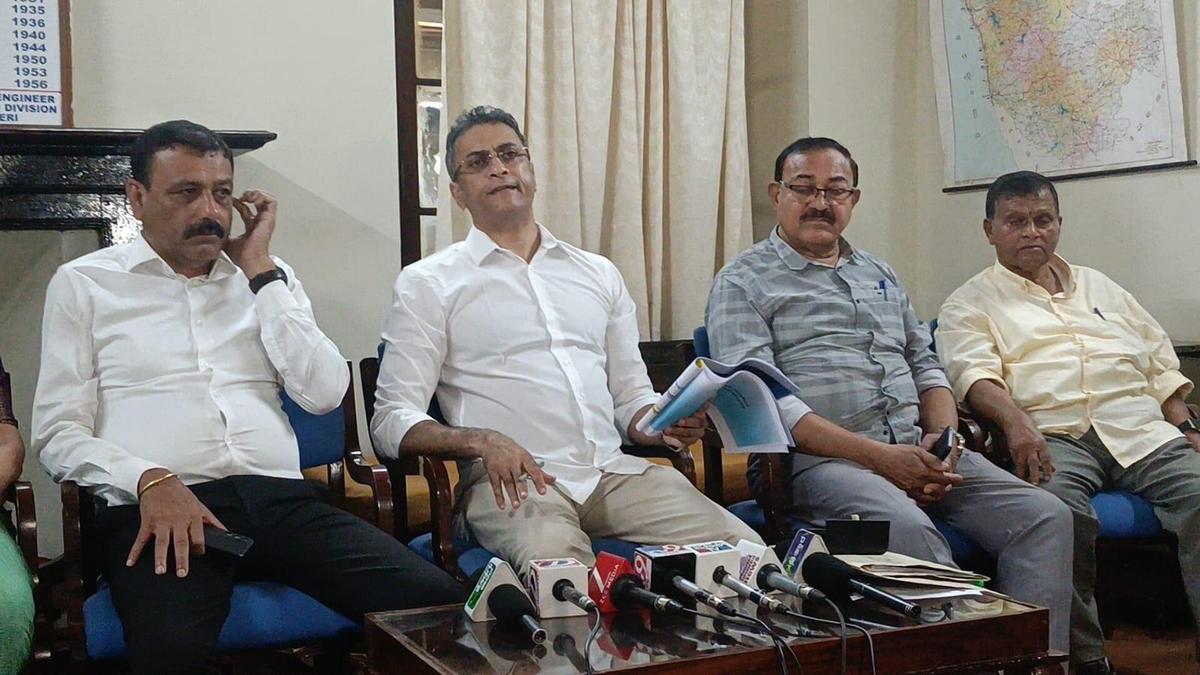
Virajpet MLA A. S. Ponnanna addressing press persons in Madikeri on Saturday. | Photo Credit: SPECIAL ARRANGEMENT

Human–wildlife conflict has emerged as a serious concern in Kodagu district, accounting for a significant share of fatalities in the State, prompting urgent intervention measures and calls for increased Central assistance.

A.S. Ponnanna, Legal Advisor to the Chief Minister and Virajpet MLA, on Saturday said the issue continues to pose a serious challenge, with the State government stepping up mitigation efforts while urging the Centre for greater financial support.

Addressing a press conference in Madikeri, Mr. Ponnanna said multiple steps are underway to curb wildlife incursions, including the construction of elephant trenches, installation of solar-powered fencing, and rail barricades. However, several works remain incomplete, underscoring the need for sustained intervention.

He emphasised that addressing human–wildlife conflict requires coordinated efforts between the State and the Centre, and called for enhanced funding to tackle the problem effectively.

It may be recalled here that Forest Minister Eshwar B. Khandre, during a meeting with Kodagu legislators in Bengaluru, expressed concern over the rising loss of human lives due to wildlife conflict and directed officials to complete the repair and maintenance of 422 km of elephant trenches and 544 km of hanging solar fences within one month. Mr. Ponnanna and Madikeri MLA Mantar Gowda were present.

According to Mr. Khandre, Kodagu alone accounts for 38% of deaths caused by human–wildlife conflict in the State. He has instructed authorities to intensify patrolling, strengthen the elephant task force, and rapid response teams and other mitigation units to handle the situation.

In addition, officials have been directed to compile data on plantation workers across zones and establish alert systems using WhatsApp and public address systems mounted on vehicles to warn residents when elephants or other wildlife approach human settlements or plantation areas.

Kodagu development

At the press conference, Mr. Ponnanna also highlighted that the Siddaramaiah-led government has prioritised Kodagu’s development over the past three years. The long-pending demand for a Tribal Development Corporation has been fulfilled through a budget announcement, along with the decision to establish a Kodava Development Corporation, he informed.

The MLA said a sports training centre will be set up on 11 acres in V. Badaga village to encourage youth participation in Olympic disciplines, and that steps have been initiated to upgrade two hospitals in the district.

District President of the Guarantee Schemes Implementation Committee Dharmaja Uthappa, Sports Authority Vice-President Arun Machaiah, former MLC Veena Achaiah, and others were present.

source: http://www.thehindu.com / The Hindu / Home> News> India> Karnataka / by The Hindu Bureau / March 21st, 2026

Letters and numbers meet life in Karnataka’s Kodagu

US-based UX designer creates early-learning books rooted in a picturesque part of Karnataka.

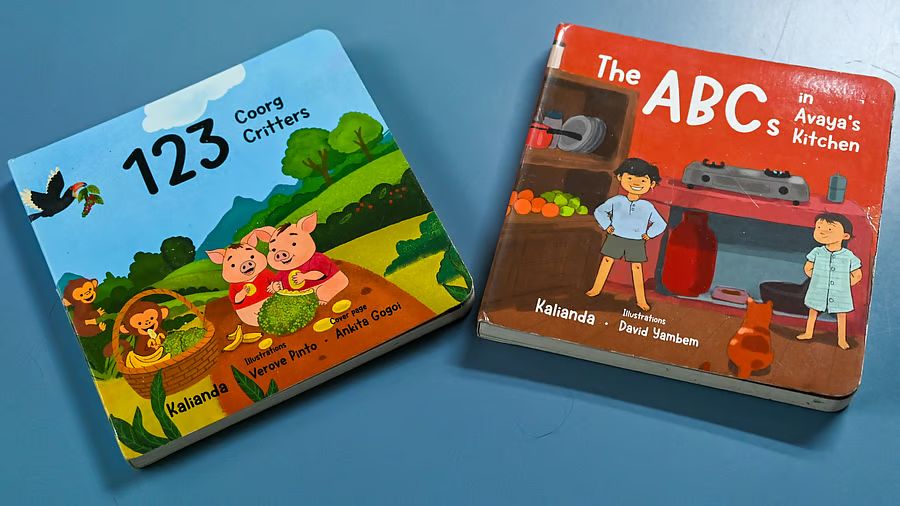
The children’s books designed by Tej Kalianda feature everyday sights from Kodagu. Credit: DH Photo

UX designer Tej Kalianda’s children were the first reason she began thinking about early-learning books differently.

Based in San Francisco, USA, and originally from Kodagu, Tej created the board books ‘The ABCs in Avaya’s Kitchen’ and ‘123 Coorg Critters’ for children aged 0 to 3.

They teach alphabets and numbers “through the everyday sights, sounds and rhythms of Kodava life” rather than by focusing on festivals or folklore. “It captures everything from meals and homes to farms, coffee estates, rain and wildlife,” she says.

After observing what held her children’s attention the longest, Tej realised strong visual identity, rich colours and read-aloud-friendly text kept young readers coming back to the book.

She also noticed a growing global trend of alphabet books rooted in place. “I came across books about Hawaiian animals and life in Nigeria. That made me think, why not create something that reflects life in Kodagu, especially for my own children?” says the 39-year-old mother of two.

The alphabet book came first, shaped by words her children heard at home but rarely saw represented in mainstream books, such as ‘avaya’, ‘bembale’, ‘elle unde’, among others. Tej wanted her kids to recognise everyday Kodava vocabulary without translating it into something it isn’t.

“Take kadambut, for example. You can explain it as a rice ball in English, but that’s not the word we use at home. Kadambut is kadambut,” she says.

While working on the alphabet book, she also had ideas that didn’t fit the format. That led to the creation of the number book, which captures Kodagu’s landscape and wildlife through counting.

“Most mainstream children’s books talk about animals like pandas, polar bears, or koalas… But when they visit Kodagu, they see deer, elephants, and even leeches,” she says, adding that learning becomes more alive when it mirrors real life experience.

Tej says her aim wasn’t to make something “purely Indian”. “The books aren’t trying to teach culture explicitly. Instead, they aim to make learning feel familiar,” she says.

The idea took shape in early 2025, and despite a demanding job and parenting responsibilities, Tej time-boxed the process. “I set aside 30 minutes a day, Monday to Friday,” she says. Over about 60 days, she shaped the concept and visual language, working with illustrators David Yambem and Verove Pinto. The books were released in September 2025.

For details, visit peppervinepress.com or write to connect@brandworx.digital

source: http://www.deccanherald.com / Deccan Herald / Home> Specials / by DHNS / March 21st, 2026

Kodagu district accounts for 38% of State’s human-wildlife conflict deaths: Minister

Strengthen anti-elephant conflict measures, Mr. Khandre tells officials; a one-month deadline has been given to repair elephant trenches in the coffee land.

Minister for Forests, Ecology and Environment Eshwar B. Khandre | Photo Credit: File Photo

Forest Minister Eshwar B. Khandre has instructed officials to ensure the proper maintenance of elephant trenches and solar-powered fencing installed to control human–elephant conflict in Kodagu district.

Expressing concern over the loss of human lives due to wildlife conflicts in Kodagu, the Minister directed that the repair and maintenance of the existing 422 km of elephant trenches and 544 km of hanging solar fences be completed within one month.

Mr. Khandre was speaking at a meeting held recently in Bengaluru with Kodagu MLAs — A.S. Ponnanna and Mantar Gowda — and Darshan Dhruvanarayan, Nanjangud MLA, and senior forest officials.

He noted that 38% of deaths due to human–wildlife conflict in the State are reported from Kodagu district and instructed officials to increase patrolling. The Minister also directed that the elephant task force, rapid response teams, and other human–wildlife conflict mitigation units be strengthened.

Four vehicles have already been purchased in addition to the existing six to enable staff to respond quickly when elephants and other wildlife enter plantations, he said.

He added that instructions have been issued to procure four more vehicles and to engage enthusiastic local youth on an outsourced basis to join the task force and enhance field-level operations.

Mr. Khandre also directed officials to take the necessary steps to operationalise a robust wireless network to transmit information on wildlife movement and to prevent illegal tree felling and wildlife poaching.

The Minister instructed that data be collected on the number of workers employed in plantations across each zone in Kodagu district. Steps should be taken to immediately alert these workers through WhatsApp and via vehicles fitted with public address systems whenever wildlife, especially elephants, approach human settlements or plantation areas.

With an intense summer expected from the last week of March to May, Mr. Khandre directed officials to ensure that there is no shortage of water and fodder for wildlife in forests. He also asked them to share information with the public and local representatives regarding water levels in forest water bodies.

The Minister advised forest officials to maintain cordial relations with local communities, stating that better cooperation from people would help in resolving issues effectively.

Principal Chief Conservator of Forests and Head of Forest Force Meenakshi Negi, Chief Wildlife Warden Kumar Pushkar, and senior forest officials, including Manoj Rajan, Manoj Kumar, and Sonal Vrisni, were present.

source: http://www.thehindu.com / The Hindu / Home> News> India> Karnataka / by The Hindu Bureau / March 20th, 2026

Leela buys resort in Karnataka, India

The 71-villa resort near Bengaluru and Mangaluru opens this year.

The Leela Palaces, Hotels and Resorts acquired a 76-acre resort in Coorg, Karnataka, entering nature- and wellness-focused hospitality./  Photo credit: The Leela Palaces

  • Leela enters nature and wellness hospitality with Coorg resort.
  • Leela portfolio grows to 15 hotels and 4,160+ keys.
  • The 71-villa property near Bengaluru and Mangaluru opens this year.

THE LEELA PALACES, Hotels and Resorts acquired a resort in Karnataka, India, marking its entry into nature and wellness-focused hospitality. The 71-villa property in Coorg near Madikeri spans 76 acres amid coffee and spice plantations and will open later this year as The Leela Coorg Forest Sanctuary.

It introduces The Leela’s first “Sanctuary” concept and coincides with the brand’s 40th anniversary, expanding its presence in South India’s leisure destinations, Leela said in a statement. The property in the Western Ghats is near Bengaluru and Mangaluru. Coorg attracts visitors for its coffee estates, landscapes, cultural heritage and environment.

“As we celebrate 40 years of The Leela, this acquisition represents both a milestone and an evolution of the brand into nature-immersive, wellness-focused hospitality,” said Anuraag Bhatnagar, The Leela’s CEO. “We invest in destinations with cultural and ecological value and Coorg strengthens our presence in South India while advancing our strategy of building a balanced portfolio across India’s most iconic landscapes. The Leela Coorg Forest Sanctuary offers a rare synthesis of wilderness, wellness and the warmth of true Indian luxury for travelers who seek space, stillness and a genuine connection to nature.”

The IGBC Platinum-certified resort is designed to integrate with its surroundings, combining architecture with local craftsmanship. The property includes land for future expansion, with the first phase adding 19 villas to reach 90 keys. The resort will have four dining venues with global and regional cuisines and coffee experiences. A 27,000 square feet wellness center will include Ayurvedic treatments, modern recovery practices and Aujasya by The Leela, the brand’s wellness program.

A seven-acre lake will be the property’s central feature and a private helipad will provide access. The resort will include a four-bedroom presidential villa with a pool and wellness facilities.

With this addition, The Leela portfolio has 15 properties with over 4,160 keys across 13 cities. The brand has nine hotels in the pipeline and aims for 24 properties in the next three years, including Agra, Ayodhya, Bandhavgarh, Mumbai, Ranthambore, Sikkim, Srinagar and Jaisalmer.

Leela incorporated a wholly owned subsidiary to own, operate, manage and develop hotels and resorts under “The Leela” brand. The Ministry of Corporate Affairs issued the Certificate of Incorporation for Leela Imperial Suites Private Ltd on Jan. 5.

The Leela Palaces, Hotels and Resorts was founded in 1986 by Capt. C. P. Krishnan Nair with the launch of The Leela Mumbai, according to its website. Toronto-based Brookfiled Corp., principal sponsor of Bengaluru-based Schloss Bangalore, acquired Leela in 2019. The company went public in May.

source: http://www.asianhospitality.com / Asian Hospitality / Home> India News / by Vishnu Rageev R / March 18th, 2026

Complete repair work of elephant trenches and hanging solar fences in Kodagu: Khandre

The Minister notes that 38% of deaths caused by human-wildlife conflict in the State occur in Kodagu district and directs officials to increase patrolling.

Eshwar Khandre | Photo Credit: FILE PHOTO

Forest, Ecology and Environment Minister Eshwar Khandre on Wednesday instructed forest department officials to ensure proper maintenance of elephant trenches and hanging solar fences installed in Kodagu district to mitigate human-elephant conflict.

Mr. Khandre, who met with MLAs A.S. Ponnanna, Manthar Gowda, and Darshan Dhruvanarayan, instructed officials to complete the repair work of the existing 422 km of elephant trenches and 544 km of hanging solar fences within one month.

He said that 38% of deaths caused by human-wildlife conflict in the State occur in Kodagu district and directed officials to increase patrolling.

He also instructed strengthening of the elephant task force and rapid response teams.

Mr. Khandre added that in order to enable staff to respond quickly when elephants and other wildlife enter coffee plantations and to drive them back into forests, four vehicles have already been purchased in addition to the existing six.

The Minister directed that four more vehicles be procured and that local youth be hired on a contract basis to strengthen the task force and improve efficiency.

He also directed senior officials to take all necessary steps to establish a strong wireless network for sharing information on wildlife movement and to curb illegal tree felling and wildlife poaching.

Officials were also instructed to collect data on the number of workers in plantations across each zone in Kodagu district.

“When wildlife, especially elephants, approach human settlements or plantations, immediate alerts should be sent to workers via WhatsApp and through vehicles equipped with loudspeakers,” he said.

Mr. Khandre also directed officials to ensure that wildlife in forests do not face shortages of water and fodder.

source: http://www.thehindu.com / The Hindu / Home> News> India> Karnataka / by The Hindu Bureau / March 18th, 2026