Money paid from 2016-19, later two tried to alienate property gifted by petitioner to them
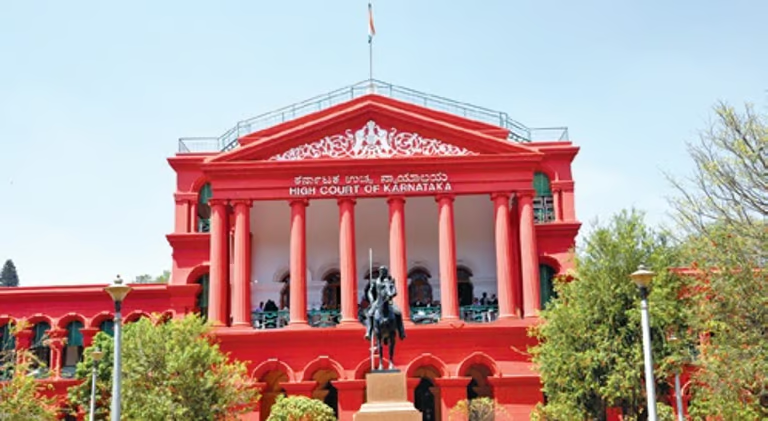
Karnataka High court. (File Photo)
Bengaluru :
The High Court of Karnataka has come to the rescue of an 85-year-old woman from Kodagu by ordering her son and granddaughter to pay her an annual maintenance of Rs 7 lakh each.
Justice M Nagaprasanna directed that the maintenance amount be paid to petitioner Apparanda Shanthi Bopanna by her third son AB Ganapathy and her late first son’s daughter Pooja, residents of Bengaluru.
Shanthi Bopanna had questioned the deputy commissioner’s order of March 22, 2022, under the Maintenance and Welfare of Parents and Senior Citizens Act.
“The order of the DC, which directs payment of maintenance to the petitioner, is sustained with a modification that the son and granddaughter would be entitled to enjoy the fruits of gift deeds executed by the petitioner, subject to the condition that they would pay her maintenance of Rs 7 lakh each every year till her lifetime,” the court said, while noting that the petitioner is not in a position to take care of her property after cancellation of the gift deeds.
Shanthi Bopanna, who is a resident of Heroor in Virajpet taluk of Kodagu district, owned 48 acres of coffee estate and was residing in the ancestral house of her husband. Of the 48 acres of estate, her eldest son AB Biddappa took possession of 24 acres.
In 2016, she executed gift deeds in respect of 24 acres in favour of Ganapathy and Pooja, 11 acres each, on the assurance that they would pay her Rs 7 lakh each every year as maintenance. Ganapathy and Pooja paid Rs 7 lakh each to Shanthi Bopanna only till 2019.
After learning that Ganapathy and Pooja were making attempts to alienate the property, Shanthi Bopanna initiated legal proceedings before the assistant commissioner, who cancelled the gift deeds in 2021.
Later, Ganapathy and Pooja approached the deputy commissioner, who set aside the assistant commissioner’s order, stating that nowhere in the gift deeds it is mentioned that the donees would take care of the donor. But the DC directed them to provide amenities and other help along with maintenance amount being paid annually to Shanthi Bopanna till her lifetime.
Ganapathy and Pooja contended before the high court that they will pay Shanthi Bopanna only Rs 10,000 as per Section 24 of the Act or even Rs 25,000 a month and not Rs 7 lakh each every year.
source: http://www.newindianexpress.com / The New Indian Express / Home> Karnataka / by Express News Service / January 28th, 2024
Popularly called the Scotland of India, Coorg is a quaint hill station in the Western Ghats known for its coffee. However, it is now witnessing an avocado revolution.
The journey from Bengaluru to Coorg is for photo albums. You are likely to spot elephants and other animals if you get lucky. The travel time of seven hours takes you through the Western Ghats, where you also cross Ramanagara, the location where Bollywood director Ramesh Sippy shot the famous Sholay. But, there’s more to it than ‘Kitne aadmi the?’
When you reach the Cottabetta Bungalow, one of the most googled vacation homes in Coorg, you can’t resist diving straight into the scrumptious Kodava cuisine. The chefs at this 140-year-old colonial bungalow will instruct you to not venture out without assistance once evening falls. You wouldn’t want to crash a leopard birthday party, right?
Popularly called the Scotland of India, Coorg is where some of the finest coffee ripens by the rays of the winter sun. But this hill station is now also home to one of the healthiest and most Insta-famous fruits—avocado. This lush-green hill station is now witnessing an avocado revolution.
India’s tropical climate and mid-to-higher elevation areas, such as tea and coffee-growing regions, offer immense potential for cultivating the fruit. Ajay TG, General Manager, Westfalia Fruit India, says, “India’s northern hemisphere seasonality complements African and South American avocado seasons.
This gives avocado cultivators lucrative opportunities for both domestic consumption and exports. We plan to see India as a self-sustained avocado-producing nation with year-round availability of local varieties.”
Apart from Coorg, some potential avocado-growing areas in India are Chilmangalur, Sakleshpur, Wayanad, Nilgiris, Valaparai, Kodaikanal, Munnar, Idukki and Araku. Fun fact: Avocado never ripens on the tree. It ripens only when you pluck it.
Education over, it’s time for an avocado milkshake. Popularly known as butter-fruit milkshake down South, the consistency of this shake is so thick that it had to be eaten using a spoon instead of straw!
Westfalia’s avocado nursery in Coorg focuses on cultivating selected rootstock, clonal, and commercial planting material to grow top-tier Hass and other commercial avocado varieties.
“Packed with vitamins, minerals and healthy fats, this superfruit offers a host of health benefits.” Professor CHENGAPPA, Director, Wesfalia
Their efforts have already borne fruit, pun intended; they have over 500 acres of avocado plantations across India with an ambitious goal to double it by 2026. “It takes nine to 12 months approximately for avocado to grow. The ideal temperature should be somewhere between 5-35 degrees,” says Ajay.
There are over 30 farmers at the Westfalia Fruit India in Coorg who are helping with the avocado produce. The technique of grafting and cloning for growing avocados must be done with a high degree of precision. “We are on a mission to make avocados a staple in Indian kitchens. With lifestyle diseases on the rise and nutritional deficiencies everywhere, avocado is an essential addition to daily diets.
Packed with vitamins, minerals, and healthy fats, this superfruit offers a host of health benefits,” says Westfalia Director, Professor Chengappa. The good professor had some interesting avocado anecdotes to share: “One European study says anyone who has a bad experience with buying avocado doesn’t buy it for another 13 weeks.”
“We plan to see India as a self-sustained avocado producing nation with year-round availability.” AJAY TG, General Manager, Westfalia
Following the farm visit, it’s time for feasting. At the Taneerhulla Bungalow, the highlight is avocado cupcake. It won’t give fitness faddists the guilt of having dessert because it isn’t dessert after all. A slice of cucumber topped with guacamole is the healthiest cupcake (not) ever. What’s not to like about it?
source: http://www.newindianexpress.com / The New Indian Express / Home> Food / by Iram / December 15th, 2024
The Supreme Court has recommended the Central Government to devise a comprehensive policy for the governance and management of sacred groves, community-protected forests with deep cultural and spiritual significance.
A Bench, comprising Justices B.R. Gavai, S.V.N. Bhatti and Sandeep Mehta, emphasised India’s rich heritage of sacred groves, which are clusters of trees or forest patches preserved by local communities.
“The Ministry of Environment, Forest and Climate Change (MoEFCC) is recommended to develop a nationwide policy for managing sacred groves,” the Bench stated.
The judgment also referenced a verse from the Bhagavad Gita, highlighting the interconnectedness of nature and consciousness: “Nature is the source of all material things: the maker, the means of making and the things made. Spirit is the source of all consciousness which feels pleasure and feels pain.”
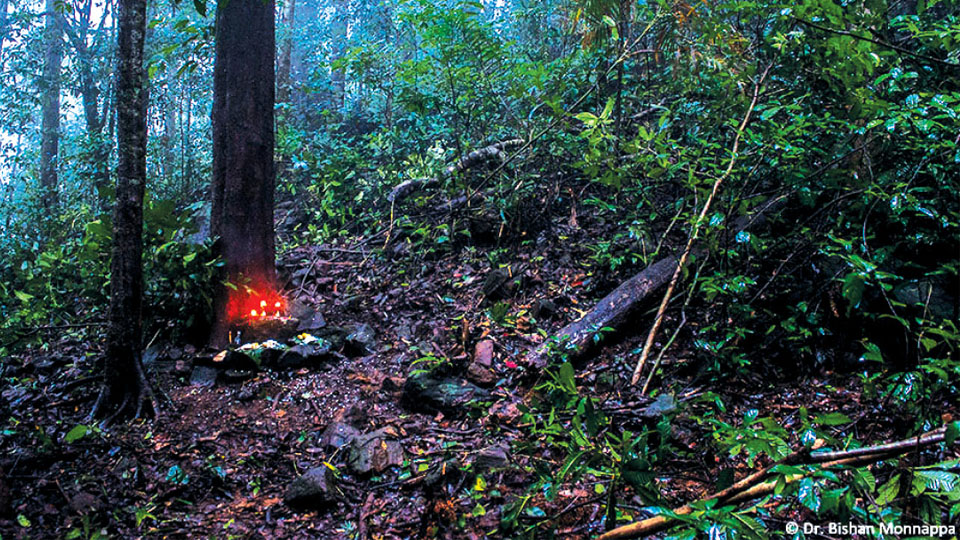
Kodagu district is renowned for its Devara Kadu — sacred groves — and temples nestled within dense, untamed forests. These ecological havens, found in every village across the district, serve as a unifying force for families and diverse communities. Kodagu is home to nearly 1,214 Devara Kadus, spanning 4,614 hectares, where native communities worship folk deities. Activities such as tree felling, lopping, clearing fallen branches, plucking weeds, pruning or burning trees are strictly prohibited within Devara Kadus. It is widely believed that any violation of these sacred rules invites divine retribution, with offenders punished by death at the hands of the presiding folk deity.
Recognising the ecological and cultural importance of sacred groves, the Supreme Court recommended their inclusion under the Wildlife Protection Act, 1972, particularly through Section 36-C, which provides for the declaration of “community reserves.”
To ensure sustainable conservation, the Court proposed empowering local communities that have historically protected these groves.
“The Court deems it necessary to propose certain suggestions to promote the sustainable conservation of sacred groves and empower the communities associated with their protection,” the Bench said. The Scheduled Tribes and Other Traditional Forest Dwellers (Recognition of Forest Rights) Act, 2006 recognises and respects the diverse legal and cultural practices of tribal communities across India.
source: http://www.starofmysore.com / Star of Mysore / Home> News / December 30th, 2024
Land survey complete; process begins to hand over 140 acres in Kushalnagar
Kushalnagar:
A year after the Karnataka Government proposed airstrips in Kodagu, Dharmasthala and Chikkamagaluru to boost tourism, industry and disaster management, plans for a mini airport in Kodagu’s Kushalnagar taluk are finally taking shape.
Chief Minister Siddaramaiah recently reaffirmed in a social media post the State Government’s commitment to developing infrastructure projects, including the airstrip in Kodagu.
The Kodagu District Administration has identified 140 acres of Government land for the project, paving the way for its implementation.
The Karnataka State Industrial and Infrastructure Development Corporation (KSIIDC) has been designated as the nodal agency to oversee the development of airstrips across Karnataka.
Land identified after initial hurdles
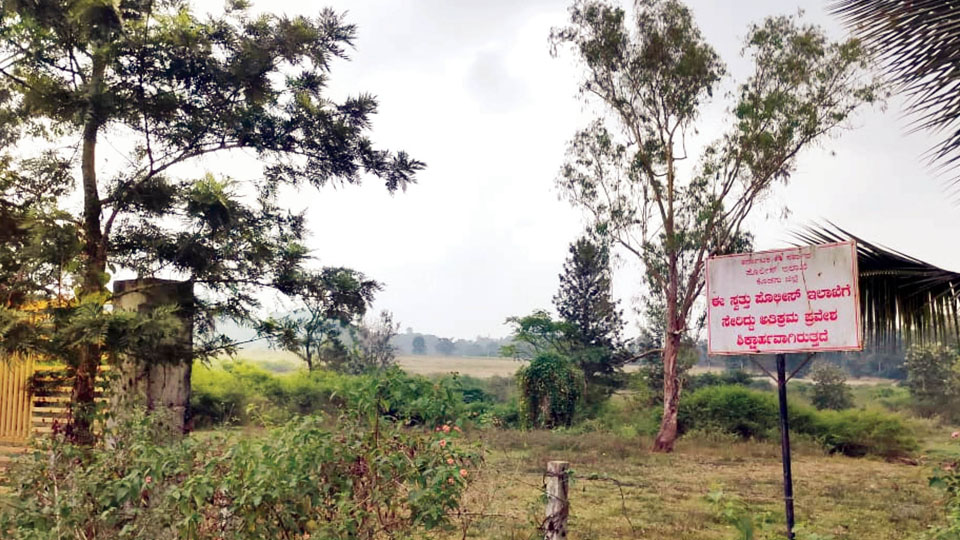
The original proposal targeted a 49.5-acre site near Sainik School, Kushalnagar, in Doddathoor village, bordering Basavanathoor. It included a 950-metre runway, terminal, security post, and fencing. However, the Airports Authority of India (AAI) deemed the land inadequate during an inspection, prompting a re-survey.
Subsequently, the District Administration identified 106 acres of unused land previously allocated to the Police Department for Arms and Police Training School at Adanipura near Hebbale Chikkaaluvara. An additional 34-acre adjacent Government land was also added, bringing the total to 140 acres.
Speaking to Star of Mysore, Kodagu DC Venkat Raja confirmed that the land transfer process is well underway.
“The unused 106-acre Police Department land has been reallocated to KSIIDC (Karnataka State Industrial and Infrastructure Development Corporation) and alternative land can be provided to the Police Department for the training facility in case of future requirement,” he said and added that the airport is a priority and the formal RTC transfer request has been sent to the Revenue Department.
Future expansion feasible
The identified 140-acre site, shaped like an ‘L,’ is ideal for more than 1,000-metre runway and supporting infrastructure. If future expansion is needed, adjacent forest land could be acquired.
A minimum runway length of 1,200 meters and a width of 150 meters is essential to accommodate the landing of a 20-seater airplane. Additionally, the airstrip project requires a total of 140 acres of land for its complete infrastructure and operations.
Madhu, the Head of the Department (HoD) at the KSIIDC overseeing aviation infrastructure, acknowledged the earlier challenges in finding suitable land in Kodagu. “Uneven terrain and surrounding hills made previous sites unviable. The newly identified flat land meets our requirements and we are ready to begin project implementation,” he said.
Madhu confirmed that a technical team will conduct a site survey soon, followed by the preparation of a Detailed Project Report (DPR) once the land is formally transferred.
Kushalnagar Tahsildar Kiran Gowraiah and his team played a crucial role in identifying the site. The process began a year ago and has steadily progressed. Now, the Revenue Department has to secure a No Objection Certificate (NOC) for the 106-acre transfer from the Police Department to KSIIDC and all necessary documents have been submitted in this regard.
source: http://www.starofmysore.com / Star of Mysore / Home> News> Top Stories / December 01st, 2024
The unrest began after a few Kodava devotees were banned entry into the Mrityunjaya temple by the committee, including the majority of Gowda members, for wearing the Kodava traditional attire.
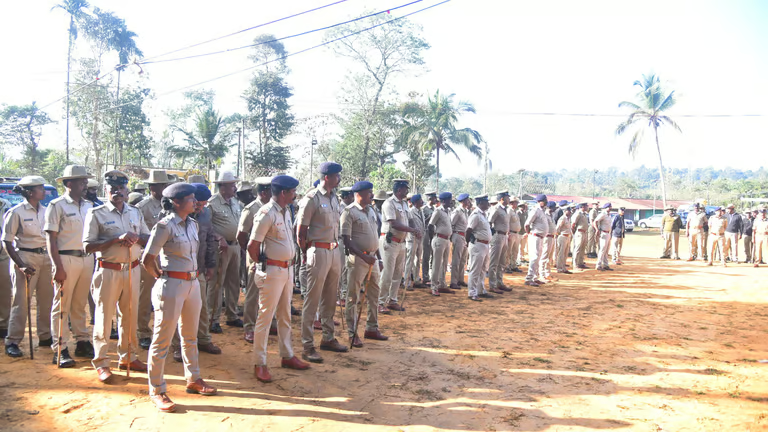
Police stand guard outside the Mrityunjaya Temple premises. (Photo | Express)
Madikeri :
Police stood guard at the Mrityunjaya Temple in Kattemadu even as BNSS 163 prohibitory order was imposed at the premises to control the anticipated communal clashes on Monday.
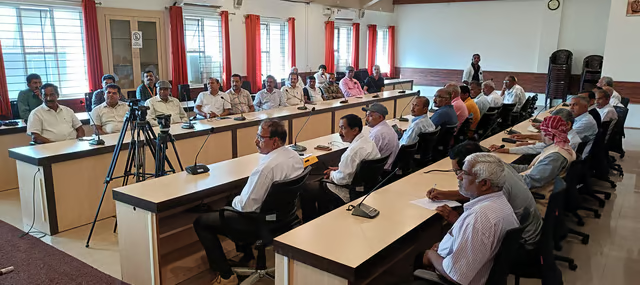
Meanwhile, the district administration called for a peace committee meeting with the leaders from the Kodava and Gowda community to arrive at an amicable decision.
The unrest began after a few Kodava devotees were banned entry into the Mrityunjaya temple by the committee (including the majority of Gowda members) for wearing the Kodava traditional attire.
“Following the unrest over the issue at Mrityunjaya Temple at Kattemadu, the administration called for a peace committee meeting. The meeting was attended by the Temple committee, Kodava Samaja and Gowda Samaja office bearers. After a three-hour meeting, the Temple Committee has assured to arrive at an amicable decision by January 6,” confirmed DC Venkat Raja addressing a press conference on Monday evening.
He explained that there might have been miscommunication or misinterpretation of the temple bylaw. “The Temple Committee has assured to hold a meeting and a decision regarding the Bylaw will be taken by January 6. Both the communities have agreed to cooperate and have assured to maintain peace,” DC added.
During the peace committee meeting at the DC Office in Madikeri. (Photo | Express)
Meanwhile, SP K Ramarajan cautioned against posting derogatory statements and abusive words against any community. “The temple committee has sought time and no protests will be allowed concerning the matter until then. Section 163 will be extended if required. However, stringent action will be taken against anyone who tries to disturb the peace. No abusive statements will be allowed across social media,” Ramarajan warned.
While the peace committee meeting was held during evening hours, preventive arrests were made by the police during morning hours to control any unrest.
As Kodava devotees were prevented entry to the temple for wearing the traditional attire, the members of the Kodava Riders Club and other Kodava community residents from across Ponnampet planned to ride to the temple wearing the Kuppiya Chale on Monday morning. However, they were arrested by police as a preventive measure.
Further, this arrest was opposed by the residents of Ponnampet, Hudikeri, Gonikoppal and Napoklu regions even as protests were held demanding the immediate release of the arrested Kodavas. The arrested members from the community were, however, released later.
source: http://www.newindianexpress.com / The New Indian Express / Home> Karnataka / by Express News Service / December 30th, 2024
A dwindling population, dilution of tradition, and diminishing national presence have fuelled urgency within the Kodava community in Bengaluru and the neighbouring Kodagu region.
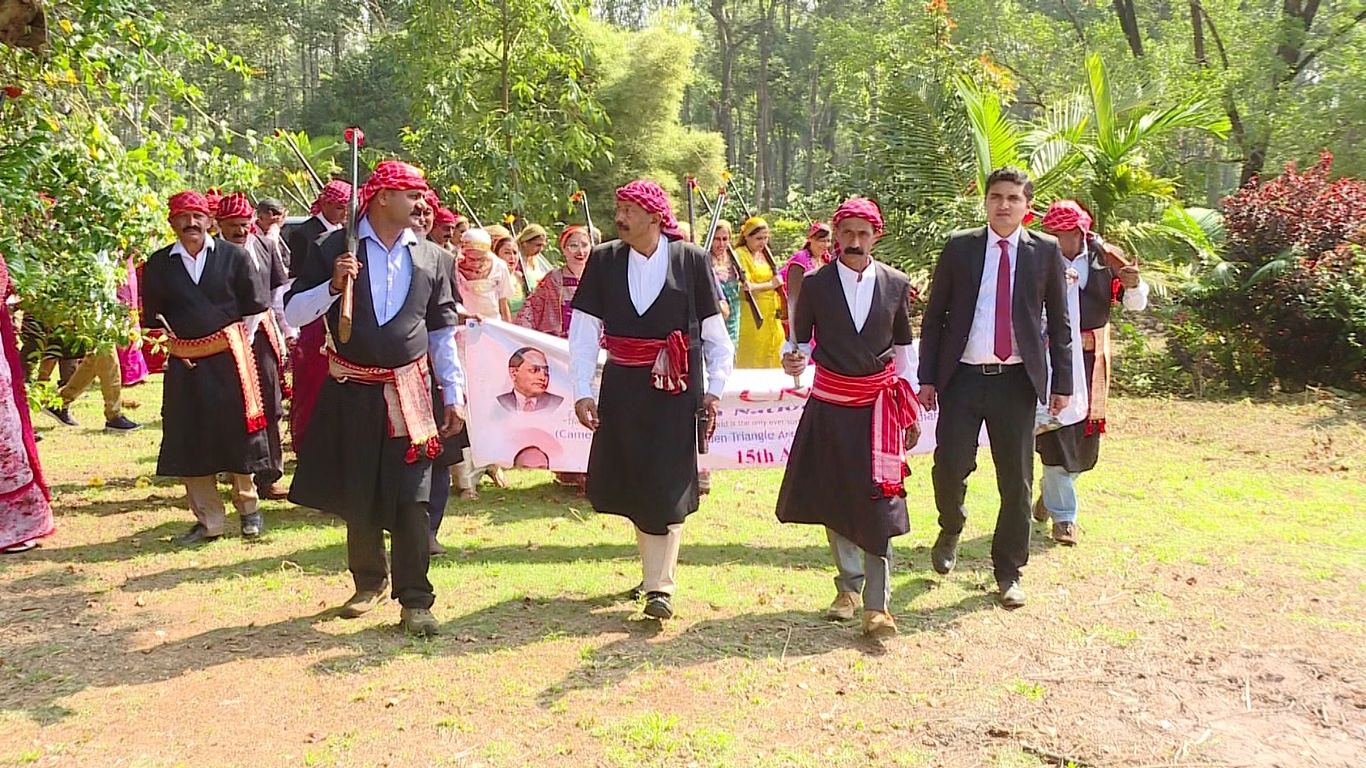
At the Thok Namme (Gun Carnival), organised by the Codava National Council, a Kodava group fighting for recognition of its unique identity and homeland | Photo: By special arrangement
Bengaluru:
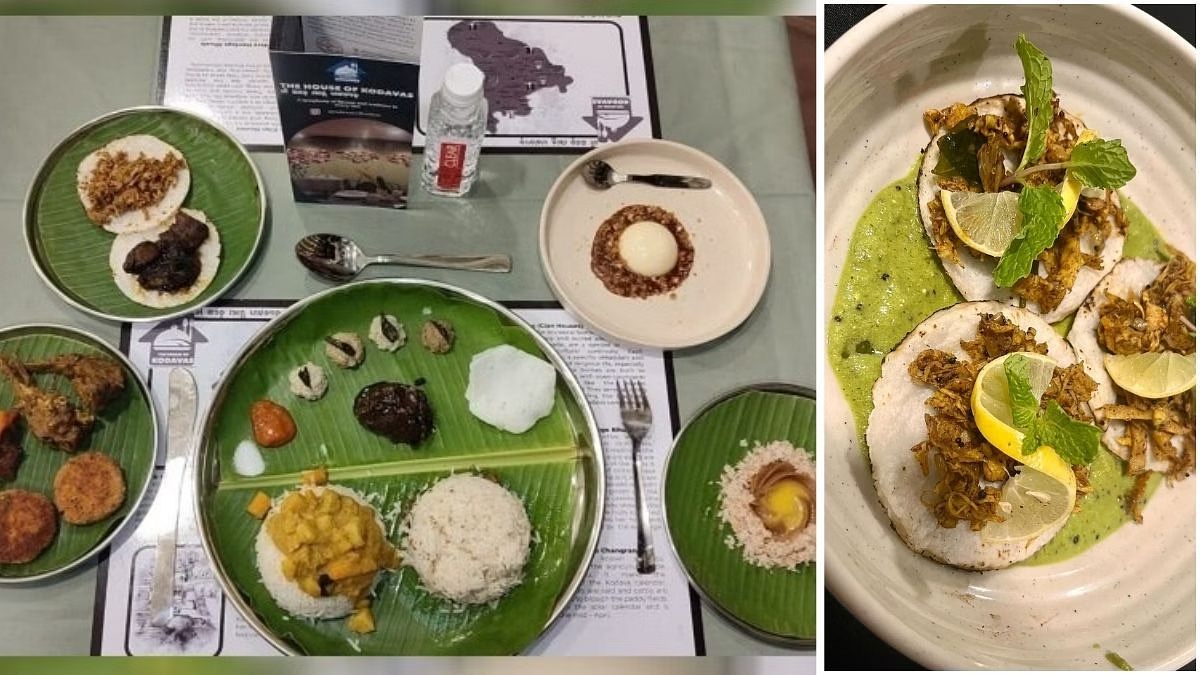
The lunch was a celebration of Kodava pride, heritage, and culture. Two batches of guests at The House of Kodavas in Bengaluru savoured shredded pork on akki-totti (rice rotis), mutton mince-filled ghee rice, and a vast menu of traditional Kodava cuisine like otti-pandi curry and beimbale (bamboo shoot), each given a contemporary twist. Even the table mats served as a dossier of sorts, detailing aspects of Kodava culture.
The Bengaluru restaurant is an initiative to “keep the [Kodava] clan together”. A dwindling population, dilution of tradition, and diminishing national presence have fuelled urgency within the Kodava community in Bengaluru and the neighbouring Kodagu region. Initiatives like the House of Kodavas seek to create a community-focused social and business network akin to those of the Parsis or Jains.
“We Kodava say that we are a clan of warriors and need to support each other. But I would definitely say we are lacking in this,” said entrepreneur Kallichanda Revathi, 43, who helped conceptualise The House of Kodavas initiative.
From community organisations to social media, Kodavas are using various platforms to infuse a sense of togetherness and align it with economic interests. The annual gun festival, field hockey tournament, and return to the Kodava script Lipi are all part of a concerted attempt to revive Kodava identity and raise awareness about the “existential crisis” facing this endangered ethnolinguistic minority group from southern Karnataka.
“Serving Kodava cuisine like a normal restaurant will make no difference to our business. This is about serving the same dish differently to help us get noticed. This will help Kodava entrepreneurs,” said Kalengada Bopanna who runs Umbak Entha, a cloud kitchen, and one of four entrepreneurs who organised the lunch.
Photo: @thehouseofkodavas | Instagram
But the enthusiasm attached to flaunting one’s Kodava lineage has not translated into practice, said elders of the community like N U Nachappa, the president of the Codava National Council, a group fighting for recognition of its unique identity and homeland. Over the years, Nachappa has made representations to every high office in the country as well as the United Nations to secure due recognition and protection for the Kodava community.
“Kodavas are literate but not educated. Our problem is that we have no political instinct. There is no assertion of our cause. And this allows everyone to take us for a ride,” he said.
‘Festival of guns’
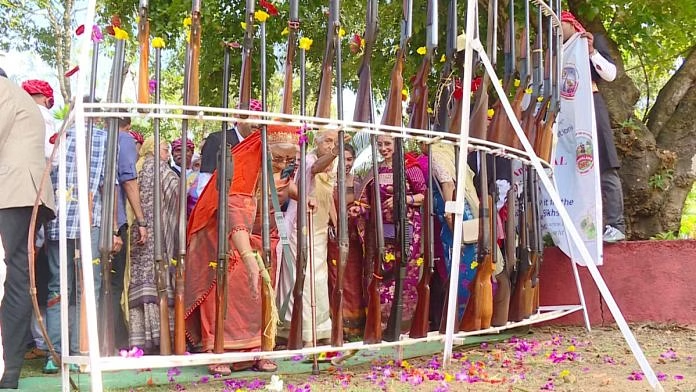
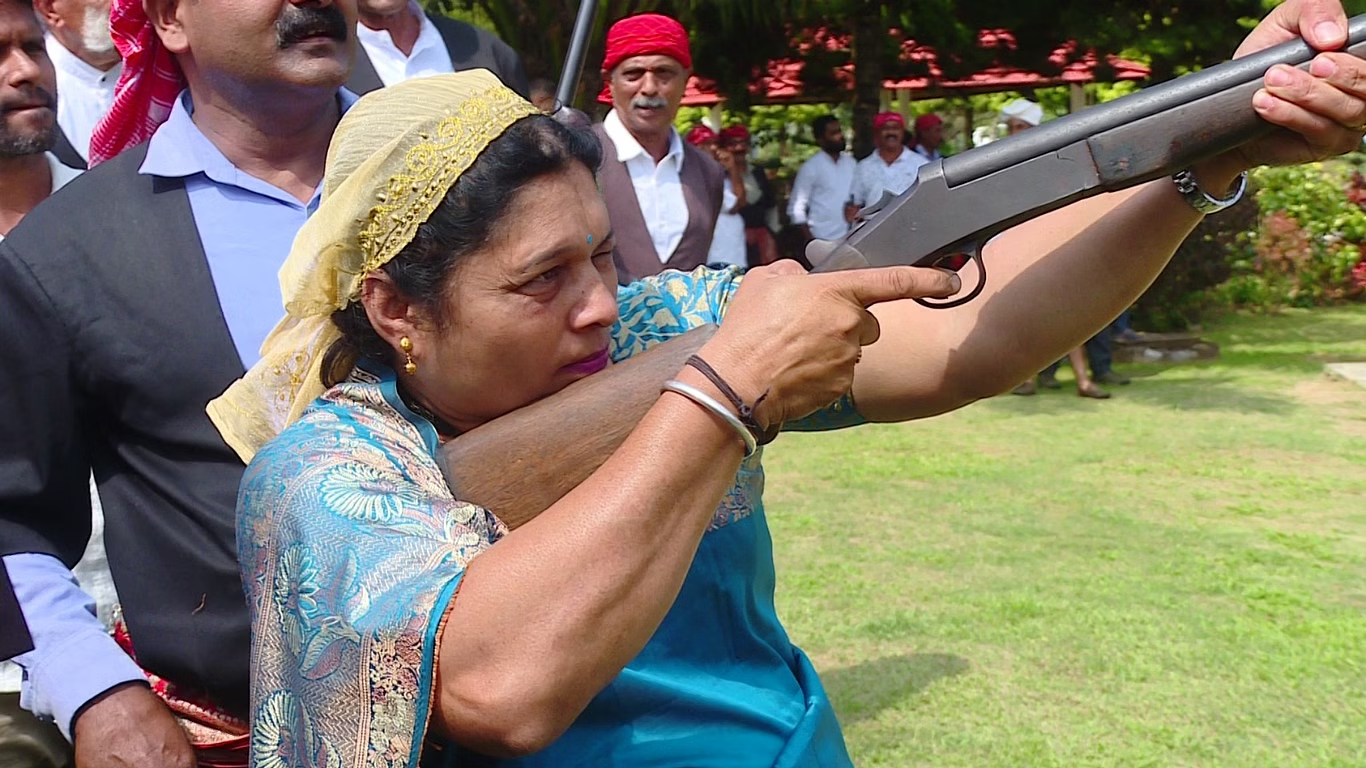
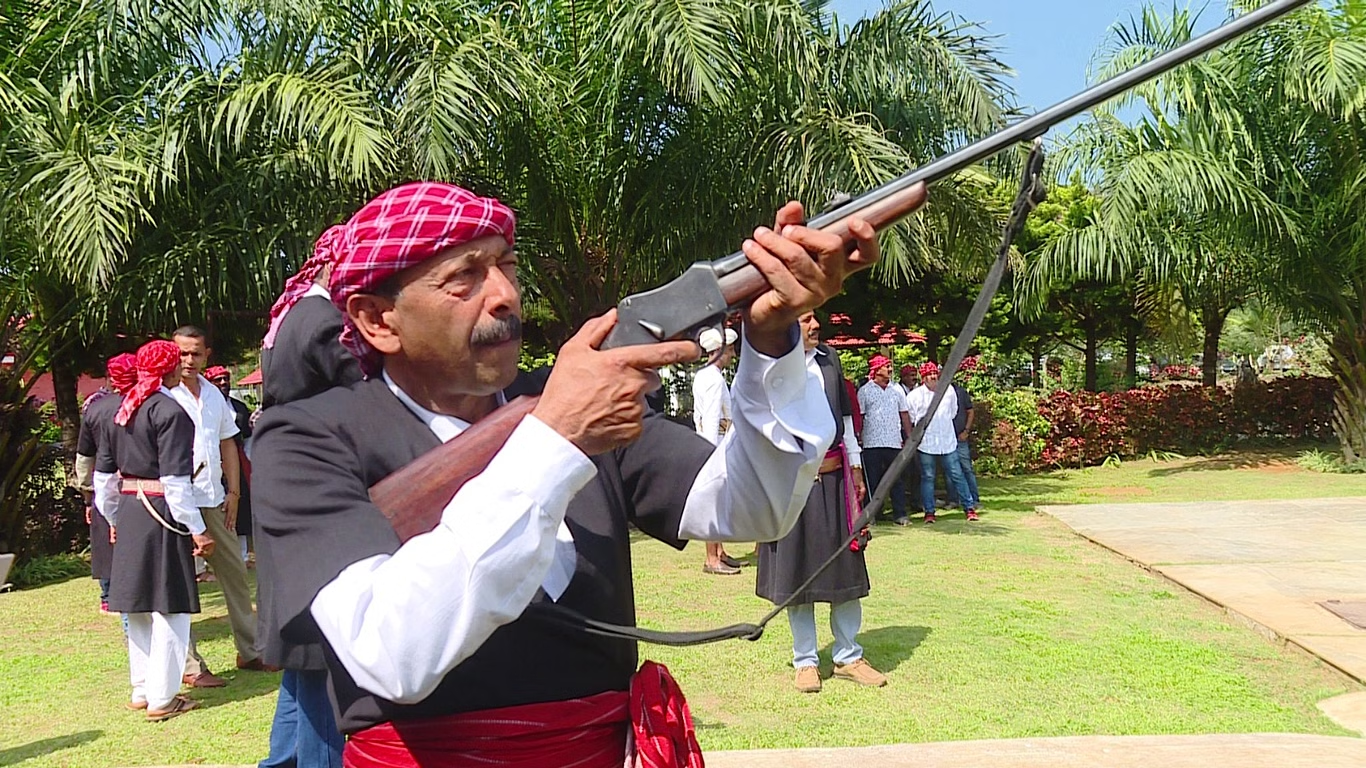
Around 50 people gathered in an open field at a private resort in Ballamberi village on Wednesday morning to celebrate the 14th annual ‘Thok Namme’ (gun festival). The women wore the full Kodava saree style and attire, and most men sported long handlebar moustaches, looking regal. The event began with an offering of prayers to guns, followed by shooting competitions for men, women, and children.
Kodavas have the freedom to possess weapons, a right dating back to the 1830s when the British exempted them from the Indian Arms Act for their contribution to the fight against Tipu Sultan. Though not part of any traditional festival, the CNC created the event to instill Kodava pride, revive ancient customary practices, and keep the movement active and thriving.
A Kodava woman at the Thok Namme (Gun Carnival) | Photo: By special arrangement
Photo: By special arrangement
Kodavas have made a name for themselves in sports, especially hockey, and for their service to the army. Field Marshal KM Cariappa and General KS Thimayya, along with athletes like Ashwini Ponnappa, have become icons not only in their respective fields but also as symbols of Kodava pride and resilience.
Unlike several other micro-groups that do not enjoy the same social capital, the Kodavas have evolved as one of the more successful and progressive communities. Their customs are distinct from other communities anywhere in the country. However, scholars and historians say that distinctiveness is eroding.
“The bigger threat to Kodava’s way of life is from within India, with more people adopting Hindu and brahminical practices,” said professor CC Sowmya Dechamma from the Centre for Comparative Literature at the University of Hyderabad.
During colonial rule, Kodavas were enumerated as a separate race until the 1941 census when they were merged under the Hindu religion.
Traditional Kodava marriages, for instance, do not have priests conducting rituals. It is the duty of the elders to conduct the ceremonies.
“We are nature and ancestor worshippers. But now, we are conducting Homas (sacred pyre) where Brahmin priests ask us to throw rice we grow into the fire. This is absurd,” said a Kodagu-based author and academic, who did not want to be named.
People who spoke to ThePrint added that this religious appropriation has also turned Kodava into a bastion of right-wing ideologies.
“This merging of [our] unique identity with that of mainstream Hindus has led to blind support [for] political parties that subscribe to such beliefs,” said Nachappa. He added that there is no incentive for political parties to take their demands seriously.
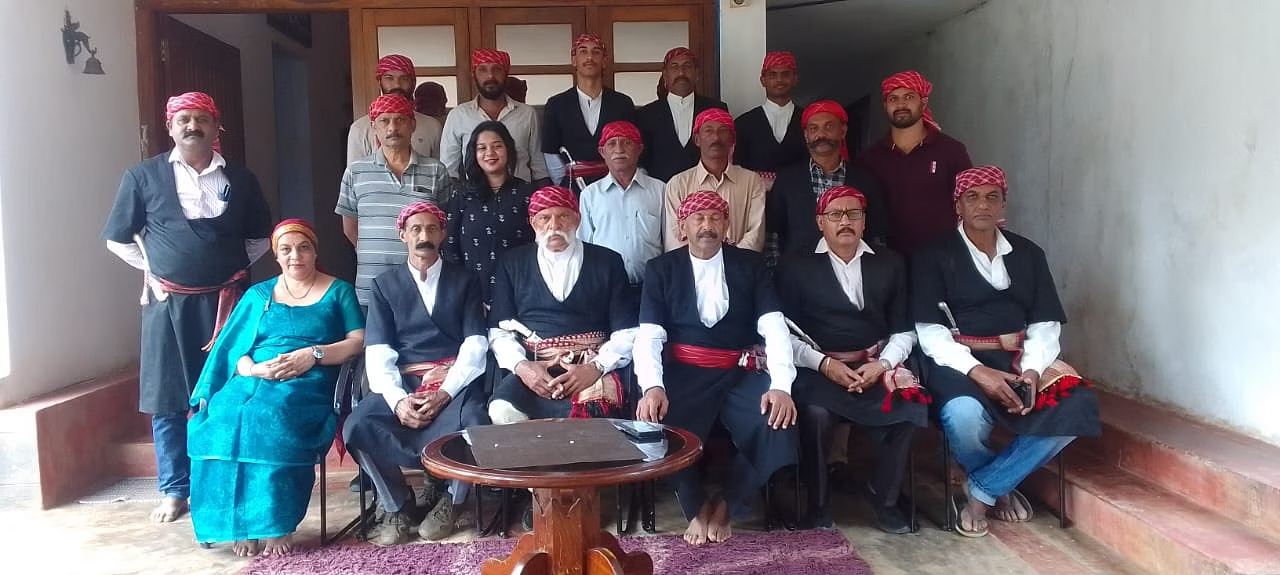
Members of the Kodava community in Karnataka | Photo: By special arrangement
‘Separate race’
Nachappa and the CNC have been fighting for the Kodavas to be granted Scheduled Tribe (ST) status. A section of community members cite the declining population as justification for this measure. The 2011 census indicates that the number of Kodavas decreased from around 1.5 lakh to around 1.25 lakh. According to Nachappa, the numbers are inflated.
Coorg, as it was formerly called, was a state for six years between 1950 and 1956 but was later absorbed into Karnataka, merging its identity. This continues to rankle community members, who are now seeking new ways to establish a separate identity.
Efforts to preserve Kodava distinctiveness include popularising the Kodava script, ‘Lipi’. Though not officially recognised by the Karnataka government, a growing number of Kodavas have started using it on signboards for temples and commercial establishments.
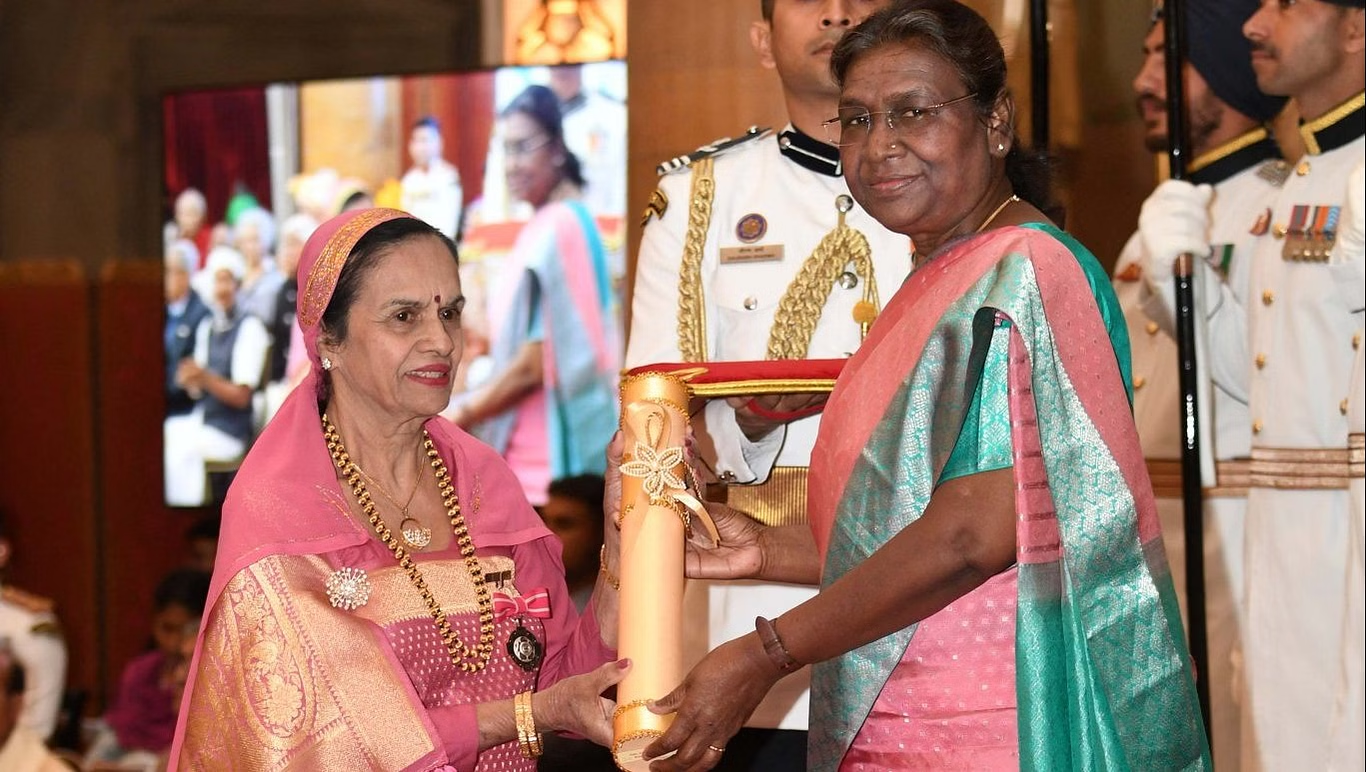
These efforts received a boost when folk dancer Rani Machaiah was honoured with a Padma Shri last year for her contribution to preserving Ummathat, the traditional Kodava dance, since 1984. As the former president of the Karnataka Kodava Sahitya Academy, she has encouraged Kodavas to promote the Lipi.
President Droupadi Murmu presents Padma Shri to Iymudiyanda Rani Machaiah for popularising the Ummathat dance art of Kodagu | Photo: @rashtrapatibhvn | X
Getting recognition as a ‘linguistic minority’ or ‘indigenous minority’ could help protect Kodavas from being marginalised and possibly reclaim land that was ‘illegally’ taken from them. This push for ST status is one step towards that goal.
“There is a constant assertion that Kodavas have lineage associated with Alexander, the Macedonian ruler. But this is to hammer the narrative to de-link Kodavas from asserting their rights to reclaim land that was forcefully taken from us,” Nachappa said.
Despite past government efforts, surveys to address the issue have failed to take off. ST status remains contentious even within the Kodava community. In 2016, the Siddaramaiah-led government halted an ethnographic and socio-economic survey of the community to assess their qualification for tribal status. This was after former MLC AK Subbaiah intervened, claiming the survey was anti-national and that Kodavas could not be compared to tribes like the Hakki Pikki.
Even now, there are tensions over whether Kodavas should be classified as a race or a tribe.
“These so-called progressive people acted as representatives of the community and said they did not want it [the ST status] since they were a prosperous people,” said a senior advocate and political leader who requested anonymity. “Most of the rich in Kodagu are big companies and people from other states who own large coffee plantations, while Kodava land holdings continue to fall sharply.”
On the other hand, a Kodagu-based author and academic argued that Kodavas “parroting” the ST demand fail to grasp its limitations.
“The very definition of Tribal is people who live in inaccessible and remote regions. We are very well educated and prosperous. By trying to get a tribal status, we are denying the same to Yeravas, Kurubas, and other communities who worked as labourers to help us get this prosperity,” the author said.
‘Carrots and sticks’
In April 2024, Guinness World Records officially recognised the 24th edition of the ‘Kodava Hockey Namme ’ as the largest field hockey tournament. This edition featured 4,834 players and 360 teams, hosted by the Kundyoloanda family as part of a month-long tournament.
This event has become central to Kodava culture, reconnecting family members scattered across Karnataka, India, and the world.
Kodava Samajas in major Karnataka cities organise cultural and sporting events, arrange marriages, provide support during funerals, and act as lobby groups to engage with the administration, keeping the community connected to its roots.
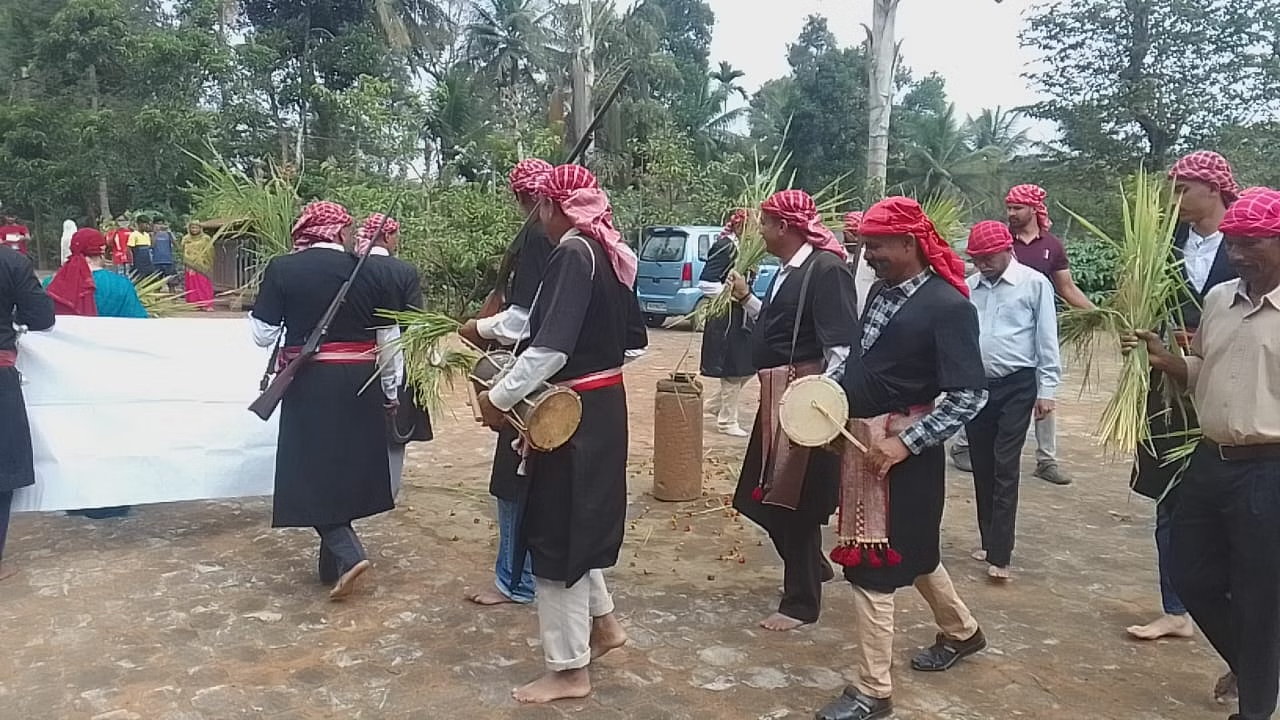
Members of the Kodava community in Karnataka | Photo: By special arrangement
Photo: By special arrangement
Other initiatives by Kodava Samajas and WhatsApp groups fuel a sense of community engagement among younger generations, who show reluctance toward having more children. In one Kodava-centric WhatsApp group, the admin recently conducted a snap poll asking, “Is pre-marriage counseling essential for Kodava Youths?” The answer was a resounding yes.
“Whether it’s marriage, naming ceremony, etc it was a collective affair. As the financial status improved, one by one [people] started building houses away from the Aiyn mane (clan house), it became a divided family and Western culture took over,” one user posted on behalf of her uncle.
She added that many were selling property to settle in Mysuru and Bengaluru, calling this shift a “man made tragedy” that was irreversible.
Such sentiments are common, with declining population narratives fuelling anxieties on various platforms.
Kabilira Harish from the T Shettigere Kodava Samaj offers a simpler explanation for the dwindling population.
“The previous generation had 8-9 children and this reduced to a maximum of three among us. Now, couples are happy with one child or don’t want to have any at all. This is a cause for alarm,” he told ThePrint.
To counter this, the T Shettigere Kodava Samaj announced incentives for Kodava couples, offering Rs 50,000 to families having a third child.
“We are not saying this money will help the family overcome any hurdles or settle the child for life…it’s only ‘Protsaha dana’ (encouragement),” said the 73-year-old.
He added that the association has sufficient funds and donors willing to support this initiative.
However, Revathi, a Kodava community member, noted that many Kodava children do not recognise their Kodava classmates at school, which adds to the widening generational gap.
While this incentive serves as the carrot, others use the stick. In 2021, Chotakmada Rajiv Bopaiah, president of the Ponnampet Kodava Samaj, banned cake cutting, champagne popping, and other ‘westernised’ practices and celebrations.
The Samaj also prohibits grooms from sporting beards and requires brides to wear their hair tied with a ‘Vastra’ during weddings.
Ironically, while Kodavas pride themselves on being polished and fluent in English, they resist ‘westernisation’.
“I don’t think this does anything except show our anxieties out in the open,” said Dechamma.
(Edited by Prashant)
source: http://www.theprint.in / The Print / Home> Ground Reports> The Fine Print / by Sharan Poovanna / December 26th, 2024
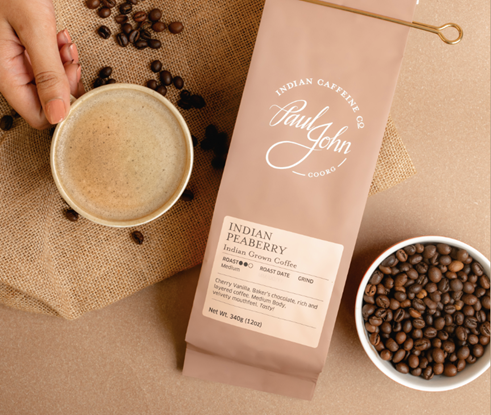
Paul John Indian Caffeine Company , renowned for its premium Indian coffee blends, is set to showcase its artisanal coffee offerings at The Winter Fancy Food Show in Las Vegas, NV, from January 19-21, 2025. Known for its meticulously crafted coffee blends, Paul John Indian Caffeine Company sources coffee beans directly from the lush plantations of South India and expertly roasts them in the United States, delivering an unparalleled global coffee experience.
Highlighted at the show will be the brand’s signature coffee blends, such as its best selling Smell of Rain and the nostalgic Indian Peaberry. These offerings celebrate the uniqueness of Indian coffee, producing the highest quality specialty grade arabica coffee from shade-grown select beans. Attendees can explore gift-ready options complete with a line of brass filters and traditional accessories that capture the essence of authentic Indian coffee brewing.
“We’re excited to bring the vibrant flavors of Indian coffee to the forefront of the global coffee industry,” says Shonali Paul, Founder of Paul John Indian Caffeine Company. “Our blends are a testament to India’s rich coffee heritage, offering both authenticity and modern craftsmanship.”
The Paul John Indian Caffeine Company is one of very few brands on the market specializing in Indian coffee. It produces the highest quality coffee from select beans that are expertly sourced predominantly from the luscious estates of Coorg and Chikkamagalur in Karnataka, India. Shade-grown Indian coffee beans develop a strong and robust flavor, due to their slow growth and maturation process — which allows them to have a highly complex flavor profile and low acidic content.
Visit the Paul John Indian Caffeine Company at Booth Number 3815B to experience these unique blends and learn more about the brand’s commitment to quality artisanal coffee. Wholesale pricing at 50% off of retail pricing for orders placed at the show, plus additional special show discounts.
About Paul John Indian Caffeine Caffeine Company Paul John Indian Caffeine Company is a Tampa-based brand specializing in premium Indian coffee founded by 28-year-old Shonali Paul. Every blend of Paul John Caffeine is inspired by Shonali’s childhood memories in India. With beans sourced directly from South India and roasted locally in the United States, the company brings the authentic flavors of Indian coffee to homes nationwide.
Specialty Food Association
136 Madison Avenue, 12th Floor / New York, NY 10016
source: http://www.specialityfood.com / Speciality Food Association (SFA) / Home> Member Press Releases / December 23rd, 2024
WELCOME. If you like what you see "SUBSCRIBE via EMAIL" to receive FREE regular UPDATES.
Read More »