Category Archives: Uncategorized
World population day: Men do not opt for family planning surgery in Karnataka’s Kodagu district
Over 1200 electricity poles damaged in Kodagu district; acute shortage of linemen affects restoration work
One year after opening store, this homegrown label releases a coffee dyed edit that is sure to surprise!
“Using waste coffee grounds is part of this effort to create beautiful products and contribute to a healthier planet,” says Kabir Singh, designer of The Shop.

Ensembles from the Coffee Dyed Collection
The Shop is a one-year old store run by a family business in Indiranagar that focuses on producing objects of beautiful living. Their inspiration is hand crafted textile, an awakening of traditional art, an observance of individuality and the realisation of living in a sacred space. Their passion is reviving crafts communities by integrating contemporary design with the expert workmanship of traditional craft.
“At 50, older, wiser and more compassionate, we believe in leading the way towards harmonious living, especially in light of our planetary health crisis. Sustainability and social responsibility have become our core values,” opens Kabir Singh, designer and MD, The Shop.
With a wide product range that consists of summer dresses, nightwear, tops, trousers, men’s wear, bed linen, table linen, kitchen, clothing, nightwear, kids, stoles and bags, they actively support the work of an NGO called Disha in bringing hope to the street children of Kolkata and the KDML School in Madikeri, Kodagu — that educates children with special needs.

Ensembles from the Coffee Dyed Collection
“Since the inception of The Shop in 1969, we have been working with traditional techniques like kalamkari, ajrakh, bhag and many more. The team at The Shop now looks at expanding and exploring more sustainable printing techniques and coffee is our newest excitement. We have had a Blue Tokai Coffee Shop at our workshop for many years. While we have been enjoying their coffee for a long time, we never thought of getting inspiration for our textiles from their excellent coffee. We regularly have design team meetings where we look at ways to innovate with new eco-friendly materials and practices. Using waste coffee grounds is part of this effort to create beautiful products and contribute to a healthier planet. The coffee collection is part of our larger Terra range which includes products dyed and printed using natural, vegetable and plant based ingredients,” explains Kabir as we catch up with him for a quick conversation around their newest edit, the Coffee Dyed Collection launched recently to coincide with the 1st anniversary of their new store.

Ensemble from the Coffee Dyed Collection
Tell us about the new collection, what was it inspired by?
The new Coffee Dyed Collection, is yet another drive to create something sustainable in the world of fast fashion. It reflects our commitment to sustainability by using leftover coffee residues from our inhouse cafe, Blue Tokai and also nearby cafes to create rich, warm and natural dyes.
Is this edit a part of a series?
It is a part of the Terra range, more specifically we use vegetable dyes in the Terra range but in this new one, its leftover brewed coffee. This collection is unique and will surely be a trendsetter because it embraces a zero-waste approach, using coffee residues as dye. It’s a step further in our journey towards eco-friendly fashion and a mindful way to dispose of coffee waste produced in mass.
Are there any motifs or designs that are specific to this collection?
The collection is printed using block printed techniques and the motifs and designs used are classics to The Shop. This is because we wanted to compliment the age old traditional block printing with the new and evolving coffee dyed patterns.
Do take us through the colour palette used in this edit?
The colour palette includes warm browns, deep mocha, caramel hues and soft beige — all derived from coffee. These tones create a cozy, inviting aesthetic perfect for any wardrobe.

Ensemble from the Coffee Dyed Collection
What are the fabrics you have chosen for this collection?
We’ve chosen natural fabrics like cotton voile and cambric, which absorb the coffee dye beautifully and ensure comfort and breathability.
What are the silhouettes we can look forward to?
The collection includes The Shop’s own styles like begum kurta, tara tunic, angel tops, kimonos, PJ sets, lounge pants and men’s kurtas both in long and short styles all designed to offer ease and elegance. Also look forward to eco products like table linen mats, napkins, bed linen, cushions, kitchen curtains bags, scarves, nightwear, loungewear, tops, dresses and pants, that are not part of the collection but are available at the store.
INR 1,500 onwards. At Indiranagar.
Email: romal@newindianexpress.com / X: @elromal
source: http://www.indulgexpress.com / Indulge, Indian Express / Home> New Launches / by Roman Laisram / July 27th, 2024
August Adventures: Why Coorg in Karnataka is your perfect travel destination this month
The month of August features various events and festivals like Independence Day, Rakshabandhan, and Janmashtami. With so many holidays this month, you must consider planning an exciting trip to this stunning destination.
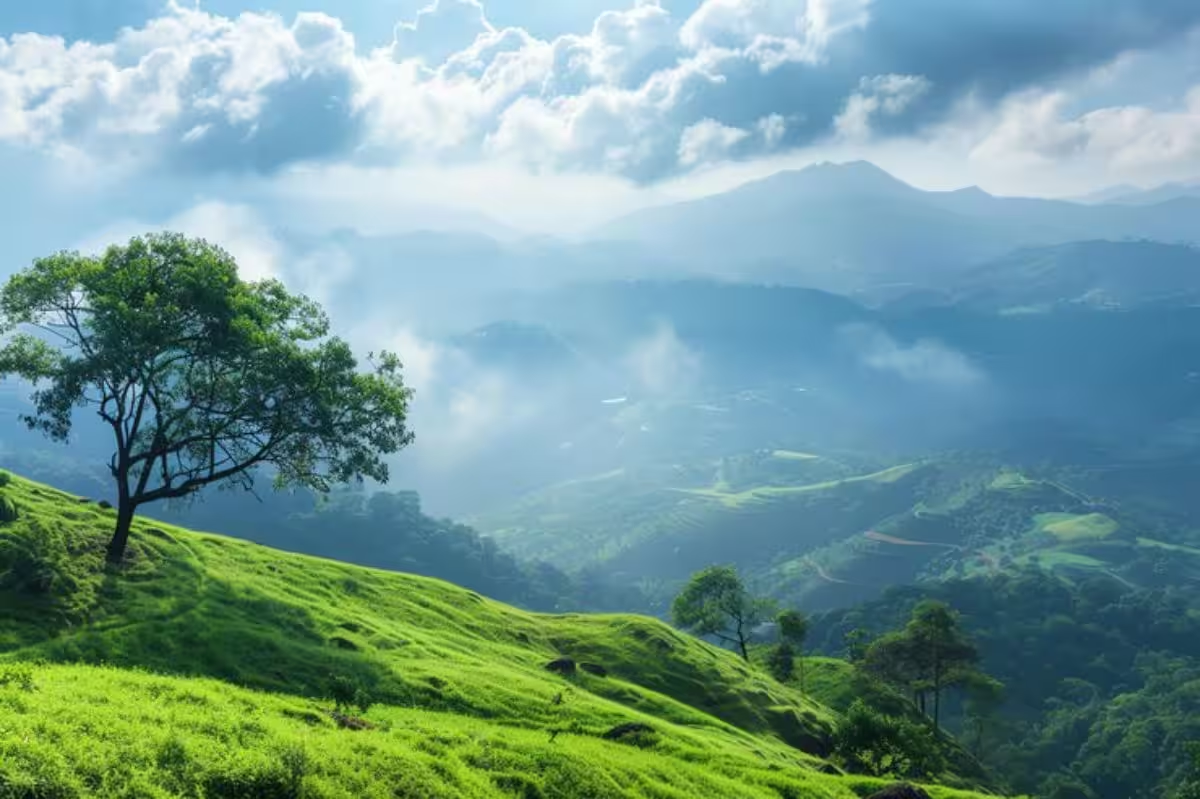
In August?
August is the monsoon season in Coorg, which means this destination is lush and green, with cascading waterfalls and vibrant landscapes. The coffee plantations and hills take on a mesmerizing charm in this season.
The temperature is cooler due to the monsoon, making it a comfortable time to explore the outdoors without the intense summer heat.
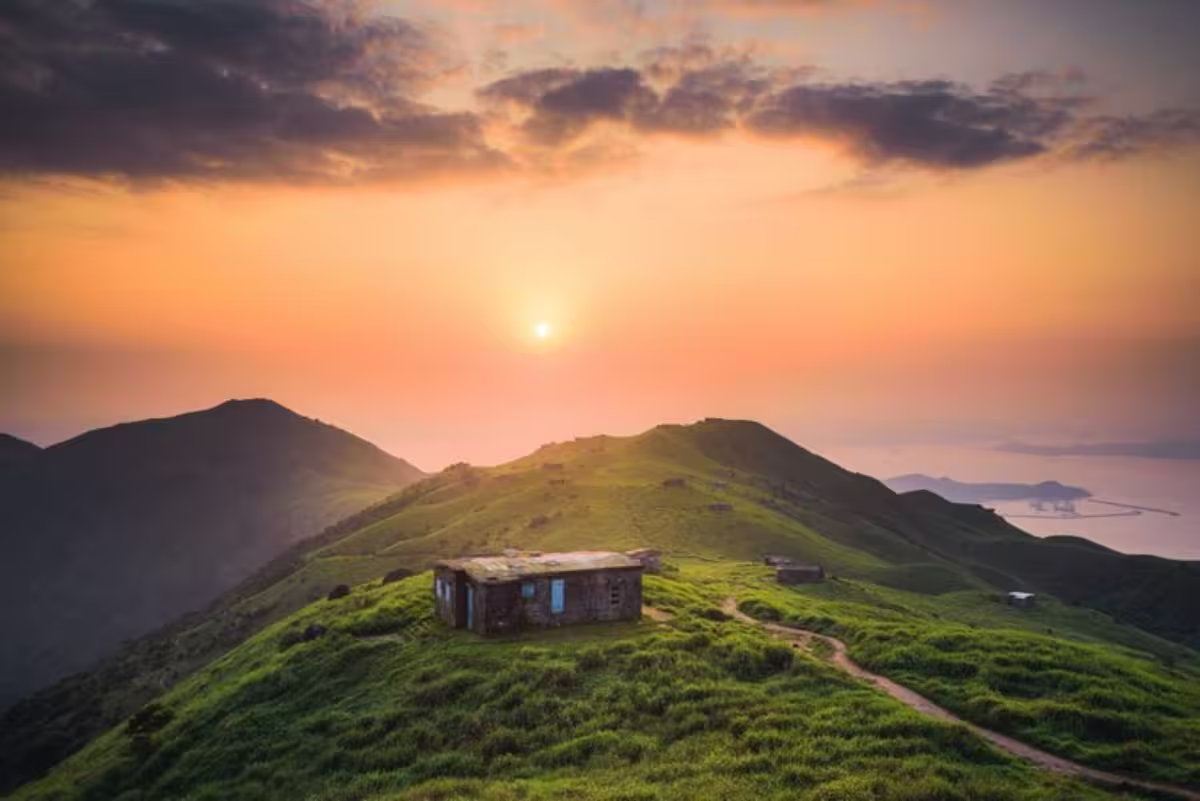
Coorg celebrates the Kodava Festival during this time, which offers a unique glimpse into the local culture and traditions.
Attractions like Abbey Falls, Raja’s Seat, and the Dubare Elephant Camp are especially scenic in the monsoon, with increased water flow and misty surroundings.
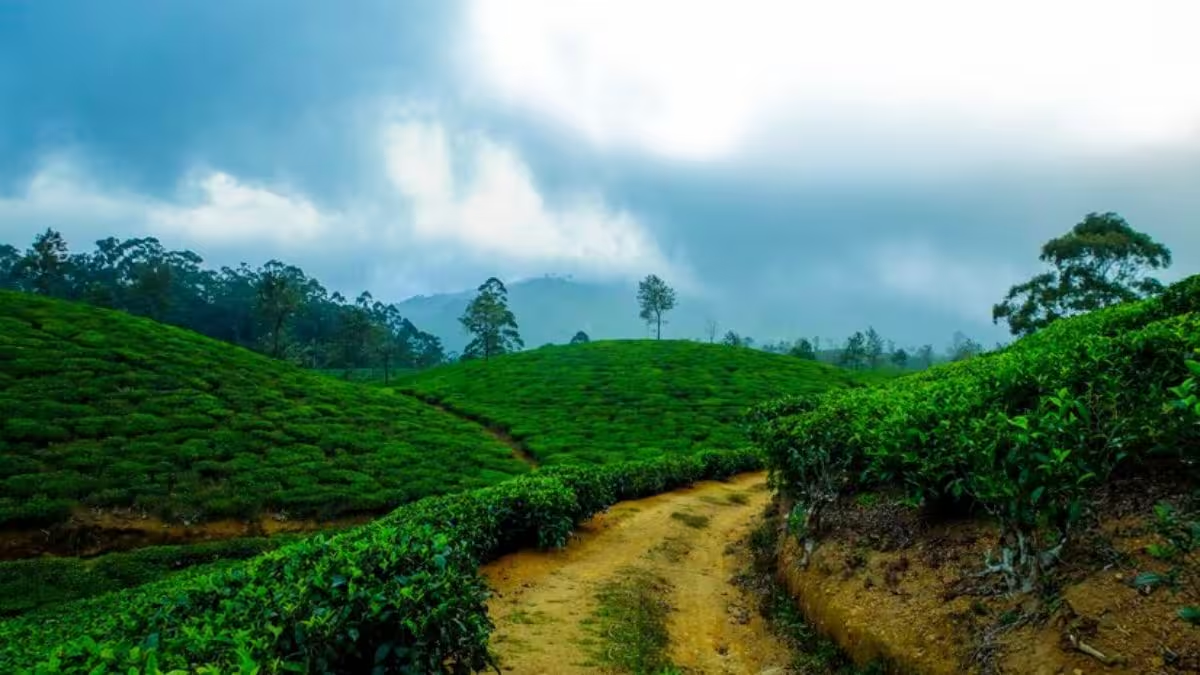
The lush environment provides opportunities for activities like trekking, bird-watching, and river rafting, enhanced by the monsoon ambiance.
Coorg’s natural beauty, offers monsoon’s refreshing touch, making it an ideal destination for a serene and picturesque getaway in August.
Image credits- Freepik
source: http://www.mynation.com / My Nation / Home> Travel News / August 12th, 2024
Karnataka has 4126 elephants in Nilgiri biosphere
As per the 2023 report, the state as a whole houses 6395 elephants, which is 25% of India’s elephant population.
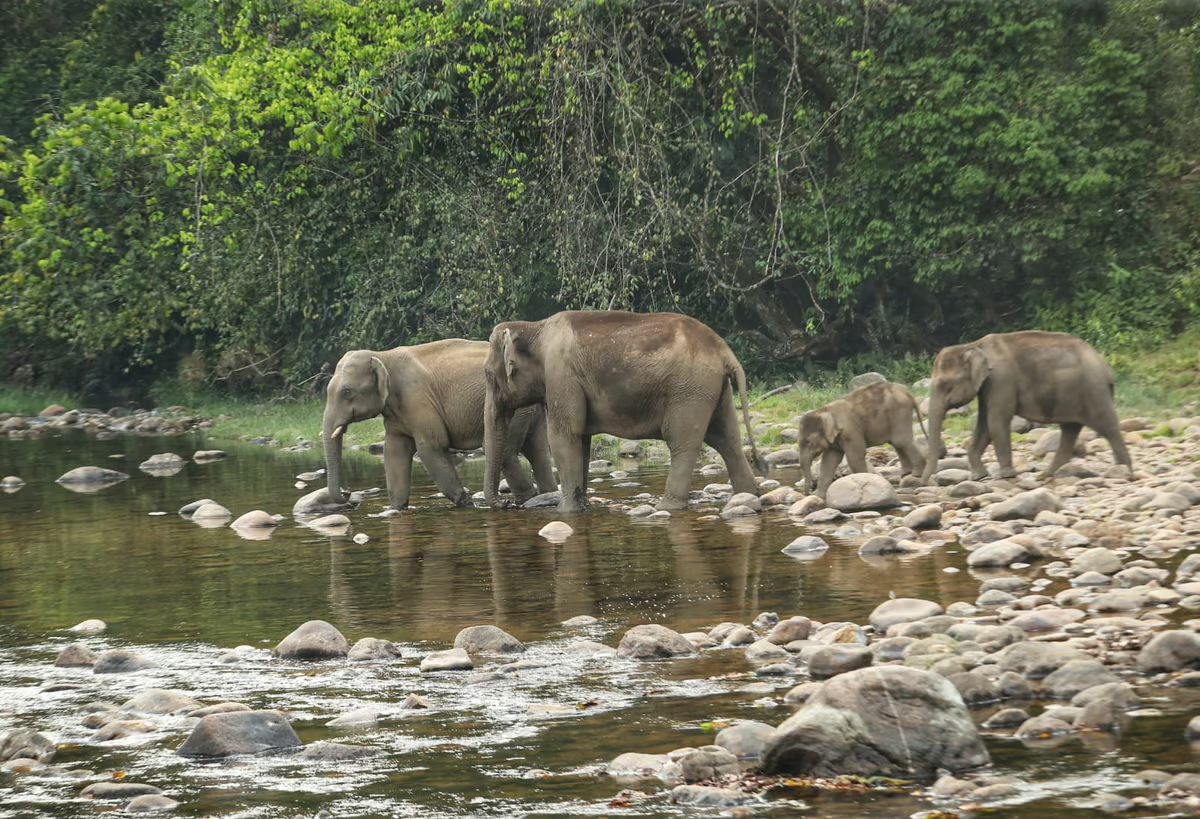
The Tamil Nadu forest department in coordination with neighbouring Kerala, Karnataka and Andhra Pradesh conducted a synchronised elephant population estimation (File photo | Express)
Bengaluru :
As per the latest elephant census report done in the southern states Nilgiri biosphere, Karnataka houses 4126 elephants.
This is apart from the all state elephant estimation exercise which was done in 2023 of all southern states. As per the 2023 report, the state as a whole houses 6395 elephants, which is 25% of India’s elephant population.
The report released on Monday on the occasion of World Elephant Day by chief minister Siddaramaiah, Deputy Chief Minister DK Shivakumar and forest, environment and ecology department minister Eshwar B Khandre, there are 4126 elephants in the Karnataka portion of the Nilgiri biosphere alone.
While Kerala released its report last month, Tamil Nadu earlier in August and Andhra Pradesh is yet to release a compiled report, the entire census report of the entire Nilgiri Biosphere will be released at a later stage, said additional Principal Chief Conservator of forests, wildlife, Kumar Pushkar.
The census exercise was done in the fringe areas of the forests of Bandipur, Nagarhole and BRT Tiger reserves along with MM Hills Wildlife Sanctuary, Bannerghatta National Park, Cauvery Wildlife Sanctuary, Madikeri Wildlife Sanctuary, Madikeri Territorial Division, Virajpet Division and Kolar Division.
As per the report the largest elephant population was recorded in Bandipur- 1042 and the lowest was in Virajpet- 23. No elephant population was recorded in Kolar division.
Elephant census report
Name of forest division — elephant density — estimated elephant population
Bandipur tiger reserve — 0.89 — 1042
Nagarhole tiger reserve — 0.88 — 788
BRT Tiger Reserve — 0.60 — 536
Mm Hills Wildlife Sanctuary — 0.60 — 700
Bannerghatta National park — 0.41 — 111
Cauvery Wildlife Sanctuary — 0.38 — 415
Madikeri Wildlife Division — 0.32 — 133
Madikeri Territorial Division — 0.16 — 169
Virajpet Division — 0.05 –23
source: http://www.newindianexpress.com / The New Indian Express / Home> Karnataka / by Express News Service / August 13th, 2024
Modi introduced Cardamom varieties researched at ICAR–IISR in Kodagu
The two varieties of the crop – IISR Manushree and IISR Kaveri, were among the 109 agriculture and horticulture crops released to the farming community by the Prime Minister.
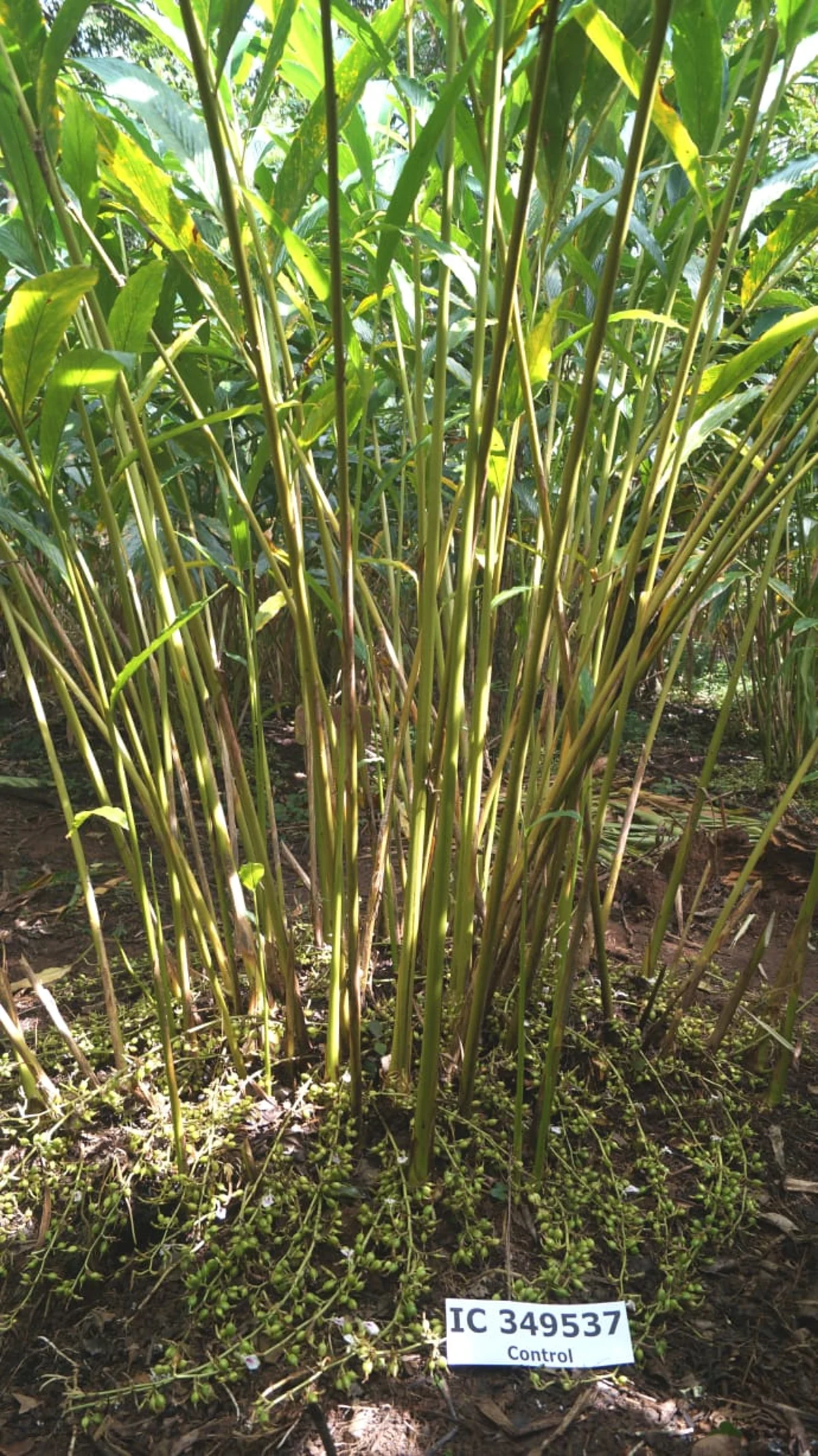
IISR Kaveri Cardamon variety / Photo | Express
Madikeri :
Prime Minister Narendra Modi introduced two new cardamom varieties developed at the Indian Council of Agricultural Research at Appangala in Kodagu. The two new varieties were released after the approval from the central sub-committee on crop standards.
Cardamom was among the important revenue-generating crops for the farmers across Sakleshpur, Kodagu and Chickmagaluru in the 1980s. However, extensive disease in the crops resulted in its downfall even as cardamom plantations were converted to coffee estates. Nevertheless, the crop can still earn good returns. The ICAR-IISR Kozhikode is involved in extensive crop research even as its regional station at Appangala has successfully introduced two new crop varieties to boost cardamom cultivation
The two varieties of the crop – IISR Manushree and IISR Kaveri, were among the 109 agriculture and horticulture crops released to the farming community by the Prime Minister. The two varieties were developed by DR SJ Ankegowda, Principal Scientist and Head of ICAR-IISR and his team at Appangala.
Dr Ankegowda said that the IISR Manushree variety is developed through clonal selection. This variety is stable yielding and tolerant to moisture stress. It produces an average yield of 550 kg dry capsules per hectare under irrigated conditions and 8.84% under moisture-stress conditions. The second variety, IISR Kaveri is a compact flowering cardamom variety that produces bold capsules, where 70% of the capsules are over 8 mm. IISR Kaveri is tolerant to moisture stress, producing an average yield of 482 kg dry capsules per hectare under irrigated conditions and 308 kg dry capsules per hectare under moisture stress conditions. This variety is said to be suitable for cultivation in Karnataka.
“Soil moisture is one of the limiting factors in augmenting the cardamom production and recently many youngsters from non-traditional areas are interested in cultivating cardamom where the crop experiences moisture stress during summer months. So these cardamom varieties with drought tolerance capacity can be tried. The present-day market consumer prefers green colour and bold capsule cardamom. So the variety IISR Kaveri with higher percentage of bold capsules fetches a premium price,” opined Dr Ankegowda.
source: http://www.newindianexpress.com / The New Indian Express / Home> Karnataka / by Prajna G R / August 11th, 2024
‘Bhel Pani’ event in Karnataka’s Kodagu attempts to bring youngsters back to their roots
However, to rekindle the interest in agricultural activities, ‘Bhel Pani’ has been organized in the vast farmland of Bittangala for five years now.
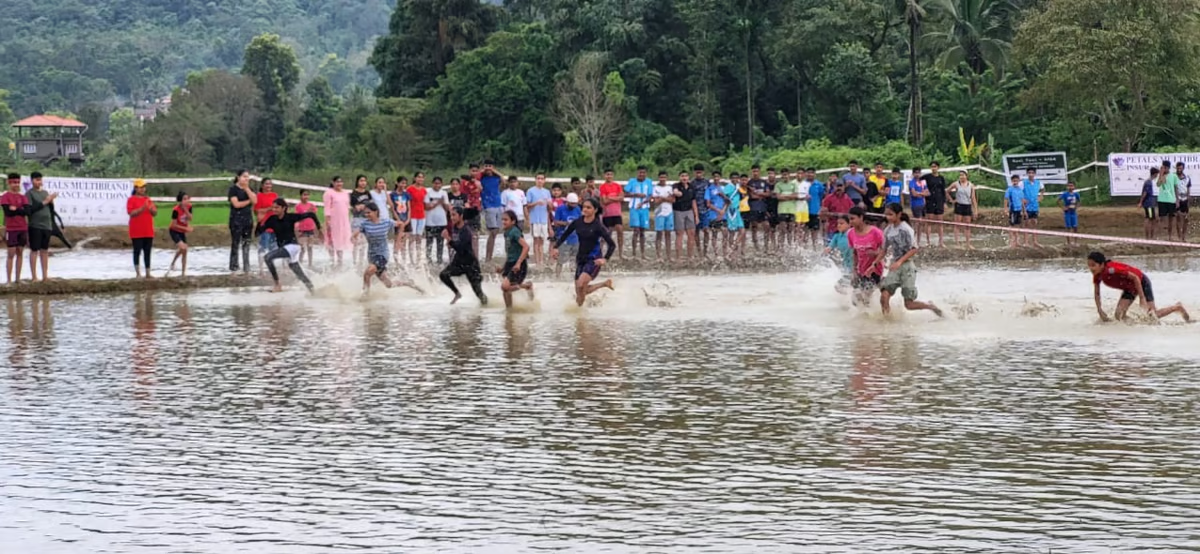
Sports activities hosted as part of the event / Photo | Express
Madikeri :
With an aim to revive agriculture among the Kodava community, ‘Bhel Pani’, a unique event was hosted at Bittangala in Kodagu. The event was jointly organized by Jabhoomi and Roots of Kodagu alongside support from various other associations and organizations and was inaugurated by Jabhoomi core members including Rajeev Bopaiah.
The culture of Kodava community is intertwined with agriculture. However, the farmlands are being abandoned or converted into commercial sites due to the invasion of urbanization. However, to rekindle the interest in agricultural activities, ‘Bhel Pani’ has been organized in the vast farmland of Bittangala for five years now.
“Earlier, our ancestors were involved in intensive agricultural activities as this was their means of life. However, modernization is affecting our culture and this is having an impact on the environment too,” explained A Kushalappa, convener of Roots of Kodagu and Jabhoomi organizations.
He explained that several farmers are shifting to ginger cultivation over paddy as the former earns better returns. However, the groundwater is depleting due to increased ginger farming. Paddy cultivation helps recharge ground water. The effects of abandoning paddy cultivation are already being witnessed in the form of water crisis during summers in Kodagu.
With an aim to introduce the paddy cultivation tradition to the youngsters of the community and reintroduce interest in farming among others, the programme was hosted with much pomp. Hundreds from across the district, participated in the event and cultivated the farmlands with paddy. Alongside paddy cultivation, farmland sports including slush running races and other activities were also hosted.
source: http://www.newindianexpress.com / The New Indian Express / Home> Karnataka / by Prajna G R / August 11th, 2024
August 4: Kodagu Gowda Samaja And Kodagu & Dakshina Kannada District Gowda Mahila Samaja, Mysuru
‘Food Mela’ (Aaati Gouji) for community members, Kodagu Gowda Samaja Sabha Bhavan, Vijayanagar 2nd Stage, 11 am.
source: http://www.starofmysore.com / Star of Mysore / Home> Events Tomorrow / August 03rd, 2024
An Ode to Mother Cauvery, the lifeline of our region
The people of Cauvery basin, including Bengaluru, were struggling for every drop of drinking water, let alone irrigation water, thanks to severe drought in the State.

DK Shivakumar, KPCC President and Deputy Chief Minister, Government of Karnataka /Photo | Express
The rain gods have finally smiled on Karnataka soothing the parched lands, streams and rivers yearning for the elixir of life. Mother Cauvery has once again come to life in all her glory. She is brimming with water giving hopes of prosperity to millions of people in her path and quenching the thirst of the neighboring state as well. It is my good fortune that I have the opportunity to offer the traditional ‘bagina’ to her on behalf of the people of the State.
The people of Cauvery basin, including Bengaluru, were struggling for every drop of drinking water, let alone irrigation water, thanks to severe drought in the State. Goddess Chamundeshwari has blessed us with copious rains and the smiles are back.
To pay our obeisance to Mother Cauvery, our Government, led by Chief Minister Siddaramaiah, will offer bagina on July 29, 2024. It is an auspicious occasion for us to be paying respect to our lifelines at Krishna Raja Sagara and Kabini reservoirs.
Cauvery is not just a river for us. She is emotion and she is devotion. Daughter of King Kavera and wife of Agasthya Maharshi, Cauvery took birth in the Brahmagiri hills of Kodagu. Kodavas revere Cauvery as their mother and kula devathe. Kodava culture is full of traditions and rituals praising her. Panje Mangesh Rayaru, a well-known poet from Kodagu, has praised her in his poems. Such is the importance of Cauvery that great literary works such as Kaviraja Marga of Sri Vijaya identify Karnataka with her.
Equated with river Ganga, Cauvery is considered to be one of the seven sacred rivers of India. It is a common ritual even today to recite ‘Gangecha Yamunechaiva Godavari Saraswathi, Narmade Sindhu Cauvery Jalaismin Sannidhi Kuru’ while taking bath.
Such is her sacredness that places of religious importance dot her path. From TalaCauvery in Kodagu to Sri Ranganath in Srirangapatna and Gajaranya Kshetra at Talakadu to Shilabedhi Kshetra at Shivanasamudra, her path is punctuated by places of great religious significance. There are about 700 temples along her path in Karnataka and Tamil Nadu. It won’t be hyperbole to say Cauvery is a blessing for the people of Kodagu, Mandya, Mysuru, Hassan, Bengaluru and surrounding areas. She has spread prosperity wherever she flows.
Legacy of KRS
The Wadiyars of Mysuru revered Mother Cauvery highly. It was the monumental foresight, determination and effort of Maharaja Nalwadi Krishna Raja Wadiyar, Sir M Visveswaraya and others in Mysuru kingdom which gave birth to Kannambadi, or what is popularly known as KRS. The construction of this reservoir started in 1911 and ended in 1932. More than 10,000 workers sweated it out to build this reservoir, which continues to water lakhs of acres and quench the thirst of crores of people. We owe the prosperity of this region to Mysuru Maharajas and Sir MV.
Nadaprabhu Kempegowda laid the foundation for Bengaluru 500 years ago. Perhaps he was aware that it would go on to become a global metropolis. He built over 300 lakes to fulfil water needs of the town. As the city grew, the lakes shrank and it was no more water self-sufficient. That is when Cauvery water was pumped to Bengaluru city from a distance of 100 km. Cauvery water quenches the thirst of more than a crore people of Bengaluru today. Mother Cauvery flows in the veins of Bengaluru, which has become one of the leading technology centres of the world.
Save Water
Cauvery isn’t just water, it is the lifeline of our region. The recent water crisis has demonstrated that every drop of water is precious. Given the uncertainties around climate change, it is our bounden duty to conserve water. Be it for drinking purpose or for irrigation, we need to be mindful of the use of water. Our government is also creating awareness about water conservation. The mantra of water conservation must flow through our every vein, only then can we pass on a secure future to our children.
We have decided to organize ‘Cauvery Aarti’ on the lines of Ganga Aarti in Varanasi. We believe this is just a small token of our obeisance to the Mother, who continues to feed us and nurture us.
source: http://www.newindianexpress.com / The New Indian Express / Home> Karnataka / July 29th, 2024

