Category Archives: Uncategorized

This Bengaluru start-up pitches for ‘profit for the planet

Mycelium hopes to conserve 10,000 acres of Western Ghats through private forests.
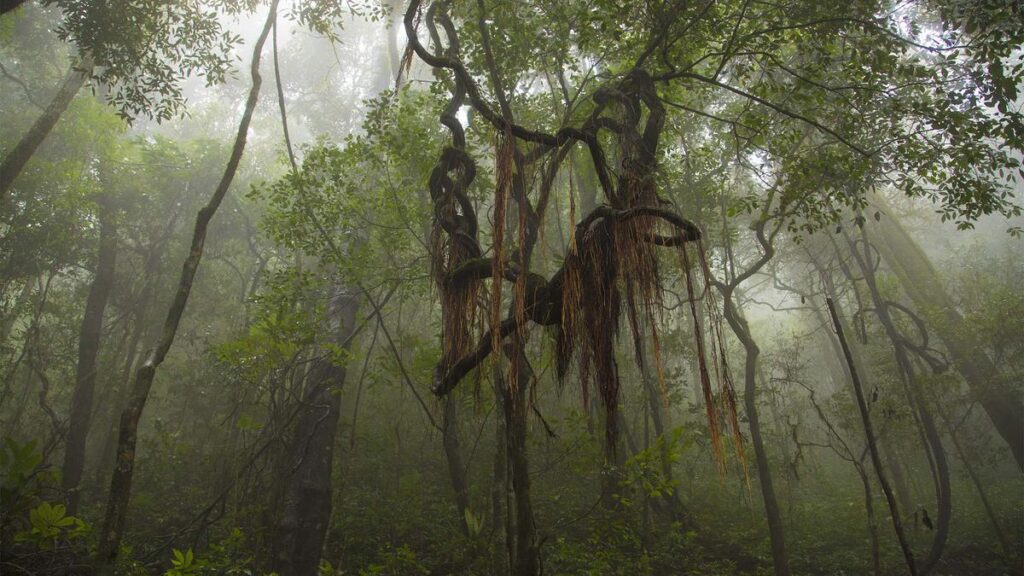
The team at Mycelium attempts to identify fast depleting forests and pause that depletion | Photo Credit: Abhishek Jain

When Bengaluru-based serial entrepreneur Nishanth Prasannan moved to Kodagu with his family in 2016, it was an escape from the hustle and bustle of the city.

In his own words, Mr. Prasannan, an urban dweller until then, developed quite a “romantic” association with Kodagu, which was all so green and misty. It lasted for about two years. The heavy rains and landslides that shattered Kodagu in 2018 woke him up to reality with a jolt.
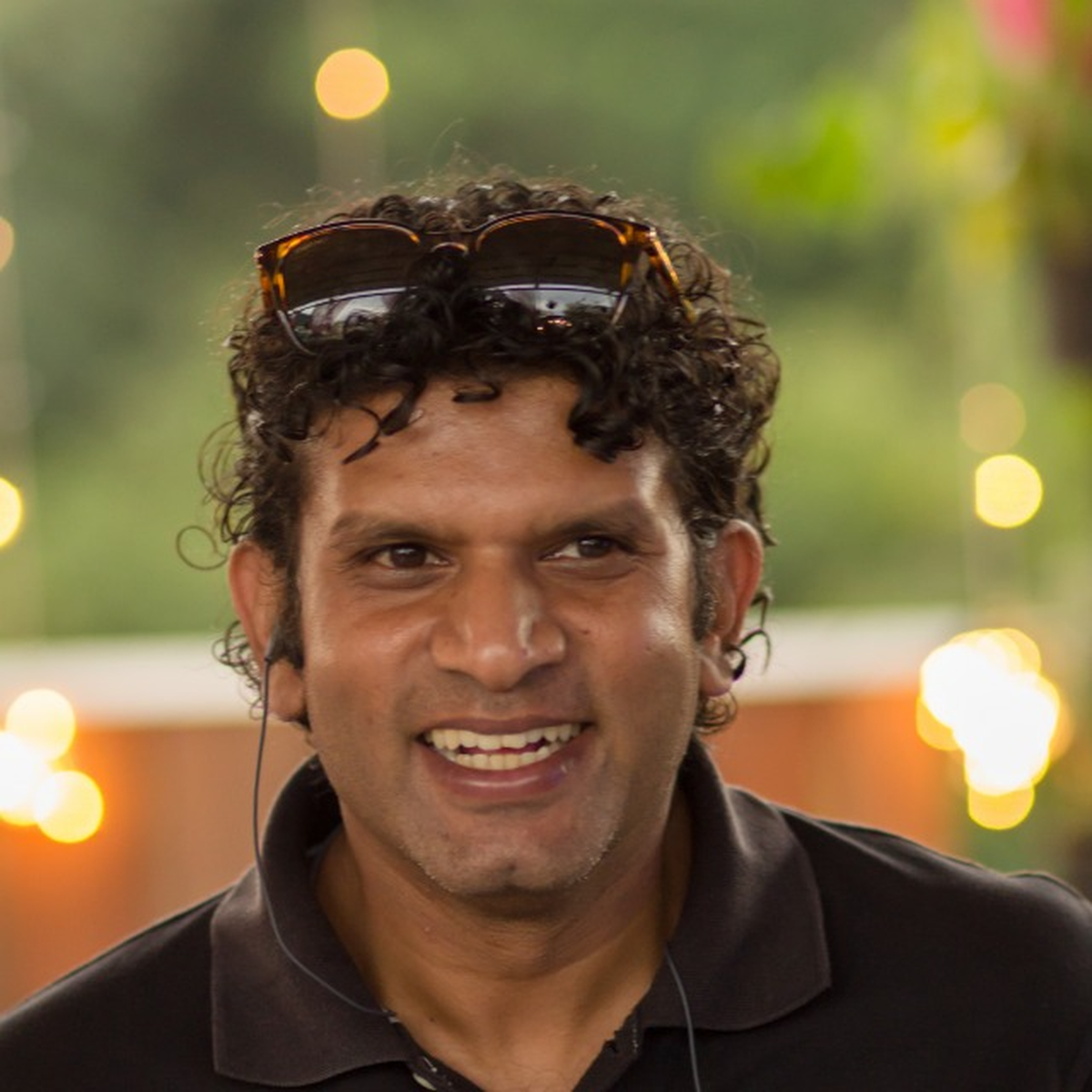
Mycelium co-founder Nishanth Prasannan

Skewed concept

“The year 2018 made me realise that not everything green is beautiful,” says Mr. Prasannan. When India’s State of Forest Report (ISFR) 2021 came out last year, environmentalists and conservation experts called out how the report had counted plantations as forests, which was misleading.  “Forest cover is a skewed concept. Our landscape has been abused for years, and the abuse is not visible because it’s all green.”
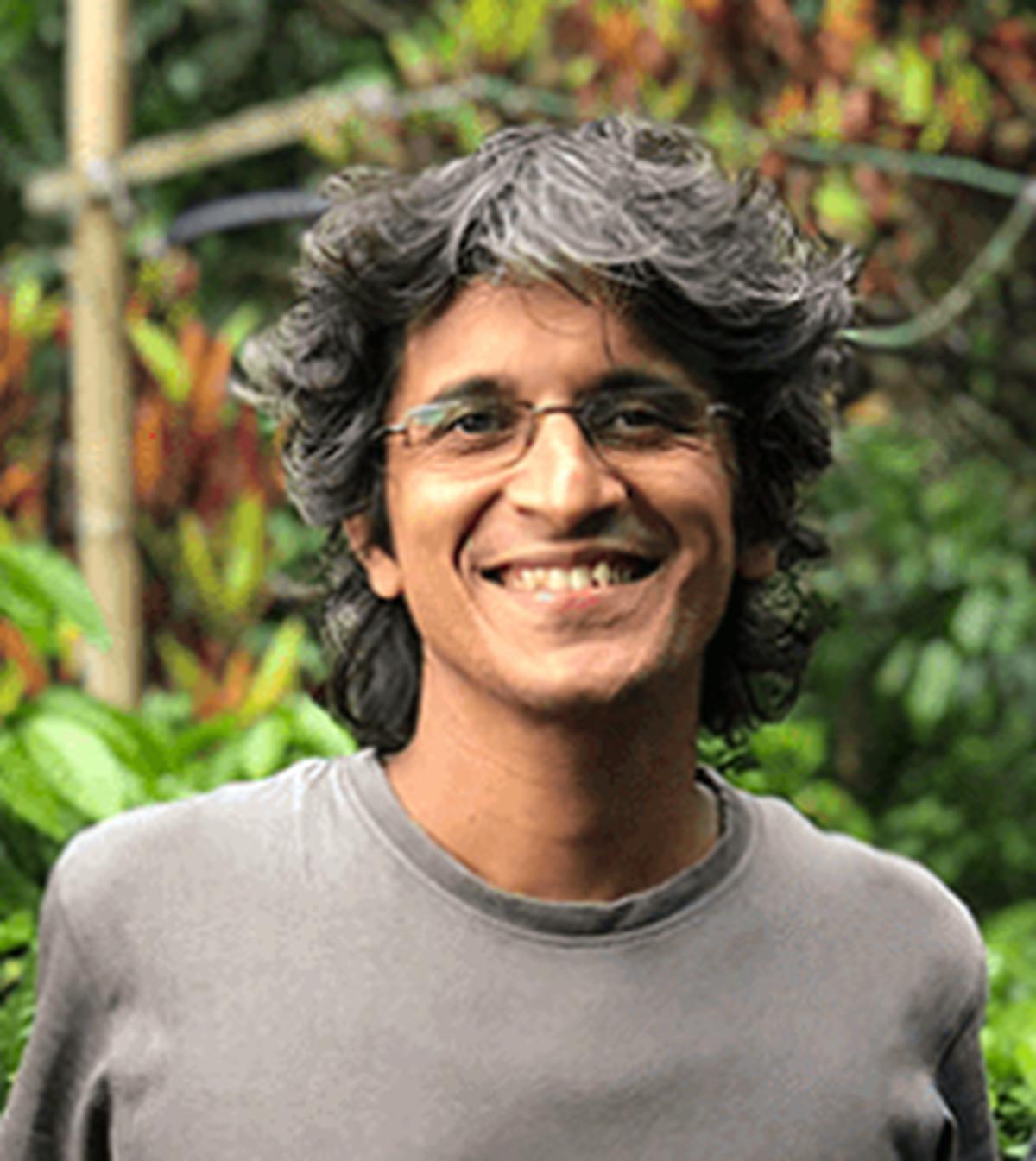
Mycelium co-founder Abhishek Jain

Mr. Prasannan, along with Abhishek Jain, who is a naturalist based out of Kodagu, then started probing ways to monetise land without exploiting it. This led to the birth of Mycelium, a Bengaluru-based start-up that aims to buy private lands outside of protected forests and conserve or restore these spaces.
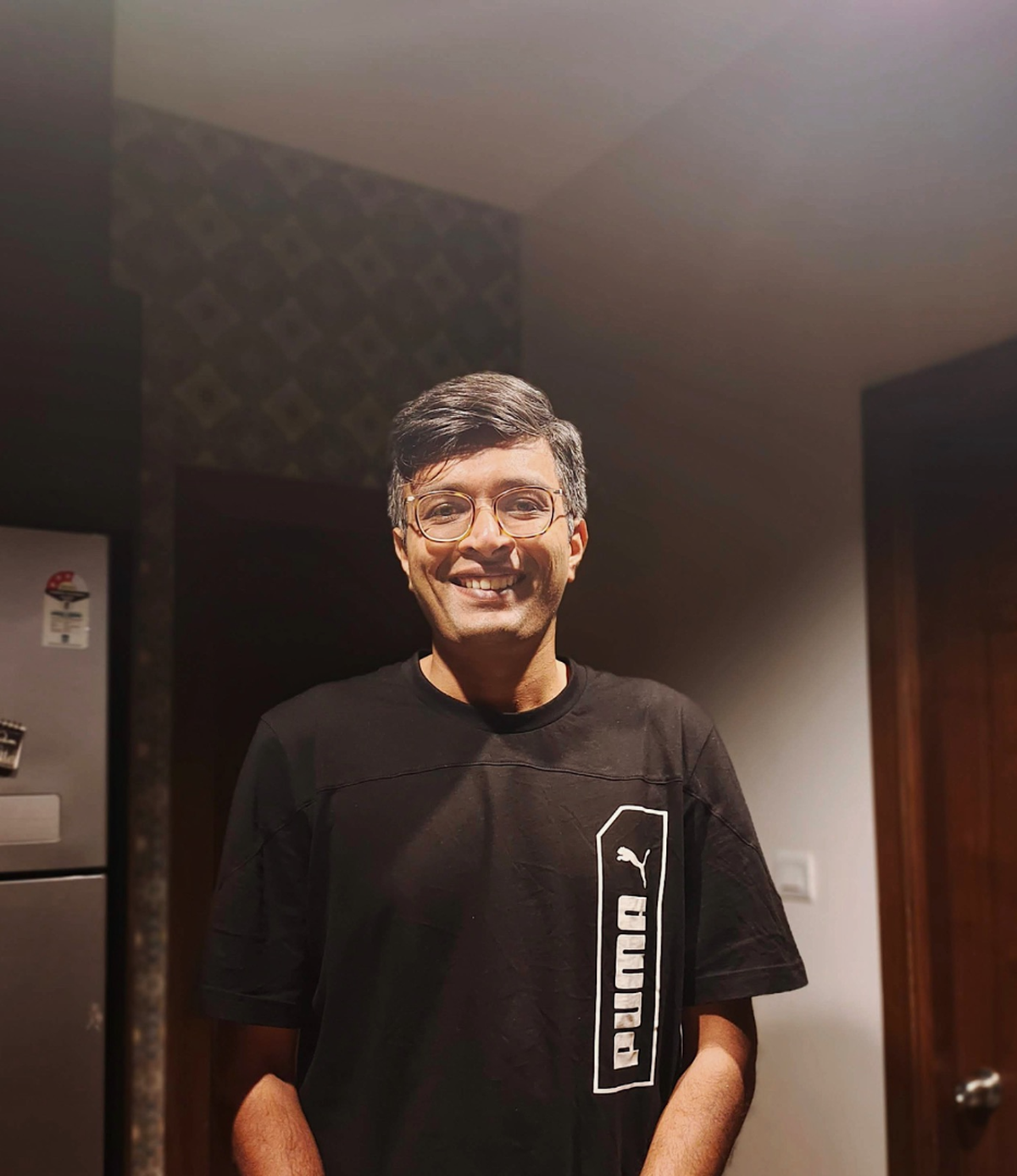
Mycelium co-founder Vinod Chandramouli

“We are not buying land for real estate purposes. Our idea is to look at rapidly depleting forests and pause that depletion. We are looking at private lands adjacent to forest or corridors of sorts that are prone to conflicts and then taking them off the market,” says Vinod Chandramouli, who joined as a co-founder in 2022.

Collective conservation

Mycelium takes the help of individuals who care for the cause and would invest money into it. They form a “collective”. The money is used to buy the land and develop the habitat. “The collective members do not get demarcated pieces of land, but equity in the company,” Mr. Chandramouli clarifies.

The start-up aims to conserve 10,000 acres of Western Ghats by 2035 and is currently finalising the registration of its first property, a 70-acre land near Pushpagiri. Named Dancing Frog Habitat, it has four collective members as of now.

According to the founders, 80 per cent of the land would be conserved as a pristine forest, while in the remaining 20 per cent, there would be facilities enabling the co-existence of humans with nature. The team is looking at revenue models such as forest experiences for communities, building interpretation centres, organising treks and building a marketplace of forest produce. The private forest would also be open for research purposes.

“The idea is to not attract urban dwellers to come and take selfies but to build a narrative that inspires them. Buying organic honey is considered cool today, but can we shift the narrative from buying honey to adopting a beehive? That’s what we are trying to do,” Mr. Chandramouli says.

The Mycelium team is building an advisory group that would guide the team and build a playbook that the founders hope would enable more people to replicate the same in other parts of the country. The ground-level execution would be with the help of the local community, say the founders.

Not new concept in India

Private forests are not entirely a new concept in India. In the 90s, a group of nature lovers came together to develop Vanvadi, a forest about 90 km from Mumbai. In 2021, Bengaluru-based entrepreneur Suresh Kumar converted 21 acres of barren land in Sagar into a forest with the help of environmentalist Akhilesh Chipli.

There have also been quite a few takers for forests inspired by the Miyawaki method in different parts of the country. Private forests adorned headlines in 2017 when Bollywood celebrities Saif Ali Khan and Kareena Kapoor gifted their son Taimur Ali Khan a forest on his first birthday.

Mycelium founders try to marry the concept with their entrepreneurial capabilities, build systems into the process of conservation, and make it economically sustainable. “We are exploring if there are ways to make a for-profit conservation narrative,” says Mr. Chandramouli.
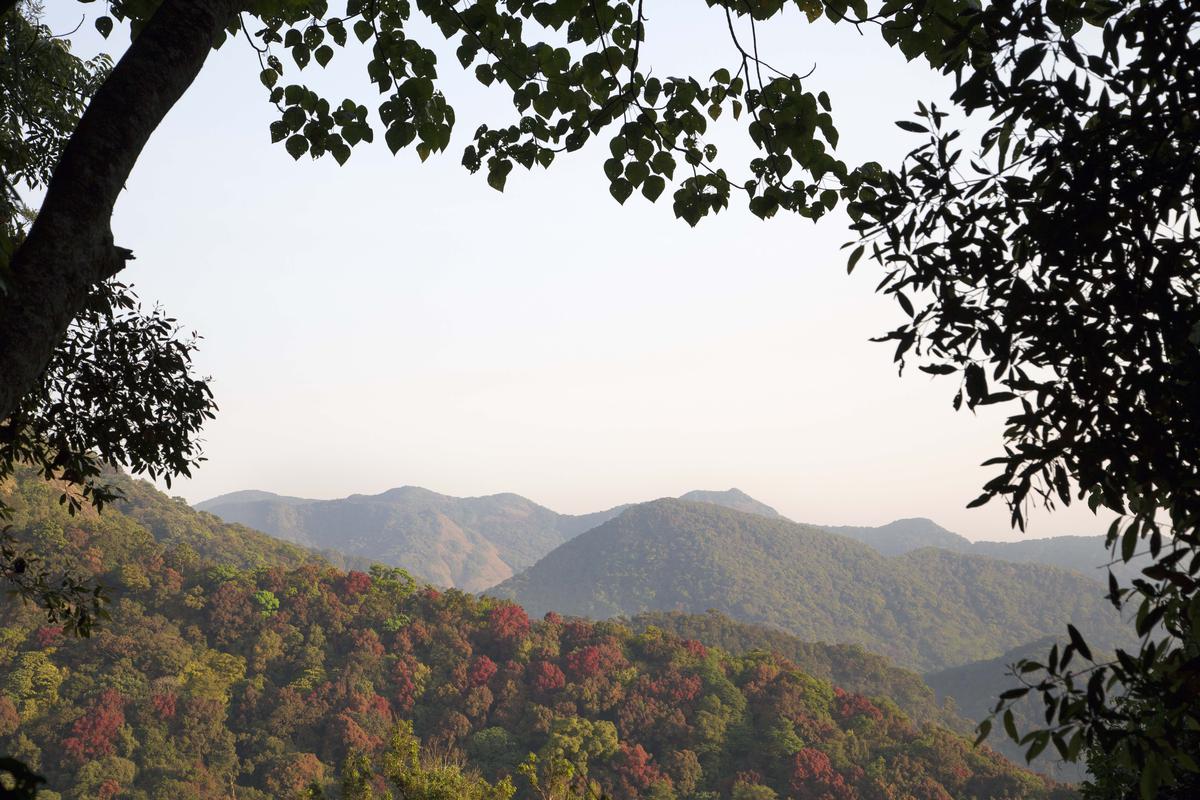
According to the founders, 80 per cent of the land would be conserved as a pristine forest, while in the remaining 20 per cent, there would be facilities enabling the co-existence of humans with nature.
According to the founders, 80 per cent of the land would be conserved as a pristine forest, while in the remaining 20 per cent, there would be facilities enabling the co-existence of humans with nature. | Photo Credit: Abhishek Jain

Government’s earlier proposal

In 2018, the Karnataka government proposed the Karnataka Private Conservancies Rules-2018, which encouraged private conservation lands adjoining national parks and wildlife. The policy was vehemently opposed by environmentalists and conservationists who feared it would lead to encroachment of protected forested areas, circumvention of eco-sensitive zone regulations and increased man-animal conflict. Increased greenwashing attempts by corporates have also been making experts sceptical about for-profit conservation initiatives.

“Be it privately or government-owned land, if the forces are strong enough for changing land use, invariably land use gets changed in India. From a bird’s eye view, such initiatives come with several potential risks as too many elements are beyond the control of well-meaning investors. What are near these private forests? Are there human settlements? What if potentially dangerous animals start coming into these lands? Will it lead to increased human-animal conflict? Who would then be responsible? All these are issues that need to be thought through,” says Ravi Chellam, coordinator, Biodiversity Collaborative and CEO, Metastring Foundation.

He adds it is vital for such initiatives to invest in and empower local communities and not end up dispossessing them of their lands and restricting their access to these lands and the forest resources they offer. “There are also concerns related to justice and ethics at a broader scale because such efforts are in some sense resulting in consolidation of wealth by the wealthy.”

Nityanand Jayaraman, an environmental activist, echoes similar concerns. “Given that the market is a cause of the crisis, trying to solve it again using the market is concerning. Even if your aim is conservation, the idea is essentially profits. There’s an ecological and social crisis here which are both interlinked. Such initiatives marginally address the ecological issue but do not address the social issue.”
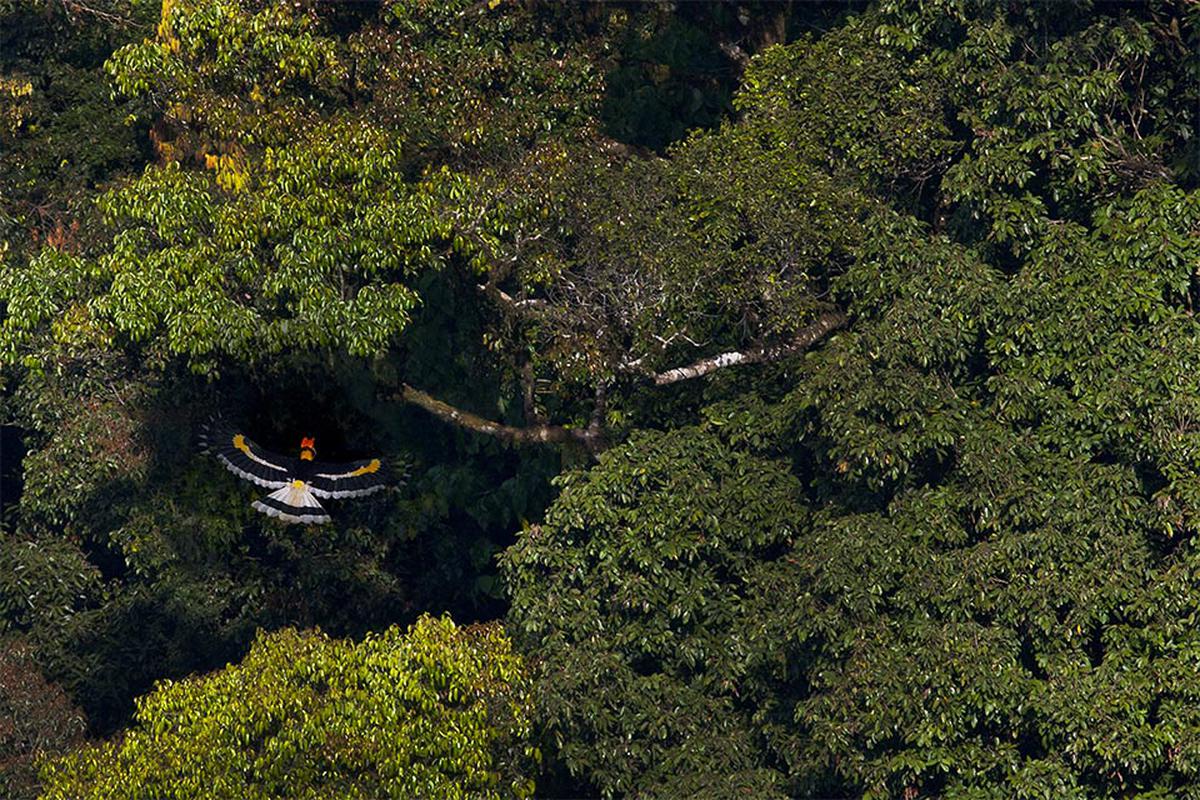
The start-up aims to conserve 10,000 acres of Western Ghats by 2035.

No financial institution funding

Mycelium founders, however, think differently and emphasize that the initiative will enable the locals to engage with them and tap into their knowledge. Prasannan says, “We have been really tight-fisted about the kind of funds we have been using. We are absolutely sure that we will not take financial institutional funding. If someone gives the money and says they want ‘x’ per cent returns, then there’s no investment into the cause.”

Mr. Chandramouli adds, “If we were to let this land become a coffee estate, it would have a larger impact on the Pushpagiri region than it would have if you take it off the market. Any collective member who comes in is heavily gatekept. We tell them from day 1 that this is not a real estate team and to not expect the appreciation of the land to go from ‘x’ to ‘y’. Nor is money going to come in as interest. These 70 acres are for the next 100 to 300 years.”

source: http://www.thehindu.com / The Hindu / Home> News> Cities> Bengaluru / by Shilpa Elizabeth / June 08th, 2023
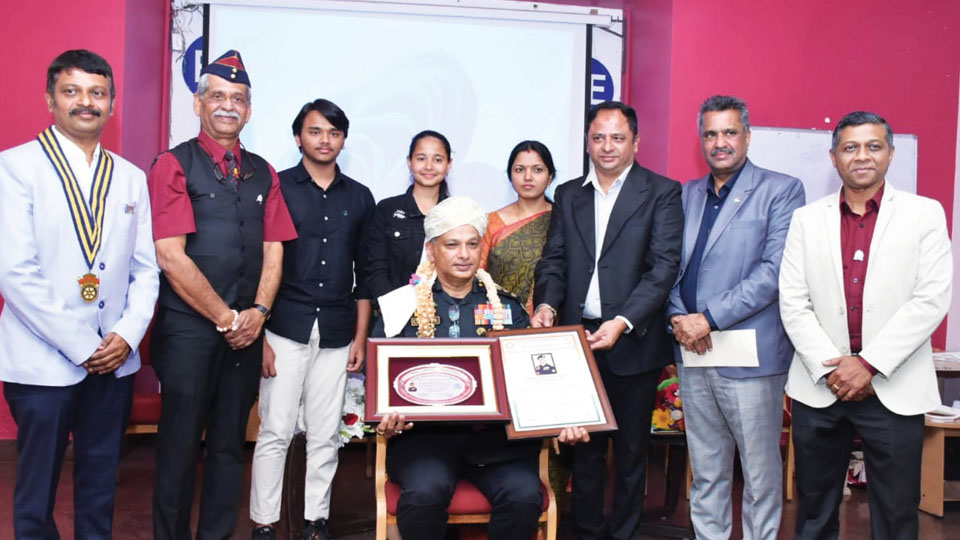
‘Rotary Sainik Desh Rathna’ Award Conferred On Brig. B.M. Cariappa

Mysore/Mysuru:

National Security Guard (NSG) Force Commander Brigadier B.M. Cariappa (Baleyada Muthanna Cariappa) was conferred the prestigious ‘Rotary Sainik Desh Rathna’ award at a programme jointly organised by Rotary Mysore Midtown and Shrisainik Foundation at Rotary Centre Hall on JLB Road here yesterday.

Speaking after conferring the award, Col. (retd.) Ravi Shirahatti lauded the acts of Brig. B.M. Cariappa during the victorious Kargil War against Pakistan.

Pointing out that Brig. Cariappa’s achievements and works are a model to young servicemen as well as armed service aspirants, Ravi Shirahatti said that though several will be willing to don Army uniform, it is not possible for many.

Noting that donning the Army uniform is a pride for everyone, he said that it is important to understand the past and history of Wars. Maintaining that those serving in the Army should be ready for sacrifice, he said, as such, the honour of Armymen will continue even after their retirement from service. Observing that a tree’s future depends upon the deep-rootedness and sturdiness of its roots, he said that the service profession demands valour, integrity, sacrifice and commitment. In the absence of these, the purpose of serving in the Army cannot be fulfilled, he said adding that he (Ravi) feels proud to have served the Indian Army.

Brig. Cariappa who spoke after being conferred with the award, reminisced on how he led his group during the 1999 Kargil War.

Noting that the first two attempts of the Indian Army in capturing the Khalubar Hills in Kashmir had failed, he said that he was then entrusted with the responsibility of capturing it, following which he came up with an innovative operation and succeeded in doing the job.

Explaining how the Kargil War was won, he said that crucial decisions were taken by the Indian Army during the War which resulted in a crushing defeat for Pakistan’s misadventure.

Earlier, Brig. Cariappa was accorded a grand welcome at the venue with Hootagalli KHB Colony’s Rotary Midtown Academy students playing Musical Instruments and saluting him.

Rotary Midtown President Rtn. M.S. Naveen Chandra, Hon. Secretary Rtn. S. Kumaraswamy, Rtn. K.L. Rakesh Babu, Rtn. S. Abhilash and others were present.

source: http://www.starofmysore.com / Star of Mysore / Home> News / February 23rd, 2023

Coorg’s Hidden Gems: Off-the-Beaten-Path Adventures

Coorg's Hidden Gems: Off-the-Beaten-Path Adventures

If you’re looking for an adventure, Coorg is the place to be. With its rolling hills, dense forests, and rushing rivers, this southern Indian state is a paradise for nature lovers. And while most visitors flock to the popular towns and attractions, there are plenty of hidden gems waiting to be discovered. If you’re looking for an adventure in Coorg, book rooms at the Evolve Back Coorg resort. Nestled in the midst of a 300-acre coffee and spice plantation, this luxurious resort offers a unique blend of modern comforts and traditional Kodava hospitality. 

Exploring Coorg’s Hidden Waterfalls

Coorg, also known as Kodagu, is a gorgeous district in Karnataka, India. It’s known for its coffee plantations, lush greenery, and breathtaking views. It’s also home to some hidden gems, like waterfalls.

If you’re looking for an off-the-beaten-path adventure, Coorg is the perfect place. There are several hidden waterfalls throughout the district, and they’re all worth exploring. Here are a few of our favourites:

Irupu Falls: Irupu Falls is one of the most popular hidden waterfalls in Coorg. It’s located in the Brahmagiri Wildlife Sanctuary, and it’s a beautiful spot for hiking and picnicking. The falls are about 60 feet tall, and they’re surrounded by lush greenery.

Abbey Falls: Abbey Falls is another popular spot for hiking and picnicking. It’s located in the Madikeri fort, and it’s a short hike to the falls. The falls are about 30 feet tall, and they flow into a small pool.

Mandalpatti Falls: Mandalpatti Falls is a hidden gem that’s definitely worth exploring. It’s located in a small village called Mandalpatti, and it’s a short hike to the falls. The falls are about 50 feet tall, and they flow into a small pool.

Trekking Through Coorg’s Lesser-Known Trails

Looking for a unique adventure in Coorg? Check out some of the lesser-known trails in this beautiful region of Karnataka. From easy nature walks to more challenging treks, there’s something for everyone to enjoy.

One of the most popular trails is the Raja’s Seat, which offers stunning views of the surrounding mountains and valleys. The trail is suitable for all fitness levels and takes around 2-3 hours to complete.

For a longer trek, head to Brahmagiri Hill, which is the tallest peak in Coorg. The trek can take anywhere from 4-8 hours, depending on your fitness level, and the views from the top are simply breathtaking.

If you’re looking for a truly challenging trek, then the Tadiandamol Trek is definitely for you. At over 5,700 feet, it’s the highest peak in Coorg, and the trek can take up to 10 hours to complete. However, the views from the top are more than worth the effort!

Coorg’s unexplored wildlife sanctuaries

The Western Ghats, which run parallel to the coast of southwestern India, are home to some of the country’s most biodiverse and beautiful landscapes. Coorg, a district in Karnataka, is one of the best places to explore the Ghats. With its verdant hills, winding rivers, and dense forests, Coorg is a nature lover’s paradise.

There are several wildlife sanctuaries in Coorg that are worth exploring. These sanctuaries are home to a variety of flora and fauna and offer visitors the opportunity to see some of the region’s most beautiful scenery.

Ranganthittu Bird Sanctuary is one of the most popular sanctuaries in Coorg. The sanctuary is located on the banks of the Cauvery River and is home to a variety of birds, including pelicans, storks, and herons. Visitors can take boat rides through the sanctuary to get a closer look at the birds.

The Brahmagiri Wildlife Sanctuary is another great place to see Coorg’s wildlife. The sanctuary is home to tigers, leopards, and elephants, as well as a variety of other animals. Visitors can take jeep safaris through the sanctuary to see the animals up close.

The Pushpagiri Wildlife Sanctuary is another great place to see Coorg’s wildlife. The sanctuary is home to tigers, leopards, and elephants, as well as a variety of other animals. Visitors can take jeep safaris through the sanctuary to see the animals up close.

The Nagarhole National Park is another great place to see Coorg’s wildlife. The park is home to tigers, leopards, and elephants, as well as a variety of other animals. Visitors can take jeep safaris through the park to see the animals up close.

OffroadingAnd Camping In Coorg’s Rugged Terrain

Looking for an off-the-beaten-path adventure in Coorg? Look no further than the region’s rugged terrain! From camping to offroading, there’s plenty to keep you busy in Coorg’s great outdoors.

One of the best ways to explore Coorg’s rugged terrain is by 4×4. There are plenty of offroad trails to choose from, each offering a different challenge. If you’re new to offroading, there are plenty of companies that offer guided tours.

If you’re looking for a more relaxed adventure, camping is a great option. There are plenty of scenic camping spots in Coorg, and you can even go camping in the wild if you’re feeling adventurous.

Uncovering Coorg’s Ancient Temples And Ruins

Coorg, also known as Kodagu, is a district in the state of Karnataka, India. It is known for its natural beauty, as well as its ancient temples and ruins.

The district is home to a number of ancient temples, some of which date back to the 9th century. The most notable of these is the Kaveri temple, which is located in the town of Kushalnagar. This temple is dedicated to the goddess Kaveri and is one of the most important temples in the district.

Other notable temples include the Nalknad Shiv temple, which is located in the village of Nalknad, and the Amriteshwara temple, which is located in the town of Madikeri.

In addition to its temples, Coorg is also home to a number of ancient ruins. The most notable of these is the fort of Madikeri, which was built in the 16th century. This fort is now in ruins, but it is still an important historical site.

Other notable ruins include the Vijayanagar fort, which is located in the town of Kushalnagar, and the Nalknad Palace, which is located in the village of Nalknad.

Coorg is a beautiful district with a lot to offer. Its ancient temples and ruins are a testament to its rich history, and its natural beauty is sure to take your breath away. If you’re looking for an off-the-beaten-path adventure, Coorg is the perfect destination.

Coorg’s Secret Spice Plantations And Organic Farms

Deep in the heart of Coorg lies a hidden world of spice plantations and organic farms. This little-known region is home to some of the best spices in the world, as well as a wide variety of fresh fruits and vegetables.

For those looking to get away from the hustle and bustle of city life, Coorg is the perfect place to relax and rejuvenate. The region’s lush green landscapes and cool climate make it a perfect getaway from the heat of the plains.

Organic farms in Coorg are known for their high-quality produce. The region’s temperate climate is ideal for growing a wide variety of fruits and vegetables. Coorg’s spices, in particular, are world-renowned for their flavour and aroma.

Conclusion

Coorg is a beautiful district in Karnataka, India, that is full of hidden gems waiting to be explored. From hidden waterfalls and lush green forests to ancient temples and historical sites, there is something for everyone to enjoy in Coorg. And with so many off-the-beaten-path adventures to be had, you are sure to have an unforgettable experience.

source: http://www.nerdbot.com / Nerd Bot / Home> Nerd Voices> My Health/Lifestyle / by Breana Ceballos / March 29th, 2023