Category Archives: Uncategorized

Clouds eclipse celestial phenomenon in Kodagu

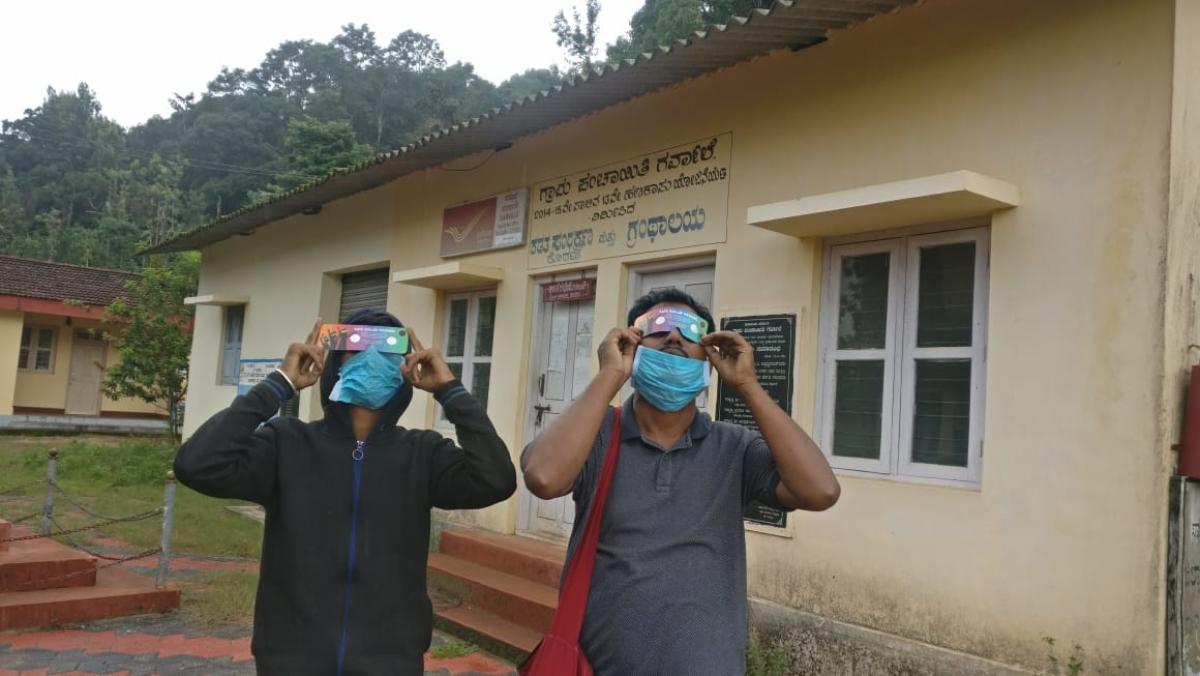
People watch solar eclipse using goggles in government high school in Soorlabbi near Madapura on Sunday. DH Photo

The first ‘ring of fire’ annular solar eclipse of the year 2020 could not be witnessed in Kodagu, as the sky remained overcast disappointing a majority of eclipse watchers.

In Madikeri, the eclipse was witnessed between 11 am and 12 noon, amidst clouds. People preferred to remain inside their houses. The astronomical incident had its impact on commercial activities too.

The previous solar eclipse to be seen in Kodagu was on December 26.

Talacauvery, Bhagamandala, Omkareshwara and Igguthappa temples remained closed after offering prayers in the morning. Entry of devotees to the temples were restricted during the solar eclipse. The temples were reopened after 5 pm for cleansing.

source: http://www.deccanherald.com / Deccan Herald / Home> State> Karnataka Districts / by DHNS, Madikeri / June 21s, 2020

Online Literary Activities Keep Kodavas Busy During Lockdown

NallameEllarukkuKF14jun2020

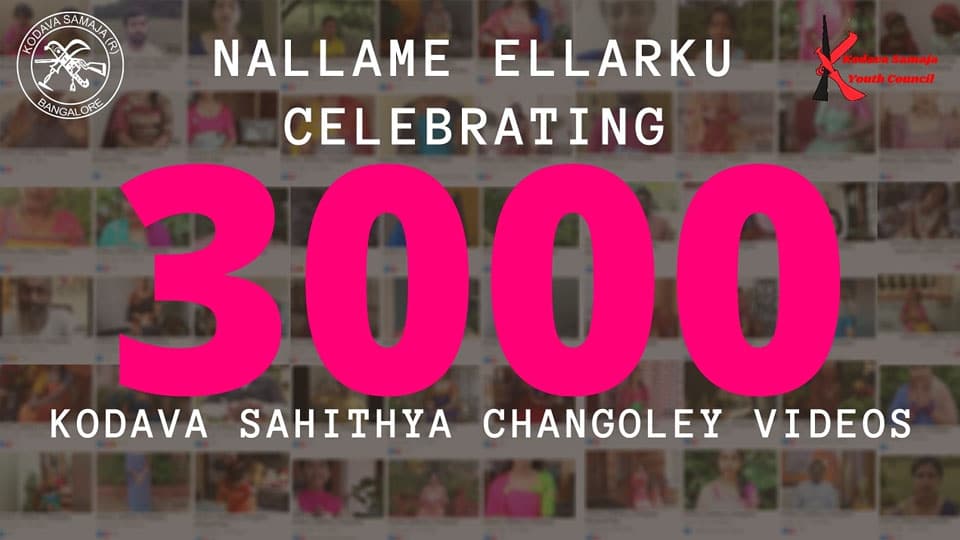
‘Kodava Sahitya Changole’ crosses 3,000 recordings; aims to touch 5,000 and more

Mysore/Mysuru:

The experience of lockdown with all the accompanying emotions of fear, loneliness and uncertainty may have resulted in the birth of a new genre — lockdown literature. Isolation in times of Coronavirus pandemic has made some people depressed while others have turned it into a sabbatical to learn new things and experiment with new things.

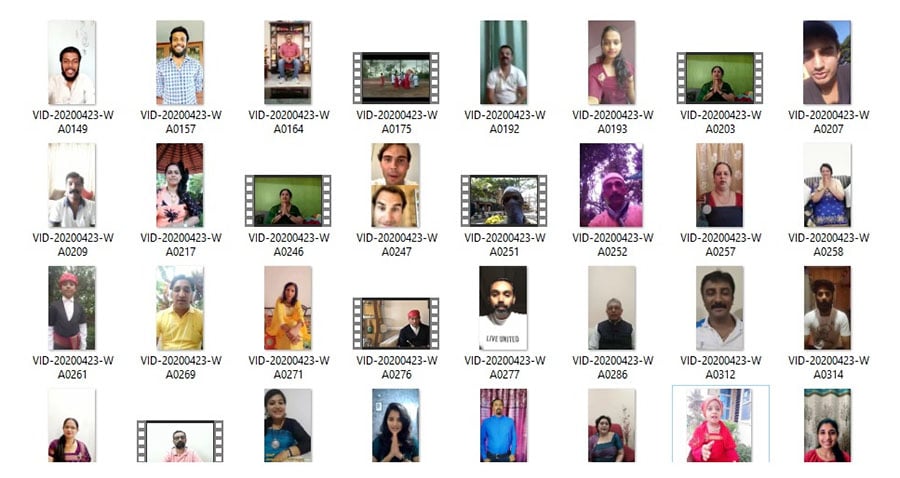
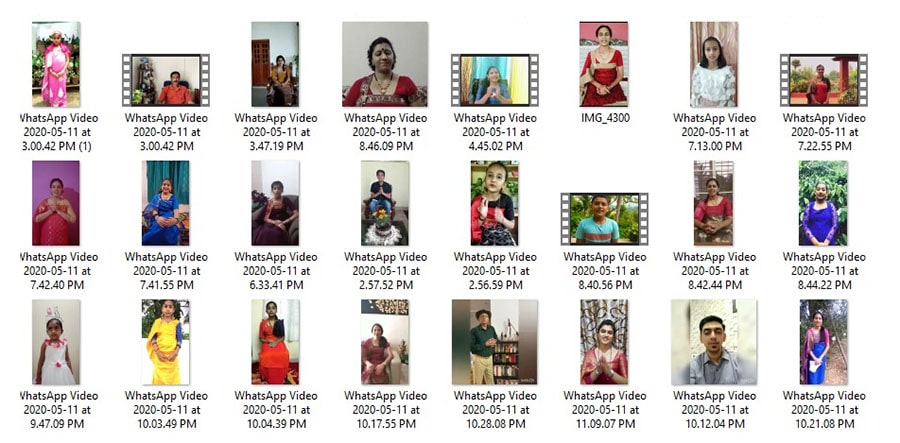
The Bangalore Kodava Samaja Youth Council has just done that. Experimenting. And the result is a tremendous success. The Youth Council started ‘Kodava Sahitya Changole’ (a string of Kodava literature or a series) during lockdown where Kodava people, crossing geographical boundaries, had to record pieces from Kodava literature and post it on social media. So popular the ‘Changole’ is that it has crossed 3,000 episodes now and well on its way to reach 5,000.

In the ‘Changole’ Kodava youth, children, women and elders are getting together in the virtual world to save their rich heritage and culture. The culture, literature, festival, folk and practices that were hidden in books, pamphlets and in the minds of the community elders have now come in the open and it is there for everyone to see and learn through videos posted in various social media platforms like WhatsApp, Facebook and Instagram.
KodavaSamajaYouthKF14jun2020

Aspects of tradition highlighted

Apart from individuals, there are families that have taken part in the ‘Changole’ where family elders are literally searching books and literature for suitable pieces to be shared among the community. Interestingly, brevity is a hallmark of all the episodes in the ‘Changole’ as people do not have the time or patience to see the entire video.

People have recorded interesting tales of their village, family elders, Kodava clan, Kodava Vaalaga, Kodava dance, rituals, Kodava marriage, child-naming, traditions, customs and also practices and more importantly festivals of villages. Each village in Kodagu has a deity and festivals are held every year to appease the deity and pray for the welfare of the villagers. This unique aspect was highlighted in many videos.

Crossing geographical barriers

Apart from community members living in Kodagu who have shot the videos in the background of their houses, gardens, coffee estates, fields and mountains, many people living in cities and abroad too have made videos and have circulated. Even Kodava youth from the Armed Forces have recorded and posted videos.

The initiative was started by Bangalore Kodava Samaja Youth Council President Chokanda Sooraj Somaiah during the end of March when the lockdown was announced. After recording his piece of literature, he nominated three members who in turn nominated nine members (three each) and the popularity spread. Like that, the ‘Changole’ has now crossed 3,000 episodes and is on the way to touch 5,000.
KodavaProgs01KF14jun2020

Suggestions to the community

Not only reciting or reading pieces of select literature taken from the novels, short stories, plays and Kodava theatre, Kodava songs and poetry collections, many community members, especially the Kodava youths who are involved in social work and community-building activities took the opportunity to give advice to the community to practice Kodava customs and pass them on to the younger generations.

Suggestions were given on maintaining the cultural and linguistic spirit and to further the cause of ‘Kodavaaame’ (Kodava pride and community well-being) without individually targeting anyone. Those were general pieces of advice which would help the community to grow and prosper and at the same time maintain the cultural and community spirit.

“We have got tremendous response from toddlers to nonagenarians (from a year-old baby to 94-year old men and women). Before the ‘Kodava Sahitya Changole’, we came up with something called ‘Kodava Arivole’ or Kodava dictionary where words and proverbs were explained and shared. Next came ‘Nangada Shammi Bavo’ (our brother-in-law Shammi) where an attempt was made to further the literary cause with appealing caricature,” says Chokanda Sooraj Somaiah.
KodavaProgs02KF14jun2020

Promoting language, culture

“The initiative was to kill boredom and have some activity that will promote the language, culture, literary giants of Kodagu and also village festival. It was aimed at developing a bond between the community members and family members. Many of the videos show youths narrating stories about their families, their family members served or serving in Defence Forces and their family members who have attained national and international fame,” he told ‘Star of Mysore.’

“Kodava culture and literature can grow with such initiatives and will bring to light the forgotten community heroes. We Kodavas have unique culture which is distinct. Unfortunately, this is forgotten, neglected or kept aside by our own people. The Youth Council has made an attempt to reach out to the community and through ‘Kodava Sahitya Changole’, we have sent a message on preserving our culture, family ties and community bonding,” Sooraj said and added that all the videos would be recorded and documented for future reference.

Catches C.T. Ravi’s attention

Interestingly, these videos and its immense popularity has caught the attention of Kannada and Culture Minister C.T. Ravi and the Minister too has joined the bandwagon by reciting a poem by Haradasa Appacha Kavi. Even former Minister Shobha Karandlaje has recited a literary piece. Like this, many non-Kodava scholars and researchers have appreciated the initiative and spoken highly about Kodava literature, men in the Armed Forces and the ubiquity of Kodava hockey players.

“The Bangalore Kodava Samaja President Mukkatira T. Nanaiah, Vice- President Mallengada Meera Jalaja Kumar, Secretary Chiriyapanda S. Suresh Nanjappa, Joint Secretary Kokkalera T. Kuttappa, all other office-bearers and committee members have helped and supported the ‘Changole’ initiative,” Sooraj added.

source: http://www.starofmysore.com / Star of Mysore / Home> News / by B.C. Thimmaiah / June 13th, 2020
Project On To Remove Silt From Cauvery River In Kushalnagar

Kushalnagar01KF12may2020

Kushalnagar:

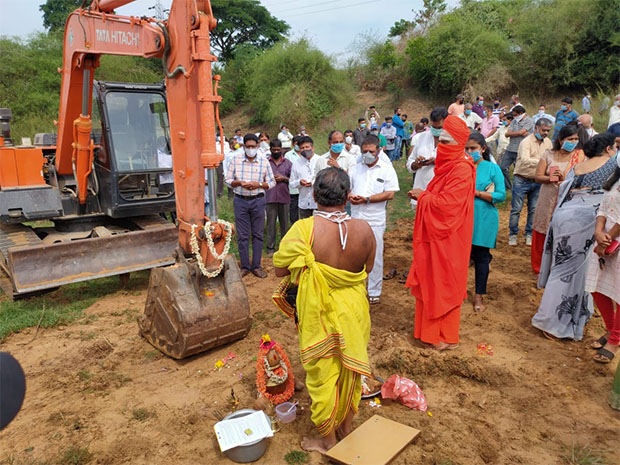
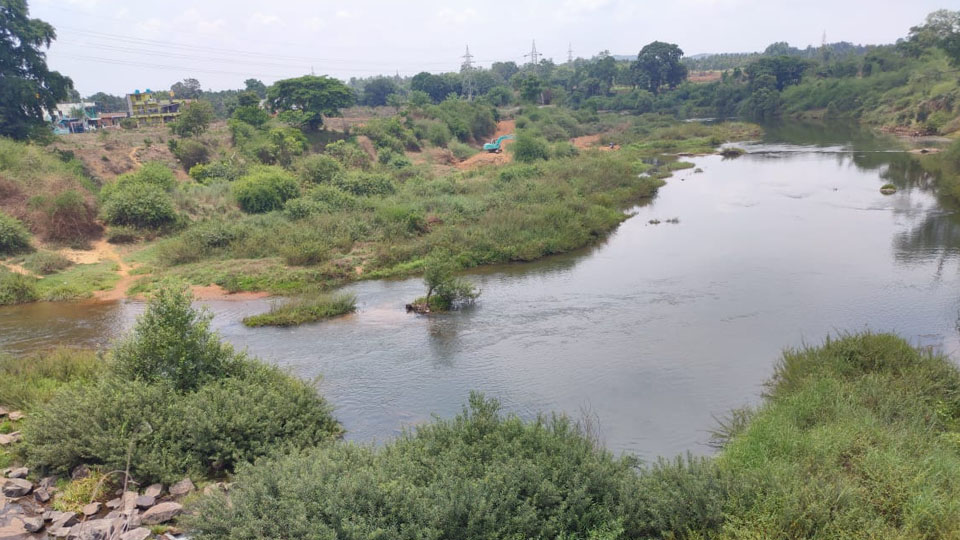
Ground-breaking ceremony for a mega Rs. 89-lakh project to remove silt from River Cauvery in the Kushalnagar belt to prevent flooding of the town was performed this morning. Madikeri MLA M.P. Appachu Ranjan performed the ceremony in the presence of Kodlipet’s Kirkodli Mutt Seer Sadashiva Swamiji.

The Kodagu District Administration had agreed for the project based on the request by Kushalnagar Cauvery Pravaha Santhrasthara Vedike (Forum for flood affected) and funds were released accordingly by the State Government.

Previous two years, there was unprecedented flooding in Kushalnagar and most of the areas inside the town were under water for weeks together. Kodagu received the highest-ever rainfall for August 2018 surpassing an 87-year-old record. Last year too, the district received high rainfall and as a result, rivers were in full spate.

Kushalnagar02KF12may2020

Last year, for the first time, the 400-year-old bridge near Kushalnagar-Koppa border (next to the newly-constructed bridge) submerged on Aug. 10. This rain, coupled with huge water release from Harangi Dam, brought untold miseries to the people of Kushalnagar.

This year, the silt is being removed to prevent flooding like in the previous years. An area of 300-metre length and 100-metre width has been identified in the surroundings of Rasool Layout, Muthappa Swamy Temple and Ayyappa Swamy Temple.

The mud-and-sand combined silt is being removed by earth movers and the excavated earth will be dumped on the river side. Also, channels will be built so that rainwater that floods Kushalnagar town can smoothly enter the river. PR Constructions has been given the contract of silt removal.

Silt removal from Harangi Dam

MLA Appachu Ranjan told ‘Star of Mysore’ today that a proposal to lift over one tmcft (one thousand million cubic feet) of silt that has accumulated at Harangi Dam is pending with the State Government.

Harangi is the main Cauvery water supply reservoir from the catchment areas to Krishna Raja Sagar (KRS) Dam in Mandya, the lifeline of South Karnataka and Tamil Nadu. Due to heavy silt deposit, enough water cannot be stored, leading to annual water shortage. Therefore, it has been recommended to the Government to take measures to remove silt so that more water can be stored, he said.

The Karnataka Engineers Research Station (KERS) at KRS Dam in Mandya and Geo Marine Solutions Pvt. Ltd. had studied the silt deposits and accepting its recommendations, the State Government had released Rs. 75 crore to remove silt. “We have requested the Government to release Rs. 130 crore and the proposal is yet to be accepted as the Government is busy in COVID-19 battle,” the MLA said.

River course correction

Due to major landslides, many rivers and tributaries have changed its course. Last year, the inflow from River Cauvery was more than Harangi River. Every year, Harangi River reports highest inflow to the Harangi Dam and last year’s phenomenon was unique. While Harangi River originates in the Pushpagiri Hills, Cauvery takes birth in Talacauvery and flows through Bhagamandala, Kushalnagar and Koodige. Both the rivers meet at Koodumangaluru and flow into KRS Dam.

“Last year, Harangi River reported an inflow of 30,000 to 35,000 cusecs while Cauvery River reported an inflow of 80,000 to 85,000 cusecs. This is because the rivers have changed course and have accumulated huge silt due to landslides of 2018. We need money for river course correction and silt removal and that’s why we have asked for Rs. 130 crore,” Appachu Ranjan said.

Dy.SP Shylendra, Kushalnagar Panchayat CEO Sujay Kumar, Kushalnagar Cauvery Pravaha Santhrasthara Vedike President Chandra Mohan, members Uday Kumar, M.M. Charan, Varadha and Kodagana Harsha were present.

source: http://www.starofmysore.com / Star of Mysore / Home> News / May 11th, 2020

Out-of-the-‘box’ solutions to labourers’ hunger woes

OutoftheBoxKF29apr2020

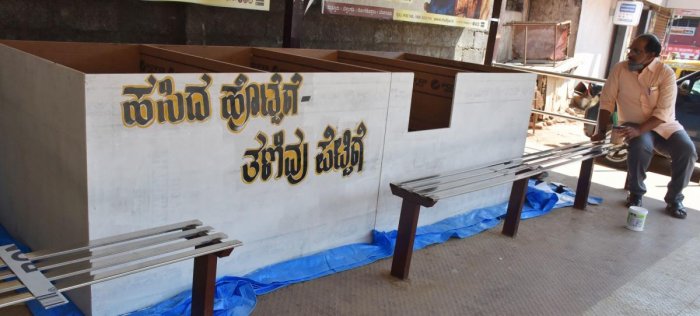
As hundreds of plantation workers are stranded in Kodagu and bearing the brunt of lockdown, the district administration has placed boxes in five prominent places in the district requesting the donors to contribute rice, lentils and other items that have a long shelf life.

The initiative, titled “Hasida Hottege Tanivu Pettige,” is directed towards providing foodgrain to the distressed labourers’ families. Under the scheme, boxes have been placed in an old private bus stand in Madikeri, private bus stand in Kushalnagar, private bus stand in Somwarpet, near clock tower in Virajpet and bus stand in Gonikoppa.

Workers, in thousands, from other districts and states work in coffee plantations in Kodagu. They are now stuck in the district and are not able to return to their native places.

They do not have any work and are currently living in the line houses of the plantations.

As these families do not have any ration cards, they cannot get foodgrain distributed by the government through fair price shops. It has become a challenge for the district administration to provide food and other facilities to these labourers.

The condition of labourers living in hilly areas of the district has worsened as the supply of rice, sugar, edible oil, onion and spices is hit.

The people, who purchase grains on Mondays, Wednesdays and Fridays, have been requested to contribute a share in these boxes, towards the less privileged.

The district administration has now been registering the names of volunteers to distribute the collected grains to the needy.

Deputy Commissioner Annies Kanmani Joy said that 2,500 workers had been identified in the district, to whom the food items collected will be distributed. This apart, food kits are being provided through the ITDP department, she added.

source: http://www.deccanherald.com / Deccan Herald / Home> State> Karnataka Politics / by DHNS / March 30th, 2020

Rage Coffee Brews Expansion With Refex Capital Investment

– Investors from Keiretsu Forum Chennai will also be participating

– Rage Coffee plans to expand its product line with the funding

– The company sells on ecommerce and 400 offline stores

RageKF10jan2020

New Delhi-based food & beverages brand Rage Coffee has raised funding in a round led by early-stage investment firm Refex Capital. Angel network Keiretsu Forum Chennai and some other “prominent” investors will also be participating in this round.

The list of participants include T.D Mohan, former joint MD of CavinKare; Dr Rajan Srikanth, co president of Keiretsu Forum Chennai and Singapore; Prakash Katama, former CEO of TVS Electronics; Uday Sodhi, former business head at SonyLIV, private equity investor Ajay Sarupria, actor Rannvijay Singh Singha; A. Kumar, Founder of Gemini Paints, and Sawan Gupta, MD at Spero Group.

Founder and MD of Wazir Advisors, Harminder Sahni, joined Rage Coffee’s board of advisors for the fundraise. Moreover, Sridhar Parthasarathi, who is the managing partner at Refex Capital, has also joined the Board.

With this funding, Rage Coffee will expand its product offering and omnichannel distribution, scale up production and strengthen its team. The company aims to “capture market share of the category devoid of any innovation – be it the ingredients, formulations, manufacturing techniques, packaging, distribution or use of data to be agile.”

Founded in 2018 by Bharat Sethi, Rage Coffee is a fast-moving consumer goods (FMCG) brand that deals in different varieties of coffee, without using any chemicals and is full of vitamins. The company claims to blend its coffee from plant extracts and natural compounds — Tea extract L-Theanine, fossil Ginkgo Biloba, L-Glutamine, and Panax Ginseng, among others.

Rage Coffee’s founder and CEO, Bharat Sethi, in a press statement, said, “Our approach to supply chain, sourcing, consumer segmentation, product R&D [Research and Development], D2C [Direct To Consumer] data-driven DNA combined with a hybrid distribution model and, most importantly, our close relationship with our customers places us in a great spot to build a brand that is truly poised to capitalise on the immense market opportunity.”

Rage Coffee retails its products through its website, other ecommerce platforms like Amazon and over 400 offline stores/touchpoints. The FMCG company plans to quadruple its sales and reach over 2000 outlets by the end of 2020. Rage Coffee will be banking on institutional and the foodservice industry — hotels, restaurants, cafe (HoReCa) business — to clock a significant chunk of sales.

To achieve its goals, Rage Coffee also appointed Arijit Mitra, former National Sales Head at Coke Beverages, as Director of Sales to grow the offline business in June 2019.

According to a Frost & Sullivan report, functional food & beverages in India is currently still in its initial stages growing at rate of 17.1% CAGR, expected to be valued at $4Bn in 2020. Some other players in this segment include Siliguri-based Udyan Tea, Mumbai-based Open Secrets and Bengaluru-based Hector Beverages with its brand Paper Boat.

In December 2019, Open Secrets raised funding in a round led by Matrix Partners India. Angel investors such as Paytm founder Vijay Shekhar Sharma, Snapdeal cofounders Kunal Bahl and Rohit Bansal and CEO of Godrej Consumer Products, Vivek Gambhir also participated in the round.

source: http://www.inc42.com / Inc42.com / Home> News / by Kritti Bhalla, Inc42 Staff / January 08th, 2020

Hockey India serves notice of merger to 10 member units

Upto 10 additional state member hockey units have been given time till June 30, 2020, to merge with the permanent state units.

Chennai :

Upto 10 additional state member hockey units have been given time till June 30, 2020, to merge with the permanent state units. If they don’t, their membership with Hockey India ‘will deemed to be withdrawn’ on July 1, according to a letter sent by the body to the 10 additional units in question.
HI have taken this step as they are required to follow ‘Clause 31.1.3 of the IOA Constitution,’ as stated by the letter, a copy of which is with this daily. Clause 31.1.3 states that: “The right to vote in any of the National Sports Federation is granted to those Associations that have only one Sports Association in one State for those sports. It implies, therefore, that in the field of sports, it will be ‘one State, one Unit’ and at the national level it will also be one unit (NSF) for one sport.”

HI took the decision at its Congress on November 30, 2019. While the additional state units are free to field teams for the nationals till June 30, once the new rule comes into effect that’s no longer possible. “The teams of your unit will be permitted to participate in the scheduled events being conducted by Hockey India upto 30th June, 2020 as per present practice. Further, from 1st July, 2020 onwards the membership of your unit with Hockey India will deemed to be withdrawn and you will be required to coordinate your sports activities related to hockey with respective State Member Unit,” the letter further added.

A few additional units have already asked what happens to academy sides (Madhya Pradesh State Hockey Academy for instance). HI are yet to get back to them with a concrete answer. Attempts to reach HI went in vain. Ten units in question: Andhra Hockey Association, Hockey Madhya Bharat, Hockey Bhopal, Hockey Gangpur-Odisha, Hockey Patiala, Bengaluru Hockey Association, Hockey Coorg, Hockey Him, The Mumbai Hockey Association Ltd, Vidarbha Hockey Association.

source: http://www.newindianexpress.com / The New Indian Express / Home> Sport> Other / by Express News Service / January 08th, 2020

Patrade

Courtesy: Naren Thimmaiah

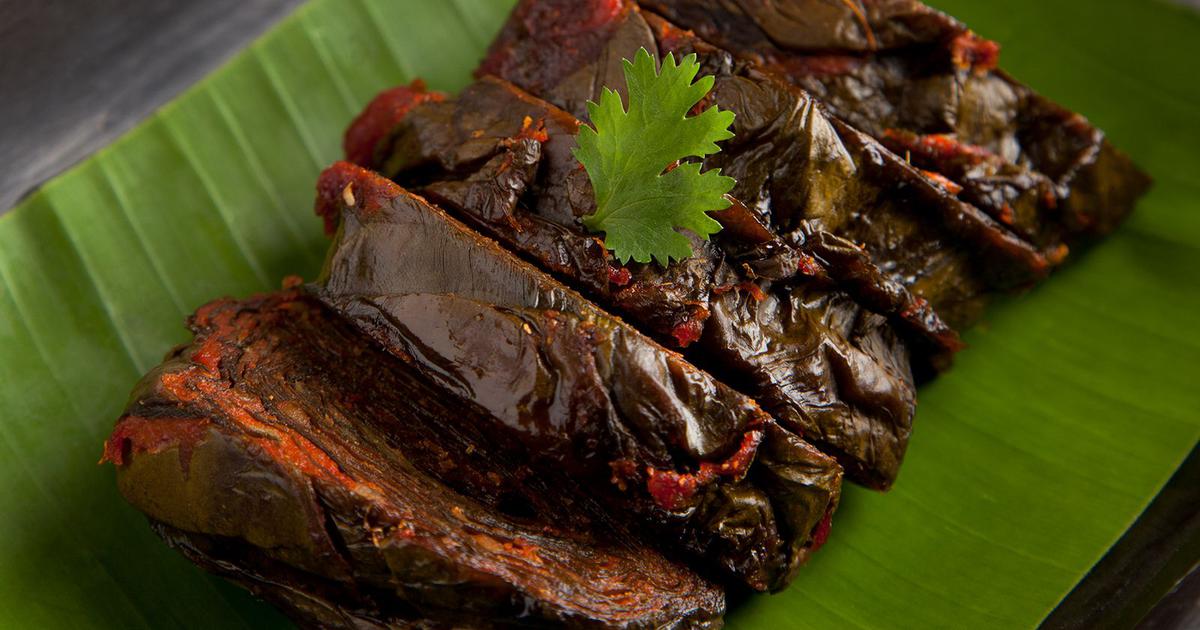
At Karavalli, every dish is sourced from its region of origin, and the recipes learnt from mothers and grandmothers. Patrade, a popular Konkani dish, was sourced from Pangal Nayak’s ancestral home in Katpadi near Udupi on the Mangalore coast. Colocasia leaves grow wildly in this region, especially in the monsoon. These leaves are layered with a paste of lentils and spices, rolled, steamed and pan-roasted to make Patrade. It is a great evening snack. Of course, there are numerous variations of it across India.

Serves 8

Cook Time 01h

Plus 3 hours for soaking rice

Ingredients
250 gm rice
50 gm ghee
50 gm red chillies
25 gm coriander seeds
25 gm cumin seeds
20 gm roasted moong dal
20 gm roasted chana dal
20 gm roasted toor dal
20 gm salt
50 ml tamarind pulp
20 colocasia leaves

Preparation
Soak the rice in 2 cups of water for 2-3 hours and drain.
Grind the rice, along with all other ingredients, except the colocasia leaves and ghee, into a thick batter.

Clean the colocasia leaves and remove the thick veins. Place the leaves on a platform with the back facing up.
Spread the batter on one leaf in an even layer and cover it with another leaf. Spread another layer of batter on it. Repeat the process twice.
Fold both ends and roll up the leaves, ensuring no batter oozes out.
Once all the rolls are made, place them in a steamer for about 30 minutes.
Remove from heat and allow the Patrade to cool.
Once cool, cut them into thick slices.

Heat ghee in a pan and fry the Patrade (for about 4 minutes on each side) and serve with extra ghee.

Naren Thimmaiah

Chef Naren Thimmaiah has been the face of Taj Hotels’ iconic Karavalli for over two decades, ensuring that it has a permanent spot among the world’s finest restaurants. His culinary genius has won him and his restaurant multiple prestigious awards. He is popular on television, and serves on the Board of Studies at Christ University and Srinivas University in addition to numerous hotel management institutes. He also advises the food panel of MasterChef India.

source: http://www.scroll.in / Scroll.in / Home> Food> Taste Test / by Naren Thimmaiah / January 08th, 2020

‘Coorg Person of the Year 2019’

Justice A.S. Bopanna, first judge from Kodagu to be elevated to the Supreme Court, was adjudged ‘Coorg Person of the Year, 2019’ by a Kodagu information portal.

A release stated Mr. Bopanna was the overwhelming choice for the title in a poll conducted for www.coorgtourisminfo.com, Kodagu’s first news portal, promoted by journalist P.T. Bopanna. The release said other nominations received included Fulbright scholar Sowmya Dechamma and Devika Carriapa, winner of Bal Sahitya award for 2019.

In the past, the winners of the Coorg Person title included Kaveri Nambisan, novelist (2005), Air Marshal K.C. Cariappa, environmentalist (2008), cricketer Robin Uthappa (2009), tennis player Rohan Bopanna (2010), squash champion Joshna Chinappa (2014), athlete M.R. Poovamma (2015), cartoonist Nala Ponnappa (2016), and badminton player Ashwini Ponnappa (2017).

Mr. P.T. Bopanna said: “The concept took shape in 2005 to develop role models for the people of Kodagu. The selection was made on the basis of a poll conducted through www.coorgtourisminfo.com.”

source: http://www.thehindu.com / The Hindu / Home> News> States> Karnataka / by Special Correspondent / Mysuru – January 08th, 2020

The making of India

IndiaThroughPeopleKF10jan2020

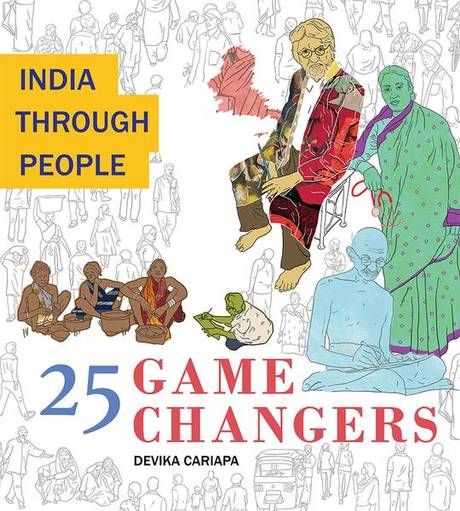
In her latest book India Through People: 25 Game Changers, Devika Cariapa talks about the people who drove change
“Children are naturally interested in history,” feels writer Devika Cariapa. “Notice how carefully even the youngest of them listens to stories told by a grandmother or elder — particularly lingering on details of how they lived, what they wore, what they did at school and what they ate for lunch! It’s a natural progression then to get young readers interested in stories from history in a factual but fun way. Once they are hooked, it becomes a lifelong interest.” Devika, whose second and latest book for Tulika, India Through People: 25 Game Changers, was released last week, is also an archaeologist.

“The more I worked in archaeology, researching and visiting sites, the more I felt there were wonderful stories there that children would enjoy,” says Devika, over email. And so, when she became a full-time writer, she knew what her first book would be about — India Through Archaeology: Excavating History, is part of Tulika’s India Focus series. Devika explains that the series “will tell the story of India through the lens of different subjects”.

DevikaCariapaKF10jan2020

In India Through People…, Devika talks about India’s recent past, that she calls “a century and a half of great, radical changes”. To do so, she has picked 25 people who “helmed that change with great courage and vision”. She explains: “These game changers, all born after 1850, dealt with the challenges of the time and in doing so, not only left an imprint on their particular fields but also forged new paths for the nation.”

Narrowing down on the 25 men and women, however, was not an easy task. “This was probably the most difficult part of doing the book!” she adds. “For every one person included, there were at least two others that we felt could have been featured instead. We chose people from a range of fields and different parts of the country and ensured that those we could not fit in due to constraints of the size of the book were referenced in the timelines attached to each chapter.”

source: http://www.thehindu.com / The Hindu / Home> Books / by Akila Kannadasan / August 20th, 2019