Category Archives: Uncategorized

Talk On “The Life And Times Of M.N. Srinivas” Tomorrow

SrinivasKF24dec2019

Mysuru:

Mysuru Book Clubs – 2015 has organised a talk on “The Life and Times of M. N. Srinivas” by David Gellner, Professor of Social Anthropology at University of Oxford, tomorrow (Dec. 17) at 5.30 pm at Roopa Elite, No. D-29, 6th Main Road, V.V. Mohalla.

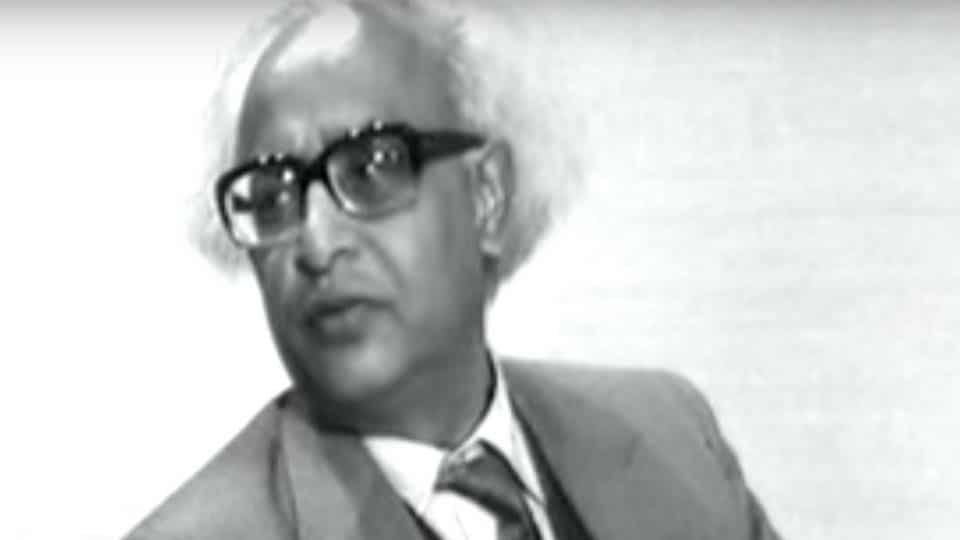
Profile: Mysore Narasimhachar Srinivas (M.N. Srinivas), a Social Anthropologist, was well-known for his body of work on caste systems and caste as a social institution. His connection with South India is seen in the extensive fieldwork he did in Coorg (Kodagu) and his study of the different castes in that hilly district.

A product of the University of Bombay and University of Oxford, he is the author of Social Change in Modern India and Caste in Modern India. He received the prestigious Padma Bhushan award in 1977.

Prof. David Gellner specialises in the study of religion, politics, ethnicity, caste and social change in Nepal and North India. Earlier, as Lecturer in Anthropology of South Asia in the University of Oxford, he walked in the footsteps of M.N. Srinivas, who was in that position in 1947.

For details contact Mob: 96062 87711 or 78997 57259.

source: http://www.starofmysore.com / Star of Mysore / Home> News / December 16th, 2019

When Coorg got a glimpse of Gandhi’s moral vision

The Living Stream

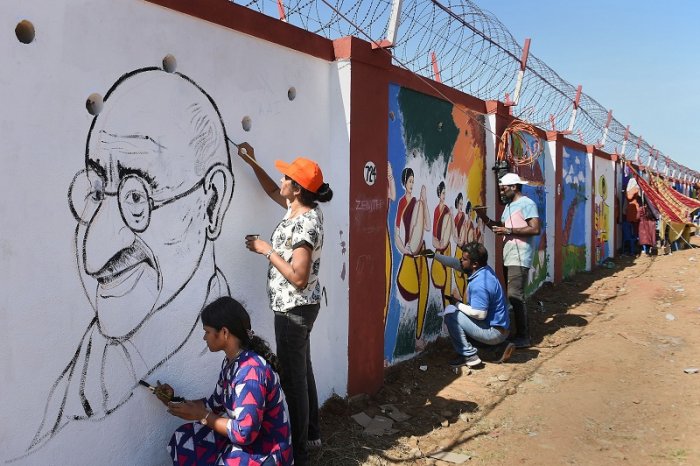
Students of various educational institutions and volunteers paint a picture of Mahatma Gandhi. (DH Photo)

During his first visit to Coorg, in February 1934, Gandhi visited Kaikeri, a bright and attractive Dalit settlement. A public meeting was held amidst its grand natural surroundings. On this occasion, several upper-caste women gave away their gold jewellery for the freedom movement.

Gandhi later addressed a public gathering in Madikeri: “It is a matter of very great joy to me that God has enabled me to come to this beautiful land of Coorg. Ever since I have come here, I have been simply drinking in the natural beauty of the place; and I presume your hearts are as beautiful as your scenery. And yet, there is lurking in my mind a doubt as to the beauty of your hearts; for I see that though there is not that poisonous untouchability here that is found in the plains, there is still some of it in your midst. For, in your address, you have said that temples are not open to Harijans. It is just like a father saying to some of his children, ‘I give you food, clothing, housing but I won’t let you come into the sanctuary of my heart.’ Imagine what those children would feel. So long as you do not allow Harijans to enter temples on the same terms as you do, I cannot say your hearts are beautiful. I wish, therefore, that you will take a lesson from Nature and wash out that black spot on your hearts.”

Gandhi’s reasoning reveals a distinct style of moral engagement.

It was ironic, he pointed out, that nature’s beauty hadn’t found a complement in the hearts of people living in its midst. The practice of untouchability was not as toxic here as it was elsewhere, but moderate untouchability wasn’t any more acceptable. The prejudice had to be overcome completely. And, if a father took care of only the physical needs of some of his children without allowing them space in his heart, how would they feel? To make his listeners empathize with the pain and suffering of being denied entry into temples, Gandhi reached for a moral analogy from family life, and not for historical or sociological discussions. And, the non-Dalits could still make their hearts pure. Gandhi’s faith in the human potential for self-reform and reconciliation is firmly in place.

On the day after his visit to Madikeri, Gandhi addressed a public gathering in Virajpet following the welcome address by a local Urdu scholar: “It was an agreeable surprise to me to receive an address in very choice, correct Hindustani. I am a lover of Urdu and Urdu literature. But I have noticed that down South, it is rare to find an Urdu scholar; and I was not prepared to find good Urdu writing and speaking in Coorg.”

The local scholar had urged Gandhi to do whatever was possible to unite the Hindus and Muslims across India and felt that his campaign to end untouchability upheld the ideal of a common humanity.

In response, Gandhi said: “Of certain things which I hold as dear as life itself, Hindu-Muslim unity, i.e., unity among all the races in India, is one; and as I did some years ago in Delhi, I should be prepared, given the occasion and the inspiration, to stake my life again for the same cause. My life is one indivisible whole, and all my activities run into one another; and they all have their rise in my insatiable love of mankind. Seeking to realize the oneness of life in practice, I cannot be happy if I see communities quarrelling with one another or men suppressing fellowmen. I am, therefore, glad that this (welcome) address admits that this Harijan movement is one for realizing the substantial oneness of man.”

The stakes behind seeking the unity of Hindus and Muslims (what he termed, “heart-unity” on another occasion) were for Gandhi very high. Ending untouchability was truly an effort to realize the oneness of humans. Achieving togetherness among communities was not a single-point struggle: it was connected with everything else he cared for.

These struggles of Gandhi extend a moral obligation in the present to evolve a response to the rising violence against Muslims and Dalits in the country.

source: http://www.deccanherald.com / Deccan Herald / Home> The Living Stream / by Chandan Gowda / September 29th, 2019

Army Recruitment Rally In Madikeri From Oct.13

An Army Recruitment Rally will be held at the District Sports Stadium in Madikeri from Oct.13 to 18 for the posts of Sainiks (General and Technical), Trademen, Clerks, Store-keepers, Nursing Assistants and Pharmacists.

Candidates, who have passed SSLC, PUC and D.Pharma, are eligible to participate.

Candidates from Kolar, Bengaluru City/ Rural, Tumakuru, Mandya, Chamarajangar, Ramanagar, Chitradurga, Kodagu, Hassan and Mysuru districts can participate in the rally.

Registration should be done online by visiting www.joinindianarmy.nic.in before Sept.29.

For details, contact Ph: 0821-2489972.

source:http://www.starofmysore.com / Star of Mysore / Home> In Briefs / September 15th, 2019

Dist-level young scientist competition

The district-level ‘Yuva Vijnani’ competition will be held at the Madikeri Block Resource Centre in town on August 8 at 10 am, said a press release.

The selected candidates will be given the ‘Yuva Vijnani’ award for 2018-19 by the Rajya Vijnana Parishat and the Department of Science and Technology. Students who have applied for the competition should attend along with their guides.

Those who wish to apply should fill the application in the prescribed format and submit the same at the DDPI office in Madikeri before July 31. Students from Class 9 to II PU may apply for the award.

Another set of application should be submitted to the head office of the Rajya Vijnana Parishat in Bengaluru.

For details, people may contact: S T Venkatesh, District Physical Education Inspector, DDPI Office, Madikeri, on mobile phone number 94488 73999 or the T G Prem Kumar, Raja Vijnana Parishat District Director, on mobile phone number 94485 88352.

source: http://www.deccanherald.com / Deccan Herald / Home> State> Mangaluru / by Adithya K A / DH News Service, Madikeri / July 29th, 2019

Startups break new ground, use tech to help farmers

These firms are tapping governments, insurers, banks, farming co-operatives, development agencies and corporate social responsibility programs to create a business and help farmers.

Startups and technology firms are trying to break into India’s agricultural landscape using newer business models. These firms are tapping governments, insurers, banks, farming co-operatives, development agencies and even corporate social responsibility programs to create a viable business and help farmers. Most farmers have small holdings. Some even rent the land they farm on from others. Farmer distress is widespread.

Farming contributes around 15% to India’s gross domestic product. In short, India has few large farms that can pay for technology solutions. When CropIn Technologies first started out in 2010, the company tried selling its agri-tech solutions directly to farmers.

After investing lakhs of rupees, however, it managed to earn just Rs 6,000. Now, it tailors its solutions to specific needs. “Each customer segment that we deal with, we have a different value proposition for them,” said Jyoti , head of business development at CropIn Technologies. Large companies that depend on agricultural produce want information on sowing and pre-harvest activities up to harvest.

Development agencies are keen to develop sustainable farmer livelihoods, Vaddi said. CropIn is working with the World Bank in Bihar and Madhya Pradesh on a climate resilience project. It is also identifying a model where farming communities can adopt technology to create sustainable benefits — such as weather alerts on phone, best practices on farming, and advice on taking care of pest attacks. Agri-tech companies such as CropIn are also finding a market in banks and non-banking financial companies that give agricultural loans. The lenders are seeking CropIn’s expertise to help manage risk.

“If they have invested money in certain loans with farmers, the bankers want to know if it performing, how the crop is doing. Sometimes, a farmer takes a loan to sow one crop and then sows half his field with something else. There could be a genuine reason, but this is information a banker would want to know,” Vaddi said. CropIn is working with public and private sector banks as well as NBFCs. For banks and insurers, the company provides a platform that has data on the historical crop yields yields of a district. This helps in forecasting yields using machine learning.

The company also uses remote sensing satellites to determine what crops are sown in a region, using crop signatures it has collected over the past five years. Large technology companies, such as IBM and Microsoft, too are involved in the agri-tech space. The Weather Company, an IBM unit, provides hyperlocal weather information to farmers, along with data on soil moisture and temperature, which aids farmers in making informed decisions on how and when to irrigate. The company has tied up with agro-tech startup AgroStar to create crop disease prediction algorithms. “We are not expecting marginal farmers to pay for this.

We work with governments, banks, insurers, corporates who have business interests in agriculture and corporates that want to do meaningful CSR work,” said Himanshu Goyal, India Business Leader at The Weather Company. “It is not very expensive. It is cheaper than what a normal software costs and it is affordable,” he said. The company looks at delicately balancing value and cost, which even a company can appreciate, and one where people can build in affordability in business models, he said.

Microsoft is working with agrochemicals company United Phosphorus and the International Crop Research Institute for the Semi-Arid Tropics (ICRISAT) to provide agri-tech solutions to farmers. State governments and government-promoted organizations are also potential markets for agri-tech companies. The agriculture ministry signed a statement of intent earlier this month with IBM for a pilot study on using artificial intelligence and weather technology solutions in agriculture.

Tie-ups with governments also use sensors in agricultural fields to measure soil health and ground-level conditions. Pilots that require placing sensors on farms are also underway. Eka Software, which has built a digital commodity management platform that is used by the likes of Cargill and Rio Tinto, has built a blockchain platform for coffee farmers in a tie-up with the Coffee Board of India. The platform aims to help farmers get a good price for their product, while offering coffee roasters and exporters data on crop quality. “There is a lot of scope to use technology to digitise agriculture in India and curb waste,” Manav Garg, CEO of Eka Software, told ET in an interview earlier.

“We have built this platform for coffee, but we can also create similar platforms for other agricultural commodities.” State governments are also looking to invest in blockchain technology to help cashew and shrimp exports. “India is one of the largest exporters of shrimp to the European Union, and the EU has put in requirements to disclose the health of the shrimp. In Andhra Pradesh and Tamil Nadu, the governments are putting in place blockchain (technology) in which the manufacturers of the shrimp feed the content and that is made available to buyers. Kerala is doing the same thing for cashew nut,” said NG Subramaniam, chief operating officer of India’s largest IT services company Tata Consultancy Services. The blockchain technology is being launched by the state fisheries department, the Marine Product Export Development Authority and Tata Trusts, the Tata Group’s philanthropy arm. Business models are still evolving at at the farm level, experts say, whereas at the retail level — organic food or providing farm produce directly to homes — it is more established.

The government’s increased focus on improving farm incomes is also resulting in more pilot projects in the agri-tech space. “Future scale-up models will need farmers to have a stake, both to have ownership over and to demand accountability from the services. This is an emerging context,” said Amit Vatsyayan, Partner – Government and Public Sector Advisory Services, EY India. “A platform approach is very much needed for greater acceleration and adoption.”

Agritech Startups in India

CropIn
Offers farm management solutions for agricultural sectors. Works with farming companies, agri-input companies, crop insurance providers, seed production companies and government.
Total Funding: $16 million
Investors: Chiratae Ventures, Bill and Melinda Gates Foundation, Ankur Capital and 8 Other Investors

AgroStar
It provides agri-inputs including fertilizers, seeds, manures, farm equipment, etc. to farmers.
Total Funding: $15 million
Investors: Accel Partners, Aavishkaar, Chiratae Ventures and 3 Other Investors

FarmBee
Has an online platform providing data-driven agricultural solutions. It offers agricultural content, commodity prices, weather data, and contextual advice to the farmers. Enterprise customers include TAFE, RBL Bank, Pepsico etc.
Total Funding: $9 million
Investors: Sandeep Bhammer, Ravikant Banka, Shailaja Reddy and 23 Other Investors

NinjaCart
Has a B2B marketplace connecting farmers with retailers. Initially started out with a hyperlocal grocery marketplace but pivoted to B2B marketplace for sourcing fresh fruits and vegetables, staples and FMCG goods directly from farmers and brands after 6 months of launch. Currently works with about 120 retailers.
Total Funding: $48million
Investors: Accel Partners, Syngenta Ventures, Neoplux and 13 Other Investors

Stellapps Technologies
Uses IOT, mobility and data analytics to improve agri- supply chain parameters including milk production, milk procurement, cold chain, animal insurance and farmer payments. Offers a platform SmartMoo, which gathers data via sensors that are embedded in milking systems, animal wearable, milk chilling equipment & milk procurement peripherals and provides insights for management of cattle, organization of dairy farms and for logistics management.
Total Funding: $11 million
Investors: Bill and Melinda Gates Foundation, IndusAge Partners, Qualcomm Ventures and 8 Other Investors

source: http://www.economictimes.indiatimes.com / ET Rise / Home> Business News> RISE> Startups> News Buzz / by Jochelle Mendonca, ET Bureau / July 26th, 2019
When General Thimayya’s Grandson Comes Calling At ‘Sunny Side’

ThimmayyaMuseumKF20apr2019

Madikeri:

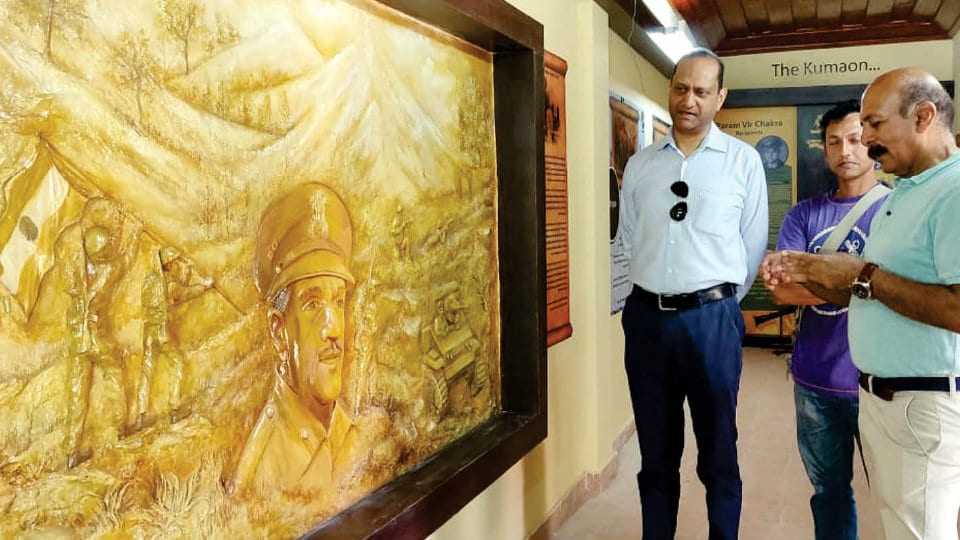
‘Sunny Side’, General Kodandera Subayya Thimayya’s house in Madikeri that is being converted into a museum and a war memorial, had a special moment last week when the celebrated General’s grandson Kongetira Belliappa visited the museum.

‘Sunny Side’ is located on G.T. Road in Madikeri and it is being renovated at an estimated cost of Rs. 6 crore. Belliappa is the son of Thimayya’s daughter Mireille, who married Maj. Gen. Kongetira M. Chengappa.

Visiting the museum that earlier functioned as RTO Office for the first time, Belliappa went around the museum and saw his grandfather’s photos, memorabilia and other artefacts. Stopping in front of some of the photographs, he turned emotional, recollecting the service of General Thimayya who was known as the “Soldier’s General.”

Some of the photographs portrayed the legendary General’s brilliant strategies and daring that have set the standard for professional soldiering and leadership. Belliappa appreciated the collection of photographs, artefacts and other items related to the Indian Army at the museum.

Field Marshal K.M. Cariappa-General K.S. Thimayya Forum Convenor Major Biddanda A. Nanjappa, who is instrumental in setting up the museum and the war memorial, explained the museum and its various sections.

Providing a detailed account of how General Thimayya inspired his soldiers to carry parts of Army Tanks up to a height of 12,000 feet snow-clad mountains of Zojila Pass — one of the highest Passes in the world — when Pakistan planned to annex Kashmir by force during their offensive of 1947-48, Nanjappa told Belliappa that it was a daring move and the Pakistan army ran away after seeing the Tanks staring at them. The parts of Tanks were carried up the mountains overnight and were assembled by early morning of Nov. 1, 1948.

The very appearance of the Tanks utterly dampened the morale of the bewildered Pakistanis who either fled or were vanquished. Once Zojila was taken, the road to Kargil was reopened and Ladakh was safe. Ultimately, on Nov. 24 Kargil was re-taken. Thus the unofficial 1st Indo-Pak War (and perhaps the longest and toughest of them all) ended in success owing to the bold, shrewd and relentless pursuit led by Gen. Thimayya, explained Nanjappa.

Nanjappa then requested Belliappa to hand over certain items that belonged to General Thimayya that is in possession of the family to be kept in the museum.

Art works featuring the valour of Indian soldiers on the battlefield will occupy the centre stage at ‘Sunny Side.’ Other main attractions of the museum will be the articles used by Gen. Thimayya, military uniforms, books and information on Indian Army, Navy and Air Force.

Apart from an Army Tank, weapons that were used by the soldiers of Indian Army in the past during many operations have been donated to the museum.

source: http://www.starofmysore.com / Star of Mysore / Home> News / April 20th, 2019

Bangalore Kodava Samaja Distributes Cheques To Kodagu Flood Victims

KodavaSamajaKF27mar2019

Bengaluru:

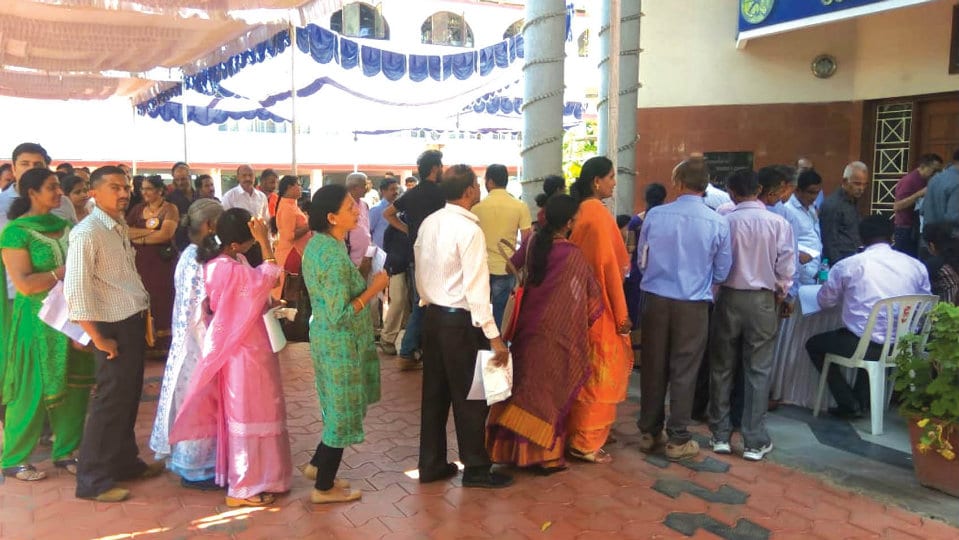
In a noble gesture, Kodava Samaja Bangalore had organised an event yesterday where relief cheques were disbursed to victims of floods and landslides whose lives were torn apart in the natural disaster that ravaged some parts of Kodagu last year. In all, cheques worth Rs. 2.65 crore were distributed to 355 flood victims.

Speaking to Star of Mysore over the phone, President of Bangalore Kodava Samaja Mukkatira T. Nanaiah said that the Kodava Samaja had constituted Kodava Samaja Flood Relief Fund and they had identified the victims through a committee and screened them for relief fund assistance.

“We had also invited applications from the victims and we had constituted an independent survey team to visit each victim’s house to assess the damage. The list of beneficiaries was prepared after a thorough assessment and survey and all the communities – Kodavas and non-Kodavas were included in the list,” he said.

Relief cheques were distributed to victims and the money was decided depending on the extent of damage. “We have distributed cheques from Rs. 30,000 and in excess of Rs. 2 lakh depending on the damage they have sustained,” Nanaiah said.

Kodava Samaja sources said that more than 500 people including non applicants had attended the event. “We have collected all applications and will look into the possibility of distributing compensation to them,” sources said.

The cheque disbursement ceremony was led by Maj. Gen. (Retd) Kodandera Arjun Muthanna, President of Kodava Samaja Flood Relief Fund and was presided over by Kodava Samaja President Mukkatira T. Nanaiah. Kodira Kavya Pratap Somanna rendered a prayer, Kodava Samaja Secretary Chiriyapanda Suresh Nanjappa welcomed and Samaja Vice President Mallengada Meera Jalajakumar proposed a vote of thanks.

source: http://www.starofmysore.com / Star of Mysore / Home> News / March 2019

Four From Coorg Battalion To Attend R-Day Parade

Kushalnagar:

CoorgBattalionKF30jan2019

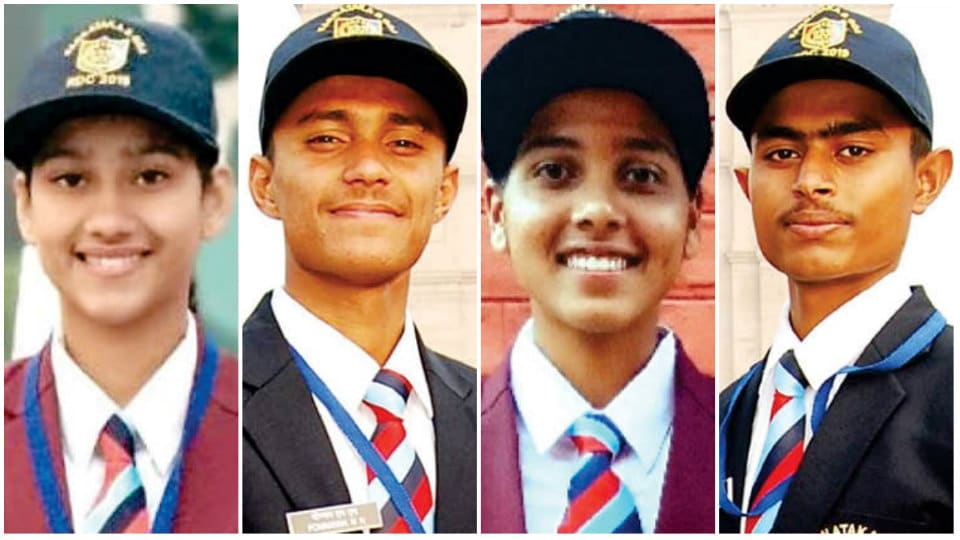
Four cadets from 19/KAR NCC Battalion (Coorg Battalion) in Kodagu have been selected for the annual Republic Day Parade in New Delhi on Jan. 26. They will perform in the NCC contingent that will march through the Rajpath greeting dignitaries including President Ram Nath Kovind and Prime Minister Narendra Modi. One of the cadets will also participate in the cultural events.

The cadets are N.N. Ponnanna, a second year BA student of Field Marshal K.M. Cariappa College, Madikeri. He is the son of Napanda K. Nanjappa and Nayana. He will take part in the All India Rajpath Rally.

Cadet B.S. Thejas, also from Field Marshal Cariappa College, is the son of B.S. Shreedhara and Sheela. He is a second B.Com student and will participate in the Prime Minister’s Rally.

Sergeant D. Preethi is from Vivekananda Degree College, Puttur and is the daughter of D. Rama and Hema. She is studying in Second Year B.Sc and will take part in the All India Rajpath Rally.

Sergeant Debayana Bhaumik is a 9th Standard Student of Bharatiya Vidya Bhavan Kodagu Vidyalaya, Madikeri. She is the daughter of Debraj Bhaumik and Sanchita Bhaumik. She will take part in the All India Cultural display.

The cadets have been selected based on their capacity and excellent performance. They have been selected by Commanding Officer Col. V.M. Naik, AO Lt. Col. Sanjay Apte and ANO Maj. B. Raghav of Field Marshal K.M. Cariappa College.

source: http://www.starofmysore.com / Star of Mysore / Home> News / by January 24th, 2019

The woman who brewed change

Asia’s first woman coffee taster, Sunalini N. Menon, is now opening a museum for coffee

SusheelaNair01KF30jan2019

Susheela Nair

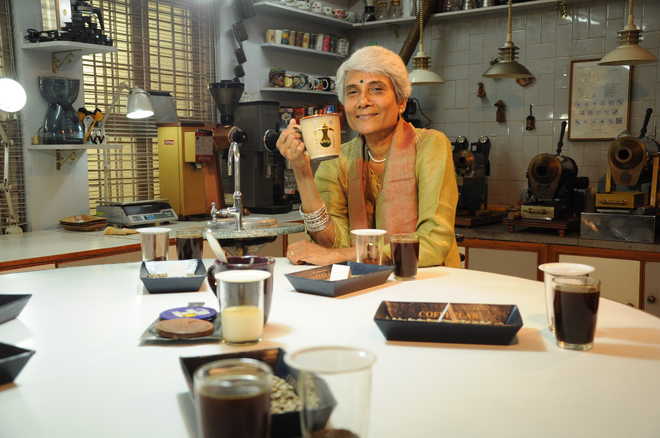
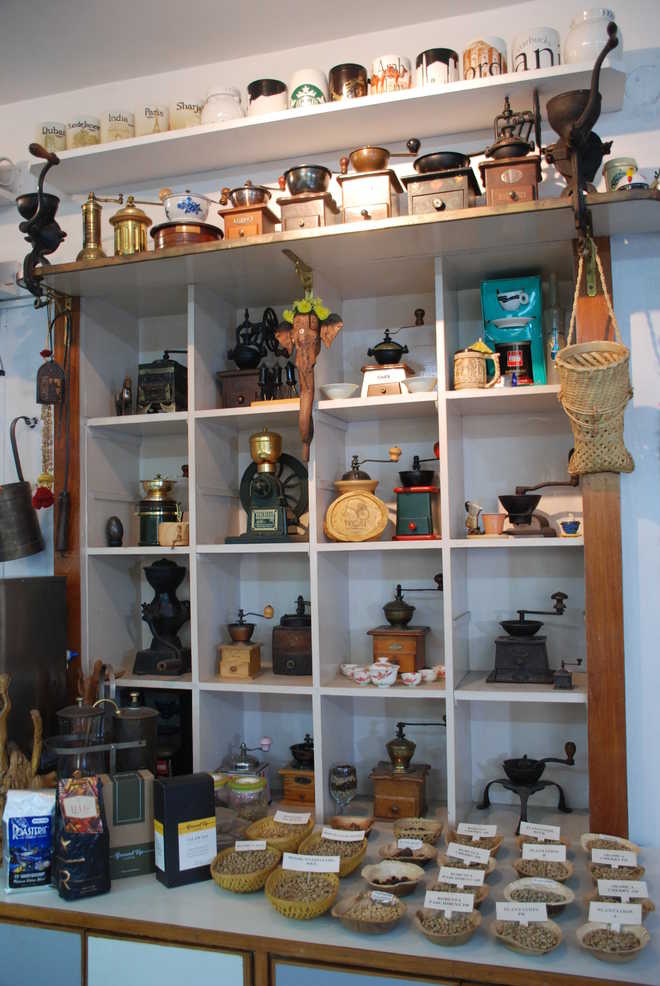
The aroma of coffee wafts through the air as one steps into the Coffee Lab in Sadhashiva Nagar, a posh locality in the heart of Bangalore. Every nook and corner of the lab is adorned with mugs, coasters, antique jugs, filters and other coffee paraphernalia collected from all over the world. The Coffee Lab bears the semblance of a mini museum with its walls lined with a variety of packaged coffee and curios from around the world — exquisite grinders, scented candles, filters, mugs, and a whole shelf of good old-fashioned tumblers, a stark contrast to a regular sparkling white laboratory filled with shiny apparatus used for coffee accreditation and testing.

SusheelaNair02KF30jan2019

It also houses memorabilia, including tribal products from coffee growing areas, areca nut pickers, ancient milk measurement units and coffee pots. Each equipment throws light on the culture of the country it comes from. For instance, Italian pots have ornate carvings; the ones in Iran are known for their silver and filigree work; Pakistan has a recurring crescent moon pattern while Egypt sports designed Cleopatra. The star attraction of the Coffee Lab is the painting of Mona Lisa in coffee powder.

In the middle of the lab, inhaling deeply from one of the deftly prepared samples of green and roasted beans, in front of her, is the first woman coffee taster in Asia and ‘quality-control expert’ Sunalini N. Menon. After acquiring a Master of Science in food technology, Sunalini’s first choice was to become a dietician, but destiny had something more fascinating in store for her. She had to choose between further studies at the New York Institute of Dietetics or a job with the Coffee Board. But she chose the latter which was a turning point in her life.
From an assistant taster at the Coffee Board of India to the head of the quality control department (at the age of 28), and director (quality control) until 1995, Sunalini has traversed a long way fighting a lone battle against all odds at every stage of her career. Steering her way through the male-dominated world of coffee tasters and growers, recognition and acceptance as an accredited international cupper came her way belatedly, almost two decades later. She is a walking encyclopaedia on coffee and knows the coffee bean inside out. This coffee veteran takes 100 sips of coffee — all in a day’s work. Known as Asia’s first woman of coffee, she moved on to set up her own lab, the Coffee Lab in Bangalore, in 1997 for evaluating the technical nuances of Indian coffee.

The advent of liberalisation in the Indian coffee market inspired Sunalini to set up her own lab in 1996. She established Coffee Lab Private Limited, the first private sector lab of its kind equipped with modern equipment and accredited by the Coffee Board of India, in Bangalore.
Explaining the main objective of her Coffee Lab, Sunalini says, “From the seed to the cup, we offer the entire gamut of services. We delve into the technical aspects of coffee-making, quality testing, advising growers on how and when to sell the beans, and preparing special coffee brands. Coffee Lab uses the time-tested techniques of visual and organoleptic evaluation for the quality analysis of Indian coffee. We conduct appreciation courses for homemakers and also classes for farmers.”

True to her social commitment of empowering women economically, Sunalini has employed women to handle the sensitive and critical steps of green coffee evaluation. Though there are innumerable problems plaguing the coffee industry, the coffee veteran believes that the burgeoning coffee culture in the country has the potential to impact the market.

Revealing her plans to start a Coffee Museum, Menon says, “A trust will be formed as it is a non-profit initiative. We will start the story of Baba Budan (who brought coffee to South India) and traverse through the cultural aspects of coffee, diversified cultivation pattern and types of seed material. We are planning a layout that is representative of a typical Indian coffee plantation. The exhibits will include antique coffee roasters, grinders, brewing equipment, mugs, cups and coffee powders from different parts of the world.”

source: http://www.tribuneindia.com / The Tribune / Home> Trends / January 26th, 2019

Passport Kendra In Mysuru To Serve People Of Kodagu

PassportOfficeMysureKF13nov2018

Mysuru:

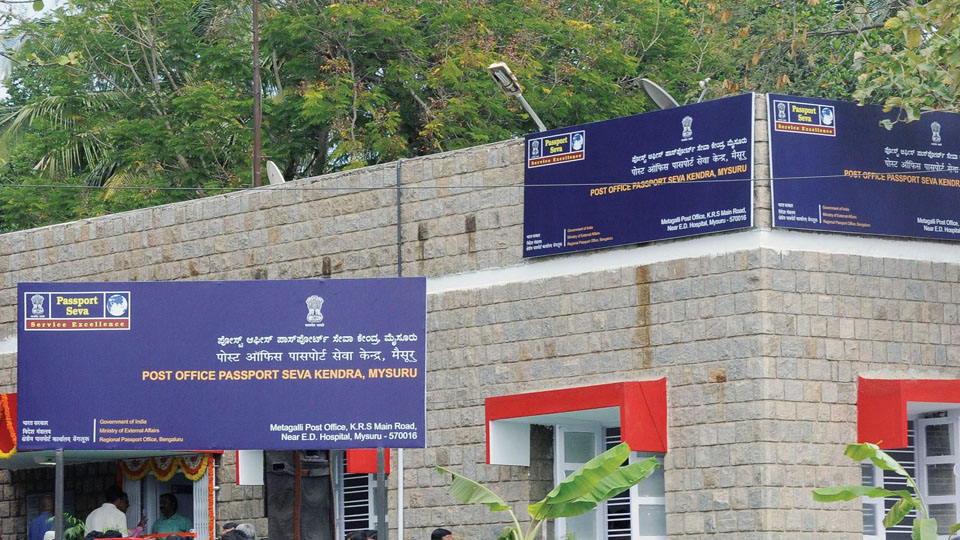
The Post Office Passport Seva Kendra opened at Metagalli Post Office in Mysuru will serve the people of Kodagu too.

According to Mysuru-Kodagu MP Pratap Simha, the service has been extended to the residents of Kodagu who had to go to Bengaluru or Mangaluru to get Passport services.

Keeping in mind the inconvenience faced by the people of Kodagu, then Union External Affairs Minister had agreed to extend the service to Kodagu, he said.

source: http://www.starofmysore.com / Star of Mysore / Home> News / November 12th, 2018