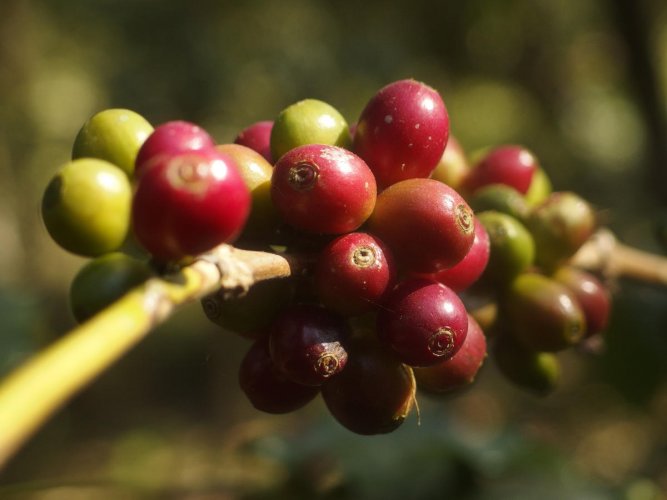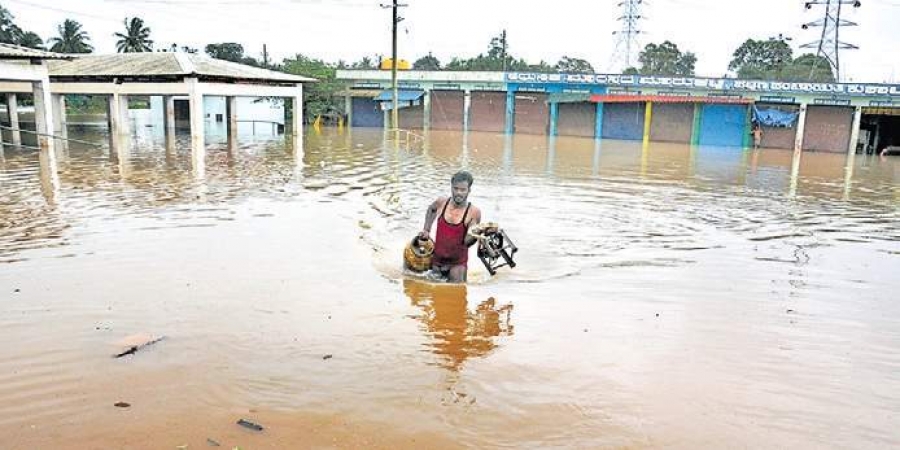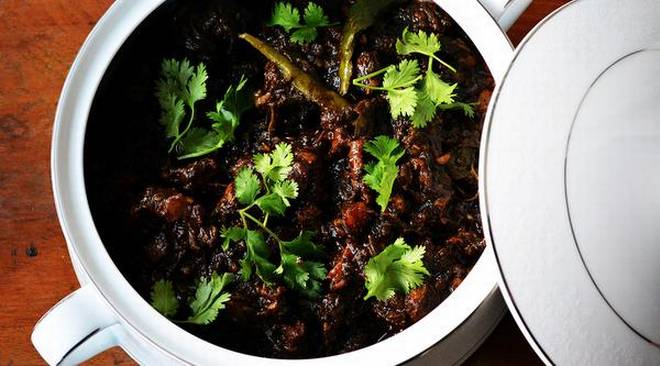
I have been busy during the last few months talking to people (COCOBOD, various ministries, Universities and Research Institute) about the current ‘State-of-the-Art’ of coffee in Ghana. Talking also to plenty friends, colleagues, associates and coffee-lovers too, I realized that very few people are aware that Ghana grows coffee and that coffee does have the potential of boosting our economy if it were to be paid the right attention.
Allow me to start with a simple Question and Answer:
Is coffee grown in Ghana? The answer is Yes
Brief overview of the Ghanaian coffee
Known predominantly as the World’s Second largest Cocoa producer, Ghana is increasingly entering the coffee market. Ghana’s relatively small coffee production made it the third smallest coffee producer in sub-Saharan Africa: just behind Liberia and the Central African Republic (which produce about 600 tons each annually). The primary coffee plant variety historically grown in Ghana is Robusta.
General Statistics on Ghana Coffee
– 12,250 tons of green coffee beans exported in 2015 (Ghana Export Statistics); this figure does not include leakages to neighboring countries and internal sales within the country
– An increase of about 550% in coffee price, over the past 5 years
+22% of Ghanaian Coffee Farmers are women
– Currently Ghana has 65% supply deficit that needs to be filled and government is trying to do that by providing new coffee seedling varieties and revamping old farms to increase productivity.
– We also have 15% penetration rate of retailing
– Current price of unhauled coffee of 64kg is going for a price between GH?200 -250 and
– The price of hauled green beans is going for GH?400-500 for same amount
Note: all these statistics are not absolute but estimated.
Coffee regulatory bodies
For every industry to be successful there is a need for institutions to govern their activities to ensure smooth flow within the sector.
Government and private bodies have established such bodies within the coffee industry.
Noted among them are:
– The Ghana Cocoa Board,
– International Coffee Organization and
– The Cocoa Research Institute of Ghana (CRIG)
1. The Ghana Cocoa Board (CoCoBod)
Cocobod was established by ordinance in 1947 with the sum of ¢ 27 million (being Ghana’s share of the net profit of the West African Produce Control Board) as its initial working capital. The Board traces its beginning further back to the cocoa hold-up of 1937.
Cocobod’s mission is to encourage and facilitate the production, processing and marketing of good quality cocoa, coffee and sheanut in all forms in the most efficient and cost effective manner, and maintain the best mutual industrial relation with its objectives.
It also issues license to businesses that want to trade (export) coffee by issuing them export certificates; these certificates are issued after due- diligence of course, and require annual renewal.
Support Examples from Cocobod:
– Under the CDP, Cocobod supplied free inputs-seedlings, fertilizers, wellington boots, cutlasses, etc-to Ghanaian coffee farmers to boost their interest in the sector.
– Payments toward land preparation, lining and pegging, weeding and transportation of seedling were also made to participating farmers.
– In addition, Cocobod has developed high stock of planting materials through its subsidiaries, Cocoa Research Institute of Ghana (CRIG) and Seed Production Division (SPD) for distribution for farmers for free.
2. ICO – The International Coffee Organisation
In July 2009 Ghana became a full member of the International Coffee Organisation (ICO) at a ceremony at the headquarters of ICO in London. ICO is the main inter-governmental organisation for coffee, bringing together producing and consuming countries to tackle the challenges facing the world coffee sector through international cooperation.
Ghana first assented to the International Coffee Agreement in September 1964, and has been a signatory to all the agreements, with the Ghana Cocoa Board as the implementing agency for the government.
By this deposition of the instrument of ratification to the ICO, Ghana indicated its consent to be bound by the ICA 2007, and has full voting rights as a member of the International Coffee Organisation.
3. Cocoa Research Institute of Ghana (CRIG)
The Cocoa Research Institute of Ghana (CRIG) was administered by the National Research Council, which was later superseded by the Ghana Academy of Sciences and the Council for Scientific and Industrial Research (CSIR).
The objectives of the Institute were subsequently expanded to include research on other indigenous and introduced tree crops that produced fats similar to cocoa butter.
The Institute’s Mission with regards to coffee is “to undertake research aimed at developing appropriate technologies and strategies for healthy and economic cultivation of coffee”.
4. Coffee Improvement Thrust
The main aim of the Coffee Improvement Thrust is to develop coffee planting material that will meet the challenges of growers by:
– modifying the genetic make-up of the plant
– adopting strategies to improve overall quality of the produce
Sector outlook
Production
The country is the second largest cocoa exporter in the world behind neighbouring Ivory Coast. Production of coffee, which was introduced to Ghana at the same time in the 18th century, trails in comparison.
But it has rebounded in recent years, thanks to a growing overseas demand and a blossoming domestic market that is giving farmers hope of growing a major cash crop. A government scheme launched in 2011 to revive the sector has transformed production and marketing of Ghanaian coffee. It led to 2,400 hectares of new and revitalised coffee plantations, with farmers attracted by the introduction of fair prices for the crop.
Government has since last month begun the distribution of four million coffee seedlings to farmers in the production area of the country under the Planting for Export and Rural Development (PERD) programme, Deputy Local Government Minister, Collins Ntim has revealed.
This, according to him, this would help the country bridge the huge deficit of 65 per cent in coffee production and supply. It is expected that by 2023, this programme will enable coffee production to reach 50,000 tons.
African Challenges
Currently Africa supplies only 10% of global coffee volumes, while coffee was first discovered in Ethiopia.
In most African origins:
– yields are low,
– quality is inconsistent, and
– supply chains are inefficient
Ghana: Do we have a problem?
Coffee industry in Ghana in spite of its ability to rig in millions of dollars as foreign exchange earning to help boost the economy has not receive the kind of attention it needs, noted problems faced by the industry are;
1.low government support – input supply and regulations
2. aging farmers and farms
3. mostly cultivated by small holder farmers
4. unstable pricing
5. inadequate access to market information help investors and farmers
After interacting with some coffee farmers and buyers, there is a need to have a second look at the commodity that some describe as the next oil, looking at the rate of consumption and the foreign income being earned from its export.
Brazil which is known as one of the largest beneficiaries of foreign exchange earners from coffee have adopted various climate smart coffee farming methods that has revamped their coffee industry and put them on top of the world chat.
Sustainable farm gives back as much to the land and people as it receives. Sustainable farming also minimizes pollution, takes steps to care for the environment, and cares for its employees.
Sustainable coffee farming looks at aspects like modern farming practices, which include:
– planting shade trees to check erosion
– using organic or animal waste as fertilizer to reduce carbon emission
– water efficient irrigation methods and mixed cropping
– proper harvesting practices, and
– reuse of coffee husk as manure
Many countries like Ethiopia, Togo, Rwanda, Gabon, Kenya, Brazil just to mention a few through the support of organizations like Solidaridad and CABI have successfully introduced such practices to coffee farmers in these countries and have seen significant improvements in their coffee industry.
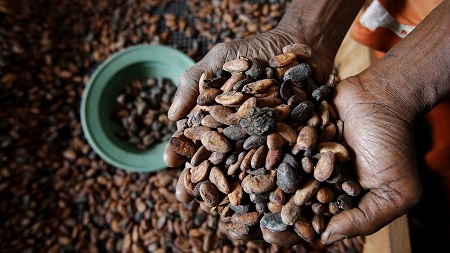
These sustainable coffee projects after implementation in the above mentioned countries have resulted in
1. improvement of quality of coffee,
2. farmers are able to keep records which enable them to access financing
3. using of advanced processing machinery in the coffee value chain
4. and a significant increase in gourmet coffee export
Prospects in the sector
To know the prospects in a particular industry the value chain of that industry has to be well defined and clearly stated in order to identify opportunities and various aspects needed to make the industry successful. This also applies to the coffee industry in Ghana; below is a brief showing a possible coffee value chain that can be taken advantage of both for job creation and economy improvement.
Coffee Farming
In Ghana coffee is mostly grown in six (6) of the regions out of the ten (10). This means that there are large areas of land available for anyone to inter into coffee farming.
Coffee harvesting run from September through to January and planting mainly starts on the onset of the rains in May.
A well- maintained farm can produce an average of 1.8 tons of coffee cherries per hectare.
Through effective regulations and stakeholder engagements, average farm gate price of unhauled coffee rose from GHc40 for 65kg in 2010 to GHc250 for 65kg in 2016. In addition, under good farm management practices, an average net income of about GHc6, 988.30 (US$ 1,767.50) per hectare is estimated to be obtained by the farmer.
Processors
1. Haulers/Agents – there are very few people in this sector of the value chain and they all have their charges or approved means of making income; they tend to double as agents for both the farmer and coffee beans buyers they normally charge about GHC 1.00 for kilo to source for the beans for any interested buyer and they employ women to sort and grade the beans paying them about GHC 1.00 per kilo for well sorted beans.
Currently, there are thirty (30) Licensed Buying Companies (LBCs) registered to engage in internal purchasing and exports of coffee in Ghana and there is room for more.
2. Coffee Roasting in Ghana
Other than cafe retailers who brew per cup, roasting is the point on the value chain where coffee experiences its most lucrative transformation.
For any potential new roasters, coffee roasting can be profitable both locally and off shore. The export market provides avenues for revenue generation so far as quality standards are met, granting producers access to a multi-billion dollar industry.
Locally, there has been an increase in coffee consumption as a result of Ghanaians growing appreciation for cafe culture and an influx of expatriate residents. The rising number of cafes in the country, distributed coffee products and machinery are key indicators.
The increase in demand for roasted coffee is an excellent opportunity for local manufacturers, especially with raw material availability being secured long term through government initiatives to boost local coffee cultivation.
3. 3Retailers – in recent times many coffee shops are springing up in Ghana,.
This might be the start of coffee culture, even though most people still prefer the instant coffee, Ghanaian taste are becoming more sophisticated leading to a booming coffee shop business.
There is a very stiff competition in this sector from foreign franchise operated coffee shops but one that source fresh coffee locally has a competitive advantage over the rest.
In conclusion
Coffee may contribute to sustainable development in Africa’s rural areas. In 2007 and 2008, for example, Ghana received modest earnings of US$1,331,308.36 and US$2,767,378.00, respectively, from coffee exports.
The Ghanaian Coffee sector presents opportunities for Ghana to make great strides towards economic transformation. The following conditions can to help boost or move the Coffee Sector:
– Enhanced access to extension services,
– Favourable weather for the Robusta,
– Competitive and growing local market characterized by high demand for the produce.
– Reliable and increasing farm gate prices.
– Increasingly high farmer motivation.
– Growing interest among the youth.
– Buyer- perception of the quality-value of certain coffees from Africa.
– Our potential to increase volumes to meet growing demand.
This implies that coffee production, if boosted, can generate substantial income to supplement revenue generated by government from other sources and has good investment opportunities for private sector.
Let’s all work together to position our Ghanaian Coffee produce as the Best possible one(s)
Thank you,
Benedicta
About the Author:
Coffeepreneur Benedicta Tamakloe, is the Founder of Bean Masters (www.BeanMasters.Coffee ), a Ghanaian StartUp focused strictly on the coffee trading business.
She can be reached at +233 20 296 2988 and she also welcomes all remarks/questions/ feedback via email at coffeeinghana@gmail.com
source: http://www.ghanaweb.com / Ghana Web / Home / by Benedicta Tamaloe / November 07th, 2018