Category Archives: Uncategorized

Contest for best family photograph

BANGALORE:
Better Photography, a magazine on photography, organised a competition on India’s best family photograph called the Fun Frames contest recently. The winners are yet to be announced. Winners will get the opportunity to spend a holiday package from Club Mahindra for an entire family and a fabulous Olympus PEN E-P3 camera, the candidate would also be recognised on a national level by the magazine.
The concept was to capture precious memorable moments shared with family and friends through photographs and send the entries to the Fun Frames contest.
The contest was categorised in six sections namely,� family portraits, going places, kids at play, togetherness of the joy , photo series—‘A Travelogue in Frames’ and photo series—‘A Family Photoessay.’
The contest was promoted on a large scale through television promos on CNBC TV18, CNN IBN, Awaaz, CNN IBN, IBN Lokmat, magazine advertisements in Better Photography, Overdrive, T3, Chip, AV Max, Better Interiors, Entrepreneur, Burrp, Noise Factory along with banner ads across web18 sites including In.com , moneycontrol.com , ibnlive, ibn khabar, cricketnext.com. Social media was targeted and the contest was highlighted on facebook and twitter with various continuous promotions across Club Mahindra properties through banners, standees and fliers.
The entries were collected through a dedicated website (http://betterphotography.in/funframes/ ) as well as physical print entries by post were accepted. The last date for receiving the entries was November 15 and the magazine received an overwhelming 6,000 entries from towns and cities all over India.
Better Photography editor, K Madhavan Pillai said, “The number of entries was incredible and to receive a response from the smallest towns to the biggest metros in India was astonishing. We plan to conduct many more opportunities through photography to explore the talent and capabilities of the people of India.”
Renowned photographer Madhur Shroff� has been bestowed with the responsibility of selecting the final six entries that would go ahead to participate in the final face off.

The face off would require the participation of the families so the finalists would get an opportunity to stay with them at Club
Mahindra in Coorg. The winner of the final face off would be announced on� December 7 at an event in the Club Mahindra property in Coorg.

source: http://www.ibnlive.in.com / Bangalore / posted December 05th, 2011 / Express News Service, Indian Express

Designer Arati Monappa’s 10 rules of style for homes


Arati Monappa, designer and owner of Serenity reveals her 10 rules of style.

1. There are two categories of people who have antiques — those who have inherited them and those who buy them because they are genuinely interested and have read up about them. It’s important to keep a piece from the past, that has been handed down from generation to generation. Especially because, antiques today are so expensive. So, if you’ve inherited any antique, keep it.

2. There are so many ways you can put your heirlooms to use. For instance, if you have a very old pashmina shawl, one that’s not good to be used by you, you may use it as a drape over your sofa. It enhances the furniture piece and two, becomes a talking point.

3. Antique pieces blend very easily into today’s modern homes. You may have a technology driven home, stocked with plasma TVs and other hi-tech gadgets and still add antique pieces like old copper or brass lamps or wood carvings. These pieces give character and personality to an otherwise stainless steel, shiny, impersonal house.

4. Talking about care for copper pieces, I use a powder called Pitambari. You just rub the powder over the item to make it gleam. There are more solid means of preserving these pieces too, like applying a coat of lacquer. For old wooden pieces, you may apply a coat of MRF’s wood coat polish. Or you may simply use a brush to remove the dust and rub linseed oil on it.

5.Antiques are undervalued. I see people throwing out items like old copper pots or beautifully woven baskets and replacing them with plastic mugs and plastic bags. There is a need for a certain education about the value of the old heirlooms. Not because of their value, but mainly because, plastic can’t be recycled and is not good for the environment. By buying plastic, you are adding to the junk.

6. There are quite a few old valuables that young couples interested in doing up their homes could buy. They could go for a lovely ceramic pottery piece or pick up old lamps. An old lamp in the corner is enough to add character to the living room. Old textiles are another option. For instance, your grandmother’s old woven sari could make for a beautiful framed piece of art, in the hall.

7. My store Serenity, is a good example of how you can bring the old into the new. We’ve re-used old glass panes, doors and grills for the interiors. So, even if its a modern five- year-oldbuilding, it’s got all these old elements like granite pillars, attangadi tiles for the floor, old mirrors and more.

8. Bangalore has quite a few places where you could go hunting for antiques. There’s Thar Gallery in Indiranagar. I believe Raintree carries a range of old furniture. Then of course, you have Russell Market, where you still have little shops where you can pick up an interesting salvaged piece.

9. I like to spend money on carpets and artworks. I think these two are very important in a home and add a whole new character to it. A painting doesn’t have to be expensive. It could also mean indigenous art like a mithila, madhubani or warli art.

10. I am very fond of carpets for the intricacy of their weaves. I am partial to porcelain and ceramic too. I like my teacups and teapots!

source: http://www.dnaindia.com / Home> Lifestyle> Report / by Mahalakshmi Prabhakaran / Place:Bangalore, Agency:DNA / Thursday, December 01st, 2011

Tribal Families get a new lease of life

Centre’s programme to rehabilitate tribals bears fruit

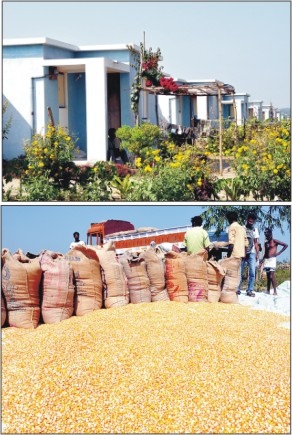
Caption: A view of the houses for the rehabilitation of tribals in Hunsur taluk. Picture right shows rich harvest of maize grown by the tribals.

Mysore, Nov. 27- The tribals of Nagarahole forest region, who depended on the forest produce for their livelihood and did odd jobs in the neighbouring plantations, are now gradually becoming self-dependent through agriculture, thanks to the rehabilitation work undertaken by the Central Government, under the directions of the Supreme Court.

More than 150 tribal families have benefited from this programme as they have been resettled in Shettihalli and Lakkapattana villages near Hanagodu of Hunsur taluk since Nov. 15, 2010. The tribal settlements have Jenukuruba (a tribal community) families from Kodagu district and H.D. Kote taluk.

Each family was given 3 acres of barren land where tribals have reaped a rich harvest of maize. On an average, each family has five members and hence, labour is no problem since they work at each other’s fields in a sort of barter system, traditionally called as Muyyi-Aalu system.

Each family is said to have grown 80 to 90 quintals of maize — enough to keep for own consumption and to sell. In order to encourage tribals to take up farming, Forest Department provided tractors to plough the fields and the Agriculture Department provided them with seeds, manure and other inputs.

The tribals depend on plantations for work, where they are paid good wages, especially during harvest seasons.

After reaping a rich harvest of maize, the tribals have already begun preparations for next crop. Agriculture Department officials are said to have advised them to take up mixed farming of crops like millets, beans, pulses etc.

Rajappa, leader of the tribals, is a Gram Panchayat member of Balele village in Kodagu. He is said to have played the main role in rehabilitating the tribals, with assistance from Living Inspiration For Tribals (LIFT).

The tribals are also growing vegetables for their consumption in their kitchen gardens. Their houses constructed by the government measure 50×80 ft, with RCC roofs, tiles floor, toilets, solar lighting and other amenities.

Talks are on to provide them with LPG cylinders for cooking and issue them ration cards under Public Distribution System.

About the rehabilitation

The new rehabilitation package for tribal communities and forest dwellers inside the Nagarahole National Park was launched in a bid to not only reduce human presence in critical wildlife habitat but also to meet the demands of tribal people.

The package is an offshoot of meeting the imperatives of Wildlife (Protection) Act of 1972, as well as balancing the requirements under the Scheduled Tribes and Other Traditional Forest Dwellers (Recognition of Forest Rights) Act of 2006, which stipulates that rights of Scheduled Tribes people and other traditional forest dwellers within critical tiger and wildlife habitat areas are not compromised.

The package ensures tribal rights with a few modifications and ensures space for tigers and other wild animals inside the National Park

source: http://www.starofmysore.com / General News / November 27th, 2011

CNC welcomes move to set up central varsity

The Codava National Council (CNC), spearheading the movement for creation of an autonomous Kodava homeland for Kodagu, on Sunday, welcomed the proposed move of the State Government to write to the Centre recommending establishment of a Central University to Kodagu.

CNC president N.U. Nachappa said in a statement on Sunday that the credit of the decision should go to the CNC, which had been submitting memorandums to the Centre and the State Government through the Kodagu district administration over the issue for many years now.

Mr. Nachappa quoted a report appearing in a section of the press in Bangalore on November 17 which said that following the proposal made by the CNC for a separate Central University dedicated to the study of Kodava ethnic culture, the Karnataka State Higher Education Council had resolved on November 16 to write to the Centre recommending the establishment of a Kodagu Central University, similar to the one in Gulbarga. However, Minister for Higher Education V.S. Acharya had said it would not deal with Kodava studies only. “We do not want to restrict it to just one subject. We will write to the Centre for a Central University in Kodagu region,” Mr. Nachappa said quoting the report.

He said the CNC was happy to know that the State Government was taking the lead in forwarding the recommendations made by the Deputy Commissioner, Kodagu, based on the several memorandums submitted by CNC, seeking the establishment of Central Kodava University and World Kodavology Study Centre. ‘The CNC is grateful to Mr. Acharya for having considered our legitimate claim with judicious perspective’, he said.

Census

Mr. Nachappa appealed to the Kodagu Deputy Commissioner to direct the caste census enumerators to enlist the Kodava people separately under the columns of the ‘Kodava’ caste, and not as ‘Kodagaru’ or ‘Kodaga’ or ‘Coorgi’ in the census sheets. The census was set to begin in the last week of this month.

Kodava Day

The CNC would be observing the annual ‘Codava National Day’ on November 24 at the Gandhi grounds in Madikeri, Mr. Nachappa said. It would mark the 20th year of the struggle of the CNC. The CNC would reiterate its stand on the creation of an autonomous Kodava homeland.

source: http://www.thehindu.com / National> Karnataka> Mysore, November, 22nd, 2011 / by Staff Correspondent

Dash of creativity gives secondhand stuff the edge

In keeping with Bangalore’s ongoing celebration of all things recycled, the Flea Market at Jaaga fit the bill.

The event was organised by Second to None, a group that encourages people to buy and sell used products.

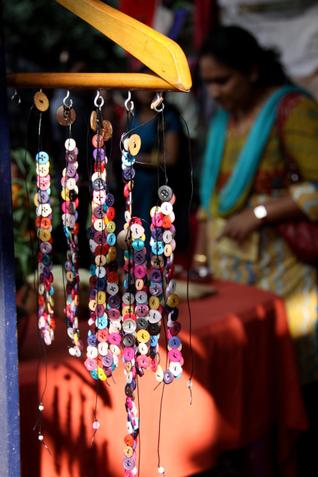
The flea market organised in Bangalore by the NGO Second to None encouraged people to buy and sell used products. Photo Ashwini N. The Hindu
“The idea behind the flea market was to provide a space for people to sell and buy secondhand material without going to the trouble of marketing or advertising. With different choices, customers buy items at a lower price than a new one, and which are in just as good a condition,” explains Anu Gummaraju, a founders of the organisation with Reena Chengappa and Shilpa Kamath.

The atmosphere was informal, yet the event created awareness among visitors about the simplicity of turning ‘waste to wealth’. Angad Gummaraju, a 14-year-old, took great pleasure in teaching kids — and grown-ups — how to make jewellery boxes and lamp holders in fifteen minutes through origami.

How did he learn to make these trendy accessories? “YouTube,” he quips, demonstrating just how easy it is to be ecofriendly and resourceful while having fun.

About thirty participants were seen exhibiting their wares at the stalls. Belaku, an NGO, had brought in bags, notebooks and trendy jewellery made out of recycled paper by disadvantaged village women.

Papier-mache artiste Rabi Ratnakar’s lamps and vases were a crowd-puller. “These are completely safe and extremely kid friendly,” he says.

Taantra Cakes sold preservative-free cupcakes. “This makes them more durable. The taste of the cakes gets better and they are healthier even without refrigeration,” explains Taantra Cakes owner Chaitali Singh.

Old books, clothes, bags, even photographs, found space in shoppers’ bags. Second to None is hoping to make every third Sunday ‘flea market Sunday’ so that more people can participate in the “recyclathon”.

source: http://www.thehindu.com /by Madhavi Shivaprasad / News> Cities> Bangalore / November 17th, 2011

CM inaugurated Centenary Celebration of Kodava samaja

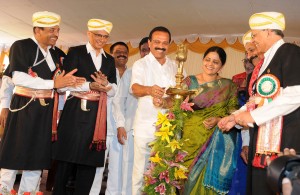
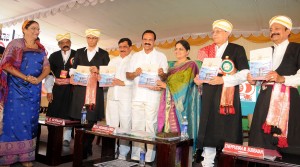
Chief Minister D V Sadananda gowda inaugurated Centenary Celebration of Kodava samaja. Speaker KG Bopayya, High Court Judge Bopanna, M C Nanayya MLC, Dati Sadananda Gowda seen in Picture.

Chief Minister D V Sadanada Gowda inagurated Centenary Celebration of Kodavasamaja.Speaker K G Bopayya, High Court Judge Bopanna, M C Nanayya MLC, Dati Sadananda Gowda seen in Picture

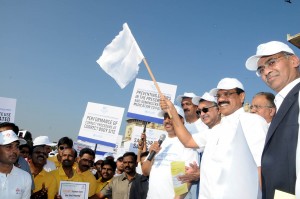
Chief Minister D V Sadananda Gowda Flaged off of Marathon Run by Quality Control in Health Management. Rajiv Gandhi University of Medical Sciences Vice Chancellor Dr Sheeprakash seen in Picture

Chief Minister D V Sadanada Gowda Released Smarana Sanchike for Centenary Celebration of Kodavasamaja.Speaker K G Bopayya,High Court Judge Bopanna,M C Nanayya MLC,Dati Sadananda Gowda seen in Picture

source: http://www.sandanandagowda.com / Sunday, November 13th, 2011

Kodavas of Coorg: Bold, beautiful and brainy

That its men are brave and the women beautiful is an oft-remarked blanket statement about Coorg. The British called it the Scotland of India when they fell in love with this cool nook in the Western Ghats and its warm people.

The Kodavas or Coorgis are an ethnic minority. But unlike other minority communities, the Kodavas are largely privileged. In fact, a pleasant colonial hangover stays with the people who enjoy a good life with evening drinks, golf, and hockey.

Although a Hindu community on paper, their language, customs, and traditions are distinct.“Easily one of the most martial cultures in the country, these are a people who ritually worship their guns and swords. Interestingly, till a few decades ago, the birth of a male child was marked with a gun shot, announcing to the world the arrival of a warrior,” writes Pattamada Sundar Muthanna in a coffee table book on Coorg tourism, brought out by journalist PT Bopanna.

Thanks to the outstanding contributions of this community to the country’s defence sector, Coorg is also called the Land of Generals.Field Marshal Kodandera ‘Kipper’ Madappa Cariappa, the first Indian Chief of Army Staff of the Indian Army, was a Kodava. General KS Thimmayya was another brave soldier, who led the army during crucial conflicts with China and brought laurels to his homeland in the hills.

“The people’s right to carry arms was originally granted by the Kodagu kings, who did not maintain a standing army, but called on the people to fight when an invasion threatened. This right was formalised by the British when they exempted the Coorgis from the Arms Act. Today the Coorgis and a few other communities have the right to own guns without having to go through the process of getting a licence,” said Muthanna.

Characteristically, Kodava weddings are not exempted from the martial element either. The bridegroom, wearing his smart traditional costume— the knee-length kupya (similar to the Scottish kilt )—would chop banana trees with their carved daggers called pichekathi and odi kathi, symbolically to portray the duels he fought for the bride. The pichekathis are a part of the groom’s wedding gear, stylishly tucked into the cotton cummerbunds that hold their wraparound cloaks together. The ceremonies are tribal in nature more than Hindu, and are devoid of any Brahminical rituals. There is no chanting of mantras and slokas, and family elders direct it.

Like the Scots, Kodavas too stress upon their clan lineage. Their surnames indicate their clan, and inter-clan marriage is forbidden. Another distinguishing characteristic of this community is the high status given to women. According to the Gazette of Coorg, compiled by G Richter, published in 1870, “Young persons under 16 years of age are not married in Coorg. Exceptions from this rule are very rare. It is to be hoped that the Coorgis will ever be preserved from the misery of child marriages.” Dowry is forbidden, and widow remarriage is encouraged. Probably owing to the cool climate and the secluded terrain, the Kodava community is known for its liberalised outlook to alcohol consumption.

“Alcohol is offered to gods and ancestors during ceremonies. Children who have come of age enjoy a drink or two with parents,” said Muthanna.

A main festival in the Kodava calendar is called Puthari. It is an annual fest to celebrate the first harvest of paddy. Under full moonlight, stalks of paddy are cut and joyous gunshots mark the occasion.

The Kodava language is a mix of its geographical neighbours with many surprises thrown in. Malayalam, Tulu, and Kannada influences can be easily spotted, but the language is also unique as its people.

source: http://www.anhourago.in / DNA www.dnaindia.com / Home> Bangalore> Report / by Malavika Velayankkal / Sunday, Nov 13th, 2011

Tale of a forgotten World War II Hero

Late Subedar B.M. Uthaiah was a Prisoner of War for 5 years in Malaya
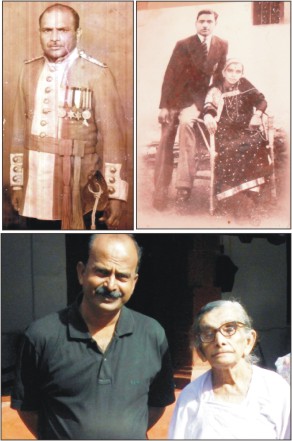

Caption: 1) Late Subedar B.M. Uthaiah. 2) For KEEPSAKE: The Uthaiah couple. 3) The author Ex-Sgt. M. N. Subramani seen with Subedar Uthaiah’s widow Dotty Thangamma at her native village in Virajpet.

By Mandetira N. Subramani, President, VeKare Ex-Servicemen Trust, Mysore.

Late Subedar Baltikalanda Medappa Uthaiah was born in Virajpet taluk, Kodagu District, on 13th November 1908. He did his schooling in Virajpet. After completing his SSLC , he took up a job in a Co-operative Society in Mysore.

A good sportsman and a brilliant hockey player, he used to actively participate in various athletic meets and hockey tournaments. His brilliance in sports and games got noticed by the then Mysore Land Force Officers and offered him a job in the Mysore Infantry as Havildar. Thus late Sub B.M. Uthaiah joined the first Battalion of Mysore Infantry in 1932 and went on to become a World War-II hero in his own right.

As a young combatant soldier, Uthaiah married Kodira Mandanna’s eldest daughter K.M. Dotty Thangmma in April 1940 while he was a Jamedar and at the time when the II World War had started. Jamedar Uthaiah became part of Indian Army as First Battalion, Mysore Infantry, which merged with the British Indian Army.

In Dec. 1940, that is within six months of his marriage, Jamedar Uthaiah proceeded to Bhopal in Madhya Pradesh for additional training in preparation for participation in the World War-II. After completing his training at Bhopal, he along with other members of Indian Army were shipped directly to Malaya from Bombay without even getting a chance to meet his wife and family for fighting against Japanese Army which was marching towards India through Burma.

As soon as the ship berthed in Malaya, the Indian soldiers were engaged in fierce fighting with the relentlessly marching Japanese Army. However, after a few days of fierce fighting for quite some time, the entire Indian battalion in which Uthaiah was fighting was surrounded by the Japanese Army and Jamedar Uthaiah was taken as Prisoner of War (POW) by Japanese Army. He along with other members of battalion were taken to Japan and put in a POW camp which was more like a concentration camp rather than POW camp.

Jamedar Uthaiah was subjected to severe torture and ill treatment by the POW camp authorities who were well-known for their ruthless brutal treatment to their prisoners. Since the prisoners were not permitted to communicate with any one outside the camp, Jamedar Uthaiah’s whereabouts were not known to any one in India including his Army Unit. His wife and family were totally distraught without any news of Jamedar Uthaiah.

His father Baltikalanda Medappa passed away in 1943 because of the sufferings of separation of his son and non-availability of any information about the son’s existence. The relatives and well-wishers of Jamedar Uthaiah and his wife Thangamma had concluded that he had become the war casualty and started preparation for re-marriage for Thangamma.

However, Thangamma was adamant and stood firm against re-marriage. She instead tried to find solace and comfort by visiting various temples in Coorg to pray for her husband’s safe return. Even after the end of World War-II, the whereabouts of Jamedar Uthaiah were not known and there was no communication from any quarter regarding his existence. During October 1945, after a gap of five years, the family members were informed regarding the arrival of Jamedar Uthaiah at Bangalore through a telegram which was received from Malaya via Colombo.

Immediately after arriving at Bangalore, Jamedar Uthaiah had to face a trial by British Army for possible involvement in Indian National Army (INA) activities. Finally, in December 1945, he was permitted to meet his wife Thangamma in Bangalore, who was very sick by then due to emotional suffering. He was subsequently posted to Bangalore till 1947.

He had to once again rush to Hyderabad in 1948 along with his unit to tackle the Razakars and to take part in the Hyderabad liberation which was successfully completed. However, he was very frustrated by all the treatments that he received from the British Indian Army in spite of all his sufferings and sacrifices. He finally took voluntary retirement in 1950 from the Indian Army and went back to his native district Kodagu. Subedar Uthaiah died on September 25, 1978, at the age of 69 like a true soldier unsung, unheard. His widow Thangamma, who is 92 years of age, now lives in Arji Village, Betoli post near Virajpet along with her youngest son, Bopanna. Uthaiahs were blessed with two daughters and four sons.

Late Subedar Uthaiah’s sufferings as a combatant soldier and a POW at Malaya during and after World War-II did not demoralise him in his life and he never thought ill of careers in Armed Forces when his son decided to join the Indian Air Force. True to the tradition of martial race to which he belongs to, as a Kodava, he encouraged his son, who was born after he returned to India from Malaya, to join the Arm-ed Forces in independent India. His second child B.U. Chen-gappa, an Engineering graduate, took commission in the Indian Air Force and went on to become a highly decorated Air Marshal in IAF.

Air Marshal Baltikalanda Uthaiah Chengappa, PVSM, AVSM, VSM retired in early 2000. Before his retirement, he held the appointment as Air Officer Commanding, Maintenance Command IAF.

Like father so is the son. A real chip of the old block. Air Marshal Chengappa went on to prove that Kodagu is indeed a cradle of mighty Generals, Air Marshals and valiant soldiers.

source: http://www.starofmysore.com / Features / November 10th, 2011
1971 Bangladesh Liberation War memoirs

When the Pak envoy was on the mule trail

The declassified 1971 war papers narrate a curious story of the Pakistani ambassador to Argentina fetching up an hour-and-a-half late for his farewell dinner. B K Sanyal, then India’s ambassador to Argentina, in a 1969 note to New Delhi found this amiss but said the Pak ambassador had not acted irresponsibly. “In my view, the ambassador did not act irresponsibly, but went away with a brigadier to visit mule breeders who are chiefly located in the Cordoba and Pampas areas.”

Before the 1971 war, Pakistan bought mules from Argentina to beef up its logistics capability in Kashmir. The Pak ambassador’s conduct triggered a chain of communications. K Sankaran Nair, then joint director, R&AW, wrote on Septemer 24, 1969, to C B Muthamma, joint secretary (Americas): “The Pakistani army has raised four mountain regiments and are likely to raise four more. These have mountain guns carried on artillery mules over hilly terrain. Eight mountain regiments would require 3,000 mules. The regiments are meant for use in PoK.”

How US responded to the signs of war

The 1971 war papers document how the US mission in India packed off confidential documents to secure places during the conflict, asked its banks to be ready to close accounts of American citizens and discussed the possibility of the war being a long affair.

A letter written at the peak of the Indo-Pak war by the then IB chief gives an insight into the mindset of the US mission in India during the 1971 war. “Sensitive documents with various US missions in India have been sealed under instructions from the US government. Thereafter, the documents are to be sent partly to Colombo and partly to Kuala Lumpur,” Atma Jayaram, director IB wrote on December 13, 1971.

Jayaram wrote that the “First City National Bank and the Bank of America in Madras were contacted by officials of the local US consulate and advised that they should prepare to close the accounts of American nationals and arrange for their transfer to places (presumably outside India) at a short notice.”

source: http://www.articles.timesofindia.indiatimes.com / by Josy Joseph / TNN / November 06th, 2011

‘Ekikarana’ movement: A timeline

The regions that make up for today’s Karnataka were under as many as 20 different administrative units with the princely state of Mysore, Nizam’s Hyderabad, the Bombay Presidency, the Madras Presidency and the territory of Kodagu being some of them.


* Under such circumstances, a need was felt among Kannadigas living in these various administrative units to form one state, which would unify all Kannada-speaking people in the various regions. This movement called the Ekikarana movement was led by litterateurs and thinkers.

* The Karnataka Vidyavardhaka Sangha was established in Dharwad in 1890. This was an important phase in the history of the unification movement. The Sangha was started by R H Deshpande who strove for the revival of Kannada in a region which was part of the Bombay Presidency where Marathi was the language of administration.

* It was later that the Kannada Sahitya Parishat (Bangalore) was set up (1915), which was another driving force in the unification movement.

* Alur Venkata Rao was the leading light of the unification movement. The publication of his Karnataka Gatha Vaibhava in 1912 gave a huge push in terms of a mass movement. He was known as the Kannada Kula Purohita or the ‘High priest of the Kannada family.’

* The States Reorganisation Commission was constituted by the Central government under the States Reorganisation Act and consisted of Hon. Fazal Ali, Kavalam Madhava Panikkar, and HN Kunzru.

* The recommendations of the Fazal Ali Committee was ratified by the Parliament, which meant that several disparate Kannada-speaking regions would now come under the Mysore State.
n The State was formed on November 1, 1956.

n It was on November 1, 1973, under Devaraj Urs as chief minister that the Mysore State was renamed as Karnataka.

source: http://www.deccanherald.com /by DHNS / Home> Supplements> Spectrum / Tuesday, November 01st, 2011