“It is important to resolve water problems in the scenario of present climate change caused by huge carbon emissions. The important manifestations of climate change is global warming which causes global temperature to change,” said professor A Vittal Hegde from department of applied mechanics and Hydraulics, NITK.
He addressed the gathering after inaugurating the seminar of ‘water proofing and water harvesting’ organized by Kodagu Dakshina Kannada and Udupi Engineers Association (KDKUEA) at Hotel Ocean Pearl on Saturday April 6.
Addressing further, he said since the year 1700 after industrial revolution, climate change has been the cause of various issues. Due to regular changes in the level of carbon dioxide, there is a change in the atmosphere. The release of greenhouse gases leads to extreme events such as floods occur said the speaker giving an example of a recent flood that occured in Australia.
Considering the above problems, he said methodical support to local RWH should be provided to get a substantial amount of water. Briefing about rain water harvesting (RWH), he said it is accumulation and deposition of rain water for use before it reaches the aquifer.
In ancient India, people believed that forests were mother the of rivers; in fact a study from US indicated that 60% of fresh water comes from forest. The water bodies used to be maintained by the community around but after Independence, the government took full control over the water bodies and water supply.
Speaking about the benefits of RWH, Hegde said it improves water availability, improves quality of ground water, prevents soil erosion, flooding and more important is is that it saves water an dmoney for the future.
Concluding his talk, he said that every city/village should implement RWH for the benefit of the future generation. Unless it is been made mandatory, no one will implement it, thus government should support and take initiative, he added.
A Vishnu Bhat welcomed the gathering, Dr RG D’Souza compered while M Divakar Shetty delivered the vote of thanks.
HV Harish, president of KDKUEA, Hemanth K Jain, director, Kerakol India limited, DR S Srihari from the department of civil engineering in NITK Surathkal, Dr Lakshman Nandagiri, Dr Girish Kumar, U Nagendra Rao, Gajanana S Hegde among others were present.
source: http://www.daijiworld.com / Daiji World / Home / Daijiworld Media Network – Mangalore (VM) / Photographs: Spoorthi Ullal / Mangalore, April 06th, 2013
This summer, abandon the confines of the urban metropolis for the natural beauty of the rugged outdoors. Avantika Bhuyan lists a few challenging trails to get your adrenalin pumping
STOK KANGRI
Stok Kangri is one of the few places in the world where you can actually walk up to 6,000 metres. Stok, the highest peak in the Ladakh range, has been classified by the Indian Mountaineering Federation as a ‘trekking peak’, which means that no technical mountaineering skills are needed for the climb. However, don’t let this lull you into thinking that you can hop, skip and jump your way to the summit. The route offers a worthy challenge to experienced trekkers with great views of the Spartan mountainous desert. On day one, drive past the Leh airstrip, the Spituk Gompa and the Indus river to reach Zingchen where the trek begins. After an overnight halt at Rumbak, one reaches the base of the Stok La to start the steep climb up to the pass at 4,890 metres. Spend the night in the bustling Stok Kangri base camp, swapping adventure stories. On Summit Day, begin the ascent to Stok Kangri in the dead of night, walking for hours across frozen glaciers to reach the peak at sunrise. Nothing can prepare you for the sights that await you on the top of the summit – a 360° view of the Karakoram, a glimpse of the K2 and the Gasherbrums. Legend has it that if you have good karma, then you just might get a peek of Mount Kailash as well.
Info: July is the best time to undertake this six-day long trek. For details, visit www.aquaterra.in or www.geck-co.com
THE GOECHA LA TRAIL
A popular trek is through Lachen, a town in north Sikkim, where you can witness the annual yak race held in the summer. However, one of the most favoured hikes is to Goecha La, located at a height of 4,940 metres. The trek starts at Yuksom, a pretty village in west Sikkim where you can refresh yourself with the tongba, a fresh millet beer served in small eateries there. Most adventure tourism companies organise permits, but if you are on your own, then you need to make an entry at the police station, submit copies of your photo ID and pay permit fees at the forest check post. From about 1,100 metres, this trek takes you up to 5,000 metres through moist jungles, open meadows, dense rhododendron forests and rocky mountains to snow-clad peaks. Stay at the forest guest house at Bakhim or a little further away at Tshoka where tiny restaurants offer you a taste of the local yak cheese. From this moment on, you are trekking in the shadow of Mount Kanchenjunga and can gaze at its southeast face. The trail to Dzongri, at 4,200 meters, offers you a panoramic view of the mighty Singalila range and Kanchenjunga. Time your trek from the Dzongri trekkers’ hut to the top so that you can watch the Kanchenjunga’s golden hue as the first rays of the sun hit the peak.Goecha La is further away along a spare alpine rockscape.
Info: This trek can be completed in eight to ten days, depending on your fitness levels. Visit www.banjaracamps.com or www.geck-co.com
BHABHA PASS TREK
This popular route takes you through the lush Kinnaur valley and the stark landscapes of Spiti region all the way up to the Bhabha Pass, which at 4,640 metres remains snowbound all through the year. Visit Comic, the highest village in Asia and also the famous monasteries of Tabo and Ki. Spend a day with a family in Spiti, which still follows the extended family system, with its roots in the ancient polyandric practices. This six-day long trek starts from the village of Kafnu through thick Pine and Deodar forests all the way up to the tiny hamlet of Mulling at 3,840 metres. The climb is steep in some parts and first-time trekkers are advised to take their time to catch their breath. After spending the night in the camp at Mulling, make your way to Kara, a meadow dotted with alpine flowers. A walk along the Wanger River leads to Phustring, the base of the Bhabha Pass. At 4,200 metres, crisp cold air and icy mountain streams greet you and you are offered a fantastic view of the 5,840-metre high Hansbeshan peak. The trek leads you to Pin valley and the edge of the Great Himalayan National Park which is home to the snow leopard and the Himalayan brown bear. From here, one can drive down to Manali via Kunzum and Rohtang.
Info: The 60 km trek is best undertaken in June and July. For more information, contact Banjara Camps & Retreats at www.banjaracamps.com
HARISHCHANDRAGAD FORT TREK
The scenic trails zigzagging across the lush forests of Western Ghats offer challenges to appeal to the adrenalin junkie within you. One of the most popular jungle trails in this region happens to be the Harishchandragad trek which takes you through waterfalls and rock-cut caves to the mighty fort. Located in the Ahmednagar district, this fort can easily be accessed by bus from Pune or Mumbai. Trekkers believe that there are seven routes to the fort, ranging from easy to challenging. The simplest route is from Pachnai village which allows you to walk through the clouds, soaking in the magnificent views. However, most people start the trek from Khireshwar village, which offers a glimpse of the Nageshwar temple and the Shivling in the Kedareshwar rock-cut cave. However, the hardest route is from the Konkan Kada, a sheer 3,000-ft tall wall. Some use these walls for rappelling while the more daring trekkers climb straight up. The top of the Kada offers magnificent views of the Konkan and the Taramati peak. It is said that on a windy day if you throw an object into the deep chasm below, it flies right back to you.
Info: This two-day long moderate trek is best enjoyed in summer or even in the monsoon when the clouds cling to the mountains. Visit www.geck-co.com
THE KOPATTY TRAIL
The Kopatty trail in Coorg takes you on a whirlwind tour of plantations, dense forests and undulating grasslands – all in one day. The trek starts at Charambane, located 25 km from Madikeri. Start the day with a visit to the Maha Vishnu temple and then stroll through the paddy fields to reach the coffee plantations. The trail, covered in a rich undergrowth of shrubs, gains height to offer a bird’s-eye view of the Talacauvery region. Open meadows give way to dark and dense forests lined with brooks and streams. Clumps of bamboo mark the edge of the forest, giving way to lush grasslands. A walk through the hills offers a wonderful view of the Kopatty summit, which can be reached from the base after a steep ten-minute climb. From the top, you can see the Mandalpatti plateau to the north and the blue hills of Coorg to the south.
Info: Charambane can be reached by bus from Madikeri in an hour. It is also well-connected with Mysore and Bangalore. For more details, visit www.indiahikes.in
source: http://www.business-standard.com / Business Standard / Home> Beyond Business> Features> Features / by Avantika Bhuyan / New Delhi, April 13th, 2013
Kiran Pooncha.
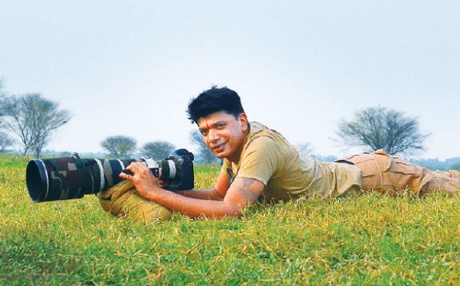
From sketching to photography could be considered a natural transition, but switching from land acquisition to bird photography and conservation is a paradigm shift. Kiran Poonacha from Bangalore has not only made that shift but also crowned it with international laurels and appreciation from the world’s best bird photographers.
Known as the raptor man of India, Pooncha is a born conservationist, rescuing and carrying out documentation work on raptors, especially eagles in various corners of India. It also gives him an opportunity to capture the majestic birds in action. Says Pooncha, “I love their temperament, their style, their enormous power and majesticity. I want to share my moments with these powerful yet graceful birds with everybody.”
Unlike visualisation by other photographers, his image of the winged wonders stands out because they are captured when in action and that is what gives life to the pictures. The birds taking off, flying, diving, swooping, hunting, feeding, nurturing, he has caught all these with the right background and foreground, surreal lighting, great precision and artistic imagery. “Capturing birds in flight is technically very challenging but it is such rare movements that interest people and also stays in their memory. I’m also pursuing my passion in my hometown Coorg. This is a tribute to what I have been exposed to during my early years while growing up in Madikeri. I sincerely hope my photographs will help influence people conserve birds by restoring their natural habitat,” says Pooncha with a smile.
Hailing from a family of nature lovers and born and bred in the hill district of Coorg, a place abounding with rare and beautiful species of birds, Pooncha was inspired to start birding at the tender age of seven. Chikkaballapur, where he did his schooling and a nearby place called Gudibande with rocky terrain and scrub forests that support a variety of avians, played an important role in igniting his interest. Midway for 15 years, he missed nurturing these winged wonders in their habitat as he was busy with his education and professional duties but now nothing seems to stop him in his pursuit.
“I patiently bided for the time when I could go back to the world of birds. In 2006, Neeta, my wife and birding partner, gifted me a camera and that is when my passion for capturing my love for birds began. Coinciding with this, I met a couple of people through a social networking website who shared similar interests. These incidents gave me a second chance to pursue my passion to visualise birds in a permanent frame,” says Pooncha.
Pooncha became a member of India Nature Watch that supports well-known photographers from across the country for sharing their work on their website. This exposure played an important role in helping him to improve his photographic skills. He purchased his first DSLR camera in 2007 and his dear friend and boss Kumar Babu gifted a zoom lens and that is when he started concentrating on his chosen hobby, bird photography.
“I have done extensive studies on birds since childhood. I have raised pigeons, kites, parakeets, and sparrows, looked after injured birds, tending to their broken wings and spoon-fed them. Not all survived, however, one injured black kite would not part from me even after two years,” says the raptor man. Pooncha proudly adds, “I can tell you the spots where ea gles can be found, where they hunt, breed and Bangalore is filled with raptors—tawny eagles, snake eagles, boneless eagles, Indian spotted eagles and many more species.”
Now, every holiday and weekend is taken up by trips to scrub forests and wetlands around Bangalore in search of eagles. His favourite haunts on the outskirts of the city include Hessarghatta, T G Halli, Bannerghatta forests, Gudibande and Hoskote.
Over the years, his portfolio on raptors has attracted international attention and awards as some of the images are pretty rare, hitherto never captured on camera. Dedicated to studying these birds, Pooncha says, “My social life is a big zero as all my time is taken up either following them through thorny jungles or standing in slimy wetlands for days together, hoping for the best shot.”
Recollecting his experiences, he says, “Once I was following a Bar Headed Geese near Talkad near Mysore when a snake wound up around my leg. My position was so treacherous that neither could I leave my subject nor ignore the reptile. But fortunately, after two hours, the snake slinked away. Another time, I had to sit in the water for hours together to get a Little Grebe in action. Some images like two snakes fighting for territory at Hessarghatta, a snake eagle hovering between death and new life and falcons at Kolar for whom I waited for three years are still fresh in my mind.”
Pooncha’s dream project, a birding resort on a 30-acre land surrounded by Pushpagiri Hills near Madikeri will soon be a reality. He is hoping to bring renowned experts like Arthur Morris, popularly called “father of bird photography”, Doug Brown and others for workshops on bird photography apart from giving an opportunity to youngsters to know more about birds.
Decrying the nation’s obsession with big mammals, Pooncha appeals, “Birds need our help. They play a very important role in the food chain, pollination and of course, they are the natural scavengers of the earth. We have to look beyond tigers and elephants as India has thousands of species that needs protection at all levels. If I can convince hundred people to conserve nature in and around Bangalore, it will be a small beginning to save these helpless avians.”
source: http://www.newindianexpress.com / The New Indian Express / Home> Magazine / by Meera Bhardwaj / March 31st, 2013
Kodagu, which was once famous for honey, now produces just a few tonnes from what it used to produce annually nearly two decades ago. However, the apiculturists are facing several problems in the district.
There is ample opportunity for beekeeping in Bhagamandala. A few farmers are engaged in apiculture. However, in the recent years, farmers from Kerala keep the beehives in the coffee estates and collect honey and take it to their hometown for sale. This has become a headache from the local farmers.
Apiculture was taken on a large scale in Bhagamandala during 1990. The farmers started rearing malliferous bee brought from Kerala. The drastic decline in the production of honey was due to sacbrood disease affecting the honeybees.
Now, apiculture has started reviving in the district. Farmers from Kerala have started keeping beehives in the coffee plantations after taking permission from the owners. A few plantations have 100 to 150 beehives.
In Kerala, honey is produced only from rubber tree flowers. As there was no great demand for such honey, natural flowers are available in plenty in Bhagamandala region. Hence, growers from Kerala have started keeping their beehives in Kodagu.
A honeybee starts the honey making process by visiting a flower and gathering some of its nectar.
In the process of gathering nectar, the insect transfers pollen grains from one flower to another and pollinates the flower.
There is a great demand for ‘Coorg honey.’ The beehives from Kerala is kept in the plantations at Cherangala, Thannimani, Thavoor and others areas. In the past, the apiculturists were getting 25 kg honey from one beehive. However, now its has been reduced to three kg, said apiculturist.
At a time when apiculturists in Kodagu are getting ready to revive apiculture by availing loan from the banks and financial assistance from the government, honeybees and beehives from Kerala entering the district has become a headache. Gram panchayats should initiate suitable measures in this regard, said the farmers.
source: http://www.DeccanHerald.com / Home> District / Napoklu, DH News Service / April 04th, 2013
With more number of farmers drifting away from agriculture due to the lack of basic facilities, the government has presented a separate agriculture budget to retain farmers in the farming sector, said District-in-Charge Minister Appachu Ranjan.
He was delivering presidential address at Krishi Utsav jointly organised by Krishi Utsava Management Committee, Taluk Panchayat, Pragathi Bandhu SHG, at Balagunda village near Somwarpet on Monday. He gave a call to the farmers to have knowledge of various government schemes that are exclusively designed for the welfare of farmers. The new generation youth lack interest in farming and are turning their faces towards the urban life. But the situation will change and the same youth will return to villages to take up agriculture, Appachu Ranjan hoped.
He said “the small farmers should cultivate crops that are suitable for the local climate. The crops should be grown and supplied based on the public demand.”
Inaugurating the Krishi Utsav, national award winning progressive farmer Nirmala Prakash expressed concern over the increased use of chemical fertilisers and pesticides in agriculture.
Understanding the impact of these harmful chemicals, the farmers should come forward to adopt organic farming, she said.
Zilla Panchayat President B Shivappa, Taluk Panchayat President G B Somaiah, Sri Kshetra Dharmastala Rural Development Project Director Radhakrishna Rao and others were present.
source: http://www.DeccanHerald.com / Home> District / Somwarpet, DHNS / March 18th, 2013
Bamboo cultivation will fetch good income for the growers, said Chief Conservator of Forest Keshavamurthy.
Speaking at a workshop on bamboo organised by the Bamboo Society of India, Kodagu Model Forest and Forest College, he said the bamboo can be grown inside the coffee estates as well. Bamboo is used in furnitures, as a fodder for animals and in preparations of medicine. The demand for bamboo is on rise in the international market.
He said that bamboo is grown on five lakh hectare land in the State. The demand for bamboo is 26.26 lakh tonne. Bamboo sticks are used in the preparation incense sticks. Along with growing ginger, farmers can also grow bamboo.
Forest College dean Dr N A Prakash also spoke. Additional Principal Chief Conservator of Forest (retd) Dr K Sundar Naik also spoke. Bamboo growers Dr L C Sona, Sanjeev, Ahammed and Sandeep spoke.
source: http://www.DeccanHerald.com / Home> District / Gonikoppa, DHNS / March 29th, 2013
Coorg Wildlife Society president Col (retd) C P Muthanna said, coffee cultivation, which is considered as the lifeline of the people of Kodagu, has not harmed the environment in any way. No restrictions should be imposed on farming practices, which are being followed for more than a century, he said.
Speaking to presspersons here recently, he said, in the wake of opposition to Dr Madhav Gadgil committee recommendations, the Centre had constituted a committee headed by Kasturirangan. “Members of the society met Kasturirangan committee members recently and raised objections against a few recommendations made in the Madhav Gadgil report, he said.
“We will accept a few recommendations made by Gadgil on the need for conserving rivers, flora and fauna on the Western Ghats. However, the point that horticulture crops, especially coffee, affects bio-diversity badly is unaccepted. Coffee is being grown under huge trees in Kodagu. Along with coffee, growers also plant fruit bearing trees,” Muthanna said.
He said: “We are opposed to the recommendation on restriction on use of pesticides. Without the use of pesticides, coffee cannot be grown. There is a need to create awareness on the ill-effects of excessive use of pesticides and convince growers to go for alternative methods to save the plants. However, the recommendation that there should not be a single-crop pattern on private lands in Western Ghats region has created fear in the minds of the farmers.”
Muthanna said, the society will welcome the recommendation to declare Kodagu as an eco-sensitive zone. Conversion of agriculture land for other use should be banned. It should clearly mention that farmland and coffee plantations should not be used for non-agriculture activities.
“We welcome the recommendations of the committee on giving forest rights to forest dwellers as per Forest Rights Act. Instead of allowing the forest dwellers to reside inside the forest, they should be allowed to reside on the periphery of the forest. If they are allowed to reside inside the forest, the authorities will not be able to provide basic facilities to forest dwellers,” he said.
Society vice-president B A Poonaccha, secretary Shyama Appanna and others were present.
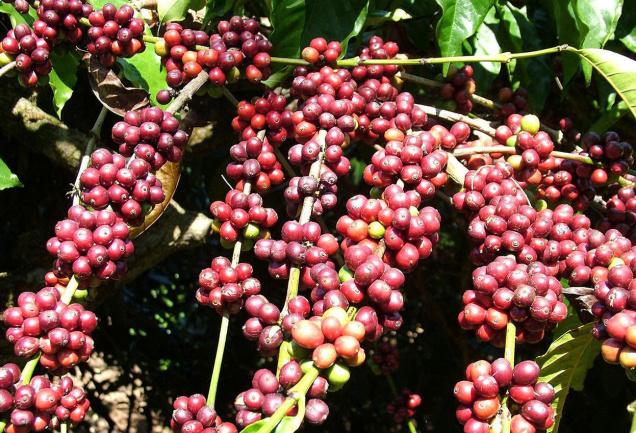
Bright outlook: Ripened coffee berries at a plantation in Karnataka. (a file picture.)
March rains have been well distributed
Bangalore , MARCH 15:
Coffee-growing regions of Kodagu, Chikmagalur and Hassan in Karnataka have received good blossom showers.
“Blossom shower in the coffee belt in Karnataka is very good this year. Very good for Arabica as compared to poor to patchy rains last year,” Bose Mandana, a senior coffee planter from Suntikoppa in Kodagu told Business Line.
MARCH SHOWERS
“Rain in February, especially during mid-harvest, was worrisome, but March shower has been heavy and this has made us comfortable for the next three to four weeks,” he added.
In Kodagu rains have been good in Napoklu zone comprising Murnad, Madikeri and Napoklu whereas Gonikoppal zone, which comprises Virajpet, Gonikoppal, Kutta and Balale, needs additional showers.
For robusta, south Kodagu got early showers in February and now has received moderate March showers.
In Chikmagalur and Hassan districts, March rains have been well distributed. “Due to timely showers and moisture status being good, many planters have begun applying manure in their estates. This year, they have been able to save on irrigation,” said Mandana.
According to Nishant Gurjer, Chairman, Karnataka Planters’ Association and a grower from Chikmagalur said “Early rains in February and subsequent rains in March have been good for overall crop production.”
“Rains in the last two months have been good for robusta. Stressed period for Arabica was cut short and there was initial apprehension among the growers over early rains. But March rains, however, have been beneficial,” he added.
Last crop year (2012-13), the Coffee Board had estimated the post-blossom estimate at 3,25,300 tonnes (arabica 1.04 tonnes and robusta at 2.21 tonnes).
As for the final crop forecast, the Board has estimated 3,15,500 tonnes, of which Arabica is 1,00,225 tonnes and robusta at 2,15,275 tonnes.
anil.u@thehindu.co.in
source: http://www.thehindubusinessline.com / Home> Industry> Agri-Biz / by Anil Urs / Bangalore, March 15th, 2013
Big Bird Day (BBD), a major bird-watching event will take place across the length and breadth of Kodagu district tomorrow in which more than 25 teams of ornithology enthusiasts have enlisted to assimilate data about the winged creatures.
The “Big Bird Day” is an initiative that was initially started by the ‘Delhi Bird Watchers’ in 2004. The underlying concept of this initiative is “Bird Watching” for the entire day in order to accumulate the highest possible number of species in the region. This year it has become a Pan-India event for the first time. There are more than 200 enlisted teams, making this the largest BBD event for the first time. There are close to 1500 participants all over India. Birders go individually or in small groups, watch birds in certain areas and report the sightings by the end of the day, according to Dr. Bishan Monnappa, a well known orthopaedic in Virajpet and an avid photographer, who is BBD Co-ordinator for Kodagu.
“Despite Kodagu being a difficult terrain, a lot of volunteers have come forward to participate in this event. It will be an educative event which is non-competitive and non-commercial,” said Dr. Monnappa
This event will provide valuable scientific data regarding the rich avian life of India. Pending the success of this event, future plans are to be implemented to cover those areas with the assistance of the Forest Department. Contact Dr. Bishan Monnappa at bishancm@yahoo.com
source: http://www.StarofMysore.com / Home> General News / February 23rd, 2013
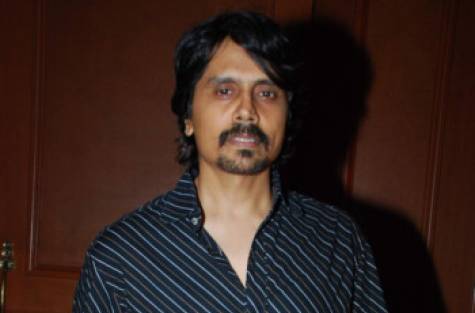
The filmmaker will be on the lookout for locations for a road movie while driving through south India in March Image Credit: IANS / Nagesh Kukunoor will be part of ‘My Endeavour alterrain’ road trip through south India
Nagesh Kukunoor is ready to undertake a picturesque road journey to Coorg and Munnar and, while at it, he hopes to find the foundation of his new project — a road movie he has been wanting to make for a long time.
The acclaimed filmmaker and screenwriter, known for critically acclaimed movies such as Hyderabad Blues, Rockford and Iqbal, will undertake the journey as part of an adventure driving series, My Endeavour alterrain, by Ford India and National Geographic Channel.
“I want to use this journey as a foundation of a road movie that has been on my mind for a long time. I always wanted to do a road movie and I keep travelling a fair bit because of my work … you never know how stories get triggered,” Kukunoor said.
Is he going with a set story in mind?
“I have a specific thing, but I won’t tell you,” he said, flashing his dimpled smile.
“Well, I do have a loose story in mind and I want to see places that can work for that story. I want to see if I get something interesting … the thing with movies is that you plan something, and then something you absolutely didn’t plan takes shape. So you never know,” he added, hinting at a sense of uncertainty.
But excited he definitely is. Starting from Coorg to Coonoor to Palakkad to his final destination Munnar, Kukunoor is totally kicked about driving through scenic green terrains of the Western Ghats, replete with tea and coffee plantations, and waterfalls.
His companion? A camera crew!
“The camera is going to be my buddy.”
Uncomfortable will he be, then?
“It doesn’t make me uncomfortable because all these years, I have worked with the camera and fortunately or unfortunately, I have worked in front of the camera as well. So it doesn’t make me uncomfortable at all,” said Kukunoor, who has acted in some of his own directorials such as Rockford and Hyderabad Blues.
He is more excited about the trip, to start sometime in March, as when he first undertook it in 1995, he couldn’t complete it.
“I had once undertaken an extensive trip to south India, and Munnar and Coorg were on my map, but I gave up halfway to Coorg. That endeavour remains unfinished for me and this time I want to complete the journey,” he said.
Kukunoor, 45, remembers driving long stretches when he was a student in the United States.
“It has been a very long time that I personally drove long stretches. I have undertaken car journeys, but then you end up driving for a small section and hand over the wheels to someone else after a while. This is not going to be that — I am going to drive the entire stretch,” he said.
source: http://www.gulfnews.com / Tabloid / by IANS / February 25th, 2013
WELCOME. If you like what you see "SUBSCRIBE via EMAIL" to receive FREE regular UPDATES.
Read More »