Category Archives: Travel, Tourism & Homestays (wef. Oct 03rd, 2021)

Armed with a bicycle and – in the early days – a pistol, writer Dervla Murphy forged her own path

Author of ‘Full Tilt: Ireland to India with a Bicycle’ dies aged 90
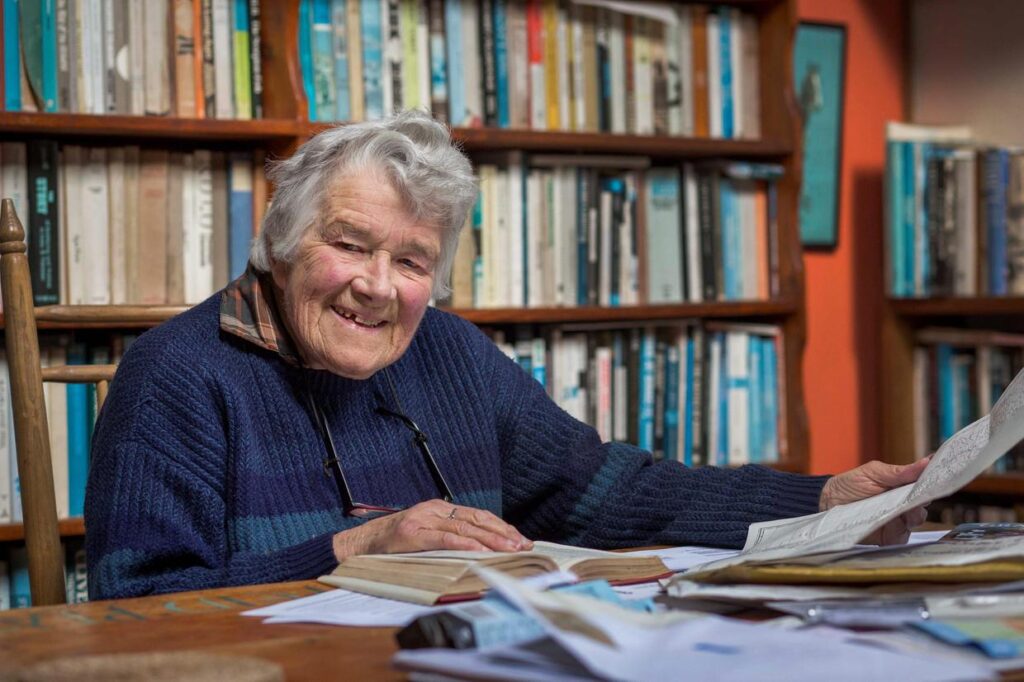
Travel writer Dervla Murphy at her home in Lismore, Co Waterford. Photo: Dylan Vaughan

Dervla Murphy, who has died at the age of 90, was a renowned travel writer who in 1963 left her home in Lismore, Co Waterford, and cycled across Europe and Asia to India.

The resulting book, Full Tilt: Ireland to India with a Bicycle, published in 1965, was a best-seller and set the pattern for the rest of her life. In her book On a Shoestring to Coorg, she brought her four-year-old daughter Rachel along for the ride.

She later travelled through Nepal, Afghanistan, Ethiopia, Transylvania, Cuba, the Middle East and other far-flung destinations, describing her adventures in 26 widely-praised travel books, which were written out in longhand before being sent to the publisher.

“Murphy finds humour in situations that most of us would regard as uncomfortable, and her writing bursts with a love of humanity in its myriad manifestations,” says the citation about her in the book Modern Irish Lives.

She always returned to her home, a 17th-century stone-built former cattle shed in the historic town of Lismore, where she lived alone with her books (and without a television), telling a recent visitor she was “addicted to solitude”.

“I never did anything that any ordinary person couldn’t do,” she told an interviewer from the Financial Times, earlier this year. “I’ve done nothing extreme; you might say… I never did anything very daring.”

She took travelling across remote areas of the world in her stride, often alone and in the early days armed with a pistol. She was befriended by ordinary people on her travels, whether she was on a bicycle, mule or some other form of transport, other than the motor car.

The result was a form of travel writing that influenced a new generation of free-spirited travellers in describing real experiences rather than enjoying luxury travel.

Dervla was born in Co Waterford in 1931, where her father, Fergus, was the county librarian. She said her passion for travel was sparked by a present for her 10th birthday of a bicycle and an atlas. She was educated at the Ursuline Convent in Waterford but left school at 14 to spend the next 16 years caring for her aged mother, Kathleen, until her death.

In 1968 she became a single mother. She recalled in a recent interview that her neighbours were very kind and considerate, but were scandalised when she took the baby out in the pram naked, to soak up the sunshine.

Her first expedition to India and her subsequent trips around the world were funded by renting out her house and as she became better known, royalties from her previous books.

She remained a non-conformist, who even in her 90s didn’t believe in “fitting in”. She drank beer, raised her child on her own terms and had no time for what she called the “gross materialism” of the modern era, including the excesses she witnessed in Ireland during the Celtic Tiger era.

She told Jude Webber that she was “always mistaken for a man” because of her deep voice and the way she behaved, which sometimes involved determinedly fending off bandits and thieves.

She also had a deep curiosity, going to see things for herself, whether in Israel or Northern Ireland, which she visited during one of the worst years of the Troubles.

The resulting book, A Place Apart (1972), won the Ewart-Biggs Memorial Prize. She also published a memoir of her childhood, Wheels Within Wheels.

In political terms she described herself as “an ordinary Irish Republican” but on the subject of a United Ireland, hoped the politicians “don’t rush in and mess it up”.

Dervla Murphy is survived by her daughter Rachel and her granddaughters, Rose, Clodagh and Zea. “Her contribution to writing, and to travel writing in particular, had a unique commitment to the value of the human experience in all its diversity,” said President Michael D Higgins, paying tribute.

source: http://www.independent.ie / Independent.ie / Home> Irish News / by Liam Collins / May 24th, 2022

When spirit of nature and animals coes alive

Madikeri : 

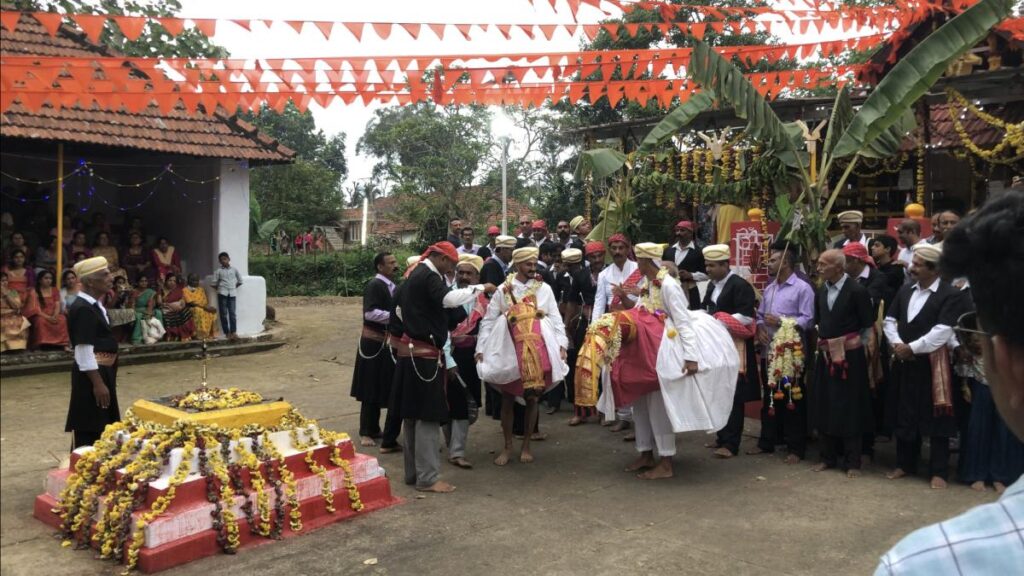
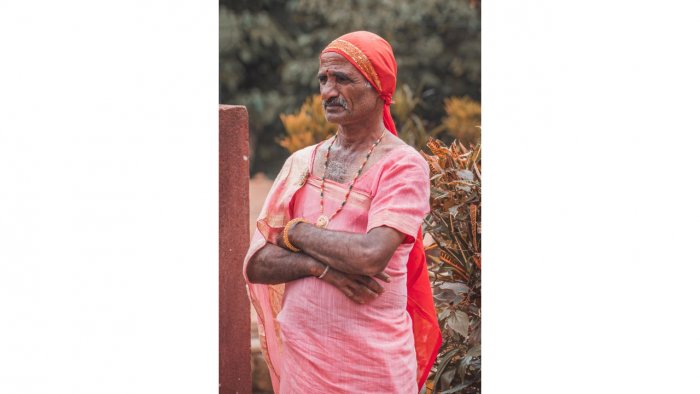
Rhythmic and upbeat songs fill the air across the villages of South Kodagu during summer. Dressed in bright and colourful attire, villagers dance to the rhythm of nature and mythology while visiting each house – marking the celebration of the unique festival ‘Bodu Namme’ aka ‘Bedu Habba’. People dress as brightly coloured tigers in body paint and slush smeared hay, as bamboo horses and elephants… to an outsider, it seems like a mass fancy dress event.

However, this unique festival of the indigenous tribes of Kodagu is much more than fun and frolic. It narrates the ancestral connection with the elements of nature and recounts mythological tales.

Following the ‘Cauvery Theerthodbhava’ (gushing of river Cauvery at Talacauvery) festival in October, the ‘Bodu Namme’ is kindled at the Kunda Hills near Ponnampet in South Kodagu. Rituals are offered at the Ishwara Temple in the village, marking the beginning of the ‘Bodu’ festive season. Post the first ‘Bodu Namme’, several other villages in South Kodagu celebrate the festival after the Kodava New Year (in April) and each village narrates its rich folkloric culture. The festival is linked to the folklore of Ishwara and Bhadrakali.

Following the ‘Cauvery Theerthodbhava’ (gushing of river Cauvery at Talacauvery) festival in October, the ‘Bodu Namme’ is kindled at the Kunda Hills near Ponnampet in South Kodagu. Rituals are offered at the Ishwara Temple in the village, marking the beginning of the ‘Bodu’ festive season. Post the first ‘Bodu Namme’, several other villages in South Kodagu celebrate the festival after the Kodava New Year (in April) and each village narrates its rich folkloric culture. The festival is linked to the folklore of Ishwara and Bhadrakali.

There is a Kodava saying  – ‘Kundathl Bottl Nhenda Kudure, Paranamanil Alunja Kudre’ – that states that the horse (made of bamboo) that was raised in the Kunda Hills marking the beginning of ‘Bodu Namme’ will be sacrificed at Paranamani, ending the annual festivity. “At Paranamani, the festival is about the story of deity Ishwara and demon Basmasura. Three horses and two elephants made of bamboo collected from the sacred grove in the village are worshipped and later sacrificed,” explained Raghu Machaiah, a resident of Paranamani.

Mythological stories connected to each village are unique, he says. “The different costumes in which the villagers dress up during the festival depict the different forms of Lord Ishwara.” Another story links ‘Bodu Namme’ to the story of the deity Bhadrakali. “In the deity’s ferocious avatar, no one could calm her down. To appease her, devotees worship her in different attire. Tiger, hay costumes, cross-dressing by men of the village are ways to placate the goddess,” narrate Parvathi Chengappa and Kundranda Sannu Pemmaiah of Aimangala village.

Villages in South Kodagu –  Chembebelluru, Aimangala, Parana, Kavadi, Bilugunda, Nalvathoklu, Kutandhi, and Aarji – observe the festival. “Natives here are indigenous and Ishwara worshippers,” explained Parvathi.As was inevitable, modernity touched the tradition of outlandish dressing. Politicians, famous and infamous personalities, film actors, comedians, and mafia kingpins have found their way into the festival of appeasing Goddess Bhadrakali and Lord Ishwara. During the festival, people visit every home across the village to offer prayers and seek blessings.

Apart from the fascinating fusion of colours, the festival also stresses the protection of nature with many restrictions, including a ban on cutting trees during the celebrations. “The history of ‘Bodu Namme’ dates back to ancestral times, and the rituals and culture of this festival have stood the test of time. While it looks exciting, there is a religious aspect to the festival. In an era of rapid urbanisation, the festival unites villagers and speaks of love, trust and harmony,” opined Shashi Somaiah, a resident of Madikeri.

source: http://www.newindianexpress.com / The New Indian Express / Home> States> Karnataka / by Prajna GR, Express News Service / May 22nd, 2022

A festival of cross-dressing

Every year, some parts of south-east Kodagu see the celebration of the festival Boad namme. Namme means festival in Kodava language. Boad namme is usually celebrated in the areas that have a temple of Bhadra Kaali.

During the festival, people disguise themselves and visit houses in the village. This is called boad kali in general and can be of different forms. The most common form is that of cross-dressing, where men and boys dress as women and girls.

During Boad namme, people cross-dress or paint themselves like tigers. Credit: Aiyuda Prasad Ponnappa

There is the bandu kali form where men apply wet, sticky mud on themselves. There is vadda kali where a man dresses as a vadda, a digger of wells and tanks. Some wear gaarudi gombes, a type of gigantic dolls with large heads made from wood and papier-mâché, with holes for eyes, while others don body paint and assume puli vesha (tiger form).

Dhol paat singers enter a house’s nellakki nadubade (the hall with the household prayer lamp), followed by the boad performers. People throw money at the tiger dancers who pick it up in their mouths while dancing.

A ritual as part of the Boad namme festival in Kodagu. Credit: Mookonda Kushalappa

The horse and the woman

The following day, a teenage boy wears a horse frame and is called a kudure. Another small boy is dressed in red sari and is called a choole. The kudure is a form of Shiva (Hara) while the choole is a form of Mohini (Hari).

Just like Vishnu takes the female form of Mohini, the enchantress of demons, the choole is a male who dresses up as a female. Thus, cross-dressing is part of the festival.

Men from the Panika community perform the theray at this temple every year. They carry a large, white parasol with a mask on top.

Bonda was known as Bonda Moonoor okka, or Bonda 300 clans. It was an ancient village inhabited by 300 clans which were split into the modern villages of Bilugunda, Nalvathoklu and Hoskote.

The festival is held in mid-May. Clans of Bilugunda and Nalvathoklu villages take turns to send a kudure and a choole to the temple on a rotation basis every year. These are dressed up in the houses of the clan.

Songs and a race

This year, it was the turn of the Mandepanda clan of Bilugunda and the Nellachanda clan of Nalvathoklu to send a kudure and a choole. The kudure and the choole from both villages come in a procession and meet at a field, and then at the temple. Both the kudures will have a brief race.

If someone dies in a clan, that clan or family cannot participate in the ritual for a certain period. When this happens, other families of the same village share the responsibility. The traditional dudi paat is sung before the kudure and the choole procession starts.

There is a saying in the Kodava language: “The kudure raises at Kunda, the kudure falls at Parana”. Hence, the first Boad festival of the year is at Kunda village and the last is at Parana.

source: http://www.deccanherald.com / Deccan Herald / Home> Spectrum / by Mookonda Kushalappa / May 18th, 2022

Online museum to archive stories about Kodavas

People can send stories along with photographs and audio or video clips for curation.

Bengaluru-based India Foundation for the Arts (IFA) is inviting members of the Kodava community to share stories of their people and cultural history for an online museum it plans to launch next year.

It is International Museum Day on May 18.

Speaking ahead of the occasion, IFA said people can send stories along with photographs and audio or video clips, which will be curated.

The project is called Sandooka, the Living Museum of Kodava Culture. Sandooka means treasure chest in Coorgi language, and the museum strives to be a repository of stories ranging from the traditional costumes to present-day experiences of the Kodavas, native inhabitants of Kodagu in Karnataka.

IFA is working with Nitin Kushalappa, an author and researcher who is a member of the Kodava community, to put together this project along with design experts Upasana and Saurav Roy from Switch Studio.

The project started in 2021. Rathi Vinay Jha, chair of the Sandooka museum’s advisory group, shares, “The younger generation of the community is dispersed all over the world and is losing connection with their heritage. This museum will provide an opportunity to reconnect with their culture.”

And because the project wants to foster community participation and be accessible globally, the concept of online museums fits well, says Lina Vincent, project director and curator.

Arundhati Ghosh, executive director, IFA, believes the museum will help document and preserve the stories and heritage of the Kodavas, much of which remains undocumented.

“My vision is for it to be a virtual space devoted to the Kodava community. I hope this can serve as a model for other communities that are disappearing to keep their stories alive,” says Lina.

You can submit the stories at sandookamuseum.org/form/intro

source: http://www.deccanherald.com / Deccan Herald / Home> Metrolife – Your Bond With Bengaluru / by Sowmya Raju, DHNS / May 17th, 2022

Here’s why Shruti Shibulal’s Tamara Leisure is looking at the expansion route

Owner Shruti Shibulal sees a big opportunity in religious tourism and is very upbeat about the hospitality segment as cases drop and travel picks up.

The daughter of S D Shibulal, co-founder, Infosys, Shruti acquired an MBA from Columbia Business School.

For Shruti Shibulal, the last fiscal (FY22) was a good one. “With international travel dropping, many people spent a lot of money on high-quality domestic travel,” she says. As CEO & Director of Tamara Leisure Experiences, the pandemic was a challenging period but the growths story is not just back but she is going aggressive on expansion as well.

The daughter of S D Shibulal, co-founder, Infosys, Shruti acquired an MBA from Columbia Business School.

An internship at the Shangri-La in Hong Kong had her “falling in love with hospitality” and the career path was sealed from that point. Tamara (meaning lotus in Malayalam) launched its first resort in 2012 and today, it operates three brands in India – The Tamara Resorts, (that offers luxury stays in Coorg, Kodaikanal and Allepey), O by Tamara (does upscale business hotels in Trivandrum and Coimbatore) and finally Lilac Hotels (a mid-segment chain with two properties in Bangalore). There is also an overseas presence with four properties in Germany.

The first fiscal after the pandemic hit the world (FY21) saw Tamara adding three new properties. It includes a 19-key ayurvedic resort in Allepey called Amal Tamara, a 147-room hotel in Coimbatore (this was courtesy and acquisition and will be re-opened as O by Tamara) and a 128- room hotel in Germany’s Moxy Bremen. As a result, it brings in an additional 315 keys or a 36 per cent growth over the previous year.

Determining a location for a property is a big decision in this industry. Shruti throws up a few insights here.

“Around 80 per cent of tourism in India is religious tourism and there is a clear need for an overnight stay,” she explains. That thought process now has Tamara expanding into Kannur, Guruvayoor (both in Kerala) and Kumbakonam (in Tamil Nadu), all of which are at various stages of development. “These are pilgrimage destinations and also transit destinations. Obviously, we are looking at more locations but will go about it strategically,” she said.

The logic of pricing power is smaller destinations makes for a compelling argument. Shruti points out that one can price a four-star property in Bengaluru at Rs 9,000. “In Tier 2 and 3 locations, it will not be more than Rs 5,000. Our model is one of diversification and not being restricted to just one geography,” she says. Coimbatore is the first instance of acquiring a building as opposed to the normal approach of going ground-up.

“That helps us in saving time and the pandemic has thrown up some very attractive opportunities since valuations are dropping,” she said.

source: http://www.businesstoday.in / Business Today / Home> Latest> Corporate / by Krishna Gopalan / May 10th, 2022

Sunny Side Museum In Madikeri: State Govt. Urged To Give Entry Fee Exemption For Armed Forces Personnel

Mysore/Mysuru:

The city-based VeKare Ex-Servicemen Trust has urged the State Government to give exemption from entry fee to the armed and paramilitary forces personnel visiting ‘Sunny Side’ that houses General K.S. Thimayya Museum in Madikeri, Kodagu district.

Trust President Mandetira N. Subramani has written a letter to Chief Minister Basavaraj Bommai urging to fulfill this demand by exempting entry fee to those in service and retired Armed Forces personnel.

Urging the Kodagu District Administration and the Government to consider the request, he said the exemption in paying an entry fee of Rs. 20 has been sought as a respect towards the Armed Forces fraternity.

Subramani has also urged the Director, Department of Sainik Welfare and Resettlement, to impress upon the Chief Minister to pass orders in this regard.

He has suggested the exemption should be granted upon production of identity cards issued by the competent authority.

The suggestion came from an 85-year-old ex-serviceman Manira T. Nachappa, who had fought three major wars when he served the 37 Coorg Medium Regiment from November 1957 to December 1977.

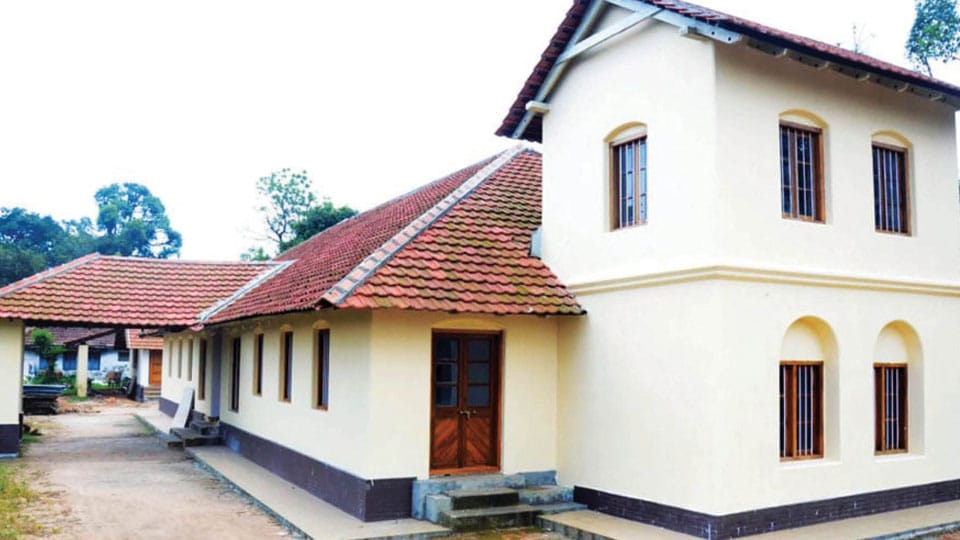
“Nachappa met me at the recent annual general body meeting of T. Shettigeri Ex-Ser-vicemen Welfare Association in Kodagu and urged me to take up the issue with the authorities concerned,” Subramani said. The museum was inaugurated in February 2021 by President of India Ram Nath Kovind. “Sunny Side”, the ancestral house of General K.S. Thimayya, who served as the Chief of Army Staff from 1957 to 1961, has been converted into a museum.

source: http://www.starofmysore.com / Star of Mysore / Home> News / May 10th, 2022

‘Rampant Land Conversion In Kodagu Will Kill River Cauvery’

Government must study uniqueness of each district and frame laws: Kodagu Samrakshana Vedike

Mysore/Mysuru:

Concerned over the recent announcement by Revenue Minister R. Ashoka stating that agricultural land conversions across Karnataka would be approved within three days and the required amendments would be brought to the Karnataka Land Revenue Act, the Kodagu Samrakshana Vedike has said that this would be a disaster for Kodagu, the principal catchment area of River Cauvery.

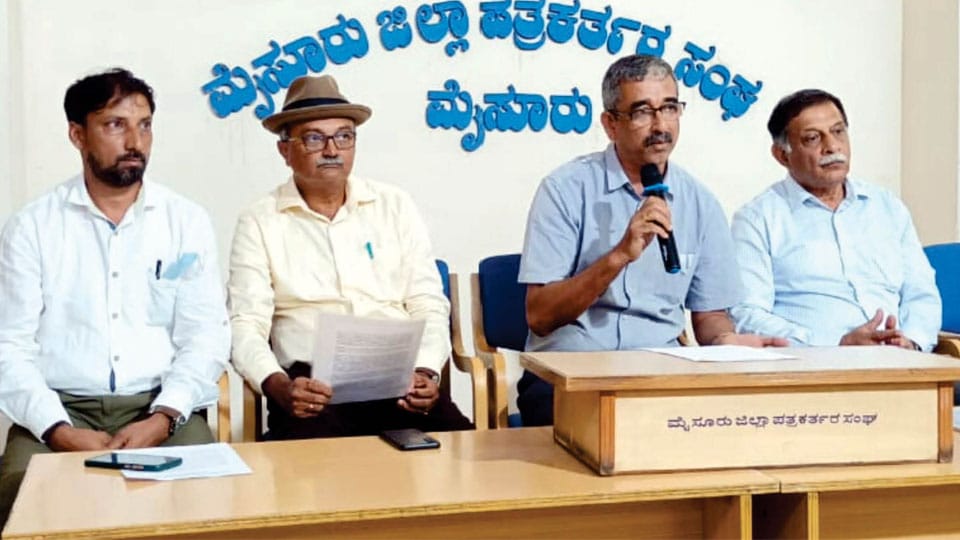
Addressing a press conference at Pathrakarthara Bhavan in city this morning, President of Kodagu Samrakshana Vedike Chottekmada Rajeev Bopaiah said that the Government move will destroy hilly terrains and ecologically-sensitive regions such as Kodagu.

“Large scale land conversion in Kodagu for sites and layouts will invite large numbers of people from outside the State into Kodagu and exert extreme pressure on potable drinking water and water for agriculture and industry. It will kill the River Cauvery that is a lifeline of Karnataka,” he said.

Accompanied by Vedike members Col. (Retd.) Cheppudira P. Muthanna, Jammada Ganesh Ayanna and Annira Harish Madappa, Rajeev Bopaiah said that the High Court had stayed the process of land conversions in Kodagu stating that the No Objection Certificate (NOC) for land conversions issued by the committee headed by the Deputy Commissioner is not valid to approve blanket land conversions.

    Burning problems ignored; focus on new roads:Requesting support from Kodagu MLAs Appachu Ranjan, K.G. Bopaiah, MP Pratap Simha and MLCs Veena Achaiah and Suja Kushalappa, the Vedike appealed to them to save the birthplace of Cauvery from destruction due to rampant land conversions. “Unfortunately, the burning problems of Kodagu like human-animal conflict, land conversion, Pouthi Khata and electricity are ignored by the elected representatives and they are interested in only developing new highways, further destroying the landscape,” they said.    

    The Vedike demanded that the Government must act immediately to avoid destruction of Kodagu. “Unfortunately, many politicians and political leaders are involved in land conversion in Kodagu and those DCs who resist attempts to convert land are being transferred within three months and DCs who act favourably to the politicians are brought in,” Rajeev Bopaiah alleged.                    

“We have seen how Kodagu was ravaged by floods in 2018 and 2019 abetted by unbridled urbanisation and infrastructure development to promote tourism. Sale of agricultural land for non-agricultural purposes will have devastating consequences as reckless urbanisation has already caused a negative impact on the environment as evident in the floods and landslides,” he said.

 Bearing on water: “The government move makes it easy for any individual, industrialist or real estate stakeholders to directly approach farmers and purchase land. It’s not just about land in Kodagu but this will also have a bearing on water and its implications will be felt in the downstream region of the State like Mysuru and Mandya, impacting food security and agriculture,” Rajeev Bopaiah added.

The Vedike has demanded that instead of passing land laws that are applicable across the State, the Government should study the uniqueness of each district and frame laws according to the local environment and ecology. “We will take our movement to the next level that will include a boycott of elections,” the Vedike has warned.

source: http://www.starofmysore.com / Star of Mysore / Home> News / May 11th, 2022


Kodagu youth travels penniless across Karnataka

Travel videos uploaded on his YouTube channel are gaining appreciation and he dreams to travel the country penniless.

A video grab of Vinay Kumar hitching a ride on a strangers bike in one of his trips

Madikeri :

A hitchhiker from Kodagu has gained popularity for his unique travel approach.

An ambitious explorer, he brings to the fore the hospitality of Indian families and the welcoming nature of strangers. Travel videos uploaded on his YouTube channel are gaining appreciation and he dreams to travel the country penniless.

“The passion for travelling almost always comes with a baggage of huge monetary requirements. But I wanted to check if I can travel without money. My first hitchhiking trip was to Sringeri, where strangers dropped me to my destination without demanding money,” shared Vinay Kumar, a travel enthusiast who works as a HR recruiter. An M.Com graduate, Vinay recently completed his studies and is currently working from home in Madikeri. During the weekends, he explored a few places and that is when his unique travel story took shape. 

From his home in Madikeri, Vinay hitchhiked a ride on a Saturday morning and reached the highway. He requested for free rides from strangers on bikes, truck, car, taxi and electric bike and reached Sringeri while taking several pit stops.

“I left Madikeri on Saturday and returned home on Sunday. Even on my return, I hitchhiked rides,” he shared. Apart from free commute, Vinay also succeeded in getting free breakfast and lunch. The videos of his interactions with locals and families show the hospitality and welcoming nature of  citizens. 

source: http://www.newindianexpress.com / The New Indian Express / Home> States> Karnataka / by Prajna GR, Express News Service / April 29th, 2022
 

Coorg’s Famous Aromatic Oils: Uses and Benefits

Spread the love

Full of natural beauty and a culturally rich spot, Coorg is one of the foremost tourist destinations in India. Located in southern Karnataka, the hill station abounds with green valleys, forests, several waterfalls and hills. It makes for a wonderful holiday spot for singletons and families alike, with its zigzagging roads, aromatic blossoms and cool climate. If you are planning a holiday to South India this year, we suggest booking one of the premium Coorg resorts and packing your bags.

Coorg: India’s treasure trove of natural wonders

Known as the ‘Scotland of India’ since the time of the British Rule, Coorg is known for several natural scenic wonders and the prettiest landscapes. On your list of places to visit in Coorg, you should include:

  • Abbi or Abbey Falls
  • Nisargadhama Forest
  • Iruppu Falls
  • Cauvery River
  • Talakaveri
  • Kote Betta
  • Brahmagiri Hills

Things to buy in Coorg

Most people head to Coorg to experience its hushed tranquillity, and you’ve already made a list of places to visit in Coorg . But shopping buffs are pleasantly surprised to find that the region produces several local items of superior quality. Chief among these is coffee, which is processed from the several coffee plantations in the area. You can buy coffee beans or powder from the plantations, or even the local markets. Next, you should stock up on locally produced organic honey which offers gentle sweetness and has a high medicinal value. You should also buy the region’s oranges to eat during your stay; these are best at staving off thirst and eliminating nausea. One of the significant buys, however, is essential or aromatic oils.

About aromatic oils from Coorg

Coorg is most famous for its coffee, but over the years, visitors to this hill station have discovered its other secret: aromatic oils. Coorg produces a number of aromatic essential oils that promote good health and healing. Chief among these are eucalyptus oil, tea tree oil, sandalwood oil and wintergreen oil. These are cultivated and produced locally and are of the highest quality. And you can buy them from most markets and shops in Coorg. Just ask your Coorg resort concierge about the best places to buy what you need, and you can get the best products to take home with you.

Uses and benefits of aromatic oils

Aromatic oils are the main component of the science of Aromatherapy, which aims to heal various aches and pains in the human body through aroma and the oil’s healing powers. Aromatherapy is an ancient science practised by cultures in Egypt, India, China and Greece, among other countries. It uses smell and skin absorption of the oil via creams, gels, soap, oil diffusers, lotions, bath salts, masks, compresses and inhalers. Aromatic oils are often used to manage pain, relieve stress and anxiety, ease digestive discomfort, improve sleep, improve palliative care, reduce inflammation and nausea, boost immunity and provide short term relief from chronic ailments like migraine and hypertension.

Some uses of popular aromatic oils are:

Tea tree oil: helps reduce acne, ringworm and Athlete’s Foot

Peppermint oil: eases headache, regularises digestive cycle, is a good anti-fungal and anti-microbial agent

Eucalyptus oil: clears nasal passages, relieves pain and reduces inflammation

Lemongrass oil: relieves stress, alleviates depression, and heals wounds

Wintergreen oil: improves blood circulation, reduces pain, promotes detoxification of the body, and soothes a cold or symptoms of flu

Lavender oil: treats anxiety, soothes inflammation, reduces stress and relieves the discomfort associated with menstrual cramps, eczema, nausea, etc.

Where to buy aromatic oils in Coorg

There are several markets and stores that retail aromatic oils in Coorg. The most popular ones are Coorg Greens, Aroma Coffee, Choco Coorg Spice, and Coorg Homemade Wine & Spices. Your Coorg resort concierge can recommend the best places to buy these oils; do look for products that are authentic, produced in Coorg and sold at a reasonable cost. Some retailers can even ship the oil you need online if they don’t have it in stock.

Why stay at Club Mahindra Madikeri, Coorg

Every Club Mahindra resort promises a lifetime of stupendous holidays, in the most stunning locations in India and abroad. As a Club Mahindra resort member, you and your loved ones can avail of annual holidays in over 100 domestic and international destinations, staying at the choicest resorts and affiliate properties that offer superlative rooms, best service, sumptuous food and excellent on-site activities.

How to book your holiday

That’s simple enough – just take a Club Mahindra membership and ready yourself for the best ever holiday experiences for over 25 years. Visit www.clubmahindra.com to know the Club Mahindra membership fee structure, how to pay the Club Mahindra membership fee, how to book the holiday you want, if you can choose a certain season every year for your trip, and so on.

source: http://www.mangalorean.com / Mangalorean.com / Home> Article / By EE / March 16th, 2022

‘Unofficial’ Entry Fee Rule At Talacauvery Temple

Kushalnagar:

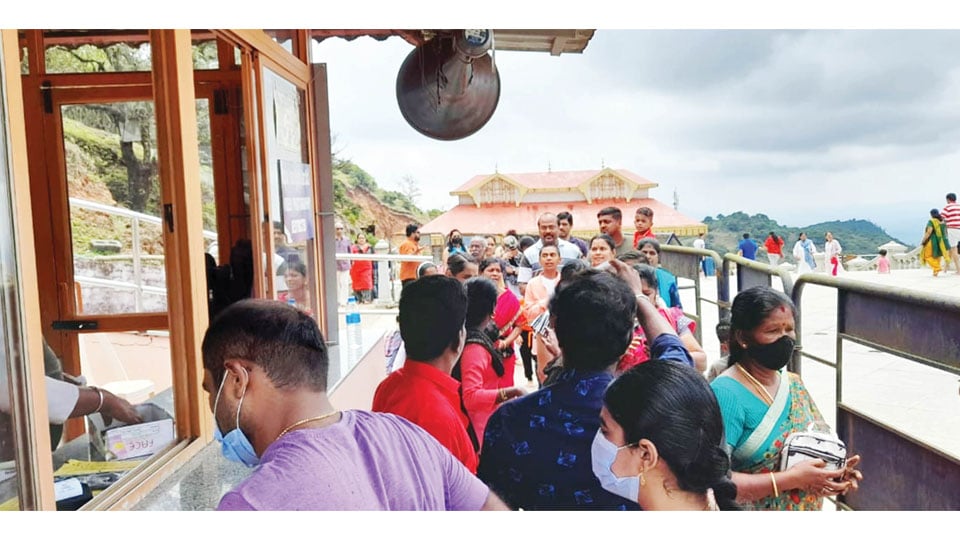
A new entry fee rule has come into force at Talacauvery Temple in Kodagu, the birthplace of River Cauvery where visitors are charged Rs. 20 and a receipt of ‘Vishesha Seve’ (Special Offering) is given after the payment.

Though the ticket is issued for ‘Vishesha Seve’, people who come there do not perform any rituals. They just enter the Temple to pray and leave. The Temple comes under the State Muzrai Department and is governed by its rules and regulations.

Interestingly, the entry fee is levied in a sly manner and whoever questions the new system are let inside without the ticket. Normally, local residents who know that there was no entry fee till now are not ready to pay and are bound to question the person who issues the  ‘Vishesha Seve’ tickets. But tourists and other people who come from outside the district meekly pay up.

Barricade for fee collection

Earlier, one could enter the Temple through the main arch gates and there was no such ticket counter and no one would stop entry. However, now all devotees who come to the Temple are made to enter through a barricaded entry point — to the right of the arch gates — and the security guards force each and everyone to take that particular line.

Moreover, there are no sign boards indicating that an entry fee has to be paid. Rs. 20 ticket is issued to one group. As there are no clear-cut guidelines and rules, many Temple goers are objecting to the practice.

The rule has been enforced recently as thousands of tourists are visiting Kodagu for the holiday season. As there are no signboards or any Government Order to indicate the Rs. 20 entry fee, it is an ‘unofficial’ arrangement to collect money.

As generally tourists will be in a hurry, no one questions the rule of entry tickets while no other major temples have  an entry fee. Only the special rituals and prasadam have tickets of various denominations. But if any devotee questions the entry ticket collection, they are told that tickets are not mandatory.

Not mandatory: Temple EO

Krishnappa, Executive Officer of Talacauvery-Bhagamandala Temple Committee said that the collected money is being used to maintain the Temple staff. “We get bare minimum funds from the Government for the maintenance of the staff. Anyway the tickets are not mandatory. Those who have the tickets will get three special mangalarathis at the Brahma Kundike, Agastheshwara and Mahaganapathi Temples,” he said.

On the barricades erected near the arch gate, he said that it is to ensure that the visitors are not skimpily clad. “75 percent of  the visitors who come here are tourists and many of them are scantily dressed. This is a holy place and body showing is unacceptable,” he added.

President of Talacauvery – Bhagamandala Temple Committee Kodi Motaiah said that there are 11 employees including priests at Talacauvery and 16 at Bhagamandala. “The Muzrai Department pays just Rs. 7,500 as salary and that too they are paid once in two or three months. We are paying them from whatever little money collected from the entry ticket,”  he added.

source: http://www.starofmysore.come / Star of Mysore / Home> News> Top Stories / April 19th, 2022