Category Archives: Women/Girls (wef. Sept 03rd, 2022)

The future of specialty coffee in India looks bright with Rasulpur Coffee Estates

Rasulpur (Kodagu District), KARNATAKA :

In my previous article, I featured an Ethiopian coffee export company who ran her business based on trust. This is factored in two ways; dealing with her farmers and clientele. In this day and age, we can learn a thing or two by understanding the wisdom behind why some people do the things they do, treading a harder path and not resort to shortcuts. They are in it for the long term, not focused on the short term gains. I have nothing but high regard for individuals like Medina.

Continuing a similar conversation, I have been focusing on what exactly is happening at the farm level by getting in touch with the producer directly. In this article, I talk to the owner of a coffee estate farm based in India. Sumaira gives us an insight about how her family’s coffee estate started in the late 18th century, processing techniques employed on her farm, the specialty coffee movement in India, and much more.
source: Rasulpur Coffee Estates

Can you tell me a bit about yourself and Rasulpur Coffee Estates?

I am Sumaira, the owner of  Rasulpur Coffee Estates & Roasters . We are located in the Rasulpur village, Coorg district, in the hot spots of the Western Ghats, India. My entrepreneurship journey has had its shares of ups and downs. I took up a career as an interior designer and worked as a business head for a furniture empire in India. Later on, I moved to the UAE and explored the real estate industry and the coffee sector. I envisioned starting up something of my own, being from a family of coffee planters and having the self-confidence and determination to start my own business. Something clicked the moment I realized how the coffee industry is growing day-by-day.

To add, I am a fifth generation coffee planter who introduced specialty coffee at our estate. We introduced better equipments and techniques, and new processing and fermentation methods which I’ll get into a little later. A laboratory is set up for roasting and cupping to create different roast profiles and new blends at our estate. We believe in helping and encouraging our coffee community, especially the neighboring small and marginal coffee growers to analyze their coffees, and improve their harvesting and processing methods to fetch a better price for their coffee.

The journey of Rasulpur Coffee Estates started in the late 18th century when our ancestors migrated to the Western Ghats of India i.e. Coorg at the time of the British rule, as their main occupation was trading in coffee and spices. They travelled to different parts of Coorg, as they developed a liking towards coffee estates and the greenery, purchased plenty of estates, learnt the methods of coffee cultivation, and started exporting coffee to foreign countries. England was one of the major countries to which coffee was exported to from our estates in that period with the help of the Coffee Board.

We named the estate and brand ‘Rasulpur Coffee’ after the village, Rasulpur, which is on the banks of the Kaveri river in Kodagu district is named after Mr. Rasul Khan, our first generation planter. He cleared the land, started cultivation, built dams for irrigation, made the place livable and initiated agricultural works. Looking at his abilities and progress, the government named this village after him.

In time, our second, third and fourth generation planters purchased more coffee plantations and improved the methods of cultivation, processing, and introduced pulping and irrigation. An R&D team was also set up and a variety of experiments are conducted to this day. The goal here is to enhance the quality of the crops, and advance the processing and post harvesting methods. Our coffee is featured in auctions, supplied for projects, sold locally and exported to wholesalers, cafes, and restaurants. We also ferment micro lots as per requirements from our roasters and young entrepreneurs who are venturing into the coffee industry.

What kind of processing is done on the farm?

Processing on our farm is done in three different ways along with few specialty processing methods, all of which change the sweetness, body and acidity of brewed coffee. These are natural/sun dried, washed, and honey processed.

  • Natural/sun dried process. A natural processed coffee, also referred to as dry processed, is a traditional yet common way to process coffee today. Originating in Ethiopia, it involves drying out freshly picked coffee cherries with the seed still inside. To do this, we place the cherries on drying beds in the sun. These beds are either patios or raised drying tables. The cherries have to be rotated and turned to prevent mold, and takes about seven to eight days to ferment. During this time, the sugars and mucilage (the sticky substance that coats the seed) will latch onto the seeds, develop flavours and make them sweeter. Once the coffee is dry, a machine separates the pulp from the seed. Natural coffees are heavy bodied, and have deep, complex tasting notes. This development comes from the way the cherry ferments differently. Natural processed coffees can be difficult to replicate because of the inconsistencies in fermentation. However when done right, these coffees can also be some of the sweetest you’ll taste. It is juicy, syrupy and well worth the extra effort.
  • Washed process. Unlike natural, washed processed coffees are called the opposite, i.e. wet processed. In this scenario, machines called pulpers remove the seeds from the cherries before drying them. However, it is not just any cherry that gets the seed removal treatment. These cherries must have the perfect amount of ripeness to make sure they are sweet enough. To accomplish this, they go through a sorter and are segregated according to density. Once these pulpers remove the skin and pulp from the seeds, they are placed in tanks full of water. The water separates the rest of the mucilage and fruit caked onto the seed. Finally, the seeds are dried on the beds in the sun. Washed processed coffees have cleaner, and more crisp tasting notes when compared to natural processed coffees. The body of a brewed washed coffee is lighter. There is typically more brightness as well, because of a cleaner acidity that balances out the sweetness of the coffee. They are just as fruity as natural coffees, but the flavor notes are easier to differentiate.
  • Honey processed. This method is a combination of both natural and washed. It is a rare and demanding method, and not as commonly practiced as the previous two. However, it produces a unique cup of coffee, with flavours similar to both of the previously described processing methods. During honey processing, a pulper removes the seed from the cherry before it undergoes a drying process. However, it does not go into washing tank to remove the mucilage. That mucilage, which is what the ‘honey’ refers to stays on the seed and is now dried in the sun. The amount of mucilage left behind determines the sweetness, and there are even machines to control the amount on the seed. Like natural process, the seeds are dried on beds. The flavor components of honey coffees are varied and complex. Like washed coffees, they have lighter body and are very syrupy and sweet. Acidity is present but more mellow when compared to washed coffees.
  • Specialty processing. This is an emerging field and we use unique methods like anaerobic, aerobic, natural fermented, and fruit fermented to name a few. We ferment our coffee in a temperature controlled environment, with or without oxygen, followed by controlled drying to bring out unique and funky flavors out of the coffee.
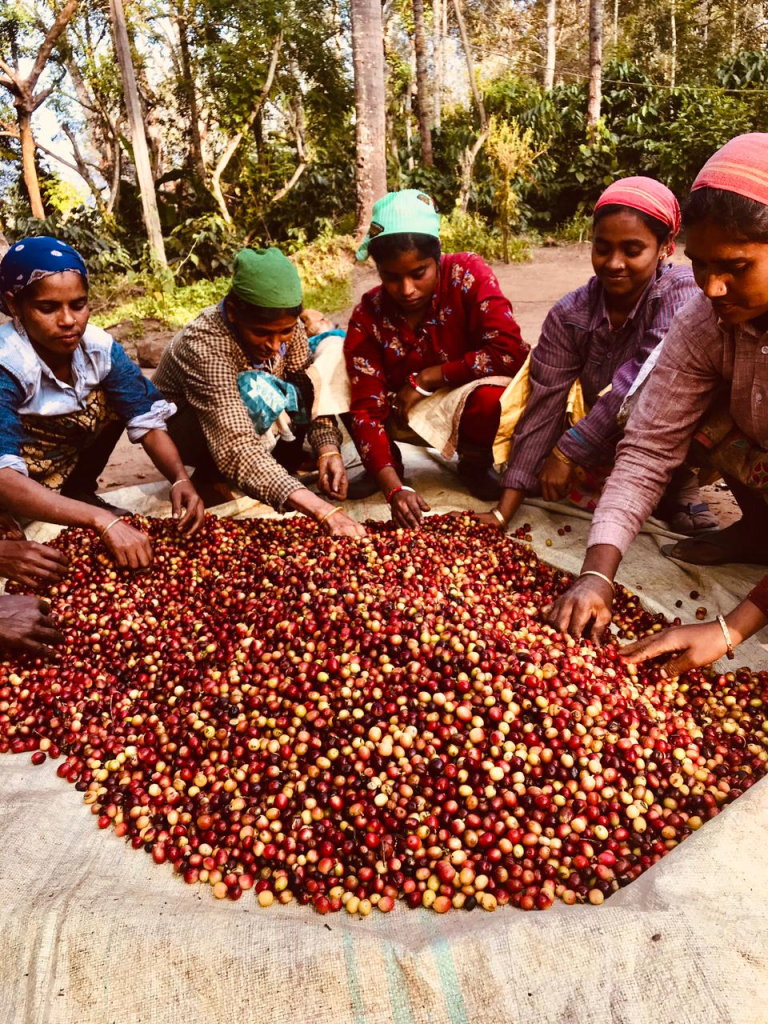
source: Rasulpur Coffee Estates

What is the current state of the specialty coffee industry in India?

The coffee culture in India has evolved over the past decades. The nostalgia-inducing coffee houses were popular meeting grounds until the 1980’s. In the 90’s, cafe culture took over the country and coffee became the trendy drink to try.

Cafes are becoming the primary hangouts for youngsters and coffee found an emerging and appreciative audience. In the past two decades, we have seen a surge of cafes all over the country. They have materialized as a central hub for meeting, whether casual or business, and also doubling up as co-working spaces.

The 2020 pandemic impacted the industry In multiple ways and its effects were manifold. Logistics of coffee exports are pretty bad even today. Traditional coffee plantation owners who supply heavily within India and export to Europe are left with excess stock of coffee that could no longer be shipped to international markets.

Coming to the Indian coffee space, in recent years, the spotlight is on specialty coffee. This movement is picking up speed with many brands and roasters setting up shop. Analysis gives us a deeper understanding on how speciality coffee has emerged as the current buzzword in coffee circles. Current generation and millennials have emerged as the major chunk of consumers of specialty coffee within India.

Increased awareness and interest about coffee augmented by growing exposure to worldwide trends due to rising international travel and social media saw many of them exploring specialty coffee and manual brewing techniques. Lockdowns put a halt to the possibility of exploring cafes and thus many coffee consumers in the country turned to home brewing.

Many retail specialty coffee brands saw skyrocketing sales in 2020 as consumers invested in manual brewing equipment ranging from French Press, Moka Pots, Chemex and Aeropress. The new generation of coffee consumers respect the people behind the product, want to better understand the ‘farm to cup’ journey and are willing to invest in educating themselves on all nuances of coffee.

A few years back, this was largely unheard of. Farmers were just one aspect of the coffee supply chain, but hardly ever found the spotlight on them. Now plantation owners are keen on sharing their stories and experiences, information on their crops and the work they put in to make that perfect cup of coffee.

One can safely say that specialty coffee will not just be a passing trend, but en route to becoming one of the mainstays of the Indian coffee space in the coming decade.

I think there is a lack of communication between the consumers and farmers. I know some of the consumers, including me, have started to pay attention to where exactly the coffee is coming and from which farm. What do you think can be done to fill this gap?

The missing ingredient is awareness. People need to be educated about Indian coffee. The new-generation farmers need to collaborate with the Coffee Board of India and conduct events to promote coffees originating from India within the country and internationally.

Joint efforts need to be made by all coffee enthusiasts to encourage the consumption of coffee by making people understand the benefits of drinking coffee. The government has to support and help promote farmers to come forward and establish their own brands.

Being honest and transparent ensures the consumers and clients knows about the past, present and the way you are going to build a future. Bringing credibility to the table builds trust factor for the brand with the consumers.

I know some of the issues the farmers are facing currently are the increasing production costs, what steps are you employing to change that? Have you increased the price of your coffee to reflect that?

Whether we like it or not, coffee is getting more expensive. It’s important to look at some of the reasons why this is happening, before you potentially do one of the following:

  • Buy less sustainable and ethical coffee because it’s cheaper or
  • Lay blame on the wrong people for higher prices.

There are many factors influencing the cost of coffee from climate change, disruptions to global shipping, consumer demand, and packaging cost. While the need to use more environmentally-friendly packaging for coffee cups and bags is real, so too is the cost for shops switching to compostable or recyclable materials. We have also witnessed fluctuating shortages of packaging stock forcing some companies to find more costly short term solutions to packaging which comes at a higher cost.

Lastly, coming to the cost of quality, producing coffee of higher quality simply costs more. Coffee must be cared, harvesting and processing is hard work. It requires time and physical effort if you want to achieve the highest quality standards. You can’t have it both ways.
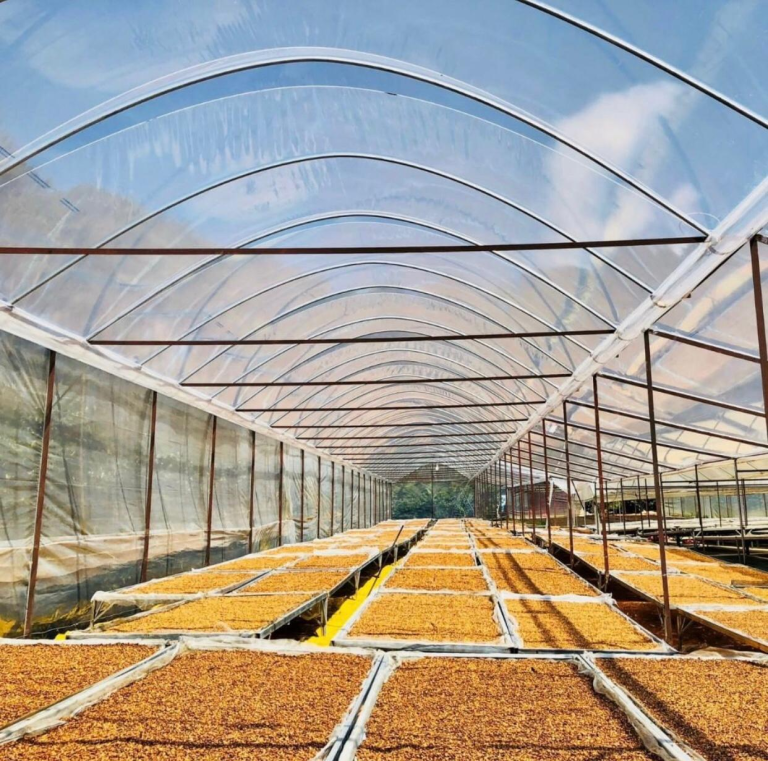
source: Rasulpur Coffee Estates

What are your thoughts on transparency? Has it benefitted you in any way?

Yes, by ten-fold. Transparency has improved our overall trust factor in this industry. It solves many problems and even stops disasters before they happen. It expands relationships, increases productivity, strengthens innovation, and improved our revenue.

What is the future of specialty coffee?

By far, the most interesting and exciting coffee segment of the moment is specialty coffee. It is rapidly expanding in India and across the globe as consumers continue to seek out the best cup of coffee to enjoy.

When it comes to coffee quality, specialty coffee is the ‘cream of the crop’ and is likened to fine wines due to its distinctive characteristics and delicious flavour that can only be achieved under certain growing conditions.

In today’s market, specialty coffee has become an intricate science and a global phenomenon that is seeing rapid growth across all sectors. More estates are coming into this specialty game, that will give ‘Indian specialty coffee a lot of mileage.’

What do you do in terms of R&D on Rasulpur Estate

We are currently doing research on developing a hybrid plant which is resistant to white stem borer and leaf rust. These are the two biggest pests and diseases faced by all Arabica growers throughout the world. International Coffee Organization (ICO) is working with different countries to find a solution for this.

This R&D program has been ongoing for the past four years on a 40 year old, 30 ft tall, Arabica plant labelled by us as Rasulpur Arabica. So far, the results look promising and it is resistant to these diseases. We have propagated progenies of this plant by clonal cutting, seed and tissue culture, and cross-bred this plant with other varieties of Arabica.
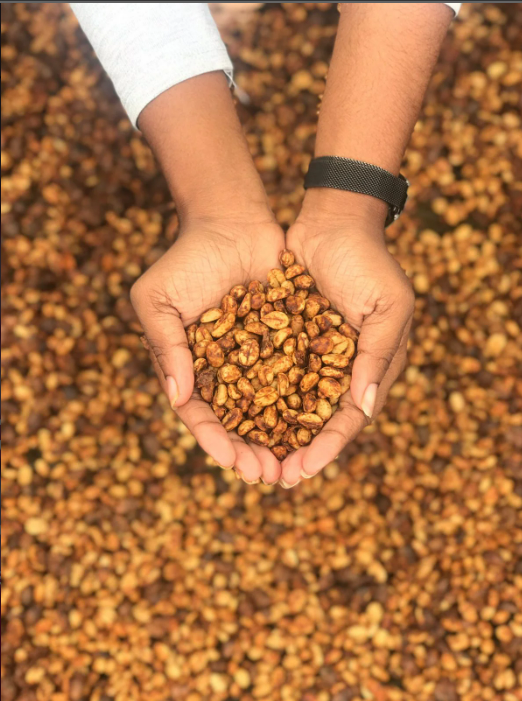
source: Rasulpur Coffee Estates

About Rasulpur Coffee Estate

Rasulpur Coffee Estates & Roasters is based out of Rasulpur village in Coorg district in the hot spots of the Western Ghats, India. The Estate is run by Syeda Sumaira, a fifth generation coffee planter and entrepreneur.

Fun fact: Coffee farms are the best place to get first hand knowledge about the beverage, how it is grown, harvested and processed. Rasulpur Coffee Estates organizes coffee tours, get in touch with them to find out more.

source: http://www.fltrmagazine.com / FLTR / Home> Insight> People / by Naveed Syed / August 11th, 2022


Five dancers explore different facets of Indian culture and mythology

 The solo performances at the 10th edition of Manthana in Mangaluru brought the Kodava culture and strong women characters from the epics under spotlight

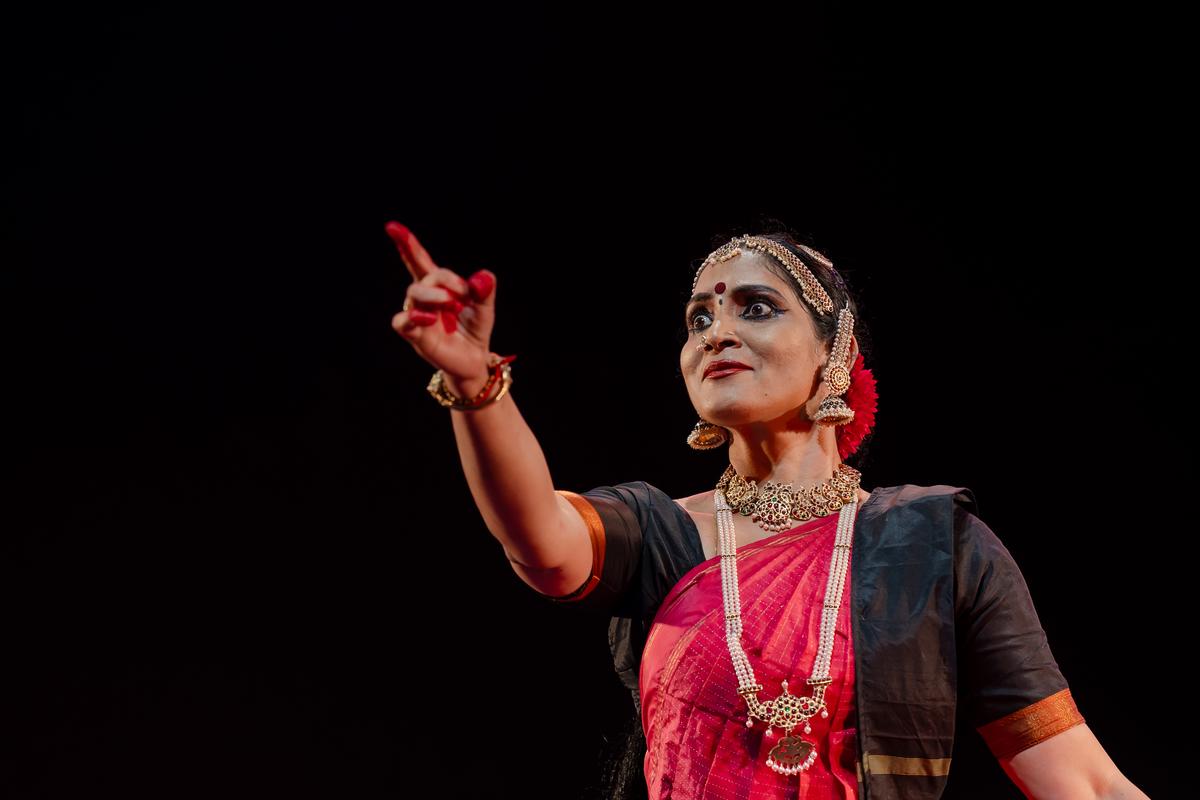
Shilpa Nanjappa’s presented the ‘Tales of Kodava’ | Photo Credit: Special Arrangement

Shilpa Nanjappa, a Kodava, brought out the rich culture and ways of worship of her people and the greatness of River Cauvery (whose origin is in Coorg) through her ‘Tales in Kodava’. She gave a clear, comprehensive introduction, as the songs were in Kodava.

This was presented as part of the 10th edition of Manthana, organised by Mangaluru’s Nrityaangan, which featured many solo performances. 

Shilpa’s entry was full of zest and she lit up the stage with her expressive face and powerful movements. She began with a Kauthuvam in ragamalika that narrated the tale of Ayyappa, with keen focus on Mohini. It was an adaptation from ‘The song of Saastaavu’, a part of the Pattole Palame, a compilation of folklore passed down orally through ancestral songs. She beautifully presented the contrast between the clumsy movements of Bhasmasura and the graceful dance of Mohini. 

‘Sri mula kanniye, pommale kodu male’, a patriotic song accepted as the anthem of independent Kodagu, blended the legends about the river goddess Kaveri and her present condition. The way Shilpa portrayed the callousness with which people pollute her pure waters would have melted anyone’s heart. When she stated that this is also the story of every single woman, manipulated and silenced through history, one nodded in agreement.

 Before concluding her performance with a self-composed thillana, Shilpa presented a sringara pada ‘Aye, thumbi’, portraying an enraged Kanditha Nayika who is scorned by the man she loves. Her thillana was on the Puthari festival, a ‘harvest festival’ of the Kodavas when they dedicate their rice harvest to Igguthappa, who, centuries ago,  taught them the method of cultivating paddy. The choreography of this piece had movements inspired by the indigenous dance forms of the Kodavas.

Shilpa’s performance was followed by four vibrant solo presentations on important female characters from the Ramayana and the Mahabharata.

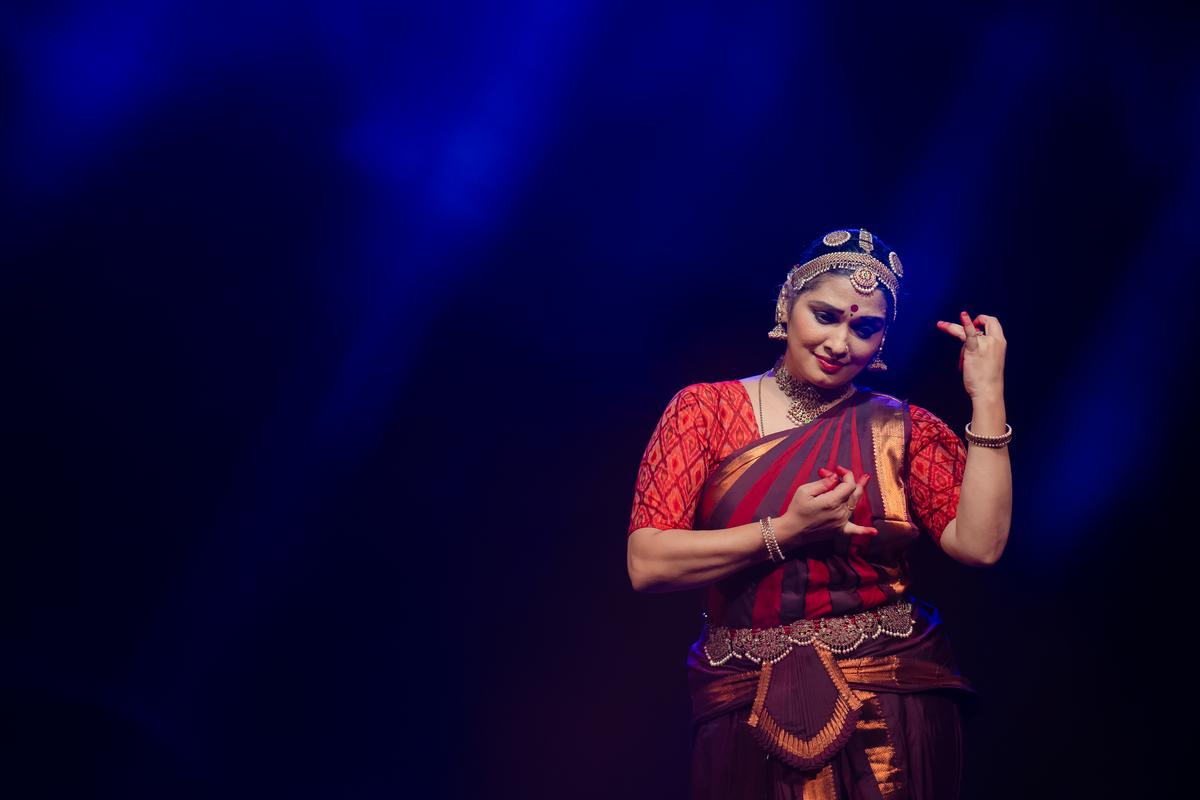
Divya Nair as Chitrangada | Photo Credit: Special Arrangement

Divya Nair was convincing in her portrayal as Chitrangada, the princess of Manipur and the only heiress to the throne, who was brought up by her father as a strong warrior and an able ruler. Though her thoughts and behaviour are unlike those of a woman, tender feelings of love blossom in her heart when she meets Arjuna, the Pandava prince. When her son Babruvahana is born, she transforms herself into a fond mother, too. Divya brought out the nuances of Chitrangada’s character with her lively movements and striking abhinayas. She left the spectators wondering, ‘Who are you, Chitrangada –– a warrior, a lover, a mother, or all of these?’ The lyrics had been composed by Dr. Suneel and were set to music by Sankaran Menon.

Indu Venu beautifully transformed into Kaikeyi | Photo Credit: Special Arrangement

Indu Venu transformed into Kaikeyi, who is torn between her intense love for Rama and her unbearable jealousy when she hears that he will be made king. Kaikeyi fears that once Rama becomes king, she and her son Bharata will have no identity. With Tulsidas’s ‘Tumak Chalat Ramachandra’, Indu Venu brought out the essence of motherly love. Along with Tulsi Ramayan, verses penned by Dr. Himanshu Srivastava were used for Indu Venu’s portrayal of Kaikeyi. Music and rhythmic composition for this was by Sujesh Menon and Vinay Nagarajan.

Manjula Subrahmanyabrought alive Hidimba as a demoness.  | Photo Credit: Special Arrangement

Manjula Subrahmanya portrayed Hidimba, the beautiful demoness, who is besotted with love for the tall and well-built Bhima and becomes the eldest daughter in law of the Kuru clan. Her life with Bhima is brief, and when he goes back to his family, she is alone again. When Gatotkacha is born, her motherly instincts are awakened and she is a happy mother. When Bhima returns after many years, she is delighted but soon finds out that Bhima wants their son to participate in the war. Hidimba makes her supreme sacrifice as she willingly gives her son to Bhima and goes back to her life of lonely wandering.

With an intensely expressive face and strong masculine movements, Manjula brought alive Hidimba as a demoness. At the same time, by throwing light on her soft motherly feelings and her sacrifice, she made Hidimba’s personality soar high. Manjula painted a clear picture of the complex character of Hidimba, who is only briefly mentioned in the Mahabharata.

The lyrics for this presentation were by Kavitha Adooru, music by Vineeth Purvankara and jathis by Manjunath Putturu.

Radhika Shetty chose to present a different picture of Manthara | Photo Credit: Special Arrangement

Radhika Shetty, founder of Nrityaangan,  presented ‘Manthareya Antharala’, a glimpse into the inner world of Manthara. Not conventionally beautiful, and abandoned by her parents, she finds refuge under Kaikeyi’s father and turns into a mother figure for Kaikeyi. Her actions are based on her boundless love for Kaikeyi and Bharata, who is like her grandson. Did she want anything for herself? Radhika’s expressive gestures and sensitive portrayal presented  a different picture of Manthara. By the time Radhika concluded, the spectators were ready to understand Manthara and even sympathise with her.  

Radhika’s presentation was based on Kuvempu’s Sri Ramayana Darshanam from which she had taken the lyrics that were set to music by Karthik Hebbar, Bengaluru.

The music ensemble was absolutely stunning. Vidyashree Radhakrishna’s impressive nattuvangam had dignity, strength, clarity and deftness. Nandakumar Unnikrishnan sang with emotion and gave life to the characters portrayed by the dansers. Mridangam by Karthik Vydhatri maintained the liveliness and flute by Nithish Ammannaya added melody and sweetness.

source: http://www.thehindu.com / The Hindu / Home> Entertainment> Dance / by B Ramadevi / November 26th, 2024

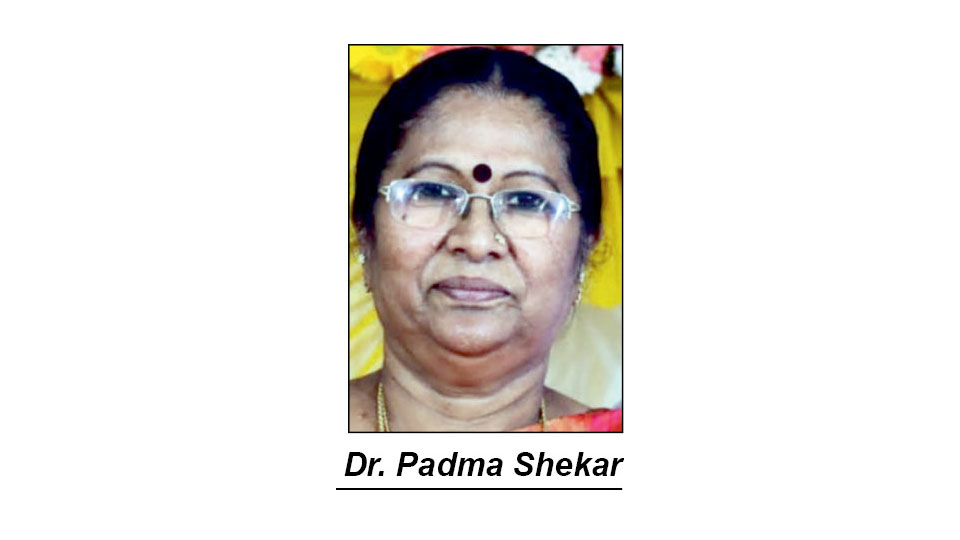
Dr. Padma Shekar has her roots in Kodagu

Madikeri:

Dr. Padma Shekar, a native of Kodagu, a litterateur, education expert, researcher and retired Vice-Chancellor, is among 69 achievers chosen for this year’s Karnataka Rajyotsava Award.

Dr. Padma hails from Thorenur village, Kushalnagar taluk in Kodagu district. She has served as the Professor and Chairperson of Department of Studies in Jainology and Prakrit, University of Mysore, Director of Centre for Women’s Studies, University of Mysore and Chairperson of Department of Studies in Christianity, University of Mysore.

A recipient of several awards in the fields of research and literature, she is currently a resident of ‘Preeti Nilaya’, Vijayanagar Second Stage, Mysuru.

Elated by the decision of the State Government to consider her for the award, Dr. Padma Shekar said “I had been a recipient of several awards in the field of literature. Now, I have been awarded for the service rendered in the field of education, which is very close to my heart, that has brought immense joy and happiness for me.”

“I have worked in the field of education for 40 years and it was during my tenure in office that, Karnataka Sanskrit University and Department of Studies in Jainology and Prakrit, University of Mysore.

The Government has taken cognisance of all these achievements. I humbly recall all those who have nurtured my growth from a remote village to the level of a Professor.

I will especially thank former CM Dr. M. Veerappa Moily and Chief Minister Siddaramaiah and his Government. I was born in Virajpet, Kodagu, where I spent my childhood. I was also the Chairperson of 11th District Kannada Sahitya Sammelan,” said Dr. Padma Shekar, recalling her achievements with pride.

source: http://www.starofmysore.com / Star of Mysore / Home> News / October 31st, 2024

Diya Bhemaiah of Kodagu wins one silver and one bronze medal in National Badminton

In the recently held 36th Sub-Junior Yonex Sunrise National Badminton Tournament at Chennai, Boppanda Diya Bhimaiah of Kodagu has won silver medal in doubles.

Diya, the state’s top ranked player, represented Karnataka in under-17 singles, doubles and mixed doubles.  Diya Bhemaiah was defeated in the quarter finals by the unbeaten Tanvi Patri who emerged as the champion. 

Diya is a student of Vidyashram College, Mysore.  Diya has achieved commendable results in the three categories which she participated in.

She is training under Medura Arun Pemmaiah and Boppanda Bhimaiah at Sports Park, Mysore.

source: http://www.clnnews.in / Coffee Land News / Home> Sports / by CLN Staff / November 01st, 2024

Three from Kodagu district get award this Rajyotsava

Madikeri: 

Professor Padma Shekhar, who is originally from Torenur in Kodagu but now resides in Mysuru, was honoured with the prestigious Rajyotsava Award for her contributions in the field of education.

Before her retirement in 2019 as chancellor of Bengaluru Sanskrit University, she served in multiple roles at the University of Mysore, including as professor of Jainology and Prakrit department, director of the Centre for Women’s Studies, chairman of the department of christianity, and chief superintendent of the women’s hostel.

Besides her educational career, Padma authored numerous books and received various accolades. She supervised multiple PhD  scholars. She is among the 69 recipients of this year’s Rajyotsava award.

The Karnataka govt also selected two accomplished individuals from the district for the Suvarna Mahotsava Award, as part of the Karnataka Sambhrama-50 celebration.

Kathimada Jimmy Annaiah and Nandini Basappa were chosen for their achievements in sports. Annaiah from Ponnampet was a member of the University of Mysore hockey team in 1957. He currently heads the Kiggatnad Senior Citizens Forum and promotes sports activities through social work.

Nandini, residing at Panya Estate in Suntikoppa, achieved recognition as an international basketball player. She participated in numerous national and international competitions and served in leadership positions. Her roles include vice-president of the Basketball Federation of India, Karnataka Basketball Association, and India Junior Women’s Basketball team manager. Her achievements include the Kempegowda award and State Sports awards in 2001.

source: http://www.timesofindia.indiatimes.com / The Times of India / Home> News> City News> Mysuru News / by G Rajendra / October 31st, 2024

Excels in boxing competition

Mysuru:

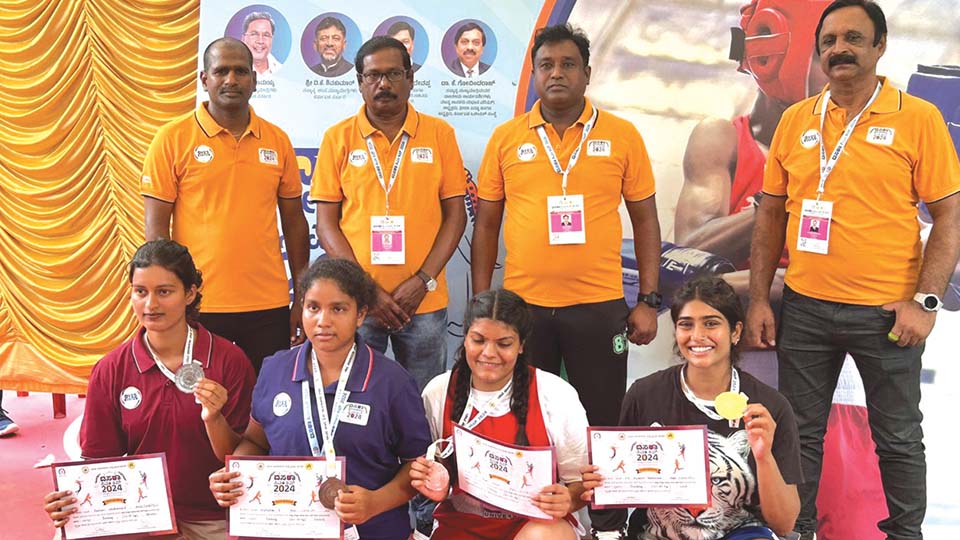
Allumada A. Saanchi Bollamma (kneeling extreme right), who represented Bengaluru Urban Division in above 63-kg category (women), won gold medal in the recently held Dasara CM Cup-2024 for elite men and women, organised by the Department of Youth Empowerment and Sports at Chamundi Vihar Stadium in Mysuru.

Saanchi was declared as Best Boxer in elite women category.

Jiya of Belagavi Division won the silver medal while Roshni Muthanna of Mysuru Divison and Divyashree of Bengaluru Rural Division won the bronze medals.

source: http://www.starofmysore.com / Star of Mysore / Home> Sports / October 21st, 2024

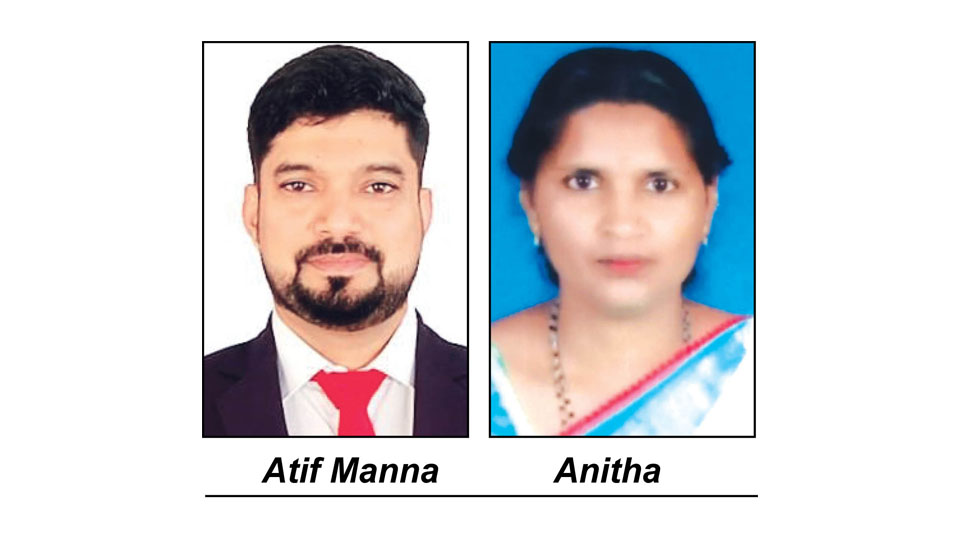
Atif Manna, Anitha nominated as Virajpet TMC Councillors

Mysuru:

The Karnataka Government has ordered the nomination of representatives from newly added villages to the Virajpet Town Municipal Council (TMC).

The appointments are set to take immediate effect, with prominent names being included as additional members to the Municipal body.

Among those nominated as Councillors is Atif Manna, son of late Shahul Hameed Manna, a former Councillor of Virajpet Town Municipality. Another appointee is H.B. Anitha, wife of Ahmed Wahid.

Atif Manna, who belongs to the Nawayathi community, brings with him a rich political legacy. His family has played a vital role in Virajpet’s governance for decades.

The first Nawayathi Councillor and President of Virajpet Municipality was late Janab Maani Hussain Saheb Bahadur, who served as the President for 11 years. His contributions to the region were recognised by the Coorg Government, which honoured him with the title ‘Bahadur.’

The family’s political involvement spans generations. Atif Manna’s grandfather, Meera Manna, was a Councillor for three terms and once served as Vice-President of the Municipality. His father, Shahul Hameed Manna, served two terms — once through an election and once by nomination.

Continuing this lineage, Atif Manna has now been nominated as the Councillor to represent the newly expanded areas of Virajpet TMC.

source: http://www.starofmysore.com / Star of Mysore / Home> News / October 25th, 2024

Anitha Nanda: The call of coffee

Anitha Nanda Appanervanda, a 61-year-old coffee farmer from Coorg, Karnataka, stands as a symbol of determination, sustainability, and empowerment. Over the course of her 22-year journey, Anitha has not only established a successful coffee farm but has also transformed the lives of hundreds of women in her community, fostering a culture of eco-friendly farming practices.

A passion for farming rooted in childhood

Born and raised in Bengaluru, Anitha’s passion for farming took root in her childhood. Every school vacation, she would visit her grandfather’s coffee estate in Coorg, a place that quickly became her second home. The vast expanse of coffee plants, the rich biodiversity, and the sense of peace found in the hills left an indelible mark on her young mind. “From those early days, I knew I wanted to return to the hills and be part of coffee farming,” she fondly recalls. This deep connection to the land paved the way for her lifelong dedication to sustainable agriculture.

Her dream started to take shape after she married Nanda Belliappa, a fellow coffee farmer from Coorg. Together, they took over the family-owned Surya Kiran Estate, where Anitha embarked on her mission to blend her passion for farming with eco-friendly practices.

Despite her enthusiasm, the road to success was not easy. In the early years, Anitha and her husband faced numerous challenges. Coffee farming requires patience, and the couple struggled to produce good harvests from their robusta coffee plants. “It took almost 10 years before we saw good yields,” she shares, highlighting the perseverance and dedication it took to build the farm.

Their breakthrough came when they adopted intercropping techniques, blending coffee cultivation with black pepper. This method not only boosted productivity but also contributed to a more sustainable farming system. Today, they cultivate 110 acres of robusta and 40 acres of arabica coffee, a testament to their hard work and commitment to innovation in farming.

Anitha’s approach to farming is deeply rooted in her desire to protect the environment. Situated in the biodiversity-rich region of Coorg, her coffee estate is more than just a farm – it is a sanctuary for wildlife. Her coffee plants grow under the protective canopy of rainforest trees, a practice known as shade-grown coffee farming. This method helps maintain the natural balance of the ecosystem, providing shelter for birds, insects, and other wildlife.

“We must protect this land from climate change and global warming,” she asserts, emphasising the role that sustainable practices play in preserving the environment for future generations. Anitha’s farm has been awarded Rainforest Alliance Certification, recognising her dedication to eco-friendly farming.

While she remains deeply connected to traditional farming methods, Anitha is not afraid to embrace modern technology when it benefits the farm. She uses machines for irrigation and weeding, which helps reduce labour and improve efficiency. However, the core of her farming philosophy remains grounded in traditional practices that have been passed down through generations.

Anitha’s success is not just about coffee. She has diversified her farm by growing black pepper and areca nuts, a strategy that has made her farm more resilient and sustainable. This diversification has allowed her to reduce dependency on a single crop and has opened up new streams of income for her family.

Empowering women and building a community

Anitha’s contributions go far beyond her own farm. As an active member of Biota Coffee FPC and the secretary of the Codagu Women’s Coffee Awareness Body (CWCAB), she has empowered around 400 women in her community. This group, which was founded in 2002 during a time when coffee prices were low, has provided women with the support they need to embrace eco-friendly farming practices and achieve fair prices for their crops.

For Anitha, farming is not just a livelihood – it’s a community effort. Through CWCAB, she has helped women coffee farmers promote sustainable farming and spread awareness about the benefits of coffee. Each year, on International Coffee Day, they celebrate by giving away free coffee to locals and tourists, a gesture that symbolises their pride in the hard work that goes into every cup.

Anitha’s dedication to sustainable farming has not gone unnoticed. In 2020, she received a Certificate of Appreciation from the Indian Institute of Spices Research (ICAR-IISR) for her pioneering work in intercropping black pepper with coffee. “It was a proud moment,” she recalls, noting that it validated the years of effort she had poured into her farm.

Despite her success, Anitha continues to innovate and learn. She has recently taken up beekeeping, recognising the crucial role bees play in pollination and the overall health of her farm. This new venture is another example of her commitment to maintaining a healthy, balanced ecosystem.

Coffee Farming: A source of Income and Sustainability

Sustainable farming has proven to be both environmentally and financially rewarding for Anitha. She cultivates robusta coffee, which has been particularly profitable in recent years. Producing around 19-20 bags per acre, she earns Rs. 10,000 per bag, while her arabica parchment fetches a higher price at Rs. 16,000 per bag. This strong financial return is a direct result of her commitment to eco-friendly practices.

While she does use some fertilisers, Anitha avoids harmful chemicals, focusing instead on maintaining native trees and enhancing soil health. Her approach blends the best of traditional and modern farming methods, ensuring that her land remains fertile and productive for generations to come.

A legacy of passion and purpose

Anitha Nanda’s journey from city life to becoming a successful coffee farmer in Coorg is a testament to her passion for the land and her determination to create a better future for her community. Through her sustainable farming practices, she has not only preserved Coorg’s rich biodiversity but has also empowered hundreds of women to take control of their livelihoods.

For Anitha, coffee is not just a crop – it’s a legacy, a connection to her roots, and a vision for a sustainable future. Her story is a powerful reminder that with hard work, care for the environment, and a strong community, anything is possible.

source: http://www.theorganicmagazine.com / The Organic Magazine / Home / by Tanishq Verma

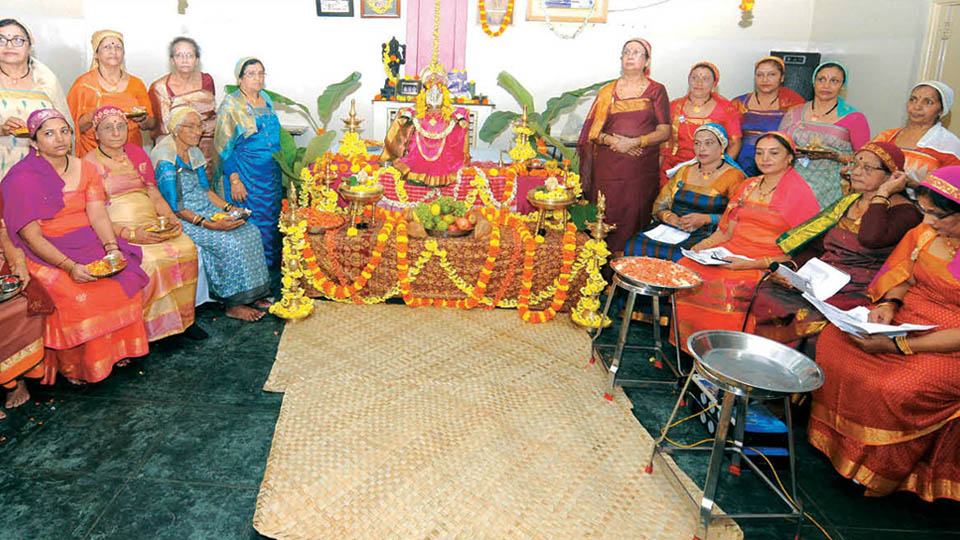
Cauvery Sankramana Festival at Kodava Samaja on Oct. 18

Mysuru: 

Kodava Samaja, Mysuru, will be celebrating Cauvery (Kaveri) Sankramana Festival at the Samaja premises in Vijayanagar 1st Stage on Oct. 18.

Kani Puja will be performed at 10 am.

Holy water (Theertha) will be distributed to all the devotees present in the celebration.

All the devotees of Goddess Kaveri are requested to participate in Kani Puja, Festival celebration and also receive Theertha brought from Talacauvery, according to a release from K.A. Belliappa, Hon. Secretary of the Samaja.

source: http://www.starofmysore.com / Star of Mysore / Home> News / October 15th, 2024

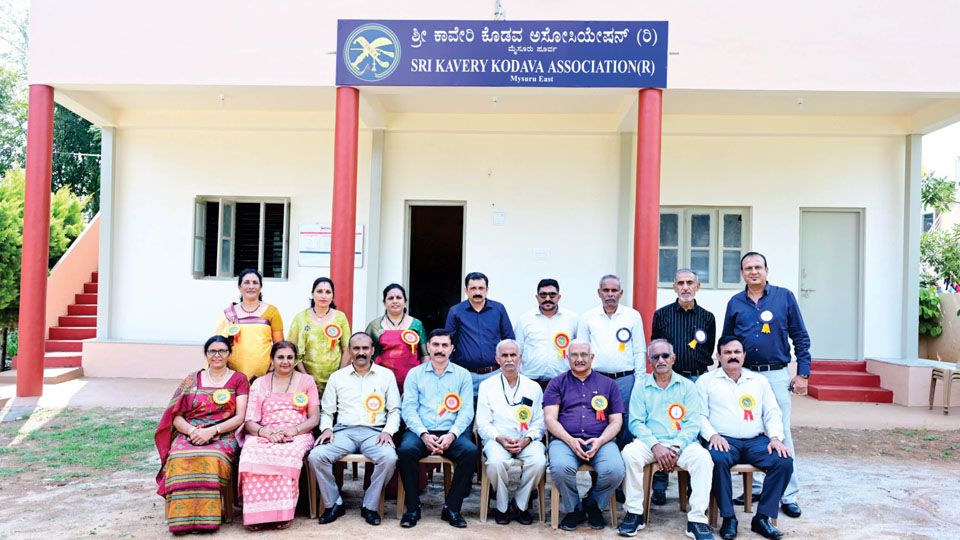
New office-bearers of Sri Kavery Kodava Association, Mysore East

The Annual General Body Meeting (AGM) of Sri Kavery Kodava Association, Mysore East, was held at the Association premises in Vidyashankar Nagar, Sathagalli Layout, recently.

Picture shows the newly elected office-bearers and Managing Committee Members of the Association for the year 2024-2026:

Kademada Jaya Belliappa – President; Pandiyanda Padma – Vice-President; Pattada Sachin Devaiah – Secretary; Nervanda Sunil Muthappa – Joint Secretary and Pattamada Arun Cheramanna – Treasurer.

The Committee Members are:

Pokachanda Narendra, Pudiyokkada Praveen Chengappa, Kanjithanda Manu Aiyappa, Chokira Somaiah, Ajjikutira Subbaiah, Chokira Sutan, Palengada Vinu Chengappa, Nidumanda Appachu, Medhura Tavare, Ajjamakada Beena, Amminichanda Shobha and Sullimada Rajini.

source: http://www.starofmysore.com / Star of Mysore / Home> Photo-News / October 08th, 2024