Tag Archives: Kodavathi

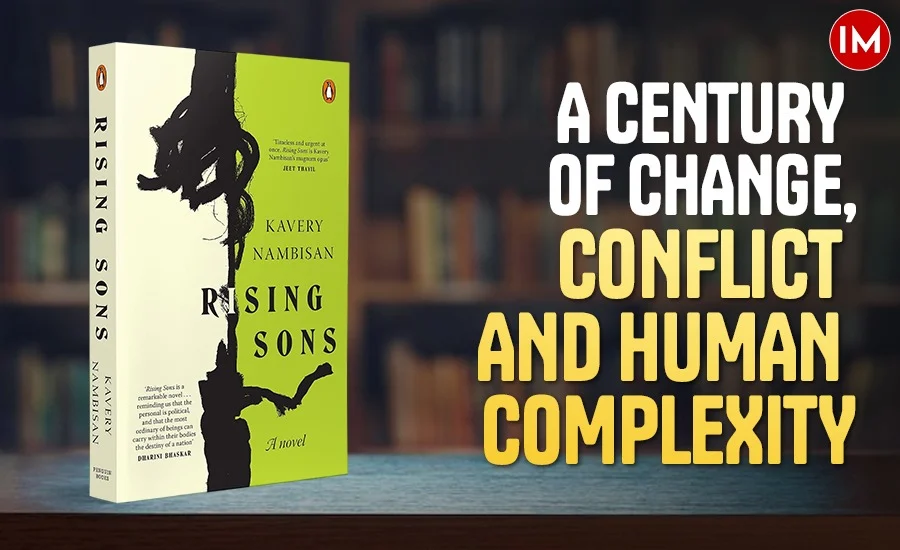
Kavery Nambisan’s Rising Sons Is a Witty, Tender Portrait of India in Transition

Kavery Nambisan’s Rising Sons traces generations, identities and a changing India through humour, tenderness and sharp social observation.
“At times, we observe a change in a person when, in actual fact, it is the situation that has changed. At other times, we fail to see the transformation, perceiving instead that the varied situation makes it appear so.” Our narrator in Rising Sons — an omniscient, non-bodied voice which carries the keen intelligence and wry sensibility of the book’s accomplished author Kavery Nambisan — knows the universal complexities of person and situation. There are other eternal truths observed by this narrative voice too, which occasionally address the reader directly and thus bring us into the story as characters produced by similar contexts of a country changing over a century.

Mud is life for the fifty-seven families in the village of Kesarugattu, and the rain-fed rivers are the water which sustain life. “We romanced the outside world through the newspaper. Knowledge burnished our rustic minds,” informs the narrative voice. “One day, we read the scandalous writings of a young wife of a Brahmin from Poona, about the plight of women,” and though the words of Tarabai’s letter resonated with our own book’s protagonist Gowru, who was also the young wife of a Brahmin, we will refrain from further description of her and instead move forward a couple decades to her titular sons. The eldest was Nanju, who dreamed of greatness, and “thought of himself in the guise of Vivekananda, of Aurobindo, of Tilak, but never as Gandhi. Personality and image mattered. His admiration settled on Naoroji, the elegant Parsi gentleman who had performed the unique feat of opposing the British while being friends with them.” The younger was Anna, who went to see owls with the Ai people at night, and spoke at a Congress rally in Mysoor “about growing up, his schoolboy dreams, his college days, the gradual understanding of how we were being ruled by a race of people from a faraway land and about the sure and steady swell of opposition to their rule”.

The father of these sons — and the husband of Gowru — is the twice-born Devaraya. He is a protagonist too. There are other fathers and sons, like Keshava Pujari and Vibhushana. There are also daughters: most notably Chinni, born to Gowru’s childhood friend Bhagya and her Malayali husband Dharma.

Chinni, who understood early that the world is tilted because people hide their real selves, had written a two-page letter to Bhagat Singh in prison expressing both her admiration and displeasure: “Displeasure about the way the shooting had been done, without careful planning. If I had been there, I would have helped, I wrote. I added that I was ready to marry him, in prison, and carry out the unfinished work. It was a serious proposal of marriage.” She had her reservations about Gandhi and the ideals of sacrifice which he advocated. Wearing khadi whilst privileging the language of the colonizer seemed like contradictory swadeshi to Chinni. Could simplicity of clothes genuinely lead to a corresponding transformation as simplicity of spirit? An ascetic is ascetic regardless of what they wear; external image is only one thread of internal coherence. But enough about Chinni — we must get back to the sons now.

These are the main characters we are introduced to in the novel, but there are many other fishes we meet in the pond of Kesarugattu, and in the rivers which bring them there. There are Ai tribals, Brahmins, Chandals, Mussalmans. There is Shantadevi, Muduki, Uzman and Maimoona, Sumana, Hanumantha, Gagana, Vaidehi… and even if we visit these others only briefly, their essential contours reveal themselves to us clearly through the narrative voice, which gives even minor characters the dignity of keen attention. When the scene shifts to Delhi, there is “the old mother of the driver Karthab Singh and the roasted mutton pieces she fed him while crooning love songs about the longing to shield her beloved from all danger by enfolding him in her long hair. Her husband was long dead, and she had short, wispy hair that could not protect an ant. But singing love songs gave her pleasure.”

There is also another protagonist from the village who may be listed here last but in no feasible circumstance could be considered the least, and that is Kuppu the dog: “He is still there, our beautiful all-black Kuppu — at times he is a playful little pup, at times an adolescent, and, at other times, an aged, lumbering, peace-loving fellow. Which is why people say, Kuppu is forever.”

The eternal archetypes which our transient human and non-human characters embody are depicted with such genuine tenderness that even if the book were indeed re-titled Ondu Kaththeya Atma Kathe or ‘Memoirs of a Donkey’ (as one protagonist suggests grimly), it could still trace many of the same waves of supple affection and insightful censure which characterize Rising Sons.

Donkeys do not seem to have pride or prejudice, however, which are among the main themes of this book. Character decides destiny because it shapes our choices, but a bruised ego leads to reaction rather than choice — the spirals which emerge from wanting to be seen in certain ways can extend to dangerous shadows. Nambisan is an observer of individual tendency as much as of the social structures of family and village and politics which shape new citizens of a new country, which have shaped us..

Humans have a deep desire to ease each other’s pain, and a difficulty in balancing that against the restoration of their own selves. Idealism fights the cynicism of reality and sometimes stumbles so frequently that it becomes entirely unsteady. In India, virtues of Brahmin non-covetousness and Gandhian restraint were unable to stem the blood-dimmed tide of greed and vanity which too are fundamental human vices. This slow percolation of a self-serving culture in the outward guise of piety pushes the Ai people – rooted to the earth and all her creatures – into wearing “half-pants” and “proper saris” instead of the simple lengths of cloth which they traditionally used to wrap around their bodies. There is also the implicit bleakness of rural India becoming urban in the strange erosions and sediments which have metamorphosed Bengloor into Bangalore. Much is found, much is lost. Yet despite the fact that this pace of change is almost tragic when viewed as a generational saga, it is delivered through an authorial voice so deft and irreverent that this reader found herself smiling often, and on more than one page even laughing out loud.

Rising Sons is a story on fertile ground and rich soil, with much to recognize in the moments it portrays, as a missive which illumines the heart. It weaves its chapters in leisurely visits to the interior lives of its characters and their contexts in a manner which justifies the Irawati Karve quote with which the book begins: “Human toil, expectations, hates, friendships—all seem puny and without substance, like withered leaves eddying in the summer wind. But the people who toiled and dreamed and loved seem unforgettable…”

source: http://www.indianmasterminds.com / Indian Masterminds / Home> Book Reviews> Features / by Yauvanika Chopra / September 05th, 2026

Shilpa Nanjappa bags UstadBismillah Khan Yuva Puraskar

Mysuru:

 Acclaimed Bharatanatyam artiste from Kodagu, Mukkatira Shilpa Nanjappa, has been selected for the prestigious Ustad Bismillah Khan Yuva Puraskar for 2024 by the Sangeet Natak Akademi (SNA) under the category ‘Overall Contribution and Scholarship in the Performing Arts.’

The award is India’s highest honour for performing artistes under the age of 40. Shilpa is the first person from Kodagu and the first Kodavathi to receive the coveted recognition.

Candidates are nominated by eminent artistes and previous SNA awardees and are evaluated on the strength of their body of work and contributions to the performing arts.

In the ‘Overall Contribution and Scholarship’ category, artistes are expected to demonstrate not only excellence in performance but also significant contributions through research, teaching, curation and allied activities.

In Shilpa’s case, the award recognises more than a decade of work in documenting, preserving and promoting Kodava culture and heritage through academic research, alongside a distinguished performing career spanning nearly three decades.

She was awarded the prestigious two-year Fellowship for Cultural Resources and Training (CCRT) for 2019-2021. Her topic was ‘Adaptation of Kodava language/literary compositions into the classical format and Bharatanatyam’.

Shilpa Nanjappa is the daughter of Allaranda Uthappa and Kaveriamma couple. She is married to Mukkatira Pavan Nanjappa. 

Stamp of approval for Kodava culture 

Born in Bengaluru and at present settled in Kodagu after her marriage, Shilpa Nanjappa is also an ‘A’ grade artiste of Doordarshan. Speaking to Star of Mysore, Shilpa said that being nominated itself was a significant honour because nominations come from senior members of the fraternity.

“When members of the dance community hold me in such high regard, that recognition alone feels significant. For the first time in my life, an award is not about me; it is about the work, the community and a stamp of approval for Kodava culture and heritage,” she said.

“I have dedicated more than a decade to propagating and preserving this tradition. I hope this recognition helps the Kodava language reach places it has never reached before. This award is a huge acknowledgement for micro-culture representation in larger cultural spaces and is integral to the survival of micro-cultures,” she said.

source: http://www.starofmysore.com / Star of Mysore / Home> News / June 16th, 2026

Sri Kavery Kodava Association, Mysore East

25th Anniversary, cultural programme featuring Kodava Valaga Dance Competition, Kolata dance by ladies, dance by children .

Lucky Dip Contest (Donors Coupon), Nectar Fresh Founder and Managing Partner Kuppanda Chayaa Nanjappa Rajappa inaugurates, 3.30 pm

Musical evening, Kodagu Model School premises, Vidyashankar Layout, Mysuru, 6 pm.

source: http://www.starofmysore.com / Star of Mysore /Home> Events / August 09th, 2026

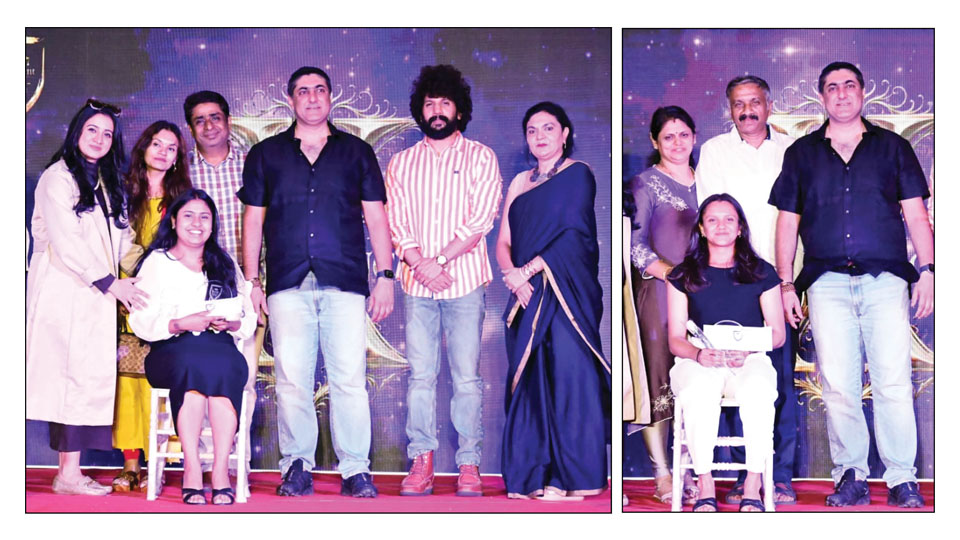
‘Sapientia-26’ Annual Inter-College Fest held

Mysore/Mysuru:

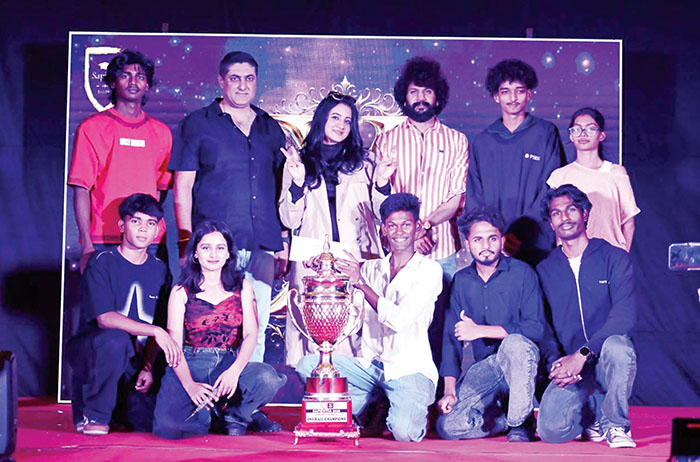
Sapientia-26,’ the Annual Inter-College Fest was held on Apr. 13 at Sapient College on KRS Road in Metagalli here.

The valedictory and prize distribution ceremony was held at North Avenue.

The chief guests for the event were the well-known film celebrity couple Bhuvann Ponnannaa and Harshika Poonacha, who herself is a gold medallist in Engineering.

They, along with Sapient College Chairman P. Daljeet Ram, presented trophies and cash prizes worth over Rs. 1.50 lakh to the winning teams.

The couple motivated the gathered students with their own life experiences and appreciated the growth and reputation of Sapient College in such a short period of time.

As part of the programme, students of the college presented various cultural activities and entertained the gathering.

SBRR Mahajana First Grade College team which won the overall winners’ trophy at ‘Sapientia-26’ with the guests.

The two State toppers of Sapient PU College were honoured on stage by the dignitaries, along with other UG toppers in the presence of their families and gathering of students, for their outstanding academic achievements.

SBRR Mahajana First Grade College Team emerged as the overall winners of Inter-College Fest securing the trophy along with a cash prize of Rs. 25,000.

The event was attended by Sapient College Director Yeshmik Daljeet Ram, Dean Dr. Sujatha Bopanna, Principal Dr. K. Ganesh, Administrative Officer Sujit Padival, teaching and non-teaching staff.

source: http://www.starofmysore.com / Star of Mysore / Home> News / April 29th, 2026

Rani Machaiah selected as Coorg Person of the year 2023 by news and tourism portal

Padma Shri awardee Rani Machaiah, an exponent of the Ummathat folk dance of Kodagu, was chosen as the Coorg Person of the Year 2023 by a news and tourism portal.

According to the author and editor of the portal www.coorgtourisminfo.com P.T. Bopanna, Ms. Rani Machaiah’s selection was made on the basis of a poll conducted through the portal.

It may be mentioned here that the portal had chosen actor Rashmika Mandanna as the Coorg Person of the Year 2022.

In a statement here on Ms. Rani Machaiah’s selection for the year 2023, Mr. Bopanna said the Ummathat folk dance exponent was leading her troupe since 1984 and had trained thousands of students in the folk dance tradition in Kodagu.

Rani Machaiah had been presented with Padma Shri by President Droupadi Murmu in 2023. “Rani is known for teaching and popularising Ummathat, a traditional form of Kodagu danced by women dressed in red brocade saris draped in Kodava style and wearing traditional Kodava jewellery. They dance gracefully in circles around a lit pedestal lamp to the rhythm of hand-held brass cymbals, which they beat as they dance to the accompaniment of folk songs sung by two or more women. The dance is devoted to Goddess Kaveri (the river which takes its birth in Kodagu and is considered as their mother goddess by Kodavas). It is performed mostly during the harvest festival Puthari,” said a statement issued by Mr. Bopanna.

source: http://www.thehindu.com / The Hindu / Home> News> India> Karnataka / by The Hindu Bureau / January 04th, 2024

Know Your City: From hosting Queen Elizabeth to reviving lost saris, how Chimy Nanjappa shaped Karnataka’s craft heritage

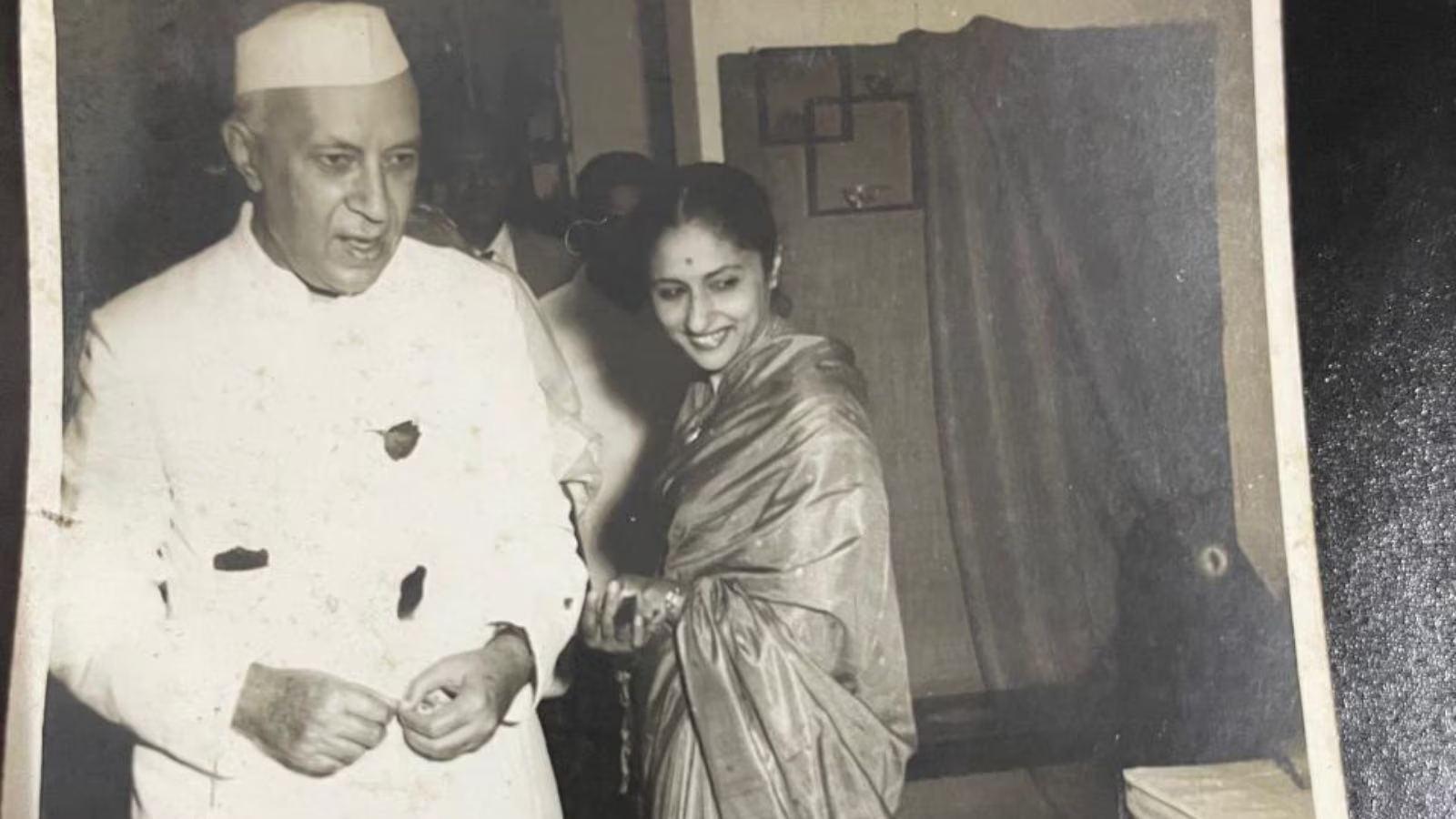
In the early days, says Muddaya, several dignitaries visited Cauvery Handicrafts Emporium and were hosted by Chimy—from Prime Minister Jawaharlal Nehru to Sri Lankan premier Sirimavo Bandaranaike, and even a young Queen Elizabeth.

Chimy Nanjappa’s passion for Karnataka’s textiles and crafts lives on at the Vimor Museum of Living Textiles in Bengaluru.

When one speaks of textiles and fine crafts in Karnataka, the Cauvery Handicrafts Emporium on MG Road in Bengaluru is one of the first places that comes to mind. The shelves of the state-owned emporium are packed with a vast array of the traditional crafts of Karnataka—from intricate silver-based Bidriware items to charming Channapatna toys. However, this wasn’t always so. And one of the people who painstakingly worked to transform the emporium into a showcase of the state’s finest creations was the late Chimy Nanjappa.

Chimy was selected to head the emporium in the late 1950s—then known as Mysore Arts and Crafts Emporium—by its governing board, which included many women, including Sudha Reddy, a proponent of Indian handicrafts.

“It was not a cakewalk for her. In those days, women did not work and close up a place as huge as Cauvery and then walk home at 8 pm,” Chimy’s daughter, Pavithra Muddaya, recalls.

Born in 1928 in Madikeri, Chimy did not have an easy childhood as she lost both parents by the age of nine. She went on to pursue higher education in Chennai, securing a BCom degree, and later settled in Bengaluru after marrying advocate A C Nanjappa. With the family facing financial difficulties in the early days, she began working as an assistant manager at Cauvery Handicrafts Emporium, before being promoted to manager.

“She had nothing by way of a background in the field and had previously done accounts work…but life forces you to take up opportunities,” says Muddaya, adding that her mother always said that women need to work and be financially independent. She also credits her father’s role in encouraging and supporting Chimy, recalling him as a person who held views that would be considered progressive even today.

In the early days, says Muddaya, several dignitaries visited Cauvery Handicrafts Emporium and were hosted by Chimy—from Prime Minister Jawaharlal Nehru to Sri Lankan premier Sirimavo Bandaranaike, and even a young Queen Elizabeth.

In 1963, cultural activist and author Pupul Jayakar, a major mover in the revival of traditional crafts and culture, recruited Chimy to represent Indian textiles at the New York World Fair the next year. It turned out to be a success, says Muddaya, recounting what an IAS officer familiar with the event told her. “Good lord, nobody could go past her without buying something!”

Later, Chimy was offered an opportunity to head an outlet anywhere in the world under the Handicrafts and Handlooms Export Corporation, but declined, refusing to be a “second-class citizen” in a foreign country.

After A C Nanjappa passed away in 1974, Chimy went on to start the Vimor Handlooms, a home store specialising in handloom sarees and textiles. Muddaya remembers, “No one who came to her for help was sent away…she would give weavers’ addresses to people. Freedom fighter and social reformer Kamala Devi Chattopadhyay would say that anyone coming to the Regional Design Centre (on Church Street) without a recommendation could ask my mother for one.” Vimor would go on to revive many traditional sari styles, such as one dubbed the ‘Cubbonpete’ sari.

Those interested in Chimy Nanjappa’s legacy in textiles may visit Vimor Museum of Living Textiles after making an appointment. The exhibits on display include saris up to a century old, in styles that are not often seen today.

source: http://www.indianexpress.com / The Indian Express / Home> News> Cities> Bangalore / by Express News Service / March 13th, 2026

A cookbook with stories

I was recently invited to Kaveri Ponnapa’s book launch that I had been looking forward to.

 Many in Mysuru may not recognise her name, but anyone who has even a passing interest in Coorg or the culture of small, distinct communities of this land would certainly know her remarkable work, ‘The Vanishing Kodavas.’

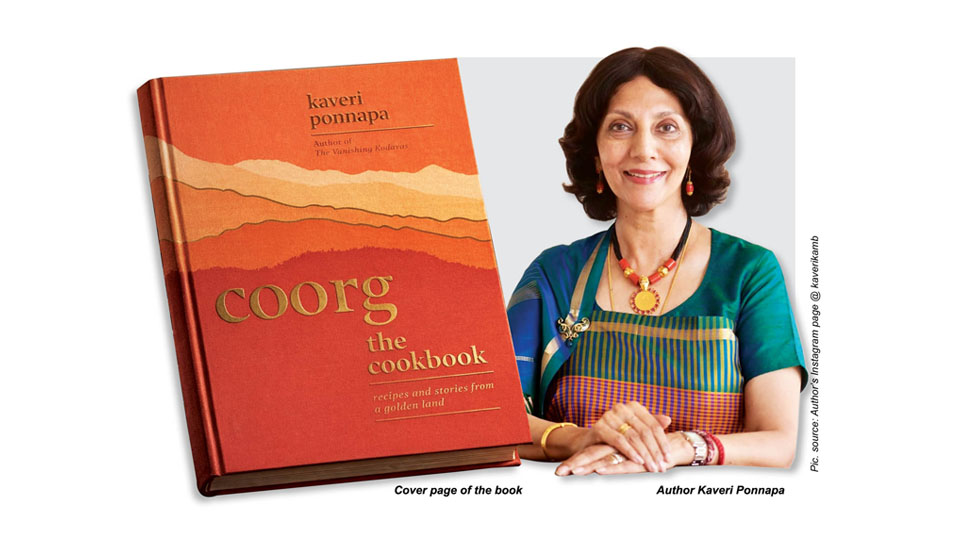
Just like her previous book, which was rich with history, culture and stunning imagery, her latest work, ‘Coorg: The Cookbook — Recipes and Stories from a Golden Land,’ is both beautiful to look at and deeply satisfying to read.

This book nourishes not just the appetite but jogs the memory, too.

‘Coorg: The Cookbook’ has been in the making since 2012 and the patience shows. It is thoughtfully structured into sections such as rice-based dishes, meats, seafood, vegetarian dishes, foraged foods, pickles, sweets and beverages.

Each section opens with a gentle historical introduction explaining how and why these foods became part of the Coorg dining table. It tells us why it is not just about how to cook, but also about understanding why Kodavas cook the way they do.

The book also includes sections on foundational pantry ingredients and the spices and herbs that define Coorg cuisine. For readers unfamiliar with some ingredients, the author thoughtfully offers alternatives.

There is even a section explaining how to use the book, making it as accessible to an outsider who may not be familiar with Coorg cuisine at all. That said, even a Kodava like me had some surprise discoveries.

The first surprise I encountered in the book was that while modern Coorg is synonymous with coffee plantations, it was earlier primarily a land of paddy farmers.

No wonder rice sits at the centre of not only Kodava cuisine but also culture. Appropriately, the first dish the book introduces is the humble yet iconic ‘Akki Otti’ or rice roti.

Another delightful revelation is the long-held myth that Coorg cuisine is dominated by pork. Yes, Coorg is famous for its pork dishes, but the book reminds us that Coorg food is far more diverse.

Of the 132 recipes in the book, just 36 are non-vegetarian dishes and only 6 of them are pork! The remaining dishes feature chicken, mutton, fish and crab.

Meanwhile, there are 45 vegetarian recipes! which include an array of ‘pallyas’ ‘chutneys.’

So, the notion that Coorg cuisine is dominated by the hog is hogwash.

What also struck me personally were the dishes I had never heard of before. There are recipes such as ‘Miniature Jackfruit Pancakes’ (Coorg name: ‘Chatti Puttu’) and the intriguingly named ‘Steamed Rice Parcels with Hitchhiker Elephant Ear Leaves’! (Coorg name: ‘Mara Kembe Puttu’).

But what truly elevates this book beyond the realm of a cookbook are the stories quietly interwoven along with the recipes. Food, after all, is rarely just about taste; it is about people, places and memories.

Reading about the ‘Nende Kari’ or the ‘Crab Curry,’ transported me back to my childhood in Coorg. I remembered being sent to the paddy fields with my cousin to catch crabs for dinner. We would return with a small mug full, often with bleeding fingers. Crabs can put up quite a fight.

While our grandmother prepared the ‘Nende Kari’ (Crab Curry), we sat near the fireplace listening to her tell stories of elephants straying into plantations, of wild boar hunts and town gossip, all while the aroma of spices slowly filled the kitchen.

This is the kind of book that eventually becomes an heirloom, something to be preserved, treasured and passed down through generations. Kaveri Ponnapa herself writes, “Recipes are cultural inheritances.”

This is why ‘Coorg: The Cookbook’ feels more than just pages of recipes. It takes you on a journey down memory lane.

For many Kodavas living far from their homeland, the book may well feel like a bridge back to traditions that are slowly fading. That alone is reason enough to own a copy.

In many ways, to use a culinary euphemism, this book pairs beautifully with Kaveri’s earlier work, ‘The Vanishing Kodavas.’

One documents the culture, the other documents the cuisine. Culture and cuisine, the two pillars that define every community.

Kaveri Ponnapa observed that “Kodavas are vanishing,” but with her books, she has made sure they will not be forgotten.

P.S. : You can order your copy athttps://kaveriponnapa.com/coorg-the-cookbook/coorg-the-cookbook/

e-mail:  vikram@starofmysore.com

source: http://www.starofmysore.com / Star of Mysore / Home> Columns in Black & White> Top Stories / by Vikram Muthanna / March 03rd, 2026

Dr. Maletira Machayya

Obituary : 1937 – 2026

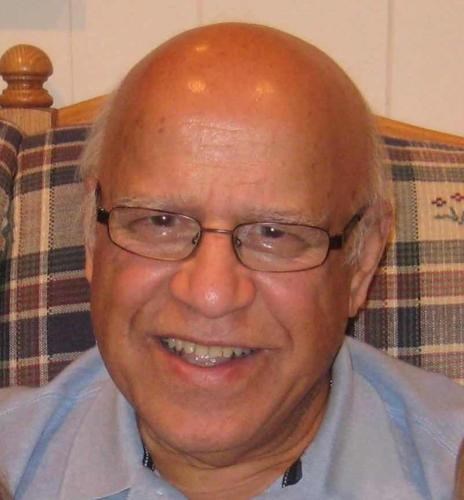
Maletira “Mac” Machayya died January 17, 2026, at Eventide in Fargo, ND. There will be a celebration of life Friday, January 30, from 1 pm to 3 pm at West Funeral Home, West Fargo, ND.

A private inurnment ceremony will take place at Gethsemane Episcopal Cathedral, Fargo.

Maletira Ganapathy Machayya, the son of Dr. Maletira and Bollamma Ganapathy Machayya, was born February 10, 1937, in Madikeri, India.

He earned his medical degree from Madras Medical College, India, in 1960. He completed a General Surgery Residency at Furness General Hospital, Barrow-in-Furness, England, in 1969, and Urology Residency at Preston Royal Infirmary, Preston, England, in 1971.

While in England, he became a Fellow of the Royal College of Surgeons. He completed a rotating internship at Illinois General Hospital in Chicago, Illinois, in 1972.

Mac married Margaret “Maggie” Burns in 1971 in Barrow-in-Furness, England.

In 1972, Mac, Maggie, and newborn son Mark moved to Valley City, North Dakota, where Mac began a distinguished career as a general surgeon. There, they raised their family and made lifelong friends. Mac served the community for many years at Mercy Hospital and Meritcare Clinic, which later became Sanford Clinic. His dedication to patient care earned him the respect and gratitude of countless individuals and families throughout the region.

In his free time, you would find Mac working on a new project around the house, woodworking and creating stained glass art. Mac was also a member of The Lions Club in Valley City. Many memorable summers were spent with family and friends at the cabin on Lake Eunice in Minnesota. Maggie passed away in 2005. In 2013, Mac moved to Fargo to be closer to his family.

He is survived by his three sons, Mark (Katie) with grandchildren Makayla, Dakota, and Memphis, Bemidji, MN; Kevin (Jamie) with grandchildren Josie and Gaby, West Fargo; and Jon (Jill) with grandchildren Ellie, Lincoln, and Vera, West Fargo; sister-in-law June Burns, Barrow-in-Furness, England; and extended family in England and India.

He was preceded in death by his wife; his parents; Maggie’s parents, Edward and Frances Burns; brother Devaiah Ganapathy; sister Maletira Sushiela; and brother-in-law Antony Burns.

Mac’s family is appreciative of the care received from Eventide and HIA Hospice.

In lieu of flowers memorials preferred to Sanford Health Foundation or CHI Mercy Health Foundation Valley City.

Arrangements by West Funeral Home, West Fargo.

To plant trees in memory, please visit the Sympathy Store.

source: http://www.legacy.com/ Machayya

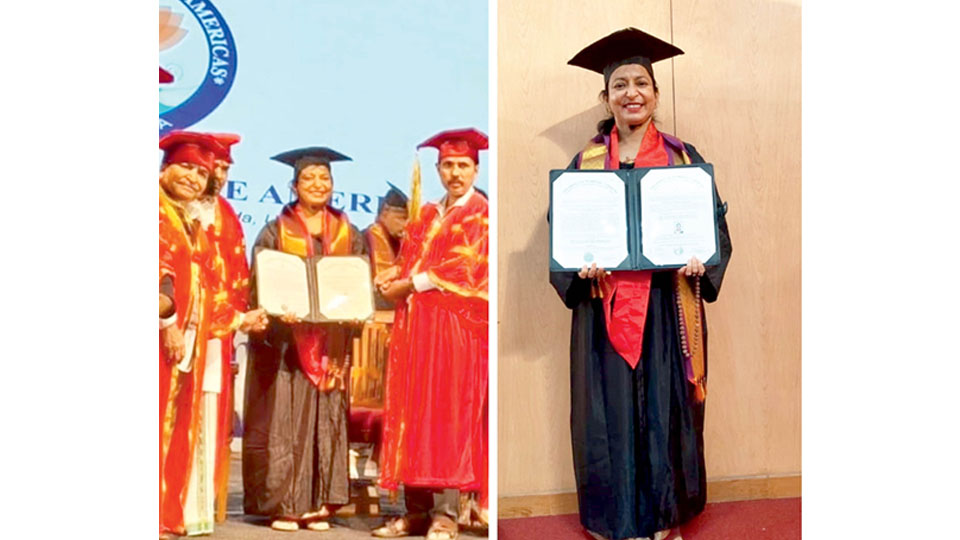
US honour for Kodagu researcher

Mysore/Mysuru:

Theetharamada Dr. Devaki (Kollimada) has completed a prestigious Post-Doctoral Research Degree in Commerce from an institution in YUVA University Florida, USA.

She is the only lady from Kodagu to receive this honour in the field of Commerce.

Her post-doctoral study, titled ‘Impact of Yoga Practice on Stress Management Among Higher Secondary School Students in Mysore District,’ explored the effectiveness of structured yoga interventions in reducing stress levels among adolescents.

The research offers valuable insights for educators, policymakers and wellness practitioners, highlighting yoga as a powerful tool for enhancing student well-being.

source: http://www.starofmysore.com / Star of Mysore / Home> News / January 13th, 2025

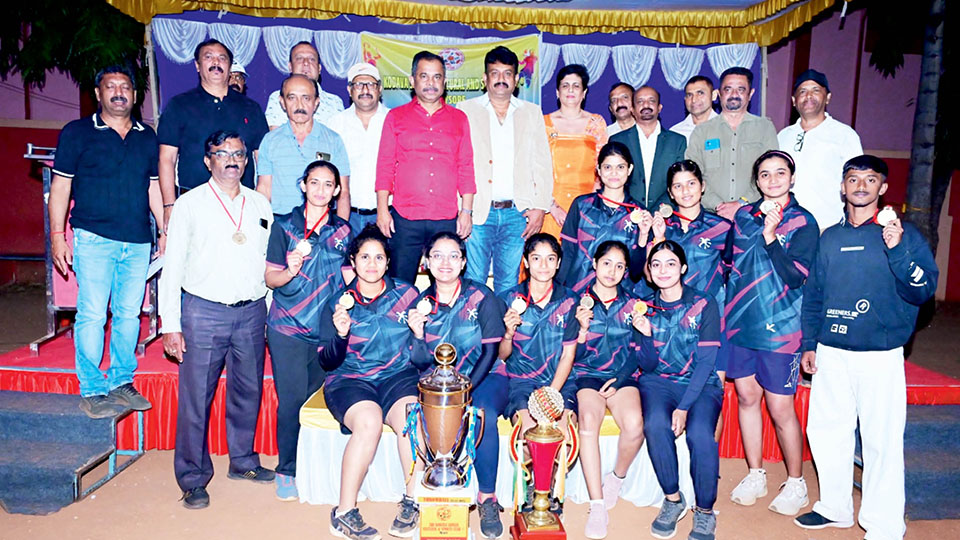
Winners of Kodava Inter-Sangha Women’s Throwball Tournament

Picture shows the winning team with chief guest Jammada Preeth Aiyanna, Club Vice-President Machanda Prakash Beliappa, Club Special Invitee & Sponsor of the event Kuttimada D. Muthappa, Kodava Samaja Mysuru President Ponjanda Ganapathy, Sree Cauvery Educational Institutions Chairman Chottengada Chengappa, Club office-bearers and Directors.

The Annual Kodava Inter-Sangha Throwball Tournament for women, organised by Kodava Samaja Cultural and Sports Club, Mysuru, was inaugurated by city’s renowned Trekker and Kodava Vibhushana awardee Jammada Preeth Aiyanna.

Totally 9 teams participated and the winners were Sri Iguthappa Kshemabivirdhi Sangha, Hebbal.

source: http://www.starofmysore.com / Star of Mysore / Home> Sports / January 05th, 2026