This journalist-turned-author talks about his new book Round and About with PT Bopanna, and his journey as an author.
Bengaluru :
Taking a leap of faith and moving to Mumbai 40 years ago, without a job or a plan worked out for PT Bopanna, veteran journalist and author of books such as Dateline Coorg and Are Kodavas (Coorgis) Hindus?. Growing up, Bopanna had no idea that he would become a journalist, and moved to Mumbai from Kodagu in search of better prospects. “I never thought I’d become a journalist, I never had a flair for writing. But when I was in college, I realised that journalists had the power to change the world, that’s what made me want to become a journalist,” he says.
forward to today, Bopanna’s newest book, Round and About with PT Bopanna, is a compilation of lighthearted articles written by the author. What’s special about this book is that Bopanna is able to tap a lighter, more humorous vein in this book, which he hasn’t been able to do in his other projects. The title of the book was inspired by the daily column, ‘Round and About,’ by Behram “Busybee” Contractor, a humour journalist. When Bopanna understood that journalism was his calling, he enrolled in a journalism course at Bhavan’s College in Mumbai. “Even though I wasn’t great at writing when I was younger, I always enjoyed reading the newspaper and books.
I was intrigued by ideas such as Marxism and rationalism,” says Bopanna. Since he also saw the rise of the Dravida Munnetra Kazhagam (DMK), he was also influenced by Periyar EV Ramaswamy Niacker’s ideas, who started the DMK. When Bopanna went back to Kodagu, he started working as a part-time correspondent for a newspaper, he was past the age of 30, which points to the fact that one is never too old to follow their passion. Bopanna was working at another newspaper when he started reading the astrological columns.
“I didn’t believe in astrology, but it did pique my interest. Once, the astrology section said that if I were to start a website, it would do well. After I read that, I compiled some of the information I was putting in my columns, and started my website coorgtourism. info.com in 2005, and after that, there was no looking back,” says Bopanna. However, the traffic on his website wasn’t as much as Bopanna wanted it to be. So he thought, “Why don’t I download all this material and bring it out in the form of a printed book?” This is how Bopanna’s career as an author started, with the release of his first book, Discover Coorg.
Writer C P Belliappa came up with the title of the book, and also wrote the foreword. Most of Bopanna’s books are about Kodagu, his home, and he writes about the rich cultural and political history of the region. “My book, Are Kodavas Hindus? was inspired by sociologist M N Srinivas’ work, who went to Oxford for his PhD and wrote his thesis on religion and society in Coorg,” Bopanna says of his journey as an author. Hence, what started as a dream to change the world, was fulfilled by an astrological prediction. Bopanna says a journalist’s profession can be a quite disappointing, however, the key is to ‘wait for the good tidings to come.’
source: http://www.newindianexpress.com / The New Indian Express / Home> Cities> Bengaluru / by Fia Majumdar, Express News Service / August 10th, 2022
These will help promote scientific temper and popularise science in the society
The Deputy Commissioner of Kodagu B.C. Satish has said that a master plan for the proposed mini planetarium and sub-regional science centre in the district will be prepared soon to get the project started.
The mini planetarium and the sub-regional science centre is the project of Karnataka Science and Technology Promotion Society (KSTePS) and will help promote scientific temper and popularise science in the society.
He recently attended a meeting pertaining to the implementation of the project and later said that the master plan will take into account the unique geological conditions and terrain of the district and come up with a suitable design to house the centre.
While the sub-regional science centre will come up at an estimated cost of ₹4 crore, the mini planetarium will cost around ₹5.75 crore for which administrative approval has already been granted by the government, according to the Deputy Commissioner.
Though foundation stone for the centre was laid at Stewart Hill some time ago, it has been abandoned due to land slips in the region. Hence the new location has been identified on the outskirts of Karnangeri village where 3 acres of land has been sanctioned for it, according to Mr. Satish.
The DC asked for suggestions from all stakeholders to take forward the concept of the centre and promote science and technology among students. The officials were also directed to visit other sub-regional science centres in the State at Gouribidanur, Dharwad and Mangaluru to ascertain the salient features and implement the same in the Kodagu centre.
It was also mooted that the new centre would be a hub of all scientific activities to benefit the students and regularly conduct exhibitions, science and technology related quiz programmes, organise science conferences for students etc.
source: http://www.thehindu.com / The Hindu / Home> News> India> Karnataka / by Special Correspondent / Mysuru – August 08th, 2022
Saxophonist Rudresh Mahanthappa’s Hero Trio will make their NYC Debut this August to celebrate Charlie Parker’s Birthday at Smoke Jazz.
Located at the junction of 106th and Broadway (aka Duke Ellington Boulevard), Smoke Jazz Club is one of New York City’s premier live music venues. Renowned for offering top-notch programming of accessible, timeless jazz featuring legendary performers, modern masters, and rising stars, Smoke stands apart with its candlelit dining room, stellar acoustics, and classic American cuisine.
Rudresh Mahanthappa’s Hero Trio also includes bassist Harish Raghavan and drummer Rudy Royston. Their performance will set on Thursday and Sunday at 7 and 9 p.m., and on Friday and Saturday at 7, 9 and 10:30 p.m.
Hero Trio earned high praise for its eclectic 2020 self-titled debut and the 2022 follow-up Animal Crossing. Animal Crossing is a digital-only EP featuring four new songs, each an unlikely addition to the canon of jazz standards which is also the titular theme from the wildly popular video game.
At Smoke, Mahanthappa will explore Parker’s compositions, classic standards, and modern covers with the Raghavan and Royston. “The idea behind Hero Trio was to turn the idea of playing a set of standards on its ear and freshen up the idea,” the saxophonist explains.
Rudresh Mahanthappa is widely known as one of the premier voices in jazz of the 21st century as well known for his exellent alto saxphone performances. He has been recognized by multiple jazz magazines including DownBeat Magazine, Jazz Journalists’ Association,and JazzTimes Magazine. He has also received the Guggenheim Fellowship and the Doris Duke Performing Artist Award, and is currently the Anthony H. P. Lee ’79 Director of Jazz at Princeton University.
For information visit https://www.smokejazz.com/calendar/.
source: http://www.nysmusic.com / NYS Music / Home> Blues-Jazz> NYC Metro> Upcoming Shows / by Savanna Tong / August 07th, 2022
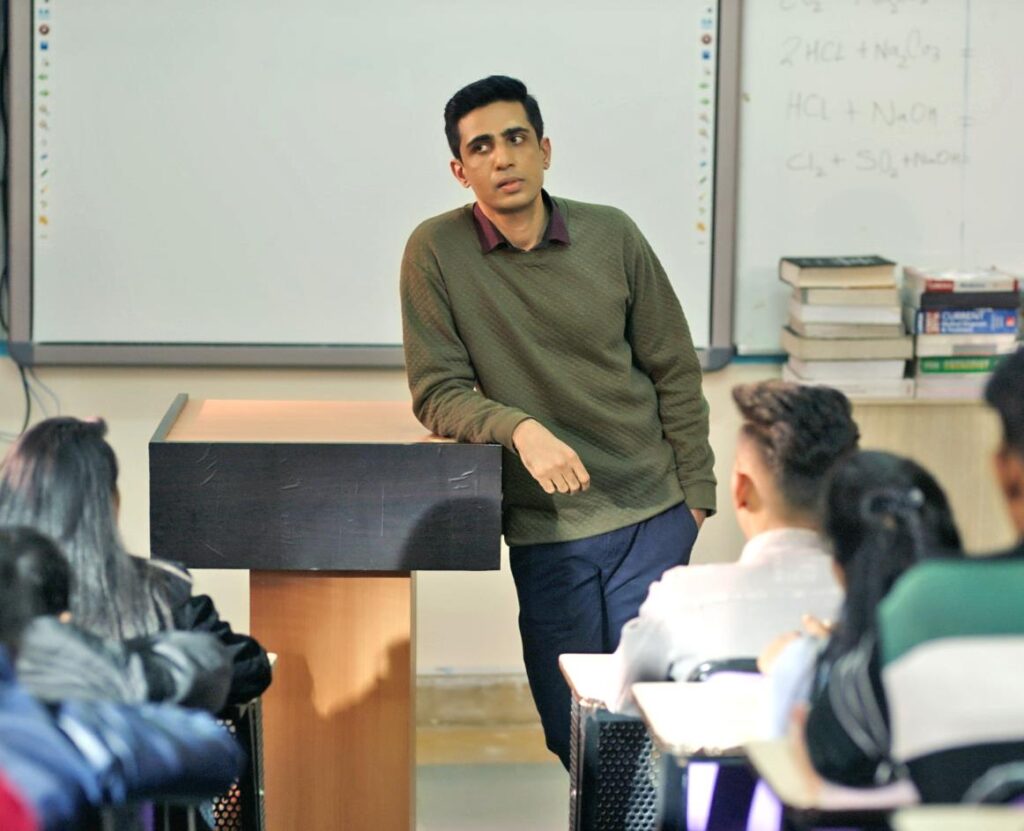
MX Player recently launched the first look of its upcoming original series, Shiksha Mandal. The show is a hard-hitting narrative inspired by true events that revolve around incidents in the educational system of India. The lead actor, Gulshan Devaiah, shares, “They say teaching is the most noble of all professions and having been a teacher myself, for a brief period in my life, I truly believe in that.”
He adds, “The story of Shiksha Mandal is about an education scam that brings to light the motives of certain unscrupulous people and their network of scoundrels, who conjure up scams for their personal profits and ruin the life of many talented, honest and hardworking students of this nation. It’s no exaggeration to say that many such scams have been happening around us and we may have even heard of one in the news recently.”
Mincing no words in encouraging people to take responsibility to avoid such incidents that destroy the fabric of society, Gulshan says, “If the young students are the future of India, then we are its present and must take the responsibility of creating an education system that operates on merit and is free of any corruption. Education can be a business, but it cannot be a corrupt business.”
source: http://www.tribuneindia.com / The Tribune / Home> Lifestyle / August 08th, 2022
Debris, including logs, has blocked free flow of rainwater
The houses of five families consisting of 21 people in Koynadu near Sampaje in Kodagu were flooded after heavy rains on Monday night. The flood waters entered the houses after debris consisting mainly of wooden logs that swept away in flash floods blocked Kindi bridge in Koynadu, flooding nearby houses.
Virajpet MLA and former Speaker K.G. Bopaiah, Deputy Commissioner B.C. Satish, tahsildar and others visited Koynadu and gave directions for shifting the affected families to the relief camp. The MLA and the DC also told the Forest Department officers to immediately clear the debris that has blocked free flow of rainwater.
On the occasion, five flood-affected families of Koynadu, two families of Sampaje and two families of Chembu were given relief cheques of ₹10,000 each by the district administration.
The affected families have taken shelter in the relief camp.
The relief camp at Sri Ganapathi Temple’s Kala Mandira at Koynadu that was closed recently was reopened to accommodate the flood affected families. “Basic facilities for the families have been arranged,” the authorities said in a press release here.
Meanwhile, teams of NDRF and the Forest Department conducted a joint operation of clearing wooden logs that have blocked free flow of water at Kindi bridge.
source: http://www.thehindu.com / The Hindu / Home> News> India> Karnataka / buy Special Correspondent / August 02nd, 2022
Coffee is the most consumed beverage in the world. Cold, hot, or roasted there are plenty of variations. It has become an essential part of many people’s lives. There are many cultures around the world that serve coffee using different ingredients and techniques. From Dalgona coffee to quirky vacuum Syphon coffee. If you want to try this unique Syphon coffee then head to this Big Cup Café in Coorg.
Read this article to learn about the intricate art of making vacuum Syphon coffee.
What makes Vacuum Syphon Coffee Different Than The Rest
If you are a coffee lover you should definitely try this vacuum syphon coffee. The technique used behind this coffee is quite difficult as it is based on the concepts of physics. Siphon coffee has the advantage of altering the flavour of coffee to the point where flavours are more apparent than pour-over techniques. Siphon allows the coffee’s flavours to develop more fully and it brings out some notes that you wouldn’t be able to detect in other methods. The first thing you’ll taste in a freshly made cup of Syphon brewed coffee is the flavour profile.
Big Cup Café offers this unique vacuum Syphon coffee, which is as amusing as it is delicious. This café is located in Coorg, Karnataka the coffee bowl of India. The café is run by planter families based in the town. They have owned and managed coffee plantations for generations and Big Cup is the fusion of expertise in farming and hospitality. The café’s mission is to provide quality coffee, harvested right from its estates and provide a world-class coffee experience to its guests in a relaxed and calming atmosphere.
Big Cup Café is located in 3 different spots in the country. The Flagship café is in Coorg, followed by Sharjah and a recent addition in Bhubaneshwar, Odisha. They are planning to open their café in Chennai and Bangalore.
Head to this café in Coorg and devour this unique vacuum Syphon coffee.
In today’s situation where there are many people who think that I can get rich by acquiring property and money, this goldsmith has some love for the environment. Therefore, there is a great desire to earn money by trading gold and silver and to preserve the environment for the next generation. Trader Rajendra Singh has been continuously planting and nurturing plants for the past many years without any publicity. Rajendra Singh is originally from Rajasthan, residing in Siddapur, Virajapete taluk of Kodagu district. He settled in Kodagu 20 years ago.
Rajendrasingh, who was concerned about the environment from a young age, has a great love and concern for the environment. The reason for that is that Rajendra Singh, who was born and brought up in the desert of Rajasthan, felt that if there were no trees, he would face such difficulties.
Planting and nurturing work
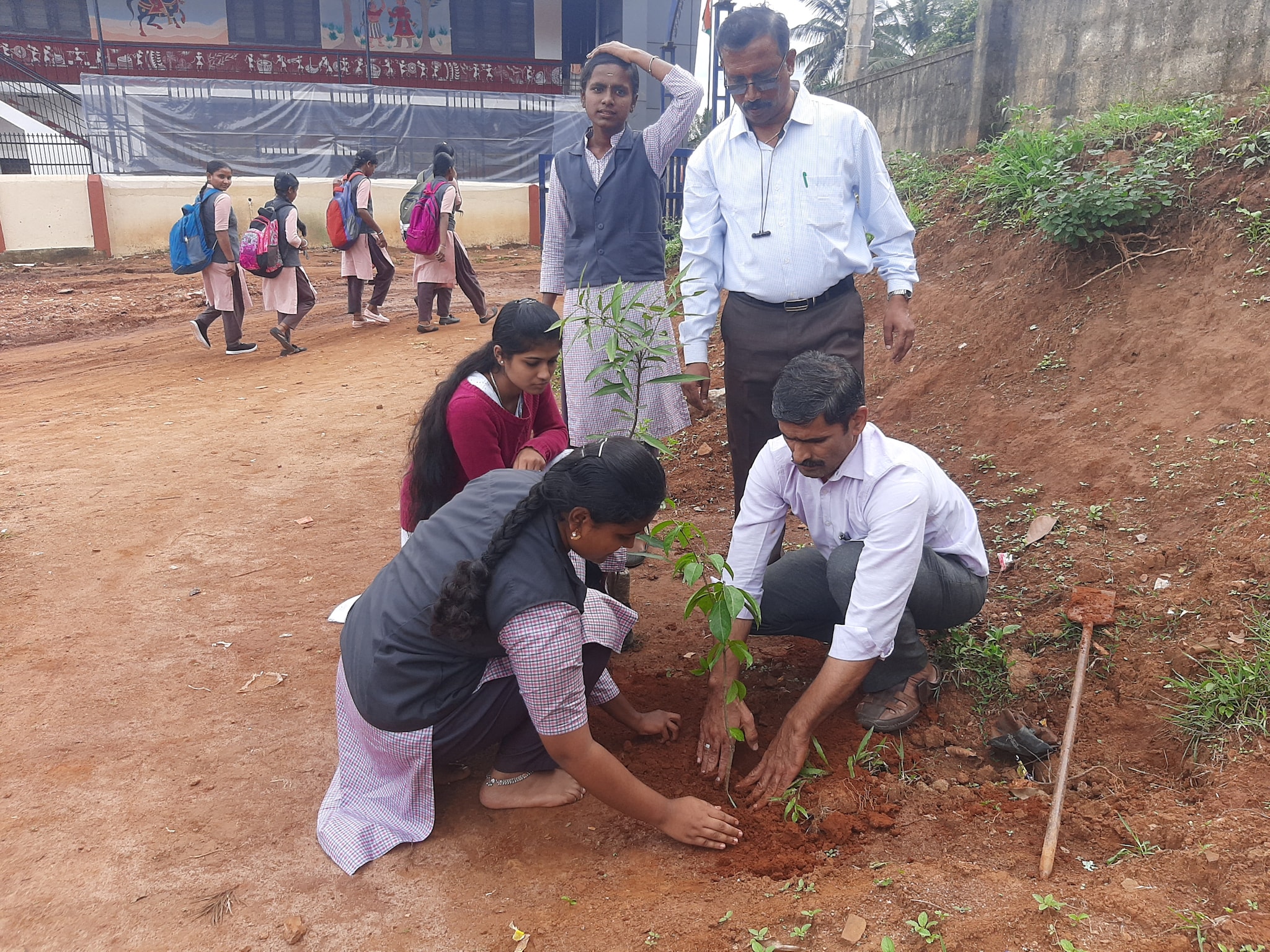
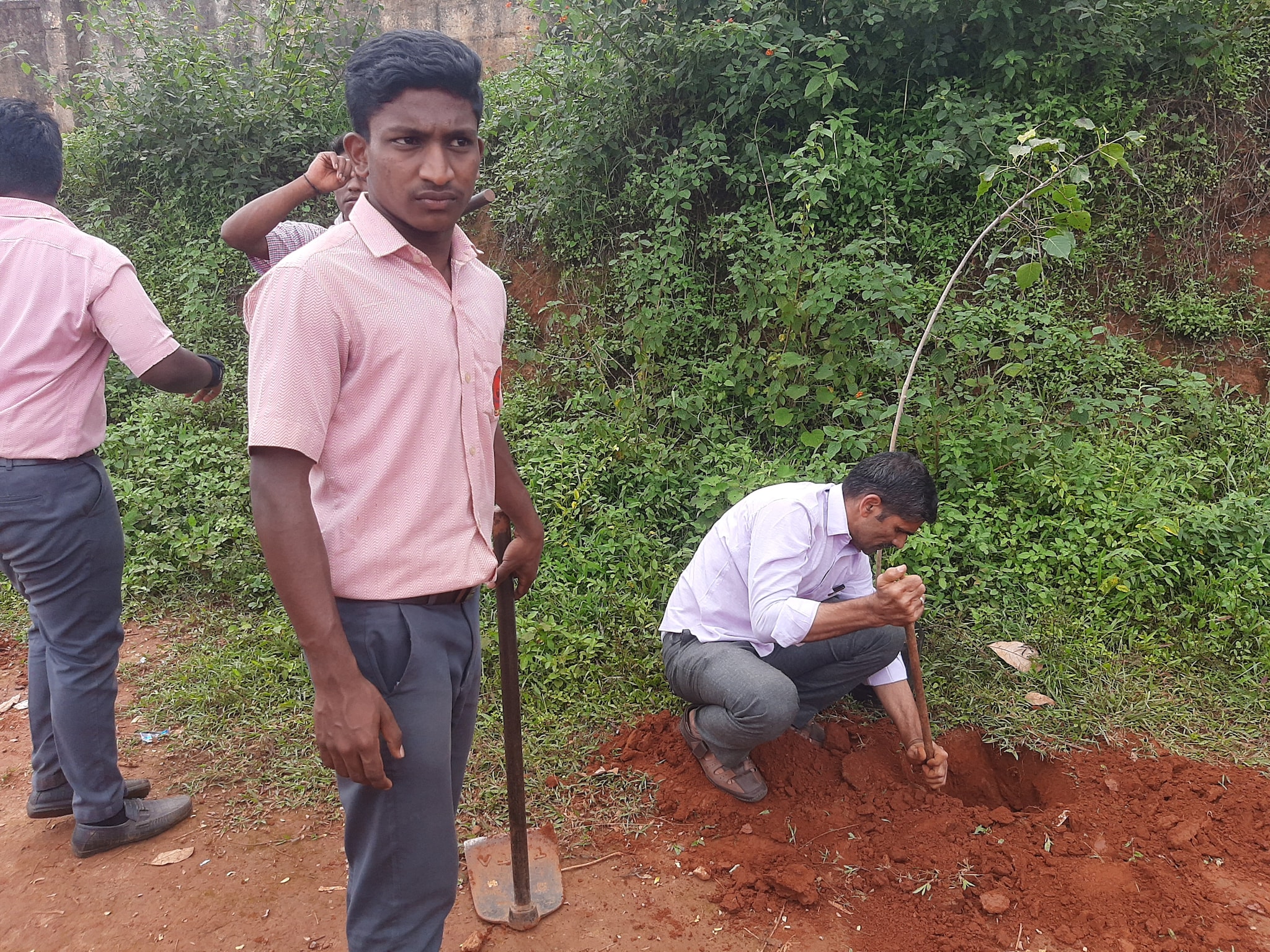
Thus, even after coming to Kodagu, his concern for the environment did not diminish. They are constantly doing the work of planting and nurturing plants in school college premises, bank police station and government office premises.
Planting
What does Rajendra Singh say?
Especially in 2014, thousands of trees were cut down while the high tension line was being laid in Kodagu to Kerala. As a result, there was a lot of ups and downs in Kodagu without rain as before. Such a situation was created that if it came, it would pour down immediately, otherwise it would not rain at all. Rajendra Singh says that he was very bored by this and started planting a lot of plants.
Rajendra Singh who planted 1.80 lakh saplings
So far, approximately 1.80 lakh saplings have been planted and nurtured in school and college premises of various taluks of Kodagu, government offices, schools and colleges of Priyapatnam, Mysore taluk and Hunsur taluk. Besides, they are planting plants on roadsides and in forest areas.
Students are aware of the environment
They are watering the plants they have planted themselves during summer. Realizing that the work of planting and growing plants is not possible on his own due to the environmental degradation, Rajendrasingh is making students aware of the need to plant and grow plants before going to schools and colleges.
Planting
A businessman is also very concerned about the environment
Besides, they are working to encourage students to plant and grow plants by conducting various competitions and giving prizes. On the whole, the locals are appreciating his concern to save the environment even though he is a gold and silver trader.
Rainfall has decreased in Kodagu region since last one week. Two weeks ago there were scattered landslides along with rain in Kodagu environment.
source: http://www.irshivideos.com / IV News / Home> Latest News & Updates / August 01st, 2022
Call to help preserve memories of a vanishing people
While modernisation has opened many opportunities for the well-qualified, it has also distanced the young from their heritage and culture. This is even more accentuated amongst Kodavas living outside Kodagu. There is a need to establish a platform where young Kodavas could learn and keep in touch with the community’s heritage, cultural practices, folklore, music, dance, festivals and history, says Mrs. Codanda Rathi Vinay Jha, IAS (Retd.) and Chair, India Foundation for the Arts (IFA), who has initiated establishing a Virtual Museum of Kodava Heritage & Culture named ‘Sandooka,’ a treasure trove of information. —Ed
Kodavas are a micro-minority community in India, who live in Kodagu (Coorg) in Karnataka State. It is estimated that there are about 1,50,000 ethnic Kodavas within and outside Kodagu.
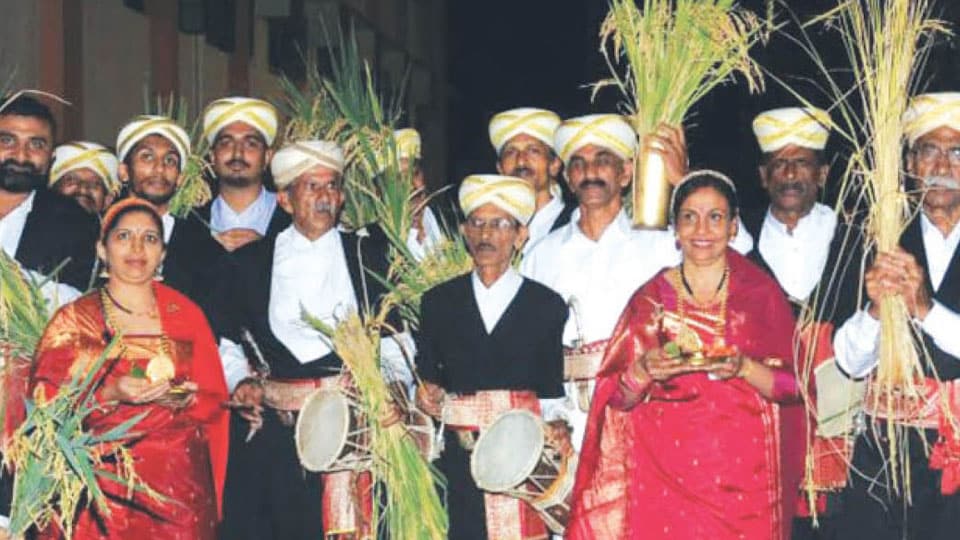
Kodavas, by virtue of living quite isolated in a densely wooded hilly terrain on the Western Ghats of India since time immemorial, have developed their own unique culture, physical attributes, cuisine, language, attire, religious rituals and practices.
Over the centuries, Kodavas adapted themselves to the harsh weather conditions, dangers from wild animals and the inhospitable terrain of Kodagu and transformed the land to an idyllic haven it is today. With the passage of time, they toiled literally with bare hands to cultivate paddy in the valleys.
With the forests providing bountiful supply of wild game, they became expert hunters initially with bows and arrows, and later with firearms which enabled them to emerge as a warrior race. They transformed the fertile land and were able to grow enough paddy that they could export to neighbouring areas.
The interactions with immediate neighbours in present day Kerala, Mysuru and Mangaluru, influenced the Kodava language, places of worship, construction of their dwellings and some of the religious practices as well. However, Kodavas still retain their fundamental philosophy of ancestor and nature worship. They come under the broad umbrella of Hinduism.
Kodagu was ruled by Kodava Nayakas or Palegars who were basically warlords. The Haleri dynasty established their rule in Kodagu after cleverly replacing the hopelessly divided Nayakas during the early part of the 17th century. The Haleri Rajas ruled for over two centuries until the British takeover of the administration in 1834 after deposing the last Raja. During the rule of the Haleri Rajas and later the British, Kodavas remained the prominent community very much involved in the administration.
During the British rule, education was introduced and this brought about quantum changes in the lifestyle of the Kodavas. Kodavas found several employment opportunities. Introduction and scientific cultivation of coffee and spices vastly improved the economy of the region. Kodava culture and ethos found expression in the writings by the British, European and Kodava authors.
By the time India got her independence, many Kodavas held important and high-level offices in sectors such as the Defence Forces, Administration, Revenue Department, Forest Department, Police, in the field of Education, Engineering and Medicine.
Kodavas have several distinctive elements in their social, cultural and religious practices. One of them is the deferential status given to women. There is no dowry system in the community. Centuries ago, widow remarriage was permitted. This enlightened attitude is now reflected in well-educated Kodava women shining in a variety of fields.
After India’s independence many Kodavas ventured out of Kodagu seeking better opportunities in education, employment, business and sports. Kodavas are now spread all over the globe. The last three decades has seen a large number of Kodavas migrating outside the country. There is now a sizable number of Kodava diaspora in the US, Canada, UK and Australia. In many cases, there are a couple of generation of Kodavas born and brought up outside Kodagu and outside India as well.
While modernisation has opened many opportunities for the well-qualified, it has also distanced the young from their heritage and culture. This is even more accentuated amongst Kodavas living outside Kodagu. There is a need to establish a platform where young Kodavas could learn and keep in touch with the community’s heritage, cultural practices, folklore, music, dance, festivals and history.
It is with this aim in mind that Mrs. Codanda Rathi Vinay Jha, IAS (Retd.), as Chair, India Foundation for the Arts (IFA), initiated establishing a Virtual Museum of Kodava Heritage & Culture (VMKHC). This project is evocatively named — Sandooka — a treasure trove of information. IFA has successfully supported several path-breaking projects in the field of art and culture.
Sandooka will be a living museum that will be interactive and open to receiving relevant new materials from the public. People, especially the future generations of Kodavas, will have an easily accessible platform to gather details of their heritage. Weblinks will also be given to some of the websites dealing with Kodava culture. It is hoped that this treasure trove of information will be of immense help to those who wish to carry out further research on Kodavas. VMKHC will cover the following aspects of Kodagu and Kodavas:
1. Customs and Rituals
2. Cuisine
3. Architecture
4. Clothes and Jewellery
5. Art & Craft
6. Landscape
7. Literature and Folklore
8. Community Histories
9. Festivals
The project is generously funded with a Corporate Social Responsibility (CSR) grant from Recaero India Pvt. Ltd., which is a pioneer in the field of aerospace engineering and is headed by Vinay Jha, IAS (Retd). A highly professional team has been forged to deal with every aspect of the project. The team comprises:
Lina Vincent – Project Head; Upasana Nattoji Roy – Designer (Switch Studio); Saurav Roy – Designer (Switch Studio) and Mookanda Nitin Kushalappa – Researcher.
IFA office-bearers are: Arundhati Ghosh (Executive Director) and Darshana Davé (Project Co-ordinator); Advisory Group: Rathi Vinay Jha, C.P. Belliappa and Hemanth Sathyanarayana.
Sandooka invites submission of Kodava artefacts, rare photographs, antiques including jewellery (photos) and anecdotes of yore. All accepted materials will be given due recognition and credits. Sharing your valuable knowledge and collections will enrich the contents of Sandooka.
For details of submission of materials, please visit: www.sandookamuseum.org
source: http://www.starofmysore.com / Star of Mysore / Home> Feature Articles / by C.P. Belliappa / August 01st, 2022
Every school has a library hour and they are now being put to good use following the efforts from the Kodagu Zilla Panchayat.
Madikeri :
Taking inspiration from the ongoing Chess Olympiad, the Karnataka state government has issued a notification to introduce the game of Chess to the students. Similarly, the rural kids of Kodagu are now indulging in the board game, which is being introduced across all the Digital Libraries in the district.
Every school has a library hour and they are now being put to good use following the efforts from the Kodagu Zilla Panchayat. “The state has issued a notification to introduce indoor board games in libraries.
Similarly, to coincide with the ongoing Chess Olympiad, Chess has been introduced in the digital libraries – which is being utilized by many rural kids,” explained Banwar Singh Meena, the CEO of ZP. He added that the digital libraries are being promoted as a social space and several indoor games including carrom and chess are being introduced.
The funds from the grama panchayat are being used to buy the required sports material and kids will have access to rubik cube, carrom, chess and even rural board games including ‘Chenna Mane’. “The concept is being introduced gradually across the libraries. The panchayat staff, librarian, PDO or anyone who knows the games is training the rural kids. These are all silent games and go hand in hand with the library decorum,” he added.
Many schools, especially in the rural parts, are now using the facilities of digital libraries to promote interest in reading and introduce the interest in board games. The kids who mostly spend their free time indulging in mobile phones, are now heading to libraries to play board games during the school’s library hour period and during their free time.
source: http://www.newindianexpress.com / The New Indian Express / Home> States> Karnataka / by Prajna GR, Express News Service / July 31st, 2022
When the monsoon turns farmlands into sludge tracts, Kodagu girds up for some thrilling rural sports.
Madikeri :
Monsoons in Kodagu are beautiful. The lushness of nature and play of the fog during the season is poetic — that’s apart from the recent calamities. And to add some thrill to the chilly wet weather, the ancestors of the land followed a unique pursuit — the ‘Kesaru Gaddhe Oota’ event or Sludge Sports. Races, football, tug-of-war… the sports are varied and taken up in slushy farmlands. Enthusiasts plunge into mud pools, unmindful of the rain and slippery earth, at one with nature. Young and old, girls and boys participate.
Kodagu is primarily an agricultural district, and the culture of the people is often intertwined with their farmlands. The important festivals of the district revolve around nature and farms — be it ‘Puthari’, ‘Kailpodh’ or ‘Tula Sankramana’. Similarly, the district is also active in sports, and what’s interesting is that the ancestors connected sports activities with farmlands, and took the entertainment level up by a notch.
Every year, between June and August, several farmlands, especially in rural areas of the district, host unique sports events. Sludgy farmlands become running tracks and hundreds take part in the event amid pouring rain and chilly weather.“All our festivals are linked to farmlands, and our ancestors also linked sports activities with the farms. Once the fields were sowed with paddy seeds, the traditional sports ‘Naati Oota’ (translating to harvest run) would be held in every village,” explained Apattira Tatu Monnappa, former president of the District Youth Club, and winner of the State Youth Award. In ancestral times, races were hosted in sludgy farmlands ploughed for paddy.
As soon as the monsoon sets in, various organisations and associations come forward to host sports events at private farmlands. Though sludge sports in farmlands formed a part of the culture, the activities witnessed a gradual decline. “Earlier, every village hosted this activity during the cultivation season. Locally grown produce, including banana bunches, coconuts and arecanuts, were handed over as prizes to the winners. This slowly vanished as youngsters moved to cities and showed less interest in their farms,” recalled Kannikanda Subbaiah, a native of Surlabbi village.
Nevertheless, the traditions are now being revived. While the villagers themselves hosted sports activities in farmlands as a part of farming customs, they are now being organised by various organisations and associations. “While there were several sports activities during summer, events were few during the monsoon. With an aim to revive the rural sports tradition and involve youngsters in sports activities during the monsoon, we started organising ‘Kesaru Gaddhe’ annually,” explained Rafeque Tuchamakeri, founder-president of Junior Chamber International (JCI) Ponnampet Nisarga. The organisation has been hosting the event for the past six years at a private farmland in Bittangala.
“During ancestral times, sporting events on farmlands were part of agriculture activity. Rural sports brought together the entire village, and it was a means of relaxation before the tedious work began. With farmlands now being abandoned and the interest in agriculture vanishing, rural sports have become a means of reviving both agriculture and sports. The associations and organisations now aim to introduce agricultural activities through these sports events,” opined Tatu.
Sports activities now draw a large number of youngsters into the farmlands and have become events that residents look forward to. “Not many youngsters are interested in agriculture. To introduce agriculture and invoke interest in farmlands, sports activities in the farmlands were being held from ancestral times. While sports is a means of entertainment, it has also become a medium to introduce farming among kids. Interest in sports is, in turn, helping develop interest in agriculture,” concluded Shashi Somaiah, a sports journalist and resident of Madikeri.
source: http://www.newindianexpress.com / The New Indian Express / Home> States> Karnataka / by Prajna GR, Express News Service / July 31st, 2022
WELCOME. If you like what you see "SUBSCRIBE via EMAIL" to receive FREE regular UPDATES.
Read More »