Category Archives: Records, All

Keshava Kamath is president of Kodagu district KSP

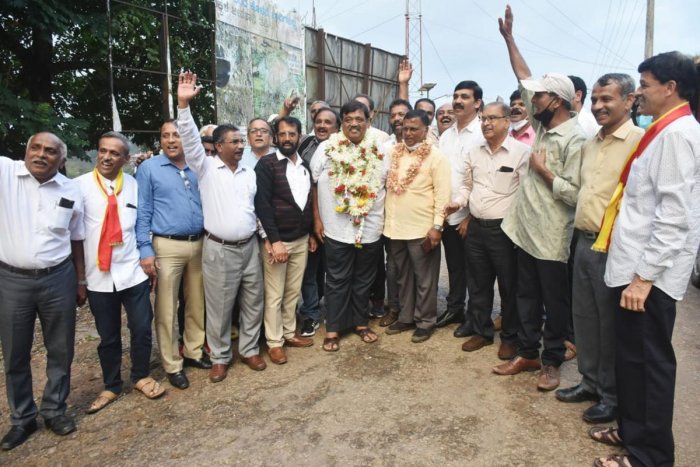
Supporters of Keshava Kamath rejoice outside the counting centre and greet the newly elected president.

M P Keshava Kamath will be the new president of Kodagu district Kannada Sahitya Parishat, after his victory in the elections held on Sunday.

He edged past his close electoral rival Lokesh Sagar, with a margin of 134 votes. Of the total votes, Kamath got 924 votes and Lokesh Sagar got 790 votes, while 12 votes got rejected.

Keshav Kamath received maximum votes in Madikeri, Virajpet and Ponnampet taluks, while Lokesh was leading in Somwarpet and Kushalnagar taluks.

Votes cast

A total of 1,726 votes were cast during the elections. In Somwarpet, 490 among 647 voters exercised their franchise, while 337 out of the total 424 votes were cast in Kushalnagar, 216 out of 303 people voted in Virajpet, 468 out of 766 votes were cast in Madikeri and 215 out of 280 voters exercised their franchise in Ponnampet.

Supporters of Keshava Kamath gathered outside the counting centre and rejoiced after results were declared and raised pro-Kannada slogans.

District Kannada Sahitya Parishat former president T P Ramesh, Kodagu Patrika Bhavana managing trustee Manu Shenoy, writer Shamsuddin, literature enthusiasts Navin Kushalappa, Munir Ahmed, Baby Mathew and DSS leader Diwakar were present, among others.

Speaking on the occasion, the newly elected president of district Kannada Sahitya Parishat, Keshava Kamath, said that it is not his victory alone, but, the victory of all literature enthusiasts and members of Kannada Sahitya Parishat.

He also said that he will utilise the opportunity provided to him, to serve the Kannada language.

My first priority will be building Kannada Bhavana in the district, he said.

He added that he will carry out his duties by taking into confidence, all his voters, non-voters and former presidents of Zilla Kannada Sahitya Parishat.

Former president T P Ramesh said that there is a need to work unitedly towards the development of Kannada Sahitya Parishat.

As a senior member, he will give rightful suggestions to the Parishat, he added.

The election was held in Madikeri, Somwarpet, Virajpet, Kushalnagar and Ponnampet from 8 am to 4 pm.

The election process was headed by tahsildar Mahesh.

source: http://www.deccanherald.com / Deccan Herald / Home> State> Mangaluru / by DHNS, Madikeri / November 21st, 2021
Huthari festival observed with traditional fervour

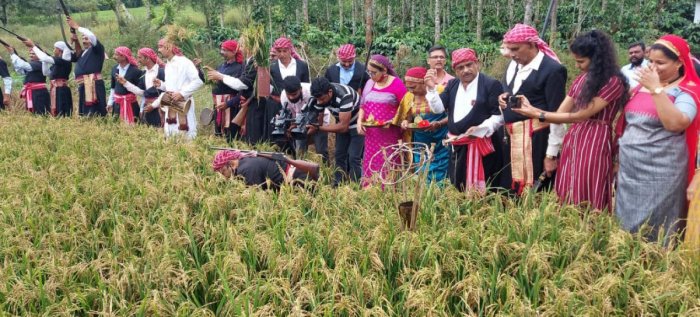
The paddy sheaves were cut by the CNC members during Huthari celebrations at the paddy field belonging to Nandineravanda Uthappa, in Chikkabettageri.

The Codava National Council (CNC), led by its president N U Nachappa, celebrated Huthari or Puthari — the harvest festival of Kodagu, at a paddy field of Nandineravanda Uthappa, in Chikkabettageri village, near Kushalnagar, on Friday.

Wearing traditional Kodava attire, the members participated in the celebrations by cutting paddy sheaves. Later, they offered prayers for the prevalence of peace and to eradicate Covid-19 from the world. 

The members offered prayers to the gods and initiated the process of Huthari celebrations by ‘Nere Kattuva’ ritual using the leaves of Arali, mango, jackfruit, Kumbali and cashew nut trees. 

After the rituals, the members took out a procession to the paddy field, accompanied by the ‘Dudikottpat’. After firing thrice in the air, Nachappa offered puja rituals and cut paddy sheaves.

Later, the paddy sheaves were brought back to the house and puja rituals were conducted.

CNC members presented ‘Kolata’, ‘Pareyakali’ and other cultural programmes.

Later, they also danced to the traditional beats and relished rice payasa, ‘Thambittu,’ ‘Kadubu,’ ‘pandi curry,’ ‘chicken curry’ and others. 

Speaking on the occasion, Nachappa urged the government to declare a national holiday for the Puthari festival. 

The Kodavas should be considered as a separate race to save the Kodava tribal culture for the future generation. Kodava language should be included in the Eighth Schedule of the Constitution, he said. 

“Kodava culture has all the qualifications to be included in the Intangible Cultural Heritage List of Unesco. By showcasing our rituals, we can assert our rights,” he added.

source: http://www.deccanherald.com / Deccan Herald / Home> State> Mangaluru / by DHNS, Kushalnagar / November 19th, 2021

1,334 voters in Kodagu for Legislative Council polls

A total of 1,334 voters from the local bodies of Kodagu will exercise their franchise for the upcoming Legislative Council election.

Deputy Commissioner Dr B C Sateesha said that out of the total voters, 654 are men and 689 are women. As many as 108 polling booths have been opened across the district.

Additional Deputy Commissioner Raju Mogaveera held a meeting with the college principals and requested them to take necessary measures to add the names of students above 18 years to the voters’ list.

As per the census, there are 16,674 people in the 18-19 age group. However, according to the voters’ list published on November 8, 2021, only 5,841 people in this age group have enrolled themselves in the voters’ list, he said.

Nominations

The candidates may submit their nominations to the returning officer or the assistant returning officer at the third floor of the DC’s office in the district administration complex till November 23 between 11 am and 3 pm, except on November 21 and 22 which are holidays, said the deputy commissioner.

source: http://www.deccanherald.com / Deccan Herald / Home> State> Mangaluru / by DHNS, Madikeri / November 17th, 2021

Farmer From Kodagu Has Won An Award For Preserving Local Pepper Crop

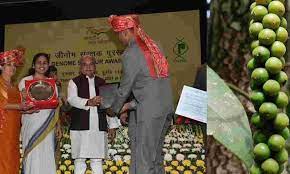
Left, N Poonacha receiving the award at the ceremony in New Delhi. Right, Snapshot of the indigenous ‘Adi Pepper’ spikes.

HIGHLIGHTS

  • Napanda Poonacha of Kodagu district, a progressive farmer, who hopes to be recognized as a pro-nature farmer
  • He was recently granted the Plant Genome Saviour Farmer Reward (2019-20) for his efforts to save indigenous ‘Adi Pepper’ crop

Napanda Poonacha of Kodagu district, a progressive farmer, who hopes to be recognized as a pro-nature farmer and has set examples for the other farmers to come forward to encourage them. He is working hard to establish commercial crops that have minimal or no negative impact on biodiversity, and he was recently granted the Plant Genome Saviour Farmer Reward (2019-20) for his efforts to save indigenous ‘Adi Pepper’ crops.

The Union Agriculture Ministry’s Protection of Plant Varieties and Farmers’ Rights Authority bestowed the honour on Poonacha, who received it from union agriculture minister Narendra Singh Tomar at an event in New Delhi on November 11.

He is the owner of Adi Pepper Demo Farm and Research Center in Garvale, where he is actively engaged in discovering natural crops in the district that have the capacity to become commercial crops while inflicting minimal environmental impact.

Napanda Poonacha expressed his happines for recieving the award. He said that farmers who recognise, conserve, and cultivate crops that are beneficial to biodiversity have been given this honour. Furthermore, He received the prize for his research, conservation, and promotion of the ‘Adi Pepper,’ an indigenous kind of pepper mainly grown across the natural habitat of Garvale village borders in Kodagu, India.

He further explained that Adi Pepper crops can be discovered all around the Garvale region in their natural habitat. They undertook the responsibility at the research centre to obtain this species of pepper registered under PPFRI, and in 2015, this high-quality pepper was recognised as a farmer’s variety pepper. This is the only pepper species that has passed biochemical testing, and it is regarded the best of the seven pepper species growing in Kodagu.

Since that particular form of pepper was once known as forest pepper and was mainly used for domestic reasons by the people, it has recently reached a brand value of Rs 3500 per kilo, generating more than six times the earnings of the other black pepper species sold in the district.

source: http://www.thehansindia.com / The Hans India / Home> News> State> Karnataka / by Susmita Modak / by Hans News Service / November 19th, 2021

Puthari Festival Venue Changed: Celebrations To Be Held At Kodava Samaja In Vijayanagar

The Management of Kodava Samaja, Mysuru, has decided to celebrate Puthari Namme (harvest festival) on Nov.20 in the premises of Kodava Samaja in Vijayanagar I Stage. Earlier it had been decided to celebrate the festival in the premises of Sree Cauvery Educational Institutions in Kuvempunagar.

Now due to incessant rains since a week and also keeping in mind the forecast of rains for 4 more days, the Samaja has decided to change the venue.  The celebrations will commence at 5 pm at the Samaja premises. All traditional Kodava dances will be performed on the occasion by both the men’s and women’s teams.

Arrangements have been made to distribute Kadh (new paddy crop) on that day.   All the members are requested to note the change of venue and cooperate in the celebrations, according to a press release from Malachira M. Ponnappa, Honorary Secretary, Kodava Samaja.

source: http://www.starofmysore.com / Star of Mysore / Home> In Briefs /November 19th, 2021

CFTRI Scientist Develops New Beverage From Coffee Leaves

Mysore/Mysuru:

Here is a chance for coffee growers to get additional cash from their plants throughout the year apart from income from the sale of beans. Mysuru-based Central Food Technological Research Institute (CFTRI) has developed a technology to prepare a value-added product from coffee leaves that packs in health benefits too.

Coffee is only harvested for a few months every year, depending on the country’s harvest season. This can leave a number of producers and workers without work (and income) for a significant portion of the year.

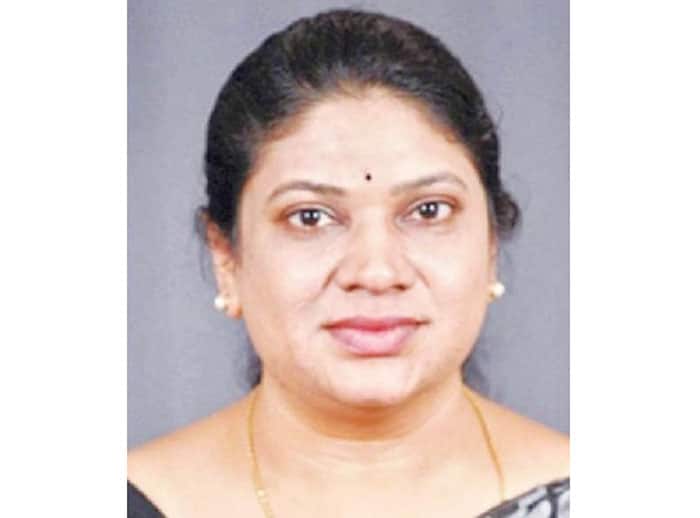
Pushpa S. Murthy

However, some producers have decided to diversify the crops that they grow and sell. As coffee leaves are constantly being produced, growers can harvest them in the off-season if there is demand, according to Pushpa S. Murthy, Principal Scientist (Spice and Flavour Science Department) of CFTRI.

This technology follows a CFTRI project on the development of value-added products from coffee leaves taken up in 2019. The project was funded by the Union Ministry of Food Processing Industries.

If farmers can use the leaves which can be harvested during the off-season or during pruning, without interfering with coffee bean growth, it will have a great impact on the social elevation of coffee farmers, she said.

Around 70 percent of the coffee industry is unemployed or underemployed during nine months of the year due to the nature of the growth cycle of the coffee beans. The project aimed to provide a year-round sustainable process for the coffee farmers.

With CFTRI technology, the brew can be prepared with water, allowed for a few minutes to steep, filtered and consumed. The institute has initiated the transfer of this technology to the coffee industry, and a few industry participants have already extended their consent, she said.

The leaf brew does not really taste like coffee, according to Murthy. “The brew is subtle with less caffeine compared to coffee or tea,” she said. On the nutritional value of the beverage, she said coffee leaves are rich in phenolic acids with potential health benefits. A coffee leaf contains around 17 percent more antioxidants than green tea. The beverage should be consumed plain.

The beverage accords health-promoting polyphenols like chlorogenic acid and mangiferin which help in reducing blood glucose levels, inflammation and blood pressure, she said.

 Leaf drink ‘kuti’ and ‘kahwa daun’ popular in Sumatra, Ethiopia

Coffee leaf tea has been consumed in Sumatra, Ethiopia, Jamaica, Java and Sudan for centuries. From the 16th century to the 19th century, Ethiopian farmers set aside their harvested coffee for trade or consumption in special ceremonies. As a day-to-day drink, the Harari people in Ethiopia instead enjoyed ‘kuti’.

‘Kuti’ tea was made by boiling coffee leaves in hot water, sometimes with a pinch of salt or some sugar. It was generally boiled for at least 30 minutes, as it was believed that the longer the leaves were boiled for, the sweeter the resulting brew would be.

Coffee leaf tea bears some similarities to green tea, but it is more earthy and sweeter. It is lower in caffeine than green tea, and thanks to its high levels of antioxidants, it has historically been believed that it cures or relieves cold symptoms.

In the 19th century, Dutch colonists transported coffee plants to designated farming regions in Indonesia. Workers on the coffee plantations were forbidden from consuming the coffee they harvested, so they drank something called “kahwa daun” instead.

‘Kahwa daun’ was made by drying coffee leaves in the sun to reduce their bitterness. The leaves were then smoked and roasted for a few hours. Finally, they would be steeped in boiling water, and then served in a coconut shell.

source: http://www.starofmysore.com / Star of Mysore / Home> Top Stories / November 14th, 2021

Two Kodava Samajas Ban Non-Community Practices

Madikeri:

The Kodava Samajas of Ponnampet and Virajpet have banned cake cutting and champagne sharing by newly-wed couples of the Kodava community during weddings at community marriage halls.

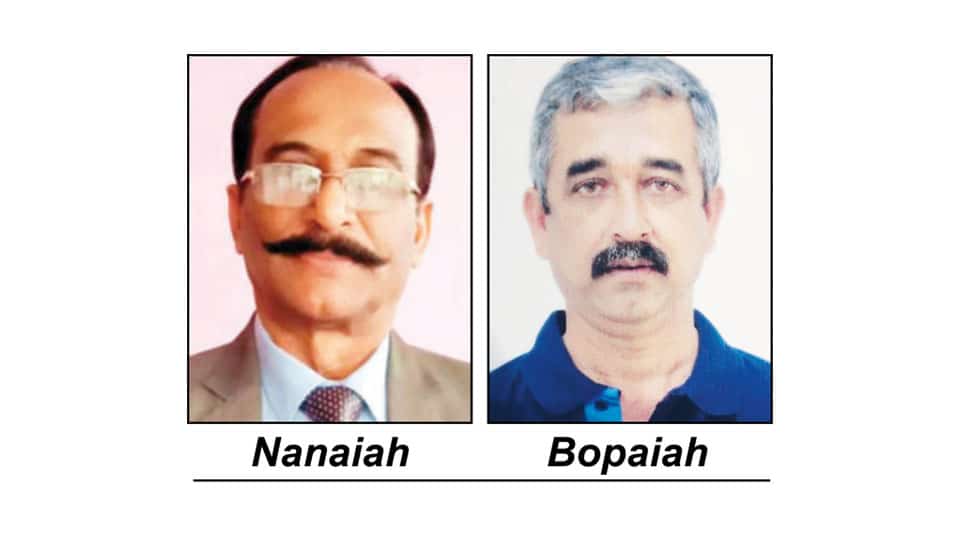
At the recently held meetings of the Samajas, Ponnampet Kodava Samaja President Chottekmada Rajiv Bopaiah and Virajpet Kodava Samaja President Vanchira Nanaiah have taken a decision along with Samaja administrative board and members that practices that do not represent Kodava culture will not be permitted inside the community marriage halls.

The related resolutions of the Virajpet Kodava Samaja were unanimously passed during its 99th general body meeting on Sunday that was attended by 15 directors and 357 members.

Apart from banning cake cutting and champagne sharing after the groom opens the bottle as a celebratory gesture, the Samajas have decided to strictly adhere to Kodava customs and rituals. For example, the trend of grooms sporting a beard during weddings has been banned.

According to Kodava custom, a beard is sported only when someone dies in the family and growing a beard is part of the ‘pinda pradhana’ ritual after a close family member passes away. Also, women have been told not to enter the auspicious Muhurtha area with their hair let loose as according to customs, hair is let loose only during funerals and funeral-related ceremonies.

Other decisions include, no bursting of firecrackers during Ganga Puja, no showering of flower petals during ceremonies, no playing of ‘Devaata’ tune by drummers (volaga troupe) during weddings as the tune is limited to only temples. If Kodava girls marry boys from other communities, the latter should not be allowed to wear Kodava dress and the bride’s mother should not put the traditional ‘Pathak’ ornament on the bride.

Not Kodava culture

Reacting on the issue, Chottekmada Rajiv Bopaiah said “Kodavas have their own distinct culture. We can survive only if our culture survives. Cutting cakes and sharing champagne by new couples during marriage ceremonies is not our culture. The decision has been taken in this regard in our annual meeting.” 

“Ever since the decision was taken, I have been flooded with congratulatory phone calls and messages. We have to pass on our culture to the next generation. Champagne celebration won’t serve the purpose, rather it will misguide the younger generations,” he said.

Also, sporting a beard is against the tradition of Kodavas. There is a ritual in which the beard will be taken off. Likewise, the women can’t come on stage with their hair let loose, which is against our tradition. The meeting has discussed the issue and we are planning to implement it in the coming days,” he added.

When asked how the younger generations of the Kodava community reacted to the ban, Rajiv said they are supporting the move and many organisations have also come forward to create awareness on the matter. “The problem seems to be with people who are in their 50s. They encourage cake cutting and champagne sharing during marriages,” he added.

MAJOR DECISIONS

  • Bridegroom should have a clean-shaven face.
  • Women who bless the newly weds on stage should not let their hair loose.
  • No bursting of firecrackers during Ganga Puja; no uncorking of champagne bottles.
  • If Kodava girls marry boys from other communities, the groom should not wear Kodava dress and bride’s mother should not adorn the bride with the traditional ‘Pathak.’

source: http://www.starofmysore.com / Star of Mysore / Home> News / November 11th, 2021

Website on preserving Kodava culture launched

A new website featuring the unique culture of Kodavas, documenting the customs and traditions of the community, has been launched. The website www.kodavas.in has been put together by journalist and author B.T. Bopanna.

“My main intention is to document the customs and traditions of Kodavas, a microscopic minority community, which is slowly losing its moorings in Kodagu. Most of the younger Kodavas, who have been brought up in cities like Bengaluru and Mysuru, are unaware of the essence of Kodava culture. I felt a website was the best medium to increase awareness of the culture and help preserve it”, Mr. Bopanna said in a statement.

Mr. Bopanna, who has also pieced together five websites including his first www.coorgtourism way back in 2005, said the new website will “come in handy for someone wanting to know about the rituals involved in ceremonies connected with birth, wedding, death etc”.

In order to ensure that the content in the website was authentic, Mr. Bopanna said he took the help of Boverianda Chinnappa and Nanjamma Chinnappa, who had researched and written about Kodava culture.

“Much of the content in the website has been taken from the book Pattole Palame, compiled in 1924 by Nadikerianda Chinnappa, where the Kodava language folksongs, proverbs and riddles are transcribed in Kannada script and Kodava customs and traditions are described in Kannada language. The Pattole Palame was translated into English by Boverianda Chinnappa and Nanjamma. I have also borrowed content from their book ‘Ainmanes of Kodagu’”, Mr. Bopanna said.

The topics covered in the website including the origin of Kodavas, their customs, related to birth, wedding, death and their festivals, the religion of Kodavas, Kodava language, Jamma land tenure, their passion for the game of hockey, guns in Kodava culture, their ‘ainmanes’ etc. Mr .Bopanna said the website also contains video clips related to some of the topics on Kodava culture.

The site has been designed by Bhakti Saraswat-Devaiah, he added in the statement.

source: http://www.thehindu.com / The Hindu / Home> News> States> Karnataka / by Special Correspondent / Mysuru – November 12th, 2021

Mulleirira Cup Cricket Namme from November 13

The Airi community will organise Mulleirira Cup Cricket Namme, a family cricket tournament, at Murnad Bachetira Lalu Muddaiah Stadium on November 13 and 14.

The tournament was postponed due to natural calamities and the Covid-19 pandemic in the past, said Mulleirira Cup Cricket Committee president Mulleirira D Gopal. 

The winning team will get Rs 15,000 cash and a trophy.

MLA K G Bopaiah will inaugurate the tournament. 

source: http://www.deccanherald.com / Deccan Herald / Home> State> Mangaluru / by DHNS, Madikeri / November 10th, 2021

AGM Of Kodagu Ex-Servicemen Welfare Association Held

Mysuru :

Kodagu Ex-Servicemen Welfare Association, Mysore East, held its 7th Annual General Body Meeting (AGM) at Sri Venkatesh Resorts on Bannur Road recently coinciding with Kannada Rajyotsava (Nov.1) celebrations.

Addressing the members, Association President and Army Veteran Kanjithanda Aiyappa (Mani) said that even though the name of the association is ‘Kodagu Ex-Servicemen Welfare Association’ one of the main objectives of the Association is to take up the common causes of ex-servicemen suo moto irrespective of military veterans’ caste, creed, religion and region they belong to.

Citing an example, Aiyappa stated that even in the Indian Army many Regiments are named after certain regions of the country and communities such as Madras Regiment, Sikh Regiment, Bihar Regiment, Dogra Regiment and 37 Coorg Medium Regiment, etc. However, the only objective of the entire Regiments in the Indian Army is to protect the integrity and sovereignty of the country from external aggression and internal disturbances and also to help the civil administration during natural calamities.

He also mentioned that as per the suggestion of the members, the Association has submitted an application to Mysuru Urban Development Authority (MUDA) for the allotment of a Civic Amenity site (CA site) as per the recent notification of MUDA inviting applications for CA sites.  

While discussing various agenda points during the AGM, a widow of an Army veteran had sought a clarification from the Honorary Legal Advisor of the Association, Air Veteran Mandetira N. Subramani, whether widows of ex-servicemen could wear military medals during military functions.

Subramani, who is also the President of Mysuru-based NGO VeKare Ex-Servicemen Trust, said that there is no bar on Veer Naaris and widows of ex-servicemen proudly wearing their deceased husbands’ authorised military medals on their chest in a befitting manner while attending meaningful military functions, Army / Navy / Air Force Days and during National Festivals such as Republic Day and Independence Day.

He further said that Veer Naaris and widows of ex-servicemen wearing military medals on such occasions would send a strong message that their husbands’ life/youth were sacrificed for the nation.

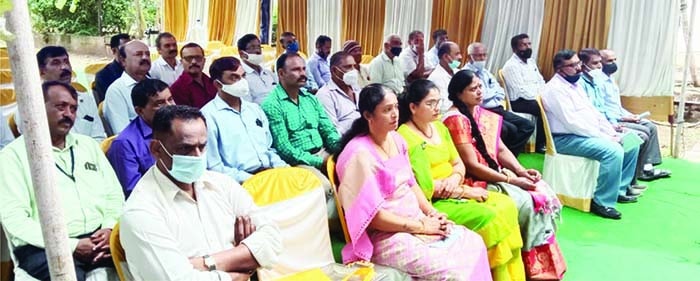
A section of audience at the AGM of Kodagu Ex-Servicemen Welfare Association

Office-bearers elected unanimously

Army Veterans Kanjithanda Aiyappa, K.U. Bheemaiah, Appachangada Motaiah, Basappa, and Kangira Achaiah were unanimously elected as President, Vice-President, Secretary, Joint Secretary and Treasurer respectively for another term. The various Committee Members were also unanimously elected.

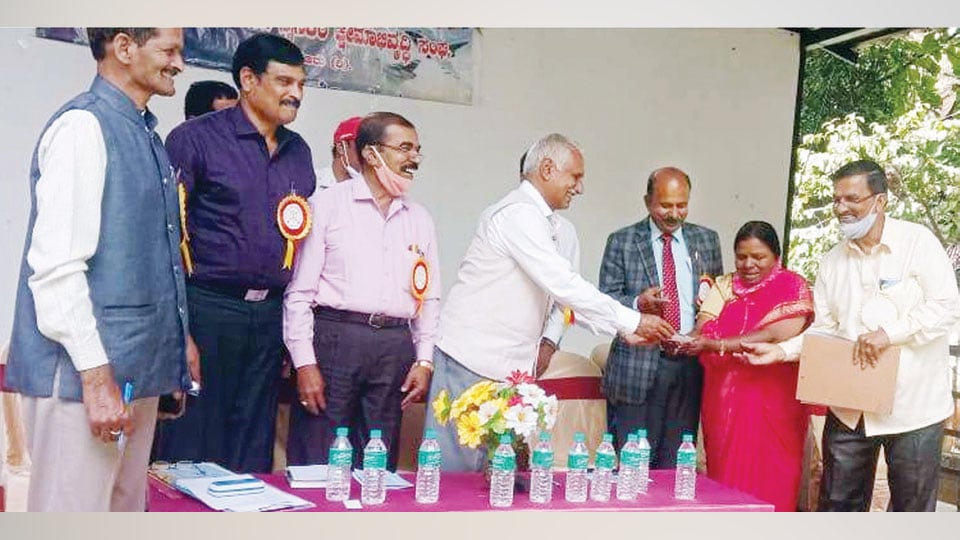
Philanthropist Dr. V. Puttalingamma, a retired scientist from DFRL, made a surprise visit to the venue of AGM and handed over a cheque for Rs. 25,000 to the President as donation for the welfare activities of the Association.

While addressing the gathering Dr. Puttalingamma urged the military veteran to save enough money from their own earnings for themselves and for their wives to meet their needs during their old age and not to depend on their children for financial help when they are working away from home or abroad.

Appachangada Motaiah welcomed. Veteran Basappa proposed a vote of thanks.

source: http://www.starofmysore.com / Star of Mysore / Home> News / November 10th, 2021