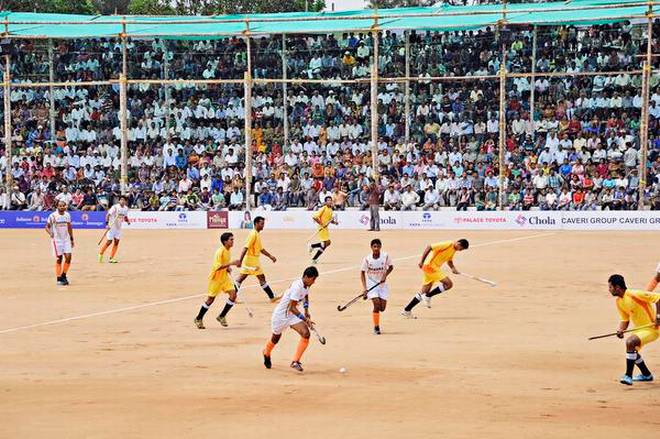
It is rare for the country’s hockey team not to have a player from Kodagu.
‘Shift in focus from sports to academics a reason for fewer players making it’
While the nation basks in the glory of the Indian hockey team scripting history at Tokyo Olympics by winning a medal (bronze) after 41 years, absence of even a single player from Kodagu in the current team has become a talking point among sports aficionados in the State.
Kodagu has a legacy of producing outstanding hockey players who have played for India in the World Cup and the Olympics and they include M.P. Ganesh, B.P. Govinda, Arjun Halappa, A.B. Subbaiah, M.M. Somaiah, and Len Aiyappa, to name a few.
It is rare for the country’s hockey team not to have a player from Kodagu, as it was during this Olympics. Experts say that a series of factors are at work as a result of which there is a decline in the number of players from Kodagu breaking into the national team.
Focus on academics
Mr. Ganesh, who played for India in the World Cup, Olympics, and Asian Games, said the shift in focus from sports to academics was a factor for this decline though both sports and academic are not mutually exclusive.
Though Karnataka in general and Kodagu sportspersons perform well at the junior levels, parents do not allow children to pursue sports beyond a certain age. Their intention is to get children admitted to professional courses through the sports quota, he added.
“Karnataka has reserved 91 seats in various professional courses for sportspersons. But once they secure admission, we don’t see them in the national camps as the focus shifts to academics,” said Mr. Ganesh.
Besides, the drive to excel in sports has waned to an extent due to the fact that many among the new generation of Kodavas are not given to hard work, said the Arjuna award winner. “During our times, we had to walk 5 to 6 km daily to reach our schools and hence, physical fitness was a natural attribute but it is not so in the present generation,” he added.
A unique hockey festival
The Kodava Hockey Festival, held every year since 1997, draws nearly 300 teams which is a record for any tournament. This is testimony to the continued though latent interest in the sport. But veteran B.J. Cariappa says it is not competitive enough for budding players to break into national team. For that, players have to work harder, have to be coached better, and be exposed to national-level tournaments where the competition is more stringent, he added.
B.J. Cariappa, hockey coach for junior men’s team, faulted the system run by officials which, he said, was not accountable. Apart from creating additional facilities and infrastructure which was the need of the hour, there was a lack of accountability among officials and coaches, according to Mr. Cariappa.
“I have visited a few training centres where trainees were not attentive and the coach wasn’t serious,” he added, pointing out that in one such centre the sole reason the coach was in Kodagu was for its pleasant weather.
source: http://www.thehindu.com / The Hindu / Home> News> States> Karnataka / by R Krishna Kumar / Mysuru – August 07th, 2021
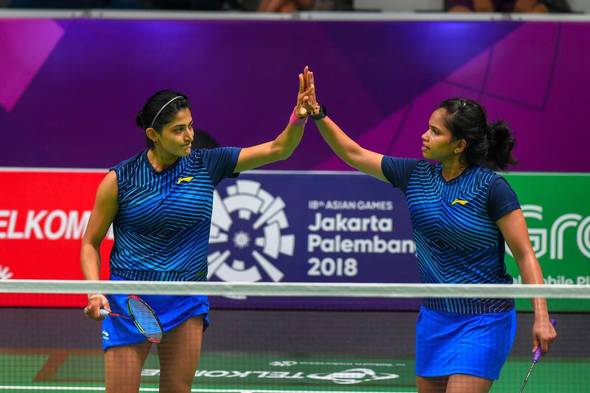
The Indian pair lost in three games to the home duo of Amalie Magelund and Freja Ravn of Denmark.
In a match lasting just under an hour, the top-seeded home duo came from behind to beat the Indian pair in three games.(File Photo)
The Indian women’s doubles pair of Ashwini Ponnappa and N. Sikki Reddy finished runners-up at the Denmark Masters after going down narrowly against top seeds Amalie Magelund and Freja Ravn of Denmark in the final.
The duo, seeded second, squandered an opening game advantage to lose 21-15, 19-21, 14-21 to the Danish combination in just under an hour’s contest.
Among other Indians, Lakshya Sen had lost in the semifinals to France’s Christo Popov, while his brother Chirag Sen and Subhankar Dey, seeded fourth, bowed out at the quarterfinal stage.
In women’s singles, Aakarshi Kashyap was the most impressive but lost the semifinal to fourth seed Dane Julie Dawall Jakobsen.
source: http://www.sportstar.thehindu.com / Sportstar / Home> Badminton / by PTI / August 09th, 2021
Even though the number of the Coorgies in the regiments is coming down, the regiment still holds on to the traditions of the community and takes pride the representing the decedents of river Cauvery on the battlefield.
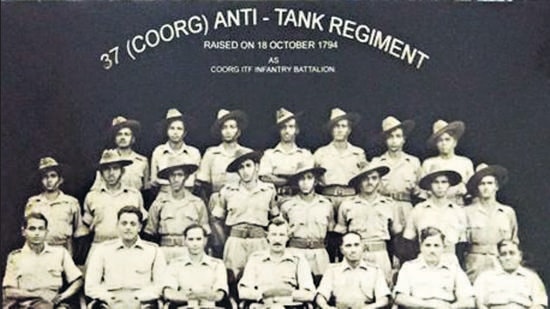
In 1946, it was converted to the 37 Coorg Anti-Tank Regiment Unit of the Royal Indian Artillery. It is now a part of the modern Indian regiment of artillery and wears the uniform of the artillery. (HT Photo)
The young officers’ the course is mandatory for all new lieutenants joining the Indian Army, but for a group of handpicked officers belonging to the 37 Coorg Regiment of the army’s artillery arm, the four-week course traditionally gets extended by two more weeks with a visit to Madikeri, a hilly town in Karnataka.
These young officers spend time in the hills learning about the origins of their regiment and the tales of legends like Field Marshal KM Cariappa and General KS Thimayya, who emerged from these very hills.
Even though contested in the modern age, the Indian army’s regiments are formed and named after the communities of the soldiers recruited into these units.
The martial race was a designation that was created by army officials in British India after the Indian Rebellion of 1857, in which they classified castes into two categories, with the ‘martial race’ being typically brave and well-built for fighting. Even now, the Indian Army designates its regiments as Sikh Light Infantry, Gorkha Rifles, Madras Regiment, Rajputana Rifles, and so on.
Even though not familiar within Karnataka, the Kodavas or the Coorgies is considered a marital race and have a regiment named after them – the 37 Coorg Regiment. This is the only regiment for the Kodavas.
The unit traces its origins back to 1794 when it was raised by the British to counter Tipu Sultan’s attack against the Kodava kingdom. Initially raised as infantry, the unit went on to fight against Tipu in the fourth Mysore war, where he was eventually killed.
Until 1901, the regiment was designated as the 11th Madras Infantry and in 1902, the regiment was reorganised, and the basis of recruitment changed from Tamil and Telugu to only Coorg soldiers. The restructured regiment was then renamed the 71st Coorg Rifles in 1903.
The new regiment was given dark green uniforms with scarlet facings. Red fezzes, which were an unusual item of uniform in the Indian Army, are reported to have been worn by the sepoys. Subsequently, described as an ‘in-out-of-the-run’ unit, they were disbanded in 1904 because of insufficient recruits.
In 1942, Coorgs were again recruited into the newly raised 1st Coorg Battalion. Like the 71st Coorg Rifles, the new battalion had a badge incorporating crossed Coorg knives. In 1946, it was converted to the 37 Coorg Anti-Tank Regiment Unit of the Royal Indian Artillery. It is now a part of the modern Indian regiment of artillery and wears the uniform of the artillery.
The regiment’s attachment to the land it represents is such that their war cry is “Cauvery.
Mata ki Jai” (Hail mother Cauvery) since river Cauvery is an integral part of the Kodava culture.
Subedar Major (Retd) KC Kalappa, a retired gunner from the regiment said that it was a matter of pride for the Kodava community to have a regiment in their name, but over the years, the number of recruits from the community is reducing. “In the early 1970s, the regiment had people only from the Kodava community and the community took pride in it. But over the years, the number of recruits is coming down and now the unit consists of soldiers from all four south Indian states,” said Kalappa.
Even though the regiment has recruited from all south Indian states, the regiment maintains the tradition of the Kodava community. For example, on the regiment’s raising day, the officers, and non-commissioned officers, regardless of their ethnicity, wear the traditional ‘Kupya Chale’,which consists of a traditional jacket and headgear. The officers wear Pichangatti (a traditional knife), and instead of handing baton, when a new commanding officer takes over, a Pichangatti is handed over as a sign of change in command.
“I’m a Punjabi but I was the commanding officer of the Coorg regiment for three years and whenever I visit Kodagu, I feel like a Coorgi because of the traditions of the regiment. The house of the commanding the officer is called a Mercara house, named after the Mercara town in the Coorg,” said Major General Sanjay Sharma (retd).
According to Maj Gen Sharma, the unit is so closely affiliated with the Kodagu community that it is a tradition for the unit to take part in the annual hockey tournament in Kodagu. “For the Kodavas, the annual hockey tournament is very important it is part of their culture. In this tournament, various families of Kodagu compete against each other. So, for the past few years, the regiment gives an award for the first goal scored in the tournament and it is a matter of pride for the people because the regiment named after their community is taking an interest,” he said.
Over the years, however, the composition of the unit has changed. According to Maj Gen Sharma, currently, the number of Kodavas is only about 15-20% in the unit, and three other south Indian states fill other vacancies. “Over the years, the number of recruits has come down. But all men of the regiment, whichever state they are from, celebrates all Kodava festivals and call themselves Coorgs with pride,” he said.
Describing the 37 Coorg Medium Regiment as a matter of ‘pride for Karnataka’, ex-Sergeant of the Indian Air Force Mandetira Subramani and the president of VeKare Ex-Servicemen’s Trust (VKET), has emphasised the need to post a few more willing young officers, junior commissioned officers (JCOs) and jawans from the community to the regiment and make it more meaningful. “We are trying to promote the heritage of the unit among the youngsters and trying to get more people to join the regiment and continue the legacy,” said Subramani.
Even though the number of the Coorgies in the regiments is coming down, the regiment still holds on to the traditions of the community and takes pride the representing the decedents of river Cauvery on the battlefield.
source: http://www.hindustantimes.com / Hindustan Times / Home> Explore> India News / by Arun Dev, Bengaluru / August 22nd, 2021
At present, 33 Sainik schools are operating in the country
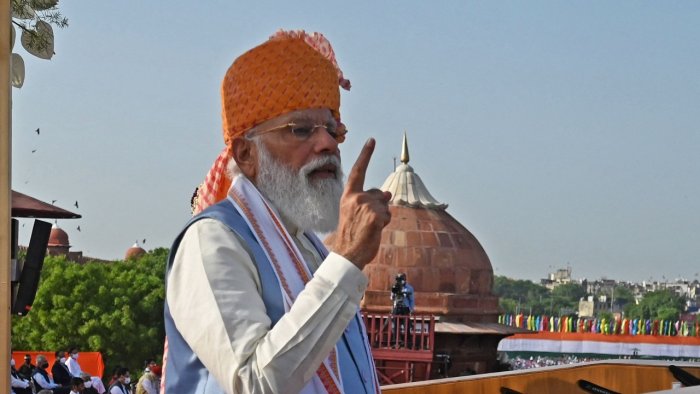
Prime Minister Narendra Modi addresses the nation. Credit: AFP Photo
All Sainik Schools across the country will now open doors for girls, like the ones in Kodagu and Bijapur in Karnataka.
Prime Minister Narendra Modi announced during his Independence Day speech on Sunday that all the Sainik Schools across the country would now enrol girls.
“Today I am sharing good news with the countrymen. I used to get lakhs of messages from our daughters that they want to study in the Sainik Schools. The doors of the schools should be opened for them,” Modi said while addressing the nation from the rampart of the Red Fort in Delhi.
The Ministry of Defence had in 2018-19 launched a pilot project at the Sainik School at Chhingchhip in Mizoram, admitting six girl students.
Six more girls got enrolled in the school in 2019-20 and seven in 2020-21. The success of the pilot project prompted the government to start admitting girls at five more Sainik Schools from the 2020-21 academic session – the ones in Kalikiri in Andhra Pradesh, Ghorakhal in Uttarakhand Chandrapur in Maharashtra and Kodagu and Bijapur in Karnataka.
“Now the Government has decided that all the Sainik Schools will be open for the girls. The daughter too will study in all the Sainik Schools of the Country,” said the Prime Minister.
source: http//www.deccanherald.com / Deccan Herald / Home> National / by Anirban Bhaumik, DHNS, New Delhi / August 15th, 2021
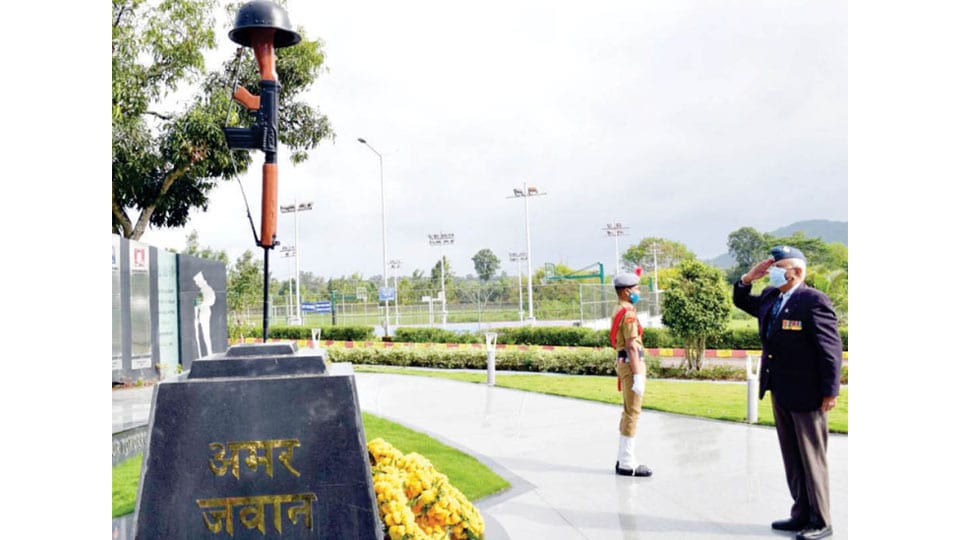
Air Marshal K.C. Cariappa, Param Vishisht Seva Medal, Vayu Sena Medal (retd.), was the chief guest at the 75th I-Day celebrations at Sainik School in Kodagu.
The chief guest and officers laid the wreath and paid homage to war heroes at the War Memorial of the School. After unfurling the Tricolor at Thimmaiah Parade Ground, the chief guest witnessed a cultural programme at Kuvempu Multipurpose Hall.
Patriotic songs, a dance displaying diverse Indian culture, a video titled ‘Awakening Dream’, which intended to imbibe sense of patriotism and integrity was screened during the programme.
The day scholar cadets performed a skit ‘Carri Came Back’. It portrayed Air Marshal K.C. Cariappa’s relentless efforts in the 1965 war.
The chief guest presented the Principal’s Commendation Certificate to B.A. Rajgolkar, TGT (English), H.M. Kavya, Lab Asst., Zakir Hussain, Shivaprasad and S.S. Ramachandra, general employees, for their yeomen service rendered to the school.
To mark the I-Day, an online group discussion competition was conducted on the topic ‘Progress of India by 2047.’
Harishna, Research Scholar, University of Kerala and N.V. Ashokan, TGT (English), coordinated the programme.
Col. G. Kannan, Principal, Lt. Col. Seema Tripathi, Vice-Principal, Sqn. Ldr. R.K. Dey, Administrative Officer, academic and administrative staff were present on the occasion.
source: http://www.starofmysore.com / Star of Mysore / Home> Photo News / August 19th, 2021
Karnataka Arebhashe Samskruthi and Sahitya Academy have taken up the digitisation of books as part of its decennial celebration to be inaugurated this month. The digitisation process that began about four months ago, is an attempt to popularise and protect the language. So far, 42 books published by the academy have been digitised.
Lakshminarayan Kajegadde, academy president, said that this is an attempt to unite people who speak Arebhashe, across the world. We have also written letters to writers who had published books on their own, of which many have agreed to get their books digitised through the academy. Meanwhile , works on an Arebhashe dictionary and documentation of Arebashe culture, through the items that were used by people, is on.
The academy is also organising a four-day Arebhasha Samskruthi Shibira (camp), where resource persons are selected locally, to enlighten participants on the traditional practices and songs. The oral traditions of Arebhashe are one of the major traditions that show the finer aspects of the language. The camp will be held at Moornadu in Kodagu from Monday. A minimum of 30 people will participate in the camp. This year-long series will help in protecting the culture.
Bharathesha Alasandemajalu, the academy member, said Arebhashe has a history of approximately 500 years.
According to linguistic scientists, it is close to Kannada, but it is difficult to even for Kannadigas to understand the language. An estimated five lakh people, mostly belonging to the Gowda community, speak Arebhashe in Dakshina Kannada and Kodagu districts in Karnataka and Kasaragod in Kerala.
Prof K Chinappa Gowda, former vice-chancellor, Karnataka Folklore University, said that there is a need to protect Arebhashe or Gowda Bhashe, as it is spoken by several communities in Sullia and Kodagu.
“The language resembles Kannada but it is different. It is easy to neglect a language, but to bring it back to the mainstream is a challenge. Every language has unique words that speak about the qualities of the language. It should be noted that there is literature in Arebhashe, which possesses the quality of being taught in schools.
Several works in Arebhashe are being translated into other languages,” he added.
source: http://www.timesofindia.indiatimes.com / The Times of India / Home> News> Education / by Deepthi Sanjiv, TNN / August 17th, 2021
“Locally, they are called Kurinji flowers and are scientifically known as Strobilanthes kunthiana. It is true that they bloom once in 12 years,” confirmed Poovaiah, the Madikeri DCF
Madikeri :
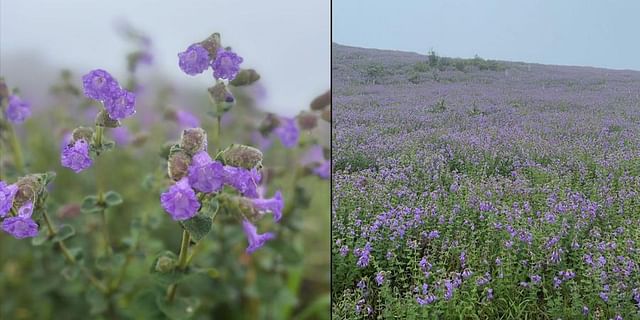
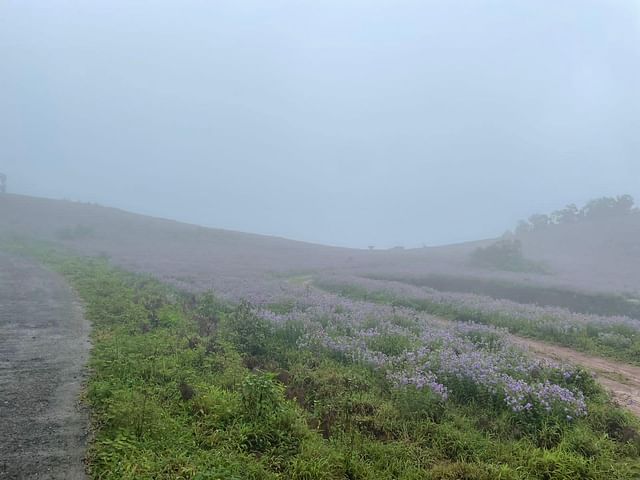
The two scenic hillocks of Mandalpatti and Kote Betta in Kodagu district are bleeding purple as the Neelakurinji flowers have taken over the spot like an army of soldiers. This rare sight has attracted many visitors including tourists as well as natives of Kodagu.
“I visited Kote Betta recently along with my cousins and it was a surreal experience. The major part of the hill was covered with these purple flowers and we later found out that they blossom once in 12 years,” said Dhanush Kaveriappa, a native of the district.
The Mandalpatti belt – which is mostly traversed in a jeep to get the off-road experience – has also become home to these flowers and visitors are enthralled by their beauty.
“Locally, they are called Kurinji flowers and are scientifically known as Strobilanthes kunthiana. It is true that they bloom once in 12 years,” confirmed Poovaiah, the Madikeri DCF.
source: http://www.newindianexpress.com / The New Indian Express / Home> States> Karnataka / by Prajna GR, Express News Service / August 17th, 2021
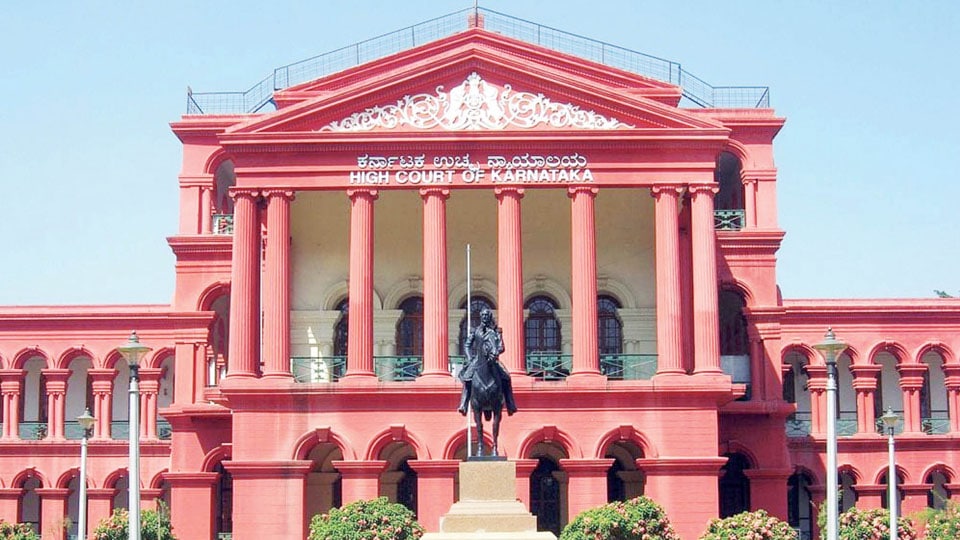
Federation of Kodava Samajas, Balugodu, Kodava Samaja Bengaluru (KSB), Codava National Council (CNC) and United Kodava Organisation (UKO) filed an Interlocutory Application (IA) urging the Karnataka High Court to consider them as respondents in the Public Interest Litigation (PIL) filed with regard to gun licence exemption to Kodavas.
The PIL has been filed by Captain (Rtd.) Yaladalu K. Chethan, who has questioned the 2019 notification of granting exemption to Kodavas in Kodagu district from the requirement to obtain a licence to carry and possess firearms as required under provisions of the Indian Arms Act, 1959.
The PIL came before the High Court yesterday and was heard by the Division Bench of Justice Satish Chandra Sharma and Justice Sachin Shankar Magadum, who have directed the inclusion of Federation of Kodava Samajas, KSB, CNC and UKO as respondents in the PIL.
While Additional Solicitor General Naragund appeared for the Central Government, senior advocate and former Additional Advocate General of Karnataka A.S. Ponnanna appeared for CNC and the Federation. Senior advocate Sajan Poovayya appeared for KSB and UKO was represented by Praveen Reddy.
The Division Bench asked the respondents and the Centre to file their objections and views in writing within two weeks and posted the PIL hearing to Aug. 31.
Petitioner Chethan, son of Yaladalu D. Keshavananda of Galibeedu village in Kodagu, has questioned the Constitutional validity of the notification issued by the Ministry of Home Affairs extending the exemption for “every person of Coorg race and every Jamma tenure land holder in Coorg” from gun licence till October 31, 2029.
“The classification and use of term ‘Coorg race’ promotes discrimination between the citizens of Coorg region on the ground of caste, violating Article 15 of the Constitution. The classification of ‘Coorg race’ itself is derogatory and possesses a threat to the life and liberty as the people exempted are permitted to hold arms and ammunition without any scrutiny of their antecedents or criminal records,” the PIL said.
source: http://www.starofmysore.com / Star of Mysore / Home> News / August 12th, 2021
File picture of Niki Poonacha. – KAMESH SRINIVASAN
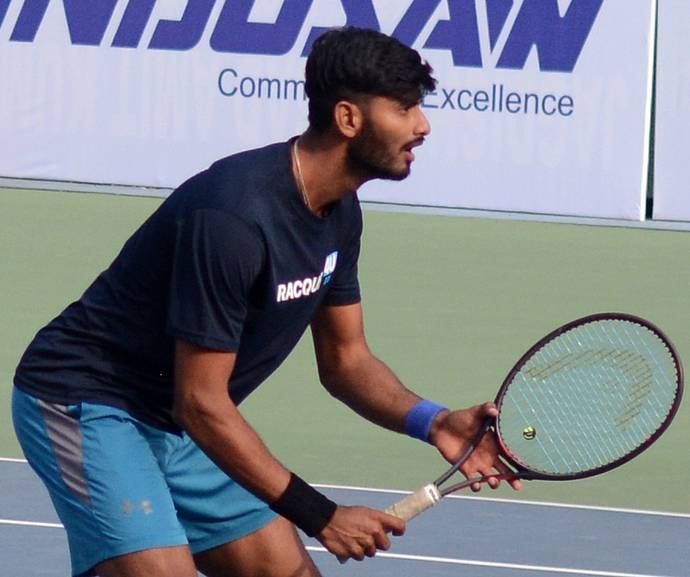
Former National champion Niki Poonachais finding time for a social cause amidst his tennis training.
The 26-year-old Niki, who had won the last ITF men’s tournament here in April, is helping in the organisation of a men’s ranking tournament in Chennai in collaboration with Rotaract Club of Madras and the Tennishub.
“The tournament will be held at the PowerPak Tennis Academy in Tharamani from September 2 to 5. The winner and runner-up will get ₹10,000 and ₹5,000 apart from goodies from tennishub,” said Niki. “All the funds raised from the event will be donated to Mahaishwar School for mentally challenged.”
Niki has been training well for the international circuit. “I am looking forward to competing in Tunisia and Egypt soon,” said Niki who trains at the Rohan Bopanna Academy in Bengaluru.
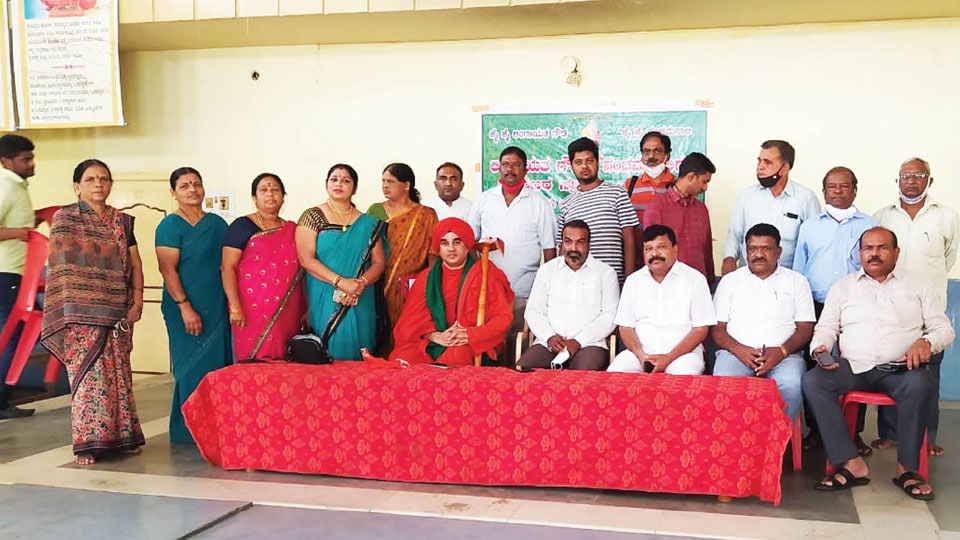
Urging the Government to provide reservation to Panchamasali and Gowda Lingayat communities under 2-A category, a ‘Pratigna Panchayat’ campaign will be launched from Aug. 26 to 30 to remind the Government on its promise of reservation.
Announcing this at a press meet after holding a meeting of Panchamasali and Gowda Lingayat community leaders at Hosamutt here on Monday, Sri Basava Jayamruthyunjaya Swamiji of Kudalasangama said that the community Seers and leaders had taken out a 750-km padayatra from Kudalasangama in Bagalkot district to the State Capital Bengaluru a couple of months ago seeking 2A category reservation for Panchamasali Lingayat and Gowda Lingayat communities.
Pointing out that a massive convention was held at Palace Ground in Bengaluru following the culmination of the padayatra, he said that the convention had passed a unanimous resolution seeking reservation when the then B.S. Yediyurappa-headed Government had assured of seriously considering the demand.
But now, in the changed political circumstances, Basavaraj Bommai, who had expressed support to the demand as a Minister then, has now become the Chief Minister. As such, the ‘Pratigna Panchayat’ campaign is being held from Aug. 26 to 30, from M.M. Hills in Chamarajangar district to Bengaluru to remind the Government of its promise on reservation, the Seer said.
Maintaining that the then CM Yediyurappa had assured of fulfilling their demand by Sept. 2021, the Swamiji warned of staging a dharna at Freedom Park in Bengaluru on Oct. 1, marking the birth anniversary of former Chief Minister J.H. Patel, if the Government fails to act on the demand by then.
Hosamutt Seer Sri Chidananda Swamiji, Lingayat Gowda Mahasabha State President Alanahalli Puttaswamy, Panchamasali-Gowda Lingayat Co-ordination Committee Convenor and farmer leader A. Mallesh, Nataraj of Bengaluru, Shivakumar of Hassan, L.B. Patil of Mandya, Babitha Muthanna of Kodagu, Community leaders Gangambika, Gowramma, Virupakshamma, Shambhu Patel and others were present.
source: http://www.starofmysore.com / Star of Mysore / Home> News / August 11th, 2021
WELCOME. If you like what you see "SUBSCRIBE via EMAIL" to receive FREE regular UPDATES.
Read More »