Kodagu Zilla Mogera Samaja submitted a memorandum to Minister for Fisheries, Port and Inland Water Transport S Angara to help in getting a site sanctioned from the government for the construction of a community hall of Mogera Samaja.
The Mogera Samaja members held a discussion with the minister, in the presence of MLA K G Bopaiah, Karnataka Western Ghats Task Force chairman Shantheyanda Ravi Kushalappa and others.
In their appeal, the office-bearers of the Samaja said that government help is essential for the upliftment of the Mogera community.
Earlier, the community members felicitated the minister on his arrival at General Thimayya Circle in Madikeri.
source: http://www.deccanherald.com / Deccan Herald / Home> State> Mangaluru / by DHNS, Madikeri / August 27th, 2021
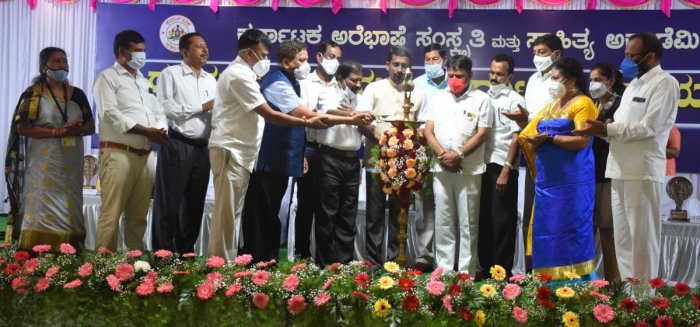
Minister S Angara inaugurates the decennial celebrations of Karnataka Arebhashe Culture and Literature Academy in Madikeri on Friday.
Bopaiah said that Arebhashe and Kodava academies will get their own offices which are being constructed at Samskritika Bhavana in Madikeri.
Every language has its own history and cultural significance. Therefore, every language should be treated with respect, opined Virajpet MLA K G Bopaiah.
He was speaking during the inauguration of the decennial celebrations of Karnataka Arebhashe Culture and Literature Academy, held at Kodagu Gowda Samaja, in Madikeri on Friday.
Arebhashe speaking people are concentrated in Kodagu and Dakshina Kannada districts, he added.
Bopaiah said that Arebhashe and Kodava academies will get their own offices which are being constructed at Samskritika Bhavana in Madikeri.
Efforts to establish Arebhase Academy were first made by the BJP-led state government in 2008. Later, the academy officially came into being during the chief ministerial tenure of D V Sadananda Gowda in 2011, he said.
Fisheries, Port and Inland Water Transport Minister S Angara said that the emotion behind all the languages is the same. There is no use in criticizing each others’ languages.
Instead of getting identifying oneself with a particular caste, one should associate with the language and achievement. People should ignore petty political games, he added.
Madikeri MLA M P Appachu Ranjan felt there is a need to preserve the language and culture of smaller communities.
He also lauded the works done by the Arebhashe Academy.
Arebhashe Culture and Literature Academy chairman Lakshminarayana Kajegadde said that efforts are on to obtain ISI code for Arebhase. The academy has been organising various programmes including workshops.
Indian Women’s Hockey team assistant coach Ankitha Suresh was felicitated on the occasion.
MLC Sunil Subramani M P, Arebhashe Academy former chairman Kolyada Girish, Kodagu Gowda Samaja federation president Surthale R Somanna, Academy members Baithadka Janaki Bellyappa, Smitha Amrith Raj, Dhananjay Agolikaje, Dr Koodakandi Dayanand and academy registrar Chinnaswamy were present.
A documentary directed by H R Anil was released on the occasion.
Musical instruments were provided to the beneficiaries.
The official website of Arebhashe was also launched on the occasion.
source: http://www.deccanherald.com / Deccan Herald / Home> State> Mangaluru / by DHNS, Madikeri / August 27th, 2021
A scene from the movie ‘Nadapeda Asha’. Kodagu, the land of brave soldiers and known for its unique culture, is all set to make its own mark in showbiz.
‘Nadapeda Asha’, a full-fledged feature film produced in the Kodava language and with Kodava artistes, will hit the screens on September 6.
The film is based on a novel by writer Nagesh Kaluru. Incidentally, the work ‘Nadapeda Asha’ on which is the film is based, has been selected for the book award conferred by Karnataka Kodava Sahitya Academy.
Kottukattira Prakash, who had directed the film ‘Kodagra Sipayi’ has directed the film ‘Nadapeda Asha’. He has produced 12 films and directed four films.
Actor Bollajira B Ayyappa is playing the male protagonist in the film while Nellachanda Rishi Poovamma is his counterpart. Addanda Anita Cariappa is playing the role of an anganwadi worker.
The challenges faced by women are effectively portrayed in the film, said the film crew.
Eramanda Harini Vijay, Vanchira Vittal Nanaiah, Tatanda Prabha Nanaiah, Cheruvalanda Sujala Nanaiah, Ajjikuttira Prithvi Subbaiah, Puttarira Arun Kalaiah, Eramanda Kesari Bojamma, Bollajira Yamuna Ayyappa, Battira Kaveri Joyappa and others are in the cast.
Major scenes in the movie have been shot in Kodagu. Kodava culture has been featured in the film.
Producer of the film Harini Vijay said that the film is about the family of a soldier and it speaks about a women’s perspective in society.
Another producer Kottukattira Yashoda Prakash said that the main objective of producing the film is to introduce Kodava culture to the rest of the world. The film is not made for profit.
Director Kottukattira Prakash said that various issues such as wild animal menace and gun license have been portrayed in the film.
As there is a shortage of theatres in the district, the film team has made arrangements to screen the movie in Kodava Samaja and Arebhashe Gowda Samaja buildings.
The film will be screened at the Kodava Samaja in Moornadu, Napoklu and Virajpet.
A theatre in Madikeri is closed and another theatre in Kushalnagar has not been reopened.
Bollajira B Ayyappa, the lead actor, said that the screening will be done with Covid-19 guidelines. New talents have been cast in the film.
source: http://www.deccanherald.com / Deccan Herald / Home> State> Mangaluru / by Adithya K A, DHNS / August 27th, 2021
Senior Congress leader B.K. Hariprasad speaks at CNC seminar
Madikeri:
Kodavas have been agitating for over two decades seeking the grant of their Constitutionally-guaranteed rights and only these rights and privileges can guarantee the survival of this rare community, opined MLC and senior Congress leader B.K. Hariprasad.
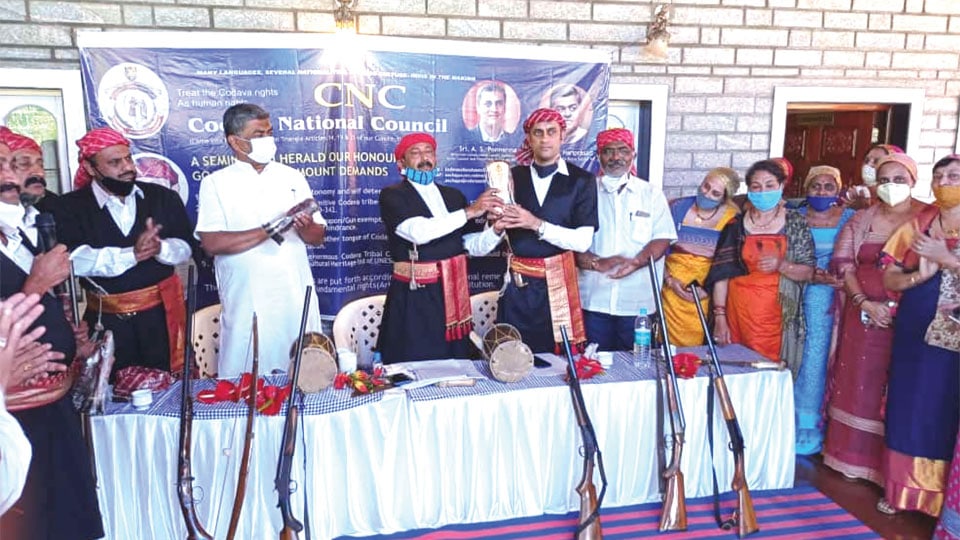
He was addressing a seminar on Kodava rights, demands and aspirations. The event was organised by Codava National Council (CNC) at a private resort in Murnad recently.
“Kodava community must get special recognition under Article 371 (k). The community deserves recognition in the Scheduled Tribe list as their lifestyle, custom, traditions, practices and festivals reflect the tribal spirit,” he noted.
CNC’s demand and claim for geo-political Autonomy is most legitimate, logical, feasible and deserving in all sense among any other demands, he opined. The Kodava tribe which is facing the threat of extinction should be enlisted under Scheduled Tribes of the Indian Constitution. “The Government should take measures to protect the tradition of Kodavas. Provision of ST tag is necessary in this regard,” he added.
On this occasion, ‘Codava Rathna’ award was conferred on Hariprasad and eminent jurist A.S. Ponnanna. The main purpose of this award is to recognise and respect those who go out of their way even risking their well-established career for the cause of the Kodava community.
Hariprasad had raised the community’s aspirations in the Parliament and in the Legislative Council. Also, he moved a “Private Member Constitution Amendment Bill 2016” to include Kodava language in the 8th schedule of the Constitution. He advocated the grant of ST tag to Kodavas and also argued that the gun licence exemption should be continued to Kodavas forever and should not be restricted to 10 years.
According to CNC President N.U. Nachappa, certain resolutions were passed at the seminar to safeguard the genus of Kodava tribe and its civilisation. The community fulfils the definition of indigenous people promulgated by the United Nations through various declarations and steps must be taken in this regard to protect it.
“By trait, Kodavas are tribals and by our miniscule size of population, we are a minority in all senses. That is tribal, racial, ethnic, linguistic and national minority. We have every criteria and right to claim for empowerment defined for various indigenous tribes, minority groups and ethno linguistic nationals enshrined in the UN Charter,” he added.
“We are indigenous primitive tribe and it is our fundamental human right and freedom to exercise internal political self-determination right and to have geo-political autonomy in our own defined, indivisible traditional homeland,” he demanded. High Court advocate Lakkavalli Manjunath, Political Science lecturer Dr. P.E. Somaiah and others were present.
source: http://www.starofmysore.com / Star of Mysore / Home> News / August 22nd, 2021
Estate owners urged to discourage it over COVID-19 fears.
Amidst the growing fears of an impending third wave of pandemic, it has now come to light that workers from Kerala bordering Kutta village in Kodagu were being employed in coffee estates and are shuttling daily by foot for work.
The State government has made it mandatory for those coming into the State from Kerala to carry an RT-PCR negative report not older than 72 hours irrespective of whether the travellers were vaccinated – either first or both doses of vaccine.
When former Speaker and Virajpet MLA K.G. Bopaiah visited the checkpost at Kutta on Tuesday to oversee the COVID-19 surveillance at the border over a spike in cases in the neighbouring State, he came to know about workers belonging to a Kerala village bordering Kodagu coming daily to Kutta by foot to work in the estates.
Mr. Bopaiah advised the coffee estate owners to provide accommodation to the workers after complying with the guidelines in case they have emergency works in their plantations and would like to employ workers from Kerala.
As per the district administration’s order, persons from Kerala travelling daily to Kodagu must carry out COVID-19 test once in 15 days and always carry the RT-PCR negative report with them. It is not clear whether the employers were cross-checking the details while engaging them in their estates.
“The task force set up in each gram panchayat must look into all various aspects for controlling COVID-19 in the border villages. It must work on preventing daily commuting of workers from Kerala to the border estates. This can help prevent the COVID-19 spread,” he opined.
The staff roped in from various departments for work at the checkposts in Karike, Kutta, Makutta and Sampaje in Kodagu have been categorically told to ensure that no vehicle enters the State without the travellers producing valid RT-PCR negative report not older than 72 hours.
The district officials have been told to continue with the guidelines issued based on the test positivity rate which is currently below 5 per cent. If the TPR crosses 5 per cent, stricter measures were needed.
About 40-50 vehicles from Kerala cross the border at Kutta daily.
source: http:// www.thehindu.com / The Hindu / Home> News> States> Karnataka / by Special Correspondent / Mysuru – August 03rd, 2021
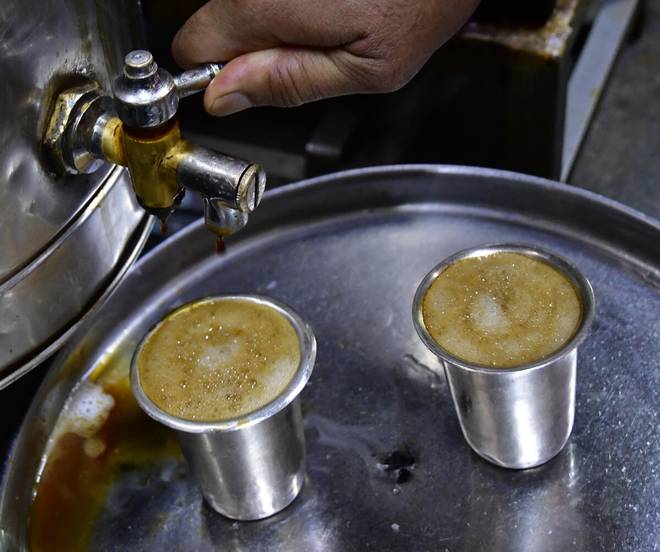
A file photo of a server collecting coffee from a container in a restaurant. | Photo Credit: K. Murali Kumar
‘Nations should jointly combat issues in coffee sector’
Coffee growing countries, India, Brazil, and South Africa, should collaborate to combat common challenges they face such as global price volatility, high cost of production, and labour shortage, suggested International Coffee Organisation (ICO).
At the opening session of the two-day IBSA Coffee Festival on Wednesday, ICO executive director Jose Sette said India, Brazil, and South Africa had several opportunities to work together to address common issues they face in the coffee growing, processing, and marketing fronts.
India produced over 3,20,000 tonnes of green coffee in the last harvest season that ended in March 2021. Karnataka alone accounts for over 70% of the country’s total coffee production, with Kodagu, Chikkamagaluru, and Hassan districts being the State’s coffee heartlands.
Coffee Board chairman M.S. Boje Gowda said, “It is great that we are joining hands with the international coffee community to improve the coffee scene of India and this exercise means a lot for coffee farmers across the country, and especially for an army of them in Karnataka.”
Suresh K. Reddy, Ambassador of India in Brazil, said coffee production had increased 34% in that country in the last two decades although the area under production had only reduced. Indian coffee community had to adopt cost-effective growing techniques and yield enhancing practices from Brazil, he recommended.
“We are also looking forward to collaborating with Brazil in enhancing domestic consumption of coffee in India,” said Mr. Reddy. India’s per capita coffee consumption is around 200 grams while it is 6 kg in Brazil.
Mr. Reddy further said time had come for the commodity apex body, Coffee Board, to position itself as a holistic organisation for the overall development, promotion, and growth of Indian coffee.
Jaideep Sarkar, High Commissioner of India in South Africa, said under the free trade agreements of WTO regime, it was tough for individual governments to promote their own coffees beyond a point and therefore working together was the best option for the global coffee growing community.
Andre Aranha Correa do Lago, Ambassador of Brazil in New Delhi, said, India was beginning to see a lot of speciality coffee coming via exports and this would open up newer opportunities for coffee entrepreneurs in India to process, value add, and re-export.
“We want to be part of the growing India coffee story and IBSA is an ideal platform for a unique partnership between these coffee producing countries,” Mr. Lago added.
source: http://www.thehindu.com / The Hindu / Home> News> States> Karnataka / by Mini Tejaswi / Bengaluru – August 05th, 2021
It is rare for the country’s hockey team not to have a player from Kodagu.
‘Shift in focus from sports to academics a reason for fewer players making it’
While the nation basks in the glory of the Indian hockey team scripting history at Tokyo Olympics by winning a medal (bronze) after 41 years, absence of even a single player from Kodagu in the current team has become a talking point among sports aficionados in the State.
Kodagu has a legacy of producing outstanding hockey players who have played for India in the World Cup and the Olympics and they include M.P. Ganesh, B.P. Govinda, Arjun Halappa, A.B. Subbaiah, M.M. Somaiah, and Len Aiyappa, to name a few.
It is rare for the country’s hockey team not to have a player from Kodagu, as it was during this Olympics. Experts say that a series of factors are at work as a result of which there is a decline in the number of players from Kodagu breaking into the national team.
Focus on academics
Mr. Ganesh, who played for India in the World Cup, Olympics, and Asian Games, said the shift in focus from sports to academics was a factor for this decline though both sports and academic are not mutually exclusive.
Though Karnataka in general and Kodagu sportspersons perform well at the junior levels, parents do not allow children to pursue sports beyond a certain age. Their intention is to get children admitted to professional courses through the sports quota, he added.
“Karnataka has reserved 91 seats in various professional courses for sportspersons. But once they secure admission, we don’t see them in the national camps as the focus shifts to academics,” said Mr. Ganesh.
Besides, the drive to excel in sports has waned to an extent due to the fact that many among the new generation of Kodavas are not given to hard work, said the Arjuna award winner. “During our times, we had to walk 5 to 6 km daily to reach our schools and hence, physical fitness was a natural attribute but it is not so in the present generation,” he added.
A unique hockey festival
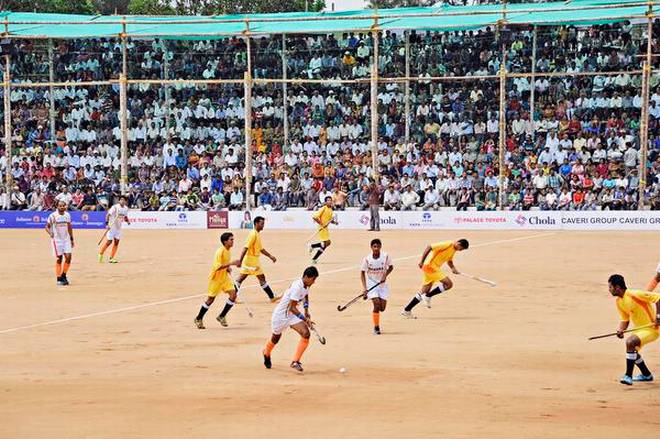
The Kodava Hockey Festival, held every year since 1997, draws nearly 300 teams which is a record for any tournament. This is testimony to the continued though latent interest in the sport. But veteran B.J. Cariappa says it is not competitive enough for budding players to break into national team. For that, players have to work harder, have to be coached better, and be exposed to national-level tournaments where the competition is more stringent, he added.
B.J. Cariappa, hockey coach for junior men’s team, faulted the system run by officials which, he said, was not accountable. Apart from creating additional facilities and infrastructure which was the need of the hour, there was a lack of accountability among officials and coaches, according to Mr. Cariappa.
“I have visited a few training centres where trainees were not attentive and the coach wasn’t serious,” he added, pointing out that in one such centre the sole reason the coach was in Kodagu was for its pleasant weather.
source: http://www.thehindu.com / The Hindu / Home> News> States> Karnataka / by R Krishna Kumar / Mysuru – August 07th, 2021
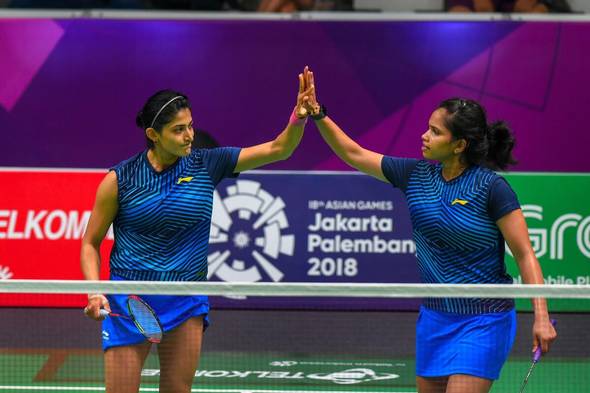
The Indian pair lost in three games to the home duo of Amalie Magelund and Freja Ravn of Denmark.
In a match lasting just under an hour, the top-seeded home duo came from behind to beat the Indian pair in three games.(File Photo)
The Indian women’s doubles pair of Ashwini Ponnappa and N. Sikki Reddy finished runners-up at the Denmark Masters after going down narrowly against top seeds Amalie Magelund and Freja Ravn of Denmark in the final.
The duo, seeded second, squandered an opening game advantage to lose 21-15, 19-21, 14-21 to the Danish combination in just under an hour’s contest.
Among other Indians, Lakshya Sen had lost in the semifinals to France’s Christo Popov, while his brother Chirag Sen and Subhankar Dey, seeded fourth, bowed out at the quarterfinal stage.
In women’s singles, Aakarshi Kashyap was the most impressive but lost the semifinal to fourth seed Dane Julie Dawall Jakobsen.
source: http://www.sportstar.thehindu.com / Sportstar / Home> Badminton / by PTI / August 09th, 2021
Even though the number of the Coorgies in the regiments is coming down, the regiment still holds on to the traditions of the community and takes pride the representing the decedents of river Cauvery on the battlefield.
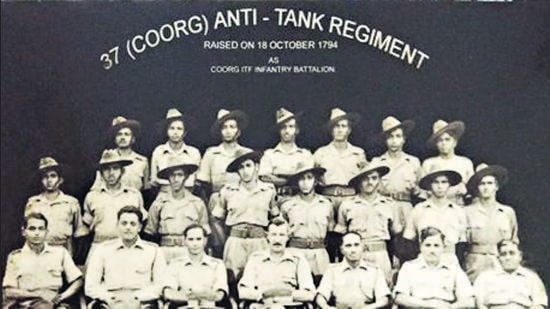
In 1946, it was converted to the 37 Coorg Anti-Tank Regiment Unit of the Royal Indian Artillery. It is now a part of the modern Indian regiment of artillery and wears the uniform of the artillery. (HT Photo)
The young officers’ the course is mandatory for all new lieutenants joining the Indian Army, but for a group of handpicked officers belonging to the 37 Coorg Regiment of the army’s artillery arm, the four-week course traditionally gets extended by two more weeks with a visit to Madikeri, a hilly town in Karnataka.
These young officers spend time in the hills learning about the origins of their regiment and the tales of legends like Field Marshal KM Cariappa and General KS Thimayya, who emerged from these very hills.
Even though contested in the modern age, the Indian army’s regiments are formed and named after the communities of the soldiers recruited into these units.
The martial race was a designation that was created by army officials in British India after the Indian Rebellion of 1857, in which they classified castes into two categories, with the ‘martial race’ being typically brave and well-built for fighting. Even now, the Indian Army designates its regiments as Sikh Light Infantry, Gorkha Rifles, Madras Regiment, Rajputana Rifles, and so on.
Even though not familiar within Karnataka, the Kodavas or the Coorgies is considered a marital race and have a regiment named after them – the 37 Coorg Regiment. This is the only regiment for the Kodavas.
The unit traces its origins back to 1794 when it was raised by the British to counter Tipu Sultan’s attack against the Kodava kingdom. Initially raised as infantry, the unit went on to fight against Tipu in the fourth Mysore war, where he was eventually killed.
Until 1901, the regiment was designated as the 11th Madras Infantry and in 1902, the regiment was reorganised, and the basis of recruitment changed from Tamil and Telugu to only Coorg soldiers. The restructured regiment was then renamed the 71st Coorg Rifles in 1903.
The new regiment was given dark green uniforms with scarlet facings. Red fezzes, which were an unusual item of uniform in the Indian Army, are reported to have been worn by the sepoys. Subsequently, described as an ‘in-out-of-the-run’ unit, they were disbanded in 1904 because of insufficient recruits.
In 1942, Coorgs were again recruited into the newly raised 1st Coorg Battalion. Like the 71st Coorg Rifles, the new battalion had a badge incorporating crossed Coorg knives. In 1946, it was converted to the 37 Coorg Anti-Tank Regiment Unit of the Royal Indian Artillery. It is now a part of the modern Indian regiment of artillery and wears the uniform of the artillery.
The regiment’s attachment to the land it represents is such that their war cry is “Cauvery.
Mata ki Jai” (Hail mother Cauvery) since river Cauvery is an integral part of the Kodava culture.
Subedar Major (Retd) KC Kalappa, a retired gunner from the regiment said that it was a matter of pride for the Kodava community to have a regiment in their name, but over the years, the number of recruits from the community is reducing. “In the early 1970s, the regiment had people only from the Kodava community and the community took pride in it. But over the years, the number of recruits is coming down and now the unit consists of soldiers from all four south Indian states,” said Kalappa.
Even though the regiment has recruited from all south Indian states, the regiment maintains the tradition of the Kodava community. For example, on the regiment’s raising day, the officers, and non-commissioned officers, regardless of their ethnicity, wear the traditional ‘Kupya Chale’,which consists of a traditional jacket and headgear. The officers wear Pichangatti (a traditional knife), and instead of handing baton, when a new commanding officer takes over, a Pichangatti is handed over as a sign of change in command.
“I’m a Punjabi but I was the commanding officer of the Coorg regiment for three years and whenever I visit Kodagu, I feel like a Coorgi because of the traditions of the regiment. The house of the commanding the officer is called a Mercara house, named after the Mercara town in the Coorg,” said Major General Sanjay Sharma (retd).
According to Maj Gen Sharma, the unit is so closely affiliated with the Kodagu community that it is a tradition for the unit to take part in the annual hockey tournament in Kodagu. “For the Kodavas, the annual hockey tournament is very important it is part of their culture. In this tournament, various families of Kodagu compete against each other. So, for the past few years, the regiment gives an award for the first goal scored in the tournament and it is a matter of pride for the people because the regiment named after their community is taking an interest,” he said.
Over the years, however, the composition of the unit has changed. According to Maj Gen Sharma, currently, the number of Kodavas is only about 15-20% in the unit, and three other south Indian states fill other vacancies. “Over the years, the number of recruits has come down. But all men of the regiment, whichever state they are from, celebrates all Kodava festivals and call themselves Coorgs with pride,” he said.
Describing the 37 Coorg Medium Regiment as a matter of ‘pride for Karnataka’, ex-Sergeant of the Indian Air Force Mandetira Subramani and the president of VeKare Ex-Servicemen’s Trust (VKET), has emphasised the need to post a few more willing young officers, junior commissioned officers (JCOs) and jawans from the community to the regiment and make it more meaningful. “We are trying to promote the heritage of the unit among the youngsters and trying to get more people to join the regiment and continue the legacy,” said Subramani.
Even though the number of the Coorgies in the regiments is coming down, the regiment still holds on to the traditions of the community and takes pride the representing the decedents of river Cauvery on the battlefield.
source: http://www.hindustantimes.com / Hindustan Times / Home> Explore> India News / by Arun Dev, Bengaluru / August 22nd, 2021
At present, 33 Sainik schools are operating in the country
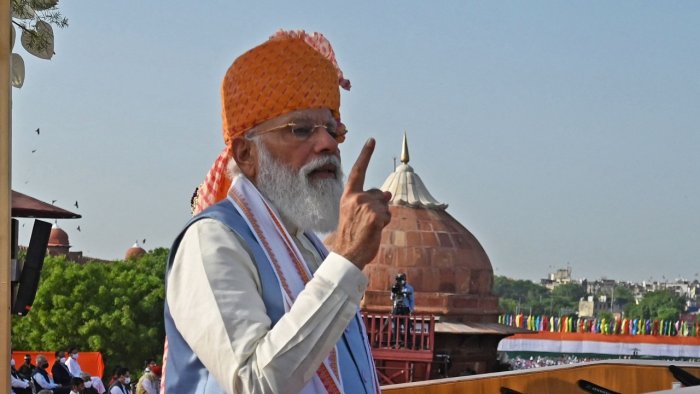
Prime Minister Narendra Modi addresses the nation. Credit: AFP Photo
All Sainik Schools across the country will now open doors for girls, like the ones in Kodagu and Bijapur in Karnataka.
Prime Minister Narendra Modi announced during his Independence Day speech on Sunday that all the Sainik Schools across the country would now enrol girls.
“Today I am sharing good news with the countrymen. I used to get lakhs of messages from our daughters that they want to study in the Sainik Schools. The doors of the schools should be opened for them,” Modi said while addressing the nation from the rampart of the Red Fort in Delhi.
The Ministry of Defence had in 2018-19 launched a pilot project at the Sainik School at Chhingchhip in Mizoram, admitting six girl students.
Six more girls got enrolled in the school in 2019-20 and seven in 2020-21. The success of the pilot project prompted the government to start admitting girls at five more Sainik Schools from the 2020-21 academic session – the ones in Kalikiri in Andhra Pradesh, Ghorakhal in Uttarakhand Chandrapur in Maharashtra and Kodagu and Bijapur in Karnataka.
“Now the Government has decided that all the Sainik Schools will be open for the girls. The daughter too will study in all the Sainik Schools of the Country,” said the Prime Minister.
source: http//www.deccanherald.com / Deccan Herald / Home> National / by Anirban Bhaumik, DHNS, New Delhi / August 15th, 2021
WELCOME. If you like what you see "SUBSCRIBE via EMAIL" to receive FREE regular UPDATES.
Read More »