Category Archives: Records, All

Fair trade diaries: Arshiya Bose of Black Baza Coffee walks us through the basics of her coffee farming movement

Have you explored Black Baza Coffee's lineup, yet?
Have you explored Black Baza Coffee’s lineup, yet?

Very few coffee lovers actually research how ethical their go-to fair trade coffee brand really is, but Black Baza Coffee ‘s biodiversity-friendly, fair-trade coffee production is going the whole mile when it comes to ethically responsible community-building. The Bengaluru-based label is committed to the idea of ‘creating a local, participatory and meaningful movement for coffee.’ During her PhD in coffee and sustainability, Arshiya Bose, the founder of the label explored some functional biodiversity-friendly coffee farming practises which helped her get a better perspective on responsible production.
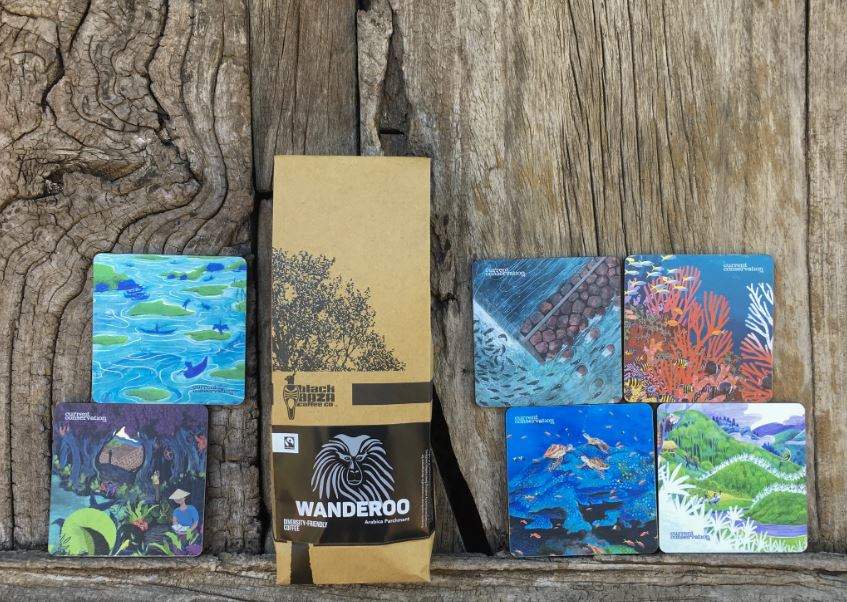
The rich and balanced Wanderoo

“Through my research I met several smallholder coffee producers, and the brand is committed to the idea of helping them grow. Black Baza Coffee is not just about eco-friendly practises but we focus on biodiversity conservation. We take a look at how various wildlife and plants make use of the coffee farms and how they can be conserved on these farms, which also includes changing the way we farm. So we go beyond organic, from looking and understanding habitats to sticking to our all-natural agenda,” Arshiya tells us. Not to mention Black Baza’s line-up is amazingly diverse, featuring coffees with layered flavour profiles, be it fermented Robusta with spicy flavour notes or washed Arabica with a balanced acidity.
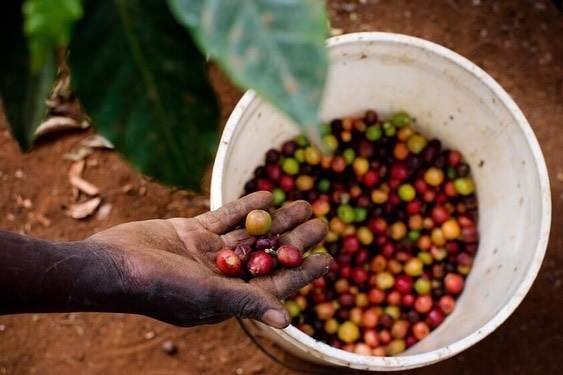
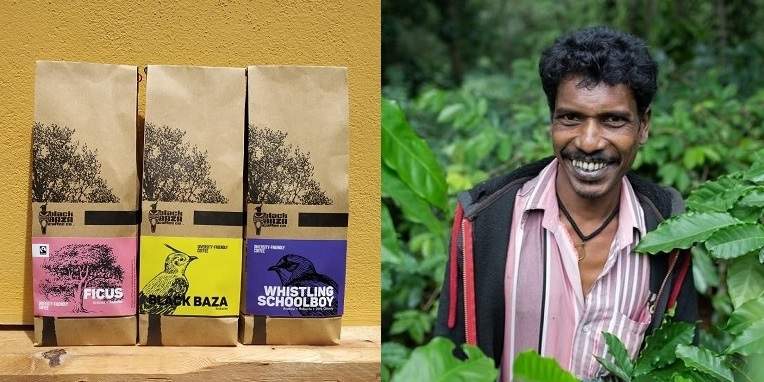
"Our Ficus coffee is named after this tree, our focus for conservation efforts in our farms," the label writes on its Instagram page
“Our Ficus coffee is named after this tree, our focus for conservation efforts in our farms,” the label writes on its Instagram page

In fact, you can even follow Black Baza’s Instagram page for their excellent fieldwork stories. We caught up with Arshiya to explore her vision further.

Black Baza Coffee has a focus on nurturing smallholders producers…

Yes, we do not work with coffee estates so we typically look at those coffee growing communities which are marginalised and vulnerable, particularly at a time like this and we work closely with them. We work with those who need our input and support the most and we are actually one of the few certified fair trade coffee brands in the country. We work with around 650 producers, we help set up coffee collectives and cooperatives. We source our coffee from The Biligirirangana Hills in Karnataka, Nilgiris, Coorg etc.

Tell us about your clientele. Do most of them share the label’s philosophy?

Yes, we have a really loyal base of customers who actively want to support communities which have suffered from the shutdown and the pandemic in general. We already had a steady base, but it has definitely grown since the pandemic started.
BlackBaza04kf20AUG2020

How has the label’s objective evolved in the four years since you started?

We are not a typical coffee brand, we function like a social enterprise, and we have definitely grown. We started out with four producers and we now work with 650, we have been able to reach so many communities who needed our support. We have also been able to source so many distinct varieties of coffees with varied flavour profiles, that’s been really interesting.

Tell us about how you’ve named each variant, like the ‘Otter,’ or the ‘Ficus’?

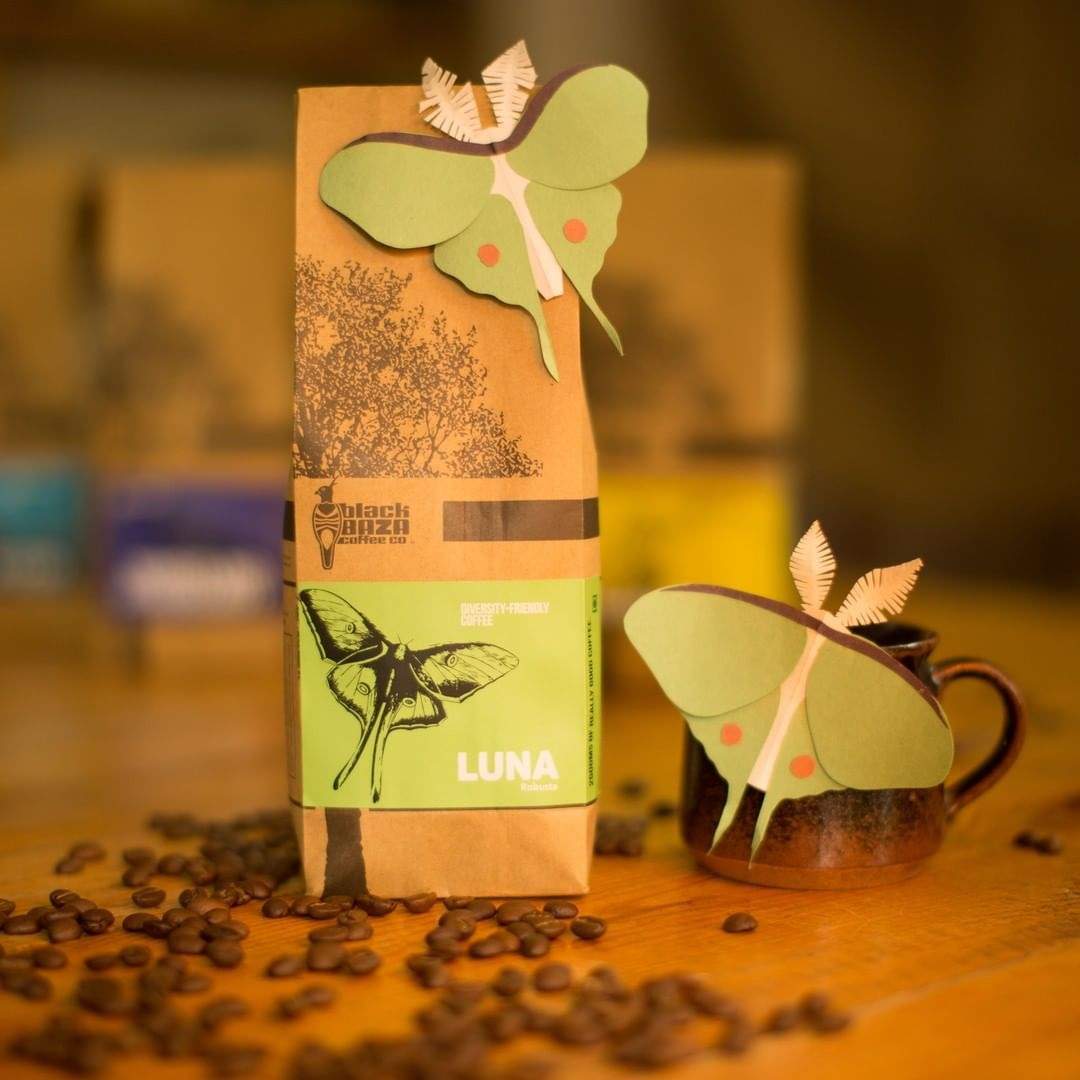
These coffees have been named depending on where they are grown, and represent the idea of conserving particular species of fauna which inhabit the region. The Luna coffee, for instance, is named after this interesting species of moth found in Indo-western ghats, we actively make observations of the luna moth on coffee farms, which tells us about their habitat or the vegetation around them. The names are also symbols of what we’re trying to achieve, it speaks to people about the kind of biodiversity which exists in our forests and why conserving them is so crucial.

source: http://www.indulgexpress.com / The New Indian Express – Indulge Express / by U. Roy / August 14th, 2020
Obituary : Berera Shambhu Aiyanna

BereraKF

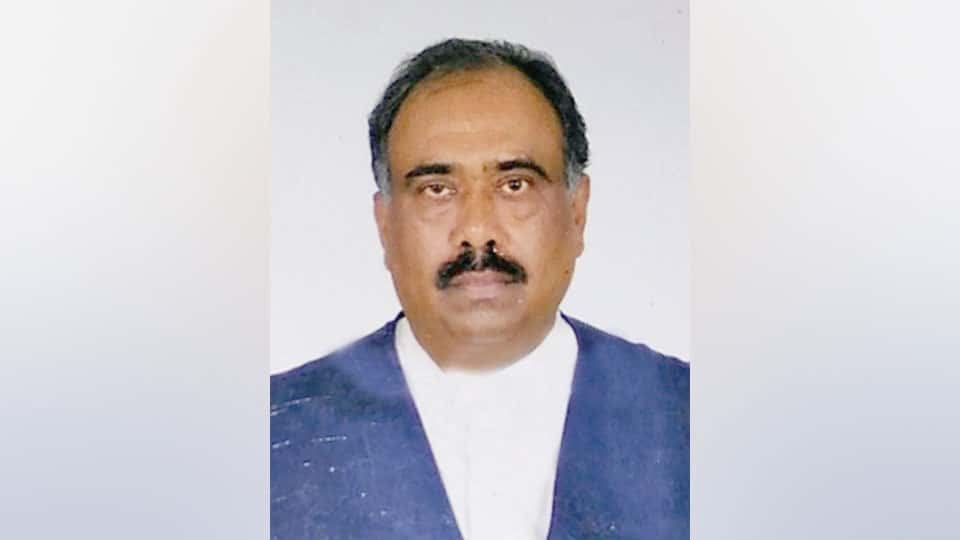
Berera Shambhu Aiyanna (73), former President of Bengaluru Kodava Samaja, a social worker and a resident of Vidyranyapura in Bengaluru, passed away early this morning at his residence.

He leaves behind his wife and two sons. Cremation was held this afternoon at Bengaluru.

source: http://www.starofmysore.com / Star of Mysore / Home> Obituary / August 18th, 2020

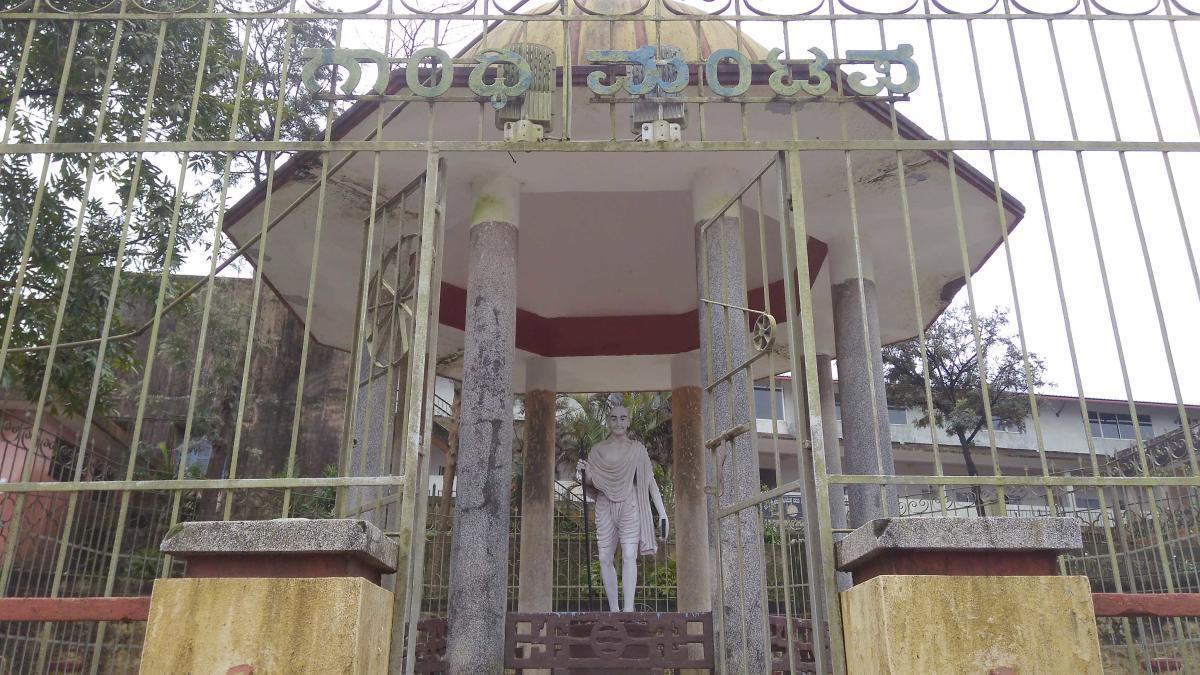
Inspiring a generation: Gandhi’s Kodagu visit

Gandhi Mantapa in Madikeri was built to commemorate Mahatma Gandhi’s visit to Kodagu in 1934. DH file photo

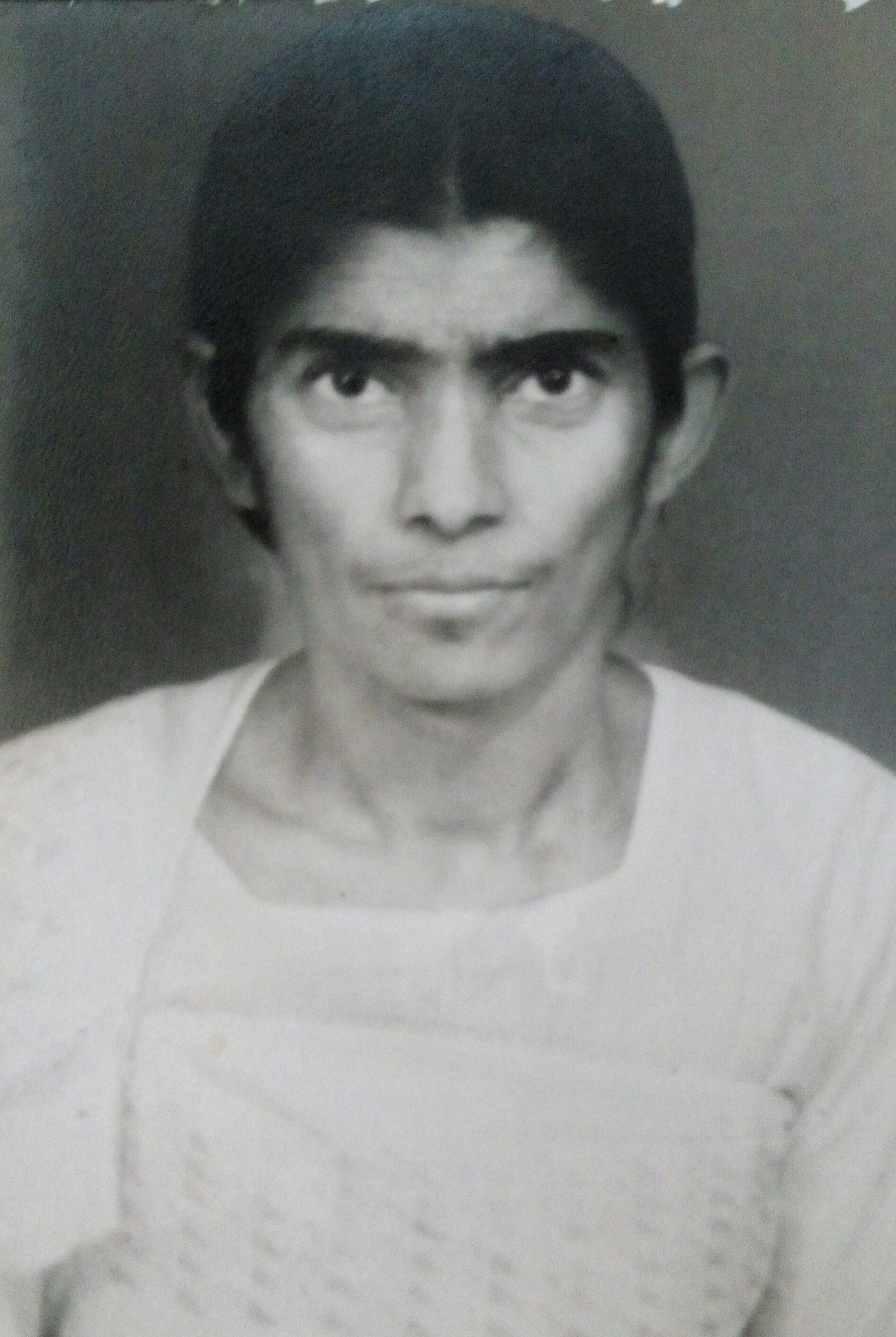
It was a cold February morning in 1934, when a young Seethamma, around 10 years old, woke up with excitement. After all, it was an important day and all she wanted was to catch a glimpse of Mahatma Gandhi, who happened to be in Kodagu.

Gandhi was set to address a gathering at Kakotuparambu grounds in Virajpet that day and Seethamma had to cover several miles on foot to reach the venue.

Her parents and cousins were already waiting outside and they all set out towards the venue immediately, only stopping to wash their faces in a small stream on the way. When they reached the ground, a large crowd had gathered and they saw the Mahatma from a distance.

“Gandhiji was sitting on the stage with his legs crossed to one side,” Seethamma would often tell her children and grandchildren, recalling that historic day. Just a glimpse of the great man was her most treasured memory.

A middle-aged Seethamma

The Mahatma, who was touring Tamil Nadu to mobilise funds for the upliftment of ‘Harijans’, was invited to Kodagu by Pandyanda I Belliappa and other freedom fighters of the district, which was then a Chief Commissioner’s Province.

On arriving at Kodagu, the Mahatma and his entourage first visited a Harijan colony in Gonicoppa, following which he addressed a meeting mostly attended by women. Though on a short visit, Gandhi also addressed gatherings at Ponnampet, Somwarpet and Madikeri among other places. He appealed to the people to donate generously to help the victims of an earthquake that had hit Bihar in January that year and also requested them to contribute to the Harijan Welfare Fund.

He asked the women to donate their gold jewellery and ornaments for the cause, while stating that, “The amount is not important to me because it is a token of tangible sympathy to the suffering. Thus, even a copper coin is valuable.”

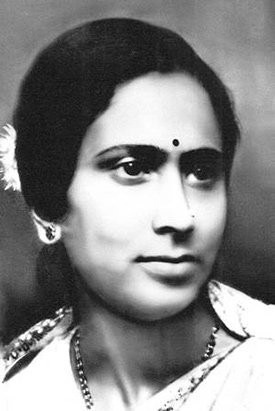
Moved by the appeal, writer Kodagina Gowramma, who was around 22 years at the time, famously donated all her gold ornaments to the Harijan Welfare Fund.

Kodagina Gowramma. Courtesy: Wikipedia

Seethamma and Gowramma, and several others like them knowingly or unknowingly became part of the national movement – which was as much about uniting the very diverse people of India as it was about fighting a foreign rule.

Such was Gandhi’s charisma that he inspired people, young and old; women and men; poor and rich. This made the freedom movement a mass movement.

source: http://www.deccanherald.com / Deccan Herald / Home> Spectrum > Spectrum Statescan / by Dhanyata M Poovaiah / August 15th, 2020

The Amara Sullia uprising, 20 years before 1857

Photos for Spectrum
Photos for Spectrum

Twenty years before the First War of Independence in 1857, there was the ‘Amara Sullia Dange’ or Kodagu- Canara Mutiny against the British government. This fight, which was labelled ‘Kalyanappana Katakayi’ (Loot of Kalyanappa), to tone down its significance, received unprecedented support from people in today’s Kodagu, Dakshina Kannada districts of Karnataka and Kumble region in Kerala.

After Tipu Sultan’s death in 1799, South Canara (Dakshina Kannada) passed into British hands. Neighbouring Kodagu, however, still maintained a precarious independence.

In 1834, the East India Company resolved to invade Kodagu, which was ruled by King Chikkaveera Rajendra of Haleri dynasty. On April 11, 1834, the political agent of the British at Mercara (Madikeri), Lieutenant Colonel J S Fraser, issued a proclamation annexing Kodagu into the British administration. Fraser also resolved to respect the social and religious customs of the locals, but the promise remained on paper.

The British introduced major economic, social, and even territorial changes in Kodagu, for their administrative convenience. Amara Sullia was separated from Kodagu and made part of South Canara district, which was then part of the Madras province. What further incensed the people was a change in the mode of tax payment, which was now to be made entirely in cash. The farmers were used to giving part of their produce as the tax, but the new system only added to their burden. Now, many of them refused to pay the tax outright.

After Kodagu’s annexation, there was a resistance movement planned. In 1835, Swamy Aparampara, a Jangama saint, appeared in Manjarabad in Hassan district and claimed that he was a legal heir to the Haleri throne.

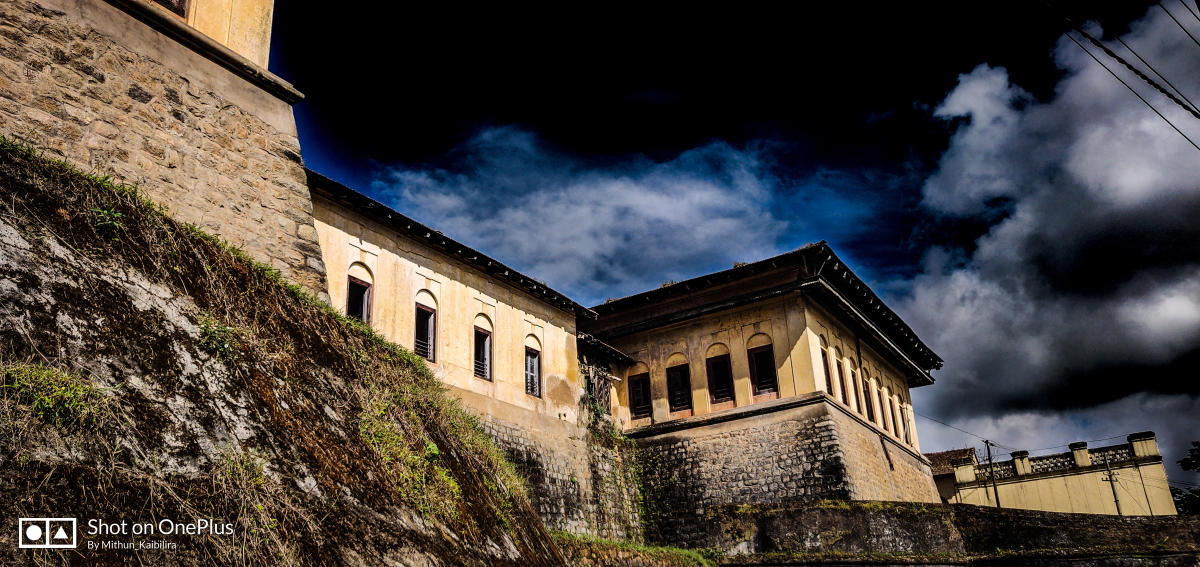
Madikeri Fort
Madikeri Fort

His plan was to attack and occupy Madikeri Fort on December 5, 1836. The people of Kodagu believed him to be the son of Appaji, who was the uncle of Chikkaveera Rajendra. Aparampara planned a resistance movement with the help of other rebellions including Kalyanaswamy, Kedambadi Rame Gowda and Guddemane Appayya Gowda. Aparampara visited Subrahmanya and met Kujugodu Appayya Gowda and Mallappa Gowda, the representatives of the Ikkeri dynasty. From there, they marched towards Madikeri with a battalion.

The British got wind of the plan and imprisoned Aparampara, with the aid of Kodagu’s Dewan, Cheppudira Ponnappa.

Now, the responsibility of the movement shifted onto the shoulders of Kalyanaswamy. He claimed to be the second son of Appaji and therefore, a member of the Haleri dynasty. Declared a king by his men, he popularised the movement by proclaiming that if he became the king, he would stop collecting revenue for the first three years and abolish the duties on commodities.

Dewan Ponnappa proved that Kalyanaswamy didn’t belong to the Haleri dynasty. However, the rebel leader remained popular and enjoyed support from local leaders.

Kalyanaswamy slowly extended the movement to Sullia and other parts of South Canara. Kedambadi Ramegowda of Sullia was primarily responsible for the organisation of rebellion in South Canara. When Kalyanaswamy was travelling from Kodlipet to Wayanad, he was captured by the British forces, though his imprisonment was concealed. His friend Putta Basappa posed as Kalyanappa and continued the rebellion.

Meanwhile, the resentment against the new tax policy continued, and Kedambadi Ramegowda and Nanjayya decided to start a rebellion in Sullia. They killed Atlur Ramappaya, the Amaldar (Agent) of Sullia, who was loyal to the British.

The battalion, headed by Kalyanappa (Putta Basappa), Kedambadi Ramegowda and others reached Bellare and attacked the British treasury. The rebels then reached Mangalore and hoisted the Haleri flag in ‘Bavutagudda’ on April 5, 1837, to mark their victory over the British.

In response, the British brought in reinforcements from Kannanur, and attacked the rebels. Several leaders were captured and killed, while a few others escaped. Putta Basappa and Appayya Gowda were hanged.

The British Commissioner Cotton, who submitted a report on the Canara Insurrection to the government in 1839, mentioned the movement was a furtherance of the Nagar Peasants’ Revolt of 1830-32, in present-day Shivamogga. “The Amara Sullia insurrection has the features of primary resistance, as well as peasants’ movement; the main intention was to drive away the colonial intruders,” says K R Vidyadhara, a lawyer in Madikeri who has studied the uprising.

A few scholars have conducted extensive studies on the Amara Sullia mutiny, with the incident even being portrayed in a Yakshagana performance called ‘Kalyanappana Katakayi’.

source: http://www.deccanherald.com / Deccan Herald / Home> Spectrum> Spectrum Top Stories / by Charan Aivarnad / August 15th, 2020

When Kodagu merged with Mysore: A short political history of the region

An erstwhile independent state, Coorg was merged with Mysore after the States Reorganisation Act was passed in 1956.

TemplePriest02KF12aug2020

It was S Nijalingappa’s death anniversary on August 8 and I was reading about the unified Mysore state’s first Assembly elections in order to get some insights about the first and one of the longest serving Chief Ministers of our state. One article led to another and I found myself in the middle of several articles about Coorg’s merger with Mysore. It was such an interesting revelation that I kept hopping from one article to another and got deeper into the rabbit hole.

Since most of us outside of Kodagu are informed just in passing in our textbooks about how Coorg was an independent state before the unification, I thought this was a story worth telling.

After more than a century of direct British rule since its annexation from its last ruler Chikka Veera Rajendra (in 1834), Coorg became an independent (Type C) state within India along with other small, hilly, erstwhile princely states like Himachal Pradesh. Coorg had a strong Congress party presence and participated enthusiastically in the freedom struggle, with even stalwarts like Gandhi visiting the state on a few occasions to mobilise the immensely patriotic people from the land of coffee, commanders and Kaveri.

But the Congress leadership within Coorg was heavily divided over whether to remain an independent state or to join the larger neighbouring state of Mysore. While one faction led by the Gandhian CM Poonacha was more pragmatic in seeing the impracticality of a tiny state like Coorg being allowed to remain independent in a country as large as India and being open to the idea of merging with Mysore since Kannada was already the language broadly used in education and administration within Coorg, the other faction led by another Gandhian Pandiyanda Belliappa was , staunchly against the merger. The loyalty of both factions and leaders, however, lay with the Congress.

When the legislative assembly elections were announced in late 1951, to be held along with the first ever election to independent India’s parliament, the Pandiyanda Belliappa faction moved away from the Mysore-sympathetic Congress and formed the Thakkadi Party (weighing machine), contesting as independents on the plank of Coorg’s continuation as an independent state.

In what was a Brexit style election to decide the future of Coorg state, the Congress emerged victorious, winning 15 seats in the 24-member Coorg Assembly, while the Thakkadi Party won the remaining 9 seats. Questions were raised about the fairness of the elections as allegations surfaced that voters were sent from the neighbouring towns in Mysore to vote for the Congress, in effect for Coorg’s merger with Mysore. Poonacha, however, took oath as Coorg’s first and only elected Chief Minister and ruled till 1956 with a two-member Cabinet.

In 1956, the States Reorganisation Act was passed in the Parliament by the Nehru government, allowing Coorg’s merger with Mysore. Several efforts were made by key dignitaries from Coorg to secure an independent state status, including the decorated Field Marshal KM Cariappa, who was then serving as India’s High Commissioner to Australia and New Zealand. He wrote a letter to President Rajendra Prasad, making a case for Coorg to remain an independent state. But it proved too little, too late as the Nehru-led Congress government remained committed to the Act and reined in dissent within the party units across states.

When the bill was taken up to be voted by Coorg’s Assembly as it required ratification by state assemblies before becoming a legislation, 22 out of 24 legislators, including Pandiyanda Belliappa, voted for Coorg’s merger with Mysore. The first and only elected legislative assembly and government of Coorg was thus dissolved, paving the way for its integration with the unified Mysore state.

Poonacha went on to serve both the Mysore and central governments in various capacities as cabinet minister holding various important portfolios, and also served as the Governor of Odisha and Madhya Pradesh. He was also Coorg’s representative in the Constituent Assembly. Coorg also sent two members to independent India’s first elected Parliament. After its merger with Mysore, however, Coorg was clubbed with Mangalore earlier and Mysore later into a single parliamentary constituency. It sends two legislators to the 224-member state assembly of Karnataka.

Many people in Coorg are still divided and emotional over the issue of Coorg’s merger with Mysore. The Codava National Council, under the leadership of NU Nachappa, fought for the restoration of statehood for Coorg for several decades. But it has now toned down its demand to that of an autonomous development board exclusively for Coorg within Karnataka, with many other perks similar to those offered to other sparsely populated hilly regions and tribes in the Himalayas and the North East.

Kodagu, the official name of the district, is one of the most developed districts of Karnataka across most parameters of development. With an HDI of 0.817, it is only behind Bengaluru, Dakshina Kannada and Udupi in terms of human development. As it reels under another bout of floods this monsoon, let us keep the beautiful Coorg in our prayers and cherish its less known history.

Rakshith S Ponnathpur is a financial and economic policy researcher with a keen interest in Karnataka history and politics.

source: http://www.thenewsminute.com / The News Minute / Home> News> History / by Rakshith S Ponnathpur / August 12th, 2020

Daughters Of Talacauvery Chief Priest Reach Kodagu

TemplePriest01KF12aug2020

Madikeri:

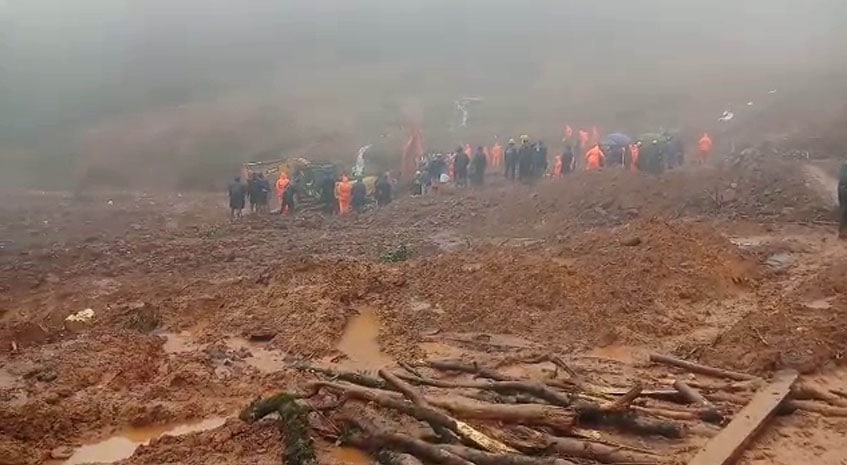
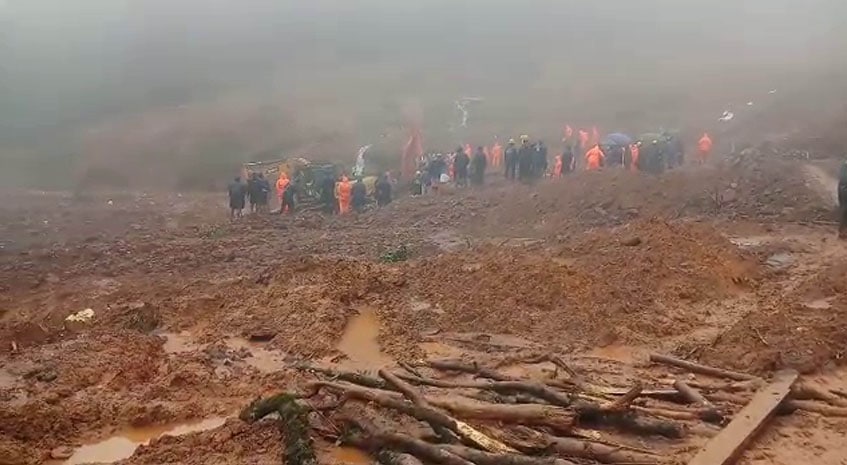
As rains have abated in Kodagu, rescue operations have been initiated in full swing and over 150 personnel from National Disaster Response Force (NDRF), State Disaster Response Force (SDRF) and Madras Engineering Group (MEG) are carrying out search for the priest family that was washed away at Talacauvery on Wednesday midnight.

Five persons of a family including the Chief Priest of Sri Cauvery Temple T.S. Narayanachar are buried alive as a portion of the Brahmagiri Hill collapsed on two houses where the priests lived. Along with Narayanachar, his wife Shantha Narayana, Narayanachar’s brother Anandathirtha Swamiji and relatives Ravikiran Bhat and Pavan Bhat are feared to be dead.

In the search carried out on Saturday, the body of Anandathirtha was found. Search is on to find other missing persons. Meanwhile, daughters of Narayanachar-Shantha couple Sharada and Namitha who are settled in Australia and New Zealand have reached Talacauvery and are discussing with the rescue personnel about the rescue operations.

TemplePriest02KF12aug2020

Rains have abated in the hilly district but areas where River Cauvery flows are still deep under water. Flood situation at Balamuri and Kottamudi remains to be grim as water level has not receded. The connection between Murnad and Napoklu continues to be disrupted. Flood waters have receded in Kushalnagar and the residents have begun cleaning their houses to make them fit for living.

source: http://www.starofmysore.com / Star of Mysore / Home> News / August 10th, 2020

Kodagu secures 18th place in SSLC results

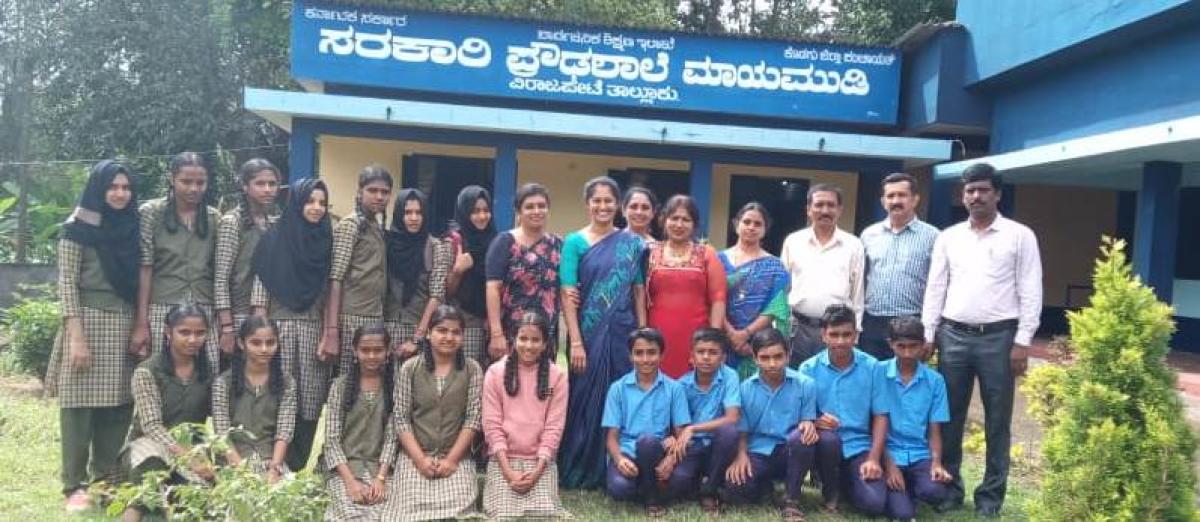
Students and teachers of Government High School in Mayamudi, which has achieved 100% results in SSLC examinations. DH Photo

Kodagu district stood at the 18th position in the state in the SSLC examination results announced on Monday.

The district has shown a lot of improvement as it was in the 22nd position last year.

This year, a total of 7,164 students took SSLC exams in 27 exam centres in the district. Among them, 74 candidates were from Covid-19 containment zones.

Jagath Poovaiah of Fathima Convent in Kushalnagar has emerged as the district topper while scoring 620 out of 625 marks.

Gana, a student of Sandeepani School in Somwarpet, has scored 618 marks and is the second topper from the district. She has scored 122 marks in first language Kannada, 97 in English and 100 each in Hindi, Mathematics, Science and Social Studies.

Other toppers

Vijaya M D from Morarji Desai Residential School and K S Anusha from Lions School, Gonikoppa, have secured 617 marks each and share the third place in the district.

H K Rahul from Vishwamanava Kuvempu High School of Chowdlu village has secured 607 marks.

OLV English Medium School student N K Shravani has secured 605 marks.

Government High School in Mayamudi has secured 100% results. The students have excelled in the examinations, despite the pandemic. Most of the students in the school are from economically backward families and therefore, their achievement is worth a praise, Headteacher Vani Nachappa said.

Other schools which have registered 100% results are: Morarji Desai Residential School in Basavanahalli, Cauvery School and Pragathi School in Virajpet, St Annamma High School and Bright School in Virajpet, Sandeepani English Medium School and Vishwamanava Kuvempu English Medium School in Somwarpet and Shantinikethana School, Kodagarahalli.

source: http://www.deccanherald.com / Deccan Herald / Home> State> Karnataka Districts / by DHNS / August 11th, 2020

Anandatheertha, the sage who lived for Kaveri, dies

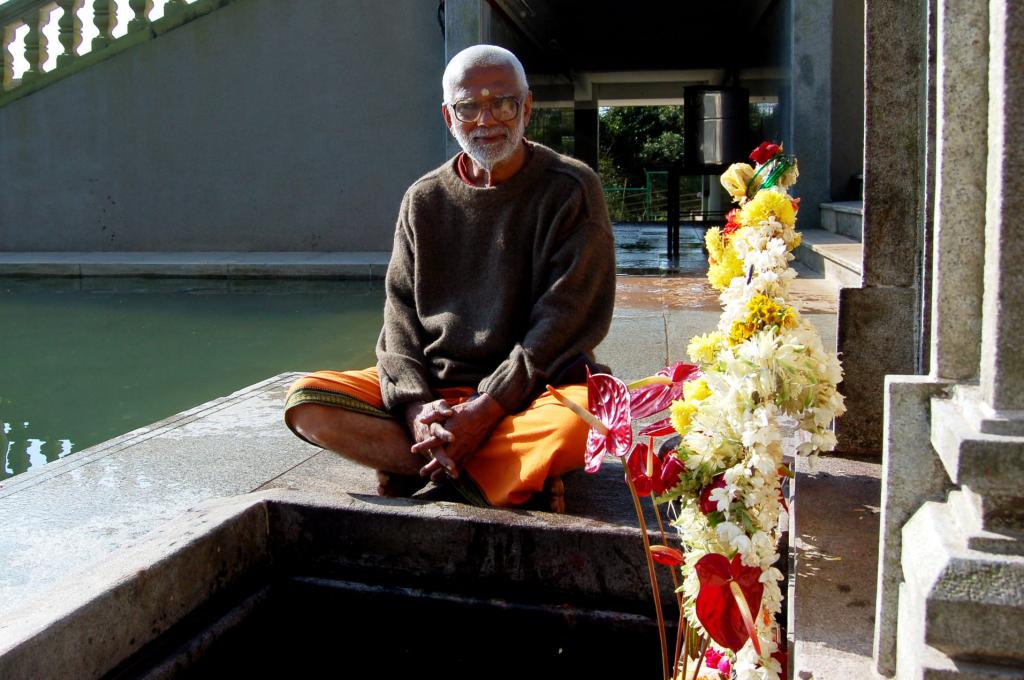
Anandatheertha lived a life of intense commitment to the Kaveri. He died in landslide in Talakaveri on August 6.
AnandateerthaKF10aug2020

Regular trips to Talakaveri, located near Bhagamandala in Kodagu district, Karnataka, are fond for river Kaveri. A temple to Goddess Kaveri, also dedicated to Shiva as Agasthyeswara and Ganesha, overlooks the ancient tank that collects water from a nearby wild spring there.

For the devotees, the tank was the origin of the east-flowing river of peninsular India. According to the legends, the river disappears in its birthplace — only to take rebirth at Bhagamandala located a little away at the foothills.

I met Swami Anandatheertha (died at 76) for the first time one September evening about a decade ago. The meeting was followed by a long conversation about the mighty river, the lifeline of vast stretches of Karnataka and Tamil Nadu.

Several conversations followed over time — and each one of them gave me the impression that he was no less than a living encyclopaedia — not just on the Kaveri but all the rivers on Earth.

It was this school teacher-turned-sage who showed me the exact origin of the river. Anandatheertha lived in Mumbai for long and taught at a school there, but returned to his native place three decades ago to become the traditional trustee and administrator of the temples in Talakaveri and Bhagamandala.

He lived a spartan life in a small house in Talakaveri, located in the Brahmagiri range of Western Ghats at an elevation of 1,341 metres. His brother-in-law was the chief priest of the temple. He lived with his sister and her husband.

A scholar with strong social and political concerns, Anandatheertha was a secular person. Between sacred and profane, he lived a life of intense commitment to the river and the surrounding forests.

In the 1980s, he was among the members of the Save Western Ghats March — a major environmental protection initiative involving scientists, anthropologists, sociologists, activists, journalists and local communities.

He marched together with others for 100 days along the length of the ghats, highlighting the socio-ecological challenges the area grappled with. He had actively engaged with almost all attempts to save the Western Ghats and the Kaveri from human encroachment and destruction.

He travelled extensively across the length and width of the river, urging local communities to save the river. He found comfort in the role of a low profile environmentalist with extreme devotion to the cause.

Journalist and filmmaker O K Johnny, who authored Kaveriyodoppam Ente Yathrakal (Journeys Along Kaveri), pointed out that Anandatheertha was always anxious about the fate of the Kaveri.

Except for the little stretch in his small locality, the river is on its deathbed. For Anandatheertha, Western Ghats and the river were integral to his existence. In a way, he always spoke in the river’s voice.

It was the place where sage Agasthya was blessed by Brahma, Vishnu and Ganesha while meditating under the ashwaththa tree. Saptarishis, or the seven great sages, had performed their yajna or ritual sacrifices at the Brahmagiri peak.

He also spoke about Lord Brahma’s daughter Lopamudra, who was rechristened as Kaveri later. Kaveri eventually turned herself into a river to serve the humankind.

Everything is a fond memory now. On August 6, 2020, Anandatheertha failed to turn up at Talakaveri temple along with the chief priest to conduct the morning rituals. One of the security guards at the temple went to check the priest and found the priest’s house buried in mud.

According to available information, the development officer of the local Grama Panchayat had issued a notice to Anandatheertha, directing him and the family of the head priest to move away from the place for the hill was prone to landslides; Anandatheertha was living at the foothills.

However, Anandatheertha refused to move away. Even the cowshed he had with over 20 bovines was buried deep in mounds of mud and rubble. The area surrounding the priests’ houses is now inaccessible, according to Kodagu district commissioner Anies Kanmani Joy.

A portion of the Brahmagiri Hill collapsed on the two houses where Anandatheertha and the priest were living. At least five people are missing as of August 7.

Other than Anandatheertha, his sister Shantha Narayana (68), her husband and temple’s head priest T S Narayanachar (70) and relatives Ravikiran Bhat and Pavan Bhat are missing.

Mud came crashing down on the two houses Wednesday midnight; around 30 acres of the mountain range collapsed. The Geological Survey of India (GSI) had predicted possibilities of landslides in Talakavery, in the close vicinity of the temple, after detecting surface cracks during last monsoon.

It had conducted extensive field study in Kodagu following the two subsequent floods since 2018 and discovered slope modification without proper precautions as the major cause of landslides.

Unbridled construction of houses by carving hill slopes resulted in land destabilisation in the region. Unsupported slope cuts for road widening also contributed to the tragedy.

A spiritual leader who always expressed concern over change in land use patterns in Brahmagiri hills and the mushrooming illegal constructions has now turned its victim.

He was always against large-scale capital investments to convert Talakaveri as a concrete jungle in the name of spiritual tourism. The encyclopaedia on rivers is no more.

source: http://www.downtoearth.org.in / Down To Earth / Home> Environment / by K A Shaji / August 07th, 2020

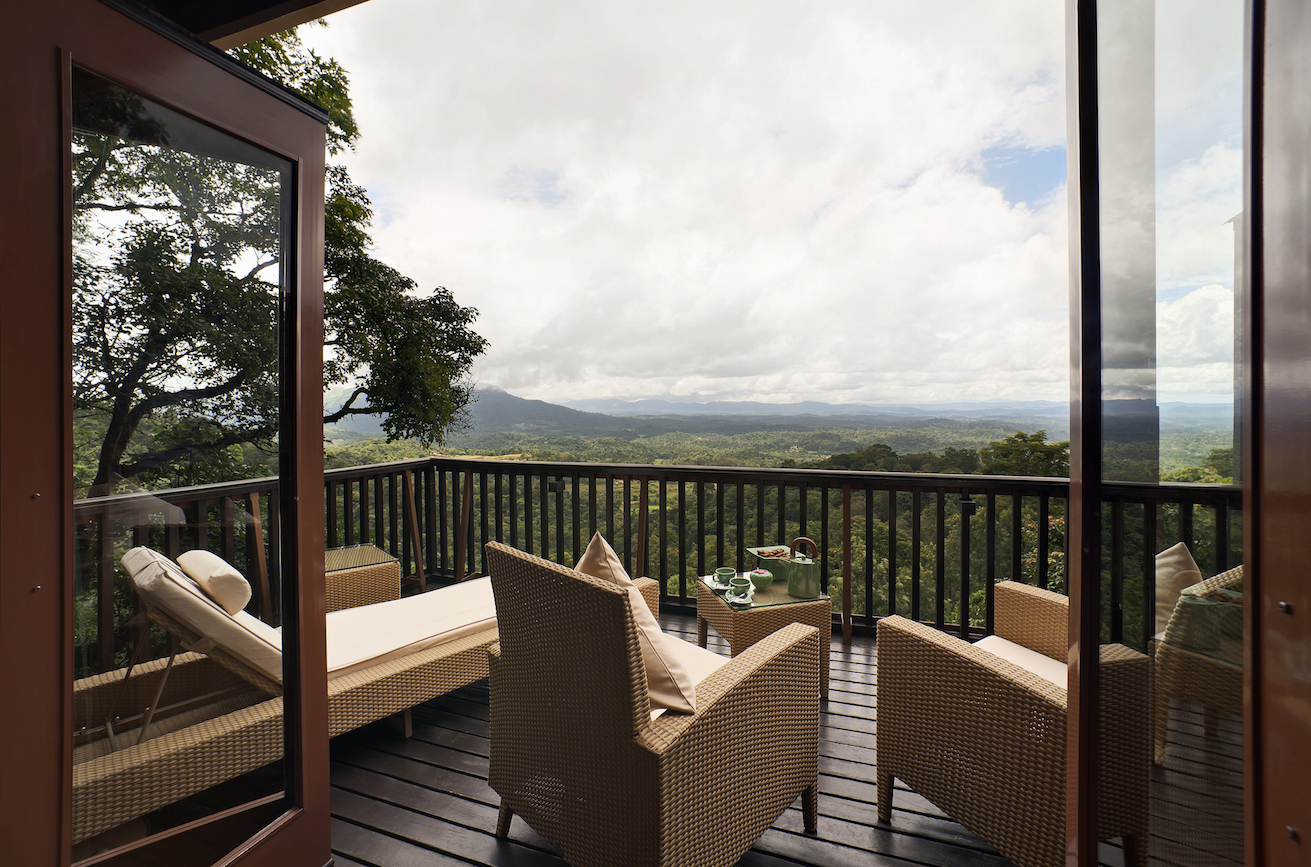
The Tamara Coorg ranked No.1 Romantic Hotel in India

TamaraCoorgKF08aug2020

The Tamara Coorg has once again been ranked #1 on Tripadvisor Travelers’ Choice Awards List of Top 10 Romantic Hotels in India for the year 2020.

Tripadvisor is the world’s largest travel platform and the Travelers’ Choice Awards is considered one amongst the most prestigious in the travel industry as it is rated by the travelers themselves. This coveted award program celebrates travelers’ favorite hotels, restaurants and airlines around the world, honoring unique businesses every year. The Tamara Coorg has also been ranked #16 on the list of Top 25 luxury hotels in India while The Tamara Kodai launched in 2018 has also made it to the list and has been ranked #20 amongst the Top 25 luxury hotels in India.

The Tamara Coorg is a luxury experience nestled in the heart of the hills, where you can rediscover the joy of being in nature; where your quest for serenity ends. The Tamara Coorg spans 180 acres where you will experience nature and luxury at its best as you wake up to the breathtaking view and the calming silence of the hills, disturbed only by the chirping birds and the rustle of leaves. The unique nature based experiences at The Tamara Coorg includes Forest Therapy, Trekking, Plantation Tours, Blossom to Brew, Bird Watching amongst others.

The exquisite cottages at The Tamara Coorg are designed to provide guests with a rustic, luxurious space to unwind, and enjoy an unmatched view of the hills in the distance, while suspended in nature. Relaxation gets even better at the award-winning spa and wellness centre, The Elevation Spa. It offers signature spa treatments, while the fitness centre includes a steam & sauna, a state-of-the-art fitness center, and a Yoga Temple

Ms. Shruti Shibulal, CEO and Director, Tamara Leisure Experiences Pvt. Ltd, said “We are very proud that The Tamara Coorg has been voted #1 in the Best Romantic Hotels in India category for the year 2020. To have the public recognize us for our commitment to providing unforgettable experiences is very meaningful. This recognition is dedicated to our team who are our biggest asset and who have worked passionately to ensure our guests receive warm, personalized and memorable service”.

Travelers’ Choice Best of the Best and Travelers’ Choice winners are calculated based on the millions of reviews and opinions collected in 2019 from travelers and diners around the world on Tripadvisor. The awards take into account the quality and quantity of traveler reviews and ratings specific to each award category. The hallmark of winners continues to be remarkable service and quality experiences for travelers and diners.

Winners are calculated based on the quality and quantity of the millions of reviews, opinions and ratings collected on Tripadvisor in 2019, prior to the pandemic. With over 8.7 million businesses listed on Tripadvisor, these awards are a testament to the service and quality that winners consistently provide to their guests.

source: http://www.voyagersworld.in / Voyager’s World / Home> Hospitality / by Voyager’s World Bureau / August 07th, 2020

Harangi Dam Full: Madikeri MLA Appachu Ranjan Offers ‘Bagina’

AppachuRanjanKF04aug2020

Kushalnagar:

Following copious rains across Kodagu district, the Harangi reservoir is almost full. The dam is two feet short of reaching its maximum level of 2,859 feet at 2,857 feet this morning.

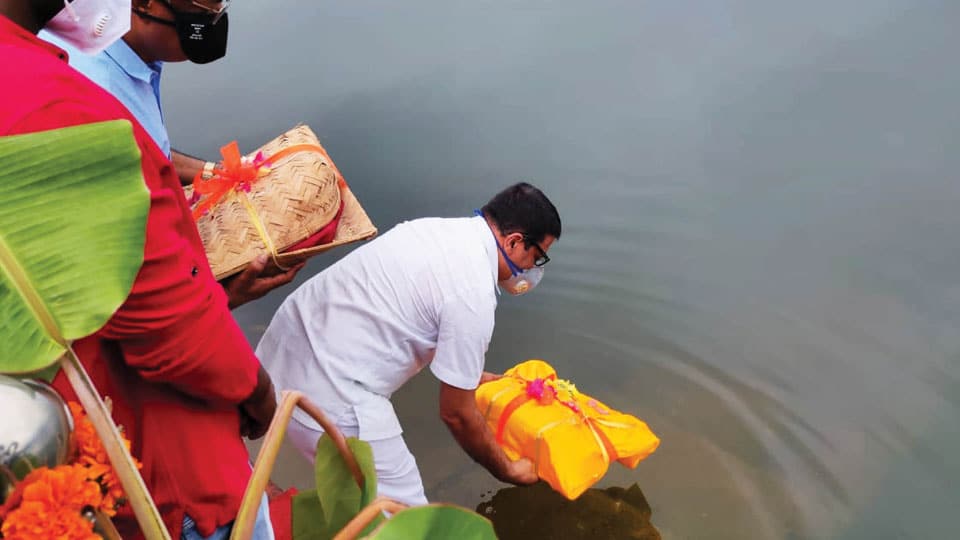
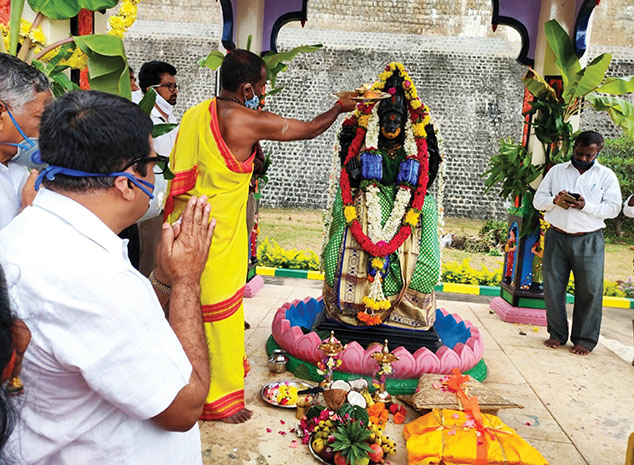
Before the crest gates were opened, Madikeri MLA M.P. Appachu Ranjan offered ‘Bagina’ to River Cauvery after performing puja to the statue of River Cauvery located at the base of the reservoir this morning.

Executive Engineer Rajendra, Harangi Reservoir Assistant Engineer Nagaraju and other BJP leaders were present on the occasion.

This reservoir is the main source of water for KRS dam in Mandya district. Irrigation Department Executive Engineer Rajendra said that water from the Harangi reservoir is now being released into the river.

AppachuRanjan02KF04aug2020

Following heavy flow in recent days, water is also being released into irrigation canals.

The right bank cannals feeding irrigated lands in Hunsur and KR Nagar taluks of Mysuru district are getting 1,500 cusecs of water every day while 400 cusecs of water is being released to left-bank canals feeding lands towards Hassan district. The inflowing water is much clear compared to last year.

Experts opine that this is probably due to growth of vegetation at the areas of landslides, which had caused heavy damage in the region, last year.

Harangi Dam provides irrigation facility to thousands of acres of farmland in Periyapattana, Hunsur and KR Nagar of Mysuru district, Arkalgud taluk of Hassan district and Kodagu district.

The Harangi Dam can hold 8.5 TMC of water.

source: http://www.starofmysore.com / Star of Mysore / Home> News / July 31st, 2020