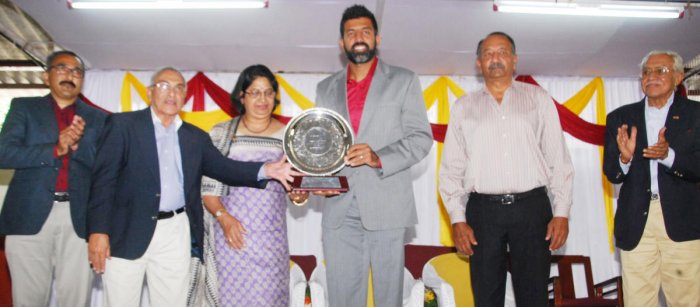
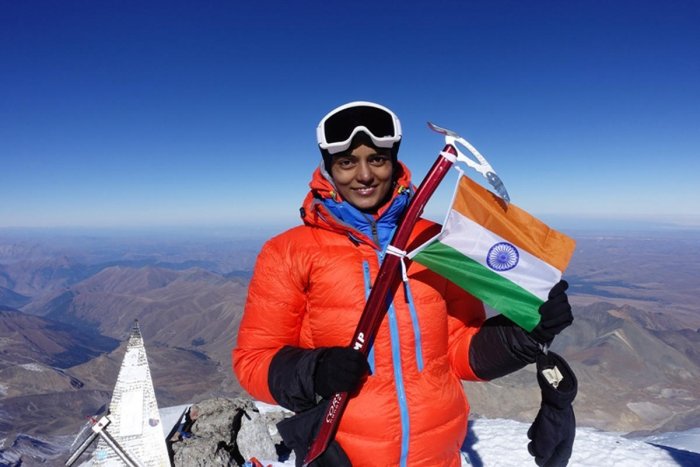
Tennis player Rohan Bopanna is felicitated during a programme held at Kodava Samaja in Madikeri on Monday.
Tennis player Rohan Bopanna has assured of providing further assistance towards the reconstruction of Kodagu district.
He was speaking after receiving felicitation during a programme, organised by Coorg Education Fund and Kodava Samaja, on Monday.
Bopanna said he was not able to visit Kodagu at the time of natural calamity. He said he had provided a little assistance to flood relief work and would extend his help in future as well, he said
“Students are being trained at Rohan Bopanna Tennis Academy in Bengaluru. The academy will also provide training to children in Kanakapura in the days to come”.
He said he was not taking part in any tournament in the near future and had come to Kodagu on vacation. Bopanna, however, stated that he was hopeful of winning international tournaments. “I felt privileged to be conferred with Arjuna Award by the Central government in 2018.”
Coorg Education Fund Chairman Kootanda Uttappa said, “Rohan Bopanna has not only made Kodagu but also India proud with his achievement in tennis.
Rohan’s parents M G Bopanna and Mallika Bopanna were also felicitated on the occasion.
source: http://www.deccanherald.com / Deccan Herald / Home> State> Districts / by Adithya KA / DH News Service,Madikeri / November 20th, 2018
Educational institutions were first started in Kodagu after the British takeover in 1834. Kodavas took to education enthusiastically.
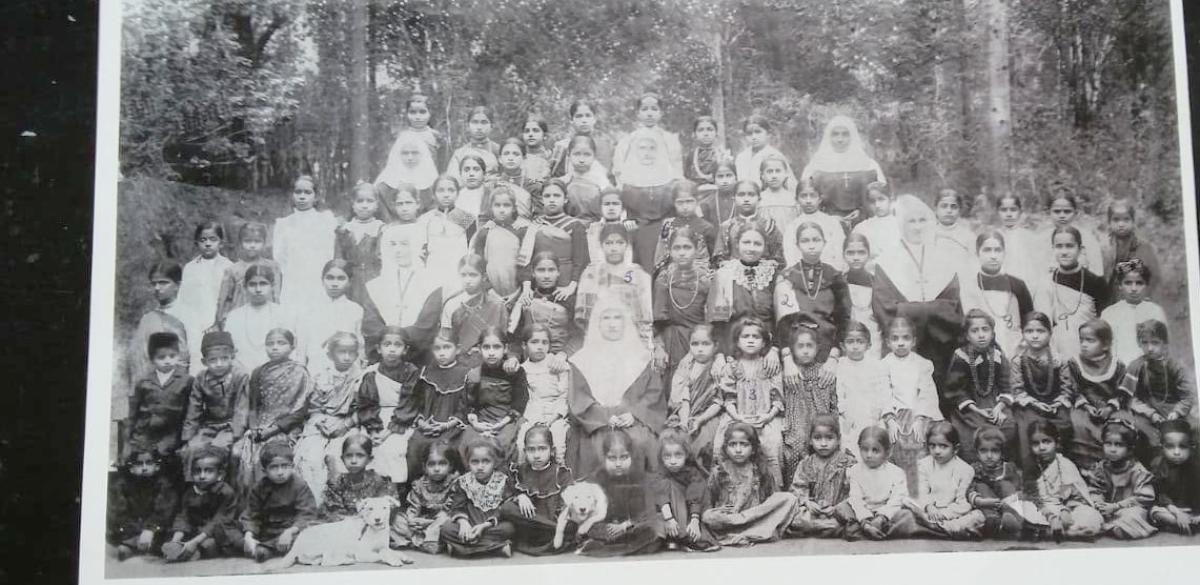
In 1909, St Joseph’s Convent was founded by Catholic nuns in Madikeri. It was primarily for girls, but boys were allowed up to 7th standard. The school catered to both boarders and day scholars.
I recently came across a remarkable group photograph taken in 1911, of the students at the time, along with the European nuns who ran the school.This school offered quality education to the children of those locals who aspired to see their children well-prepared to take advantage of lucrative jobs and career opportunities under the colonial dispensation.
This school saw several generations of students, especially women, pursue higher education and excel in diverse professions at a time when women were not very much involved outside the traditional responsibilities of raising a family.
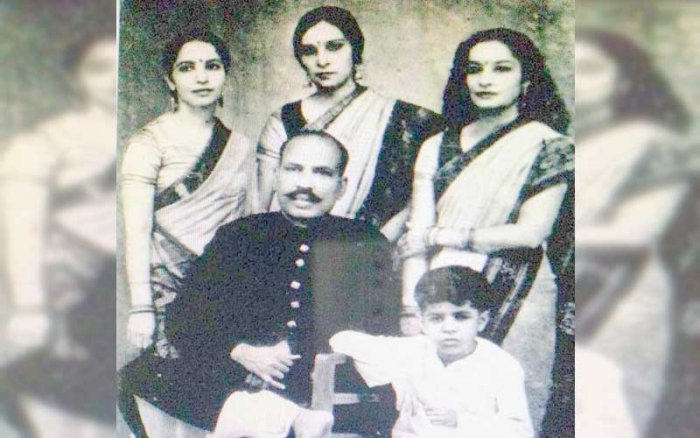
Poovaiah sisters, Sita, Chitra and Lata, with their guru, Jailal.
One family in this frame, frozen in time, has members who went on to become famous during 1930s and 1950s. They are the seven daughters and one son of the first lawyer from Kodagu — Codanda D Poovaiah. Six of his daughters continued their education outside Kodagu. The sisters excelled in various fields and soon came to be known as the ‘Poovaiah Sisters of Coorg’.
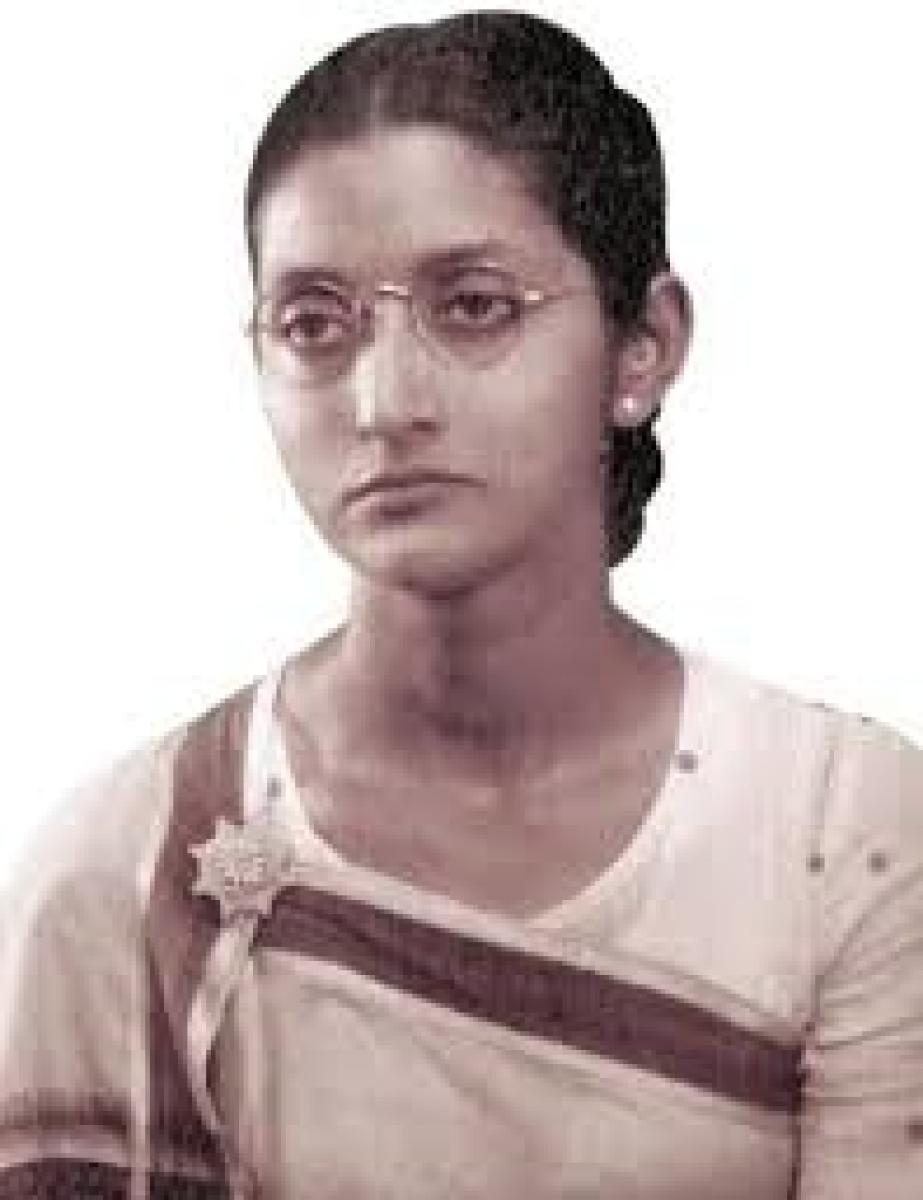
One of them, Rohini, was the first lady from Kodagu to get a degree. She later became the principal of Crosthwaite College, a well-known institution in Allahabad. She was familiar with the Nehru family and had a brief role in the education of a young Indira Gandhi. She was awarded the Padma Shri in 1973.
Another sister, Ashlesha, was one of the first lady doctors from Kodagu. Yet another sister, Swati, did her nursing degree and later went on a scholarship to Columbia University in 1948 for further studies. The three younger sisters — Sita, Chitra and Lata, became renowned Kathak dancers and were much sought after not only for their performances, but also to direct dances in Hindi movies. All the sisters took part in the freedom movement. Chitra and Lata defied prohibitory orders during the ‘Quit India’ movement and were arrested and jailed for two weeks.
Sita went on to earn a PhD in Arts from Bombay University and became the first Kodava lady to get a doctorate degree.
Vivid memories: A century-old group photo of students of St Joseph’s Convent in Madikeri.
Over the years, several girls who had their early education in this school went on to achieve in various fields.
Konganda Accamma who studied here in the 1920s joined Lady Hardinge Medical College in New Delhi. She was one of the first Kodava women to earn an MBBS degree and headed Vanivilas Women and Children’s Hospital for several years. C B Muthamma, India’s first woman IFS officer.
One of the most distinguished alumna of this school is C B Muthamma, who was the first woman to qualify for the Indian Foreign Service in 1949. She also has the distinction of being the first lady ambassador from the IFS cadre. Muthamma had to face gender discrimination while in service. She fought against the government and went to the Supreme Court in 1979 for redressal. The apex court passed a judgement in her favour which paved the way for other women civil servants from being discriminated against. She also authored a book titled, Slain by the System, in 2003.
St Joseph’s is now a co-ed school and continues to provide quality education.
source: http://www.deccanherald.com / Deccan Herald / Home> Spectrum / by C.P. Belliappa / November 10th, 2018
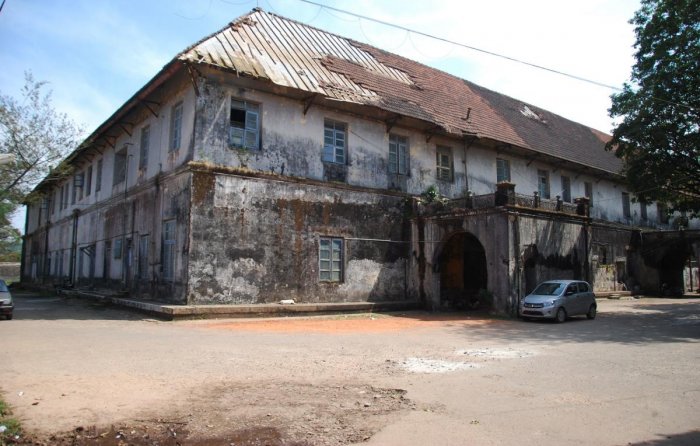
The roof of the Old Fort main building is on the verge of collapse in Madikeri.
The lack of basic amenities is haunting several tourists places in Kodagu district. The Madikeri Fort, referred to as ‘Palace’ situated on the heart of the city, should have attracted a large number of tourists. However, the crumbling structure is disappointing tourists.
The roof of the fort is on the verge of collapse. The walls have not seen whitewash or paint for several years. The rooms, where soldiers were staying during the king’s reign, have collapsed completely. Weeds have covered the fort premises.
With the damage to the roof, rainwater enters the fort. Plastic sheets have been used to protect it from rainwater. With this, the history of Madikeri fort will soon disappear.
Historians have expressed concern over the lack of maintenance by the Archaeological Department. They fear that a few remaining traces of history will soon enter the pages of the history.
Haleri ruler Mudduraja built a mud fort and palace in the 17th century. Later, Tipu Sultan rebuilt it using stones and renamed it as Jaffarabad. In 1790, Dodda Veerarajendra conquered the fort. In 1834, the fort came under the reign of the British.
The palace that was built by Linga Raja Wodeyar II houses government offices. With the increase in the density of people, the palace is in a deplorable condition. The Zilla Panchayat office, MLA’s office, Agriculture Department, district library, court complex and Bala Mandira are functioning from the palace itself.
Chandan, a tourist, said “Hundreds of vehicles visit the fort premises daily. Due to the pressure, the fort is losing its identity. Without any maintenance, the huge doors are losing charm. The visitors have also disfigured a few of the carvings. Even the cannons are not preserved. We are disappointed by watching this fort.”
An officer said, “We fear to work here during monsoon. The Zilla Panchayat and the court complex will be shifted shortly.”
source: http://www.deccanherald.com / Deccan Herald / Home> State> Mangaluru / by Naina J A / DH News Service / November 13th, 2018
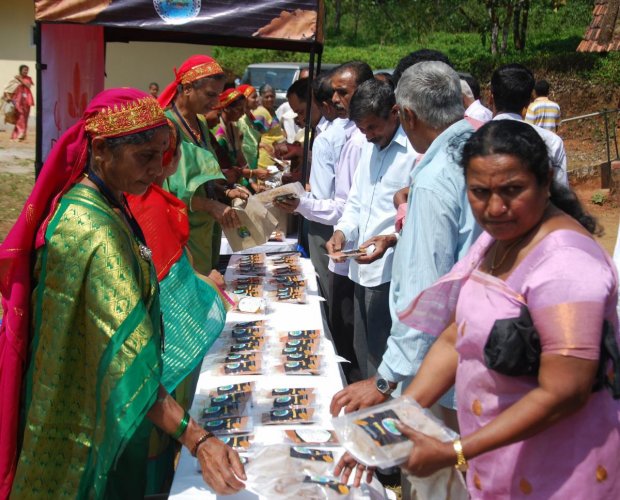
Women flood victims sell masala products under the name ‘Coorg flavours’ in Madikeri on Sunday.
“There is a need to give priority to build the lives of flood victims,” said writer Vaidehi.
She was speaking after launching various masala products under the brand name ‘Coorg Flavours’ prepared by women flood victims under a skill development project of Bharatiya Vidya Bhavan and Project Coorg at Kalooru in Madikeri taluk on Sunday.
It was a moment of pride for the flood victims, who have started rebuilding their lives by selling various products prepared by them.
MLA K G Bopaiah said, “The flood victims should lead a self-sufficient life. The quality of the products should be maintained.”
Project Coorg Convener Balaji Kashyap said that the women were imparted 21 days of training and have prepared 11 varieties of masala products.
Kalooru Kakera family has announced the donation of 20 cents of land to construct a building to train the women.
Bharatiya Vidya Bhavan Kodagu unit president K S Devaiah spoke on the occasion.
source: http://www.deccanherald.com / Deccan Herald / Home> States> Districts / by Adithya KA / DH News Service – Madikeri / November 11th, 2018
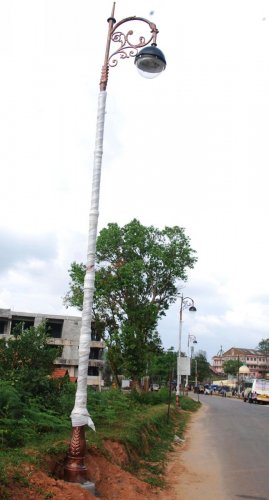
The decorative lamp posts on the road leading to Raja Seat in Madikeri.
The installation of decorative lamp posts has been completed on the road leading to Raja Seat in Madikeri. The heritage-design streetlights will light-up the streets during Deepavali.
The Urban Development Authority had taken up the work of installation of decorative lamp posts from Muthanna Circle to Raja Seat at an estimate cost of Rs 20 lakh.
The move is expected to attract more tourists.
The lamp posts, brought from Indore, are made up of cast iron with corrosion-resistant material to protect it from all kinds of corrosion. As a result, the streetlight poles will not get rusted. The poles will have 250 MHz bulbs,” said Urban Development Authority former chairman Chummi Devaiah.
The CMC had spent lakhs of rupees for installing solar lamps on the road leading to Raja Seat. However, the solar batteries were stolen by the thieves and the streetlights stopped functioning. Even the streetlight poles went missing. Now, keeping in mind the safety, decorative lamp posts are being installed.
The residents said that quality electricity poles and streetlights should be installed in different parts of the CMC jurisdiction. The solar lamps are defunct at Indira Nagar, Chamundeshwari Nagar, Gowli Beedi, Mahadevapete Road, Man’s Compound and Rani Pete Roads.
Chandan Rao, a resident of Gowlibeedi, said, “The CMC should take up the maintenance of streetlights before the onset of monsoon. All the electricity lines were damaged in the rain which lashed in August. As a result, majority of the streetlights are not functioning. The CMC should wake up and take up the restoration works.”
Indira Nagar resident Ranjitha said, “Due to the lack of streetlights on the road leading to Raja Seat and Nehru Mantapa, miscreants were creating problems for visitors during evening hours. Fearing it, many women were not taking the route for walking. The streetlights should also be installed at Nehru Mantapa.”
source: http://www.deccanherald.com / Deccan Herald / Home> State> Districts / by Adithya KA / DH News Service / Madikeri – November 04th, 2018
Paarane will be the first ever Kodava language film to compete in international film festivals.
Kodava’s movie Paarane’s first look poster and teaser will be released by the director Sanal Kumar Sasidharan, of Sexy Durga fame, today. This is yet another film that digs into identity crisis in the border area of Karnataka and Kerala. It is an experimental film by Shreelesh S Nair, who is a Keralite currently residing in Bengaluru.
Interestingly the film is made in Kodava, a language which is rarely explored.
The film is titled after a village named Paarane located in Kodagu, and the story is based on the struggles of existence and identity faced by the people,” says the debutant. “Paarane explores the land and culture of the region, and has people revolting against the invaders who try to encroach on their native land to safeguard their motherland. This is the theme of my story,” explains Shreelesh.
Interestingly, this film is made with a shoestring budget of Rs 3.5 lakh and has non actors in its cast. The cinema was shot without a written script. “We considered the actors from the same village Paarane, and filmed around Coorg district, which has sync sound and mise en scene,” says the director.
Director is thrilled to know that Paraane has been nominated for a couple of festivals. “A Kodava langauge film making it to film festivals, which is first time in India, has definitely excited the team. It has been nominated at Indonesia Film Festival and a small festival to be held in Berlin,” he mentions.
source: http://www.newindianexpress.com / The New Indian Express / Home> Entertainment> Kannada / by Express News Service / November 08th, 2018
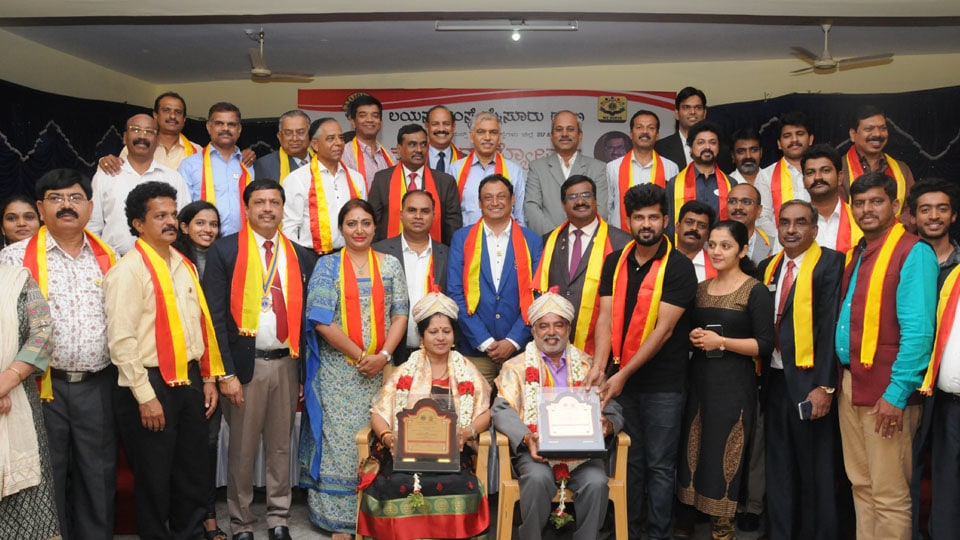
Kendra Kannada Sahitya Salaha Samiti Member and senior theatre personality Addanda C. Cariappa and his wife Anitha Cariappa, a theatre artiste, were conferred ‘Dakshina Kesari’ award by MP Pratap Simha at the Kannada Rajyotsava programme organised by Lions Club of Mysore South at Golf Club in city yesterday.
Speaking on the occasion, Pratap Simha recalled Addanda Cariappa’s role in his (Simha) victory in the 2014 Lok Sabha polls.
Recalling that thousands of Kodavas had thanked him for his article in State-level newspaper opposing veteran writer Ko. Channabasappa’s alleged derogatory articles on the community ahead of the 2014 LS polls.
Pointing out that Kodavas played a key-role in his victory in the 2014 LS polls, he opined that Addanda Cariappa’s strategy helped him a lot in winning the elections. Noting that Addanda Cariappa and his wife Anitha were greatly influenced by Appachha Kavi, the MP said that the couple has been spreading Kodava culture across the country.
Recalling the gallantry of Kodavas, he said that 26 Kodavas had gained top positions in the Indian Army till now and there were many Kodavas serving the Army in lower ranks.
Observing that Kodavas have made a mark in almost every field, the MP recounted how Kodavas starred off Tipu Sultan’s attack on Kodagu.
Highlighting the contributions of Nalwadi Krishnaraja Wadiyar for the development of Mysuru, Simha said that it would not be wrong to say that Kannada has survived because of the erstwhile rulers of Mysuru.
Regretting that Mysuru remained backward because of the vested interests of some politicians, he said that although Mysuru had earned a big name in Tourism, it lacked in terms of development and this was because of the vested interests of a few politicians.
Highlighting his achievements as an MP, Pratap Simha said that expansion of Naganahalli Railway Station, Development of Mysore Airport in Mandakalli, promotion of Industries and many other works were among his contributions to Mysuru-Kodagu LS Constituency.
Addanda Cariappa, in his address, observed that an organised struggle holds key for saving Kannada from the onslaught of other languages.
Pointing out that there is a general feeling that the Kannada Development Authority, which is supposed to promote Kannada across the State, had restricted itself to Vidhana Soudha, he criticised the Government’s move to celebrate certain unnecessary Jayantis.
He also lashed out at the Government for showing disinterest for celebrating the Jayanti of Nalwadi Krishnaraja Wadiyar, who has contributed immensely for the development of the State.
Noting that he was delighted to be conferred ‘Dakshina Kesari’ award, he said that the conferment of the award had added more responsibility on him for taking up the cause of Kannada.
Lions Club of Mysore South President K.K. Mohan, MP Pratap Simha’s wife Arpita Simha, Ln. Nagaraj V. Bairy, Ln. G.S. Santosh, Ln. M. Tataji and others were present.
source: http://www.starofmysore.com / Star of Mysore / Home> News / November 05th, 2018
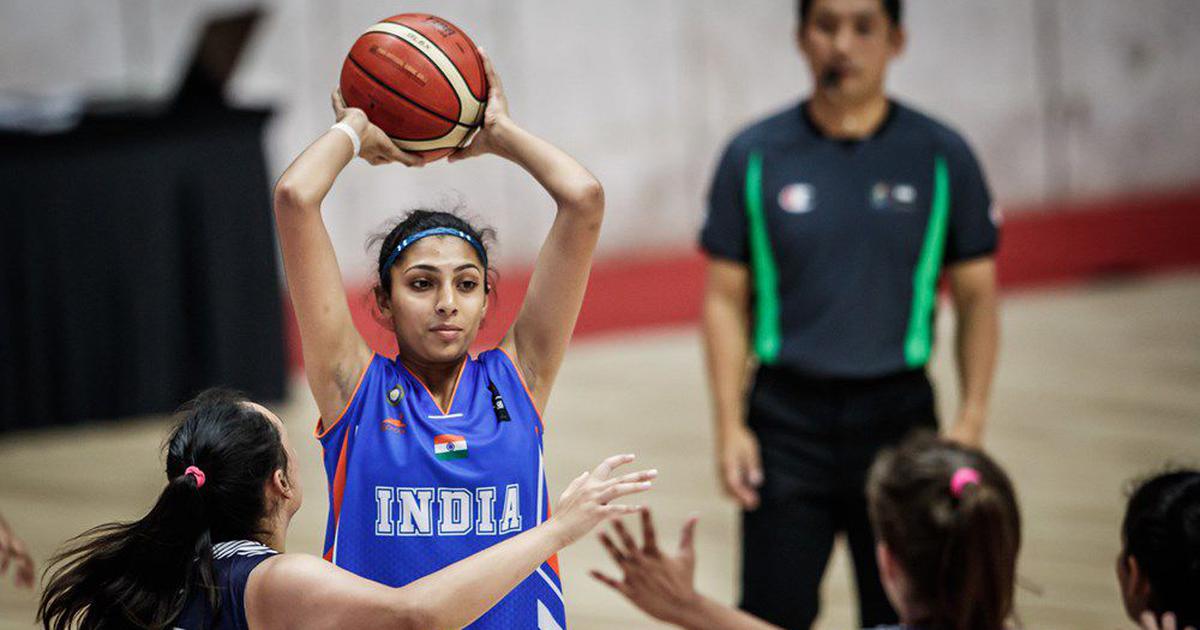
Harshitha was India’s leading scorer as the team progressed to Division A after beating Kazakhstan in the final.
There’s a sense of inevitability when Harshitha Bopaiah picks up the basketball for her sixth free throw in the Division B final of the FIBA Under-18 Women’s Asian Championships. Her body language doesn’t attempt to mask with fake nonchalance the pressure within. Her face doesn’t give false looks of insouciance. She’s focused.
Kazakhstan’s an easy opponent on paper as they lost two of their three group games and only won against Samoa. But they are in the final after beating Syria.
This is Harshitha’s first final of any tournament as an India player. She’s performing in front of her family and friends at Sree Kanteerava Stadium and the home crowd has not stopped cheering. There’s tension which you can see on her face. But all her five previous free throws of the night – and two in the semi-final – were executed to smooth perfection. Hence, the sense of inevitability.
Harshitha picks up the ball, pauses for a fleeting moment, breathes twice and, once again, makes the perfect parabola that earns her team an additional point. Six free throws out of six.
The point stretched India’s lead in the third quarter to 47-24 in the third quarter. They eased to a 68-45 win over the Kazakhs to earn a berth in Division A of the Championships in 2020.
Harshitha, who’ll turn 20 by then, won’t be there to play that tournament. It’s been just three years since started playing basketball. But she reluctantly admits to having bigger ambitions.
“I would like to play for the Indian senior team, and perhaps, play abroad as well,” she tells Scroll.in.
But she barely had those ambitions when she began hooping back in Coorg.
The 18-year-old was encouraged to participate in various sports as a kid as sports ran in her family but of a different kind. Her dad played hockey for the state team and her brother represented his University side.
However, Harshitha excelled in athletics – long jump and high jump – at school.
“I’d come for a selection trials for athletics. A coach there told me that I have the height (now 5’9) for basketball. So, I went for the selection… and, got into the team.”
As a 15-year-old she joined the sports hostel in Vijaya Nagar for further training. Initially, she would face challenges on the court having never trained in the game before. But with time she adjusted.
“But I enjoy playing the game a lot,” she says.
The Indian team was without the injured teenage sensation Vaishnavi Yadav, who scored 71 points in a Junior Nationals Game in Ludhiana. But in her absence, Harshitha stood out, scoring 75 points in five games to finish the tournament as India’s leading scorer.
Putting the ball in the basket, of course, is fun for Harshitha. But she finds greater relish whilst defending – blocking and stealing the ball from the opposition (she made four steals in the final against Kazakhstan).
But Harshitha never imagined herself playing in front of her home crowd in the Indian jersey. Atleast not so early in her career.
“I never thought I’d make the side. I gave my best in the national camp. And, when I got into the team, it was a little scary because I knew I would be playing in front of my home crowd. But, two-three matches later, I got encouragement from the crowd, the coach. I felt proud of myself that I ended up as my team’s leading scorer in the tournament,” she said.
Certainly, India coach Zoran Visic was proud of her. He is incharge of India’s three teams – U-16, U-18 and the senior – in Bengaluru. But he was more than impressed with her consistent performance.
“Harshitha was very good, on both the rebounds as well as scoring points for us. In the semi-finals, too, she got a double-double, almost triple-double. And, she’s an important member of this team,” Visic said.
Both Harshitha and Visic would hope that she can be an important member of the senior team as well.
source: http://www.scroll.in / Scroll.in / Home> The Field> Basketball / by Praveen Sudevan / November 04th, 2018
Coffee is indisputably one of the most favourite and widely consumed beverages in the world. It is estimated that more than 200 crore cups of coffee are consumed by people around the globe on a daily basis. The coffee plants originated in the African continent, and Arabica and Robusta are the most commonly grown varieties.
The tale of coffee
There are many legendary accounts related to the origin of the coffee. The most popular among them is the tale of Kaldi, the Ethiopian shepherd, who noted how his goats have become excited and active after eating the leaves of a plant which bore red shiny seeds. He took the leaves and seeds of this plant to the nearby monastery to know more about it. It is said that the monk at the monastery brewed a special drink using the seeds brought by the shepherd. After drinking the concoction, the monk discovered that he could indulge in his works with renewed energy and remain wake at night to offer prayers. So many believe that the first cup of coffee was brewed in an Ethiopian monastery by a monk.
It was in a 9th century document that coffee was mentioned for the first time. Crassus, a Persian apothecary has written about a drink called bunchum. It was noted that bunchum was brewed from a fruit called bun, which means coffee beans in the Ethiopian language. Historians thus surmise that Craussus had mentioned about coffee brewed from coffee beans. In the meantime, Arab merchants had begun cultivating coffee plants in Yemen, which were brought from Ethiopia. Their coffee cultivation was based on the hilly areas in the south western parts of Yemen. This coffee variant, known as Arabica, had reached almost all the Arab countries as well.
Turkish brew
Ozdemir Pasha, the Turkish Ottoman governor of Yemen had taken tons of coffee to Istanbul. He, in fact, is credited for introducing coffee to Turkey. It was the Turkish people who brewed the coffee, for the first time, in the way in which it is consumed today. They roasted the coffee seeds, ground it to fine powder and then mixed in hot water to make the beverage. As per the historical records, the Ottoman emperor Suleiman had created a special title called the ‘chief coffee maker,’ and the person who bore that title enjoyed a special position in his royal court as well. It was during the reign of the Ottoman Empire that coffee reached various parts of the world and became one of the most prominent drinks.
Unique flavour
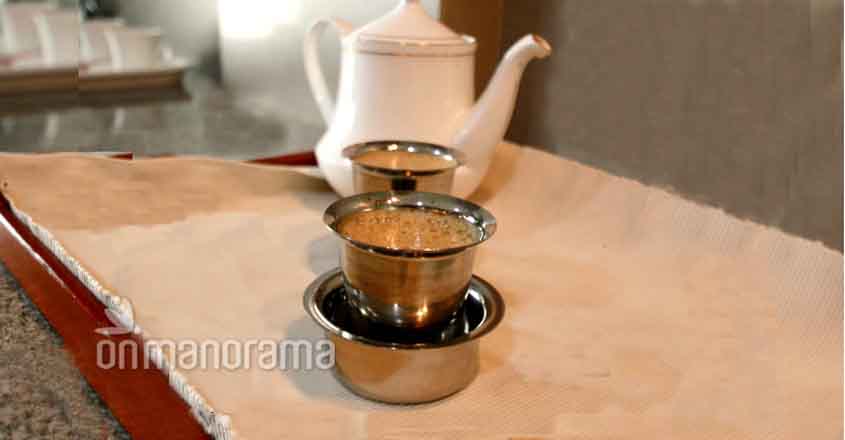
In this image taken on May 13, 2013, glasses of cold-brewed iced coffee for summer are shown served on a tray in Concord, N.H. (AP Photo/Matthew Mead)
By the 17th century, coffee had become popular in Europe and North America. When Britain imposed tea tax in America in 1773, the Americans resorted to coffee. The Arab merchants tried to retain their dominance in coffee export when the demand increased significantly in Europe and America. They had exported only roasted coffee beans or the seeds which were boiled in water, to prevent the cultivation of coffee in other parts of the world.
However, the Dutch, French, and the Portuguese had begun coffee cultivation at their various colonies around the globe. The Dutch had cultivated coffee in South East Asia, while the French had coffee plantations in the Caribbean islands. The Portuguese, too, had large plantations in their South American colony, Brazil. By the 1830’s Brazil became the largest exporter of coffee in the world, and still continues its leading position in coffee export followed by Vietnam and Colombia. Robusta coffee which originated in the central and western Africa is largely grown in Vietnam.
Coffee in India
It was Baba Budan, a Sufi monk who is believed to have smuggled coffee out of the Yemenese harbour town Mocha to India, while returned from a pilgrimage to Mecca. There are many portraits of Baba Budan in which he is portrayed as smuggling 7 coffee seeds by hiding them under his long beard or strapping them onto his chest. It is said that Baba Budan, who was a resident of the Chandragiri hills in Chikmanglur, Karnataka, had grown those coffee seeds here in 1670. Today, these hills are known as the Baba Budan hills. In 1870, the first first coffee plantation in India was set up near the Baba Budan hills. J H Jolly, who was the manager of the Parry and Company, had requested the king of Mysore to allot 40 acres of land for coffee cultivation. Later, the coffee reached other places in south India like Wayanadunand Nilgiri.
Indian special
Though the British had tried to cultivate coffee in India, it wasn’t as successful in the beginning.They had faced a backlash when the Arabica variety was affected by the coffee rust disease. However, in the 19th century the British had managed to grow coffee in more than 3 lakh hectares of land. In the initial stages, the coffee plantations were opened mainly in places like Mysore and Coorg, and the Robusta variety was grown here. Later they began to cultivate S795 variety of the Arabica coffee which was immune to the coffee rust disease.
In the mid 19th century, India emerged as a leading exporter of coffee. But the market crashed due to the severe financial constraints which arose during the world wars. To effectively tackle this a coffee cess committee was formed in 1935. As per their recommendations, Indian coffee house outlets were opened in 1940. It was during this time that the renowned Indian filter coffee emerged.The filter coffee prepared by mixing roasted coffee beans, chicory, milk, and sugar became instantly in popular in South India. The Coffee Board of India was formed in 1945 to regulate the coffee exports exports and to aid the small scale coffee cultivators.
The Indian Coffee House
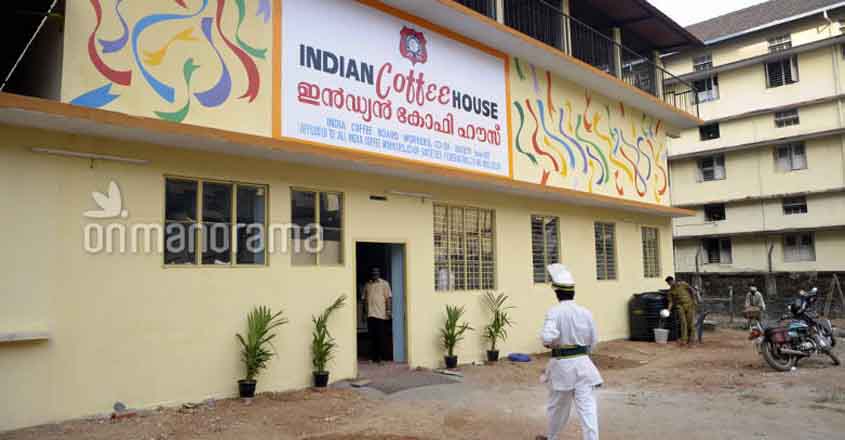
In the 1950’s, the Coffee Board of India decided to shut down the India coffee house outlets opened during the British era, and to terminate the labourers who worked at these outlets. However, the labourers, led by the charismatic communist leader A K Gopalan, formed the India Coffee Board Workers’ Cooperative Society on 19 August 1957 at Bangalore. The first outlet of the Indian Coffee House was thus opened, in the same year, in Delhi. The next year, the Indian Coffee House was opened in Thrissur, making it the first outlet in Kerala. More outlets of the iconic Indian Coffee House were opened at various places like Thalassery, Lucknow, Nagpur, Jabalpur, Mumbai, Calcutta, Pune, and Tamil Nadu.
Expensive brew
It is in the south Indian states that coffee is cultivated in abundance. Karnataka produces 71% of the total coffee production while Kerala has 21% and Tamil Nadu produces 5%. The Indian coffee is in great demand around the globe as coffee here is mostly grown in mixed farming, getting ample shade under the cardamom, clove, nutmeg, and cinnamon crops. The Indian Monsoon coffee has a distinct flavour and aroma. There are coffee plantations in states like Andhra Pradesh, Odisha, and many north eastern states as well.
The unique coffee produced by the tribal people of the Araku valley in Andhra Pradesh is one of the most famous organic coffee brands in the world. The Araku brand of coffee has achieved an international honour by winning the Prix Epicerie Award 2018. It is for the first time that an Indian coffee brand has won this prestigious award. The brand which sells 100% authentic Arabica coffee now has an outlet in Paris as well. Five different varieties of Araku coffee are sold at this outlet, and the premium coffee variant costs up to Rs 7000 per kilogram.
source: http://www.food.manoramaonline.com / OnManorama / Home> Food> Foodie / by M Muhammmad Shafi / November 02nd, 2018
WELCOME. If you like what you see "SUBSCRIBE via EMAIL" to receive FREE regular UPDATES.
Read More »