Category Archives: Records, All

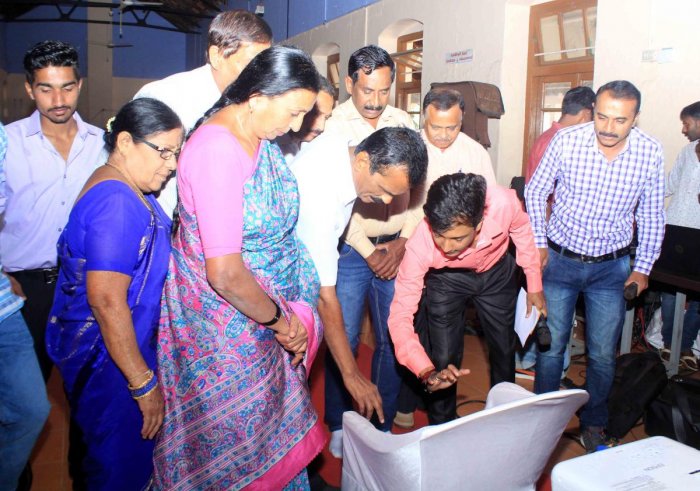
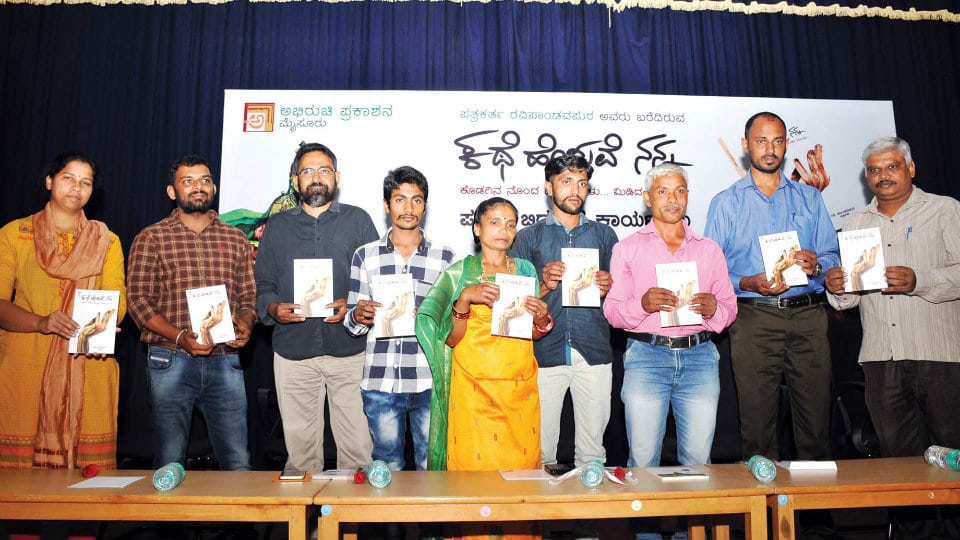
Book On Kodagu Flood Victims Released

KodaguFloodKF18dec2018

Mysuru:

“The search for my daughter Manjula whose life was lost during the landslide and floods on Aug.17 at Jodupala where she was studying in my sister Gowramma’s house is still going on. I live in a tribal area and on that fateful day even after I came to know of the tragedy, I was not able to reach the place. It was only four days later that we were able to go there only to find that my sister and other members of the family had all died,” recalled Somaiah, father of the flood victim Manjula from Kodagu.

He was sharing his experience after releasing the book ‘Kathe Heluve Nanna – Kodagina Nonda Hrudayagalu… Midida Managalu’ written by journalist Ravi Pandavapura at the Rani Bahadur Auditorium here this morning and said that his daughter was a tenth standard student and he was still in search of her body.

Kodagu Superintendent of Police Dr. Suman D. Pennekar said that it was just one month before she had taken charge and this was a very new experience when the tragedy struck, which was very challenging.

“There were distress calls all around. But everyone be it the local guides, officials and the public rose to the occasion and supported us in those trying times. Even the Chief Minister, Deputy Chief Minister and Deputy Commissioner were with us. However, our first priority was to rescue those who were alive and only later we concentrated on recovering the dead bodies,” she said.

Senior Journalist Ananth Chinivar spoke about the book. Kodagu Press Club President Ajjamada Ramesh Kuttappa presided. Somaiah’s wife K.S. Jayanthi, sons K.S. Darshan and K.S. Roshan were present.

Abhiruchi Prakashna’s Abhiruchi Ganesh who has published the book and author Ravi Pandavapura were also present. The 128-page book is priced at Rs. 105 and the proceeds of the book will go towards Kodagu Relief Fund.

Follow Star of Mysore on Instagram www.instagram.com/starofmysore

source: http://www.starofmysore.com / Star of Mysore / Home> News / December 14th, 2018
APMC to reintroduce ‘Raitha Santhe’ in Madikeri

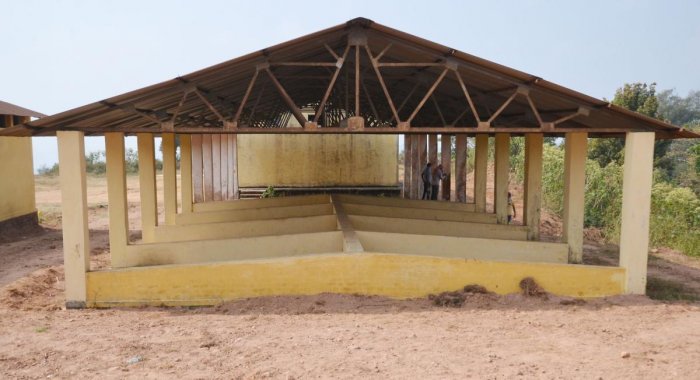
The yard identified for organising ‘Raitha Santhe’ on the premises of the APMC in Madikeri

The APMC in Madikeri will reintroduce ‘Raitha Santhe’, the farmers’ shandy, from December 21.

The weekly shandy was stopped following landslides and incessant rain in Kodagu.

After a long gap, the APMC has decided to relaunch the unique market wherein a platform will be provided to farmers to sell their produce directly to buyers (customers).

The programme, which was initiated on January 12 this year had received a poor response. The APMC has now relaunched the shandy by incorporating some changes with an objective to make it friendly for both the farmers and the buyers.

“From December 21, ‘Raitha Santhe’ will be held on the premises of the APMC near KSRTC depot on every Friday and Wednesday,” said APMC Madikeri Chairman S Ambi Cariappa.

It has been decided to hold the farmers’ shandy on two days in a week. Earlier, the market was meant only for the farmers of Madikeri taluk. This time, the facility will be extended to farmers from various parts of Kodagu district as well as from the state.

Basic amenities such as a new building and parking space will be provided at the venue of the ‘Raitha Santhe’.

APMC member Beppurana Medappa said that the ‘Raitha Santhe’ intends to encourage customers to purchase products directly from farmers at reasonable prices.

Apart from vegetables and fruits, value-added products by farmers will also be featured during the sale. Farmers have also been extended tax exemption to carry out the business, he added.

Apart from vegetables and fruits, value-added products by farmers will also be featured during the sale. Farmers have also been extended tax exemption to carry out the business, he added.

Another member Kangira Sathish said that earlier, the customers had complained of a limited variety of vegetables at the ‘Raitha Santhe’. Hence, provisions have been made this time to sell a wide range of vegetables, along with groceries.

source: http://www.deccanherald.com / Deccan Herald / Home> State> Districts / by Adithtya K A / DH News Service / Madikeri – December 16th, 2018

Joshna bags record-equalling 16th national title, Mahesh wins maiden crown

Noida :

Squash star Joshna Chinappa equalled Bhuvneshwari Kumari’s record of 16 national titles while Mahesh Mangaonkar won his maiden crown on the concluding day of the premier domestic event at the HCL campus here on Sunday.

In the two contrasting finals, Mahesh pipped Vikram Malhotra 11-4, 13-15, 11-2, 5-11, 15-13 while Joshna edged out Urwashi Joshi 9-11, 11-1, 11-6, 11-5.

In comparison to the gruelling battle in the men’s final, Joshna had it easier though Urwashi Joshi of Maharashtra did surprise her by taking the first game.

As it turned out, the dent Joshna suffered was more of an aberration. The reigning champion ensured the ride was smooth from there on en route a record equalling crown.

The 32-year-old said it was always special to come back to the Nationals, where she won her maiden title as a 14-year-old. Overall, Joshna has played in a staggering 18 finals, losing just two of them.

“There is a funny story behind this. When I was 12, my father told me that ‘you have to win your first national title before you turn 16’ and I did it at 14. The plan at that point was to win as many Nationals as I could. For me, playing the Nationals is more about reliving the child in me every since I played my first as a 12 year old,” Joshna told .

Her achievements on the international stage easily eclipse Kumari’s feats and now Joshna wants to break her national record.

“Yes I do want to have the maximum number of titles, I am not going to lie abut that. It is nice to equal her record. To be here after 20 years in the sport, is a testament to the work I have done,” said the world number 15.

Joshna has dominated the National Championships over the last two decades but has also had some tough battles with Mekhala Subedar and longtime teammate Dipika Pallikal, who is not a regular at the domestic event.

“My biggest battles have been with Mekhala and Dipika. Everyone loves watching Dipika and me play. Shame she is not here,” added Joshna, who initially struggled to sight the ball in sunlight during the final played on a glass court.

In the men’s final, Mahesh outwitted Vikram Malhotra in a five game tussle of fluctuating fortunes.

Vikram had three match points to settle the argument but failed to grab them. A final can always be tense and Mahesh and Vikram displayed that no less. A year ago in a PSA event, the only occasion when the two had met on the professional circuit, Vikram had edged Mahesh, again over five games.

BS PDS PDS
source: http://www.outlookindia.com / Outlook / Home> The News Scroll December 16th, 2018

Short film ‘Nentathi Goode’ released

Karnataka Arebhashe Samskrithi Mathu Sahitya Academy president P C Jayaram releases the short film ‘Nentathi Goode’.

All of us should develop self-respect for the mother tongue, said Karnataka Arebhashe Samskrithi Mathu Sahitya Academy president P C Jayaram.

Speaking after releasing an Arebhashe short film ‘Nentathi Goode’, he said, “All languages have there own distinct feature and culture. The younger generation should conserve the language for the future generation.”

He lauded the team of youths for coming out with a short film highlighting the culture and farming system of the Arebhashe speaking community members.

Madikeri Gowda Samaja president Periyana Jayanand said, “The short film, ‘Nentathi Goode’, is a new attempt and it has highlighted the culture and tradition of the Gowda community members in Kodagu and Dakshina Kannada district. There has been a decline in movies in Arebhashe language.”

Short film director Vishnu Kalanjana said, “35 artistes from the Gowda community have acted in the short film. It was shot in and around Kodagu. The short film also makes an attempt to showcase the richness of Ainmane (ancestral homes) in Kodagu district”.

Kadya Jagrithi is in the lead role in the short film. The screenplay is written by Torera Sachin while the cinematography is by Diwakar.

CMC President Kaveramma Somanna also spoke on the occasion.

source: http://www.deccanherald.com / Deccan Herald / Home> States> Mangaluru / by Naina J A / DH News Service, Madikeri / December 09th, 2018

Cultural canvas at airport

KodaguArtworkKF10dec2018

Local art and culture and that of Kodagu find place in airport interiors

The luxurious interiors of the terminal building of the Kannur International airport could not have asked for better arts works to adorn its walls than the elegant paintings and murals featuring the local art and culture of north Malabar. The paintings also depicted the cultural legacy of neighbouring parts of Karnataka.

The paintings and murals on display at the terminal building represent the cultural legacy of north Malabar, especially Theyyam forms and feats of Kalaripayattu as also paintings depicting life and culture of the State.

Among the latest additions to the art works that adorn the walls of the airport terminal, to give a visual experience to passengers and provide a vista of the land’s culture and history, are two works that illustrate the heritage of neighbouring parts of Karnataka.

One art work represents the culture of Kodagu in Karnataka. Madikeri, the district headquarters of Kodagu, is around 90 km away. The metal art work on Kodagu was prepared by artists of the Charu Art Gallery, an art consultancy based in Mysuru.

In the picture, a woman clad in traditional Kodagu attire holds a cup of coffee while a man, also clad in traditional Kodagu attire, holds a gun and wears a dagger. The background of the picture features coffee beans and the frame also includes birds and elephants.

Airport officials were told by Bheemesh A.N., managing partner of Charu Art Gallery, that the coffee mug in the hands of the woman, dagger and gun in the hands of the man, and coffee beans in the background symbolise the Kodava culture, while the birds and elephants represent the wildlife of the region. The second art work is a big picture of Yakshagana, the traditional theatre art form of Karnataka. The picture, in a 9-metre high and 6-metre wide frame, is a creation of a team of mural artists led by painter K.R. Babu.

source: http://www.thehindu.com / The Hindu / Home> News> States> Kerala / by Mohamed Nazeer / Kannur – December 08th, 2018

Kumaraswamy gives start to housing project for flood-hit families in Kodagu

Chief Minister H.D. Kumaraswamy, Deputy Chief Minister G. Parameshwara and others at the laying of the foundation stone for the houses for flood-affected families, at Jamboor village, near Madapura, in Kodagu district on Friday.

Kodagu Reconstruction, Rehabilitation and Development Authority to lead rebuilding efforts

Acknowledging the courage displayed by the people of Kodagu during the floods and landslips a few months ago, Chief Minister H.D. Kumaraswamy offered all help from the government to those displaced and affected by the unprecedented calamity.

The CM made an announcement on the setting up of the Kodagu Reconstruction, Rehabilitation and Development Authority, of which he is chairman. It will carry out reconstruction and rehabilitation work and restoring the flood-ravaged district.

Mr. Kumaraswamy was speaking after laying the foundation stone for the construction of houses on a 50-acre plot at Jamboor village near Madapura in the district on Friday. Each house will be built at a cost of ₹9.80 lakh.

Reiterating the State government’s promise of fulfilling all demands of affected families, the CM said the government was determined and committed to ensure a respectable life to the displaced families and urged them not to panic about their future.

Never in the past has the government come forward to build a 2BHK home for displaced families in the State, Mr. Kumaraswamy said, and added that the donations to the Chief Minister’s Relief Fund would be used for the construction.

Speaking on the occasion, Deputy Chief Minister G. Parameshwara said there was no dearth of funds with the government for offering succour to the affected. The lost charm of the district following the floods and landslips would be restored, he added. He said the government is putting all its strength towards rebuilding Kodagu and the constitution of the authority is a major step in this direction. “The Centre has not released any special aid to flood-ravaged Kodagu,” he alleged.

Mysuru-Kodagu MP Pratap Simha took exception to the DyCM’s comment in his speech and argued that the Centre has also responded positively to the flood-hit district.

Objecting to Mr Parameshwar’s remark that the Centre should have announced a special package for Kodagu like it did for Kerala, Mr. Simha said the Centre did not announce any package to Kerala but released funds under National Disaster Response Fund (NDRF). Also, the highways in Kodagu were being repaired and reconstructed from the Central grant, he maintained.

The MP displayed a letter on the Centre’s aid to the State which was also acknowledged by the Chief Minister.

In his address, Minister for Housing and Urban Development U.T. Khader said compensation for coffee and black pepper growers would be announced soon. The construction of houses for the families would start from Saturday at Jamboor, Somawarpet and Madikeri. Around 55 houses would be built in one month in the respective colonies.

Minister in-charge of Kodagu district S.R. Mahesh spoke about the efforts made by the government after the disaster struck the district and the immediate succour provided to the affected families.

MLA Appachu Ranjan, Deputy Commissioner P.I. Sreevidya and others were present.

source: http://www.thehindu.com / The Hindu / Home> News> States> Karnataka / by Special Correspondent / Mysuru – December 08th, 2018

Traditional flavour marks Kodava National Day

Kodavas take part in a programme as a part of the Kodava National Day observed by the Codava National Council in Madikeri on Sunday.

The 28th Kodava National Day is dedicated to the memory of those who lost their lives during the floods and landslides, Codava National Council (CNC) President N U Nachappa declared while inaugurating the Kodava National Day organised by CNC at Gandhi Maidan on Sunday.

Nachappa while addressing the gathering said that CNC has been fighting for the self-respect of the villagers rendered homeless by nature’s fury.

“The government should fulfil all the demands of victims at relief camps. A disaster of bigger scale is waiting to happen if Harangi dam is not rebuilt. The government should initiate an enquiry into the fitness of Harangi reservoir,” he urged.

He said that a probe should also be done into the alleged misappropriation of relief materials.

Nachappa also urged the government to establish a separate department for disaster management.

“The genocide of Kodavas in Devati Parambu by Tipu Sultan can never be forgotten. Yet the state government is observing the birthday of Tipu, hurting the sentiments of Kodavas,” he said and alleged that miscreants had been disrupting CNC’s campaign.

“The genealogy studies on Kodavas was also stopped abruptly,” he added.

Traditional celebrations were the highlight at the 28th Kodava National Day.

After the traditional Kodava ritual, a cultural procession was taken out from General Thimayya Circle to Gandhi Maidan, through General Thimayya Circle.

Youth wearing the traditional Kodava attire walked in the procession to the beats of ‘Dudikott Patt’.

‘Bolakkatt’, ‘Kattiyatt’ and ‘Kolata’ drew the attention of people.

CNC members Chandira Raja, Karavanda Saraswathi, Boppanda Bollamma Nanaiah, Hanchettira Nayak and Areyada Savitha were present among others.

source: http://www.deccanherald.com / Deccan Herald / Home> State> District / by Adithya K A / DH News Service, Madikeri / December 02nd, 2018

‘Kodagu is Back’ campaign to promote tourism

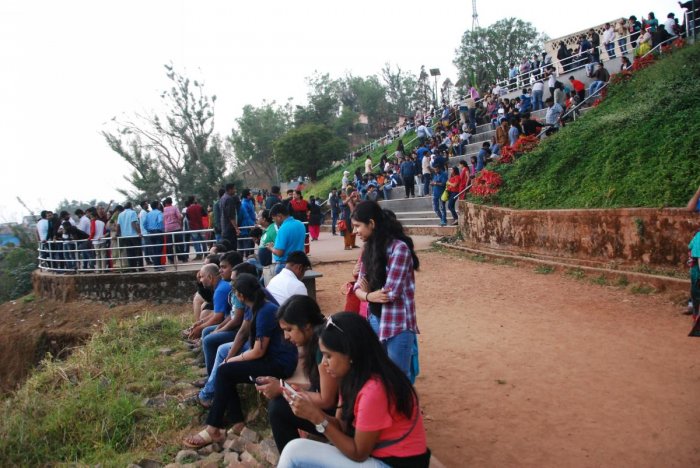
Tourists at Raja Seat in Madikeri.

The resort and homestay owners have initiated a campaign to promote tourism in the district.

The campaign ‘Kodagu is Back’ is aimed at promoting tourism in the district which had been affected by landslides and flash floods causing extensive damage during August.

The tourism industry has sprung back to life in the face of floods affecting Kerala. However, in Kodagu, the tourism industry failed to recover. Hence, the resort and homestay owners in the district have posted two short films to highlight that Kodagu is safe and tourists can visit without any fear. The duration of the video is one-and-a-half minutes and has gone viral on social media.

The short films produced by Drishti have attempted to showcase safety in tourists spots, trekking areas, rivers and mist-filled Kodagu district. There are over 4,000 homestays in the district. After the massive floods that ravaged the district in August, a majority of the homestays have remained closed.

“Other than horticultural crops, the main source of income for the district is tourism. Though tourists are visiting the district since November first week, it has not grown as per the expectations. Hence, the short films are an effort to promote tourism in the district,” said Hotel and Resort Owners’ Association President Nagendra Prasad.

Over one lakh people in the district are dependent on the tourism sector for livelihood. After the landslides, the labourers have returned to their native places. About 80% of the business has been affected. Resort and homestay owners are attempting to sell the resorts. However, there are no buyers, he lamented.

The Karnataka State Tourism Development Corporation too joined hands with the resort owners in promoting tourism.

KSTDC Managing Director, Kumar Pushkar said, “There are two hotels run by KSTDC in the district. In the last four months, we have incurred a loss of Rs 1.50 crore.”

source: http://www.deccanherald.com / Deccan Herald / Home> States> Districts / by Adithya K A / DH News Service,Madikeri / November 30th, 2018

Devarapura tribal colony is devoid of facilities

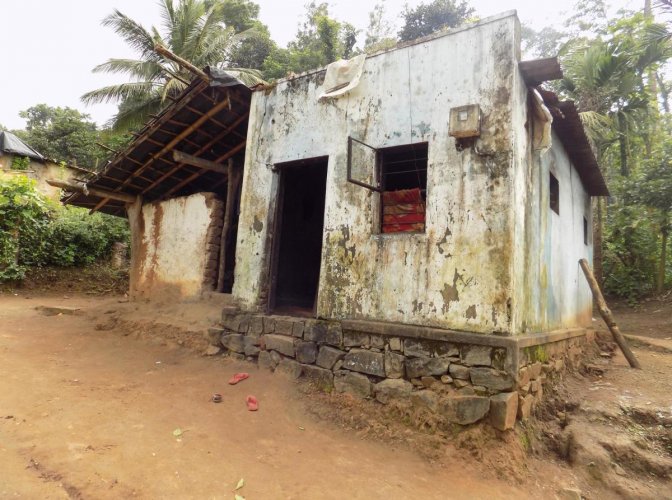
The pathetic condition of a house in the tribal colony at Devarapura in Gonikoppa.

Lack of basic facilities is haunting the Jenukuruba community members at Devarapura tribal colony in Gonikoppa.

The colony is situated between Gonikoppa and Thithimathi with 120 Jenukuruba families and 40 Yarava community families residing in it.

It was during 1988 when Jammada Karumbaiah was the Jilla Parishat president, the government constructed 40 houses with asbestos sheets as the roof for the tribals. Now, the houses are in a deplorable condition and are waiting for a facelift.

The remaining 120 tribal families are still living under thatched roof huts covered with plastic sheet to prevent rainwater from seeping inside.

As the land comes under “Devara Kadu” (sacred grove), the residents are not even issued the title deeds for the land on which they are residing. Hence, they are deprived of basic facilities from the gram panchayat.

The houses neither have electricity connections nor a drinking water supply.

The houses lack toilets. There is no proper road leading to the houses. The children still depend on kerosene lamps for completing their homework. The ITDP department had supplied solar lamps in the past. However, a majority of the lamps are defunct .

“On the ground of the sacred grove land, a landowner has filed a case in the court urging the government not to sanction land for the tribals. Thousands of acres of sacred grove lands in the district have been encroached by the rich. When a poor labourer seeks land to build a house, the government has failed to respond,” said colony leader and DSS activist Jenukurubara Subramani.

Women in the colony have to walk for several kilometres to fetch a pot of water from a water body.

Every year, at least two to three women are trampled by wild elephants while on there way to fetch water. In spite of it, the authorities have failed to initiate measures to supply water to the colony, alleged residents.

Further, they said the electricity poles were installed with a transformer to supply electricity to the colony five years ago. However, electricity is yet to reach the households.

Without proper road connectivity, the residents also find it difficult to reach the main road in case of an emergency.

source: http://www.deccanherald.com / Deccan Herald / Home> States> Districts / by DH News Service, Gonikoppa / November 27th, 2018

No Ordinary Bean

Spit, dung and more — these expensive coffees are not for the faint-hearted

The Indian Bean
The Indian Bean

The first sip tastes almost like a regular cup of Joe — it’s earthy, smooth but minus the usual bitterness. In fact, it tastes so unique that no one can pinpoint for sure its complex flavours. Some say it even has a hint of chocolate or fruity taste. Wonder what kind of coffee this is? Considered one of the most expensive coffees in the world, the secret ingredient behind this coffee might make you reconsider your love for the drink. This famous brew called Kopi Luwak or civet coffee is made from the faeces of civet cat and has its roots in Indonesia. Don’t be surprised, because cat poop coffee is just one of the many new trends in the coffee industry.

Civet cats consume coffee cherries for the fleshy pulp of the beans

Civet cats have a natural tendency to roam around in coffee plantations. More often than not, they pick on coffee cherries — the perfectly ripped ones of the lot. These coffee cherries are picked by civets for the fleshy pulp of the beans. During the digestion process, a unique fermentation process occurs, such that after passing through the civet’s intestines, the beans are defecated with other faecal matter. While this might just be faecal matter for some, others consider this a treasure. Rajat Badami, founder and CEO of Kingsmen Coffee says, “The sale of this coffee is primarily outside India. There is demand for this coffee in the US and many European nations.” But the process doesn’t end at collecting cat poop, argues Badami. He says, “Identifying the civet’s faeces, handpicking it and then washing, drying and pounding is a long and tedious process. Since so much effort goes into making it, we sell this coffee at $600 a pound in Western countries.”

On the other hand, Thamoo Poovaiah, managing partner of Ainmane brand of coffee, the first company in India to make Kopi Luwak prefers to keep the rates lower for Indian audiences. He says, “We have more than 235,000 acres of coffee plantations in India and we produce 40% of India’s coffee. Since civet coffee is hard to obtain naturally, we can get only five to 10 tonnes of it per annum.” Ainmane sells civet coffee for 1,060 per 100gms.

While coffee made of litter selling for a few thousands might seem like an absurd concept, there is more to it. The brainchild of Thailand’s Anantara Resort produces coffee straight from elephant dung. Known widely as Black Ivory Coffee, this unique product finds a place in the list of ‘rare and expensive coffees of the world’. A single cup of this coffee is said to cost around $50. Its producer, Black Ivory Coffee Company, maks a very limited amount on an yearly basis, given that this natural process is time-consuming. Blake Dinkin, founder of Black Ivory Coffee is wants to keep the process a secret. He believes many people have mistaken the idea to be as easy as collecting elephant dung containing coffee beans.

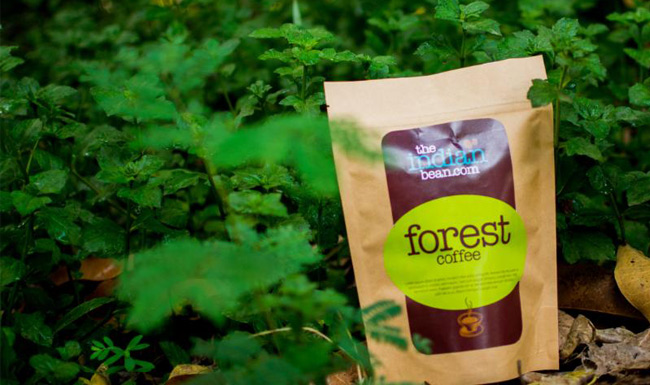
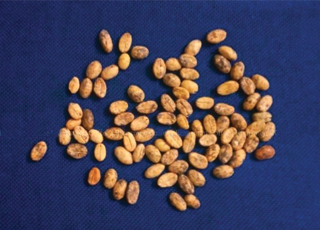
Another special coffee with animal component is the monkey parchment coffee produced near Araku Valley. The process of collecting beans is slightly different than the previous varieties. The monkeys, just like the civets, pick on the ripest coffee cherries. The difference being they eat only the flesh, but instead of swallowing the bean, they usually spit it out. The natural enzymes in their saliva give the coffee beans a tinge of acidity. Kunal Ross, founder and CEO of The Indian Bean says, “It is difficult to spot these spit beans in a forest, as compared to civet or elephant litter. A bite mark on a coffee bean is how we distinguish our beans.” This makes the discovery process longer, but once collected, the beans are washed under running water and dried to ensure the consistent roasting. The Indian Bean’s monkey parchment coffee costs around 4,000/kg. These beans are collected around October, and what makes this coffee even more exclusive is its limited number of vendors in India. Coffee lovers are slowly warming up to the idea of artisan coffees, but it would be intriguing to see what new ingredient will join the list next.

source: http://www.outlookbusiness.com / Outlook Business / Home> C’est la vie> The Good Life / by Aishwarya Parikh / July 21st, 2018