Category Archives: Records, All

Dinesh Gundu Rao Becomes New Karnataka Congress Chief

Dinesh Gundu Rao replaces G Parameshwara, who has since become the deputy chief minister in the new coalition government.

New Delhi :

The Congress on Wednesday appointed Dinesh Gundu Rao as the chief of its Karnataka unit, replacing G Parameshwara, who has since become the deputy chief minister in the new coalition government in the state.
48-year-old Gundu Rao was earlier the working president of the Karnataka Congress under Parameshwara. The five-time MLA from the Gandhinagar constituency in Bengaluru was the food and civil supplies minister in the previous Congress government in the southern state.

Congress president Rahul Gandhi also appointed Easwar Khandre, an MLA, as the new working president of the party’s Karnataka unit.

All India Congress Committee (AICC) general secretary Ashok Gehlot made the announcements in a statement.

“The Congress party appreciates the hard work done by G Parameshwara, who successfully led the party for the last eight years and is stepping down from his responsibility,” the statement added.

The changes in the Karnataka Congress were in the offing after the Congress-JD(S) coalition government was formed in the state in May.

The changes are also part of Gandhi’s efforts to bring in a new team of young leaders to steer the party at the central and state levels.

source:http://www.ndtv.com / NDTV / Home> Sections> Karnataka / by Press Trust of India / July 04th, 2018

Mahabaleshwar Bhat passes away

Neerkaje Mahabaleshwar Bhat

Senior writer and retired principal Neerkaje Mahabaleshwar Bhat passed away on Sunday late night. He was 89.

He had served as the teacher of Madikeri Government High School and later retired as the College Principal in Madikeri.

He was the resident of Biligeri in Madikeri. He had chaired the Madikeri taluk Kannada Sahitya Sammelan held at Moornadu. He had also chaired the District Sahitya Sammelan held at Chembu in 2015.

In fact, Bhat had brought out the stories of Bharathisutha under Kaveri Publications, in the form of books.

Some of his works are “Himalaya Darshana Paryatane,” “Daithya Darshana,” “Avathara Bhat.”

District Kannada Sahitya Parishat President B S Lokesh Sagar has condoled the death of Mahabaleshwar Bhat.

Lekhaka Mathu Kalavidara Balaga has convened a condolence meeting at Patrika Bhavana in Madikeri on July 4 at 3 pm.

source: http://www.deccanherald.com / Deccan Herald / Home> State> District / DHNS News Service, Madikeri / July 02nd, 2018

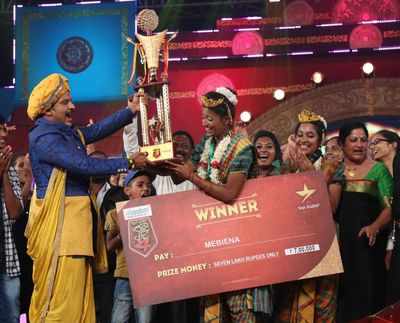
PHHL: Mebiena Michael is the winner

MebienaKF02jul2018

Mebiena Michael is crowned as the winner of Pyaate Hudugir Halli Lifu season 4. She lifted a glittering trophy with the cash prize of Rs 7 Lakh.

Shahan Ponnama was declared as the runner up.

Mebiena who was tipped to win the show for doing tasks immaculately. She thanked everyone for supporting her through the journey.

Priyanka secured third place. Another contestant Abhijna Bhat who posed strong competition to Mebien did not feature in top three winners list.

The show hosted by Akul Balaji ended with a glitzy finale at Banavani village near Gorur of Hassan.

From next Monday, instead of Pyaate Hudugir Halli Lifu, new soap opera Shree will go on air at 9pm.

source: http://www.timesofindia.indiatimes.com / The Times of India / Home> News> TV> News> Kannada / TNN / June 30th, 2018

Cauvery Gallery may soon become a reality

CauveryKF30jun2018

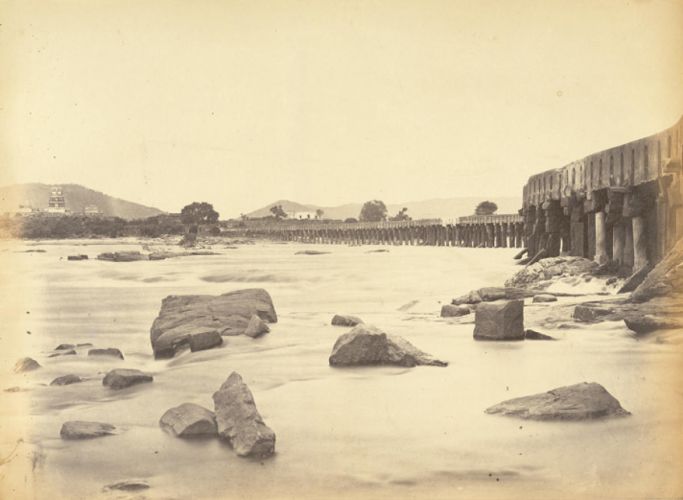
The Cauvery River Gallery, which was proposed to be established in the city, five years back, may finally be a reality with Chairman of the Karnataka Knowledge Commission and former chairman of ISRO K Kasturirangan announcing that he has spoken about the project with Chief Minister H D Kumaraswamy, in Bengaluru, recently.

The formation of the Cauvery Tourism Development Authority was mooted in March 2015 and the idea of the Cauvery River Gallery was discussed in the first meeting of the authority, chaired by then Tourism minister R V Deshpande, in June 2015. Neither of them materialised so far, even though the previous chief minister was a native of Mysuru district, the nucleus of the Cauvery River basin.

According to the annual report (April 2016 – March 2017) of the National Academy of Sciences of India (NASI), River Cauvery is among the most sacred rivers in the southern region of India and is thought to be the Dakshina Ganga, on account of its diverse characteristics and attributes.

“Originating from the Brahmagiri Hill in the Western Ghats and flowing towards the Bay of Bengal, the river travels along Karnataka and Tamil Nadu in the southeastern direction. River Cauvery is well inscribed in Tamil and Kannada literature because of its sacredness. Bathing in waters of Cauvery is a traditional belief. The striking Shivanasamudram falls of Cauvery River is the second biggest waterfalls in the country.

At the request of Minister for Higher Education and Tourism, Government of Karnataka, K Kasturirangan, Chairman of Karnataka Knowledge Commission, requested Manju Sharma, former president of NASI, to establish a Cauvery Gallery on the lines of Ganga Gallery and Brahmaputra Gallery.

Manju Sharma, with the consent of the NASI Council, sent a preliminary intent proposal to establish a high-quality gallery that captures the etymological, ecological, cultural, heritage and social characters of River Cauvery,” the report states.

The Cauvery Gallery can be established with the help of the National Council of Science Museums (NCSM), Kolkata, and the financial support of the department of Tourism, Government of Karnataka. Interactive multimedia with diorama, animation, graphics and the 3-D display will be used to make the gallery interactive and interesting for visitors, the report states. At present, there is a gallery for River Brahmaputra in Guwahati, in Assam, and a gallery for River Ganga at Allahabad, in Uttar Pradesh .

The gallery is expected to showcase the life, culture and biodiversity along the Cauvery River from its birth in Talacauvery of Kodagu district till it reaches the Bay of Bengal at Poompuhar (now Pombuhar) in Nagapattinam district of Tamil Nadu. It splits into two, twice, and forms the islands of Srirangapatna and Sivanasamudra in Karnataka.

Kasturirangan has said that he held talks with Chief Minister Kumaraswamy on setting up of the gallery on the Karnataka Exhibition Authority Grounds (Dasara Exhibition Grounds) in Mysuru and a detailed project report would be prepared soon.

In 2016 itself, Karnataka’s Tourism department and the NASI had signed a memorandum of understanding to set up the gallery at Mysuru. Then, the Tourism department officials and NASI experts had decided to establish the gallery on the premises of the Karnataka Exhibition Authority (KEA) complex. The project was scheduled to be completed in six to nine months and was expected to be a major tourist attraction in the city. The KEA complex is also yet to be constructed.

source: http://www.deccanherald.com / Deccan Herald / Home> State> Mysuru / by T.R. Sathish Kumar, DH News Service, Mysuru / June 28th, 2018

Obituary : Thathanda Gowramma Muthamma

TathandaKF28jun2018

Thathanda Gowramma Muthamma (Thamane Balianda), wife of late Thathanda Muthanna, passed away this morning at her residence in Rajivnagar 1st stage in city. She was 94.

She leaves behind three sons, two daughters and a host of relatives and friends.

Cremation was held at the foot of Chamundi Hill at 1.30 pm today, according to family sources.

source: http://www.starofmysore.com / Star of Mysore / Home> Obituary / June 14th, 2018

Coffee sector seeks govt support for re-plantation

City: Chennai

With a large majority of coffee plantations having turned old and unproductive, coffee sector is seeking a Colombian-model re-plantation support from the government.

Abysmally low yield, lower price realisation and high levels of debt have been restraining the sector from taking up re-plantation on its own.

Re-plantation is long overdue for 65-70 per cent of India’s coffee farms. About 65 per cent of plants are more than 40 years old and for those varieties, the maximum yielding age of the plants is 35-40 years. Some of the better-yielding newer varieties have a shorter life of around 25 years and a good number of these newer varieties are also due for re-plantation, said AL RN Nagappan, coffee committee chairman of UPASI.

By retaining the older plants, both production and yield has been coming down. Coffee production, especially arabica production has been falling year-after-year in the past five years. From 120,000 tonnes, it has dropped below 90,000 tonnes.

The yield too is abysmally low. “We cannot even compare our yield with that of Brazil or Colombia. If an acre of coffee plantation provides 1.5 tonnes of coffee in Brazil, it would hardly produce 300 kg in India,’ said Nagappan. Inability to mechanise the plantations due to the hilly and rocky terrain also has been affecting the yield. According to Ramesh Rajah, president of the Coffee Exporters Association, coffee growers in the India are not in a position to take up the task of such large-scale re-plantation as most of the growers are incurring losses due to lesser price realisation and higher input cost.

“If the input cost on an acre is around Rs 70,000, the income would be around Rs 40,000 to Rs 45,000. The grower is incurring a loss of around Rs 30,000 on an acre of coffee plantation,” said Boje Gowda, chairman, Coffee Board of India.

The growers have been relying on the pepper vines to make up for the losses. “But the pepper prices too are down this year,’ added Nagappan.

According Gowda, almost 80 per cent of the growers have defaulted on their loans and the non-performing assets of the coffee plantation have become a burden for the banks.

In such a scenario, the sector is looking forward for support from the part of the central and state governments. “The government should take a leaf out of the re-plantation scheme being provided for growers in Columbia. The government has been providing financial support for the past few years and now the country has been able to enhance its production significantly,” said Rajah.

Since 2009, Colombia has been replanting around 85,000 hectares of coffee plantations every year. The government has been providing subsidy for the every replanted coffee.

“We have been requesting both central and state government to provide subsidies on the inputs like fertilizer electricity and machines,’ said Gowda.

As the grower has to forego the income during re-plantation, he also wants financial support during that critical period. “We are also expecting an interest waiver for the loans so that the growers can pay back at least the principal,” said Nagappan.

source: http://www.mydigitalfc.com / mydigitalfc.com / Home> Miscellany / by Sangeetha G

Move To Include Kodava As Third Language In State, CBSE Syllabus

Karnataka Textbook Society writes to DDPIs to furnish details about number of students available to study Kodava language
KodavaLanguageKF28jun2018

Bengaluru:

The Karnataka Textbook Society that comes under Department of Public Instructions, Government of Karnataka, has written to Deputy Directors of Public Instructions (DDPIs) on the inclusion of Kodava language from First Standard to 10th Standard as a third language in the State Syllabus and Central Board of Secondary Education (CBSE).

The Society is responsible for printing and distribution of textbooks based on the State syllabi for lakhs of children of Classes 1 to 10 in Government, Aided and Unaided Schools of Karnataka.

The letter (copy of which is available with Star of Mysore) was initially sent from the office of Principal Secretary (Primary and Secondary Education) on 13.06.2016 and 10.04.2018 asking the DDPIs and Deputy Director (Administration), Department of Public Instructions, to furnish details about the number of students who will be available to study Kodava language if it is introduced as the third language.

Though the letter was sent in 2016 and another reminder sent in April this year, no action has been taken either by Deputy Director (Administration), Department of Public Instructions, or by DDPIs across the State. Taking objection to this, the Patya Pustaka Sangha has again (04.05.2018) written to the DDPIs and DD Administration to furnish the details. The latest letter has been sent by Narasimaiah, Managing Director.

‘Move beneficial for language’

Though language scholars say that the move to include Kodava language as a third language will ultimately benefit the language and culture of Kodagu, having Kodava language as a medium of instruction is financially unviable.

According to research scholars, who have conducted extensive research in Kodagu, its language and culture, a majority of Kodavas consider Kodava as a language of culture rather than education. They feel that Kodava language is not adequate enough to be a medium of education even at the primary level.

Many Kodavas prefer English as the medium of education and those who can afford it send their children to English medium schools. Even people with a positive attitude towards Kodava language also do not advocate for Kodava medium as they feel that it will not be economically viable. Financial resources, textbooks, availability of the teachers, etc., are the major problems, they say.

However, linguists are of the opinion that learning through a language other than the mother tongue creates interpretative thinking while education through the mother tongue develops creative thinking. Mother tongue also helps preservation of minority language and culture. As such, education through Kodava medium at least in primary education will benefit the language and culture, say linguists.

source: http://www.starofmysore.com / Star of Mysore / Home> News / June 28th, 2018

Ashwini Ponnappa lives the football World Cup dream

The badminton ace had a whale of a time watching the FIFA World Cup in Russia.

Indian badminton ace Ashwini Ponnappa had an exhilarating time in living the football dream by catching the FIFA World Cup from close quarters in Russia.

Soaking in the football frenzy Ashwini said the experience was unforgettable. “I had a fantastic experience. I have never felt the kind of atmosphere and buzz that I felt at the World Cup anywhere else. Of course the Olympics and the multi-sport events have an amazing vibe, but that I can say as being a player and getting to live at the village. In Russia, being a spectator, the vibe at the host cities was just electric,” she said.

The Indian player said fellow fans made the experience more special.

“A sport like football is definitely made up by the fans. Everyone who were there were for football alone. It was amazing to see people from different parts of the world come in numbers to cheer either for their home countries or the countries they support along with also representing there own countries which haven’t qualified.

It was like a gigantic sports carnival. Everywhere we went we’d see fans chanting and singing. I had goosebumps every time we came a cross huge gatherings of fans chanting and singing in unison. It was electric!” she explained.

The fanfare also presented Ashwini an opportunity for a learning.

“There was so much to learn watching these players. It is amazing to see how they deal with pressure. It is not easy when you have an entire nation depending on you to do well for them (fans,country). Star players have more pressure cause they are expected to perform their best in every match from the everyone. To watch a player like Ronaldo stepping up and playing the way he did against Spain was just amazing.”

Simply ‘Inspiring’

The trip was also inspirational to the badminton star. “Thanks to being there and the football craze, I’ve also been reading a lot of stories of different players and it’s just been very very inspiring. How you’ve got to believe in yourself when no one else does.

How determination and belief can work miracles. I loved reading Romelu Lukaku’s story which was sent by a friend. I had tears reading it. Or that of Aron Gunnarsson. I definitely want Iceland to do well after reading his story (laughs). It takes years and years of hard work and sheer determination to get to where they are like any other sport.

I think one of the nicest things about football is that it is easily accessible to everyone from all walks of life. It gives hope to so so many people, it gives people confidence and brings countries up when their players do well,” the 28-year-old player added.

Memorable Moment

Ashwini said the stand out moment was watching Cristiano Ronaldo and Lionel Messi ply their trade and watching the Spain vs Portugal match.

“The best part apart from just being present at the World Cup was getting to watch Ronaldo and Messi play live. The kind of expectations they have from their fans is crazy. It was more like they are expected to win and perform as a one man army. Watching Spain vs Portugal was definitely a highlight for me. Ronaldo played well and led the team like a boss and delivered despite the crazy pressure,” she said.

“Watching Argentina vs Croatia was sad. I did expect to watch incredible Messi work his magic as did the large number of Argentina fans. It isn’t possible if the team on the whole isn’t feeling confident and aren’t into the game. With all that’s going on with their team, I hope it gets better and they get the win and performance they need.

Ashwini said visiting the fan fests were also a highlight.

“They are just amazing. Especially if you do have a ticket for a match and want to still get a feeling of being apart of it. It was well organised with a great vibe. The entire event from the minute you get there to going into the stadium is organised perfectly for the fans to have the best experience possible while they are there. I am lucky to have had the opportunity to experience the World Cup and watch the stars play,” she concluded.

source: http://www.sportstaralive.com / Sportstar Alive / Home> Badminton / by Hari Kishore M / Chennai – June 25th, 2018

Karnataka: Now, permission from Forest Department necessary to enter Mandalpatti

The pleasures of visiting these popular spots were taken away due to the aggressive nature of locals who charged up to Rs. 1500 to ferry tourists to Mandalpatti.

Madikeri :

In order to curb exploitation of tourists by locals who were charging exorbitant charges to ferry them to Mandalpatti, the State Government has now made it mandatory for tourists to obtain permission from the forest department for entry to the Pushpagiri belt of Mandalpatti.

The pleasures of visiting these popular spots were taken away due to the aggressive nature of locals who charged up to Rs. 1500 to ferry tourists to Mandalpatti. While bus routes were drawn to this spot, it was not seen as a convenient option by many tourists who paid over Rs 1,500/- per jeep to reach Mandalpatti from nearly 14 kms away.

Be it one passenger or eight passengers, the charges per jeep remained the same.

This overcharging by locals had been brought to the notice of DC Sreevidya P I, who has laid down strict rules to control the menace.

A meeting was recently held by Sreevidya along with SP Rajendra Prasad who concluded that permissions need to be sought to enter the Pushpagiri belt of Mandalpatti. The DC has also ordered that the jeeps ferrying tourists will be brought under the scanner and Galibeedu village panchayat has been asked to install CCTV cameras at the premises.

No public or private vehicles will be allowed beyond the gates installed by the forest department at Mandalpatti; pedestrians and tourists could trek to the spot (after receiving permission) from the gate instead of travelling in vehicles.

The district administration has also drawn a maximum ferry charge of Rs 300/- per jeep and anyone demanding more money would not be allowed to function in the area.

The forest department is ordered to make sure that no plastic, liquour or other items are carried to the spot by the tourists. Offenders of these rules will be penalized by the Police Department’s Road Transport Authority.

source: http://www.newindianexpress.com / The New Indian Express / Home> States> Karnataka / by Express News Service / June 05th, 2018

K M Cariappa – Father of Indian Army

CariappaKF24jun2018

Chennai:

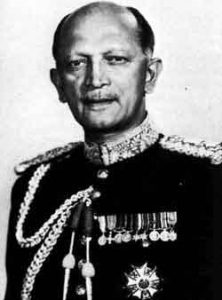
Whoever goes through the military history of India, will never forget Field Marshal K M Cariappa.

Only two officers of the Indian Army have got the rank of a Field Marshal: one of them being Cariappa and the other being Field Marshal Sam Manekshaw.

But that isn’t the only thing that won him recognition – his achievements are no less worthy. While the alumni of Officers Training Academy unveil the statue of the noted Army officer who held five-star rank, News Today journeyed through his life and achievements.

His distinguished military career spanned almost three decades. He was the first Indian military officer to attend the Staff College, Quetta, the first Indian to command a battalion, and was also one of the first two Indians selected to undergo training at the Imperial Defence College, Camberley, UK.

Field Marshal Cariappa made his voice clear when Skeen Committee was set up in 1939 to examine the options of Indianisation of Indian Army’s ranks.

As Cariappa was one of the senior most Indian officers with about 19 years of service, the committee held several discussions with him. He expressed his displeasure at the treatment of Indian officers in the Army.

He decried the discrimination shown towards Indian officers in terms of appointments, promotions, benefits and allowances British officers were entitled to.

He is known for ‘Operation Kipper’, ‘Operation Easy’ and ‘Operation Bision’ done to capture Naushera, Jhangar, Poonch, Zoji la, Dras and Kargil areas in Kashmir during 1947 and 1948.

The operations aimed to drive out Pakistanis from Kashmir, but they were stopped by the intervention of the United States. While Army headquarters asked not to launch any operations, Cariappa protested against it and launched several strikes in the Ladakh region allowing India to assert control over the region.

Cariappa took over the reins of the Indian Army 15 January 1949, that was marked as official Army Day and celebrated annually.

As chief of the Army, Cariappa was instrumental in the formation of the Territorial Army in 1949. He extended support to the National Cadet Corps (NCC) during its formative years. These two complimentary branches of the Army later proved to be very helpful in the wars India fought in later years.

He also adopted the Indian National Army slogan ‘Jai Hind’: it became a phrase for the personnel to greet each other in the Army.

He turned down the proposal to reserve vacancies in the Army for Scheduled Castes and Scheduled Tribes as had been done in other government services. He stated that the proposal would degrade the Army’s standards and increase the risk of it being defeated if right talent was not recognised.

Cariappa took part in the reorganisation of the armed forces in many foreign countries. He was awarded the Legion of Merit in the degree of Chief Commander by American President Harry S. Truman.

As a mark of recognition for the commendable service rendered by him to the nation, the Government of India conferred the rank of Field Marshal on Cariappa 28 April 1986, at a special investiture ceremony at Rashtrapati Bhavan.

source: http://www.newstoday.net / News Today / Home> Chennai / by S. Vishnu Sharmaa / June 23rd, 2018