Category Archives: Records, All

Codavas On A Mission To Nourish Cauvery Back To Health

Snapshot

Codavas are seeking living entity status for Cauvery – the lifeline of South Karnataka-Tamil Nadu.
______________________________________________________

As politicians try to gain political mileage out of the controversy over the sharing of Cauvery river water between Karnataka and Tamil Nadu, Codavas – the original inhabitants of Kodagu – have embarked on a novel journey. This could one day give Cauvery river, the lifeline of South Karnataka and Tamil Nadu, the ‘living entity status’ like Ganga, Yamuna and Narmada. It will be also on the lines of the special status that Whanganhi River of New Zealand, which is very dear to the original inhabitants Maori tribe, enjoys.

Called “Codavas separatists”, these inhabitants have been demanding a separate state since 1957. In fact, Kodagu enjoyed ‘C’ Grade statehood before Independence. Consecutive state governments in Karnataka have not protected the antiquity of Codavas and did nothing to give them special status despite being a miniscule minority in terms of population, allege the Codava National Council (CNC) activists.

Several times they had objected to the way river Cauvery is being abused and overexploited for socio-political and economic reasons. “We have been pointing out to the government that Cauvery river is not in her full health and we need to take corrective measures, but none of the governments did anything. Which is why we have organised a vehicular jatha, a convoy of vehicles with Codavas and Codavathis (women Codavas) from Talacauvery (birthplace) of Cauvery river to the last point of the river in Poompuhar in Tamil Nadu. This is an awareness campaign to let people know how the Cauvery is shrinking and how to nourish her back to her pristine beauty and girth,” said CNC president N U Nachappa.

River Cauvery is one among seven sacred (sapta nadi) rivers of the Vedic period and they are Ganga, Yamuna, Sindhu, Saraswati, Narmada, Godavari and Cauvery. Thankfully, other rivers are now under rejuvenation process with Prime Minister Narendra Modi pledging his full support to the rejuvenation and cleansing of Ganga. This has motivated the states like Haryana, Punjab, Gujarat, Andhra Pradesh, Goa and Maharashtra to take up rejuvenation of their rivers seriously.

However, Karnataka has not done anything to protect Cauvery river despite the river losing girth and inflow steadily. At many places, it is being polluted. “This apathy has hurt us, and after many failed appeals we have decided to kickstart a people’s movement to save Cauvery. She takes birth in our district and nourishes several lakhs of hectares of land and quenches the thirst of the crores of people. It becomes our responsibility to let the people know her condition. She nourishes our crops and has two southern rice bowls for India, one in Mandya in Karnataka another in Thanjavur, Tamil Nadu. She is the lifeline of the south,” says Nachappa.

There are already instances where the governments in Uttarakhand, Madhya Pradesh and even New Zealand are giving rivers a new lease of life by according “living entity” status. River Saraswati disappeared centuries ago and such a thing should not happen to Cauvery, say Codavas, who took part in the expedition.

The CNC has urged the governments of Karnataka and Tamil Nadu, the United Nations Organisation and the International Water Dispute Tribunal to accord special status to the Cauvery river. The five-day jatha to Poompuhar from Talacauvery also witnessed visits to temples of Tamil Nadu that are built along the course of the Cauvery river. “It was not just evoking the divine grace for the river’s welfare but we also talked and engaged with the local people on the importance at Salem, Rasipuram, Tiruchirapalli, Thanjavur and Myiladuthurai.”

As per the legends, great Sage Agastya had his seat of learning in Kodagu on the banks of Cauvery. Until 1956, Kodagu was politically a powerful C grade state of the Indian Union. Codavas consider the reorganisation of states under the State Re-organisation Act, 1956 a great geo-political catastrophe of the 20th century for them. Cauvery and Kodagu were synonymous with each other.

R Sridhar, a scholar on Cauvery in Bengaluru, analysed why Cauvery is losing girth. “In the name of development, we have reduced the value of our rivers, which is a general situation. In the Cauvery basin, we have killed many tributaries like Arkavathi and Kanva rivers. While Arkavathi was killed at its source in Bengaluru by drying the river and creating housing projects, Kanva river has been reduced to a rivulet, and most part of the year except in monsoons, it is dry. I remember the Tamil Nadu government making a case with the Supreme Court stating that the Cauvery river was contaminated with sewage and industrial effluents and chemicals. But I still think the Cauvery river gets an inflow of 740 thousand million cubic feet (TMC) water during a typical monsoon season. But the utilisation of river water has trebled in the last 20 years, which is why Cauvery has slendered down in girth. Check dams have been constructed in many districts along the Cauvery’s course in Karnataka and Tamil Nadu to store water, another reason for it to become slender. But it is never too late for taking up a drive like the CNC has taken up, which is laudable.”

However, things are presently fluid as the governments have demanded constitution of a Cauvery river water management board of which shape of things to come is not certain, Sridhar said.

President of the Delta Farmers Forum at Tiruchirapalli, Pandit Ramdas, hailed the expedition. “This is the first effort that has kindled hopes of better future for the river Cauvery and also to the users of her waters. I am sure the governments will take notice of it. Codavas are not only martial heroes but also die-hard conservationists of their heritage land, their efforts to conserve the river Cauvery was a heroic event just like their innumerable wars with invaders which they won”.

*Route Map of the Mission on Cauvery was Talacauvery in Kodagu – Mysore, Hogenakkal, Dharmapuri, Mettur Dam, Salem, Rasipuram, Namakkal, Paramathiveleur, Mohnaur, Tottiyam, Musiri, Mukkombu, Srirangam, Tiruchirapalli, Thanjavur, Ayyampettai, Papanasam, Kumbakonam, Mayiladuthurai, Sempanarkoil, Mudikandanallur, Melayur and Poomphar (Cauvery Pattinam) the final destination.

*Cauvery jatha as they called it was fascinated by the site where world’s first dam built over sand by the legendary Tamil emperor Karikala Cholan during 1st century AD. This grand Anekat, dam is built across river Cauvery Vennar at Kallanai and still stands.

*With this expedition the Codavas have begun a new people to people friendship with Tamil Nadu, while the politicos on both states choose to take the political route to the Cauvery water sharing and in the bargain foment and fuel inter-state unrest.

*What is living entity?

The concept of river being given the same rights and duties as a human being is new to India, the first to do was Equador in South America its constitution provided this right to many rivers within in its geographical area, recently New Zealand gave such rights to Whanganui River. The river will have all the rights and duties that a citizen has. The rivers endowed with such status will not be treated as property of the state or a nation but will have right to exist, persist, maintain and regenerate its vital cycles. The river will have its own identity and will get the same protection that the human beings get.

Raghuram hails from coastal Karnataka and writes on communal politics.

source: http://www.swarajyamag.com / Swarajya / Home> Ideas / by M Raghuram / June 03rd, 2018
Signature campaign against smoking zones begins

The Consortium for Tobacco Free Karnataka (CFTFK) launched the ‘One million signature campaign’ as part of the World No Tobacco Day on Thursday.

Bengaluru :

The Consortium for Tobacco-Free Karnataka (CFTFK) launched the ‘One million signature campaign’ as part of the World No Tobacco Day on Thursday. The campaign will demand strict regulation policy on the sale of tobacco products and removal of ‘smoking zones’ in restaurants and bars across the state to safeguard non-smoker’s health.

A memorandum with 10 lakh signatories will also be submitted to the state government demanding appropriate measures to protect children from easy access to tobacco products and exposure to tobacco advertisement and to protect the health of non-smokers.

International athlete and Arjuna awardee Arjun Devaiah launched the campaign which is likely to continue for next eight months.To spread more awareness about the risks associated with tobacco use, CFTFK also launched information kiosks at crowded public places.

source: http://www.newindianexpress.com / The New Indian Express / Home> States> Karnataka / May 31st, 2018

Vanishing Kodavas: Some Facts

KodavaSymbolsKF30may2018

NOTE: Here we reproduce the letter titled ‘Vanishing Kodavas: Some facts’ for the reading pleasure of ‘Star of Mysore’ readers. —Ed

It’s Kodavas all the way!

Sir,

Though Kodavas belong to ethnic minority tribes of Kodagu, they were quick enough to adapt themselves to civilisation under British influence, when Kodagu, then known as Coorg, was a ‘C’ Class State under British rule.

With literacy and civilisation, they soon entered the mainstream of our national life emerging as a martial race and went on to occupy important positions in armed forces, sports and other walks of life.

The first Indian to become Commander-in-Chief of Indian Army was Field Marshal K.M. Cariappa (a Kodava), who succeeded the last British Army Chief Butcher.

The first Chief Commissioner (CC) of the erstwhile Coorg State after the exit of the last British CC Gordon was Dewan Bahadur Ketolira Chengappa (Kodava).

When Coorg (Kodagu) was merged with Karnataka and became a district, the post of the Chief Commissioner was re-designated as Dy. Commissioner and the first DC of the newly-formed Kodagu District was I.C. Subbiah (a Kodava).

Will not these achievements bear ample testimony to the calibre of Kodavas, with their minority status notwithstanding?

– V.R. Srinivasa Murthy, Brindavan Extension, 4.10.2015

source: http://www.starofmysore.com / Star of Mysore / Home> Voice of the Reader / May 28th, 2017

Notes from Madikeri

‘There is still a hill or two, a waterfall, a vista of mist and rain rolling over silent, jagged, kind mountains that people don’t know of’

Home is a thing of the distant past. Can one ever go home again? Every time I go to Madikeri, my home in the hills, I go as a tourist, accumulating short capsules of anecdotes, wispy feelings, a breeze or two that I will think about later with mild longing. But then, I do believe that one can never really leave home. I carry its many notions beneath my skin, “in the gristle of my earlobes” even.

Madikeri, spelled just this way, thank you very much, used to be a slightly outgrown village with village-ish camaraderie among its people and small-townness in the display of their attitudes, albeit with some stray cosmopolitan allowances if you would seek them out. If you knew about it, and not many did, in the early 2000s, you could go to Periyan’s for a burger, priced an extravagant ₹60 and served with salty potato chips plus some ketchup on the side.

Then the tourists ‘discovered’ Coorg, or preferably Kodagu, and it has gotten enmeshed in the grand traditions of hill-stations favoured by cantankerous tourists to become a slight city. The ruins present a clichéd narrative: filth everywhere, entitled arrogance of the city-people, high rentals for locals, new faces that refuse to be friendly or care about your private businesses any longer. The town/ city in a crisis of identity loathes and loves its perpetrators.

When someone arrives in Madikeri and asks how to get to Coorg/ Kodagu, that’s asking for loathing though. Madikeri is to Kodagu what Calangute/ Anjuna is to Goa. Please to be noted.

High life

There is still a hill or two, a waterfall, a vista of mist and rain rolling over silent, jagged, kind mountains that these people don’t know of. They are where you still see why Kodagu is the Scotland of India. While the point of epithets in general escapes me, the land that will always decorate the longings of my skin is ancient, is affecting, is as phantasmagorical as the Scottish Highlands I once traversed. I will not name these hills and vistas here.

What I will write though is of the best biscuits from Bangalore Food Products (BFP), the sole large bakery in Madikeri at one time. The biscuits are made from refined flour, white sugar, tutti-frutti, a questionably-made product in itself, and they are absolutely talk-to-everyone-about-it amazing. They are packed in transparent, nameless packets. Sometimes, when sold in retail outlets around town, there is a price label, for the Others; most locals know how much it costs.

White bread works

BFP is placed halfway on the eponymously named Industrial Estate — a sole long road flanked by the townly Kohinoor Road on one side and by a section of town that used to be mostly residences on the other. The bakery supplied (still does) loaves of bread around the district. The bread, once an occasional treat, was white with thin browned sides — no new-age healthy brown and multigrain nonsense for us back then. A window in the bakery that opened to the road was large enough to accommodate a swirl of smells from all the cakes and other bakes, becoming an aroma that you just had to stop and get a slice of. Else, you could walk a few metres to the back and enter the bakery. It was like entering a warm cocoon of gluttony in my district’s cold months.

The best biscuits are crisp like shortbread, softer than biscotti, and unlike most local bakery biscuits, long like a stubby finger and studded with tutti-frutti. I bite into one. A bit breaks off without effort. A few crumbs land on my lap, some on the ground that one of my four furry fellows will find, sniff and polish off later. I chew on the biscuit slowly, willing Madikeri to be “home” again. But home too is elsewhere, made up more of parts than one rooted whole.

It is complicated: these unnecessary feelings of comings and goings. The biscuit is simple: I’ve never found its equivalent anywhere else, wouldn’t care to either. By the time I am through half a packet, I have replicated what evenings in Madikeri used to be like. Coffee with BFP biscuits: that is all there is to it.

When not flâneuse-ing someplace, the writer can be found at the mercy of her brood of rescued mutts.

source: http://www.thehindu.com / The Hindu / Home> Life & Style> Travel / by Deepa Bhasthi / May 26th, 2018

One More Subramanya Temple At Talacauvery

2ndTempleKF28may2018

Madikeri:

During the ‘Ashtamangala Prashne’ ritual, it was suggested to completely clean the Kannike River and the lake. Also, it was discovered that there are several undiscovered places of worship at Talacauvery and efforts must be undertaken to discover them and start the puja rituals. During the questioning ceremony, the priests suggested that one more Subramanya Temple must be constructed at Talacauvery.

There is a place where a Goddess resides and this must be discovered and restored.

There were seven holy kundikes (holy pond) at Talacauvery and at present, only one Kundike is existing and efforts must be on to identify and restore those hidden kundikes, the ritual revealed. Both Talacauvery and Bhagamandala must be strictly treated as pilgrimage centres and not as tourist centres.

Tourists must be barred from dressing inappropriately at the holy places and all commercial activities must be banned, the ‘Ashtamangala Prashne’ revealed.

The ritual also revealed that during the renovation and restoration of Talacauvery, many concrete-laying works were undertaken that spoiled the natural look and at the same time it resulted in cutting of several trees. Several natural water sources were closed to lay concrete foundation, the priests said.

‘Waste of money and time’

Ashtamangala Prashne is a waste of time and money and those who pursue this ritual have the sole intention of making money, alleged Allaranda Vittal Nanjappa, Convener of Allaranda Ranga Chavadi.

Speaking to Star of Mysore, he said that the ritual wasted precious time and it is a futile exercise. “The ritual is a business where ardent devotees are misguided to follow one set of rituals and practices.

“The main problem here is the domination of priests instead of traditional rituals performed by Kodava families like Mandira, Pattamada & Manavattira. Certain Kodavas too have come under the influence of the priests & this has caused present vulnerable state of River Cauvery,” he alleged.

Vittal has said that Kodavas and their families have never harmed the river and the real culprits are some resort owners and property developers who, without realising the importance and significance of the holy place, have indulged in indiscriminate development, spoiling the place.

source: http://www.starofmysore.com / Star of Mysore / Home> News / May 27th, 2018

Bylakuppe, a Tibetan settlement is an abode for the believer and the explorer

Bylekuppe01KF26may2018

If you were to take a left turn on the dusty highway that connects Mysuru to the highlands of Coorg, and trek for a kilometre and a half, the profusion of Tibetan flags, the signages in Tibetan and scores of Buddhist monks walking about, makes it appear like you have reached a new country. Prayer flags flutter in the light breeze and we can see the huge arches of the Namdroling monastery. Bylakuppe, a Tibetan settlement, has arrived. The monastery is choc-a-bloc with tourists. Its colourful murals depicting the lives and times of Buddha and his followers are a huge draw.

An abode for the believer

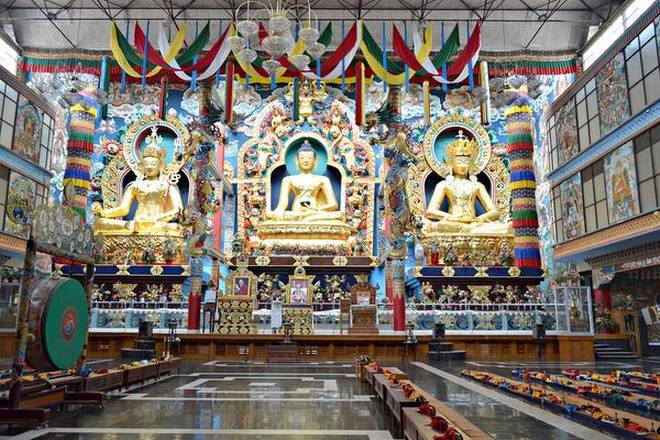
Inside the monastery are statues of the Buddha Padmasambhava, Buddha Amitayus and Buddha Shakyamuni. The Padmasambhava is also known as the Second Buddha and is believed to have played a vital role in the spread of Buddhism to Tibet and Bhutan. The Amitayus are celestial Buddhas known for longevity. Another stand-out feature is the prayer wheels situated at one end of the monastery that borders paddy fields. It is believed that rotating the prayer wheels brings good luck and prosperity. If you are confident, you can try and rotate the prayer wheels that surround the monastery compound. The wheels are believed to contain consecrated mantras and prayers, and turning them in a clockwise direction is supposed to benefit others. Although turning the wheels is considered an alternative to chanting mantras, most devotees tend to combine the two activities.

Bylekuppe02KF26may2018

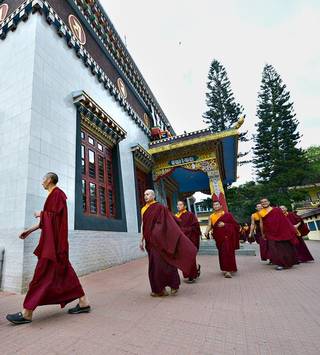
The huge complex also hosts monastic colleges and occasionally you can spot monks going about their daily routine. The monastery is massive, and the huge arches, the spinning prayer wheels and spires add to the grandeur of the complex. There are plenty of spots where one can relax and meditate. Small shops selling memorabilia from the monastery and produce from Coorg are also there. Outside the complex, I run into Prashant P, an auto driver who shares with us the history of the settlement. “This is one of the oldest settlements in the area and was set up in the late 1950s. Apart from the Namdroling Monastery, the Sera Jay monastery is also popular, where classes are held for monks. It is a bit off the tourist track.”

To find peace and quiet

We set off for Sera Jay, past paddy fields and Tibetan colonies on the hillocks and in quick time, arrive at the imposing structure. If you are looking for some peace and quiet, this is where you can get it. You can lose track of time by watching the monks. The huge verandah of the complex is beautiful, though not open to visitors. Prashant says, “It consists of two monasteries, Sera Jey and Sera Mey. The question-answer sessions and debate sessions at the monasteries are great to watch.”

Bylekuppe03KF26may2018

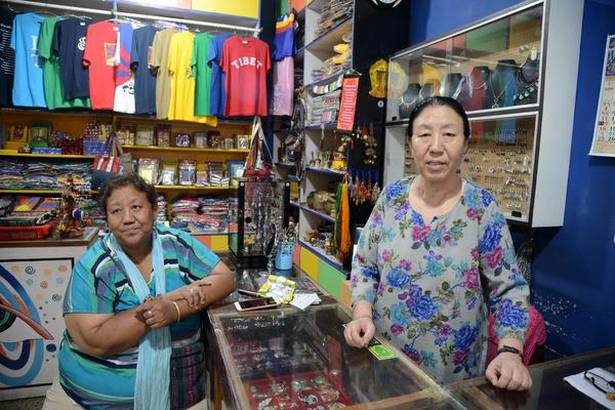
No visit to Bylakuppe is complete without mentioning its food. There are fried and steamed momos sold at small stalls and the Tibetan thupka, a noodle soup served with Tibetan bread. College student Vishal Prasad comes to Bylakuppe from his college in Mysuru just to sample the food. He says, “This settlement has the best Tibetan food. It is very tough to find this food, in the rest of South India. What I like about Bylakuppe is the manner in which they have transplanted their culture in a completely new place.”

Getting there:
Bylakuppe is about 87 kilometres from Mysuru and is well connected by bus. You can also get rickshaws from Kushalnagar.

source: http://www.thehindu.com / The Hindu / Home> Life & Style> Travel / by Nikhil Varma / May 24th, 2018

Ashtamangala Prashne Ritual Begins At Talacauvery

TalacauveryKF23may2018

Madikeri:

A three-day Ashtamangala Prashne ritual began yesterday at Talacauvery under the guidance of A.V. Narayana Poduval and team of Payyanur in Kerala. The ritual is being held to find out solutions to problems, if any, in Talacauvery.

The octagonal questioning ceremony (Ashtamangala Prashne) was initiated on the day that marked the beginning of ‘Tula Raashi’ to ensure smooth functioning of the pilgrim centre. The religious ceremony started with Vamshith, a boy from Tannimani village, offering prayer to the astrological, octagonal sketch.

Prayers were offered to Dakshinamurthy, Cauvery and Agasthyeshwara in the north-east direction and the astrologer is said to have experienced a spiritual vibe during the prayers. The octagonal questioning will continue for another two days at the pilgrim centre before starting off with the religious, ritualistic puja offerings to river Cauvery.

During the Ashtamangala event, it was revealed that the sanctity of Talacauvery, the birthplace of River Cauvery, is being repeatedly violated by indiscriminate tourism. The centre has turned commercial with even rituals like “Tula Bhara” being used at the temple with the sole intention of making money.

The place has turned into a tourist attraction over the years rather than being a religious place, the Ashtamangala questioning revealed.

It was also revealed that though there are designated places for the tourists to sit, they sit in all places, even near the Holy Kundike, inside the temple complex, spoiling the sanctity of the temple. Also, women come to the place dressed inappropriately.

The Holy Kundike from where the river emerges must not be closed and must be left open for the sun’s rays to penetrate. Also, the practice of the priests allowing devotees, especially VIPs, to stand around the Kundike for hours together must be stopped. Devotees must not be allowed near the Kundike and people must leave Talacauvery after sunset. All these practices that were strictly followed since ages are not being followed now, the Ashtamangala questioning revealed.

The main astrologer from Kerala A.V. Narayana Poduval was assisted by Mysuru lecturer M. Shyam Sundar Shastri, who translated the proceedings to Kannada. The puja was conducted by priest Prashanth Achar.

The octagonal questioning and predictions is usually conducted at Talacauvery once in every decade and the Talacauvery Bhagamandala Temple Committee President Biddatanda S. Thammaiah said that the last prediction was made when the temple was renovated, which was 12 years back.

“The Ashtamangala Brahmakalasha ceremony was conducted before starting religious offerings to the Goddess. It is a ritual to conduct this ceremony as it will guide us through any wrong doings at the pilgrim centre. She (Cauvery) is a lifeline to many people and it is the Committee’s duty to maintain the sanctity of the place and see that all divine ceremonies are conducted in the right way,” he added.

source: http://www.starofmysore.com / Star of Mysore / Home> News / May 22nd, 2018

Chendanda Family Retains Kulletira Hockey Cup

ChendandanFamily01may22

Harihara Mukkatira to host 23rd Edition at Balugodu

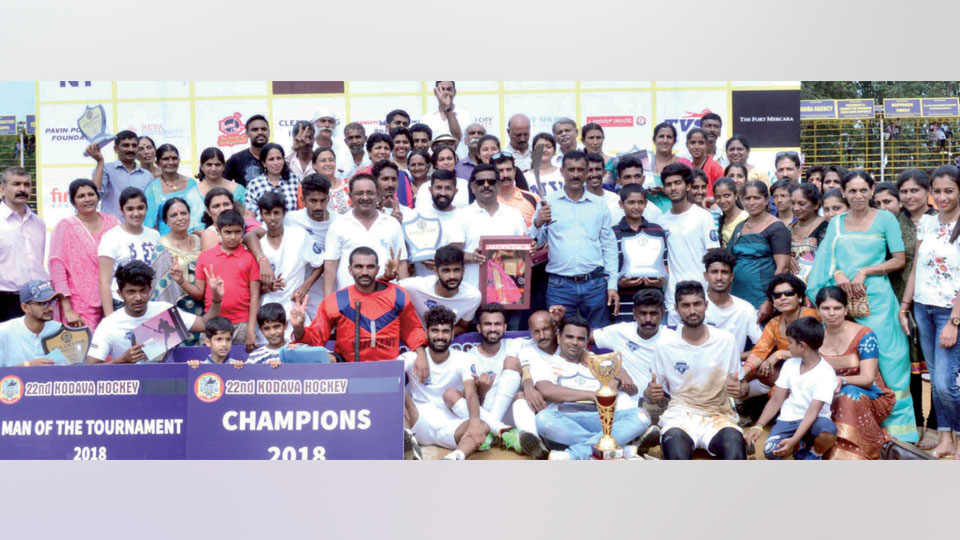
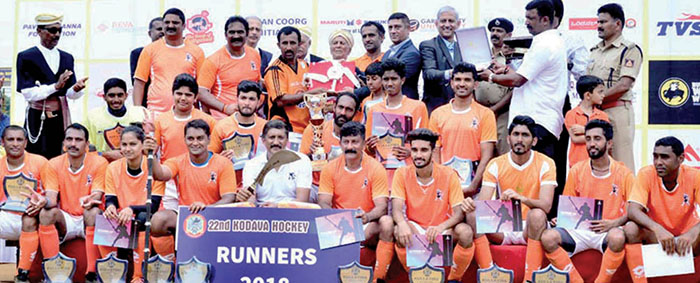
Napoklu (Madikeri): The 35-day Kulletira Cup Hockey tournament, played between Kodava families, drew to a close here yesterday with Chendanda family winning the prestigious Cup for the second consecutive time.

The tournament was played at General K.S. Thimayya Stadium near Napoklu Cheriyaparambu. Anjaparavanda team, a three-time past winner, ended as runner-up. Chendanda team defeated Anjaparavanda 2-0 to retain the Cup. Chendanda team opened its score with a goal from Bopanna in the first half. The team scored its second goal with International player Nikin Thimmaiah scoring in the second half, to take the lead to 2-0.

Chendanda team could have scored more goals has it not failed to convert three penalty corners into goals. Anjaparavanda team too had its chances, but failed to strike whenever opportunities came in its way.

ChendandanFamily02may22

Although Anjaparavanda team lost, its international goal-keeper Anjaparavanda B. Subbaiah exhibited his skills, earning the applause of the gathering.

A total of 334 Kodava Family teams had taken part in this 22nd Edition of Kulletira Cup.

Speaking at the prize distribution ceremony, former Olympian Maneyapanda Somaiah said that the game hockey has become a festival itself in Kodagu. Highlighting the role of Pandanda Kuttani in hosting this hockey fest, he wished that the Hockey Cup maintains its glory in future too.

Karnataka Media Academy former Chairman Maneyapanda Ponnappa, who also spoke, said that Kodagu was home to sports. Pointing out that there were more than 25 National and International Hockey players in the district, he said that Napoklu was home to many of these players. Stressing on the need for having a turf on this ground, he sought the co-operation of everyone for it.

ChendandanFamily03may22

Journalist Jeevan Chinnappa and Kulletira Cup Organiser Areyada Pavin Ponnanna were felicitated on the occasion. Kulletira family Pattedar Madappa and Kulletira Cup Hockey Committee President Shambu Mandappa presided. Kodava Hockey Association President Kaliyanda Nanaiah, Reva University VC S.Y. Kulkarni, SP Rajendra Prasad, Dy.SP Sundaraj, and others were present.

Man of the Series – Chendanda Mokshit

Man of the Match – Chendanda Bopanna

Best Forward –Anjaparavanda Jatin

Best Woman Player – Kambeeranda Nilan

Best Defender –Paradanda Prasad

Fair Play Award – Chendira Team

Best Upcoming Team – Appachira Family

Best Half Player – Cheppudira Chetan

Best Upcoming Player – Kandanda Kushalappa

Best Goal-keeper – Bolyapanda Dilan

Spirited Team – Jabbanda Family

Best Reverse Shot Players Chendanda Thammai, Cheppudira Somanna, Anjaparavanda Deepak Subbaiah

source: http://www.starofmysore.com / Star of Mysore / Home> News / May 21st, 2018

Obituary – Paleyanda Jyothi Karumbaiah

JyotiKarumbaiahKF15may2018

Paleyanda Jyothi Karumbaiah (Kodimaniyanda), wife of Paleyanda K. Karumbaiah, passed away last night in city. She was 76.

She leaves behind her husband, a daughter, two sons, three grandchildren and a host of relatives and friends.

The body was kept at Brigade Tranquil, Church Street, in Yadavagiri here and was cremated at Chirashantidhama in Gokulam, according to family sources.

source: http://www.starofmysore.com / Star of Mysore / Home> Obituary / May 15th, 2018

Mini hydel project in Kodagu gets green signal

A mini hydel project across River Kumaradhara which was constructed and commissioned in 2014 in pristine forest lands of Kodagu district has now got the green signal.

Bengaluru :

A mini hydel project across River Kumaradhara which was constructed and commissioned in 2014 in pristine forest lands of Kodagu district has now got the green signal. The Regional Empowered Committee (REC), south zone, Ministry of Environment and Forests, has cleared the project but questioned the state government’s decision to allot forest land for non-forestry purposes and further directed them to furnish a report.

The Kodagu Hydel Projects Pvt Ltd was sanctioned in pristine semi-evergreen and evergreen forest land in the Pushpagiri hill ranges of Kumaralli village, Madikeri division for implementing the 3 MW capacity Beedalli Mini Hydel Project. After the project took off in 2014, the DCF, Madikeri division issued notices to the company to submit the proposal for diversion of forest land under Forest (Conservation) Act, (FCA),1980 and to stop work till the necessary approval is obtained. Further, the CCF, Kodagu division reported that though the company was granted two acres, it was occupying more than 2.35 acres excluding the road, building and transmission lines.

Meanwhile, the company filed a writ petition in the Karnataka High Court and the court noted that the then DC, Kodagu district in 2007, had granted two acres of land in Survey No. 1/9 of Kumaralli village in Somwarpet taluk for establishing this hydel project. So, on the directions of the HC, the company submitted a proposal under FCA, 1980. Further, the state government was directed to process the application and send it to the central government as the company had already spent `13 crore on the project.

Joint Inspection Report

The report submitted by the joint inspection team clearly says the state government had violated all rules while allotting the land. Further, as per the DSS analysis done, the proposed area is inviolate as it violates hydrological rules. The area proposed for diversion comes under 250 metre buffer area of river Kumaradhara, a major water body in Kodagu.

Added to this, the findings of DCF (Central) states that the proposed forest area falls under Eco-Class 1 (dense forest). The area where the power house is built and official buildings are constructed had thick riverine vegetation and now some remnants are left in the field. Many known and rare species are found here.

source: http://www.newindianexpress.com / The New Indian Express / Home> States> Karnataka / by Meera Bhardwaj, Express News Service / May 12th, 2018